Archive for the 'wind' Category
April 18, 2016
Opinion:
¶ From talk to action: Signs of progress since the Paris climate talks • In December, 196 countries adopted the historic Paris Agreement on climate change. Since then, concrete steps have been made and examples of substantial progress that took place in 2015 are now coming to light. [GreenBiz]

Concrete results of the COP21 Paris are materializing.
Science and Technology:
¶ Researchers at the University of Bath have developed a fuel cell that can generate electricity from urine. Urine passes through the device, prompting a reaction within the bacteria which generates electricity which can then be stored or used to power electrical devices. [Bath Chronicle]
¶ The world can wean itself from fossil fuels in as few as ten years, with effort. Europe moved from wood to coal in Europe in 96 to 160 years, electricity took 47 to 69 years to become mainstream. But Ontario completed a shift away from coal between 2003 and 2014. [International Business Times]

Fossil fuels still generate a majority of the world’s electricity.
Reuters / Romeo Ranoco
World:
¶ A meeting of the world’s leading oil exporters to discuss capping production has ended without agreement. Members wanted a deal that would freeze output and help stem the plunge in crude prices over the past 18 months, but they concluded that they need more time to consult. [BBC]
¶ Earlier this year, Oslo Airport Gardermoen became the world’s first airport to offer renewable jet fuel refined by Neste in its hydrant system. KLM Royal Dutch Airlines announced that it will launch a series of flights with a fuel blend consisting of Neste Renewable Jet Fuel. [Benzinga]

KLM image bank photo
¶ E.ON will be partnering with IBC Solar for the rollout of its new “Aura” solar PV + energy storage product. The all-in-one smart energy package, Aura, will feature a Solarwatt energy storage system, a smart energy management app, and a tailored electricity tariff. [CleanTechnica]
¶ Costa Rica got 97.14% of it electricity from renewable sources in the first quarter of the year, according to the Central Nacional de Control de Energia (National Energy Control Centre). Hydro electric produced 65.2%, followed by wind with 15.6% and geothermal with 13.7% [Q Costa Rica News]
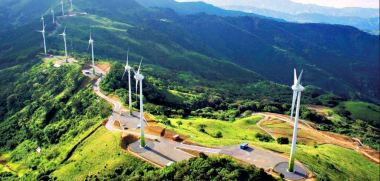
Santa Ana, Costa-Rica Wind Turbines. Photo sites.psu.edu
¶ Kenya plans to prioritize the construction of electricity transmission lines that will help in scaling up generation of renewable energy. Additional transmission lines will be constructed to produce 1,646 MW of geothermal and 630 MW of wind power in the next five years. [Coastweek]
¶ Japan’s Cabinet Office has announced a draft strategy for energy innovation. It set a goal of doubling conversion efficiency and lowering power generation cost of next-generation power to ¥7/kWh or lower to promote innovative greenhouse gas emissions reductions. [Japan Today]
¶ UK energy efficiency and renewable energy firm Anesco Ltd has completed a 4.2-MW solar farm in Derbyshire at a former coal disposal point. The solar facility, managed by Anesco, is expected to generate enough power per year to meet the needs of around 1,200 local homes. [SeeNews Renewables]
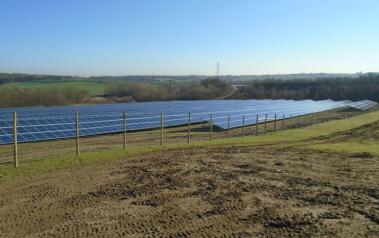
Oxcroft Solar Farm. Original image owned by Anesco
¶ New Delhi-based renewables developer Orange Renewable sealed a power purchase agreement with Solar Energy Corp of India Ltd for a 100-MW solar project. Orange Renewable will get an average power tariff of ₹4.43 ($0.066, €0.059) per kWh for a 25-year period. [SeeNews Renewables]
US:
¶ As the Vermont Yankee nuclear power plant continues to decommission, so too does the process of notifying nearby communities in case of an emergency. The long-standing emergency planning zone will shrink on April 19, at which time it will end at the plant’s boundary. [Vermont Public Radio]

Vermont Yankee. Photo by Toby Talbot / AP File
¶ US renewables developer SunEdison Inc has been preparing to file for bankruptcy protection. An unnamed source informed the Reuters news agency about this development, but pointed out that the timing of the bankruptcy filing had not been finalized. [SeeNews Renewables]
Posted in nuclear power, renewable power, solar, wind | 1 Comment »
Tags: nuclear, nuclear power, renewable power, solar power, wind power
April 16, 2016
Science and Technology:
¶ Greenland’s massive ice sheet has started its annual summer melt earlier than ever before, according to stunned scientists who said they had to recheck their calculations before releasing the results. The previous earliest dates were all later by weeks, in May. [CNN]
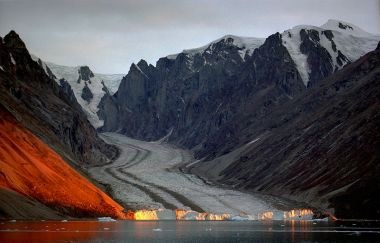
Franz Josef Fjord, glacier, Greenland. Jerzy Strzelecki.
CC BY-SA 3.0 unported. Wikimedia Commons
World:
¶ The latest figures from the International Renewable Energy Agency show that Poland is on course to increase the proportion of power it generates from renewable energy from 7% in 2010 to nearly 38% by 2030. Poland benefits from a very favorable natural wind resources. [Maritime Journal]
¶ Germany’s economic affairs ministry proposed a 2.5 GW annual gap on new subsidized onshore wind power capacity, which is likely to slow down wind power expansion. Germany has a target to increase onshore wind capacity 2.4 Gw to 2.6 GW annually, but growth was 3.5 GW last year. [ICIS]
¶ Most families should come out slightly ahead next year under Alberta’s proposed carbon tax, more if they cut back on their fossil fuel use. The tax starts at $20 per tonne of greenhouse gas produced in 2017 and rises to $30 in 2018, and applies to both consumers and big industry. [St. Albert Gazette]
¶ Ghana has recently added to its solar plant portfolio with a new 20-MW plant developed by Beijing Xiaocheng Company. This is the first large-scale project of its kind in Ghana, and aligns itself with government incentives to increase the renewable energy output to 10% by 2020. [PV-Tech]

The PV plant will feed 20 MW of clean energy into the national grid. Source: Flickr – Magahrebia
¶ Rising production of the dry fuel may lead India to completely stop thermal coal imports in the coming 2-3 years, resulting in annual savings of ₹40,000 crore ($6012 million), Minister of State for Power, Coal, New and Renewable Energy Piyush Goyal said on Friday. [indiatvnews.com]
¶ Japan is working out what to do with the tons and tons of water being used to cool the melted-down nuclear reactors. The water still has tritium in it after other substances such as cesium and strontium are removed. Japan says it will begin dumping the tanks this year. [Digital Journal]
US:
¶ With the development of fracking, the former backwater of Williston, North Dakota was transformed into the unofficial capital of the energy renaissance. Its economic growth was staggering. Now, many workers have packed their bags and gone home. Williston has become a ghost town. [BBC]

Many of those who came here to work in North Dakota’s oil industry have now gone home.
¶ According to pv-magazine, a study by EuPD Research shows only 34% of US PV installers offer storage solutions to customers. The report said that about 26% of these installers who are not offering storage right now hope to offer storage options in their portfolios this year. [CleanTechnica]
¶ The Ohio Supreme Court confirmed a site permit granted to EverPower Wind Holdings for the Buckeye 2 wind project. A 5-2 decision upholds approval granted in 2013 by the Ohio Power Siting Board. The permit is for building up to 56 turbines on 13,500 acres in Champagne County. [reNews]

EverPower’s Mustang Hills wind farm (EverPower)
¶ Fifteen years after blackouts swept the state, a Federal Energy Regulatory Commission judge has found that a division of Shell Oil engaged in fraud and market manipulation during California’s energy crisis. The tentative decision holds Shell and Iberdrola liable for $1.1 billion. [SFGate]
¶ The renewable portfolio standards that many states have enacted are responsible for 60 percent of the growth in non-hydro renewable energy generation, according to a new study from Lawrence Berkeley National Laboratory. Most has come from wind, but solar energy is gaining traction. [Greentech Media]
Posted in nuclear power, renewable power, solar, wind | 2 Comments »
Tags: nuclear, nuclear power, renewable power, solar power, wind power
April 15, 2016
Opinion:
¶ Even Walker Can’t Stop Wisconsin Wind Energy • Amidst all the great news for windpower, Wisconsin has been notoriously late to the US wind energy party, despite its prime location in the wind-rich Upper Midwest. However, it looks like Wisconsin is on the cusp of a great change. [CleanTechnica]

US wind energy employment. MISO Energy image
World:
¶ Panama’s president inaugurated the 215-MW Laudato Si wind farm in the city of Penonome. A local subsidiary of power generation company InterEnergy Holdings, was responsible for the project. The 86-turbine park could supply energy to over 125,000 households. [SeeNews Renewables]
¶ In March, 2016, around 60% of all automotive registrations in Norway were for electric or hybrid vehicles, the most recent figures from Dinside Motor say. There were 13,875 registrations in all. Of these, 2595 were EVs, 2042 were plug-in hybrids, and 3396 were conventional hybrids. [CleanTechnica]

Norwegian EVs. Image by ChrisHamby (some rights reserved)
¶ Australia should gradually shut down all coal-fired power plants by 2035 and put a “realistic” price on carbon to avoid severe economic shocks, a new report says. The Climate Institute report found delaying a move to clean energy would cause sudden job loss and drive up electricity costs. [9news.com.au]
¶ Plans for a 472-mile (760 km) electricity cable between the UK and Denmark have gone out to public consultation. If approved, the €2-billion ($2.25-billion) “Viking Link,” from Bicker Fen, Lincolnshire to Revsing, would enable import and export of power with mainland Europe. [BBC News]
The project would see a converter station built at Bicker in Lincolnshire. Geograph / Richard Humphrey
¶ Solar equipment producer JinkoSolar has won rights to develop and build three solar PV projects totaling 188 MW in Mexico, under the country’s first electricity auction. The Mexican Government plans to invest $14 billion to add renewable power capacity of 6 GW between 2015 and 2018. [Power Technology]
¶ Japan’s greenhouse gas emissions fell 3.1% to three-year lows in the fiscal year ending March 2015, due to reduced demand and growing use of renewables, revised government figures show. It is first decline since the Fukushima Disaster closed nuclear power plants. [Thomson Reuters Foundation]
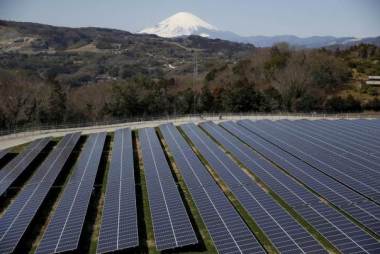
Solar panels in Kanagawa prefecture, Japan. Reuters / Issei Kato
US:
¶ MidAmerican Energy Company, based in Des Moines, announced plans to spend $3.6 billion on a wind turbine operation that would generate enough energy to power about 800,000 Iowa homes. Officials called the effort the largest economic development project in state history. [The Daily Nonpareil]
¶ New zoning proposed by the Planning and Development Department in South Portland, Maine, could encourage the use of solar power across the city. Systems that generate 20 kW or less, and meet other standards outlined in the ordinance, would be “permitted anywhere.” [The Forecaster]
¶ FirstEnergy officials announced today that the utility company will offer a limited number of its customers the option to buy 100% wind energy-generated power at the same price as its standard power. The program highlights FirstEnergy’s environmental achievements. [cleveland.com]

Wind turbines in Kansas. (AP file photo)
¶ Entergy will refuel its 728-MW Pilgrim nuclear reactor in 2017 and shut it down on May 31, 2019. Entergy had been considering shutting the unit as early as the spring of 2017, because the unit is losing about $40 million annually, but it has power contracts through May 31, 2019. [Platts]
¶ Local officials have given the go ahead for NextEra Energy Resources’ 150-MW Brady 2 wind project in North Dakota, where GE turbines will be the star of the show. NextEra proposes to install 174 GE turbines in total. with 80-meter hub heights. The estimated cost of Brady 2 is $243 million. [reNews]
Posted in nuclear power, renewable power, solar, wind | 2 Comments »
Tags: nuclear, nuclear power, renewable power, solar power, wind power
April 14, 2016
World:
¶ According to RenewEconomy, the Greens want to have “… South Australia source 100% of its electricity needs from clean energy by 2030.” Such a clean energy achievement will generate 1,000 jobs and include a SolarReserve 100-MW solar tower and storage plant near Port Augusta. [CleanTechnica]
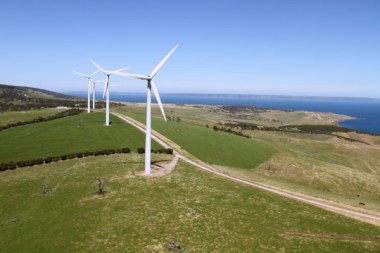
South Australian windpower. Image via Shutterstock
¶ Quebec has a plan to increase the overall output of renewable energy 25%, pushing the total amount to 60.9% by 2030 from its current 46.6%. The plan is meant to significantly alter Quebec’s energy profile. Hydro-Quebec is looking at opportunities to provide power to New York and New England. [Platts]
¶ A wine production plant in the South Africa’s Western Cape has commissioned a rooftop solar plant that will provide up to half the energy needed to make 3-million liters of wine a month. The 2‚600 solar panels cover four roofs at Douglas Green Bellingham in Wellington. [Times LIVE]
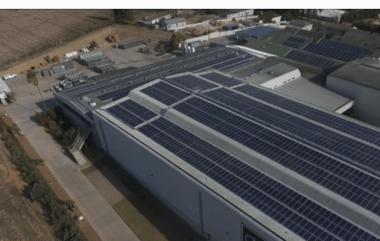
The company won the 2011 UK Drinks Business Green Award for supply chain and logistics. Image by Terra Firma Solutions
¶ The UK’s solar panels have generated more electricity than coal in a full day for the first time ever, Carbon Brief analysis shows. On Saturday 9 April, solar generated 29 GWh of electricity, 4% of the total used that day. Coal generated 21 GWh, which was 3% of demand. [Carbon Brief]
¶ The Australian Renewable Energy Agency said a 1.1-MWh residential battery storage trial it supported is now up and running in Western Australia. The system, which was installed in two shipping containers in a suburb, will store power from over 100 rooftop solar PV systems. [SeeNews Renewables]

Rooftop solar array. Featured Image: Ralf Gosch/Shutterstock.com
¶ Five years after the Fukushima Disaster began, the Japanese nuclear industry and government are struggling to revive the country’s nuclear power plants. Much of the public remains wary, and only a handful of the 43 operable reactors have implemented the new safety regulations. [The Straits Times]
US:
¶ One of America’s largest owners and operators of renewable energy projects, ConEdison Development, has jointed CPS Energy in dedicating the Alamo 5 dual-axis solar farm in Texas. Alamo 5 is a 95 MW-AC, dual-axis solar installation that will deliver power to San Antonio. [Renewable Energy Magazine]

ConEdison Development joins CPS to dedicate
Alamo 5 solar farm in Texas
¶ Peabody Energy, the world’s largest private sector coal miner, announced that it has filed for Chapter 11 bankruptcy protection. Its entire industry is reeling from low production and demand, and facing an upsurge in both gas and renewable energy electricity generation. [CleanTechnica]
¶ The University of Guam and University of Alaska Fairbanks announced a broad partnership for climate change and energy generation. This took place at a collaborative energy workshop at the 7th Regional Island Sustainability Conference at the Lotte Hotel Guam in Tumon. [The Guam Daily Post]
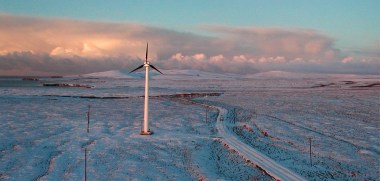
Wind turbine in Toksook Bay, Alaska.
Photo by energy.gov. Public domain. Wikimedia Commons.
¶ The clean energy sector in Rhode Island is supporting nearly 14,000 jobs this year, a 40% increase over 2015 levels, according to a state report. About 84% of clean energy jobs are in energy efficiency, while about 14% of jobs are in renewable energy. Transportation has about 1.8%. [The Providence Journal]
¶ US Navy Secretary Ray Mabus said that the Navy expects its major vendors to report on greenhouse gas emissions and work to lower them. The US Military is the world’s single largest user of fossil fuels, and the Navy is responsible for about a third of its use of fossil fuel. [The Maritime Executive]
¶ The small modular nuclear reactors being evaluated for the Clinch River Site in west Oak Ridge, Tennessee, could provide an emissions-free fuel source, but it could be a decade or so before they start operating. And that’s assuming all goes according to plan, officials said Tuesday. [Oak Ridge Today]
Posted in nuclear power, renewable power, solar, wind | 2 Comments »
Tags: nuclear, nuclear power, renewable power, solar power, wind power
April 13, 2016
Opinion:
¶ Powerhive is delivering prepaid solar microgrids to rural
villages • The next clean energy step for the developing world might be solar-powered microgrids, such as those Powerhive is developing. These systems can deliver clean energy to remote villages of as few as 200 people. [Treehugger]
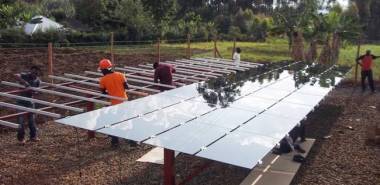
Microgrid construction © Powerhive
¶ Obama says wind power cheaper in Texas than power from ‘dirty fossil fuels’ • Rallying Texas Democrats, President Obama said that wind is a better bargain in Texas than traditional oil and gas. Come again? Wind power sure has sizzle, but is this true? The answer is “mostly yes.” [Houston Chronicle]
World:
¶ In a recent piece published on its website, consultancy firm Bridge to India posited that the question of whether the India solar market is “running on fumes.” The firm believes that “many developers seem to be bidding for project first and planning to raise capital later.” [CleanTechnica]
¶ Energy storage manufacturer for solar, Sunvault Energy, is involved in a project to construct and maintain Canada’s first “self-sustainable community”, with technologies including solar, energy storage and biomass, alongside what will be British Columbia’s largest PV park. [PV-Tech]

SDC has already started work on the 200-home community in Kelowna, BC. Image: stantoncady / Flickr
¶ Argentina aims for $5 billion in investments in renewable energy by 2018 to reduce its energy deficit, as hopes for near-term increased output from the Vaca Muerta shale field fade. A new law mandates an increased share of renewable energy from its current 1.8% to 8% of consumption. [agprofessional.com]
¶ The project of the Visaginas Nuclear Power Plant is dead, says the author of the project, Lithuania’s former energy minister Arvydas Sekmokas. He said it would not be an economically beneficial project at the moment. The future situation on the electricity market is not clear. [The Baltic Course]
¶ The UK is to get a network of hydrogen stations that can produce fuel on site, following a partnership between industrial gas supplier BOC and clean fuel company ITM Power. ITM’s technology uses surplus renewable energy to separate hydrogen from water via electrolysis. [Fleet World]

ITM Power has technology which can produce hydrogen on site, using renewable energy and water
US:
¶ Wondering how prepared your state is for upcoming changes in climate? If you’re in Texas, you might be in for trouble. This week, Climate Central unveiled the first-ever national analysis of state-level preparedness for climate change-driven, weather-related threats. [CleanTechnica]
¶ According to a new ‘Data Bite’ from the Institute for Energy Economics and Financial Analysis, production of US coal is currently running 30% below the same period a year earlier, reflecting “an historic shift in both the coal industry and the electric power sector it serves.” [CleanTechnica]
¶ Colorado wind power is rising with 1,880 huge turbines erected across the prairie. It has reached the point where the wind turbines generated 67% of Xcel Energy’s Colorado-made electricity one morning in November and 54% for two 24-hour periods in October, feats that are unmatched. [The Denver Post]
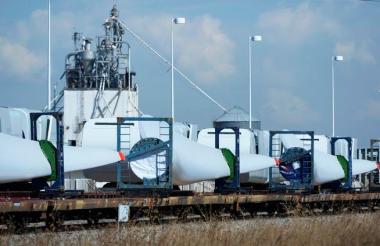
Giant Vestas wind turbine blades take a train ride. (Andy Cross, The Denver Post)
¶ Duke Energy joined with Walt Disney World Resort and Reedy Creek Improvement District to develop a 5-MW solar facility on 22 acres near Epcot, across from Disney’s Yacht and Beach Club Resort. The facility will be made of 48,000 solar panels and operated by Duke Energy. [Fox 35 Orlando]
¶ The Town Board of North Salem, New York, has opted to make the renewable energy option the default plan for residents and small business. The customers will have a fixed-rate of $0.07085/kWh for 100% renewable power, or can opt-out and go with a variable rate for utility power. [TAPinto.net]
¶ A noteworthy trend of the past year was growing demand for wind energy from major corporations. The trend goes beyond high-tech firms such as Google, Facebook and Amazon Web Services, to such traditional companies as Procter & Gamble and Wal-Mart. [Midland Reporter-Telegram]

Wind turbines in West Texas.
¶ American wind power supported a record 88,000 jobs at the start of 2016, an increase of 20% in a year, according to a US Wind Industry Annual Market Report. Strong job growth coincided with wind ranking number one as America’s leading source of new generating capacity. [AltEnergyMag]
¶ The unicameral Nebraska legislature moved LB 824 to its third and final debate and vote by passing it as amended in a 32 to 8 vote and preventing a filibuster by its opponents. The bill will allow developers to more easily build in the wind-rich state and export the electricity to other states. [Utility Dive]
Posted in nuclear power, renewable power, solar, wind | 1 Comment »
Tags: nuclear, nuclear power, renewable power, solar power, wind power
April 12, 2016
Science and Technology:
¶ Solar energy panels that can also generate power from raindrops have been designed, offering a possible solution for homeowners in the UK to invest in renewable energy. The all-weather solar panels that can create electricity from light on sunny days and rain on cloudy days. [Telegraph.co.uk]

Solar panels can save up to £135 a year in energy bills.
¶ January 2016 was the most anomalously hot month on record, going by NASA’s temperature figures. Now it appears that February 2016 already beat the record, with an anomaly (over the pre-industrial average) of somewhere between 1.15° C and 1.4° C during the month. [CleanTechnica]
¶ Solar power has the potential to generate about 40% of America’s energy, yet the technology still has limitations. One is weather. Clouds and rain diminish solar cell efficiency, a problem for places that are more overcast than sunny. But new research could change that. [Inhabitat]
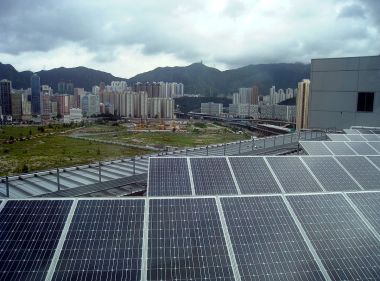
Clouds and solar panels. Image via Wikimedia Commons
World:
¶ Despite the strong bias that most Germans have for German-made cars, it appears that the Tesla Model 3 unveiling has made quite an impact. A new poll from the German car magazine Autobild found that 66% of those queried said that they would consider buying a Model 3. [CleanTechnica]
¶ Origin Energy, one of country’s big three utilities, says Australia could be a market leader in solar-powered electric vehicles, given the right incentives and policies that could encourage the uptake of renewable energy and force the closure of the most polluting brown coal power stations. [CleanTechnica]
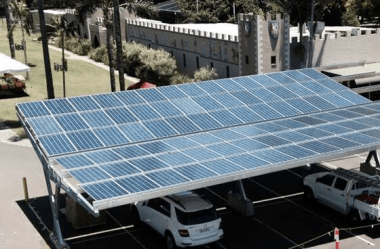
Solar car port
¶ Technology giant Google announced it will help renewables grow in Asia. It will provide seed funding to the Center for Resource Solutions to start rolling out renewable energy certification programs across the continent. The program will begin work in Taiwan. [Energy Live News – Energy Made Easy]
¶ Expect some sparks to fly in Australia’s electricity market. Australia has 7000 MW of oversupply in the wholesale electricity market and needs another 5500 MW of new renewable energy generation to achieve its 2020 renewable energy target. This is going to cause enormous oversupply. [The Australian]
¶ Project partners Atkins and Pilot Offshore have filed to build a 48-MW floating wind demonstrator off the coast of Aberdeenshire. The project will feature eight 6-MW turbines semi-submersible floating foundations. Kincardine will be built in waters between 60 and 80 meters deep. [reNews]

Principle Power’s Windfloat design (Principle Power)
¶ A TEPCO senior official admitted to knowing the criteria to assess reactor meltdowns at onset of the Fukushima nuclear accident. It took the company two months to make the declaration and another five years to “discover” the operational manual that told it when to declare a meltdown. [Asahi Shimbun]
US:
¶ Earlier this year, the National Renewable Energy Laboratory released a new estimate of rooftop solar potential, updating the 2008 energy atlas, Energy Self-Reliant States. New maps show much more potential to get our electricity from solar on nearby buildings than we thought. [CleanTechnica]
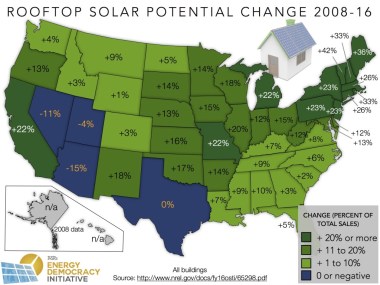
Changes attributable to more accurate roof surveys
¶ A report released by the White House warns that climate change is a growing threat to public health, and extreme heat will kill around 27,000 US residents per year by 2100. A science adviser commenting on it said extreme heat waves will make outdoor work periodically “impossible.” [CleanTechnica]
¶ Lawmakers will soon get a report on whether Vermont should purchase a series of hydroelectric dams along the Connecticut and Deerfield rivers. In the meantime, they’re discovering that the next owners of the dams will be under heavy pressure to address a range of environmental concerns. [Valley News]
Posted in nuclear power, renewable power, solar, wind | 1 Comment »
Tags: nuclear, nuclear power, renewable power, solar power, wind power
April 11, 2016
Opinion:
¶ The Mystery of Wind Energy in Texas • Texas politicians fiercely deny the scientific validity of climate change and the state is home to the headquarters of such companies as Exxon Mobile and ConocoPhillips. But Texas leads the US in installed wind capacity. How did this paradox occur? [Law Street Media]

Wind turbines on prairie, courtesy of Theodore Scott, via Flickr
¶ 10 things you probably didn’t know about the renewables revolution • With new figures from the International Renewable Energy Agency revealing that renewables grew at record pace in 2015, edie digs deep into the data to bring you 10 surprising statistics about green energy. [edie.net]
World:
¶ UK electricity customers are coming together to take control of how they use and pay for power. Energy Local clubs, set up as community benefit societies or community interest companies, aim to reduce bills for consumers and connect them with locally owned renewable generators. [Co-operative News]

Whalley Community Hydro, in Lancashire
¶ The Israeli government has unanimously approved a plan for reducing greenhouse gas emissions and improving energy efficiency. The plan is part of the effort to meet the commitment Israel made at the 2015 United Nations Climate Change Conference in Paris. [Globes]
¶ Indian wind turbine maker Suzlon won an order for 50 wind turbines totaling 105 MW from Indian clean power producer Greenko Group Plc. The contract is the first between the two companies. The turbines are for a wind park in Andhra Pradesh. [SeeNews Renewables]

Suzlon turbines. Author: Janusz Sobolewski. License: Creative Commons, Attribution 2.0 Generic.
¶ A climate change policy that could be both effective, and potentially supported by both major Australian political parties, has been proposed by the Grattan Institute. It appears in a report that tries to find a pragmatic solution to the decade of toxic political debates on the issue. [The Guardian]
US:
¶ US Magistrate Judge Thomas Coffin of the Federal District Court in Eugene, Oregon, ruled Friday against the motion to dismiss brought by the fossil fuel industry and federal government. Bill McKibben and Naomi Klein call the case the “most important lawsuit on the planet right now.” [EcoWatch]

The youth plaintiffs after the hearing on March 9 in Eugene, Oregon. Photo credit: Our Children’s Trust
¶ The German renewable energy firm Juwi is now working to build three utility-scale solar energy projects in Colorado, according to recent reports. They are being developed through a US-based subsidiary. The three solar PV projects will have a total capacity of around 90 MW. [CleanTechnica]
¶ Consumers Energy is closing seven old coal-burning plants with widespread approval. A Michigan Environmental Council report said the nine oldest coal plants in Michigan resulted in health care costs and damages of over $1.5 billion annually for Michigan residents. [The Daily Telegram]

Consumers Energy’s JR Whiting Generating Plant. Tom Hawley / The Monroe News via AP
¶ Scientists have detected that radiation from the 2011 Japan nuclear disaster has spread to shores off of North America. According to the study, cesium-134 was identified off the Oregon, Washington and California coasts, as well as offshore from Canada’s Vancouver Island. [Daily Star Gazette]
Posted in nuclear power, renewable power, solar, wind | Leave a Comment »
Tags: nuclear, nuclear power, renewable power, solar power, wind power
April 10, 2016
Opinion:
¶ The “Careful, Thoughtful” Approach to Indian Point Is to Close
It • Given the facts, the careful, thoughtful approach to Indian Point is to close it. Last month, 227 of the 832 bolts holding the inner walls of the reactor core together were found to be missing or damaged. But a list of problems goes on. [AlterNet]

Indian Point nuclear plant. Photo by mandritoiu / Shutterstock
Science and Technology:
¶ University of Washington researchers have developed technology that enables sensors and small electronics to be entirely powered wirelessly from TV, radio, cell phone, and Wi-Fi signals. The miniature devices don’t require a battery or any wiring because energy in the signals. [OilPrice.com]
World:
¶ Many African countries are facing energy crises. Since the mid-1990s, external finance to Africa’s power sector has averaged only around $600 million per year. But countries are increasingly able to supply power in an environmentally and economically sound fashion. [The Worldfolio]

The unfinished Tokwe Mukosi dam in Zimbabwe
¶ The Philippines has 18 biomass power plants on grids, with a combined capacity of 241 MW, enough to energize more than 300,000 homes. They are fueled mainly by bagasse and rice husk. This capacity does not include 166 MW from private firms for their own consumption. [InterAksyon]
¶ Abu Dhabi’s renewable energy company Masdar has installed 9,000 solar systems out of 17,670 planned across 940 villages in rural Morocco. Each solar home system has a capacity of 290 watts. This and other initiatives will bring power to 99% of rural Morocco by the end of 2017. [Utilities-ME.com]
¶ Australia agreed to join with the rest of the world to limit global warming to 2° C. Since signing the agreement, Australia has re-approved one of the world’s largest coal mines, opened a new research center for the fossil fuel industry, and cut funding for renewable energy. [New Matilda]

Australian protestors. Image: Flickr, James Ennis.
¶ The Carbon Disclosure Project ranked the Australian capital city of Canberra as a global climate change leader. It placed the city among the top ten in the world for quality and completeness of environmental risk reporting, showing it’s commitment on climate change. [The Marshalltown]
¶ Saudi developer ACWA Power plans to invest $10 billion to $12 billion in Egypt in the next five years, its chairman said. The company will invest in the Egyptian power generation sector at both renewable and traditional levels, adding approximately 10,000 MW. [Zawya]
US:
¶ Southern California’s reliance on natural gas has grown much more clear. Utilities are warning of possible blackouts this summer after the massive Aliso Canyon methane leak took the region’s largest gas storage field offline. Blackouts underscore the true meaning of fossil fuel dependence. [OCRegister]

Crews working to stop the natural gas leak in Aliso Canyon in December. Musgrove / AP
¶ The Vermont Public Service Board is currently revising the net metering program. The PSB must design a revised program with input from impacted parties and the public. But the proposed revisions may make net metering much more difficult in Vermont. [Green Energy Times]
¶ A report from Lawrence Berkeley National Laboratory says states with renewable portfolio standards have been highly successful at meeting their targets, with a handful of states setting higher targets within the past year while adding an average of 1.3% to customer bills. [Midwest Energy News]

Wind turbines in Minnesota
¶ New renewable energy standards in Massachusetts are adding to the problems of Maine’s logging industry, which is already threatened by the collapse of the biomass market and recent closure of pulp and paper mills. Maine Governor Paul LePage is asking Massachusetts to reconsider. [Valley News]
Posted in nuclear power, renewable power, solar, wind | 2 Comments »
Tags: nuclear, nuclear power, renewable power, solar power, wind power
April 9, 2016
Opinion:
¶ ‘There’s no more land’ • A football field sized amount of land, on average, falls into the Gulf each hour. Isle de Jean Charles, Louisiana, was once about the size of Manhattan. Now, it’s about a third of Central Park. The coastal island has lost 98% of its land since 1955. [CNN]
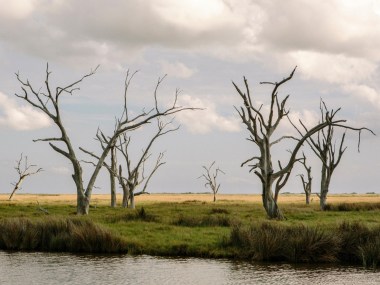
Ghost trees have fallen victim to salt water intrusion. Photo by William Widmer / Redux for CNN
¶ Counting food miles can trim emissions • It is important for consumers to remember the food they choose will have an impact on the environment. Food consumption makes up 41% of a person’s eco-footprint. It can be reduced by well-informed eco-friendly decisions. [Central Western Daily]
¶ Can ‘pay as you glow’ solve Malawi’s power crisis? • In Nigeria, according to the Afrobarometer survey, 96% of the population are connected to the electrical grid, but only 18% can expect the service to work most of the time. Further south in the continent the picture is often worse. [BBC]

This canal feeds a small-scale hydro scheme in the village of Bondo, Malawi that powers 250 homes.
World:
¶ Data released by the International Renewable Energy Agency shows global renewable energy generation capacity increased by 152 GW in 2015, up 8.3%. The agency says global renewable energy capacity reached 1,985 GW. The figure includes hydro greater than 10 MW in size. [CleanTechnica]
¶ Prince Harry teamed up with a Bristol-based renewables company to help rebuild and provide power to a school in Nepal, which had been destroyed in an earthquake. Teams from Bristol-based Your Group and Bath Science Park joined Team Rubicon on the mission. [South West Business]

Prince Harry working in Nepal
¶ French energy minister Ségolène Royal said postponing the Hinkley Point C nuclear power project is still a possibility. She said the project must not be allowed to drain funds away from planned investments in renewable energy to bring France towards its 40% green power target. [The Ecologist]
¶ An announcement by CECEP Wind Power Corporation and Goldwind that White Rock Wind Farm in New South Wales is proceeding is a cause for optimism, the Clean Energy Council says. It is evidence of returning stability in Australia’s renewable energy industry. [Renewable Energy Magazine]

White Rock wind farm construction encourages optimism in Australian wind sector says CEC
US:
¶ The Army will help the Air Force reach its goals for renewable energy. The two signed an agreement that will enable the Air Force to accelerate toward its goal of 25% clean energy by 2025 by tapping into the Army’s experience with private sector financing for onsite solar installations. [CleanTechnica]
¶ Analysis by Vote Solar and the US Solar Energy Industries Association shows that inaction on net metering caps and the Solar Renewable Energy Credit program in Massachusetts has halted construction on more than 500 separate solar projects valued at a total of $617 million. [CleanTechnica]
¶ This month, San Diego will release the first outline on how it will switch entirely to clean electricity by 2035. Backers include Republican Mayor Kevin Faulconer, who said the aim is “ambitious” but “achievable.” Others say it’s impossible to accomplish by 2035. [Environment & Energy Publishing]
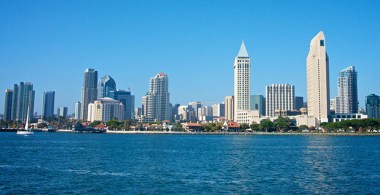
Can San Diego go green by 2035? The jury is still out. Photo courtesy of the General Services Administration.
¶ It could cost New York state over $3.6 billion through 2030 to reach ambitious clean energy goals Governor Andrew Cuomo backs, but reductions in greenhouse gases would create benefits worth more than $8 billion, according to a Public Service Commission study. [Albany Times Union]
¶ Enel Green Power North America and Tradewind Energy of Lenexa announced the $613 million Cimarron Bend project, to be built in Kansas. At 400 MW, it will be the largest wind farm Enel has built, and it will be the second largest wind farm in Kansas. [Lawrence Journal World]
¶ Texas’ lead in cheap wind power, near historically low natural gas prices, mild weather, and slow growth in electricity demand, can work to the detriment of power companies. The combination weighed down wholesale power prices, spells trouble for Texas’ coal and nuclear plants. [Houston Chronicle]

Carbon dioxide from the WA Parish power plant will be captured and used to enhance production in oil fields. (NRG Energy photo)
¶ The North Carolina Pork Council asked the state’s Court of Appeals to reverse a ruling that biogas created from swine waste in Missouri and Oklahoma can count as North Carolina-based renewable energy credits. The ruling leaves NC less able to deal with its own waste. [Charlotte Business Journal]
¶ Work has started in earnest on six solar farms in Malheur County, Oregon, which are expected to generate a combined 50 MW. The project contractor is Swinerton Renewable Energy, based in San Diego, which already has four of the sites in various early stages of construction. [Ontario Argus Observer]
Posted in nuclear power, renewable power, solar, wind | 1 Comment »
Tags: nuclear, nuclear power, renewable power, solar power, wind power
April 8, 2016
World:
¶ Britain will have too much electricity this summer due to the growth in wind and solar farms, National Grid has forecast. It could be forced to issue orders to power plants to switch off. Businesses will also be paid to shift their power demand to times when there is surplus electricity. [Telegraph.co.uk]

National Grid said it was likely to have to pay wind farms to switch off at times of low power demand. Credit: Charlotte Graham/Rex
¶ Mercom Capital Group reported that corporate funding for the global solar sector has dropped to $2.8 billion in the first quarter of 2016, compared to $6.9 billion in the previous quarter. Residential and commercial solar funds for lease and Power Purchase Agreements remained strong. [CleanTechnica]
¶ Uruguay reduced power generation costs by 52% between 2013 and this year, saving $500 million at a time when demand for electricity continued to grow. According to figures released last month, 56% of Uruguay’s electricity now comes from renewable sources. [Latin American Herald Tribune]
¶ From January to date Brazil has put online 1,873 MW of new power capacity on the National Interconnected System, all of which was from renewable energy sources. In a little over one month the country’s capacity has grown by 410.22 MW, of which 190.93 MW were wind plants. [SeeNews Renewables]

Wind farm in Brazil. Author: Otávio Nogueira. License: Creative Commons, Attribution 2.0 Generic.
¶ E.ON is the latest energy company to release a home electricity storage device into the German market. The product launch has come at a good time for stationary battery storage systems connected to solar arrays in Germany, as the market took off in 2015. [pv magazine]
¶ With plants idled all over the continent, now more than a quarter of European Union nations have quit coal, with shutdowns in Belgium and Scotland bringing them in line with other countries that have no coal-fired power, including Cyprus, Luxembourg, Malta, Latvia, Estonia, and Lithuania. [TakePart]
¶ The World Bank has made a “fundamental shift” in its role of alleviating global poverty, by refocusing its financing towards tackling climate change. It will spend 28% of its investments on climate change projects, and all of its future spending will take account of global warming. [Business Green]

The biggest provider of public finance to developing countries will refocus its financing efforts towards tackling climate change.
¶ Quebec wants to cut oil consumption by 40 percent over the next 15 years and eliminate thermal-coal usage as Canada’s second most populous province strives to reduce carbon emissions. The province is earmarking C$4 billion ($3 billion) for investments over 15 years. [Bloomberg]
¶ According to MAKE’s latest wind power outlook for North America, unprecedented long-term policy certainty in the US, along with a new climate-conscious government in Canada, will enable nearly 75 GW of total wind power growth in the region from 2016 to 2025. [Your Renewable News]
US:
¶ Kansas City Power & Light will buy 500 MW of electricity, enough energy to power 170,000 homes, from two new wind facilities in Northwest Missouri. Osborn Wind Energy Center, a 200-MW wind farm expected to reach commercial operation at the end of 2016, will provide power. [News-Press Now]
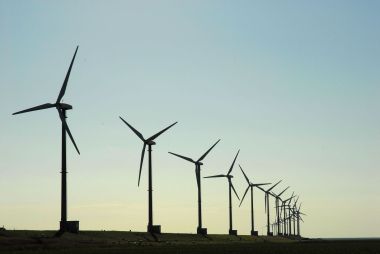
Kansas City Power and Light will tap into regional wind sources. Image from thinkstock.com.
¶ TransCanada now says the Keystone pipeline has leaked about 16,800 gallons in South Dakota, a dramatic increase from initial estimates of about 187 gallons of oil. TransCanada told CNNMoney that it is still trying to find the source of the leak, but with valves closed, the leak has stopped. [CNN]
¶ The 328-MW coal-fired JR Whiting power plant on Lake Erie shoreline is closing after a 64-year run. Tighter federal rules on coal-fired power plants because of mercury, sulfur dioxide, carbon dioxide, and other major pollutants is causing shifts toward clean, renewable energy. [Toledo Blade]
¶ The New Hampshire Senate agreed to double the amount of electricity solar panel owners may sell to utilities while telling regulators to develop a system that stops cost-shifting to other electric customers. The bill increases a net metering cap from 50 to 100 MW. [The Union Leader]
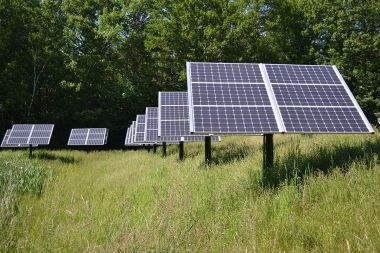
15 kW Solar array in New Hampshire. Photo by SayCheeeeeese. CC0 1.0 Universal Public Domain Dedication. Wikimedia Commons.
¶ San Diego Gas and Electric has signed a contract with Hecate Energy Bancroft for a 20 MW/4 MWh energy storage system. This will be enough electricity to power 28,000 households for four hours. The lithium-ion battery system will be the largest in the San Diego area. [CleanTechnica]
¶ Renewable energy and new technologies that are making low-carbon power more reliable are growing rapidly in the US. Renewables are so cheap in some parts of the country that they’re undercutting the price of older sources of electricity such as nuclear power. [New England Public Radio]
Posted in nuclear power, renewable power, solar, wind | 2 Comments »
Tags: nuclear, nuclear power, renewable power, solar power, wind power
April 7, 2016
Opinion:
¶ Wind and solar are crushing fossil fuels • Recent auctions in Mexico and Morocco ended with winning bids that show solar and wind will soon be least expensive sources, worldwide, said Michael Liebreich, chairman of the advisory board for Bloomberg New Energy Finance. [Sydney Morning Herald]
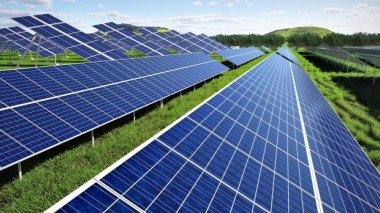
Investment in renewables is outpacing fossil fuel investment by a significant margin. Photo: Supplied
World:
¶ Since 2000, more than 20 countries have successfully curbed greenhouse gas emissions while boosting their gross domestic product, according to World Resources Institute analyst Nate Aden. No single trend has driven GDP-GHG decoupling across all countries. [CleanTechnica]
¶ After a seven-year delay, the New South Wales Government approved a wind farm project for the southern part of the state. Epuron Project’s $670 million project across the Harden and Yass Valley shires it will be around one-third of the size originally proposed in 2009. [ABC Local]

Wind turbine on a hill near Collector in NSW. ABC News photo.
¶ After several solar power plants were inaugurated in the northern areas of the Philippine island of Negros, the first solar farm in southern areas was unveiled by Negros Island Solar Power Inc. The 32-MW solar power plant can supply sufficient power for over 19,000 homes. [Sun.Star]
¶ In a drive to power its Irish facilities with 100% renewables, US social networking major Facebook has inked a deal with Brookfield Renewable Energy Partners for the supply of 150 MW of wind power. The newly-signed renewable energy supply agreement has a term of at least 10 years. [SeeNews Renewables]

Wind farm in Ireland. Author: Harry Pears. License: Creative Commons, Attribution-ShareAlike 2.0 Generic
¶ In the five days ending on the 4th of April, Vestas announced four separate orders for a total of 447 MW in wind turbines, set for four separate countries and continents. The orders include 48 MW of turbines for China, 27 MW for Spain, 200 for the United States, and 172 MW for Brazil. [CleanTechnica]
¶ Ireland must add up to 300 MW of onshore wind capacity every year until 2020 in order to meet its renewable electricity targets. The Sustainable Energy Authority of Ireland has said that significant renewables deployment is needed to avoid stringent EU fines for missing the 40% electricity target. [reNews]

Acres wind farm in Donegal (Element Power)
¶ Tesla has “no current plans to open a factory in Europe,” a spokesperson said. But French Energy and Environment Minister Ségolène Royal said her best idea for an old nuclear power plant in northeastern France is to try to convince Tesla to build a car factory there. [Ars Technica UK]
US:
¶ Rural electric cooperatives are spreading the word on how local clean power can save money, support communities, and diversify energy supplies. Community-scale solar is becoming an important tool as they move from centralized systems based on fossil fuels to distributed renewable power. [CleanTechnica]

National Rural Electric Cooperative Association Map
¶ In a 31-14 vote, the Maryland Senate passed a bill expanding the state’s renewable portfolio standard. The bill aims to increase Maryland’s current RPS from 20% by 2022 to 25% to 2020. The state House of Delegates passed a similar bill by a 92-43 margin last month. [North American Windpower]
¶ Sixty-four major American cities are now home to almost as much solar capacity as the entire country had at the end of 2010, according to analysis that ranks America’s major cities for their solar power. Los Angeles, San Diego, and Phoenix topped the list for most solar power. [Environment America]

Solar panels on the roof of Space and Naval Warfare Systems Command Headquarters, San Diego. US Navy photo by Rick Naystatt. Public Domain. Wikimedia Commons.
¶ Thousands of Michigan jobs in the clean energy industry could be created in coming years, according to a recent report. The Michigan Energy Innovation Business Council and Clean Energy Trust report that more than 87,000 Michigan residents already work in that industry. [Great Lakes Echo]
¶ Former Massey Energy CEO Don Blankenship was sentenced to a year in federal prison and fined $250,000 for conspiracy. Massey had a history of “systematic, intentional and aggressive efforts” to evade safety regulations, resulting in a 2009 explosion that killed 29 coal miners. [CNN]
Posted in nuclear power, renewable power, solar, wind | 1 Comment »
Tags: nuclear, nuclear power, renewable power, solar power, wind power
April 6, 2016
Opinion:
¶ Hey, Bill Gates, our ‘energy miracles’ are already here • The transformation from a fossil fuel-based global economy, to one that is powered by a decentralized mix of renewables is happening far faster than anyone anticipated, according to Michael Liebreich of Bloomberg New Energy Finance. [Mashable]

Photo by Chen Yibao – Imaginechina
Science and Technology:
¶ A new study from the Institute for New Economic Thinking at the Oxford Martin School and the Smith School for Enterprise and Environment, University of Oxford shows “we are uncomfortably close to the point where the world’s energy system commits the planet to exceeding 2°C.” [CleanTechnica]
World:
¶ A new alliance of renewable energy, natural gas, and energy intensive industry trade bodies published a declaration warning without reforming planned EU Internal Energy Market the bloc will struggle to deploy smart grid technologies that promise to cut costs and carbon emissions. [Business Green]

More flexible grid management capabilities are needed.
¶ Ireland’s Mainstream Renewable Power said today that all 35 turbines have been installed at the 80-MW Noupoort wind farm in South Africa, with the project on track for a July 2016 start of commercial operations. Erection of the turbines started in December, 2015. [SeeNews Renewables]
¶ Ontario plans a Request for Qualifications process for 930 MW of renewable energy under its Large Renewable Procurement by August 1. The province will seek up to 600 MW of wind, up to 250 MW of PV, up to 50 MW of hydropower and up to 30 MW of bioenergy. [SeeNews Renewables]
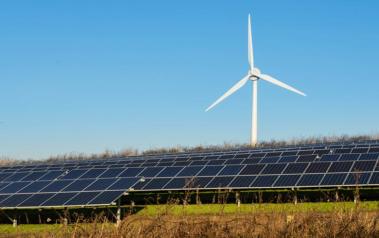
Wind and sun. Author: Gerry Machen. License: Creative Commons, Attribution-NoDerivs 2.0 Generic.
¶ The Miyazaki branch of the Fukuoka High Court ruled that the reactors at the Sendai power plant should be allowed to stay online. The verdict represents a victory for an industry struggling to restore atomic power five years after a series of meltdowns at the Fukushima plant. [ABC Online]
US:
¶ Vermont Governor Peter Shumlin and the leaders of the House and Senate agreed Tuesday that the state should consider purchasing the hydroelectric dams on the Connecticut and Deerfield rivers. Their owner, TransCanada, has announced it wants to sell 13 dams. [Seven Days]

Governor Peter Shumlin speaks, flanked by (l-r) House Speaker Shap Smith, Senate Pro Tem John Campbell, and Secretary of Administration Justin Johnson. Nancy Remsen
¶ Utility regulators announced that Southern California could face 14 days of rolling blackouts if the Southern California Gas Co’s Aliso Canyon energy facility above Porter Ranch remains depleted. The warning is the latest reverberation from the largest natural gas leak in US history. [Press-Enterprise]
¶ The Co-op Power renewable energy cooperative awaiting startup of its Northeast Biodiesel plant at the Greenfield Industrial Park has received a long-delayed interconnection agreement for another project at the same site, a 595-kW community-shared solar project. [The Recorder]
¶ New York State’s first community choice aggregation under Governor Cuomo’s watch, is now expected to start supplying customers with electricity on May 1, 2016. Of the 20 participating Sustainable Westchester communities, 14 opted for 100% green energy as a default. [CleanTechnica]
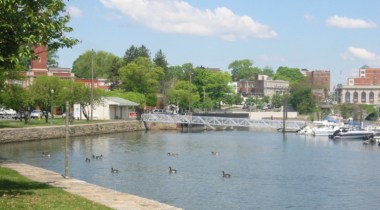
Mamaroneck, New York by WalkingGeek via Flickr (CC BY SA, 2.0)
¶ Even as construction of two nuclear reactors at Plant Vogtle remain behind schedule and over budget, Georgia Power is seeking permission from regulators to look at constructing a new reactor. Nuclear plants take much longer to build than those fueled by natural gas or renewables. [The Augusta Chronicle]
¶ US regulators have given the green light for the 287-MW Soda Mountain solar project in California. The decision was based on a revised project design by BLM and project developer Soda Mountain Solar. The project is located six miles southwest of Baker in southern California. [reNews]
¶ The Alevo Group agreed with Ormat Technologies to construct a 10-MW energy storage project at the Rabbit Hill substation in Georgetown, Texas. A comparison with a similar installation suggests this may have a capacity of 5 MWh. It will be owned and operated by the two companies. [CleanTechnica]

Rendering of storage facility. Alevo image
¶ A legislative committee has reached a deal on a bill designed to help shape the future of solar energy use in Massachusetts by making it easier to get credit for generating extra power from solar panels. A six-member House and Senate committee agreed on the bill’s final language. [Concord Monitor]
¶ The Vermont Public Service Board approved Green Mountain Power’s plans for using over $300,000 from a Nuclear Electric Insurance Limited fund to support renewable energy projects. The periodic fund allocation stems from GMP’s former ownership stake in Vermont Yankee. [vtdigger.org]
Posted in nuclear power, renewable power, solar, wind | 2 Comments »
Tags: nuclear, nuclear power, renewable power, solar power, wind power
April 5, 2016
World:
¶ Dutch shipping company Wagenborg has set sail with the topside for the Horns Rev 3 offshore wind substation ahead of installation off Denmark. A pair of vessels left Schiedam with the HSM-built structure, which will export power from Vattenfall’s 400-MW offshore wind farm. [reNews]

Image: Wagenborg
¶ The US, China, and India, largest projected emitters into the next several decades, have each agreed to sign the Paris Agreement on climate change on April 22, the first day they can do so. More than 190 countries agreed in principle in Paris last December. [CleanTechnica]
¶ Panasonic recently hit the 50,000 mark in its quest to distribute more than 100,000 solar lanterns throughout the world’s poor, in rural communities that don’t have reliable access to electric light. The “100 Thousand Solar Lanterns Project” is now half-way to completion. [CleanTechnica]
¶ Solar deployment in Japan is on track to meet the country’s target. The Ministry of Economy, Trade and Industry is considering reducing the incentives for solar systems by between ¥2.00 ($0.018) and ¥3.00 per kWh each year through fiscal 2019, regardless of their capacity. [SeeNews Renewables]

Solar panel installation in Yokohama, Japan. Author: CoCreatr. License: Creative Commons, Attribution-ShareAlike 2.0 Generic
¶ A report by the UK’s Intergenerational Foundation forecast that the country could save £39.9 billion ($56.7 billion) over the next 35 years if government steered the estimated £24 billion ($34 billion) required to build and run the Hinkley Point nuclear plant towards solar PV investment instead. [pv magazine]
¶ Spanish wind power group Gamesa said it has won contracts to build two wind farms along the Red Sea coastline in Egypt with a combined capacity of 160 MW. Gamesa expects to start delivering the turbines for both in the third quarter of 2016, with completion in 2017. [SeeNews Renewables]

Wind farm in Egypt. Author: Gigi Ibrahim. License: Creative Commons, Attribution 2.0 Generic
¶ The £16.8 million Monnaboy wind farm, Gaelectric’s third to operate in Northern Ireland, is being opened. The company is progressing through a program to commission a near term portfolio of about 100 MW on consented wind energy projects on the island of Ireland by 2017. [U.TV]
¶ Equitix will allocate more than £100 million to Scottish tidal power, after entering into a partnership agreement with leading developer Atlantis to aid the development of the world’s largest tidal stream project. The pair will collaborate to develop tidal power projects in Scotland. [edie.net]

Equitix plans to acquire at least 25% of each “project vehicle” Atlantis develops for tidal power initiatives in Scotland
¶ European nations have set aside just over half of the €253 billion ($389.67 billion) needed to dismantle old nuclear plants and manage waste, although the shortfall could shrink as the lifetime of some reactors is extended, EU regulators said on Monday. [THE BUSINESS TIMES]
US:
¶ Hawaii’s main utility, HECO, says smart grid, demand response, and storage technologies will help Hawaii reach 100% renewables by 2045. A plan submitted to the regulator shows how the state can continue to steer a course to meet its ambitious “100% renewable energy-powered” target. [PV-Tech]
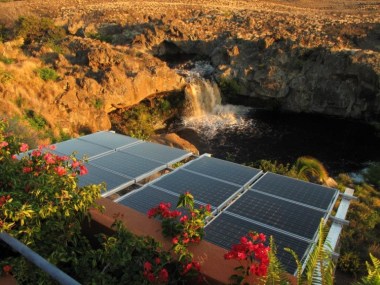
Solar PVs in Hawaii. Image: Renewable Energy Services Facebook page
¶ The US community solar energy project market could be worth up to $2.5 billion in revenue by the year 2020, according to a report from Navigant Research. The report notes that achieving such a figure would require changes as far as common utility company business strategies go. [CleanTechnica]
¶ Dominion Power filed an amicus brief in the national lawsuit against the federal Clean Power Plan, pushing back against arguments plan critics have made in an effort to derail new carbon rules. Nevertheless, the brief puts the weight of Virginia’s energy giant behind key aspects of the plan. [Daily Press]
¶ A key section of the Keystone pipeline has been shut down due to an oil spill in South Dakota, TransCanada said on Monday. TransCanada, which operates the pipeline, reported a spill of about 187 gallons of crude oil to the Coast Guard’s National Response Center on Saturday afternoon. [CNN]

Keystone pipeline infrastructure
¶ As the price of electricity in the eastern US fell by half over the last decade, utilities raised monthly bills for residential customers by 26%, government data says. Utilities say that it’s payback for billions of dollars worth of government-mandated improvements to long-neglected infrastructure. [Bloomberg]
¶ Continued operation of the “decaying” 40-year-old Indian Point nuclear power plant up the Hudson River from New York City “makes no sense,” according to Democratic presidential candidate Bernie Sanders. The plant is within 50 miles of the homes of 20 million residents. [RT]
Posted in nuclear power, renewable power, solar, wind | 2 Comments »
Tags: nuclear, nuclear power, renewable power, solar power, wind power
April 4, 2016
Opinion:
¶ Ontario’s challenge is to have enough power for all the new electric cars • When Ontario’s power planners look down the road, they see electric vehicles coming at them. They just might be coming a little faster now than even the forecasters imagined.
[London Free Press]
¶ The $2.6 billion buying binge that pushed SunEdison to the
brink • Just nine months ago, SunEdison was Wall Street’s favorite clean-energy company. It put every dollar it could find into a buying binge of wind and solar farms, and now, it is at the brink of bankruptcy protection. [Chicago Tribune]
World:
¶ Danish energy company Dong Energy awarded a $250 million contract to ABB for a 220-kV high-voltage cable system for the 1.2-GW Hornsea Project One offshore wind farm in the North Sea. The cable connecting the wind farm with the UK mainland grid will be 120 km long. [Energy Business Review]
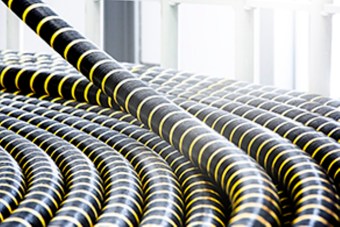
ABB’s high-voltage cable manufactured in Karlskrona factory, Sweden. Photo: courtesy of ABB.
¶ Canadian oil sands workers who felt “guilty about developing the infrastructure that is creating climate change” have been building an oil and gas worker-led nonprofit called “Iron & Earth,” to help those who were laid off diversify their skill sets and transition to renewable energy sector. [Truth-Out]
¶ A rising share of renewables in India’s power sector will pose a serious challenge to conventional power generators, said a report released by rating firm Moody’s Investors Service. It also said that achieving the government renewable power target of 175-GW by 2022 will be challenging. [Livemint]

Prime Minister Narendra Modi increased India’s target for solar power from 20,000 MW to 100,000 MW by year 2022.
¶ Energía was awarded a contract for 585.7 GWh of renewable electricity in the first long-term power auction in the wholesale electric power market organized by the National Energy Control Center of Mexico. A 168-MW wind farm will enter service in the State of Tamaulipas in 2018. [Renewable Energy Focus]
¶ In the UK, g2 Energy completed work on 47 large scale solar farms totalling 356.4 MW in the six months leading up to closure of the Renewables Obligation on 31 March. The year is the fifth running that it has connected 100% of its contracted renewable energy projects on time. [Solar Power Portal]
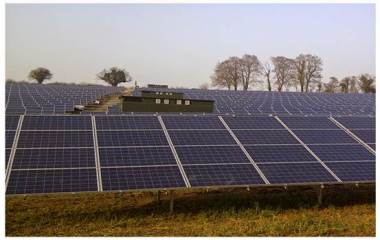
g2 Energy completed work on 356.4MW worth of solar farms in the six months before the 31 March deadline for the RO. Image: OPDE.
¶ The UK’s first “dry store” for spent nuclear fuel has officially been opened in Suffolk. The facility will store spent fuel from EDF Energy’s Sizewell B nuclear power plant from autumn this year until a Geological Disposal Facility is available for the longer term storage. [Energy Live News]
¶ More than 300 doctors and other medical professionals have signed an open letter demanding the government of the Australian state of Victoria develop a plan to retire the Latrobe Valley’s brown coal power plants because of the health damage they cause in the local community. [The Age]

A giant dredging machine at work in the brown coal mine at Loy Yang in the Latrobe Valley. Photo: John Woudstra
US:
¶ Solar companies have recently blanketed rural areas of New York, seeking leases on farmland for solar arrays of 20 acres or more. Some farmers welcome the opportunity to earn up to $2,000 an acre annually for the next 20 years or so, but some advisers are urging caution. [The Baytown Sun]
¶ A 62-MW solar project in southwestern Minnesota by NextEra Energy Inc has been unanimously approved by the state Public Utilities Commission, Minnesota Public Radio reported last week. The solar farm, on 500 acres near Marshall, is expected to supply 15,000 homes. [SeeNews Renewables]

Solar PV park. Author: mdreyno. License: Creative Commons, Attribution 2.0 Generic.
¶ Consumers Energy, Michigan’s second-largest electric utility, says it is developing a program to meet the needs of large energy users who want more of their electricity to come from renewable sources. Business customers are driving the push for alternative energy even more than state policy. [MiBiz]
Posted in nuclear power, renewable power, solar, wind | 2 Comments »
Tags: nuclear, nuclear power, renewable power, solar power, wind power
April 3, 2016
World:
¶ Maharashtra State Power Generation Company Limited recently floated tenders for the preparation of detailed project reports for setting up solar power projects over water bodies in the state. The company plans to share revenues with government agencies that own the water bodies. [CleanTechnica]

Solar PVs over a canal in India. SunEdison image
¶ The southern Indian state of Kerala has finally joined the bandwagon of Indian states launching massive solar power tenders. The Kerala State Electricity Board has floated a tender for 200 MW solar power capacity. Bidders shall be able to submit bids for project capacity between 10 MW and 200 MW. [Cleantechies]
¶ A study from two research organizations at the London School of Economics concluded, as China finalizes its 13th Five Year Plan for economic development for 2016 to 2020, that the country is moving toward a new development mode, focused on better quality growth. [Daily Star Gazette]
¶ Two Jordanian wind power plants with a total capacity of 100 MW will be ready and connected to the grid by 2019, according to one of the companies involved in the project. The first $110 million 50-MW wind plant, will be located in Tafileh, some 180 km southwest of Amman. [Zawya]

Photo credit: Arnd Wiegmann | Reuters
¶ The US won a ruling in Indian courts against domestic-production requirements, but Indian companies are overwhelmingly choosing Chinese products over US and Indian. US solar-panel exports to India are climbing slowly, but Chinese exports to India continue to grow much faster. [Business Standard]
¶ Four villages in Bijnor district, in the Indian state of Uttar Pradesh, will soon be solar powered. The state government has given the projects a green signal. They are to be managed by the New and Renewable Energy Development Agency and established by 2017. [Times of India]

Astonfield Renewables’ 2-MW solar plant in Uttar Pradesh. Photo by Citizenmj. CC BY-SA 3.0 unported. Wikimedia Commons.
¶ Earlier this year, the UK Government announced giving the green light to develop mini-nuclear plants. Now the Government is assessing suitable sites to push ahead with a build of the small modular reactors. They could be built as early as 2025, according to The Telegraph. [Telegraph.co.uk]
US:
¶ According to The Fresno Bee, a Sacramento, California, judge denied the efforts of Kings County Board of Supervisors to halt production of a high-speed bullet train from San Francisco to Los Angeles. The project which has been held up in litigation and bureaucracy for the several years. [CleanTechnica]
¶ Hawaiian Electric Companies submitted a revised power plan to the Hawai’i Public Utilities Commission to get to 100% renewable energy in 30 years. The company would use a broad mix of solar energy sources, onshore and offshore wind, hydropower, and geothermal. [Big Island Now]
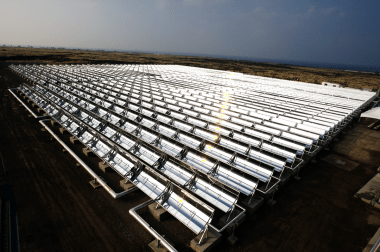
Micro-CSP collectors on the Big Island of Hawaii. Photo by Xklaim. CC BY-SA 3.0 unported. Wikimedia Commons.
¶ South Carolina utility Santee Cooper has launched the state’s first community solar project in Grand Strand. Santee Cooper Solar Share was opened for subscriptions Friday, centered along coastal Horry and Georgetown counties. It is offered as a less expensive alternative to rooftop solar. [Myrtle Beach Sun News]
¶ In recent years, CEI Electrical Contractors, whose offices in Billings and Colstrip are in the heart of Montana’s coal country, has seen its biggest work demand from the wind-energy industry. CEI services the giant turbines, nacelles and other equipment that dot hillsides of wind farms in several states. [Billings Gazette]
Posted in nuclear power, renewable power, solar, wind | 1 Comment »
Tags: nuclear, nuclear power, renewable power, solar power, wind power
April 2, 2016
Opinion:
¶ EDF shows that wind makes better sense than nuclear • EDF in the UK may be propelled by its disastrous nuclear ambitions, but in the US it is selling its power, profitably, for under 40% of the price it has been promised for Hinkley C, including federal tax credits. [The Ecologist]

Turbine at EDF Renewable Energy’s Bobcat Bluff Wind Project, Texas. Photo: EDF Renewable Energy.
¶ What a SunEdison Bankruptcy Could Mean for Renewable
Energy • SunEdison’s apparently looming downfall may become a black eye for the renewable energy industry, but longer term, it may be good for the solar developers left standing – and for investors. [Motley Fool]
Science and Technology:
¶ Demand for the lower-priced electric Tesla Model 3 surprised even the company’s CEO Friday as 198,000 people plunked down $1,000 deposits. Tesla had secured about 135,000 reservations on Thursday, the first day of ordering. The car won’t go on sale for at least another year. [Denver Post]

Tesla Motors unveils the Model 3 at the Tesla Motors design studio in Hawthorne, Calif. (Justin Prichard, The Associated Press)
World:
¶ The State Grid, the company running China’s power grid, is proposing a $50 trillion global electricity network to tackle pollution and climate change. If it goes ahead the network would use advanced renewable solar and wind technology and be operating by 2050. [RT]
¶ Analysis from Green Alliance shows the north of England performing better on onshore wind with the south doing better on solar. A senior policy adviser said: “The distribution of onshore wind and solar revealed by the league tables show that counties are playing to their strengths.” [reNews]
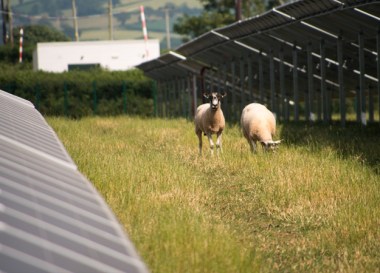
Sheep graze at solar plant in Devon. Credit: Lightsource
¶ India’s Supreme Court ruled Thursday that the ban on the registration of vehicles powered by large diesel engines in the National Capital Region will continue until further notice. Last year, the Supreme Court banned registration of diesel vehicles over 2000 cc in Delhi. [Environment News Service]
¶ One of Russia’s largest solar PV facilities has been connected to the grid in Abakan, in the Republic of Khakassia. The Khakass capital in central Russia just north of Mongolia, historically a place of political exile, has a continental climate with hot summers and frigid winters. [POWER magazine]

EuroSibEnergo’s newly opened solar photovoltaic facility in Abakan. Courtesy: EuroSibEnergo
US:
¶ In an unusually direct move, Bernie Sanders called on Hillary Clinton to apologize for saying his campaign is lying about her relationship with fossil fuel money. Sanders referred to Clinton’s angry response to an activist who asked Clinton if she will “reject fossil fuel money.” [CNN]
¶ The fate of a bill regulating renewable energy projects is up in the air after passing the Vermont Senate Thursday. After spending months drafting the bills, senators rewrote large portions of the measure on the floor Thursday. Now, representatives may scrap it for parts and start over. [WCAX]

Vermont Senate
¶ Governor Scott Walker signed a bill lifting Wisconsin’s ban on new nuclear plants, brushing aside fears of meltdowns in hopes of creating what he called a safe energy option for the state. No major utilities have approached the state looking to build any new plants, according to state officials. [Daily Reporter]
¶ Technology companies Google, Apple, Microsoft, and Amazon filed a joint amicus brief in a federal Court of Appeals to support the Environmental Protection Agency as it defends its signature Clean Power Plan against a challenge by industry groups and more than half of US states. [eNCA]

Technology giants have given the Clean Power Plan their backing.
¶ A special inspection of the Indian Point 2 nuclear reactor found that more than a quarter of the stainless steel bolts needed to channel cooling water through active nuclear fuel rods were broken, distorted or “missing”, a finding that may have more far-reaching effects for nuclear plants. [Huffington Post]
Posted in nuclear power, renewable power, solar, wind | 2 Comments »
Tags: nuclear, nuclear power, renewable power, solar power, wind power
April 1, 2016
Science and Technology:
¶ Researchers have shown climate change to have similar, significant impacts on bird populations in large, distant areas of the world. Their study used population-predicting models and three decades of field data, gathered by bird-watching volunteers. The findings are published in the journal Science. [BBC]

The American robin has declined in some southern states, but increased further north. US Fish and Wildlife Service
World:
¶ A total of 57.7% of electricity consumed in Scotland was renewably generated last year, up 7.9 percentage points on 2014, according to provisional UK government statistics. Scottish politicians and green groups hailed the figure, but warned further progress would be hindered by UK policy. [Energy Voice]
¶ According to new figures published by the UK’s Department of Energy and Climate Change, 2015 saw renewable energy generate a record 24.7% of the country’s electricity, an increase of 5.6% on 2014 numbers. As a result, electricity bills across the country are falling. [CleanTechnica]
¶ Plummeting coal use in 2015 led to a fall of 4% in the UK’s annual carbon dioxide emissions, according to government energy statistics published on Thursday. Coal is now burning at its lowest level in at least 150 years. Coal consumption fell by 22% compared to 2014. [The Guardian]

Solar panels are installed on Blackfriars station. An old coal-power station in the background. Photo courtesy Solar Trade Association
¶ According to a report published this week by the Institute for Energy Economics and Financial Analysis, India’s current plans to build 12 new nuclear-powered plants is not only economically unviable, but fraught with risk, as the plants are intended to be a “first-of-its-kind” design. [CleanTechnica]
¶ Vattenfall has generated the first electricity from the prototype 4.99-MW Parc Cynog solar power project in Wales. The Parc Cynog site in Carmarthenshire already includes 11 wind turbines, which have been in operation for 14 years. The project is Vattenfall’s first large solar array. [reNews]
¶ “The world has too many coal-fired power plants, yet the power industry continues to build more,” costing up to $981 billion. This is the conclusion from the second annual report published by the Sierra Club, Greenpeace, and CoalSwarm, investigating the global coal plant pipeline. [CleanTechnica]
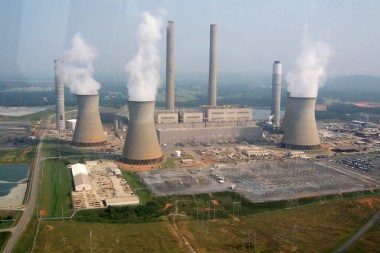
Do we need more coal plants?
¶ Lightsource Renewable Energy signed a 25-year Power Purchase Agreement with Belfast International Airport for the largest solar project for any UK airport. The private network will have a hard-wired 4.84-MW off-site solar farm, providing 27% of its annual demand. [Manufacturing Global]
US:
¶ The New Jersey Senate passed a bill requiring utilities in the state to source at least 80% of their electricity from renewable sources by 2050. The percentage of renewable electricity would start at 11% in 2017, growing roughly 10% every 5 years until the 80% target is achieved. [PlanetSave.com]

Solar field in North Hanover Township, New Jersey. Photo by Mr. Matté. GNU Free Documentation License. Wikimedia Commons.
¶ Ohio state regulators approved a version of FirstEnergy’s request to have customers subsidize continued operations of the Davis-Besse nuclear plant and the coal-fired WH Sammis plant. Customers will be forced to buy power from the old plants even when cheaper power is available. [cleveland.com]
¶ New York’s FitzPatrick Nuclear Power Plant will shut down for good next January. Entergy, the plant’s owner, has sent a letter to the NRC confirming the date. The GE boiling-water reactor, the same design as the reactors at Fukushima, has been losing money for years. [Public News Service]
¶ The Nine Mile Point Nuclear Station is “losing a lot of money” and could someday face an early closure like its neighbor, the FitzPatrick plant, unless New York state officials develop price supports for upstate nuclear plants, according to the executive vice president of plant owner Exelon. [Syracuse.com]
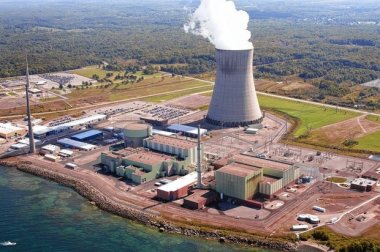
Nine Mile Point. (Constellation Energy Nuclear Group)
¶ A Salt Lake City renewable energy provider, sPower announced its first wind project, the Latigo Wind Park, is now fully operational and has closed on its long-term financing plan. The plant, in Southeastern Utah, has a capacity of 60 MW. It has been tested since completion in December. [Digital Journal]
¶ A $60-million landfill gas facility has been commissioned in California. It sits on 2.6 acres of the 725-acre Bowerman Landfill, one of the West Coast’s largest. The plant is expected to produce 160,000 MWh each year. This is enough to cover the annual needs of 26,000 homes. [Biomass Magazine]
Posted in nuclear power, renewable power, solar, wind | 1 Comment »
Tags: nuclear, nuclear power, renewable power, solar power, wind power
March 31, 2016
Opinion:
¶ This chart shows the United States’ mind-blowing clean energy potential • The United States uses about 3.7 million GWh of electricity each year. The next time someone tries to make the argument that 100 percent renewable energy is out of reach for the U.S., show them this image: [Grist]

From the Environment America Research & Policy Center
¶ Wake up call for oil companies: electric vehicles will deflate oil demand • Major oil companies greatly underestimate the impact electric vehicles will have on their market. Trends currently underway in the auto industry are likely to have a substantial impact on oil demand. [CleanTechnica]
¶ Clear Skies From Wind Power • Over 17 million Americans have asthma. Every year it is responsible for more than 10 million doctor visits and 1.8 million trips to the emergency room. Health professionals tell us one of the biggest triggers for an asthma attack is air pollution. [Huffington Post]
World:
¶ David Cameron is to announce plans for the largest ever shipment of nuclear waste from the UK to the US. In return, the US will send a different type of used uranium to Europe, where it will be used medically. But Friends of the Earth said transporting nuclear waste across the ocean is too risky. [BBC]
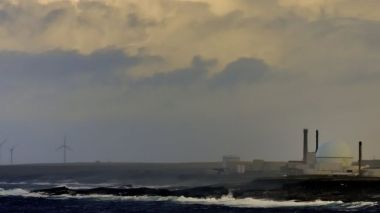
The UK waste will come from the Dounreay facility in Caithness. Thinkstock
¶ Japan’s electricity market is going through a fundamental shake-up, with the introduction of greater competition for households and small businesses. Until now, regional utilities have monopolized supply. With the change, consumers can choose their electricity provider. [The Japan Times]
¶ Energy storage development in Ireland remains purposely technology-agnostic and this, together with the strong drivers behind storage in the country, is transforming the country into Europe’s energy storage lab, as highlighted a recent Grid and Storage workshop in London. [pv magazine]
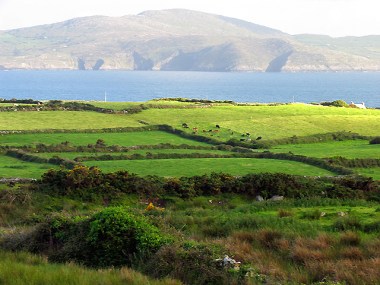
The ninth regional Grid and Storage workshop shone a light on Ireland’s energy storage R&D. Pam Brophy/Wikipedia
¶ Cambodia can get 90% of its energy from wind, solar and biomass by 2050, the World Wildlife Federation found in a new report published yesterday. Renewable energy will soon be cheaper than fossil fuels, especially with their environmental damage and health costs. [The Phnom Penh Post]
¶ A new solar project in the Dominican Republic will be the largest of its kind in the Caribbean. The Monte Plata project, named for the capital city and province in which it is located, is a 33.4-MW PV array destined to churn out five times as much clean energy as the nation currently generates. [Inhabitat]
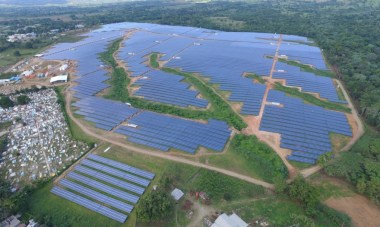
Image via Phanes Group
¶ Two solar power projects with a total installed capacity of 185 MW were commissioned in the Philippines. This includes the largest project in Southeast Asia, a 135 MW project now operational at Cadiz. Local media reports say the project’s total cost was about $200 million. [CleanTechnica]
US:
¶ Many have long speculated about fracking and its possible negative impact on drinking water. Recent research released today from Stanford scientists finds for the first time that fracking operations in Wyoming have had a clear impact on underground sources of drinking water. [CleanTechnica]

US EPA staff members sample a monitoring well for contaminants from hydraulic fracturing. (Photo: Dominic DiGiulio)
¶ Analysis of data from the US Bureau of Labor Statistics and the DOE for Environmental Entrepreneurs found that over 2.5 million Americans work in the clean energy sector. Almost 1.9 million work on energy efficiency, 300,000 in the solar industry, and 77,000 with windpower. [CleanTechnica]
¶ The Virginia State Corporation Commission approved Dominion Virginia Power’s plan to build a 1,588 MW, natural gas-fired combined-cycle plant, rejecting assertions by independent power producers and environmentalists that the utility failed to fully explore cost-effective alternatives. [Platts]
¶ It might seem like a bad April Fool’s joke, but Plant Vogtle is no laughing matter to Georgia Power customers. They have already paid more than $1.4 billion for reactors that won’t be operational until 2020 or 2021. The first was supposed to be operational on April 1, 2016. [Creative Loafing Atlanta]

The first of two new reactors at Plant Vogtle were supposed to open April 1. (Georgia Power Company)
¶ HP is joining RE100, a worldwide initiative of big-name businesses committed to 100% renewables. RE100 works with companies like HP to help them transition to renewable energy sources and accelerate the shift of the global energy market to a low-carbon economy. [North American Windpower]
¶ SunEdison, the US-based solar power giant, is at “a substantial risk” of bankruptcy, ne of its own publicly listed subsidiaries says. The statement was made by one of SunEdison’s “yieldcos,” listed companies that hold renewable energy assets and have long-term power purchase deals with utilities. [GCR]
Posted in nuclear power, renewable power, solar, wind | 1 Comment »
Tags: nuclear, nuclear power, renewable power, solar power, wind power
March 30, 2016
Science and Technology:
¶ The National Snow and Ice Data Center reported that the spread of Arctic sea ice set a new record low for the second straight year, stopping last week at 5.607 million square miles. That’s 5,000 square miles less than last year’s record low and 431,000 square miles less than the average. [CNN]
The consequences of climate change go
far beyond warming temperatures.
¶ MIT researchers demonstrated a calcium-metal-based liquid battery intended for grid-scale storage and a long cycle life. Calcium was blended with magnesium to make it usable. Use of earth-abundant materials and a scalable kind of construction are among the battery’s advantages. [CleanTechnica]
World:
¶ There are renewed calls to re-examine Alberta’s deregulated power market after the announced closure of a coal-fired electrical generator. Maxim Power Corp announced the temporary shut down of the 44-year-old plant, saying it is losing money at current spot market prices. [Calgary Sun]
Power Plant northeast of Calgary. (Postmedia Network)
¶ The European Investment Bank agreed to provide £500 million for a major reinforcement of the electricity transmission network in the north of Scotland to improve connections between wind, wave and tidal renewable energy schemes and the national power network. [Your Industry News]
¶ Renewable energy developers won contracts to produce 1,720 MW of power in Mexico’s first-ever private auction. Seven wind and solar companies including Enel Green Power, SunPower Systems Mexico, and Recurrent Energy, won 15-year contracts for power beginning in 2018. [Energy Voice]
¶ Scotland’s Western Isles is preparing to run its own utility as part of a long-term plan to tap the islands’ renewable energy potential. Hebrides Energy will be a collaboration between Comhairle nan Eilean Siar and an unnamed UK energy supplier, together with representation from others. [reNews]

Fuel poverty is a major issue in islands off Scotland (Mi9)
¶ Japan’s Nuclear Regulation Authority gave TEPCO a go-ahead to freeze the soil around the reactors at the crippled Fukushima Daiichi nuclear power plant. The aim of the frozen soil wall is to block the flow of groundwater into the reactor buildings to prevent it from becoming contaminated. [Asahi Shimbun]
US:
¶ Wind energy reduces a variety of health-harming air pollutants, including smog-causing oxides of sulfur and nitrogen. This helps reduce rates respiratory diseases such as asthma. Electricity generated by wind in 2015 represented $7.3 billion in avoided health costs last year alone. [Green Energy Times]
¶ The Tennessee Valley Authority, in partnership with the Tennessee Valley Public Power Association, is awarding 16.7 MW of solar capacity to four local power companies who applied through the Distributed Solar Solutions pilot. The projects will generate power for over 1,300 homes. [Your Renewable News]
¶ A unique hybrid renewable energy project in Northern Nevada was celebrated by a host of dignitaries, including the Prime Minster of Italy. Enel Green Power combined 33.1 MW of geothermal capacity, 26.4 MW of PV, and 2 MW of solar thermal at a cost of $200 million. [Las Vegas Review-Journal]

Earthquakes in Oklahoma and Texas
¶ About 7.9 million people are now at risk from earthquakes scientists believe are caused by fracking, including certain regions in Oklahoma, Kansas, Colorado, New Mexico, Texas and Arkansas, the US Geological Survey said. The earthquakes don’t factor in building-code maps, but do create a hazards. [CNN]
¶ An anti-Clean Power Plan bill Colorado Senate Republicans insist has “nothing to do with climate change” prompted them to argue on the Senate floor that human-caused global warming is a myth. The bill would have the state inactive pending Supreme Court review. [The Colorado Independent]
¶ Aerojet Rocketdyne, a subsidiary of Aerojet Rocketdyne Holdings, Arkansas Electric Cooperative Corporation, and Ouachita Electric Cooperative Corporation, will announce full commissioning of the 12-MW East Camden solar field, the largest solar project in Arkansas, on March 31, 2016. [EIN News]
Posted in nuclear power, renewable power, solar, wind | 1 Comment »
Tags: nuclear, nuclear power, renewable power, solar power, wind power
March 29, 2016
Science and Technology:
¶ When a large generating plant shuts down, the grid’s frequency drops due to an imbalance between generation and load. DOE researchers are evaluating wind farms for providing frequency-responsive back-up currently supplied to the grid by conventional power plants. [Windpower Engineering]

NREL’s National Wind Technology Center is the nation’s
premier wind energy technology research facility.
World:
¶ Five years after the Fukushima Disaster in Japan resulted in three reactor meltdowns, the global nuclear industry is spending $47 billion on safety enhancements mandated after the accident revealed weaknesses in plant protection from earthquakes and flooding, according to a Platts review. [Platts]
¶ The top official in China’s northern province of Hebei, one of the country’s most polluted, has vowed to use the staging of the 2022 Winter Olympics to drive efforts to cut smog and promote clean energy. Skiing and snowboarding events will be held in the city of Zhangjiakou. [Voice of America]
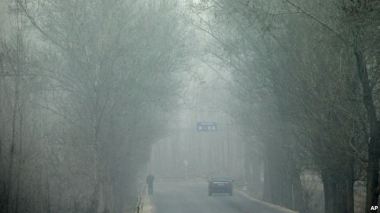
Heavy haze on a severely polluted day in northern China. Reuters
¶ Chinese regulators said the windswept regions in northern China will suspend the approval of new wind projects in 2016. It is at least the fourth time in five years wind operators were ordered to slow down growth. The transmission system has to keep up with turbine installations. [InsideClimate News]
¶ During the upcoming summer, a public-private council set up in Fukushima will focus on developing market strategies for the wind and hydrogen segments. The scheme is one more step towards the fast reconstruction of the prefecture following the Fukushima nuclear disaster. [SeeNews Renewables]
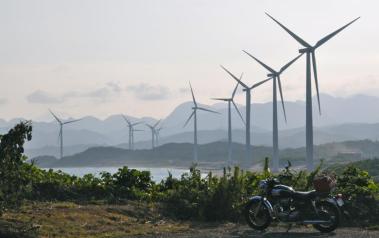
Wind farm in Japan. Author: cotaro70s.
License: Creative Commons, Attribution-NoDerivs 2.0 Generic.
¶ Japan had been poised to get its nuclear plants up and running again after the response to the Fukushima Disaster shut them down. But a series of mishaps has raised doubts over the country’s ability to achieve a goal of supplying 20% to 22% of its energy needs with nuclear power by 2030. [IEEE Spectrum]
US:
¶ DTE Energy is working with the City of Detroit on “what could be one of the largest urban solar arrays in the U.S.” DTE confirmed reports that the company has a large solar energy array planned for 10 acres of a vacant 20-acre parcel on Detroit’s west side in the O’Shea neighborhood. [MLive.com]

Solar panels constructed by DTE Energy in Ann Arbor, Mich.
(Ryan Stanton | The Ann Arbor News)
¶ The Vermont Senate is due to consider legislation this week that proponents say will give municipalities a say over where renewable energy projects get built. To have that say, towns and regions would have to write energy development provisions into their regional and town plans. [vtdigger.org]
¶ Advanced Rail Energy Storage said its proposed commercial-scale gravity-based rail energy storage project has been granted a right-of-way lease by the Bureau of Land Management. The 50-MW project, on 106 acres of public land in Nevada, will help stabilize the electric grid. [AltEnergyMag]

Rail energy storage. ARES photo
¶ Rooftop solar panels could meet 74% of California’s electricity needs, and the country could get about 39% of its, according to a new study from the National Renewable Energy Laboratory. In 2008, NREL estimated that the nation could get 21% of its power from solar. [The Desert Sun]
¶ Navajo utility and government officials in New Mexico will break ground on a large-scale solar project on April 23. The utility authority in December struck a two-year agreement with Tempe-based utility Salt River Project to build the 27.5-MW solar farm in Kayenta, Arizona. [Albuquerque Journal]
Posted in nuclear power, renewable power, solar, wind | 2 Comments »
Tags: nuclear, nuclear power, renewable power, solar power, wind power
March 28, 2016
Science and Technology:
¶ A Sandia-led team, with support of the US DOE, has developed a way to make a magnetic material that could lead to lighter and smaller, cheaper and better-performing high-frequency transformers, helping adoption of more flexible energy storage systems and renewable energy. [Nanowerk]

Sandia National Laboratories researcher Todd Monson.
¶ Researchers from two Scottish universities are taking part in a project to boost the development of “meshed” offshore grids to link windfarms with the mainland. Aberdeen and Strathclyde are part of a four-year European initiative investigating high-voltage direct current technology. [The National]
¶ A research team from the Shenzhen Institutes of Advanced Technology of the Chinese Academy of Sciences has developed a novel, environmentally friendly low-cost battery that overcomes many of the problems of lithium-ion batteries. It has both lower weight and lower fabrication costs. [AZoCleantech]
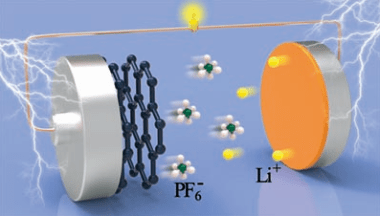
Schematic structure of the AGDIB
(Image by Professor TANG Yongbin)
World:
¶ In a bit of an unexpected move, the biggest heavy machinery manufacturing firm in China, the SANY group, announced that it will invest around $7.7 billion in various solar PV projects in the country over the next 5 years. A pilot project of 3.82 MW had already been tested. [CleanTechnica]
¶ Authorities in the Indian state of West Bengal were forced to suspend generation at the 2,300-MW plant because the canal carrying cooling water to it went dry. The township it was in lost water, residents had to be given bottled water to drink, and the whole area had electricity shortages. [BBC]
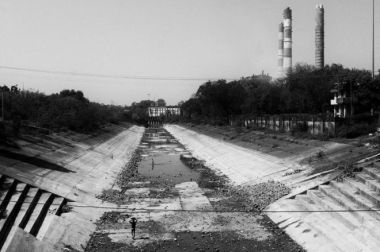
The canal connecting the Ganges to the power station dried up.
¶ In refugee camps and at military camps, the power supply is often a huge cost item. Three students from the University of Applied Sciences in Amsterdam have been looking into a potential solution: the use of end-of-life batteries from electric cars as a source of renewable energy. [Recycling News]
¶ A pipe stretching nearly 1.2 miles into the ground could deliver heating from the earth to the new Aberdeen Exhibition and Conference Centre and nearby homes, a report has found. A feasibility study revealed that a deep geothermal well would cost around £2.3 million to build. [Press and Journal]
¶ China is aiming to triple its solar PV generation capacity by 2020, bringing it up to 143 GW, its National Energy Administration says. The plan is to add between 15 GW and 20 GW of PV capacity a year, investing about $368 billion in types of grid infrastructure at the same time. [CleanTechnica]

Image by Aapo Haapanen (some rights reserved)
US:
¶ Power generators are resisting Massachusetts Governor Charlie Baker’s plan to tap Canadian hydropower to meet the state’s energy needs. His plan, which hinges on lawmakers’ approval, calls on the utilities to import 1,200 MW to 2,400 MW of hydro-electricity. [Gloucester Daily Times]
¶ North Dakota is one of the top states in the Midwest for jobs in the clean-energy field, according to the Clean Jobs Midwest survey. It shows North Dakota has the highest percentage of clean-energy jobs, per capita, out of 12 Midwestern states, at just under 12,000. [Public News Service]

New numbers show North Dakota has the highest percentage of clean-energy jobs per capita in the Midwest. (iStockphoto)
¶ The advocacy group, Industrial Energy Consumers of America, sent a letter to ranking members of two US Senate Committees, urging them to extend the combined heat and power business energy investment tax credit, which is set to expire at year-end 2016. [Energy Manager Today]
¶ In early 2015 engineers on a brand-new submarine found that a pipe joint near the innermost chamber of its nuclear-powered engine showed signs of tampering. Defective parts, probably costing $10,000 or less, have kept the $2.7 billion Minnesota in an overhaul for two years. [NavyTimes.com]
Posted in nuclear power, renewable power, solar, wind | 1 Comment »
Tags: nuclear, nuclear power, renewable power, solar power, wind power
March 27, 2016
World:
¶ In India, Tata Power’s Mulshi solar plant shows how energy needs do not have to be met at the cost of the environment. Suitable plants will be grown immediately below the solar panels so that all the available land there can be utilized to its fullest, with its fertility maintained. [Daily News & Analysis]

The site of the Mulshi solar plant run by Tata Power
¶ A battery storage trial by an Australian network operator shows that the combined benefits of battery storage nearly match the costs of technology, and should exceed them with falling battery costs. The trial tested battery systems using five different types of demand management. [CleanTechnica]
¶ Morgan Stanley, which predicted a million Australian households will adopt battery storage over the next four years, says the broader Australian energy market, including incumbent coal-fired generators, the big networks and retailers, still underestimates coming market changes. [RenewEconomy]
¶ Investment in wind generation of electricity has propelled Mexico on to the list of the 10 countries that recorded the greatest spending on renewable sources of energy. That spending in Mexico in 2015 totaled $4 billion, representing a growth of 105% over the previous year. [Mexico News Daily]
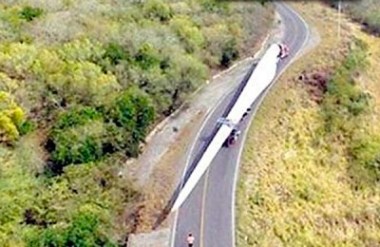
Wind turbine blade en route to new Tamaulipas wind farm.
El Sol de Tampico
¶ Two large media companies, Sky and Bloomberg, have both pledged to go “100% renewable” as part of the RE100 initiative. Sky will source 100% renewable electricity by the year 2020 “where available;” and that Bloomberg will purchase only renewable electricity by the year 2025. [CleanTechnica]
¶ A mere two days after bombs in Brussels killed 31 people, a security officer who worked for a nuclear power plant was murdered and his pass stolen. A story in local newspaper Dernière Heure emphasized the security badge was de-activated shortly after the guard was found dead. [Slate Magazine]

Belgium’s Doel nuclear plant. Photo by LimoWreck.
CC BY-SW 3.0 unported. Wikimedia Commons.
US:
¶ The number of energy loans in danger of default is on course to extend above 50% this year at several major banks, including Wells Fargo & Co and Comerica Inc, according to bankers and others in the industry. Oil prices remaining at around $40 a barrel would be bad news for the banks. [morningstar.com]
¶ According to Solar Power Rocks, a website to help homeowners understand the ins and outs of investment returns on local solar panel installations, half of the top ten states where switching over to solar power makes the most economic sense are in the Northeast. [Republican & Herald]
¶ Wisconsin’s renewable energy landscape has been pretty much frozen for five years, especially for wind farms. While neighboring states have been blossoming with wind development, Wisconsin has become almost a “black hole” of development. And it shows in lost jobs. [Milwaukee Journal Sentinel]
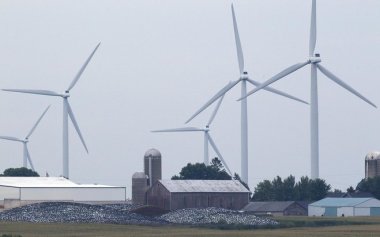
Turbines on a We Energies wind farm near Johnsburg in northeastern Fond du Lac County in 2014. Credit: Mark Hoffman
¶ Natural gas may have become the dominant source nationally for electrical power generation in 2016, but coal remains king in Nebraska. Nevertheless, more renewable energy sources have begun to creep into Nebraska’s energy portfolio with investments in windpower. [Lincoln Journal Star]
¶ The US DOE released the agency’s first annual analysis of how changes in America’s energy profile are affecting national employment in multiple energy sectors. The inaugural US Energy and Employment Report provides a broad view of the energy employment landscape. [Imperial Valley News]
Posted in nuclear power, renewable power, solar, wind | 2 Comments »
Tags: nuclear, nuclear power, renewable power, solar power, wind power
March 26, 2016
Opinion:
¶ Has US Nuclear Power’s Death Spiral Begun? • Crashing prices for natural gas and accelerating market penetration of renewable energy have both contributed to dramatic drops in wholesale power price levels, leaving nuclear power with few options other than surrender. [IEEE Spectrum]
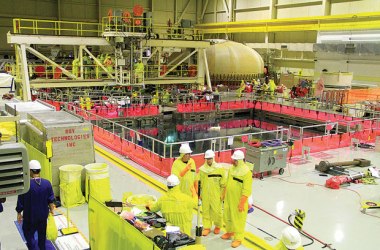
The Quad Cities nuclear plant is getting help from
a regional grid operator. Photo: Kevin Schmidt/Alamy
¶ US Chamber of Commerce Forecasts No Growth in Renewable Energy. We Disagree. • The Chamber wants to belittle both the supply and demand for renewable energy, when Main Street and Fortune 500 companies continue to make investments greatly outpacing expectations. [The Equation]
World:
¶ Investment in renewable energy hit a record $286 billion (€256 billion) in 2015, a UN report says. For the first time, over half came from developing countries. New investment in cleaner energy has exceeded $2.3 trillion since 2004, when investments totaled less than $50 billion. [Daily Sabah]
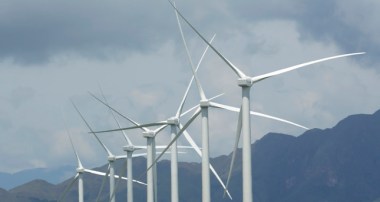
Growth of clean energy in 2015 was dominated by
solar PVs and wind. (AP Photo/Arnulfo Franco, FILE)
¶ The Indian government has a new goal. Come 2030, and every car user in India could have an electric vehicle. Under the plan, the vehicles will be given without an upfront payment and will be paid for by users over a period of time from the savings made on fuel, according to the energy minister. [Livemint]
¶ At the end of 2014, Europe had 17,240 biogas plants, with a total installed capacity of 8,293 MW. The electricity they produced stood at 63.3 TWh, enough for 14.6 million European households. The numbers are growing fast in such places as the UK, where they doubled in just one year. [Biomass Magazine]

Harvest Power’s energy garden in Orlando. Photo by Harvest Power.
¶ SSE, the UK’s second largest utility, could be forced to cut its dividend, experts warned. A currently healthy showing from SSE’s generation business results from a wet and windy winter boosting its renewables output, but low wholesale electricity prices of £35/MWh are straining it. [Telegraph.co.uk]
¶ Siemens was awarded an order to supply a link between the Dutch and Danish grids. The order covers two 700-MW converter stations for a DC voltage of ±320 kV. One will be at Eemhaven in Holland, the other in Endrup in Denmark. The cable will be 325 km long. [Transmission and Distribution World]
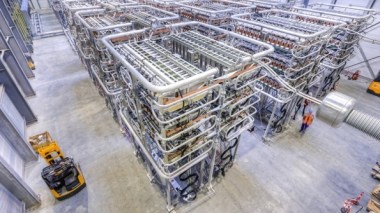
Siemens Holland photo.
¶ After terrorist attacks in Brussels, authorities have stepped up security at nuclear sites. Safety officials said there was nothing to suggest a specific threat against the country’s reactors or plants, but videos suggest a connection between terrorists and a senior nuclear official. [The Guardian]
US:
¶ The US DOE will participate in the Clean Line transmission project, to bring 4,000 MW of low-cost electricity from wind farms in Oklahoma and the Texas panhandle to the Southeast. The project will bring enough affordable wind power for more than 1.5 million homes. [EcoWatch]

The US DOE will participate in the Clean Line transmission project.
¶ Five years ago, Texas’ power grid operator offered up data on projected power demand and supply that convinced companies to build new power plants. Now those plants barely turn a profit. Dallas-based Panda Power Funds says the data was “seriously flawed or rigged” and is suing. [Houston Chronicle]
¶ NaturEner USA and San Diego Gas & Electric reached a settlement of a lawsuit involving Montana’s largest wind farm and protections for raptors. NaturEner USA had earlier shifted locations of some of the turbines due to concerns of Montana Audubon and the US Fish and Wildlife Service. [Great Falls Tribune]
Posted in nuclear power, renewable power, solar, wind | 2 Comments »
Tags: nuclear, nuclear power, renewable power, solar power, wind power
March 25, 2016
Science and Technology:
¶ A colorful goop, developed at the University of Toronto, could be a real-life blockbuster. When spread on a strip of metal and subjected to an electric current, it can break apart molecules of water at about three times the rate and far more cheaply than any substance currently available. [The Globe and Mail]

The University of Toronto has developed a catalyst that could improve energy storage. (Marit Mitchell/University of Toronto)
World:
¶ India’s massive solar power capacity addition target is expected to revolutionize the Indian jobs market. According to a report by the Natural Resources and Defense Council, India may end up creating over a million new jobs in its endeavor to have 100 GW of solar capacity by March 2022. [Sustainovate]
¶ Chinese media reported that the country’s National Energy Administration ordered 13 provincial governments to suspend approvals of new coal-fired power plant projects until the end of 2017. Another group of 15 provinces was ordered to delay new construction of projects already approved. [EcoWatch]
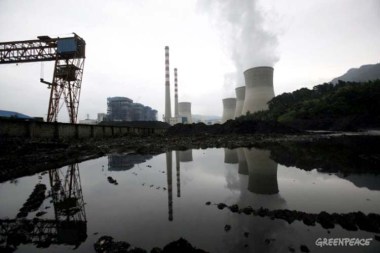
China is stopping unnecessary new coal plants.
Photo credit: Greenpeace
¶ It is over 3 months since the Basslink interconnector failed, just as hydropower was reduced to nearly nothing by drought. Tasmania has huge wind and solar power resources, which may be key to solving its energy security woes in the long term, but the immediate situation is pressing. [Energy Matters]
¶ The UK won’t struggle to keep the lights on if EDF decides not to proceed with its £18 billion ($25 billion) plan to build a new nuclear plant at Hinkley Point, Energy Secretary Amber Rudd said. Britain has nine years to fill any gap in generation created by the loss of a 3.2-GW project. [Bloomberg]
¶ A new UN report says 2015 set a slew of new records for global investment in clean energy, with the bulk of investment in the developing world. But the report also contained a grim punchline when it came to the impact this is having on the broader climate change problem. [Washington Post]
¶ A nuclear reactor that began operating almost 40 years ago will be retired at the Ikata plant in Ehime Prefecture, western Japan, for economic reasons, Shikoku Electric Power Co announced. It would cost about ¥200 billion ($1.77 billion) in upgrades for it to pass strict new safety standards. [Asahi Shimbun]
US:
¶ A report from the National Renewable Energy Laboratory is the deepest dive on solar’s potential since 2008. It examines the country’s potential for rooftop solar power. According to the report, we could get bout 39% of the country’s electricity consumption, at current levels. [Grist]

Los Angeles
¶ The mayor of Seattle announced a plan to cut city vehicle fleet greenhouse-gas emissions by 50% by the year 2025 through the use of electric vehicles and biodiesel. Seattle gets most of its electricity from hydroelectric sources, so to cut greenhouse gas emissions, it must do so in transportation. [CleanTechnica]
¶ Omaha-based Tenaska sold or managed 10% of US natural gas in 2014. Now low gas prices have pushed down profits and its CEO believes pairing renewable energy with conventional sources like natural gas “is where the future is” for Tenaska and others in the energy industry. [Omaha World-Herald]
¶ A 12-MW Virginia offshore wind demonstration project has been cleared to install and operate two 6-MW turbines in federal waters off Virginia Beach. The US Bureau of Ocean Energy management has approved the country’s first “research activities plan,” which lays out plans for the turbines and cabling. [reNews]
Virginia Beach (reNews)
¶ The US Securities and Exchange Commission told Exxon Mobil Corporation to include a climate change resolution in its annual shareholder proxy, according to Reuters. If it is approved, investors would have to be informed on how the company’s profits may be effected by climate change. [Business Finance News]
¶ The Rockefeller Family Fund announced its intention to divest from fossil fuels as quickly as practically possible. The statement singled out ExxonMobil, which has been accused of a cover-up on climate change and interfering in efforts to mitigate it. [The Maritime Executive]

Rockefeller Family Fund Divests from ExxonMobil, Fossil Fuel
¶ The Sierra Club Virginia chapter and the Center for Media and Democracy released a report on the influence that ALEC and its political allies have exerted to stymie state climate and clean energy policies in Virginia. The report focuses on ALEC’s efforts to stop the Clean Power Plan. [Augusta Free Press]
¶ LD 1649, presented to Maine’s Joint Energy, Utilities, and Technology Committee last month, would replace the state’s current retail rate net energy metering policy with a system of market-based incentives for residential solar generators. Stakeholders have been voicing opinions. [Utility Dive]
Posted in nuclear power, renewable power, solar, wind | 2 Comments »
Tags: nuclear, nuclear power, renewable power, solar power, wind power
March 24, 2016
Science and Technology:
¶ Siemens has unveiled a new solution for the protection of offshore wind turbine rotor blades against leading edge erosion. The protection layer is designed to absorb the impact energy from rain drops and other particles and thereby protect the leading edge from fatigue damage. [reNews]

Horns Rev 2 (Dong Energy)
World:
¶ Barely a month after South Africa launched the continent’s first solar airport after Kochi India, the country has recorded another major milestone in renewable energy as it opens an additional solar PV plant in the Northern Cape province, Solar Capital De Aar 3, a 75 MW plant. [Atlanta Black Star]
¶ Scotland’s huge Longannet power station is to produce its last electricity on March 24, ending coal-fired generation north of the border. Scottish Power said the 2,400-MW power station on the banks of the Forth in Fife would burn through its remaining coal stocks by about 3:00 pm. [Financial Times]

© PA
¶ Plans for a 46-MW solar farm in Northern Ireland, moved one step closer after the country’s environment minister said they should be approved. But the site’s developer must now race against time to complete the project before the 31 March 2017 Renewables Obligation deadline. [Solar Power Portal]
¶ Pattern Energy Group and Green Power Investment announced completion of the 42-MW Futtsu Solar PV power station. Pattern Energy and GPI are joint venture partners that developed the installation in Japan’s Chiba Prefecture. TEPCO has a 20-year agreement to buy all power produced. [PV-Tech]
¶ Japanese egg producer ISE Group, French energy major Total SA and US solar firm SunPower have initiated construction work on a 27-MW PV park in Japan’s Ishikawa prefecture. It is being built on 25 ha (61.8 acres) of land and will provide enough power for over 8,900 local homes. [SeeNews Renewables]
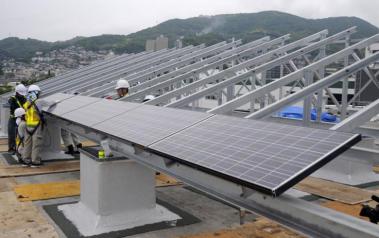
Solar installation in Japan. Author: Official US Navy Page.
License: Creative Commons, Attribution 2.0 Generic.
¶ UK Members of Parliament grilled EDF Energy boss Vincent de Rivaz over the troubled Hinkley C nuclear plant in Somerset. He insisted that the project was definitely going ahead – but refused to say when the “final investment decision” was due. Confused? So were the MPs. [The Ecologist]
US:
¶ Fueled by tax credits and the prospect of energy savings, municipal solar-array projects are operating in five towns on Martha’s Vineyard. Oak Bluffs will soon join them; the town is now before the Martha’s Vineyard Commission seeking a permit for a four-acre solar system. [Martha’s Vineyard Times]

A solar array installed at the Tisbury landfill.
File photo by Michael Cummo
¶ US renewables, excluding hydropower plants, now hold a combined share of roughly 9.5% of the country’s total available installed generating capacity according to FERC. The country’s total wind power capacity totals 74.6 GW, while its operational solar plants are 15.6 GW. [SeeNews Renewables]
¶ GE has finished building the offshore platforms for America’s first offshore wind farm. The first foundation for one of the five turbines that will eventually end up totaling 30 MW. GE hopes the wind farm will provide about 90% of Block Island’s electricity demand. [CleanTechnica]
Posted in nuclear power, renewable power, solar, wind | 1 Comment »
Tags: nuclear, nuclear power, renewable power, solar power, wind power
March 23, 2016
Opinion:
¶ How California got way ahead of the rest of the world in fighting climate change • Today, California can claim first place in just about every renewable-energy category. It has also attracted more venture capital investment for clean-energy technologies than the European Union and China combined. [Grist]
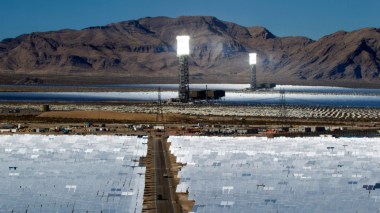
Reuters | Steve Marcus
World:
¶ PowerStream unveiled Canada’s first of its kind virtual power plant. The virtual power plant dubbed Power House, is meant to showcase how residential customers can simultaneously generate their own clean energy and work together as a virtual power plant to augment the grid. [CTV News]
¶ Morocco is investing about $2.6 billion on the construction of the Ouarzazate complex, which forms the heart of a $9 billion strategy to harness one of the country’s greatest natural resources, sunshine. And impressively, the complex can continue to operate after the sun sets. [CNN]
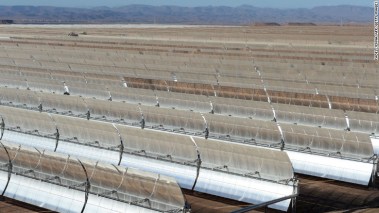
Morocco’s Noor I solar plant near Ouarzazate currently
powers over 100,000 homes.
¶ Bolivia’s Hydrocarbons and Energy Ministry said it expects the country to add 411 MW of renewable energy by 2020. Bolivia plans to install a total of 2,954 MW of generation capacity by 2020, including thermal, renewable, and hydro sources, investing $5.85 billion. [SeeNews Renewables]
¶ Breaking with tradition, cheap oil no longer foretells disaster for renewable energy companies. On the contrary, disillusioned fossil fuel investors are seeking high-growth opportunities, just in time to ride the renewables wave in the wake of the 2015 Paris climate talks. [GreenBiz]

Low fossil fuel prices are evolving from an omen to an opportunity for the renewable energy market. Shutterstock | nopparatk
¶ Mongolia has vast renewable energy resources. They could help boost energy security, reduce pollution, meet global climate commitments and grow the economy, according to a report prepared by the International Renewable Energy Agency and the Ministry of Energy of Mongolia. [solarserver.com]
¶ Building materials supplier Hanson UK is pioneering a demand-side response approach to energy management, with the technology being rolled out to 29 of the company’s quarries across the country. It will reduce energy consumption for de-watering Hanson’s quarries. [edie.net]
Hanson’s West Drayton Asphalt Plant in the London Borough of
Hillingdon will be used for grid balancing.
US:
¶ The Chicago-based Clean Energy Trust released its first Clean Jobs Midwest report on Tuesday, looking at the status of clean energy jobs in 12 states. The report found that Illinois had nearly 114,000 clean energy jobs and posted 9% job growth in 2015, making it the regional leader. [Chicago Tribune]
¶ Officials of St Petersburg, Florida, are taking on the seemingly daunting challenge of remaking the way the city consumes energy. It will be one of the 100 US cities to embark on the Sierra Club’s “Ready for 100” campaign, opting for 100% renewable energy for all municipal power needs. [Creative Loafing Tampa]
¶ Former Democratic Governor Deval Patrick’s three former energy secretaries offered their public support for Republican Governor Charlie Baker’s proposal to solicit long-term contracts for hydroelectric energy. A press conference gave Baker a chance to boast of bipartisan support. [MassLive.com]
¶ Over 100 Long Island community groups and local leaders hosted a rally prior to a Long Island Power Authority board meeting. They called on LIPA to invest in offshore wind energy to help meet the goal of sourcing 50% of the state’s electricity from renewable power by 2030. [The Indypendent]

Offshore wind supporters march on Monday to
a meeting of the Long Island Power Authority.
¶ The New York State Public Service Commission has announced new regulations that it says will make it faster and easier for solar energy, microgrid and other distributed generation projects to connect to the electric grid and advance renewable power development in the state. [Solar Industry]
¶ The economic viability of the Millstone Nuclear Power Station, the largest power plant in New England, is about to become a major issue. The Connecticut legislature’s Energy and Technology Committee is opening a public conversation over whether the state should act to ensure its profitability. [The CT Mirror]

Millstone Nuclear Power Station in Waterford.
Dominion Resources photo.
¶ Bloomberg has expanded its commitment to renewable energy and sustainability by committing to 100% clean energy by 2025. Bloomberg partnered with the Climate Group’s RE100 initiative, which aims to support organisations committing to 100% renewable power. [Renewable Energy Magazine]
¶ US wind farms now pay $222 million dollars a year to farming families and other rural landowners, according to new data released by the American Wind Energy Association today, with more than $156 million dollars going to landowners in counties with below average incomes. [Windpower Engineering]
Posted in nuclear power, renewable power, solar, wind | 2 Comments »
Tags: nuclear, nuclear power, renewable power, solar power, wind power
March 22, 2016
World:
¶ TenneT delivered 7.4 TWh of electricity from offshore wind farms in the German North Sea to the grid, an almost six-fold increase compared with 2014. The transmission operator said offshore wind farms in the German North Sea accounted for about 9.6% of Germany’s overall wind energy generation. [reNews]

Laying a cable at sea. TenneT increased offshore capacity in
German North Sea to 4.3GW last year (TenneT)
¶ Australia has added 100 MW of rooftop solar in the first two months of 2016, as Victoria overtakes New South Wales to be the country’s second biggest market. The 55 MW added in February still represented a fall from a year ago, with Queensland, the biggest market,down nearly 20%. [CleanTechnica]
¶ Tidal energy projects in the UK can be developed for nearly half the price of the proposed Swansea Bay project, according to the founder of Ecotricity. He said tidal energy projects in the region could be built for around £90/MWh, rather than the £168/MWh price-tag proposed for the project. [CleanTechnica]
¶ Together, China, India, Vietnam, and Indonesia have plans for 1,824 coal power plants, three-quarters of the total worldwide. But analysis from the Energy and Climate Intelligence Unit suggests fewer than half of those, and possibly as few as 500, will be built by 2020. [Climate Home]
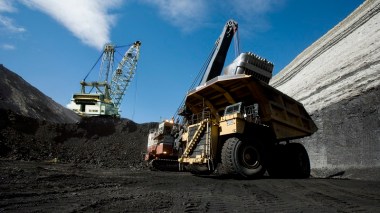
Many coal plants planned in Asia will not be built, say analysts.
(Pic: Peabody Energy)
¶ Coal plants are draining a dwindling global water supply, consuming enough to meet the basic needs of one billion people and deepening a worldwide crisis, Greenpeace warned. They said newly built plants will further stress the world’s major river basins and threaten communities. [Times LIVE]
¶ Jordan has announced that its first nuclear power reactor would be ready by 2025, aimed to meet the rising demand for the country’s electricity needs, said a report. The reactor with a total capacity of 1,000 megawatts will be ready and connected to the grid by 2025. [Trade Arabia]
¶ Commercial PV developer EvoEnergy has completed the fourth largest rooftop PV system in the UK for Lyreco, a global office and workplace solutions provider. The project has a capacity of 3.811 MW and 13,860 panels. It is at Lyreco’s national distribution center in Telford. [Renewable Energy Magazine]
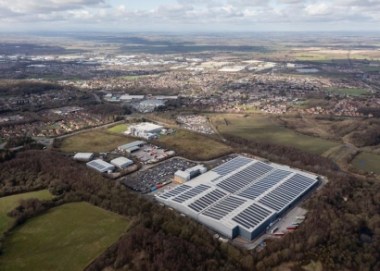
EvoEnergy completes UK’s fourth largest rooftop solar array
¶ An 18-month battle to discover the true cost to consumers of building the Hinkley Point C nuclear reactors is to come to a climax in London. The Information Commissioner has been blocking freedom of information requests. However, it has finally agreed to a hearing. [The Ecologist]
US:
¶ Consumers Energy says it is on track to close seven Michigan coal-fired power plants this spring. The plants have 1,000 MW of capacity. They say power will be replaced by a gas plant they bought, and they plan to continue to invest in wind power and other renewable energy sources. [Midland Daily News]
¶ The US Bureau of Ocean Energy Management has found a lease request for a floating wind project of up to 800 MW off California to be qualified and will proceed with the next step in its leasing process. It is the first formal interest in wind development off the California coast. [SeeNews Renewables]
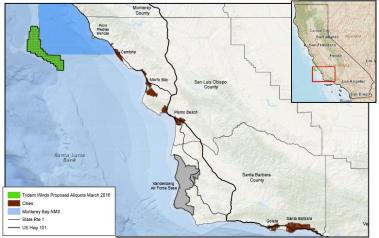
Map by Bureau of Ocean Energy Management
¶ Apple today announced that 93% of its facilities run on renewable energy, including 100% of its facilities in the US, China, and 21 other countries. Apple’s VP of Environment, Policy, and Social Issues made the announcement. Apple had set a goal of 100% renewable two years ago. [The Verge]
¶ A pioneering experiment, leveraging mass-market purchasing power on energy, promises to bring cheaper, “greener” electric supplies to Somers, New York. The lower rates are expected to make the price of so-called green energy attractive enough to encourage its widespread adoption. [TAPinto.net]
Posted in nuclear power, renewable power, solar, wind | 2 Comments »
Tags: nuclear, nuclear power, renewable power, solar power, wind power
March 21, 2016
Science and Technology:
¶ According to NASA, February 2016 was the most anomalously warm month in 135 years of record keeping – 1.35° C (2.43° F) warmer than the 1951 to 1980 average. While the recurring El Niño event certainly drives short-term oscillation, the long-term warming trend is quite apparent. [CleanTechnica]

2010, 2014, and 2015 were all record-breaking years. Climate Central graph
World:
¶ The South African Energy Minister launched the Solar Capital De Aar 3 in the Northern Cape – the 17th solar photovoltaic plant in the province. She said the commercial operation of the 75-MW plant is a huge achievement in scaling up the deployment of renewable energy in South Africa. [AllAfrica.com]
¶ Last summer, the Mayor of London unveiled plans to test a fleet of double-decker electric buses to ply the tourist-friendly Route 16. Things must have gone swimmingly because just last week a fleet of five of the hulking EVs was announced for Route 98 to calm a pollution hotspot. [CleanTechnica]

Electric bus. Image via businesswire.com
¶ Greenpeace has challenged the case for a new nuclear power station at Wylfa Newydd, Wales. It submitted evidence to Westminster’s Welsh Affairs committee warning that the project is based on an “outdated” concept and questions whether nuclear is most effective for low-carbon power. [WalesOnline]
¶ Statoil is to deploy a 1-MW storage system at its 30-MW Hywind floating offshore wind farm off the Scottish coast. The Batwind battery is based on lithium technology and will be installed at the end of 2018. Hywind will feature five Siemens SWT-6.0-154 machines. It is due to be fully operational in 2017. [reNews]
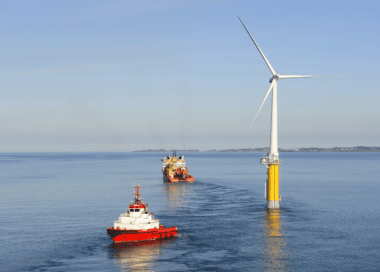
Statoil image
¶ China plans to more than triple solar power capacity by 2020 to as much as 143 GW to help reduce carbon emissions. The country will add 15 to 20 GW of photovoltaic power annually in the next five years, the head of the National Energy Administration said in a conference in Beijing. [Bloomberg]
¶ The first four days of March saw maximum temperatures in much of the country 4° C above average, and 8° C to 12° C above average in most of southeastern Australia, a Climate Council report says. It argued that heat impacts lent urgency to climate mitigation efforts. [The Marshalltown]

Drought and heatwave affected London Plane Trees. Photo by Bidgee. CC BY-3.0 unported. Wikimedia Commons.
¶ EDF’s new nuclear power station in France faces years of further delays if tests confirm that the steel used in its reactor is flawed, the country’s atomic watchdog has warned. The flagship plant at Flamanville in Normandy has already been subject to years of delays and cost overruns over 200%. [Financial Times]
US:
¶ Additions this year to the ERCOT grid in Texas are expected to be dominated by ⅔ from wind and solar PV, according to energy research from SNL. If SNL research proves true, this will be a huge boost to the generation of renewable electricity within this historic oil-producing state. [CleanTechnica]

ERCOT control room operator. Photo by Dpysh w.
CC BY-3.0 unported. Wikimedia Commons.
¶ A renewable energy campaign has the goal of producing as much solar power energy as Ginna nuclear plant by the year 2025. ROCSPOT, a community-based organization, shows people the environmental and financial benefits of solar power and helps them through the installation process. [13WHAM-TV]
Posted in nuclear power, renewable power, solar, wind | 2 Comments »
Tags: nuclear, nuclear power, renewable power, solar power, wind power
March 20, 2016
World:
¶ The Spanish utility company Endesa purchased 410 GWh of solar electricity, during a recent solar energy auction for Portugal and Spain, at a price of €39.6/MWh ($43.82/MWh). The quarterly auctions relate to roughly 500 GWh of generation, varying at the various times of year. [CleanTechnica]
(This is extremely important. In this case, the wholesale price of unsubsidized solar power has fallen below to 4.4¢/kWh. Even with the price of battery storage added, it competes with electricity from natural gas at a time when the price of gas fuel is low.)
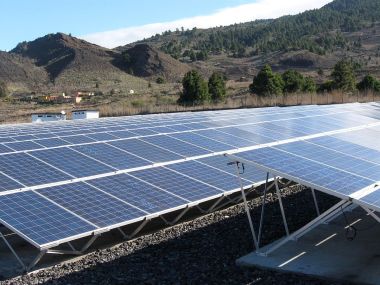
PVs in El Paso, La Palma, Spain. Photo by Rufus46.
CC BY-SA 3.0 unported. Wikimedia Commons.
¶ The province of Jujuy in Argentina will develop 700 MW of solar PV projects with the German company Photovoltaic Park, following the signing of letter of intent between the two. Three different projects, in different parts of the province, and will cost around $1.4 billion to develop. [CleanTechnica]
¶ The UK government will make a net-zero emissions goal that it agreed to at the COP21 talks in Paris the law, following advice from the Committee on Climate Change, according to recent reports. The UK’s legal target will change from an 80% emissions reduction to net-zero. [Sustainnovate]

Abandoned UK farmhouse on the edge open-pit mine. Photo by Robert Guthrie. CC BY-SA 2.0. Wikimedia Commons.
¶ Vietnam will need around $148 billion to invest in developing the national grid and resources in the 2016-2030 period. Vietnam will accelerate development of renewable resources, such as hydro, wind, solar, and biomass, to increase the proportion of electricity that is renewably sourced. [VietNamNet Bridge]
¶ Italy’s economic powerhouse, Milan, is seeking to bring back the bicicletta by paying people to cycle to work. The move follows the announcement in December of a €35 million government fund for sustainable mobility solutions, after dangerous levels of pollution in major cities. [The Guardian]
¶ After transformer explosions caused massive power outages across Sri Lanka, German experts are coming to inspect the transformers and recommend ways of avoiding future power failures resulting from such breakdowns. They will recommend both short-term and long-term solutions. [The Sunday Times Sri Lanka]
¶ Rottnest Island is off the coast of Western Australia. Together, a new solar farm and its existing wind turbine to generate almost half its electricity, greatly reducing the amount of diesel fuel it needs. The solar farm will cost AUS$7.3 million (US$5.55 million) and will generate 600 kW. [The West Australian]
¶ The growth of cheaper renewable power is outpacing that of nuclear in India, and renewables now account for much more production. In fiscal year 2014-2015, renewable energy accounted for 5.6% of electricity generated in India, against 3.2% for nuclear power. [The Hans India]
US:
¶ Enough windpower came online last year for 19 million American homes. No region of the United States shows this progress better than the American heartland. More than 31% of Iowa’s electricity was generated by wind power last year, the first time a US state topped the 30% milestone. [DesMoinesRegister.com]
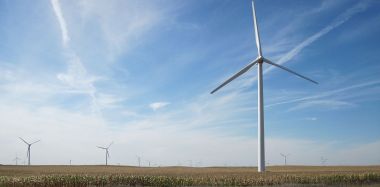
Wind turbines in Iowa. Photo by Billwhittaker at English Wikipedia. CC BY-SA 3.0. Wikimedia Commons.
¶ Duke Energy signed agreements to buy biogas generated by swine and poultry waste and other biomass sources from a facility to be built in eastern North Carolina. It is expected to make enough methane to produce 125 GWh per year, which will power about 10,000 homes. [Charlotte Business Journal]
¶ The high cost of upgrading 40-year-old nuclear reactors is confronting Xcel Energy again. Investments in the Prairie Island nuclear power plant in Minnesota, are projected to cost more than expected – $487 million by 2020, with more spending needed in the next decade. [Minneapolis Star Tribune]
Posted in nuclear power, renewable power, solar, wind | 2 Comments »
Tags: nuclear, nuclear power, renewable power, solar power, wind power
March 19, 2016
Opinion:
¶ Dispelling the nuclear ‘baseload’ myth: nothing renewables can’t do better! • The main claim used to justify nuclear is that it’s the only low carbon power source that can supply ‘reliable, base-load electricity. But renewables can match grid demand continuously in a way nuclear power cannot. [RenewEconomy]

Wind farm in Mecklenburg-Vorpommern. The state runs on 100% renewable energy. Photo: Clemens v. Vogelsang via Flickr (CC BY).
¶ Five ways to power the UK that are far better than Hinkley
Point • The planned £18 billion nuclear reactors at Hinkley Point in Somerset are derided by critics as “one of the worst deals ever” for Britain. One energy policy expert has come up with five better ways of powering the nation: [The Guardian]
World:
¶ The CEO of Canadian Pacific Railway was recently quoted as saying that people need to begin realizing and accepting that fossil fuels are “probably dead,” owing to a changing climate and the environmental hurdles that are likely to be introduced in coming years to large-scale use of fossil fuels. [CleanTechnica]

Canadian rail cars carrying coal.
¶ In a record-setting year for Canadian electricity exports, British Columbia bolted to first place in 2015. Canada’s net electricity exports increased by more than 14 TWh in 2015, an overall 30% increase over 2014. More than half of the increase was an additional 7.4 TWH from BC. [Business in Vancouver]
¶ According to a report by the Lazard investment fund, the cost of electricity generated with wind power fell 61% in the years from 2009 to 2015. And the cost of solar energy fell 82%. This puts renewables into a price range that is competitive with fossil fuels, coal, or oil. [Manila Bulletin]
¶ Green energy production in the High Weald could power an entire village when plans for an anaerobic digester are submitted. The technology is off to a slow start in Britain, but hopes are high it could provide an alternative to fracking as a resource to produce power. [Kent and Sussex Courier]

A digester in Melton Ross, North Lincolnshire
¶ Solar microgrids are bringing reliable power to three remote villages in Nepal, where nearly a quarter of the population has no access to electricity. The microgrids have 35 kW of solar and battery storage, which is enough for 540 people and avoids carbon emissions. [Microgrid Knowledge]
¶ The global battery market in the telecom sector will grow 10.5% annually during the period 2016-2020, a report by Research and Markets said. Rising numbers of Telecom tower installations are built, 80% of which run on diesel generators. Solar or wind with batteries will reduce costs. [ETTelecom.com]
US:
¶ This is already turning out to be a very bad year for the “clean” image of natural gas, with earthquakes in Oklahoma, water pollution in Pennsylvania, a gas leak in California, and new federal emissions scrutiny. Now a proposed LNG export terminal on the Oregon coast failed to get approval. [Triple Pundit]
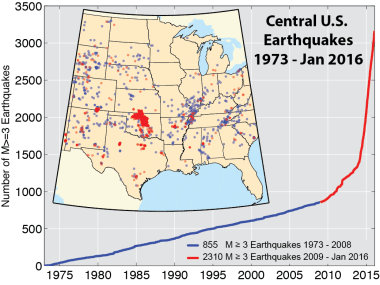
Cumulative number of earthquakes with a magnitude of 3.0 or larger in the central and eastern United States, 1970–2016. Public domain: US Geological Survey Image. Wikimedia Commons.
¶ The three biggest coal mining companies in the United States, Peabody Energy, Arch Coal, and Cloud Peak Energy, depend on federal coal for the vast majority of coal they mine each year. This is the primary conclusion from a new report published this week by Greenpeace. [CleanTechnica]
¶ For the first time since Gallup first asked the question in 1994, a majority of Americans oppose nuclear energy. The 54% opposing it is up a lot from 43% a year ago. Those favoring nuclear have declined from 51% a year ago to 44% now. Before the Fukushima Disaster, approval stood at 57%. [Greentech Media]
Posted in nuclear power, renewable power, solar, wind | 2 Comments »
Tags: nuclear, nuclear power, renewable power, solar power, wind power
March 18, 2016
Opinion:
¶ So … was that climate change? • While the broad trends of climate change, and our role in causing it by burning fossil fuels, have been clear for decades, it was not possible until recently to tie a specific storm, drought, flood or heat wave to long-term warming trends. Thankfully, that’s changing. [CNN]

Waterspout off the Florida Keys. Photo by Dr. Joseph Golden, NOAA. US Government image. Public Domain. Wikimedia Commons.
¶ How Cheap Oil Is Accelerating Investment In Sustainable
Energy • An increasingly unprofitable global oil market is discouraging its own investors. Cheap oil no longer foretells disaster for renewable energy companies because investors want opportunities for growth. [CleanTechnica]
Science and Technology:
¶ February smashed the previous record for the warmest February and even became the warmest month ever compared to average, according to NOAA. February temperatures averaged 1.21° C (2.18° F) above the 20th century average. The past three months hold the top three places. [CNN]
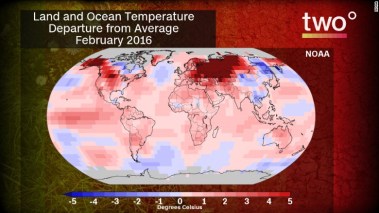
Temperature departures from normal for the
month of February 2016
World:
¶ Doubling the global share of renewable energy by 2030 could save $4.2 trillion annually, 15 times the costs. This is the primary conclusion from a report by the International Renewable Energy Agency. It examines options to boost renewable energy from its current 18% to 36% by 2030. [CleanTechnica]
¶ Japan’s energy ministry confirmed that the feed-in-tariffs for solar power will be reduced, as usual, for the new fiscal year. The rate for PV systems bigger than 10 kW will fall to ¥24/kWh ($0.22/kWh) from the current ¥27/kWh. Smaller systems have higher rates. [SeeNews Renewables]
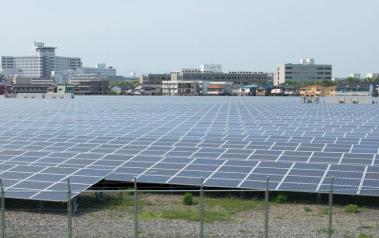
Solar farm in Japan. Author: Haruhiko Okumura.
License: Creative Commons, Attribution 2.0 Generic.
¶ The world is expected to have about 18.4 GW of geothermal capacity by 2021, after it reached 13.3 GW, spread across 24 countries, in 2015, according to a report by the US Geothermal Energy Association. There are currently 12.5 GW of projects under development in 82 countries, according to the association. [SeeNews Renewables]
¶ Two “run of river” hydro power schemes are being developed in the Scottish Highlands as part of a £4.8 million investment. Albion Community Power (ACP), said the projects would generate 2.8 GWh of renewable electricity a year, enough to power about 700 homes. [Scotsman]

ACP is also involved in a scheme near Loch Arkaig.
Picture: Contributed
¶ The Suzlon Group has bagged orders for a combined capacity of 81.90 MW of wind turbines. The orders were received from SMEs (Small and Medium-sized Enterprises) across diverse industry segments including food and agro, textiles, chemical, real estate and engineering. [Business Standard]
¶ As Abu Dhabi pursues its solar ambitions, it is weighing more cost-effective technologies. As it comes to its third anniversary, the 100-Mw Shams 1 concentrated solar power plant is not cost competitive to other available technologies, such as solar PV, whose price has been falling. [The National]

The Shams 1 plant was one of the first concentrated solar
power plants in the region. Christopher Pike / The National
¶ The £18 billion plans to build the first nuclear plant in the UK in two decades look set to go ahead after EDF secured a bailout from the French government. The French economics minister said it would be a mistake for EDF, which is 85% government-owned, not to build the plant. [Fresh Business Thinking]
US:
¶ The California Public Utilities Commission gave the 392-MW Ivanpah CSP park more time to reach the output levels agreed in its power purchase agreement. Pacific Gas & Electric has agreed to give the owners of the power plant until end-July 2016 to improve performance. [SeeNews Renewables]

Ivanpah. Author: Bill & Vicki T.
License: Creative Commons, Attribution 2.0 Generic
¶ Work began this week on one of the largest floating solar arrays in the nation, in the Borough of Sayreville, New Jersey. Along with the project development team, two local educational partners will also participate, providing valuable services to their special needs clients. [Water Online]
Posted in nuclear power, renewable power, solar, wind | 2 Comments »
Tags: nuclear, nuclear power, renewable power, solar power, wind power
March 17, 2016
Science and Technology:
¶ Nearly a quarter of all deaths around the world are caused by living and working in toxic and polluted environments, and the worst affected are children, the poor, and the elderly, according to a new report released by the World Health Organization (WHO). [CommonDreams]

A child scavenges for coal scraps in a slum in Manila.
(Photo: Adam Cohn / flickr / cc.)
¶ NOAA’s Mauna Loa Observatory in Hawaii reported a spike in CO2 levels this week, 3.05 ppm, which was the largest year-to-year increase ever observed in the 56 years of recording and research done at the station. It was the fourth consecutive year that CO2 grew more than 2 ppm. [CleanTechnica]
World:
¶ Ontario’s Independent Electricity System Operator awarded around 140 MW of new solar energy project contracts at a weighted average price of CAN$0.1567/kWh (US$0.12/kWh). The solar energy allocation in the tender was oversubscribed, with 1,742 MW of bids. [CleanTechnica]

Ontario. Image by Dennis Jarvis (some right reserved)
¶ Acciona Energía is providing adjustment services to the Spanish electricity system by increasing the level of generation by wind power. Traditionally, system adjustment services for the national grid have been provided by conventional technologies, such as thermal or hydropower stations. [reNews]
¶ Japan has seen a heavy shift from atomic to renewable sources since the Great East Japan Earthquake tipped the Fukushima Daiichi nuclear power plant into triple meltdown. But five years after the catastrophe, major issues need addressing for renewable energy to flourish. [The Japan Times]
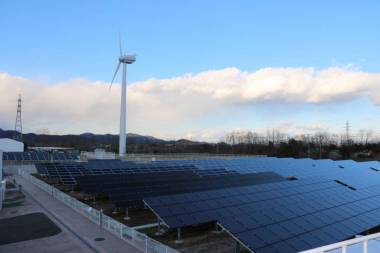
Wind and solar demonstration field of the National Institute of Advanced Industrial Science and Technology’s Fukushima Renewable Energy Institute. | Kyodo
¶ The UK government presented Budget 2016, giving some details on the planned support for offshore wind in future years, but there was little reason to cheer for renewable energy. The government is criticized for ending renewable incentives while increasing support for fossil fuels. [SeeNews Renewables]
US:
¶ According to TransActive Grid, Brooklyn consumers can transform their homes into connected power stations. The New York startup has developed a consumer-run microgrid – a technology which its founders hope will radically transform the way electricity is bought and sold. [CleanTechnica]

Water towers in New York. Image via Shutterstock
¶ Peabody Energy Corp warned it could go bankrupt, signaling the end of an era for listed US corporate coal companies, even as their mines continue to fuel a big chunk of the country’s power stations. Arch Coal Inc, Alpha Natural Resources, Patriot Coal Corp, and Walter Energy are already bankrupt. [Daily News]
¶ ConEdison Solutions, the competitive retail subsidiary of Consolidated Edison, won a $150 million contract for a community aggregation program to provide electricity at low rates to 90,000 residential and small business customers in Westchester County, New York. [Energy Manager Today]
¶ This is likely to be the first year in which natural gas has a higher market share for electricity generation than coal does, federal analysts predict. EIA is predicting that when 2016 ends, natural gas will have generated 33% of the country’s electricity, compared to 32% for coal. [The Hill]

Please click on the image for a larger view.
¶ Federal officials dedicated over 125 square miles in waters off Long Island for wind energy development, pushing forward a renewable energy proposal created by New York utilities. Interior Secretary Sally Jewell said the state has “tremendous” offshore wind potential. [Ledger Independent]
¶ The Ivanpah Solar Electric Generating System, a $2.2 billion solar project in the California desert, isn’t producing the electricity it is contractually required to deliver. PG&E Corp says the solar plant may be forced to shut down if it doesn’t receive a break from state regulators. [Nasdaq]
¶ United Airlines will launch an initiative using biofuel to help power flights running between Los Angeles and San Francisco, with plans to expand to all flights operating out of LAX. It is the first time an American airline will use renewable fuel for regular commercial operations. [Independent Online]

The renewable fuel used to power United’s planes will be coming from a Los Angeles refinery operated by AltAir Fuels. AP photo.
¶ In an unusual move, Colorado state regulators verbally rejected a proposed agreement between Xcel Energy Inc and three solar power developers that would have added up to 60 MW of “community solar” power plants in Colorado. The PUC typically approves such agreements. [Denver Business Journal]
¶ A unit Dominion Resources Inc will build a 20-MW solar power facility in Virginia in partnership with Microsoft and the state. “It’s good to be moving forward but we’re not moving fast enough”, said the head of the Virginia chapter of the Sierra Club. The plant will power 5,000 homes. [Examiner Gazette]
Posted in nuclear power, renewable power, solar, wind | 2 Comments »
Tags: nuclear, nuclear power, renewable power, solar power, wind power

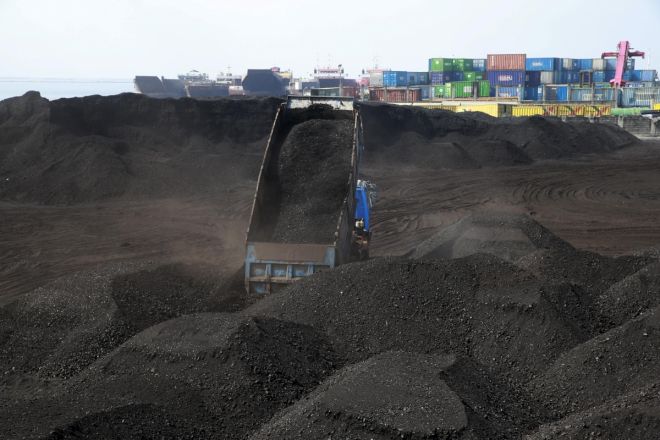

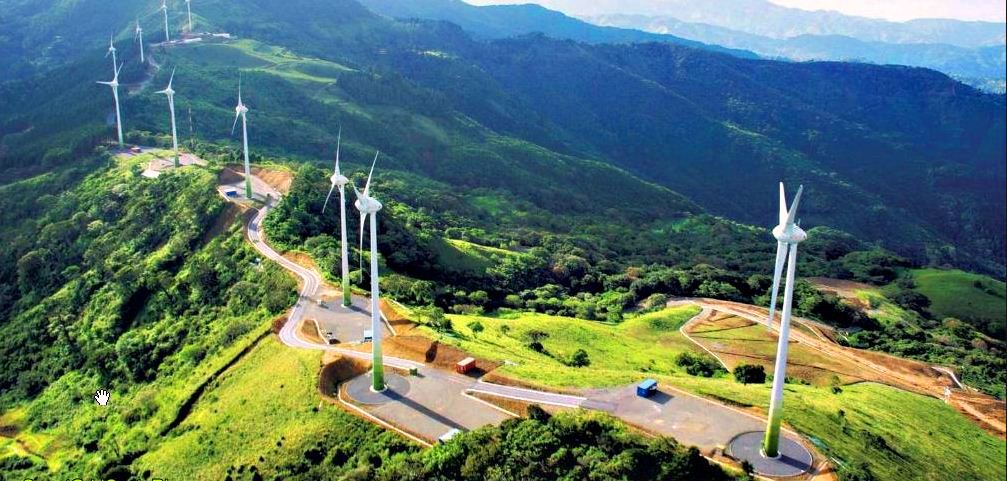


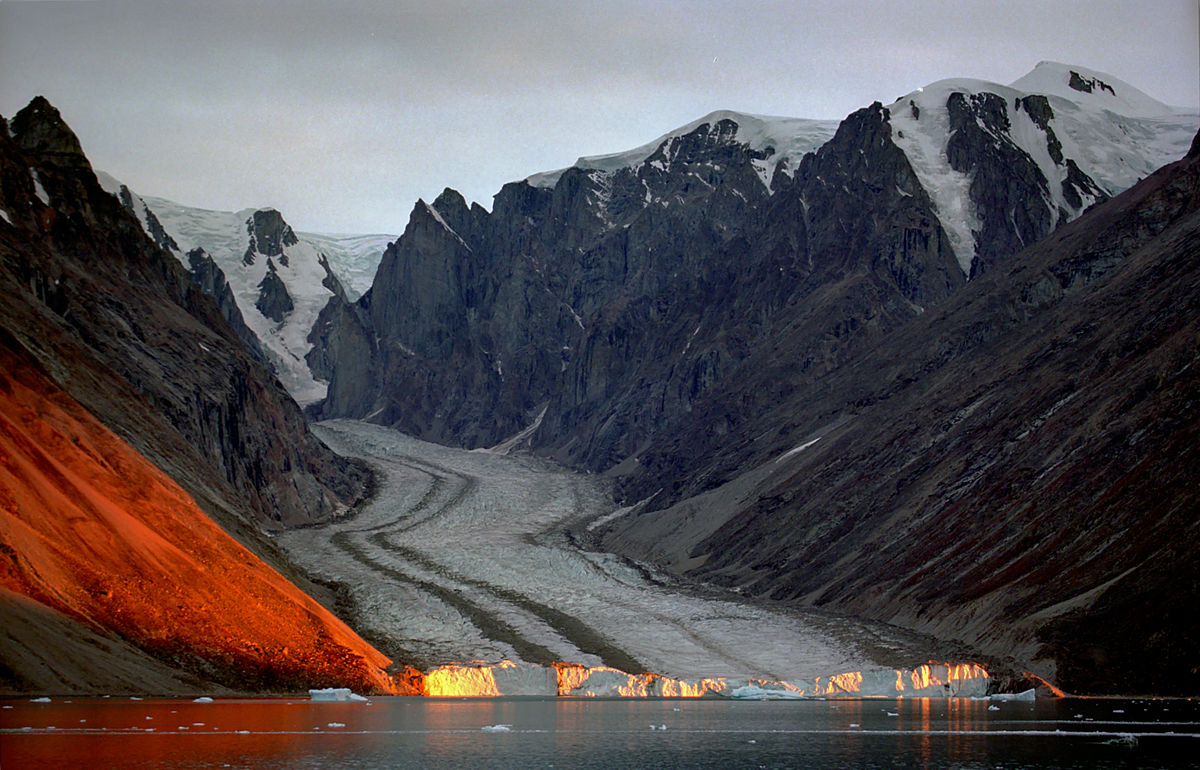

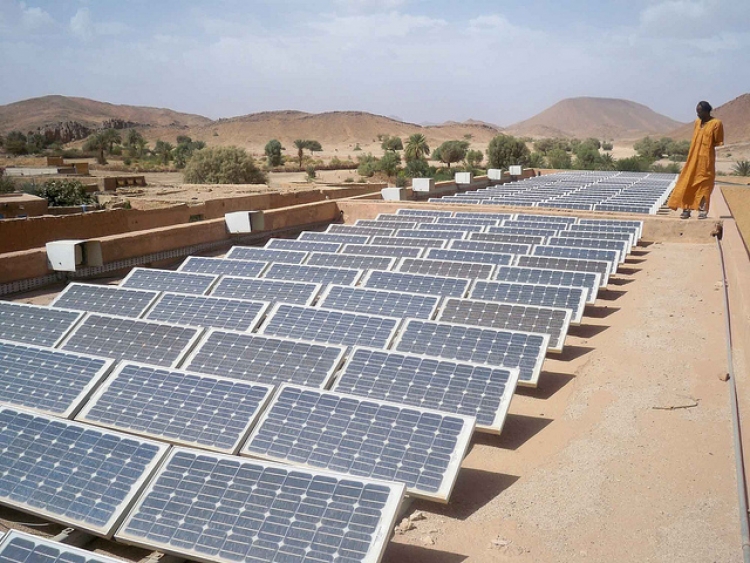
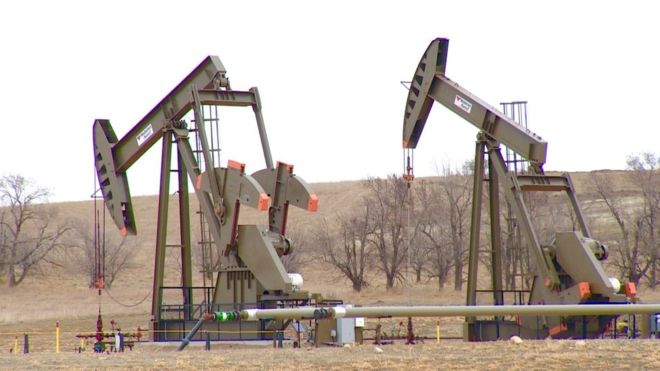


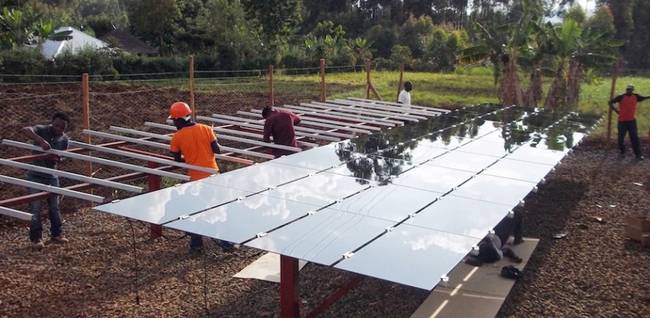
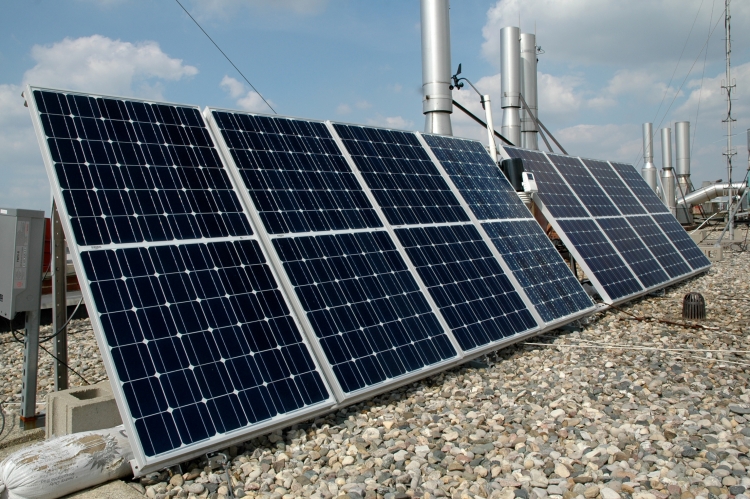
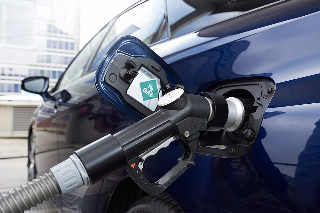


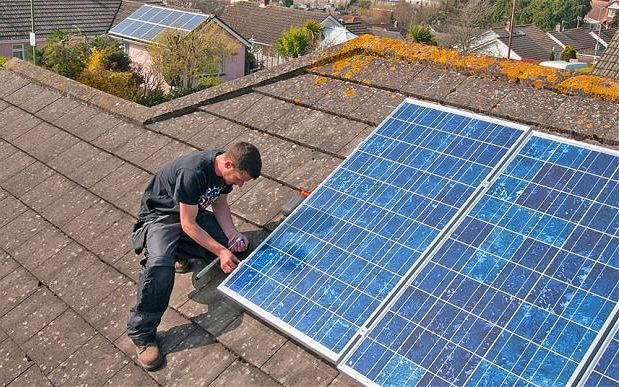


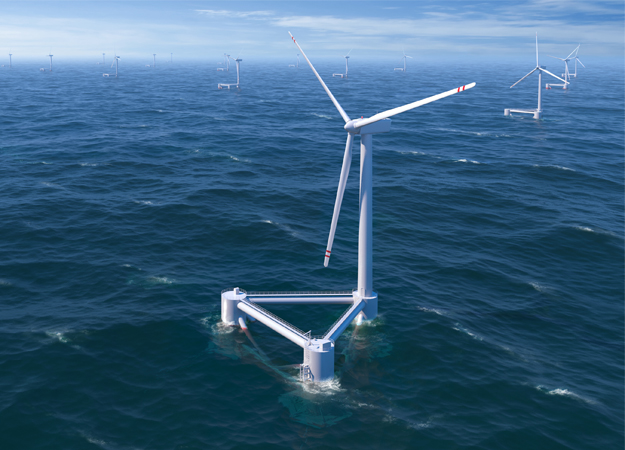


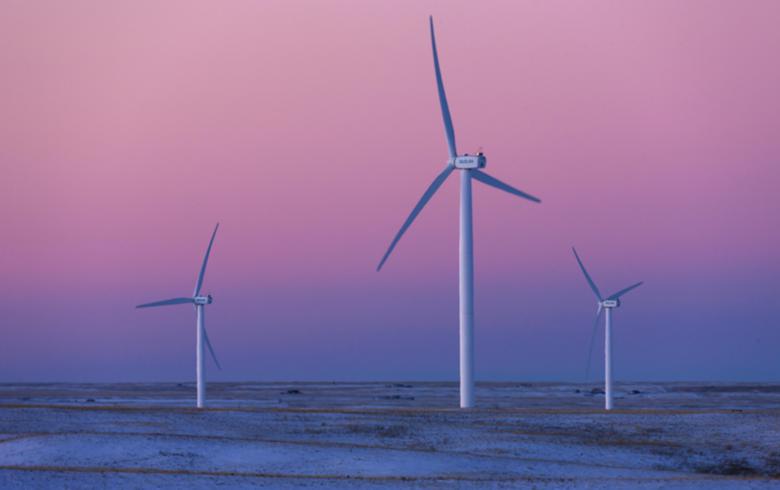


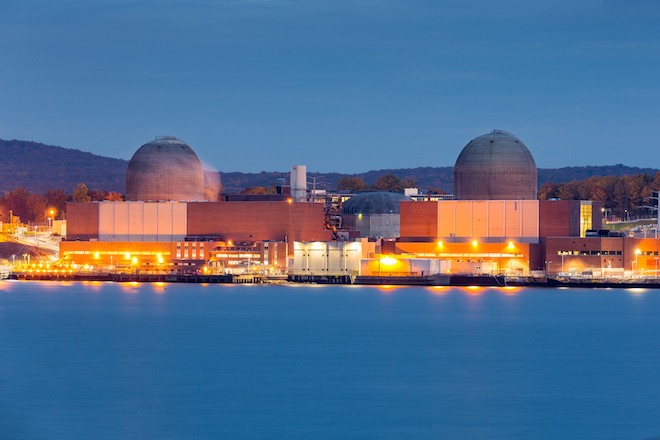
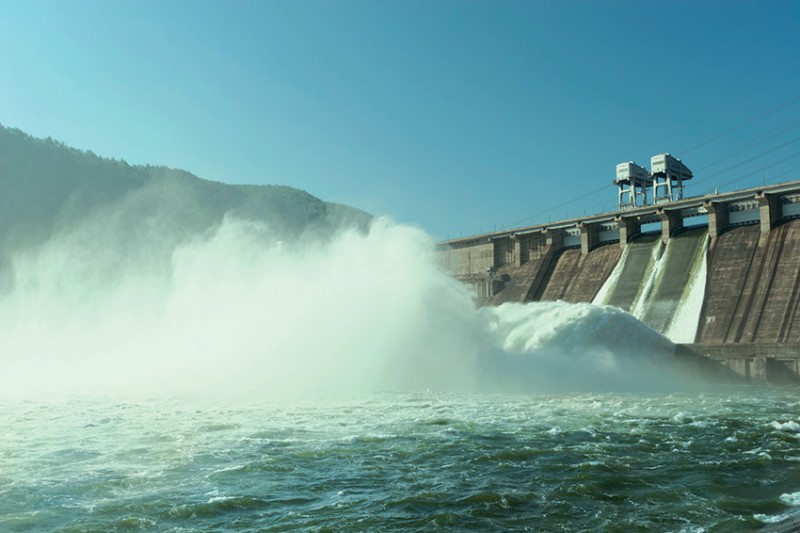

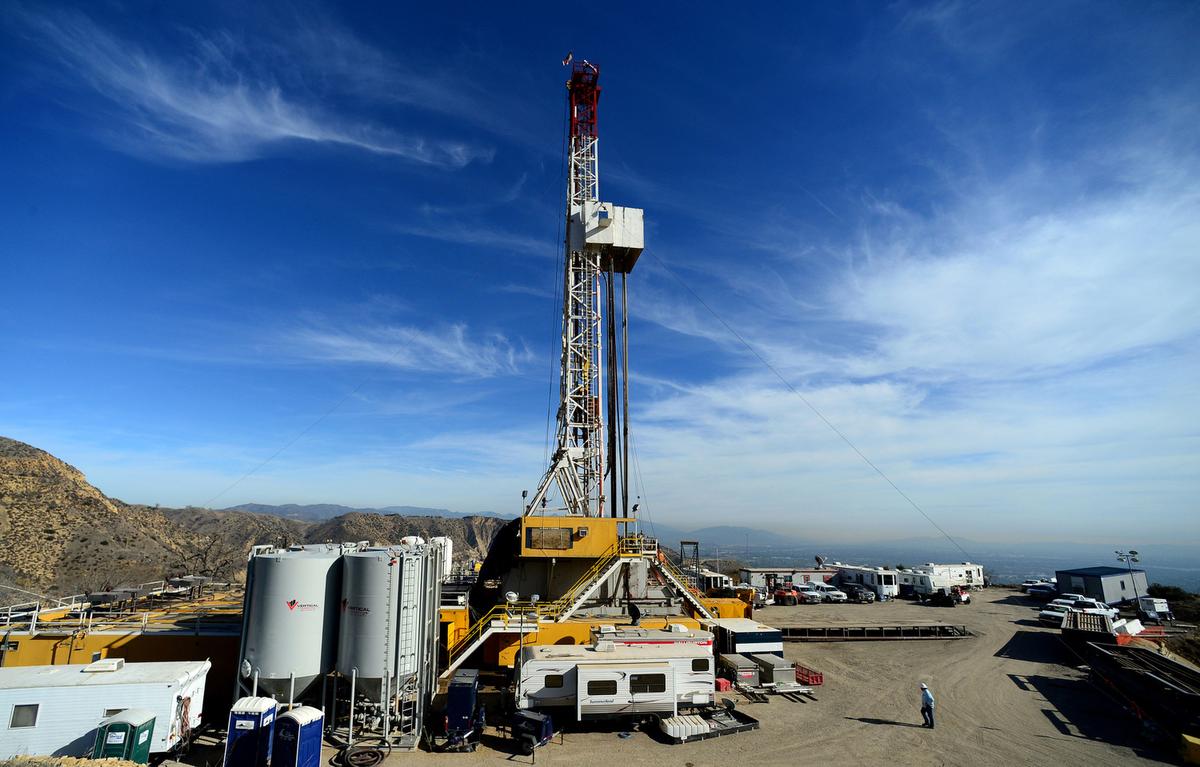

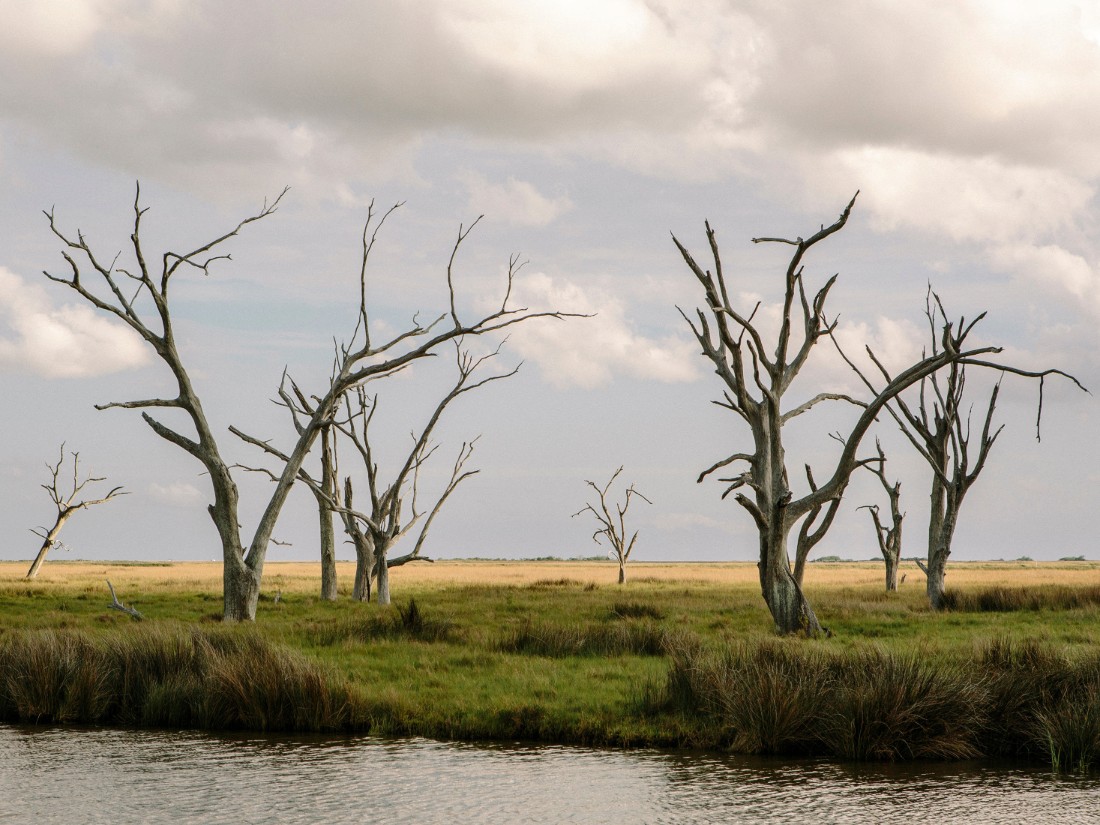
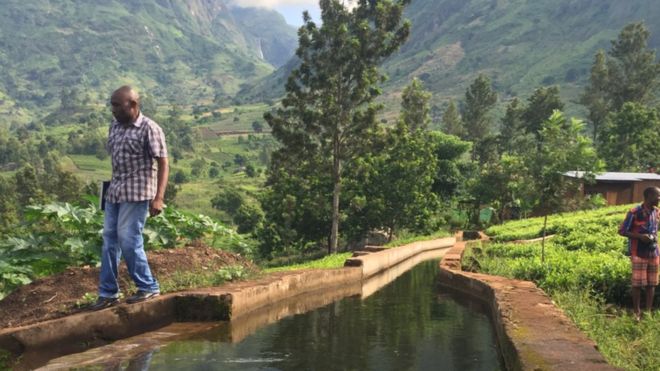



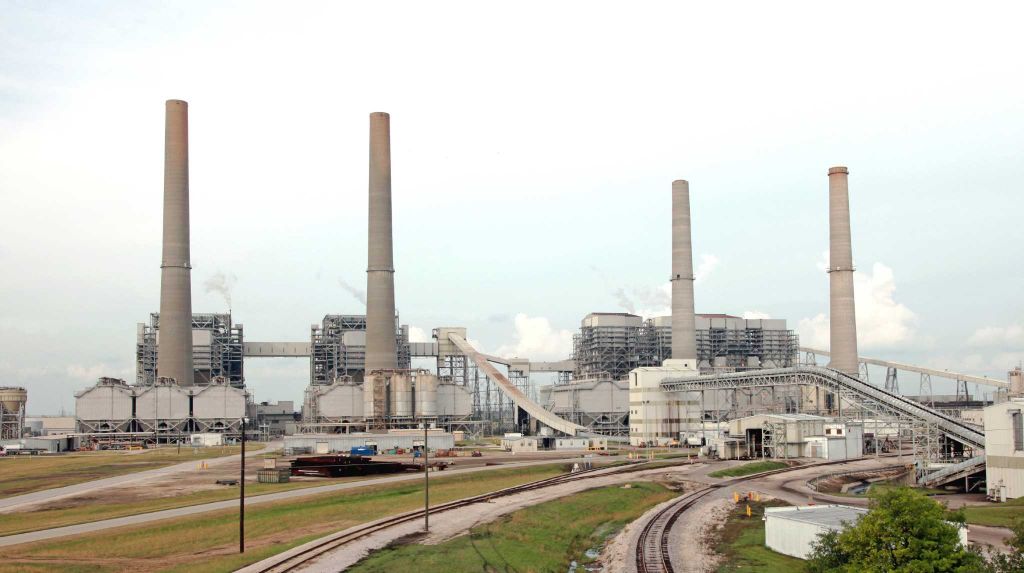

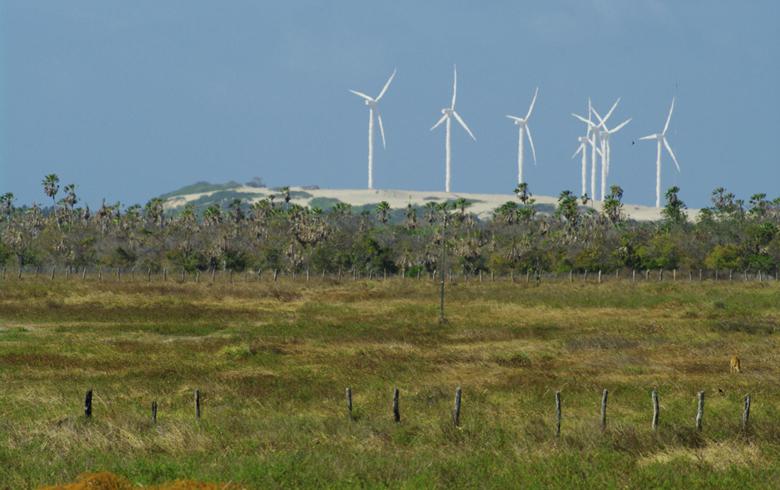

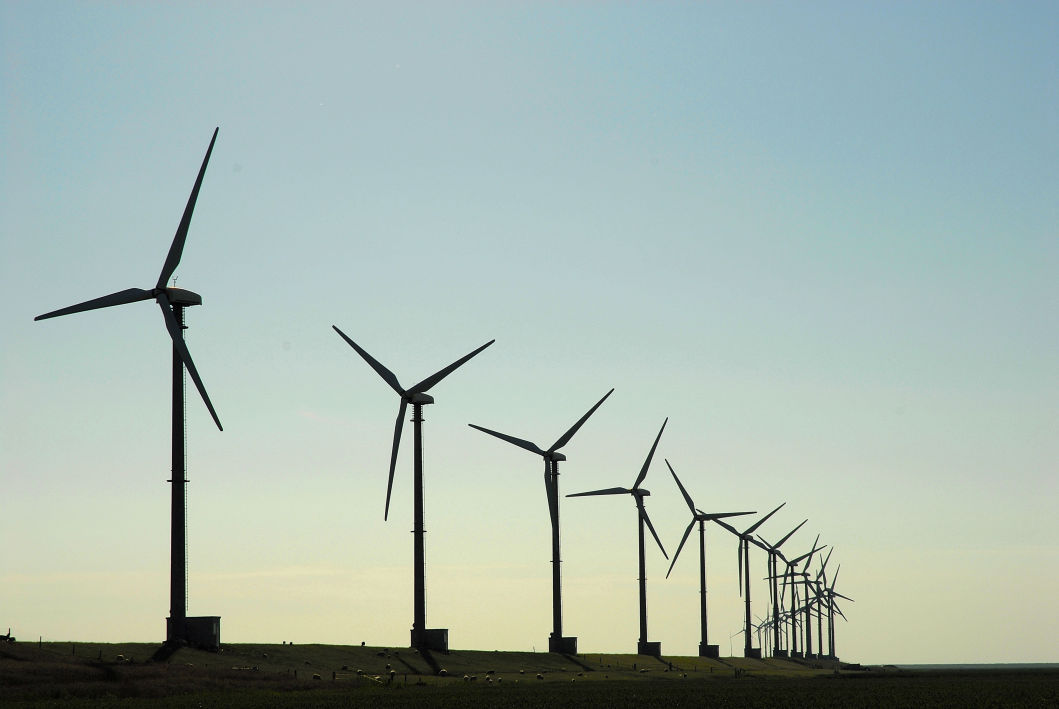

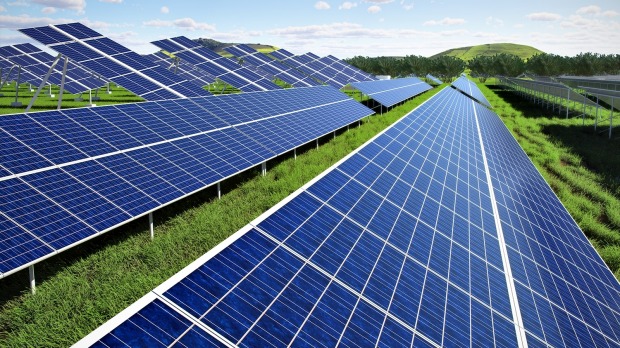
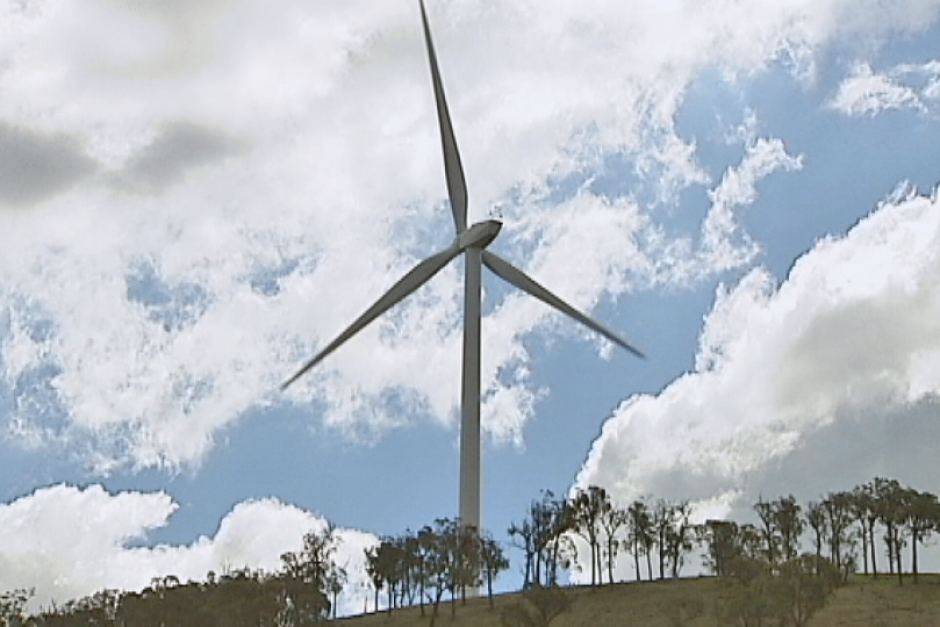

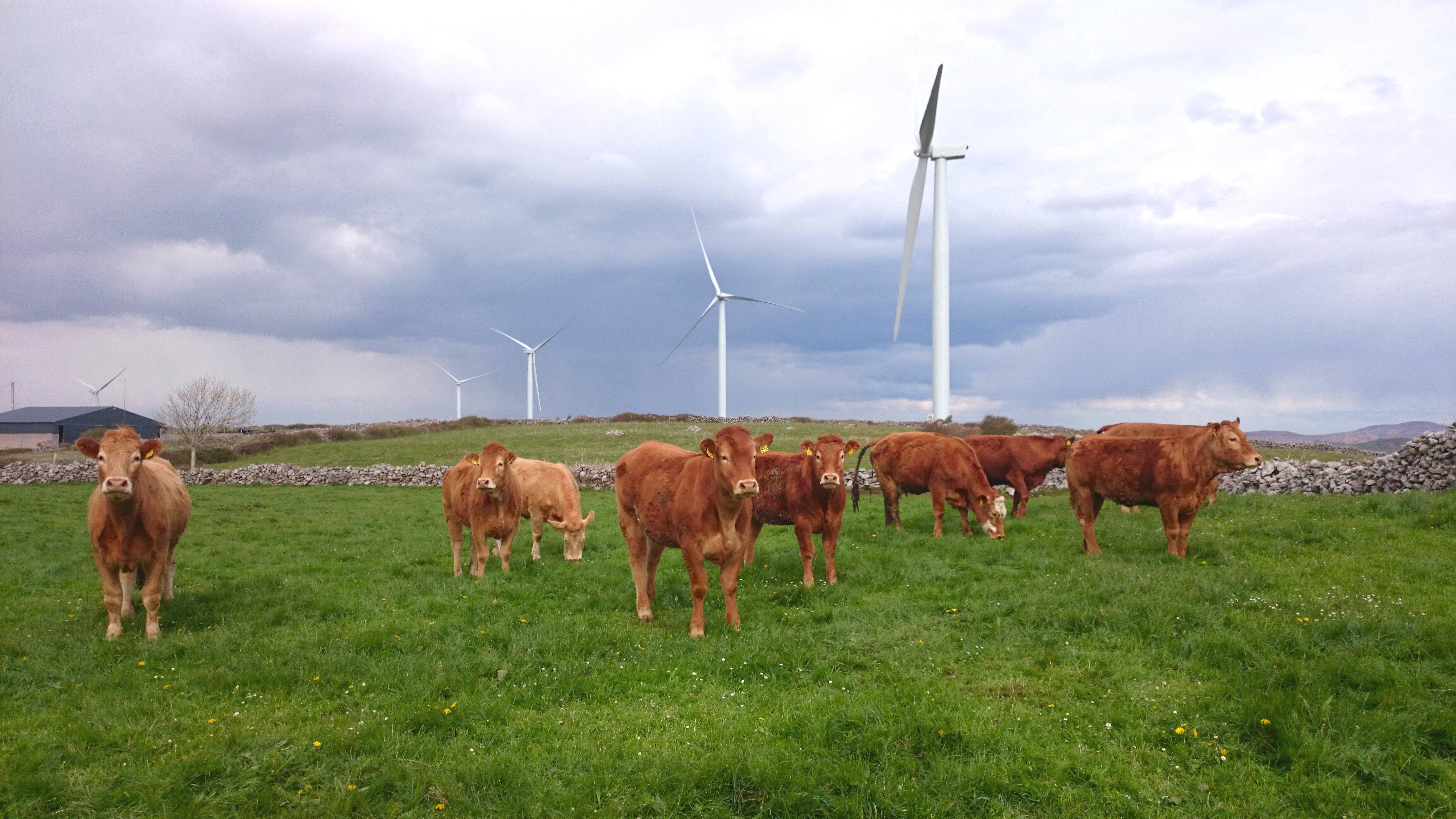
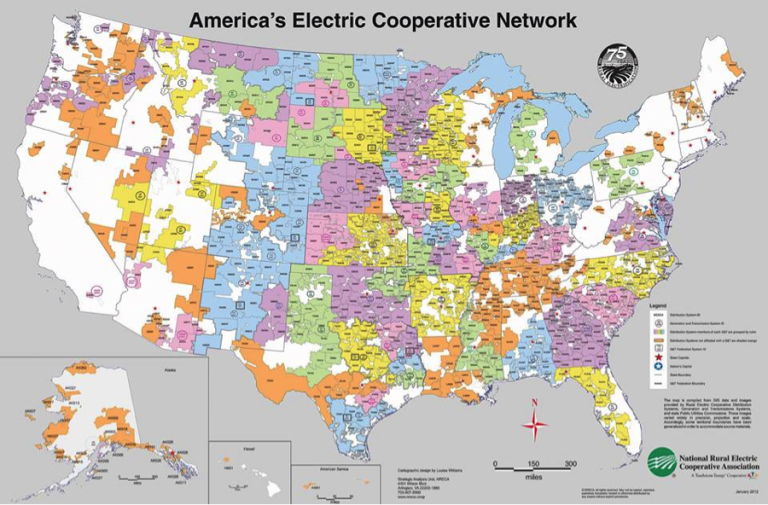
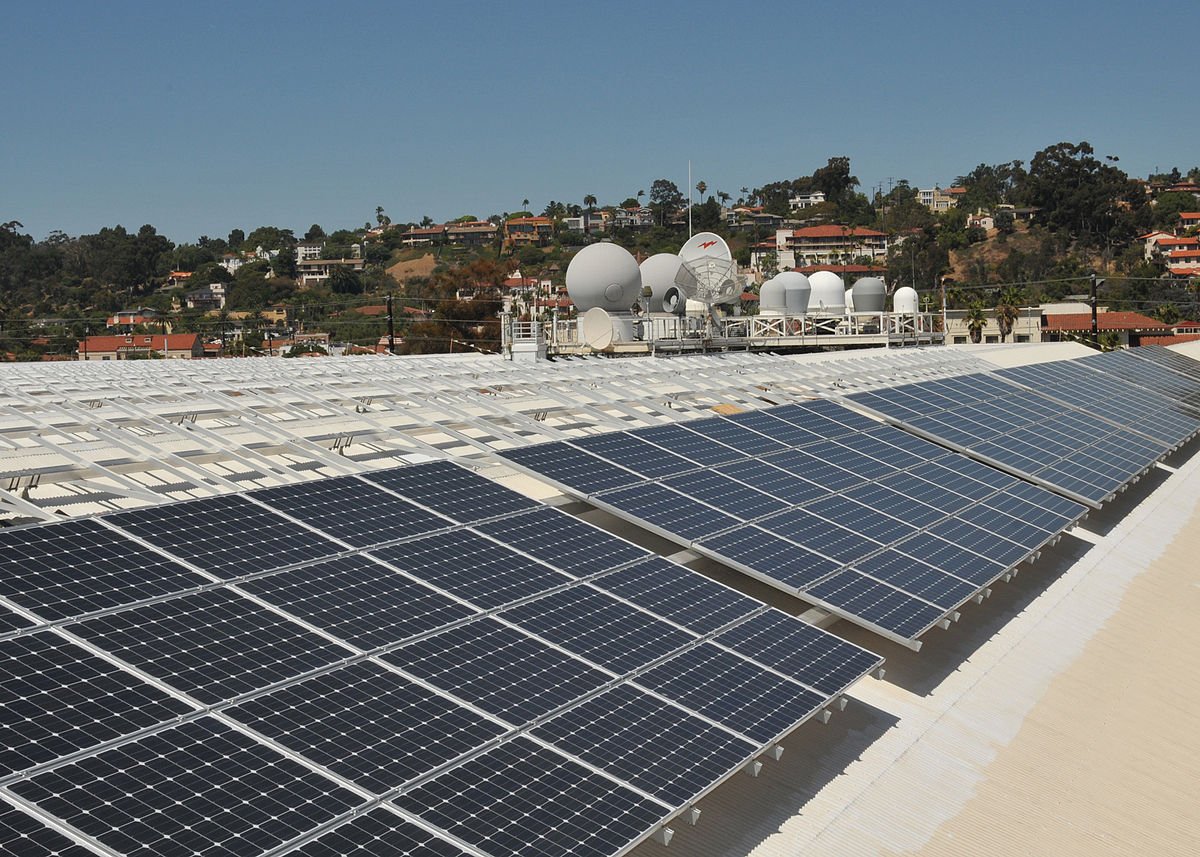
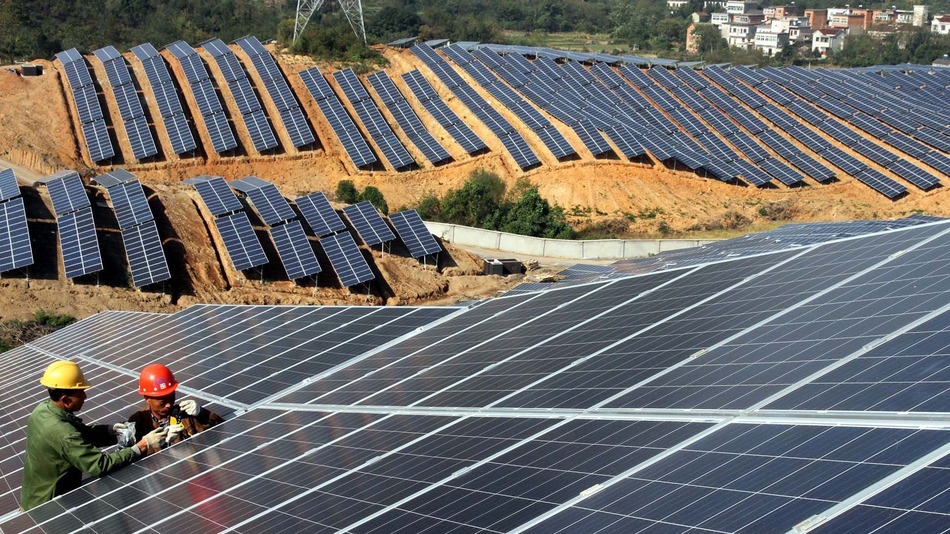
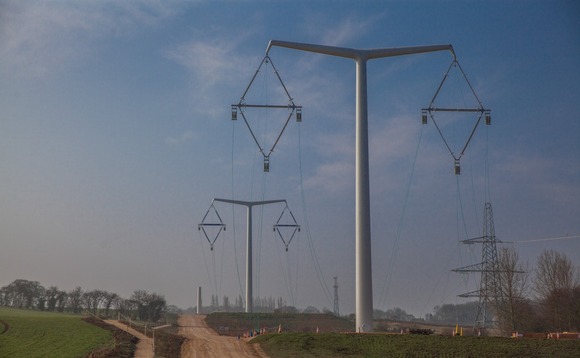




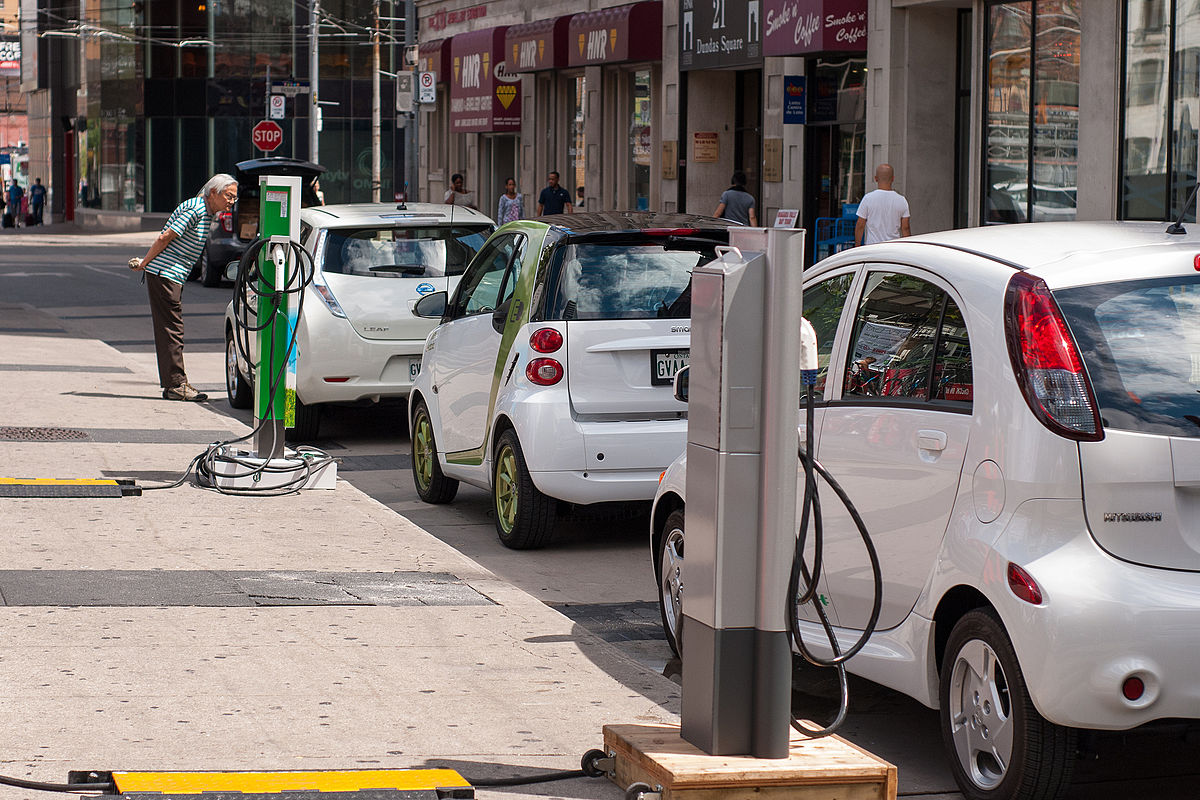


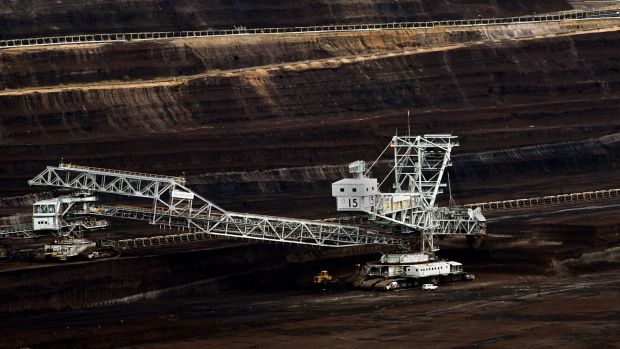


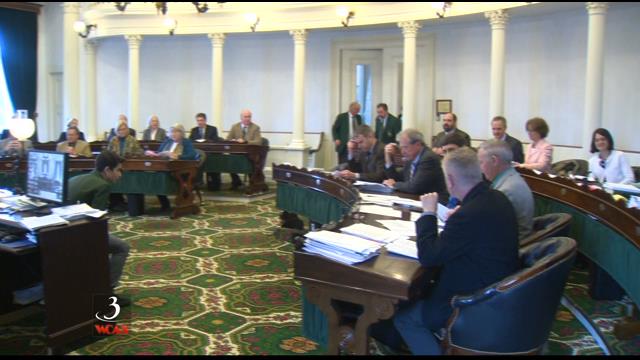




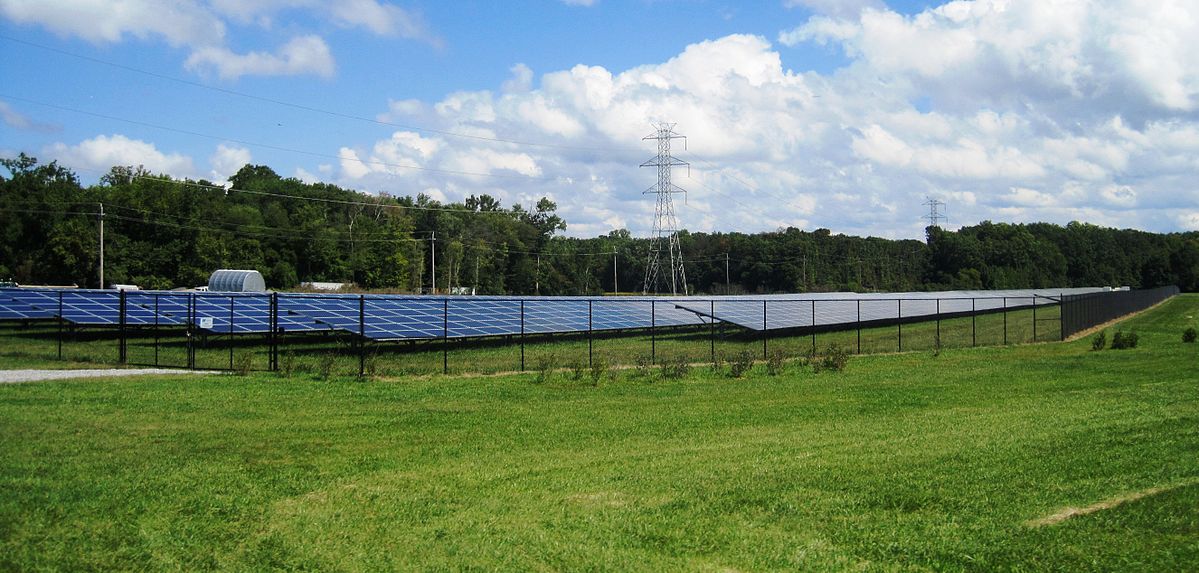
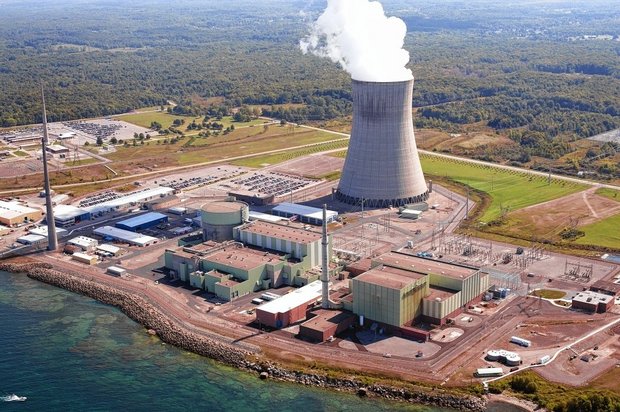

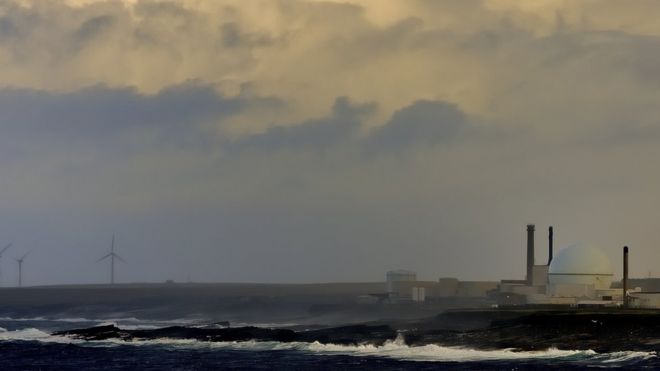
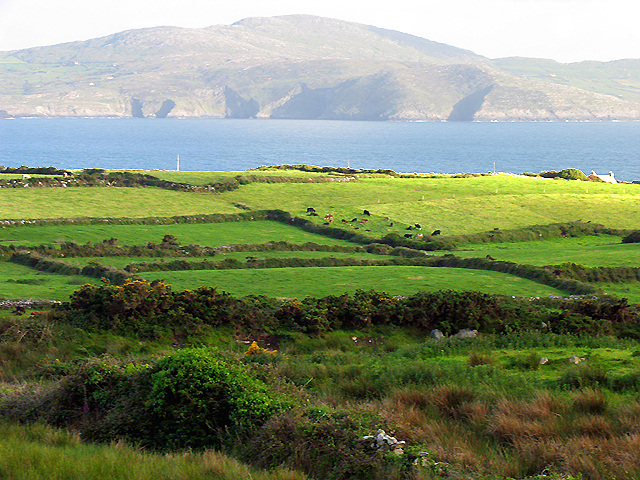
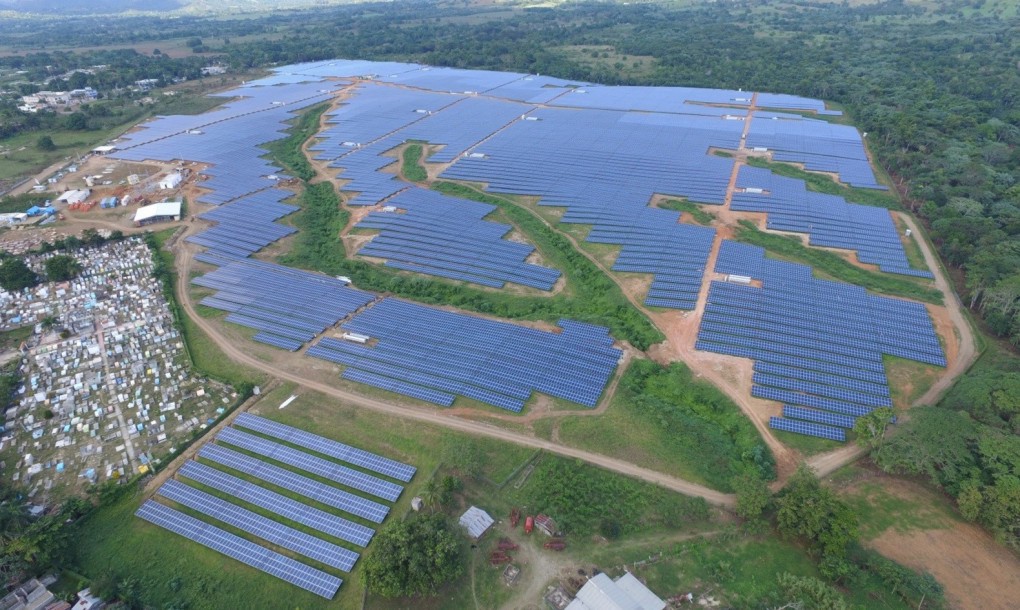

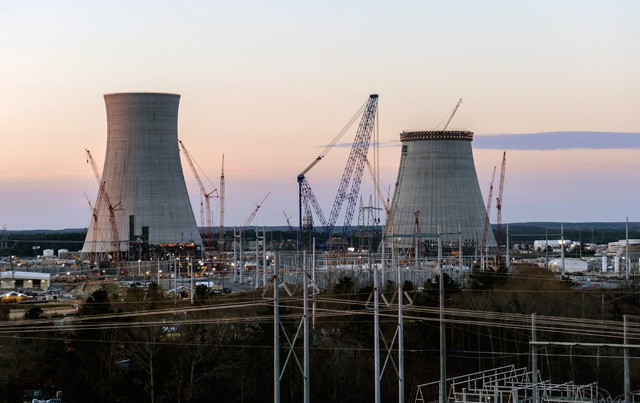
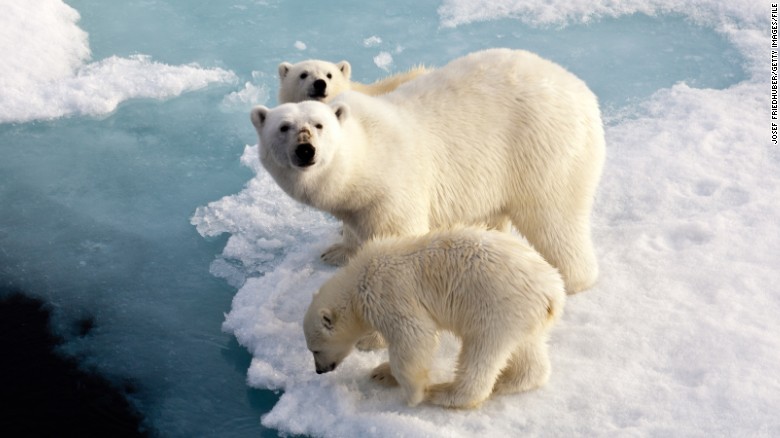
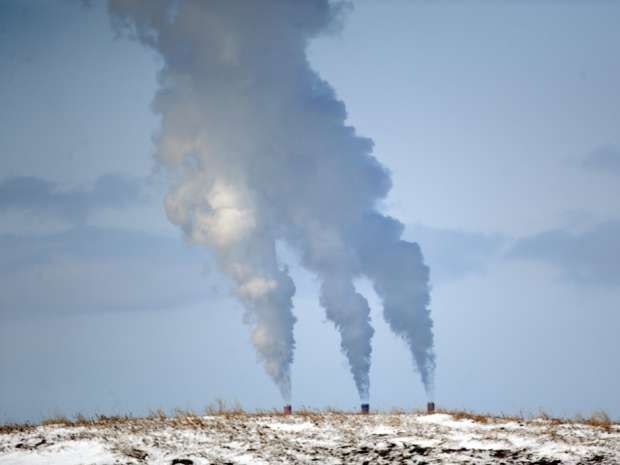

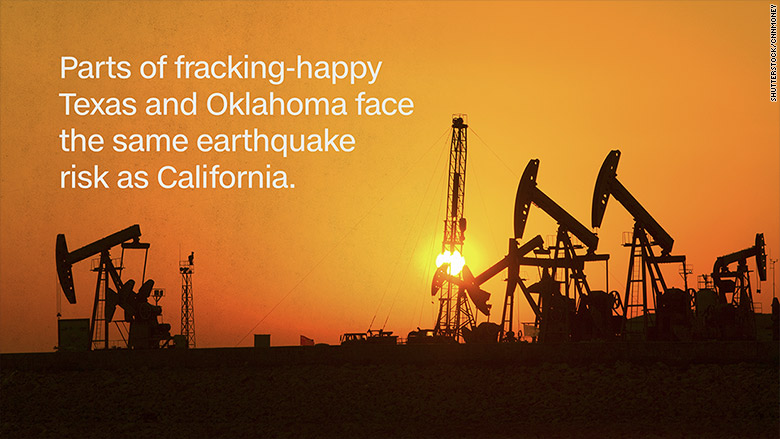
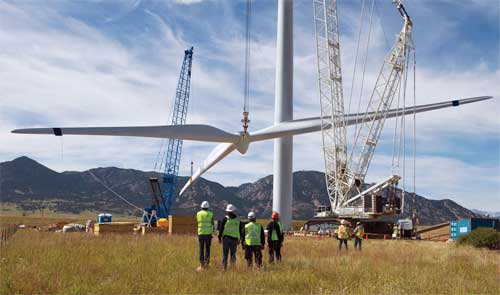

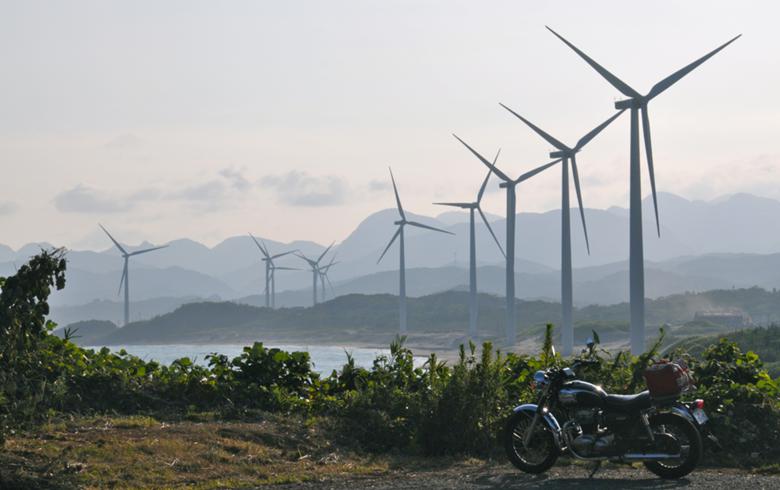
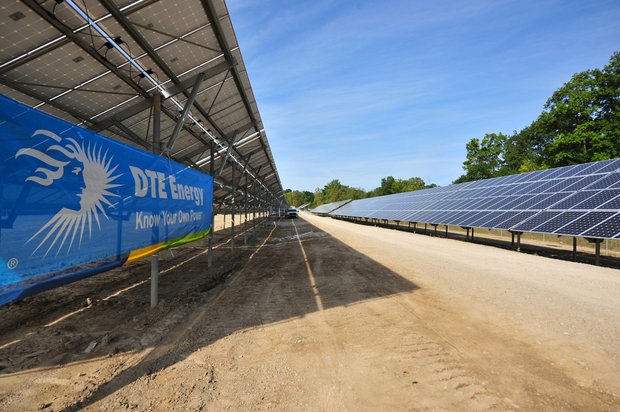
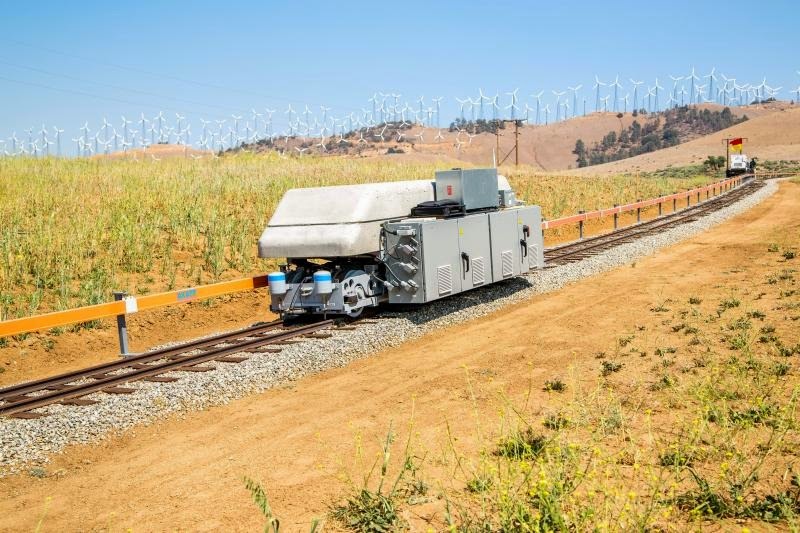

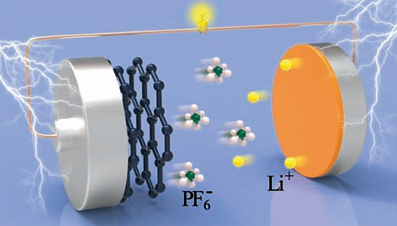
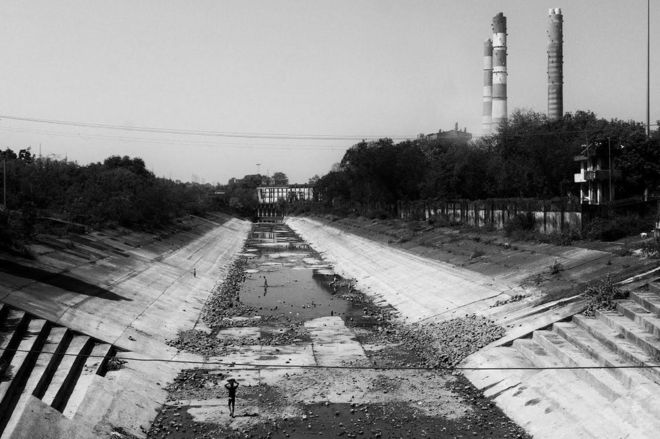

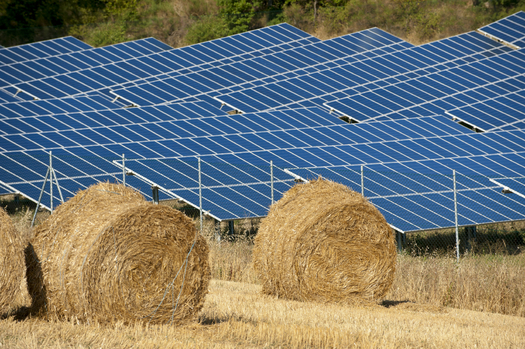

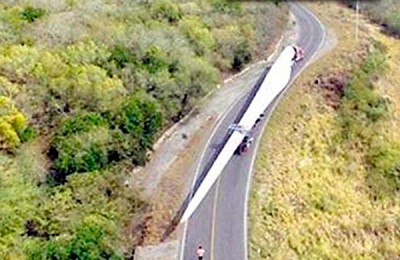
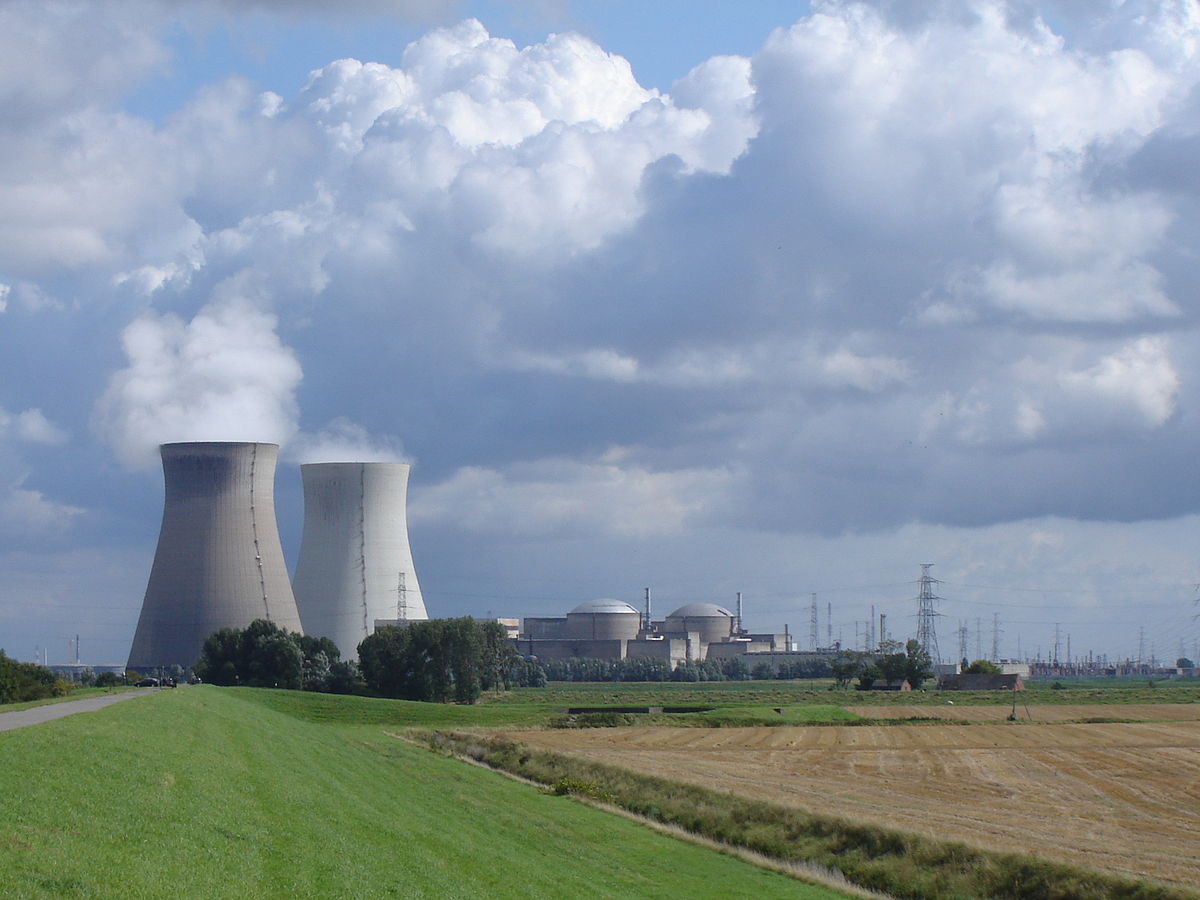
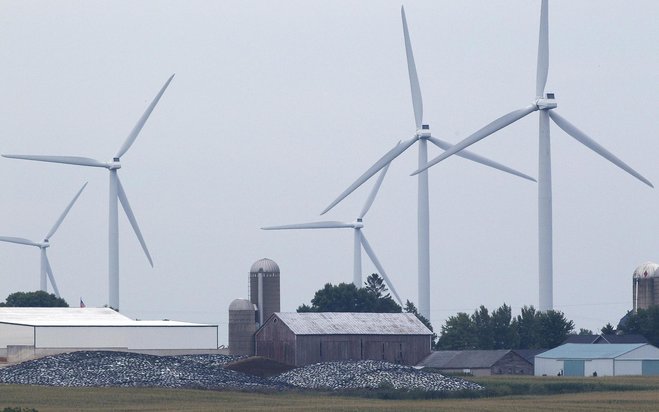
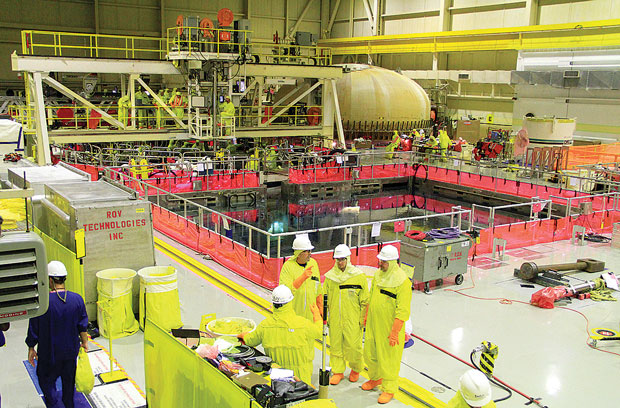

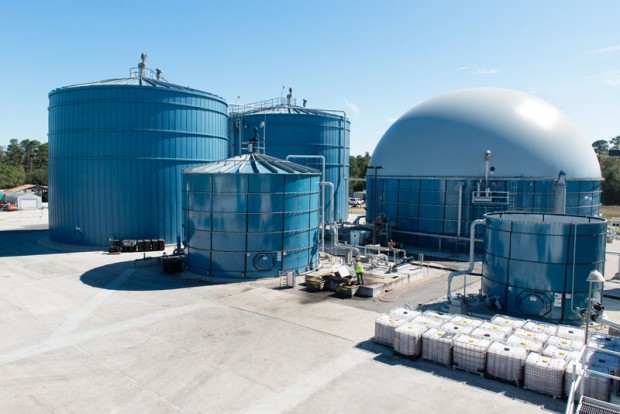
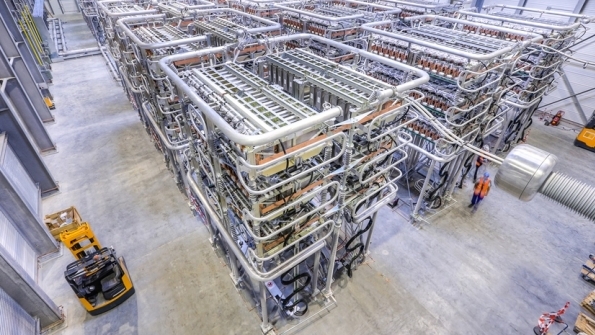
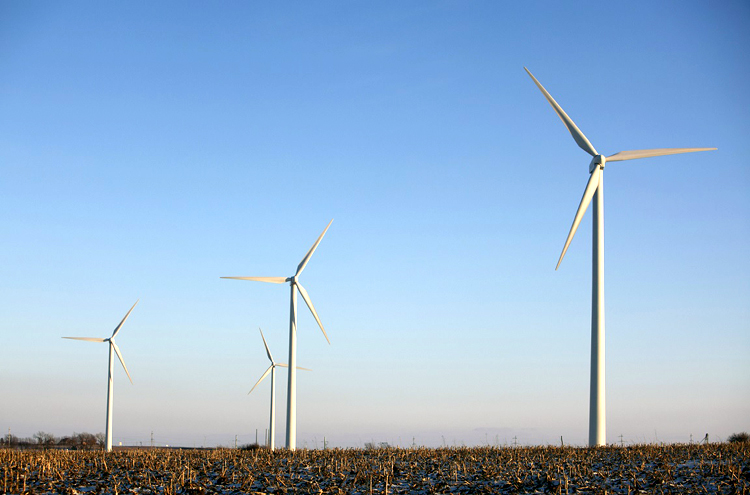
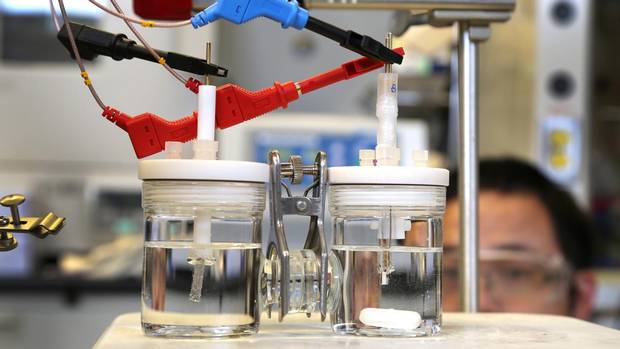
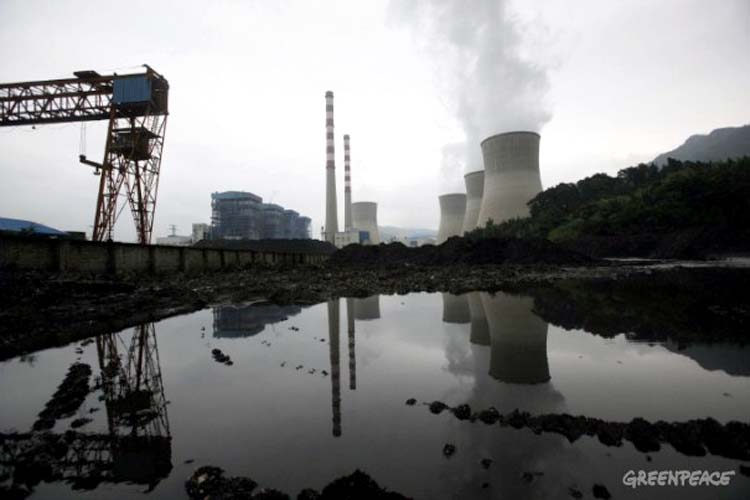


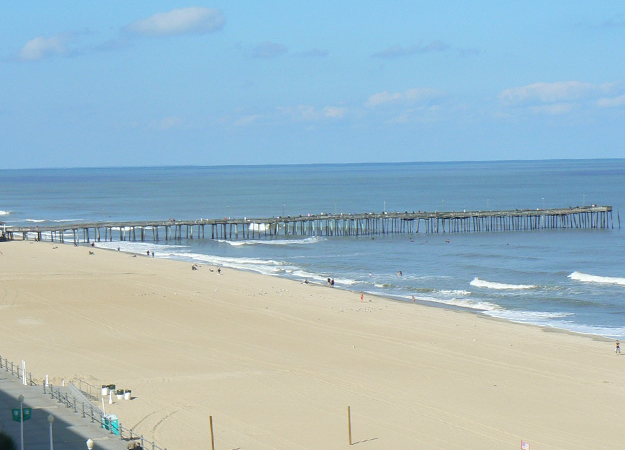

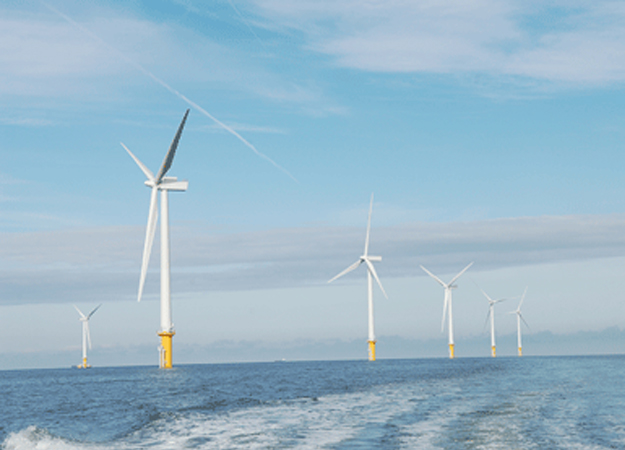
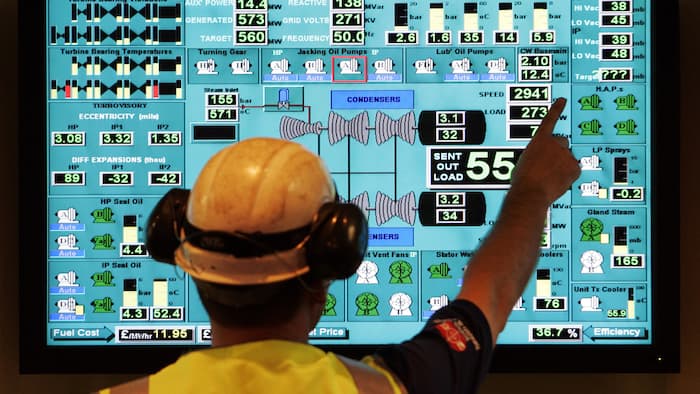
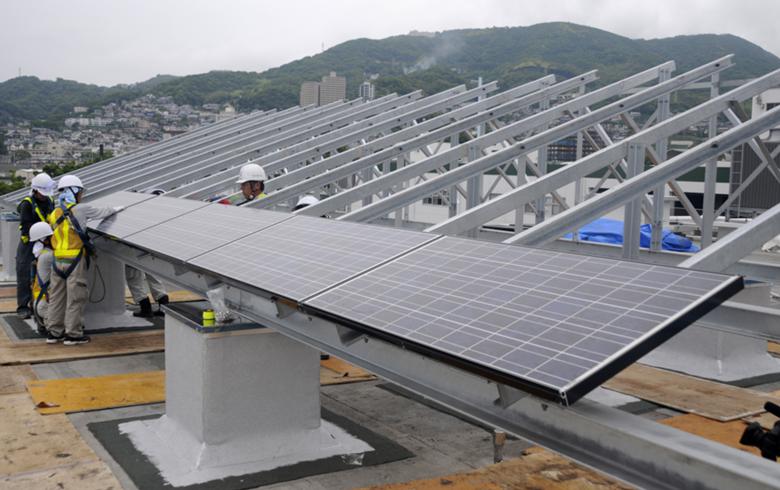


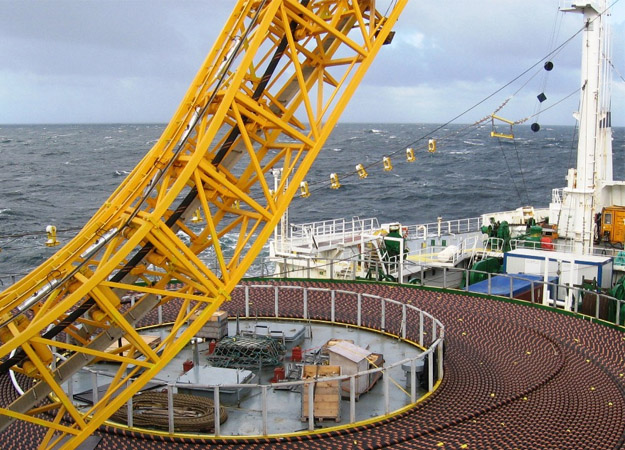
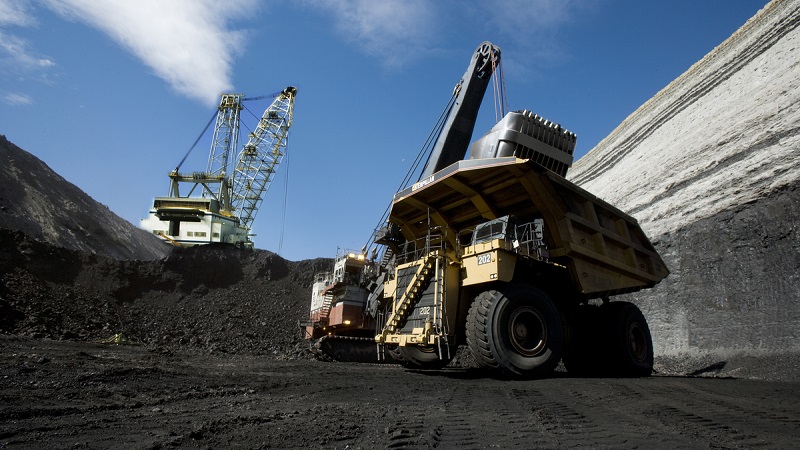

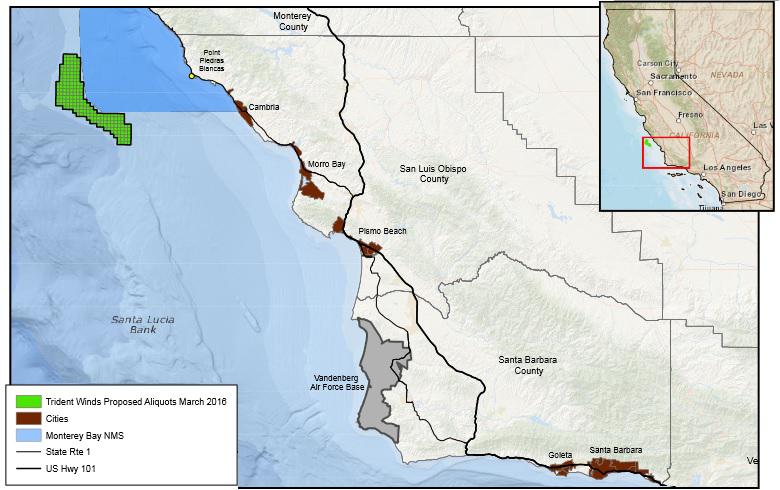


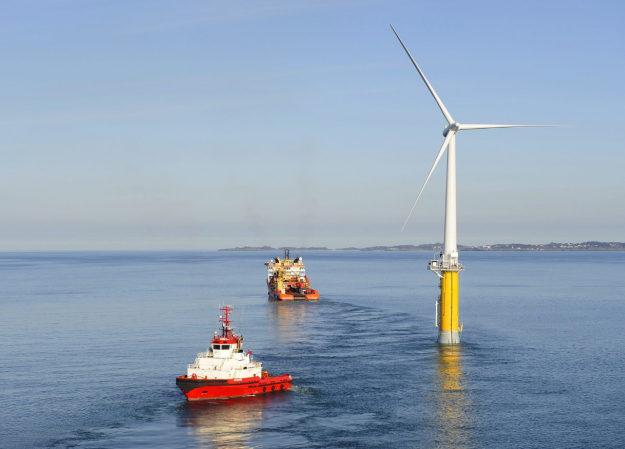

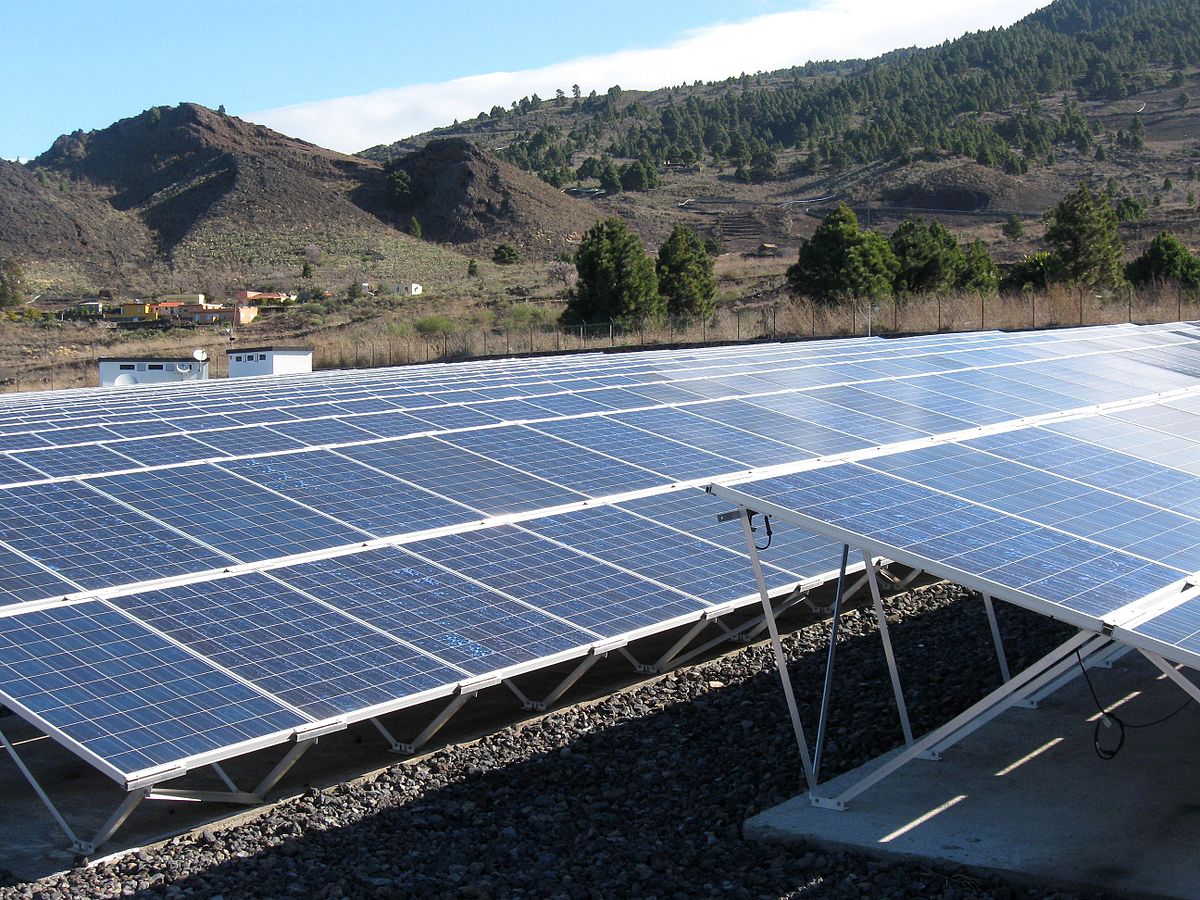


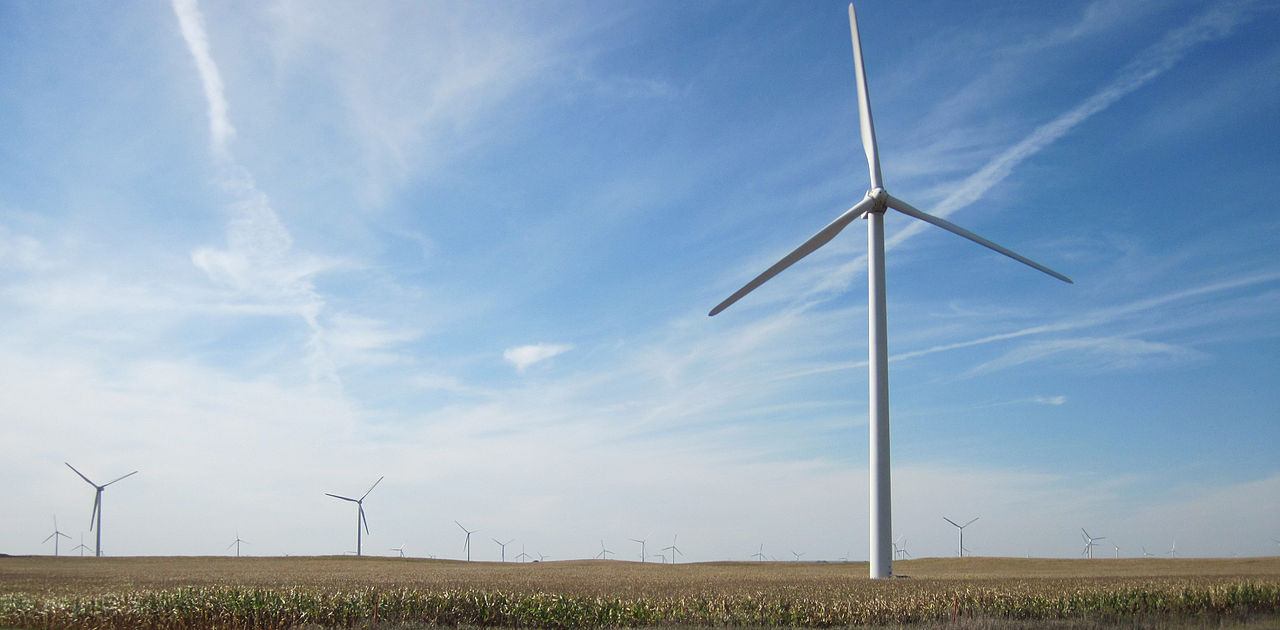
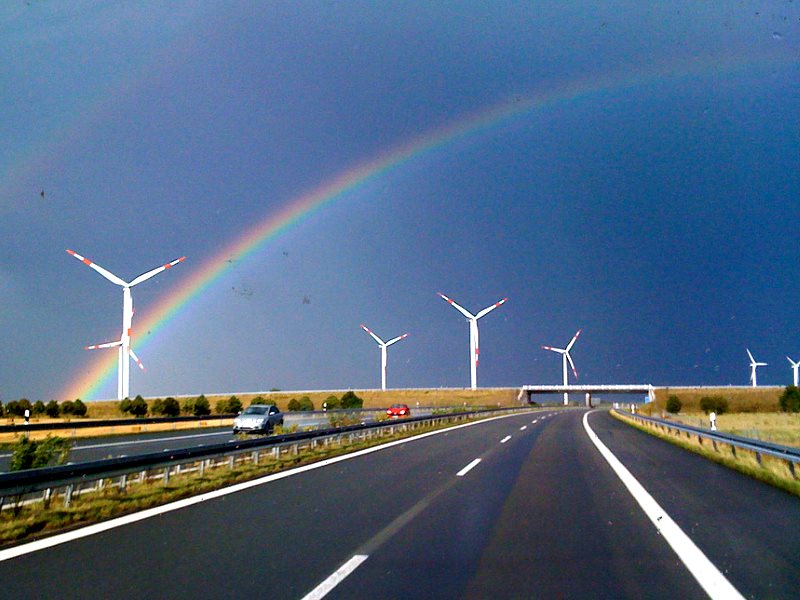






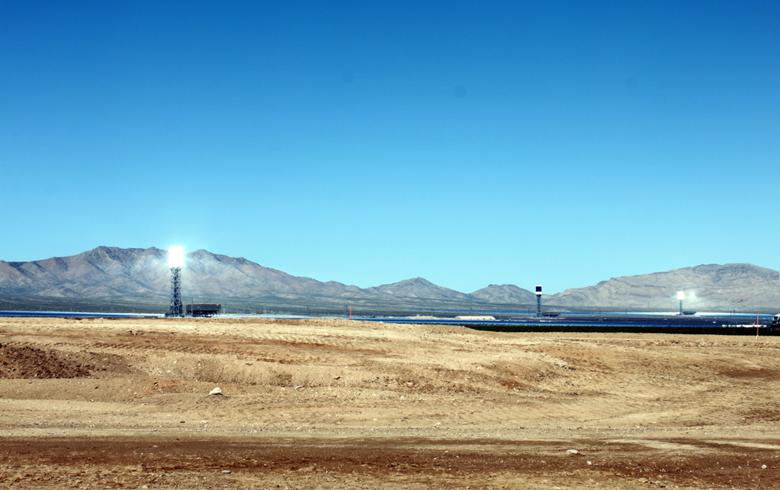


 geoharvey