Archive for November, 2015

November 30 Energy News

November 30, 2015

COP21:

¶ Leaders from 147 nations are addressing COP21 on its opening day. Negotiators from 195 countries will try to reach a deal during the two-week conference aimed at reducing global carbon emissions. Initiatives to boost clean technologies are due to be launched. But the world’s poorest countries say they fear being “left behind.” [BBC]

The Eiffel Tower was lit up on Sunday evening in support of the climate conference. Reuters

The Eiffel Tower was lit up on Sunday evening in support of the climate conference. Reuters

¶ With world leaders converging in Paris today for the start of the long-awaited COP21 climate talks, The Climate Group’s International Communications Director, Eduardo Goncalves, outlines why we should be optimistic about both a successful outcome, and crucially, the months and years that will follow. [The Climate Group]

¶ All eyes are on the French capital, two weeks after extremists killed 130 people around Paris. Fears of repeat attacks have prompted extra-high security and a crackdown on protests, and threaten to eclipse longer-term concerns about rising seas and extreme weather linked to man-made global warming. [Huffington Post UK]

¶ Organisers have said that at least 50,000 people marched through London in what was the UK’s largest ever demonstration for action against climate change. In the run up to the COP21, activists have been marching in cities around the world, and over 2,000 marches are said to have taken place since Friday. [Yahoo News UK]

March in London

Climate demonstration in London

World:

¶ Wind farm owners representing 12% of global turbine assets have founded a peer-to-peer online platform exchanging information on operations, with an objective of optimizing turbine yields through information exchange. Members include EDPR, Vattenfall, RWE, Dong Energy, Statoil and Acciona Energia. [reNews]

¶ Egypt inaugurated on Sunday the largest wind power station in the Middle East and North Africa region with a capacity of 200 MW, the ministry of electricity and energy said. The project’s cost is estimated at €270 million (roughly $286 million). Egypt has been suffering through increasing power shortages. [Al-Bawaba]

¶ London-based infrastructure group John Laing is “ready to invest” in more Australian renewable energy projects if the Turnbull government gets behind wind and solar farms, its CEO says. Australia was previously not a priority for renewable energy investors because there was a lack of support from the government. [Sydney Morning Herald]
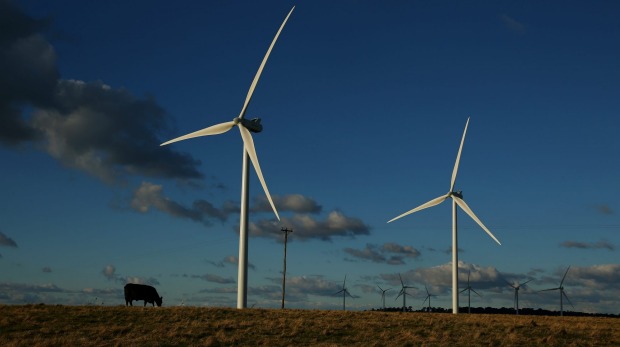
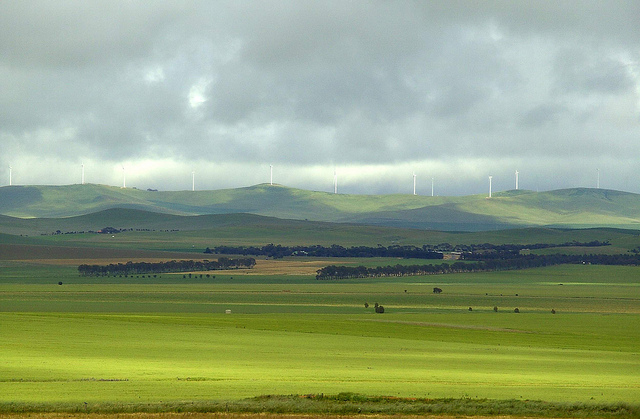
John Laing's first Australian renewable energy investment is in a wind farm near Adelaide. Photo: Mark Kolbe

John Laing’s first Australian renewable energy investment is in a wind farm near Adelaide. Photo: Mark Kolbe

¶ The global coal industry is touting “cleaner coal” technology to fight competition from renewable energy. The World Coal Association is pushing technology it says can cut the greenhouse gases emitted from burning coal by up to 30%. But the high costs of greener coal plants are proving a major obstacle for sales. [Huffington Post India]

¶ The largest solar farm in the Philippines will start supplying energy to Meralco on December 4. The new 11-hectare solar power plant has 32,692 solar panels that can generate 8.6 MW, meaning it can supply 61,920 households. The site had been a fish pond, but it ran dry, prompting its former owners to sell the property. [Manila Bulletin]

US:

¶ Climate change takes center stage Monday as a global conversation begins in Paris. But it’s not just international politicians who will lead discussions. US cities like Boulder will have representatives there to share their best practices. Now the city’s strategy includes a job many have never heard of: Chief Resilience Officer. [Colorado Public Radio]
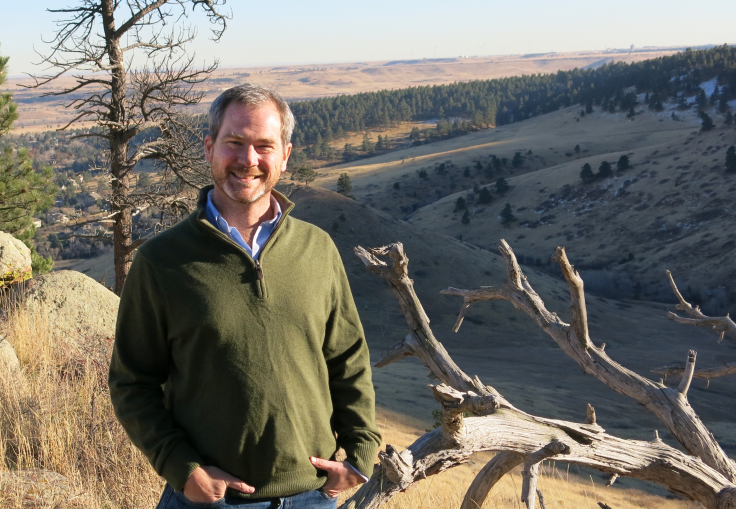
Greg Guibert, Boulder's first ever Chief Resilience Officer. More US cities are using CROs to strategize for climate change and other natural disaster challenges.

Greg Guibert, Boulder’s first ever Chief Resilience Officer. More US cities are using CROs to strategize for climate change and natural disaster challenges.

¶ President Barack Obama said Sunday that American leadership was helping make gains in the global fight against climate change as he tried to reassure world leaders assembling for a historic conference in Paris that the United States can deliver on its own commitments. Obama is joining other world leaders at COP21. [Albuquerque Journal]

¶ A San Francisco judge urged state regulators to release e-mails about a multibillion-dollar deal with two utilities that shut down the San Onofre nuclear plant. He said the Public Utilities Commission should “do the right thing” and reveal information about what went into a deal that would cost area utility customers over $3.3 billion. [CBS Local]

November 29 Energy News

November 29, 2015

COP21:

Can we avoid climate apocalypse? • Nearly every country in the world has agreed that an increase of 2° C in global average temperature since the Industrial Revolution, is too much. World leaders will meet in Paris starting on November 30 at the COP21 meeting of the UN Framework Convention on Climate Change. [CNN]

Durban, South Africa, if temperatures rise as much as 4° C, according to Climate Central.

A view of Durban, South Africa, if temperatures rise as much as 4° C, according to Climate Central.

COP21: Beginner’s guide to the UN Paris climate summit • World governments have already committed to curbing human activities such as burning fossil fuels that release the gases that interfere with the climate. The difficulty comes when you try to get 195 countries to agree on how to deal with the issue of climate change. [BBC]

Science and Technology:

¶ New onshore wind turbines are coming to market. Senvion’s 3.4M140 is a 3.4-MW example with 140 meter rotor blades. The turbine should be able to generate 12.2 GWh of electricity annually in locations with wind velocities of 6.5 meters per second at hub height, making capacity factor around 41%. [www.renewablesinternational.net]

World:

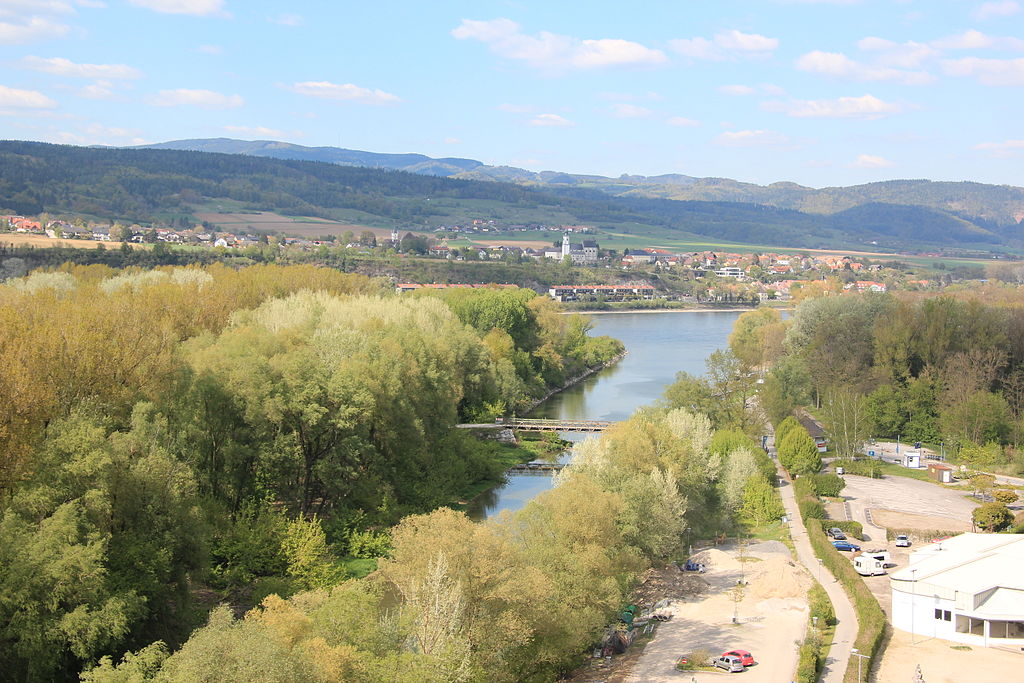
¶ The Wachau, a picture-postcard river valley in Austria, makes a lot of wine. Soon it could be producing its own electricity too, and in a way that will not spoil the stunning views. People in the valley have found a way to contribute to the fight against global warming by using what is called “river current power.” [CTV News]

The Wachau Valley. Photo by Karl Gruber. CC BY-SA 3.0. Wikimedia Commons.

The Wachau Valley. Photo by Karl Gruber. CC BY-SA 3.0. Wikimedia Commons.

¶ In 2010, a farmer in St. David’s, Newfoundland, installed an anaerobic digester that turns the waste from his 1,200 cows into electricity. His farm uses only 24% of the power, and the excess is enough to keep the lights on in 400 homes all year long. He wants to sell the power, but red tape has been holding him up for years. [CBC.ca]

¶ Australian Environment Minister Greg Hunt said new low-emissions coal power plants were unlikely to be built in Australia, despite experts saying they could help coal remain the dominant global fuel. He expects renewable energy, such as wind and solar, would take up the slack as old coal plant close. [The Australian Financial Review]

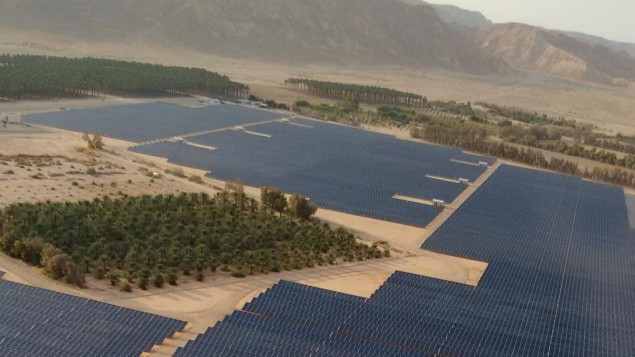
¶ Israel hopes to highlight its green technology expertise, with an emphasis on solar energy, as a major solution to global warming at the COP21 talks in Paris on November 30, according to a member of the delegation. Israeli innovation is being highlighted for its potential to help countries achieve climate goals. [The Times of Israel]

An aerial view of the 40 megawatt solar field recently built at Kibbutz Ketura, which provides the one third of the daytime electricity for the city of Eilat. (courtesy Gigawatt Global)

An aerial view of the 40 megawatt solar field recently built at Kibbutz Ketura, which provides the one third of the daytime electricity for the city of Eilat. (courtesy Gigawatt Global)

¶ When forest fires roared through Siberia this summer, so vast that the smoke blocked vast Lake Baikal from satellite view, Russian officials blamed the blazes on arsonists and disorganized fire crews. There may be another culprit: global warming, but Russia has little interest in reducing greenhouse gases. [The Journal]

US:

¶ Arizona could meet the requirements of the Clean Power Plan with large-scale solar and wind projects already under review in the state, according to a recent analysis released by Arizona State University’s Energy Policy Innovation Council and the Sonoran Institute, a sustainability group based in Tucson. [azcentral.com]

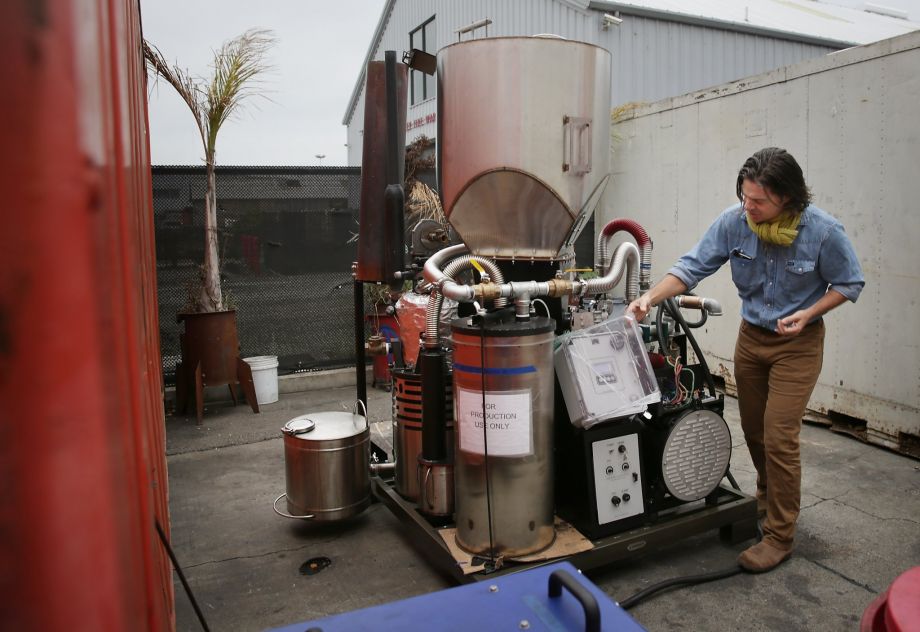
¶ The California birthplace of a machine that could bring clean power to the developing world and knock a tiny dent in global warming looks like a junkyard. But the Power Pallet, which generates electricity from corn cobs, wood chips, coconut shells and other kinds of cheap, dense biomass is “carbon negative.” [San Francisco Chronicle]

Tom Price, director of strategic initiatives, looks over a PP20 Power Pallet while giving a tour at All Power Labs. Photo: Lea Suzuki, The Chronicle

Tom Price, director of strategic initiatives, looks over a PP20 Power Pallet while giving a tour at All Power Labs. Photo: Lea Suzuki, The Chronicle

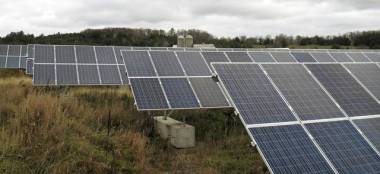
¶ A new solar plant being built near Florence, Arizona, will reduce carbon emissions equal to removing almost 20,000 vehicles from the road each year, company officials say. The Sandstone Solar ranch, currently under construction, will use 182,000 Jinko Solar photovoltaic modules, mounted on trackers. [TriValley Central]
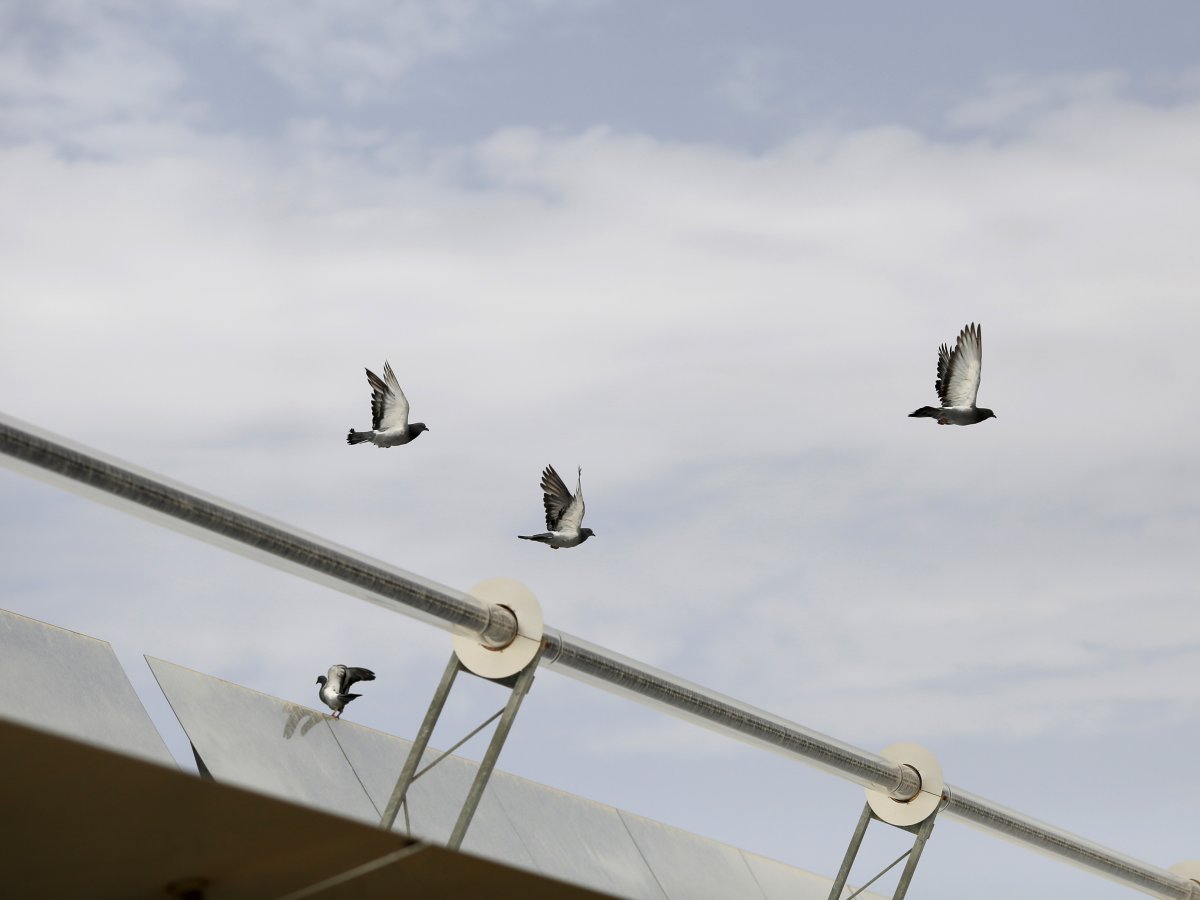
¶ Research has found that an earthquake fault near California’s Diablo Canyon nuclear power plant is linked to another fault farther north, potentially making it capable of stronger shaking. A US Geological Survey scientist says it is not yet known what the implications are for the possibility of earthquake. [KSBY San Luis Obispo News]

November 28 Energy News

November 28, 2015

Science and Technology:

¶ Rising levels of carbon dioxide in the oceans are changing the makeup of plankton. While the shift in numbers could certainly be fortunate for animals that eat one type with a burgeoning population, researchers are unsure exactly which animals those are. That is worrisome because it shows just how little is known about the ecosystems. [Science Recorder]

Recent research shows that higher levels of carbon dioxide may be leading to a rise in the numbers of tiny phytoplankton known as coccolithophores.

Recent research shows that higher levels of carbon dioxide may be leading to a rise in the numbers of tiny phytoplankton known as coccolithophores.

¶ Canadian researchers say they have developed a power cell that generates electrical energy using the photosynthesis of blue-green algae, generating renewable energy while removing carbon from the atmosphere. During photosynthesis, electrons are released and can be drawn off into an external circuit, producing an electric current. [ABC Online]

World:

¶ The prestigious London School of Economics announced this week that it would divest from its £97.2 million in investments in coal and tar sands companies. Research published by magazine Corporate Knights concluded that the LSE endowment had lost $3 million due to not having divested 3 years ago. [CleanTechnica]

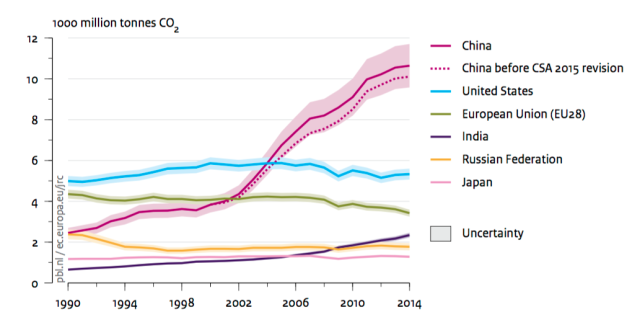
¶ Recently, the US released analysis of the country’s 2014 carbon emissions. It showed that growth in carbon emissions is declining even as economic activity expands. A new report indicates the same held true globally. Even though the global economy expanded by 3% last year, carbon emissions only rose by 0.5%. [Ars Technica]

Emissions trends: China flattening, US flat, and EU dropping. But be very afraid of India's growth. Netherlands Environmental Assessment Agency

Emissions trends: China flattening, US flat, and EU dropping. But be very afraid of India’s growth. Netherlands Environmental Assessment Agency

¶ Quenching India’s energy demand will take $140 billion a year in new investments, and while India has deregulated much of its energy sector and has recently issued a “historic climate pledge”, growing demand could prompt policymakers to usher in a broader swath of energy investments, especially in renewables. [Rapid News Network]

¶ In the next five years, China would invest 200 billion yuan ($31 billion) in building power grids in its northwest province of Xinjiang to connect the region to the country’s east, Pakistan and central Asian countries. Resources-rich Xinjiang Uygur autonomous region would create “Power Silk Road” transmission lines by 2020. [Daily Times]

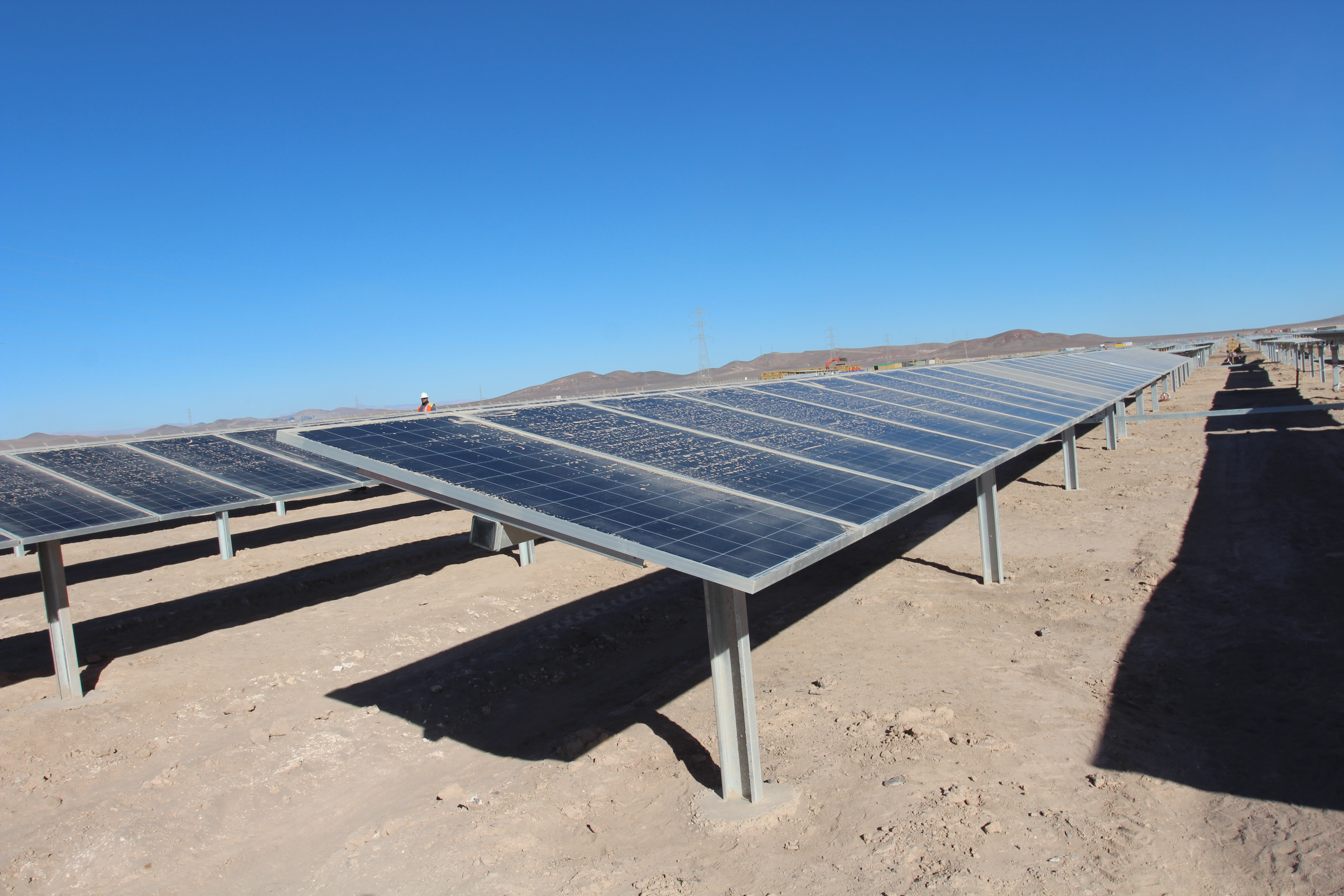
¶ Latin America is one of the fastest-growing solar markets worldwide, spurred on by high solar resources and surging electricity demand, resulting in 280% installation growth in 2015 compared to 2014. The Latin American solar market may dip slightly in 2016, but is expected to rebound strongly between 2017–2020. [CleanTechnica]

Visita Planta Abengoa in Chile. Image by Ministerio Bienes Nacionales. CC BY-SA 2.0. Wikimedia Commons.

Visita Planta Abengoa in Chile. Image by Ministerio Bienes Nacionales. CC BY-SA 2.0. Wikimedia Commons.

¶ BP’s CEO Bob Dudley talked about climate change and the role oil and gas companies can play in the transition to a low carbon future. BP management believes the best course of action would be for the parties at the UN conference to reach an agreement on carbon pricing, either with taxes or by cap-and-trade. [Business Finance News]

¶ Japan’s Nuclear Regulation Authority said that it has confirmed active faults at the site of the No 1 reactor at Tohoku Electric Power Co’s Higashidori nuclear plant and will base discussions on the restart of the idled reactor on the assumption that the faults will move. Tohoku Electric denies the existence of such faults. [The Japan Times]

US:

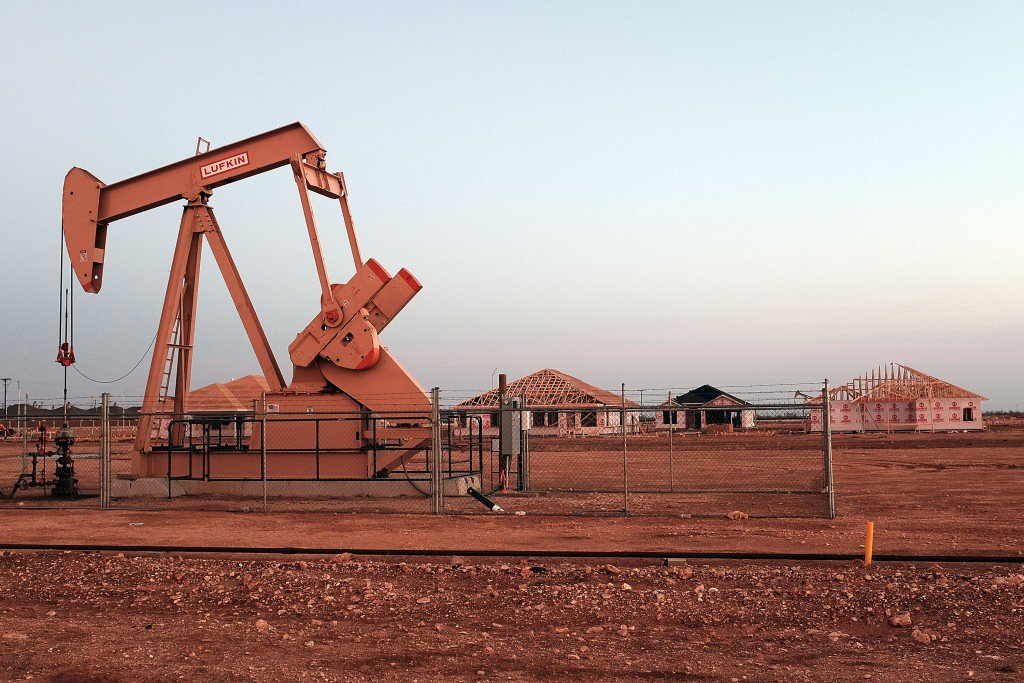
¶ Texas has by far the most potential for solar and wind generation in the United States, which means the Lone Star state might be even more energy-rich in the 21st century than it has been in the past. In addition, the state’s energy sector is trending cleaner due to market forces for a number of important reasons. [Breaking Energy]

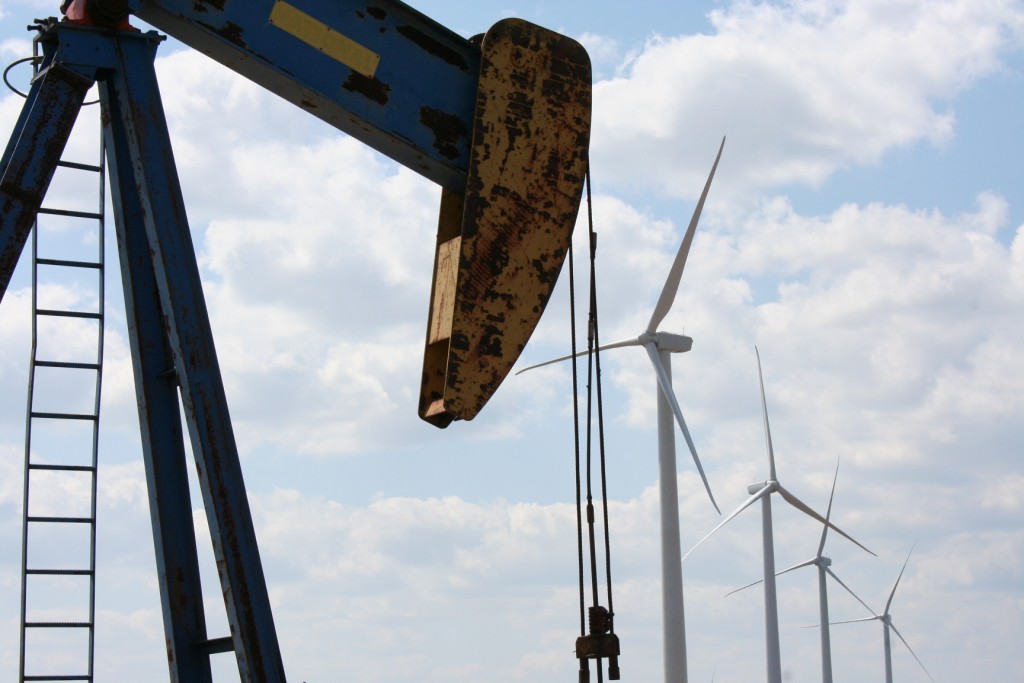
Nodding donkey and housing under construction in Texas.

Nodding donkey and housing under construction in Texas.

¶ With climate negotiators gathering in Paris, calls are intensifying to make all polluters pay a price for carbon dioxide and other planet-warming emissions. Many economists back the approach as a market-friendly way to cut greenhouse gasses. The US Congress is hostile to the idea, but it’s gaining traction elsewhere. [Voice of America]

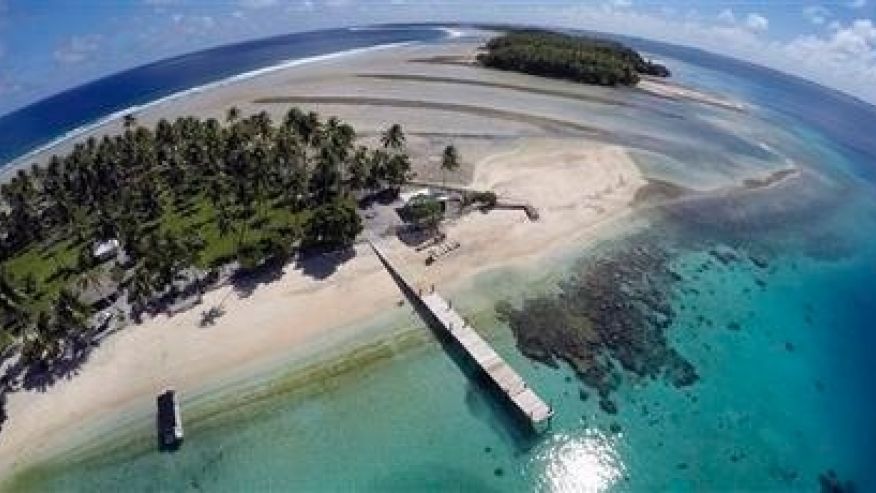
¶ For more than three decades, people from the Marshall islands have moved in the thousands to the landlocked Ozark Mountains for better education, jobs and health care, thanks to an agreement that lets them live and work in the US. The connection makes it an obvious destination for those facing a new threat: global warming. [Fox News]

Climate change poses an existential threat to places like the Marshall Islands, which protrude only 6 feet (2 meters) above sea level in most places. (AP Photo/Rob Griffith)

Climate change poses an existential threat to places like the Marshall Islands, which protrude only 6 feet (2 meters) above sea level in most places. (AP Photo/Rob Griffith)

¶ Six years ago, the owner California’s last operating nuclear power plant announced it would seek an extended license for its aging reactors. Now, with a much changed power landscape, it is evaluating whether to meet the costly state environmental requirements it needs. If it decides not to, California’s nuclear power age would end. [Manteca Bulletin]

¶ Officials in Vernon, Vermont, are shooting for a Town Meeting day referendum on the possibility of building a 600-MW, gas-fired power plant somewhere near the Vermont Yankee site. Officials also are asking the project’s lead advocate, a resident of Winhall, Vermont, to narrow in on a site for the plant by early 2016. [The Keene Sentinel]

November 27 Energy News

November 27, 2015

World:

¶ China’s emissions tied directly to burning fossil fuels may rise only 0.24% in 2015, the slowest pace in at least 15 years, according to a Bloomberg New Energy Finance preliminary estimate based on coal consumption data drawn from government customs reports, company production filings and port inventories. [Macau Daily Times]

China is boosting renewable energy at a time its coal consumption is dropping.

China is boosting renewable energy at a time its coal consumption is dropping.

¶ Pakistan is looking to increase the share of renewable energy in its overall energy mix substantially and has announced a roadmap that will see around 3.5 GW wind energy capacity operational by 2018. Over 40 wind energy projects in various stages of development should contribute around 2,050 MW capacity by 2017-18. [CleanTechnica]

¶ The Government of Bangladesh approved construction of a solar power project that is expected to play a critical role for the country to meet its renewable energy targets. A 200-MW solar power project in the Teknaf sub-district has been given the go ahead by the government to be developed by a SunEdison subsidiary. [CleanTechnica]

¶ CitiPower, via funding provided by the Australian Energy Regulator, is paying for battery storage to be installed in selected houses in Melbourne as a test. Properties with particular characteristics and in specific locations are being selected to see how those households’ reliance on the power grid changes with batteries in place. [The Age]

A solar-powered unit in East Melbourne. Councils are looking for ways to share solar power between residents. Photo: supplied

A solar-powered unit in East Melbourne. Councils are looking for ways to share solar power between residents. Photo: supplied

¶ South Australia has committed to a new target of zero net emissions by 2050, the state’s Premier has revealed. The announcement was made following the release of the recommendations of the South Australian Low Carbon Economy Expert Panel. The panel said 100% renewables could be achieved relatively quickly. [RenewEconomy]

¶ Unilever announced that it would stop using coal energy by 2020, and planned to use only renewable energy by 2030. Paul Polman, Unilever’s CEO, said, “If we don’t tackle climate change we won’t achieve economic growth. This is an issue for all businesses, not just Unilever. We all have to act.” [International Business Times]

¶ Completed only last month and designed to keep contaminated groundwater from seeping into the sea, a 780-meter protective wall built alongside Fukushima Daiichi is already “slightly leaning,” plant operator TEPCO has announced. Pressure from the flow of groundwater has tilted the wall some 20cm towards the sea. [RT]

© The Japan Times / YouTube

Fukushima protective wall. © The Japan Times / YouTube

¶ Africa is quickly adapting to modern renewable energy sources, and could more than quadruple renewable energy use to 22% by 2030, up from 5% in 2013, according to a new report. International Renewable Energy Agency says Africa is currently among the leading markets for modern renewable energy sources. [SciDev.Net]

¶ Australia’s Federal Environment Minister has approved a $380 million wind farm on the Atherton Tablelands in far north Queensland, subject to conditions aimed at protecting native species. Developers RATCH Australia and Port Bajool hope to start building the 63-turbine Mt Emerald wind farm, near Walkamin, mid-next year. [ABC Online]

¶ A trial of project of large-scale water-source heat pump technology has been launched in the UK. The Neatpump, by Star Renewable Energy, uses ammonia as a working fluid. The trial will supply heat and hot water to 300 new homes in a project near Exeter for utility E·On. [Cogeneration & On-Site Power Production Magazine]

US:

¶ Enbridge says it has purchased a 103-MW wind farm under development in West Virginia for about $200 million from EverPower Wind Holdings. The Calgary-based pipeline operator, which has been increasing its stake in the clean energy sector, said it is aiming to have the New Wind Creek project in operation by December 2016. [CBC.ca]

Enbridge has been increasingly investing in renewable energy, including two major wind-power purchases in November 2015. (Reuters)

Enbridge has been increasingly investing in renewable energy, including two major wind-power purchases in November 2015. (Reuters)

¶ In a report, the National Renewable Energy Laboratory says, “In just four years, thanks to falling renewable energy technology costs, economic potential has more than tripled.” Economic potential is a metric that quantifies the amount of economically viable renewable generation that is available at a specific location. [pv magazine]

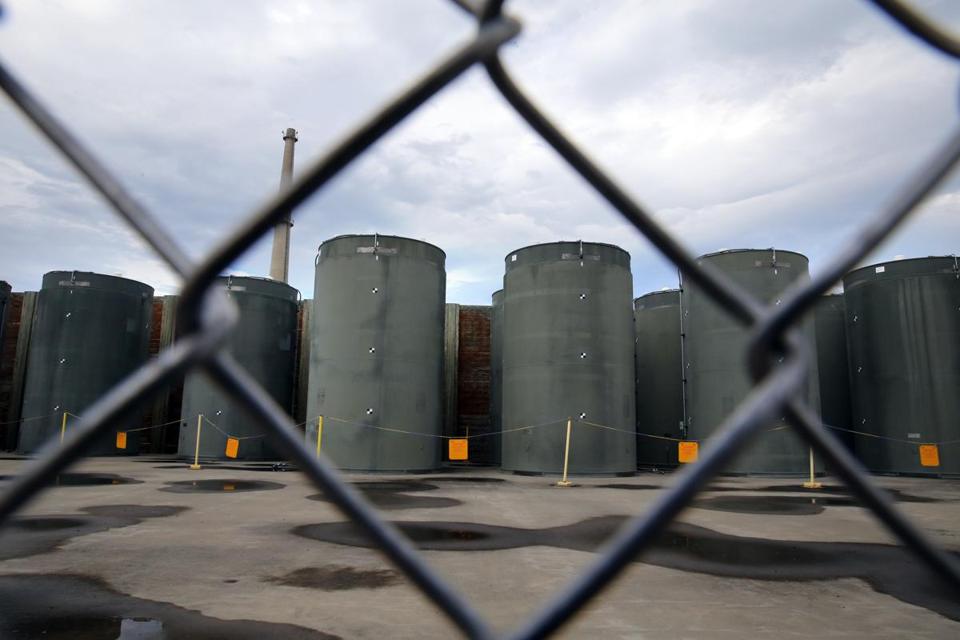
¶ The Vermont Yankee nuclear plant stopped producing power last year, but security measures, including heavily armed guards in bulletproof towers, will remain in place for decades to protect hundreds of tons of radioactive waste. The spent fuel will stay here until the federal government can determine where to store it. [The Boston Globe]

Dry cask storage was used to store spent fuel at the Entergy Vermont Yankee nuclear power plant. Craig F. Walker/Globe Staff

Dry cask storage was used to store spent fuel at the Entergy Vermont Yankee nuclear power plant. Craig F. Walker/Globe Staff

¶ Democratic presidential candidate Bernie Sanders calls climate change the greatest threat to national security. Hillary Rodham Clinton promises to install more than 500 million solar panels across the country. Republican Jeb Bush would phase out tax credits for solar power. Rival Marco Rubio wants to cut the federal gas tax by 80%. [ABC News]

¶ Google said it would offset the huge amounts of electricity it needed to run its North Carolina server farm with solar power under a new program that allows corporations to voluntarily pay more for renewable energy. Duke Energy will supply electricity it buys from a new Rutherford County solar farm under a new program. [domain-B]

November 26 Energy News

November 26, 2015

Science and Technology:

¶ This year will be the hottest on record and 2016 could be even hotter due to the El Niño weather pattern, the World Meteorological Organization said. WMO director-general Michel Jarraud rejected climate sceptics’ arguments, saying, “It’s not about believing or not. It’s a matter of seeing the facts. The facts are there.” [Free Malaysia Today]

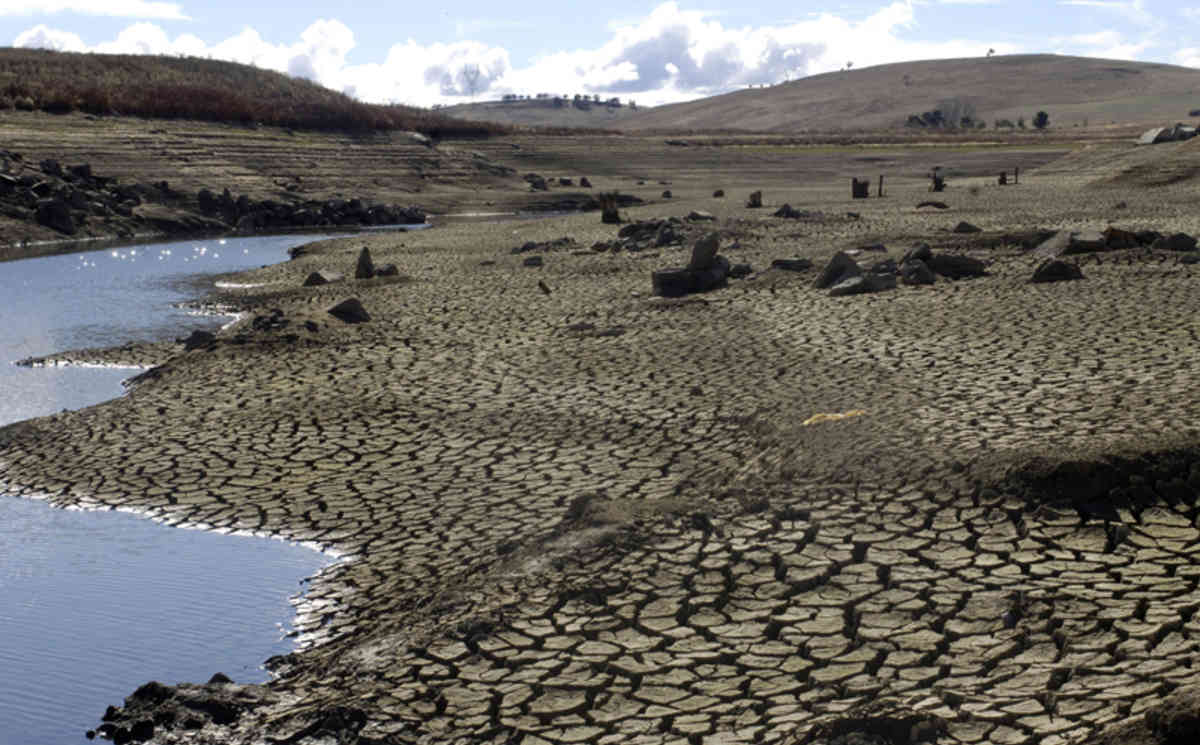
Parched

How long will it last?

¶ One significant challenge to lithium-ion EV battery technology is coming from the lithium-sulfur field. A lithium-sulfur battery research project at Oak Ridge National Laboratory has had sufficient success that Oak Ridge announced that it has signed an exclusive lithium-sulfur battery agreement with a startup called Solid Power. [CleanTechnica]

¶ Stanford researcher Mark Jacobson has analyzed what it would take for each of the 50 states to go fully renewable. Normally, intermittency issues are expected to be handled by fossil fuel power and batteries. But the new analysis suggests we don’t need any of that, and we don’t need biofuels or nuclear, either. [Ars Technica UK]

World:

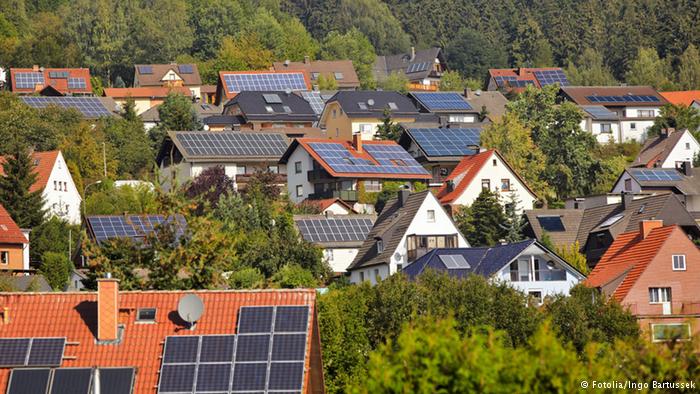
¶ German household-scale battery maker Sonnenbatterie will soon provide buyers of the company’s household-scale electricity storage batteries, most of whom also have solar photovoltaic panels mounted on their rooftops, to automatically buy and sell energy from each other directly through a shared online platform. [Deutsche Welle]

German rooftops.

German rooftops.

¶ According to a recent report, soon to be released by Dodge Data & Analytics, green building continues to double every three years, with strongest acceleration in emerging economies, and clients and tenants worldwide are increasingly demanding sustainability, for both energy efficiency and occupant benefit. [CleanTechnica]

¶ Early this year, France’s state energy and environment agency was set to publish a study showing the country could actually abandon nuclear power and rely entirely on renewable power in decades to come. But the presentation was scrapped under political pressure, illustrating tensions surrounding French energy policy. [Reuters]

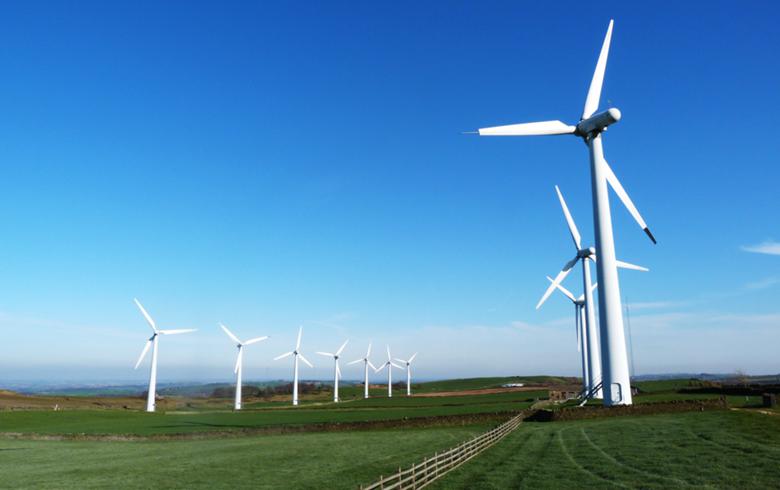
¶ The UK Department of Energy issued a new analysis of energy and emissions projections in 2015. An analysis of the projections by Carbon Brief, shows that the government now expects 22 GW of new renewable capacity to be installed by 2025, down by more than a third from the 34 GW forecast last year. [SeeNews Renewables]

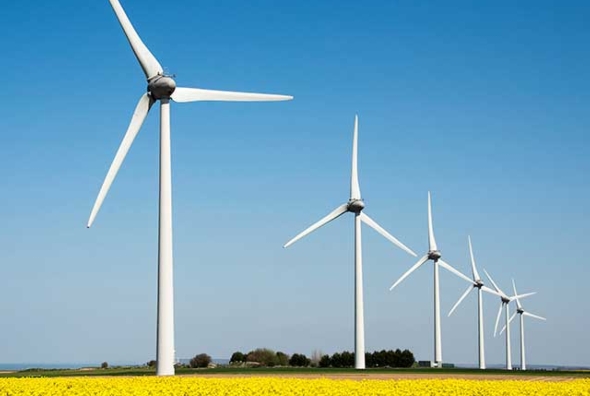
Wind farm in England. Author: stephen jones. License: Creative Commons, Attribution 2.0 Generic

Wind farm in England. Author: stephen jones. License: Creative Commons, Attribution 2.0 Generic

¶ Renewable energy is rapidly becoming the world’s preferred choice for new electricity generation, according to a Climate Council report. “A Whole New World: Tracking the renewables boom from Copenhagen to Paris” reveals how the world is in the midst of a dramatic energy revolution which could still accelerate. [Climate Control News]

¶ A competition to identify the “best value small modular reactor design for the UK” will be launched next year, to “pave the way towards building one of the world’s first small modular reactors in the UK in the 2020s,” the Treasury said. Support for the technology will come through a £250 million research package. [Yahoo Finance UK]

US:

¶ New rules could make it possible to develop more renewable energy in Alaska, by making it easier for independent projects to sell their power to the grid. After two years of hearings, the Regulatory Commission of Alaska issued new rules saying utilities should buy renewable power if it is least expensive. [Alaska Public Radio Network]

Alaska Environmental Power workers and contractors prepare to hoist the hub of a rotor and the three large blades to a hub. Photo: Tim Ellis/KUAC

Alaska Environmental Power workers and contractors prepare to hoist the hub of a rotor and the three large blades to a hub. Photo: Tim Ellis/KUAC

¶ The energy storage market is rapidly becoming one of the most exciting spaces in all of renewables. Two major developments highlight this. First, even that the most dysfunctional of American institutions, the Congress, is getting interested in energy storage. Second, Wall Street is putting money into energy storage. [OilPrice.com]

¶ Fred Costello, a free-market Republican member of Florida’s House of Representatives, filed a bill last week to open the state’s energy market to solar energy competition by allowing homeowners and businesses to lease their rooftops to companies that generate solar power and sell it back to the grid. [Government Technology]

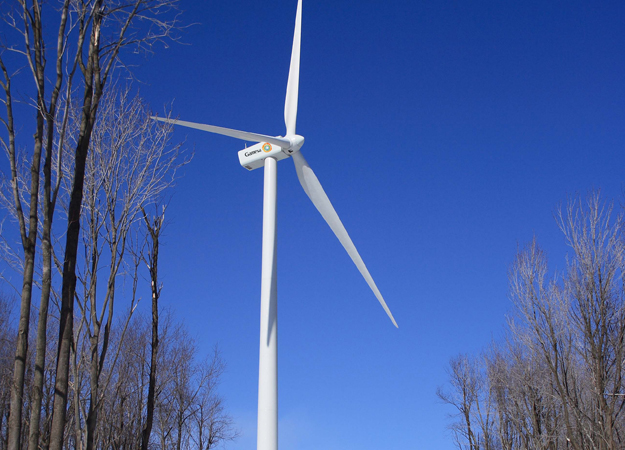
¶ North Dakota regulators have approved a 100.4-MW community-initiated wind project in Rolette County. The Public Service Commission voted unanimously to grant a certificate of site compatibility authorizing construction of up to 59 turbines. The project is located on a 14,000-acre site in north-central North Dakota [reNews]

Image: G114 (Gamesa)

Image: G114 (Gamesa)

¶ Developer Cape Wind has urged a US court to dismiss opponents’ appeal of its 468-MW offshore wind project in Nantucket Sound. The appeal is the latest in the plaintiffs “14-year crusade” against the project, which includes more than 30 administrative and court challenges, Cape Wind told a federal Court of Appeals. [reNews]

¶ Biodico announced its new facility in California’s San Joaquin Valley. The plant is purportedly the world’s first biofuel production facility operating entirely on renewable heat and power generated on-site. It will go online the first week of December, to produce 20 million gallons of biodiesel fuel each year. [Renewable Energy Magazine]

November 25 Energy News

November 25, 2015

Opinion:

Australia should back calls to end coal and save its drowning neighbours While all of us of will experience the effects of climate change most are not facing the inevitable disappearance of our country. Yet that is the case for the 92,000 inhabitants of Kiribati, as well as other low-lying island states across the planet. [eco-business.com]

Kiribati, with about 92,000 inhabitants, recently bought land in Fiji to relocate its inhabitants as the sea level rises. Image: Shutterstock

Kiribati, with about 92,000 inhabitants, recently bought land in Fiji to relocate its inhabitants as the sea level rises. Image: Shutterstock

The Climate Talks in Paris Might Actually Work This Time • UN climate talks set to begin in Paris next week promise to produce a landmark deal that has eluded diplomats for more than two decades. All of the G20 nations, including the biggest developing countries, China, India and Brazil, have prepared to limit pollution. [Bloomberg]

Science and Technology:

¶ An accelerated transition to renewable energy could limit the global temperature rise to below 2° C, says an International Renewable Energy Agency report. It says if renewable energy accounted for 36% of the world energy mix by 2030, half the emission reductions needed to limit warming to 2° C would already be met. [CleanTechnica]

World:

¶ US-based Envirofit was one of the first social enterprises to provide clean cookstoves, and it’s just recently sold its millionth unit. Rocket stoves are wonders of sustainability. They address dangers to human health posed by open-fire cooking; they also burn very small amounts of wood fuel, with low emissions. [CleanTechnica]

Image credit: Envirofit International via Picasa. CC BY-NC-ND 3.0

Image credit: Envirofit International via Picasa. CC BY-NC-ND 3.0

¶ Ireland could install nearly 4 GW of solar by 2030, adding more than €2 billion to its economy and creating more than 7,000 jobs, with modest policy support, a new report produced by KPMG has claimed. The report was produced on behalf of the Irish Solar Energy Association and says the technology should be supported. [Solar Power Portal]
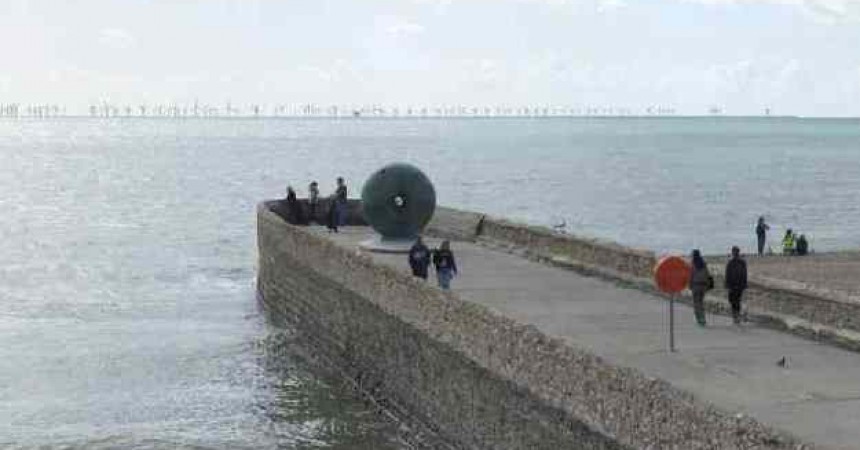
¶ The government of South Australia released the final report from its Low Carbon Economy Expert Panel, which recommends the state’s greenhouse gas emissions be cut by more than half by 2030 and the state be a net zero emitter by 2050. The panel also recommends an emissions trading scheme linked to California’s. [InDaily]

¶ The 300-MW Cestas solar photovoltaic project, located in the Bordeaux region of France, has now been fully connected to the electric grid, according to recent reports. Full grid connection was achieved with the connection of the last 12-MW portion of the project, which has a total of 25 different 12 MW project portions. [CleanTechnica]

Cestas solar project

Cestas solar project

US:

¶ The US DOE announced that a company called Dioxide Materials is getting a slice of the agency’s new $125 million round of funding for “transformational” energy projects. Among its areas of expertise, Dioxide Materials is developing a low cost system that uses renewable energy to produce hydrogen fuel from water. [CleanTechnica]

¶ Vestas is to supply an unnamed client with 200 MW of turbines for a wind farm in Oklahoma. The manufacturer will deliver 61 of its V126 3.3-MW units; it is the first order from the US for that model. Delivery will start in the second quarter of 2016, with completion in the second half of year. Oklahoma has been 2-MW territory. [reNews]

¶ Duke Energy, the largest electric power holding company in the US, has repurposed a retired coal-powered operation in New Richmond, Ohio, in a development partnership with LG Chem, Greensmith, and Parker Hannifin, which provided the 2-MW power conversion inverter. The storage capacity of the unit was not disclosed. [CleanTechnica]

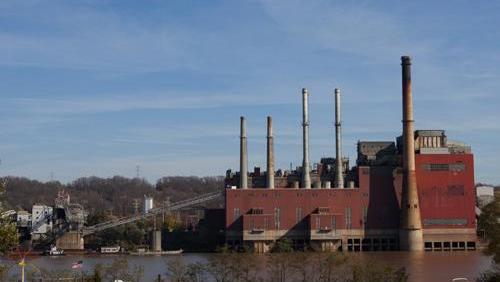
Duke Energy’s Walter C. Beckjord retired coal-powered generating station. Image via Cincinnati Business Courier

Duke Energy’s Walter C. Beckjord retired coal-powered generating station. Image via Cincinnati Business Courier

¶ Las Vegas is planning to run municipal buildings, fire stations, parks, streetlights and other facilities exclusively with renewable energy, under a deal announced Tuesday with the NV Energy, a utility owned by Berkshire Hathaway. The agreement doesn’t cover the famously bright casinos on the Las Vegas Strip. [Pittsburgh Post-Gazette]

¶ According to the Environmental Defense Fund, 70% of Hoboken’s population lives in flood zones. The city also has a plan to manage flooding and other disasters. Working with EDF’s Climate Corps program, Hoboken is moving toward building a microgrid to keep the power on at 55 buildings during disasters. [Government Technology]

¶ Alaska is a vast wilderness of natural beauty. But it also holds more coal than all the other US states put together. As world leaders prepare to gather for a major climate change summit, plans to build an open coal mine that would cover 78 sq km (30 sq miles) surrounding a valued Alaskan river could be coming to a head. [BBC]

Photo by Pete Niesen

Photo by Pete Niesen

¶ According to the California Air Resources Board, a leak that started October 23 at a Southern California Gas Company well accounted for a quarter of all the methane released by the state since it started. Estimates are that up to 50 metric tons of the potent greenhouse gas leaked into the atmosphere each hour since the leak started. [KCET]

¶ The US is set to become the first nation to decide whether it’s safe to operate nuclear power plants for 80 years, twice as long as initially allowed. The majority of the nation’s 99 reactors already have 20-year extensions to their 40-year operating licenses. Now, operators led by Dominion Resources want even more time. [Bloomberg]

November 24 Energy News

November 24, 2015

Opinion:

How Renewable Energy Could Make Climate Treaties Moot • Creating an international agreement is an admirable goal, but notably, countries are not racing to zero emissions on their own. It is amazing that no country has performed a study on the benefits and costs of going to 100% clean, renewable energy. [Scientific American]

©iStock.com

©iStock.com

How Virtual Power Plants Can Help Replace Dirty Peaker Plants • A recent Wall Street Journal article highlighted a common problem: How to pay for aging, mostly coal-fired power plants whose only function is as backup for peak demand? One way is to combine distributed power and loads sources in a “virtual” power plant. [CleanTechnica]

Science and Technology:

¶ Sooner than it takes to build a nuclear power station, lithium-air batteries could be helping wind and solar to make coal, oil and nuclear obsolete, according to researchers from the Cambridge University. Five times lighter and five times cheaper than current lithium batteries, Li-air would open the way to our 100% renewable future. [The Ecologist]

World:

¶ A developing country dubbed one of the most vulnerable to climate change has confirmed controversial plans for more coal-fired power stations. The president of the Philippines has told the BBC the new coal plants are needed to meet demands for energy. This comes despite coal’s huge contributions to global warming. [BBC]

The Philippines is regarded as one of the most vulnerable countries to climate change. Kate Stephens/BBC

The Philippines is regarded as one of the most vulnerable countries to climate change. Kate Stephens/BBC

¶ Richard Branson and other notable business leaders were signatories of a definitive letter of climate action directed to heads of state. Specifically, the letter calls for the Paris (COP21) deal to include a long-term climate goal of net-zero emissions by 2050. Their aim in the process is “the end of business as usual.” [CleanTechnica]

¶ Allianz CEO Oliver Baete said the company will no longer invest in companies if more than 30% of sales come from coal mining or if they generate more than 30% of electricity from the fossil fuel. Allianz manages about €1.8 trillion in assets, focusing on the U.S., Germany, France, Italy, Britain and the Asia-Pacific region. [Newser]

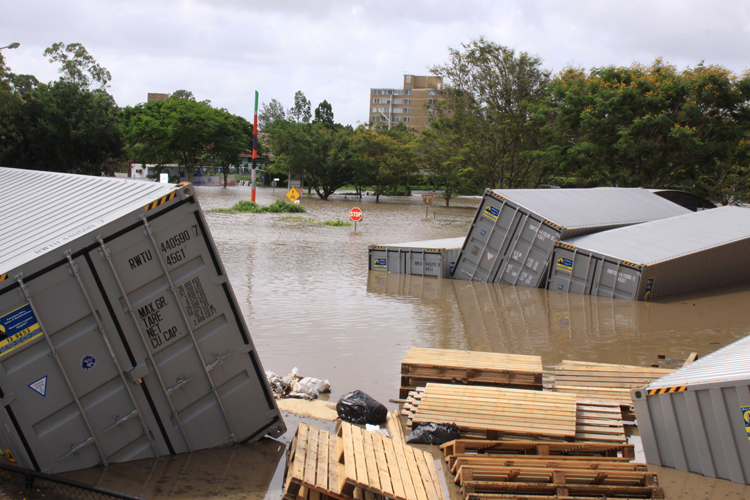
¶ A study concludes that long-term ocean warming worsened deadly floods that hit Australia in 2010/11. During that summer, a series of floods hit Queensland, affecting at least 90 towns, over 200,000 people, killing at least 38 people, causing damage of $2.38 billion (Aus), and reducing Australia’s GDP about $40 billion. [CleanTechnica]

Image Credit: Markus Gebauer / Shutterstock.com

Image Credit: Markus Gebauer / Shutterstock.com

¶ LG Chem has announced it will supply Steag with six 15 MW Li-ion battery systems, while Nidec ASI will provide the necessary PCS and EMS solutions. “With 140 megawatt hours of power, the storage systems will deliver enough energy to supply 10,000 households per day with electricity,” said LG Chem. [pv magazine]

¶ Jordan is set to add 1,600 MW of solar and wind power to the national energy mix by 2016. The renewable energy sector needs an investment of $2.4 billion by 2025, in order to increase the contribution of clean energy sources to the Kingdom’s overall power capacity, says Ibrahim Saif, minister of energy and mineral resources. [AMEinfo]

¶ Investment in renewable sources of energy in Latin America and the Caribbean grew by nearly 50% last year to $23 billion, according to a study released by the Inter-American Development Bank and Bloomberg New Energy Finance. Brazil accounted for $14 billion of that total; Mexico and Chile followed with $2 billion each. [La prensa]

US:

¶ The EU’s renewable energy requirements are forcing coal-based power plants to use biomass fuel. Swaths of woodlands in Southeastern United States are being cut down to fuel the biomass boom across the Atlantic. A report by the Natural Resources Defense Council points out that 15 million acres of unprotected forests are at risk. [Digital Journal]

Europe's biomass boom is putting American forests at risk. Photo by cuellar.

Europe’s biomass boom is putting American forests at risk. Photo by cuellar.

¶ To bring the benefits of solar energy to more of people, especially those who are not wealthy and who otherwise lack easy access to solar power, the Obama administration rolled out a national solar initiative last July. One of its key components, a private-public community solar partnership, is now starting to really come together. [CleanTechnica]
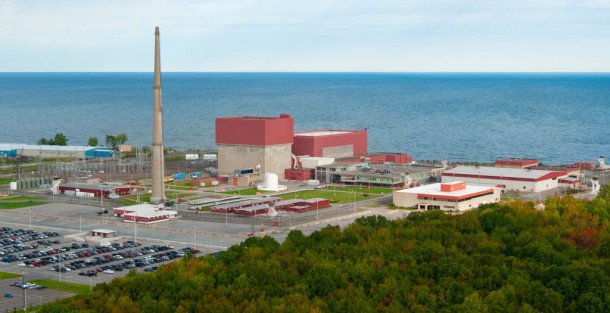
¶ Nuclear power plant owners are welcoming reports that Gov. Andrew Cuomo wants state regulators to mandate that half of the state’s energy come from renewable energy sources by 2030 while creating incentives for nuclear to remain viable in the interim. The governor wants to keep the Ginna and Fitzpatrick nuclear plants going. [RTO Insider]

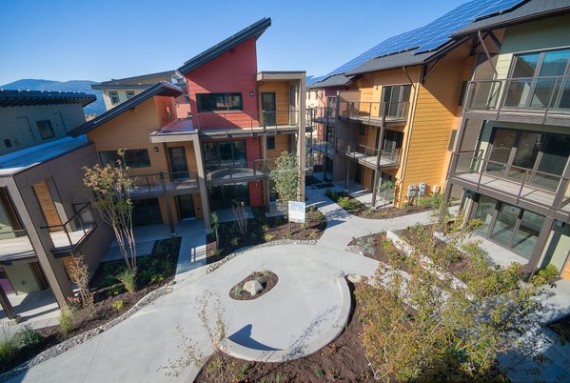
¶ Builders seeking a net-zero energy home showcase can look to BuiltGreen’s zHome townhome complex in Issaquah, Washington. Several year’s later, the country’s first Net-Zero Energy townhome complex, meets expectations on reducing energy and water consumption, according this newly released white paper. [CleanTechnica]

zHome townhome complex

zHome townhome complex

¶ A research study has found that using more solar power in Arizona could save 15 billion gallons of water annually. Most of the water used in Arizona is for agriculture, but another common usage is for cooling natural gas, coal, and nuclear power plants. Obviously, operating rooftop solar power does not require such water use. [CleanTechnica]

November 23 Energy News

November 23, 2015

World:

¶ Most people know global oil prices have crashed this year. This was caused by a massive supply glut created by ferocious production from OPEC and near-record US output. The oversupply problem is so bad that oil tankers waiting to be offloaded are piling up off the US Gulf Coast because there’s nowhere to put the crude. [CNN]

"Tanker offshore terminal" by US Navy photo by Photographer's Mate 2nd Class Andrew M. Meyers. Public Domain. Wikimedia Commons.

Tanker loading oil. US Navy photo by Photographer’s Mate 2nd Class Andrew M. Meyers. Public Domain. Wikimedia Commons.

¶ UK-based project developer Lightsource has announced its expansion into the rapidly growing solar power market of India, as it has signed an agreement to invest $3 billion to develop 3 GW solar power capacity in the country. The agreement was signed during Indian Prime Minister Modi’s visit to the United Kingdom. [CleanTechnica]

¶ Wind turbine blade manufacturer LM Wind Power is setting up a blade factory in Vadodara in the Indian state of Gujarat in response to increased domestic demand, the Danish company said. The plant is scheduled to start operations in March 2016 and will supply blades to wind projects in the northern part of India and beyond. [SeeNews Renewables]

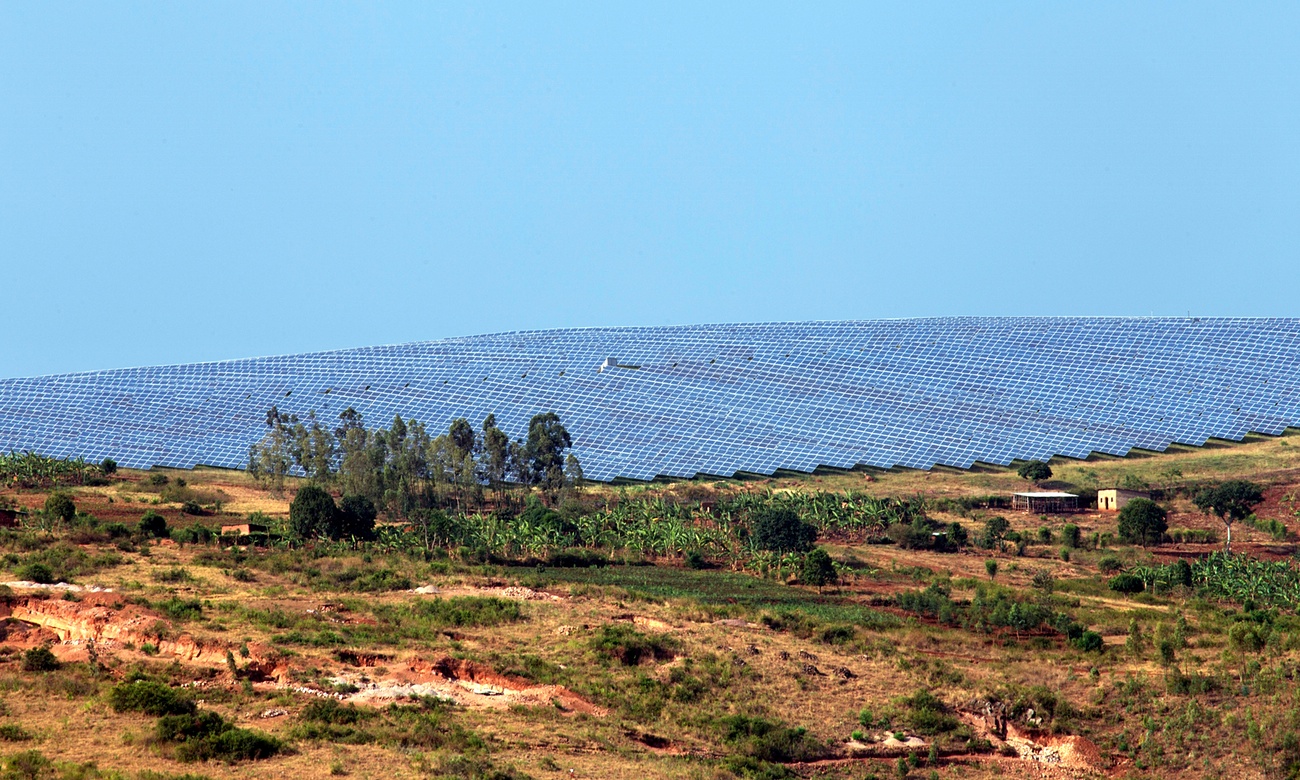
¶ An 8.5-MW solar power plant in Rwanda is designed so that, from a bird’s-eye view, it resembles the shape of the African continent. The $23.7 million (£15.6 million) solar field went from contract signing to construction to connection in just a year, defying sceptics of Africa’s ability to realise projects fast. [The Guardian]

The 8.5-MW solar power plant in Rwanda’s famed green hills. Photograph: Cyril Ndegeya / AFP for the Guardian

The 8.5-MW solar power plant in Rwanda’s famed green hills. Photograph: Cyril Ndegeya / AFP for the Guardian

¶ Battery costs are falling to the point that they are becoming increasingly viable as an option for uses such as supporting the stability of power grids. New electricity storage installed on to the grid to support renewables is likely to grow more than 60-fold from 196 MW of capacity now to 12,700 MW in 2025, according to Navigant. [Irish Times]

¶ For the first time ever, over half of all new annual investment into clean energy power generating projects globally went toward projects in emerging markets, rather than toward wealthier countries. Emerging market investments in renewables hit a record annual high of $126 billion in 2014, up $35.5 billion from 2013 levels. [Jakarta Post]

¶ Alberta will speed up the phase out of coal-fired power and move to more renewable energy by 2030, according to its newly released climate change strategy. The plan suggests that two-thirds of coal-generated electricity will be replaced by renewables, mainly wind power, with natural gas generation for load reliability. [Calgary Herald]

A wind farm near Fort MacLeod, Alberta. Leah Hennel / Calgary Hearald Archives

A wind farm near Fort MacLeod, Alberta. Leah Hennel / Calgary Hearald Archives

¶ Just a few weeks after the UK’s Prime Minister announced a deal with the Chinese to build the Hinkley Point nuclear plant, Baroness Jones, a Green party London Assembly member, asked London’s mayor, Boris Johnson, whether he supported it despite the cost. In reply, he said, “It’s a disgrace.” [The London Economic]

US:

¶ In Climate Science, two of the three Democratic presidential candidates are ‘A’ students, while most of the Republican contenders are flunking, according to a panel of scientists who reviewed candidates’ comments. The climate and biological scientists did the rating at the request of The Associated Press. [Watertown Public Opinion]

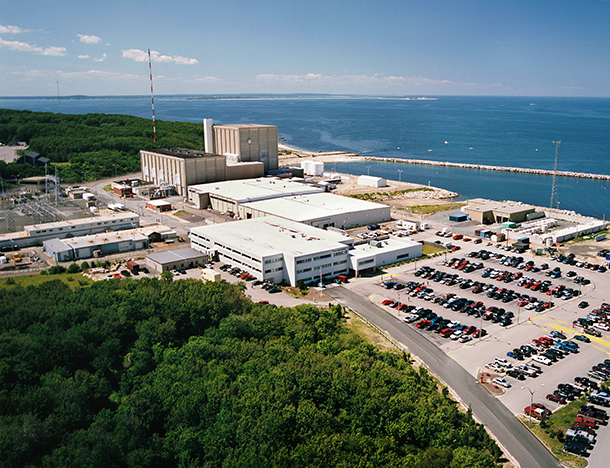
¶ In the face of growing safety problems, cheap natural gas and the rising use of renewable energy sources, aging nuclear power plants are closing down across the US, raising questions about the future viability of nuclear energy production. Pilgrim and Fitzpatrick are both old and expensive to run, but they typify nuclear problems. [Jefferson Public Radio]

The Entergy Corporation will close Pilgrim Nuclear Generating Station, on Cape Cod Bay, within four years. Entergy Nuclear / Flickr

The Entergy Corporation will close Pilgrim Nuclear Generating Station, on Cape Cod Bay, within four years. Entergy Nuclear / Flickr

¶ Danish wind turbine blade maker LM Wind Power is increasing the number of employees at a North Dakota plant by 100 to almost 700 in coming months. The company wants to be competitive in the labor market and lifted its starting wage for production employees. The plant has been retooling for longer blades. [SeeNews Renewables]

November 22 Energy News

November 22, 2015

Opinion:

Good news: Big companies are using a record amount of clean energy • In the United States, clean energy is already a booming business. Solar is the fastest-growing energy source in the country, and in 2015, total investment in renewable energy projects here reached nearly $40 billion. And big companies are getting involved. [Grist]

Shutterstock image.

Shutterstock image.

The broken promises, politics of corn ethanol • The federal corn ethanol mandate, also known as the Renewable Fuel Standard, exemplifies how national politics play into an issue that makes absolutely no sense. The case against it is so strong that groups ranging from the Sierra Club to Americans for Tax Reform agree on it. [Modesto Bee]

World:

¶ With just a week to go until a crucial global warming summit begins, 170 countries have submitted pledges for greenhouse gas curbs to underpin a 195-nation climate pact. Those countries account for about 93% of the world population and produce roughly 93% of emissions driving dangerous levels of climate change. [The Japan Times]

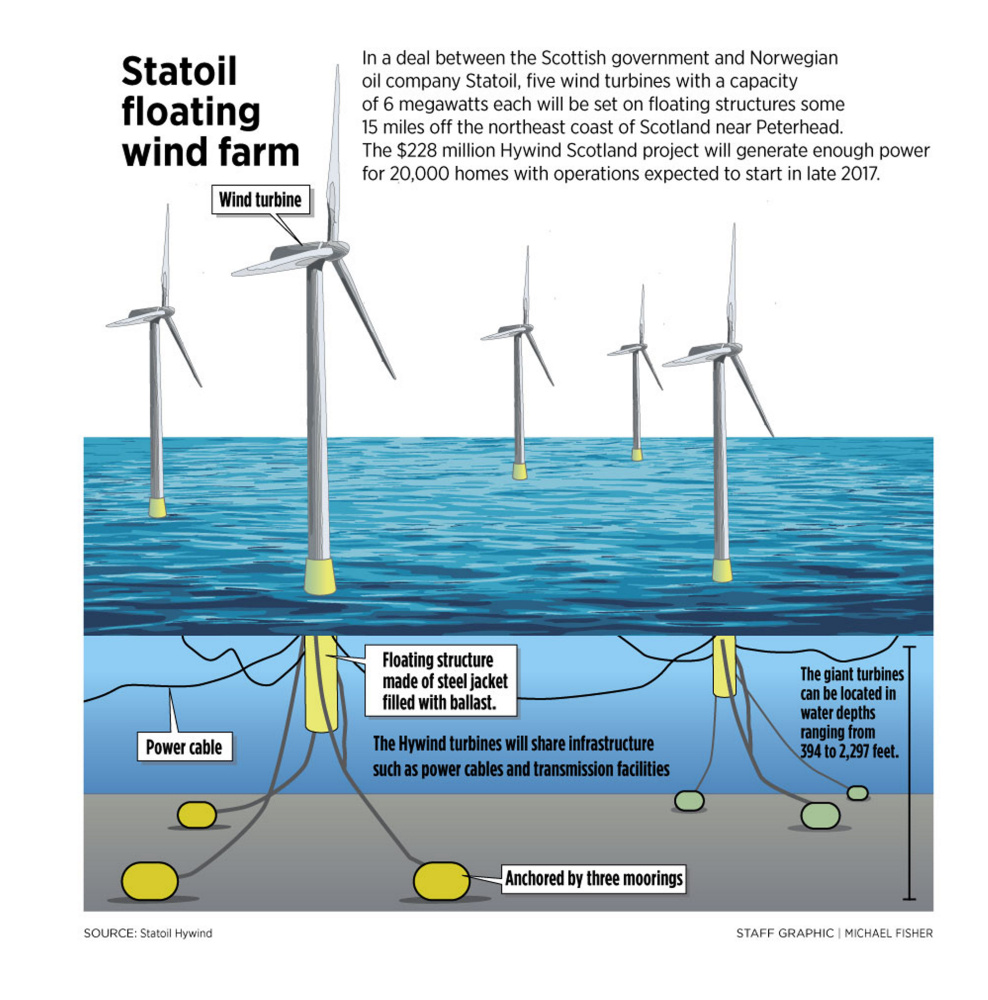
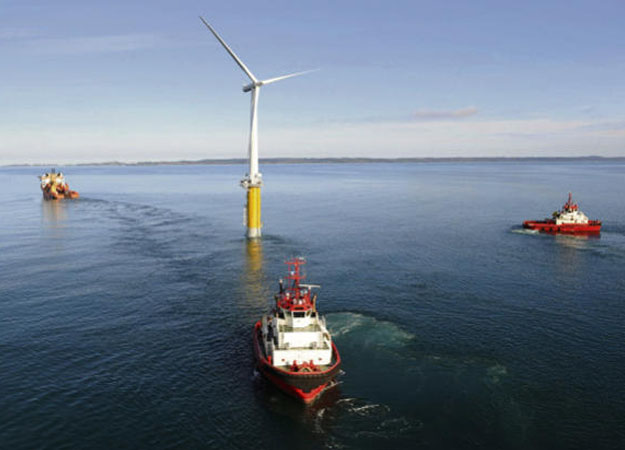
¶ Two years ago, a global energy company abandoned plans to build a $120 million pilot wind farm off Maine’s coast following opposition from the Governor Paul LePage. Now it is moving ahead with a similar project in Scotland. The decision is inviting an examination of what Maine may be losing in terms of jobs and investment. [Press Herald]

Floating wind turbines.

Floating wind turbines.

¶ Electricity coming to Crimea from Ukraine was cut shortly after midnight on Sunday, local time, according to the Crimean branch of Russia’s Emergency Situations Ministry. The ministry said 1,896,000 people were without power, and that emergency supplies had been turned on for hospitals and other important facilities. [Deutsche Welle]

¶ The government of Bangladesh approved construction of a large-scale solar park in an effort to increase the share of power from renewable sources in this electricity-starved country. The new solar park, which is due to begin generating within the next 18 months, will supply up to 200 MW of electricity to the national grid. [DhakaTribune]

¶ The Greens will seek to build momentum for more ambitious action on climate change by calling for the creation of a new government authority to help Australia reach a 90% target for renewable energy by 2030. The party has already adopted the goal, but the new policy document spells out how this could be achieved. [The Guardian]

Wind farm near Merredin, Western Australia. Photograph: Calla Wahlquist for the Guardian

Wind farm near Merredin, Western Australia. Photograph: Calla Wahlquist for the Guardian

¶ Residents of rural China have fears about the proposed expansion of the country’s nuclear program. Ask villagers in the Chinese village of Hubin what they think of proposed nuclear plant, and talk quickly turns to the Communist government’s dismal record of industrial accidents, as well as the Fukushima Disaster of 2011. [New York Times]

US:

¶ Republicans are taking aim at a new “Green Climate Fund,” as they look to weaken President Obama’s hand in global climate talks later this month. The pot of money, a $3 billion climate change pledge the administration made last year, is something officials hope to bring to the negotiating table at United Nations summit in Paris. [The Hill]

¶ A proposed solar energy project in Bethel, Connecticut, that has been entangled in bureaucracy for years could finally get underway early in 2016. Officials expect that a proposal to build a 954-kW solar farm on the site of the town’s old landfill will finally come to a vote soon, allowing construction to begin in the spring. [Danbury News Times]

November 21 Energy News

November 21, 2015

Opinion:

Nuking Clean Energy:  How Nuclear Power Makes Wind and Solar Harder • Nuclear is a barrier to a clean-energy future, not a piece of it. Nuclear is so expensive that there’s little room left in a utility budget to build wind and solar, but more importantly, it makes high levels of wind and solar become harder to achieve. [Energy Collective]

Science and Technology:

¶ By adopting bicycles and electric bikes for just 10% of urban trips, we would save some $24 trillion between now and 2050, as well as reducing GHG emissions from motor vehicles by about 11%, according to a report from the Institute for Transportation & Development Policy. About 6% of urban trips are already on bicycles. [CleanTechnica]

Commuter bikes at Alewife Station, near Boston, Massachusetts. Photo by agr. CC BY-SA 3.0. Wikimedia Commons. 

Commuter bikes at Alewife Station, near Boston, Massachusetts. Photo by agr. CC BY-SA 3.0. Wikimedia Commons

¶ Though many believe the lifetime of a solar panel is twenty-five years, a number of older models have exceeded this. When Kyocera tested a 30-year-old module last year, it discovered it was still operating at 90.4% of capacity. There are 37-year-old Arco Solar (now SolarWorld USA) panels in operation. [CleanTechnica]

¶ After a staggering 90% decline, it is hoped that the population of the iconic monarch butterfly will recover following coordinated efforts of North American governments. The insects have been damaged by illegal logging and pesticide use that have destroyed the milkweed plants they depend on for food and to lay their eggs. [Columbus Dispatch]

World:

¶ Spain has made renewable energy a top priority, and the investment has paid off: 42% of Spain’s electricity came from renewable sources in 2013. The majority comes from wind power, but solar provided 13% of the country’s energy and is growing. Spain is also home to the largest solar farm in the world, Andasol. (Photos) [Tech Insider]

International Energy Agency photo

International Energy Agency photo

¶ South African utility Eskom, which is known for regular power outages, has gone 104 days without any load shedding, leading observers to comment that it is now relatively stable. Important among the leading causes of the new stability are various renewable sources of electricity, which have recently gone online. [The Citizen]

¶ Thanks to the abundance of hydropower in Quebec, Manitoba, and British Columbia, Canada already obtains 65% of its electricity from clean energy sources. But a report from the Canadian Council on Renewable Electricity concludes that to meet its climate targets, Canada needs to double its renewable capacity. [CleanTechnica]

Image from Powering Climate Prosperity: Canada’s Renewable Electricity Advantage

Image from Powering Climate Prosperity: Canada’s Renewable Electricity Advantage

¶ Coal plants in Thailand cause an estimated 1,550 premature deaths every year, according to new research by Harvard University and Greenpeace Southeast Asia. That number of could climb to 5,300 per year if plans to expand electricity production by building new coal-fired plants go ahead, the study found. [ThaiVisa News]

¶ Luxembourg will join Austria’s legal challenge to the UK’s support package for the Hinkley C nuclear power station, which totals €108 billion. Meanwhile EDF has laid off 65 engineers working on the project in Paris, and the EU Commission has initiated proceedings against Hungary over its Paks II nuclear project with Rosatom. [The Ecologist]

¶ Irish wind hit a new peak output earlier this week with favourable weather conditions helping wind farms to supply almost 50% of electricity demand. Wind output hit some 2035 MW or enough to meet 46% of the country’s electricity demand. It is the first time that the country has broken the 2-GW barrier. [reNews]

Gaelectric wind farm (Gaelectric)

Gaelectric wind farm (Gaelectric)

US:

¶ A smart home service, OhmConnect, launched an online store offering California customers cash back rebates on such products as smart thermostats, smart plugs, home automation, and EV charging brands. OhmConnect can sync with all these products, sending users cash back rebates for automatically using less energy. [CleanTechnica]

¶ The city of Portland, Oregon, has unanimously passed a new resolution to block the expansion of new fossil fuel storage and transport activities in the city. The resolution is the first of its kind to be passed in the US, and represents a pretty big victory for activists concerned about climate change. It can serve as an example. [EV Obsession]

¶ It appears the wind industry is not at a complete standstill in northwestern Ohio. Amazon Web Services announced Thursday it is partnering with EDP Renewables to build and operate a 100-M wind farm in Paulding County. The power would be enough to provide electricity for 29,000 homes in the US in a year. [Times Bulletin]

Ohio wind farm.

Ohio wind farm.

¶ Cheaper Canadian power is a myth, according to two former Maine public utilities commissioners who spoke about Maine’s energy future at the University of Southern Maine. The panelists agree that Maine should take another approach for its energy future: invest in energy efficiency and foster offshore wind development. [Maine Public Broadcasting]

¶ The Massachusetts legislature recessed formal sessions for the year earlier this week without renewing a solar power incentive program. It leaves many solar power projects across the state in limbo. Lawmakers were torn between arguments from environmental activists and solar developers and lobbying by utility companies. [WAMC]

November 20 Energy News

November 20, 2015

World:

¶ A massive solar farm the size of more than 175 football pitches is to go ahead on farmland in East Cambridgeshire, with the District council’s planning committee approval. The farm’s capacity will be nearly 39.5 MW, enough for 11,000 homes, and its energy will feed directly into the local power grid network. [Newmarket Journal]

Solar farm approved. SUS-150325-142109001

Solar farm approved. SUS-150325-142109001

¶ The Clean Energy Finance Commission in Australia has reported that its recently launched solar financing program has attracted a substantial amount of interest; in fact it is enough to boost the country’s large-scale PV capacity 10-fold. The CEFC program will offer loans of AU$15 million and above, for projects over 10 MW. [CleanTechnica]

¶ The world could be powered almost entirely by clean, renewable energy sources in the space of a few decades, and two US engineers say they have figured out exactly how it can be done. One of them, Mark Jacobson, a civil and environmental engineer at Stanford University, has been granted two opportunities to speak at COP21. [ScienceAlert]

¶ ScottishPower Renewables submitted its plan to build a 1,200-MW wind farm off the coast of Suffolk, after UK Government clears that it will provide support to such projects. The project called East Anglia THREE will feature up to 172 wind turbines and generate enough energy to meet the power needs of more than 850,000 homes. [Power Technology]

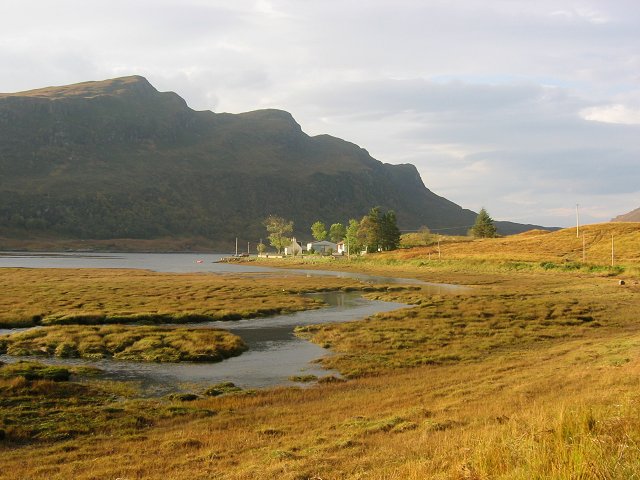
¶ The Scottish Government refused consent earlier this week for two separate wind farms intended for the county of Sutherland. Specifically, the two wind farms were said to have “an unacceptable impact” on the nearby wild land areas, and that such impact would not be outweighed by any wider policy benefit. [CleanTechnica]

Head of Loch Long with Beinn Mheadhoin beyond. Photo by Richard Webb. CC BY-SA 2.0. Wikimedia

Countryside near a refused wind farm, Head of Loch Long with Beinn Mheadhoin. Photo by Richard Webb. CC BY-SA 2.0. Wikimedia Commons.

¶ Russia has signed two agreements with Egypt to build the North African country’s first nuclear power plant in a televised ceremony attended by the Egyptian president. The deals were signed by the Egyptian Electricity and Renewable Energy Minister and the head of Russia’s Rosatom State Atomic Energy Corporation in Cairo. [APA]

¶ In Australia, 1320-MW coal-fired power station has been sold by the NSW Government for just $1 million to a former ERM Power chief and a coal mining executive. As an illustration of how cheap this purchase price is, to replace such a coal power plant with a newly constructed plant would cost well over $2 billion. [Business Spectator]

US:

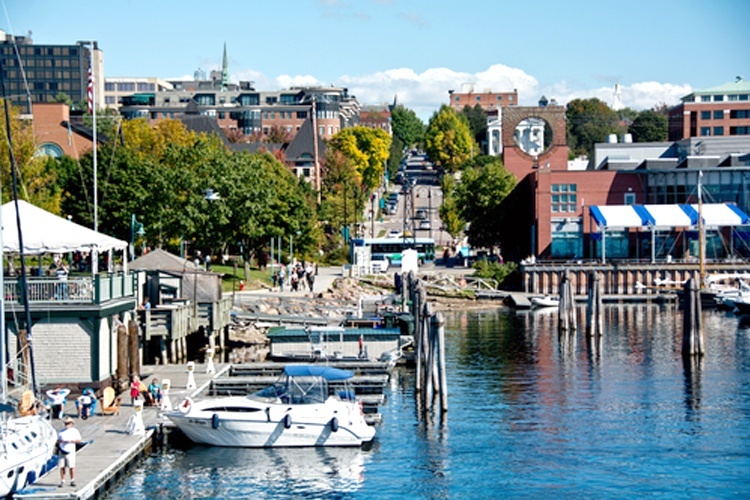
¶ While many countries continue to drag their feet on reducing emissions, individual cities are taking the lead and setting ambitious renewable energy targets. Some have already made the transition to 100% renewable energy. Here in the US, four cities or population centers stand out as having gone 100% renewable. [EcoWatch]

Burlington, Vermont, runs on a mix of biomass, hydroelectric, solar and wind. Erika J Mitchell / Shutterstock.com

Burlington, Vermont, runs on a mix of biomass, hydroelectric, solar and wind. Erika J Mitchell / Shutterstock.com

¶ Environmental groups will rally in Hartford, Connecticut, on Saturday, asking the governor to invest in clean energy, not gas pipelines. With the gas boom, major new pipelines are being built in Connecticut to carry gas to consumers and for export. But the groups say getting 100% renewable energy should be the goal. [Public News Service]

¶ EDF Renewable Energy announced that the 175-MW Pilot Hill Wind Project in Illinois has reached commercial operation. The project was made possible through Microsoft Corporation’s commitment to a long-term purchase agreement. The project will power 100% of the energy needs of Microsoft’s data center in Illinois. [AltEnergyMag]

¶ Texas homeowners and business owners can keep more money in their pockets, and Texas ranchers and family farmers can receive millions of dollars more a year in land lease payments by building new wind farms and using more wind resources. That’s according to a new report, “A wind vision for new growth in Texas.” [Windpower Engineering]

Texas already leads the nation in wind energy production.

Texas already leads the nation in wind energy production.

¶ A Public Citizen report, “Clean Power, Clear Savings,” shows that energy bills will fall in every state by 2030 as a result of the Clean Power Plan compared to a business-as-usual scenario, including the states contesting the plan. The Clean Power Plan, finalized in August, sets targets for reducing carbon pollution in each state. [citizen.org]

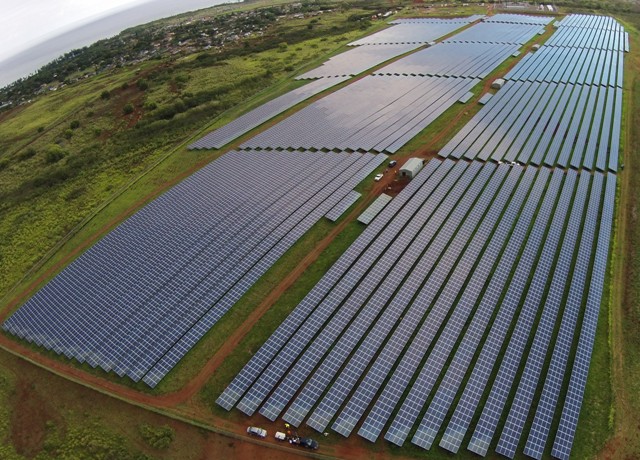
¶ The Kauai Island Utility Cooperative has begun a process for a creating community-based renewable energy program to bring the benefits of renewables to more people in Hawaii. The Lihue-based nonprofit co-op submitted its projected rates and guidelines to the Hawaii Public Utilities Commission for commission approval. [Pacific Business News]

¶ Analysts at the DOE’s National Renewable Energy Laboratory devised a method for measuring the economic potential of renewable energy across the US. Using it, NREL has found that renewable generation is economically viable in many parts of the country primarily because of declining technology costs. [Windpower Engineering]

¶ After five years, all preliminary reviews are complete and it is now up to two federal boards whether PSEG Nuclear gets one of the key permits it needs to build a new reactor in Salem County, New Jersey. The NRC and the US Army Corps of Engineers have issued a final Environmental Impact Statements. [NJ.com]

November 19 Energy News

November 19, 2015

World:

¶ A report by the United Nations Framework Convention on Climate Change, distributed just days before the crucial climate talks in Paris, is directed at policymakers. It shows how keeping global warming to less than 2° C from pre-industrial levels is not only feasible, but also urgently needed and economically viable. [The Climate Group]

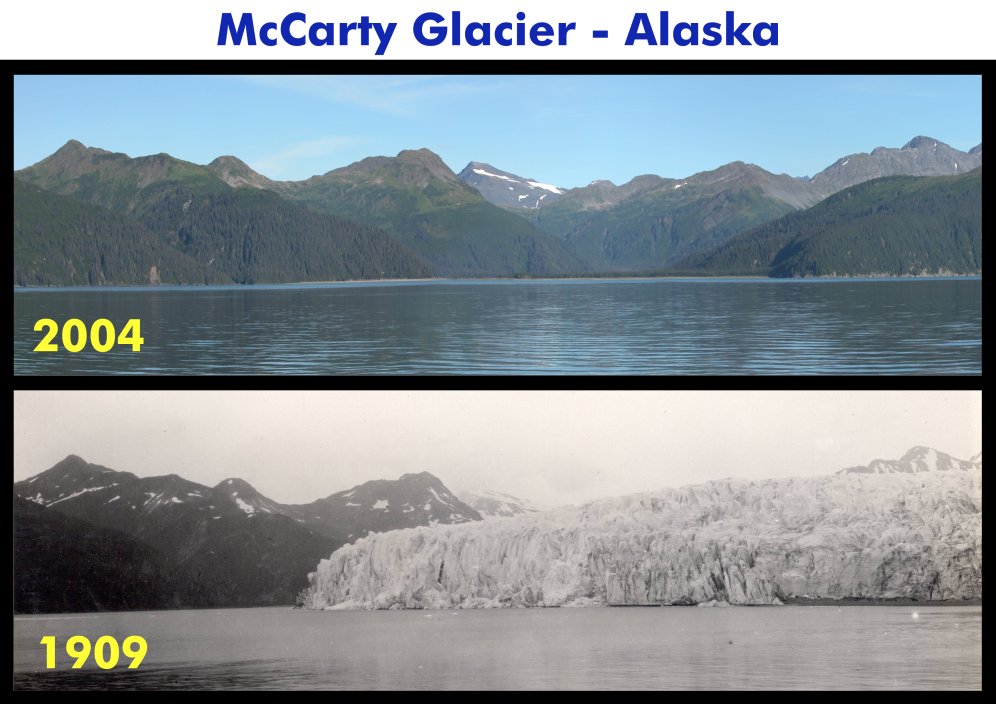
McCarty Glacier, in Alaska. These US government images are in the public domain. Wikimedia Commons.

Where did it go? McCarty Glacier, in Alaska. These images are in the public domain. For more information, go to Wikimedia Commons.

¶ The Philippines will soon have over 600 renewable energy projects operational, as it significantly expands its clean energy infrastructure. As of 31 October, 2015, the Philippine Department of Energy had approved 616 renewable energy projects with a total capacity for all renewable energy technologies over 12 GW. [CleanTechnica]

¶ Inox Wind, an Indian wind turbine maker, announced that it expanded its turbine manufacturing facility in Madhya Pradesh. The company reported that it commissioned a new production facility in the state. The facility will increase the company’s overall production capacity to 1.6 GW annually of turbine production. [CleanTechnica]

¶ Wind energy could be the largest power source in the EU by 2030 if governments drive ambition in climate and energy policies, according to a European Wind Energy Association report. If European member states stick to the policy framework already set in place, wind could surpass other forms of energy within a decade. [edie.net]

The Aiming High report suggests that wind power has the potential to exceed gas and other forms of energy within the next decade.

The Aiming High report suggests that wind power has the potential to exceed gas and other forms of energy within the next decade.

¶ Saskatchewan Premier Brad Wall says 50% of the province’s power will come from renewable sources by 2030. The announcement is scheduled for Monday, but Wall slipped in the details while answering questions in the legislature about the province’s position on climate change. Wall believes the goal is achievable. [620 CKRM.com]

US:

¶ More than 160 corporate executives gathered at Bloomberg’s New York City headquarters for a meeting of Rocky Mountain Institute’s Business Renewables Center. Through November 17, 2015, their corporations had signed more than 2 GW of power purchase agreements for large-scale, off-site renewable energy in 2015. [CleanTechnica]

¶ US Senators Susan Collins and Angus King announced Monday that the US Department of Energy will award an additional $3.7 million to an offshore wind project designed by a University of Maine-led consortium. The funding builds on the $3 million committed to the project, Maine Aqua Ventus 1, in May 2014. [Mainebiz]

Habib Dagher, director of UMaine's Advanced Structures and Composites Center, in front of the VolturnUS prototype wind turbine deployed off the shores of Castine in 2014. Mainebiz file photo / James McCarthy

Habib Dagher, director of UMaine’s Advanced Structures and Composites Center, in front of the VolturnUS prototype wind turbine deployed off the shores of Castine in 2014. Mainebiz file photo / James McCarthy

¶ Ten years ago, Walmart made a pledge to become environmentally clean and shift to 100% renewable power. Now, a report, titled Walmart’s Dirty Energy Secret: How the Company’s Slick Greenwashing Hides Its Massive Coal Consumption, found that the company is “one of the nation’s largest users of coal-fired electricity.” [CleanTechnica]

¶ Vermont’s Green Mountain Power announced last week that it reached its 112-MW net metering cap for solar power, 15% of their peak load. Now, it has asked state regulators for permission to buy 7.5 MW more of net metered solar power. The net metering cap does not apply to consumers with home-sized solar installations. [vtdigger.org]

A worker checks a fuel cell in the FuelCell Energy manufacturing facility in Torrington. Photo: Douglas Healey / Bloomberg

Fuel cell in the FuelCell Energy plant. Photo: Douglas Healey / Bloomberg

¶ The microgrid for municipal buildings in Woodbridge, Connecticut, will have a central plant by FuelCell Energy of Danbury. The contract calls for a 2.2 MW power plant to serve the micro-grid. Buildings in the micro-grid include the police station, fire department, town hall, senior center and Amity Regional High School. [Danbury News Times]

¶ Duke Energy, LG Chem, and Greensmith brought new technology to the site of a 1952 retired coal plant in Ohio with the completion of a 2-MW battery system. The new project is designed to increase reliability and stability for the electric power grid. The fast-response system regulates grid frequency. [Windpower Engineering]

¶ A study commissioned by Massachusetts’ Attorney General concludes that New England does not need additional natural gas pipelines for energy reliability in the coming years. The authors take the recent announcement that the Pilgrim nuclear power plant in Plymouth will close by 2019 into account. [Foster’s Daily Democrat]

November 18 Energy News

November 18, 2015

World:

¶ Locally-produced renewable power met nearly 30.3% of Italy’s electricity needs in the first 10 months of 2015, according to data by power grid operator Terna SpA. Excluding hydropower, the share of wind, solar and geothermal energy sources was a bit over 15%. Meanwhile, thermal power plants produced 56% of Italy’s power. [SeeNews Renewables]

Solar park in Italy. Author: Solar Farm - Solar energy power plants. License: Creative Commons, Attribution 2.0 Generic

Solar park in Italy. Author: Solar Farm – Solar energy power plants. License: Creative Commons, Attribution 2.0 Generic

¶ The UK’s remaining coal-fired power stations will be shut by 2025 with their use restricted by 2023, Energy Secretary Amber Rudd announced. Ms Rudd wants more gas-fired stations to be built since relying on “polluting” coal is “perverse.” Additionally, she wants to prioritize nuclear plants. She had little support to offer renewables. [BBC]

¶ Battery storage could be just five years away from being an economic no-brainer for some Australian solar households, according to a new report. It predicts grid-connected battery storage will be economically attractive for many homes from around 2020, though Sydney and Adelaide could be at this point as early as 2018. [CleanTechnica]

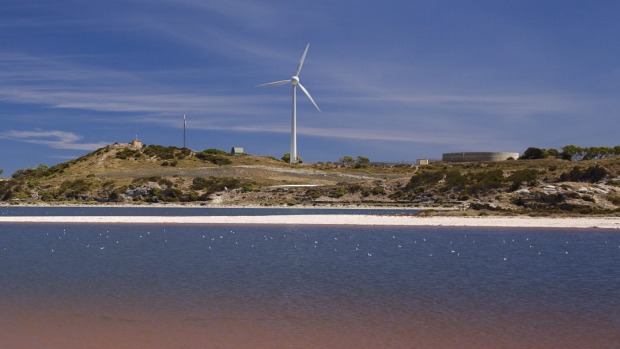
¶ Hydro Tasmania is to add 600-kW of solar PV and some smart controls to Rottnest Island, helping the tourism resort supply 45% of its electricity and desalinated water from renewable energy. The new installations will supplement the single 600-kW wind turbine on the island, which Tony Abbot famously complained about. [One Step Off The Grid]

Wind turbine on Rottnest Island.

Wind turbine on Rottnest Island.

¶ Skylark Energy filed a planning application to the Scottish government for a 64.6-MW wind farm in Argyll and Bute. Skylark is a joint venture between Ecotricity and Swedish construction company Skanska AB. As the project is larger than 50 MW, it needs to be considered by the Scottish government. [SeeNews Renewables]

¶ Costa Rica is on track to double the amount of wind power it generates in the coming years. The launch of operations in October of the Orosi power plant and the upcoming inauguration of the Vientos del Oeste project in December will soon supply Costa Rica’s electrical grid with an additional 59 MW from wind power. [The Tico Times]

¶ A two-year pilot project will store a tiny bit of Toronto’s excess energy underwater in giant balloons. Local energy firm Hydrostor and Toronto Hydro are partnering on the project. The Hydrostor system is expected to improve power quality for residents of the Toronto Islands while engineers monitor and test its performance. [Toronto Star]

Construction in progress earlier this year of the first Hydrostor station on the Toronto Islands. Hydrostor photo.

Construction in progress earlier this year of the first Hydrostor station on the Toronto Islands. Hydrostor photo.

¶ After a concerted push from the United States, members of the Organization for Economic Cooperation and Development agreed to cut subsidies aimed at exporting technology for coal-fired power plants. The policy would effectively cut off public financing for 85% of coal plants currently in the pipeline, an official said. [Washington Post]

¶ Brazil’s power sector watchdog Aneel has approved 290.6 MW of winning energy projects from an earlier auction this summer. The projects include eight wind farms with 231.6 MW of combined capacity, two small hydropower plants of 23 MW in total, one 8-MW biomass plant, and one 28-MW natural gas plant. [PennEnergy]

US:

¶ The Republican-run US Senate adopted two resolutions to shoot down key rules Barack Obama’s administration wants to limit greenhouse gas emissions by power plants. The president will veto the move. The 52 to 46 vote was largely meant to draw attention to the hostility of the Republicans to Obama’s efforts on climate change. [Business Recorder]

Copyright AFP (Agence France-Presse), 2015

Copyright AFP (Agence France-Presse), 2015

¶ The United Illuminating Co will start work next spring on a state-of-the art micro-grid supplying key town buildings in Woodbridge, Connecticut. The system would keep power on during grid outages. The utility has finalized an agreement with the town to build the micro-grid and it should be completed next year. [New Haven Register]

¶ At a National Community Solar Summit at the White House, the Administration announced 68 cities, states, and businesses are joining together to promote community solar. Community solar allows multiple households and businesses to pool their resources and invest in shared solar systems to reduce costs. [Newsroom America]

¶ The Massachusetts House has passed a bill to boost the state’s reliance on solar energy. The measure increases the cap on the state’s net metering program, which allows homeowners, businesses and local governments to sell excess solar power they generate back to the electrical grid in exchange for credit. [wwlp.com]

AP Photo/Stephan Savoia, File

AP Photo/Stephan Savoia, File

¶ The Mississippi Public Service Commission approved the largest solar installations in Mississippi, making Mississippi Power the largest partner in renewable energy in the state. Strata Solar is collaborating with Mississippi Power and the US Navy to build a 450-acre 50-MW solar project in Hattiesburg. [Your Renewable News]

¶ Governor Cuomo’s office has sent a letter to the NRC about the dangers of allowing the reactors at the Indian Point nuclear power facility to continue operating. One of several concerns raised in the letter was metal fatigue and the safety of non-replaceable metal components that might have grown brittle with age. [NewsLI]

November 17 Energy News

November 17, 2015

World:

¶ The task of electrifying Sarawak is no mean feat. Hampered by a lack of infrastructure, Malaysia’s largest state by land mass remains without constant supply of power in rural areas with a reported 33% of the state remaining off the grid. Now, one village will have a solar microgrid, the first of its kind in the state. [The Malaysian Insider]

Solar panels being installed in Sarawak. Malaysian Insider pic by Renai Mattu.

Solar panels being installed in Sarawak. Malaysian Insider pic by Renai Mattu.

¶ New fast-charging lithium-in batteries were recently unveiled by workers from Watt Lab, an arm of the Central Research Institute at Huawei Technology Corporation, at the recent 56th Battery Symposium in Japan. The newly unveiled batteries reportedly charge ~10 times faster than conventional lithium-ion batteries do. [CleanTechnica]

¶ Indian solar could scale up substantially to be a significant energy source by 2025, with the market penetration of solar power expected to be 5.7% (54 GW) by 2020 and 12.5% (166 GW) by 2025. Solar power prices are expected to be approximately 10% lower than coal power prices by 2020, and rooftop solar is already competitive. [Indiainfoline]

¶ Despite the general public impression of Russia as being relatively opposed to renewable energy and electric vehicles, the city of Moscow will actually be getting a fleet of electric buses in 2016, according to the head of the Department of Transportation and Development of road transport infrastructure, and the deputy mayor. [CleanTechnica]

Russian electric bus

Russian electric bus

¶ A record $391 billion flowed into low carbon and climate-resilient growth in 2014, according to a report released today by Climate Policy Initiative. The fresh figures come just two weeks before the COP21 climate talks begin in Paris, where finance is expected to play a pivotal role in scoring a robust global deal for a safe climate. [The Climate Group]

¶ The C20 Sustainability Working Group is asking the G20 to stop fossil fuel subsidies. The G20 promised to phase them out in 2009, but they still pump $452 billion annually into exploration for and production of fossil fuels, according to a report from the Overseas Development Institute released last week. [Blue & Green Tomorrow]

US:

¶ French renewable energy producer Akuo Energy has wrapped up the development stage for a 30-MW first phase of its 300-MW Sterling wind power project in Tatum, New Mexico, and plans to start construction in 2016. Akuo Energy USA has secured all the key elements to develop the 30-MW first phase. [SeeNews Renewables]

Wind park in the US. Author: CGP Grey. License: Creative Commons, Attribution 2.0 Generic.

Wind park in the US. Author: CGP Grey. License: Creative Commons, Attribution 2.0 Generic.

¶ Changes to solar net metering policies are being studied or have been enacted in over half of the states, the North Carolina Clean Energy Technology Center’s latest “50 States of Solar” report says. The NC Clean Energy Technology Center is administered by the College of Engineering at North Carolina State University. [CleanTechnica]

¶ The city of Lebanon, Tennessee, has broken ground for a new waste-to-energy gasification plant at the city’s waste water treatment facility that will be capable of processing 64 tons per day of sewer sludge, used tires and industrial wood waste. The facility is being designed and built by PHG Energy. [Renewable Energy from Waste]

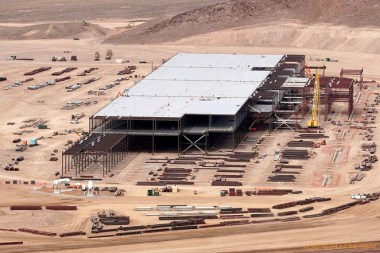
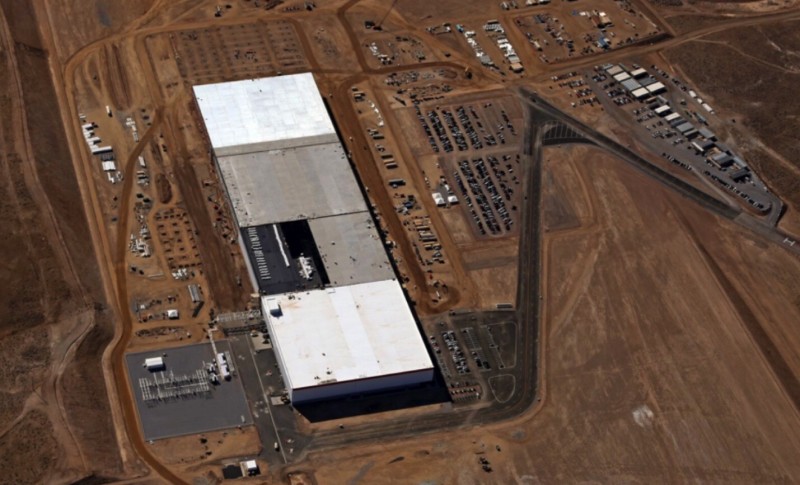
¶ Tesla Motors CTO JB Straubel told engineering students at the University of Nevada that the gigafactory is designed to be a net-zero building with zero carbon emissions. What’s makes this statement more special is that this building will reportedly be one of the largest manmade structures on Earth when it is completed. [ValueWalk]

Tesla Gigafactory under construction. 

Tesla Gigafactory under construction.

¶ Under current Wisconsin law, state regulators can’t grant permission for a new nuclear power plant unless a federal storage facility for the waste from nuclear plants across the country exists and the plant wouldn’t burden state ratepayers. Now, a Republican legislator is renewing a push to lift the state’s moratorium. [seattlepi.com]

¶ Clean Line Energy will focus again on persuading Missouri’s utility regulators to approve the $2 billion, 780-mile Grain Belt Express transmission line that would carry wind-generated electricity from Kansas through Missouri and Illinois to Indiana. Missouri landowners are the only remaining group in the way. [Columbia Daily Tribune]

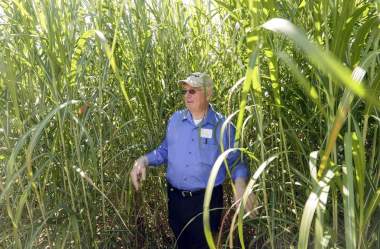
¶ Halfway into the University of Iowa’s 10-year sustainability initiative, officials say it has reached its progress target and remains on track to achieve 40% renewable energy consumption by 2020. Part of the success comes from the growing use of giant miscanthus grass. [The Gazette: Eastern Iowa Breaking News and Headlines]

The University of Iowa and Iowa State University are partnering to grow giant Miscanthus. (Jim Slosiarek/The Gazette)

The University of Iowa and Iowa State University are partnering to grow giant Miscanthus. (Jim Slosiarek/The Gazette)

¶ News of yet more microgrid activity in Pennsylvania came today with the announcement of an urban microgrid planned by Duquesne Light and the University of Pittsburgh. Their project will be to design and install the urban microgrid at its Woods Run Facility, a six-building campus in Pittsburgh’s North Shore. [Microgrid Knowledge]

¶ Deepwater Wind and GE are establishing a new temporary facility at the Port of Providence for the assembly of turbine components for the Block Island wind farm. GE, which recently joined forces with Alstom’s offshore wind unit, is supplying the 6-MW Haliade 150 offshore turbines for the Block Island wind farm. [reNews]

November 16 Energy News

November 16, 2015

Science and Technology:

¶ Human societies will soon start to experience adverse effects from manmade climate change, economist Richard Tol warned. He predicts the downsides of warming will outweigh the advantages at a 1.1° C increase, which we have nearly reached already. He had previously commented on positive effects of climate change. [BBC]

AFP photo

AFP photo

World:

¶ Apple announced a deal that will see its Singapore operations fully powered by solar energy, expanding on similar efforts in countries like the US and China, and also confirmed an upcoming local Apple Store that will be the first in Southeast Asia. Developer Sunseap Group will supply Apple from panels on 800 roof tops. [Apple Insider]

¶ Automotive giant Daimler announced that it plans to connect the old lithium-ion cells to the grid in Lünen, Germany, building the world’s largest stationary storage facility made out of re-used electric vehicle batteries. The system will allow excess renewable energy from the area to be stored and returned to the grid later. [Ars Technica UK]

¶ Iran has a package for $25 billion of investment in its booming power industry, the head of Iran Power Transmission, Generation and Distribution Company says. It is a key to the country’s economic recovery. Iran needs to invest $7-8 billion a year in its power generation and distribution sector to keep pace with demand. [Payvand]

Wind turbines in Manjil. Iran

Wind turbines in Manjil, Iran

¶ As Germany executes what may be Europe’s most ambitious transition to clean energy, the dirtiest form of coal-fired power has held fast to a major share of the country’s power supply. Meanwhile, some of the most efficient gas plants in Europe are shutting down. New legislation aims to correct the situation. [Big News Network.com]

¶ Six large LG Chem lithium-ion battery storage units will be put into service at Steag power plants in Germany. The €100-million project will see 15-MW energy storage systems installed in power stations at Herne, Lünen and Duisburg-Walsum, Bexbach, Fenne and Weiher. The batteries will be used for grid stabilization. [Energy Matters]

¶ India announced conclusion of a civil nuclear deal for buying uranium from Australia to increase conventional fuel supplies to overcome chronic shortages. The announcement came after Prime Minister Narendra Modi met his Australian counterpart Malcolm Turnbull on the sidelines of the G20 Summit in Antalya, Turkey. [Livemint]

US:

¶ A joint project of Roeslein Alternative Energy and Smithfield Food Hogs Production will convert manure from hogs on nine farms into renewable natural gas. Gas sales should start in 2016. A second phase would add native prairie grasses planted on erodible or marginal farm land to the manure to increase the biomass. [The Rakyat Post]

Bio-gas storage.

Bio-gas storage.

¶ Findings from real estate appraisal experts and a researcher at the Lawrence Berkeley National Laboratory suggest that adding a photovoltaic solar power system to a home increases the home’s value across six states. The study looked at markets in California, Oregon, Florida, Maryland, North Carolina and Pennsylvania. [Daily Californian]

¶ Green Cow Power, a large digester facility, is now converting off-farm organic wastes and dairy manure into energy with two Two-Stage Mixed Plug Flow digesters from DVO Inc. The Goshen, Indiana plant it is the largest waste-to-energy facility in Elkhart County and the eighth largest digester operation in Indiana. [Renewable Energy from Waste]


November 15 Energy News

November 15, 2015

World:

¶ Sri Lanka will build a final large scale hydro power plant at an estimated cost of $60 million, the Minister of Power and Renewable Energy said. The proposed hydro power plant will be constructed on the Seethawaka River and will add 20 MW to the national grid. The project will be developed as a mini-hydro plant. [Colombo Page]

View of the Randenigala Dam and its spillways from downstream. Rantembe, Sri Lanka. Photo by Rehman Abubakr. CC BY-SA 4.0. Wikimedia Commons.

View of the Randenigala Dam and its spillways from downstream. Rantembe, Sri Lanka. Photo by Rehman Abubakr. CC BY-SA 4.0. Wikimedia Commons.

¶ Portugal’s EDP and Spain’s Gestamp Wind were among the companies awarded contracts to build and operate wind farms in Brazil. The contracts were for 20 wind farms with a combined capacity of 929.3 MW, and 33 solar plants with a combined capacity of 548.2 MW. All must be operational within two years. [Latin American Herald Tribune]

¶ Britain will no longer pursue green energy at all costs and will instead make keeping the lights on the top priority, energy secretary Amber Rudd, will vow this week. The energy department is understood to be considering announcing a closure date for Britain’s remaining coal plants, replacing them with gas and nuclear. [Telegraph.co.uk]

¶ It has been revealed that Coal India, which is state-run, would invest ₹60 billion ($910 million) to set up 1,000 MW of solar power units over the next five to six years, according to the Economic Times, an Indian business newspaper. The government has set a target of generating 100 GW of solar power by 2022. [The National]

A solar power microgrid in the village of Dharnai in Bihar. Prashanth Vishwanathan / Bloomberg

A solar power microgrid in the village of Dharnai in Bihar. Prashanth Vishwanathan / Bloomberg

¶ A record oil glut is set to continue into next year, maintaining pressure on prices. According to the International Energy, stockpiles stand at a record three billion. The report follows disappointing eurozone growth figures and a slump in commodity prices on the back of weaker demand from China, all of which sent stock prices lower. [BBC]

¶ France plans to go ahead with a global climate change summit in Paris at the end of the month, Prime Minister Manuel Valls said Saturday, despite a wave of deadly attacks on Friday night that killed nearly 130 people in the capital. The conference “will be held because it’s an essential meeting for humanity,” Valls explained. [The Japan Times]

US:

¶ A new $25 million plant under construction in North Carolina will convert turkey waste into industrial steam for energy. Prestage AgEnergy is being built off NC 24 in the rural community of Moltonville. It will use 55,000 tons of turkey litter a year to produce the equivalent of 95 million kilowatt hours of electricity. [Fayetteville Observer]

Turkey. Photo by Malene Thyssen. CC BY-SA 3.0. Wikimedia Commons. 

Turkey. Photo by Malene Thyssen. CC BY-SA 3.0. Wikimedia Commons.

¶ Connecticut’s push to bring more natural gas into the state to heat homes and produce electricity is drawing fire from environmentalists, who say an expansion in pipeline construction means declining focus on renewable energy. The Algonquin pipeline, which runs from Danbury to Putnam, is a target of their protests. [CT Post]

¶ Bernie Sanders opened Saturday night’s Democratic debate by vowing to rid the world of ISIS. Following up, the moderator pointed out that during a debate last month, Sanders had identified “climate change” as the greatest threat to national security and asked whether he still believed that. “Absolutely,” replied Sanders. [Grist]

¶ A warming Arctic climate and lengthening summer growing season in recent decades have led to changes in vegetation on Alaska’s North Slope, extending the habitat of wildlife like snowshoe hares and moose farther north than they were seen previously, according to a study in Global Change Biology. [Fairbanks Daily News-Miner]

November 14 Energy News

November 14, 2015

Opinion:

Danish wind farm company could change game in N.E. • The Danish executives entered the US market relatively quietly in April with a deal to acquire development rights for 187,500 acres 15 miles south of Martha’s Vineyard. That is enough for a wind farm of over 100 turbines, powering up to 500,000 homes. [The Boston Globe]

Dong's Avedore power plant in Copenhagen.

Dong’s Avedore power plant in Copenhagen.

What One Conservative Texas Think Tank Doesn’t Want You to Know about the Clean Power Plan • Texas Public Policy Foundation, a conservative think tank, claims it is trying to protect people’s wallets – which is true if by ‘people,’ you mean its members. But what they push has costs for everyone else. [Environmental Defense Fund]

Science and Technology:

¶ One way to keep global average temperatures from warming beyond a catastrophic 2°-C tipping point may be to suck massive amounts of CO2 out of the atmosphere. Scientists say it’s theoretically possible (though expensive) to extract CO2 from the air and turn it into materials for buildings and clothes and other everyday stuff. [CNN]

¶ Commissioned by SolarCity, the report Getting to 100 discusses what is driving the transition to increasing levels of renewable energy consumption. It identifies the successes and challenges of both governments and companies in targeting, and achieving, 100% renewable energy goals. The report focuses on five developments. [PennEnergy]

World:

¶ High-level representatives of 70 countries worked at a pre-COP21 meeting this week. They continued the work of surmounting obstacles and reinforcing their commitment “to succeed in reaching a universal agreement in December in Paris,” according to French Foreign Minister Laurent Fabius, the chair of upcoming COP21. [CleanTechnica]

The pre-COP21 meeting, November 9-10, 2015 (ultimahoradigital.com)

The pre-COP21 meeting, November 9-10, 2015 (ultimahoradigital.com)

¶ The international network of scientists and parliamentarians Energy Watch Group has called on the International Energy Agency to release realistic energy projections. They say the World Energy Outlook 2015 misleadingly underestimates potentials of renewables and emphasizes the conventional energy sources. [Greentech Lead]

¶ German weekend power prices plunged Friday as wind power output was forecast to rise again towards 30 GW with the approach of a storm system. Baseload power for weekend delivery was assessed at €15/MWh (US 1.6¢/kWh). The week-ahead baseload rate was €28.75/MWh. (The week-ahead rate is closer to average.) [Platts]

¶ EDF staff have warned their employer’s plans to build the £18-billion Hinkley Point C nuclear power plant in Somerset could put the company’s future at risk. An EDF employee ownership association, which owns a 1.7% stake in the French energy giant, said the plant’s financial risks could “threaten the survival” of the company. [Building.co.uk]

US:

¶ Texas wind farms are generating so much energy that some utilities are giving power away. One example is TXU Energy, which offers a free overnight plan to encourage customers to use less energy when wholesale prices are highest and use more when prices are lowest, 9 pm to 6 am. The plan has slightly higher daytime rates. [HPPR]

Part of the Desert Sky Wind Farm in Texas. Photo by Pismo. Placed in the public domain by the author. Wikimedia Commons.

Part of the Desert Sky Wind Farm in Texas. Photo by Pismo. Placed in the public domain by the author. Wikimedia Commons.

¶ US developer Invenergy has signed a 125-MW wind power purchase agreement with insulation, roofing, and fibreglass manufacturer Owens Corning. When completed, Invenergy’s Wake Wind facility in Texas will provide Owens Corning with power sufficient to supply the annual needs of 32,000 homes. [reNews]

¶ The California Public Utilities Commission reports it has received a signature-heavy petition calling on it not to enact controversial proposals to reform net metering in the state. Vote Solar, which works to fight climate change and foster economic opportunity by promoting solar energy, organized the petition. [CleanTechnica]

¶ North Carolina reached a milestone this year as a national and regional leader in solar energy. Solar power installations in the state surpassed a combined 1 GW in capacity, putting North Carolina behind only California, Arizona and New Jersey. But the a key state tax credit behind growth will expire at the end of this year. [Mountain Xpress]

Char Colwell of Sundance Power Systems, installing a solar array in North Carolina. Photo courtesy of Sundance Power Systems

Char Colwell of Sundance Power Systems, installing a solar array in North Carolina. Photo courtesy of Sundance Power Systems

¶ Hawaiian Electric, Maui Electric, and Hawaii Electric Light Company proposed new voluntary time-of-use rates for residential customers that encourage the use of power during mid-day and off-peak hours, or times when solar and wind resources are most productive. Special rates also support the growing EV market. [KHON2]

¶ The Northwest’s only commercial nuclear plant, just north of Richland, Washington, had a fuel leak in the reactor core that has led engineers to take four of its 764 fuel assemblies out of service. A spokesman for Energy Northwest confirmed there was a “fuel defect” at the plant but said it posed no safety risk to workers or the public. [OregonLive.com]


November 13 Energy News

November 13, 2015

World:

¶ The north of England is set to be home to Europe’s largest floating solar power system. Water company United Utilities is developing a 12,000 panel system covering an area of more than 45,000 square meters. It will cover about 33% of their electricity needs. The system will be on Godley reservoir in Hyde, Greater Manchester. [CNBC]

Image courtesy of United Utilities

Image courtesy of United Utilities

¶ The carbon content of electricity generation in Ireland fell to a record low last year, according to new figures by the Sustainable Energy Authority of Ireland. The country avoided 2.6 million tonnes of CO2 emissions in 2014. SEAI said without renewables, power generation emissions would have been around 23% higher. [Energy Voice]

¶ The UK’s Overseas Development Institute (ODI) and campaign group Oil Change worldwide (OCI) have now published a detailed analysis of G20 subsidies to oil, gas and coal production. The G20 countries spent around four times as much to prop up fossil fuel production as they did to subsidize renewable energy. [Financial Company Voices]

¶ In the UK, production subsidies of £5.9 billion have already benefited major fossil fuel companies operating in the country, most foreign-owned, while £3.7 billion is used to subsidise fossil fuel production overseas in countries including Russia, Saudi Arabia and China, the new analysis from the ODI and OCI found. [The Guardian]

Photograph: bluegreenpict/REX Shutterstock

Photograph: bluegreenpict/REX Shutterstock

¶ The Sustainable Energy Authority of Ireland announced a Memorandum of Understanding with Apple to promote the development of ocean energy. Apple has committed a €1 million fund to help developers who receive SEAI grants to test their ocean energy prototypes in the Galway Bay Ocean Energy Test Site. [Your Renewable News]

¶ Lightsource Renewable Energy is spearheading a £2 billion investment in solar energy in India. The firm has announced plans to design, install and manage more than 3 GW of solar PV infrastructure in partnership with Indian companies over the next five years, including SREI Infrastructure Finance Limited. [Your Renewable News]

¶ The cabinet of Angela Merkel’s ruling coalition has endorsed changes to the German electricity market, ensuring their passage into law. The law relies on market mechanisms to foster competition between electricity generation and flexibility options, rejecting generator proposals for an American-style capacity market. [POWER magazine]

US:

¶ More than 7,100 solar panels will provide power to areas of Daytona International Speedway and 400 Florida homes per year, according to officials of the speedway and Florida Power & Light. The FPL Solar Pavilion and FPL Solar Patio project at the speedway will be in the Midway, the Sprint FANZONE and Lot 10 parking area. [Bay News 9]

A total of 7,186 solar panels will make up the FPL Solar Pavilion and FPL Solar Patio. (Daytona International Speedway rendering)

A total of 7,186 solar panels will make up the FPL Solar Pavilion and FPL Solar Patio. (Daytona International Speedway rendering)

¶ Procter & Gamble signed a partnership with EDF Renewable Energy to build a wind farm in Texas. It will generate 370,000 MWh of electricity per year, enough to meet the electricity needs for all Procter & Gamble North American Fabric & Home Care plants, where Tide, Cascade, and other such products are produced. [CleanTechnica]

¶ Customers of Xcel Energy Inc in Minnesota will have the option of signing long-term deals to get their electricity from wind and solar farms under a proposed program. The program, which requires state regulatory approval, would be open to all customers. But key features are aimed to support corporate sustainability targets. [Minneapolis Star Tribune]

A proposal to erect 28 wind turbines in Windham and Grafton drew opposition at a meeting Monday in Grafton. Photo by Mike Faher/VTDigger

A proposal to erect 28 wind turbines in Windham and Grafton drew opposition at a meeting Monday in Grafton. Photo by Mike Faher/VTDigger

¶ Two weeks after a developer came to town to disclose details of what would be Vermont’s largest wind-turbine site, the project’s opponents presented an impassioned case against building any wind farms in Stiles Brook Forest. Opponents to the proposal painted a picture of troubles, at a meeting they organized. [vtdigger.org]

¶ Hillary Clinton outlined a $30 billion plan to help communities and individuals that rely on coal to recover from the industry’s decline. Clinton has said repeatedly she will not forget the coal workers who “kept the lights on” and drove economic growth. Her campaign said the plan fits squarely with her climate priorities. [Rapid News Network]

¶ The New York Department of State has objected to relicensing the Indian Point nuclear plant on the Hudson River, saying it kills millions of fish larvae and sits near seismic faults with an earthquake threat to millions of people. It says the plant is incompatible with the safety of New York City 24 miles downstream. [Albany Times Union]

November 12 Energy News

November 12, 2015

Opinion:

David and Goliath struggle over solar power • Duke Energy is threatening a small nonprofit and African-American church, as it fights to restrict solar access in North Carolina. Duke Energy asked state regulators to fine Durham nonprofit NC WARN $1,000 a day for selling solar power to Faith Community Church in Greensboro. [News & Observer]

Wilson Ring AP

Wilson Ring AP

Why does the IEA keep underestimating solar and wind? • The press release for the latest World Energy Outlook of the International Energy Agency emphasized that they “see clear signs that the energy transition is underway.” The problem is, the numbers they use in the report don’t really match up with this stated optimism. [Business Spectator]

World:

¶ Germany’s transport ministry has said Volkswagen is likely to need to make more than just software changes to nearly a quarter of its 2.4 million diesel cars being recalled in the country as a result of the emissions scandal. The Federal Motor Transport Authority says about 540,000 will also need hardware changes. [The Guardian]

¶ Around four coal-powered plants are poised to come up every week in China. However, chances are they will remain under-utilised given the existing glut. Around 155 projects with a total capacity of 123 GW got the green signal in 2015 alone, despite the fact that China has nearly no need for the energy they will produce. [Yahoo News UK]

Chinese air pollution.

Chinese air pollution.

¶ German utilities giant E·ON recorded record losses of €5.7 billion ($6.1 billion) for the first nine months of 2015 as its older fossil fuel power plants declined in value amid a switch to renewable energy. There was a write-down of €8.3 billion due to the recent decline in fuel prices, with energy plants barely turning a profit. [Europe Online Magazine]

¶ In its latest planning for the transmission network, Australian Energy Market Operator, which runs the grid, looks at one scenario where 33.3 GW of rooftop solar is installed on homes and businesses by 2034-35, 40% of all homes have residential battery storage totalling 19.1 GWh, and 20% of homes have an electric vehicle. [RenewEconomy]

¶ Tasmania’s King Island was powered by 100% renewable energy for a period of 33 hours non-stop this month, another huge milestone for the renewable energy system established on the island as part of a project by Hydro Tasmania. The project is a prototype combining solar panels, wind turbines and energy storage. [One Step Off The Grid]

¶ South Australia stands at the forefront of the renewable energy transition. Soon, 28% of all households will have residential solar power and 1,473 MW of onshore capacity, representing 25% of the state’s total generation capacity, is online. Balancing the load can be done with transmission and energy storage. [Triple Pundit]

South Australian wind project Mount Bryan. Image credit: Flickr/Ian Sutton

South Australian wind project Mount Bryan. Image credit: Flickr/Ian Sutton

¶ The government of the UK gives the fossil-fuel industry nearly £6 billion a year in subsidies, almost twice the financial support it provides to renewable-energy providers, according to a study by the Overseas Development Institute. The study challenges the popular idea that green energy requires extra taxpayer support. [The Independent]

¶ Mexico will start soliciting bids later this month in its first auction of renewable energy certificates, part of an electricity sector overhaul that ends the state-owned power company’s monopoly. Up to 6 million of the certificates will be awarded in the first auction via 20-year contracts seeking up to 2,500 MW of renewable power. [Reuters]

¶ Hitachi-GE Nuclear Energy Ltd, a unit of machinery giant Hitachi Ltd, will start a business to decommission boiling water reactors at Japanese nuclear power plants. In Japan, fourteen reactors at seven nuclear plants, including all six of the reactors at TEPCO’s Fukushima Daiichi, are currently set to be scrapped. [The Japan News]

US:

¶ Hawaii’s largest solar power project was dedicated November 7 by the Lihue-based Kauai Island Electric Cooperative. The array is 12 MW, and is sited on a gently sloping 60-acre site. The goal for the island of Kauai is to get 50% of its electricity from renewable resources by 2023, it will be at 37% by the end of this year. [Electric Co-op Today]

Kauai Island Electric Cooperative’s new 12-MW solar array. (Photo By: Shelley Paik/KIUC)

Kauai Island Electric Cooperative’s new 12-MW solar array. (Photo By: Shelley Paik/KIUC)

¶ Low-income and mid-income New York residents will find it a bit financially easier to get a home solar power system, thanks to the launch of a new program from NY-Sun called Affordable Solar. This program will effectively double the incentives for solar installations on homes they own, in a bid to expand renewable energy. [CleanTechnica]

¶ The Mississippi Public Service Commission unanimously approved three solar projects. Collectively, the three facilities will produce 105 MW of electricity for Mississippi Power Co’s 190,000 ratepayers, most of whom are in South Mississippi. Ratepayers will not bear any project costs, the PSC said in a news release. [Hattiesburg American]

¶ In the fourth Republican presidential debate, which was hosted by the Fox Business Network and The Wall Street Journal on Tuesday night, viewers finally got to hear some discussion of energy policy and the Clean Power Plan, President Obama’s major effort to curb carbon emissions. Too bad it was totally misleading. [Grist]

November 11 Energy News

November 11, 2015

World:

¶ Researchers may soon be able harness the power of undersea waves. Carnegie Wave Energy and Western Power are working together to create the first wave energy island microgrid in Australia. This technology, known as the CETO 6 Project, will be built six miles off the coast of Garden Island, a small Australian Island near Perth. [Nature World News]

CETO 6 units (one of which is pictured here) may be able to harness the energy of undersea waves. (Photo : Carnegie Wave Energy)

CETO 6 units (one of which is pictured here) may be able to harness the energy of undersea waves. (Photo : Carnegie Wave Energy)

¶ The UK’s rating for the security of its energy supplies has been cut. In its latest ‘trilemma’ report, the World Energy Council reduced the UK’s rating from AAA to AAB. It also warned that recent ‘unexpected’ moves by the Government to remove subsidies for wind and solar power would hinder future investment in the sector. [This is Money]

¶ It was widely reported last month that Chinese President Xi Jinping and UK Prime Minister David Cameron had struck a deal to try to reinvigorate UK’s stalling nuclear ambitions. But the reality is nothing has been signed yet, despite the huge financial incentives being offered by the Treasury to French and Chinese nuclear corporations. [The Ecologist]

Xioa Yan Kou Farm, China. Photo: Danish Wind Industry Association / Vindmølleindustrien via Flickr (CC BY-NC).

Xioa Yan Kou Farm, China. Photo: Danish Wind Industry Association / Vindmølleindustrien via Flickr (CC BY-NC).

¶ A newly signed deal will create of Kuwait’s first solar-thermal energy generation station. The $385m solar-fuelled plant will be built close to the border with Saudi Arabia and Iraq. With the capacity to produce up to 50 MW, the station is expected to be integrated into Kuwait’s existing electrical network by December 2017. [Oxford Business Group]

¶ Scotland will miss its 100% renewable electricity target without further investment in onshore and offshore wind, according to a report by Scottish Renewables. It shows Scotland is on course to generate the equivalent of 87% of its power from renewables by 2020, and highlights the need for further support from the UK government. [reNews]

¶ Governments should ban inefficient coal power plants, according to the chief of the International Energy Agency. They also need to boost support for renewables, regulate to improve energy efficiency and crack down on methane leaks from oil and gas production. Those were the top four recommendations to limit global warming. [Climate Home]

Low oil prices choke investment, increasing reliance on Middle East suppliers (Flickr/Paul Lowry)

Low oil prices choke investment, increasing reliance on Middle East suppliers (Flickr/Paul Lowry)

US:

¶ SunEdison announced that it has completed construction on New Hampshire’s largest solar power plant, a 942 kW solar power plant for the town of Peterborough. SunEdison will supply solar energy generated by this system to the town over the next 20 years, saving taxpayers an estimated $250,000 per year on energy. [AltEnergyMag]

¶ This 17th straight month of low oil prices has remained a boon for drivers, manufacturers and refineries, but the International Energy Agency warned it will also likely force importers like the US, EU, China, and India to rely increasingly on low-cost producers in the Middle East at a scale not seen since the 1970s. [U.S. News & World Report]

¶ Strata Solar will start in the first quarter of 2016 installation of two 10.6-MW solar plants for Alabama Power at the Anniston Army depot and Fort Rucker Army base. The build date was set following the go-ahead from the Alabama Public Service Commission. Alabama Power awarded Strata Solar the contract for the projects. [reNews]

The McKenzie solar project (Strata Solar)

The McKenzie solar project (Strata Solar)

¶ Denmark-based DONG Energy said it plans to build a wind farm with up to 100 wind turbines and capable of generating as much as 1,000 MW of electricity on a leased site, south of Martha’s Vineyard, that the federal government put up for bid in January for development of offshore wind power. [Martha’s Vineyard Times]

¶ A sweeping plan to regulate development of renewable energy in Southern California deserts designates 388,000 acres for potential solar, wind and geothermal plants and millions more acres for conservation and recreation. Much of it is along Interstate 10 west of Blythe near the Arizona border and in Imperial Valley. [Manteca Bulletin]

¶ An Entergy spokesman, speaking of the decision to close the FitzPatrick nuclear plant near Oswego, New York, said “This decision, we view it as a final decision.” He went on, “It’s one the company made reluctantly, because the plant is very well run. It’s just not economically viable.” Operating the plant has cost $60 million. [WRVO Public Media]

November 10 Energy News

November 10, 2015

Science and Technology:

¶ Global temperatures are set to rise more than one degree above pre-industrial levels according to the UK’s Met Office. Figures from January to September this year are already 1.02° C above the average between 1850 and 1900. If temperatures remain as predicted, 2015 will be the first year to breach this key threshold. An increase of 2° C is considered dangerous.[BBC]

Global temperatures reached high levels in 2014 but 2015 is expected to be the warmest since records began.

Global temperatures reached high levels in 2014 but 2015 is expected to be the warmest since records began.

¶ Researchers have designed and patented a floating platform for offshore wind turbines that they believe can reduce costs up to €0.12 per kWh. A team of researchers from the Universitat Politècnica de Catalunya developed the new model of a floating structure for offshore wind turbines that is capable of being anchored at much greater sea depths. [CleanTechnica]

World:

¶ Renewable energy accounted for almost half of all new power plants in 2014, representing a “clear sign that an energy transition is underway”, according to an International Energy Agency report. Green energy is now the second-largest generator of electricity in the world, after coal, and is set to overtake the dirtiest fossil fuel in the early 2030s, the report said. [The Guardian]

¶ In October the ground was broken for one of Australia’s most innovative biogas projects. In the next 14 months, German biogas plant manufacturer Weltec Biopower and its project partner Aquatec Maxcon will establish a biogas plant in Aurora, Victoria, a Melbourne suburb. The 1-MW plant for digesting organic waste will be one of the first in Australia. [PennEnergy]

¶ Low oil prices may undermine efforts to reduce pollution. If the cost of crude remains near $50 a barrel until the end of the decade, cheaper conventional fuels would hold back the development of electric cars and biofuels that are helping curb carbon emissions. The IEA estimated about $800 billion of efficiency improvements in vehicles would be lost. [Livemint]

Oil pump. Reuters photo.

Oil pump. Reuters photo.

¶ Britain will miss a major legally-binding renewable energy target, Amber Rudd, the Energy Secretary, has admitted in a letter to other cabinet ministers. The letter, however, was leaked to the press. She warned that the “absence of a credible plan” to meet the target could trigger repeated fines from the EU Court of Justice and a judicial review. [Telegraph.co.uk]

¶ Catastrophic global warming can be avoided with a deal at a crunch UN climate change summit in Paris this December because “ultimately nothing can compete with renewables,” according to one of the world’s most influential climate scientists. Professor John Schellnhuber said the best hope of making nations keep their promises was moral pressure. [The Guardian]

US:

¶ Trident Winds has filed early paperwork with Morro Bay, California, city officials for a plan to install 100 floating turbines, each up to 636 feet tall, about 15 miles off the San Luis Obispo County shoreline. The project would generate 1,000 MW of electricity, enough to power 300,000 homes. Some parts of the environmental movement may object. [Bakken.com]

Offshore wind at night.

Offshore wind at night.

¶ After apologizing for two months, Volkswagen is finally putting its money where its mouth is, forking over $500 to VW car owners hit by its emissions cheating scandal. But the payout has not had the intended effect for many owners. Angry VW customers who wrote to CNNMoney used terms like “slap in the face” and “scandalous” to describe the payout. [CNN]

¶ The Interior Department’s Bureau of Ocean Energy Management has held the nation’s fifth competitive lease sale for renewable energy in federal waters. Nearly 344,000 acres off New Jersey’s coast were offered for potential wind energy development. Fully developed, the area could support about 3.4 GW of commercial wind generation. [North American Windpower]

¶ Aggressive energy efficiency efforts and new distributed generation capacity, mostly solar projects, are combining to put a lid on growth in peak demand and electric use in New England, ISO New England said in its newly released system plan. The transmission company is working with utilities and other of stakeholders to improve the system. [Platts]

ISO New England's control room. Photo Credit ISO-NE

ISO New England’s control room. Photo Credit ISO-NE

¶ Advanced Microgrid Solutions announced that it will supply and operate batteries for a very large California customer, the Inland Empire Utilities Agency. It’s a large municipal water treatment and distribution agency serving San Bernardino County, where it has 850,000 customers. An array of renewable energy types will be in the system. [Washington Post]

¶ The Administration has underlined its vision of a strong role for nuclear in the country’s clean energy strategy. It announced actions to sustain and finance nuclear energy, including supplements to the DOE’s federal loan guarantee solicitation to support nuclear energy projects. The existing solicitation of $12.5 billion would be supplemented. [World Nuclear News]

November 9 Energy News

November 9, 2015

World:

¶ Coal consumption is poised for its biggest decline in history, driven by China’s battle against pollution, economic reforms and its efforts to promote renewable energy. Global use of the most polluting fuel fell 2.3% to 4.6% in the first nine months of 2015 from the same period last year, according to a report released by Greenpeace. [The Australian Financial Review]

A woman in China wears a mask to counter pollution. Getty Images

A woman in China wears a mask to counter pollution. Getty Images

¶ As Zimbabwe seeks to boost power generation, it finds the option of hydro-power provides little guarantee for power now and in the future. The 750-MW-capacity Kariba Hydro Power Station is an example, falling to 63% of capacity following just two consecutive drought seasons. Climate change is making hydro power unreliable. [AllAfrica.com]

¶ The first turbine at Zuidwester wind farm in the Netherlands started operation. Along the shore of the IJsselmeer, RWE Innogy replaced 50 older models with 12 of the world’s largest onshore wind turbines with a capacity of 7.5 MW each. Each of the new turbines can generate as much electricity as all 50 turbines of the old ones combined. [Sun & Wind Energy]

¶ South Korea’s leading battery-maker LG Chem said it has secured a deal worth millions of dollars to supply its batteries for a project to build the world’s largest energy storage system for frequency regulation in Germany. The company’s lithium-ion batteries will be used for frequency regulation in Nordrhein-Westfalen and Saaerland in 2016. [The Korea Herald]

¶ China has changed course and emerged as a leader in curbing greenhouse gas emissions six years after it was accused of obstructing the last high-level climate talks in Copenhagen. Beijing “recognizes it should take a different responsibility than a few years ago,” said Li Shuo, senior climate officer for Greenpeace East Asia. [Himalayan Times]

Wind turbines are built on a hill along a highway near Jiamusi, in northeastern China’s Heilongjiang province on July 30, 2015. Photo: AP

Wind turbines are built on a hill along a highway near Jiamusi, in northeastern China’s Heilongjiang province on July 30, 2015. Photo: AP

¶ A majority of the UK public backs subsidies for renewable energy, according to a report. It says around 83% of over 2,000 people surveyed support subsidies for wind and solar. The support for coal is at 23%, and for nuclear power it is 33%. The UK Government is planning to scrap support for renewables. [Energy Live News – Energy Made Easy]

¶ Vestas has won a firm and unconditional order for turbines totaling 200-MW from Inner Mongolia Hanas Wind Power for two Chinese wind power projects. Under the deal, the Danish power equipment manufacturer will deliver 75 of its V110-2.0 MW and 25 of its V100-2.0 MW models. Commissioning is to be in the second quarter of 2016. [Power Technology]

¶ Korea Hydro & Nuclear Power held a ceremony Monday to mark the official operation of two reactors at its New Wolseong Nuclear Power Plant in Gyeongju. The New Wolseong No 1 and No 2 reactors are each capable of generating 7.9 billion kWh of electricity annually. The No 1 reactor began producing power in 2012, and the No 2 in July. [Korea Times]

US:

¶ More Wisconsin farmers are letting the sun shine in – by bringing solar photovoltaic systems into their farming operations. Incentives and the falling prices of hardware have helped shorten return on investment periods for solar installations. Still, changes in net metering policies could reduce payouts to producers for the excess power they create. [Agri-View]

A 20 kWh solar panel system is installed on the south side of Han Breitenmoser's free-stall barn.

A 20 kWh solar panel system is installed on the south side of Han Breitenmoser’s free-stall barn.

¶ Legal professionals are warning that ongoing investigations of ExxonMobil practices could drag other oil businesses. The firm is the subject of controversy over allegations it mislead the public about climate change. But prosecutors are thinking about investigating all businesses that chose to fund organizations that promoted climate change denial. [California Turkish Times]

November 8 Energy News

November 8, 2015

World:

¶ The world will pump out 748 billion metric tons of carbon dioxide from 2012 through 2030, the UN said Friday in an e-mailed report that analyzed emissions pledges by 146 nations. The World Energy Council is dismissing climate change plans as not good enough and says it plans to write to all participants of upcoming climate talks in Paris. [TV Newsroom]

United Nations Climate Report Photo

Photo from the United Nations Climate Report 

¶ In India, electric transmission and distribution losses, the majority of which pertains to sheer theft of electricity, had been varying between 17% and 35% percent. Financial losses for electricity distribution companies in India reach a staggering ₹3.8 trillion ($58 billion). The states have endorsed a central government plan to deal with distribution. [Greentech Lead]

¶ Prime Minister Narendra Modi said he has set a target of providing 24×7 power around the year across the country by the time India celebrates its 75 years of independence. He said 18,000 villages continue to be deprived of electricity across the country and his dream was to provide them uninterrupted power supply in next 1,000 days. [Times of India]

¶ David Cameron’s chief climate change adviser has warned that the government is “clearly failing” in key policy areas and needs to regain the confidence of investors in green technology, in the runup to next month’s crucial global summit in Paris. Lord Deben is particularly concerned about air sealing draughty homes and utilizing renewable heat. [The Guardian]

A wind farm in Scotland. The onshore wind power industry fears it is being sidelined by the government. Photograph: Danny Lawson/PA

A wind farm in Scotland. The onshore wind power industry fears it is being sidelined by the government. Photograph: Danny Lawson/PA

¶ The government of Bangladesh set a target to have 3,168 MW electricity from renewable energy sources by 2021. Of that, 1740 MW will come from the solar power while wind-based power generation will be 1370 MW, according to officials concerned. The rest will include 47 MW of biomass and smaller amounts of biogas and mini-hydro. [Financial Express Bangladesh]

¶ AES Philippines has started construction of its first energy storage facility in Asia. The plant, which will be the first battery-based energy storage facility in the Philippines, will be located next to the Masinloc power plant in Zambales. Called the Masinloc Advancion Energy Storage Array, the facility will provide 10 MW to the Luzon grid as needed. [Philippine Star]

US:

Joyce Kilmer Natural Area, Union County, Pennsylvania. Sadly, the natural area is heavily infested with the hemlock woolly adelgid. Photo by Nicholas A. Tonelli. CC BY-2.0. Wikimedia Commons.

Pennsylvania’s Joyce Kilmer Natural Area, already heavily infested with the hemlock woolly adelgid. Photo by Nicholas A. Tonelli. CC BY-2.0. Wikimedia Commons.

¶ The majestic forests that Pennsylvanians are familiar with today won’t be the forests that future generations know because of global climate change according to the Secretary of the state’s Department of Environmental Protection. Several species of trees are likely to disappear from the forests: sugar maple, black cherry, and hemlock. [Citizens Voice]

¶ The EIA predicts that because of additional new wind generating capacity coming online in Texas, coupled with the seasonal increase in wind conditions (autumn and spring are typically high wind generating months in Texas), the most recent record set for instantaneous peak output will “very likely be surpassed in the near future.” [CleanTechnica]

¶ The closing of the Fitzpatrick nuclear plant comes after failed negotiations with the state of New York over ways to avoid a shutdown. The plant generates 838 MW of electricity, enough to power more than 800,000 homes. The move means New York would be down to five power plants. State officials vowed to fight the company’s plans. [Poughkeepsie Journal]

Indian Point nuclear plant, which the government of New York would prefer to close. Photo: Ricky Flores/The Journal News

Indian Point nuclear plant, which the government of New York would prefer to close. Photo: Ricky Flores/The Journal News

¶ Oil companies of all hues loaded up on massive amounts of debt to fund rigs and fancy new drilling equipment. The problem is the companies were banking on oil prices closer to $100 oil when they took on the debt. Now oil is around $45 and no one is expecting prices to hit $100 any time soon. What that means is the likelihood of defaulting has increased. [CNN]

¶ In 2015, the EPA has honored 22 Green Power Partners and three renewable energy suppliers across the country with its annual Green Power Leadership awards. The award winners include Apple, Microsoft, TD Bank, Intel, Kohl’s, Kaiser Permanente and Northwestern University. These companies have led the way in cutting emissions. [Justmeans]


November 7 Energy News

November 7, 2015

World:

¶ Irish company Amarenco is planning a €200-million-plus investment in 35 solar farms, the first five of which will be built in County Cork. Planning applications will be lodged shortly with Cork County Council for five solar farms, which form the first phase of the development. The solar farms will generate enough energy to power 35,000 homes. [Irish Examiner]

© Irish Examiner Ltd. All rights reserved

© Irish Examiner Ltd. All rights reserved

¶ Renewable energy company Building Energy signed a memorandum of understanding with the Serbian town of Kruse for construction of a €27 million ($29.4 million) woodchip-fired biomass power station. The plant will have 4.8 MW of electric capacity and 20 MW of thermal. It will generate 38.4 GWh of electric power each year. [SeeNews Renewables]

¶ New figures released quietly by the Chinese Government this week shows that China has been burning up to 17% more coal per year than the government had previously disclosed, laying to rest many hopes that the country was on a fast track to carbon dioxide emissions decline. The extra coal would emit a billion more tons of carbon dioxide each year. [CleanTechnica]

¶ The UK’s Labour Party has slammed changes to the tax relief system for community renewable projects, claiming the government is taking away certainty at a time when the industry needs it most. The UK government announced last month that community energy projects will be excluded from two investment schemes from next month. [reNews]

Image: FreeImages

Image: FreeImages

¶ The Asian Development Bank has announced plans to help the country’s biggest wind farm in support of efforts to cut the Philippines’ carbon footprint. In a statement, the Manila-based multilateral lender said it would lend $20 million to Energy Development Corp, which operates the Burgos wind complex in Ilocos Norte. [Inquirer.net]

US:

¶ President Obama took advantage of low gas prices and the resulting decline in US oil production to reject the construction proposal of the Keystone XL pipeline. Since coming into office, Obama has made a strong push for a clean energy future, and shutting down Keystone XL after a 7-year battle could well be the capstone on that effort. [CleanTechnica]

¶ Renewable energy advocates are encouraged by a recent push to expand wind energy in Nebraska. According to John Hansen of the Nebraska Farmers Union, the state is on track for more than 1,300 MW of wind capacity by 2017. Although that amounts to nearly triple what the state had two years ago, Hansen said it isn’t enough. [Sioux City Journal]

Wind turbine near Lincoln, Nebraska. Photo by Blamphoto. CC BY 2.0. Wikimedia Commons.

Wind turbine near Lincoln, Nebraska. Photo by Blamphoto. CC BY 2.0. Wikimedia Commons.

¶ Driven by growth in renewable energy and energy efficiency, California’s natural gas demand will steadily fall over the next 15 years, according to a draft state assessment. Gas-fired power generation will also decline, California Energy Commission staff said in a workshop discussing the Integrated Energy Policy Report. [Natural Gas Intelligence]

¶ In the almost three months since the EPA finalized its groundbreaking Clean Power Plan, broad support for the plan and state efforts to make it work continues to be voiced throughout the electric utility industry. More time to review the final standards has yielded more positive power company responses. [Natural Resources Defense Council]

¶ Power companies are working with states to craft compliance for the Clean Power Plan. Major companies see opportunities available with flexible home-grown plans. Xcel, for example, just announced plans to cut carbon emissions across its Northern States Power system by 60% by 2030, at negligible cost to consumers. [Environmental Defense Fund]

¶ The NRC will update proposed guidelines for assessing the safe life span for nuclear reactors by the end of the year. It is a central issue for the nuclear industry, the nation’s future electric power supply and the Clean Power Plan. The NRC’s current judgment that there are as yet no “aging” issues with reactors’ structures. [Environment & Energy Publishing]

November 6 Energy News

November 6, 2015

World:

¶ Two stunning auction results in India and Chile in the last week have underscored the gains that large-scale solar has made against its fossil fuel competitors. In both countries, solar is now clearly the cheapest option compared to new coal-fired power stations. In Chile, the auction produced a record low price for unsubsidised solar, 6.5¢/kWh. [RenewEconomy]

11-6 gas-solar-ppa_580_272

¶ Electric vehicle and battery storage developer Tesla Motors says it is receiving “very strong” demand for its new battery storage products in Australia, which are due to be rolled out in the next month or two. Australia has been chosen as one of the first countries for the Tesla Energy “Powerwall” product, a 7-kWh lithium-ion system. [CleanTechnica]

¶ Rocky Mountain Institute’s new casebook, Renewable Microgrids: Profiles From Islands and Remote Communities Across the Globe, profiles 10 islands and remote communities actively embracing this transition in order to provide examples for other communities looking to make the switch away from oil to efficiency and renewables. [CleanTechnica]

¶ While the developing world is ditching the diesel and embracing solar, often with the direct financial assistance of British companies and the government, ministers in the UK are set to grant vast subsidies to support the creation of 1.5 GW of diesel power capacity to plug the country’s growing energy gap. Meanwhile, subsidies for solar are being cut. [pv magazine]

¶ Enbridge has bought a $750 million stake in a UK project that was developed and is being constructed by E·ON Climate & Renewables UK Limited, one of the world’s largest utilities and a leading developer of wind energy projects. The project will utilize 116 Vestas V112-3.45 MW turbines and is expected to reach full commercial operation in 2018. [Junior College]

Enbridge buys a 750 million stake in United Kingdom project

Enbridge buys a 750 million stake in United Kingdom project

¶ The largest state in Austria now runs on 100% clean and renewable energy, officials have confirmed. The premier of Lower Austria, which has a population of 1.65 million, told a news conference that the state is now generating its electricity solely from renewable sources, led by hydroelectric power, which supplies 63% of the state’s energy. [pv magazine]

¶ Lekela Power, a pan-African renewable power company has signed a Memorandum of Understanding with the governmental-owned Egyptian Electricity Transmission Company for a 250-MW wind farm. The project will be situated in the Gulf of Suez area to capitalize on Egypt’s unique wind resources. It is Lekela Power’s third project in Egypt. [Sun & Wind Energy]

¶ According to market research of Deutsche Bank, solar energy is now the cheapest source of electricity in Chile and newly installed PV capacity could exceed 1 GW in 2015. In a round of tender in October 2015, renewables won 100 % of the contracts. The reason being that right now both solar and wind power are cheaper than fossil fuels in Chile. [Sun & Wind Energy]

US:

¶ A3.91-acre, 230-kW solar farm was built on a former municipal landfill-turned neglected park in Newark, Delaware, using money from the state’s Green Energy Program. The intent was to save the city money and make solar energy available to residents who don’t have the means to install their own panels. In its first year, it outperformed hopes. [Cecil Whig]

Newark Post File Photo by Josh Shannon.

Newark Post File Photo by Josh Shannon.

¶ Plans for what is being billed as “the world largest fuel cell power plant” in a former gravel pit west of the Naugatuck River got some up-close and personal scrutiny during a pair of hearings held by the Siting Council in Beacon Falls, Connecticut.Council members heard testimony from the president of the company that will own the facility. [New Haven Register]

¶ Michigan Democratic lawmakers won amendments adding more energy efficiency and a renewable goal to the energy overhaul package passed out of the House Energy Policy Committee.The bill package includes two house bills to amend broad energy policy including that surrounding renewables, energy choice, energy efficiency and rate processes. [MLive.com]

¶ The recent news of yet another pending nuclear-plant closure means that Entergy will be juggling three complicated, expensive decommissioning projects in New England and New York.Company administrators and federal officials say the coming shutdowns of FitzPatrick and Pilgrim won’t negatively affect decommissioning work at Vermont Yankee. [vtdigger.org]

FitzPatrick Nuclear in New York. Courtesy photo

FitzPatrick Nuclear in New York. Courtesy photo

¶ New York’s Attorney General is investigating whether ExxonMobil Corp lied to the public and investors about its knowledge of climate change and its risks. This follows articles published by InsideClimate News and the Los Angeles Times saying their investigations showed Exxon concealed its own scientist’s work on climate science. [The Hill]

¶ Southern California Edison plans to spend $12 billion over the next three years to modernize the electric grid. Critics say the costs are misplaced, as the company is seeking the state’s approval to replace the shuttered San Onofre nuclear plant with three natural gas-fired plants, rather than looking into local renewables and battery storage. [L.A. Biz]

November 5 Energy News

November 5, 2015

Anniversary of Note:

¶ 50 years ago today, President Johnson’s Science Advisory Committee sent him a report, “Restoring the Quality of Our Environment,” which included a warning on carbon dioxide emissions and climate change. It was written by prominent climate scientists Roger Revelle, Wallace Broecker, Charles Keeling, Harmon Craig, and J Smagorisnky. [The Guardian]

Opinion:

¶ “How the World Is Saving Itself From Coal Even Without a UN Prod” • The energy industry is easing away from coal and will keep moving in that direction regardless of what happens at the United Nations climate talks in Paris next month. That’s the view of Michael Liebreich, the founder of Bloomberg New Energy Finance. [Bloomberg]

Emissions rise from a coal power station in Indiana. Photographer: Luke Sharrett/Bloomberg

Emissions rise from a coal power station in Indiana. Photographer: Luke Sharrett/Bloomberg

World:

¶ Envision Energy, a leading smart energy providers, has acquired a 600 MW portfolio of wind projects in development stages in Mexico. Working with ViveEnergia, Envision Energy is committed to bringing the entire portfolio into a “ready to build” stage by the end of this year, and with construction starting in early 2016. [CleanTechnica]

¶ Renewable energy in eight major economies will collectively more than double by 2030 due to new national climate and energy plans, according to a study by the World Resources Institute. Total clean energy supply from eight of the world’s 10 largest greenhouse gas emitters will jump to 20,000 TWh from around 9,000 TWh in 2009. [Yahoo News]

¶ Vancouver’s Renewable City Strategy has been released. The city currently obtains 31% of its energy from clean energy sources. The target is to reduce greenhouse gas emissions by 80% below 1990 levels. This means 80% below the benchmark set by the Kyoto Accord. The city is already 7% below this benchmark. [CleanTechnica]

Vancouver. Photo by Kyla Duhamel via Flickr. CC BY SA, 2.0

Vancouver. Photo by Kyla Duhamel via Flickr. CC BY SA, 2.0

¶ Brookfield will test the case for taking entire suburbs off grid, in a $1.1 million study that could see a NSW development become Australia’s first off-grid suburb. The $1.1 million study is to determine whether renewables, battery storage and other enabling technologies can power suburbs reliably and cost effectively. [The Fifth Estate]

¶ Renewable energy is supplying power to South Africa at prices that are around 40% cheaper than electricity prices forecast for the Medupi and Kusile coal powered plants which are still under construction. The average price for wind energy in South Africa has come down R0.71/kWh (5¢/kWh) this year, a decrease of 50% from 2011. [Independent Online]

¶ The Iranian Ministry of Energy says it signed a $6 billion agreement with a European company to build 4,250 MW of capacity. The agreement envisages developing gas-powered plants for 3,250 MW and wind farms for 1,000 MW of electricity. Media sources suggest the company is Belgian UNIT International SA. [Press TV]

Iranian Government says it signed an agreement to generate 4,250 megawatts of electricity.

Iranian Government says it signed an agreement to generate 4,250 megawatts of electricity.

¶ Nearly six decades after it was first conceived, and after over ¥1 trillion has been poured into it, the Monju prototype fast-breeder reactor in Fukui Prefecture has yet to supply electricity commercially. Now it has suffered a possibly fatal blow, as the Nuclear Regulation Authority called for it to have another operator. [The Japan Times]

¶ The operator of a nuclear plant in Fukui Prefecture filed a formal request for nuclear regulators to conduct safety screening, despite expert opinion that it sits atop an active geological fault line. Japan Atomic Power Co filed the request with the Nuclear Regulation Authority for a reactor at the Tsuruga nuclear power plant. [The Japan Times]

US:

¶ Work on Tesla’s Gigafactory is running ahead of schedule, with a production line for Powerpacks and Powerwalls even being moved from the Fremont facility to an automated assembly line at the Gigafactory early in Quarter 4, according to Tesla’s most recent shareholder letter. Production began at the Fremont facility in Quarter 3. [CleanTechnica]

Tesla Gigafactory.

Tesla Gigafactory from the air.

¶ An 18-state coalition led by New York and California has begun taking on a block of 26 states including Texas and Florida in a court fight over the EPA’s Clean Power Plan. The states defending the federal plan are joined by the District of Columbia, New York City, Chicago, and Philadelphia in seeking intervener status. [Pittsburgh Post-Gazette]

¶ Duke Energy said it will scale back its plans to convert its coal-fired Asheville, North Carolina, power plant to natural gas and scrap a bitterly fought transmission line. Instead the company will build two smaller 280-MW gas units and won’t need the new transmission line. A third, 190-MW gas unit may be added in 2023 or later. [WBTV]

¶ Arizona utility regulators are defending their decision to let a utility call burning garbage a “renewable resource” for electricity. The Arizona Corporation Commission urged the state Supreme Court to reject claims by the Sierra Club that a trash-burning incinerator does not qualify for the same legal status as solar and wind. [Sierra Vista Herald]

¶ A federal judge in Nevada has thrown out federal approval of what was to be the state’s largest wind power project, ruling that the Interior Department did not properly evaluate potential impacts to golden eagles and Mojave Desert tortoises. The ruling may be the first rejection of an environmental impact statement. [Environment & Energy Publishing]

November 4 Energy News

November 4, 2015

Science and Technology:

¶ Researchers at the UK’s Manchester University say they have discovered a property of graphene that could lead to an advance in battery technology. Their study, published in the journal Nature, says graphene membranes could be used to sieve hydrogen gas from the atmosphere, which could lead to generators powered by air. [CNN]

Molecular structure of a graphene crystal. Hydrogen atoms are red, and carbon atoms are blue.

Molecular structure of a graphene crystal. Hydrogen atoms are red, and carbon atoms are blue.

World:

¶ As November begins, promises from individual countries to the United Nations have addressed nearly 90% of the world’s current greenhouse gas emissions. The world consensus aims to reduce and stabilize them in order to keep earth’s temperatures from climbing higher than two degrees Celsius by 2100. [CleanTechnica]

¶ Still reeling from the diesel emissions scandal, VW said it had set carbon dioxide emissions and fuel consumption figures too low when certifying some models. It said about 800,000 mainly diesel vehicles were affected, and put a preliminary estimate of the cost to the company of the new admission at about €2 billion. [CNN]

¶ Norway was once at risk of losing its forests. After centuries of logging for timber and firewood, the country had consumed much of this previously vast natural resource. All that has changed, as forests recover. In fact, Norwegian forest growth is enough to offset roughly 40% of the country’s annual greenhouse gas emissions. [BBC]

Norway has taken drastic steps to protect its forests. Credit: Michael Becker

Norway has taken drastic steps to protect its forests. Credit: Michael Becker

¶ UK government policy to end new subsidies for onshore wind farms could see residential energy customers pay £500 million more for electricity, warns Citizens Advice. The consumer group says onshore wind is one of the cheapest renewable technologies, and excluding subsidies will reverse cuts made to energy bills. [reNews]

¶ In a giant leap forward, the Nigerian Electricity Regulatory Commission approved feed-in tariff regulations for renewable energy sourced electricity. As per the provisions of the regulations, electricity distribution companies will be required to source at least 50% of their total procurement from renewable energy sources. [CleanTechnica]

¶ Renewable sources are predicted to account for one-third of all electricity used in Germany in 2015. An initial estimate shows that wind, solar and other renewable sources will have generated 193 billion kWh of electricity during 2015, up from 161 billion in 2014 and representing 27% of gross electricity consumption in that year. [reNews]

German renewables share hits 33%

German renewables share hits 33%

¶ US-based SunEdision Inc has won a bid to sell solar power in India at a record low tariff of ₹4.63 ($0.0706) per kWh, which could make the renewable energy cheaper than fossil fuel-derived electricity. The company won the auction for a 500-MW project in Andhra Pradesh. The previous low was 5.05 rupees per kilowatt-hour. [Reuters]

¶ With little progress on ground since the 2008 Indo-US nuclear agreement, the Indian government has cut the nuclear energy target from 63,000 MW by 2032 to just about 14,500 MW by 2024. Officials officials at the Department of Atomic Energy now say the higher figure was only “an expression of intention,” not a target. [Deccan Herald]

US:

¶ Canadian energy company Capital Power aims to start construction by early 2017 on the stalled 200-MW Black Fork wind farm in Ohio. Capital took over the project in 2014, when it acquired Element Power US in a $69 million deal that included 10 wind and four solar developments. The developer is contacting all property owners. [reNews]

11-4 Ohio wind

¶ US Senators Kelly Ayotte (R-NH), Lamar Alexander (R-TN), Mark Kirk (R-IL) and Lindsey Graham (R-SC) have announced the formation of a Senate Energy and Environment Working Group that will focus on ways to protect the environment and climate while backing clean energy innovation that helps drive job creation. [CleanTechnica]

¶ Thunder Mountain Energy has finalized a $5.2 million sale of its portable solar powered energy units, the world’s most powerful portable solar powered energy unit, to Blackcomb Group of Nevada. Blackcomb Group has purchased several T3000 power units for their ongoing mining operations in Nevada, Utah and Idaho. [Your Renewable News]

¶ A solar array proposed for Brattleboro’s closed landfill, an installation that would be Vermont’s largest by current standards, could lead to a big payoff for Windham County municipalities. Estimates show that a typical town signing on to the project could see electric-bill savings of more than 60% by the end of a 20-year contract. [vtdigger.org]

Headquarters of Windham Solid Waste Management District. Photo by Mike Faher/VTDigger

Headquarters of Windham Solid Waste Management District. Photo by Mike Faher/VTDigger

¶ By the end of this year, 37% of the electricity generated on the Hawaiian Island of Kauai will come from a mix of renewable resources, including solar, hydropower and biomass. Located in the small town of Anahola, along the island’s eastern coast, a 12-MW, $54 million facility is being built on 60 acres of land. [Huffington Post]

¶ Plans have been approved for construction of a 10-MW solar power project at Fort Rucker, one of two major solar projects just approved by the Alabama Public Service Commission. The project supports the DOD Performance Goal and Master Plan, which calls for Army facilities to be 25% renewably powered by 2025. [Dothan Eagle]

November 3 Energy News

November 3, 2015

Science and Technology:

¶ Germany’s dash away from nuclear power and toward renewables has helped to create new industries. About 370,000 Germans work in the renewable energy industry, twice the number who work in fossil fuels, according to the Heinrich Böll Foundation. In the change, cities with employment problems are being revived. [The Guardian] ‘

Solar panel roofs in Vauban in Freiburg, Germany Photograph: Imagebroker/Rex Shutterstock

Solar panel roofs in Vauban in Freiburg, Germany Photograph: Imagebroker/Rex Shutterstock

¶ Ravaged by months of war, Yemen is now being battered by the first tropical storm on record to make landfall in the impoverished Arab country. Tropical Cyclone Chapala slammed into Yemen’s central coast early Tuesday, lashing the area with maximum sustained winds of around 85 mph and over a year’s rain in one day. [CNN]

World:

¶ A study published in Nature by scientists at Stanford and UC Berkeley has made waves for its finding that thus far we have badly underestimated the damage human-caused climate change will do to the global economy. It says wealthy countries are nearly as vulnerable to temperatures warming beyond 13°C as poorer countries. [CleanTechnica]

¶ BP published its first Technology Outlook, an 82-page report outlining how technology has the potential to unlock the world’s energy resources over the next 35 years. BP predicts the global energy system will remain heavily reliant on fossil fuels for decades to come. But the details of the report show renewables with a strong edge. [Business Green]

¶ Scatec Solar, a Norwegian solar power developer, has signed agreements for five solar projects totaling 250 MW in Egypt. The projects will be covered by Egypt’s solar FiT program. Some preparatory work like land and geotechnical studies has already been completed. Social and environmental impact studies are under way. [CleanTechnica]

Cairo. Image Credit: Luc Legay, Wiki Commons

Cairo. Image Credit: Luc Legay, Wiki Commons

¶ China is becoming a hotbed for the $100 billion market in bonds tied to green investments as authorities and developers seek alternatives to loans for funding a transformation to clean energy supplies. Green bonds aim to fund low-carbon transport, renewable energy and technologies to curtail climate change. [Bloomberg]

¶ Spanish wind power company Gamesa said it will build two 100-MW wind parks in India under a turnkey contract with renewable energy firm Ostro Energy. Gamesa will supply and install 50 pieces of its G97-2.0 MW class S turbines at the site of the future Amba wind park in the Indian state of Madhya Pradesh. [SeeNews Renewables]

¶ The UK Foreign Secretary’s Special Representative for Climate Change, Sir David King, warned that countries building new coal-fired power stations could well be building “stranded assets.” Britain’s former Chief Scientific Adviser said any country still building coal-fired power stations was building “white elephants.” [Creamer Media’s Mining Weekly]

US:

¶ Altamont Winds Inc wrote in a letter to the US Fish & Wildlife Service that it had decided to “permanently shut down and cease operations” of all 828 of the wind turbines at Altamont Pass. The company has applied for a permit to replace the old equipment with 33 larger, state-of-the-art turbines that kill far fewer birds. [SFGate]

Wind generators dot the hills of Eastern Alameda County along the Altamont Pass in Livermore, Calif. on Wednesday Dec. 26, 2012. Photo: Michael Macor, The Chronicle

Outdated wind generators dot the hills of Eastern Alameda County along the Altamont Pass in Livermore, California. Photo: Michael Macor, The Chronicle

¶ Many drivers assume that gasoline taxes completely cover the cost of road maintenance, and are perhaps even too high, but that appears not even to be close to the truth of the matter, according to a report from the Frontier Group, in cooperation with the US PIRG Education Fund. And that does not address other social costs. [CleanTechnica]

¶ US investment bank The Goldman Sachs Group Inc said Monday it has lifted its clean energy financing and investments goal for 2025 to $150 billion (€136 billion). The new target was set in an update of the firm’s Environmental Policy Framework. It expands a $40-billion clean energy target announced in 2012. [SeeNews Renewables]

¶ The company behind the Keystone XL pipeline asked the US government to put its review of the controversial project on hold. TransCanada says the pause is necessary while it negotiates with Nebraska over the pipeline’s route through the state. The move came as a surprise as TransCanada executives have pushed hard to get approval. [BBC]

Gas pipes ready for installation.

Gas pipes ready for installation.

¶ According to model by the Yale Project on Climate Change Communication of state-level public opinion, a majority of the public in 23 out of the 26 states filing suits actually support setting strict limits on coal-fired power plants. Across all 26 suing states, an average of 61% of the public supports the policy. [Huffington Post]

¶ The US DOE and the Minnesota Department of Commerce has issued the Final Environmental Impact Statement for the proposed Great Northern Transmission Line. The power line will be used to deliver hydro power from Canada to Minnesota Power customers in the United States, reducing the state’s carbon emissions. [FOX 21 Online]

¶ Entergy Corp, which owns two nuclear plants in New York, said Monday it will close the James A FitzPatrick Nuclear Power Plant near Syracuse. Entergy said it would close the Oswego County plant late next year or early 2017. State officials, including Governor Cuomo, vowed to fight the company’s plans. [Rochester Democrat and Chronicle]

November 2 Energy News

November 2, 2015

Opinion:

¶ “Renewables key in race against climate change clock” • Humanity has dithered for so long in the fight against global warming that the window of opportunity for decarbonizing the global economy fast enough to avoid devastating climate change is barely ajar. And fossil fuels get four times the subsidies of renewables. [The Nation]

Wind turbines and sustainable transportation

Wind turbines and sustainable transportation

World:

¶ Figures from China’s National Energy Administration proclaim that the country installed 9.9 GW of new solar PV capacity in the first nine months of 2015. The National Energy Administration says China new solar PV capacity so far this year included 8.32 GW in solar PV power stations and 1.58 GW of distributed PVs. [CleanTechnica]

¶ Around 8.5 million diesel vehicles sold by Volkswagen over the past few years in Europe will be recalled, following the testing scandal of a few weeks ago, according to reports. A recall timeline has bee approved. The company is apparently currently considering the option of simply buying back affected vehicles in the US. [CleanTechnica]

¶ The Scottish government has approved Statoil plans for the 30-MW Hywind 2 floating offshore wind project some 25 km off Peterhead. The Norwegian company was issued with a marine licence to build five Siemens 6-MW turbines on spar foundations. Statoil plans for final commissioning of the project before end-2017. [reNews]

Hywind 1 off Norway. Statoil Image.

Hywind 1 off Norway. Statoil Image.

¶ Bio2Watt is producing power from its first plant at a Beefcor feedlot in Bronkhorstspruit, South Africa, making it the country’s first viable commercial biogas project. The plant produces 4.4 MW, but that could be increased to 10 MW in the future. Most of the power it produces is going to a BMW plant in Rosslyn, Pretoria. [Independent Online]

¶ The Australian Financial Review told readers that South Australia’s large renewables share could cause blackouts. There were blackouts. They blamed renewable energy for volatile power prices that were spiking to A$13,800/MWh (A$1.38/kWh). As it turns out, the problems were caused by aging equipment. [Business Spectator]

¶ Africa’s largest solar car park opened recently at the Garden City Mall in Nairobi. It aims to cut carbon emissions by 745 tonnes annually from non-renewable energy sources. The car park has a total of 3,300 solar panels, which are capable of generating 1,256 MWh of electricity annually. It also provides shade to the cars. [The Straits Times]

Photo: Agence France-Presse

Photo: Agence France-Presse

¶ The UK’s climate change credentials are under fire again after it emerged it had spent £2.2 billion in poor countries to help build coal power plants and other fossil fuel energy projects responsible for global warming. That is more than double the £1 billion spent on cleaner, renewable sources of power in developing countries. [Financial Times]

¶ Kyushu Electric Power Co said the No 2 reactor of its Sendai nuclear plant began full-capacity operation on Sunday, with its thermal output reaching the maximum level, about two weeks after it was reactivated. The reactor will be in commercial operation after examinations by the Nuclear Regulation Authority. [The Japan News]

US:

¶ Public Service Electric and Gas Company is halfway through the construction of a 12.93-MW community solar farm at the closed L&D Landfill in Burlington County, New Jersey. The facility is on property of over 50 acres in three communities. It will be made up of 41,720 solar panels and will become operational later this year. [reNews]

PSE&G's Jacksonville solar facility (PSE&G image)

PSE&G’s Jacksonville solar facility (PSE&G image)

¶ Hanwha Q Cells USA Corp said start construction of a new 170-MW solar plant in the US after sealing a power purchase agreement with Austin Energy. The company says the solar plant will be built on roughly 580,000 square meters of land in western Texas to generate enough electricity to supply around 1 million people. [The Korea Herald]

¶ While New Jersey is stepping up its reliance on natural gas, most residents would instead prefer it ramp up its use of renewable energy, such as solar and wind, according to a recent poll. More than three-quarters of those responding said they favor a pending bill that would require a target of 80% renewables by 2050. [NJ Spotlight]

November 1 Energy News

November 1, 2015

World:

¶ Turkana County, an underdeveloped, remote and impoverished part of Kenya has now become the centre of interest for multinational investors. East of Lake Turkana, the largest wind farm in Africa is under construction. On the other side of Lake Turkana, in the west, the area has attracted international oil companies. [Global Risk Insights]

Erecting a wind turbine in Kenya.

Erecting a wind turbine in Kenya.

¶ To reduce carbon emissions and conserve energy, the Visakhapatnam Port will set up a 10-MW solar system to become the first solar powered port in India. The first phase of the solar power plant with a capacity of 2 MW will be commissioned by Jan 15 and the second phase with 8 MW will be completed by March 20, 2016. [The New Indian Express]

¶ With the rains not having fallen as they normally do, water levels have dropped in a dam that supplies electricity to Zambia and Zimbabwe, causing power blackouts, business closures and consternation. Some traditional chiefs are blaming an angry river god, who may be upset over a failure to conduct traditional rites. [NBCNews.com]

¶ Speaking at a commissioning of a solar system, the Jamaican Minister of State in the Ministry of Science, Technology, Energy and Mining talked about growth of renewable energy in his country. To date, the Ministry has issued over 366 net billing licenses. Of the total, just over 300 are already operational. [Jamaica Information Service]

¶ The Australian government insists it’s brought a new approach to climate change but the Greens say the new Prime Minister is still beholden to coalition “dinosaurs.” The Environment Minister points out that the government has a new office of climate change. But Australian Greens say it continues Tony Abbott’s policies. [Sky News Australia]

The government insists it's brought a new approach to climate change

The government insists it’s brought a new approach to climate change

¶ India’s renewable energy sector reported significant growth in cumulative renewable energy capacity during the first half of this fiscal, with addition of 1,629 MW in April-September 2015-16, a 49% increase compared with the addition of 1,094 MW in the same period of the previous year. Growth was short of the target, however. [domain-B]

¶ Deadly radiation levels of 9.4 Sieverts per hour have been recorded at the Fukushima Daiichi nuclear power plant. It is enough to kill a person in less than an hour if directly exposed. The reading was taken in a small room, using a remote-controlled robot, where a pipe leads to the containment vessel of the No. 2 reactor. [RT]

US:

¶ Utah Red Hills Renewable Park is a solar power generating facility being developed by Scatec Solar in Parowan, Utah, with an estimated investment of $188 million. It will be Utah’s biggest power generating facility and will be one of the biggest solar power plants in the country. It should be completed in December of this year. [Power Technology]

Solar plant under construction in Utah.

Solar plant under construction in Utah.

¶ Battery prices are dropping, but utilities aren’t quite fully comfortable with them yet, as revealed by Southern California Edison’s recent proposal to buy electricity from a new natural gas-fired power plant in Stanton, California, rather than install additional battery capacity as ratepayer advocates and environmentalists want it to. [OCRegister]

¶ Thousands of acres of once-abandoned mines are now wildlife preserves or slowly reviving parklands, but can mined land be put to economic use? With the help of a relatively new and little-known EPA initiative, “RE-Powering America’s Land,” transitional assistance for taking brownfields to greenfields is now available. [POWER magazine]