
Science and Technology:
¶ Efforts to increase wind power mean that turbine blades are getting bigger and bigger. But a new design in the works takes the idea to levels most people can barely imagine: Blades up to 656.2 feet long – more than two football fields. Today’s longest blades are 262.5 feet. [Los Angeles Times]
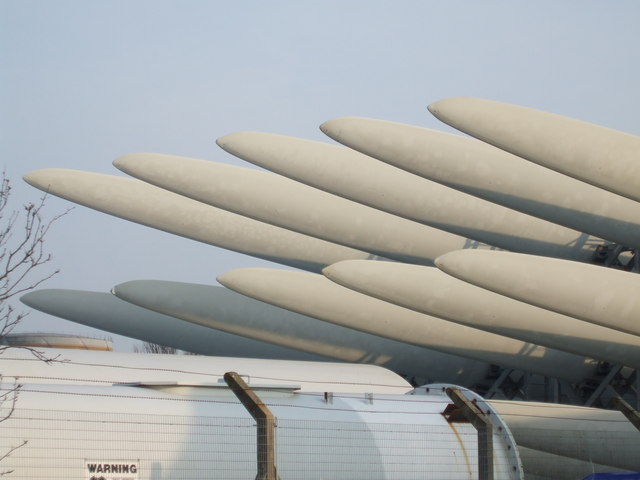
Wind turbine blades in storage. Photo by Glyn Drury.
CC BY-SA 2.0. Wikimedia Commons.
¶ This year’s winter has been quite strange, with temperatures throughout much of the northern hemisphere being considerably higher than at any other time since high-accuracy records began over a hundred years ago. Now here is a video showing just how fast Arctic ice is declining. [CleanTechnica]
¶ Night-time temperatures are more sensitive to climate change, a study found. The nights have been warming much faster than the days over the last 50 years, worldwide. Analysis of the causes of this more rapid warming at night shows this is likely to continue in the coming decades. [News Nation]
World:
¶ A new report from the energy consultancy firm Baringa projects that the Scottish isles could see economic benefits of around £725 million (over the next quarter century) from renewable energy development. The benefits include revenues of up to £390 million for community-owned projects. [CleanTechnica]
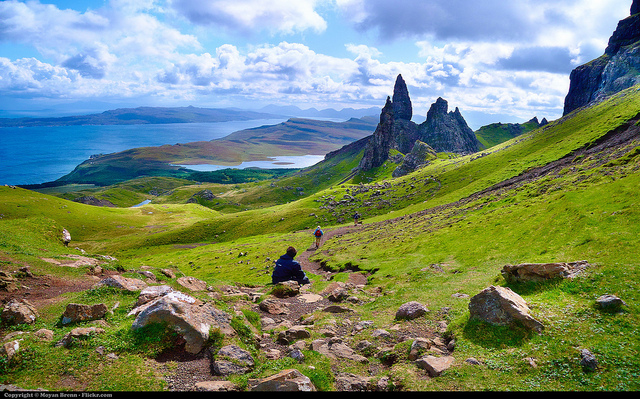
Scottish Isles. Image by Moyan Brenn (some rights reserved).
¶ The Polish government plans to unveil legislation that could swing the country’s energy mix even more towards coal and favor biomass over the nascent wind power industry. Although Poland was one of 195 nations that backed the COP21 deal, it sought a special status for coal. [MENAFN.COM]
¶ Five years ago an earthquake off the coast of Japan triggered a tsunami and a series of meltdowns at the Fukushima nuclear plant. Kaori Suzuki’s home is nearby – determined to stay, but worried about her children’s health, she and some other mothers set up a laboratory to measure radiation. [BBC]

Mothers’ radiation lab
¶ More doubts have arisen over plans by French Energy firm EDF to build an £18 billion nuclear plant at Hinkley Point. The chairman of the House of Commons energy committee has called for the project to be re-examined. This follows a letter by EDF’s chief executive saying more funding is needed. [BBC]
¶ Faced with power blackouts lasting anything from eight to twelve hours a day, residents and businesses in Gaza are increasingly turning to the sun to supply their energy needs. Solar panels are more reliable and cheaper in the long run. And in some cases they are essential to staying alive. [Ynetnews]

Solar panels. Reuters photo.
¶ Taiwan’s President-elect Tsai Ing-wen (蔡英文) of the Democratic Progressive Party reiterated Saturday that one of her party’s objectives is to phase out nuclear power in Taiwan over the next nine years. She said it is important to promote renewable energy and efficiency. [Focus Taiwan News Channel]
US:
¶ Almost no wind turbines have been built in Wisconsin over the past five years. Widespread opposition to wind farms made Wisconsin unattractive for wind investors. But that could soon change. In southwestern Wisconsin, nearly 50 turbines could be built over the next year. [Milwaukee Journal Sentinel]
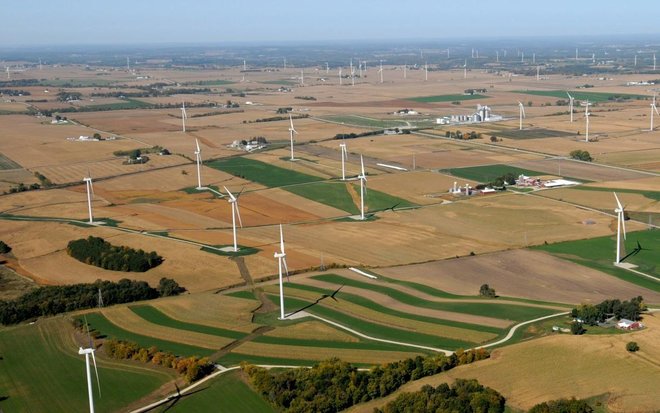
The Glacier Hills Wind Park in Columbia County, the last
wind farm built in Wisconsin. Photo credit: We Energies.
¶ Building anything at sea is never easy, but it can be easier if as much as possible is done beforehand on solid ground. So even though Deepwater Wind suspended offshore work in November, workers with the project have still been busy all winter doing the final assembly of key pieces. [The Providence Journal]
 geoharvey
March 13, 2016 at 10:20 am
Reblogged this on A Green Road Daily News.
March 13, 2016 at 3:53 pm
Reblogged this on nuclear-news and commented:
#auspol #NuclearCommissionSAust NO #thorium #uranium #nuclear