Posts Tagged ‘Nuclear Regulatory Commission’
December 4, 2015
COP21:
¶ Following three days of hectic parleys over a complex 54-page draft pact, negotiators released a draft document, though there was reportedly no agreement on about 250 undecided options across the text. India has expressed satisfaction with the first draft, saying progress had been made. [Daily News & Analysis]
¶ A new report, Transformational INDCs: how new renewables pledges could transform the economics of wind and solar, says national climate change plans submitted prior to COP21 have placed the world on the brink of a renewable energy revolution. INDCs are Intended Nationally Determined Contributions. [CleanTechnica]
¶ The once black-and-white world of climate negotiations for poorer countries has shifted at talks this week in Paris. For years, many have said richer countries created the global warming, so it is up to them to clean it up, but it is clear that developing nations have to be part of the solution. [San Angelo Standard Times]
¶ COP21 is expected to draw 750 stakeholders to Paris this week to address critical climate change issues. And hundreds of charged activists are taking to the streets to ensure that their voices and concerns are also heard. As the World Health Organization pointed out, the “stakes are high.” [Huffington Post]

Hundreds of pairs of shoes are displayed at the place de la Republique, in Paris, as part of a rally. Laurent Cipriani/AP
¶ Former US Vice President Al Gore took to the stage at COP21 in a side-event focused on stranded fossil fuel assets. The crowd expected the longtime climate activist to come prepared with a compelling narrative that made the case for strong action coming out of the conference, and Gore did not disappoint. [Triple Pundit]
World:
¶ The Egyptian Ministry of Electricity this week took a major step towards the development of one of the largest solar power parks in the world. A total of 11 project developers have signed agreements to develop projects that will form a part of the 1.8 GW solar power park planned for Benban, Aswan. [CleanTechnica]
¶ China has started construction on the country’s biggest wind power project on an island off Fujian Province. The wind farm on Nanri Island, Putian City, will have a capacity of 400 MW. The project should yield 1400 GWh of electricity each year, replacing energy from burning 450,000 tonnes of coal. [CRIENGLISH.com]
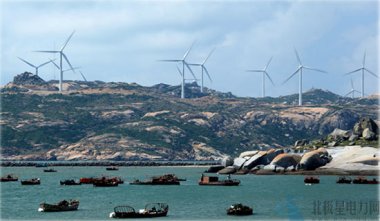
Nanri Island Wind Farm in Putian City, south China’s Fujian Province. Photo: xjny.ts.cn
¶ Google has purchased the output of renewable energy generation facilities around the world totalling 841 MW. The company has to date invested in more than 2 GW of renewable energy facilities and claimed the 841 MW of deals is the “biggest ever non-utility purchase” of renewable energy. [PV-Tech]
¶ Privately owned Bruce Power will invest $13 billion to refurbish the world’s largest nuclear station on Lake Huron. The company will assume all financial risk of cost overruns from the overhaul of six of Bruce’s eight reactors that is to begin in 2020. The work was to begin in 2016, but has been delayed. [Hamilton Spectator]
¶ The sustained rise in power bills over the past several years has prompted a surge in Australian households wanting to “do-it-yourself” by unplugging from the power grid, which may result in further declines in carbon emissions. As much as 90% of households are looking to renewable energy. [Sydney Morning Herald]
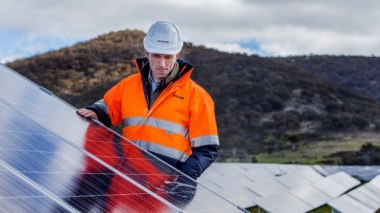
Ninety percent of households are looking to solar panels. Photo: Matt Bedford
US:
¶ US solar manufacturer and developer SunPower Corp announced the start of construction on its 100-MW Boulder Solar project in Nevada. Utility NV Energy will buy the power generated at the plant under a 20-year power purchase agreement. The solar park is expected to be operational in 2016. [SeeNews Renewables]
¶ Carbon pollution equal to 384,097 cars could be eliminated by 2020 with a moderate growth in wind power off the Rhode Island coast, a report from Environment Rhode Island Research and Policy Center says. Enough wind power for 344,566 homes could be built there over the next five years. [GoLocalProv]
¶ In the first 10 months of 2015 the US installed 4.18 GW of wind and 1.4 GW of solar power generation capacity. Renewables accounted for 63% of all the new power capacity. In October, 200 MW of wind, 33 MW of solar and 10 MW of biomass power generation capacity went online. [SeeNews Renewables]
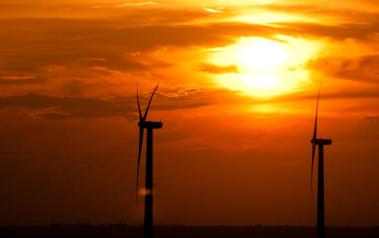
Wind farm in New Jersey, US. Author: nosha. License: Creative Commons, Attribution-ShareAlike 2.0 Generic.
¶ A unit of a North Carolina utility and Google Inc. announced separate deals Thursday for more than 600 MW of electricity from three new wind farms to be built in Oklahoma. Duke Energy Renewables said it will build a 200-MW wind farm in Kay County and sell the power to a utility in Missouri. [NewsOK.com]
¶ Exelon said Thursday it has embraced New York Governor Andrew Cuomo’s plan to support three upstate nuclear units to make them economically viable enough to continue operating. Entergy, however, has rejected the plan. The governor’s plan does not count nuclear power toward the 50% clean power goal. [Platts]
Posted in nuclear power, renewable power, solar, wind | 1 Comment »
Tags: nuclear power, Nuclear Regulatory Commission, photovoltaic, solar power, wind power
November 19, 2015
World:
¶ A report by the United Nations Framework Convention on Climate Change, distributed just days before the crucial climate talks in Paris, is directed at policymakers. It shows how keeping global warming to less than 2° C from pre-industrial levels is not only feasible, but also urgently needed and economically viable. [The Climate Group]
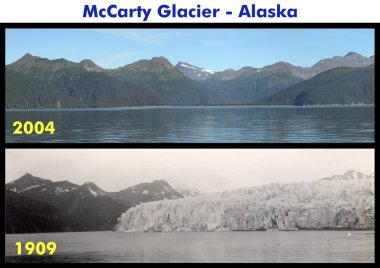
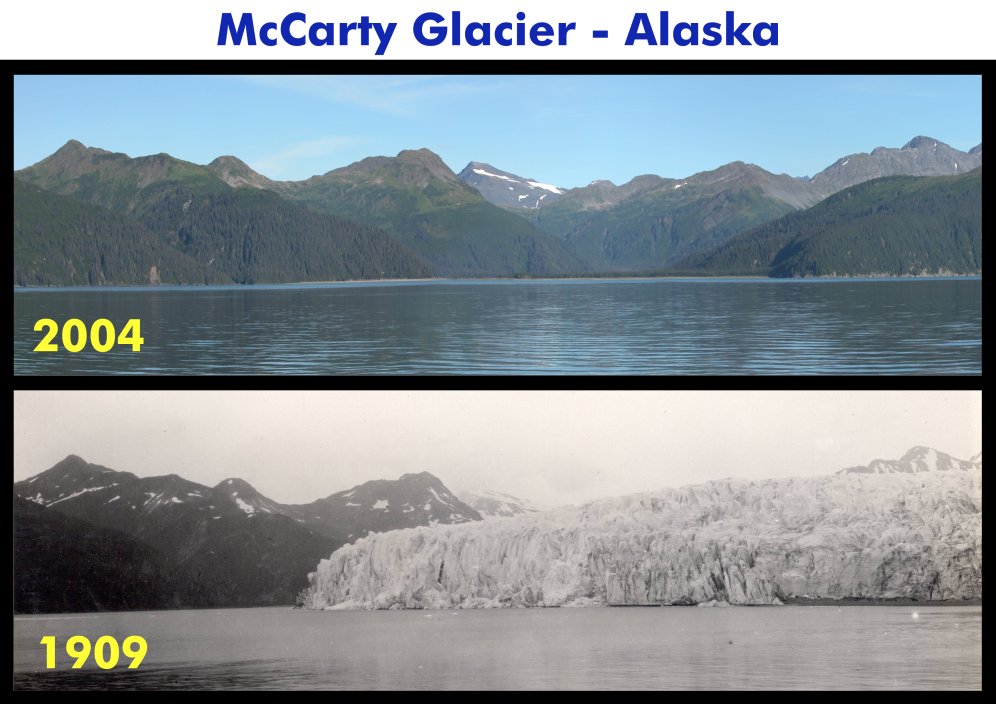
Where did it go? McCarty Glacier, in Alaska. These images are in the public domain. For more information, go to Wikimedia Commons.
¶ The Philippines will soon have over 600 renewable energy projects operational, as it significantly expands its clean energy infrastructure. As of 31 October, 2015, the Philippine Department of Energy had approved 616 renewable energy projects with a total capacity for all renewable energy technologies over 12 GW. [CleanTechnica]
¶ Inox Wind, an Indian wind turbine maker, announced that it expanded its turbine manufacturing facility in Madhya Pradesh. The company reported that it commissioned a new production facility in the state. The facility will increase the company’s overall production capacity to 1.6 GW annually of turbine production. [CleanTechnica]
¶ Wind energy could be the largest power source in the EU by 2030 if governments drive ambition in climate and energy policies, according to a European Wind Energy Association report. If European member states stick to the policy framework already set in place, wind could surpass other forms of energy within a decade. [edie.net]
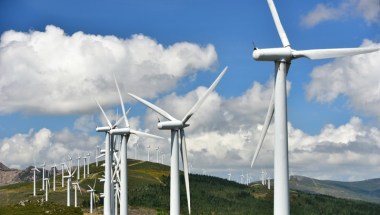
The Aiming High report suggests that wind power has the potential to exceed gas and other forms of energy within the next decade.
¶ Saskatchewan Premier Brad Wall says 50% of the province’s power will come from renewable sources by 2030. The announcement is scheduled for Monday, but Wall slipped in the details while answering questions in the legislature about the province’s position on climate change. Wall believes the goal is achievable. [620 CKRM.com]
US:
¶ More than 160 corporate executives gathered at Bloomberg’s New York City headquarters for a meeting of Rocky Mountain Institute’s Business Renewables Center. Through November 17, 2015, their corporations had signed more than 2 GW of power purchase agreements for large-scale, off-site renewable energy in 2015. [CleanTechnica]
¶ US Senators Susan Collins and Angus King announced Monday that the US Department of Energy will award an additional $3.7 million to an offshore wind project designed by a University of Maine-led consortium. The funding builds on the $3 million committed to the project, Maine Aqua Ventus 1, in May 2014. [Mainebiz]
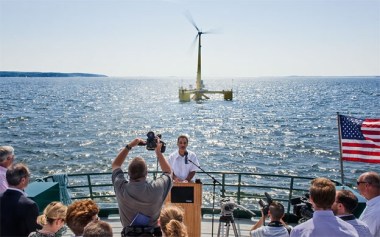
Habib Dagher, director of UMaine’s Advanced Structures and Composites Center, in front of the VolturnUS prototype wind turbine deployed off the shores of Castine in 2014. Mainebiz file photo / James McCarthy
¶ Ten years ago, Walmart made a pledge to become environmentally clean and shift to 100% renewable power. Now, a report, titled Walmart’s Dirty Energy Secret: How the Company’s Slick Greenwashing Hides Its Massive Coal Consumption, found that the company is “one of the nation’s largest users of coal-fired electricity.” [CleanTechnica]
¶ Vermont’s Green Mountain Power announced last week that it reached its 112-MW net metering cap for solar power, 15% of their peak load. Now, it has asked state regulators for permission to buy 7.5 MW more of net metered solar power. The net metering cap does not apply to consumers with home-sized solar installations. [vtdigger.org]

Fuel cell in the FuelCell Energy plant. Photo: Douglas Healey / Bloomberg
¶ The microgrid for municipal buildings in Woodbridge, Connecticut, will have a central plant by FuelCell Energy of Danbury. The contract calls for a 2.2 MW power plant to serve the micro-grid. Buildings in the micro-grid include the police station, fire department, town hall, senior center and Amity Regional High School. [Danbury News Times]
¶ Duke Energy, LG Chem, and Greensmith brought new technology to the site of a 1952 retired coal plant in Ohio with the completion of a 2-MW battery system. The new project is designed to increase reliability and stability for the electric power grid. The fast-response system regulates grid frequency. [Windpower Engineering]
¶ A study commissioned by Massachusetts’ Attorney General concludes that New England does not need additional natural gas pipelines for energy reliability in the coming years. The authors take the recent announcement that the Pilgrim nuclear power plant in Plymouth will close by 2019 into account. [Foster’s Daily Democrat]
Posted in nuclear power, renewable power, solar, wind | 1 Comment »
Tags: nuclear, Nuclear Regulatory Commission, photovoltaic, renewable power, solar power, wind power
February 1, 2013
Another take on yesterday’s news:
¶ The new goal for Chinese solar installations is increases the capacity from today’s 6.5 GW to 35 GW for 2015. For comparison, the US currently has 5.9 GW of solar capacity installed. [SustainableBusiness.com] (The amount of solar power to be added in China over the next three years exceeds the world capacity in 2010.)
Opinion:
¶ Which fossil fuel is wind taking out? [Climate Spectator]
World:
¶ A move to renewable power sources could reduce electric costs in the Bahamas by up to 75%, according to the country’s Minister of the Environment. [Bahamas Tribune]
¶ Pakistan will have 3000 MW of electrical capacity from biofuels, using waste from sugarcane as the fuel source. [Electric Light & Power]
¶ Reporters without Boarders issues an annual report giving rankings of countries for freedom of information. Japan dropped from its position as number 22 to number 53, because of its lack of transparency over the Fukushima Disaster. [The Japan Daily Press]
¶ A German tax court has ruled a tax on nuclear fuel unconstitutional. The issue will pass to the Federal Constitutional Court. [POWER magazine]
US:
¶ The US is undergoing changes in the electric supply, reducing carbon emissions, but increasing challenges. [FuelFix]
¶ Last week, a federal court ruled against the EPA on biofuel standards mandate because it was based on “wishful thinking,” and too high. This week, the EPA raised the standards. [Washington Examiner]
¶ Georgia Power has outlined plans to decrease production by 1000 MW, and decertify and retire 15 coal and oil-burning power plants, while decertifying and selling one other. [Atlanta Business Chronicle]
¶ Anti-nuclear groups have found troubling questions about federal loan guarantees for Southern Co. nuclear reactors, with much information maintained as secret from public scrutiny. [Facing South]
¶ In a statement given to the Vermont Supreme Court, Entergy has indicated that it might ask the court to order the Vermont Public Service Board to issue a Certificate of Public Good to Vermont Yankee. [Brattleboro Reformer]
Posted in nuclear power, renewable power, solar, wind | Leave a Comment »
Tags: nuclear, nuclear power, Nuclear Regulatory Commission, photovoltaic, renewable power, wind power
January 29, 2013
World:
¶ With national elections coming in September, Germany plans to cut consumer electricity prices by sharing the cost of the switch to renewable energy more evenly with companies. [Reuters AlertNet]
¶ A panel of experts at the Nuclear Regulation Authority endorsed a draft report saying a geological fault line running directly under a reactor building at the Tsuruga nuclear plant is probably still active. This may make a restart of the reactor impossible. [Asahi Shimbun]
¶ New safety guidelines for tsunami protection from the Japanese Nuclear Regulation Authority could delay restarts of a number of reactors. [Asahi Shimbun]
US:
¶ The US Defense Department’s renewable energy capacity will quadruple by 2025, according to Pike Research. [Environmental Expert]
¶ A study by Oak Ridge National Laboratory says the US will not be able to recycle nuclear waste for at least another 20 years. This means that the waste will have to be buried. [Forbes]
¶ The Fort Calhoun nuclear plant has more concerns being raised, more NRC inspections, and no end in sight for its outage, which has continued for nearly two years. [Kansas Watchdog]
Posted in nuclear power, renewable power | Leave a Comment »
Tags: nuclear, nuclear power, Nuclear Regulatory Commission, renewable power
January 28, 2013
Science and Technology:
¶ A small start-up company in California claims to have produced a design for solar PVs that makes the cost of electricity from solar less than those of coal and natural gas. [Triple Pundit]
World:
¶ The UK-Ireland agreement that Irish wind farms would provide power to the UK is seen to have exposed anti-renewable rhetoric in Scotland as a politically motivated scare tactic by those opposed to Scottish independence. [SNP]
¶ Windpower is now China’s third most important source of energy, surpassing nuclear. [EcoSeed]
¶ The referendum on nuclear power in Bulgaria had a majority voting in favor of nuclear power, but it failed anyway because voter turnout was too low to be legally binding. [Deutsche Welle]
¶ There are reports of a huge explosion at the Iranian enriching facility that has been such a matter of world concern of late. The government of Iran denies the reports. [Bahrain News Agency]
US:
¶ One byproduct of fracking in Pennsylvania is highly radioactive water. [Timesonline.com]
¶ J. Wayne Leonard is stepping down from his job at Entergy this week. [Rutland Herald]
Posted in nuclear power, renewable power, solar, technology, wind | Leave a Comment »
Tags: nuclear, nuclear power, Nuclear Regulatory Commission, photovoltaic, renewable power, solar power, wind power
January 26, 2013
Opinion:
¶ From the UK: Wind farm nimbyism means 10,000 jobs just went to Ireland. “We’re saving money, but Ireland is getting the work.” [New Statesman]
World:
¶ Central and South American countries are beginning to switch to renewable power. [AZoCleantech]
¶ French special forces troops in Mali are going to neighboring Niger to secure uranium mines run by Areva, the French state-owned nuclear power company. This is the first time the French used special forces to protect assets of a corporation. [CounterCurrents.org]
¶ The health effects from the Fukushima Disaster are beginning to be clearly measurable. A recent study predicts future mortalities from cancer will be eight times as high as earlier studies indicated. [Chemistry World]
US:
¶ A federal court ruled that the EPA must lower certain targets in a biofuel-blending rule, and act considered a blow to the biofuel industry. [The Hill]
¶ The US NRC has further delayed the decision on restarting one reactor at San Onofre nuclear plant. That decision is now scheduled to be made in May. [Los Angeles Times]
¶ Some of the construction workers building two new reactors at the Summer plant in South Carolina have been laid off. Last fall there were problems reported at the plant about incorrect placement of rebar, but it is not known whether that is related to the layoffs. [equites.com]
Posted in nuclear power, renewable power, wind | Leave a Comment »
Tags: nuclear, nuclear power, Nuclear Regulatory Commission, renewable power, wind power
January 20, 2013
World:
¶ Germany plans to eliminate use of fossil fuels by 2050, and close to 50% of the ownership of renewable capacity is in the hands of ordinary citizens and farmers. [Business Insider]
¶ A political storm is brewing over the possible construction of a new nuclear plant in Taiwan. [Focus Taiwan News Channel]
¶ Officials from TEPCO are visiting the Hanford, Washington, nuclear site, possibly the most contaminated in the US, to see how cleanup is being done there. [Mid Columbia Tri City Herald]
US:
¶ The federal government’s new pollution limits for a coal-fired power plant on the Navajo Nation will cost more than $1 billion, cutting severely into the income of the Navajo and Hopi tribes. [Native American Times]
¶ The GAO released a blistering report on the $13.4 billion waste treatment plant being built at Hanford, Washington, saying billions in overruns are almost certain and questioning whether the project can even succeed. [OregonLive.com]
¶ The NRC is beginning to prepare a detailed plan of what would need to be done to bring the plant safely back to service. [Power Engineering Magazine]
Posted in nuclear power, renewable power | Leave a Comment »
Tags: nuclear, nuclear power, Nuclear Regulatory Commission, renewable power
January 16, 2013
Opinion:
¶ Is investment in large nuclear power plants worthwhile? [Forbes]
¶ The oil industry has taken aim at the Renewable Fuel Standard in a self-interested bid to retain dominance over America’s transportation fuel sector. [AOL]
Science and Technology:
¶ A collaboration between Stanford University and the US DOE’s National Renewable Energy Laboratory (NREL) has resulted into a thin-film solar cell less than one-micron thick that can be attached to almost any surface. [Power Engineering Magazine]
¶ A device developed by the NREL could save the US solar industry billions of dollars by identifying defective solar cells early in the manufacturing process. [CleanTechnica]
World:
¶ A report from the International Renewable Energy Agency (Irena) says green energy options are rapidly becoming the most cost-effective available. [Trade Arabia]
¶ The people at Irena’s conference in Abu Dhabi represent just about every country and organization important in the world of renewables, climate, and sustainability. [Deutsche Welle]
¶ In an address to the Irena conference, renowned US economist Jeffrey Sachs said the work being done was not nearly enough, and the world needs an entirely different energy system in place within 25 years. [7DAYS]
¶ In the Middle East, environmental understanding is driving the technology towards more efficient and environmentally friendly options for desalination. [gulfnews.com]
¶ Most of the World’s largest companies are shifting to clean energy. [WWF International]
¶ Mitsubishi has announced it will invest close to $770 million in four offshore wind farms in Germany. [The Japan Daily Press]
¶ The costs of decommissioning European nuclear power plants will run into hundreds of billions of Euros during the next ten years. [Recycling News]
US:
¶ New York Gov. Andrew Cuomo is proposing a $1 billion “N.Y. Green Bank,” to support environmental energy research and projects that might otherwise struggle for capital from the private market. [Salon]
¶ Rhode Island has made a new type of renewable energy grant available, as for the first time, residential applications for grouped projects will be accepted. [DigitalJournal.com]
¶ A number of environmental groups will file a rebuttal of claims made by the Nuclear Energy Institute, which has suggested that additional research by the NRC is not largely needed for a court-ordered environmental impact statement on long-term nuclear waste-storage issues. [Melodika.net]
Posted in nuclear power, renewable power, solar, wind | Leave a Comment »
Tags: nuclear, nuclear power, Nuclear Regulatory Commission, photovoltaic, renewable power, wind power
January 15, 2013
Science and Technology:
¶ Teams of scientists are testing ways to get rid of nuclear waste. One approach is an American design being tested in the UK, to combine fusion with fission. Another is a Belgian test of Carlos Rubbia’s Energy Amplifier, an Accelerator-Driven System. [IEEE Spectrum]
¶ At the Ecobuild event in London, on March 5-7, Mitsubishi Electric will highlight projects using existing renewable technologies to improve energy performance and decrease carbon emissions, while often decreasing energy bills as well. [IBTimes.co.uk]
World:
¶ The International Renewable Energy Agency (Irena) conference is putting emphasis on low-carbon economy, giving investors the understanding that there is great potential for growth in low-carbon technology. [UPI.com]
¶ A panel of experts at Irena are calling for distributed power from renewable resources because current models of energy generation and distribution are more expensive and less sustainable. [gulfnews.com]
¶ The portion of our energy that is renewable has to double by 2030, according to an Irena announcement. We need to accelerate the move to renewables to achieve that. [News24]
¶ The headquarters for Irena will be in Abu Dhabi, the first such agency to have its headquarters in the Middle East. [gulfnews.com]
¶ Promoters of an 80-acre energy park in Cornwall are offering residents within 5 kilometers (3.1 miles) of the park a 20% discount on electricity. The park will consist of 75 acres of solar PVs and 14 wind turbines. [This is Cornwall]
US:
¶ Duke Energy added 800 MW of windpower in 2012. [Power Engineering Magazine]
¶ The new US approach to storage of nuclear waste will begin with getting consent from the community hosting the waste. Waste will go to interim storage first, and then to long-term storage. [World Nuclear News]
¶ A panel of three judges of the U.S. Court of Appeals have heard arguments on whether the Vermont Senate can prevent Vermont Yankee’s continued operation by preventing issuance of a certificate of public good. [vtdigger.org]
… Nine states, New York, Connecticut, Iowa, Maryland, Massachusetts, Mississippi, Missouri, New Hampshire and Utah filed a court document supporting Vermont. [The Saratogian]
¶ The State of New York has made the area of the Hudson River on which Indian Point sits into a critical wildlife area. Entergy is claiming the designation was illegally applied and will interfere with operation of the power plant. [The Journal News | LoHud.com]
¶ What appears to be one of the new reactors for Vogtle got stuck in port when a rail car broke down on December 15. The car distinctive and could hardly be mistaken. It sits today by the side of a road, without any protection against sabotage, which would be a violation of NRC regulations. [The Aiken Leader]
Posted in nuclear power, renewable power, solar, wind | 1 Comment »
Tags: nuclear, nuclear power, Nuclear Regulatory Commission, photovoltaic, renewable power, wind power
January 13, 2013
Science and Technology:
¶ Scientists at Berkeley are researching artificial photosynthesis. They have already been able to make hydrogen, and are trying for more complex materials that can be used for fuel. [San Francisco Chronicle]
Not Energy, but Interesting Sustainability:
¶ Plastic fishing traps are being used instead of tree bark in Indonesia. They last longer and are less destructive than earlier practice, providing an interesting example of use of plastics as a replacement for natural product can protect the environment. [Bernama]
¶ Greenpeace is highlighting sustainable production of palm oil tested in Indonesia. It is being praised by the Minister of Agriculture, who says it shows how producers can be profitable without destroying forests. [Scoop.co.nz]
World:
¶ Sir Ian Wilmut, known for successfully cloning a sheep for the first time, says wind turbines are vital to reducing the carbon emissions causing global warming and destruction of crops. His basic message is that without wind farms, we will not be able to produce enough food. [Scotsman]
¶ The last remaining coal generating plants in Ontario are scheduled to close. [Huffington Post Canada]
US:
¶ The 265 MW Ocotillo Wind project in Southern California began commercial operation in December and is transmitting energy to the grid, according to its owners. [Today’s Energy Solutions]
¶ The US DOE’s National Renewable Energy Laboratory has created an energy analysis tool to help those who wish to experiment with energy use options and carbon emissions. The tool is called Buildings, Industry, Transportation, Electricity, and Transportation Scenarios (BITES). [Nanowerk LLC]
¶ The DOE is also putting up $120 million for research into sustainable ways to produce more rare earth elements. The US is dependent on foreign sources for these elements, which are important for production of PVs, LEDs, and computer chips, among other things. [IVCPOST]
¶ Nuclear watchdog groups are accusing the NRC of rushing its report on nuclear waste. [Rutland Herald]
Posted in nuclear power, renewable power, solar, wind | Leave a Comment »
Tags: nuclear, nuclear power, Nuclear Regulatory Commission, photovoltaic, renewable power, wind power
January 11, 2013
Opinion:
¶ William S. Becker gives us “The Incontrovertible Business Case for Clean Energy,” in two parts. Huffington Post: [Part 1] [Part 2]
World:
¶ Chile has 3.1 GW of solar energy projects in planning. [Electric Light & Power]
¶ The Irish renewable electric provider, Mainstream Renewable Power, is making progress in its talks with the UK National Grid to export 5000 MW of electricity to Britain. [Irish Times]
¶ RWE’s renewable energy unit said a new law designed to ease grid-connection delays for German wind farms doesn’t go far enough in reducing investment risks. Utilities including RWE AG and EON SE had threatened to halt investments unless the issues are resolved. [Bloomberg]
¶ Restarting reactors in Belgium that had been shut down because of microcracks will be hazardous, according to a study commissioned by the Green Party group in the European Parliament. [EurActiv]
US:
¶ The city council of Carbondale, Illinois, named for local coal mines, has voted to make the city’s electric supply 100% renewable. The package deal provided a 2% cost above non-renewable, and a 22% cost reduction from aggregated buying, so there is substantial saving from going green. [The Southern Illinoisian]
¶ Tucson, Arizona is transitioning to a renewable water supply. [Tucson Citizen]
¶ The NRC still has no timetable for restarts of the Fort Calhoun or Crystal River nuclear plants. [POWER magazine]
Posted in nuclear power, renewable power, solar, wind | Leave a Comment »
Tags: Fukushima, nuclear, nuclear power, Nuclear Regulatory Commission, photovoltaic, renewable power, solar power, wind power
January 9, 2013
Science and Technology:
¶ Graphene oxides have been discovered to remove some dissolved radioactive materials from water quickly, and can be used in places like Fukushima for decontamination. [HispanicBusiness.com]
Japan’s news is now in the World section.
World:
¶ Some areas of Wales are leading the way in rooftop solar installations. In Wrexham, 5% of homes have PVs supplying their power. [WalesOnline]
¶ Algeria is planning on spending $60 billion developing renewable energy. [ESI Africa]
¶ Caisse de dépôt et placement du Québec is investing $500-million in a portfolio of wind power farms owned by Chicago-based clean energy developer Invenergy LLC. [National Post]
¶ Cleanup and decontamination at Fukushima are alarmingly slipshod. [Asahi Shimbun]
US:
¶ Ratepayers in southern California are paying $1.1 billion per year in costs relating to the San Onofre nuclear plant while it sits idle because of equipment problems. [Los Angeles Times]
¶ The owners of Fort Calhoun still hope to restart the reactor in the first quarter, despite work that still remains to correct a problem an NRC official called a “significant technical challenge” with the unit’s containment. [Platts]
Posted in nuclear power, renewable power, solar, wind | 1 Comment »
Tags: Fukushima, nuclear, nuclear power, Nuclear Regulatory Commission, photovoltaic, renewable power, solar power, wind power
January 8, 2013
Opinion:
¶ Forbes India enumerates five sustainable practices is says must be made mandatory in India. [Forbes India]
World:
¶ In Australia, the cost of solar power from PVs on household roofs has fallen to below half the cost of grid electric power. [CleanTechnica]
¶ Offshore wind is gaining in importance in China, and has become a major power source. [Your Renewable News]
¶ New solar farms in Wales will have sheep grazing between rows of solar PV panels. [Cogeneration & On-Site Power Production Magazine]
¶ The government of Uruguay is planning to have 90% of the country’s electricity from renewable sources by 2015. Hydropower will account for 45%, biomass will be 15%, and wind will be 30%. (The country got 62% of its electricity from renewable sources 2008, and the change is mostly the addition of wind.) [Bernama]
US:
¶ California businesses are installing solar power to reduce costs and improve their bottom line. [North Bay Business Journal]
¶ A Circuit Court has ruled that the NRC must explain why they secretly exempted the Indian Point nuclear reactor from fire-safety rules. [Courthouse News Service]
¶ Georgia Power is seeking permission to retire four coal-burning generating plants with a combined output of 2061 MW. The costs of complying with EPA regulations and competition are making the plants uneconomical to run. [Electric Light & Power]
Posted in nuclear power, renewable power, solar, wind | Leave a Comment »
Tags: Fukushima, nuclear, nuclear power, Nuclear Regulatory Commission, photovoltaic, renewable power, solar power, wind power
January 6, 2013
World:
¶ German solar installations continued to grow at a record pace in 2012. New installations have a capacity of 7.6 GW, and this is far more than the 2.5 to 3.0 GW the government wanted to see added. The resulting reduction in the feed-in tariff appears to be slowing growth down. [Economic Times]
¶ Sri Lanka’s Power and Energy Minister Champika Ranawaka says that country will not start work on nuclear power generation within the next decade, as the technical issues raised by the Fukushima Disaster need to be fully assessed. [Sunday Observer]
¶ The Bulgarian prime minister is instructing supporters of his ruling party to vote not to allow use of nuclear power in that country. [Novinite.com]
¶ Scientific experts have given approval to restart of two Belgian nuclear power plants that were shut down because of micro-cracks in reactor vessels. [Straits Times]
US:
¶ New wind farms are being added in New Hampshire, but opponents are calling for a moratorium on expansion of wind power. [NewHampshire.com]
¶ Twenty-four environmental groups have filed documents with the Nuclear Regulatory Commission saying it will not be possible for the NRC to assess adequately the environmental implications of long-term storage of spent fuel in two years, as planned. [Melodika.net]
¶ The Entergy wholesale nuclear fleet is projected to show poor cash flows until 2016. Vermont Yankee, Pilgrim, and Indian Point are members of that group of nuclear plants. [Rutland Herald]
Posted in nuclear power, renewable power, solar, wind | Leave a Comment »
Tags: nuclear, nuclear power, Nuclear Regulatory Commission, nuclear waste, photovoltaic, renewable power, solar power, wind power
January 5, 2013
Economics:
¶ The microgrid is being developed, both technologically and economically, as a model for electric generation and distribution. [energybiz]
World:
¶ Emerging economies are expected to triple their renewable energy output within the remainder of this decade. [FuelFix]
¶ Germany’s environment minister, Peter Altmaier, has rejected a newspaper report suggesting the country was considering sending its nuclear waste to other countries. [Deutsche Welle]
US:
¶ MidAmerican Solar, a subsidiary of Warren Buffett’s MidAmerican Renewables, is investing over $2 billion in solar power generation in California. [Businessandleadership.com]
¶ There are no big federal legislative issues for renewable energy being considered for the next year, but a number of small issues could advance renewables a good deal. [Inside Climate News]
¶ A federal working group will address air pollution and employment concerns relating to the Navajo Generating Station, the largest coal-fired power plant in the western United States. The plant is on an Indian reservation near the Grand Canyon. [Reuters UK]
¶ The haggling over the Yucca Mountain nuclear waste dump is continuing, with a lack of funds even to investigate the idea central to the issue. [Las Vegas Review-Journal]
¶ A plan for an interim storage facility in Utah for spent nuclear fuel is officially dead, as the owner has asked the NRC to cancel its license. According to the owner, this was because of obstruction by the Interior Department. This leaves the US with no interim storage option. [World Nuclear News]
Posted in nuclear power, renewable power, solar | Leave a Comment »
Tags: Fukushima, nuclear, nuclear power, Nuclear Regulatory Commission, nuclear waste, photovoltaic, renewable power, solar power
January 1, 2013
Japan:
¶ In an article on restarting the Japanese economy, the new Japanese trade and industry minster, Toshimitsu Motegi, says the NRA will have to give its approval before any nuclear reactors are restarted, and this process will take at least three years. [The Daily Yomiuri]
¶ The NRA has found the fire proofing at more than one fifth of the nuclear reactors to be inadequate, according to the Mainichi Shimbun, a major newspaper. The finding could delay their restart by several years in some cases. [Straits Times]
¶ The work of decontamination radioactive fallout on the ground and buildings in the village of Iitate seems endless. [Pollution Solutions]
World:
¶ Former Indian Navy Chief Admiral L. Ramdoss says the nuclear plant at Kudankulam is unsafe and should not be commissioned. Instead, electrical power should be generated by sun and wind. [The Hindu]
¶ Investment in renewable energy is a good bet for the UK’s farmers, according to a rural surveyor at consultant Bidwells. The technology is more widely accepted, and potential lenders more comfortable with it than they had been previously. [FarmersWeekly]
US:
¶ Duke Energy stock is not necessarily safe to own, an analysis suggests. Among the problems are the fact that it has large holdings of nuclear power plants, specifically that it owns Crystal River, and that solar PV rooftop installations are increasingly competitive. [Seeking Alpha]
Posted in nuclear power, renewable power, solar, wind | Leave a Comment »
Tags: Fukushima, nuclear, nuclear power, Nuclear Regulatory Commission, photovoltaic, renewable power, solar power
December 30, 2012
Japan:
¶ A second look at the geology of the Ohi power plant has left experts split over the question of whether they are seeing an active fault or something else. [The Japan Times]
World:
¶ Renewable power is beginning to have a positive effect on the overall economy of Pakistan. [Power Engineering Magazine]
¶ The question of control of development of renewable resources is becoming a national political issue in Wales, as Welsh politicians are angry over the slow pace of renewable power in their country, compared to England and Scotland. [Electric Light & Power]
¶ Desertec, a huge renewable energy project in North Africa, could one day supply a large part of Europe’s electricity, but commitments to building it are slow. [The North Africa Post]
US:
¶ More details have emerged in the suit brought by eight sailors who claim TEPCO lied about radiation dangers during the Fukushima Disaster. [CNN]
¶ Supporters of a bill being put before the Vermont Senate to have a three-year moratorium on new wind projects say a majority of senators support it. [Barre Montpelier Times Argus]
Posted in nuclear power, renewable power, solar, wind | Leave a Comment »
Tags: Fukushima, nuclear, nuclear power, Nuclear Regulatory Commission, nuclear waste, photovoltaic, renewable power, solar power
December 27, 2012
Japan:
¶ Japanese financial markets are being guided by the expectation that restarting nuclear plants will not happen easily. [Businessweek]
¶ After Tohoku Electric tried to make the case that faults under a nuclear reactor Aomori Prefecture are not active, the NRA says it is convinced they are, which implies that the facility’s sole reactor cannot be restarted. [The Japan Times]
World:
¶ Quebec’s only nuclear reactor, Gentilly-2, is closing today. Part of the reason for the plant’s closing is the current low cost of electricity. Decommissioning costs are estimated to be $6.3 billion. [Seven Days]
¶ A report by the UK’s Office for Nuclear Regulation says that recent drill showed staff at Sellafield did not have the capability to respond to nuclear emergencies effectively, and errors could have led to “a prolonged release of radioactive material off-site”. [The Guardian]
US:
¶ A 438 MW wind power facility being put online in Kansas is the largest wind farm ever put up in a single construction phase. [Bradenton Herald]
¶ Installations of wind power outpaced those of natural gas in the first eleven months of 2012. [PennEnergy]
¶ NRC officials asked the owners of San Onofre for more analysis on its damaged steam generators, as they consider the question of restarting the reactors. [Chattanooga Times Free Press]
¶ US sailors are suing TEPCO and Japan in a US District Court for lying about the dangers of Fukushima Disaster’s radiation risks. They were exposed to it when they were serving aboard the USS Ronald Reagan, which provided aid during the disaster. [Businessweek]
Posted in nuclear power, renewable power, wind | Leave a Comment »
Tags: Fukushima, nuclear, nuclear power, Nuclear Regulatory Commission, renewable power, wind power
December 25, 2012
Japan:
¶ A government report says that children of Fukushima Province are tending to be overweight because they are not allowed to play outdoors for fear of radiation. [RT]
World:
¶ Scientists at the Masdar Institute of Science and Technology are planning to build a real-time fog detection and monitoring tool which will enable them to use fog to produce water for the UAE. [EcoChunk]
US:
¶ Pike Research has released results of a poll asking how Americans feel about various forms of energy. Solar and wind power are the most strongly supported. [pikeresearch.com (pdf file)]
¶ John Kerry, nominee to be Secretary of State, has worked a long time to stop global warming, and is expected to continue to do so. [Washington Times]
… Kerry may not be able to influence the decision on the Keystone XL pipeline, however. [National Post]
¶ A plan for nuclear waste storage in Utah has been officially abandoned. [Elko Daily Free Press]
Posted in nuclear power, renewable power, solar, wind | Leave a Comment »
Tags: Fukushima, nuclear, nuclear power, Nuclear Regulatory Commission, nuclear waste, photovoltaic, renewable power, solar power
December 22, 2012
Japan:
¶ Anti-nuclear protests continue to take place each Friday near the prime minister’s office in opposition to nuclear power. December 21 marked the 36th such demonstration, according to the organizer, Metropolitan Coalition Against Nukes. [Asahi Shimbun]
World:
¶ More than 500 villages in Pakistan will get their first electricity from solar photovoltaics. [Associated Press of Pakistan]
¶ The Australian Climate Change Authority has recommended that the key elements of their Renewable Energy Target remain unchanged. This provides a continuation of support for renewable energy projects. [JD Supra]
US:
¶ A new report from the DOE’s National Renewable Energy Laboratory says that concentrated solar with thermal storage can make utilities more profitable. [Phys.Org]
¶ The governor of Oregon released a 10-year action guide the state’s energy future through intentional investment and development. [SustainableBusiness.com]
¶ The same fossil fuel interests that reap huge subsidies from the federal government get them from the states. Among other benefits, they avoid taxes through exemptions. [SustainableBusiness.com]
Posted in nuclear power, renewable power, solar | Leave a Comment »
Tags: Fukushima, nuclear, nuclear power, Nuclear Regulatory Commission, nuclear waste, photovoltaic, renewable power, solar power
December 21, 2012
Japan:
¶ For the first time, TEPCO has admitted a wrongful death happened as a result of its actions that brought on the Fukushima Disaster. [The Daily Yomiuri]
¶ Twenty-one months after the Fukushima Disaster, TEPCO is ready to start removing debris from Unit 3 at Fukushima Daiichi. [Asahi Shimbun]
¶ Chubu Electric is adding four meters to the height of the seawall under construction at the Hamaoka plant. It will be 22 meters (72 feet) tall instead of the 18 meters (59 feet) previously planned. It is 1.6 km (1 mile) long. [Asahi Shimbun]
World:
¶ Scotland, with a goal of 100% renewable electric production by 2020, had hoped to achieve 31% in 2011. They surpassed that goal and achieved 36%. [BBC News]
¶ Output for renewable power production for the UK as a whole increased by 25% in the third quarter of 2012, over 2011. [Greenwise Business]
¶ A nuclear plant in Sweden had to shut down because of a sea water infiltration. [The Local.se]
US:
¶ Steven Chu called on Congress to approve legislation to let investors use master limited partnerships for renewable energy, which he said would spur development by giving investors in renewable projects a tax structure currently used by fossil fuel companies. [The Hill]
¶ After entering into out-of-court settlements with the Sierra Club and Audubon Society, Southwestern Electric Power Co. began generating power at a new 600 MW coal-fired plant in southwest Arkansas. [KRQE]
¶ Two nuclear engineers have asked for a senatorial review of dangers at Indian Point and Oconee. [Huffington Post]
Posted in nuclear power, renewable power, solar | Leave a Comment »
Tags: Fukushima, nuclear, nuclear power, Nuclear Regulatory Commission, nuclear waste, photovoltaic, renewable power, solar power
December 20, 2012
Japan:
¶ It remains to be seen how the change in government in Japan will change energy policy, but it appears support for renewables will remain. [Recharge]
… The LDP, which won the election, has agreed with the New Komeito party to reduce reliance on nuclear power. New Komeito’s stand was that it wanted a complete elimination of nuclear power. [MarketWatch]
¶ The head of the Nuclear Regulatory Authority says it will not be influenced by the change in government. [The Japan Times]
¶ The NRA says the Higashidori nuclear plant is sitting on an active fault. [Businessweek]
World:
¶ The Australian Bureau of Resources and Energy Economics forecasts that most of the country’s electric power will be solar by 2050. [Big Rigs]
¶ A new Indian liability law makes the builder of nuclear power plants potentially liable for any costs associated with an accident at the plant. Russian told Indian to expect the costs of new reactors to double if the law applies to reactors they are building. [Indian Express]
¶ A national museum of coal mining in Wales will get its electrical power from solar panels on the roof. [Energy Matters]
US:
¶ The NRC will examine further what might need to be done to deal with potential problems from solar storms. The storms could shut down the electric grid and destroy computers, leaving nuclear plants potentially without power. [PennEnergy]
… Preparation for solar storms could include a two-year power backup supply. [Nuclear Street]
¶ Kentucky Power announced it will retire the 800 MW Big Sandy coal-burning power plant in 2015. [Platts]
Posted in nuclear power, renewable power, solar | Leave a Comment »
Tags: nuclear, nuclear power, Nuclear Regulatory Commission, photovoltaic, renewable power, solar power
December 15, 2012
Renewable Power and Anger Management:
¶ An ad Donald Trump placed in two Scottish newspapers likens the people who support for onshore wind projects with those responsible for the Lockerbie bombing. [Scotsman]
¶ An employee of the DOE’s National Renewable Energy Laboratory suggested that anyone interested in a “murderous rampage” should start with reporters at a local news organization. [Heritage.org]
Japan:
¶ A conference on nuclear safety will be held by the Japanese ministry to dispel myths about the Fukushima Disaster. (Given the history of admitted collusion and falsehoods, it is difficult to see how they will accomplish anything to support nuclear power in Japan.) [BDlive]
¶ The Nuclear Regulation Agency has released the results of new computer simulations of spread of radiation from nuclear accidents to reflect errors found in earlier simulations. [The Daily Yomiuri]
World:
¶ The UN’s atomic energy agency and the Iranian government are both reporting progress in talks on nuclear power in Iran, including UN inspections. [International Business Times]
… Nevertheless, at least one member of the Iranian negotiating team says he is not optimistic. [Jerusalem Post]
¶ The workers who cleaned up after the Chernobyl Disaster have health problems, such as having 400% the normal cancer rate, but their medical and other needs are underfunded. [Kyiv Post]
¶ In an effort to increase the capacity of solar power, the Indian government is considering changing laws so consumers would be paid for the solar power they generate and feed into the grid. [Livemint]
US:
¶ Construction of two new reactors at Plant Vogtle is running over budget and behind schedule. [The Associated Press]
¶ Bipartisan legislation has been introduced to give renewable energy the same low-cost financing that is currently available for fossil fuel companies. [SustainableBusiness.com]
¶ Covered bonds, which are usually used for mortgages, are being promoted for renewable-energy projects. It is hoped this could raise the $1 trillion a year in new private capital that some estimates say are needed to keep emissions at safe levels. [Businessweek]
Posted in nuclear power, renewable power, solar | Leave a Comment »
Tags: Fukushima, nuclear, nuclear power, Nuclear Regulatory Commission, nuclear waste, photovoltaic, renewable power, solar power
December 5, 2012
Technology:
¶ A research team at the University of Colorado is receiving $9.2 million from the US DOE to genetically modify E. coli so it makes gasoline. [Phys.Org]
Japan:
¶ A team of researchers say they have developed a way to remove cesium from water inexpensively, potentially making decontamination of soil and water of cesium from the Fukushima Disaster much easier. [Asahi Shimbun]
¶ Nearly half the cleanup workers at Fukushima were hired illegally. [The Japan Daily Press]
World:
¶ The UK is providing funding for climate projects in other parts of the world. [E&T magazine]
¶ Rich countries are being accused of using a double standard at Doha, subsidizing fossil fuels at home and pushing climate change on the rest of the world. [India Today]
US:
¶ Nearly half the new generation capacity added in 2012 is from renewable resources. [Electric Light & Power]
¶ The US government is opening two new offshore wind sites on the Atlantic coast. One is off the coasts of Massachusetts and Rhode Island; the other is off the coast of Virginia. [Energy Efficiency News]
¶ The New England Coalition has asked the Vermont Supreme Court to order Vermont Yankee to shut down. [WCAX] (There is more coverage at the Reformer, but it will require a subscription after December 12. [Brattleboro Reformer])
¶ According to the NRC, Seabrook is safe to run even though concrete in its buildings is degrading. [Reuters]
Posted in nuclear power, renewable power, technology, wind | Leave a Comment »
Tags: Fukushima, nuclear, nuclear power, Nuclear Regulatory Commission, renewable power, wind power
December 4, 2012
Japan:
¶ The campaigns leading to the general election in Japan are starting up, and energy policy is a central issue. [The Japan Daily Press]
¶ TEPCO and the Japanese government will attempt to remove all fuel assemblies from the spent-fuel pool of Fukushima Daiichi Unit 4 by the end of 2014. [The Japan Times]
¶ Twenty months after the Fukushima Disaster began, 80% of the homes in the surrounding prefectures are still not decontaminated. [RTT News]
World:
¶ French utility EDF has raised the cost of the construction of European Pressurized Reactor (EPR) by more than €2 billion, the latest in a series of overruns. Originally expected to go online in 2012 at a cost of €3.3, it is now expected to start up in 2016 at a cost of €8.5 (over $11 billion). [Chicago Tribune]
¶ The cost overruns of the EPR being built in France, along with similar overruns in Finland, are raising concerns about plans to build a similar reactor in the UK. [Financial Times]
¶ German energy policy gives the people “skin in the game.” This is why the Germany can convert to renewable energy faster than other countries. [Bloomberg]
¶ Germany and Norway have entered into an agreement to build a submarine cable between the two countries for the purpose of transmitting electricity from renewable sources. [Stockhouse]
¶ The Chinese government will pay overdue subsidies to renewable-power developers, after a two-year delay. [Businessweek]
¶ One of the hot topics in the conference in Doha will be phasing out subsidies for fossil fuels. [BDlive]
US:
¶ The two NRC whistleblowers, who earlier made public problems with plants downstream from dams in past months, are accusing the NRC of being slow to act on matters of safety and excessively secretive about potential dangers. [Huffington Post]
¶ The Army and Marines are developing portable solar systems, with some feeling of competition involved. [CleanTechnica]
¶ Piedmont Chemical has gone into the business of renewable 100 percent bio-based polyester polyols, “functionally equal and cost-competitive with petroleum-derived polyols.” Polyols are building-blocks in the production of urethane foams, coatings, adhesives and sealants. [Plastics News]
Posted in nuclear power, renewable power, solar, technology | Leave a Comment »
Tags: Fukushima, nuclear, nuclear power, Nuclear Regulatory Commission, renewable power
December 2, 2012
One for the books:
¶ A top evangelist from the American Family Association says we need to be willing to use fossil fuels because they are a gift from God. [De Smog Blog]
Japan:
¶ The Nuclear Regulation Authority began an inspection at the Tsuruga nuclear power plant in Fukui Prefecture to determine whether crush zones at the plant are active faults. [The Daily Yomiuri]
World:
¶ The only nuclear reactor in Iran was shut down, and its fuel removed, because of debris that had been left behind from its construction. [Firstpost]
¶ The government of India proposes to create 30,000 MW of new renewable capacity during the five-year plan for 2012–17. This will bring India’s total renewable power capacity to over 56 MW. [CauseBecause]
US:
¶ The owners of new nuclear reactors in Georgia say that they have learned the lessons of Fukushima Daiichi, and their “uncompromising focus is safety and quality.” [CNN]
¶ The owners of San Onofre have told the NRC and the public that the plant is safe to resume power generation. [Electric Light & Power]
¶ Repairs at Fermi will take at least three more months before the reactor can be restarted. Interestingly, representatives of the owners said they could not predict when the plant would be restarted because of “market considerations.” [Monroe Evening News]
Posted in nuclear power, renewable power, solar | Leave a Comment »
Tags: Fukushima, nuclear, nuclear power, Nuclear Regulatory Commission, renewable power
December 1, 2012
Technology:
¶ Scientists at the DOE’s National Renewable Energy Laboratory have learned things about relationships between biomass cell wall structure and enzyme digestibility that could lead to optimizing sugar yields and lowering the costs of making biofuels. [Ethanol Producer Magazine]
Japan:
¶ New tapes released by TEPCO, from the days after the beginning of the Fukushima Disaster, show how information was lost as corporate managers went into denial. [New York Times]
… Meanwhile, radioactive water was rising in buildings to the point it would flow to the sea and nothing was being done. [Asahi Shimbun]
¶ Many cleanup workers at Fukushima Daiichi have received doses of radiation well above acceptable limits of safety. [Asahi Shimbun]
World:
¶ In the UK, political disagreements and shifting government positions have hindered investment in renewable energy. [Power Engineering International]
US:
¶ The American Automobile Association is calling for the government to stop the sale of the E-15 blend of ethanol and gasoline, saying it can damage car engines. [Radio Iowa]
¶ The US Senate has passed a bill allowing the military to buy biofuels and renewable power, even if it costs more than conventional fuel. [PennEnergy]
Vermont:
¶ The Vermont Public Service Board told Entergy it will take the company’s failures to fulfill promises and provide truthful information into account when it makes a final decision on granting a Certificate of Public Good for Vermont Yankee. [Reuters]
¶ Vermont Yankee is losing its contract to use the Vernon Dam as a backup power source, as the owners of the dam have refused to renew it. Entergy wants to install a backup generator. [vtdigger.org]
¶ The trial of six elderly women for trespassing at Vermont Yankee provided some interesting moments. [Consortium News]
Posted in nuclear power, renewable power, solar, technology | Leave a Comment »
Tags: Fukushima, nuclear, nuclear power, Nuclear Regulatory Commission, renewable power
November 30, 2012
Japan:
¶ Land reserved for industrial parks in rural areas of Japan is being used by solar farms. [Wall Street Journal]
¶ A lawsuit has been filed on behalf of 1,100 people against Kansai Electric Power Company’s Ohi plant, seeking to shut it down. Ohi has the only operating nuclear reactors in Japan. [RAPSI]
World:
¶ Research, backed by the European Union, NASA, the National Science Foundation and research councils in Britain and the Netherlands, concludes that global warming is happening faster with the passing of time. [CNN]
¶ China is leading the world in coal-fired plant efficiency and the deployment of clean coal technologies. [POWER magazine]
US:
¶ The owners of the San Onofre nuclear plant have told the NRC safety equipment at San Onofre may have been sabotaged. Coolant was poured into the oil system of a backup generator. [Huffington Post]
¶ Vermont Yankee is operating under an expired water discharge permit because the Vermont Agency of Natural Resources has not yet made a decision on a new one. The process goes on. [Brattleboro Reformer]
¶ A campaign to get schools to divest holdings in fossil fuel companies has spread to over 100 campuses. [It’s Getting Hot In Here]
¶ A professor in chemical and biomolecular engineering at the University of Houston’s Cullen College of Engineering: “Oil and gas will remain the primary energy source, … in 2030 87 percent of our energy will come from oil, gas and coal.” [Midland Reporter-Telegram]
Posted in nuclear power, renewable power, solar | Leave a Comment »
Tags: Fukushima, nuclear, nuclear power, Nuclear Regulatory Commission, photovoltaic, renewable power, solar power
November 29, 2012
Japan:
¶ The International Atomic Energy Agency and Fukushima Prefecture will open a base at a prefectural facility to work on such things as decontamination and health management services for local citizens. [The Japan Times]
¶ Fukushima Governor Yuhei Sato told heads of municipalities in the prefecture that his government plans to accept central government surveys for construction of a temporary radioactive waste storage facility, though the actual construction will remain an issue. [The Japan Times]
¶ The Liberal Democratic Party wants all nuclear power plants to be restarted as quickly as possible after confirming they are safe. [The Japan Times]
World:
¶ Air Products has been awarded a contract with India’s University of Petroleum and Energy Studies to build the country’s first solar-powered renewable hydrogen refuelling station. The station will be part of a public transit bus refuelling and vehicle demonstration program. [Fuel Cell Today]
¶ India is expected to have 89 gigawatts of installed wind power capacity by 2020. [Livemint]
US:
¶ The State of New York has ordered Consolidated Edison to work with the New York Power Authority to develop a plan to address power needs after the Indian Point nuclear power plant closes. [Poughkeepsie Journal]
¶ The decision on granting a license extension to Seabrook depends to some extent on tests being conducted on concrete that is decomposing in buildings there. The tests will take another year. [The Daily News of Newburyport]
¶ A new report from the US Government Accountability Office says coal will remain a key resource, but its importance will continue to decline. [Charleston Gazette]
Posted in nuclear power, renewable power, solar, wind | Leave a Comment »
Tags: Fukushima, nuclear, nuclear power, Nuclear Regulatory Commission, nuclear waste, photovoltaic, renewable power, solar power, wind power
November 28, 2012
Japan:
¶ The massive reports of the Diet’s Fukushima Nuclear Accident Independent Investigation Commission and the Independent Investigation Commission on the Fukushima Daiichi Nuclear Accident have both sold in large numbers to the Japanese public. [Asahi Shimbun]
¶ Twenty-two scientists from the U.S. National Academy of Sciences are in Japan, pursuing an independent investigation of the Fukushima Disaster. They hope to learn lessons to reduce dangers from nuclear reactors in the US. [The Japan Daily Press]
¶ A new political party, led by Governor Yukiko Kada of Shiga Prefecture, will pledge to phase out nuclear power within 10 years, aiming to make energy a key issue in the Dec. 16 election. [The Japan Times]
World:
¶ The International Atomic Energy Agency said one of its servers has been hacked by a group critical of a supposed Israel nuclear weapons program. [Huffington Post]
US:
¶ Hurricane Sandy demonstrated the superiority of decentralized power systems for energy security. [AOL Energy]
¶ The DOE’s National Renewable Energy Laboratory has released an updated version of the U.S. National Solar Radiation Database, which provides critical information about solar and meteorological data for 1,454 locations in the U.S. [Nanowerk LLC]
¶ A study from the Rocky Mountain Institute says California could replace San Onofre with renewable power and conservation. [KCET]
¶ A pinhole leak has been found in the reactor head at Oyster Creek. The leak allowed two or three drops of cooling water to escape each minute. The unit is under repair. [The Star-Ledger – NJ.com]
¶ Six elderly women who chained the Vermont Yankee gate shut and chained themselves to the fence have been convicted of unlawful trespass at the Vermont Yankee. They asked to go to jail, but were fined. They say they will not pay the fines. [Barre Montpelier Times Argus]
¶ Cleanup of nuclear waste at a Superfund site in Parks Township, Pennsylvania was projected to cost $45 million. That has expanded to $500 million. [Tribune-Review]
Posted in nuclear power, renewable power, solar | 2 Comments »
Tags: Fukushima, nuclear, nuclear power, Nuclear Regulatory Commission, nuclear waste, photovoltaic, renewable power, solar power
November 27, 2012
Opinion:
¶ The Myth of Fossil Fuel Abundance Hurts the Fight against Climate Change. [OilPrice.com]
Technology:
¶ Researchers at Iowa State University are working on a new way to make biofuels from switchgrass or algae. [Iowa State Daily]
Japan:
¶ A United Nations rights investigator says the Japanese government has overly optimistic views of radiation risks and has not done enough to protect the health of residents and workers after Fukushima Disaster. [CBC.ca]
¶ A TEPCO official says the root causes of the Fukushima Disaster rose from a lack of humility in anticipating the effects of natural disasters and fear that sharing internal concerns about risks would “make people worry about the safety.” [Science AAAS]
¶ Prime Minister Yoshihiko Noda, head of the ruling Democratic Party of Japan, issued its pre-election pledges Tuesday, promising to abandon nuclear power gradually. [Global Times]
… Hosoda, chairman of the Liberal Democratic Party’s general council, says the Japanese need to restart their nuclear reactors. The process of restarting reactors, if it happens, would most likely be slow. [Businessweek]
¶ People displaced by the Fukushima Disaster are losing hope that they will ever be able to return to their homes. [New York Times]
World:
¶ Last year, Germany’s CO2 emissions fell by 2.4%, according the Federal Environment Agency. The decrease was largely due to an increased push towards renewable energy after nearly half of the nuclear plants were closed. [The Guardian]
¶ Tim Flannery, Chief Commissioner of the Australian Climate Commission, says Australia installed more solar panels last year than any other country, but is still under-utilizing its renewable energy potential. [Energy Tribune]
¶ Indian and Chinese companies entered into agreements on trade in clean energy, infrastructure, electric power, steel and other projects, worth billions of dollars as the two countries . [Hong Kong Standard]
US:
¶ Florida regulators approved passing $143 million in costs on to customers in 2013 for the proposed Levy nuclear plant and upgrades to the idle Crystal River plant. The projected cost of Levy is $24 billion. [First Coast News]
Posted in nuclear power, renewable power, solar, technology | Leave a Comment »
Tags: Fukushima, nuclear, nuclear power, Nuclear Regulatory Commission, photovoltaic, renewable power, solar power





 geoharvey