June 10, 2018
Opinion:
¶ The G7 summit, summed up in one photo” • Hundreds, or even thousands, of photos taken at the G7 summit, a two-day gathering of leaders from member states to discuss everything from climate change to international trade policy. But one in particular stood out after it was published and raced around the internet. [The Sydney Morning Herald]

G7 Leaders (Adam Scotti | Prime Minister’s Office via Reuters)
¶ “‘Baseload Is Poison’ And 5 Other Lessons From Germany’s Energy Transition” • Germany has achieved some moments in its Energiewende when renewables met 100% of demand without the aid of baseload power or batteries. Germany was able to do that, a government energy official pointed out, because of its system’s flexibility. [Forbes]
¶ “Is the Trans Mountain Pipeline (and Other Fossil Fuel Investments) a Future Stranded Asset?” • Some major economies rely heavily on fossil fuel production and exports. But renewable energy technologies, energy efficiency improvements, and climate emission policies are certain to substantially reduce the global demand for fossil fuels. [DeSmog]

Dakota Access Oil Pipeline (Tony Webster, Creative Commons)
Science and Technology:
¶ One of the more interesting revelations to come out of the 2018 Tesla Shareholder Meeting was updated information about Tesla’s current battery costs and projected reductions over the next 2 years. Elon Musk said “We think at the cell level probably we can do better than $100/kWh maybe later this year…” The ongoing cost drop is good news. [CleanTechnica]
¶ Heavy rainfall from storms has increased in the US since the 1950s and will only get worse in the coming years, thanks to global warming, scientists say. The EPA noted that heavy rainfall events increased by 70% in the Pacific Northwest, where the increases are worst, but increases are also seen in the Midwest and Upper Plains. [The Weather Channel]
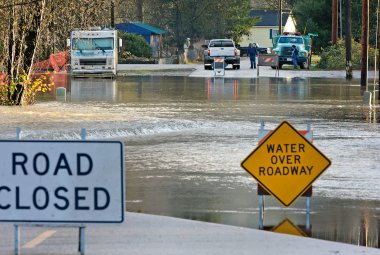
Washington State (Scott Terrell | Skagit Valley Herald via AP)
¶ Cobalt prices are soaring and ethical questions about artisanal mining continue. Panasonic announced it is developing cobalt-free EV batteries. Panasonic, the world’s largest lithium-ion battery manufacturer for cars and Tesla’s exclusive battery cell supplier for the Model 3 sedan, produces the cells at the joint Gigafactory 1 in Nevada. [CleanTechnica]
World:
¶ Pope Francis told senior oil company executives that the world must convert to renewable alternatives to prevent humanity being destroyed by climate change. Speaking to the high-profile group at the end of a two-day conference at the Vatican, the pontiff warned: “Civilisation requires energy but energy use must not destroy civilisation.” [The Independent]
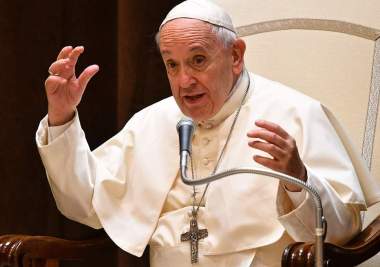
Pope Francis (AFP image)
¶ This week, dozens of activists descended on the capital of Kenya in what campaigners described as the “first anti-coal demonstration in Nairobi.” The coalition of advocacy groups is protesting the building of a coal-fired energy plant on the island of Lamu, a major tourist attraction, and a UNESCO heritage site, and coal mining in eastern Kenya. [Quartz]
¶ A $300 million project has been approved by the Zimbabwe Investment Authority for Victoria Falls to produce electricity. The power plant will be able to supply the country’s national grid and sell excess power to such other countries as Zambia, Malawi, and Mozambique. The plant is expected to produce 125 MW of electricity. [Devdiscourse]

Victoria Falls (Pixabay image)
¶ The growing adoption of EVs is expected to cost Germany’s key auto industry about 75,000 jobs by 2030, a study shows, with parts suppliers set to suffer the most. Germany’s car industry currently employs about 840,000 people, with 210,000 of them working on powertrain production, the sub-sector set to be the worst hit. [OilPrice.com]
US:
¶ The municipal electric utility for Garden City, Kansas, now has over 30% of its power from renewable energy resources. The city is getting power Buckeye Wind Energy Center in Ellis County. Garden City is a member of the Kansas Municipal Energy Agency, which has a contract with Invenergy, owner of the Buckeye Center. [The Topeka Capital-Journal]
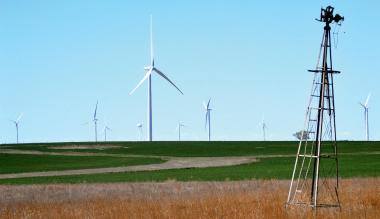
Buckeye Wind Farm (Hays Daily News photo)
¶ As West Virginians continue to see their utility bills rise, the regional electric grid serving the state is among those warning that attempts by the Trump administration to keep coal and nuclear power plants from closing will lead to higher electricity prices. Coal produced 94% of West Virginia’s net electricity generation in 2016. [Charleston Gazette-Mail]
¶ A Trump administration plan that would spend billions of dollars to subsidize aging coal-fired and nuclear power plants may not be much of a boon for Wyoming coal, according to one of the state’s leading economists. And the cost of the subsidy, which could be from $3 billion to $30 billion, would fall on the consumers. [Casper Star-Tribune Online]
geoharvey is free and without ads.
 geoharvey is not tax-deductible.
Posted in nuclear power, renewable power, solar, wind | 1 Comment »
Tags: nuclear, nuclear power, renewable power, solar power, wind power
June 9, 2018
Opinion:
¶ “Photos don’t lie. Plan needed for sea-level rise” • Florida Senator Bill Nelson addressed the US Senate: “During 2017, the average high-tide flooding was the highest ever recorded. And in 2018, NOAA predicts that high-tide flooding will be 60% more frequent across US coastlines than it was in 2000, primarily because of sea-level rise.” [Sun Sentinel]

Sunny day flooding in Miami
World:
¶ Vestas received a 306-MW wind turbine order in Mexico from EnerAB, a joint venture of The AES Corp and Grupo BAL. The order is for the Mesa la Paz wind park, located in the state of Tamaulipas. The order includes the supply and installation of 85 V136-3.45 MW turbines, delivered in 3.6 MW power-optimized mode. [North American Windpower]
¶ The government of Québec is blocking all new requests for hydroelectric power from cryptocurrency mining operations. They say they are doing it so Hydro-Québec can keep supplying power to everyone else in the province. The emergency move followed a warning from Hydro-Québec in January over the “unprecedented demand.” [Stockhouse]
¶ Energy2market GmbH, a leader in European aggregated energy trading, and Swytch, a blockchain-based clean energy incentive, announced a pilot program including roughly 3.5 GW of renewable energy capacity in Germany. Swytch is testing data flow, blockchain, dashboard, estimators, and other key parts of the platform. [Bankless Times]
¶ Solar developer Gigawatt Global Cooperatief UA, with financial backing from the US government, has signed a deal with the 15-nation Economic Community of West African States to build $1 billion of renewable energy projects in the region. The Agency for International Development may have retained its ability to act despite President Trump. [Bloomberg]

Solar array (Photo: Xaume Olleros | Bloomberg)
¶ European renewable energy targets for 2030 are facing a key decision. The EU energy ministers are meeting ahead of a final meeting between council and EU Parliament, and there may be movement toward a possible compromise in positions. The EU Council originally proposed “at least 27%,” but is now tabling two options: 30%-31% or 32%-33%. [Platts]
¶ A forest fire that had raged for three days in the restricted zone around Chernobyl, scene of the world’s worst nuclear accident in 1986, has been put out, and no increase in radiation in the air was detected, authorities said. The fire broke out in a dry grassy area of the exclusion zone, before moving to a forested area 10 km from the power plant. [Yahoo News UK]

Fire near the Chernobyl plant
¶ Bulgaria’s parliament revived plans to build a major nuclear power station on the Danube, fuelling concerns of environmental and corruption risks and Russian efforts to regain influence in the Balkan state. Deputies gave their overwhelming approval to a government request to seek investors to build a 2,000-MW atomic plant at Belene. [Irish Times]
US:
¶ Aspen Electric achieved 100% renewables in 2015, and now the residential rates for Aspen’s customers rank among the lowest in Colorado. This month, upgrades to a wind farm near Kimball, Nebraska, of which Aspen Electric is a major customer, will push the utility’s costs even lower, dropping about 15% annually, or $475,000. [Energy News Network]
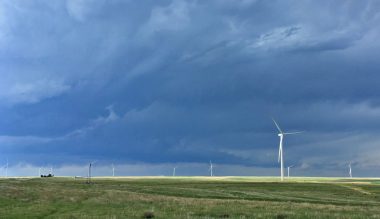
Wind farm near Kimball, Nebraska
¶ Massachusetts utilities would need to ramp up renewable energy purchases, the state could dramatically expand its support of offshore wind, and commercial solar endeavors would be freed from existing restrictions, under legislation the Senate plans to take up next week. But the end of formal sessions is coming up on July 31. [Sentinel & Enterprise]
¶ A renewable energy boom in Ohio is all but inevitable, a report that has support from a number of major companies said. The Powering Ohio report says the state can attract investment worth billions of dollars by embracing clean energy and by building on the state’s strengths such as industrial research and automotive manufacturing. [Energy Manager Today]

Ohio
¶ US power company NRG Energy Inc will install 25 MW of solar gardens in Texas to meet about 10% of the national electricity usage of food products distributor Sysco Corporation. The two companies have entered into a 10-year agreement on renewable energy that calls for construction of three solar gardens in the Houston and Dallas areas. [Renewables Now]
¶ The number of cities that pledged to go to 100% renewable energy has doubled since last year, bolstering hopes that similar state and national policies could soon gain traction. Seventy cities and nine counties across the US have adopted ordinances setting targets to overhaul their electricity use, up from 36 cities before June 2017. [HuffPost]

Tennessee Solar facility (Acker | Bloomberg via Getty Images)
¶ Central Arizona Project, which supplies water to a large part of Arizona and is the main buyer of electricity from an Arizona coal plant on the verge of closure, said on it will instead source its electricity largely from a solar power project, ignoring an appeal by the US Interior Department to buy more power from the plant to keep it open. [Reuters]
¶ After strong growth in 2017, wind power now supplies more than 30% of the electricity in four states: Iowa, Kansas, Oklahoma, and South Dakota. The industry’s latest trends and milestones from 2017 are detailed in the American Wind Energy Association US Wind Industry Annual Market Report 2017 released in May 2018. [Facility Executive Magazine]
geoharvey is free and without ads.
geoharvey is not tax-deductible.
Posted in nuclear power, renewable power, solar, wind | Leave a Comment »
Tags: nuclear, nuclear power, renewable power, solar power, wind power
June 8, 2018
Opinion:
¶ “Trump’s nuclear bailout could cost consumers up to $17 billion each year” • According to an updated report from the Nuclear Information and Resource Service, Trump’s subsidies for nuclear power plants could increase the overall cost of electricity by up to $17 billion each year. And that does not include subsidies for coal-burning plants. [Inhabitat]

Nuclear power plant’s cooling towers
Science and Technology:
¶ Tropical cyclones, are moving slower around the planet, a study from NOAA scientist James Kossin said. The study, released in the scientific journal Nature, showed a 10% decrease in forward speed globally between 1949 and 2016, though there is some variation among ocean basins. Slow-moving storms leave more rainfall in the areas they visit. [CNN]
World:
¶ Leaders of the G7 group are gathering in Canada for what could be one its most acrimonious summits in years. Some leaders clashed with US President Trump, who has imposed steel and aluminium tariffs that have sparked reprisals from trade partners. But the nations could also clash on the Iran nuclear deal and climate change. [BBC]

Protester with a flare (Reuters image)
¶ A new European renewable energy initiative has Microsoft, Google, and Amazon and other corporate giants in its steering group. RE-Source is an alliance of big brands that are buying and supplying clean power in the corporate market. The European network will help streamline and coordinate how green energy is sourced. [Innovators Magazine]
¶ China’s decision to curtail solar development this year in an effort to prevent oversupply has resulted in significantly revised forecasts for the Chinese and global solar markets. Forecasts on China’s solar installations for the year were revised downward by up to 40%. Expectations now are that solar module prices will fall by 35%. [CleanTechnica]
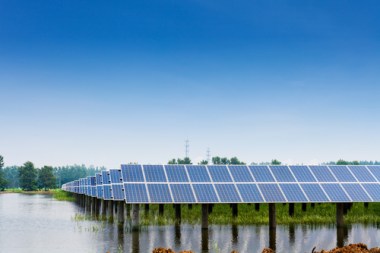
Chinese solar panels
¶ The Asian Development Bank will support over $1 billion in energy investments in the Pacific in 2018 through 2021. This includes 19 projects helping countries get access to sustainable energy sources, according to the Pacific Energy Update 2018. The report provides an overview of ADB’s energy-focused work in the Pacific. [Modern Diplomacy]
¶ European renewables asset manager WPO is to issue renewable energy production certificates that can be traced by blockchain to its projects. This will provide “secure and irrefutable traceability of the production of energy from renewable sources.” The aim is to make the certificates a standard reference to encourage clean power generation. [reNews]
Wind farm (Pixabay image)
¶ Brazilian utility Cia Energetica de Minas Gerais SA said it has contracted power generation from 1,240 MW of solar and wind capacity through an energy auction. The tender awarded 20-year power purchase agreements starting in January 2022. The power auction was to provide electricity to meet demands for several Brazilian regions. [Renewables Now]
¶ Enel Green Power has launched a series of initiatives in Italy aimed at improving the efficiency and maintenance processes at its wind farms. The Wind Big Data Boost project is collating information from over 4000 of the company’s operational wind turbines, including all of those in Italy and Spain, to help improve predictive maintenance. [reNews]
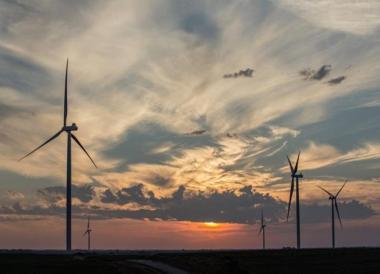
Wind turbines (Enel Green Power image)
US:
¶ EPA head Scott Pruitt said greenhouse gases such as CO2 are “good for us” and that CO2 does not cause global warming. After the EPA ignored a Freedom of Information Request for information supporting Pruitt’s claim, the agency was taken to court on the issue. Now a federal judge has ruled that Pruitt has to deliver the documents. [ZME Science]
¶ Freightliner Trucks, a division of Daimler Truckers North America, took to the stage recently to take the wraps off of two new fully-electric truck offerings. The Freightliner eCascadia is a heavy-duty truck, while the Freightliner eM2 106 is a medium-duty truck, and the company says they mark the beginning of a new era in trucking. [CleanTechnica]

Freightliner Trucks
¶ At the International Mayors Climate Summit in Boston, Boston mayor Marty Walsh urged other mayors to join in a renewable energy procurement initiative. He plans to issue a request for information aimed at compiling energy demand data from participating cities and asking energy developers for renewable energy prices. [The Salem News]
¶ JinkoSolar, the world’s leading solar PV supplier, announced that it signed a three-year, 1.43-GW solar supply agreement with sPower, the largest private owner and operator of solar assets in the country. sPower has 13 GW of wind and solar projects in its operating and construction pipeline, and has 1.3 GW already in operation. [CleanTechnica]
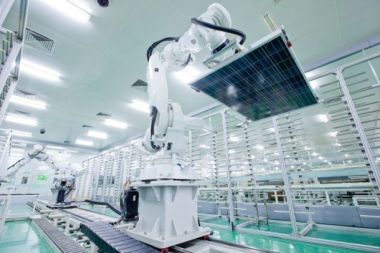
Robot with a solar panel
¶ The latest war of words over Arizona’s renewable energy ballot measure focuses on the Palo Verde nuclear station. The Arizona Public Service Co said it could be forced to close the 3,037-MW three-unit nuclear plant if voters approve the measure. But a study by energy firm ICF said Palo Verde would remain open regardless. [Power Engineering Magazine]
¶ Former Chattanooga developer Franklin L Haney signed an agreement to hire a Canadian engineering company to do engineering and construction work to finish one reactor at the unfinished Bellefonte Nuclear Power Plant in Alabama. He is buying the plant for $111 million, and he is asking for federal guarantees. [Chattanooga Times Free Press]
geoharvey is free and without ads.
geoharvey is not tax-deductible.
Posted in nuclear power, renewable power, solar, wind | Leave a Comment »
Tags: nuclear, nuclear power, renewable power, solar power, wind power
June 7, 2018
Science and Technology:
¶ Universities in the US, Germany and elsewhere are testing the concept of “dual use farming,” as some advocates call it, where crops grow below canopies of solar panels. They are finding they grow just fine, and in some cases, better than crops in full sun. In Minnesota, over half of solar farms built in 2016 and 2017 were dual use. [Scientific American]
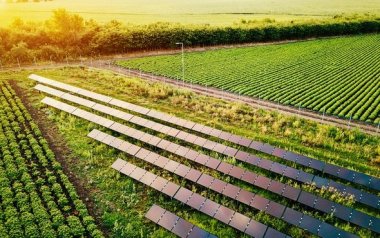
Dual use farming (Getty Images)
¶ Every area of the globe has warmed since instrument records began in 1880, NASA data shows. The planet isn’t warming equally, however. The fastest temperature increases are taking place at the poles. That Arctic, for example, is warming at more than twice the rate of the rest of the globe, melting glaciers, sea ice, and permafrost. [Axios]
World:
¶ Energy sector investments in big data technologies have exploded. In fact, according to a study by BDO, the industry’s expenditure on this technology in 2017 has increased by ten times compared to the previous year, with the firm attributing much of this growth to the need for improved management of renewables. [Technical Review Middle East]

Wind turbines (Image: Myriams-fotos | Pixabay)
¶ Russian wind power association RAWI is inviting wind turbine manufacturers to work with it to help set up production facilities in the local market. RAWI said prospective partners must have experience of producing turbines with capacities of at least 2.5 MW, provide evidence of successful projects, and be willing to open production facilities in Russia. [reNews]
¶ On World Environment Day, renewable energy companies are ecstatic that South Africa has signed a R58 billion ($4.5 billion) renewable energy deal to replace one for nuclear plants. The cancellation of the nuclear deal was largely due to the work of two activists who won the Goldman Environmental Prize for their efforts. [Independent Online]

Windpower (Ayanda Ndamane | African News Agency | ANA)
¶ Kenya leads Africa for potential geothermal power capacity, a report by Renewable Energy Policy Network for the 21st century has revealed. According to the report, Kenya has a potential geothermal capacity of about 700 MW, and it occupies the ninth position globally. The US has the most, with a potential capacity of 2,500 MW. [BusinessAMLive]
¶ After a first round of solar auctions, the government of Turkey is keen to know whether energy storage could help lower the cost of energy from the projects. With that in mind, DNV GL will assess the potential impact of storage on Levelized Cost of Energy figures and develop specification requirements for the auctions. [Energy Storage News]

Solar array (Image: DNV GL)
¶ The University of Queensland has taken its commitment to reducing carbon emissions to the next level, in what it claims will be a world first. The university will develop a 64-MW utility scale solar project in the state, which, added to the 50,000 modules it already in place at its campuses, will virtually provide all of its electricity needs. [pv magazine Australia]
¶ The World Bank will provide financing for the construction of a 3-MW solar power plant in the Republic of the Marshall Islands, the lender said. The funds will come from a $53.6 million (€24.5 million) funding package intended to support projects related to climate change and promote projects for renewable energy and energy efficiency. [Renewables Now]

In the Marshall Islands (Photo: amanderson2, CC-BY-SA 2.0)
¶ Consumer goods giant Unilever says it will run its Australian manufacturing plants entirely on clean energy within two years, as the country had passed a “tipping point” where going green is no longer a financial disadvantage. The Anglo-Dutch firm had earlier regarded the jump to renewables too risky due to policy uncertainty. [The Sydney Morning Herald]
US:
¶ Xcel Energy Colorado unveiled a power plan that it estimates could save customers $215 million, cut carbon emissions by half, and increase its renewable energy sources to 55% of its electricity portfolio by 2026, according to a filing the utility submitted to the Colorado PUC. The plan is to retire 660 MW of coal-burning power plants. [The Denver Post]

Solar array supplying Xcel (Denver Post file photo)
¶ The tariff on imported solar panels led US renewable energy companies to cancel or freeze investments of over $2.5 billion in large installation projects, along with thousands of jobs, the developers told Reuters. New spending plans for building or expanding US solar factories to take advantage of the tariffs came to 40% of that amount. [Reuters Africa]
¶ Research from the Natural Resources Defense Council, the Overseas Development Institute, Oil Change International, and the International Institute for Sustainable Development found that the US Government spent $26 billion in both 2015 and 2016 on support for fossil fuels. Of this, $15 billion was for production and $1 billion for exploration. [CleanTechnica]

Pollution from fossil fuels
¶ Black Hills Energy has moved to provide more renewable energy to its southern Colorado system over the past year. In 2017 the company got Colorado PUC approval to add up to 60 MW of wind power to serve its customers in the area. Now, it has a power purchase agreement with Colorado Electric, and the project is moving ahead. [La Voz Nueva]
¶ Minnesota cooperative utility Great River Energy aims for 50% of its power to come from renewable sources within the next 12 years. The GRE board approved the initiative and announced the new goal at its annual meeting. A proposed wind farm in south central North Dakota would be an important part of achieving that goal. [Bismarck Tribune]
geoharvey is free and without ads.
geoharvey is not tax-deductible.
Posted in nuclear power, renewable power, solar, wind | Leave a Comment »
Tags: nuclear, nuclear power, renewable power, solar power, wind power
June 6, 2018
Opinion:
¶ “Carbon Collapse: Fossil fuels to lose ALL their value costing global economy $4 Trillion” • The global economy is looking at a “time bomb” due to a “carbon bubble” from investment in fossil fuels which is likely to burst, wipe off trillions from the global economy and bring devastation to the planet, according to terrifying new research. [Express.co.uk]
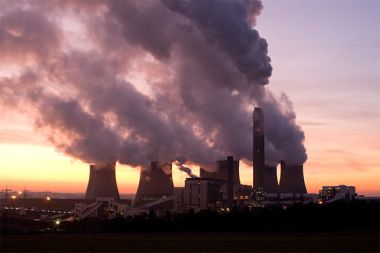
Use of fossil fuels (Getty Images)
World:
¶ The African Development Bank, the Green Climate Fund, and the Africa50 investment fund signed a letter of intent on the sidelines of annual meetings late May that will see the three international organizations collaborate on the Desert to Power Program, an initiative aimed at developing solar throughout the Sahel region of Africa. [CleanTechnica]
¶ A consortium led by Mainstream Renewable Power has reached financial close on two wind farms in South Africa totalling 250-MW. Construction of the 140-MW Kangnas project, near Springbok in the Northern Cape, and the 110-MW Perdekraal East facility, north-east of Ceres in the Western Cape, is expected to start this month. [reNews]

South African wind turbine (Mainstream Renewable Power)
¶ The Indian Ministry of New and Renewable Energy has now set its sights on “over achieving” the target of installing 175 GW of renewable energy by 2022. The ministry’s projections say that India will have 225 GW of installed renewable energy by 2022. In the past four years, solar power has grown by a factor of nine, and wind by 50%. [Business Line]
¶ The Green for Growth Fund said it would provide €32 million ($37.44 million) financing for Serbia’s first large-scale wind farms, to help the Balkan country diversify its energy mix and reduce carbon dioxide emissions. The fund said it would provide €18.35 million for the 158-MW Cibuk windfarm, Serbia’s biggest wind project to date. [Reuters]
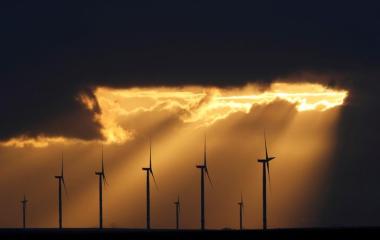
Wind farm (Christian Hartmann | Reuters File Photo)
¶ Engie Energia Chile SA signed an agreement to supply renewable power to a facility of local construction company Cementos BSA in Chile. EEC will deliver the equivalent to 35 GWh per year, enough to cover 100% of Cementos BSA’s needs at that plant. The electricity will come from local solar and hydropower plants. [Renewables Now]
¶ Australian electricity retailer Flow Power announced a deal to buy the output of a 50-MW portion of the Kiamal Solar Farm, which is expected to be the largest solar facility in Victoria. The power purchase agreement was signed with Total Eren SA, the French renewable energy company. Oil group Total SA owns a stake in Total Eren. [Renewables Now]

Solar farm (Photo: iamme ubeyou, CC0 1.0 Universal)
¶ Ukrainian authorities reported that a fire had broken out in the exclusion zone around the Chernobyl nuclear plant. According to the authorities, the fire covered 10 hectares of the so-called “red forest,” which the Chernobyl Disaster contaminated heavily. The fire was the result of prolonged drought and high temperatures in the region. [Sputnik International]
¶ EDF Renewables, together with two other owners and about 170 guests, celebrated the inauguration of the Nicolas-Riou Wind Project in Quebec. The project has a capacity of 224.25 MW. It illustrates the importance of collaboration and support of local communities in the development and implementation of renewable energy projects. [Financial Post]
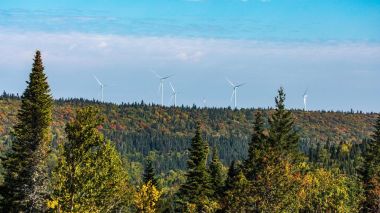
Nicolas-Riou Wind Project (Business Wire)
UK:
¶ The world’s first grid-scale liquid air energy storage plant has been officially launched near Manchester. The 5-MW/15-MWh plant is the first grid-scale demonstration of liquid air energy storage. LAES technology stores air as a liquid, and then converts it back to a gas by letting it boil, driving a turbine to generate electricity. [Power Engineering International]
¶ Microsoft has sunk a data centre in the sea off Orkney to see whether it can boost energy efficiency. The data centre, a white cylinder containing computers, could sit on the sea floor for up to five years. An undersea cable brings the data centre power and takes its data to the shore and the wider internet. But repairs are not possible. [BBC]
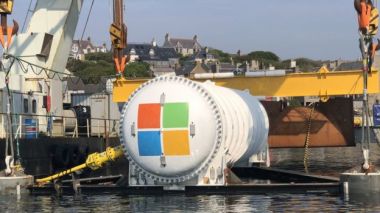
New Microsoft data center
¶ Welsh First Minister Carwyn Jones called for Tidal Lagoon Power’s proposed 320-MW Swansea Bay project to be offered price supports similar to those of the Hinkley Point C nuclear plant. In a letter to UK energy secretary Greg Clark, Jones said Swansea Bay should be given a 35 year Contract for Difference worth £92.50/MWh in 2012 prices. [reNews]
US:
¶ In Las Vegas, Wynn Resorts began drawing power from its new solar array outside Fallon, about 375 miles away. The 160-acre, 20-MW Wynn Solar Facility went online just in time for triple-digit temperatures, spiking energy prices, and an announcement of a new position in the resort company, a chief sustainability officer. [Las Vegas Review-Journal]

An earlier 1-MW Wynn Resorts solar array (Wynn Resorts)
¶ “Sea level rise” and “climate change” are not phrases Trump appointees typically use to describe anything but hoaxes. But on Monday, the acting head of NOAA, spoke to a crowd of more than 600 scientists, advocates, and policymakers about the agency’s commitment to studying climate change and its effect on the warming oceans. [Mother Jones]
¶ Hawaii has three new laws that seek to make the state carbon neutral by 2045. One of them establishes the carbon neutral goal. Another will make the funds that are derived from carbon offsets available to plant more trees in the islands. And the third requires new building projects to consider sea level rise in engineering decisions. [CleanTechnica]
geoharvey is free and without ads.
geoharvey is not tax-deductible.
Posted in nuclear power, renewable power, solar, wind | Leave a Comment »
Tags: nuclear, nuclear power, renewable power, solar power, wind power
June 5, 2018
Opinion:
¶ “Carbon ‘bubble’ could cost global economy trillions” • A rapid reduction in demand for fossil fuels could see global economic losses of $1 trillion to $4 trillion by 2035 according to a report. Energy efficiency and low carbon technology could cause the downturn, even if governments fail to take new steps to meet the Paris climate goals. [BBC]

Offshore oil rig (Photo: SPL)
¶ “Bailing Out the Coal Industry Will Hurt Consumers” • Donald Trump’s plan to subsidize money-losing coal and nuclear plants makes no economic sense and runs counter to the free market ideology of his party. It might make some plant operators very happy, but consumers will foot what could be an extraordinarily expensive bill. [New York Times]
World:
¶ Ireland saw a fall in carbon emissions last year “despite strong economic growth.” Analysis from the Sustainable Energy Authority of Ireland reveals carbon dioxide emissions from power production fell by nearly 10%. The power generation fuel mix had seen a 21% reduction in coal and an 18% increase in renewable energy. [Energy Live News]
¶ The Royal Bank of Scotland announced a new suite of energy financing policies at the end of last month. They are designed to reduce the bank’s exposure to investments in fossil fuels substantially. That includes halting project-specific financing for new coal-fired power stations, coal mines, and oil sands, and Arctic oil projects. [CleanTechnica]
¶ The 396-MW Merkur offshore wind farm in the German North Sea has produced its first power. The first test on the MO40 turbine generated power to the mini-grid, project company Merkur Offshore said. The project will feature 66 GE Haliade 6-MW turbines. Jack-up vessel Seafox 5 has installed more than one-third of the machines. [reNews]

GE wind turbine (SPS image)
¶ In a coordinated move, three administrative agencies of the Chinese government issued a notice imposing caps and reducing feed-in tariffs, while setting rules at the central government level for utility-scale projects. The aim of the “2018 Solar PV Power Generation Notice” is to prevent excessive solar PV generation capacity from being installed. [PV-Tech]
¶ Finance deals were signed for a 51-MW solar farm in Jamaica. The Paradise Park project is majority owned by the French renewable power producer Neoen. France’s development bank Proparco and Dutch development bank FMO will provide the senior debt for the project. The total investment amounts to $64 million. [Power Engineering International]

Neoen solar farm
¶ One result of the Indian government’s focus on growing the country’s renewable energy sector has been a 76% growth in job searches in the solar energy sector since 2014, according to a report. The government has set a target to produce 175 GW of renewable energy by 2022, out of which 100 GW has to come from solar power. [BW Businessworld]
¶ The UK government confirmed it is considering using taxpayer money for building a nuclear power station at Wylfa in North Wales. That decision would mark a significant U-turn in the government’s approach to new nuclear power. In 2010, it was adamant that its taxpayers should never be exposed to nuclear power’s typical costly overruns. [BBC]
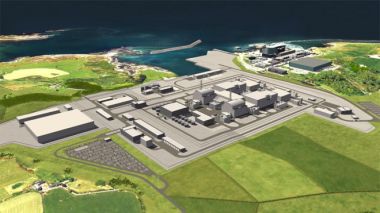
Rendering of the Wylfa nuclear plant (Horizon)
Australia:
¶ The latest national emissions audit from The Australia Institute includes an update on key electricity trends in Australia’s electric power market. It notes some interesting developments over the last three months. One of these is that renewables-rich South Australia, which had imported 30% of its electricity in 2000, is now a net exporter. [The Guardian]
¶ The Pilbara region of Western Australia is set to be the home of the country’s largest microgrid, with awards of major contracts focused on renewables. Horizon Power has State Government approval for the next phase of a distributed energy project, which will provide the town of Onslow with renewable energy to meet its electricity needs. [PACE Today]
¶ The Queensland government approved the country’s largest windfarm, a $1 billion project with almost 200 turbines. The 800-MW Clarke Creek project has received planning approval. Developer Lacour Energy says it will create about 350 jobs for three years of construction and has the capacity to provide 3% of the state’s electricity. [The Guardian]
US:
¶ Data from California’s grid operator shows that in May solar generation in the area managed by the California ISO rose to a new record, providing nearly 17% of in-state generation. With gas falling to only around 15%, this means that solar provided more electricity for Californians than gas, for the first time ever, on a monthly basis. [pv magazine Australia]

California solar array (NRG image)
¶ San Diego Gas & Electric announced it will double its backup battery capacity to support the growth of renewable energy in its service area. The utility plans to build five more lithium-ion battery backup facilities, including one of the biggest in the US, over the next three years. The new plants will add nearly 100 MW of capacity. [Times of San Diego]
¶ Duke Energy Carolinas has reached an agreement that would reduce its 10-year grid modernization plan from $7.8 billion to $2.5 billion. The agreement would also increase renewable and energy storage development. Energy storage initiatives have grown to 300-MW by 2026, according to a Greentech Media report. [Power Engineering Magazine]
geoharvey is free and without ads.
geoharvey is not tax-deductible.
Posted in nuclear power, renewable power, solar, wind | 1 Comment »
Tags: nuclear, nuclear power, renewable power, solar power, wind power
June 4, 2018
World:
¶ Renewable power accounted for 70% of net additions to global power generating capacity in 2017, the largest such increase in modern history, a report from REN21 said. But the heating, cooling and transport sectors, which together account for about four-fifths of global final energy demand, continue to lag far behind the power sector. [EnergyInfraPost]
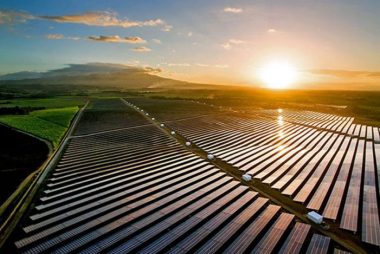
Dusk at a solar system
¶ In 2017, the world set a new record for renewable-power capacity added to the grid. In fact, the money spent on renewable installations was more than twice the sum spent on nuclear and fossil-fuel power, according to the annual Global Status Report published by renewables policy group REN21. But it was not enough to reduce emissions. [Quartz]
¶ Wind farms produced 24.1% of Spain’s power in the first five months of 2018, more than any other energy source, while nuclear power plants came second with a share of 20.8%. Total of 46.4% of the country’s electricity in the period came from renewable energy sources, according to provisional statistics from the grid operator. [Renewables Now]
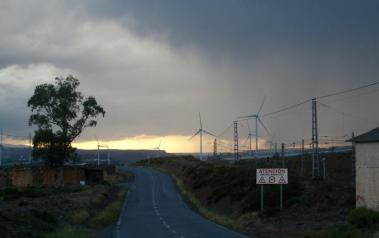
Wind park in Abla, Spain (Photo: JJ Merelo, CC-BY-SA 2.0)
¶ Institutional investors managing $26 trillion in assets called on Group of Seven leaders to phase out the use of coal in power generation to help limit climate change. Their call came despite strong opposition from Washington. They wrote that the Paris Agreement plans to cut greenhouse gas emissions were too weak to limit warming. [GMA News]
¶ Dutch contractor Van Oord made its first step into the Asian offshore wind market. It was designated a preferred contractor for a 640-MW offshore wind project in Taiwan. A German company, wpd, will develop the Yunlin offshore wind project. Taiwan’s offshore wind strategy is driven by a desire to phase out nuclear power. [Renewable Energy Magazine]
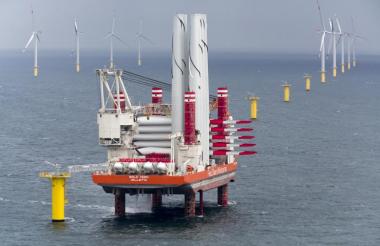
Installing offshore wind turbines
¶ Switzerland launched a strategic plan this week to boost renewable energy sources and gradually replace nuclear energy, which currently accounts for 33% of state energy production. The Swiss Confederation will initiate measures needed to switch to renewables at the ends of the “safe” lives of the nuclear plants it owns. [Canadian Homesteading]
¶ Macquarie Group is teaming up with South Korean company Gyeongbuk Floating Offshore Wind Power to jointly develop a 1-GW floating wind project off the coast of the Asian country. The partners signed a memorandum of understanding to work on a project 50-km off the coast of Pohang and Ulsan in South Korea. No development timeline was given. [reNews]
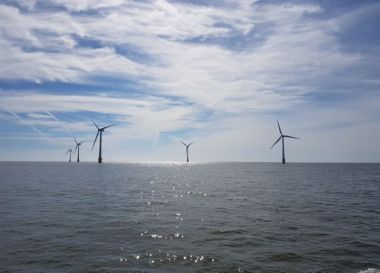
Offshore wind farm (reNews image)
Australia:
¶ The Labor Party proposes to establish the Australia’s first official renewable energy zone in Tasmania, where more than $2 billion of investment are planned. Federal Labor’s climate change spokesman, and party president, Mark Butler, announced the proposal while campaigning in the seat of Braddon, which will go to the polls in August. [RenewEconomy]
¶ Remote Northern Territory communities from the Tiwi Islands to the South Australian border are set to be connected to solar power as construction begins on the next phase of the $59 million Solar Energy Transformation Program project, the Australian Renewable Energy Agency said. The phase will bring solar power to 17 communities. [EcoGeneration]
¶ A Newcastle company’s massive plan for large-scale renewable energy projects in New South Wales reflects the “huge global investor appetite” in the sector, an analyst says. The Newcastle Herald reported that CWP Renewables had secured a $700 million investment from a Swiss equity firm to build wind, solar and battery projects. [Newcastle Herald]
US:
¶ Multiple scientific studies indicate that concern about climate change is having impacts on values of real estate that may be exposed to flooding. This is especially evidenced by beachfront real estate markets. Not surprisingly, property owners who see increased coastal flooding due to slowly rising sea levels are moving to higher ground. [CNN]

Flash flood (Kenneth K Lam | The Baltimore Sun via AP)
¶ California is at the forefront of US states when it comes to reducing carbon emissions. Nearly 40% of the state’s emissions come from its transportation sector. California’s utilities are directly involved in the efforts to cut those emissions. They proposed an initiative on vehicle electrification, and the state’s PUC approved it. [CleanTechnica]
¶ San Diego Mayor Kevin Faulconer pledged to have the city adopt either community choice or San Diego Gas & Electric’s blueprint to help fulfill the city’s goal of using all green power by 2035. SDG&E’s bid to provide the city of San Diego with 100% renewable energy may be in trouble, as community choice attracts voters. [The San Diego Union-Tribune]

Transmission towers (Photo: staff | San Diego Union-Tribune)
¶ Solar energy is gaining traction in Nebraska as a growing number of cities adopt it and officials look for ways to help the trend. PVs have become so popular that some cities have had to expand their recently built solar farms or build new ones to keep pace with customer demand. A new program is helping cities and villages adopt solar power. [NTV]
¶ The White House’s press service gave a statement in response to media reports about the plan to support uncompetitive coal and nuclear plants. It said, “Impending retirements of fuel-secure power facilities are leading to a rapid depletion of a critical part of our nation’s energy mix, and impacting the resilience of our power grid.” [Renewables Now]
geoharvey is free and without ads.
geoharvey is not tax-deductible.
Posted in nuclear power, renewable power, solar, wind | Leave a Comment »
Tags: nuclear, nuclear power, renewable power, solar power, wind power
June 3, 2018
Opinion:
¶ “Trump’s Coal Rescue Plan Will Force Taxpayers To Bail Out A Dying Industry” • The Trump administration is considering a plan to order utilities to buy power from coal-burning plants. It is a plant that would force you to buy more expensive, dirtier electricity that is more likely to cause you health problems and perhaps even premature death. [CleanTechnica]
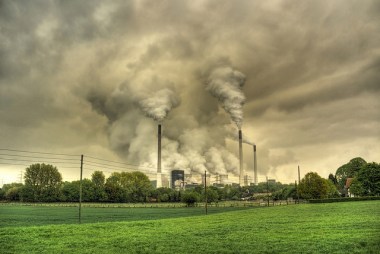
Trump’s vision of a great America
¶ “The Californization of America” • Democrats across the country are winning primaries by promoting policies like universal health insurance and guaranteed income, ideas once laughed off as things that work only on the “Left Coast.” At the same time, national politicians from both sides are finally putting front and center such issues as immigration, clean energy, and suburban sprawl. [New York Times]
¶ “Is Trans Mountain worth the risk?” • Environmental impact concerns lie at the heart of opposition to the Trans Mountain pipeline expansion project, which is aims to take tar sand oil to the sea. It has driven a political divide between British Columbia and Alberta, and Ottawa. Now two civil court actions are aimed at halting it. [Yukon News]
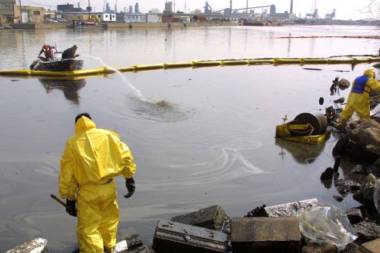
Oil spill cleanup (Huffington Post image)
¶ “What happens to our trash and recycling in Winona? We followed a cereal box through the process” • I followed a cereal box and its liner through the trash and recycling processes. They went through a journey involving companies in three states, loud machinery, and in the case of the box, a potential trade war with China. [Winona Daily News]
Science and Technology:
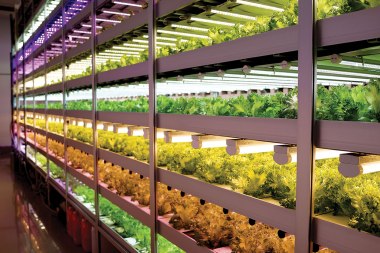
¶ Vertical farms avoid much of the emissions of agriculture, despite their reliance on artificial light and climate-controlled. Indeed, vertical farms evangelist Dickson Despommier says these kinds of farms could significantly reduce the amount of land devoted to farming and thereby make a serious dent in our climate change problem. [IEEE Spectrum]
Vertical farm (Photo: Harry Goldstein)
¶ Separately from any energy source needed, carbon dioxide is a product of a chemical reaction in the production of aluminum. It amounts to 20% of the emissions. Alcoa created a new process that produces oxygen, rather than carbon dioxide, in the final reaction step, enabling the world’s first process for truly carbon-free aluminum production. [Motley Fool]
World:
¶ The Vodafone Group has become the 135th global brand to make the 100% renewable energy pledge. The company set the date of its goal at 2025. The International Renewable Energy Agency (IRENA) reported last month that the amount of green power sourced by big business last year was enough to meet the energy needs of France. [Innovators Magazine]

Wind turbine (Photo: Casey Horner, Unsplash)
¶ IRENA’s new report, Renewable Energy Auctions: Cases from Sub-Saharan Africa, analyses the design details and prices from three renewable energy auctions in Sub-Saharan Africa. It shows that South African auctions have driven the cost of solar PV and wind power down to less than the average cost of power supply from the national utilities. [Utilities-ME.com]
¶ As renewables projects are increasingly built Queensland, they use large parcels of agricultural land. Clean energy may offer billions in investment and thousands of jobs for Queensland. But it also faces on-the-ground challenges, including turf wars with intensive farming that threaten to hamper the energy sector’s transition. [The Guardian]
¶ In January, China donated over 32,000 solar power generating systems to Nepal to build domestic capacity and to provide electricity to communities that had been without power since the 2015 earthquake. Now, making further inroads, China has set up a generating system for the government itself, including the office of the prime minister. [Derby Journal]
¶ Guatemala has an irrigation system, unique in Central America, that works with solar panels, an official source reported. The Ministry of Agriculture, Livestock, and Food announced the installation of the 1,000 panels in the municipality of Cabañas. It was financed by the International Development Fund at cost of $534,759. [Devdiscourse]

Irrigation (Pixabay image)
US:
¶ NOAA issues a hurricane season forecast each spring, and its forecast for the 2018 season specifies a 75% chance that this year’s storm activity will be at normal or above-normal levels. There’s a 70% likelihood of 10 to 16 named storms . Of these, five to nine could become hurricanes, with one to four turning into major hurricanes. [NBCNews.com]
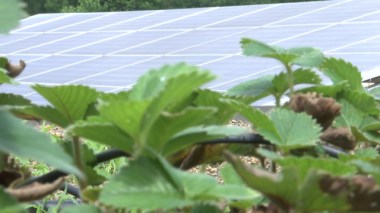
¶ Alabama’s farmers are learning how to go green and save their green. Officials say using solar power on farms is catching on and a new program could make it easier for farmers to do that. They are helping farmers who want to qualify for a USDA program that would pay for a quarter of the cost to set up a renewable energy system. [rocketcitynow.com]
Solar power on the farm
¶ In Massachusetts, eight Democrats are running for the 1st Franklin District post being vacated by 25-year incumbent Rep Stephen Kulik. They agreed virtually all of the time on a range of environmental and energy questions in a two-hour session that was sponsored by the League of Women Voters of Franklin County and Climate Action Now. [Amherst Bulletin]
¶ After Florida Power & Light asked nuclear regulators to keep its aging reactors on the shore of Biscayne Bay running another 20 years, environmentalists and residents jumped on a new issue. An underground saltwater plume from the plant’s cooling water canals already has threaten wells, and with rising seas, the threats will get worse. [Miami Herald]
geoharvey is free and without ads.
geoharvey is not tax-deductible.
Posted in nuclear power, renewable power, solar, wind | 1 Comment »
Tags: nuclear, nuclear power, renewable power, solar power, wind power
June 2, 2018
Opinion:
¶ “Breaking Down the Opposition to DOE’s Emergency Coal and Nuclear Bailout Plan” • It is hard to overstate how negative the reactions have been to news that the Trump Administration is directing the US DOE to find ways to force Americans to buy power from uncompetitive coal and nuclear plants in the name of national security. [Greentech Media]

Closed coal power plant
¶ “The US EPA’s science advisers push back against Scott Pruitt’s attempts to dilute environmental regulation” • In the larger interest of the nation, the EPA’s Science Advisory Board has decided to fight back against Pruitt’s vision of a reduced agency. The board voted to review some of the controversial rules his EPA proposed. [Financial Express]
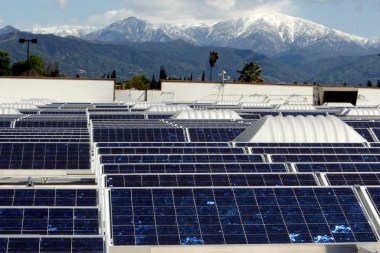
¶ “A Year After Trump’s Paris Pullout, US Companies Are Driving a Renewables Boom” • When President Trump announced on June 1 last year that the US would exit the Paris climate deal, many of America’s largest corporations said they would honor the agreement anyway, vowing to pursue clean energy and cut emissions on their own. [New York Times]
California Walmart roof (Reed Saxon | Associated Press)
Science and Technology:
¶ A team in the department of chemistry and biochemistry at the University of Delaware have discovered a previously unknown property in bismuth that they say could be a tool in the fight against global warming. Through a catalytic process, bismuth can be used to convert atmospheric CO2 directly into liquid fuels and industrial chemicals. [Seeker]
World:
¶ CleanTechnica’s Kyle Field caught up with BYD’s Jack Symington to talk about what the current deployment of BYD trucks looks like around the world. BYD is moving into new facilities across the globe as it builds out use cases and platforms for company fleets. BYD is developing a wide-ranging set of offerings. [CleanTechnica]

BYD Electric waste collection truck
¶ The French Environment & Energy Management Agency will allocate €100 million next year to support the nation’s hydrogen industry. The French government believes hydrogen can become a pillar of its energy transition because it can be used to store renewable energy, according to the Minister of Ecological and Solidary Transition. [pv magazine International]
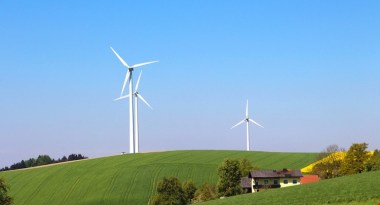
¶ South Africa’s Department of Energy will launch a new bid window of its Renewable Energy Independent Power Producers Procurement Programme later this year, said Minister Jeff Radebe. He told a stakeholder engagement session in Midrand that bid window 5 could bring up to R50 billion ($3.94 billion) of investment to the country. [Devdiscourse]
Wind turbines (Credit: Twitter)
¶ The Vatican will host executives of the top oil companies for a conference next week on climate change and the transition away from fossil fuels, a Vatican source said. Pope Francis, who wrote a major document on protection of the environment from global warming in 2015, is expected to address the group on the last day of the conference. [Reuters Africa]
US:
¶ The Washington Utilities and Transportation Commission directed three utility companies in the state to include the social cost of coal in their future planning. These include the costs of effects on human health and environmental damage. The social cost of coal will be $42 per metric ton by 2020 and will rise to $60 per metric ton by 2040. [CleanTechnica]
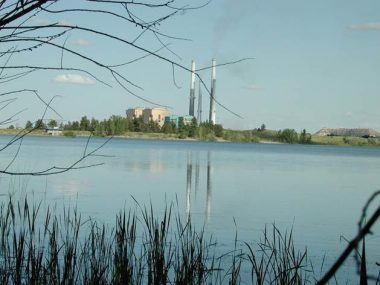
Coal-burning power plant
¶ Only a day after MidAmerican Energy announced it would become the first investor-owned utility to be 100% renewable energy by 2020 with a 591-MW wind farm, it had more news. MidAmerican subsidiary NV Energy will procure power from 1001 MW of new solar projects and 100 MW/400 MWh of battery storage. [pv magazine USA]
¶ Rocky Mountain Power is seeking cost-competitive bids for solar, wind and geothermal energy projects in Utah to connect to the PacifiCorp system. The company is seeking proposals for 308,000 MWh of power generation, which implies about 40 MW of geothermal capacity or about 100 to 126 MW of wind or solar capacity. [ThinkGeoEnergy]
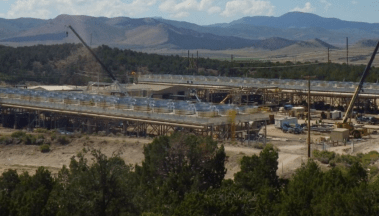
Cove Fort geothermal plant (Ariel Sacerdoti, Ormat)
¶ Florida’s NextEra plans to build 300 MW of solar power in Wisconsin. The first project, the 150-MW Badger Hollow Solar Farm, would be located in southwestern Wisconsin, about 12 miles west of Dodgeville. Wisconsin Public Service will own 100 MW of this plant and Madison Gas and Electric will own the remaining 50 MW. [pv magazine USA]
¶ NV Energy plans to build more than 1 GW of solar and 100 MW of battery storage in Nevada. Three of the solar projects will be located in northern Nevada, and three will be located in the southern areas. The company will file a plan with the state’s Public Utilities Commission, requesting approval for six 25-year power purchase agreements. [Solar Industry]
¶ US online retailer Amazon.com, Inc, switched on a 1.1-MW rooftop solar system on its fulfillment centre in North Las Vegas, Nevada. Including this one, Amazon has deployed 17 rooftop solar arrays in the US over the past 14 months. It aims to install at least 50 rooftop solar systems worldwide by 2020, in a move to 100% renewable energy. [Renewables Now]
¶ After NRG abandoned a two-reactor expansion of its South Texas Project nuclear plant, Toshiba sought investors to continue the project. Now Toshiba has officially withdrawn its plans for the two reactors, Reuters reported. Toshiba said it had failed to find investors due to sharply lower electric rates and increased global regulation. [Power Engineering Magazine]
geoharvey is free and without ads.
geoharvey is not tax-deductible.
Posted in nuclear power, renewable power, solar, wind | Leave a Comment »
Tags: nuclear, nuclear power, renewable power, solar power, wind power
June 1, 2018
Opinion:
¶ “How Trump has weakened America diplomatically and economically” • On June 1, 2017, President Donald Trump staged a Rose Garden event to announce his intent to withdraw the US from the Paris climate agreement. Looking back, it is clear that this heedless act was just one of a set of actions that have broadly undermined US diplomacy. [CNN]
World:
¶ Austrian Federal Railways opened what may be the world’s first solar power plant designed specifically to power an electric railway system. A solar PV farm puts its electric output directly to the rail system, powering the trains on the Ostbahn. The pilot project is to test the feasibility of larger use of solar power in rail transportation. [CleanTechnica]
¶ The third longest railway system in the world could be on the verge of an energy storage makeover. Russian Railways sprawls over 85,500 km. A little over half that length is electrified, but with a new R&D project, the little could turn into a lot. The rail system is partnering with Enel Group in a new energy storage project. [CleanTechnica]
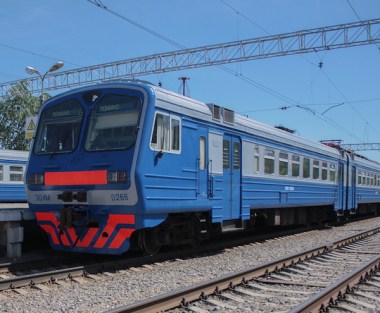
Railway system
¶ Two new wind energy projects are set to power South Africa’s Western Cape province following the recent signing of multi-billion-rand renewable energy deals. The 110-MW Perdekraal East Wind Farm, with 48 turbines, has completed all of its needed permits. The 32.5-MW Excelsior Wind Energy Facility will have 13 turbines. [ITWeb]
¶ Australia’s Clean Energy Council launched the Clean Energy Australia Report to provide a comprehensive overview of the country’s clean energy sector and the latest key energy market data. The first report says the Australian clean energy industry is finally “on the verge of a major breakthrough” after setting records in 2017. [CleanTechnica]

Tesla storage in South Australia
¶ Canada is set to become a member of IRENA, the International Renewable Energy Agency. Kim Rudd, Parliamentary Secretary to the Minister of Natural Resources, made the announcement during last week’s Clean Energy Ministerial in Copenhagen. Canada is the second largest producer of hydropower in the world. [Windpower Engineering]
¶ In the Netherlands, the onshore wind farm Windpark Spui has achieved financial close. Its output, enough to power over 24,000 households, will be sold to Eneco Group, a Dutch sustainable energy company, under a 16-year power purchase agreement. The wind park will have five Enercon wind turbines, each of 4.2 MW capacity. [Renewable Energy Magazine]
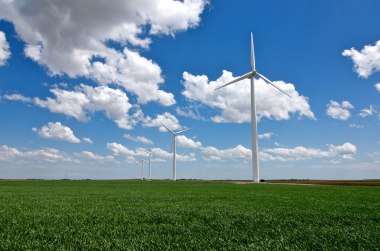
Wind farm at Greensburg, Kansas (NREL photo)
¶ Victoria could be still burning brown coal to produce electricity in 30 years, after the state government extended the licences of two key power stations in the Latrobe Valley. Green groups are furious at the deal to keep what they call Australia’s dirtiest power stations at Yallourn and Loy Yang open until 2032 and 2048 respectively. [The Age]
¶ The UK is ready to provide support to Hitachi Ltd’s £20 billion ($27 billion) nuclear project in exchange for a lower guaranteed power price once the two reactors are up and running. The UK decided that amount must be less than the £92.50/MWh it had agreed to pay for power from Hinkley, the undersecretary of state for business and industry said. [Bloomberg]
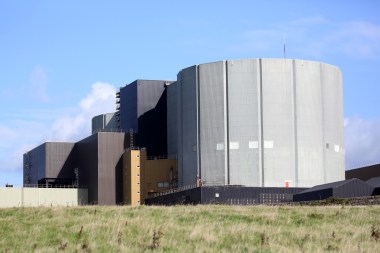
Wylfa nuclear station (Christopher Furlong | Getty Images)
US:
¶ American telecom giant AT&T has announced this week a new goal to achieve “zero waste” at 100 of its facilities by the end of 2020, as part of its larger environmental commitments and policies. AT&T’s other environmental and energy achievements of this year have included a power purchase agreement for 520 MW of wind power. [CleanTechnica]
¶ Trump administration officials are making plans to order grid operators to buy electricity from struggling coal and nuclear plants in an effort to extend their life. The DOE would exercise federal emergency authority for the unprecedented intervention into US energy markets, according to a memo obtained by Bloomberg News. [Bloomberg]
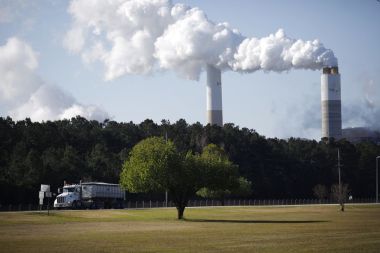
Polluting power plant (Photo: Luke Sharrett | Bloomberg)
¶ Alliant Energy subsidiary Wisconsin Power and Light Company filed plans with the state’s Public Service Commission to supply its customers with electricity from a 150-MW wind farm in Iowa. The 60-turbine wind farm would be built by Invenergy, with ownership switching to Alliant on completion. The PSC’s decision is expected in early 2019. [reNews]
¶ The New York state electricity Independent System Operator released a report, 2018 Power Trends, that projected the state’s electricity demand to fall by 0.14% a year for the next decade. The ISO predicts most of this decrease will be due to behind-the-meter distributed solar power and continued energy efficiency gains. [pv magazine USA]

Statue of Liberty (National Park Service photo)
¶ The race to lead America’s self-driving car market moved up a gear. Japan’s SoftBank is putting $2.25 billion (€1.92 billion, £1.7 billion) into GM’s autonomous unit Cruise, one of the biggest single investments in self-driving technology. And Waymo, which is owned by Google, is buying up to 62,000 Fiat Chrysler minivans for its autonomous fleet. [BBC]
¶ Nevada’s NV Energy has selected 8minuteenergy, based in California, to develop the 300-MW Eagle Shadow Mountain Solar Farm in Clark County, Nevada. The project will be built on the Moapa River Indian Reservation about 30 miles north of Las Vegas, and will be the largest solar installation to date built on tribal land. [Renewable Energy Magazine]
geoharvey is free and without ads.
geoharvey is not tax-deductible.
Posted in nuclear power, renewable power, solar, wind | 1 Comment »
Tags: nuclear, nuclear power, renewable power, solar power, wind power
May 31, 2018
Opinion:
¶ “Home Battery Storage In Australia: Are We There Yet?” • There is a perfect storm of factors that make home battery storage look attractive in Australia, at least on paper. So, why aren’t Australians rushing to install battery storage? There’s no question that it is still mainly a matter of capital outlays and financial viability. [CleanTechnica]

Are we there yet?
Science and Technology:
¶ The Potsdam Institute For Climate Impact Research, which is commonly known as PIK, has published new research in the journal Nature Climate Change suggesting that the impact of local climate change related weather events, such as flooding along China’s rivers, could create ripple effects that disrupt economies around the world. [CleanTechnica]
¶ The energy efficiency of vertical farms could soon be boosted by as much as 20%. A new system developed by a student from Brunel University London. vFarm, by design student Jonny Reader, uses OLEDs (organic light-emitting diodes) and smart automation to reduce the amount of power used in vertical farming. [Renewable Energy Magazine]

Vertical farm (Image ©Brunel University London)
¶ Researchers from Stanford University have determined that failure to meet climate mitigation goals of the Paris Climate Agreement could cost the planet trillions over the next century. This highlights less the climate and environmental benefits of achieving these targets but more the economic risks attendant with ignoring these targets. [CleanTechnica]
¶ Converting biomass to biocoal creates a product with similar characteristics to traditional fossil-based coal, making it a viable option for coal consumers looking to reduce their emissions. Clean Energy Generation claims that using biocoal makes it possible for existing coal-fired power plants to be sustainable without major adjustments. [CleanTechnica]
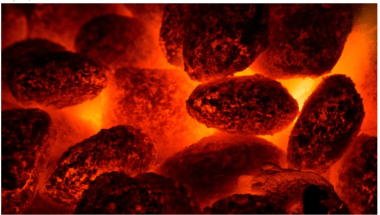
Biocoal (Image courtesy of Proud Green Building)
World:
¶ German developer Ib Vogt reached financial close on the 54.5-MW Scaldia solar farm in the Netherlands. The solar farm is already under construction on land owned by North Sea Port. HSH Nordbank is providing a €41 million debt facility for the project. Scaldia will supply electricity to Engie under a 17-year power purchase agreement (PPA). [reNews]
¶ Lithuanian state-owned electricity and gas provider Lietuvos Energija has unveiled a plan to increase renewable energy power production and pursue development in neighbouring countries. It will invest in on-shore wind, large-scale solar and biofuels. Its renewable energy assets are expected to reach 1,000 MW by 2025. [pv magazine International]

Vilnius, Lithuania’s capital (David Kosmos Smith | Flickr)
Australia:
¶ Mars Australia is going 100% renewables, and will source all the power for its six Australian factories and two offices from a 200-MW solar farm in Victoria. Mars announced that it signed a 20-year PPA with Total Eren to produce the equivalent of all its power needs from the new Kiamal solar farm when it is complete in mid-2019. [One Step Off The Grid]
¶ The Australian renewable energy sector had a record year on many fronts in 2017, the Clean Energy Council said. Sixteen large-scale renewable energy projects totalling about 700 MW were brought online during the year. Of that, 547 MW was wind capacity. But there was also 1.1 GW of rooftop solar, surpassing its record high, set in 2012. [Renewables Now]
Wind turbines (Photo: City of Melbourne)
¶ The Victoria government has announced planning approval for a new 40-MW wind farm, continuing the boom in renewable energy projects. Approval was given for the Wonwondah wind farm, also known as the Rifle Butts wind farm, to be developed by NewEn. The wind farm will feature 13 turbines on land south-west of Horsham. [RenewEconomy]
¶ Victorian dairy producer Burra Foods signed a 10-year PPA with energy retailer Flow Power for renewably generated electricity. Flow Power had earlier signed its own deal with the 240-MW Ararat wind farm, so it could provide its business customers renewable electricity that was “significantly cheaper” than power from the grid. [RenewEconomy]
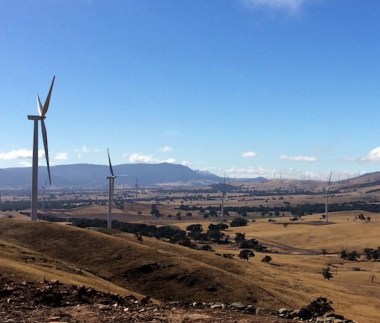
Ararat Wind Farm (Photo: Ararat Wind Farm)
US:
¶ MidAmerican Energy proposed building a 591-MW wind farm and formally filed with the Iowa Utilities Board. The company said that it will be the first investor-owned electric utility in the country to generate renewable energy equal to 100% of its customers’ usage on an annual basis, when the Wind XII project is finished. [North American Windpower]
¶ Deepwater Wind’s 400-MW Revolution Wind offshore wind farm is expected to create over 800 jobs during construction and 50 permanent positions in the state of Rhode island. The developer is also planning to invest $250 million in the state, including $40 million in port investment. Work on the project could start as early as 2020. [reNews]

Block Island wind farm (Deepwater Wind)
¶ Facebook is set to build a new data center in Eagle Mountain, Utah. It will span nearly one million square feet and represent a $750 million investment in the city. The data center will be powered by 100% net-new renewable energy through Rocky Mountain power renewable energy tariffs. Facebook will develop its own water system. [KSL.com]
¶ The first large group of employees at the Oyster Creek nuclear power plant in New Jersey’s Ocean County are set to leave as the nuclear plant prepares to shut down after nearly a half century of producing electricity. Exelon Corp filed notice that 84 of its workers would be ending their employment with the company, starting in June. [NJ.com]
geoharvey is free and without ads.
geoharvey is not tax-deductible.
Posted in nuclear power, renewable power, solar, wind | 1 Comment »
Tags: nuclear, nuclear power, renewable power, solar power, wind power
May 30, 2018
Opinion:
¶ “Suddenly, Solar Energy Plus Storage is Giving Conventional Fuels a Run For Their Money” • The renewables energy dynamic is changing so fast in Colorado that one Sierra Club senior campaign representative can hardly keep up with it. “I feel like we’re having to rewrite the talking points on the drawing board every month in Colorado,” he says. [Ensia]

Solar power (Photo: Douglas Murray | courtesy of FPL)
Science and Technology:
¶ The cost of building new nuclear power plants is nearly 20% higher than expected due to delays, analysis found. The study, published in the journal Energy Policy, was by researchers from Imperial College London, the Universidade Federal do Rio de Janeiro, and the University of Minho. It examined nuclear plants built from 1955 to 2016. [Tech Xplore]
World:
¶ The wind farm Donald Trump tried to block is now complete. Trump fought construction of the 11-turbine offshore wind farm at Aberdeen, but his legal challenges were overthrown in 2015. Now, the last of the turbines has been installed, completing the offshore project. The wind farm will provide approximately 70% of Aberdeen’s electricity. [Quartz]

Aberdeen wind farm (Vattenfall image)
¶ Canada will purchase Kinder Morgan’s Trans Mountain pipeline and related infrastructure for C$4.5 billion ($3.4 billion, £2.6 billion). The Trans Mountain extension would connect Alberta to British Columbia and triple Kinder Morgan’s capacity. The project faces fierce opposition from the government of British Columbia and environmentalists. [BBC]
¶ Tackling pollution in Paris is a centerpiece of Mayor Anne Hidalgo’s administration. She would phase out older vehicles and get rid of diesels, while offering generous subsidies for other forms of transport. A study carried out in 2016 by the French national health agency said air pollution is responsible for 48,000 deaths a year in the country. [BBC]

Paris (Getty Images)
¶ The Royal Bank of Scotland said it tightened restrictions on loans to support high-carbon energy projects and companies. The bank said it would no longer provide direct finance for new coal-fired power stations or thermal coal mines, oil sands or Arctic oil projects, and unsustainable vegetation or peatland clearance projects. [Reuters]
¶ The Times of India reported that the Indian Ministry of New & Renewable Energy had approved the establishment of the 5-GW Dholera solar power park. The project will be largest solar power park in the country and the first major development in Gujarat since the Charanka solar park that had been established under the state policy. [CleanTechnica]

Solar park in Gujarat
¶ Australia’s energy utility Snowy Hydro has invited potential energy suppliers to submit proposals with the aim to contract up to 400 MW of wind and 400 MW of solar generation. Earlier this year, the federal government announced that it will acquire stakes in the project held by New South Wales and Victoria to have full ownership. [pv magazine Australia]
¶ Marine energy developer Minesto has completed the second offshore installation phase of its DG500 project in Wales. It is the first tidal energy project in the world targeting the power of low-velocity currents. Once fully installed, the 10-MW Deep Green array will supply enough power to cover the needs of over 8,000 households. [Renewable Energy Magazine]

Welsh waters (Courtesy of Minesto)
US:
¶ Amazon took the next step in powering its worldwide company operations with renewable energy by launching a 1.1-MW solar rooftop installation on the roof of its North Las Vegas fulfillment center. The rooftop project covers an area of 813,000 square feet, which is equivalent to 3 1/2 football fields, and it consists of 3,145 individual solar modules. [Las Vegas Sun]
¶ Cape Light Compact announced a substantial decrease in electricity prices for its green aggregation power supply program for the next six-month term, beginning on customers’ June 2018 meter read dates and ending on December 2018 meter read dates. The Compact’s new pricing for residential customers will be 10.6¢/kWh. [Cape Cod Today]
¶ Nearly two months after she called on Harvard University to divest from fossil fuels in a move she deemed necessary to “address the existential crisis of our time,” Kat Taylor, Member of the Harvard University Board of Overseers, announced her resignation in protest over the school’s failure to divest from fossil fuels. [CleanTechnica]
¶ Southern Power acquired the 100-MW Wildhorse Mountain wind farm in Oklahoma. The 29-turbine project was developed by Renewable Energy Systems Americas Inc and Vestas Wind Systems A/S. It is expected to be finished in the final quarter of 2019. The power will go to the Arkansas Electric Cooperative Corporation. [Renewables Now]

Blue Canyon, Oklahoma (Source: RES)
¶ The Joint Committee on Telecommunications, Utilities, and Energy in Massachusetts advanced two solar power-focused bills. One is to increase the state’s Renewable Portfolio Standard to 35% by 2030. The other is to increase the net metering cap by 2%. Last fall, pv magazine calculated that projects worth $78 million were stalled in the state. [pv magazine USA]
¶ Microgrid companies are finding fertile turf in Alaska, with help of a competition offered by the Alaska Center for Microgrid Technologies Commercialization. The Alaska Center for Energy and Power has led work on the three-year-old competition. It provides technical and business assistance to improve microgrid technologies. [Microgrid Knowledge]
geoharvey is free and without ads.
geoharvey is not tax-deductible.
Posted in nuclear power, renewable power, solar, wind | Leave a Comment »
Tags: nuclear, nuclear power, renewable power, solar power, wind power
May 29, 2018
Opinion:
¶ “The Threat Is In The Carbon: Companies Are Undervaluing Climate-Related Risk” • Many banks face a climate data gap in identifying the energy technology exposure of the companies in their lending portfolios. They own shares of carbon-intensive firms whose business plans lead to more carbon emissions than the world can handle. [CleanTechnica]

Climate at risk
¶ “The 60-Year Downfall of Nuclear Power in the US Has Left a Huge Mess” • Sixty years ago, on May 26, 1958, America’s first commercial nuclear power station was opened at Shippingport, Pennsylvania. Today, dreams of a nuclear future with power “too cheap to meter” are all but over. What remains is the reality of a trillion-dollar cleanup. [The Atlantic]
Science and Technology:
¶ Scientists at the School of Ocean Sciences, Bangor University in Wales published the review of tidal range energy resource and optimization in the peer-reviewed journal Renewable Energy. They say a third of global electricity needs could be provided by the world’s tidal range. That is about 5,792 TWh from tidal range power plants. [Phys.org]

Wave (Credit: CC0 Public Domain)
¶ The “Renewable Hydrogen Roadmap” report was produced by EIN in partnership with the Leonardo DiCaprio Foundation and the California Hydrogen Business Council. The report focuses on meeting California Governor Jerry Brown’s goal of 5 million zero-emission vehicles on the road in California by 2030, and 200 hydrogen stations by 2025. [Triple Pundit]
World:
¶ German renewables investor and asset manager Luxcara GmbH announced that it has inaugurated the 111.2-MW Egersund wind farm in Norway. The wind power plant, which consists of 33 turbines provided by German manufacturer Senvion SA, took 15 months to complete. It has been supplying power to the grid since November 2017. [Renewables Now]

Egersund wind farm inauguration (Luxcara GmbH image)
¶ The German solar energy startup sonnen is getting a €60 million ($70 million) investment from Shell a press release says. It will help sonnen develop technologies for energy sharing and a virtual battery pool. To date, sonnen has raised $85 million from GE Ventures as well as $3 million in 2013, $9.4 million in 2014, and $12 million in 2015. [CleanTechnica]
¶ Edmonton International Airport and NextStep Renewable Energy Inc have announced the signing of a memorandum of understanding to bring forward low-carbon, renewable fuels into the aviation and airport sectors using existing market-proven technologies. This will generate jobs, economic growth, and diversification in Alberta. [Skies Magazine]

Edmonton International Airport (EIA Photo)
¶ China accounts for more than two-fifths of all renewable energy jobs, with the country’s share particularly high in solar heating and cooling (83%) and in the sola photovoltaic sector (66%), though less so in wind power, according to the Renewable Energy & Jobs report from International Renewable Energy Agency. [brand-e.biz]
¶ The Indian government announced that approval has been granted to a 2.5-GW auction for wind and solar hybrid projects. Recently issued policy promotes large hybrid power plants, combining wind turbines and solar PVs to optimise the use of transmission infrastructure and land and to reduce renewable power variability. [Renewables Now]
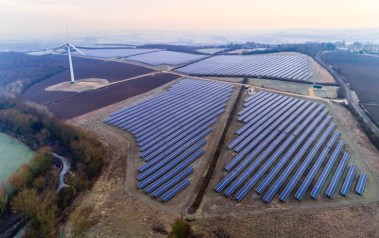
Wind and solar together (Photo: Gerry Machen)
¶ HDF Energy launched one of the world’s largest solar-plus-storage power plants in French Guiana. The $90 million plant is expected to generate around 50 GWh per year. The facility will produce 10 MW until evening and of 3 MW during the night. Hydrogen will be used for long-term storage, with batteries short-term. [pv magazine International]
US:
¶ The chief analyst of the solar market research firm SPV Market Research, does not see that Trump’s tariffs are causing significant shrinkage in the market for utility-scale solar projects, although she forecasts some slight adjustments due to margin squeeze for the smaller business and residential applications that provide distributed generation. [CleanTechnica]

Solar array (American Public Power Association image)
¶ Around 90% of millennials understand that the climate is changing, the highest proportion of any age group. Nearly 80% think humankind must work to stem temperature rise. That includes a majority of young Republicans, most of whom see that humans are altering the climate and want the government to tackle the problem. [CleanTechnica]
¶ Ormat Technologies Inc provided an update on the Puna geothermal power plant, about 15 miles away from the Kilauea volcano. Flowing lava has covered the wellheads of two of their geothermal wells. The company cannot yet assess the extent of the damage. The lava is still flowing and may reach other wells at the plant. [DirectorsTalk Interviews]
¶ California is likely facing another year of water woes. The Sierra Nevada snowpack, which supplies up to a third of California’s water, is exceptionally meager this year. Experts found around half as much snow on the mountains as they typically would in early April, when the snowpack is historically most voluminous. [CleanTechnica]
¶ Natural gas has been the fuel of choice to replace the ageing fleet of coal power plants in the US, but lately renewables have been flexing their muscles, too. In the latest development, the energy company Ameren is counting on a new 400-MW wind farm in Missouri to help fill the void left by a slew of upcoming coal power plant retirements. [CleanTechnica]
geoharvey is free and without ads.
geoharvey is not tax-deductible.
Posted in nuclear power, renewable power, solar, wind | Leave a Comment »
Tags: nuclear, nuclear power, renewable power, solar power, wind power
May 28, 2018
Opinion:
¶ “China’s Green Shift Positions It to Overtake US in Energy, Security” • China’s air has been badly polluted. Recently, it has improved, as concentrations of PM2.5, the particulate matter that can lodge in the lungs, were down about 40% compared with 2012, in the Beijing area. But the implications of China’s move away from coal go beyond health. [Truthdig]

Great Hall of the People (Juan Cole | Informed Content)
Science and Technology:
¶ Most EVs use valuable battery power to operate climate control systems, but that can cause the range to drop by over 50%. Two methods for addressing this issue were recently presented at the Society of Automotive Engineers WCX conference. One involves increasing thermal storage and the other reducing load imposed by heating systems. [FutureCar]
World:
¶ After the usual off-season (January and February), the Chinese plug-in vehicle market is back at full charge, with 71,000 units registered in April, up 129% year over year. Overall, 2018 sales have more than doubled compared to the same period last year. Last month, the Chinese OEMs represented roughly 50% of all PEVs registered globally. [CleanTechnica]
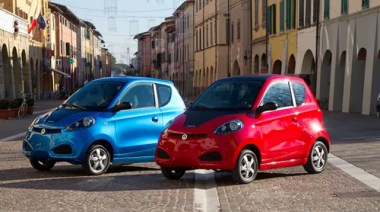
Zhidou D2 EVs
¶ Four of the UK’s Big Six energy firms will raise prices this summer, affecting 7.4 million households, experts warned. EDF, British Gas, Scottish Power, and npower are all hiking prices in early June. Figures show an eye-watering £393.8 million will be paid in extra gas and electricity bills. Experts urged Britons to switch energy suppliers. [Express.co.uk]
¶ Scotland is set to become home to Europe’s most northerly solar farm. Despite the country often lacking in the warm, yellow stuff, an abandoned airfield in the Highlands has been earmarked for a 50 MW project that could power 15,000 homes or 19,000 electric cars for a year. Ministers have given approval for the farm in Elgin, Moray. [HeraldScotland]

Solar farm
¶ The SoftBank Group is tying up with IL&FS to develop over 20 GW of solar capacity in India by 2025 to support Prime Minister Modi’s ambitious renewable energy road map for the country. The SoftBank Group had only recently teamed up with China’s GCL System Integration Technology for a $930 million (₹6,350 crore) PV venture in India. [Economic Times]
¶ Enel Green Power Mexico inaugurated the 238-MW Don José PV plant located in San Luis de la Paz, in the Mexican state of Guanajuato. The Don José solar farm is the fifth renewable energy plant commissioned by Enel Green Power worldwide in 2018, bringing the company’s total capacity commissioned in the year to around 1 GW. [SteelGuru]

Don José solar project
¶ The operator of the damaged Fukushima Daiichi nuclear power plant has started laying the groundwork to retrieve fuel from one of the nuclear plant’s reactor buildings. It is a crucial step toward scrapping the complex. TEPCO began work to move 615 fuel rods from a storage pool on the top floor of the No 2 reactor to a more secure location. [NHK WORLD]
¶ Vattenfall has completed turbine installation at the 93.2-MW Aberdeen Bay wind farm off Scotland. Swire Blue Ocean jack-up Pacific Orca tackled the work from the Danish port of Esbjerg. The wind farm features eleven turbines made by MHI Vestas. Nine of these have capacities of 8.4 MW each, and two are 8.8-MW models. [reNews]
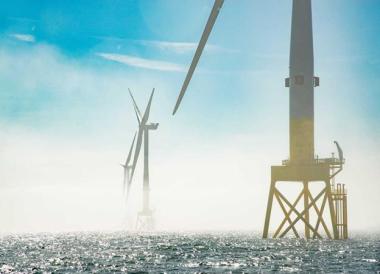
Wind turbines at Aberdeen Bay (Vattenfall image)
Australia:
¶ In Western Australia, PVs are disrupting the status quo. The Australian Energy Market Operator said it had to invoke extraordinary powers designed for emergencies such as major power-plant failures or bushfires to protect the grid from soaring levels of solar output. PV output sometimes drives demand to negligible levels. [The West Australian]
¶ Renewable energy developer CWP Renewables joined forces with global private markets investment manager Partners Group to build a total of 1,300 MW of wind, solar and battery projects they say will beat coal power on price and reliability. They will begin with the 135-MW Crudine Ridge project, soon to be under construction. [RenewEconomy]
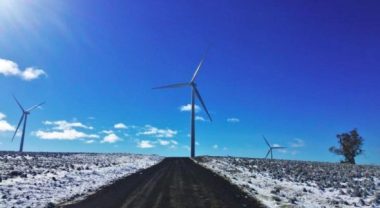
Sapphire wind farm and snow
¶ The timing of Australia’s carbon tax was “unfortunate” because it coincided with soaring electricity network costs that have underpinned increases to household bills, the head of the Australian Competition and Consumer Commission told a forum in Brisbane. The ACCC is due to produce its final report on the electricity market next month. [The Guardian]
US:
¶ Community choice aggregation has spread across California. It now serves 12% of the state’s electricity demand, and it is growing fast. Local governments have embraced it as a way exert more control over their electricity supply and set their own rates while increasing their use of renewable power. But some worry about possible difficulties. [San Francisco Chronicle]
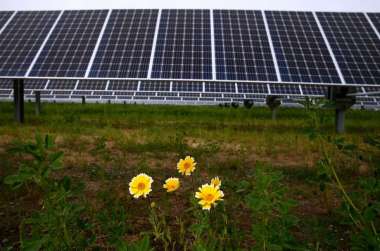
Wildflowers and PV panels (Photo: Paul Chinn | The Chronicle)
¶ The Western Energy Imbalance Market is a wholesale energy trading market that allows participating utilities around the West to buy and sell energy among one another. If one market is generating too much energy, it can sell its energy to the market next door. The market started in Oregon and California, and it is making its way to other states. [AZ Big Media]
¶ Senior EPA officials have been working closely with a conservative group that dismisses climate change to rally like-minded people for public hearings on science and global warming. Recently released emails show they also recruited help to counter negative news coverage and tout Administrator Scott Pruitt’s agency stewardship. [New York Daily News]
geoharvey is free and without ads.
geoharvey is not tax-deductible.
Posted in nuclear power, renewable power, solar, wind | Leave a Comment »
Tags: nuclear, nuclear power, renewable power, solar power, wind power
May 27, 2018
Opinion:
¶ “The Silence of the Bugs” • Fifty-six years after Rachel Carson’s “Silent Spring” warned of bird die-offs from pesticides, a new biocrisis may be emerging. A study published last fall, showing a 76% decline in the total seasonal biomass of flying insects netted at 63 locations in Germany over the last three decades, tells only part of the story. [The New York Times]

Artwork by Enzo Pérès-Labourdette
¶ “Climate Change Canaries and Our Changing Climate” • While some disagree over its causes, the reality of climate change is an incontrovertible fact. The planet is warming, affecting our weather and our oceans. Our growing seasons are affected, in turn having effects on our food. Crops fail, causing shortages and price hikes. [The Market Oracle]
¶ “Electric Buses A Crucial Portion Of Our Mobility Needs” • So far, the electric news limelight has been around electric sedans and SUVs. But vehicles for industrial use, fleets, and true utility services are alive and well. The e-bus market grew beyond expectation between 2016 and 2017, and we expect more of the same in 2018. [CleanTechnica]

Proterra 35-foot Catalyst bus
World:
¶ Saudi Arabia and Russia are discussing raising OPEC and non-OPEC oil production by about 1 million barrels a day, sources said, weeks after US President Donald Trump complained about artificially high prices. Raising production would ease 17 months of strict supply curbs as oil hits its highest price since late 2014 at $80.50 a barrel. [Voice of America]
¶ In three years, 20% of electricity consumed by Jordan’s water sector will be generated with renewable energy, under the Water and Irrigation Ministry’s new “self-reliance” approach, according to government officials. The ministry is currently developing five large renewable energy projects, both of solar and windpower, to reach this goal. [Jordan Times]

Solar project in Jordan (Jordan Times file photo)
¶ The recently unveiled National Wind-Solar Hybrid Policy will help India meet its target of 175-GW renewable energy capacity by 2022, which has been increased from 69 GW. Analysts say the generation costs can be cut by a quarter. By combining the technologies, both connection costs and variability of output are decreased. [Financial Express]
¶ Chile has become a model country for its advances in non-conventional energy. Now it is debating whether citizens who individually or as a group generate electricity can profit from the sale of the surplus from their self-consumption. The question will be decisive for encouraging their contribution to the energy supply. [Inter Press Service]

Rooftop solar array in Chile (Photo: Orlando Milesi | IPS)
¶ Finland and China are collaborating on open international test platforms to demonstrate flexible and clean energy systems. Finland’s Åland Islands will host a flexible energy system, based on smart grids and 100% renewable energy production. In China, the Zhangjiakou Demonstration Zone will show renewable microgrids. [Energy Live News]
¶ A deluge of investments are pouring into Nigeria’s off-grid electricity initiative, targeting key economic clusters across the country. The initiative may free a national grid system that has been unreliable even after the monopolistic National Electric Power Authority was unbundled and the power sector partly privatised in 2013. [Leadership Newspaper]

Transmission towers
¶ The ministry of New and Renewable Energy has appointed Solar Energy Corporation of India as the nodal agency for setting up 2,500 MW of inter-state transmission system-connected power projects on a build, own, operate basis across the country. This paves the way for the nodal agency to float bids for such projects. [Devdiscourse]
¶ The Taiwan Strait, the narrow sea channel between the island of Taiwan and mainland China, has become an offshore wind farms investment hotspot. But heightened geopolitical tensions in the area have raised concerns on the adequacy of insurance coverage for the sector, according to an insurer with a focus on renewable energy. [South China Morning Post]

Offshore wind turbines
US:
¶ Valley Clean Energy is a new locally governed not-for-profit electricity program that was established to deliver clean, reliable, and cost-competitive electricity to customers in three counties in central California. VCE will use higher levels of renewable energy than PG&E to deliver power at a 2.5% lower generation rate. [The People’s Vanguard of Davis]
¶ Arizona Public Service is looking for new proposals that would use the small trees and branches gathered from Arizona forests to generate up to 60 MW of power, a small portion of the energy the utility sends to customers around the state. In the forests, the fuel is a fire hazard. But the forest service has not yet moved on contracts. [Arizona Daily Sun]

Forest thinning (Jake Bacon, Arizona Daily Sun)
¶ State records show a Detroit solid-waste incinerator exceeded pollution emission rules more than 750 times over the last five years with a variety of harmful chemicals. In more than 50 instances, Detroit Renewable Power did not meet standards after investigations of complaints of odors or there were independent odor reviews. [Fairfield Citizen]
¶ The US is leading a drive to promote nuclear power worldwide, showcasing the Trump administration’s understanding of nuclear technology as a crucial source of zero-carbon electricity. Deputy Energy Secretary Dan Brouillette launched an initiative that aims to “highlight the value of nuclear energy as a clean reliable energy source.” [The Western Journal]
geoharvey is free and without ads.
geoharvey is not tax-deductible.
Posted in nuclear power, renewable power, solar, wind | 1 Comment »
Tags: nuclear, nuclear power, renewable power, solar power, wind power
May 26, 2018
World:
¶ Uniti, the Swedish startup planning to build an all new electric car, claims pre-orders have now reached $60 million. To all those auto industry executives who whine about people not wanting to buy EVs, Uniti is the wakeup call you have been dreading. People want to buy electric cars, and if you decide not to provide them, someone else will. [CleanTechnica]

Uniti prototype
¶ A partnership between Honda Motor and Chinese battery conglomerate Contemporary Amperex Technology to develop a next-generation electric vehicle for the motor company with at least 300 km (186 miles) of range. Based on the Honda Fit, the car would have a price of just over $18,000, and it is expected to be available in 2020. [CleanTechnica]
¶ The International Finance Corporation, which is a member of the World Bank Group, signed a mandate with the government of Uzbekistan to increase its renewable power capacity and encourage private sector investment in the country’s renewable energy sector. IFC will advise on construction and operation of a 100-MW solar PV project. [Mercom India]
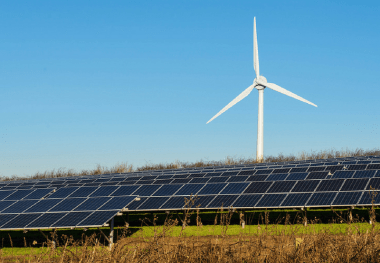
Wind and sun (Flickr image)
¶ Frost & Sullivan’s recent analysis Global Power Industry Outlook, 2018, posits that solar will surpass wind in global energy capacity starting in 2020, making it the fourth largest source of energy generation behind coal, gas and hydro. The report also predicts that about $2.2 trillion will be invested in new energy capacity through 2021. [CleanTechnica]
¶ With its centuries-old timber-framed houses and cobblestone lanes, Wolfhagen could easily illustrate a Grimm Brothers’ fable. But for all of its medieval charm and pastoral feel, this town of 14,000 near Frankfurt has taken a big step into the future over the past few years. Its power needs are met 106% by renewable power sources. [PRI]
¶ Finnish developer TuuliWatti is building a 21-MW subsidy-free wind farm in the Nordic country’s municipality of Ii on the Bay of Bothnia. The Viinamaki project, due for completion next year, will feature five Vestas 4.2-MW turbines. TuuliWatti calculates that the wind farm’s specifications will push production costs below €30/MWh (3.5¢/kWh). [reNews]
¶ The Electricity Supply Board and Bord na Móna announced the €160 million ($186.5 million) Oweninny wind project in Ireland has reached financial close. The 89-MW wind farm will be located in North County Mayo, between Crossmolina and Bangor Erris, on a site where peat was formerly harvested and burned for power. [Energy Live News]
County Mayo in Ireland (Shutterstock image)
¶ UK utility SSE Plc said it plans to invest £6 billion ($8 billion, €6.9 billion) over the next five years in the UK and Ireland, with 70% of that in regulated electricity networks and renewable energy. The plans include £350 million for a natural gas plant. In the first year of the five, SSE’s capital spending is expected to be about £1.7 billion. [Renewables Now]
¶ Britain’s hopes for a number of new nuclear power stations could collapse if the government and Hitachi fail to make a breakthrough on talks for a plant in Wales, a top nuclear lobbyist warned. The deal would work if the government offered a guaranteed price of power of almost twice the wholesale cost of electricity. [The Guardian]

Construction at Hinkley Point C (Toby Melville | Reuters)
US:
¶ Two utilities, Vistra Energy Corp and Dominion Energy Inc, which serve about 5.5 million electricity customers in more than a dozen US states, both say they are done building combined-cycle natural gas-fired power plants. Instead, they are building large solar plants, which offer them plentiful and inexpensive electricity. [Reuters]
¶ General Electric’s shares plunged 7% on May 23, their worst one-day decline since an 8.4% slide in April 2009. The economic health of GE and other the large power equipment makers may hinge on how utilities handle the expected wave of power plant retirements. Mitsubishi said it expects orders for steam and gas turbines to run dry by 2020. [Utility Dive]

Jenbacher J620 gas generator
¶ Widespread adoption of solar and wind power could lower the wholesale price of electricity dramatically and change electric power systems profoundly, according to a study by Lawrence Berkeley National Laboratory. Nuclear and fossil fuel power plants would struggle to compete. The change will complicate grid management. [Wyoming Business Report]
¶ GTM Research projects 24¢/W solar panels and utility scale fixed-tilt systems costing 70¢/W by 2022. This would open up new possibilities for ultra-cheap power. The cost of electricity from such systems could fall to 1.5¢/kWh or lower. Trump’s solar panel tariffs may delay that goal, but they are set to phase out by 2022. [pv magazine International]
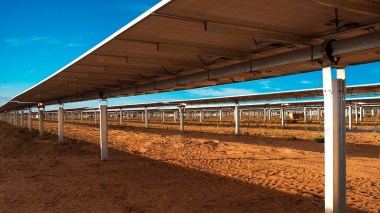
Solar array (Soltec image)
¶ The New Orleans City Council signed off on an investigation into the use of paid actors to support an Entergy plan for a new power plant in New Orleans East. The council vote to release a request for proposals for a third-party consultant to look into the matter was unanimous. The council also plans to look into earlier similar incidents. [The Advocate]
¶ The Sierra Club and others are accusing US regulators of violating clean water rules by repeatedly delaying action on a discharge permit for the coal-fired Four Corners Power Plant, which provides power to customers in three states. They filed papers in federal court over exposure to pollutants that wind up in the San Juan River. [Electric Light and Power]
geoharvey is free and without ads.
geoharvey is not tax-deductible.
Posted in nuclear power, renewable power, solar, wind | Leave a Comment »
Tags: nuclear, nuclear power, renewable power, solar power, wind power
May 25, 2018
World:
¶ BYD landed its first SkyRail contract in South America with a deal with the Brazilian city of Salvador that will see a twenty-kilometer stretch of the overhead light rail system running over the water. The $689 million project is broken up into two phases, with construction on the first phase to begin in the last quarter of 2018. [CleanTechnica]

SkyRail demonstration in Shenzhen
¶ London-based Pivot Power unveiled plans to build a world-first 2-GW network of grid-scale batteries and rapid electric vehicle charging stations across the UK. The £1.6 billion ($2.1 billion) program will provide infrastructure to support the adoption of EVs and it will store electrical energy provided by renewable resources. [Renewable Energy Magazine]
¶ Russian power company TGC-1 has struck a deal with the Leningrad Oblast administration for the development of a 50-MW wind farm in the country’s north-west region. Governor Aleksandr Drozdenko and TGC-1 general director Alexey Barvinok signed a cooperation agreement for the project located on the coast of the Gulf of Finland. [reNews]
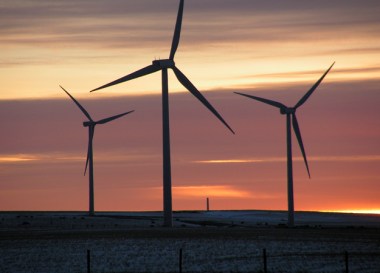
Wind turbines (MorgueFile image)
¶ ESS Inc, US maker of the only flow battery with a chemistry based on iron and saltwater electrolytes, is making its first move into the Brazilian energy storage market. A 50-kW/400-kWh test unit will be deployed and integrated together with 100 kW of PV, allowing for several hours of energy storage of onsite generated electricity. [Energy Storage News]
¶ China’s energy regulator ordered local authorities to consider grid capacity when selecting new wind power projects to ensure that no more than 5% of their electricity is wasted. The National Energy Administration said priority for construction should be given to wind farms that can deliver electricity to different regional grids. [South China Morning Post]
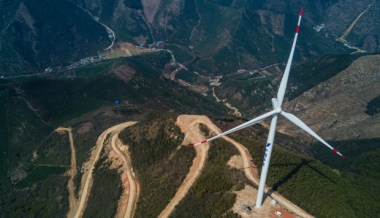
Chinese wind turbine (Photo: Xinhua)
¶ The Scottish government has published a draft climate change bill setting out a target to reduce carbon emissions by 90% by 2050. The legislation stopped short of committing to a 100% reduction in emissions, known as “net-zero.” Holyrood said the UK Committee on Climate Change has decreed the 90% target is “at the limit of feasibility.” [reNews]
Australia:
¶ Climate change is “a current and existential national security risk,” and “threatens the premature extinction of [the Earth’s] intelligent life or the permanent and drastic destruction of its potential for desirable future development,” an Australian Senate report said. But the report’s findings and its recommendations appear to be disconnected. [RenewEconomy]

Burning Australian savanna (CSIRO image)
¶ South Australia will push ahead with a plan to install Tesla battery systems in 50,000 homes. The new state government is committed to the pro-battery agenda of its predecessor. The deal to create what is being called the world’s largest virtual power plant appears to have survived political changes from Labor to Liberal dominance. [ABC Online]
¶ UPC Renewables hopes to advance both the biggest solar project in New South Wales and Australia’s biggest wind farm after bringing in a major investor. AC Energy, a subsidiary of Ayala Corporation, based in the Philippines, have a 50% share of UPC’s Australian business with an investment of A$40 million ($30 million). [RenewEconomy]
US:
¶ New Hampshire regulators voted unanimously not to give Eversource a new hearing for its Northern Pass power line proposal. The case is likely to go to the state’s Supreme Court. Eversource argued the state Site Evaluation Committee failed to consider details of the power line proposal before denying its permit. [New Hampshire Public Radio]
¶ New Jersey Governor Phil Murphy signed legislation that will move the state’s electricity mix to 50% renewable by 2030 and codifies the largest state commitment to offshore wind power. State law now commits the state of New Jersey to develop 3,500 MW of offshore wind, enough to power over one million average homes. [Windpower Engineering]

Wind turbines
¶ ForeFront Power and Los Altos School District in California celebrated the completion of solar canopy systems across nine District schools today. LASD used a power purchase agreement to get solar energy at no upfront cost. The 1.4-MW portfolio is now delivering clean energy to the schools at a price below their grid rate. [PR Newswire]
¶ Electricity generation from solar resources in the US reached 77 million MWh in 2017, surpassing for the first time annual generation from biomass resources, which generated 64 million MWh in 2017. Among renewable sources, only hydro and wind generated more electricity in 2017, at 300 million MWh and 254 million MWh, respectively. [CleanTechnica]
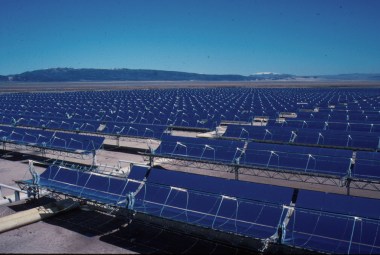
Solar thermal plant (US Bureau of Land Management image)
¶ The future of Exelon’s unprofitable Three Mile Island nuclear power plant looks even bleaker. The company said it failed at an annual auction for the future electricity sales. Exelon’s Dresden and Byron plants, both in Illinois, also failed in the 2021-2022 auction to supply the Mid-Atlantic and Midwest regional power grid. [StateImpact Pennsylvania]
¶ A bill that would have provided more cost-recovery certainty for two Minnesota nuclear plants was not acted on before the end of the legislative session, effectively killing the measure. It would have allowed Xcel Energy to submit proposals to the Public Utilities Commission to designate the plants as carbon-reduction facilities. [POWER magazine]
geoharvey is free and without ads.
geoharvey is not tax-deductible.
Posted in nuclear power, renewable power, solar, wind | 1 Comment »
Tags: nuclear, nuclear power, renewable power, solar power, wind power
May 24, 2018
Opinion:
¶ “The Pros & Cons Of Biofuels” • Even if governments wanted to change every car to an electric car, every medieval style of energy inefficient house to be exemplary in high-tech modernity and carbon neutrality, and every electricity generator to operate without burning fossil fuels, the goal could not be achieved in an afternoon. [CleanTechnica]

Different kinds of Biomass
¶ “Bitcoin Or Not, Here’s Why Concentrating Solar Power Is The New Nuclear” • The Department of Energy made the case for nuclear energy in a blog post arguing that nuclear energy provides a “clean, reliable, and resilient source of electricity” for growing needs. But nuclear has a problem. We have solar power and other clean options. [CleanTechnica]
Science and Technology:
¶ SeaTwirl is part of research project assessing the fatigue of vertical axis wind turbines. The project is being run by the Swedish Wind Power Technology Centre, the Research Institutes of Sweden, and Chalmers University of Technology. It will focus on coming up with the most robust design as possible for a turbine, the partners said. [reNews]
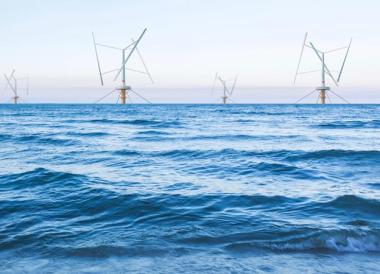
Vertical turbines (SeaTwirl image)
World:
¶ Facebook and European asset manager Luxcara have entered into long-term power purchase agreements for 100% of the output and environmental attributes of three contiguous wind projects in southwest Norway. The projects will consist of 70 wind turbines of 4.2 MW each and should reach commercial operation in Q4 2019. [Windpower Engineering]
¶ A new Bloomberg New Energy Finance report focused on electric buses forecasts a surge in electric bus sales to 84% of global new bus sales by 2030. The report forecasts that electric cars will follow, but at a slower pace, reaching 28% of new car sales in 2030. But the forecasts highlight the risk of nearly single-sourced cobalt. [CleanTechnica]

Traffic with BYD buses in Shenzhen
¶ Argentina’s president Mauricio Macri inaugurated the 100-MW Ingeniero Mario Cebreiro wind park in Bahia Blanca, Buenos Aires province. The wind farm, made up of 29 wind turbines, is a project of Argentina-based power company Pampa Energia SA. There are two other parks under construction in the same region, each of 50 MW. [Renewables Now]
¶ Siemens Gamesa is testing a redox flow energy storage system at the company’s La Plana research and development site near Zaragoza, Spain. The redox flow system is connected to the hybrid controller of a combined wind and PV generation system, and is supplementing the lithium-ion batteries that are already in use at the site. [Renewable Energy Magazine]

Hybrid renewable system
¶ Chancellor Angela Merkel’s cabinet has agreed to compensate utilities up to €1 billion for income lost due to the planned phaseout of nuclear power, the German environment ministry said. In 2016, a Constitutional Court ruled that a decision to decommission nuclear power stations by the end of 2022 violated property rights. [StreetInsider.com]
¶ Corrosion and holes were found in ventilation ducts in the central control rooms for 12 reactors at seven Japanese nuclear power plants. They could have exposed workers to radioactive materials in the event of an accident, Japan’s nuclear watchdog reported. One of the plants was TEPCO’s Kashiwazaki-Kariwa plant in Niigata Prefecture. [Asahi Shimbun]

Kashiwazaki-Kariwa Nuclear Power Station (IAEA image)
US:
¶ Massachusetts made a big step forward in its push to rely more on renewable energy by agreeing to purchase 800 MW of offshore wind power from Vineyard Wind. The New Bedford-based company was one of three competing for the contract. The proposed farm is poised to become the largest offshore wind farm in the country. [WCAI]
¶ The state of Rhode Island has selected Deepwater Wind, the Providence company that built the nation’s first offshore wind farm, to develop a 400-MW proposal in federal waters far off the coast that would be more than 10 times the size of the Block Island demonstration project. Gov Gina Raimondo announced the surprise decision. [The Providence Journal]
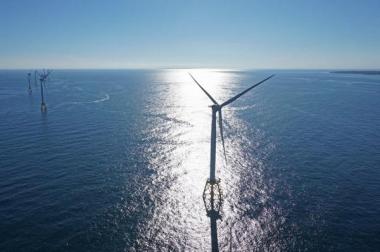
Block Island wind farm
¶ A Vermont food company, whose products are on store shelves throughout New England, is now making its coffee using an emerging power source that’s gentler on the environment. The coffee beans look the same, dark brown as always, but the energy that now fuels operations at the Vermont Coffee Company in Middlebury is green. [NECN]
¶ The City of Norman, Oklahoma, committed to transition to 100% clean and renewable energy, according to the Sierra Club, which said Norman is the first city in Oklahoma to make the commitment. Norman’s City Council unanimously adopted the resolution, committing the city to use 100% clean energy for electricity by 2035. [Solar Industry]

Oklahoma
¶ The future of wind power in North Carolina may be decided in coming weeks by lawmakers who could revisit fears that giant turbines threaten national security in a state, which has a heavy military presence. The Defense Department Defense already has authority to put restrictions on wind turbines that could interfere with operations. [InsideClimate News]
¶ Legislation that authorizes $300 million annually to rescue New Jersey’s nuclear energy industry has been signed into law. Gov Phil Murphy also signed a measure aimed at strengthening the state’s renewable energy goals. The nuclear measure will be funded by ratepayers, but the cost of the renewable energy legislation is unclear. [PennEnergy]
geoharvey is free and without ads.
geoharvey is not tax-deductible.
Posted in nuclear power, renewable power, solar, wind | Leave a Comment »
Tags: nuclear, nuclear power, renewable power, solar power, wind power
May 23, 2018
Opinion:
¶ “A 100 percent renewable grid isn’t just feasible, it’s already happening” • The ongoing debate around whether it is feasible to have an electric grid running on 100% renewable power in the coming decades often misses one key point: There are many countries and regions that are already at or close to being 100% renewably powered now. [ThinkProgress]
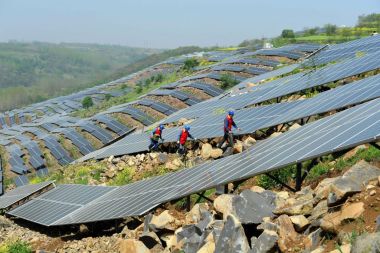
Chinese solar farm (STR | AFP | Getty Images)
¶ “How renewables can provide the same grid services as new gas plants” • Nearly 500 GW of coal, gas, and nuclear plants in the US are likely to retire by 2030. That is about half of the existing thermal generator fleet. Replacing them will require investments of about $500 billion, but they can be replaced with reliable and inexpensive renewable power. [RenewEconomy]
¶ “Waiting for cheaper renewables can cost more in the long run” • Waiting for the price to come down before switching to a new technology may sound like being frugal. But for electrical grids, what saves you money now could cost you much more in the long run, according to a study led by Imperial College London’s Clara Heuberger. [Ars Technica]
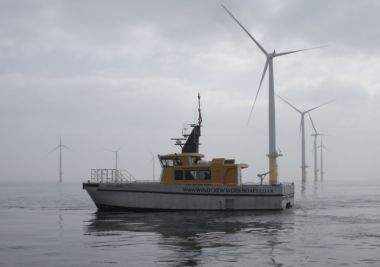
Offshore wind (Paul | Flickr)
World:
¶ Following on the heels of a deal for 500 electric refuse trucks in Shenzhen a few days ago, BYD announced another deal for an impressive 200 electric refuse trucks in Indaiatuba, Brazil. The electric refuse weigh in at 21 metric tons when fully loaded. The first twenty of the trucks will be delivered in September, and the rest over 5 years. [CleanTechnica]
¶ As the existential threat of climate change grows, people and communities across the world are growing frustrated with governments dragging their feet on environmental policy. The village of Tyalgum, New South Wales, is going off the grid. And for the people in this bohemian town in Australia’s east coast hinterland, the stakes are high. [CNET]

Tyalgum, New South Wales
¶ The Netherlands has announced that it will ban the use of coal for electricity generation from 2030 onwards, and that the two oldest plants must close by the end of 2024. Germany utility company RWE has deemed the plan “ill judged.” But according to Carbon Tracker, over half of all European coal-burning power plants are losing money. [CleanTechnica]
¶ In France, development company Fonroche will drill the second well of its future deep geothermal power plant near Strasbourg. The first well for the future geothermal power plant in Fonroche has yielded promising results. The second well will be used to create a geothermal doublet, without hydraulic fracturing. [ThinkGeoEnergy]
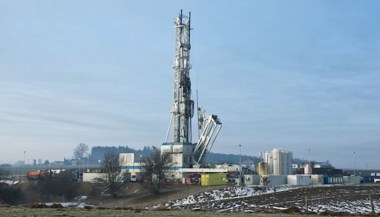
Geothermal drilling rig in Germany (source: Herrenknecht)
¶ The Taishan power station, operated by China General Nuclear Power Corp, is being loaded with its first nuclear fuel. It is set to become the first plant to operate a European Pressurized Reactor within months. The Franco-German technology has been hit by delays and cost overruns since it was designed in the 1990s, but France is pinning hopes on it. [OZY]
¶ Azure Power secured rights to develop four 50-MW solar farms in the Indian state of Maharashtra. The solar projects will deliver electric power to Maharashtra State Power Generation Company under a 25-year power purchase agreement at 4.7¢/kWh. They are set to be commissioned in 2019 and will take Azure Power’s total capacity to over 2 GW. [reNews]

Solar farm (Azure Power image)
US:
¶ The Oregon Public Utility Commission has declined to acknowledge a short list of four Wyoming wind power projects from a request for proposals by PacifiCorp, saying the process was not sufficiently competitive. PacifiCorp said it will move ahead with the $3.5 billion wind and transmission expansion anyway. [Portland Business Journal]
¶ The American Wind Energy Association says that the number of contracts signed for wind power projects hit a record of 3,500 MW in the first quarter of 2018, a possible predictor of a strong year for wind power. Among the news items it cited was an announcement by PacifiCorp of a plan for a $2 billion wind farm in Wyoming. [Energy Manager Today]
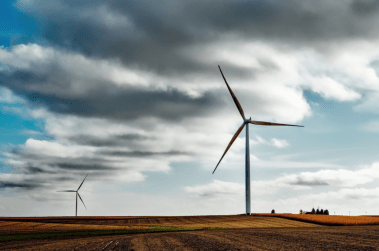
Wind farm
¶ In its Corporate Responsibility Report, Xcel Energy announced it cut carbon emissions 35%, putting itself on track to reach its ambitious goal of reducing carbon emissions 60% by 2030 from 2005 levels. This means that Xcel Energy is a step closer to achieving one of the most aggressive carbon-reduction goals in the industry. [POWER magazine]
¶ Portland General Electric Co, which serves 877,000 Oregon customers, opened bidding on a request for proposals for 100 average MW of renewable power resources. Proposals can include geothermal, biomass, biogas, solar, wind, or hydropower. PGE is looking for projects at least 10 MW to be added to its portfolio by 2021. [Renewables Now]
¶ Research on nearly 700 North American fish species predicts Atlantic cod habitat could shrink by as much as 90% by century’s end and that lobster populations could shift 200 miles farther north due to climate change. A separate research project suggests Maine’s soft-shell clam industry could collapse because of the warming waters. [Press Herald]
¶ New Jersey Gov Phil Murphy plans to sign a bill requiring utility customers to spend over $300 million a year to rescue struggling nuclear power plants run by Exelon Corp and Public Service Enterprise Group Inc, an informed source said. He is also expected to sign a bill calling for 50% of the state’s electricity to be from renewables by 2030. [Bloomberg]
geoharvey is free and without ads.
geoharvey is not tax-deductible.
Posted in nuclear power, renewable power, solar, wind | Leave a Comment »
Tags: nuclear, nuclear power, renewable power, solar power, wind power
May 22, 2018
Opinion:
¶ “Officials tried to censor a report on national parks. Here’s what was in it.” • The Trump administration attempted to release a report from the National Park service about dangers to National Parks from rising sea levels with all references to climate change removed. It identified human-caused climate change as the main culprit behind the rising sea levels. [Grist]

Acadia (Nate Parker Maine Photography | Getty Images)
World:
¶ When Shell holds its annual meeting, shareholders will be asked to support a resolution from the Dutch group Follow This, which demands the company clearly state how it will transition away from being a traditional oil company to leading in renewable energy. Follow This has the support of some major institutional investors. [CleanTechnica]
¶ An independent analysis from Imperial College London found that Gravitricity’s gravity-fed energy storage system may offer a better long-term cost of energy storage than batteries or other potentially available alternatives. The report makes comparisons among the various systems based on their levelized costs of storage. [Renewable Energy Magazine]
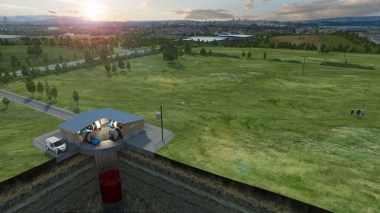
Gravitricity storage system (Gravitricity image)
¶ Scientists from Chalmers University of Technology in Sweden say that an array of new technological achievements relating to gasification of biomass has an impressive potential for the switch to renewable energy. The researchers say the new systems they are putting forward could be even be applied at existing plants worldwide. [Renewable Energy Magazine]
¶ Using electric car battery packs for large-scale energy storage projects is becoming increasingly common. A new one made of BMW i3 battery packs has been connected to the UK National Grid and is one of the largest to date. The project has five units the size of shipping containers, each with 500 i3 BMW battery packs, each with a 33-kWh capacity. [Electrek]
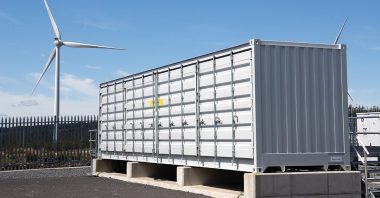
Vattenfall turbines and BMW i3 batteries
¶ Russia’s first floating nuclear power plant arrived in Murmansk, where it will take on nuclear fuel. It is on its way to an isolated area in eastern Russian. The state company behind the plant says it could be a pioneer power source for remote regions, but green campaigners are concerned about the risks it poses of nuclear accidents. [Daily Sabah]
Australia:
¶ Documents obtained under Freedom of Information say the Liddell power station is allowed to emit nearly three times as much nitrogen oxide as is considered best practice. Liddell, in New South Wales, is permitted to emit 1,400 µg of NOx per cubic meter; less than 500 µg per cubic meter is considered an international standard. [ABC Online]
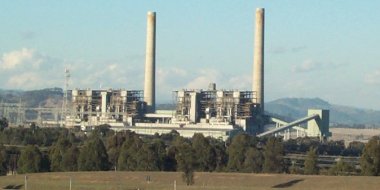
Liddell power station
¶ Some Australian Coalition politicians want AGL punished for refusing either to sell the Liddell coal-burning power plant or to keep it open. They propose changes to fine it heavily or have it face class action. AGL would replace Liddell with a gas-fired plant, upgrades at another coal plant, and renewable energy generation. [The Sydney Morning Herald]
¶ Australian power companies can lead in the clean energy transformation, but must fully integrate renewables, Catherine Tanna, Energy Australia’s managing director, told Bloomberg. She said coal will continue to have a role in Australian energy, but she said she does not think Australia will build any new coal-fired power stations. [Energy Matters]
¶ The main union representing workers at the doomed and decrepit Liddell power station has welcomed AGL Energy’s plan to transition the asset to a clean energy hub, even as conservative politicians insist on a forced sale of the asset to another buyer. The union praised AGL for striking a balance that secures future jobs. [RenewEconomy]
¶ The new coal plants former Prime Minister Tony Abbott has proposed will be uncompetitive in a power grid with increasingly higher shares of renewable energy, the head of Snowy Hydro told the Senate. He said wind and solar energy could outcompete coal power because their short run marginal cost of supply was zero. [The Australian Financial Review]
US:
¶ Ameren Missouri has agreed to buy a 400-MW wind farm in the northeast of the state from an affiliate of developer Terra-Gen, once the project is completed. The 175-turbine wind farm will be located in Adair and Schuyler counties, with construction expected to kick off in summer 2019, according to a statement from Ameren. [reNews]
¶ EDP Renewables North America is to sell power from its 50-MW Hidalgo 2 wind farm in Texas to an unnamed client under a 15-year power purchase agreement. The project is expected to start operations in 2019. EDPR said it has now secured over 1.6 GW of long-term PPAs for US wind projects being built between 2016 and 2020. [reNews]

Wind farm and cattle (EDPR image)
¶ Power producers are rushing to build natural gas plants and pipelines to replace retiring coal, but in less than 10 years much of that infrastructure will be more expensive to operate than the cost to build new renewables, analysis released by the Rocky Mountain Institute says. That would leave investors saddled with billions in stranded assets. [Forbes]
¶ A University of Colorado research scientist said she was “extremely happy” the National Park Service released a study on sea level rise even though it “probably destroyed” her career doing agency research. Maria Caffrey refused to accept NPS corrections that are said to have removed words linking global warming to human activity. [The Western Journal]
geoharvey is free and without ads.
geoharvey is not tax-deductible.
Posted in nuclear power, renewable power, solar, wind | Leave a Comment »
Tags: nuclear, nuclear power, renewable power, solar power, wind power
May 21, 2018
Opinion:
¶ “This Clean Energy Champion Is Out To Break Vietnam’s Coal Habit” • The Goldman Environmental Prize for grassroots advocacy was awarded to its first Vietnamese recipient, 42-year-old clean energy champion, Nguy Thi Khanh, who hopes to end Vietnam’s reliance on coal and persuade the country to take a greener approach. [Forbes]
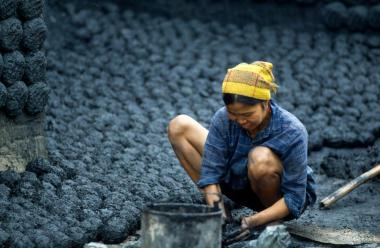
Vietnamese woman making cakes of dried coal dust to
fuel a kiln (Photo: Eye Ubiquitous | UIG via Getty Images)
World:
¶ Sales of BMW electric and plug-in hybrid vehicles are up more than 49% year over year in 2018. BMW’s EV sales are up nicely so far this year, 73% in the US and 25% in the UK. But EV sales have surged far more in China, where sales are up 646%, thanks largely to a new, locally produced plug-in hybrid electric version of the 5 Series sedan. [CleanTechnica]
¶ Energiekontor, based in Germany, reached financial close on the 8.2-MW Withernwick 2 wind farm in Yorkshire. The project will feature four 2.05-MW turbines. Energiekontor said it will be the first wind farm in the UK to be built without subsidies. The facility is expected to be commissioned in the first quarter of 2019, the company said. [reNews]
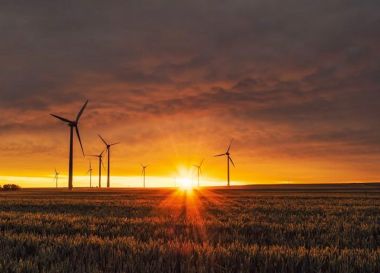
Wind farm (Pixabay image)
¶ South Africa is set to commission its first solar-powered desalination plant at the end of October 2018 in the Western Cape. The project is to be co-funded, partly by the Western Cape Government through the drought relief fund, and partly by the French Treasury, through a fund for implementing innovative green technologies. [ESI Africa]
¶ Enel Green Power Espana unveiled plans to build over 320 MW of wind and solar parks in Spain next year. The company, which is a subsidiary of Spanish energy company Endesa SA, will invest €280 million ($329.6 million) in the plan. It foresees deployment of 64 MW of wind and 260 MW of PV capacity in Andalusia and Extremadura. [Renewables Now]

Wind turbines in Spain (petter palander, CC-BY-SA 2.0)
¶ Drax Group will lead a £400,000 trial to capture and store carbon at its north Yorkshire power station. The technology has repeatedly failed to get off the ground in the UK. The company was part of earlier efforts to build a £1 billion prototype carbon capture coal plant, but pulled out in 2015 after it missed out on renewable energy subsidies. [The Guardian]
Australia:
¶ After months of pressure from the Australian government either to keep the old coal-fired plant open longer than planned or to sell it to somebody who will, the AGL board has decided to proceed with its original plan to close it. AGL said that an offer it got was in its best interests of neither the company nor its shareholders. [The Singleton Argus]

Liddell power station
¶ Renewable energy developer RES Australia plans to build a 176-MW solar farm with battery storage in South Australia. The company said the solar farm would supply enough electricity to the National Electricity Market to meet the needs of 82,000 homes, and it would store dispatchable energy for later use in lithium-ion battery banks. [RenewEconomy]
¶ Neoen, based in France, secured development approval by the state of Queensland for a $300 million (US$225.4 million, €191.5 million) wind-plus-battery project at Kaban. Planning minister Cameron Dick said the 29 turbines at the wind farm would have a capacity of 5.5 MW each, which would produce a total capacity of close to 160 MW. [Renewables Now]
¶ Tasmania’s renewable energy surge continues, with an early works construction agreement signed for a $300 million wind farm in the Central Highlands. Goldwind Australia’s Cattle Hill wind farm is expected to generate enough power for over 60,000 homes. It will create up to 150 jobs for construction and about 10 permanent jobs. [The Advocate]
¶ French renewable energy developer Neoen has received the council planning approval it needed for the Western Downs green power hub, a solar farm of up to 500 MW with battery storage, in south-west Queensland. It consists of up to 1,500 hectares of ground mounted solar panels and 2 hectares of battery energy storage. [RenewEconomy]

Site for solar farm and battery storage facility
US:
¶ Utilities are welcoming a historic rooftop solar building code in California, but urging caution with its implementation to protect non-solar customers. Utilities and solar developers are calling at the same time for a dialogue among stakeholders to effectively integrate additional rooftop solar into the grid. The new code is to be effective in 2020. [Utility Dive]
¶ Qualcomm Inc has been developing motor vehicle static charging technology with major carmakers for the past seven years. The company announced that its system is expected to be commercially available on EVs within two years, based on the fact that the cost of static wireless charging is now comparable with conductive charging. [Solar Magazine]

Solar Roadway project (Source: Designboom)
¶ The new era of big batteries has already drawn scrutiny after fiery electric-car crashes in both America and Europe. US city planners worry about a similar risk of hard-to-control blazes, if power-storage units make their way into basements and onto rooftops. So far, deployment of large batteries within buildings has been limited. [The Seattle Times]
¶ The abandonment of two nuclear reactors at the VC Summer Nuclear Station generated headlines and riled South Carolina lawmakers, but a similar scenario played out at the Savannah River Site near Aiken. The weapons-to-fuel project is decades behind schedule and its final cost increase the initial estimates by 12 times. [Charleston Post Courier]
geoharvey is free and without ads.
geoharvey is not tax-deductible.
Posted in nuclear power, renewable power, solar, wind | Leave a Comment »
Tags: nuclear, nuclear power, renewable power, solar power, wind power
May 20, 2018
Opinion:
¶ “A ‘hostile environment’ for renewables: Why has UK clean energy investment plummeted?” • Headlines suggest renewable energy in Britain is booming. Windpower has overtaken nuclear. More days pass without using coal. But the reality is government indifference leading to “dramatic and worrying collapse” in green investment. [The Independent]
Science and Technology:
¶ The alternative energy revolution, based on such renewable energy sources as wind, solar, and geothermal being fed into the overall electrical grid, is reviving an argument Thomas Edison and Nicola Tesla had well over a century ago. The grid supplies AC power, but renewable energy sources such as solar and batteries are DC. [RTInsights]
¶ Global warming is on track to cause a major wipeout of insects, compounding already severe losses, according to a new analysis. Insects are vital to most ecosystems and a widespread collapse would cause extremely far-reaching disruption to life on Earth, and scientists warn that much more carbon needs to be cut than nations have promised. [theindependentbd.com]

Monarch butterflies (Joel Sartore | NG | Getty Images)
World:
¶ Hybrid power plants, microgrids, and energy storage systems are set to transform the power sector in the Indian state of Kerala, as it seeks to enlarge the share of renewable energy in its power supply. An example is a 25-kW grid-connected hybrid system with rooftop solar panels and diesel generators to provide power to 25 families. [The Hindu]
¶ A broadly consensus view among financiers, business owners, and energy experts at the African Utility Week conference in Cape Town this week is that Eskom, the debt-laden South African generator and distributor of electricity, is the biggest stumbling block to developing affordable, clean power in the country. They say it should be unbundled. [Fin24]
¶ Construction has started on the A$240 million ($180 million) Yarranlea solar farm west of Toowoomba, Queensland. The 121-MW project will create 200 jobs and generate enough electricity to power about 32,000 homes. Once completed, about 400,000 solar panels, each 1×2 meters, will dot the sprawling 250 hectares at Yarranlea. [Chronicle]
¶ Husband and wife Reverend Canon John and Elizabeth Sheen have had a wind turbine in their back garden on the Isle of Man for years. Elizabeth said, “The windmill is a joy and helps the pension very much. It generates electricity straight to the MUA, which counts out how many units have been produced. You then get a bill.” [Isle of Man Today]
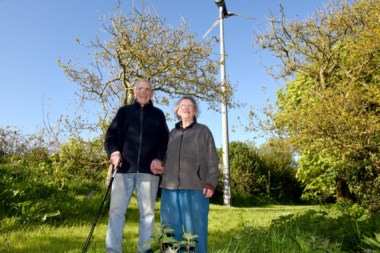
The Sheens and their turbine
¶ The number of storage tanks for contaminated water and other materials is still increasing at Fukushima Daiichi, and space for still more tanks is approaching the limit. It is seven years since an earthquake and tsunami overwhelmed Fukushima and a way to get rid of treated water, or tritium water, has still not been decided. [New Zealand Herald]
US:
¶ Arkansas Electric Cooperative Corporation has entered into a power purchase agreement with Renewable Energy Systems Americas Inc, of Broomfield, Colorado, to purchase up to 100 MW of electric power. The solar power will be produced by an 800-acre solar farm near Crossett, Arkansas, to be completed in 2021. [Texarkana Gazette]
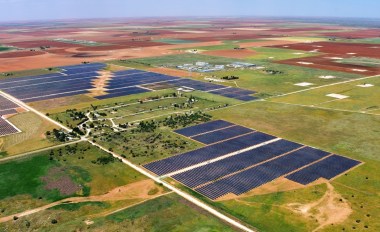
Solar power in Dawson County, Texas. (Submitted photo)
¶ Jonathan Naughton, director of the University of Wyoming’s Wind Energy Research Center, expects that in the next five to seven years up to 5,000 MW of wind power could be built in the state. That is three times the capacity of Wyoming’s current fleet of wind projects. The local utilities want wind power because it is inexpensive. [Casper Star-Tribune Online]
¶ When a New Mexico electric cooperative anxious to lower its rates and pursue greater use of renewable energy learned that doing so would cost it a net $37 million exit fee from its contract with its wholesale power provider, it did what once might have been unthinkable. Now co-op other members are weighing their options. [The Grand Junction Daily Sentinel]

Wind turbines (Photo: Willie Petersen)
¶ Columbia University Professor Jeffrey Sachs said the world’s ways of producing and using energy need to change “much faster, much more dramatically” than political leaders looking to tap hydrocarbon reserves understand. Sachs, a prominent American economist, was speaking at a conference in Cyprus about climate challenges. [El Paso Inc]
¶ Denver International Airport first installed solar power for sustainability reasons in 2008. Now, it has 11.6 MW of solar capacity, with most of the electricity being sold back to the grid. A 2015 survey indicated that the nation’s airports had 70 solar projects. Now more are coming, as the airports consider what to do with open land. [Longview News-Journal]
geoharvey is free and without ads.
geoharvey is not tax-deductible.
Posted in nuclear power, renewable power, solar, wind | Leave a Comment »
Tags: nuclear, nuclear power, renewable power, solar power, wind power
May 19, 2018
Opinion:
¶ “Solar and wind are coming. And the power sector isn’t ready.” • The US electricity system is at an extremely uncertain juncture. Increasingly, indicators point toward a future in which wind and solar power play a large role. Things will look different when we have lots of variable renewable energy, a study from Lawrence Berkeley National Lab says. [Vox]
Science and Technology:
¶ Research into the decline in carbon dioxide emissions in the US between 2007 and 2013 shows that it is actually more complex than thought. Most experts attributed the decline to a drop in energy demand and increasing use of natural gas in the energy mix. But they have failed to understand the importance of renewables. [Science Trends]
¶ Could renewable sources meet 100 percent of our energy demand? Yes, according to new research which scrutinises the arguments against. “There are no roadblocks on the way to a 100% renewable future,” the research states, while pointing out that existing research already holds the answers to the common objections raised. [New Atlas]
¶ Mysterious, ghostlike “whistler waves” that are normally created by lightning could protect nuclear fusion reactors from runaway electrons, new research suggests. These whistler waves are naturally found high above ground in the ionosphere, a layer of Earth’s atmosphere at altitudes of about 50 to 600 miles (80 to 1000 km). [Live Science]
¶ In the last 15 years, polar bear hunters in eastern Greenland have had to adapt their hunting practices because of climate change, according to a new survey published this week in the journal Frontiers in Maritime Science. Hunters said that since 2006, the region has had increasing numbers of polar bears coming into towns. [CBC.ca]

Polar bear with cub (Elisha Dacey | CBC)
World:
¶ Moldova, a small country in eastern Europe, imports three-quarters of its energy and has seen its energy prices rise by more than half in the past five years. But that could soon change, the UN Development Program said. It plans to launch an innovative effort to power a Moldovan university with cryptocurrency-funded solar energy. [Saudi Gazette]
¶ The European Bank for Reconstruction and Development is organizing a loan together with the Clean Technology Fund and the Asian Development Bank to fund construction of a 50-MW solar power plant in central Kazakhstan. It is to be the first joint internationally financed project for Kazakhstan’s renewable energy. [Renewable Energy Magazine]
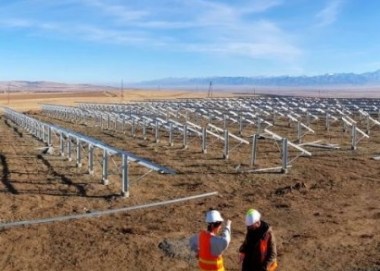
Solar array construction in Kazakhstan (EBRD image)
¶ Renewable energy costs are falling worldwide, but there are few signs that the Philippines are moving away from coal, despite its ratifying the Paris Agreement to curb climate change and passing laws pushing for a shift to renewable energy. A 400% tax hike on imported coal may signal a shift in the government’s attitude towards the fossil fuel. [Reuters]
¶ After the evacuation of 2,000 residents at risk from floodwaters in northwestern Colombia, tens of thousands more were put on alert as engineers struggled to contain the damage at a giant hydroelectric dam project that its owners admitted is in danger of collapse. The dam is under construction, and is threatened by premature water rise. [Toronto Star]
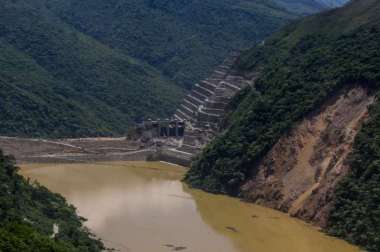
Landslide at dam (Joaquin Sarmiento | AFP | Getty Images)
¶ India’s renewable energy sector, including the solar and wind power generation segments, could create between 2 million and 4.5 million new job opportunities over the next 25 years, according to a new detailed study of the country’s energy sector. Green energy sectors are clearly better investment opportunities than fossil fuels. [ETEnergyworld.com]
US:
¶ The city of San Francisco and its Municipal Transportation Agency announced that all public buses operating in the city will be electric no later than 2035. To achieve that goal, new buses purchased in 2025 and thereafter will be battery operated. Reaching that goal will require a significant expansion of SFMTA’s charging infrastructure. [CleanTechnica]
¶ The National Park Service released a report showing risks to national parks from sea level rise and storms. Report drafts obtained earlier by Reveal from the Center for Investigative Reporting showed officials had deleted every mention of humans causing climate change. But after a long delay, the report was published with the references restored. [Reveal]
¶ Consumers Energy and DTE Energy announced new goals in Michigan of 50% clean energy by 2030. The aim is to achieve this target through a combination of renewable investments (of at least 25%) and energy efficiency. They will be retiring coal-burning power plants, replacing them with of wind and solar generating facilities. [Windpower Engineering]

Lake Michigan lighthouse
¶ CleanChoice Energy, a renewable energy company providing 100% clean electricity to customers, has been chosen by the City of Takoma Park, Maryland, to supply residents and businesses with renewable energy on an opt-in basis. The new partnership reflects Takoma Park’s commitment to reducing greenhouse gas emissions citywide. [Windpower Engineering]
¶ A report from Microsoft Corp shows significant energy and carbon emissions reduction potential from use of the Microsoft Cloud, compared with on-premises datacenters. These gains can be as much as 93% for energy efficiency and 98% for carbon efficiency. They are partly due to Microsoft’s use of renewable energy. [Global Banking And Finance Review]
geoharvey is free and without ads.
geoharvey is not tax-deductible.
Posted in nuclear power, renewable power, solar, wind | 1 Comment »
Tags: nuclear, nuclear power, renewable power, solar power, wind power
May 18, 2018
Science and Technology:
¶ For 400 consecutive months, which is over 33 years, the earth’s temperature has been above average, and climatologists are not mincing words as to why. The dubious milestone was reported in NOAA’s monthly global climate report. It also says this April had the third-warmest of any April since NOAA began collecting such records in 1880. [CNN]

Warming planet
¶ A report in The Atlantic said that NASA’s Trump-appointed new administrator, Jim Bridenstine, told a town hall meeting, “Carbon dioxide is a greenhouse gas. We’re putting it into the atmosphere in volumes that we haven’t seen, and that greenhouse gas is warming the planet. That is absolutely happening, and we are responsible for it.” [Newsmax]
¶ The naval architecture firm Robert Allan, based in British Columbia, unveiled an electric pilot boat design, the RAlly 1600-E. The all-electric aluminum pilot boat is designed to meet a demand for applications where runs are under 5 nautical miles in distance or so. Its electric twin screw drivetrain gives it a top speed of 20 knots. [CleanTechnica]

RAlly 1600-E
¶ A study by the British Antarctic Survey, the University of Oxford, and the University of Bristol looked at what effect a warmer world would have on winds, specifically across the UK and Northern Europe. In a world that is on average 1.5° C warmer, winds would be stronger, with greater potential for wind power to produce electricity. [Treehugger]
World:
¶ The 353-MW Blakliden/Fäbodberget wind farm in central Sweden is under construction and, upon completion, will be one of the country’s largest onshore wind farms.The project is jointly owned by Vattenfall, Vestas, and Danish pension fund PKA. It is expected to be completed and commissioned in the fourth quarter of 2021. [CleanTechnica]
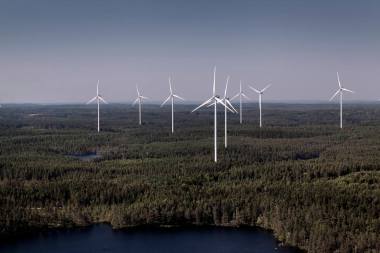
Vestas windfarm in Sweden
¶ Vattenfall has started commercial operations at a 22-MW energy storage scheme co-located with the 228-MW Pen y Cymoedd wind farm in Wales. The 22-MW battery@pyc project, which shares electrical infrastructure with Pen y Cymoedd, will help the UK National Grid maintain frequency levels and reliability of electricity supply. [reNews]
¶ India’s diesel-guzzling railways now have an entire station that runs on renewable energy. The Guwahati railway station in the capital city of Assam is the first railway station in the country to be fully solar-powered. A major railway hub in the northeastern regions of India, the station handles around 20,000 passengers every day. [Quartz]
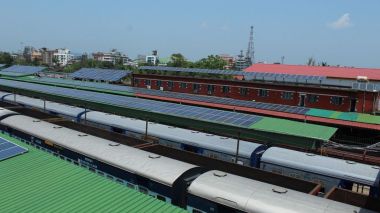
Guwahati railway station
¶ Africa is sometimes better known for its vulnerability to climate change than its action on the problem, but a set of African cities intend to change that. Eight cities, from Accra to Dar es Salaam, pledged this week to deliver their share of emissions cuts needed to meet Paris Agreement targets to limit climate change. [ETEnergyworld.com]
¶ South Korea will raise incentives for offshore wind farm operators and cut back subsidies on biomass producers to promote more eco-friendly energy sources, the energy ministry said. The ministry will reduce subsidies on solid recovered fuel, a fuel produced by shredding and dehydrating biodegradable waste and recycled materials. [Yonhap News]
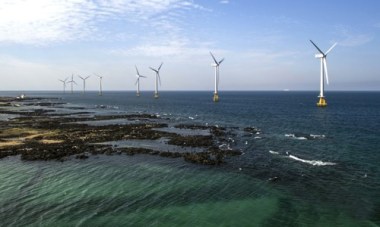
Turbines (Korea South-East Power Co via Yonhap News)
US:
¶ A year after it was proposed, a $150 million solar PV project on Bent Mountain in Pike County, in the heart of Kentucky’s eastern coalfield, is still just a vision. Time may be running out for the venture, and this is thanks to foot-dragging by Kentucky Fuel, a coal company that is years behind in a nearby cleanup that must come first. [InsideClimate News]
¶ Rocky Mountain Power and partners are rolling out another rebate for electric vehicles. The utility, along with UCAIR and Utah Clean Energy, announced the second year of its Live Electric EV Discount program. It offers a $3,000 discount for a 2018 Nissan Leaf to all Rocky Mountain customers and all state employees. [Daily Herald]

Nissan LEAF (Nissan image)
¶ The US solar sector employs more workers than the coal and nuclear industries combined. A report from a think tank headed by former US Energy Secretary Moniz shows that some solar jobs are typically uncounted, and 100,000 jobs have a part-time solar component. The report hints at the political powerhouse that solar is becoming. [pv magazine Australia]
¶ The Interior Department said it plans to approve the Palen solar farm, which would be built in open desert on public lands just south of Joshua Tree National Park. The 3,100-acre, 500-MW power plant would be one of the country’s largest solar projects, but some environmentalists are unhappy about impacts to natural ecosystems. [The Desert Sun]

Solar farm (Photo: Jay Calderon | The Desert Sun)
¶ New York state officials issued a proposed rule that is expected to help the state meet Gov Andrew Cuomo’s goal of cutting carbon emissions 40% by 2030. The New York State Department of Environmental Conservation plan would put strict emissions standards on the state’s coal power plants, effectively phasing them out by 2020. [ThinkProgress]
¶ A GOP lawmaker said this week that the rise in sea levels around the globe was not caused by climate change, but by rocks tumbling into the world’s oceans and silt flowing from rivers to the sea. Alabama Rep Mo Brooks also suggested at a Science, Space and Technology Committee meeting on climate change that erosion played a major role. [New York Post]
geoharvey is free and without ads.
geoharvey is not tax-deductible.
Posted in nuclear power, renewable power, solar, wind | Leave a Comment »
Tags: nuclear, nuclear power, renewable power, solar power, wind power
May 17, 2018
Science and Technology:
¶ Climate change may complicate fishing. Warming seas will force many of North America’s most valuable fish and shellfish stocks north in coming decades, a major new modeling study finds, potentially creating headaches for the fishing industry and government regulators. Some species that do not move could see their ranges shrink by half. [Science Magazine]
Fishing for Atlantic cod (Robert F. Bukaty | AP Photo)
¶ A 14-year NASA mission confirmed that massive redistribution of freshwater is occurring across the Earth. Middle latitudes are drying while the tropics and higher latitudes gain water supplies. The changes are probably effects of a combination of climate change, vast human withdrawals of groundwater, and simple natural changes. [Chicago Tribune]
World:
¶ A network of 20 of ABB’s high-speed 50-kW DC fast chargers for electric vehicles has been installed across Iceland as the island nation looks to electric vehicles to cut petrol imports and reduce emissions. The chargers are on Route 1, which circles the island and is 1,300 km long. The chargers in the network are powered by 100% renewable sources. [CleanTechnica]
¶ Poland, Slovakia, the Czech Republic, and Hungary all plan to build new nuclear power plants. But according to a new study by Energy Brainpool, commissioned by Greenpeace Energy, they could also opt for controllable renewable power plants. These are cost-competitive with nuclear, at least as reliable, and also allow for energy independence. [CleanTechnica]
¶ The Solar Energy Corporation of India announced plans to issue a tender for 2 GW of solar and wind energy capacity. SECI will auction 1 GW of solar and 1 GW of wind energy capacity at a location likely to be disclosed once the actual tender documents are released. Combining solar and windpower will optimize the transmission system. [CleanTechnica]

Solar and wind (Wikimedia Commons)
¶ Bermuda General Agency Ltd has signed an agreement with Seabased AB, a Swedish wave energy designer and installer, to purchase two 20-MW wave energy parks in the Caribbean. Feasibility studies of the Caribbean project will begin on several islands this summer, and phase one is expected to be operational by the fall of 2019. [PR Web]
¶ The explosive development of the Taiwanese offshore wind market continued as MHI Vestas signed its fifth memorandum of understanding in Taiwan, solidifying its readiness for the first round of Taiwan’s offshore wind projects. The company, a leader in offshore windpower, confirmed that its 9-MW wind turbines will be typhoon-ready by 2020. [CleanTechnica]
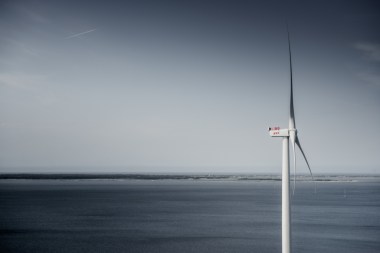
MHI Vestas wind turbine
¶ The Japanese government is standing firm by its goal of expanding nuclear energy into 20% to 22% of the country’s energy mix by 2030, but it still lacks a clear strategy for promoting nuclear power in the aftermath of the Fukushima Disaster. A new outline for energy strategy could win cabinet approval this summer. [Nikkei Asian Review]
¶ Queensland’s state-owned transmission company Powerlink says it has received enquiries about 30 GW of new generation projects, almost all of them renewables. Powerlink said it signed a connection agreement for up to 500 MW with Pacific Hydro for the first stage of the Haughton solar farm. But it is just one of 150 potential projects. [RenewEconomy]
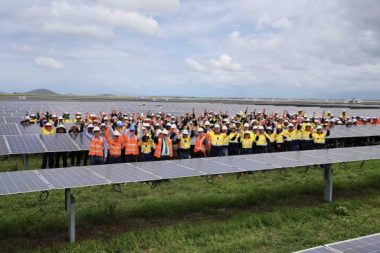
Workers at completion of the Clare solar farm
¶ The European Investment Bank announced an agreement with Export-Import Bank of China to support the country’s move to a low-carbon economy. The EIB said it will provide China with a €300 million framework loan to fund energy, water, transport, and industry programs that reduce greenhouse gas emissions and build resilience. [The European Scientist]
¶ The agency responsible for public transport in and around Oslo, PTA Ruter, announced its intention to transition the entire public transit bus fleet to electric vehicles over the next 10 years to drive meaningful improvements in the quality of life for city residents. Unibuss is starting with 30 Citeas SLFA-180 and 10 Citeas SLF-120 Electric buses. [CleanTechnica]

VDL Citeas SLFA Electric
US:
¶ Illinois does not need the Dynegy-Vistra coal plants in its central and southern regions to keep the lights on, analysis commissioned by NRDC and Sierra Club sats. It concludes that replacing the plants with renewables and gas can lower utility bills and improve public health. This argues against subsidies for coal plants. [Natural Resources Defense Council]
¶ With tariffs from the Trump administration and an energy market in flux, the solar economy faces a degree of uncertainty. But in Minnesota the sector is stronger than it is in most states. Last year solar jobs dropped 4% nationwide, while in Minnesota they rose 48.2% to a total of 4,256, according to the Solar Jobs Census. [Twin Cities Business Magazine]

Minnesota solar installation (Photo: Tony Nelson)
¶ Granite Air Center, Inc announced that it and partner Norwich Solar Technologies of White River Junction, Vermont, installed a 218.1-kW net-metered PV System on the main hangar rooftop at their facility in Lebanon, New Hampshire. With the new solar system, Granite Air will be able to see long-term energy cost reduction and stability. [AviationPros.com]
¶ NextEra Energy Resources and Salt River Project announced the opening of Pinal Central Solar Energy Center, an integrated solar plant equipped with a battery system that will store energy and enable SRP to provide clean energy to customers when demand is at its highest. The 20-MW facility is Arizona’s largest pairing solar with batteries. [Solar Power World]
geoharvey is free and without ads.
geoharvey is not tax-deductible.
Posted in nuclear power, renewable power, solar, wind | 1 Comment »
Tags: nuclear, nuclear power, renewable power, solar power, wind power
May 16, 2018
Opinion:
¶ “This Is How Germany Perfected the Free-Electricity Model” • On some days, especially holidays, the supply of electricity in Germany outstrips the nation’s demand. The result in the market is a price below zero. It is a time when factories have a chance to earn money for taking surplus electric power off the hands of producers. [Bloomberg]

German wind farm (Photo: Martin Leissl | Bloomberg)
¶ “Renewables Investment Nudges Out Fossil Fuel And Nuclear” • In 2017 the clean energy industry reached a critical turning point. Growth and cost reductions have both far outperformed expectations based on policy frameworks alone. Improvements in cost, scale, and technology fundamentally have changed market dynamics. [Forbes]
¶ “Elon Musk Harpooned Baseload Power” • In its first four months of operations the “big battery,” the Hornsdale Power Reserve, frequency control ancillary services prices went down by 90% in South Australia. The 100-MW battery has received over 55% of the FCAS revenues. This cuts into opportunities for fossil fuels deeply. [CleanTechnica]

Hornsdale Power Reserve
World:
¶ A new study from researchers at the Oxford Martin School at the University of Oxford has warned that a fifth of current global power plant capacity is at risk of becoming stranded assets. This would be under a scenario in which the planet reaches its climate goals of halting warming at 1.5° C to 2° C above pre-industrial levels. [CleanTechnica]
¶ Morocco is close to completing the largest concentrated solar power farm in the world. The site near the city of Ouarzazate aims to produce enough energy to power more than a million homes by the end of the year and reduce carbon emissions by an estimated 760,000 tons per year. The first phase was officially turned on in 2016. [CNN]
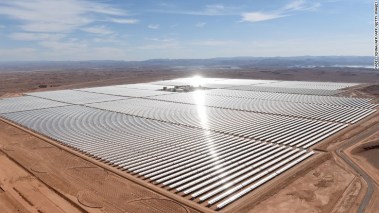
Noor Complex solar power plant in Morocco
¶ A tender for 1 GW of floating solar power capacity in the state of Maharashtra had six winning bids. The bids were at ₹2.71 and ₹2.72 ($0.04, €0.034) per kWh, according to the Press Trust of India, which cited informed sources. The PV capacity will be installed at the Ujjani Dam and provided under power purchase agreements. [Renewables Now]
¶ Over 300,000 workers will be employed in the solar and wind energy sectors in India to meet the country’s target of generating 175 GW of electric power from renewable sources by 2022, the International Labour Organisation has estimated. The UN labor agency expects 24 million green economy posts to be created globally by 2030. [BW Businessworld]

Small solar system (Shutterstock image)
¶ Turkey produced 2.86 million MWh of power from solar PV plants in 2017, an increase of 177% from 2016. Turkey’s installed solar PV capacity grew from 0.95 GW to 3 GW in 2016, according to energy statistics by the Energy Market Regulatory Authority. But wind remains Turkey’s top non-hydro renewable energy source. [Renewables Now]
¶ The Indian government has given a boost to the country’s booming renewable energy sector. On May 14, the ministry of new and renewable energy released a draft policy for setting up wind-solar-hybrid plants, where both windmills and solar panels are put up on the same piece of land, increasing the power from a given site. [Quartz]

Hybrid plant (Photo: Stringer | Reuters)
¶ Britain’s windfarms provided more electricity than its eight nuclear power stations in the first three months of 2018, marking the first time wind has overtaken nuclear across a quarter. During the first quarter, wind power produced 18.8% of electricity, second only to gas, said a report by researchers at Imperial College London. [The Guardian]
US:
¶ BYD continues to make inroads into the North American bus market. It has made a new deal for 20 of its fully electric buses, which are destined for the Los Angeles International Airport. The new buses will provide airfield passenger transportation, replacing the existing fleet of diesel-powered buses and adding capacity to the system. [CleanTechnica]

BYD articulated bus
¶ A fleet of Teslas is headed to Squaw Valley, California, but it is not just going to the parking lot. As part of its ongoing renewable energy efforts, the resort is partnering with Liberty Utilities and the electric car (and rocket) company on a proposal to install battery units for storing power generated by solar and other sources. [Comstock’s Magazine]
¶ The Florida Municipal Power Agency announced an agreement to purchase power from utility-scale solar projects to be built in central Florida’s Orange and Osceola Counties. Three projects totaling 223.5 MW will be developed by a subsidiary of NextEra Energy, NextEra Florida Renewables. The purchasers will be 12 municipal utilities. [pv magazine USA]

Utility-scale solar power in Florida (SunPower)
¶ Pacificorp, a Berkshire Hathaway electric utility in six Western states, projects new resources of 2.7 GW of wind, 1.86 GW of solar, 1.877 MW of incremental energy efficiency, and 268 MW of demand response. Pacificorp also expects to repower 999 MW of wind. But it foresees no new fossil fuel resources in the decades to come. [pv magazine USA]
¶ The Palo Verde Nuclear Generating Station is the largest power producer in the US. It provides about 35% of Arizona’s electric power. An initiative that could be on the ballot in November would require that 50% of Arizona’s electrical energy come from renewable sources by 2030. And that could shut Palo Verde down. [AZFamily]
geoharvey is free and without ads.
geoharvey is not tax-deductible.
Posted in nuclear power, renewable power, solar, wind | Leave a Comment »
Tags: nuclear, nuclear power, renewable power, solar power, wind power
May 15, 2018
Opinion:
¶ “Russia Will Use Floating Nuclear Plant To Power Arctic Oil Exploration. What Could Possibly Go Wrong?” • Thanks to global warming, much of the Arctic ice has melted, making it easier to drill for more oil. But exploring for oil is energy intensive. What to do? Use a floating nuclear plant to power the oil explorations, of course! [CleanTechnica]

Floating nuclear plant (Anton Vaganov | TASS via Getty Images)
World:
¶ Almost half of Australia’s large businesses are actively moving to cheaper renewable energy, including many going off the grid by building their own generators and battery storage, as power bills threaten their bottom line. Businesses of all sizes, including 46% of large operations, have responded to high bills by seeking green alternatives. [The Guardian]
¶ Researchers at the University of Sydney have spent 18 months looking at emissions from the entire tourism value chain, from the airplanes to the hotel, food preparations, and even souvenirs. The total is equivalent to 4.5 gigatons of carbon dioxide per year. This is about 8% of all emissions and possibly four times earlier estimates. [CleanTechnica]

Aircraft emissions
¶ The Tunisian Ministry of Energy, Mines and Renewable Energies launched two tenders, one for 500 MW of solar PV power plants and one for 500 MW of wind farms. The solar tender is for five projects ranging in size from 50 MW to 200 MW. The wind tender covers three projects, one of 100 MW and two of 200 MW. [Renewables Now]
¶ A consortium in Sweden is working on an experimental program that could slash carbon emissions from manufacturing steel. The CEO of Hybrit, a joint venture between Swedish steel maker SSAB, power utility Vattenfall, and LKAB, Europe’s largest iron ore producer, said, “Our pilot plant will only emit water vapor.” [CleanTechnica]
Zero emissions steel (Credit: Onni Wiljami Kinnunen | SSAB)
¶ The 100-MW Clare solar farm, the largest PV system to date in Queensland, has begun exporting to the grid. Clare is the twice the size of the state’s current biggest operating solar farm, the 50-MW Kinston project. But that will not last; 1400-MW of large scale solar projects in the state are expected to begin production this year. [RenewEconomy]
¶ EDP-Energias de Portugal SA, Portugal’s biggest energy company, is set to reject a €9.1 billion ($10.9 billion) takeover offer from China Three Gorges Corp on the grounds that it undervalues the company, according to people with knowledge of the matter. Investors seem to expect the Chinese utility to sweeten the offer. [Bloomberg]
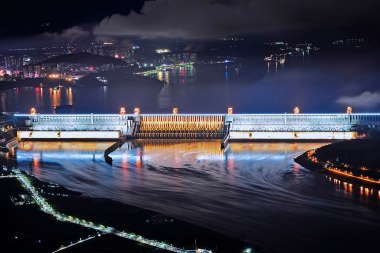
Three Gorges Dam (Photo: VCG | VCG via Getty Images)
¶ Renewables, storage, and more flexible technology will provide enough electricity to keep the UK’s grid stable as coal is wound down, according to a report released by the climate change think tank Sandbag and the WWF. A number of large-scale gas projects planned for the UK “aren’t required,” according to the “Coal to Clean” study. [www.impact4all.org]
¶ Kyocera Corp and Tokyo Century Corp have completed a 29.2-MW solar farm in Japan. The project, which is located at Yonago City in Tottori prefecture, covers 1.2 square kilometres of land. It has 108,504 Kyocera 270 watt solar modules, and it is expected to generate 36,080 MWh per year for the local utility, Chugoku Electric Power. [reNews]
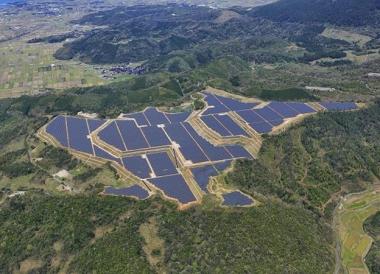
Solar farm (Image: Kyocera Corp)
¶ Australia’s biggest solar farm, the 220-MW Bungala solar project, has begun production. It is in South Australia near Port Augusta, a former coal city, and it marks the important first stage of the transforming the city into a major renewable energy hub. Three stages are planned, and it could have a 300-MW capacity in the end. [RenewEconomy]
US:
¶ The recent decision by the California Energy Commission to mandate solar on all new residential buildings starting from 2020 has had a noticeable impact on GTM Research’s solar forecast for the state. The market researcher’s projection for the four years was been increased by a total of approximately 650 MW. This bumps it up by 14%. [CleanTechnica]

Solar installer
¶ The Kennett Township, Pennsylvania, board of supervisors adopted a resolution to transition to 100% clean and renewable energy, according to an announcement by the Sierra Club. Kennett Township has become the first township and fourth municipality in the state to make this commitment, the Sierra Club said. [Solar Industry]
¶ When Earther last checked in on Americans’ views on climate change, it found that conservative climate denial is a uniquely American trait. However, a new Pew Research survey says there is also something that should give you hope: majorities of both Democrats and Republicans want to see more renewable energy installed. [Earther]
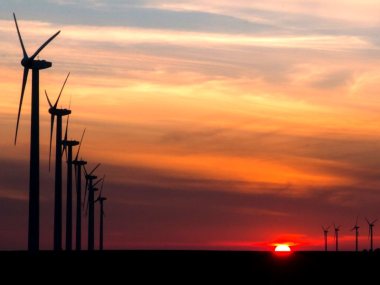
Sunset on a wind farm in Iowa (Photo: Brian Abeling | Flickr)
¶ Cypress Creek Renewables, the nation’s fifth-largest solar developer and last year’s top utility-scale installer, says it will take a $1.5 billion hit due to the Trump administration’s solar tariffs. Greentech Media confirmed that the company stopped investing in 1.5 GW of projects, roughly 20% of its pipeline, because of the tariffs. [Greentech Media]
¶ Eight Republican senators from five states with big solar farms are asking the Trump administration to exempt a workhorse of industrial solar panels from tariffs imposed earlier this year. They urged the administration to waive duties on 72-cell, 1,500-volt panels that are ideal for large ground-mounted “utility-scale” projects. [Bloomberg]
geoharvey is free and without ads.
geoharvey is not tax-deductible.
Posted in nuclear power, renewable power, solar, wind | Leave a Comment »
Tags: nuclear, nuclear power, renewable power, solar power, wind power
May 14, 2018
Opinion:
¶ “Costa Rica: 1st Country To Achieve Independence From Fossil Fuels?” • Costa Rica has made impressive strides, getting to rely 100% on renewable energy. In 2017, it had 300 days in which renewables met its entire demand for electricity. Costa Rica’s new president wants the nation to be 100% free of fossil fuels. But it has cars. [CleanTechnica]

San Jose, Costa Rica (Costa Rica Day Trips)
¶ “The future of Africa is powered by the sun” • Critics of green energy claim many countries cannot afford to invest in it. But the notion that low carbon technologies are never low cost is simply not true. Solar PV generation costs are decreasing, and in most countries the cost of PV power is already lower than new coal and gas. [Business Day]
World:
¶ China Power and General Electric have launched a joint bid for a contract to construct the 2,400-MW Batoka Gorge hydropower project being co-developed by Zimbabwe and Zambia. Energy and Power Development Minister Simon Khaya Moyo said they paid him a visit at his offices and expressed strong interest in the undertaking. [Chronicle]

Batoka Gorge
¶ Tata Power Co, one of India’s largest private power utilities, is planning to invest as much as $5 billion to ramp up its renewable capacity fourfold, according to its CEO. The 103-year-old power utility plans to increase its clean-energy capacity to 12,000 MW by 2028, with an investment of up to ₹40 million ($594,000) per megawatt. [ThePrint]
¶ During a debate at the Scottish Parliament, Housing Minister Kevin Stewart announced funding of £3.5 million to help social housing landlords make their properties more energy efficient. The decarbonization fund will support councils and housing associations to install measures such as solar panels or air source heat pumps. [Energy Voice]
¶ Scottish Power introduced its first tariff to enable customers to charge EVs at home. The two-year fixed price “Smart Green Electric Vehicle June 2020” tariff will provide 100% renewable energy. The company also introduced a charge point finder in its “Your Energy” app to help customers locate the nearest charging point away from home. [Utility Week]
¶ According to the recently published Energy Atlas of the Heinrich Böll Foundation, European countries are distributing €110 billion in subsidies and free CO2 certificates to producers of fossil fuel energy. This means coal and gas power plants receive three times as much in subsidies as the renewable energy sources do. [Devdiscourse]

Geothermal power plant
¶ Australia is a water-stressed nation, but shifting to more renewable energy could reduce the nation’s water problems considerably. A report by the World Resources Industry said Australia is one of the countries where cheap renewable energy, solar and wind as opposed to fossil fuels, could reduce water consumption. [The Sydney Morning Herald]
¶ Milan Vihar Apartments in east Delhi’s IP Extension became the first group housing society in the capital to get its own rooftop solar power plants. Inaugurated by Chief Minister Arvind Kejriwal, the 140-kW plant will generate electricity at ₹2.50 per unit (3.7¢/kWh) for 1,600 residents living in approximately 400 flats. [The Indian Express]
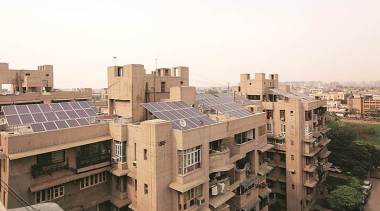
Milan Vihar Apartments (Express Photo by Gajendra Yadav)
¶ Russia is offering to put up floating nuclear power plants in the Philippines as the country explores the possibility of nuclear power generation. Russian state-owned Rosatom and the Philippine Department of Energy agreed in November of 2017 to cooperate on a possible Philippine foray into nuclear power generation. [GMA News]
US:
¶ After the successful installation of both solar and hydropower systems, the Yoder Farm, in Danby, Vermont, is one step closer to its grand goal of producing more carbon-free electricity than the farm consumes. The farm’s owners, Ryan and Rachel Yoder, hope ultimately to produce all of the energy needed for the farm on site. [The Manchester Journal]

Farm hydropower (Cherise Madigan, Journal Correspondent)
¶ Power generation in West Virginia is changing, though some do not want to embrace the shifting priorities and others say it is a mistake to bet the bank on one horse. China Energy is interested in investing up to $84 billion in shale gas and petrochemical projects in the state. That would create some jobs, but it would cost others. [WV News]
¶ Former New York City mayor Michael Bloomberg, during a commencement speech at Rice University this weekend, took a thinly veiled swipe at “deceitful politicians” in Washington. And he left little question about exactly who he was referring to. Bloomberg says that citizens should not settle for politicians who reject science. [ThinkProgress]
geoharvey is free and without ads.
geoharvey is not tax-deductible.
Posted in nuclear power, renewable power, solar, wind | Leave a Comment »
Tags: nuclear, nuclear power, renewable power, solar power, wind power
May 13, 2018
Opinion:
¶ “Cities, Villages as Fulcrum of Germany’s Energy Transition” • One feature of the German energy sector that is hardly likely to be ignored by visitors to the country is the localization of the electricity supply system. It focuses on bringing together people, villages, and municipalities to invest and own their power systems. [THISDAY Newspapers]
¶ “Crumbling of nuclear deal boosts Iran hard-liners” • Across Iran, the hopefulness that followed the 2015 nuclear deal has been replaced by a rising hard-line fever with President Donald Trump’s decision to pull America from the accord. That is not to say Iran wants the deal to end. The Islamic Republic is still trying to salvage it. [Japan Today]
¶ “Withdrawing from Paris carbon emissions deal was a mistake” • Americans have long enjoyed a position of privilege as a global leader, from technology and agriculture to diplomacy and defense. But recent trends indicate a retreat from the position of world leadership as America increasingly takes on an isolationist role. [Hattiesburg American]
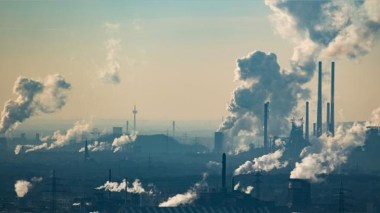
Pollution
¶ “Revenge of the dinosaurs: Administration seeks technology to revive coal” • The Trump administration is clearly serious about bolstering the declining and uncompetitive coal industry. In a sign of this, the federal Department of Energy is requesting designs for smaller, theoretically more efficient “modular” coal plants. But no funding is offered. [Yahoo News]
Science and Technology:
¶ Scientists researched sea level rise in five Florida communities and the flooding can cause. Three of the communities already find themselves partially submerged regularly, unrelated to storm events. The scientists forecast that all will have greater problems within 17 years, and the areas that are flooding now could double in size in that time. [Ocala]
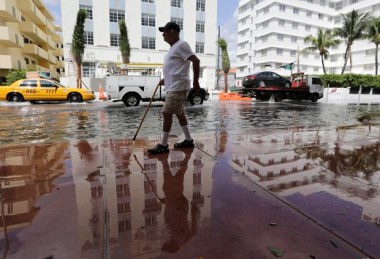
Sunny day flooding (Photo: Lynne Sladky | AP)
World:
¶ Nikkei Asian Review reports that Contemporary Amperex Technology Ltd, or CATL, has signed an agreement with Nissan to supply it with batteries for the new Nissan Sylphy sedan that will be introduced in the Chinese market later this year. CATL, the largest Chinese battery manufacturer, has been focusing on batteries for buses. [CleanTechnica]
¶ Doosan Heavy Industries & Construction said that it has secured several orders for energy storage projects from home and abroad as it expands its footprint in the growing business sector. The South Korean company announced that it won a deal for an energy storage system from clean energy and solution provider SK E&S. [Yonhap News]

Doosan Heavy’s learning center in Changwon, South Korea
¶ China’s major power plants generated 528.34 billion kWh in March, up 2.1% year on year, data showed. Thermal power production was up 1.4% in March. Electricity generated by wind and solar farms in March saw strong year-on-year growth of 30.6% and 27.9%, generating 30.57 billion kWh and 7.8 billion kWh, respectively. [Xinhua]
¶ Tesla’s giant Powerpack battery in South Australia has been in operation for about 6 months now and we are just starting to discover the magnitude of its impact on the local energy market. A report now shows that it reduced the cost of the grid service that it performs by 90% and it has already taken a majority share of the market. [Electrek]
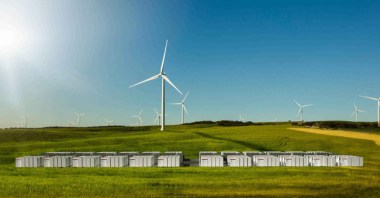
Tesla battery system in South Australia
US:
¶ According to Catherine Von Burg, CEO of battery maker Simpliphi Power, 2017 was a blockbuster year for the company, with sales more than tripling from 2016. The spike in sales has Simpliphi Power bursting out of its Ojai, California headquarters and scrambling around the surrounding area looking for more manufacturing space. [CleanTechnica]
¶ The Public Service Commission of Wisconsin has made a preliminary decision to allocate about $5.5 million in incentives per year, for the years 2019 through 2022, to the renewable energy programs within the Focus on Energy program. The decisions came as part of the program’s four-year planning process. [The Milwaukee Independent]
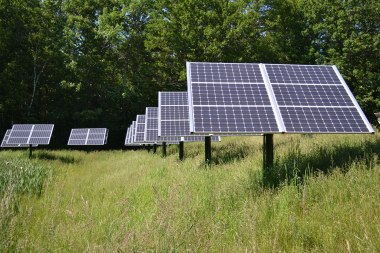
Solar array in Wisconsin
¶ Representatives of environmental groups gathered near the site of a proposed natural gas power plant in the township of North Bergen, New Jersey. They protested that the plant will increase carbon emissions, which pose a danger to the earth’s atmosphere and climate. They called on Gov Phil Murphy to act against the plant. [The Hudson Reporter]
¶ The Yale Program on Climate Change Communications carried out a study that reveals a jump in the number of Republicans who agree that climate change is caused by carbon emissions from human activities. The results showed a 9-point uptick in GOP voters who said they believed climate change was fueled by emissions. [Earth.com]
geoharvey is free and without ads.
geoharvey is not tax-deductible.
Posted in nuclear power, renewable power, solar, wind | 1 Comment »
Tags: nuclear, nuclear power, renewable power, solar power, wind power
May 12, 2018
World:
¶ Armenia gave a green light to the first large-scale solar power plant in the history of the country. The government has issued the letter of award to a consortium of Fotowatio Renewable Venture BV and FSL Solar of the Masrik-1 55-MW solar power plant, Armenia’s first competitively tendered independent power project. [Modern Diplomacy]
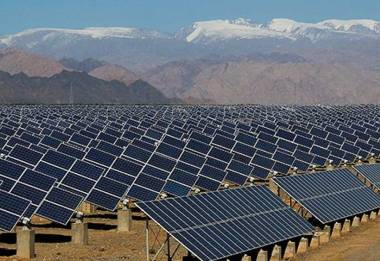
Solar array in China
¶ The Chief Executive Officer of Pakistan’s Alternative Energy Development Board said that the country’s renewable energy production had reached its highest level at 1568 MW, excluding hydro-power. Stressing wind power, he said that renewable energy production in Pakistan would increase to 1870 MW by the end of current year. [Pakistan Observer]
¶ China’s state-owned utility China Three Gorges launched a bid to take control of the biggest company in Portugal, Energias de Portugal, offering a premium of just under 5% on the power firm’s closing stock price. The total value of the proposed deal is €9.07 billion ($10.83 billion), excluding a 23% stake already owned by CTG. [South China Morning Post]

Water flow at the Three Gorges Dam
¶ Representatives of the German and Ugandan renewable energy sector successfully tested their jointly developed solutions for electricity and biogas supply in Uganda. Micro biogas plants have been in operation in Uganda for many years, but they typically cost around €1,000 ($1,200), and this is too high for much of the rural population. [Renewable Energy Magazine]
¶ The Latin America and Caribbean geothermal market is heating up, though somewhat slowly. With only one operating plant each in the Caribbean and South America, and a handful in Central America and Mexico, this region of the world still holds enormous, largely untapped potential for geothermal market growth. [ThinkGeoEnergy]
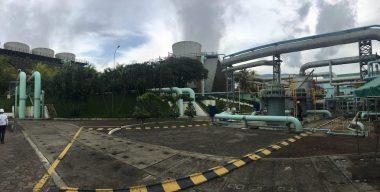
Geothermal plant (ThinkGeoEnergy, creative commons)
¶ Renewable energy company Ecotricity has presented the government of the UK with two proposals for alternative tidal lagoons, ahead of a joint select committee review of the Swansea Bay tidal lagoon project. They are both in the Solway Firth, one on the English side of the border and the other on the Scottish side. [Renewable Energy Magazine]
¶ Global wind turbine manufacturer Senvion has been awarded a 300-MW project by Alfanar to deliver the Bhuj Wind Project in Gujarat, India. The project includes supply and installation of 131 Senvion 2.3M120 turbines, which have a height of 120 metres. The project is expected to be commissioned within the next 18 months. [Renewable Energy Magazine]
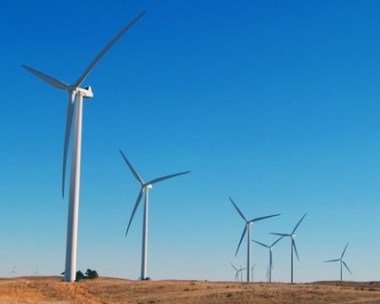
Wind farm (NREL photo)
¶ Iceland is pursuing further adoption of renewable energy, with incentives to promote electric vehicles and the installation of over 20 new ABB fast charging stations. A realization that Iceland was too dependent on fossil fuel imports led to corrective efforts. Today, 80% of the energy for the country comes from renewable sources. [Renewable Energy Magazine]
¶ According to the NI Water, a solar plant with 24,000 solar panels will provide 4.99 MW, enough to meet the demand of the Dunore Water Treatment Works in South Antrim, one of Northern Ireland’s largest treatment plants. DWTW is the third largest energy consumer among water treatment plants in the country. [pv magazine International]

South Antrim solar plant (Image: NI Water)
US:
¶ Sunrun is expanding, with a new office in Nevada during a resurgence in home solar in the state. Applications for home solar in Nevada are on a rapid rise; there were 287 in 2016 and 3,308 in 2017. The growth is the direct result of the federal solar investment tax credit combined with net metering policies for solar households. [Nasdaq]
¶ Elon Musk made some bold claims in tweets about the Boring Company. He said the tunnel under Los Angeles is nearly done and will soon be in use. He said work on a tunnel linking New York City and Washington, DC, has already begun. And he said a Hyperloop connection between Los Angeles and San Francisco would begin next year. [CleanTechnica]

Boring Company Los Angeles Pod Concept
¶ E.ON completed its North American Renewables Operation Center in Austin, Texas. This boosts its ability to manage its own 3.6-GW capacity portfolio, along with 2.9 GW of capacity for other owners. Some services to be provided by the center are scheduling and dispatching power, and remote power and voltage management. [Solar Power World]
¶ In Michigan, following a commitment from Traverse City commissioners to power all city facilities with 100% renewable energy by 2020, Traverse City Light & Power board members will consider establishing a similar community-wide goal for their entire customer base. The state requirement is that utilities be at 15% by 2021. [Traverse City Ticker]
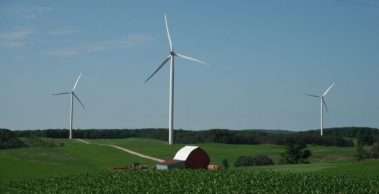
Wind turbines at a farm
¶ Democrats joined Republicans to pass a bill looking for a place to deposit the growing stockpile of nuclear waste generated by power plants across the country. This includes, for example, the 3.55 million pounds of spent fuel at the San Onofre Nuclear Generating Station, or SONGS, sitting just yards from the Pacific Ocean. [The Keene Sentinel]
¶ Exelon Generation reduced output Thursday night and Friday morning at four of its nuclear units in Illinois. At least three of the plants ramped down because of low power prices in the PJM Interconnection market and transmission grid congestion, the company said. Two of those units have since returned to full power, Exelon said. [Platts]
geoharvey is free and without ads.
geoharvey is not tax-deductible.
Posted in nuclear power, renewable power, solar, wind | Leave a Comment »
Tags: nuclear, nuclear power, renewable power, solar power, wind power
May 11, 2018
Opinion:
¶ “How Relying on Oil Makes Us More Vulnerable to Cyberattacks” • What’s the difference between a major American city and a war-torn country? One difference is unobstructed access to resources. An American city could become like a war zone quicker than you might imagine. All it would take is a successfully hacked electrical grid. [Fortune]

Transmission lines (Bloomberg via Getty Images)
¶ “We Will Prevent Catastrophic Climate Change!!” • Of late, I feel increasingly confident that environmentalists will be able to make that claim soon. A few experts, like Tony Seba and Ramez Naam, are starting to make the claim. I had been wary of the idea, but increasingly I think they are right because of the exponential growth of renewable energy. [CleanTechnica]
¶ “Can Slime Help The Self-Driving Electric Car Industry?” • A characteristic of slime mold could help facilitate the design of our future electric mobility. It adapts to its environment with a non-centralized system. Though it has no brain, it can even learn and be trained. Researchers are studying slime to improve the algorithms of self-driving vehicles. [CleanTechnica]

Slime mold
World:
¶ Gas and electricity supplier Npower is raising energy bills by an average of £64 a year for a million customers. The average 5.3% dual fuel price hike comes into effect on 17 June and follows earlier rises announced last month by its “Big Six” rivals. British Gas is increasing prices by 5.5% from 29 May, while EDF is raising electricity prices by 2.7%. [BBC]
¶ Australia’s Clean Energy Regulator said 8 GW of renewable capacity has been built since January 2016, is being built now, or has power purchase agreements and is expected to be under construction by year’s end. That is 1,600 MW more than what is needed to meet the Renewable Energy Target of 33,000 GW by 2020. [The Australian Financial Review]

Wind farm in New South Wales (Photo: Andrew Taylor)
¶ GE Renewable Energy has announced its first wind energy project in Chile under a partnership with Arroyo Energy Compañía de Energías Renovables Limitada. GE will supply six 3.6-MW turbines with 137-meter rotors, to be installed at the El Maitén and El Nogal wind sites in the south of the country, for a total of 21.8 MW. [North American Windpower]
¶ Carlos Alvarado, the new president of Costa Rica, announced the country’s “titanic and beautiful task of abolishing the use of fossil fuels in our economy to make way for the use of clean and renewable energies.” He made the remarks at his inauguration speech in front of a crowd of thousands, according to a report in the Independent. [EcoWatch]

Costa Rica
¶ The British government has proposed to arrange all ¥2 trillion ($18.2 billion) in lending that Hitachi says is needed to build a nuclear power plant in Wales, as the Japanese side seeks to reduce its risk and encourage UK investment. The plan also calls for a total investment of ¥900 billion, with guarantees for corporate loans. [Nikkei Asian Review]
¶ UPS is serious about reducing its carbon footprint, and if this also reduces operating costs, so much the better. Since 2009, it has invested $750 million into high-tech and alternative-fuel vehicles. Soon, in London and Paris, UPS will begin testing a fleet of electric delivery vans from Arrival, a UK-based specialist in lightweight electric vehicles. [CleanTechnica]

UPS electric vans
US:
¶ President Donald Trump’s administration has quietly axed the monitoring system NASA runs to keep track of greenhouse gas levels, the US journal Science revealed. The Carbon Monitoring System, a project costing $10 million (£7 million) per year, which remotely tracks the world’s flow of carbon dioxide, is to lose funding. [BBC]
¶ Since FirstEnergy Solutions asked the DOE for bailout of nuclear and coal plants, opposition has submitted concerns to the DOE that this would mean subsidizing uneconomic old power plants that would otherwise retire. The opposition is an unlikely coalition of renewable energy, natural gas, energy efficiency, and oil industry associations. [CleanTechnica]
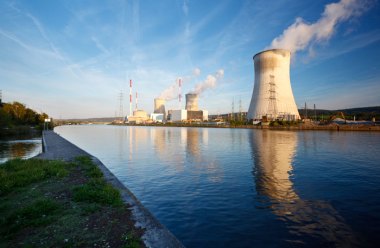
Coal-burning power plant
¶ Voters in Newport, New Hampshire, approved a 2.2-MW solar energy project capable of providing the entire annual energy needs for Newport town and school facilities. The vote was 652 to 235. The solar installation will be the largest municipal project in New Hampshire and one of the state’s largest solar projects overall. [Green Energy Times]
¶ The Arkansas Public Service Commission found that the Wind Catcher Energy Connection project is in the public interest. The $4.5 billion project includes a 2,000-MW wind farm in the Oklahoma Panhandle, and construction of a dedicated power line about 350 miles long that will carry the wind energy to the Tulsa area. [Transmission and Distribution World]
Transmission lines under wind turbines
¶ Pacific Gas and Electric Co and ForeFront Power signed the first community solar project agreement under PG&E’s Regional Renewable Choice program. It allows all customers, including renters and those who cannot install solar, to use solar power for up to 100% of their electricity without having to install private rooftop solar panels. [Electric Light & Power]
¶ EDP Renewables North America has secured two power purchase agreements to sell 150 MW of electricity from the Broadlands wind farm in Illinois. One deal will see the Wabash Valley Power Association buy 100 MW from EDPR under a 20-year deal, with Commercial & Industrial securing 50 MW over 15 years for the other contract. [reNews]
geoharvey is free and without ads.
geoharvey is not tax-deductible.
Posted in nuclear power, renewable power, solar, wind | Leave a Comment »
Tags: nuclear, nuclear power, renewable power, solar power, wind power
May 10, 2018
Opinion:
¶ “State Clean Energy Laws Make New England Grid More Resilient” • The New England power grid is more resilient and reliable thanks to state laws that promote renewable energy and efficiency and reduce dependence on fossil fuels. That is our evidence-based message to the Federal Energy Regulatory Commission. [Natural Resources Defense Council]

Renewable energy in New England (Chris Devers via Flickr)
¶ “Cracks in British nuclear reactor ring power alarm bells” • Cracks in the core of a Scottish nuclear reactor could signal that most of Britain’s ageing plants will not last as long as predicted. Nuclear reactors generate just over 20% of Britain’s electricity, and almost half of that capacity was scheduled to go offline by 2025. [Nasdaq]
World:
¶ As costs for wind and solar energy continue to fall, oil and gas companies are increasingly getting into the renewables business, oil executives and major oil and gas investors attending an investment forum in Calgary were told. Costs for solar power have fallen by 90% while the costs for wind power have fallen by half. [Financial Post]

Solar array (Peter Macdiarmid | Getty Images)
¶ German utility Uniper launched a pilot scheme to produce methane gas at its Falkenhagen site from wind power as the country seeks wider uses for renewable energy. The plant, set up five years ago in Germany’s wind-swept Brandenburg state, already produces green hydrogen. Carbon for the methane will be supplied from a bio-ethanol plant. [Reuters]
¶ Seabased, a Swedish wave energy company, is working with Infocom Connect from the UAE to construct the first wave energy installation in the Canary Islands. It will produce 5 MW of power, most of which will be used to run a desalinization plant. If the project is successful, similar facilities could supply power to the local utility grid. [CleanTechnica]
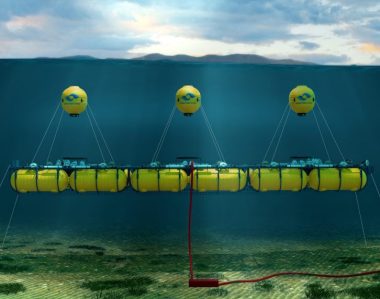
Wave energy system
¶ Britain and Hitachi Ltd are thrashing out a deal for two new UK nuclear plants akin to how a controversial agreement was struck with EDF to build the nation’s first new reactor since 1995. There is some question about the accuracy of reports that the UK government will guarantee loans for construction of the two plants in Wales. [Bloomberg]
US:
¶ Hawaii’s position as one of the leading US states for energy storage deployment shows no sign of weakening as Hawaiian Electric Co last week announced 120-MW of new battery storage across two projects in Oahu. One will be a 20-MW/80-MWh system, and the other will have 100-MW/100-MWh of storage capacity. [Energy Storage News]
Oahu (Image: Wikimedia | wppilot)
¶ The US Energy Information Administration projects that 21 GW of gas-fired generators will be brought online in 2018, out of a total 32 GW of new capacity expected to be added this year. If that is correct, 2018 will be the first year since 2013 in which renewables failed to account for a majority of new generating capacity. [Daily Energy Insider]
¶ State regulators in Washington stepped up their activism on the climate front by telling some local utilities to reconsider the carbon-emission costs of producing electricity from coal and other fossil fuels. The Washington Utilities and Transportation Commission sent the directives to three utilities that serve over 1.47 million customers. [Seattle Times]

Colstrip power plant in Montana (Mike Siegel | The Seattle Times)
¶ United Illuminating has completed the Woodbridge microgrid, a project funded through Connecticut’s Microgrid Pilot Program. The microgrid will power police, fire, and shelter services during storms, blackouts, and any other grid emergencies. A fuel cell, located at the local high school serves as the microgrid’s power source. [Microgrid Knowledge]
¶ Denton, Texas was the second city in the state to commit to sourcing 100% of its electricity from renewable energy. It has an ambitious goal of doing this by 2020. The city’s Public Utilities Board has voted unanimously to approve a 15-year contract with NextEra for the output of a 100-MW solar project to be built in West Texas. [pv magazine USA]

Solar array (Image: Cyrus Reed, Lone Star Sierra Club)
¶ In the 1890s, Samuel Insull, the founder of Commonwealth Edison, began providing energy in Illinois with renewables-based microgrids. More than a century later, Illinois is once again embracing renewables-based microgrids, with a handful of the most innovative microgrids now being developed and launched in Chicago. [Microgrid Knowledge]
¶ The California Energy Commission has voted unanimously to adopt new energy efficiency standards, which would make solar panels a requirement for new home construction. While the vote was a big step forward, the proposed new standards will still have to go to the California Building Standards Commission for final consideration later this year. [CNN]

Rooftop solar system (Photo: David Paul Morris | Bloomberg)
¶ The Connecticut House of Representatives approved sweeping changes to the state’s energy policy that drew mixed reviews from environmentalists. Senate Bill 9, which had already been approved by the Senate, passed the House by a vote of 100-45. It now goes to Gov Dannel Malloy, one of the chief proponents of many parts of the bill. [Hartford Business]
¶ The DOE issued a request for information for the development of small-scale, modular, coal-based “power plants of the future.” They would be low cost facilities, capable of performing load-following to meet the evolving demands of the power grid. But economic factors indicate that the technology may not have a future. [Greentech Media]
geoharvey is free and without ads.
geoharvey is not tax-deductible.
Posted in nuclear power, renewable power, solar, wind | Leave a Comment »

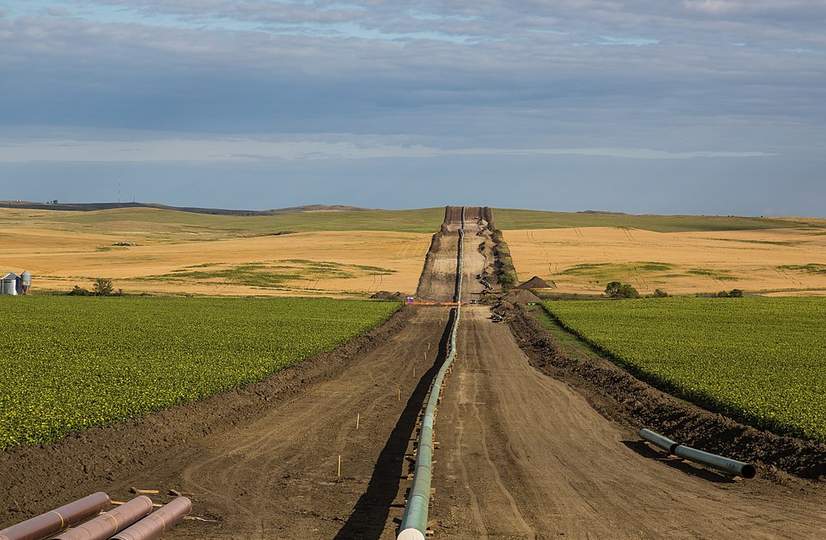
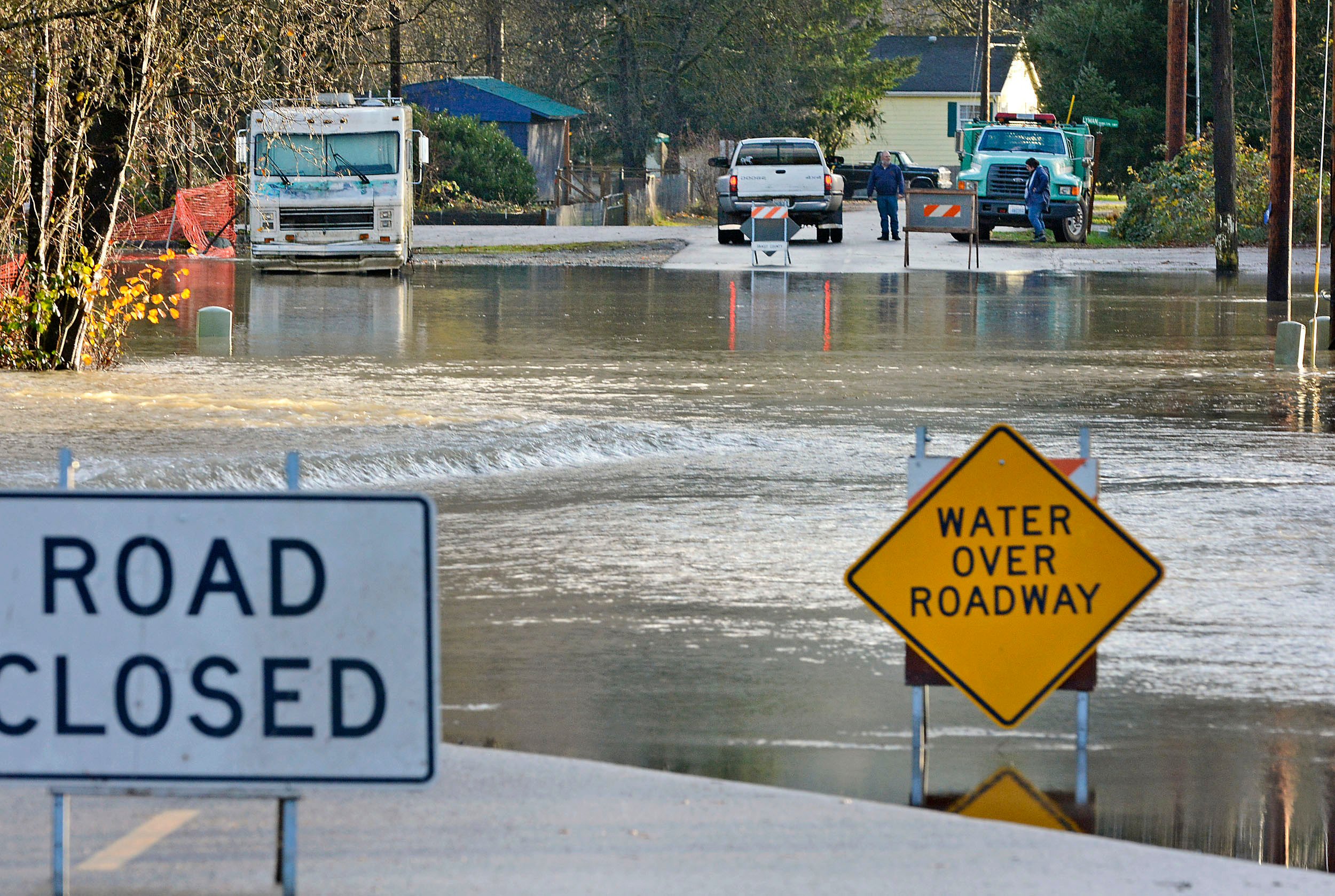

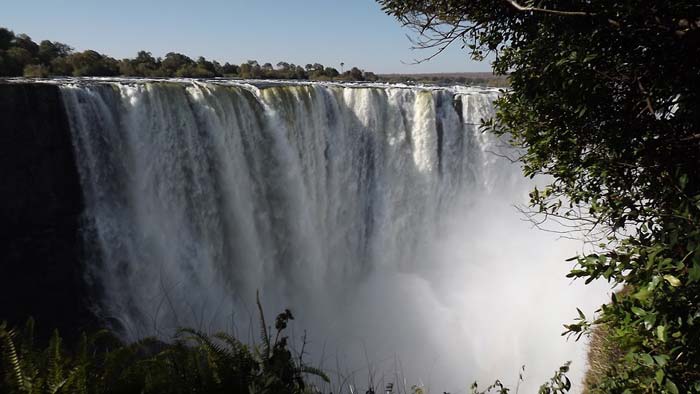

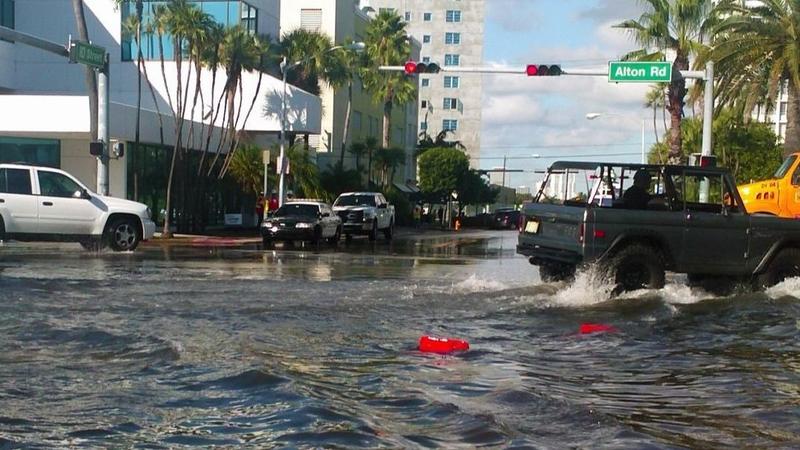


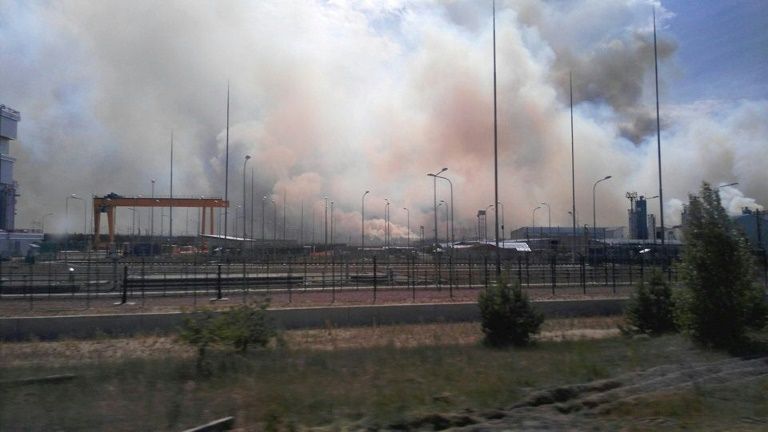







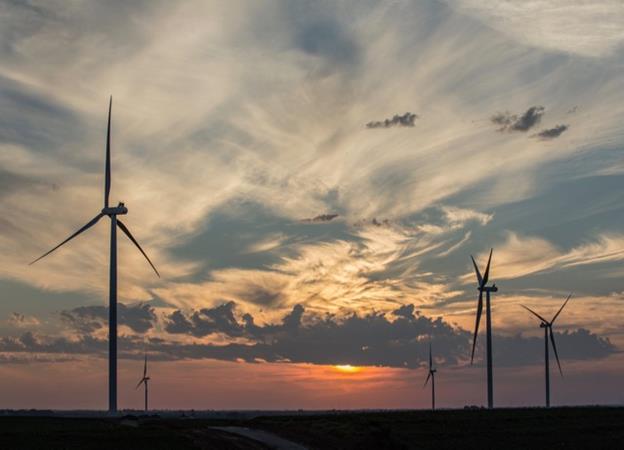
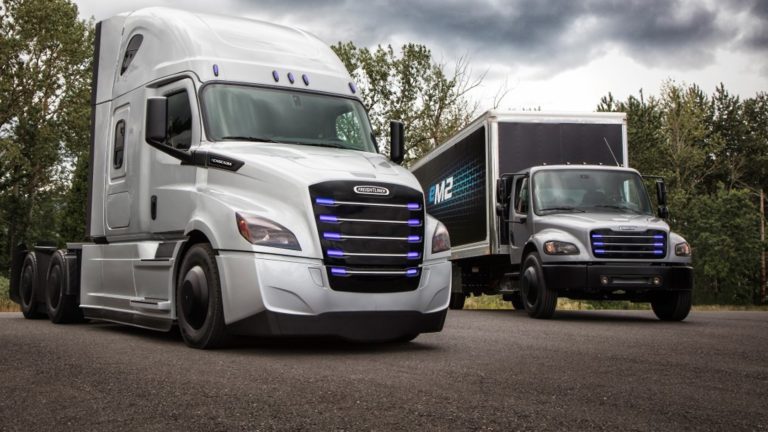
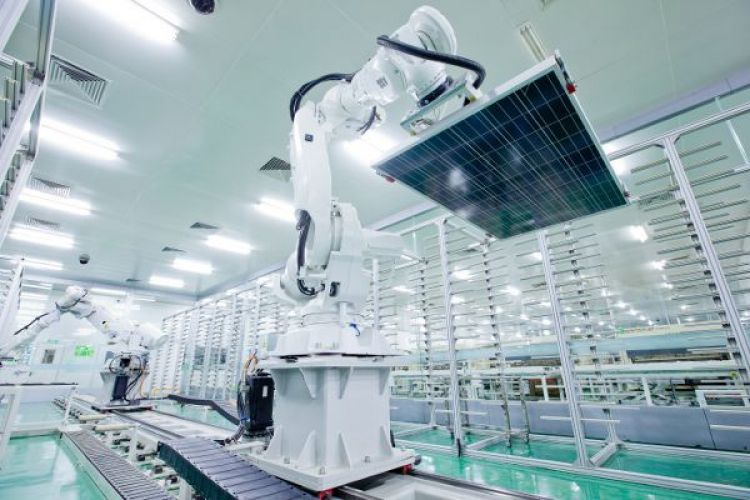
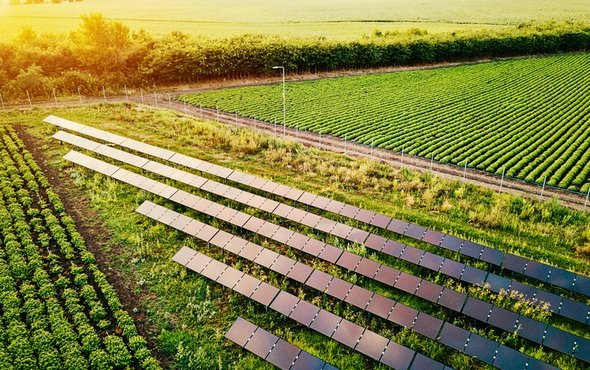

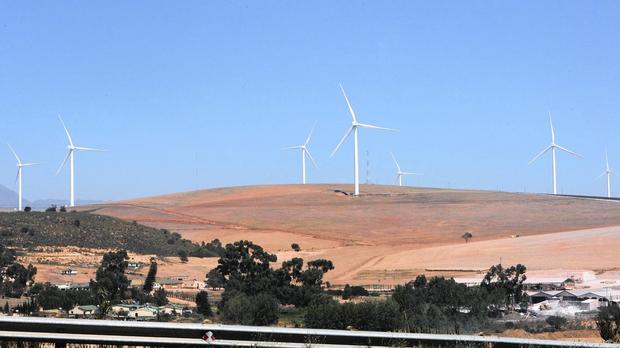



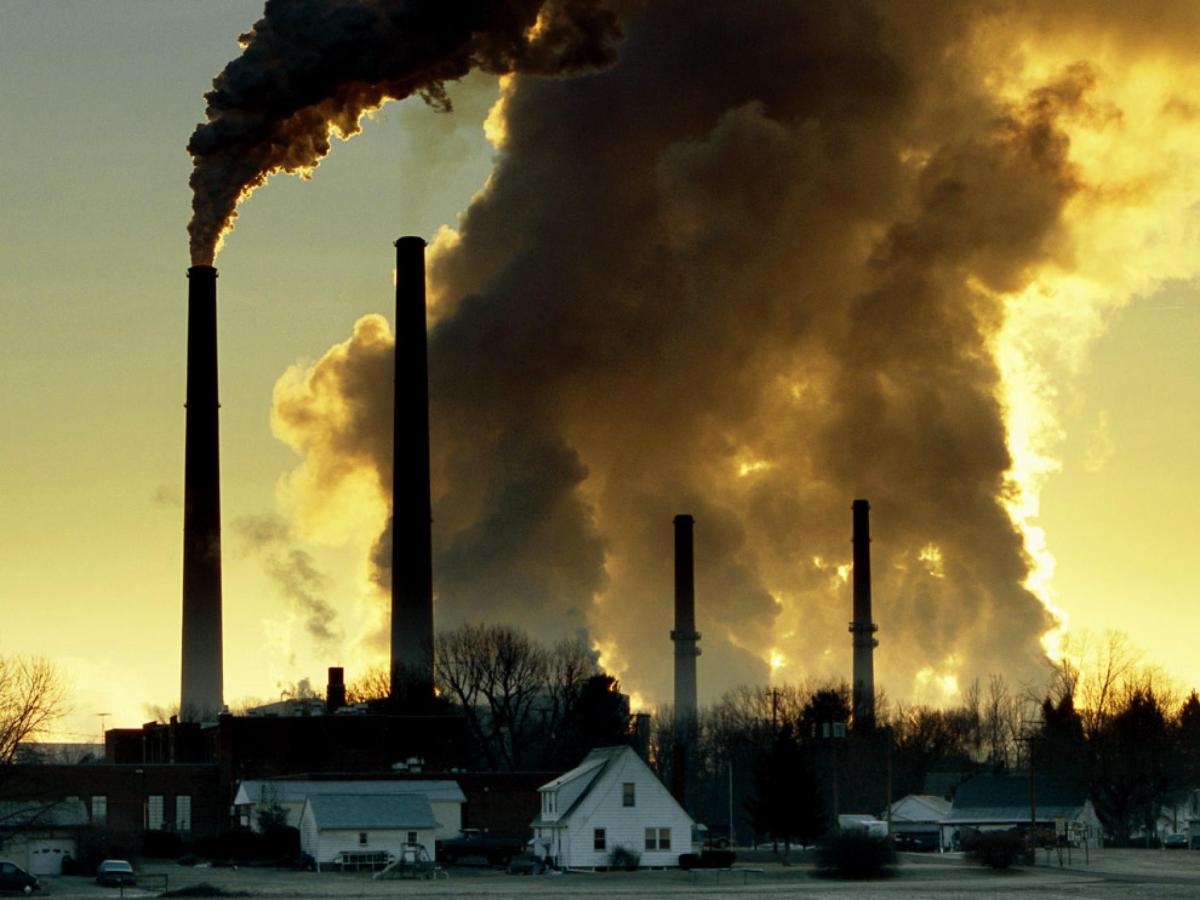
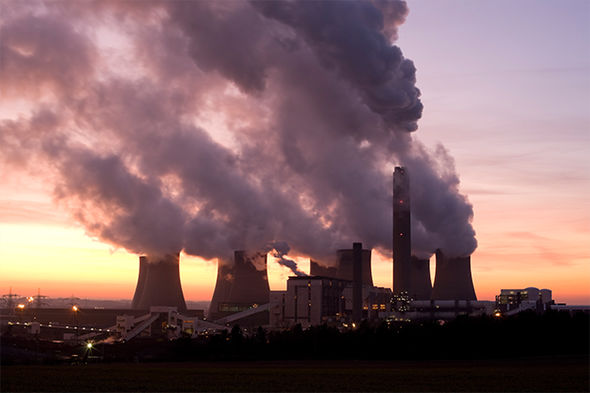
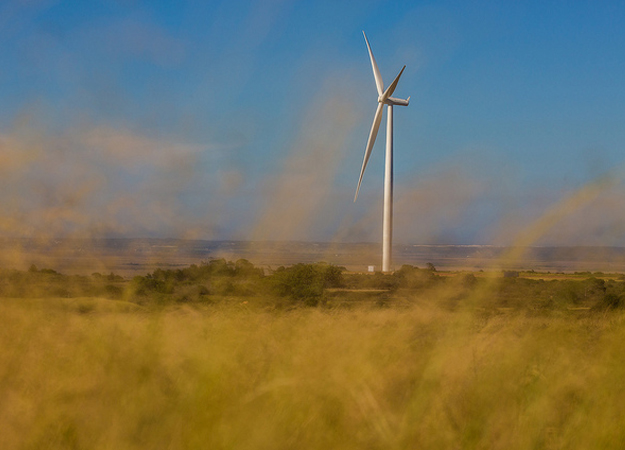
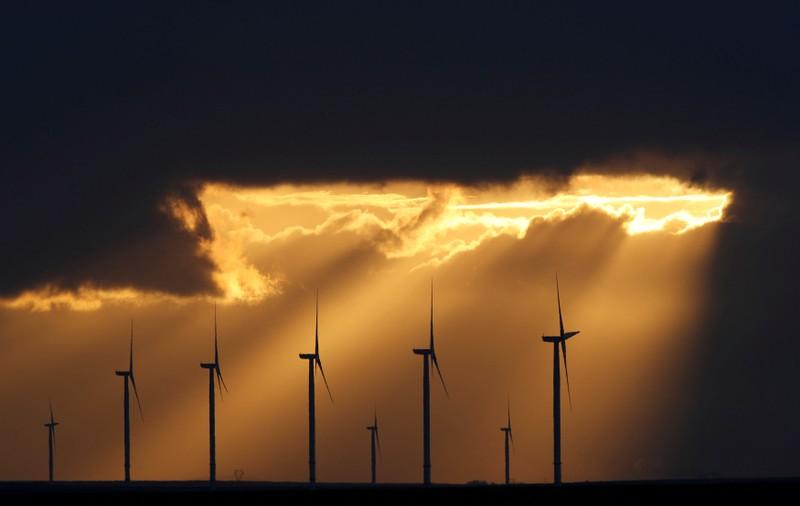
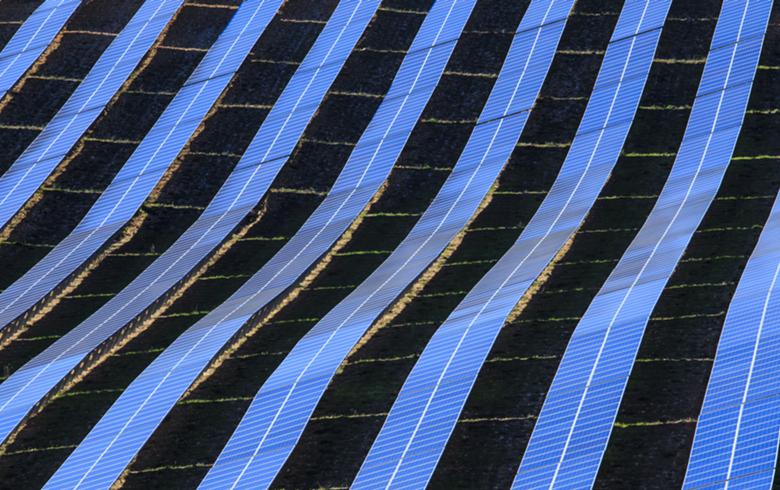


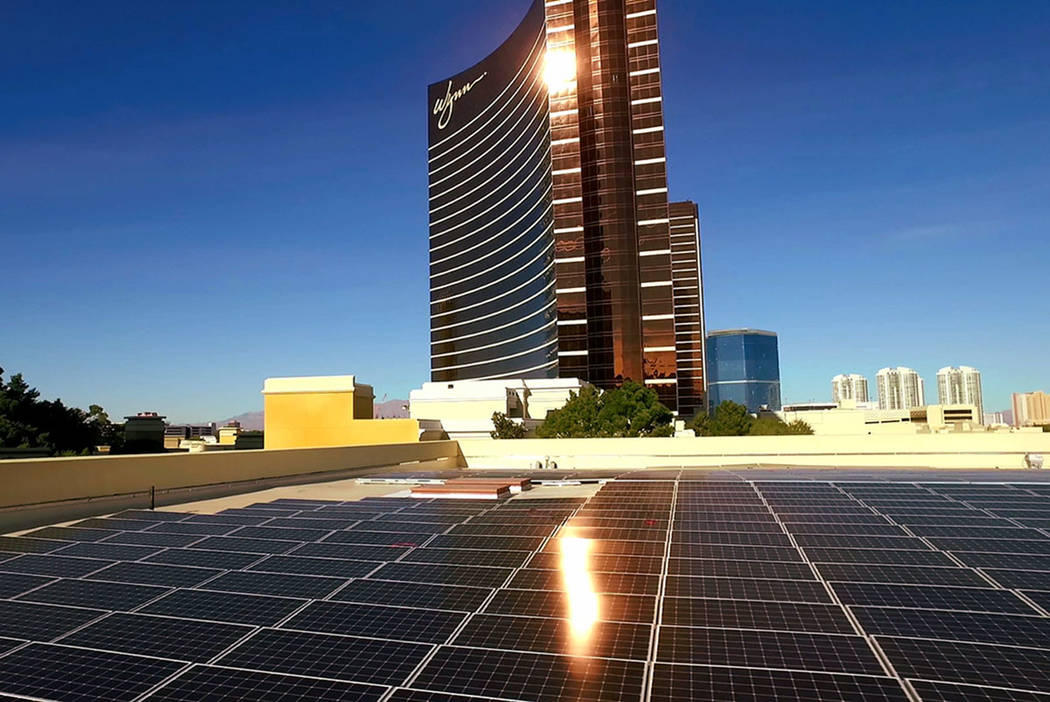
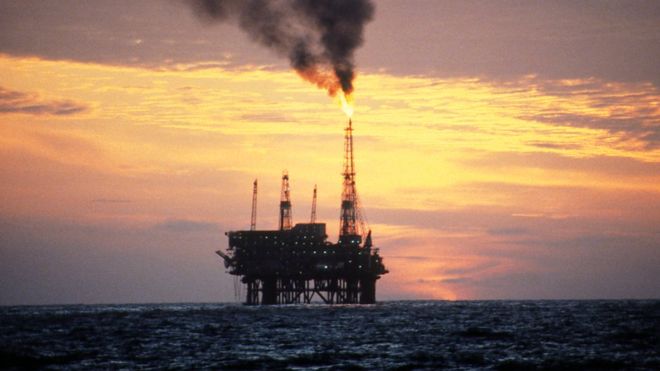


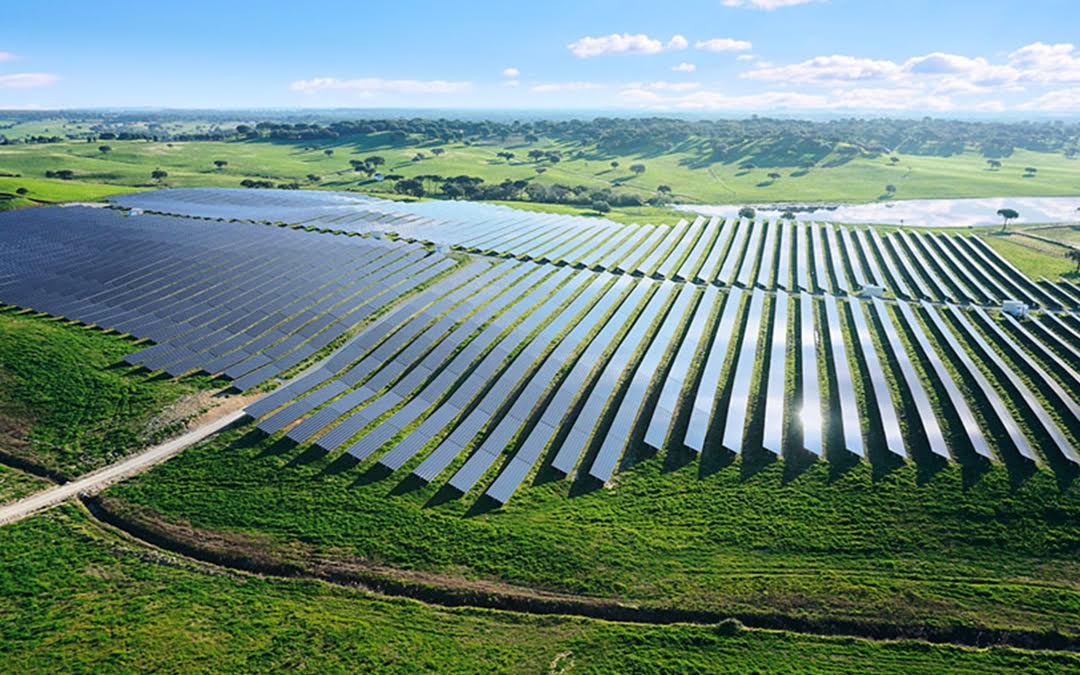
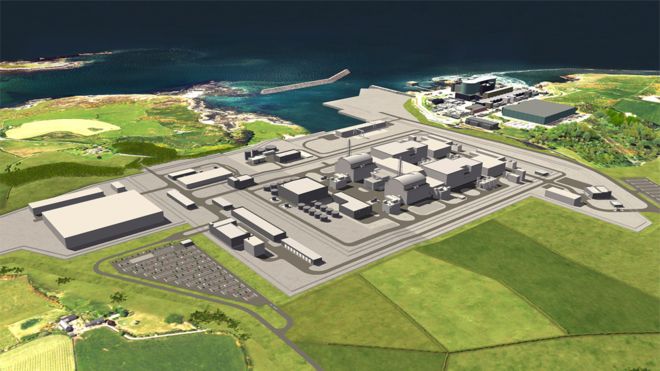



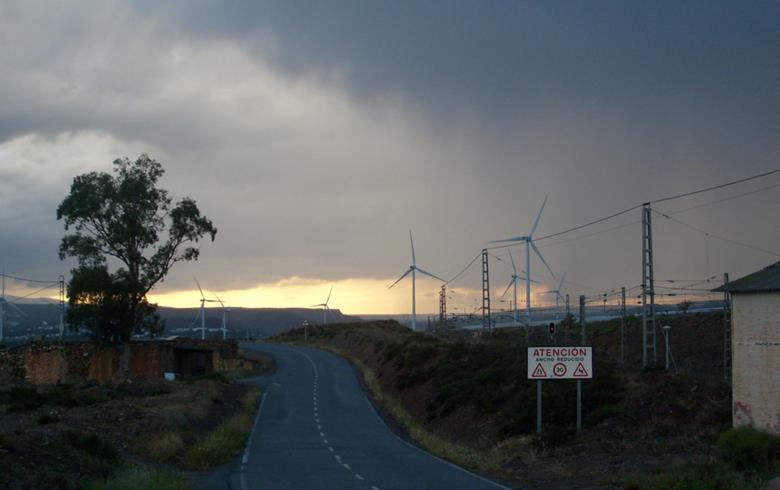
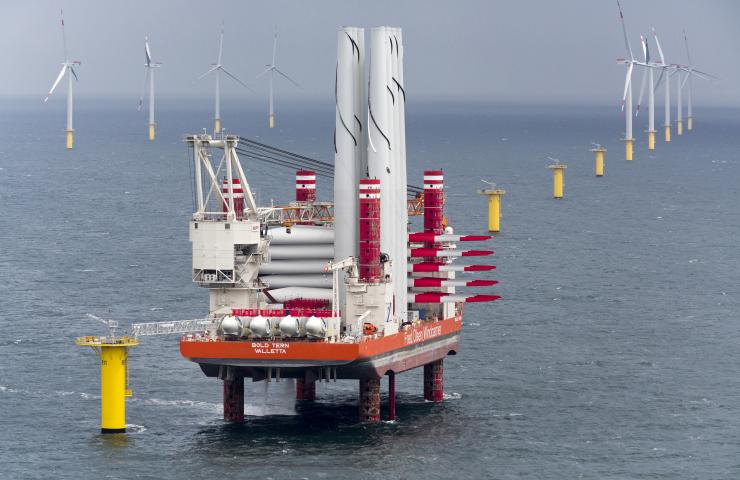
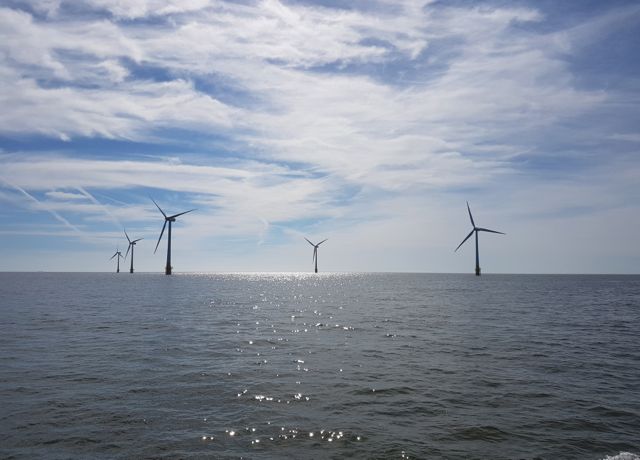

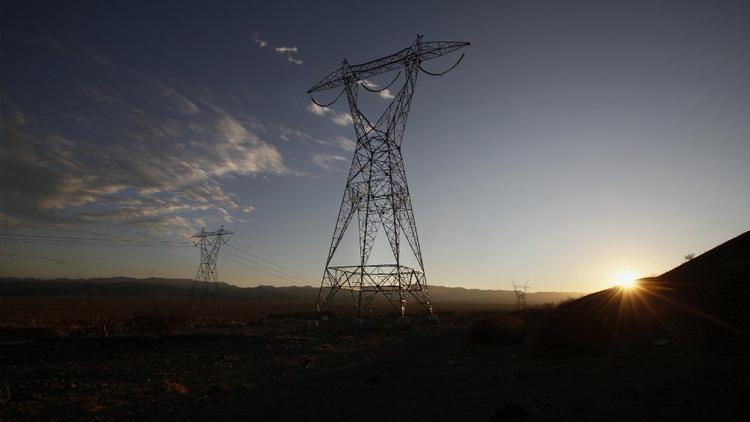
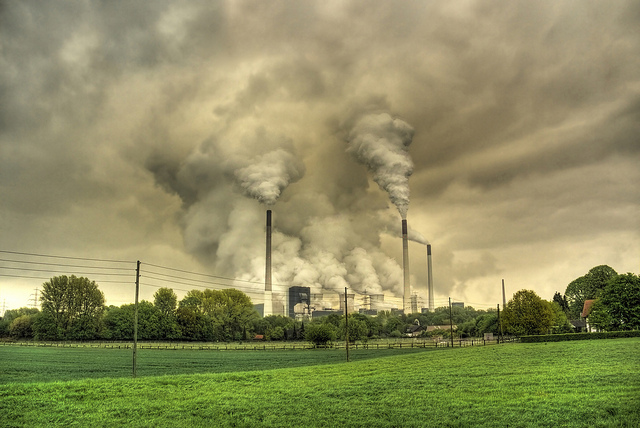





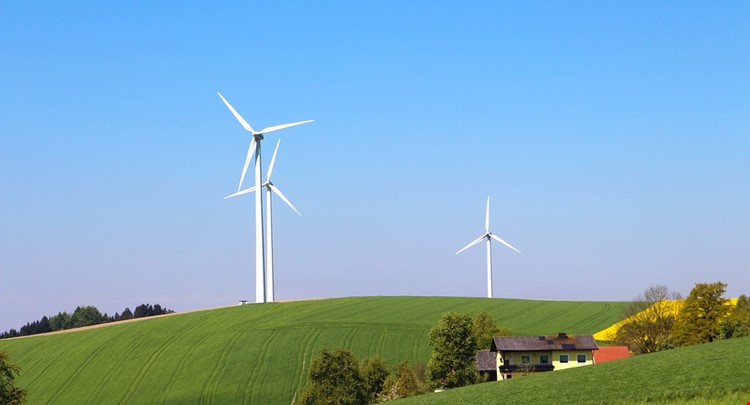


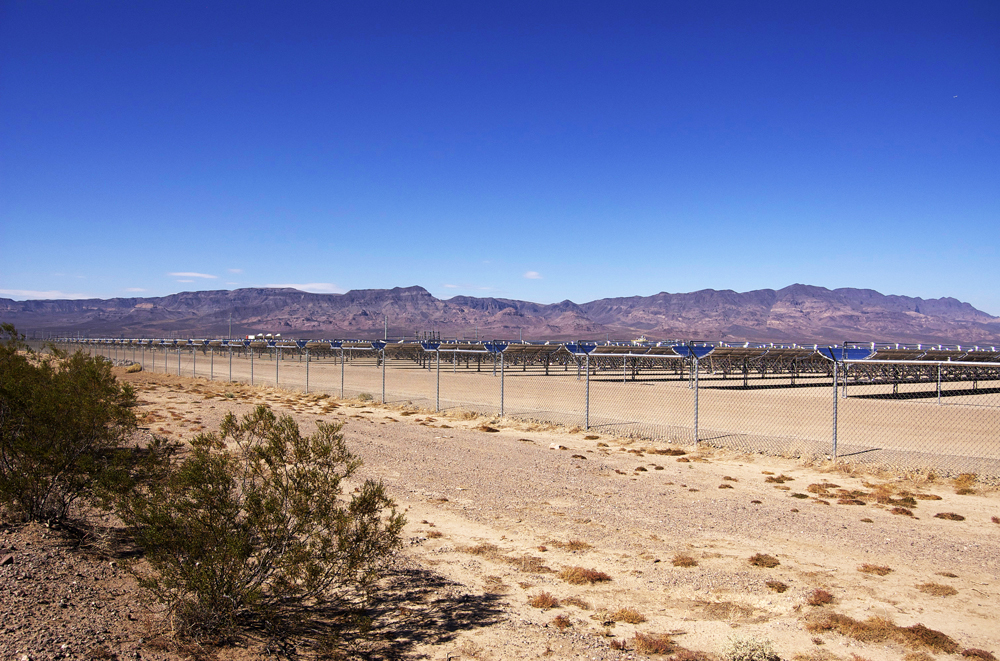



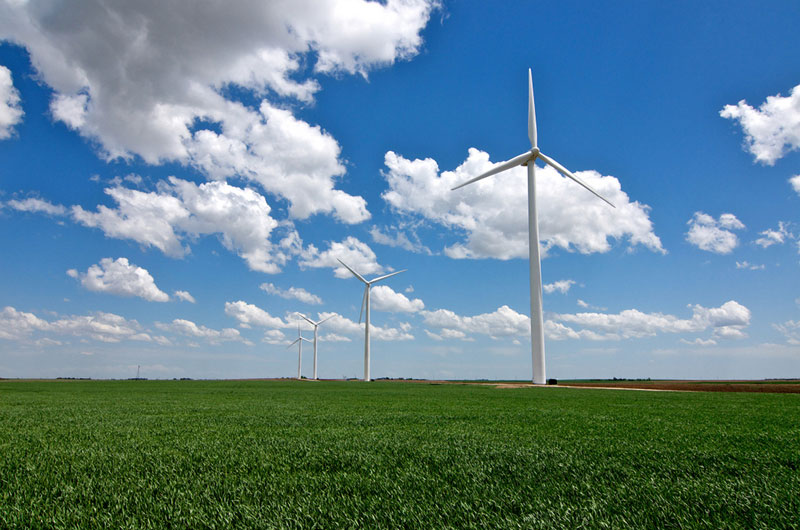

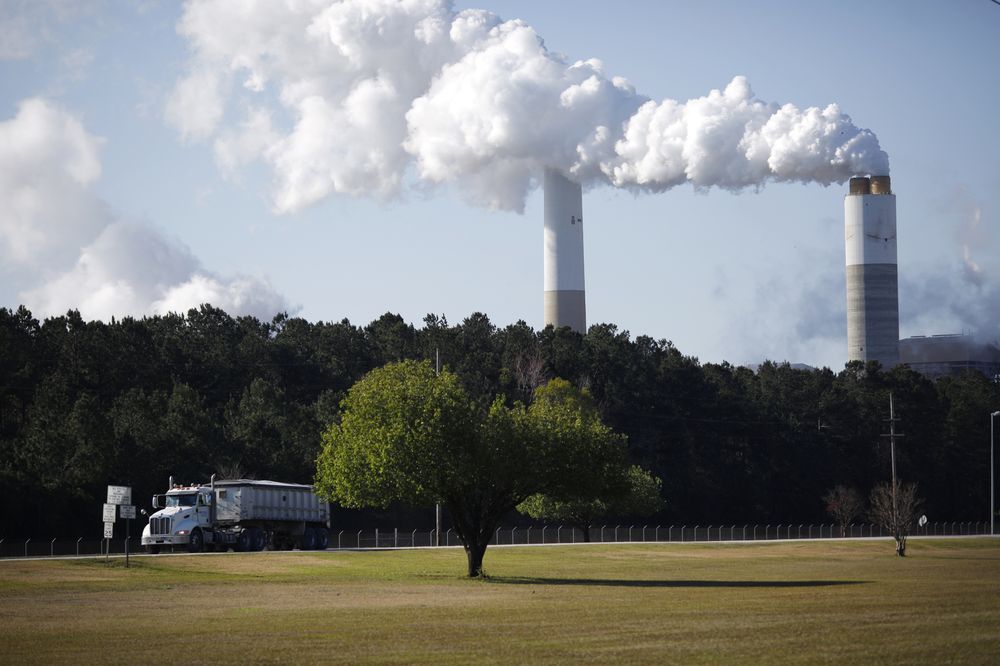



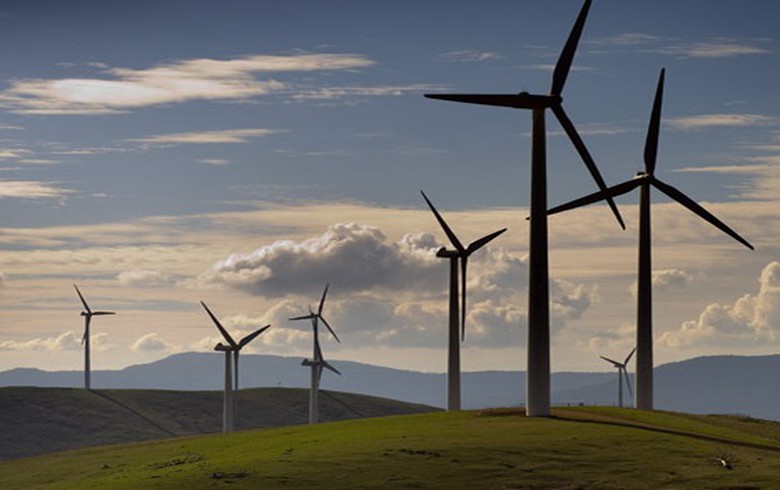

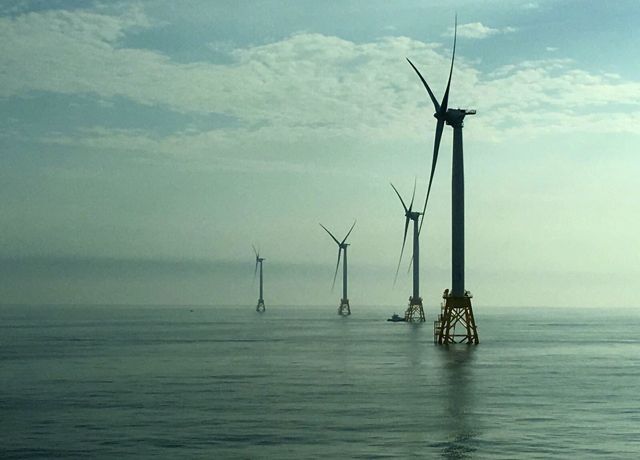






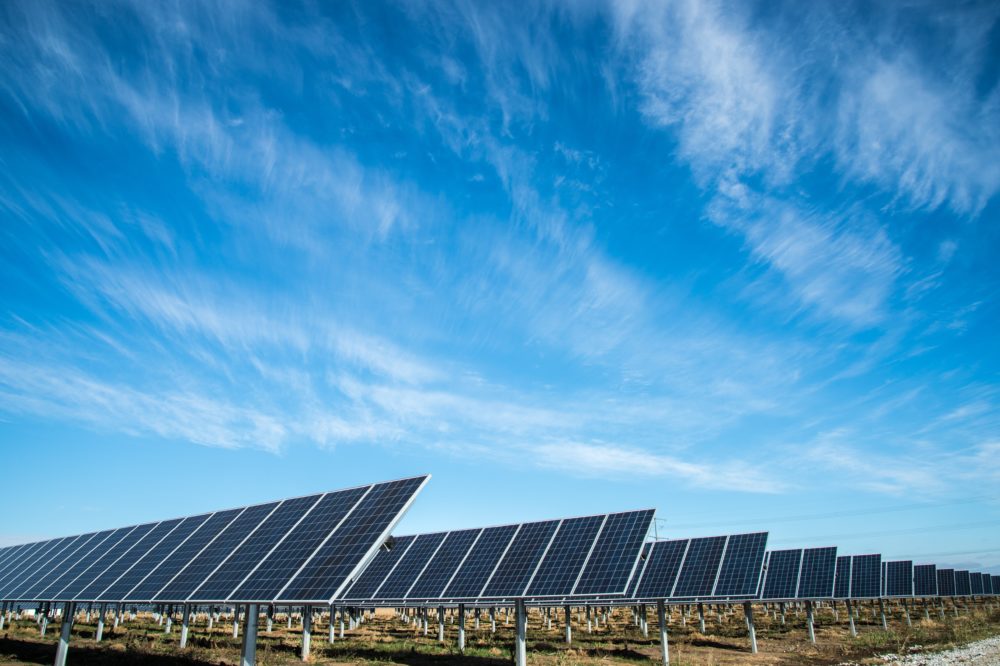


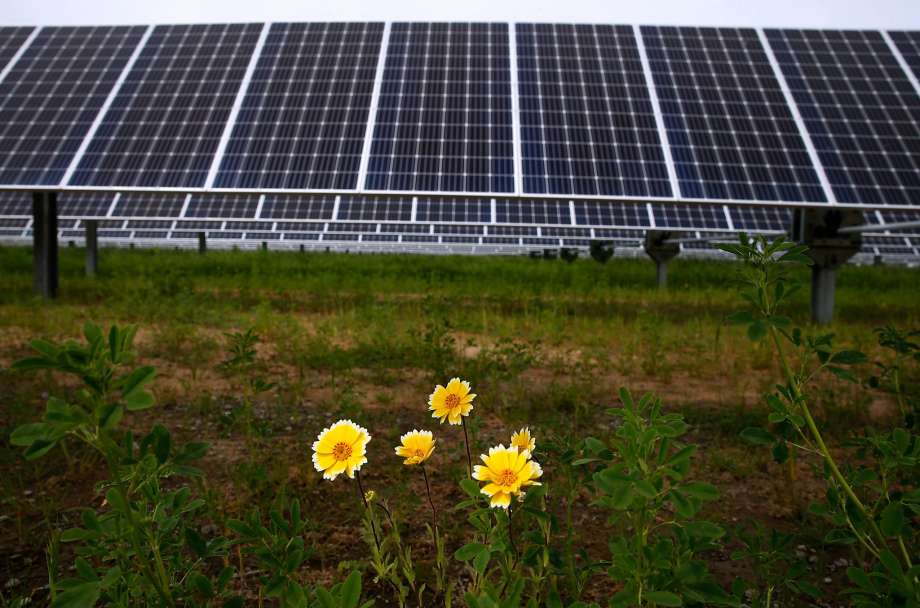




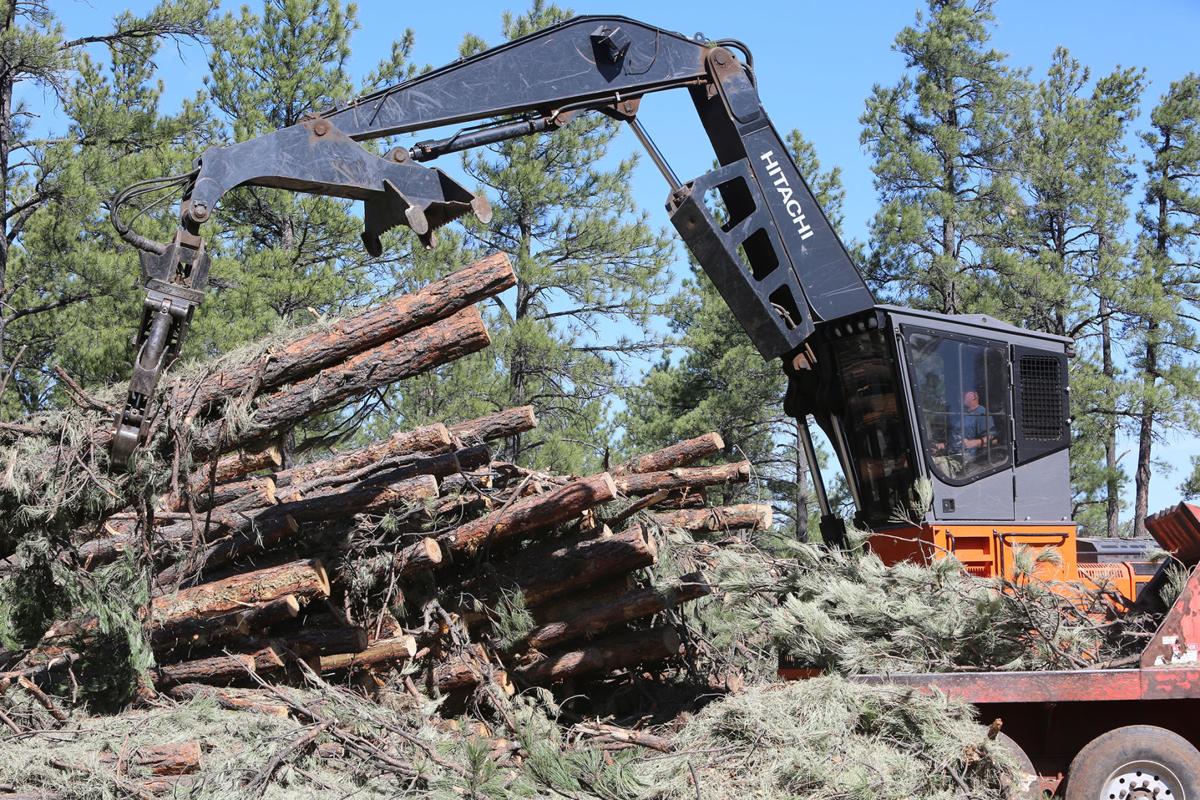


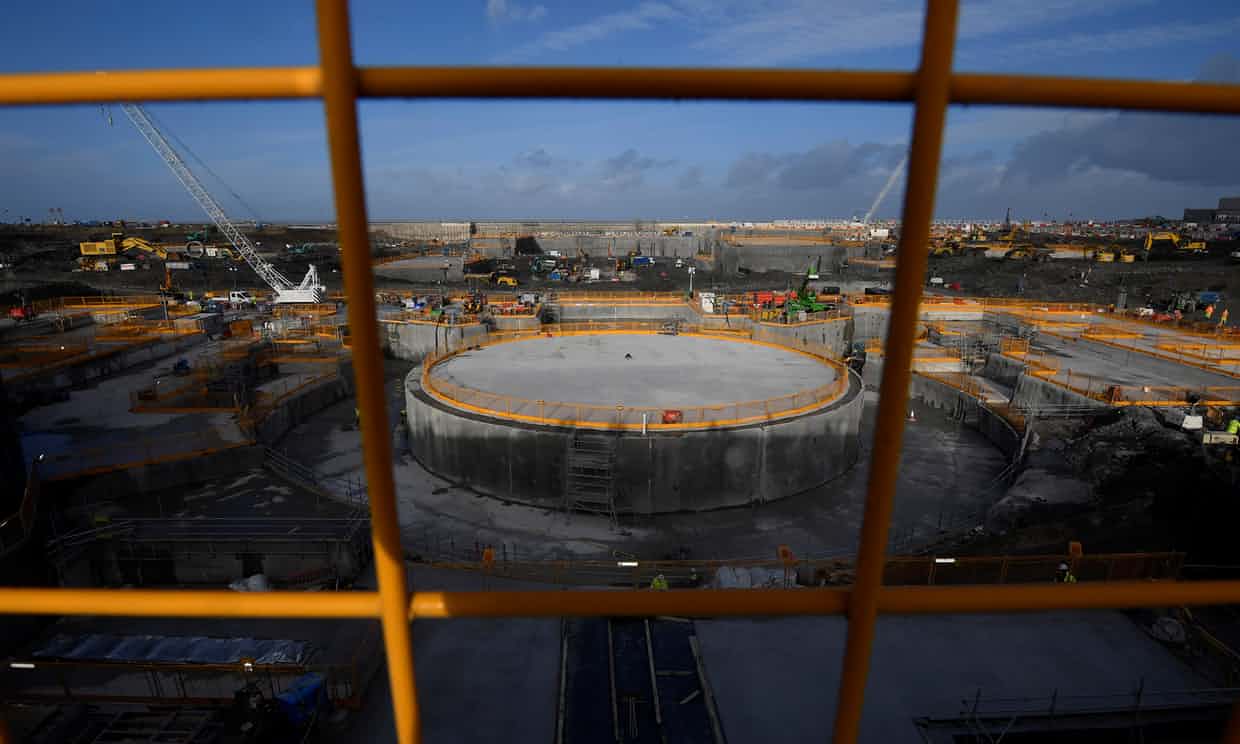



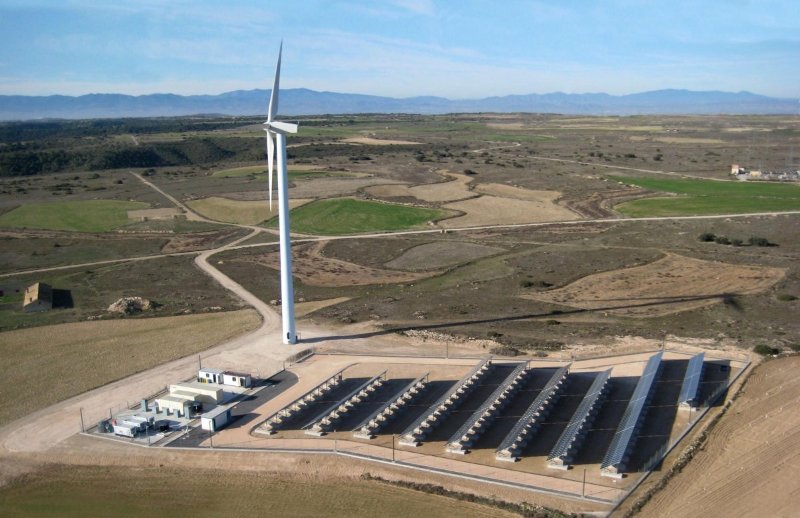

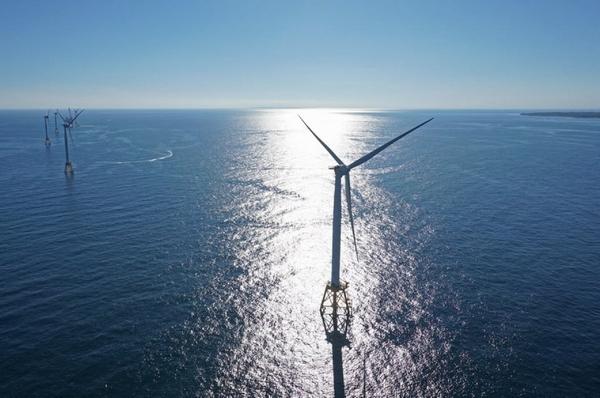

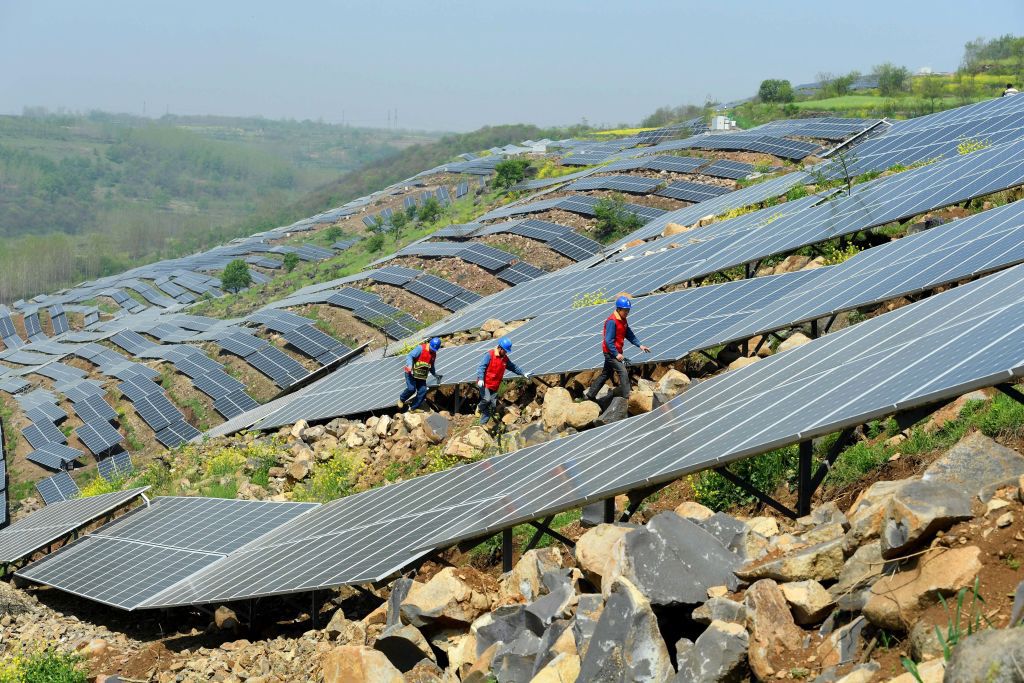

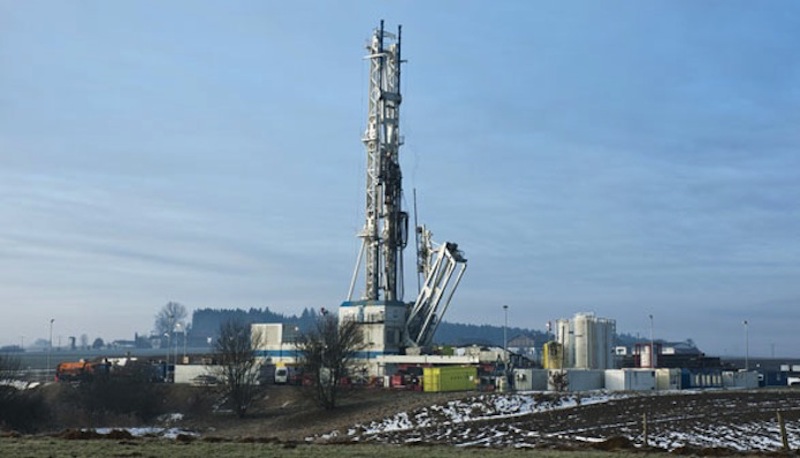
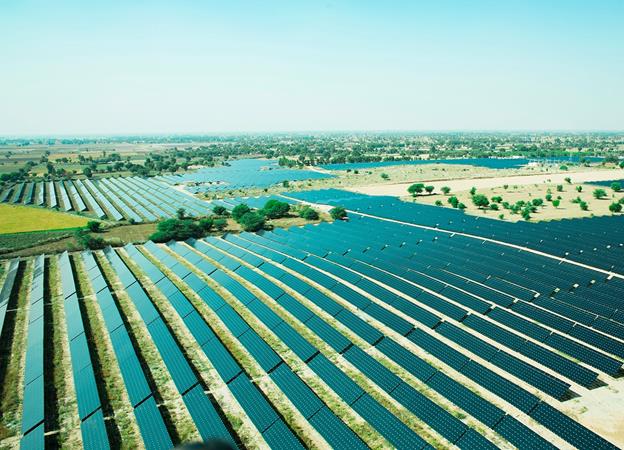
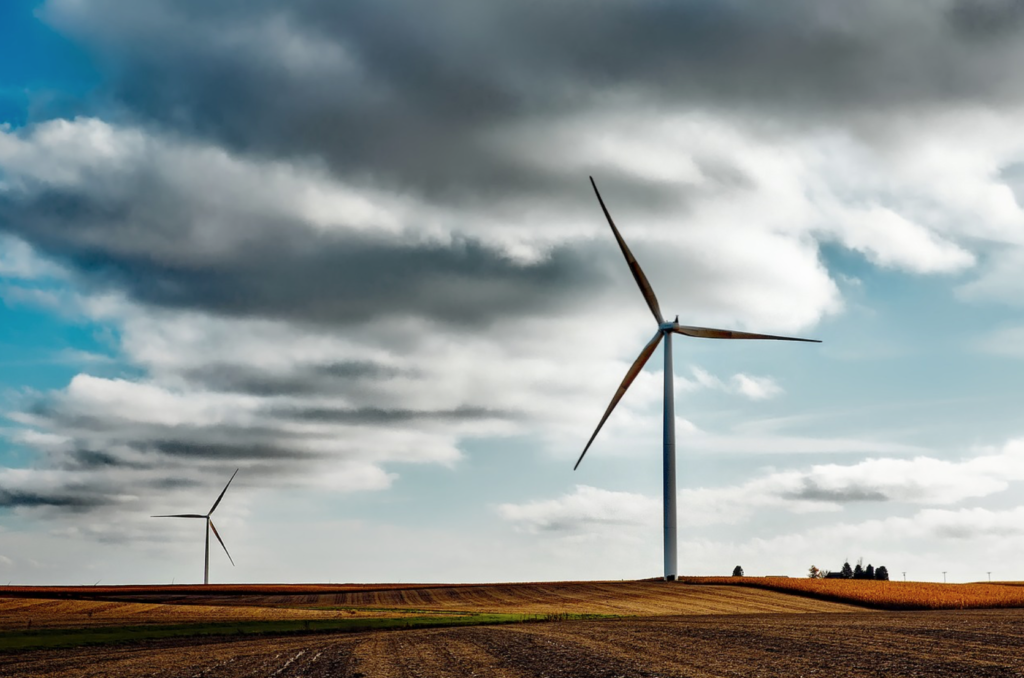


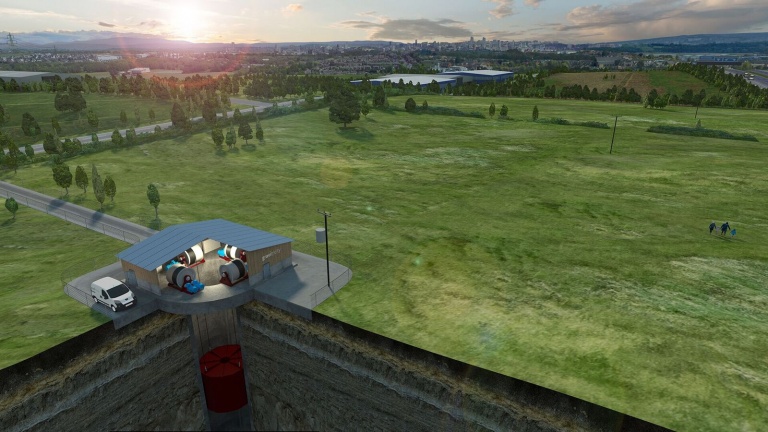


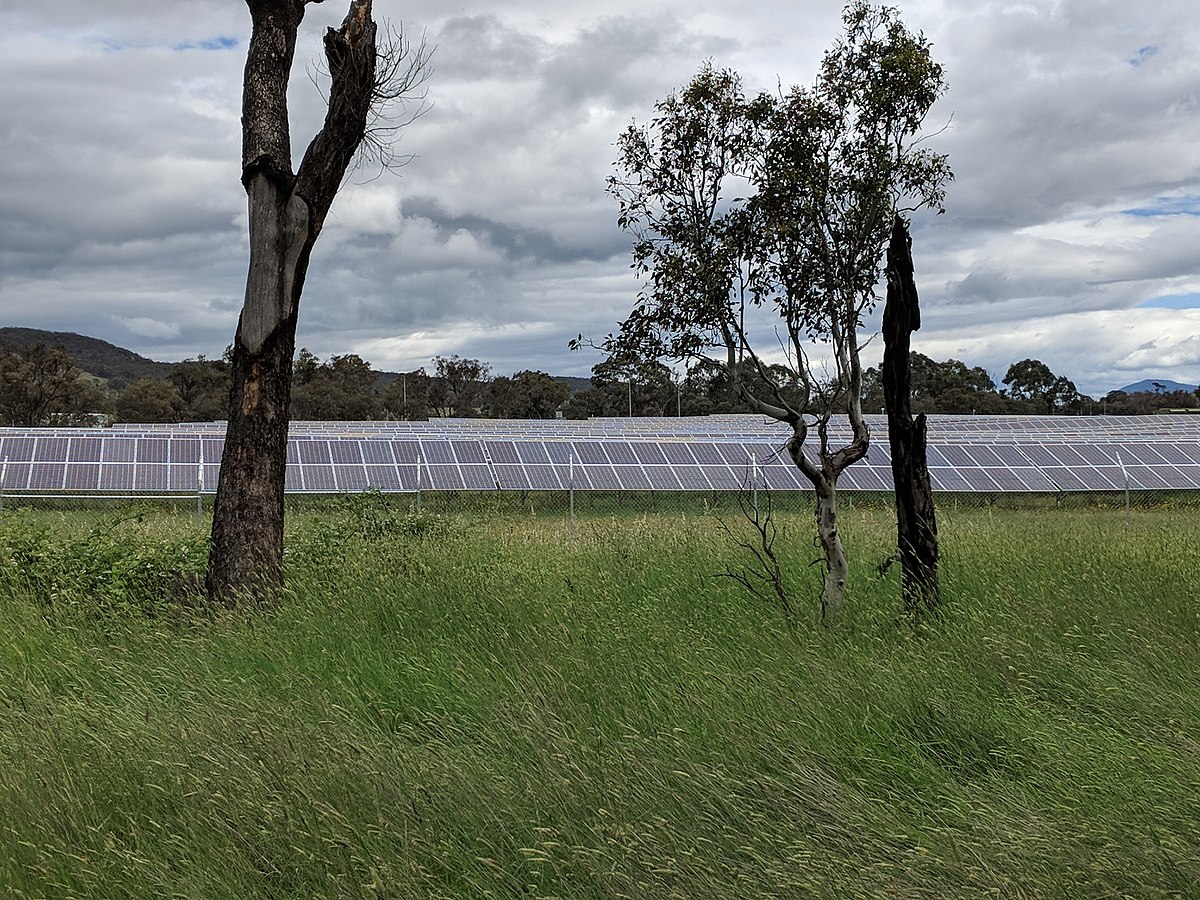
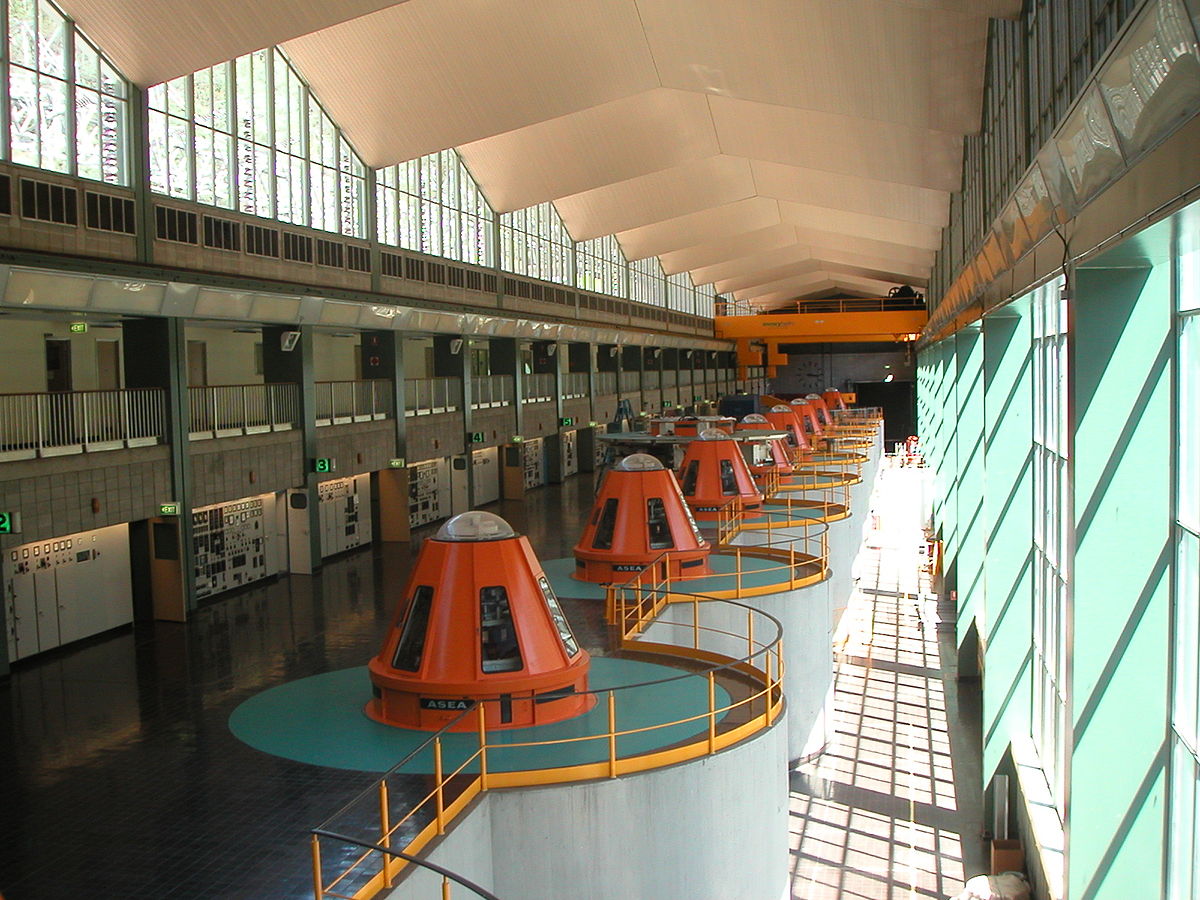


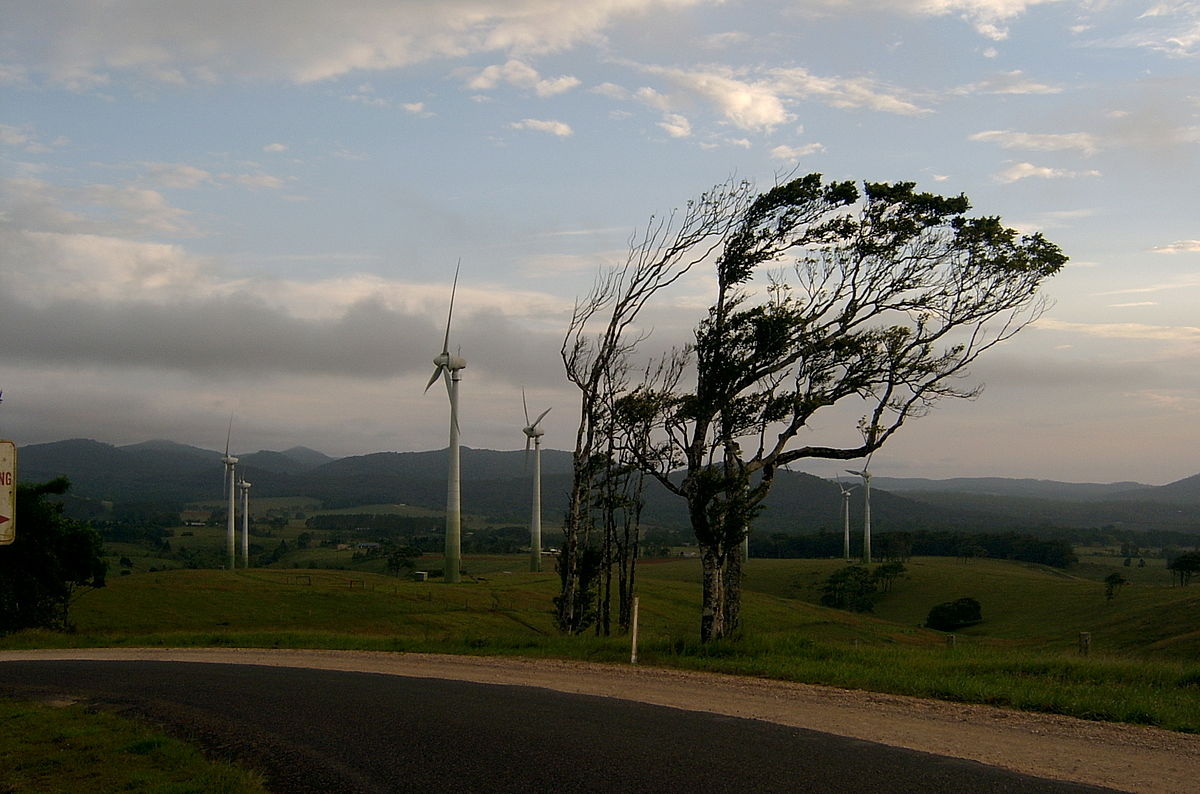


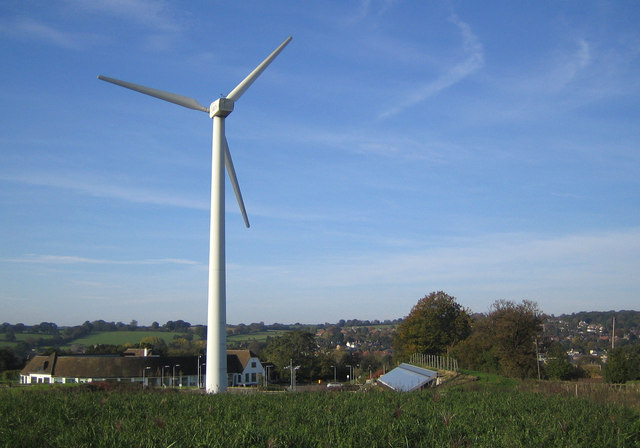

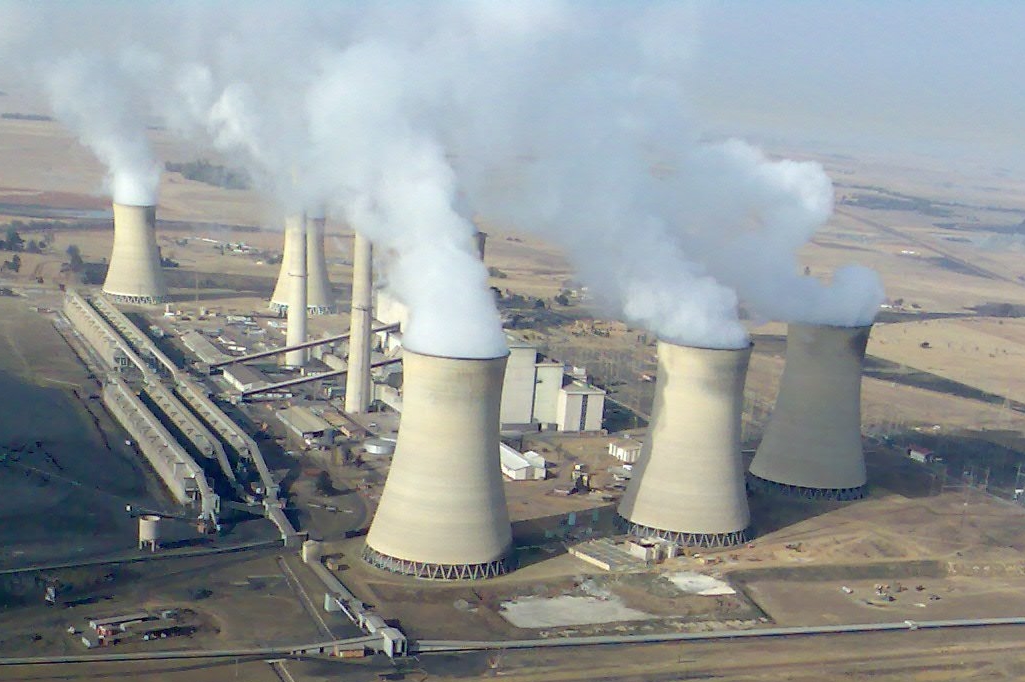


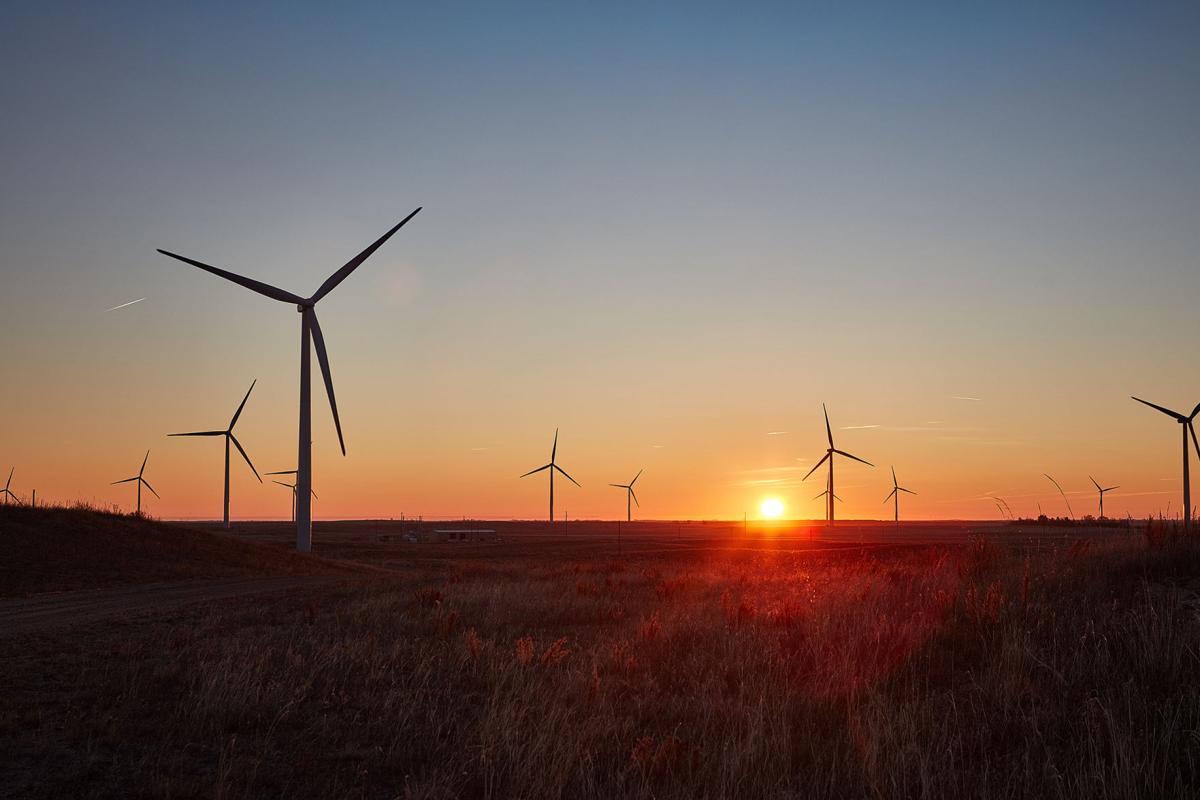
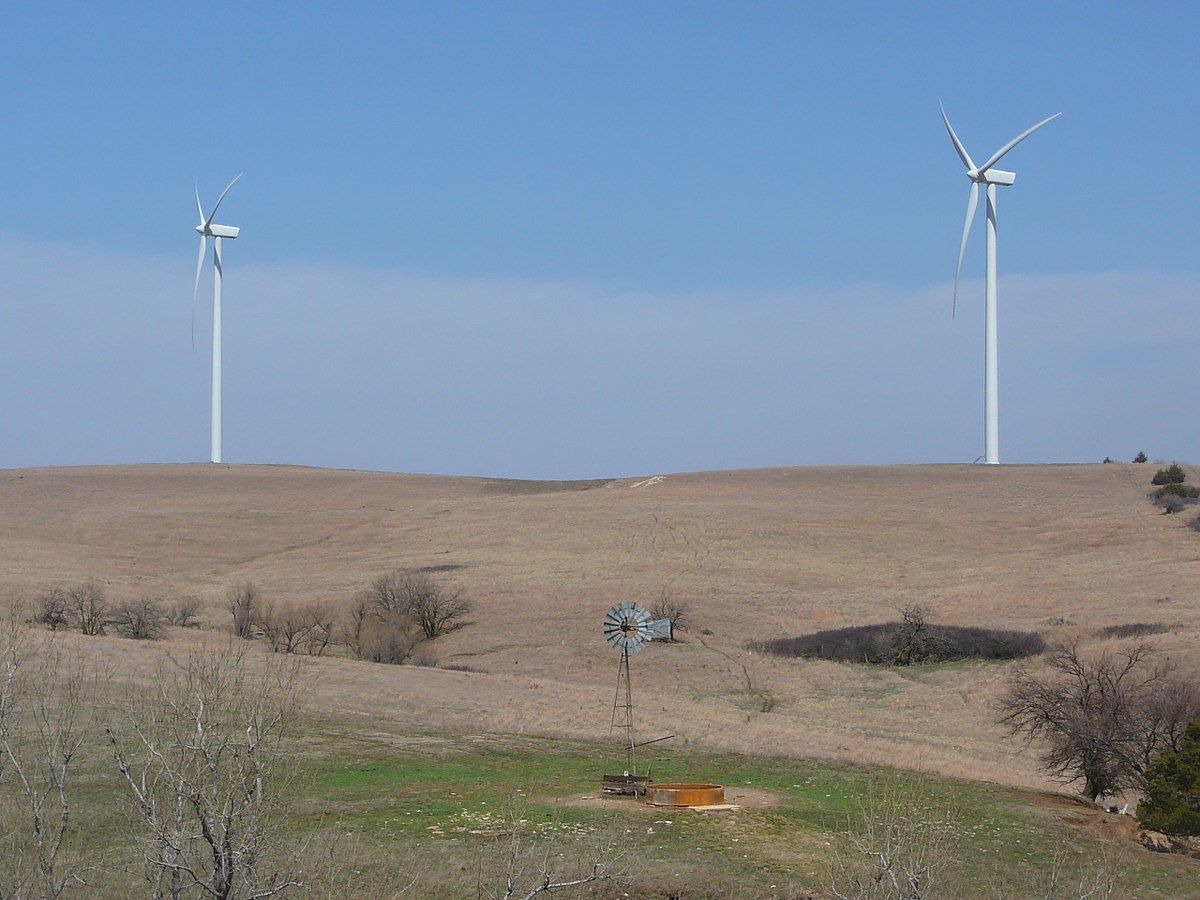


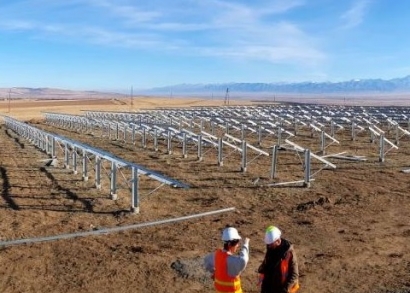



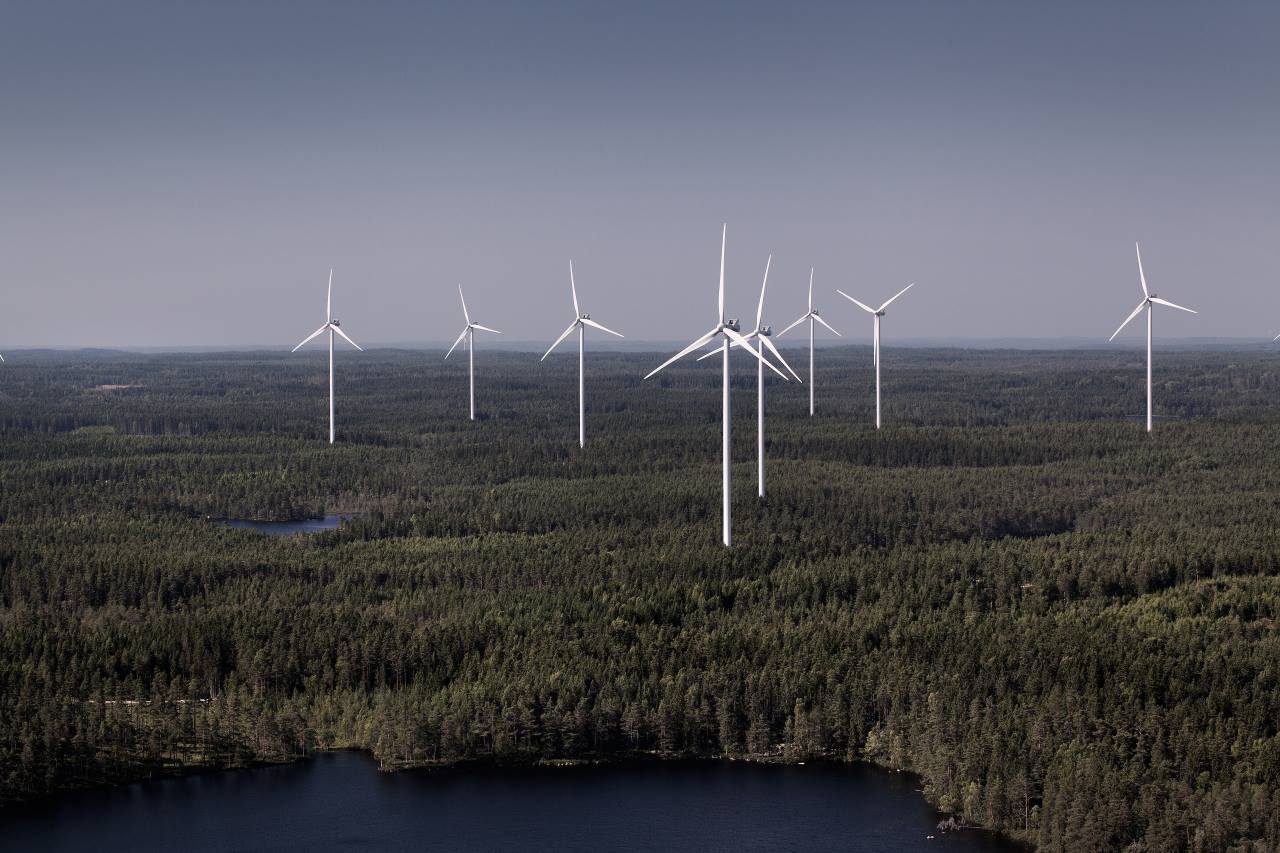


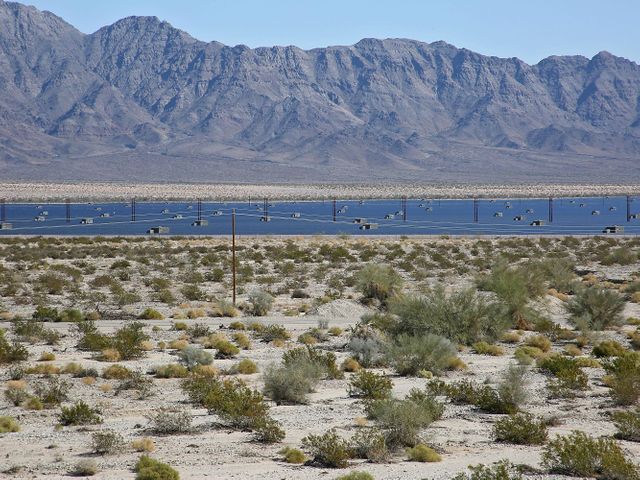
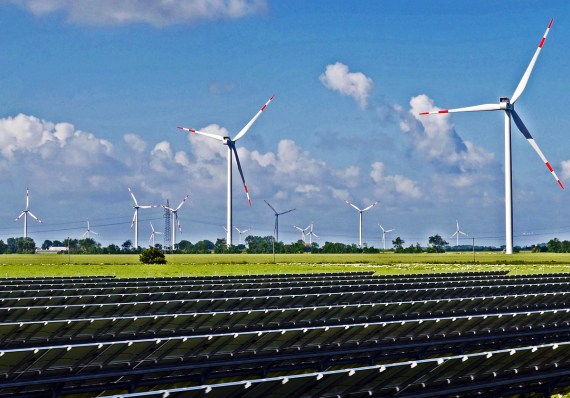




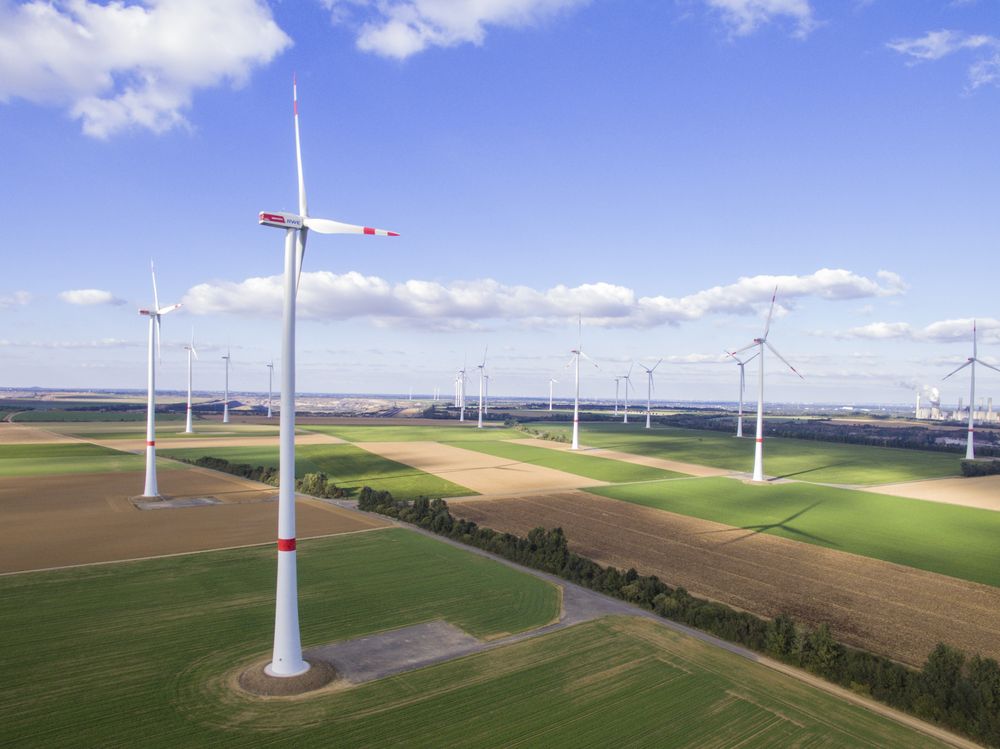
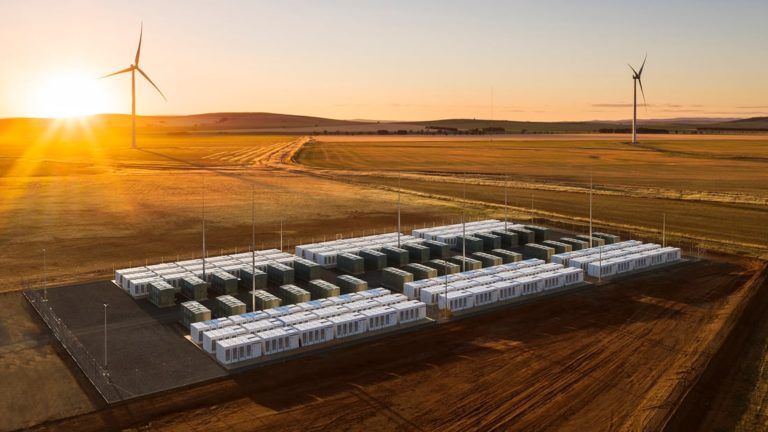


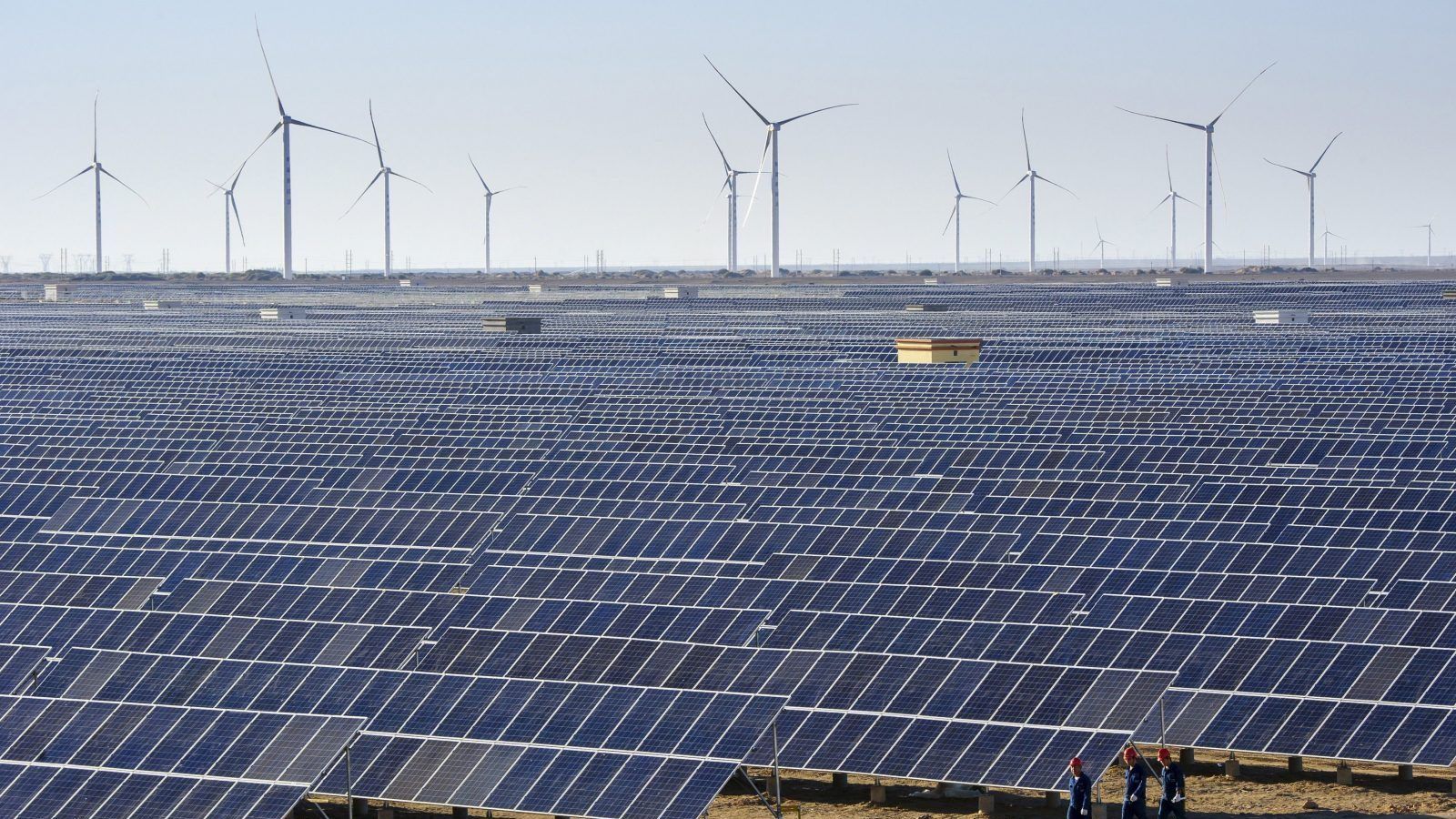

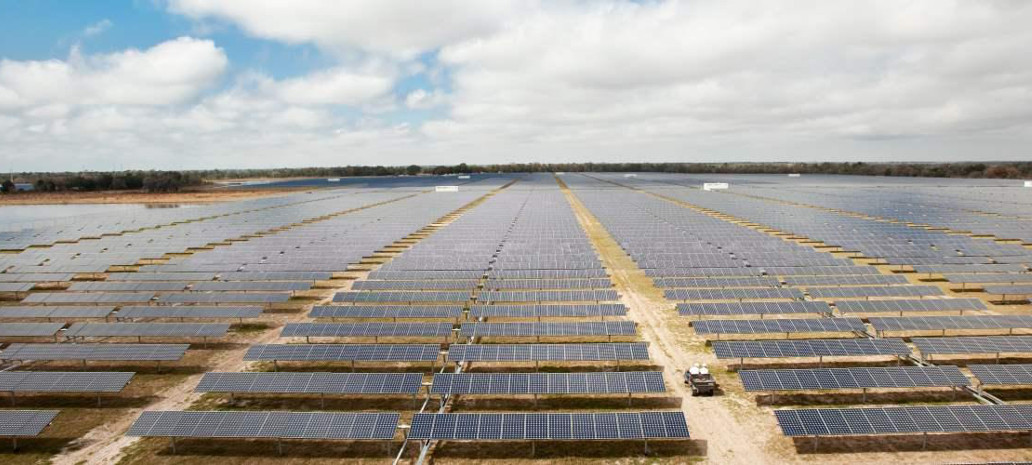


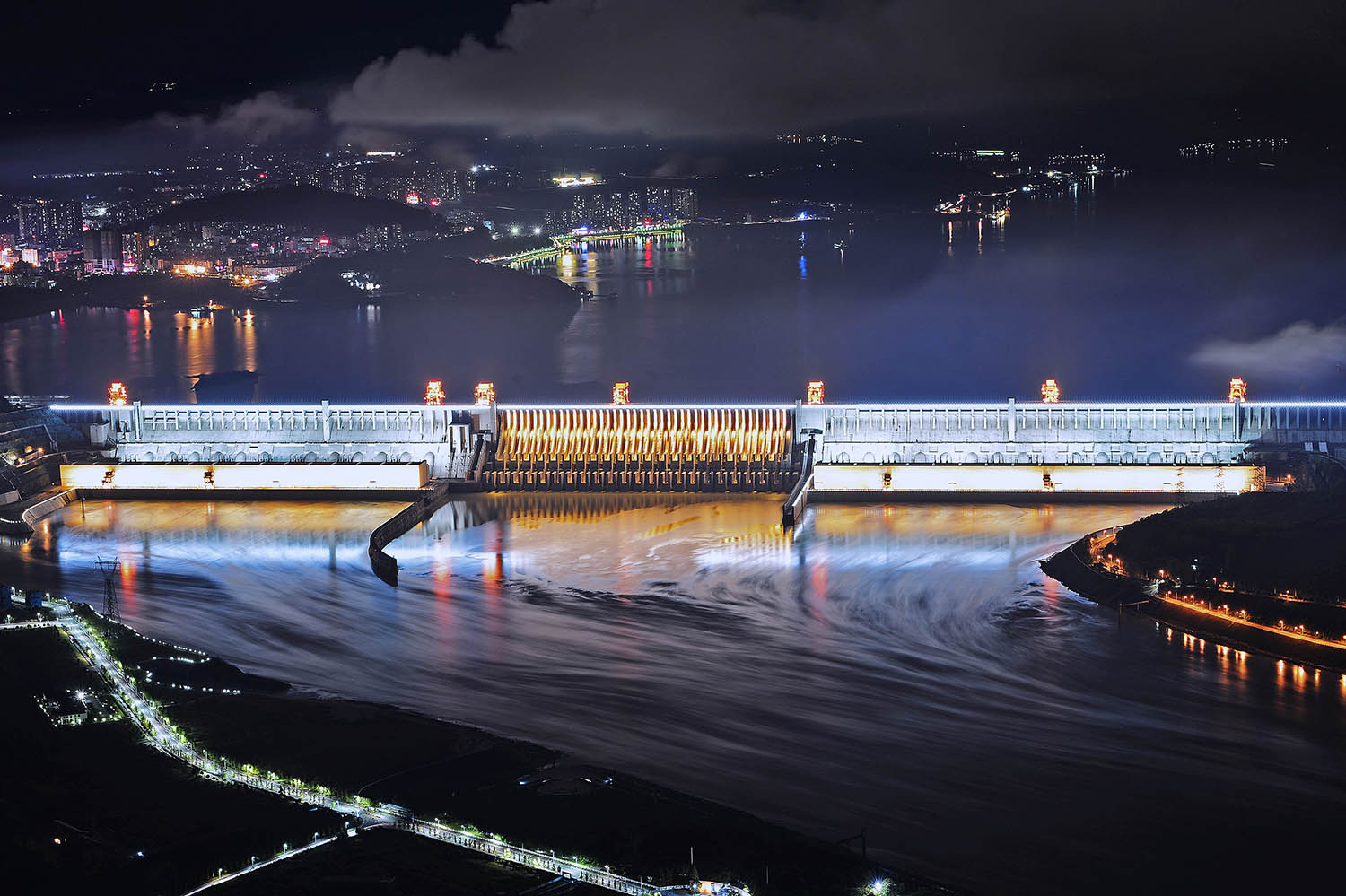
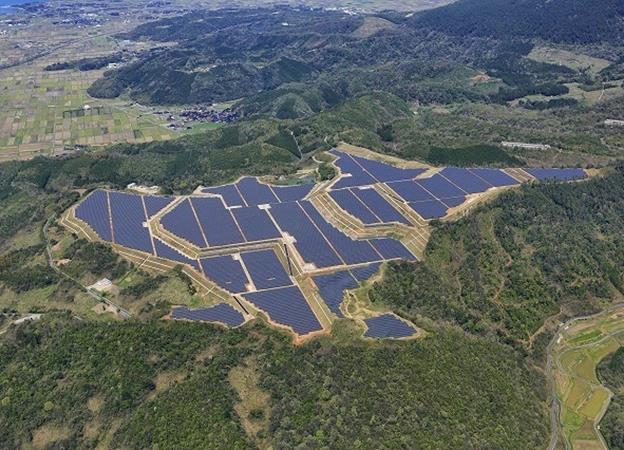

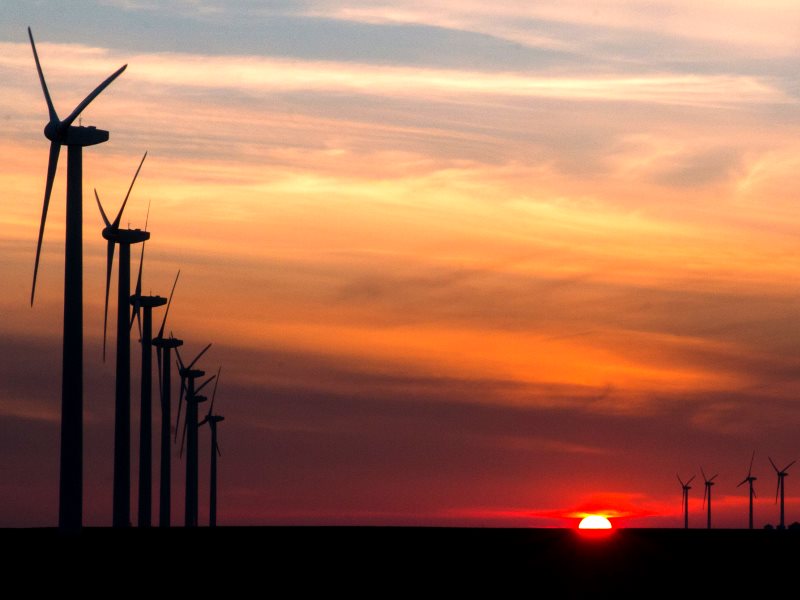

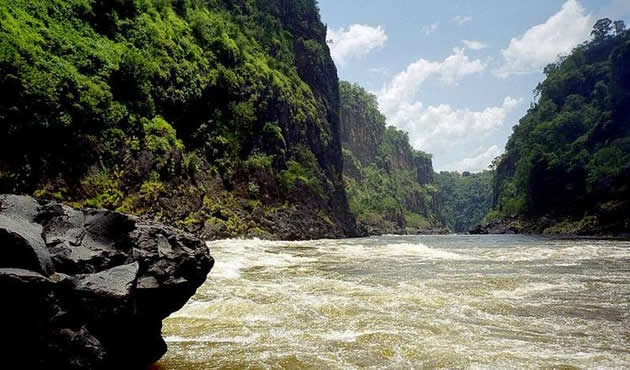



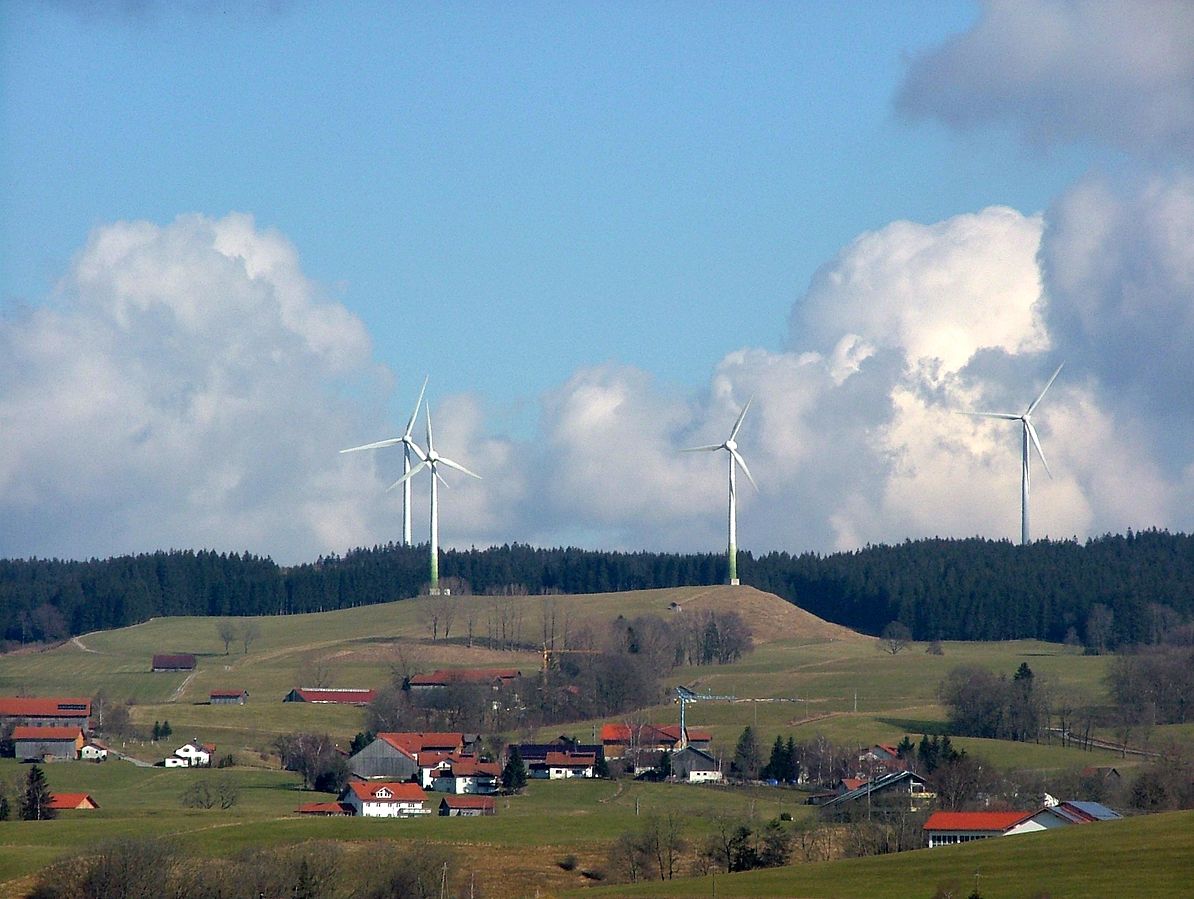


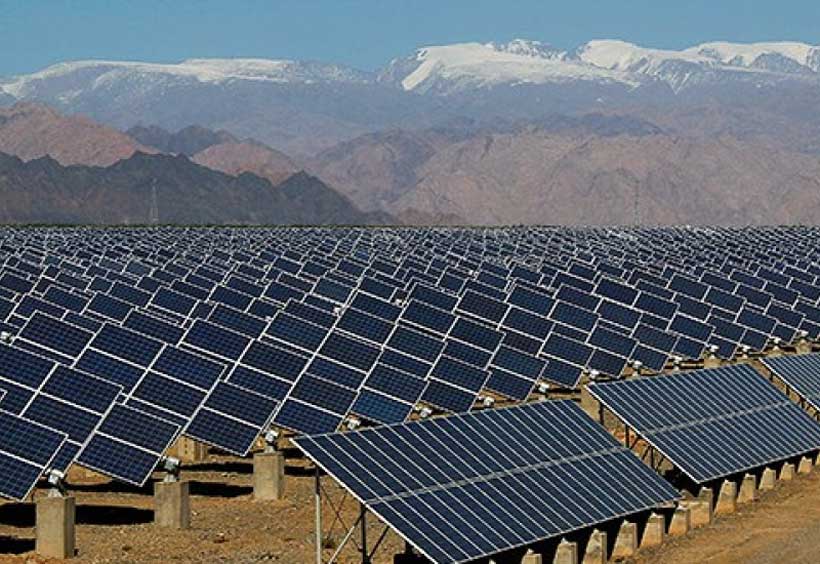

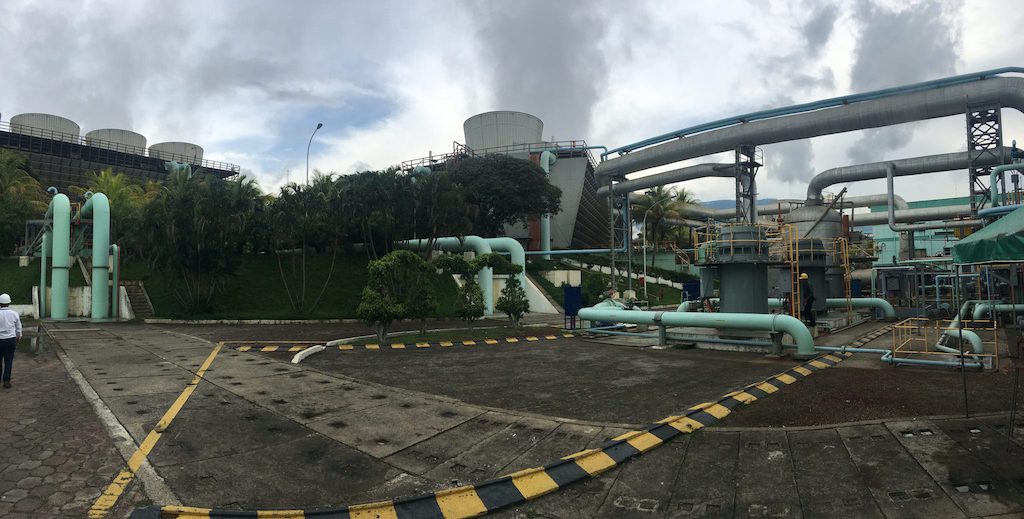







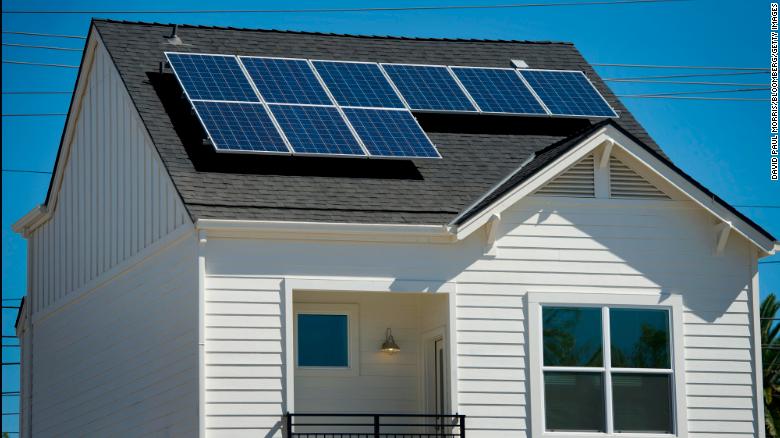
 geoharvey