Archive for the 'wind' Category
June 11, 2017
Opinion:
¶ “The Massive Farms Harnessing an Invisible Force” • Offshore wind has evolved quickly. The original Burbo Bank wind farm, built just 10 years ago, had 25 3.6-MW turbines – enough capacity to power about 80,000 homes. The Burbo Bank Extension boasts 32 8-MW turbines, providing nearly three times the old farm’s capacity. [BBC]

Offshore substation at Burbo Bank (Credit: Chris Baraniuk)
¶ “US Senators: Heartland Institute Mailings to Grade School Science Teachers ‘Possibly Fraudulent'” • If you teach science to American schoolchildren, there’s a good chance that you might open your mailbox soon and find a package containing a free, unsolicited 135-page book and 11-minute DVD, plus a cover letter from the Heartland Institute. [DeSmog]
World:
¶ The boss of BMW’s Australian arm pulled no punches at the launch of the plug-in hybrid 530e iPerformance. He said he feels the government has fallen far behind other developed countries on legislation and strategies regarding low-emissions vehicles. He believes that the government has “stuck their collective heads in the sand.” [CarAdvice]

530e iPerformance (BMW image)
¶ Last week, the European Union and China released a joint statement declaring their intentions to move on with the Agreement with or without America. They have gone past this position, and now they have decided to work with US states and cities that are keen on cutting their carbon footprint by going over the President’s head. [IFLScience]
¶ The Indian Power Ministry has finalized a policy for reviving 40 hydro power projects of 11,639 MW, provide support of ₹16,709 crore ($2.511 billion), and declare all large and small hydro projects as renewable energy. At present, a hydro power project up to 25 MW is classified under renewable energy and is entitled to various incentives. [HERE. NOW]
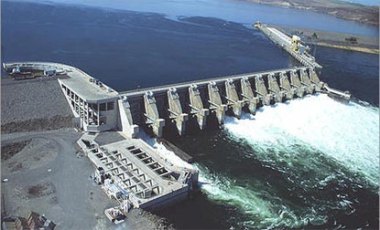
Indian hydro project
¶ India needs tens of billions of dollars to reduce its dependence on coal and oil. The Cabinet Committee on Economic Affairs has approved an initial public offering for the state-run Indian Renewable Energy Development Agency, which is a financial institution that provides financial support to renewable energy projects. [The National]
¶ A study by Masdar Institute shows that the cost of producing water for the UAE’s natural water storage structures could be reduced using wind power for the desalination. Producing 1,000 liters of water would cost between $1.6 and $2.1, slightly below the cost of producing fresh water by using thermal-powered desalination. [Utilities-ME.com]
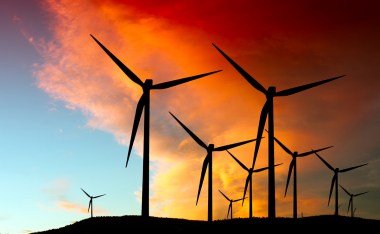
Wind power in the UAE
¶ The Korean energy industry is showing mixed reactions to the anti-nuclear energy policy touted by President Moon Jae-in, who vowed to scrap all new construction of new nuclear power plants and establish a road map to reduce reliance on nuclear energy. Proponents and opponents alike are taking a wait-and-see approach for now. [The Korea Herald]
US:
¶ Withdrawal of the United States from the Paris Agreement climate plan won’t provide a lifeline to the ailing coal industry, even in a state like Nebraska that burns a lot of it. Utilities, railroads and other users and haulers of the black stuff say that when it comes to the move away from coal, the train has already left the station. [Omaha World-Herald]
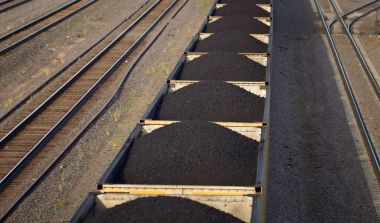
Coal train in North Platte (Rebecca S Gratz | The World Herald)
¶ While President Trump spurned the Paris climate accords, California Governor Jerry Brown was wrapping up a five-day tour of China that included a public session with President Xi Jinping at his side. The governor signed a flurry of agreements to partner with China on reducing emissions and develop clean technology. [Long Beach Press Telegram]
¶ A proposed bailout for Ohio’s two nuclear power plants that would lead to rate increases for FirstEnergy customers appears to be stalled in the Legislature. One legislative committee considering the idea suspended testimony last month amid protests, and another committee held its fourth hearing this week without taking a vote. [Lima Ohio]

Davis-Besse nuclear plant
¶ Guam’s Public Utilities Commission may award bid contracts for 120 MW of renewable energy, which could save ratepayers more than $43 million in five years. The decision authorizes the Guam Power Authority to petition the PUC to award a Phase II Renewable Acquisition Bid of two 30-MW proposals by different companies. [The Guam Daily Post]
¶ There are now persistent, highly acidified stretches of water found all along the West Coast, a 3-year survey of the region found. In some places, pH levels are as low as any ever recorded in any oceanic surface waters in the world. With rising levels of carbon dioxide, increasing numbers of hot spots will become more acidified. [CleanTechnica]
geoharvey is free and without ads.
 geoharvey is not tax-deductible.
Posted in nuclear power, renewable power, solar, wind | 2 Comments »
Tags: nuclear, nuclear power, renewable power, solar power, wind power
June 10, 2017
Opinion:
¶ “No, Virginia, There Is No Nuclear Santa Claus” • Virginia is about to receive approval for the most expensive nuclear reactor ever built in the USA. We might ask how much its electricity would cost if it actually goes forward. The answer? Much more than with modern technologies that are cheaper and faster to build. [CleanTechnica]
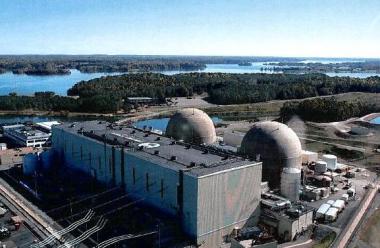
North Anna nuclear plant
¶ “Five things you need to know about DUP politicians and science” • Having failed to win a majority in the UK’s general election, Theresa May’s Conservative party has hopes for an informal coalition with Democratic Unionist Party. Here are five things you need to know when it comes to science and the DUP. They start with climate change denial. [New Scientist]
Science and Technology:
¶ Movement of sea ice off Alaska’s coasts is accelerating due to global warming, with unfortunate consequences for polar bears, according to a new study. Because most sea ice shifts throughout the year, polar bears are constantly on the move in order to stay within their preferred habitat, a US Geological Survey research ecologist said. [The Weather Channel]

Mendenhall Glacier (Flickr | Pat W Sanders)
¶ Finnish researchers have developed technology for producing a renewable hydrocarbon. The process has the potential to shakeup the global energy industry, if it moves beyond the experimental stage. The Soletair project uses hydrogen extracted from water and carbon dioxide captured from the air as raw materials to produce hydrocarbons. [YLE News]
World:
¶ WindEurope, the European trade body for wind energy, published a report this week at the Offshore Wind Energy 2017 event being held in London. According to the WindEurope report, not only has floating offshore wind energy technology reached maturity, but its costs are expected to plummet over the coming years. [CleanTechnica]

Floating wind turbine
¶ Ireland’s largest ever windfarm officially opened following a €145 million investment by Energia at Meenadreen in south Donegal. The Meenadreen windfarm is among the most technologically advanced generating facilities in the world with 38 turbines producing 95 MW of electricity. It can power up to 50,000 homes. [TechCentral.ie]
¶ The Renewable Energy Association has called for “clear commitment and direction” from the next UK government on the Clean Growth Plan, despite the general election resulting in a hung parliament. Several results are still to be announced, but no single political party will have an overall majority following the 8 June vote. [reNews]

Houses of Parliament (Image: Free Images)
¶ UK renewable generation increased 4.2 GW in 2016, according to latest government figures. Solar PV capacity, much of it added in the first quarter of the year to beat subsidy cuts, was up by 2.4 GW. A further 1.4 GW of onshore wind was added to the mix while bioenergy increased 345 MW, driven mainly by straw-fired plants. [The Energyst]
¶ The UN’s 193 nations issued an urgent call to protect oceans by reversing the threats from plastic garbage, illegal and excessive fishing, increasing ocean water acidity, and rising sea levels that could wipe out small islands. The US backed the action plan but rejected its support for the Paris agreement to tackle climate change. [The Japan Times]

Sri Lankan beach
US:
¶ Hawaii is the first state in the nation to enact legislation that implements portions of the Paris agreement. Governor Ige signed SB 559, which puts the state in alignment with the principles and goals adopted in the Paris agreement. The governor also signed HB 1578, which establishes a Carbon Farming Task Force. [The Rafu Shimpo]
¶ Rising sea levels are already forcing one American town to relocate, and there are warnings that many others will follow. The US Government announced this year it would pay $48 million to help residents of Isle de Jean Charles, Louisiana, whose residents have been called the first climate refugees in the country. [NEWS.com.au]
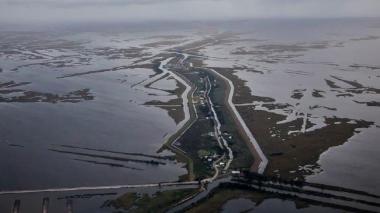
Roads leading into Isle de Jean Charles, Louisiana
(Photo: Louisiana Office of Community Development)
¶ Nevada Governor Brian Sandoval is expected to sign Assembly Bill 405. It seeks to revive net metering in the state, a program essentially gutted by state utility regulators under the direction of the 2015 Legislature. Solar installers Vivint Solar and Sunrun pulled out of the state after the net-metering change, but are now planning to return. [Las Vegas Sun]
¶ The community on Tangier Island, with 450 residents, is losing roughly 15 feet of coastline per year and will soon be lost. It is now only 1.3 square miles and is shrinking more and more every day. The residents here are extremely scared that if something isn’t done soon, their homes and livelihoods will be washed away by the Chesapeake Bay. [CNN]
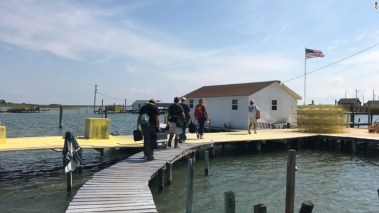
Tangier, Virginia
¶ In partnership with developer Clean Energy Collective, South Carolina Electric & Gas Co has launched what the utility claims is the state’s largest community solar program. SCE&G says the 16-MW AC program will make solar generation available to electric customers who cannot, or do not wish to, install rooftop solar panels. [Solar Industry]
¶ Toshiba Corp said it agreed to pay $3.68 billion in guarantees to Southern Co over two unfinished nuclear reactors that were being built by the conglomerate’s now-bankrupt nuclear unit. Toshiba projects its group net loss to have widened considerably to a record ¥950 billion ($8.61 billion) in the year ended in March. [The Japan Times]
geoharvey is free and without ads.
geoharvey is not tax-deductible.
Posted in nuclear power, renewable power, solar, wind | Leave a Comment »
Tags: nuclear, nuclear power, renewable power, solar power, wind power
June 9, 2017
Science and Technology:
¶ China has released a massive solar-powered drone. The drone has a 40-meter wingspan but weighs only 400 kilograms. The superlight drone is designed to stay in constant flight at 20,000 meters for days by using renewable energy to power its eight electrical propellers. It can travel up to speeds of 200 kilometers per hour! [Interesting Engineering]

Chinese drone (China Daily image)
¶ There are no specific guidelines in the US for the ability of offshore wind turbines to withstand storms. Offshore wind turbines built to current standards may not be able to withstand Category 5 hurricane winds, according to a new study done by the University of Colorado at Boulder in collaboration with the US DOE. [Science Times]
¶ Process Safety and Environmental Protection published a study that demonstrates the viability of using anaerobic digestion in a low-temperature (20° C) environment to convert solid food waste into renewable energy and organic fertilizer. Globally, more than 1.3 billion tonnes of municipal waste are created each year. [Renewable Energy Magazine]

Waste from food to be used for energy
World:
¶ Australian households would save about $90 a year on their electricity bills under the Clean Energy Target proposed by the Finkel review of the electricity sector, compared to a business-as-usual scenario for it. The review argues Australia has a “once-in-a-generation” opportunity to reshape the national electricity market. [The Sydney Morning Herald]
¶ Dong Energy is to integrate a battery system into its 90-MW Burbo Bank offshore windfarm near Liverpool. The 2-MW battery system will deliver frequency response to the grid and is set to be installed by the end of the year. Burbo Bank will be the first offshore windfarm to have an integrated battery system. [Energy Voice]
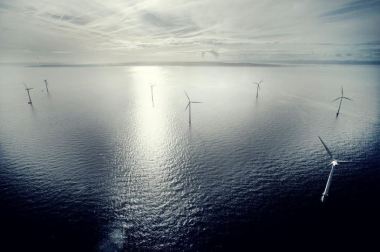
Burbo Bank offshore wind farm
¶ Only four months after the company unveiled its 9-MW wind turbine, MHI Vestas (a collaboration between parent companies Mitsubishi Heavy Industries and Vestas Wind Systems) unveiled a 9.5-MW wind turbine in its V164 series. It is the “most powerful serially-produced wind turbine in the world,” according to MHI Vestas. [CleanTechnica]
¶ Plans to build a 178-acre solar farm in the Hampshire countryside have been given the green light. The Woodington Farm will be one of the biggest in the UK. It will – it is claimed – provide power for around 9,000 homes. The land within the perimeter fencing would also be managed by sheep grazing to keep grass down. [Daily Echo]

Hampshire solar farm
US:
¶ North Carolina will ignore Trump’s decision and honor the Paris deal, Governor Roy Cooper said. He signed an open letter joining more than 1,000 other public officials and business leaders, including the governors of California, Connecticut, Oregon, New York, Rhode Island, Virginia, Washington, and Hawaii. [Morganton News Herald]
¶ Intrepid Travel, the largest carbon-neutral tour company in the world, announced that it’s going to double its carbon offset contribution this year on all 68 of its tours that run in America. The pledge was taken in response to President Trump’s decision to withdraw from the Paris climate accord, according to a company press release. [Metro US]

Intrepid Travel photo
¶ El Paso Electric has powered up the largest community solar grid in the state of Texas. The community solar facility is located next to an existing natural gas generating facility. It sits on 21 acres, which makes it hard to miss, and has a maximum output of 3 MW of power thanks to the whopping 33,000 solar panels in the “farm.” [CleanTechnica]
¶ A new solar energy farm has gone into operation behind the Hillside Commerce Park in Niskayuna, New York, generating power that will be used by Schenectady County government. The 792,480-watt array on 3 acres of county-owned land was installed in the industrial park by Monolith Solar Associates, of Rensselaer. [The Daily Gazette]
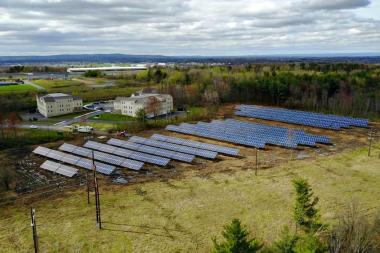
Niskayuna PV array
¶ A strange thing appears to be happening in North Carolina. State legislators are actually working together on a bill that could significantly boost the solar industry. Perhaps even more remarkable than a sudden rash of bipartisanship, is that the bill has the backing of both Duke Energy and a wide range of environmental groups. [Treehugger]
¶ National business groups representing the geothermal, solar, and wind-power industries sent a letter to Nevada Governor Brian Sandoval asking him to sign bill AB206, expanding the state’s renewable portfolio standard to 40% renewable energy by 2030. Nevada’s current RPS target calls for 25% renewable energy by 2025. [Windpower Engineering]
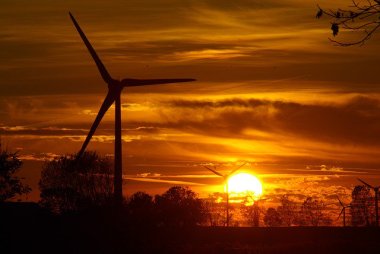
Nevada renewable energy
¶ General Mills announced that it has entered into a 15-year power purchase agreement with Renewable Energy Systems for 100 MW of power from the energy firm’s Cactus Flats wind project in Texas. The Minneapolis, Minnesota food company will also help fund construction of the Cactus Flats project. [Powder Bulk Solids]
¶ Almost a year after New York became the first state to approve subsidies for unprofitable nuclear reactors, efforts to replicate the model elsewhere are proving a tough sell. Lawmakers failed to pass a Connecticut bill designed to shore up the Millstone nuclear plant. And supporters of state aid are struggling in Ohio and Pennsylvania. [Bloomberg]
geoharvey is free and without ads.
geoharvey is not tax-deductible.
Posted in nuclear power, renewable power, solar, wind | 2 Comments »
Tags: nuclear, nuclear power, renewable power, solar power, wind power
June 8, 2017
Science and Technology:
¶ A CityTree is, in fact, not really a tree at all – it’s a moss culture growing on a mobile installation. It is just under 4 meters tall, nearly 3 meters wide and 2.19 meters deep. It is available in two versions: with or without a bench. Its maker, Berlin-based Green City Solutions, claims it has the environmental benefit of up to 275 actual trees. [CNN]

CityTree
World:
¶ The electricity grid in Western Australia will be unrecognizable in 20 years, according to the operator of the east coast National Electricity Market. The NEM chairman cites declining costs of renewable generation, climate change policy, and unwillingness of banks to finance fossil fuel investments, all of which work against coal. [The West Australian]
¶ At midday on June 7, gas power plants generated just 20% of the UK’s electricity, and coal plants generated none. The amount of power from fossil fuels was surpassed by not only wind power, but nuclear and solar as well. Renewables alone – wind, solar, biomass and hydro – produced about 50.7% of the total demand, a record amount. [The Independent]
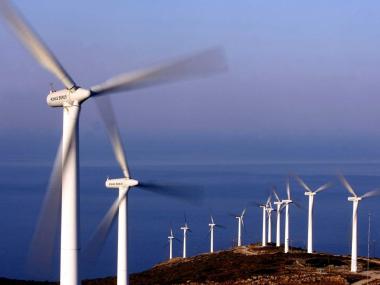
UK windfarm
¶ Vietnam’s TTC Group, a sugar, energy, real estate, and tourism conglomerate, is planning to spend as much as $1 billion on an ambitious plan to build one of the country’s largest portfolio of solar projects in an effort to capitalize on the nation’s growing power needs. The company expects to have 10 to 20 solar parks in operation by 2018. [Bloomberg]
¶ This week the UN is hosting its first large-scale conference devoted to protecting and saving the oceans. For small island countries, the ocean can be an imposing and valuable friend, but increasingly, with climate change, pollution, and overfishing, humans have transformed the gigantic oceans of the planet into rising, junk-filled threats. [CNN]
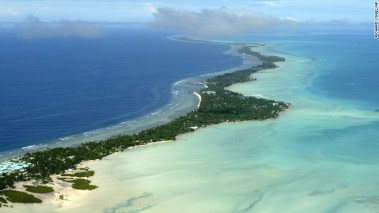
Kiribati, in the central Pacific
¶ At the UN oceans summit, delegates from China, Thailand, Indonesia and the Philippines said they would work to keep plastics out of the seas. Environmentalists say the measures proposed are not nearly urgent enough. But UN officials praised the statement as part of a clear international shift against ocean pollution. [BBC]
¶ Vestas is to supply turbines totaling 50 MW to Aluar Aluminio Argentino. The El Llano wind farm is close to Aluar’s aluminium smelting facilities in the Argentine province of Chubut. The order is for 14 V126 3.45 machines optimized to 3.6 MW, to be delivered in the fourth quarter. Commissioning is scheduled for the third quarter of 2018. [reNews]
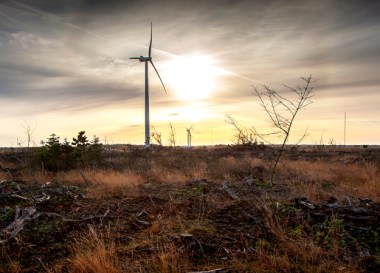
V126 wind turbine (Credit: Vestas)
¶ German power companies stand to get billions in refunds from the government after the country’s top court declared a nuclear fuel tax illegal. The Constitutional Court ruled that the nuclear fuel tax imposed from 2011 to 2016 was unconstitutional and scrapped it retrospectively. The tax has come to nearly €6.3 billion. [The Local Germany]
¶ The recent joint statement by Germany, Denmark, and Belgium on building offshore wind farms in the next decade aims to increase Europe’s current capacity by almost 500%. In theory, this new decision means offshore wind could power up to 25% of the EU by 2030. The current capacity of EU offshore wind power is 12.6 GW. [IFLScience]
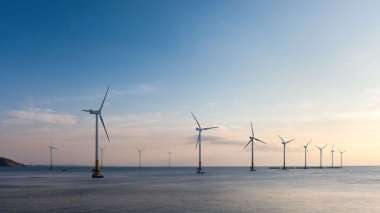
Offshore wind farm (Chuyuss | Shutterstock)
US:
¶ GTM Research, with the Energy Storage Association, published its latest US Energy Storage Monitor. The US had its largest ever quarter for energy storage deployment, deploying 234 MWh worth of energy storage across the first quarter of the year, representing a more than fifty-fold growth as compared to the same quarter a year earlier. [CleanTechnica]
¶ Santa Barbara has become the 30th city in the country to commit to transition to 100% renewable energy, according to the Sierra Club. The city council approved a measure that establishes a community-wide goal of switching to 100% renewable energy by 2030, with all municipal buildings and operations 50% clean by 2020. [North American Windpower]
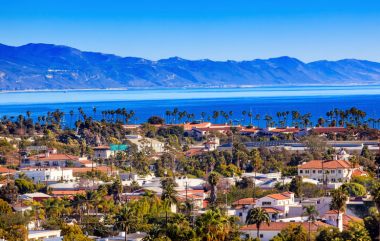
Santa Barbara
¶ Vermont may be able to avoid expensive electrical grid upgrades by increasing the use of technological solutions and in particular efficiency, according to speakers at an industry conference in Burlington. Managing peak demand will be especially important, as electric vehicles proliferate and reliance on fossil fuels for other purposes is cut. [vtdigger.org]
¶ The Los Angeles Department of Water and Power will reconsider a $2.2 billion natural gas investment plan, instead signaling that the largest publicly-owned utility in the country will first look to renewable resources to meet demand. The Board of Water and Power Commissioners is putting projects on hold while analysis is conducted. [Utility Dive]
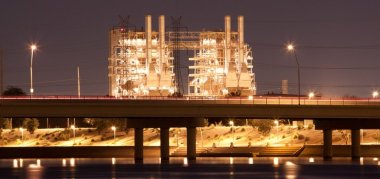
Natural gas plant (Credit: Alan Stark | Flickr)
¶ Minnesota Power, with Dairyland Power Cooperative, based in Wisconsin, will build a $700 million gas-fired power plant in Superior, Wisconsin. The Duluth-based utility also announced it would buy power from a big new wind farm in southwestern Minnesota. The moves are part of Minnesota Power’s drive to diversify from coal. [Minneapolis Star Tribune]
¶ A Penn State College of Medicine study linked the partial meltdown at the Three Mile Island nuclear plant on March 28, 1979, to thyroid cancers in the surrounding counties. The researchers found a “shift in (thyroid cancer) cases to cancer mutations consistent with radiation exposure from those consistent with random causes.” [CleanTechnica]
geoharvey is free and without ads.
geoharvey is not tax-deductible.
Posted in nuclear power, renewable power, solar, wind | 1 Comment »
Tags: nuclear, nuclear power, renewable power, solar power, wind power
June 7, 2017
Opinion:
¶ “Renewable Energy Push Is Strongest in the Reddest States” • Two years ago, Kansas repealed a law requiring that 20% of the state’s electric power come from renewable sources by 2020. But by the time the law was scrapped, that target had already been met. Last year, Kansas generated more than 30% of its power from wind. [New York Times]

The Smoky Hills Wind Farm outside Lincoln, Kansas
(Credit: Christopher Smith for The New York Times)
¶ “Energy security is possible without nuclear power or fracked gas” • Here’s a fact you won’t have heard from the main parties during the UK’s election campaign: the nation doesn’t need a new generation of expensive nuclear reactors or a dash for shale gas to keep the lights on. An all-renewable electricity supply can provide energy security. [New Scientist]
World:
¶ The governments of Belgium, Denmark and Germany and several industry leaders have signed a joint statement to further the development of offshore wind in Europe, including a call for at least 4 GW a year of new deployment after 2020. The governments made their commitment at the Offshore Wind Energy 2017 event in London. [reNews]

Offshore wind farm (Image: Pixabay)
¶ High winds have boosted power output and caused electricity prices in the day-ahead auction to plummet to new lows on May 7, according to energy market specialists EnAppSys. It said prices would go down to £1.60/MWh (0.2¢/kWh), which is a tenth of the usual cost overnight and represents a new record in the day-ahead auction. [reNews]
¶ Most Australians want governments to favor renewable energy over fossil fuels, and concerns about climate change are increasing, a new poll finds. The Lowy Institute survey found 81% of 1202 respondents wanted policymakers to focus on clean energy sources even if it costs more to ensure grid reliability. [The Sydney Morning Herald]

Australian fossil fuels (AP photo)
¶ Emera Inc says it has submitted a competitive bid to deliver 900 MW of wind energy and hydro power from Atlantic Canada to Massachusetts by 2022. If successful, the main source of that power would likely be wind farms yet to be built in New Brunswick. Hydro power will be included to be certain of constant supply. [CBC.ca]
¶ A record 161 GW of renewable energy was added last year worldwide at a cost about £187 billion ($242 billion), but at a price 23% cheaper than it would have cost in the previous year. Denmark, Egypt, India, Mexico, Peru and the United Arab Emirates are all now receiving supplies at less than 5¢/kWh, “well below” fossil fuels and nuclear. [The Independent]

Wind turbines near Brueck, Germany (Getty Images)
¶ With President Donald Trump pulling the US out of the Paris climate accord, China and California have signed an agreement to work together on reducing emissions, as the state’s governor warned that “disaster still looms” without urgent action. Governor Jerry Brown said Trump’s decision will ultimately prove only a temporary setback. [Reading Eagle]
US:
¶ We Are Still In is a group of 125 mayors, nine governors, 183 university presidents, and 902 businesses, including Apple, Google, Ikea, and Target. The group issued a declaration that they continue to support climate action. Many leaders believe that it will be possible to meet the US’s original pledge to reduce emissions, despite Trump. [Fast Company]

The withdrawal was a galvanizing moment.
(Photo: PatrickZiegler | iStock)
¶ The 2017 Annual Tesla Shareholder’s Meeting on June 6th produced news on Model 3, Model Y, and Tesla Semi, but also on more mundane business matters. One massive update was about the number of Gigafactories Tesla is planning. CEO Elon Musk shared that it is planning for at least 10 Gigafactories, but could build as many as 20. [CleanTechnica]
¶ The US is falling behind other countries in advanced energy technologies, threatening national security and undermining its global influence, former generals and admirals in the US military warn. The military officers’ conclusions follow warnings from businesses about the decision to withdraw from the Paris agreement. [Financial Times]

Chinese workers checking PV modules (© AFP)
¶ Columbia, Missouri, is continuing to diversify its renewable energy sources by approving the cheapest wind power purchase the city has made so far, with an estimate initial cost of about $21/MWh. The Columbia City Council unanimously approved the contract to purchase up to 35 MW of wind energy beginning in 2021. [Columbia Missourian]
¶ Since President Trump took office, at least six coal-plant closures have been announced, totaling more than 6,200 MW in capacity. As he announced withdrawal from the Paris agreement, he hailed a new mine opening in Pennsylvania, but that mine’s output will not be burned for power. It will be coking coal, for producing of steel. [Ars Technica]

Coking coal (Photo: Luke Sharrett | Bloomberg via Getty Images)
¶ President Trump convened Republican leaders at the White House for a conversation about their legislative agenda, largely on health care and the debt ceiling. But during the meeting Trump also suggested his border wall could be built with solar panels as a way to pay for it, according to sources familiar with the conversation. [CNN]
¶ As the first state to implement subsidies to support struggling nuclear power plants through zero-emission credits, New York has caught the attention of other states confronting similar challenges. New York’s strategy to save its dying nuclear power industry is now spreading to other states, alarming opponents of the plan. [City & State]
geoharvey is free and without ads.
geoharvey is not tax-deductible.
Posted in nuclear power, renewable power, solar, wind | 1 Comment »
Tags: nuclear, nuclear power, renewable power, solar power, wind power
June 6, 2017
Opinion:
¶ “How Climate Change Will Disrupt Markets” • Renewable energy and climate change are often discussed in ideological terms, but there are worthwhile opportunities in companies that provide climate change mitigation and adaptation, including renewable power, batteries, energy efficiency, pollution control, and water treatment. [U.S. News & World Report]

Fossil-fuels facing disruption (Getty Images)
World:
¶ The UK is to become home to Europe’s largest battery flywheel system. It will provide fast acting frequency response services and aid the integration of renewables. The €4 million ($4.51 million) project will be connected to the Irish and UK grids to help respond to energy demand to stabilize the electric grid. [Energy Storage News]
¶ Swedish developer Waves4Power has delivered power for the Norwegian grid from its 250-kW WaveEL device redeployed off Runde island. The company said the full-scale demonstration installation is the first step towards commercial serial production slated for the Stryvo Group-owned Fiskaholmen shipyard in Norway’s Sunnmore region. [reNews]
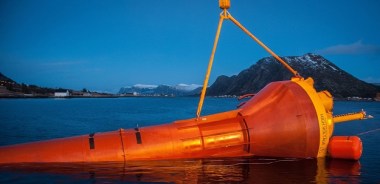
Waves4Power device
¶ Indian company Adani has given final investment approval for construction of a huge coal mine in Australia. The Carmichael mine in Queensland will be built at a cost of A$16.5 billion (£9.5 billion; $12.3 billion), its chairman said. The government says the mine will generate investment, but critics say it will harm the environment. [BBC]
¶ The world’s largest sovereign wealth fund, the Norwegian state’s Government Pension Fund Global, valued at a little over $900 billion, continues to divest from companies involved in the production of coal or coal-based energy. In April 2016, the fund announced it was excluding seven Indian companies from its portfolio. [Business Standard]
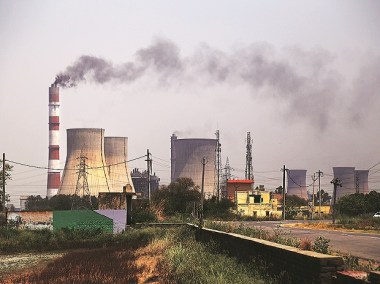
Thermal power plant
¶ Siemens Gamesa Renewable Energy has secured a contract to supply and install 16 direct-drive SWT-7.0-154 wind turbines on EnBW’s 112-MW Albatros offshore windpower plant in the German North Sea. The installation will be carried out on monopile foundations and the grid connection will use a Siemens offshore transformer module. [Power Technology]
¶ Natural Power, Fred Olsen Windcarrier, and SubC Partner have joined forces to offer an offshore wind turbine inspection service that aims to reduce downtime. The partners will officially launch the service at the Offshore Wind Energy 2017 event in London. It will allow clients to choose from a list of inspection services under one contract. [reNews]

Offshore wind farm (reNews image)
¶ Europe could have between 64 GW and 86 GW of installed offshore wind farm capacity by 2030, according to a report by BVG Associates, “Unleashing Europe’s offshore wind potential: A new resource assessment.” It said the projections mean between 8% and 11% of European electricity demand would come from offshore wind. [reNews]
US:
¶ New York’s attorney general alleges in new court documents that ExxonMobil’s internal accounting practices were a “sham,” misleading its investors on climate risks. The top prosecutor said that its internal figures differed from those it had provided the public, and his office named Rex Tillerson, now US Secretary of State. [Environmental Leader]

ExxonMobil plant
¶ Morgan Stanley believes Trump’s decision to withdraw from the Paris Climate Agreement changes nothing on the ground. When he decided to go ahead and announce the US withdrawal, it was probably to “appease a support base, as opposed to remaining neutral by taking no action.” Nevertheless, the bank cited some risks from the position. [ValueWalk]
¶ Two new solar installations on Tufts’ Grafton campus will generate 40% of Cummings School’s electric power and are expected to save the university up to $5.3 million over the next 20 years. The installations cost the university nothing, according to Betsy Isenstein, who manages the project for Tufts’ operations division. [Tufts Now]
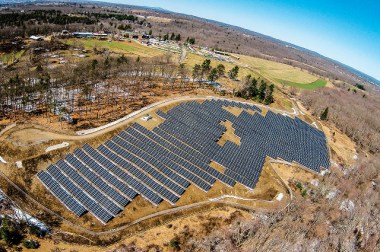
Solar panels on the Grafton campus (Photo: NRG Energy Inc)
¶ In the weeks leading up to the Trump Paris pullout, energy watchers were already alarmed by a forthcoming US Energy Department grid study that seemed intended to justify the case for coal before it even got under way. Meanwhile, various branches of the same agency have been pitching solar and wind like there’s no tomorrow. [CleanTechnica]
¶ An unconventional approach to grassroots organizing in Wisconsin’s capital city has in recent years tipped incumbent utility Madison Gas & Electric toward policies that favor consumers and renewables. This represents a distinct shift in a state held back for years by entrenched monopolies with outdated business plans. [CleanTechnica]

Repower Madison
¶ The Bullrock Corporation of Shelburne, Vermont, received a Certificate of Public Good to construct the state’s largest solar array intended for consumption by Vermonters. The 5.7-MW project will be built on 57 acres in Grande Isle leased from Dream Weaver Farm, allowing the farm to remain in agriculture and avoid development. [Vermont Biz]
¶ An intense lobbying campaign by Dominion Energy has failed to find the votes in the Connecticut General Assembly for legislation to improve the profitability of its Millstone Nuclear Power Station by changing the rules for procuring electricity. “[The bill is] dead. It’s a toxic brand now, literally radioactive,” one legislator said. [Hartford Business]
geoharvey is free and without ads.
geoharvey is not tax-deductible.
Posted in nuclear power, renewable power, solar, wind | 1 Comment »
Tags: nuclear, nuclear power, renewable power, solar power, wind power
June 5, 2017
Opinion:
¶ “China steps up clean energy generation efforts” • China already has the world’s largest clean energy capacity, and in 2015, the country’s investment in clean energy exceeded $100 billion, accounting for one-third of the world’s total, according to the International Renewable Energy Agency. And more investment is pouring in. [Global Times]
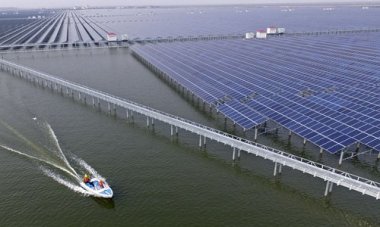
Fish farming and solar power (Photo: CFP)
¶ “On Climate, China Should Think Small” • If China truly is to lead the world in promoting renewables, it’s going to have to think small as well as big. The real opportunity is to push innovative greentech, especially the type that fits on a rooftop. Tens of millions of Chinese households already have rooftop solar installations. [Bloomberg]
¶ “2 GW of ‘strong, consistent’ wind power close at hand: Offshore Energy chief” • Offshore Energy managing director Andy Evans gives EcoGeneration a quick profile of what he hopes will be Australia’s first offshore wind farm. One of the key reasons for Australian interest in offshore wind power is its high capacity factor. [EcoGeneration]

Offshore wind (shutterstock image)
¶ “ITC ruling is a clear and present threat to US renewables” • The US government recently made two announcements that are threats to the country’s solar industry. One was that the US would withdraw from the Paris agreement. But an investigation by the US International Trade Commission of imports of solar panels is a more serious threat. [Financial Times]
Science and Technology:
¶ An unprecedented number of solar fuels have been identified thanks to the combined efforts of researchers from Caltech and Berkeley Lab. Solar fuels are chemical fuels produced using the sun. Researcher John Gregoire explained, “Solar fuels technology will provide us clean fuels just as solar cells provide clean electricity.” [Power Technology]

Solar fuel researcher John Gregoire
¶ Scientific American asked Eric Rignot, professor of earth system science at the University of California, Irvine, and Andrea Dutton, assistant professor of geology at the University of Florida, how changes in the Arctic are driving the oceans to dangerous heights. The answer goes beyond land-based glaciers melting. [Scientific American]
World:
¶ Some of India’s biggest solar equipment makers are facing financial collapse, priced out by Chinese competitors as Prime Minister Modi’s government prioritizes cheap power over local manufacturing despite his ‘Make in India’ push. India’s huge renewable energy program created a multi-billion-dollar market for Chinese solar product makers. [Livemint]
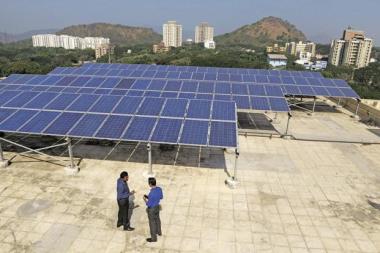
Solar array in India
¶ Indian solar power developers are bullish on the clean energy and hopeful of tariff coming down to as low as ₹1.5 per unit (2¢/kWh) on falling equipment cost and cheaper credit with assured purchase pacts. The solar power tariff has already hit a low of ₹2.44 per unit, already mainly due to lower equipment and borrowing costs. [Business Standard]
¶ WWF Scotland’s analysis of renewables found wind turbines alone provided 863,495 MWh of electricity to the National Grid during May. The figure, environmentalists say, is enough to supply the average electrical needs of 95% of Scottish households. It is also an increase of almost 20% compared with May 2016. [The Scotsman]
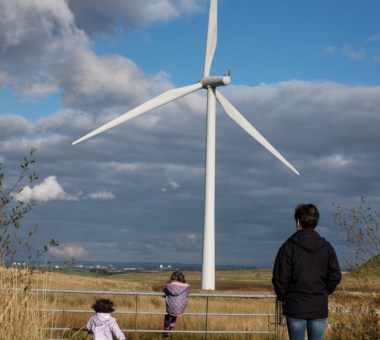
Whitelee Windfarm (Photo: John Devlin)
¶ The Queensland Labor government unveiled a $1.6 billion plan to unlock thousands of megawatts of large-scale wind, solar, and pumped-hydro energy projects in the state, including a reverse auction for up to 400 MW of renewables and 100 MW of energy storage. Queensland is committed to 50% renewable electricity by 2030. [Renew Economy]
¶ Going green, Indian Railways is stepping up efforts to reduce emission by 33% in the next ten to twelve years through energy efficiency measures and maximum use of clean fuel. Indian Railways is twelve times more energy efficient in freight traffic and three times more efficient in passenger traffic, compared to roadways. [Livemint]

Indian Railways (Ramesh Pathania | Mint)
¶ A proposed energy U-turn by South Korea’s new government would put the environment at the center of energy policy, shifting one of the world’s staunchest supporters of coal and nuclear power towards natural gas and renewables. If put in place, the ambitious plans will have a big impact on coal and gas producers. [Hellenic Shipping News Worldwide]
US:
¶ There’s too much momentum in the nation’s clean-energy economy for President Trump to shut it down, energy experts say. The Republican-dominated city of Carmel, Indiana, has committed to 100% renewable energy in 20 years, Mayor Jim Brainard said in a conference call. Work on the plan began long before the Paris Accord. [San Francisco Chronicle]

Bus exhaust distorting a flag (Photo: David McNew, Getty Images)
¶ In Nevada, the push toward renewable energy that has gained steam in recent years is unlikely to be slowed by President Donald Trump’s announcement this past week to pull the United States from the Paris climate accords. In fact, all indications are the growth in wind, solar and hydro energy production is likely to accelerate. [News3LV]
¶ US Energy Secretary Rick Perry reassured Japan that America is committed to tackling environmental issues and promoting clean energy even though it is leaving the Paris climate accord. Perry told Japanese counterpart Hiroshige Seko in Tokyo that the US commitment to environmental issues remains unchanged. [The Japan Times]
geoharvey is free and without ads.
geoharvey is not tax-deductible.
Posted in nuclear power, renewable power, solar, wind | Leave a Comment »
Tags: nuclear, nuclear power, renewable power, solar power, wind power
June 4, 2017
Opinion:
¶ “America Is Acting Like a Rogue State, So We Must All Stand Up for What’s Right” • We knew what was coming. So why did the whole event leave me feeling physically sick and scared to my core? It must have been the sight of Trump’s Breitbart mentors lined up in front of him, all satisfied as he threw his bomb out to the world. [Common Dreams]

Protesters at the White House (Photo: AP)
Science and Technology:
¶ One of the most potentially deadly effects of climate change has been largely undiscussed: an increase in the spread of dangerous epidemics and the risk of a global pandemic. The interactions between climate change and disease are hard to predict with certainty, but the scientific linkages between them are unmistakable. [MetroWest Daily News]
¶ In March 2017, when Arctic sea ice is typically at its maximum winter extent, circling US satellites recorded an extent of just 5.57 million square miles, the lowest maximum in the record’s 38-year history. Now, due to budget cuts, the 38-year continuous US Arctic satellite monitoring program is about to end, leaving scientists blind. [The Wire]

Satellite measuring sea ice (US Air Force image)
World:
¶ US withdrawal from the Paris climate deal can potentially elevate India to a leadership role in the global fight against climate change and sharpen investor focus on the government’s program to build massive renewable energy capacity. The government is working to build 175 GW of renewable energy capacity by 2022. [Times of India]
¶ Prime Minister Modi vowed that India will go “above and beyond” the 2015 Paris Climate Agreement. Speaking at a news conference with French President Macron, Mr Modi described the agreement as part of “our duty to protect Mother Earth.” He has criticized President Trump’s decision to withdraw from the Paris accord. [BBC]

Narendra Modi and Emmanuel Macron (Reuters)
¶ South Australia is seeking final proposals for its battery storage tender from candidates short-listed from the more than 90 expressions of interest received last month. Many developers, analysts, and utilities are saying that battery storage, combined with renewable energy such as wind and solar, is cheaper than existing gas-fired generation. [CleanTechnica]
¶ Solar power is rising again in the UK. Once only for the very well-off, rooftop solar panels are suddenly within the reach of homeowners. Farmers with depleted land find it makes more sense to farm renewable electricity than sheep. Energy-intensive factories are easily persuaded to generate their own power to cut costs. [Telegraph.co.uk]
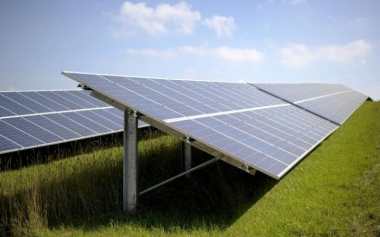
UK solar array (Tim Ireland | PA Wire)
US:
¶ Philanthropist Michael Bloomberg and others will dig into their own pockets to make sure the Paris climate agreement is met, no matter what happens in Washington. They pledged up to $15 million to the United Nations, the same amount the UN stands to lose from the United States’ early withdrawal from the climate pact. [9NEWS.com]
¶ US states accounting for almost 30% of national gross domestic product have pledged to meet the country’s commitments in the Paris climate agreement by joining the US Climate Alliance. The mayors of 187 US cities, with a total population of 52 million, have also agreed commitment to uphold the Paris agreement goals. [Financial Times]

Melting polar ice
¶ Vermont will join the US Climate Alliance, a coalition of states intent on countering President Donald Trump’s decision to withdraw from the Paris climate change agreement. Late Friday afternoon, after lawmakers and environmental activists called for Vermont to play a part, Governor Phil Scott announced the state will also join. [Seven Days]
¶ Tesla’s solar roof is off to a good start, and that bodes well for the sprawling solar panel factory that the company plans to open in Buffalo later this year. Less than a month after the company started taking orders for their solar roof tiles, Tesla executives told analysts that the new product already is “sold out well into 2018.” [Buffalo News]

House with a Tesla solar roof (Rendering courtesy SolarCity)
¶ US Ambassador to the UN Nikki Haley told CNN’s Jake Tapper, in an interview on “State of the Union,” that President Donald Trump does believe in climate change and that humans have a role in it. Haley’s comments are the closest acknowledgment by an administration official since Trump took office that the President. [CNN]
¶ Since 2009, companies working to build twin nuclear reactors in South Carolina have made nearly three dozen changes to the project that drove up costs by about $325 million, according to recently released records and a state agency tracking the work’s progress. The amount is only a fraction of the escalating costs of the $14 billion project. [The State]
geoharvey is free and without ads.
geoharvey is not tax-deductible.
Posted in nuclear power, renewable power, solar, wind | 2 Comments »
Tags: nuclear, nuclear power, renewable power, solar power, wind power
June 3, 2017
Opinion:
¶ “Green energy has a bright future – even without Trump” • President Donald Trump is trying to revive the coal industry and extend the lifespan of the oil business. But renewables like solar and wind power are still likely to thrive. Businesses and governments are shifting rapidly toward cleaner-burning fuels that are coming down in price. [Yahoo Finance]
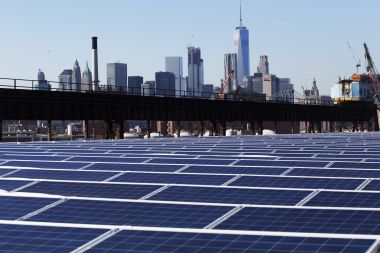
Brooklyn Navy Yard (AP Photo/Mark Lennihan)
¶ “It must be a total coincidence that those who pushed Trump to ditch the Paris Agreement received donations from the fossil fuel industry” • It is a sad and painful reminder of the times in which we live that one of the most powerful men in the world can recklessly walk away from the single most important treaty that exists today. [The Independent]
¶ “Market Forces Are With Clean Energy, Not With Trump” • You want numbers proving that Trump is on the wrong side of history when it comes to climate change, the Paris agreement, and the battle between clean energy and dirty coal? We’ve got numbers for you. Nobody can turn back the tide of energy transformation. [CleanTechnica]
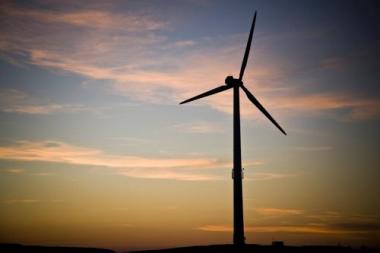
Energy transformation underway
World:
¶ GE Renewable Energy, global wind and solar company Mainstream Renewable Power, and local Vietnamese partner the Phu Cuong Group have agreed to a $2 billion joint development agreement to develop, build, and operate the 800-MW Phu Cuong Wind Farm in the Soc Trang province of Vietnam. [Windpower Engineering]
¶ Chile will consider increasing its 2050 renewable energy target to 100%, according to local reports. The nation’s current target is for renewable energy sources’ share of the country’s power mix to be 70% by 2050. But Chile may raise the target to 100% thanks to the falling cost of renewable energy and improvements in energy storage. [Climate Action Programme]
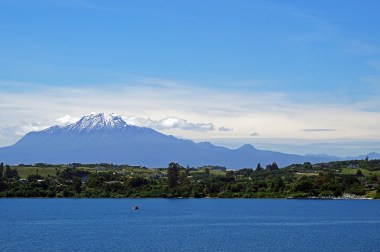
Chile
¶ Indian power utility Tamil Nadu Generation and Distribution Corporation is set to auction 1.5 GW of solar power capacity. Prospective projects developers can bid for project sizes of one to 500 MW. The maximum tariff bid allowed will be ₹4.00/kWh (6.2¢/kWh), 64% higher than lowest solar power tariff in India, which was ₹2.44/kWh. [CleanTechnica]
¶ India’s energy and mines minister Piyush Goyal has challenged Germany and the city of Munich to a race with the ancient holy city of Varanasi to become the first large metropolis in the world to be 100% powered by clean energy. Goyal was speaking at the Indo-German Energy Forum at Intersolar Europe when he made the challenge. [PV-Tech]

Varanasi, on the banks of the Ganges (Flickr | Lyle Vincent)
¶ The construction of the fifth and sixth units of India’s largest nuclear power plant in Tamil Nadu will cost about ₹50,000 crore ($7.5 billion) with half of the amount being funded by Russia as loan. The project will take seven years to start generating electricity, according to the chairman of the Nuclear Power Corporation of India. [Business Today]
US:
¶ Kansas City Power & Light Company announced it will soon retire six coal-fired generating units at the company’s Montrose, Lake Road and Sibley Stations. The utility announced in 2015 plans to either retire the coal units or convert them to alternative fuel sources, but emerging industry trends led the company to choose retirement. [Power Engineering Magazine]

KCP&L power plant
¶ Secretary of State Rex Tillerson said the US is likely to continue to reduce carbon emissions despite exiting the Paris climate agreement. The statement came during a photo-op with the Brazilian Foreign Minister. It was Tillerson’s first public statement on the Paris deal since President Trump said he would withdraw the US from the pact. [The Hill]
¶ Residents in Pittsburgh say it’s ironic that President Donald Trump name-dropped their city during his announcement on Thursday that the United States was pulling out of a global climate accord. After all, it’s stricter environmental regulations and clean energy policies that transformed their once “smoky city” into a beautiful place to live. [CNN]

Pittsburgh, before environmental regulations, in the 1950s
¶ Democratic state attorneys general – the same group that beat back President Donald Trump’s travel ban in court – are now turning their eyes to climate and environmental issues. As Trump announced the US’ exit from the Paris climate accord, several attorneys general had already begun discussing strategies to battle the administration. [CNN]
¶ Pattern Energy Group Inc has announced the opening of its 324-MW Broadview Wind power facility and the associated 35-mile 345-kV Western Interconnect transmission line. Broadview Wind is located in Texas and New Mexico, about 30 miles north of Clovis. It is delivering clean energy to California via Western Interconnect. [Windpower Engineering]

Broadview Wind
¶ New York State will seek bids for clean energy projects valued at up to $1.5 billion in a move the Cuomo administration says is aimed at expanding the state’s green energy economy after President Trump’s pulled out of the Paris climate accord. The state expects the investments to result in up to 40,000 clean energy jobs by 2020. [Newsday]
¶ New Hampshire Electric Cooperative began construction of what will be the largest solar electric array in the state, a 2-MW system that will provide its members a clean source of electricity on NHEC’s own distribution system. It is expected to be online by the end of 2017, producing enough power for about 600 homes. [The Laconia Daily Sun]
geoharvey is free and without ads.
geoharvey is not tax-deductible.
Posted in nuclear power, renewable power, solar, wind | 1 Comment »
Tags: nuclear, nuclear power, renewable power, solar power, wind power
June 2, 2017
Withdrawal from the Paris Agreement:
¶ “China likely to lead climate initiatives as Trump quits global pact” • It’s not hard to imagine Chinese president Xi Jinping having a wry smile at both the decision by Donald Trump to pull the US out of the Paris climate accord and the global reaction. Xi is now free to accept the mantle of global leadership on climate action. [The Rakyat Post]

Mythology peddler Donald Trump (Credit: Reuters)
¶ “Trump climate deal pullout: The global reaction” • President Donald Trump’s announcement that the US is withdrawing from the 2015 Paris climate agreement has drawn strong reaction from a very few supporters and a great many opponents inside America and around the world. Here are statements from members of both groups. [BBC]
¶ “Paris climate deal: US firms criticise Trump move” • General Electric, Facebook, Goldman Sachs and Walt Disney and other corporate giants condemned the move. Tesla’s Elon Musk and Walt Disney’s Robert Iger both quit seats on White House advisory groups. Goldman Sachs boss Lloyd Blankfein used his first ever tweet to condemn the move. [BBC]
¶ President Donald Trump may abandon US pledges to reduce carbon emissions, but global economic realities ensure he is unlikely to reverse the accelerating push to adopt cleaner forms of energy. Around the world, coal-fired power plants are being shuttered as governments and private companies invest billions in wind turbines and solar farms. [The Daily Times]
¶ US coal shares tumbled as President Donald Trump was said to be leaning toward exiting the Paris climate agreement. “You’d think everyone would be excited,” Michael Dudas, a coal analyst at Vertical Research Partners, said by phone on Wednesday. “But there’s red on my screen.” Wall Street sees more pressing matters facing coal. [Standard-Examiner]
World:
¶ Electro Power Systems has completed a plug and play green microgrid for Italian utility Enel at a construction site in Chile’s Atacama Desert. Powered by a solar system with both hydrogen and lithium storage, the microgrid requires no diesel energy backup, making it emissions free, according to the Paris-based microgrid developer. [Microgrid Knowledge]
¶ The World Bank has announced that 45,000 people in the Pacific island nation of Vanuatu are set to get access to renewable energy. Its board of executive directors had approved $4 million for the Vanuatu Rural Electrification Project II, which will be co-funded by the Scaling Up Renewable Energy Program and the government of New Zealand. [CNBC]

Vanuatu (Stephan Roletto | Moment | Getty Images)
¶ Russia signed an agreement with the Indian government to build two new reactors for the Kudankulam nuclear power station in Tamil Nadu and said it would loan India $4.2 billion to help fund construction. The agreement to build reactors 5 and 6 at Kudankulam should help cement already close ties between the two countries. [WION]
¶ The first serious proposal for an Australian offshore wind farm will see up to 250 turbines built within a 574 square kilometer area off the coast of Victoria, if approved. Under the proposal, the wind farm would have a total capacity of at least 2,000 MW and provide about 18% of Victoria’s power usage, enough for 1.2 million homes. [The Guardian]
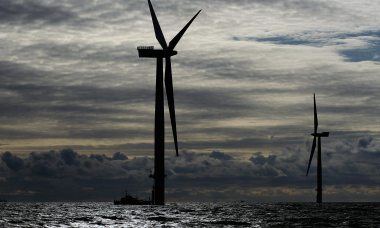
Offshore wind farm (Jeff J Mitchell | Getty Images)
US:
¶ New York Governor Andrew Cuomo says the state will continue to abide by the Paris climate accord regardless of Trump’s decision to pull out of the agreement to reduce carbon emissions. He and the governors of California and Washington state will lead a new alliance of states supporting the Paris agreement. [Lockport Union-Sun & Journal]
¶ More than 100 supporters attended a dedication ceremony for Duke Energy Renewables’ Frontier Wind Power Project, a 200-MW facility in Oklahoma. It produces enough electricity to power about 60,000 average homes. Vestas supplied 61 V126-3.3 MW turbines with 126-meter rotors, its largest to date in the US. [North American Windpower]
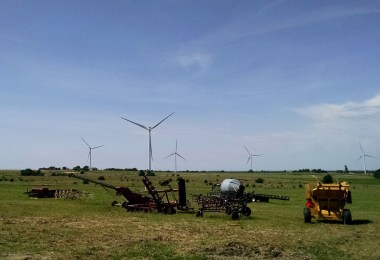
Duke wind farm
¶ Changing from coal to solar energy could prevent over 51,000 premature deaths a year, a study from Michigan Technological University suggests. Around 200,000 people die each year from air pollution in the US and 52,000 of those deaths are from power generation. The eastern US and the Midwest have the most danger due to coal pollution. [Newsy]
¶ Nevada’s Ormat Technologies has finalized a 150-MW power purchase agreement to provide energy from nine geothermal plants to the Southern California Public Power Authority. Energy will be sold to the Los Angeles Department of Water and Power at a fixed price of $75.50 per MWh, starting in the fourth quarter of 2017, Ormat said. [reNews]

Ormat geothermal plant (Credit: Ormat)
¶ Somerville, Massachusetts, will start a new electricity bulk buying program for its ratepayers in July. Called Somerville Community Choice Electricity, the goal of the program is to reduce and stabilize the cost of electricity in Somerville and increase the share of renewable “green” energy in Somerville’s electricity supply. [Wicked Local Somerville]
¶ Energy storage services company Greensmith Energy, E.On Climate and Renewables, and Tucson Electric Power inaugurated the Iron Horse Battery Energy Storage Project. The 10-MW/2.5-MWh energy storage system will provide frequency response and voltage control along with integration for a 2-MW solar array. [Electric Light & Power]
geoharvey is free and without ads.
geoharvey is not tax-deductible.
Posted in nuclear power, renewable power, solar, wind | 1 Comment »
Tags: nuclear, nuclear power, renewable power, solar power, wind power
June 1, 2017
Science and Technology:
¶ The urban heat island effect makes cities notably hotter than surrounding areas because of heat radiating from buildings and roads that have baked in the sun. It will more than double the city-level costs of dealing with rising temperatures caused by anthropogenic climate change over the coming century, a study says. [CleanTechnica]

New York
¶ There has been an important development in the big crack cutting across the Larsen C Ice Shelf in Antarctica. The fissure, which threatens to spawn one of the biggest icebergs ever seen, has dramatically changed direction. The rift has propagated a further 16 km, and the calving of the iceberg could now happen very soon. [BBC]
¶ The world’s first commercial facility that extracts carbon dioxide from the air and resells it for commercial purposes has opened in Switzerland. The carbon dioxide will be sold and used to grow lettuce. This technology could help cut 1% of global fossil fuel emissions by 2025, according to Climeworks, the system’s developer. [Live Science]

Climeworks carbon dioxide capture system (Credit: Julia Dunlop)
World:
¶ More than 47 GW of new wind capacity is expected to be installed across Latin America over the next decade according to analysis from MAKE Consulting’s 2017 Latin America Wind Power Outlook. Mexico, Argentina, and Chile are all expected to offset somewhat an expected decline in Brazilian wind power construction efforts. [CleanTechnica]
¶ German renewable power project developer BayWa re has acquired hybrid solar-diesel plant startup company OneShore Energy, which specializes in the analysis, planning, operation, and optimization of both diesel plants and solar-diesel hybrids. BayWa re said the deal will further expand its commitment to off-grid solutions. [Decentralized Energy]
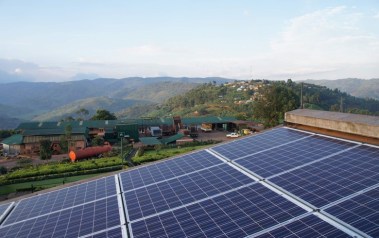
Photovoltaics
¶ Canadian Solar, one of the world’s leading solar PV makers, announced this week that it will be providing 268 MW of solar modules to the 800-MW third phase of the Mohammed bin Rashid Al Maktoum Solar Park in Dubai, in the United Arab Emirates. Completion of the third phase is expected to be sometime in 2020. [CleanTechnica]
¶ A Dutch company says its project combining wind power and energy storage is the first of its kind in The Netherlands. Alfen, based in Almere, installed its 1-MWh battery storage solution at the 9-MW Giessenwind wind farm in the town of Giessenburg. Giessenwind has three turbines and powers around 5000 households. [Power Engineering International]

Alfen battery system
¶ The Canadian Minister of Environment and Climate Change announced regulations to reduce methane emissions and air pollution from Canada’s oil and gas sector. California, Colorado, and North Dakota have already adopted such regulations. Methane, a powerful greenhouse gas, is also toxic to human health and contributes to smog. [MRO Magazine]
US:
¶ Enel Green Power North America, Inc, acting through its subsidiary Rock Creek Wind Holdings, signed a tax-equity agreement worth about $365 million for the 300-MW Rock Creek wind farm in Missouri. It is already under construction and is expected to begin operation this year, generating about 1,250 GWh annually. [Windpower Engineering]

Wind turbines in the Midwest
¶ Shareholders in ExxonMobil have backed a motion requiring the company to assess the risks from climate change. The plan, proposed by investors including the Church of England, was supported by over 62% of those eligible to vote. Exxon will now have to consider how global efforts to mitigate climate change will impact their business. [BBC]
¶ Construction of a solar project West Fort Hood, in Killeen, Texas, is now complete, and officials plan to celebrate Friday with a ribbon-cutting. The $100 million project promises to help energize Fort Hood for decades to come. An on-site solar system provides 15 MW of energy and an off-site wind facility provides 50 MW. [The Killeen Daily Herald]

Solar Panels at West Fort Hood (Army photo)
¶ Reports are that US President Donald Trump has decided to withdraw the US from Paris Climate Agreement after many long months of speculation. However, while some news outlets have all but confirmed the news, others suggest that the President has not yet made up his mind. (This story will be updated as news comes out.) [CleanTechnica]
¶ The owner of the coal-fired Cayuga power plant plans to build Upstate New York’s largest solar farm by covering roughly 75 acres next to the coal plant with PV panels. The solar farm would produce up to 18 MW, enough for about 3,100 households, Riesling Power officials said. The solar plant will cost about $25 million. [Syracuse.com]
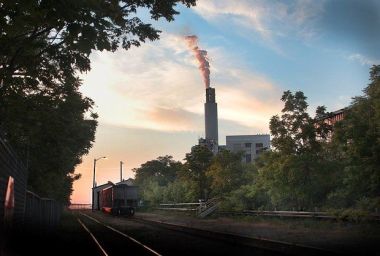
Coal-fired Cayuga power plant (Finger Lakes Action Network)
¶ California took a potentially important step closer toward clean energy when the state Senate passed a bill mandating 100% renewable energy by 2045. Lawmakers voted 25 to 13 to pass SB 100, and it now heads to the Assembly. In recent years, several gas-fired and nuclear plants have shut down due to lack of demand. [Courthouse News Service]
¶ The coal-burning Hudson Generation Station, in Jersey City, New Jersey, is being disconnected from the electric grid, and will go dark for good. PSEG Power, the owner, is also closing a coal-burning plant near Trenton on the Delaware River. PSEG’s decision to shutter the two coal-fired plants mirrors a national trend. [NorthJersey.com]
geoharvey is free and without ads.
geoharvey is not tax-deductible.
Posted in nuclear power, renewable power, solar, wind | 1 Comment »
Tags: nuclear, nuclear power, renewable power, solar power, wind power
May 31, 2017
World:
¶ Australia’s Great Barrier Reef lost nearly a third of its corals in the past year, officials said. Coral Surveys show that 29% of corals died in 2016. Researchers say that climate change is a significant driver behind the coral loss and experts have said the window is closing fast to cut the greenhouse gas emissions harming the reef. [BBC]

Bleached coral (Photo: ARC Center)
¶ National Grid has insisted it can cope with increasing amounts of solar in the UK’s energy mix as the technology set a new generation record last week. Ideal weather conditions swept the UK on May 26, when solar power supplied just under a quarter (24.3%) of the UK’s total demand, but National Grid says it can deal with that. [Clean Energy News]
¶ Under a new program, Uzbekistan plans to implement 810 renewable energy projects, for a total of $5.3 billion, by the end of 2025. In the next five years, 17,251 boilers are to be replaced, saving over 56.5 million cubic meters of natural gas. The country will increase renewable generating capacities from the current 12.7% to 19.7%. [AzerNews]
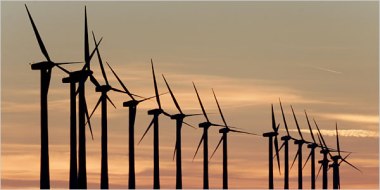
Wind power
¶ Australia could allow the Clean Energy Finance Corporation to fund carbon capture and storage projects under a proposal announced this week. Green and Labor parties pointed out that the move amounted to taking funds from renewable power projects to support fossil fuel power, which would not reduce net emissions. [Power Engineering International]
¶ Botswana state-owned electric utility Botswana Power Corporation is planning to build a 100-MW solar power plant at an unspecified location in Botswana in conjunction with the local Ministry of Minerals, Green Technology and Energy Security. The company is now seeking a potential partner for the project through an Expression of Interest. [pv magazine]

Botswana (Photo: Chris Parker)
¶ Solar Power Europe’s annual five-year outlook forecasts capacity additions in a range of 5.8 GW to 12.4 GW for this year, with the annual forecast range widening to between 8.1 GW and 27.3 GW by 2021. Solar additions across Europe plunged 22% on year in 2016 to just 6.7 GW, the lowest annual growth since 2009, it said. [Platts]
¶ India’s Ministry of Shipping is exploring the possibility of setting up 200 MW solar and wind energy projects on 1.5 lakh (150,000) acres of land at Kandla Port in Gujarat, the Union Minister for Shipping and Transport Nitin Gadkari said. The land is low cost and economically viable for investment in solar and wind projects. [ETEnergyworld.com]

Jawaharlal Nehru Port
US:
¶ ExxonMobil is seeking to fend off a shareholder rebellion over climate change, with major financial advisory firms BlackRock and Vanguard openly considering casting their votes against management on some key proxy resolutions at the annual meeting Wednesday. BlackRock said that climate disclosure is one of its top priorities. [Washington Post]
¶ The Three Mile Island nuclear plant, which experienced a partial reactor meltdown in 1979, spawning nationwide protests, will shut in 2019. Exelon Corp, which owns the facility, said the low cost of natural gas extraction had made nuclear-generated electricity unprofitable. Since 2013, six US nuclear plants have closed before their licences expired. [BBC]

Three Mile Island (Reuters image)
¶ A class-action lawsuit was filed against GM alleging that the company’s Duramax-equipped pickup trucks emit NOx pollutants at levels 2 to 5 times higher than legally allowed in the US, and that these vehicles do this by use of at least 3 illegal “defeat devices.” These allegations stem from on-road emissions testing done for the plaintiffs. [CleanTechnica]
¶ Solar power is affordable for low income Americans. In one predominantly African-American neighborhood in San Diego, nearly half of the 192 homes have rooftop solar panels, and residents talk about what they can now afford. They were paying $200 and $300 a month in electric bills. Now they’re paying zero to $50. [Union of Concerned Scientists]
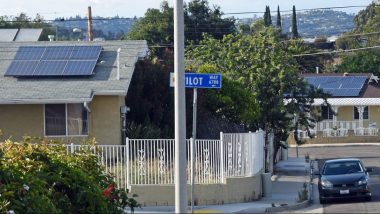
Broadway Heights, San Diego
¶ The share of US electricity generated by renewables has eclipsed earlier projections by the Energy Information Administration, according to the SUN DAY campaign. EIA projections published in 2012 suggested we would have had renewables generating 19.35% of our electricity in about the year 2057. We achieved that in 2017. [Solar Industry]
¶ The Brayton Point Power Station in Somerset, Massachusetts, is extinguishing its boilers for the final time. When it does, coal will have all but disappeared from this six-state region of New England, with its 14 million people. Two small and seldom-used coal plants in New Hampshire will be all that remains of a once-mighty industry. [E&E News]

Brayton Point Power Station (Benjamin Storrow | E&E News)
¶ Xcel Energy cut carbon emissions 30% in 2016 while expanding its renewable energy portfolio. The company’s corporate responsibility report highlights Xcel’s transitions to cleaner energy sources and other benefits to the communities it serves, including energy efficiency programs, economic development, and energy assistance. [Electric Light & Power]
¶ Powin Energy entered into a contract with San Diego Gas & Electric to deliver a 6.5-MW/26-MW/h battery energy storage system in Escondido, California, subject to Public Utilities Commission approval. The system would improve reliability on the existing grid by optimizing the intermittent output of renewable energy. [Power Engineering Magazine]
geoharvey is free and without ads.
geoharvey is not tax-deductible.
Posted in nuclear power, renewable power, solar, wind | 1 Comment »
Tags: nuclear, nuclear power, renewable power, solar power, wind power
May 30, 2017
Science and Technology:
¶ A study by researchers working at the Materials, Science, and Technology Laboratory in Switzerland claims that particulate emissions from gasoline engines can be far greater than those from diesel engines. The research found the they can even emit more particulates than older diesels that were without particulate filters. [CleanTechnica]

Direct gas injection system (Credit: Bosch)
World:
¶ Kerala’s chief minister said the state has become the first in India to provide electricity to every home. To do this, it eased requirements like security deposits and land titles, and even mobilized funds from legislators to corporate sponsors for internal wiring of poor households, the electricity minister said in a phone interview. [Livemint]
¶ Acciona has switched on Spain’s first ever hybrid plant for storing energy generated by a grid-connected wind farm. The plant’s storage system consists of two batteries and is connected to a 3-MW wind turbine. The lithium-ion batteries feature Samsung SDI technology and will store energy produced by the wind turbine when required. [reNews]

Acciona batteries (Acciona image)
¶ A study of carbon and climate goals by a group of thirteen leading economists, supported by the World Bank Group, was published this week. It concluded that countries must work towards the goal of implementing a strong carbon price in the range of $40 to $80 per tonne of CO2 by 2020, and $50 to $100 per tonne by 2030. [CleanTechnica]
¶ Data released by the Clean Energy Council shows renewable energy provided 17% of Australia’s power demand in 2016 – its highest in more than half a century (since Snowy Hydro was completed). But the big mover is the growing share of solar. Its generation jumped 29% in the last year, and it accounted for 3.16% of the total 2016. [RenewEconomy]
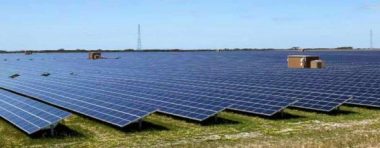
Australian solar farm
¶ The government of the Indian state of Odisha has set a target to electrify at least 406 villages through solar power during 2017 after providing similar facilities to 1620 villages so far. Out of all the villages that have already been electrified with solar energy, 145 are located in remote areas inhabited by tribal populations. [The Indian Express]
¶ The report by the Clean Energy Council says 2016 was a year of recovery for the Australian renewables sector after uncertainty generated by the Abbott government’s review of the federal renewable energy target cost jobs and investment. Renewable energy provided 17% of Australia’s electricity in 2016, up from 14% the year before. [The Guardian]

Solar farm outside Canberra (Photo: Lukas Coch | AAP)
¶ SunPower, which is a majority-owned subsidiary of Total SA, announced that in the first round of France’s tender process for rooftop solar projects, the company will supply 64 MW of its high-efficiency SunPower® E-Series solar panels. A significant portion of the panels SunPower supplies will be made in France. [Your Renewable News]
¶ The Global Trends in Renewable Energy Investment 2017 report shows that as costs of solar and wind energy continue to fall dramatically, a total of 138.5 GW of wind, solar, and other renewable sources was installed worldwide last year. The report says this is up 8% from 2015, and clean power accounted for 55% of all new energy generation. [Proud Green Building]

Urban solar power (iStock photo)
¶ A project with 13 wind turbines will be built on land next to an existing Mid-Wales wind farm. Planning officers at Powys County Council have granted full permission for Carno 3 on land adjacent to Carno Wind Farm. The site will feature 13 wind turbines up to 126.5 meters to the blade tip and generate up to 39 MW of renewable power. [shropshirestar.com]
¶ In January, Taiwan’s parliament voted to phase out nuclear energy, which filled 14% of its power in 2015, by 2025. Now, global renewable energy companies are rushing to set up offshore wind farms, and investment applications filed with the government so far reached around NT$1.8 trillion (US$59.5 billion). [Nikkei Asian Review]
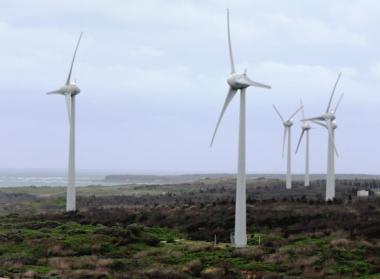
Wind turbines on Taiwan’s Penghu Island
US:
¶ Southern California Edison is offering people who drive a plug-in or electric car a one-time cash rebate of $450. What makes it different from other EV rebate programs is that it applies to second and third owners and those who lease cars as well. Typically, an EV rebate like the federal tax credit only helps new-car buyers. [CleanTechnica]
¶ While America’s slashed its coal-fired electricity generation by more than a third between 2006 and 2016, Nebraska raised its coal-fired power output by 6%, according to data from the Energy Information Administration. This was because coal-burning plants opened in 2009 and 2011, and the Fort Calhoun nuclear plant closed. [Bloomberg]

Please click on the image to enlarge it.
¶ At an energy conference in Wyoming, Goldwind Americas, the US arm of China’s largest wind turbine manufacturer, offered to provide free training to unemployed coal miners looking for work building wind power farms or as wind turbine technicians. Free retraining for unemployed workers is more than the state government offers. [CleanTechnica]
¶ A report from the International Renewable Energy Agency indicates that the job growth within the US solar industry is up to 17 times faster than that for any other industry in the country. So, contrary to political rhetoric in support of fossil fuels, the best source of jobs in the US is actually its competitor, the solar power industry. [EconoTimes]
geoharvey is free and without ads.
geoharvey is not tax-deductible.
Posted in nuclear power, renewable power, solar, wind | 1 Comment »
Tags: nuclear, nuclear power, renewable power, solar power, wind power
May 29, 2017
Opinion:
¶ “Utilities’ Biggest Threat Is Not Solar + Storage, It’s Their Own Greed” • Energy utilities are fully aware of the existential threat to their current business models presented by new technologies, particularly solar, storage, and smart software. But a far greater risk that dovetails with that threat is their own short-term greed. [CleanTechnica]
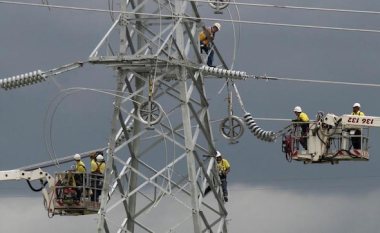
Poles and wires – sticks and strings
¶ “Trump + Russia Chaos Is Tiny Preview Of Carbon Bubble Popping” • The Trump & Russian chaos – no matter how extensive it is and where it goes – is a tiny preview of the massive disruption coming as the global carbon bubble pops. The quick collapse of the oil, gas, and coal industries will have disruptive and far-reaching effects. [CleanTechnica]
Science and Technology:
¶ When Cornell University competed in 2011 to develop an applied science and engineering campus in New York City, part of its pitch was that it would construct an academic building that would be close to net zero for energy. It won. Now, with work well underway, the Bloomberg Center building is expected to be finished by September. [New York Times]

Bloomberg Center (Photo: Vincent Tullo)
¶ Low cloud cover in India, which is largely responsible for a good monsoon, has declined in most parts of the country over 50 years, a first-of-its-kind study by the India Meteorological Department, Pune, revealed. Climate experts said as the monsoon contributes to 70% of the country’s annual rainfall, and the decrease is a cause for concern. [Hindustan Times]
World:
¶ Canadian company Innergex Renewable Energy has started commercial operations at the 36.1-MW Rougemont 1 and 38.9-MW Vaite wind farms in France. The projects, which are located in Bourgogne-France-Comte, comprise GE turbines rated at 2.78 MW. For the next 15 years, all the electricity from the projects will be sold EDF. [reNews]
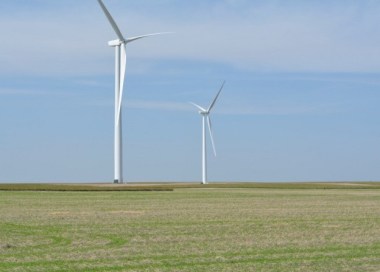
GE wind turbines (GE image)
¶ Following a study saying renewable energy, particularly solar, dominates rural Tanzania, there are now plans to open a training center. The director of the Innovative Technology and Energy Centre announced plans to open a training center for renewable energy technology in Arusha, Tanzania this August to train 1000 students per year. [ESI Africa]
¶ Russia is pressing ahead with its biggest-ever auction for renewable energy, seeking to award contracts to purchase 1.9 GW of clean electricity as well as attracting foreign investment. The government tender has attracted the interest of Fortum Oyj, Finland’s largest energy company. Enel SpA of Italy may also participate. [Bloomberg]

Please click on the image to enlarge it.
¶ According to data from India’s Central Electricity Authority, solar contributed about 13.5 billion units of electricity in FY 2016-17 – an increase of 81% roughly 7.4 billion units generated in FY 2015-16. Solar still only accounts for just over 1% of total electricity generated in India, but it is the country’s fastest-growing new power source. [pv magazine]
¶ Three in four Australians understand that climate warming poses a “catastrophic risk,” even as the Australian government turns a blind eye. According to a survey for the Global Challenges Forum, 84% of 8000 people surveyed in eight countries consider climate change a “global catastrophic risk.” The Australian figure was 75%. [RenewEconomy]

Climate risk (AAP Image | Dean Lewins, File)
¶ More than 12,000 solar jobs were lost in the UK solar industry after the government, which wanted to put money into nuclear power, slashed support in 2015. But Solarcentury has survived by turning outward to target markets in Latin America and Europe. Now the firm has 85% of its revenues coming from international markets. [The Guardian]
US:
¶ Tribal lawmakers, federal agencies, and private industry are working to plan a future of Navajo Generating Station. A study commissioned by the coal supplier, Peabody Energy, says the plant would be economically viable through 2040. But separate reports by the plant’s owners and the Sierra Club and say that study is very wrong. [Arizona Daily Sun]
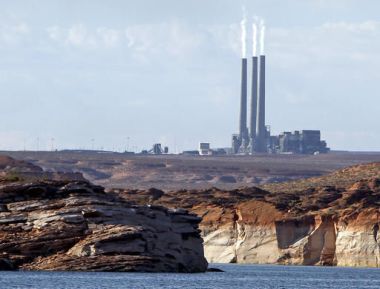
Navajo Generating Station (Associated Press photo)
¶ The coal-burning James River Power Station was built near water and railroads to provide power to Springfield, Missouri in 1953. Now, City Utilities took the first step in retiring the station. The power station’s oldest units have not been fired up since 2015 because they are inefficient, and the utility’s decision will shut the rest down. [Springfield News-Leader]
¶ A growing number of large Michigan businesses that want their electricity to come from renewable sources. Consumers Energy responded by filing a “Voluntary Large Customer Renewable Energy Pilot Program” with the Michigan Public Service Commission. The program is available to customers with a load of at least 1 MW. [MiBiz]
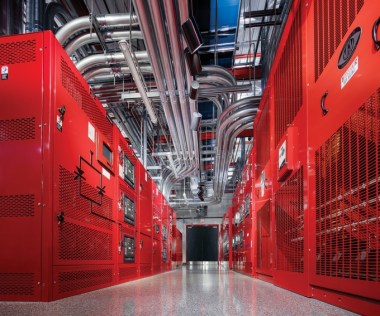
Powering sites like this Switch data center (Courtesy photo)
¶ 314 Action is a new organization working to promote pro-science issues in government and help science, technology, engineering, and mathematics professionals increase their numbers in politics. So far, 5,000 scientists across the country have responded and said they are willing to run for office, exceeding all expectations. [Voice of America]
¶ The Westinghouse Group filed for Chapter 11 Bankruptcy on March 29, this year, and fabricators are watchful of the fallout. The Westinghouse bankruptcy has potentially disruptive effects on virtually all subcontractors working on nuclear power with which it does business, leaving them in doubt about their futures. [The Maritime Executive]
geoharvey is free and without ads.
geoharvey is not tax-deductible.
Posted in nuclear power, renewable power, solar, wind | 1 Comment »
Tags: nuclear, nuclear power, renewable power, solar power, wind power
May 28, 2017
Opinion:
¶ “Large coal plant closures reveal industry vulnerability” • The locals say that the coal industry will survive at a new normal, and economists say Wyoming coal mining will be the last to go down, but the state doesn’t dictate the market; it just provides the material. Across the country, big coal plants are getting too expensive to run. [Casper Star-Tribune Online]
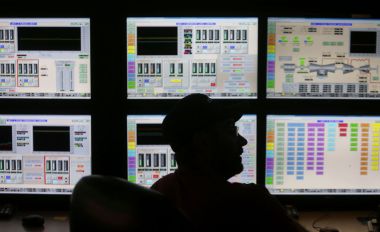
Power plant control room (Alan Rogers | Star-Tribune)
¶ “The eco guide to renewable energy” • Within three years the renewable energy revolution will make such economic sense that many passive electric customers turn into to energy creators, defecting from the grid, using solar, wind power, smart-demand response systems, and electric vehicles. Embrace the jolt, it will be huge. [The Guardian]
Science and Technology:
¶ Faced with rising temperatures and a dearth of American leadership, scientists are investigating geoengineering , which would involve deliberate, large-scale interventions to cool the Earth’s climate. It can take many forms. Solar geoengineering is the most risky and controversial. One way to do it is to emulate the effects of volcanoes. [CleanTechnica]

Mount Pinatubo erupting (United States Geological Survey image)
¶ With climate change, increases in average annual temperatures that may seem small create conditions that dramatically elevate the risk and severity of forest fires, particularly in the American West. Long fire seasons, dry conditions, infestations killing vegetation, and lightning combine to produce dangerous conditions for fires. [CleanTechnica]
¶ Because the land is warming and a food supply is emerging earlier, some familiar bird species arrive from migrations too late to find enough food for their chicks. That’s the conclusion of a recent study of changes in spring “green-up” dates across North America and the arrival dates of spring migratory bird species in those areas. [The Columbus Dispatch]

Scarlet tanager (Jim McCormac, for the Dispatch)
World:
¶ Leaders of the G7 group of rich nations have failed to agree a statement on climate change. Six world leaders reaffirmed their commitment to the Paris accord, the world’s first comprehensive deal aimed at reducing greenhouse emissions. However, the US has refused to recommit to the agreement, saying it will make a decision next week. [BBC]
¶ Global leaders have been urging President Trump to stay in the Paris climate accord during high level security and economic meetings in Italy. Pope Francis already made the case with a gift of his papal encyclical on the environment when Trump visited the Vatican earlier. Scientists explain what will happen if the US withdraws. [The Independent]
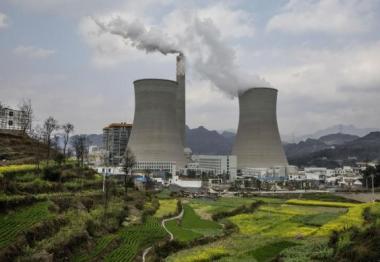
Bringing about climate change
¶ The United Arab Emirates received its first shipment of fuel to supply its first nuclear power plant that is under construction at Barakah, in Abu Dhabi. The Barakah nuclear power plant has received the requisite licences to transport, handle and store nuclear fuel from the United Arab Emirates’ Federal Authority for Nuclear Regulation. [Gulf Digital News]
¶ India’s largest power generating utility, NTPC Ltd, is driving the energy transition from coal to solar. Apart from building its own portfolio of renewables, it is emerging as the key off-taker of solar power projects by private developers whose aggressive bids backed by overseas investments have made solar tariff cheaper than coal-fired generation. [Business Standard]

Solar power in India
US:
¶ The Natural Resources Defense Council says power generation through wind, solar, and geothermal is now up to 280,656 GWh nationwide and still growing quickly. That number is 7 times greater than it was just 10 years ago when the US produced 41,664 GWh of renewable energy. The biggest gains have come in just the last couple of years. [KMSP-TV]
¶ Hawaii Electric Light Company is putting a problem to the state’s Public Utilities Commission. If Hu Honua Bioenergy’s long-delayed biomass power plant went online by the end of 2018, the utility’s customers would see rate increases, according to an analysis of a proposed power purchase agreement it filed with the PUC. [Hawaii Tribune Herald]
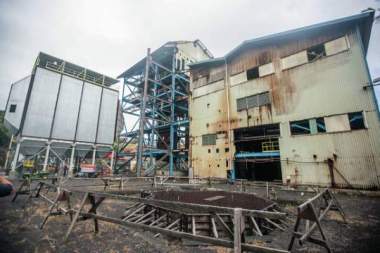
The half-completed Hu Honua bioenergy power plant
(Hollyn Johnson | Hawaii Tribune-Herald)
¶ A “low point for the American environment,” a “dark and difficult time,” a period when the US EPA was in “chaos and despair.” Those could be contemporary descriptors, but they portray the Reagan presidency as captured by former Sen. George Mitchell in his book “World on Fire: Saving an Endangered Earth.” [Press Herald]
¶ Two fossil fuel industry groups dropped attempts to intervene in a federal court case over climate change this week after failing to reach an agreement on a unified legal position on climate science, court filings show. A group of teenagers is suing the US government for violating their constitutional rights by causing climate change. [The News International]
geoharvey is free and without ads.
geoharvey is not tax-deductible.
Posted in nuclear power, renewable power, solar, wind | 1 Comment »
Tags: nuclear, nuclear power, renewable power, solar power, wind power
May 27, 2017
Opinion:
¶ “Soaring growth of solar power demonstrated in one chart” • Auke Hoekstra at the Technical University of Eindhoven, in The Netherlands, looked at successive revisions of predictions by the International Energy Agency’s World Energy Outlook for solar adoption, measured in GW of capacity added per year. It seems they always get it wrong. [Green Car Reports]

IEA WEO predictions versus reality
¶ “Trump’s Paris accord call will be anticlimactic” • Donald Trump’s looming decision about whether to keep the United States in the Paris climate agreement will be, let’s say, anticlimactic. He could pull out, and that would be no surprise. But if he does, the actual impact on the climate and on global efforts to limit warming will be limited. [Reuters]
World:
¶ Woodstock, Ontario, which calls itself the “Dairy Capital of Canada”, and surrounding Oxford County, are taking a lead on sustainability. They’re among the first wave of North American jurisdictions to move aggressively toward a goal of using 100% renewable energy for electricity, transportation and heating. The goal is to get there by 2050. [Citiscope]

Woodstock, Ontario (Balcer | Wikimedia Commons | cc)
¶ World leaders at the G7 Summit engaged in a heated argument over climate change, a major point of dispute between other G7 heads of state and President Donald Trump. German Chancellor Angela Merkel said the climate debate was “controversial,” with leaders of all other G7 nations urging Trump to remain in the 2015 agreement. [CNN]
¶ Portuguese renewable energy association Apren has called on Portugal’s government to launch an auction for large-scale solar and wind power projects on the model of the 3-GW auction held recently by the Spanish government. That auction was won with a bid of €43/MWh, which is below the price of power from coal and nuclear. [pv magazine]
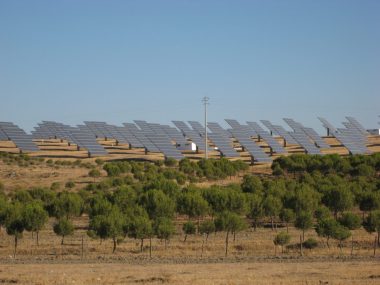
PV plant in Portugal (Hugo Cadavez)
¶ May 26 was a beautiful late spring day in the UK. All that sunshine led to breaking a solar power record for the second time this month. Total solar power generation amounted to 8.7 GW or 24.3% of demand for a period of time (midday). The previous solar power record for the UK was 8.48 GW set earlier this month. [CleanTechnica]
¶ At least 75% of UK homes will be powered by renewable energy by 2030, according to a report by Friends of the Earth. Falling renewable energy costs and decreasing costs for electricity storage mean that at least three quarters of homes will be reliably supplied with clean and affordable electricity from renewable sources by then. [Money High Street]

Wind turbines generating renewable electricity
¶ Analysis of electricity price surges during the February heat wave in New South Wales suggests that rooftop solar greatly reduced the market price of wholesale electricity over three days. Rooftop solar PV supplied only about 2% of the state’s total power needs over that time, but its impact was to cut the price of electricity by 60%. [RenewEconomy]
¶ Innergex Renewable Energy has started commercial operations at the 25.3-MW Boulder Creek run-of-river hydro plant in British Columbia. The company owns a 66.7% interest in the facility, with Ledcor Power Group owning the rest. The plant is part of a two-project scheme that also includes the 81.4-MW Upper Lillooet River facility. [reNews]

Innergex power facility (Innergex image)
¶ The Greenough River solar farm in Western Australia, around 50 km south-east of Geraldton, the first large-scale solar farm in the country, plans to quadruple in size from 10 MW to 40 MW. The plans were unveiled in a submission to WA’s Economic Regulation Authority. Two new 15-MW arrays will be built, one on each side of the existing facility. [RenewEconomy]
US:
¶ A vice president with Sempra Energy, one of the nation’s largest utilities, made a stunning admission to a roomful of gas and oil executives this week: there is no technical impediment to California getting all of its energy from renewables – now. All power could come from sources like wind, solar and hydro without reliance on fossil fuels. [KPBS]

Cross-border wind project in Baja California
(Credit: Martin Lemus, Fotografia Lemus)
¶ GE Renewable Energy has been selected to provide wind turbines to a 300-MW wind farm being developed in Texas by Invenergy, North America’s leading independent clean energy provider. GE Renewable Energy will provide 120 of its GE2.5-116.90-meter wind turbines for the Santa Rita wind farm in Reagan County. [CleanTechnica]
¶ President Trump’s 2018 budget proposal perhaps eliminate a decade-old program that sees Texas, Alabama, Louisiana, and Mississippi paid large sums of money from Gulf of Mexico oil and gas extraction. In 2018, for example, about $275 million would be paid out to the states in question that year if Trump’s budget proposal fails to pass. [CleanTechnica]

Oil project in the Gulf of Mexico
(Photo: Bureau of Safety and Environmental Enforcement)
¶ The City of Portland, Oregon, and Multnomah County have locked in a commitment to obtaining 100% of its electricity from renewable sources by 2035 as the latest #CommitTo100 city to join the pledge. The City of Portland was the first US city to adopt a carbon reduction strategy way back before it was cool in 1993. [CleanTechnica]
¶ The pressure to shift more of the country’s electric supply to renewable sources is not just a rallying cry for environmentalists. Some of the power industry’s biggest customers, like GM and Microsoft, have made a commitment to clean energy. And to help them meet it, utilities are changing their ways. West Virginia is no exception. [NRToday.com]
geoharvey is free and without ads.
geoharvey is not tax-deductible.
Posted in nuclear power, renewable power, solar, wind | 1 Comment »
Tags: nuclear, nuclear power, renewable power, solar power, wind power
May 26, 2017
Science and Technology:
¶ In an article in Science, researchers from Princeton University and the Union of Concerned Scientists found that a reliance on “faulty analysis” by US nuclear experts could result in a catastrophic fire that has the potential to force some 8 million people to relocate, and result in a staggering $2 trillion (£1.5 trillion) in damages. [Wired.co.uk]
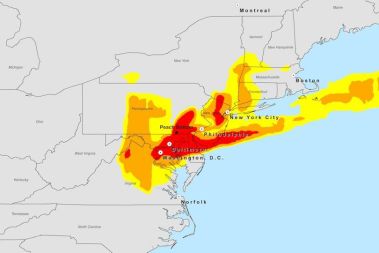
Possible contamination pattern from a hypothetical fire in a spent-fuel pool at the Peach Bottom nuclear plant. Red and orange areas would require evacuation. (Image: Michael Schoeppner, Princeton University, Program on Science and Global Security)
World:
¶ Pope Francis put climate change on the agenda of his first meeting with President Trump, and the subject is likely to come up again and again in the president’s encounters with other world leaders in the coming days. Mr Trump told his Vatican hosts that he would make a final decision after he returned to the United States. [The New York Times]
¶ At a meeting in Vienna, energy ministers from both OPEC and non-OPEC countries agreed to maintain output curbs, which had been due to expire next month, until March 2018. Nevertheless, the price of oil has fallen by about 5%. Brent crude fell $2.60 to $51.36 a barrel on Thursday, and was trading at $51.47 on Friday morning. [BBC]

Oil worker (Photo: Reuters)
¶ New low solar tariffs in India are being compared with those for coal and gas. Solar tariffs ranged from ₹2.44/kWh (3.8¢/kWh) to ₹2.62/kWh (4.1¢/kWh). By comparison, NTPC Ltd’s 42.7 GW of fossil fuel capacity has an average tariff of ₹3.20/kWh (5.6¢/kWh), about 24% higher than the lowest solar power tariffs. [CleanTechnica]
¶ The City of St Albert took delivery on the first three electric buses BYD has delivered to Canada. They are the first installment of an order for seven electric buses for the city. With the order, 10% of the city’s bus fleet will be electric. This will be fulfilled by the end of the year and shows the city’s commitment to next-generation transit. [CleanTechnica]

BYD electric bus
¶ The transformation of India’s electricity market continues to deliver, as shown this month by the cancellation of 13.7 GW of proposed coal-fired power plants, an admission that 8.6 GW of operating coal is already non-viable, and the parallel move of ever-decreasing solar costs helped along by the country’s record low solar tariffs. [CleanTechnica]
¶ A 40-MW solar farm in the South Anhui province of China is finally online and generating renewable energy. Larger than floating farms in Australia and India, the mass of solar panels is the largest in the world and can produce enough clean energy to power homes in the area. The solar panels have increased efficiency because the water cools them. [Inhabitat]
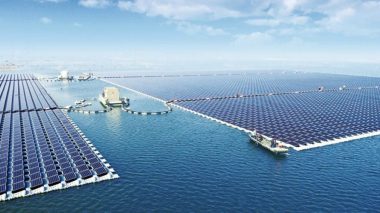
Floating solar farm (Sungrow image)
¶ Vietnam expects to grant investment licences for three coal-fired power plants worth a combined $7.5 billion, the country’s investment minister said. Although Vietnam wants to boost renewable energy output, it has been mostly reliant on coal-fired and hydro power plants to meet its annual electricity demand growth of around 11%. [ETEnergyworld.com]
¶ Australia’s leading renewable energy organisation launched a $20 million fund to support development of solar technologies that can provide cheaper and more efficient power. The Australian Renewable Energy Agency has invested more than a $100 million in solar PV projects since 2012, as it bids to build a clean energy future. [Innovators Magazine]

Australia (Credit: Unsplash)
¶ Abu Dhabi will become the home of the world’s largest solar power plant, highlighting the region’s commitment to sustainable building and utilizing renewable energy sources, under the UAE Energy Plan 2050. Costing approximately $8700 million, the 1.17-GW plant will provide enough power for about 200,000 homes. [Construction Global]
¶ Along with project partner Parkwind, MHI Vestas has inaugurated the Nobelwind offshore wind farm, a 165-MW project off the coast of Belgium. The turbines, positioned 47 km off the coast, will provide enough renewable energy to power more than 188,000 Belgian homes, according to the company. [North American Windpower]
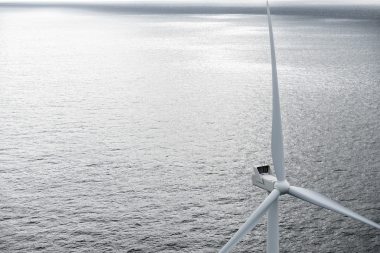
Vestas wind turbine
US:
¶ One of the nation’s leading utilities integrating wind energy onto its system reaffirmed on the second day of WINDPOWER 2017 that wind helps sustain grid reliability while saving its consumers money. Addressing over 7,000 attendees, Xcel Energy’s CEO Ben Fowke recommitted the utility’s investment in wind energy. [AltEnergyMag]
¶ Caldwell, New Jersey is pushing introduction of renewable energy resources in the borough. The Mayor and Council have reached one goal in the push by completing a solar panel installation at the Caldwell Wastewater Treatment plant earlier this year, according to an email by Councilman Kris Brown. [New Jersey Hills]

Solar array at the Caldwell Wastewater Treatment Plant
¶ Nevada became somewhat infamous in clean energy news in 2015, when state regulators eliminated retail rate net metering for all solar customers. But lawmakers appear eager to reverse that image, and have advanced a slate of proposals to boost the state’s green profile, including raising the state’s renewable energy mandate. [Utility Dive]
¶ The Southeastern Pennsylvania Transportation Authority’s board approved construction of rooftop solar systems on several sprawling maintenance centers in Philadelphia. The overall system constitutes a 3.1-MW project the agency says would be the city’s second largest after the Eagles’ solar installation at Lincoln Financial Field. [Philly.com]
geoharvey is free and without ads.
geoharvey is not tax-deductible.
Posted in nuclear power, renewable power, solar, wind | 1 Comment »
Tags: nuclear, nuclear power, renewable power, solar power, wind power
May 25, 2017
Opinion:
¶ “Australian solar financing at ‘tipping point'” • A host of factors point to a boom in a recently beleaguered sector. The past 12 months have seen a deluge of debt finance pour into large-scale solar projects, enticed by falling costs and a favorable political environment. Experts claim that solar power can now compete with gas on price. [Global Trade Review]

Australia
Science and Technology:
¶ The Neo-Carbon Energy research project enables production of synthetic fuels straight from the air. The solution is built on carbon dioxide capture, water electrolysis, and subsequent synthesis to methane and liquid fuels. It depends on very low cost renewable electricity based on wind and solar. The process is carbon neutral. [Science Daily]
World:
¶ Sri Lanka’s Cabinet of Ministers has approved plans to build a hybrid renewable energy park including 240 MW of wind and 800 MW of solar at Punarin. The Sri Lanka Sustainable Energy Authority has identified the northern regions of the country as a suitable area of the country to build wind power and solar power plants. [PV-Tech]
Northern Sri Lanka (Flickr | Kosala Bandara)
¶ Quadran, a French renewable energy developer born from the merging of Aerowatt and JMB Énergie, has energized a 12-MW PV power plant in Boulouparis in New Caledonia, a French overseas territory in the southwest Pacific Ocean. Construction of the Hélio Boulouparis solar project began in February of this year. [pv magazine]
¶ German manufacturer RECOM commissioned a 12.5-MW solar power project near Puerto Sandino in Nicaragua. The project is first part of Nicaragua’s pipeline totaling 100 MW, all of which is expected to be built and commissioned by the end of 2018. Puerto Sandino is a coastal town that attracts surfers from all over the world. [Electric Light & Power]

Nicaraguan solar array
¶ Danish wind energy giant DONG Energy announced that it has agreed to divest its upstream Oil and Gas business to London-based chemicals company INEOS for $1.05 billion. DONG Energy made public that it was looking to divest its Oil and Gas business in November. The sale will help the company focus on renewable energy. [CleanTechnica]
¶ By next March, three remote Indonesian villages in Berau Regency of East Kalimantan Province are to be fully served by a 1.2-MW hybrid power plant consisting of solar PV, lithium-ion energy storage and a distribution system. Once built, a village-owned company will own the off-grid system with operational help from the builder. [pv magazine]
Indonesian islands (Jon Hanson | Wikimedia)
¶ The Renewable Energy and Jobs – Annual Review 2017 report from the International Renewable Energy Agency showed that 9.8 million people work in renewable energy worldwide. Solar PVs provide jobs to 3.1 million people globally. The solar and wind employment sectors have more than doubled over the past four years. [pv magazine]
¶ Oil could converge to about $15 per barrel by the early 2040s when electric vehicles are expected to take a larger share, implying fossil fuels’ much shorter life span as the main fuel for transportation, according to an International Monetary Fund research paper. Renewable technology seems to have reached tipping point due to massive investments. [Gulf Times]

Pumping jack operated by Bashneft
US:
¶ A very wet winter has meant a high level of hydro generation in California. Wind and solar production have increased so that the state has seen records set by non-hydro renewables. As a result, natural gas use for electricity generation is at the lowest level in five years, the Energy Information Administration says. [pv magazine USA]
¶ Duke Energy completed a 17-MW solar power plant at Naval Support Activity Crane near Bloomington, Indiana. Duke Energy will own, operate, and maintain the facility. In exchange for providing a location for the project, NSA Crane will receive electrical infrastructure upgrades, a microgrid feasibility study, and other benefits. [Daily Energy Insider]

Solar farm
¶ Mississippi utility Cooperative Energy and Origis Energy USA announced that they have started construction on a 52-MW PV power plant, which will provide renewable energy to the utility’s 423,000 members across Mississippi. The 218-hectare site near Sumrall will have of 206,892 PV panels. It should be completed in December. [PV-Tech]
¶ Goldwind Americas signed an agreement with RES Americas to acquire the 160-MW Heart of Texas wind farm. The project is located 201 km (125 miles) northwest of Austin, in McCulloch County, Texas. It will feature Goldwind GW 121/2.5MW hardware. Goldwind Capital provided bridge financing to buy the project. [reNews]
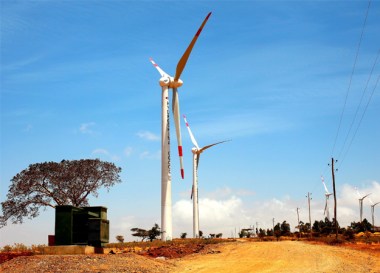
Goldwind turbines (Goldwind image)
¶ GE Renewable Energy has announced a commitment to provide Invenergy with 120 GE2.5-116 90-meter turbines for the Santa Rita wind farm in Reagan County, Texas. The 300 MW wind farm, which is expected to be commissioned by the end of the year, will power the equivalent of 102,500 US homes. [North American Windpower]
¶ For the third year in a row, Three Mile Island failed to secure a crucial contract to sell its electricity, increasing the possibility that the plant will soon close. Exelon will decide by September whether to shut the plant down ahead of schedule. Another Exelon nuclear plant, Quad Cities, in Illinois, also failed to secure a contract. [York Daily Record/Sunday News]
geoharvey is free and without ads.
geoharvey is not tax-deductible.
Posted in nuclear power, renewable power, solar, wind | 1 Comment »
Tags: nuclear, nuclear power, renewable power, solar power, wind power
May 24, 2017
Opinion:
¶ “Study: Sea level rising 3x as fast since 1990 as figured before. Meanwhile, feds censor climate info.” • A study published in the Proceedings of the National Academy of Sciences says sea level is rising three times as fast as it was before 1990. Trillions of dollars are at risk. Meanwhile, the Trump administration is censoring references to climate change. [Daily Kos]

Screen shot (Arctic Climate Impact Assessment)
¶ “Fighting Trump on Climate, California Becomes a Global Force” • As Donald Trump reverses the Obama administration’s policies on climate change, California is emerging as the nation’s de facto negotiator with the world on the environment. California is becoming a model to other states and nations on fighting climate change. [New York Times]
World:
¶ The Port of Esbjerg says Seajacks jack-up Scylla left the port with the last turbine components for the 402-MW Veja Mate offshore wind farm in the German North Sea, which has 67 Siemens 6-MW 154 turbines. Veja Mate delivered its first power two months ahead of schedule, and it is expected to be fully operational before the end of the year. [reNews]
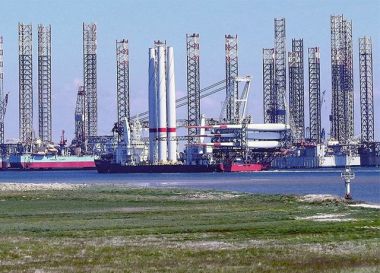
Seajacks Scylla at Port of Esbjerg (Image: Port of Esbjerg)
¶ International poverty organization Oxfam issued a report, More Coal Equals More Poverty, focusing primarily on Australia’s coal-related policies and plans as a leading exporter of coal. It says increasing the number of coal mines will only spread global poverty due to climate change and other impacts of coal mining and burning. [CleanTechnica]
¶ Coca-Cola European Partners announced that it is sourcing 100% of its electricity from renewable sources. The news coincides with the launch of a major renewable project. All electricity generated by a new solar farm will be used for production of Coca-Cola’s famous brands at Europe’s largest soft drinks factory, in Wakefield. [CIWM Journal Online]
Solar array supplying Coca-cola
¶ Total Solar, a 100% owned Total subsidiary dedicated to solar activities, has launched construction of its second solar power plant in Japan. The 25-MW-peak PV power plant in Miyako, in Japan’s Iwate province, is expected to start up in 2018 and will provide clean and reliable electricity to over 8,000 households. [Your Renewable News]
US:
¶ Tucson Electric Power signed a power purchase agreement for a system with 100 MW of PVs and 30-MW, 120-MWh of storage. Exact prices are confidential, but a release pegged the PPA for the solar portion of the project at below $0.03/kWh. Both solar and storage are to be developed by an affiliate of NextEra Energy. [Utility Dive]

Solar plus storage
¶ Donald Trump’s top budget adviser defended the sweeping cuts proposed to social, foreign aid, and environmental programs in the President’s budget, arguing that the White House could no longer ask taxpayers for money to fund programs they believe to be inefficient. The budget will now be taken up by the congress. [CNN]
¶ SunPower broke ground on a 28-MW solar PV system at Vandenberg Air Force Base in California. The project is expected to create about 150 jobs during construction. It is expected to be the largest behind-the-meter solar power system in the Air Force at which 100% of the energy generated will be consumed onsite.[American Security Today]

Air Force solar power (USAF image)
¶ FPL is the nation’s third-largest electric utility. It boasts a typical household bill 25% below the national average and is closing coal plants to keep its rates going down. In a filing to the Florida Public Service Commission to close its St Johns River Power Park coal plant, the company detailed exactly why coal is not coming back. [CleanTechnica]
¶ Renewable Energy Systems has begun construction on the Redbed Plains Wind Farm in Grady County, Oklahoma. The Redbed Plains wind farm’s 48 Siemens Gamesa turbines will have a capacity of 99.1 MW. When the wind farm is complete, RES will have installed over 1,100 MW of wind energy in Oklahoma. [Renewable Energy Magazine]

Redbed Bottom
¶ Two Massachusetts farms are starting projects to turn cow manure into electricity as a way to become self-sustaining and stabilize their finances. The farms are working in partnership with the Hampshire Council of Governments and Pennsylvania-based startup Ag-Grid Energy to build on-site agricultural anaerobic digesters. [The Recorder]
¶ Six Democratic state attorneys general, including New York’s, are asking federal regulators to place new restrictions on crude oil trains that pass through their states. The trains carry crude oil through densely populated areas without any explosiveness or flammability limits. In 2013, a tanker explosion killed 47 people in Quebec. [PennEnergy]
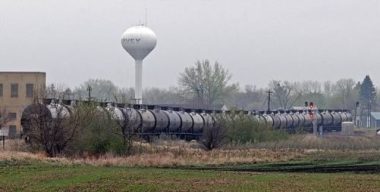
Cars of an oil train
¶ Goldwind Americas, a subsidiary of Xinjiang Goldwind Science & Technology Co, signed an agreement with Renewable Energy Systems Americas to acquire the 160-MW Rattlesnake Wind Project in McCulloch County, Texas. Once operational, the project will become Goldwind’s largest US wind project to date. [Windpower Engineering]
¶ The Trump administration is proposing to terminate a project to make mixed oxide fuel for nuclear plants. The DOE said the facility’s $4.8 billion cost, projected in 2007, with a startup date of 2015, had ballooned to $17.2 billion by 2016, with a 2048 startup date. The DOE now estimates the completion cost will be up to $26 billion. [Platts]
geoharvey is free and without ads.
geoharvey is not tax-deductible.
Posted in nuclear power, renewable power, solar, wind | 2 Comments »
Tags: nuclear, nuclear power, renewable power, solar power, wind power
May 23, 2017
Opinion:
¶ “Sixteen Trends That Will Buoy U.S. Wind Power Into The 2020s” • Wind power is on track to generate 10% of US electricity by 2020. After that, the impact of the production tax credit will begin to tail off. How will the market respond? These trends will outlive the PTC and keep creating demand for new turbines. [North American Windpower]
Wind power at a farm
¶ “Congress vs. Trump: Are the President’s Anti-Science Budget Priorities Headed for Another Defeat?” • The president is expected to release his full fiscal year 2018 budget this week, without any surprises. It will likely track the earlier “skinny budget” pretty closely, which means it’s going nowhere in Congress. [Union of Concerned Scientists]
¶ “India-China climate hope” • India’s and China’s pledged actions to curb their greenhouse gas emissions are likely to overcompensate by 2030 the impacts of US President Donald Trump’s policies that appear set to flatten America’s emissions, according to European researchers at the Climate Action Tracker. [Calcutta Telegraph]
World:
¶ A report published by Navigant Research, World Wind Energy Market Update 2017, revealed that Danish wind turbine manufacturer Vestas again led the way in 2016 for total wind turbine installations, in a year that saw a total of over 54 GW of new wind installed worldwide. Cumulative global wind power capacity now sits at 486.831 GW. [CleanTechnica]
¶ China’s government is planning to change the way it subsidizes renewable energy and introduce a quota to push electricity companies to invest in renewables. Electric generators and retailers will have to buy green electricity certificates. A next stage might require them to increase the share of renewables in their portfolios. [eco-business.com]

Power lines in a Chinese countryside
(Image: State Grid Corporation of China via Chinadialogue)
¶ Global production of the four most important staple crops in the world – maize/corn, wheat, rice, and soybeans – will be reduced by around 23% by the 2050s as a result of worsening anthropogenic climate change, according to new research published in the journal Economics of Disasters and Climate Change. [CleanTechnica]
¶ Tunisia has launched a tender for up to 210 MW of renewable energy, seeking 140 MW of wind power and 70 MW of solar. Wind projects of up to 30 MW will make up 120 MW, while the remaining 20 MW will be projects up to 5 MW. Of the solar capacity, 60 MW will be projects of up to 10 MW, with the rest for plants of up to 1 MW. [reNews]
Wind power (Pixabay image)
¶ Unilever has become the latest high-profile firm to confirm its operations are being run using renewable power, as it affirmed that all its UK sites are sourcing 100% of their power from renewable sources. The company said 15 of its UK sites are purchasing their power from the Lochluichart wind farm in the Scottish Highlands. [www.businessgreen.com]
¶ The Formosa 1 offshore wind farm is being developed off the west coast of Taiwan. The 130-MW wind farm will be Taiwan’s first commercial-scale offshore wind project. Two 4-MW wind turbines installed as a demonstration began operations in April this year. The addition of another 30 turbines should be completed by 2020. [Power Technology]

Project Formosa
US:
¶ Blackouts, natural disasters, and cyber attacks pose high risks that can be addressed by installing microgrids. A report by a team of Michigan Tech University energy policy analysts and engineers says the US military needs 17 GW of solar power to shore up their domestic bases, and economically, it’s good to do this. [CleanTechnica]
¶ The Governor of Virginia, Terry McAuliffe, recently signed an executive directing the state’s environmental regulators to create a cap and trade plan for carbon emissions. McAuliffe’s order would add Virginia to the states with cap and trade programs, California and nine states in the Regional Greenhouse Gas Initiative in the Northeast. [CleanTechnica]

A need for clean air
¶ Duke Energy has completed a new 17-MW solar power plant at the Naval Support Activity base in Crane, Indiana. The new solar farm is comprised of 76,000 solar panels on 145 acres. Duke Energy will also conduct a microgrid feasibility study to see if such an arrangement could enhance base security in the future. [pv magazine USA]
¶ DTE Energy plans to build an additional 6 GW of renewable energy capacity by 2050 in Michigan, on top of the 1 GW it has built since 2009. The company also plans to invest in grid modernization as part of plans to cut its carbon dioxide emissions 80% by 2050. DTE’s chairman said the utility’s transformation is already underway. [reNews]

Wind turbines above a corn field (Image: Pixabay)
¶ Blattner Energy Inc, a power generation contractor based in Avon, Minnesota, installed about 5 GW of renewable energy in 2016, including 1.4 GW of solar energy and more than 3 GW of wind energy. Additionally, Borea Construction, the company’s Canadian unit, delivered over 700 MW of wind throughout Canada. [North American Windpower]
¶ The fate of Three Mile Island could be decided this week as the iconic nuclear power plant competes for a share of the region’s electric market. For the past two years, TMI failed to sell its electricity at PJM’s capacity auction. The results of the current auction, covering the years 2020 and 2021, are expected on Thursday. [PennLive.com]
geoharvey is free and without ads.
geoharvey is not tax-deductible.
Posted in nuclear power, renewable power, solar, wind | 1 Comment »
Tags: nuclear, nuclear power, renewable power, solar power, wind power
May 22, 2017
World:
¶ Sri Lanka is betting big on its abundant wind and solar electricity resources through competitive bidding for projects, a top government official in the power ministry said. A total of 700 MW of projects include a 100-MW floating solar power project on a reservoir, 60 MW of distributed wind power, 100 MW of wind power. [ETEnergyworld.com]
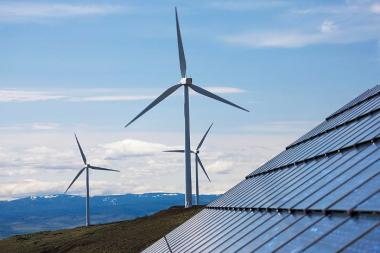
Wind and solar resources
¶ Transparency Market Research has released a report which shows that global offshore wind turbine market revenue is projected to reach $58.7 billion by 2025, at a compound annual growth rate of 7.7% between 2017 and 2015. In 2016, the revenue was $29.4 billion. The market is currently dominated by Europe. [Energy Digital]
¶ A joint venture between Canadian company Northland Power and Singapore’s Yushan Energy is planning to build two offshore wind farms totaling 1.2GW in the Changhua Sea off Taiwan. The developers aim for the two Hai Long developments to be operating by 2023 and 2024. The start dates are subject to interconnection availability. [reNews]

Offshore wind power (Credit: Pixabay)
¶ A Queensland government-funded scheme to use rooftop solar to cut the electricity costs of low income and rental households is being rolled out in the state’s south-east, with plans to extend the trial throughout the state. The first phase of installations is up to 6 MW of solar PV on up to 4000 rooftops across Queensland. [One Step Off The Grid]
¶ Swiss voters have backed the government’s plan to provide billions of dollars in subsidies for renewable energy, ban new nuclear plants and help bail out struggling utilities in a binding referendum. Provisional final figures showed support at 58.2% under the Swiss system of direct democracy, which gives voters final say on major policy issues. [Newshub]
Power line crossing green mountain slopes in Switzerland (Getty)
¶ Three decades after the Chernobyl disaster, the site of the nuclear plant site is once again set to produce electricity. This time, however, the power is coming from solar panels. Business Insider reported that a small 1.5-MW solar installation could be completed by the end of May, the result of a $1.1 million Ukrainian-German joint venture. [EnviroNews]
US:
¶ Scottish Power won the right to build two offshore wind farms in the US, which it says could eventually power 400,000 homes. The two sites combined are more than double the size of the energy giant’s operations in the UK. One farm, off the coast of Massachusetts, is expected to be complete in 2022 and the other, off North Carolina, in 2025. [BBC]
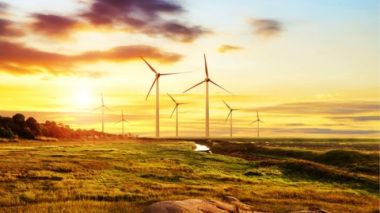
The fastest growing renewable energy source (Thinkstock image)
¶ With reduced federal action, local officials from throughout Colorado talked with climate experts in Aspen about whether local efforts to curb greenhouse-gas emissions will be enough to save a warming planet. An example of the issues importance is the state’s wildfires, which increased by a factor of ten over the past 50 years. [Vail Daily News]
¶ The EPA recognized the University of California as a leader in renewable energy, UC officials announced. The UC ranked sixth among all participants in the Green Power Partnership for its on-site generation of renewable energy. The EPA commended the University for using more than 112 million kWh of green power annually. [Daily Bruin]
UC Davis (Photo: Tony Webster via Flickr, Creative Commons)
¶ Sempra Energy, the parent company of both San Diego Gas & Electric and SoCalGas, is planning a $600 million, 36-inch natural gas pipeline, to partially replace a 16-inch pipe built in 1949. Due to safety concerns following a 2010 explosion in San Bruno, state regulators have asked the utility test or lower pressure on the old pipeline. [San Diego Reader]
¶ America’s forests are undertaking a slow migration. Scientists writing in the journal Science Advances looked at tree population surveys starting in the 1980s. What they found is that the trees in eastern America are moving north and west. Conifer trees like pines are moving north, and deciduous trees like maples and elms are moving west. [Newsy]
geoharvey is free and without ads.
geoharvey is not tax-deductible.
Posted in nuclear power, renewable power, solar, wind | 2 Comments »
Tags: nuclear, nuclear power, renewable power, solar power, wind power
May 21, 2017
World:
¶ The Upper Afan Valley near Swansea is already home to the biggest windfarm in England and Wales, but in July work will begin there on one of the UK’s largest battery storage schemes. Co-locating the plant with the windfarm reduced needs for power lines, so it was about £5 million cheaper than building it on a standalone site. [The Guardian]

Pen y Cymoedd wind project near Swansea (Photo: Vattenfall)
¶ A report says that the federal government of Canada is now planning the imposition of pollution caps on Saskatchewan and Manitoba, the two provinces that haven’t yet agreed to support a national carbon price. The federal government is now also proposing a levy on fossil fuels that would be increased at an annual rate. [CleanTechnica]
¶ Howrah railway station in Kolkata is set to go green with the installation of 3 MW of rooftop solar panels on platform sheds. A total of fourteen of the platform sheds will have solar panels installed as part of the array. According to estimates, 50% to 60% of the power demand at Howrah station can be met through the solar array. [The Indian Express]

Howrah railway station
¶ The Swiss are voting in a referendum Sunday on a planned overhaul of the country’s energy system by gradually replacing the power from its ageing nuclear reactors with renewable sources. According to the latest poll, 56% of those questioned plan to vote “yes” to the new law, while 37% plan to vote “no.” [www.worldbulletin.net]
US:
¶ As more wind and solar projects take shape in Eastern Oregon, the Umatilla Basin finds itself caught between interests. Amounts of energy coming from renewable sources are increasing, but farmers worry about a mess of transmission lines. A report authorized by the state’s governor has issued, and the state is examining possibilities. [Capital Press]

Morrow County (Photo: E.J. Harris | EO Media Group)
¶ Nearly half of California’s diverse types of native salmon, steelhead and trout are headed toward extinction in 50 years, and three-fourths within a century, unless environmental trends are reversed, a team of scientists warned in a report. The bleak outlook was softened by a note of hope: Scientists say there is time to save the salmon. [Bend Bulletin]
¶ A study by scientists at the NOAA’s Northeast Fisheries Science Center in Woods Hole, Massachusetts, predicts the warming of the Gulf of Maine will cause a dramatic contraction of suitably cool habitat for a range of key commercial fish species there. The species negatively affected include cod, haddock, redfish, plaice and pollock. [Press Herald]
¶ Mercedes-Benz Energy and Vivint Solar will partner in the US to introduce a joint offering to consumers, according to a press release. Customers in the US will be able to purchase solar-plus-storage systems combining Vivint Solar’s solar energy expertise with the new Mercedes-Benz customizable home energy storage systems. [CleanTechnica]
¶ Sugar River Power, a small power producer, has restored a hydro dam in Claremont, New Hampshire. The company bought the dam in January. When the twin turbines of the hydroelectric plan operate at full capacity, they are capable of generating 1.35 MW of power, enough to power 1,300 homes, according to one of the company’s owners. [Valley News]
¶ EV sales in California during the first quarter of 2017 were up 91% compared to the same quarter a year ago. Industry observers give much of the credit to the Chevy Bolt, the first all-electric car from General Motors that went on sale in the Golden State last December. A total of 2,735 Californians opted for the Bolt in the first quarter of the year. [CleanTechnica]
¶ Authorities at Washington state’s Hanford nuclear waste site are investigating a possible leak. High readings of radiation were found on a robotic device known as a crawler that workers were pulling out of a nuclear waste tank, and radioactive was found material on a worker’s clothing. Last week, a tunnel collapsed at the same site. [CNN]
geoharvey is free and without ads.
geoharvey is not tax-deductible.
Posted in nuclear power, renewable power, solar, wind | 1 Comment »
Tags: nuclear, nuclear power, renewable power, solar power, wind power
May 20, 2017
Opinion:
¶ “The Cost of Everything and the Value of Nothing: Falling Costs Are a Game-Changer” • When industry insiders were surveyed what the most compelling reason to invest in clean energy was, 15% said declining prices, and 11% said earnings growth. But the largest group, 20%, cited consumers’ preference for clean energy. [National Geographic]

Wind turbines on a ridge in West Virginia (Photo © Kent Mason)
¶ “Plant Vogtle: Georgia’s nuclear ‘renaissance’ now a financial quagmire” • Southern Company’s CEO has repeatedly said the project to build two more nuclear reactors would be history-making. He may be right, but not in the way he meant. Years behind schedule, billions over budget, it is fast becoming Exhibit A for why not to build a nuclear reactor. [MyAJC]
¶ “Offshore wind won a German power auction without needing any subsidies” • The price of offshore wind power has been dropping so quickly that it threatens to upend the electricity industry around the world. Choosing free zero-pollution power over costly dirty power isn’t a tough choice for utilities or most countries. [ThinkProgress]
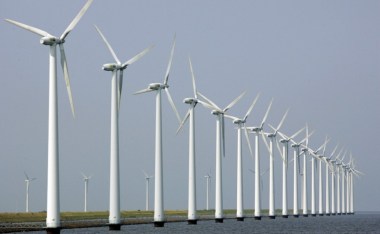
Dutch offshore wind farm (Credit: AP | Peter Dejong, File)
Science and Technology:
¶ The Global Seed Vault, which was built under a deep mountain in Arctic Svalbard to secure a million packets of the world’s most precious seeds from all natural and man-made calamities, has been flooded by melting permafrost. The seeds are safe, for the time being, but scientists are alarmed. No one envisioned that this would happen. [International Business Times UK]
¶ In the iceberg filled waters of the Amundsen Sea Embayment, MeBo, a seabed drilling machine, obtained the very first cores to be drilled from just in front of some of the mightiest glaciers on Earth. Its job is to help find out whether deep, warm water is undercutting the Antarctic glaciers, possibly tipping them into an unstoppable retreat. [BBC]
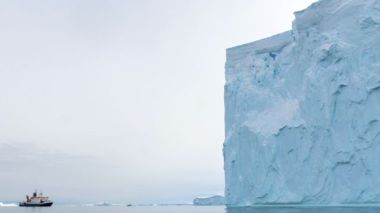
The 120-meter Polarstern research vessel (T. Ronge | AWI)
World:
¶ Climate negotiators from nearly 200 nations gathered in Bonn this week to discuss implementing the Paris Agreement to limit global warming – and they expressed confidence and optimism, despite the threat of an American exodus from agreements. The 10-day session in Bonn this week served as preparation for COP23. [World Politics Review]
¶ Black & Veatch has been appointed by the Hong Kong government to explore the possibility of installing extensive floating solar farms on reservoirs. Development of large floating solar farms on its 17 impounded reservoirs could help Hong Kong reduce water loss and suppress algae growth while generating power. [The Construction Index]
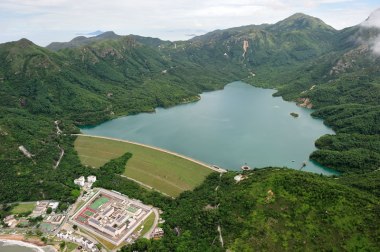
Hong Kong reservoir
¶ The UK Conservative Party has published its policy manifesto in the lead-up to the surprise General Election called back in April. The policy manifesto gives a strong signal that the Conservative Government, if re-elected, will deliver a clean and diverse energy mix, but one without any new onshore wind farms. [CleanTechnica]
¶ The Public Utilities Board of Newfoundland and Labrador has approved a net metering program. Net metering customers will now be permitted to install renewable energy systems sized to their electricity load, up to a maximum of 100 kW, six to ten times what an average homeowner uses. The program will have a 5-MW provincial cap. [The Packet]
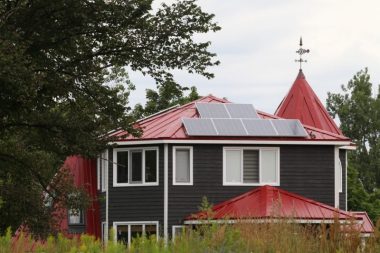
Rooftop solar system in Nova Scotia (©File Photo)
¶ Commercial development of the globe’s huge reserves of a frozen fossil fuel known as “combustible ice” has moved closer to reality after Japan and China successfully extracted the material from the seafloor. Experts said that large-scale production is many years away, and must be done with care not to release methane. [CTV News]
¶ Star Renewable Energy has been awarded funding to develop the UK’s first water source heat pump or medium temperature district heating to service existing buildings. The 2.5-MW water source heat pump on the Clyde at the Gorbals will be deployed by September 2018 and will be Britain’s largest inner city 80° C heat pump. [Energy Live News]

River Clyde in Glasgow (Image: Thinkstock)
¶ Germany approved 807 MW of capacity at onshore wind parks on Friday, saying the price at which it awarded the projects came below expectations in a sign that competition in the industry will lead to lower prices for consumers. The projects were approved at an average price requiring a subsidy of €0.0571/kWh (6.4¢/kWh) [Financial Tribune]
US:
¶ Avangrid Renewables is seeking a permit amendment for the Montague Wind Power Facility in Oregon to use a turbine with a rotor diameter of 136 meters and generating capacity of 3.6 MW. The most powerful turbines now used in the Northwest produce 2.5 MW. Montague Wind Power will supply power to Apple. [Portland Business Journal]
Avangrid wind farm in Gilliam County (Avangrid Renewables)
¶ President Donald Trump’s fiscal 2018 budget request would slash EPA spending by almost a third, according to a copy of the proposal obtained by CNN. The budget blueprint, which the White House plans to submit to Congress next week, would cut the EPA’s total budget by more than 30% and its operational budget by 35% from current levels. [CNN]
¶ Pacific Gas and Electric Co announced the cost to participate in its 100% solar energy program has dropped by 30% for residential customers and by nearly 50% for some business customers. The cost reduction is thanks in part to PG&E’s continued investment in clean energy infrastructure throughout its service area. [Electric Light & Power]
geoharvey is free and without ads.
geoharvey is not tax-deductible.
Posted in nuclear power, renewable power, solar, wind | 1 Comment »
Tags: nuclear, nuclear power, renewable power, solar power, wind power
May 19, 2017
Opinion:
¶ “There’s an Elephant in the Room, and It Smells Like Natural Gas” • All the commentary reiterating the inevitability of coal’s decline and cheering the strength of renewables’ rise was right in facts, but incomplete in message: Coal is closing. Renewables are rising. But we really need to be talking about natural gas. [Union of Concerned Scientists]

Natural gas pipeline
Science and Technology:
¶ In a new perspective on carbon removal published in the journal Science, researchers at Stanford explain the risks of assuming carbon removal technologies can be deployed at a massive scale relatively quickly with low costs and limited side effects. They said the assumption is a gamble with the future of the planet at stake. [Stanford University News]
¶ Researchers in Antarctica have discovered rapidly growing banks of mosses on the ice continent’s northern peninsula, providing striking evidence of climate change in the coldest and most remote parts of the planet. Because of the warming of the last 50 years, they found two species of mosses growing at an accelerated pace. [ScienceAlert]

A green Antarctica – not a good sign (Photo: Matt Amesbury)
World:
¶ One of the world’s most beloved toy makers, the LEGO Group, announced that it had reached its 100% renewable energy goal three years ahead of schedule thanks to the completion and commissioning of the 258-MW Burbo Bank Extension Offshore Wind Farm. LEGO has not stopped, as it still has solar panels going up in China. [CleanTechnica]
¶ The Egyptian government has decided to pour in billions for the development of solar and wind power plants across the country. The Egyptian aspiration is to increase the energy dependency of the country on renewable resources by up to 20% 2022, and increase it to 37% by 2035. Currently, Egypt gets 3% from renewables. [Edition Truth]
Renewable energy from wind
¶ Both China and India are outpacing the US and well on their way to meeting the goals established by the Paris Agreement, which calls on several countries to make significant cuts to emissions production. Analysis from Climate Action Tracker shows that policies in both China and India are helping these countries target emissions. [Hydrogen Fuel News]
¶ GE is to supply turbines from its 3-MW range totaling 1.2 GW for wind farms in Spain to be developed by Forestalia Group. Forestalia, through the Sociedad Aragonesa Transeuropea de Energias Renovables, won the right to develop the projects in Spain’s latest renewable electricity auction, which took place on 17 May. [reNews]
GE wind turbine (GE image)
¶ A planned coal-fired 4,000-MW ultra-mega power project plant in India has been scrapped because the government wants to focus on green energy. Gujarati state officials had planned it, but the government decided the state was already sufficiently supplied with energy and focusing on renewables was a better longer term strategy. [malaysiandigest.com]
¶ Labour’s plan to take the National Grid back into public ownership would harm the UK’s switch to green energy, the electric power grid’s chief executive has said. He believes renationalization was “the last thing the industry needs” as it invests to accommodate more wind and solar power on the UK’s power grids. [The Guardian]
Power lines (Photo: Andrew Milligan | PA)
US:
¶ Republican Senator Chuck Grassley of Iowa is pushing back against an electric grid reliability study ordered by Energy Secretary Rick Perry, expressing concern that the Department of Energy has predetermined that wind energy is undermining the grid. Grassley questioned the premise of the DOE grid reliability review. [ThinkProgress]
¶ Most wind and hydroelectric power is produced in Northern and Western New York, where the supply of electricity exceeds demand. But two-thirds of all the state’s power is used in the New York City-Long Island region. Transmission lines between the two areas are already overburdened, according to the Power Trends report. [Syracuse.com]
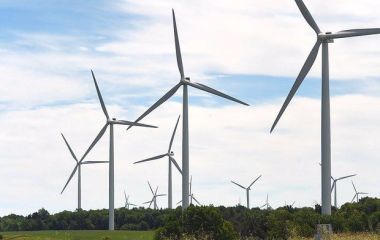
Upstate wind turbines (Gary Walts)
¶ Investment manager Quinbrook Infrastructure Partners has acquired Scout Clean Energy, with a pipeline of wind energy projects totalling 1.6 GW. The projects, which are spread across nine US states, represent more than $1.7 billion in total capital investment. The majority of the projects will qualify for US production tax credits. [reNews]
¶ In a survey of 1,000 US adults, 54% believe “government regulations are necessary to encourage businesses and consumers to rely more on renewable energy sources.” Just 38% say “the private marketplace will ensure that businesses and consumers rely more on renewable energy sources, even without government regulations.” [Environment News Service]
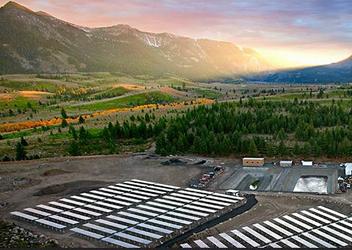
Solar array in California (Photo by Steelmaster Buildings)
¶ Ameren Corp has completed an advanced utility-scale microgrid at Ameren’s Technology Applications Center, adjacent to the University of Illinois campus in Champaign, Illinois. The $5 million facility includes solar, wind, and natural gas generating capacity with battery storage, and can operate at between 4 kV and 34.5 kV. [Electric Light & Power]
¶ Ohio-based FirstEnergy’s plan for a rescue of its two uncompetitive Ohio nuclear plants took a nosedive May 17, as the Ohio House Public Utilities Committee suspended action on the company’s proposal to charge its customers a fee to subsidize the plants. The Environmental Defense Fund has been opposing the bailout plan. [POWER magazine]
geoharvey is free and without ads.
geoharvey is not tax-deductible.
Posted in nuclear power, renewable power, solar, wind | 1 Comment »
Tags: nuclear, nuclear power, renewable power, solar power, wind power
May 18, 2017
Opinion:
¶ “The first GOP member of Congress to say ‘impeachment’ after Trump’s latest scandal is a climate hawk.” • Representative Carlos Curbelo’s district in low-lying South Florida is especially vulnerable to rising seas and climate change. He has bucked his party to become one of the most vocal proponents for climate action in Congress. [Grist]

The Everglades National Park is in Carlos Curbelo’s district.
(National Park Service photo, Wikimedia Commons)
World:
¶ Spain’s government has picked suppliers for 3 GW of renewable power in an auction, according to sources familiar with the process. Spanish wind energy producer Forestalia has obtained 1.2 GW, while Gas Natural has won 600 MW, Endesa’s Enel Green Power 500 MW and Gamesa around 300 MW, the sources said. [Reuters]
¶ On Sunday, Swiss voters will decide the fate of a law proposing billions of dollars in subsidies for renewable energy, a ban on new nuclear plants, and a partial utilities bailout. Polling so far suggests the law will be approved in the binding referendum. A survey this month for state broadcaster SRG showed 56% of voters back the law. [Reuters]
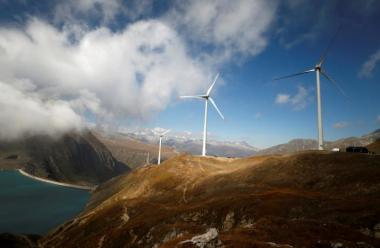
Swisswinds farm, Europe’s highest wind farm at 2500 meters
(Reuters | Denis Balibouse | File Photo)
¶ Construction has begun on the Sun Metals Corporation solar farm in northern Queensland. It is expected to be completed in early 2018. The 125 MW project will see 1.3 million solar panels installed at the Sun Metals zinc refinery. Korean-owned Sun Metals is the first major energy user to source some of its electricity needs from renewables. [pv magazine]
¶ Dong Energy and its partners LEGO Group and PKA were joined by turbine manufacturer MHI Vestas for the inauguration on Wednesday of the 258 MW offshore wind farm, which is the first to use MHI Vestas’ 8-MW turbine, according to Offshore Wind Journal. It is the first time 8-MW turbines have been used anywhere in the world. [Digital Journal]

Installing the world’s largest wind turbine (DONG Energy)
¶ A government of the UK led by Liberal Democrats would restore support for solar PV, the party’s election manifesto stated. It outlines a raft of clean energy pledges that the party has said would contribute towards the country sourcing 60% of its electricity demand from renewables sources, excluding nuclear, by 2030. [Solar Power Portal]
¶ Among thousands of delegates meeting in Bonn to develop the rule book for the Paris deal, the Climate Vulnerable Forum, representing 48 countries, said the deal was crucial to their survival. In a swipe at President Donald Trump’s oft-used phrase, they said that “no country would be great again” without swift action. [BBC]

Guatemalan lake showing effects of climate change (Getty Images)
¶ India said it will develop 10 domestically-built heavy water reactors to increase its nuclear power capacity. The federal cabinet headed by Prime Minister Narendra Modi approved the plan to build the pressurized heavy water reactors with a combined capacity of 7,000 MW. The country’s current atomic power generation is 6,780 MW. [ARY NEWS]
US:
¶ The Trump administration is weighing huge cuts to the budget of the DOE’s renewable energy and energy efficiency program. It has a proposal to slash it by 70%, from $2,073 million in 2017 to a proposed $636 million for 2018. That’s according to a draft 2018 budget proposal obtained by the news and information company Axios. [Common Dreams]

Desert wind farm (Photo: Steve Boland | flickr | cc)
¶ Virginia Governor Terry McAuliffe (D) has signed Executive Directive 11, which moves the state closer to placing limits on greenhouse gas emissions from power plants. ED 11 instructs the Department of Environmental Quality to begin the process of establishing regulations to reduce carbon emissions from power plants. [Utility Dive]
¶ Students, ratepayers, “raging grannies,” developers, politicians, and activists packed a public meeting hall to give state regulators and executives from Portland General Electric an earful, telling them to stay away from natural gas. There was no way their strident message for Oregon’s three public utility commissioners could be misinterpreted. [OregonLive.com]
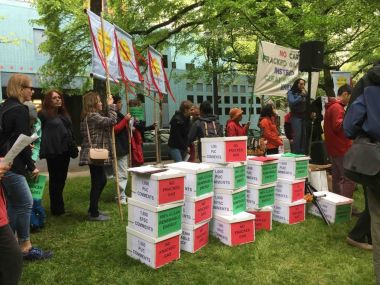
Demonstrating for clean energy (The Oregonian | Ted Sickinger)
¶ The Guam Power Authority and the US Navy entered into a lease agreement that would dedicate 164 acres of military land for building renewable energy facilities with a 40-MW generating capacity. The land will support the third phase of GPA’s renewable energy initiative, which should yield at least 120 MW of renewable power. [Marianas Variety]
¶ Altus Power America announced that a 10-MW solar energy system in North Hanover Township, New Jersey, has been completed and grid connected. Construction on the ground-mounted Spartan solar project began in September 2016. Spartan is one of the largest solar systems recently developed in New Jersey. [PR Newswire]

Spartan solar project (PRNewsfoto | Altus Power America, Inc.)
¶ A group of four national business groups representing US renewable energy interests submitted materials to the Energy Secretary Rick Perry to inform him of the importance of renewable energy sources and their contribution to electricity reliability. They expressed regret that a review process Perry ordered was not open and transparent. [CleanTechnic]
¶ Campbell Soup Company, in partnership with BNB Renewable Energy Holdings, SunPower Corp, and ORIX USA Corp, broke ground on a 4.4-MW solar power project at the company’s World Headquarters in Camden, NJ. The system will generate more than 5 million kWh hours of electricity per year, starting next fall. [MilTech]
geoharvey is free and without ads.
geoharvey is not tax-deductible.
Posted in nuclear power, renewable power, solar, wind | 1 Comment »
Tags: nuclear, nuclear power, renewable power, solar power, wind power
May 17, 2017
World:
¶ Leclanché SA has launched a modular, lithium-ion electric ferry battery system onto the market. The new system, dubbed the Leclanché Marine Rack System, will be launched with an electric ferry in Denmark later this year. It will travel a route between the island Ærø and the Danish mainland, powered by a 4.3-MWh battery-pack. [CleanTechnica]

Electric ferry
¶ New studies find methane emissions from British Columbia and Alberta are drastically under-reported. According to the David Suzuki Foundation, “Methane is responsible for 25% of already observed changes to Earth’s climate.” The primary component of natural gas, it has “a radiative forcing greater than 30 times that of CO2.” [CleanTechnica]
¶ Scotland’s most senior judge has reversed a decision to halt construction of four giant offshore wind farms in the Forth and Tay, which could power 1.4 million homes and create thousands of jobs. Construction of the £2 billion 450-MW Neart Na Gaoithe scheme in the outer Forth estuary may soon begin, as it is already fully funded. [The Scotsman]

Offshore wind farm (Getty Images/iStockphoto)
¶ The UN refugee agency has switched on a newly built solar power plant to serve 20,000 Syrian refugees in the remote Azraq camp in Jordan’s desert. For two and a half years after the camp’s founding in April 2014, refugees only had solar lanterns. They can now light their shelters, run a fridge and a TV, and charge phones. [U.S. News & World Report]
¶ One of Australia’s first community-funded, council-operated solar farms is up and running. Rainbow Power installed the 99-kW rooftop PV system at the Goonellabah Sports & Aquatic Centre in Lismore, New South Wales. It is one of two such projects coordinated by Farming the Sun and the Lismore City Council. [One Step Off The Grid]

Goonellabah Sports & Aquatic Centre
¶ National Grid said that it needs time to consider its plans to build a 102-mile power line connecting the proposed Moorside nuclear plant in Cumbria to the electricity transmission network. The £10 billion project is supposed to deliver 7% of Britain’s electricity from 2025, but it has suffered a number of serious setbacks. [Morning Star Online]
¶ Major mining companies, including some of the world’s biggest suppliers of fossil fuel, are using more renewable energy as they strive to drive down costs and curb emissions. Glencore, the world’s biggest shipper of seaborne coal, said in its 2017 sustainability report that it gets 19% of its energy from renewable sources. [The Independent]
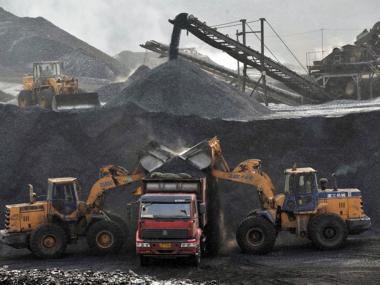
Moving coal
US:
¶ 8minutenergy Renewables, the largest independent solar power developer in the US, announced it has expanded into the energy storage market with a 1-GW project pipeline. The company has a storage leadership team with decades of experience building large energy storage, renewable energy, and transmission projects. [MilTech]
¶ Tesla and Vermont’s Green Mountain Power are offering GMP customers a Powerwall battery for $15 a month for 10 years, or a one time charge of $1500. The normal price of a 10-kWh Powerwall with built-in inverter is $5,500, plus installation. The batteries will provide backup power to customers and balancing to the grid. [CleanTechnica]

Tesla Powerwall
¶ US Bank, announced in April that it would formally exclude all gas and oil pipelines from its project financing. It stated that it will no longer “provide project financing for the construction of oil or natural gas pipelines.” Its relationships with clients in the oil and gas pipeline industries are subject to its enhanced due diligence processes. [CleanTechnica]
¶ Georgia Power, the Air Force, and other local leaders announced they’re building a new solar farm near Robins Air Force Base. The 139-MW facility will be the largest single solar project ever to be constructed by Georgia Power, according to the company’s Vice President of Renewable Development, Norrie McKenzie. [13WMAZ]
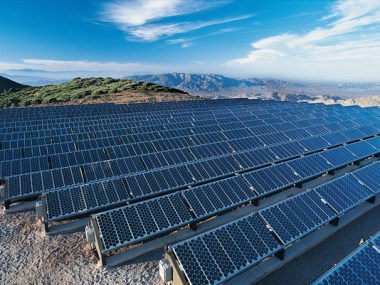
Solar panels in California (Photo: Digital Vision, Getty Images)
¶ Governor Charlie Baker signed energy diversity legislation into law at the Massachusetts State House with Lieutenant Governor Karyn Polito, legislative leaders, and energy and environment stakeholders. An Act Relative to Energy Diversity garnered bi-partisan support to reduce energy costs and promote clean energy. [Windpower Engineering]
¶ US energy company DTE Energy Co said it will build more natural gas and renewable power plants and shut all of its coal units by 2040, reducing carbon emissions by more than 80% from 2005 levels by 2050. DTE said its efforts to cut carbon emissions will result in a 30% reduction by the early 2020s, 45% by 2030, 75% by 2040. [ETEnergyworld.com]
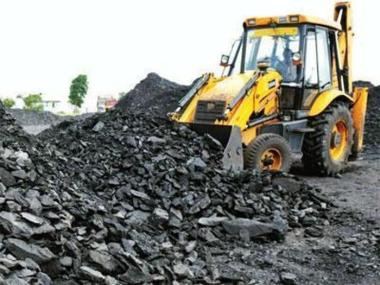
Moving more Coal
¶ San Jose became the largest city in California to launch “community choice energy,” an alternative electricity provider that could save money and reduce pollution linked to climate change. The City Council unanimously approved the new utility program. It would begin next spring and will be one of eight such programs statewide. [The Mercury News]
¶ The California Independent System Operator said renewable energy is setting more records in the state. Wind generation reached a new record of 4,787 MW at 5:34 pm PDT Friday. Less than 24 hours later, the ISO hit an all-time peak of 67.2% of demand served by renewables at 2:55 pm Saturday, the third such record in three months. [Platts]
geoharvey is free and without ads.
geoharvey is not tax-deductible.
Posted in nuclear power, renewable power, solar, wind | 1 Comment »
Tags: nuclear, nuclear power, renewable power, solar power, wind power
May 16, 2017
Opinion:
¶ “Resilience bonds: a secret weapon against catastrophe” • While the inflation-adjusted cost of natural disasters was about $30 billion annually in the 1980s, it’s now more than six times that: an average of $182 billion. Resilience bonds can improve on insurance by evaluating a community’s risks and giving guidance on reducing them. [BBC]

To prepare for catastrophe, not just help
clean up after it. (Credit: Alamy Stock Photo)
¶ “6 Reasons Trump Can’t (Totally) Derail Progress on Climate” If ever there was a symbolic moment when the past met the future, it arrived as the Kentucky Coal Mining Museum announced in April it is converting to solar. To save money. Here are six reasons to take why we will continue to move forward on climate change. [National Geographic]
¶ “US Lags Developing a Key Military Materiel” • James J Greenberger addressed a National Defense Industrial Association conference about the “exciting field of electro-chemical energy storage technologies.” Batteries are critical technology that all four services rely on to maintain their edge against adversaries. [National Defense Magazine]
World:
¶ UK supermarket chain Tesco has announced a commitment to using 100% renewable electricity by the year 2030. Tesco has been stepping up its sustainability efforts in recent years. Since 2007, more than £700 million ($905 billion) has been invested in energy and refrigeration efficiency, and Tesco’s electricity bill has fallen by £200 million annually. [CNBC]
¶ With oil markets flagging, the world’s two biggest oil exporters, Saudi Arabia and Russia, agreed to extend production cuts for several months, sending the price of crude soaring. Inventories had piled up and crimped the potential for demand. Prices had dipped below $44 a barrel this month, their lowest level in more than a year. [New York Times]

Saudi oil facility (Credit: Saudi Aramco, via Reuters)
¶ Global solar investment is to be higher than coal, gas and nuclear combined in 2017, according to a report from Frost & Sullivan. Global Power Industry Outlook, 2017 examines power market trends, installed capacity, investment, and regional growth across coal-fired, gas-fired, nuclear, hydro, solar PV, wind, and biomass. [Your Renewable News]
¶ Thanks to strong government support, India has moved up to the second spot in the “Renewable energy country attractiveness index” 2017, according to a report released by Ernst & Young. The report released globally stated that China and India have surpassed the US, which has fallen to third place on Trump administration policy. [Livemint]

Indian renewable energy (Photo: Abhijit Bhatlekar | Mint)
¶ Slowing coal use in China and India has put the world’s two most populous countries on track to beat their carbon emission goals under the Paris climate agreement, while the US falls short, according to a new analysis by issued by Climate Action Tracker, a consortium of three international research organizations. [InsideClimate News]
¶ Australia’s large-scale solar industry now appears to be on solid ground, with all of 12 large plants recently awarded grant funding by the Australian Renewable Energy Agency reaching “financial close” this month. Construction has already begun at nine of the 12 Arena-funded plants, and the others three are a done deal. [The Guardian]

Broken Hill solar farm (Photo: Josh Wall | Guardian Australia)
¶ Toshiba, which has made financial guarantees to help complete a troubled South Carolina nuclear power project, is reporting the equivalent of a $8.4 billion net loss for its fiscal year. Toshiba called the figures released Monday as projections rather than results, since they lack the company’s auditors’ approval. [Charleston Post Courier]
¶ Over 1400 oil and gas platforms in the North Sea might eventually be used to fight the problem they helped to create: unsustainable energy generation. Both fossil fuels and renewable companies are working on a system design that could make the platforms part of the energy revolution as hydrogen production and storage facilities. [CleanTechnica]

North sea oil platform (Image: Berardo62, some rights reserved)
US:
¶ A study finds there is still plenty of dirty air around western New York. The study carries a confrontational name: “Our Health at Risk: Why Are Millions of Americans Still Breathing Unhealthy Air?” It comes from the Environment New York Research & Policy Center and is based on the most recent data, from 2015. [WBFO]
¶ Consumers Energy is planning to set up a program to help Michigan businesses become 100% supplied by renewable electricity by investing in clean power projects. The utility has applied to the Michigan Public Service Commission to approve the plan. Businesses would help fund new renewable energy sources as part of the plan. [reNews]
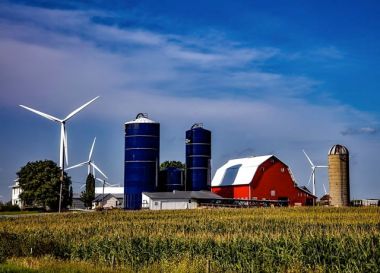
Wind power (Image: Pixabay)
¶ A tentative lease extension will keep the 43-year-old Navajo Generating Station open through the end of 2019, instead of beginning a shutdown as early as this summer, Navajo Nation President Russell Begaye said at a public hearing Monday in Phoenix. The plant is one of the American West’s biggest electric generators – and polluters. [NBCNews.com]
¶ Southern Company subsidiary Southern Power announced that the 102-MW Lamesa Solar Facility has reached commercial operation. The facility is located in Dawson County, Texas. With three large-scale PV projects operating in the state, Southern Power owns one of the largest utility-scale solar portfolios in Texas. [PV-Tech]
geoharvey is free and without ads.
geoharvey is not tax-deductible.
Posted in nuclear power, renewable power, solar, wind | 1 Comment »
Tags: nuclear, nuclear power, renewable power, solar power, wind power
May 15, 2017
Opinion:
¶ “Florida Sea Level Rise & Unchecked Coastal Developments” • With climate change and sea level rise, coastal developments make no sense – and yet, day by day, month by month, large coastal luxury buildings shoot sky-high, with almost no sidewalk to spare on one side and sand that will soon be underwater on the other. [CleanTechnica]

St Petersburg (Image: Cynthia Shahan | Cleantechnica.com)
¶ “Are Solar and Wind Really Killing Coal, Nuclear, and Grid Reliability?” • Are wind and solar killing coal and nuclear? Yes, but not by themselves and not for the reasons most people think. Are wind and solar killing grid reliability? No, where the grid’s technology and regulations have been modernized, the grid’s operation has improved. [DeSmog]
Science and Technology:
¶ Final trials of printed PVs on sheets of plastic are underway at the University of Newcastle in New South Wales. Conventional printing technology is used to print electronic ink on clear plastic sheets. The finished product is very lightweight. Printed PVs are expected to be available commercially in about three years. [ABC Online]

Prof Paul Dastoor and printed PVs (ABC News | Kerrin Thomas)
¶ Nearly one-third of all trees in urban forests around the southwest shore of Lake Michigan are of species that are highly vulnerable to climate change, says a new study by the US Forest Service. The health and numbers of at least 85 species evaluated in the study are expected to decline over the next several decades. [Milwaukee Journal Sentinel]
¶ New research finds that global average temperatures may rise 1.5° C over pre-industrial temperatures by as early as 2026, if the Interdecadal Pacific Oscillation has in fact now moved into a positive phase, as is now suspected. The new research comes from the ARC Centre of Excellence for Climate System Science. [CleanTechnica]

Global warming – please click on the image to enlarge it
World:
¶ Toshiba has missed a Tokyo Stock Exchange deadline to file its annual results, but warned it was likely to report a loss of ¥950 billion ($8.4 billion; £6.5 billion). Problems, starting with an accounting scandal, came to a head again in January this year, when it became clear its US nuclear unit, Westinghouse, was in financial trouble. [BBC]
¶ Korean President Moon Jae-in ordered a temporary shutdown of outdated coal-fired plants, aged 30 years or over, as part of an emergency measure to combat fine dust. Under the plans, 10 out of 59 coal-fired plants will stop operating for a month in June. He has also pledged to close nuclear plants and increase renewable generation. [The Korea Herald]

Seoul’s polluted air (Yonhap)
¶ Vietnam’s north-central province of Thanh Hoa will build a new 30-MW solar energy plant, financed by domestic sources with total investment of ₫800 billion ($35 million). The solar plant is a joint venture of two companies, which will provide 30% of the financing. The remainder will come from commercial banks. [VnExpress International]
¶ The new energy strategy of the Grand Duchy of Luxembourg aims to increase the share of renewables in its energy mix from around 6% currently to 70% by 2050. About 4.8 GW of new renewable energy power generation capacity is expected to be installed in order to reach this target, and to reduce dependence from power imports. [pv magazine]

Luxembourg has 117 MW of solar power now. (Wolfgang Staudt)
¶ The South African government is still trying to come to terms with a court judgement that has stopped nuclear procurement in its tracks, and other technologies are being affected. No new date has been set for the signing of 37 outstanding power purchase agreements, as the procurement process suffers from the same defects. [Moneyweb.co.za]
¶ Western Australia network operator Horizon Power announced plans to take more remote regional customers off grid, offering stand-alone solar plus battery storage systems and back-up diesel generators as a cheaper and more reliable alternative to poles and wires. Five test systems installed last year were successful. [One Step Off The Grid]
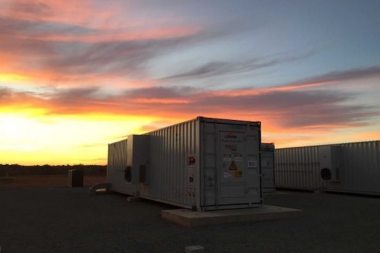
Battery storage (Horizon Power image)
US:
¶ President Trump has reportedly picked a conservative talk show radio host and climate change denier to be the “chief scientist” of the USDA’s research division. The 2008 Farm Bill says the position is to be filled by “distinguished scientists with specialized or significant experience in agricultural research, education, and economics.” [Mashable]
¶ PepsiCo confirmed that its new target for greenhouse gas emission reduction has been verified and approved by the Science Based Targets Initiative as in line with what is necessary to keep global warming below two degrees Celsius. The company will work to reduce GHG emissions across its value chain by at least 20% by 2030. [PotatoPro]

Farming emissions are included in the value chain. (PepsiCo)
¶ A key argument against a proposed Burrillville, Rhode Island, fossil-fuel power plant has derailed a similar natural-gas project in nearby Killingly, Connecticut. Opponents argue that the electricity generated would be redundant. Energy efficiency and renewable energy reduce electric demand, and they say the proposed facility is not needed. [ecoRI news]
¶ A state-of-the-art biodigester facility in Newaygo County, Michigan, is getting a second life from one of the nation’s leading clean energy investors, after closing abruptly two years ago. San Francisco-based Generate Capital has purchased the facility after the former owner, NOVI Energy failed to cover its upfront costs. [MiBiz]
geoharvey is free and without ads.
geoharvey is not tax-deductible.
Posted in nuclear power, renewable power, solar, wind | 1 Comment »
Tags: nuclear, nuclear power, renewable power, solar power, wind power
May 14, 2017
Opinion:
¶ “The UAE is well placed to take the lead in renewable energy storage” • For the UAE and other governments of the region, the emergence of an energy storage market opens up a new set of decisions about how best to generate and distribute low-cost, emissions free electricity while reserving oil and natural gas for export. [The National]
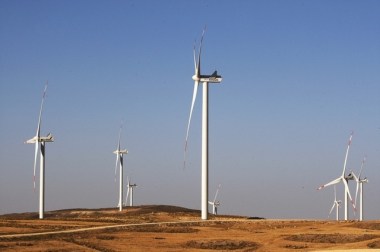
Tafila Wind farm in Jordan (Salah Malkawi | The National)
¶ “Whose Power Plans Are Greener: China or India?” • While China got off to an early lead in renewable energy sources, India is looking to catch up over the next ten years. So which country will be crowned the greenest? In the years ahead China looks set to lead on renewables, but India’s power sector will be greener overall. [The Wire]
¶ “Policy guidance needed for renewables” • The future energy system in Australia is built on an assumption of renewables in the electricity grids, but the pipeline of projects may not last beyond 2020. Uncertainty arises because the federal government does not have a Renewable Energy Target beyond that date. [The Australian Financial Review]
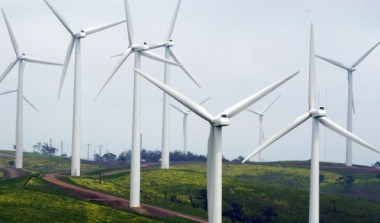
Costs for renewables have fallen in recent years. (Jo Buchanan)
World:
¶ Environment advocates said Philippine coal-fired projects under construction could cause 70,000 deaths per year by 2030. Residents of Ozamiz City protested the impending construction of a 300-MW coal-fired power plant, saying the it will also prevent people from enjoying clean and cheap energy from renewable resources. [Manila Bulletin]
¶ In 2016, Victoria’s United Energy had two distribution transformers blow. That was fewer than had been the case about a decade ago, when there had been difficulties predicting where load issues would occur. One expert puts the change down to 98% of residential and small business customers having smart meters. [The Australian Financial Review]
New technology can increase productivity. (Supplied)
¶ Nearly a century after importing equipment from Britain for setting up its first thermal power station at Husain Sagar in Andhra Pradesh, India launched the process to export “Ujala” – Hindi for light – to the United Kingdom with affordable “Made in India” LED bulbs. Ujala is one of the world’s largest efficiency programs. [ETEnergyworld.com]
¶ General Electric is planning to install hydroelectric plants that will generate additional 2 GW of electricity in Nigeria by 2030, in view of the nation’s growing power demands. This is part of 29-GW hydropower expansion projects to be executed by the American multinational corporation in four African countries in the next 13 years. [Naija247news]

African hydropower plant
¶ Chhattisgarh is working hard to make itself one of India’s leading states for distributing solar-powered irrigation pumps, officials said. Its government is aiming to install around 11,300 solar powered irrigation pumps in the first of three distribution phases, with the second and third each adding roughly 20,000 more. [Daily Pioneer]
¶ The Lucot Investment Committee, after a number of meetings with the Cameroon Government, will invest $500 million in a solar power project, partnering with Phoenix Green Capital Corp Ltd. Lucot has been investing in the ASEAN region for a number of years and sees opportunities for more investment in Africa. [Proshare Nigeria Limited]
¶ South Africa’s Energy Minister will try again to build nuclear reactors in the country, after a court ruled the government had failed to allow adequate public consultation for preliminary agreements. This will happen by signing new plans and submitting them to the parliament, rather than by appealing the court’s decision. [ETEnergyworld.com]
US:
¶ Last December, after years of legal wrangling, the Arizona Corporation Commission set a new solar policy phasing out net metering. Now, Tucson Electric Power Co proposed a rate structure for future customers with PVs that would cut credits for excess solar production and mandate time-of-use rates with new monthly charges. [Arizona Daily Star]

Tucson rooftop solar (Ron Medvescek | Arizona Daily Star)
¶ The North Bay pioneered a new type of public energy program in California seven years ago, and now it appears poised to change who buys electricity for homes and businesses across large swaths of the state. The growth is also prompting a face-off between the public programs and California’s three biggest private utilities. [Santa Rosa Press Democrat]
¶ Some New York residents and business owners said they would need to change how they live or operate to compensate for electric and gas delivery rate increases proposed by National Grid. The company would increase gas and electric bills from 7% to 14.9% for upstate customers, partly to pay for nuclear power subsidies. [WatertownDailyTimes.com]
geoharvey is free and without ads.
geoharvey is not tax-deductible.
Posted in nuclear power, renewable power, solar, wind | 1 Comment »
Tags: nuclear, nuclear power, renewable power, solar power, wind power
May 13, 2017
Opinion:
¶ “The Casual Gardener: Adapt your garden for a changing climate” • According to the RHS’s “Gardening in a Changing Climate” report, the lush, green, “quintessentially British” lawn could become a thing of the past. It also warns that pests and diseases not yet established in some areas could become commonplace. [the Irish News]

Needing to adapt to climate change
Science and Technology:
¶ When it comes to making predictions, Stanford economist Tony Seba has a pretty good track record. His latest report predicts two things. First, he says that by 2030, 95% of people won’t own a private car, killing off the auto industry. Second, he predicts electric vehicles will devastate the global oil industry by the same date. [CleanTechnica]
¶ An Australian company, Wave Swell Energy, is developing a new renewable energy system that harvests wave energy. The system, called an “artificial blow-hole,” consists of a giant hollow chamber that sits partially submerged on the seabed, funneling waves in and out of an underwater opening and generating electricity via a turbine. [Daily Mail]

Prototype artificial blow-hole in use
World:
¶ Indian solar power tariffs dropped to a new low of ₹2.44 per unit (3.8¢/kWh) in an auction for the 500-MW Bhadla solar power park in Rajasthan. ACME Solar Holdings won the bid at ₹2.44 per unit for 200 MW, and SoftBank Energy, quoting ₹2.45 per unit, won the remaining 300 MW. Two days ago, the lowest bid was at ₹2.62 per unit. [Scroll.in]
¶ Australia installed another 71 MW of small scale (under 100 kW) rooftop solar in April, extending its record start to the year as households and business respond to high electricity prices and falling costs for solar modules and batteries. According to Sunwiz, installations from the first four months have totaled 301 MW. [CleanTechnica]

Australian solar installations by month
¶ China will suspend approvals for new coal-fired power plants in 29 provinces to reduce overcapacity, the official China Securities Journal reported. The National Energy Administration put as many as 25 provinces on “red alert”, meaning that new projects would create severe overcapacity or environmental risks. [Hellenic Shipping News Worldwide]
¶ Scotland’s Atlantis Resources Ltd signed a strategic partnership agreement with Hyundai Engineering & Construction Co, Ltd, to collaborate on global development of marine energy projects. The move continues Atlantis’ push into Asia. It had announced signing a deal to supply equipment for a 150-MW project in Indonesia in March. [HydroWorld]

Atlantis tidal turbine
US:
¶ Portland General Electric has suspended efforts to permit two new natural gas plants at a site in Boardman, Oregon, about 150 miles east of Portland, saying it is in negotiations to potentially acquire existing resources instead. Environmental groups objected to a plan to replace a coal-fired plant set to close in 2020 with the two plants. [OregonLive.com]
¶ The Palm Beach Post reported that a bill to implement the constitutional amendment designed to expand the use of solar and other renewable energy is ready to go to Governor Rick Scott. The bill, now off to a governor who is ecologically deaf, blind, and unaware, was passed unanimously by both of the Florida legislative chambers. [CleanTechnica]
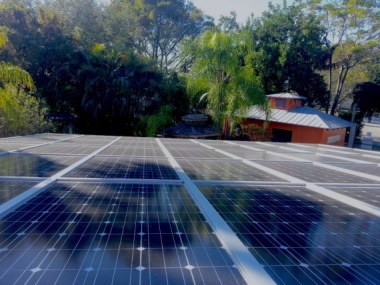
Rooftop solar in Florida
¶ Missouri General Assembly adjourned without passing House Bill 340, a tax on solar energy users that would have devastated one of the state’s fastest growing industries. HB 340 passed the Missouri House on April 3 but was not taken up in the Senate after thousands of Missourians signed petitions opposing the measure. [The Missouri Times]
¶ Tesla has begun accepting deposits for its new solar roof system, offering an “infinity” warranty for tiles that integrate solar power into roof coverings. The sales have begun and are open to consumers worldwide through the Tesla solar roof website. Installations will begin next month in the US, starting with California. [Renewable Energy Magazine]

Tesla solar roof
¶ Southern Co has agreed to take the lead on building two nuclear reactors at its Vogtle power plant in Georgia from the bankrupt Westinghouse Electric Co as soon as next month. Westinghouse’s bankruptcy threw into question the fate of four US nuclear reactors, two at Southern’s Vogtle plant and two more in South Carolina. [Bloomberg]
¶ In 2016, nuclear power accounted for about 20% of US power generation, but that share is expected to fall to just 11% in 2050, according to the US Energy Information Administration’s 2017 Annual Energy Outlook. It says 25% of the nation’s nuclear capacity that is not yet announced to be retired is likely to be taken offline by 2050. [POWER magazine]
geoharvey is free and without ads.
geoharvey is not tax-deductible.
Posted in nuclear power, renewable power, solar, wind | 1 Comment »
Tags: nuclear, nuclear power, renewable power, solar power, wind power
May 12, 2017
Opinion:
¶ “Think windfarms are ugly? It’s not only a matter of perception, but policy too” • The Australian landscape is changed by words on paper. The renewable energy target as a mechanism for building zero-carbon technologies has worked brilliantly. It incentivizes mainly windfarms, as they’re the cheapest, most readily deployable technology. [The Guardian]

Capital windfarm (Photo: Bloomberg via Getty Images)
¶ “Coal And Nuke Investors Think Trump Just Saved Their Bacon. They’re Naïve.” • Once again, the Trump administration is being hailed by investors in coal and nuclear power. But a skeptical message may be more appropriate. If you’re an energy investor, be afraid. You may be picking up pennies in front of Trump’s regulatory steamroller. [Forbes]
¶ “Important Year For Microgrids In Remote Countries” • This year could be big for microgrid developments in remote and non-electrified regions and countries. Storage companies and technology behemoths are leading the way on installing and investing in storage microgrids and solar for regional and island countries and communities. [CleanTechnica]

New island microgrid projects, Q4 2016 and Q1 2017
World:
¶ The renewable energy sector in the UK has experienced its best ever quarter with wind, solar, biomass and hydro all registering record levels of energy generation. According to the latest Electric Insights report, which covered January to March, output from coal generation fell by 30% compared to the same quarter in 2016. [Climate Action Programme]
¶ BayWa’s earnings before interest and tax from renewable energy jumped 77.5% in the first three months of 2017 to €21.3 million ($23.16 million), compared with €12.0 million in the period last year. Revenue from clean power also soared to €251.8 million, up 57% on the €160.4 million posted in the first quarter of 2016. [reNews]
¶ The Indonesian government appears to be backtracking on its aggressive 35,000-MW, coal-centric energy development plan. The ambitious 35,000 MW of new electricity generation projects were to be completed by 2019, according to a plan announced by President Joko Widodo in 2014. However, only 15,000 MW will be required by then. [Mongabay.com]
¶ Wärtsilä has launched hybrid and standalone energy storage systems, targeting areas where it sees “high market potential”, including remote microgrids and solar PV integration. The Finnish company, known as a supplier of engines to the maritime industry, will also make standalone energy storage solutions available. [Energy Storage News]

Please click on the image to enlarge it.
US:
¶ President Donald Trump’s efforts to dilute US climate policies put Tillerson in an awkward position at a meeting of Arctic nations in Fairbanks. Tillerson signed an agreement recognizing the Paris climate accord, but he said Trump was not rushing to decide whether to leave or weaken US commitments to the pact. [Financial Express]
¶ Each year the US intelligence community puts together a “Worldwide Threat Assessment” report. This year’s report makes for particularly disquieting reading. While it focuses on the increasing danger that North Korea’s nuclear weapons program poses as well as cyberterrorism threats, one environmental concern stands out: climate change. [Yahoo News]
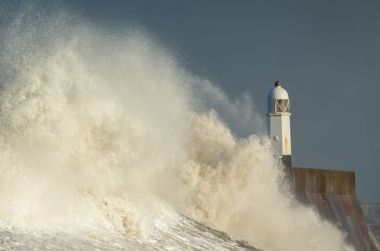
Wave
¶ The Dakota Access pipeline has already spilled crude oil into the environment and it is not even in operation yet. On April 6, 84 gallons of the liquid crud was dumped into a containment pit in South Dakota. That may be small, but it drives home an essential truth. Of the systems mankind has devised to transport oil, all leak. [CleanTechnica]
¶ Maryland regulators approved plans for the nation’s first large-scale offshore wind projects. The Maryland Public Service Commission awarded renewable energy credits for two projects off Maryland’s Eastern Shore near Ocean City. The PSC says the decision allows US Wind and Skipjack Offshore Energy to build 368 MW of capacity. [PennEnergy]

Offshore Wind in Denmark
¶ Two years after NextEra Energy Resources and Entergy Arkansas received approval for an 81-MW solar project in Stuttgart, Arkansas, the companies have finally broken ground on the project. The Stuttgart Solar Energy Center is not expected to be finished until January 2018. They say time moves slower in the South. [pv magazine USA]
¶ A committee of Maine legislators today voted unanimously against a bill that would have blocked the 12-MW Aqua Ventus floating offshore wind demo. The decision by the Energy, Utilities and Technology Committee effectively kills the bill. Republican senator Dana Dow proposed the law to protect local scenic beauty and tourism. [reNews]

Aqua Ventus prototype (UMaine)
¶ Akamai Technologies, one of the largest Cloud-delivery platforms, invested in a wind farm as part of its commitment to source renewable energy for 50% of its global network operations by 2020. Akamai intends to source enough energy from the 80-MW Seymour Hills Wind Farm to offset its Texas data center operations. [Windpower Engineering]
¶ In a sometimes testy hearing that opened the latest biannual review of project costs by the Georgia Public Service Commission, Georgia Power executives said they’re considering all options for the fate of a planned nuclear plant. The project’s completion date and cost are in flux as its main contractor has filed for bankruptcy. [Thegardenisland.com]
geoharvey is free and without ads.
geoharvey is not tax-deductible.
Posted in nuclear power, renewable power, solar, wind | 1 Comment »
Tags: nuclear, nuclear power, renewable power, solar power, wind power
May 11, 2017
Opinion:
¶ “Indian solar power prices hit record low, undercutting fossil fuels” • Wholesale solar power prices have reached a record low in India. They now undercut prices of fossil fuel-generated power, increasing the likelihood that India will exceed the renewable energy targets it set at the Paris climate accords in December 2015. [The Guardian]

Market in New Delhi selling PVs (Photo: Saurabh Das | AP)
¶ “While Trump Tries to Bring Back Zombie Coal, the UK Goes Coal-Free” • When President Trump told supporters at his 100th day rally in Pennsylvania, “We are putting our coal miners back to work,” he just burrowed deeper into the bed of administration lies on energy. But the truth is, the demand for US coal has collapsed. [Foreign Policy In Focus]
Science and Technology:
¶ SolarGaps motorized blinds, from a Ukrainian startup, is one of those ideas that seems so obvious after you hear about it, because while even ‘dumb’ window blinds can save a significant amount of energy by reducing the cooling load of a room, adding solar cells and a tracking mechanism to them makes a good thing better. [Treehugger]

SolarGaps smart solar blind (© SolarGaps)
World:
¶ The Oman Investment Fund and the Ningxia Zhongke Jiaye New Energy and Technology Management Co have signed an agreement to develop a 1,000-MW solar power plant in Oman. The first development phase will see the installation of 400 MW of capacity, with the full 1,000 MW to be installed during the second phase. [Climate Action Programme]
¶ South Africa’s energy regulator has agreed to investigate power utility Eskom’s refusal to sign power purchase agreements worth billions of rands with independent power producers. The chief executive of the South African Wind Energy Association said in a statement that it had received confirmation of the investigation from NERSA. [Nasdaq]
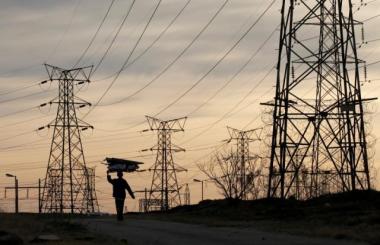
Eskom transmission lines
¶ Plans for a floating power plant that will harness solar energy in Cayman’s coastal waters are moving forward following the completion of an environmental impact study. Public meetings are expected for the summer, as the company seeks approval for the pioneering project ahead of a 36-month construction process. [Cayman Compass]
¶ A solar and battery storage mini-grid trial by Victorian network operator AusNet Services has succeeded in taking part of a Melbourne suburb completely off grid, demonstrating how utilities can use solar, battery storage and the internet of things to boost energy security and reliability in the future. Eight homes were in the trial. [RenewEconomy]

Eight homes went off the grid.
¶ TEPCO announced it will seek partners for its nuclear business as part of a recovery plan after the Fukushima disaster brought the utility to its knees. The company is trying to place itself on a sounder financial footing after the government estimated that costs related to the Fukushima disaster would be ¥21.5 trillion ($188 billion). [Reuters]
¶ India’s largest power generation company, NTPC Ltd, invited bids for battery energy storage system for an 8-MW solar project at Chidiyatapu in Andaman and Nicobar islands. NTPC has planned capacity addition of about 1,000 MW of renewable resources by 2017 and has already commissioned 310 MW solar PV projects. [ETEnergyworld.com]
US:
¶ President Donald Trump can’t seem to make up his mind about to keep the US in the Paris Climate Agreement or pull out, but there are signs he is getting advice from across the ideological spectrum. A source close to Gore said the president and the Nobel Prize-winning climate activist spoke by phone about the Paris accord. [Yahoo News]
¶ The town of Hanover, New Hampshire voted to establish a goal of transitioning to 100% clean and renewable energy by 2050. The article approved at town meeting sets a community-wide goal of 100% renewable electricity by 2030 and a 2050 goal of transitioning heating and transportation to clean sources of energy. [EcoWatch]

Dartmouth College, in Hanover, New Hampshire
¶ The 37 glaciers remaining at Glacier National Park are vanishing. In the past half century, some of the ice formations in Montana have lost 85% of their size, and the average shrinkage is 39%, a study released by the US Geological Survey and Portland State University says. One scientist said, “The glaciers will be gone in decades.” [CNN]
¶ Republicans’ bid to roll back an Obama-era rule limiting methane emissions from drilling rigs on public lands narrowly lost in the Senate after three GOP senators voted against the repeal in a 49-51 vote. The rule limited the amount of methane that can be vented and burned from oil and gas extraction sites on federal lands. [Huffington Post]

Gas being flared (Andrew Burton | Getty Images)
¶ Furman University’s $1.7 million solar facility is online and supplying the campus with electrical power. According to Furman, the facility is the largest of its kind on a college campus in South Carolina. It has 2,994 solar panels across six acres of land along Poinsett Highway near the campus. Excess power can be sold to Duke Energy. [GSA Business]
¶ The Tennessee Valley Authority, in partnership with the Tennessee Valley Public Power Association, has awarded 10 MW of solar capacity to seven local power companies that applied through TVA’s Distributed Solar Solutions pilot program. The projects will generate enough solar energy to power more than 900 average homes. [Solar Industry]
geoharvey is free and without ads.
geoharvey is not tax-deductible.
Posted in nuclear power, renewable power, solar, wind | 1 Comment »
Tags: nuclear, nuclear power, renewable power, solar power, wind power


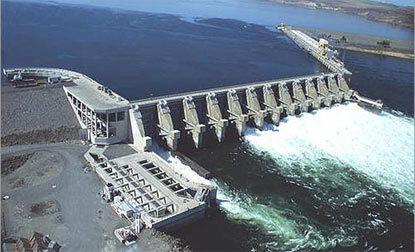
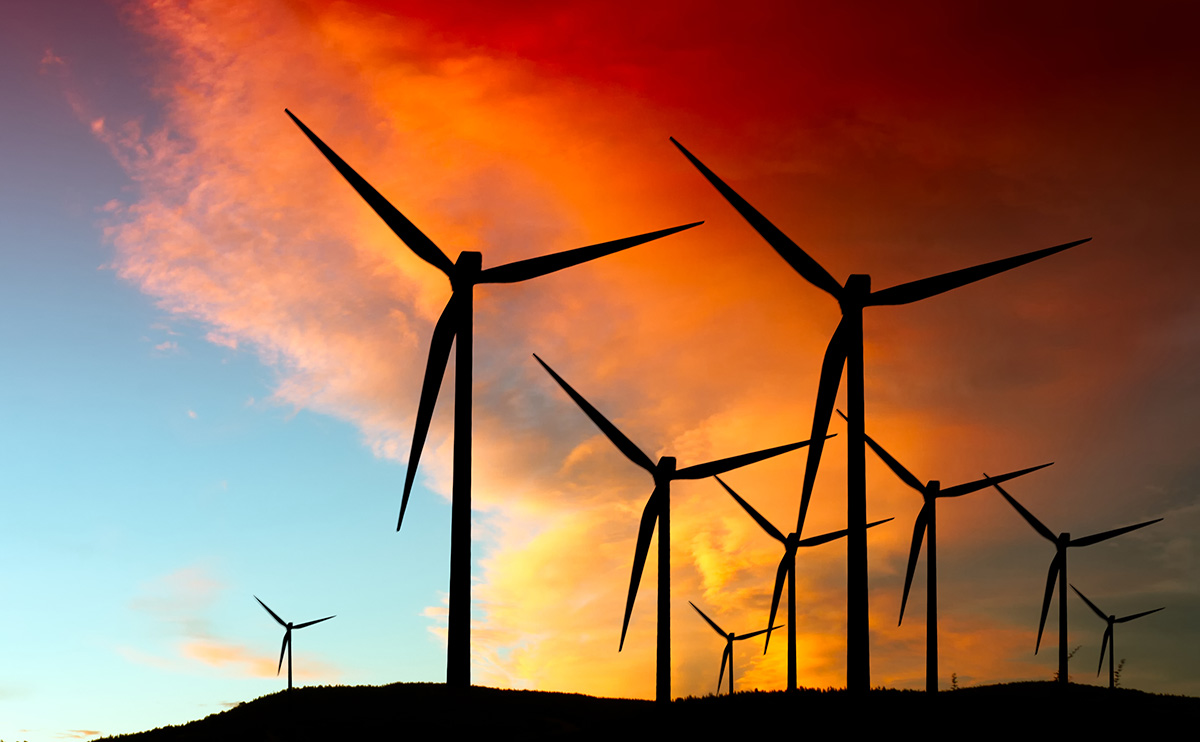
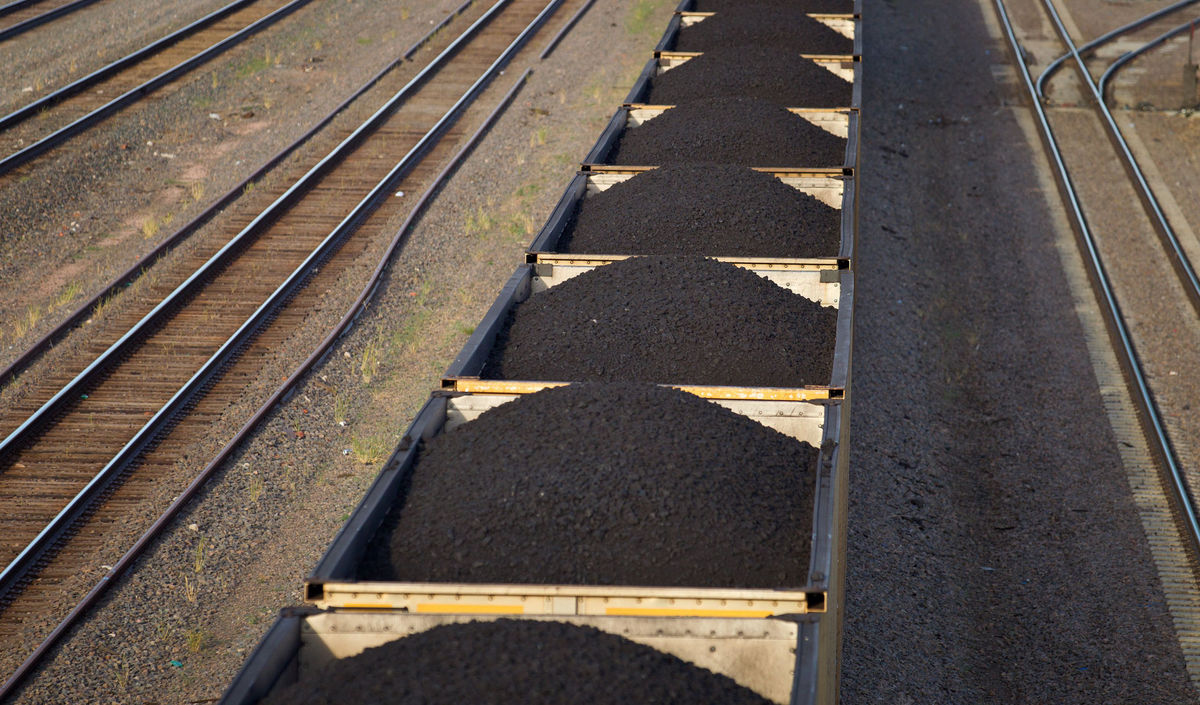

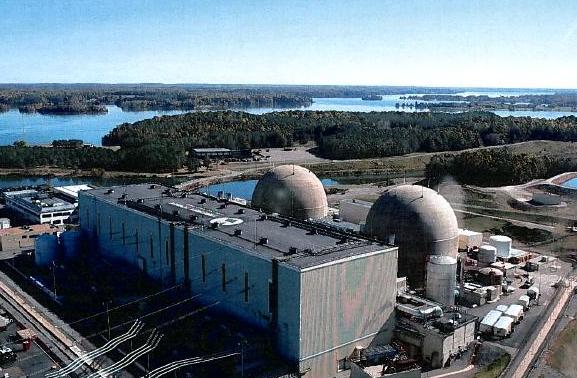

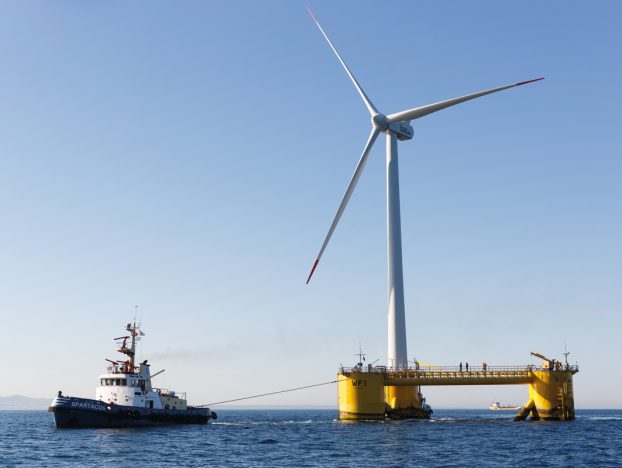


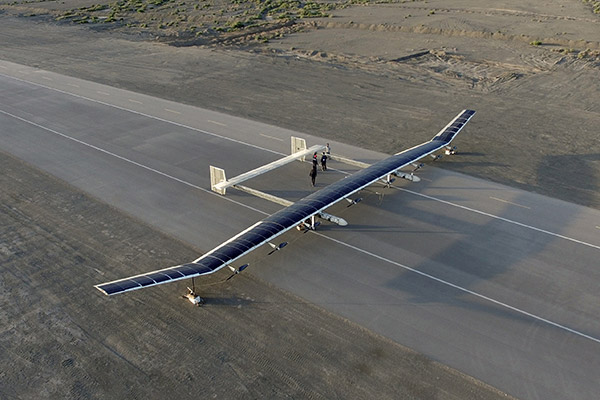

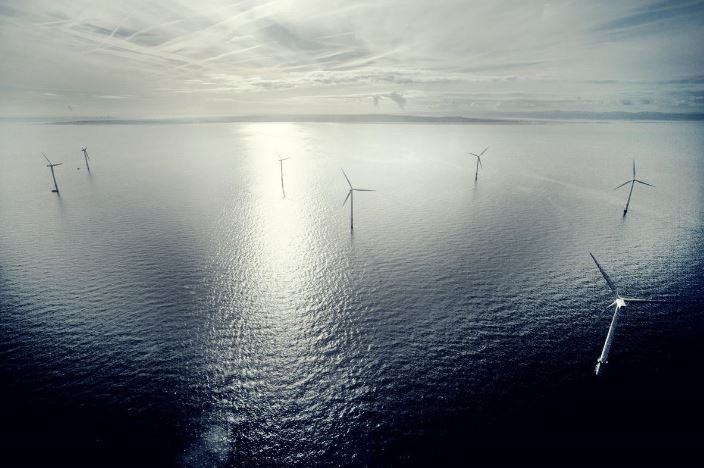
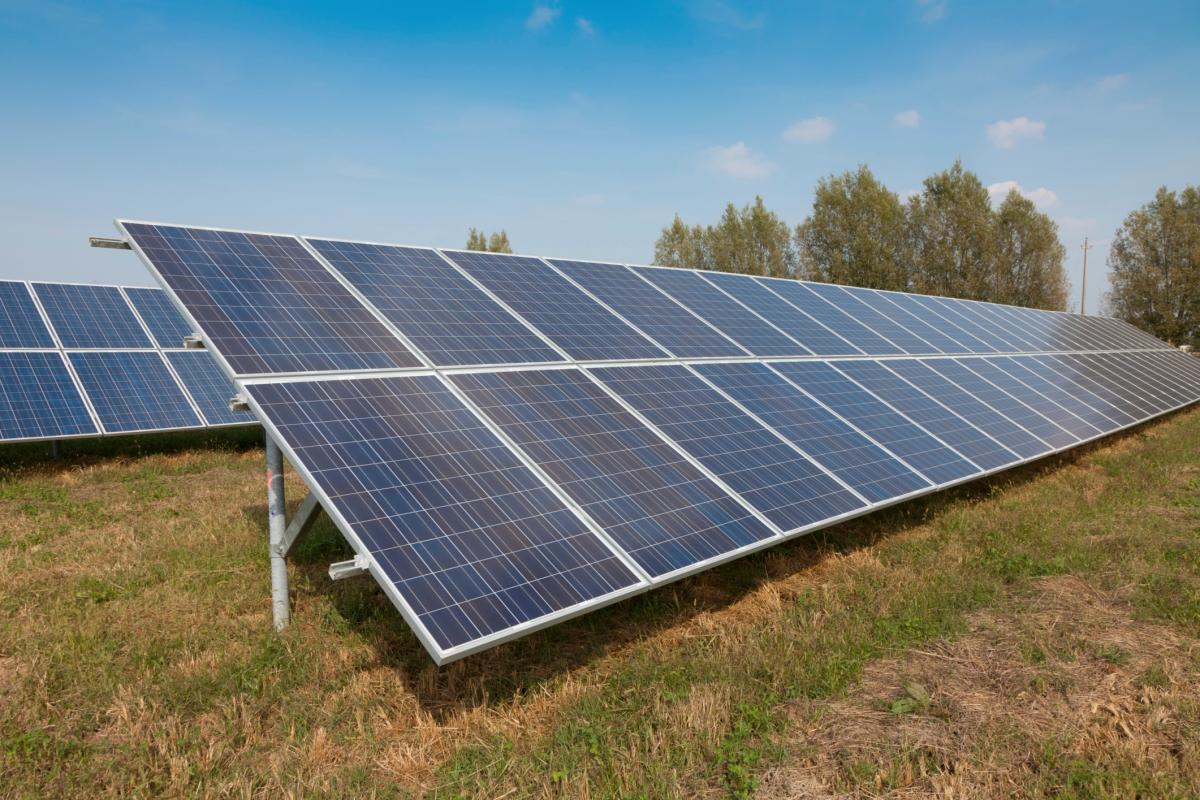

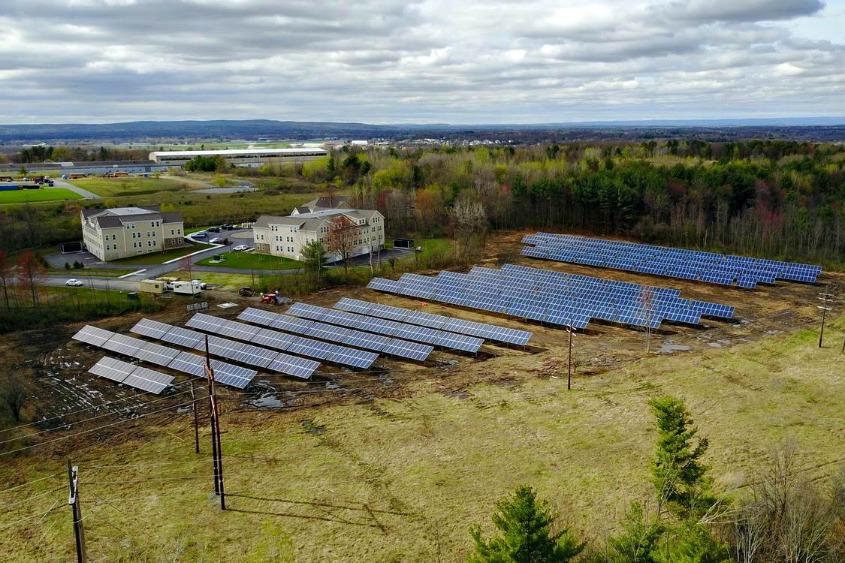


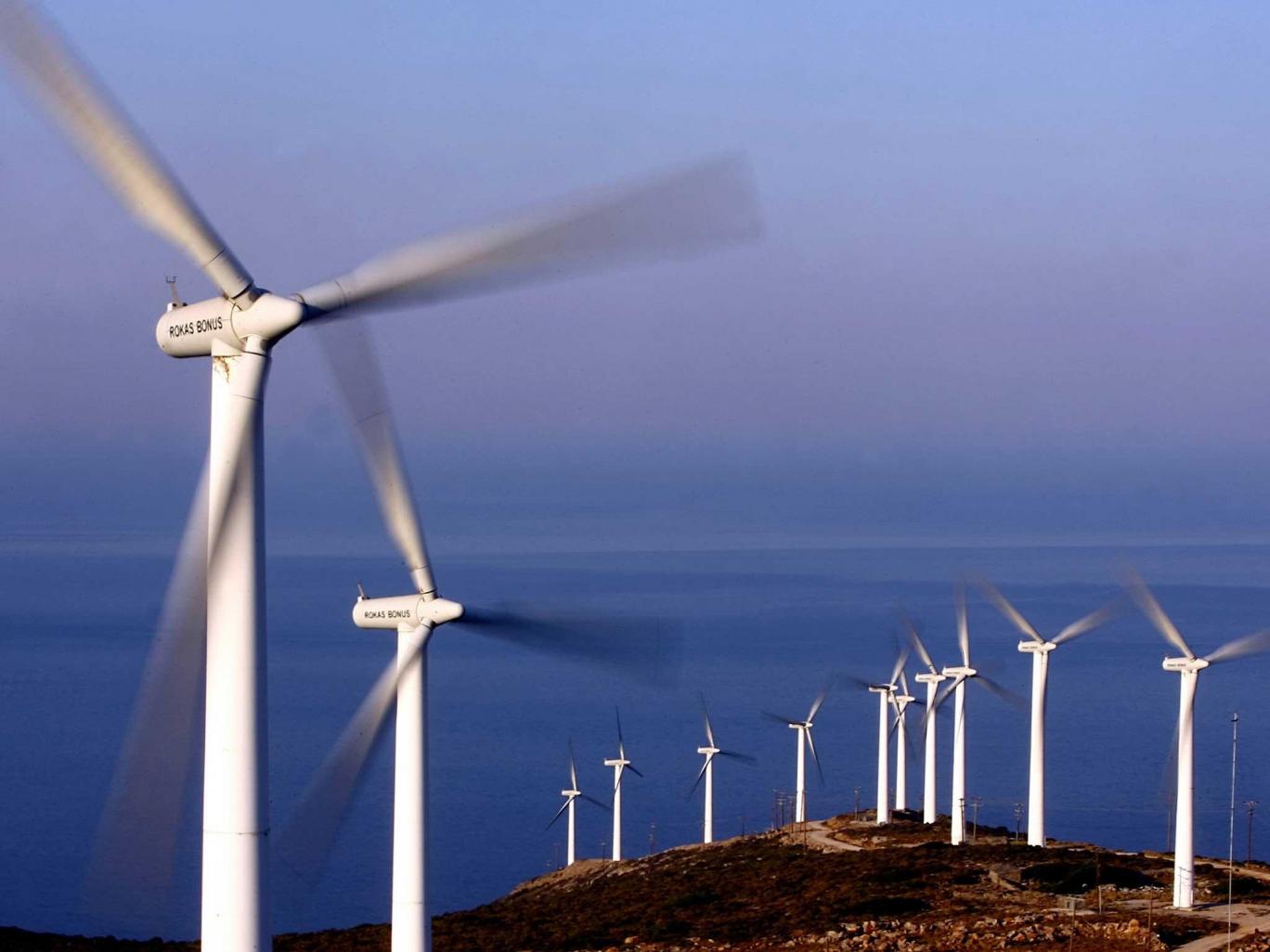


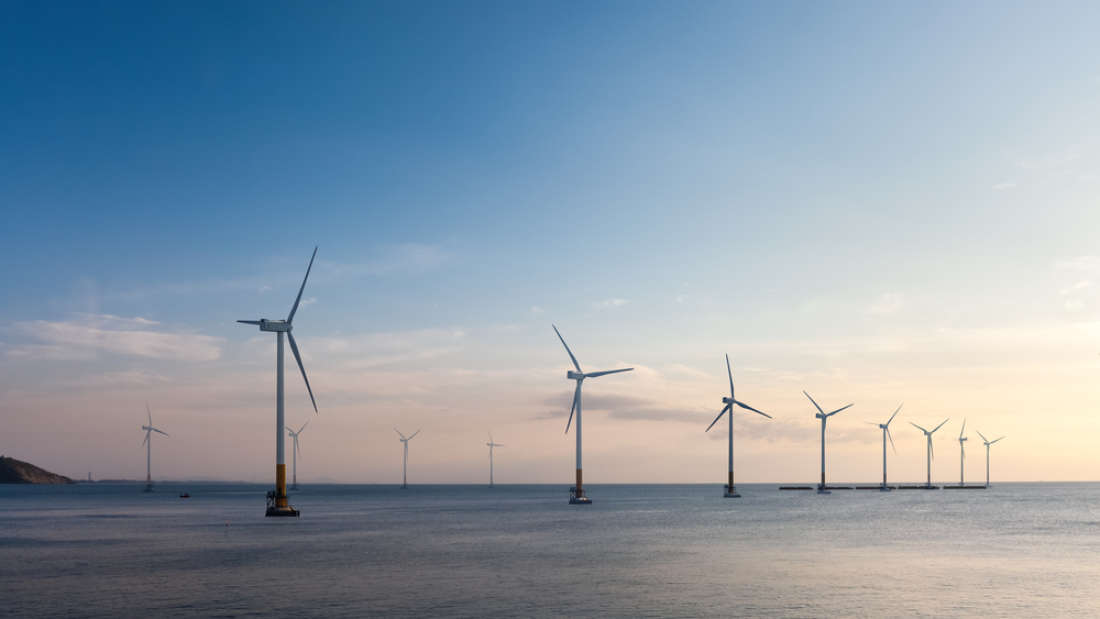
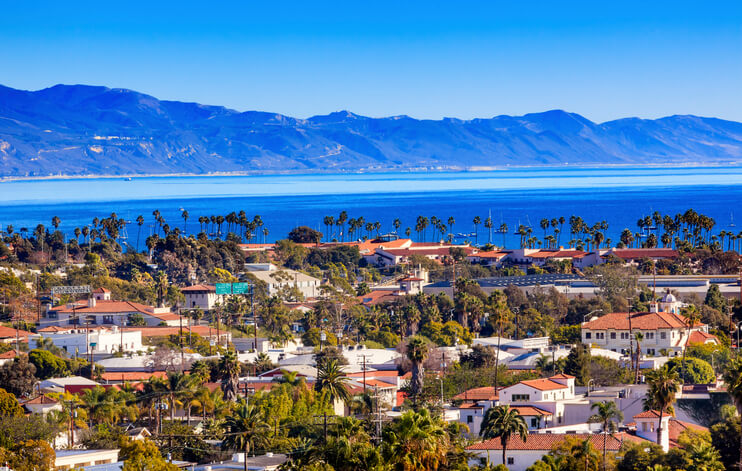

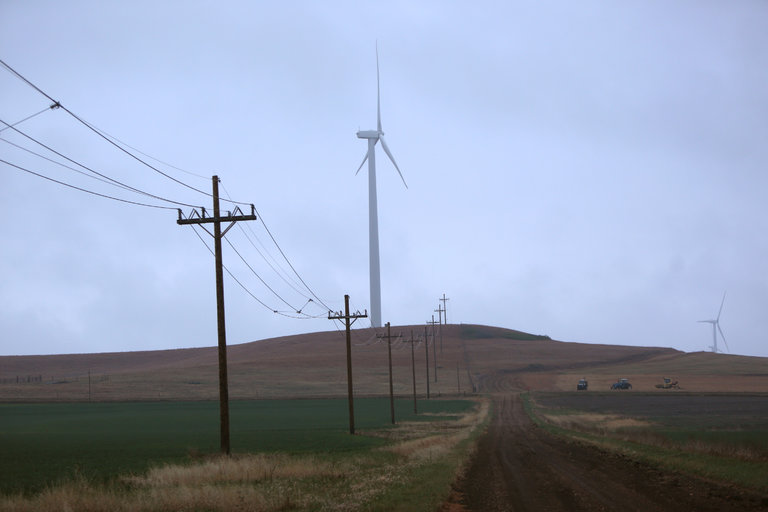


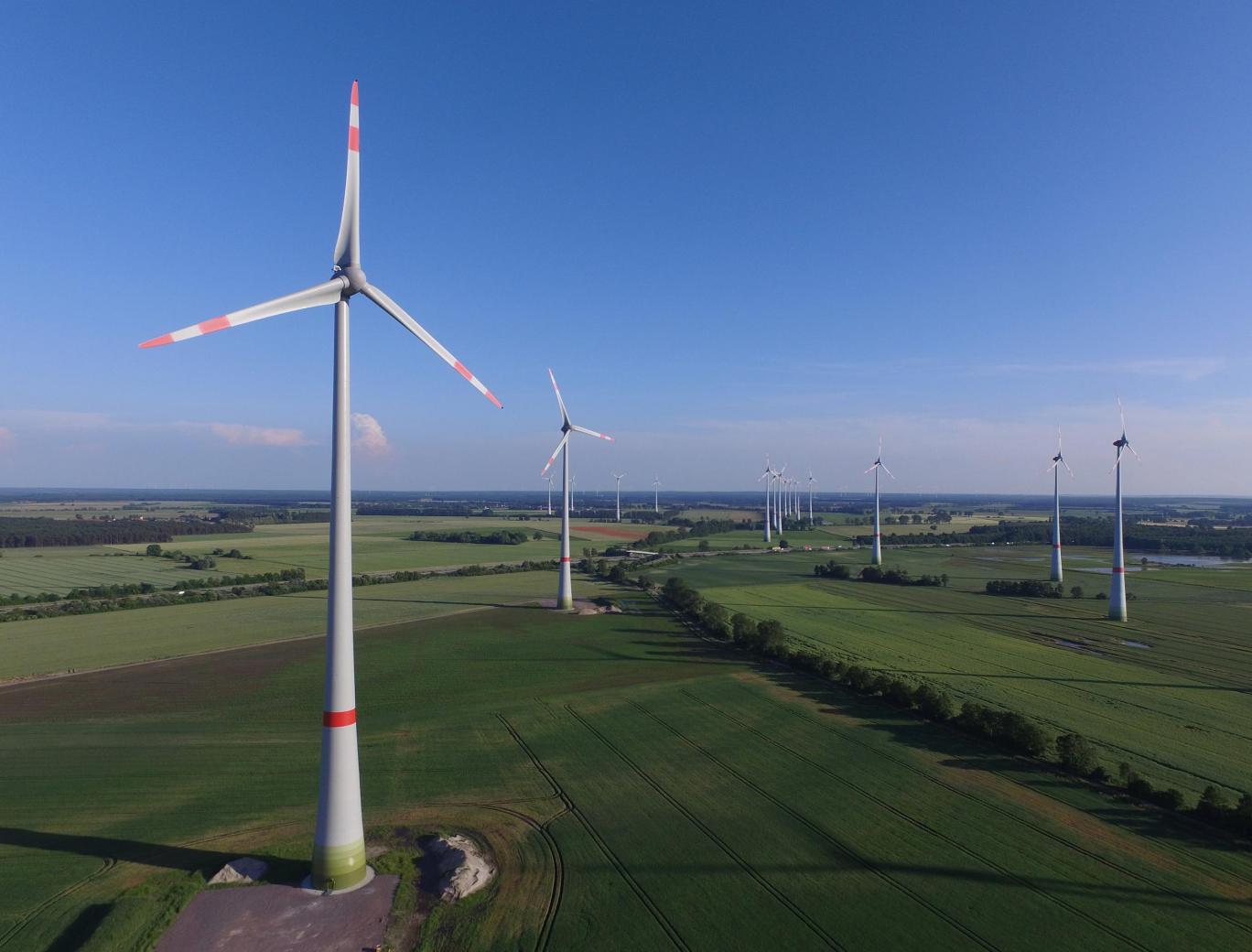

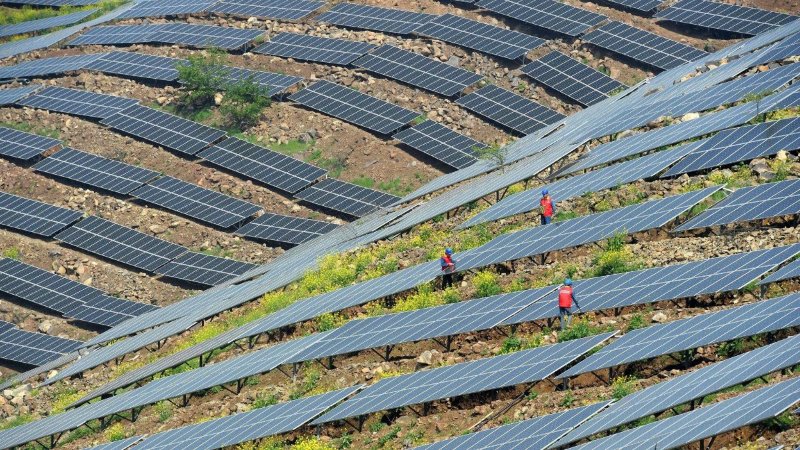
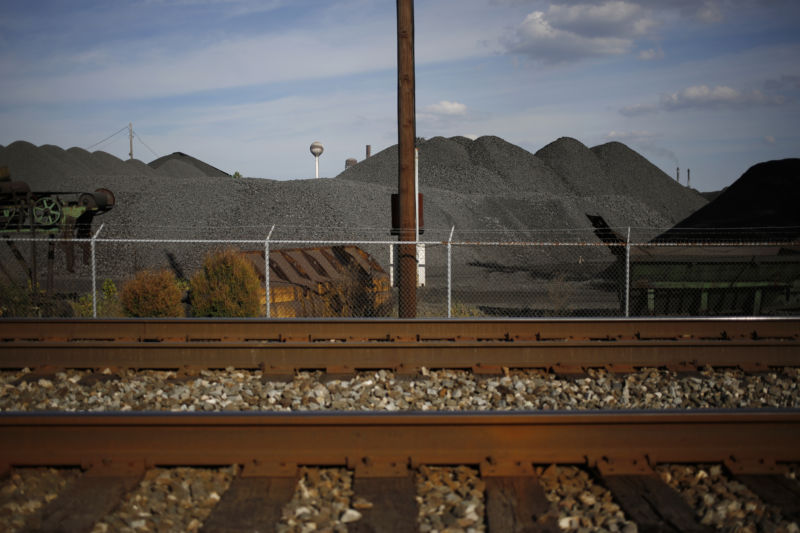

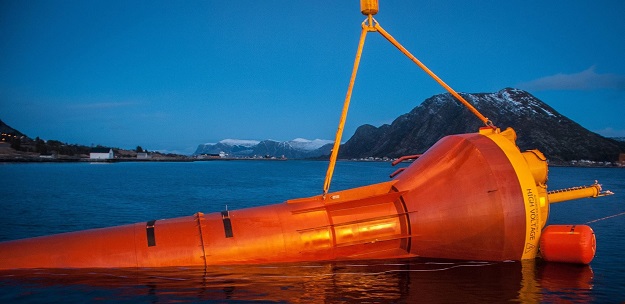
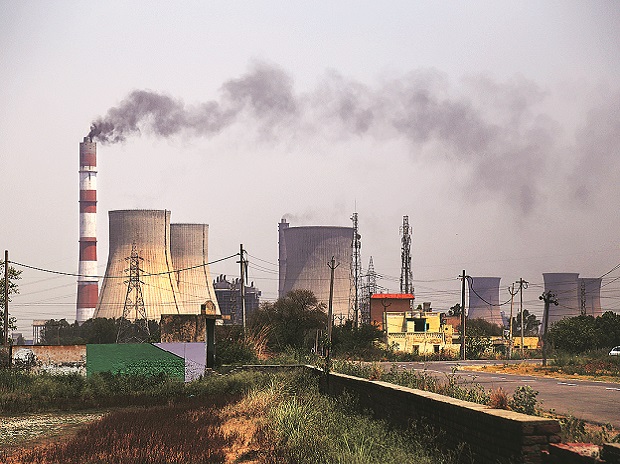


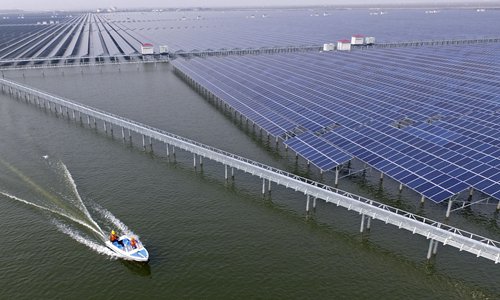


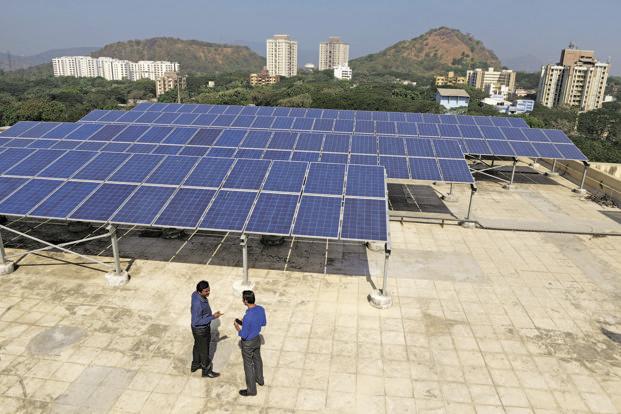
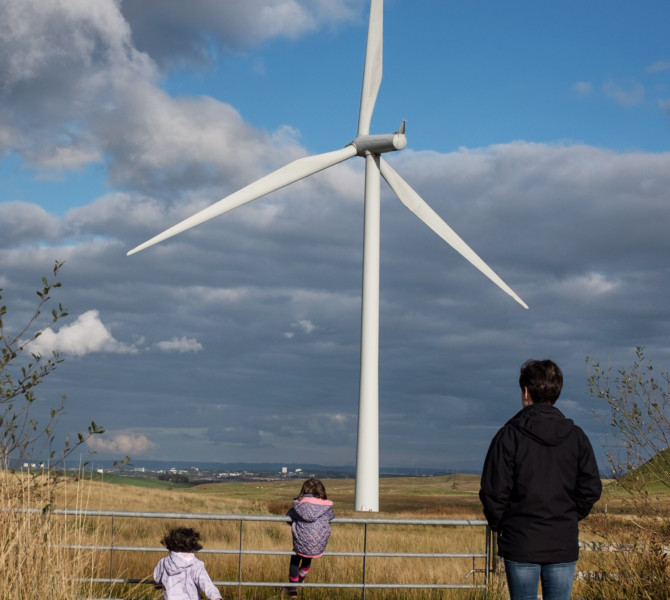


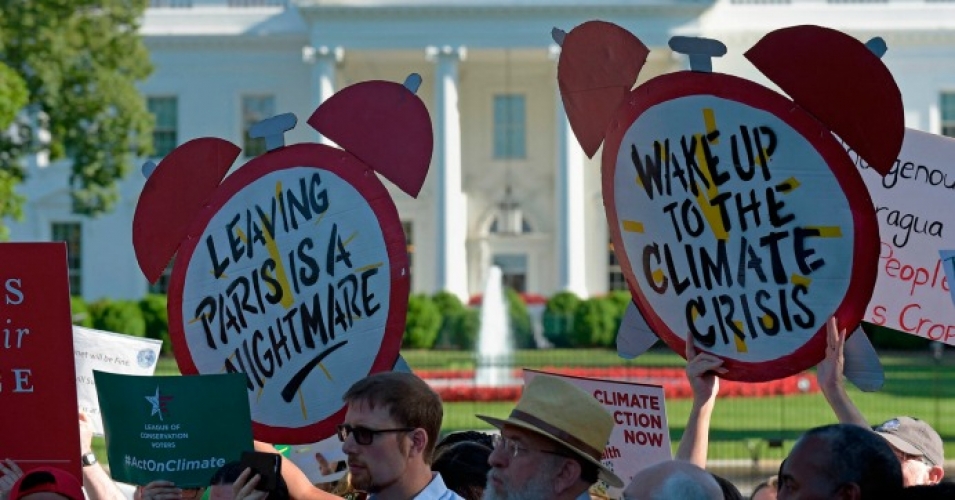


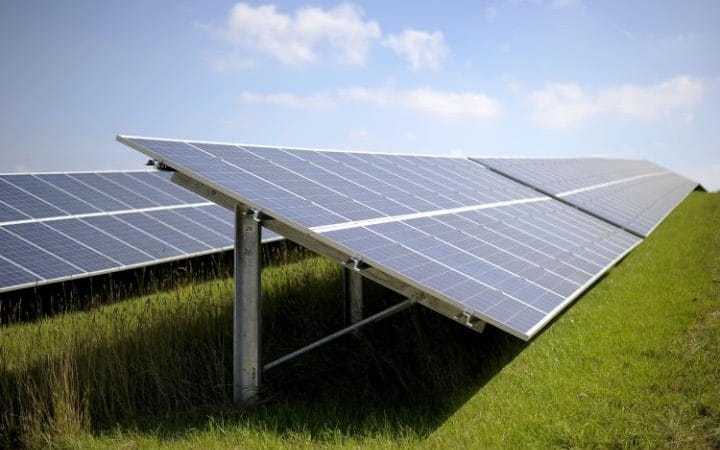
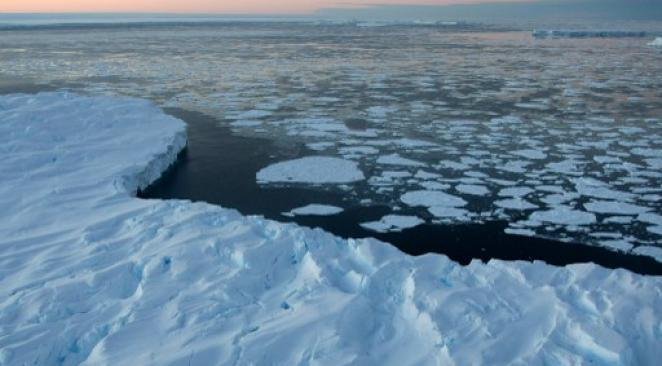



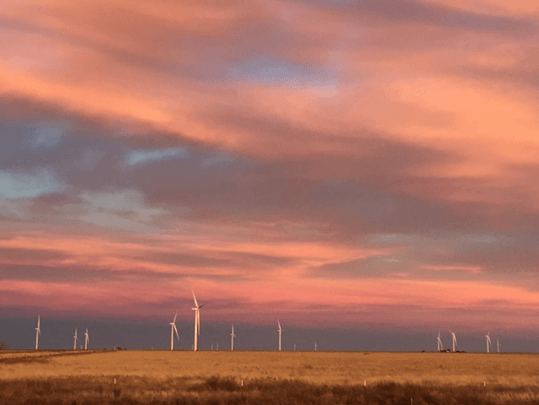



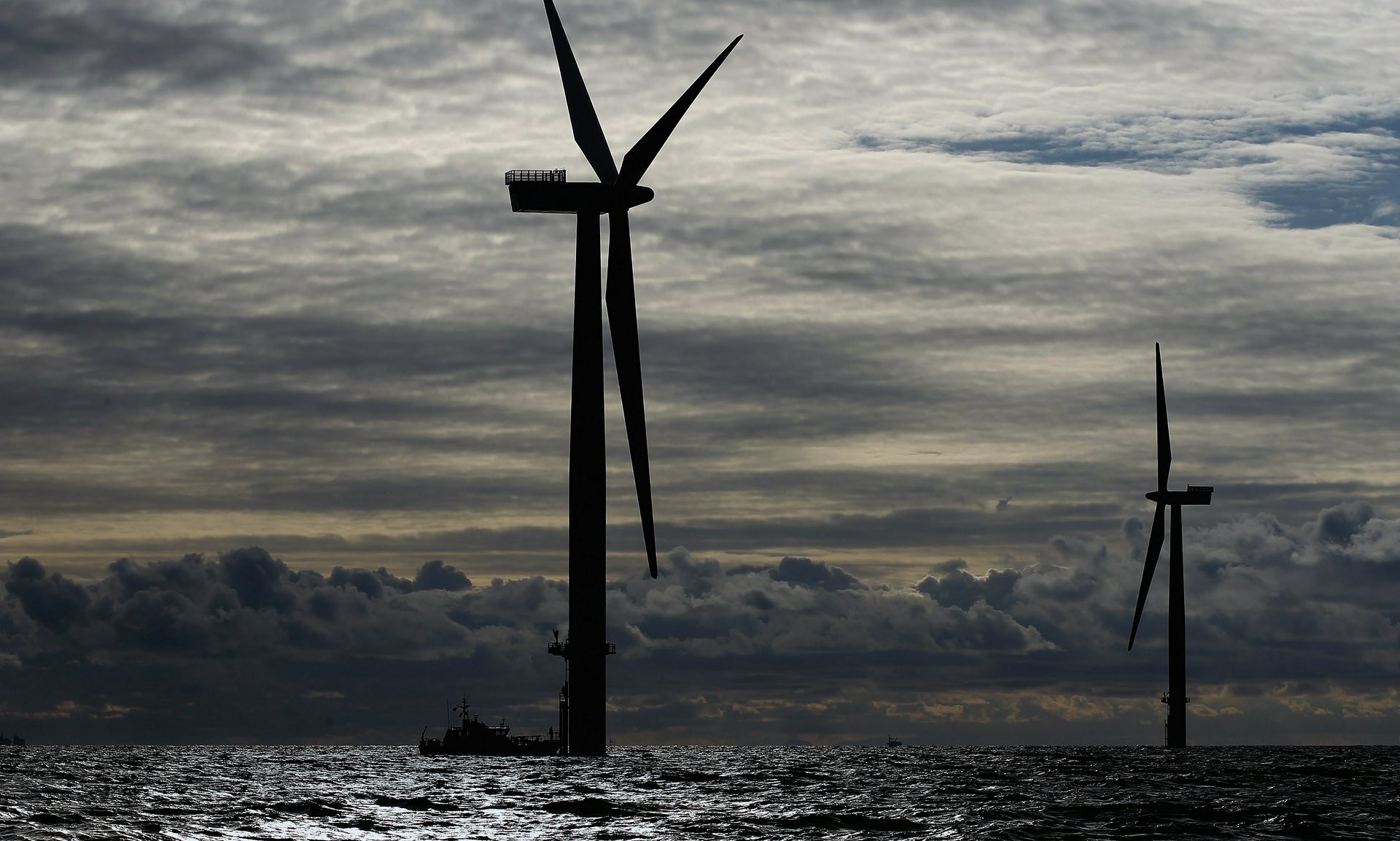
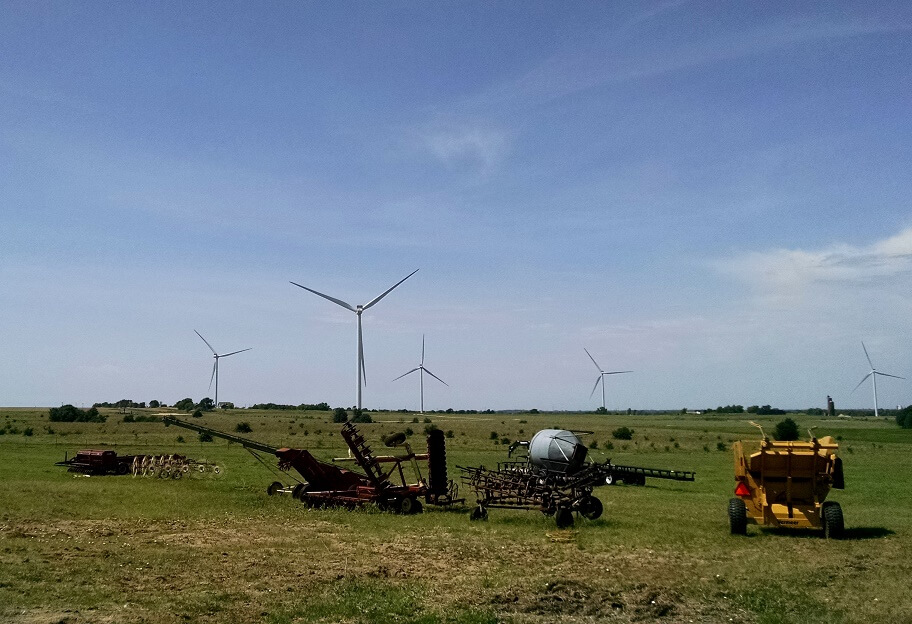
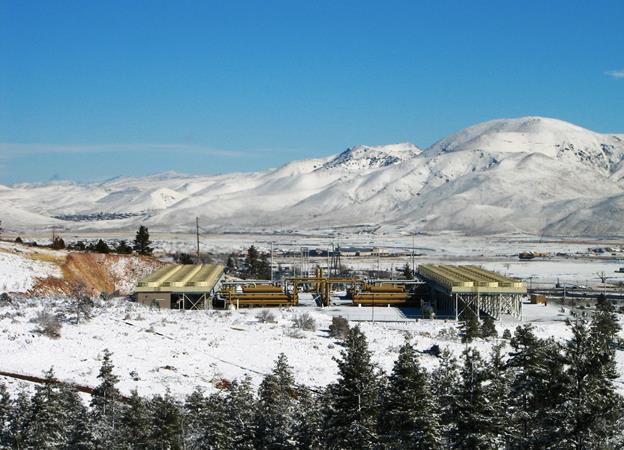

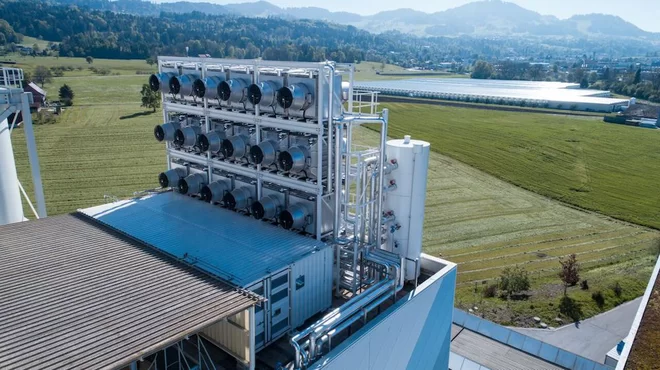

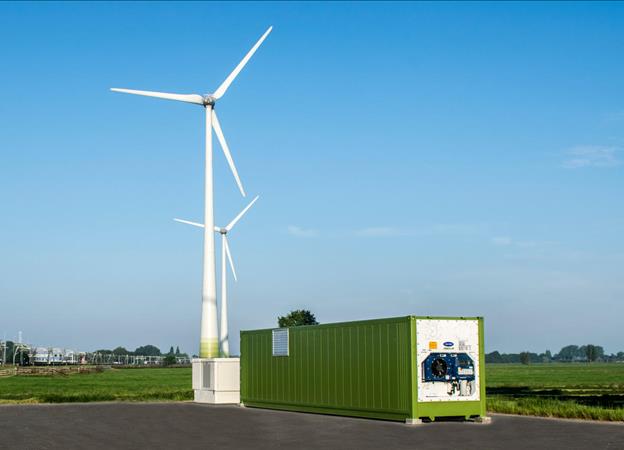
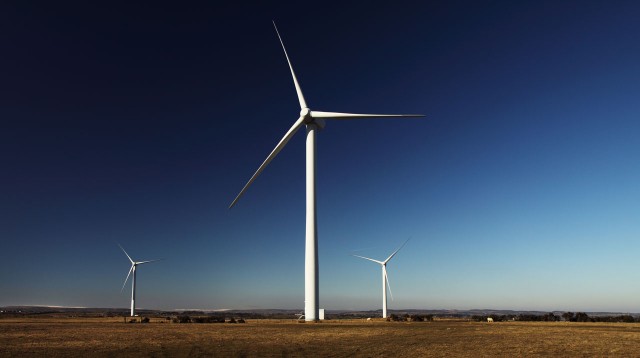
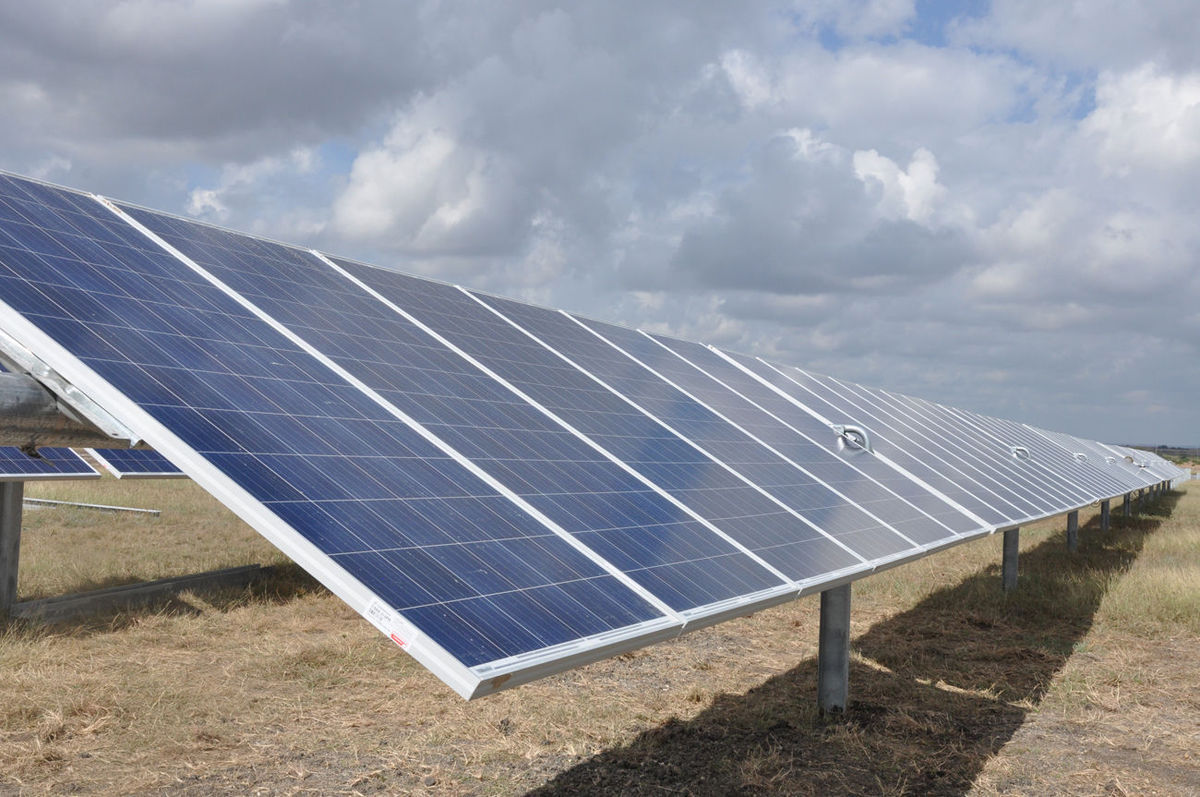





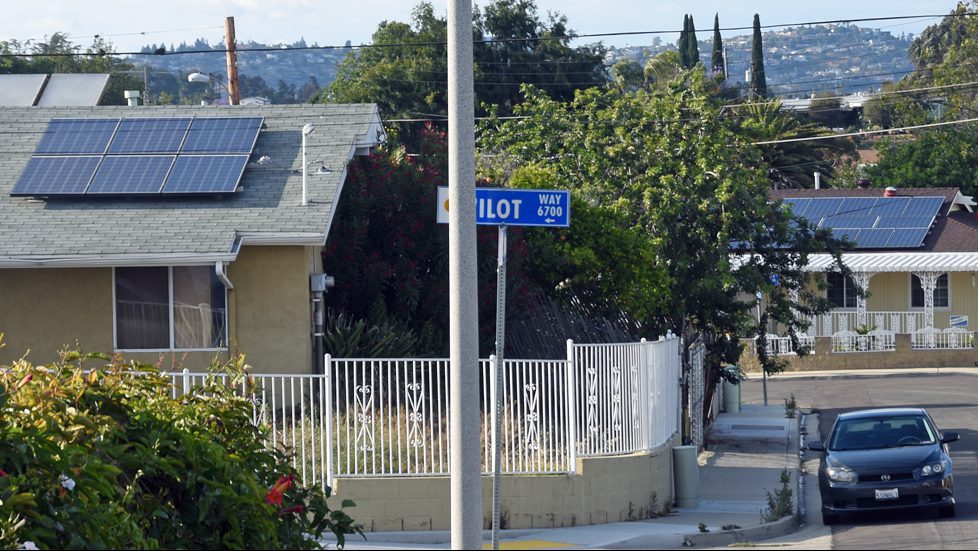
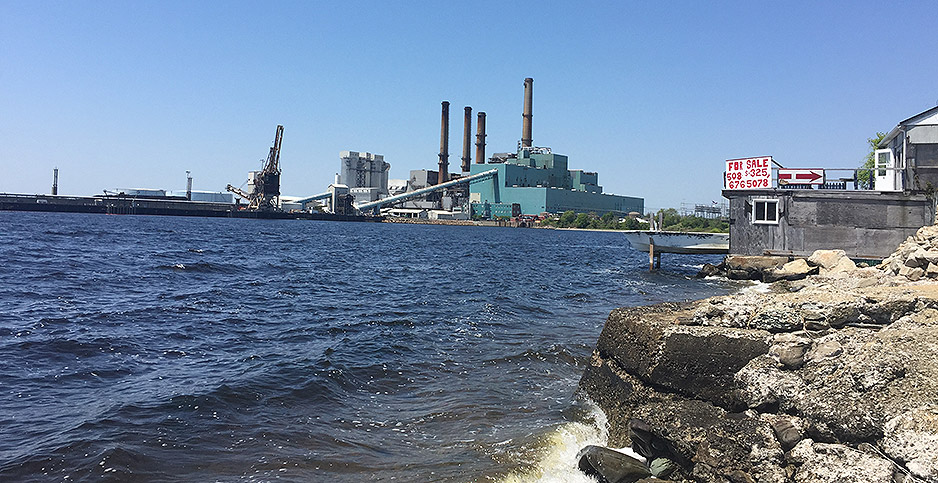

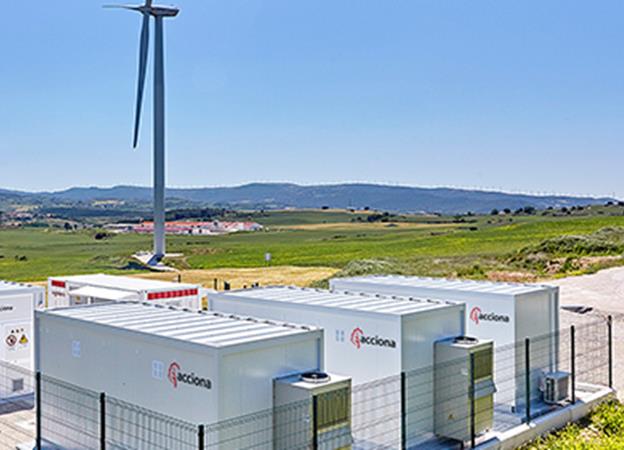
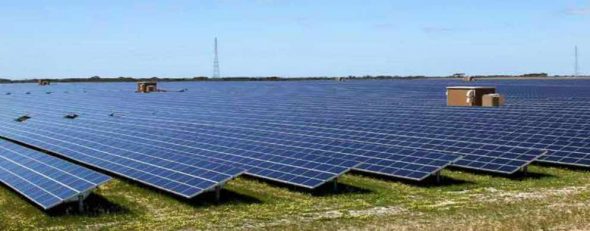
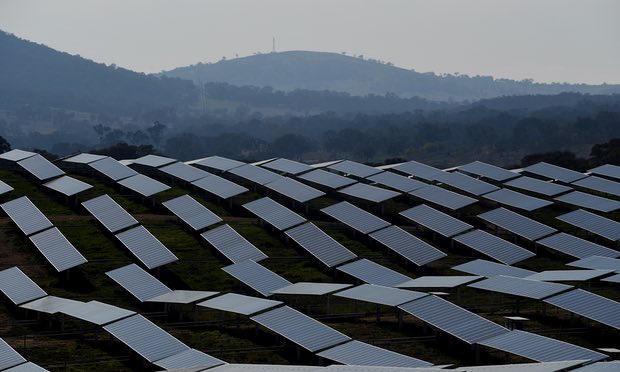
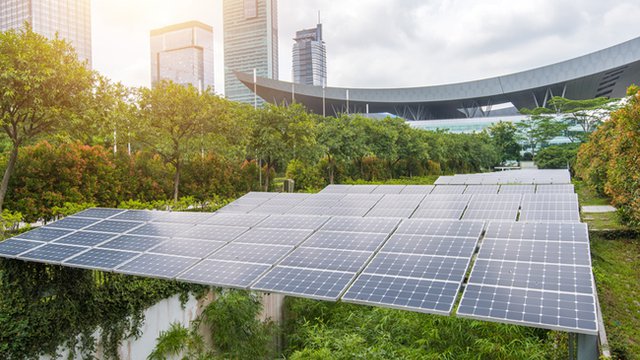


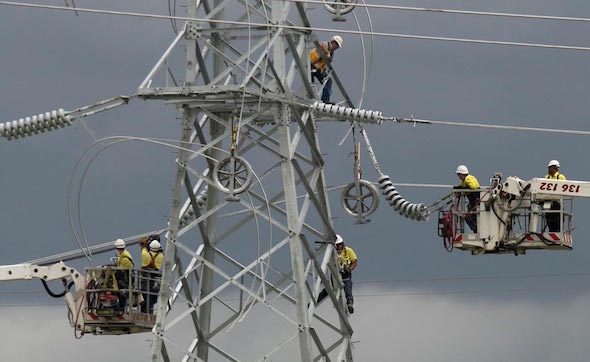

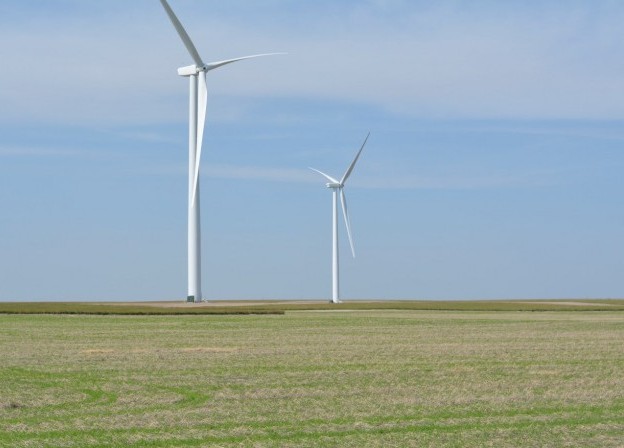


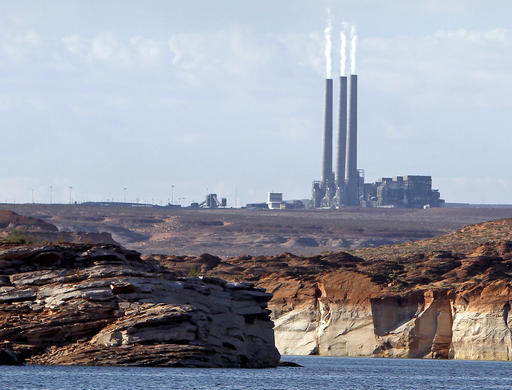

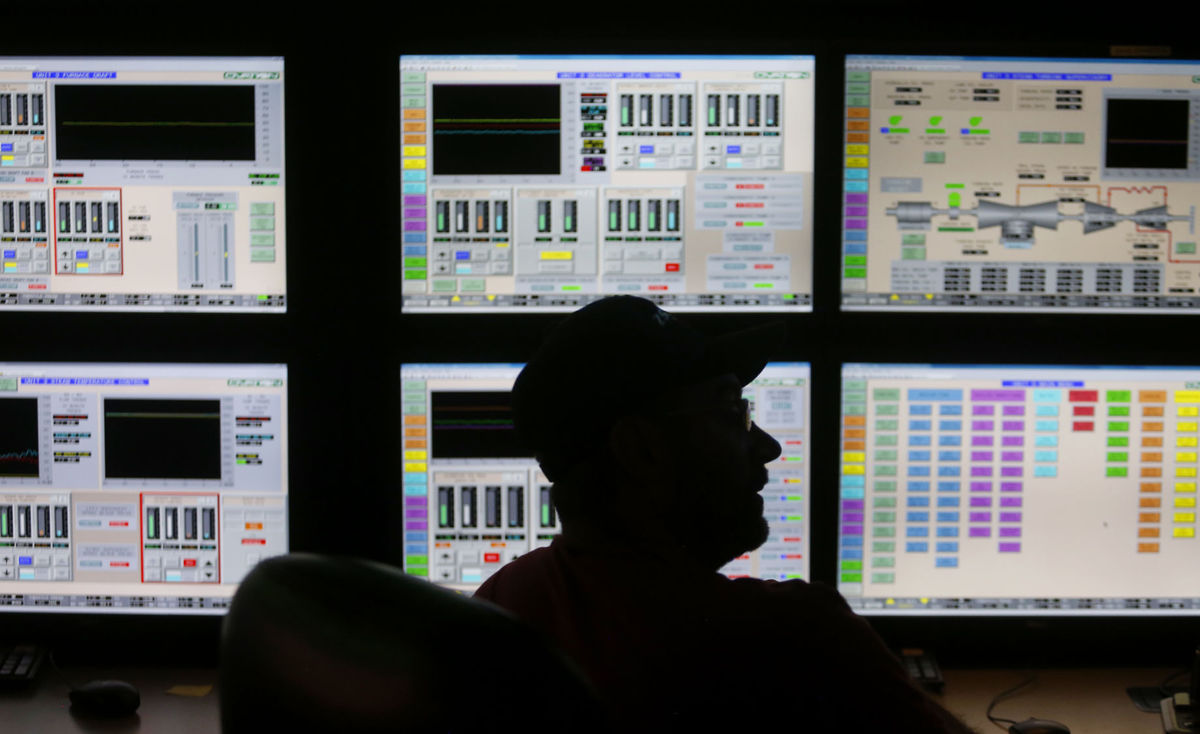


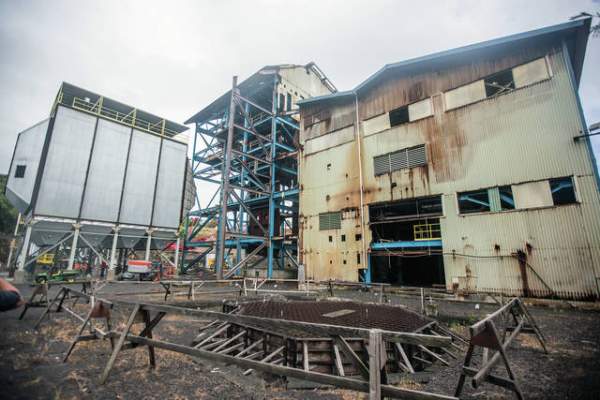


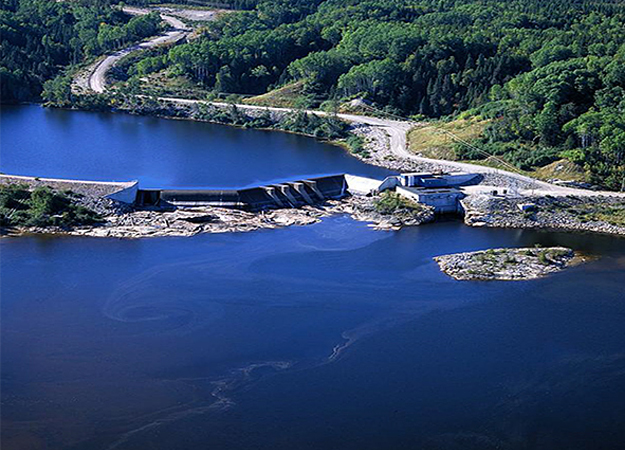

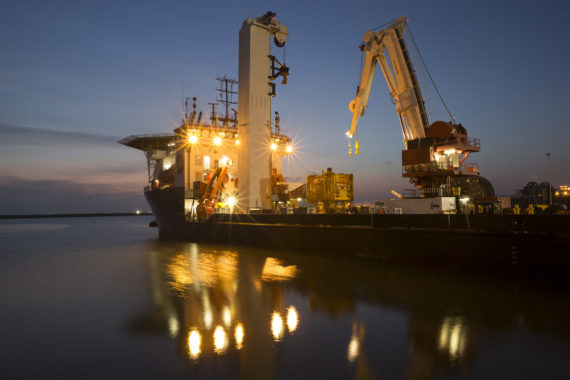
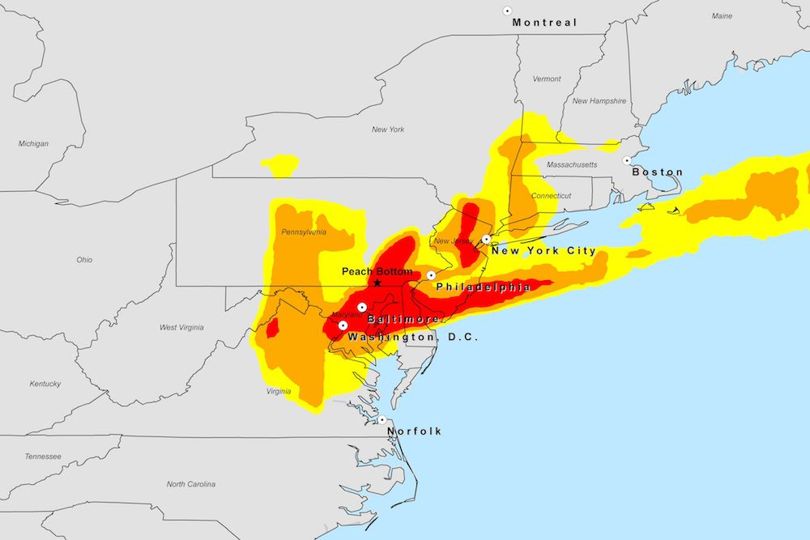


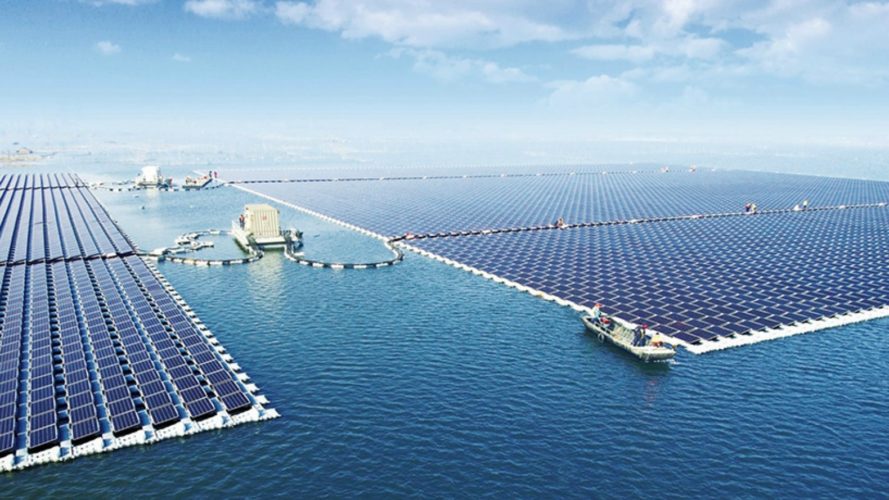

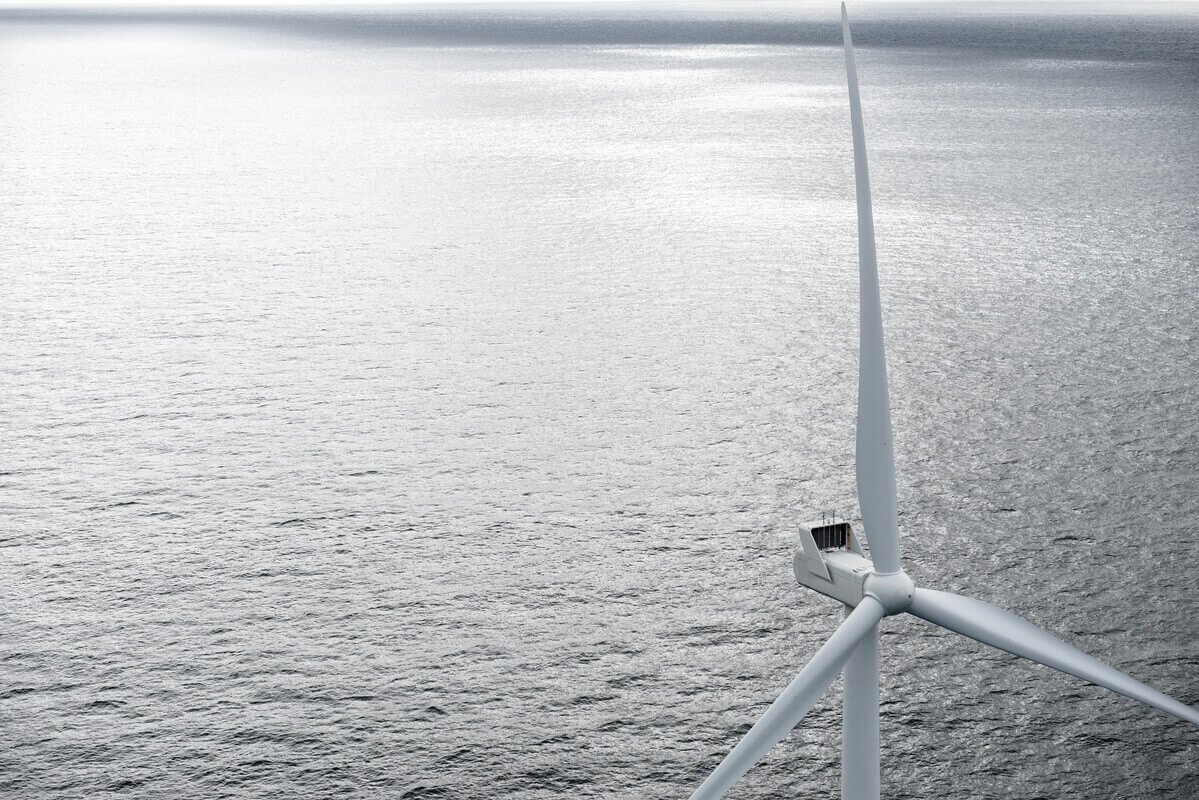
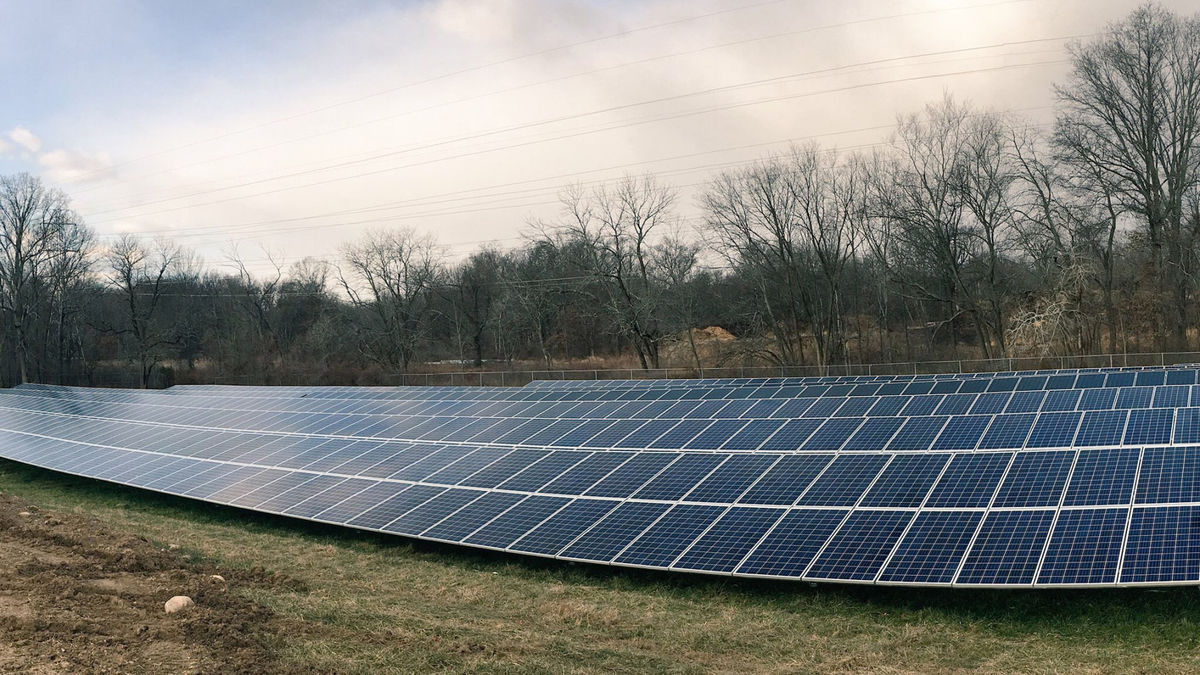




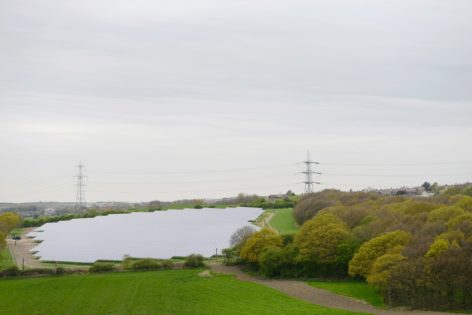


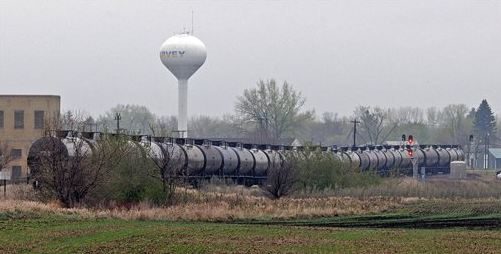



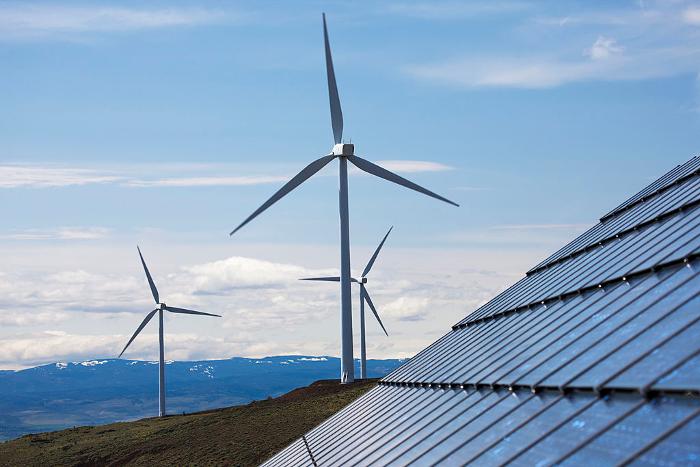
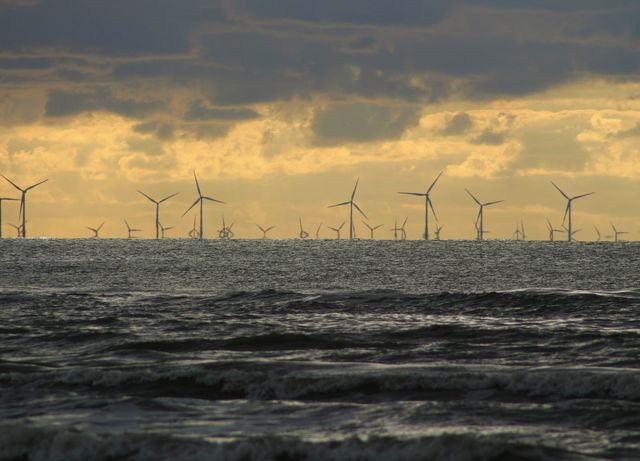




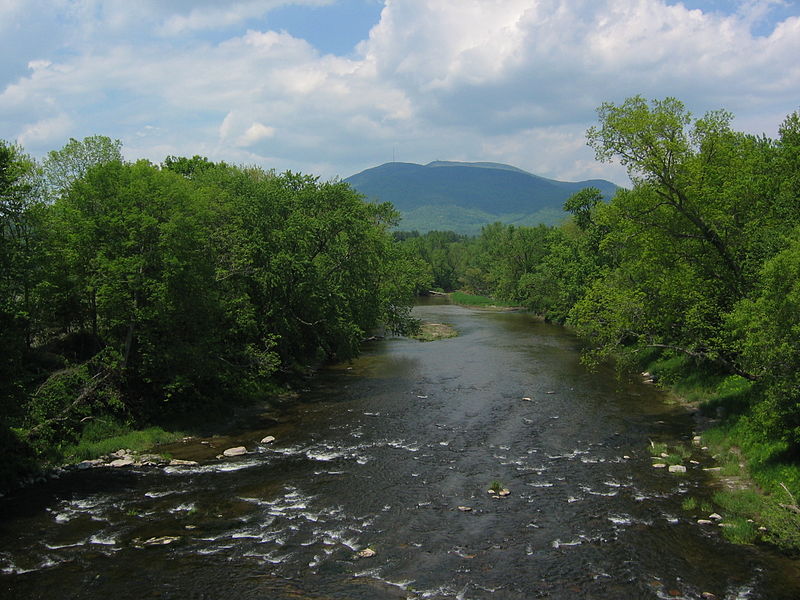

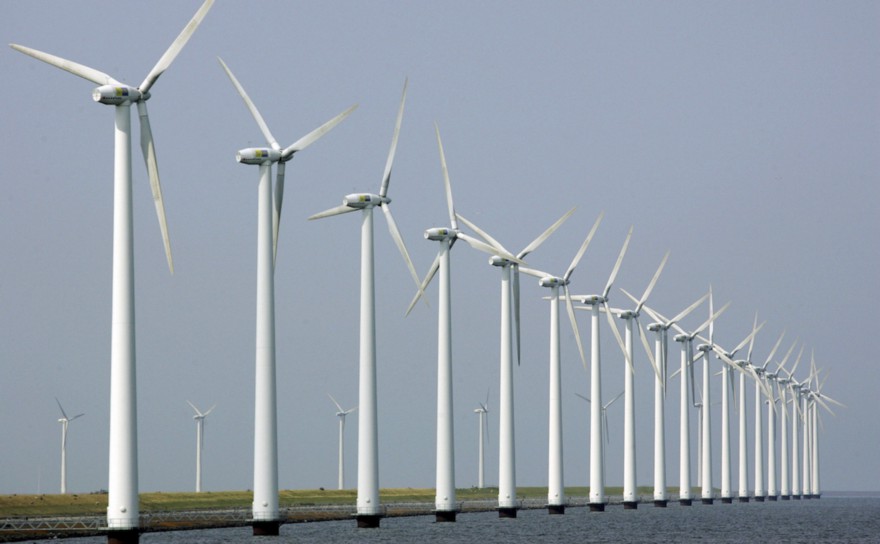

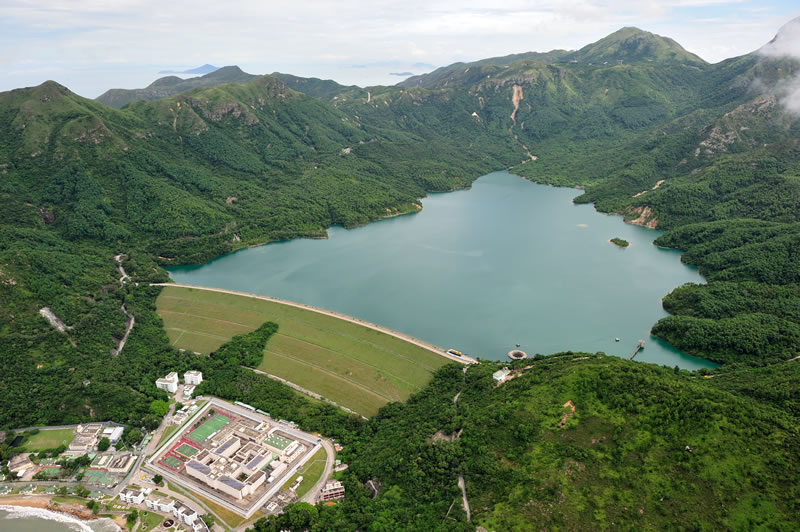
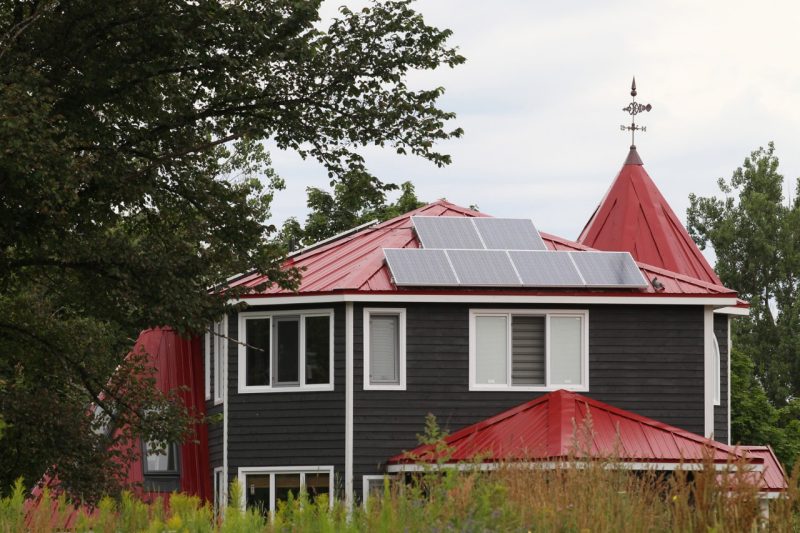


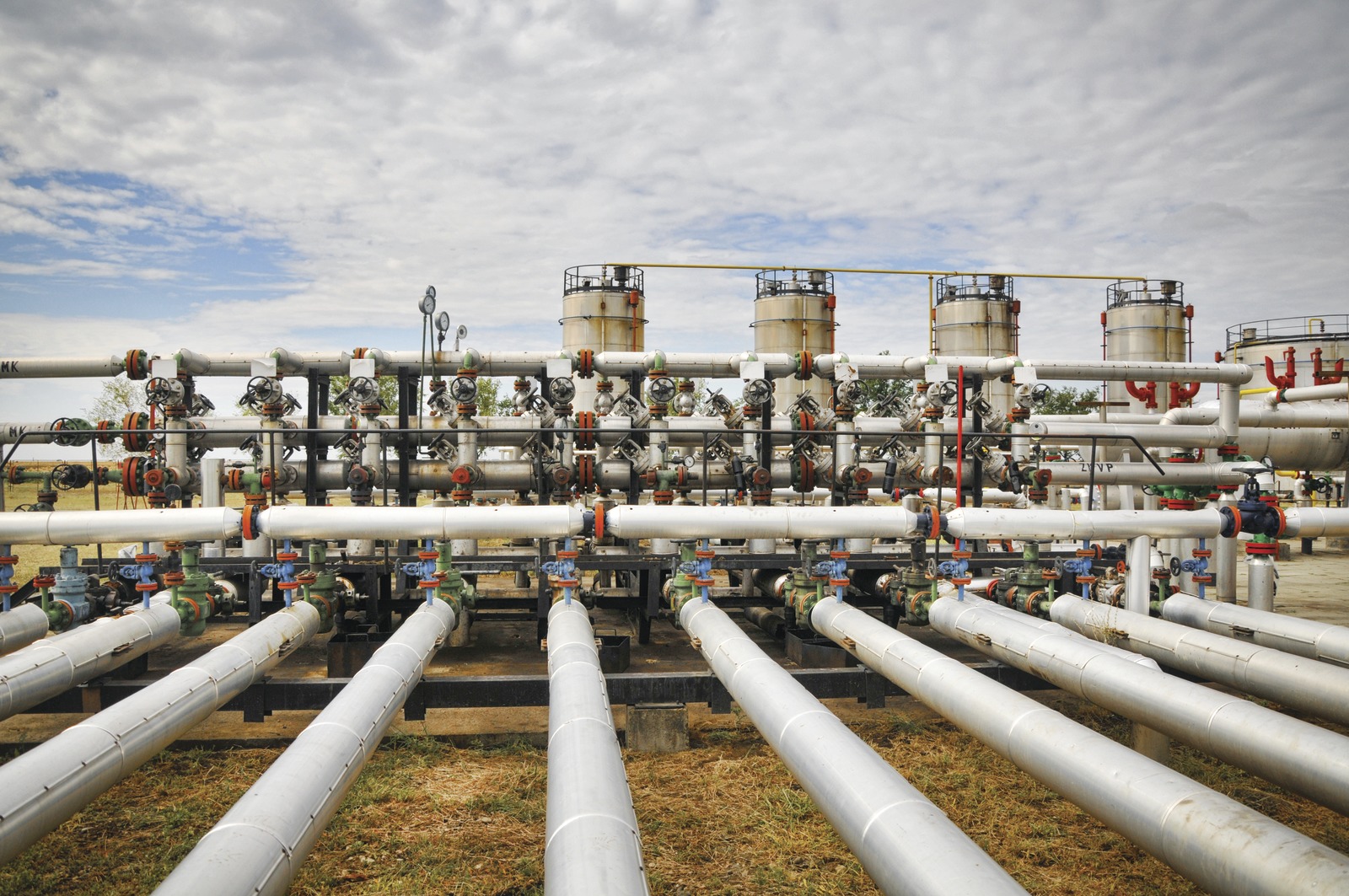

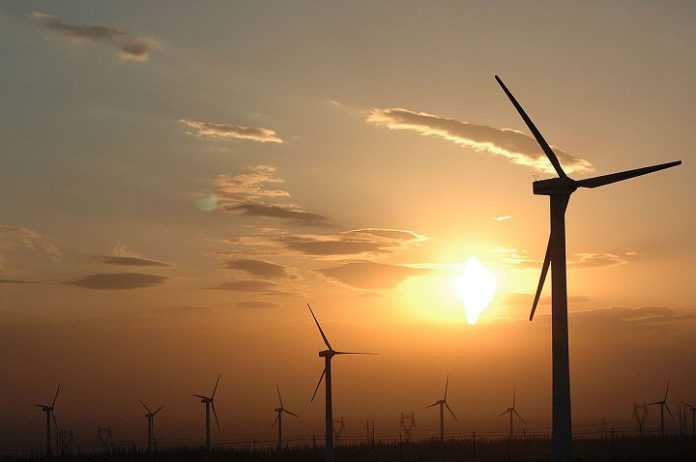
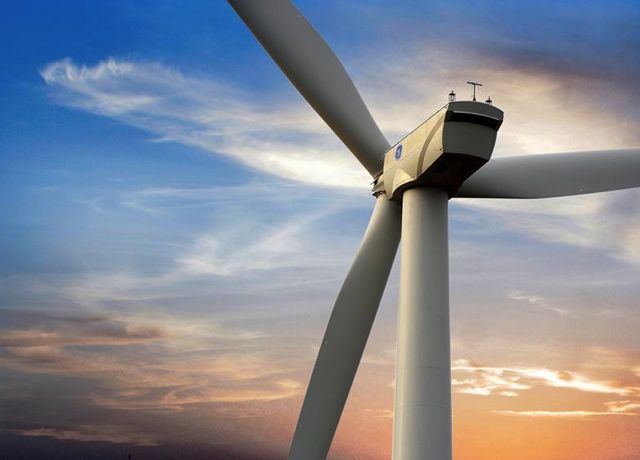

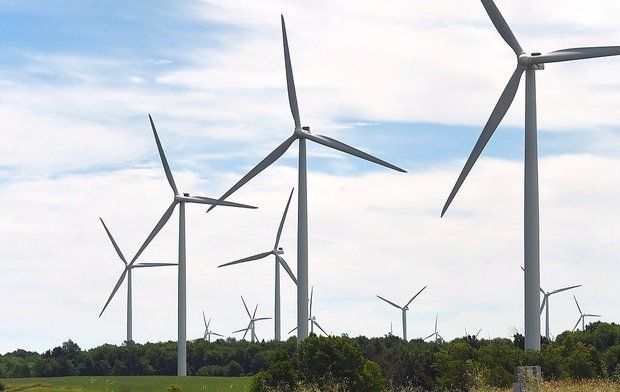


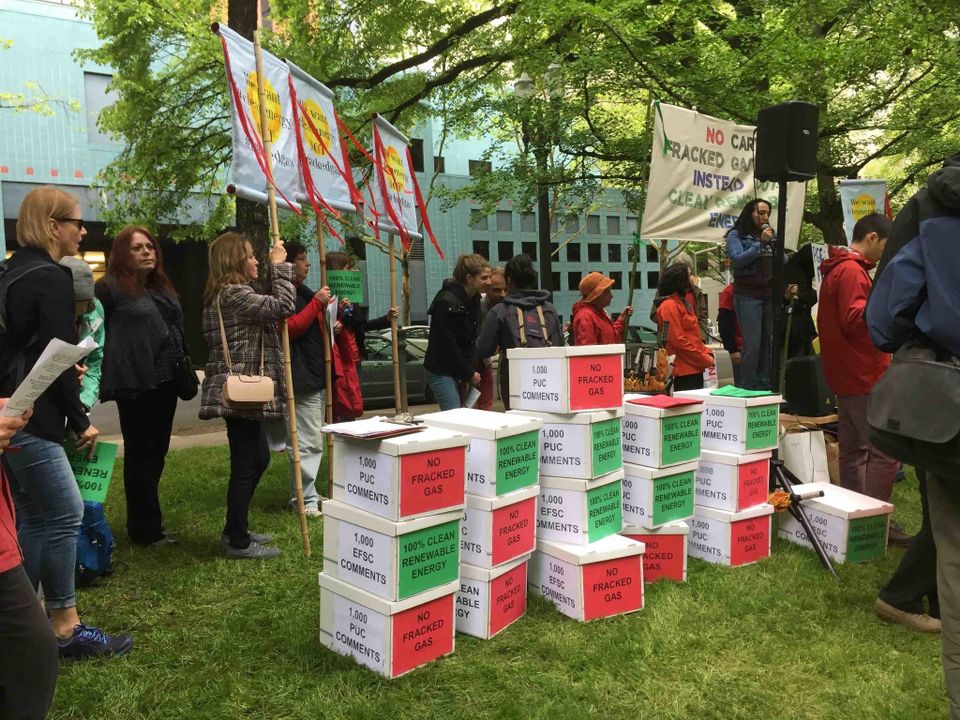
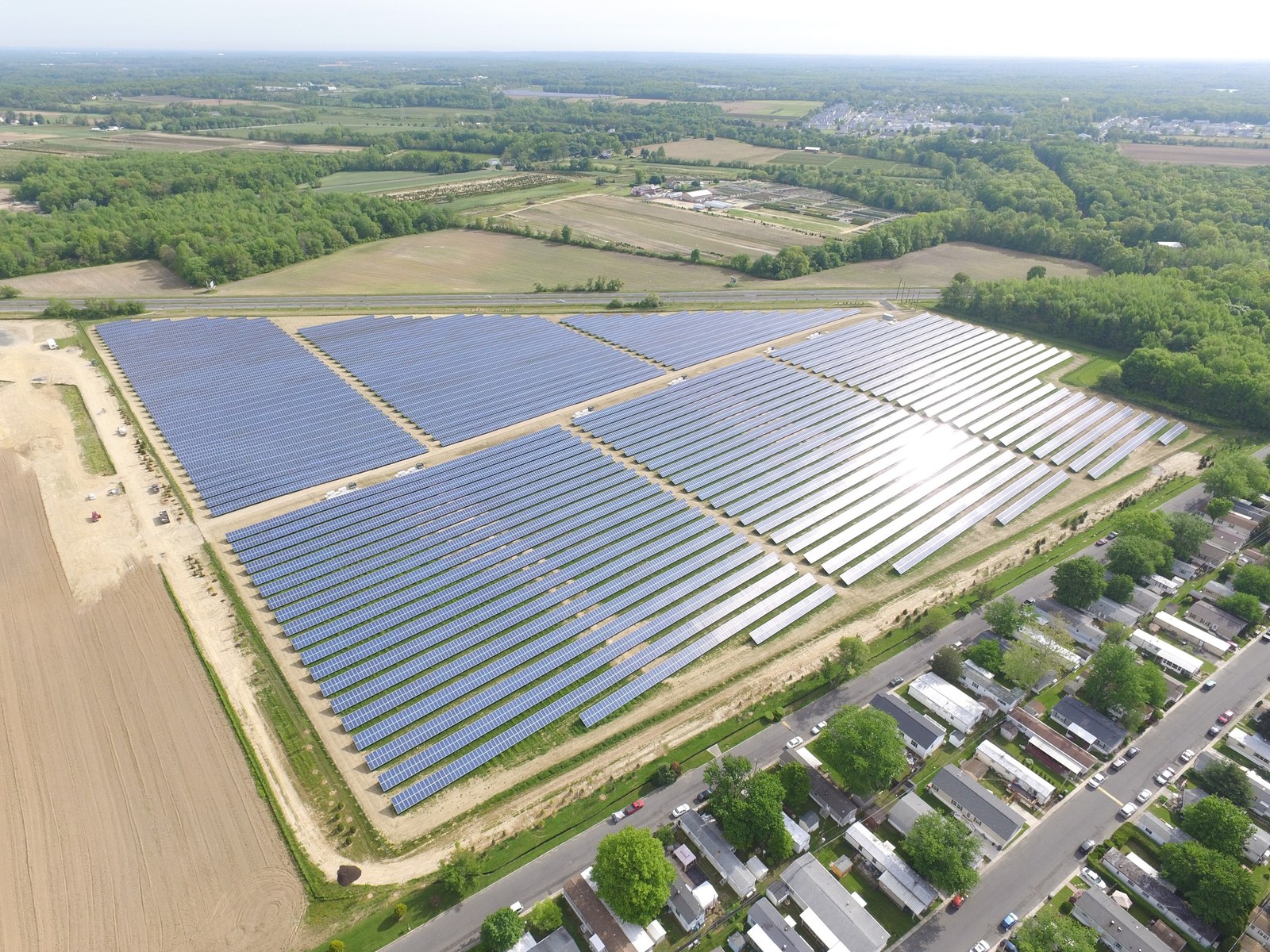

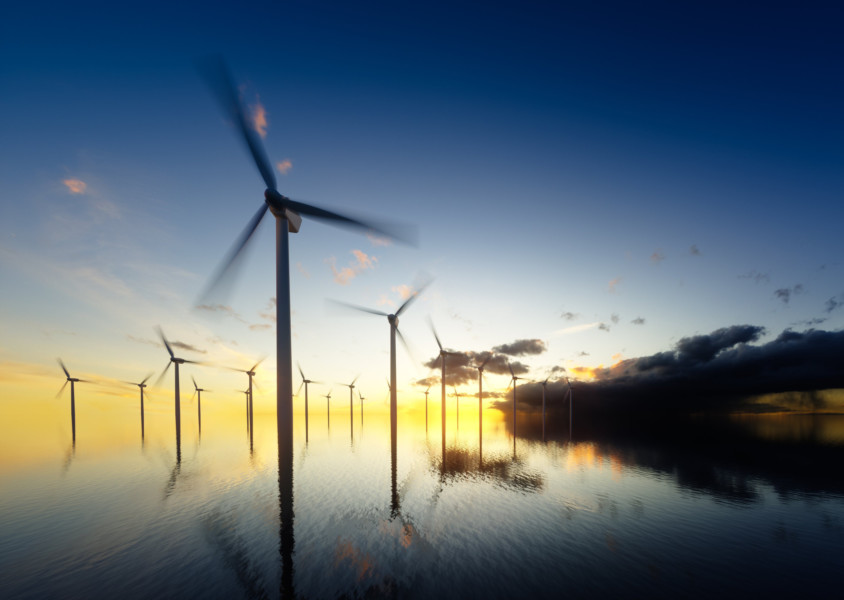
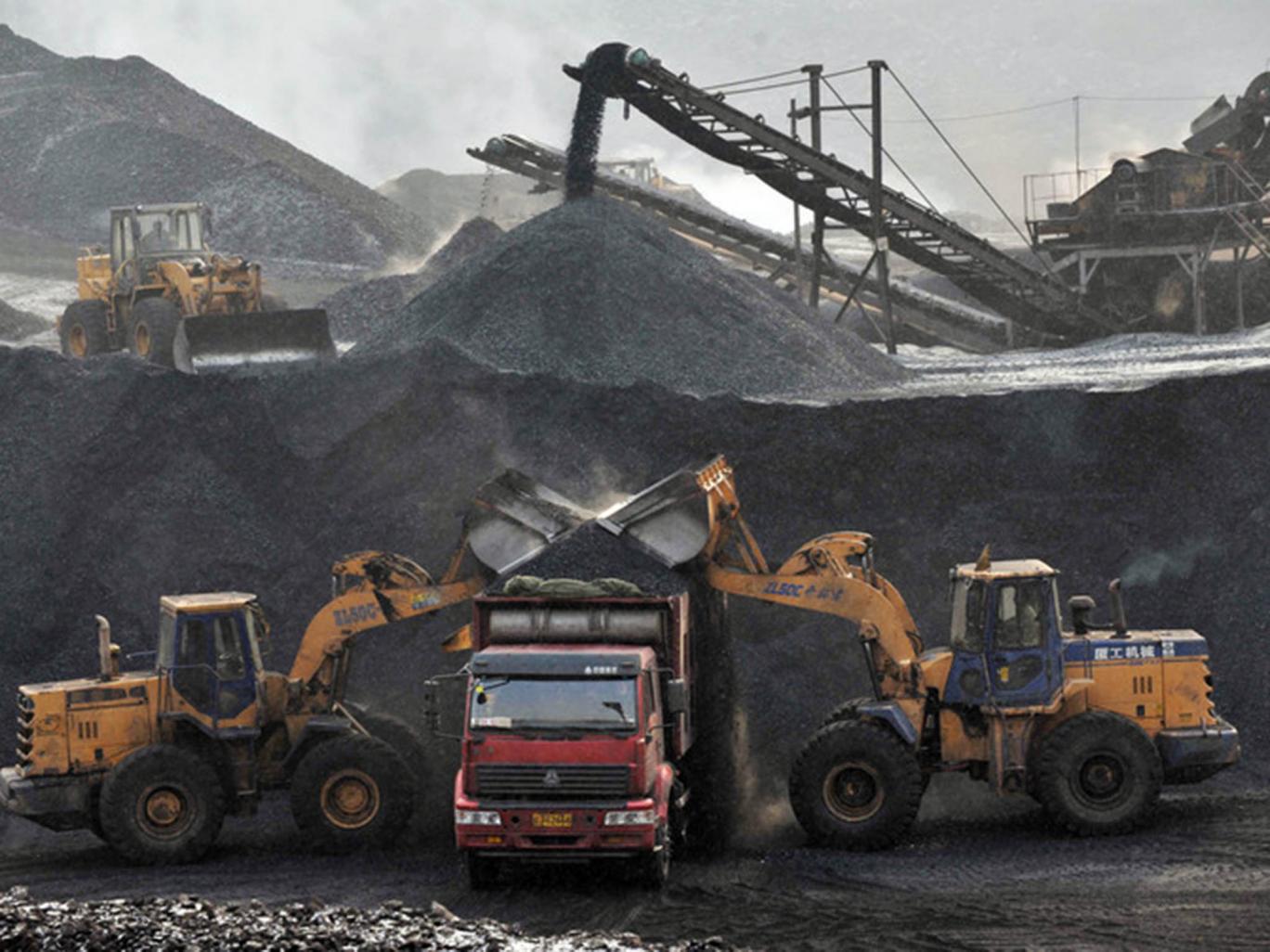



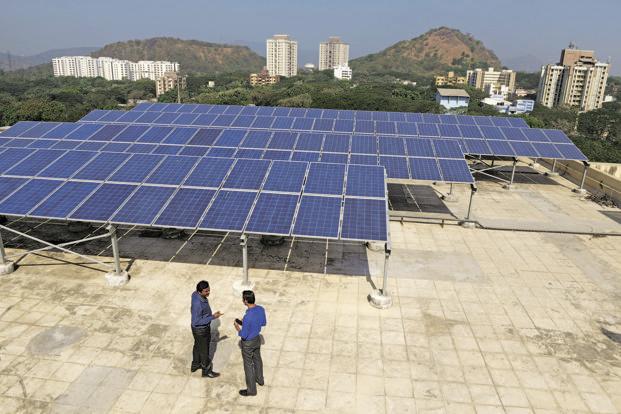
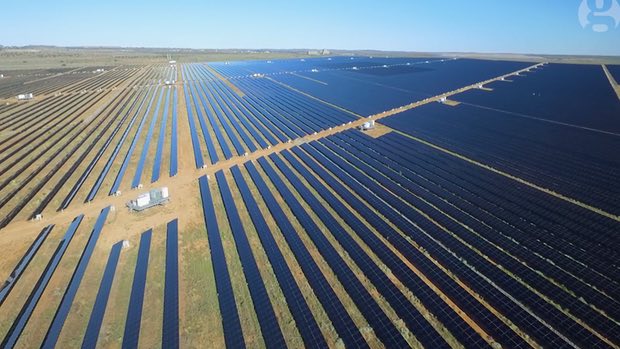
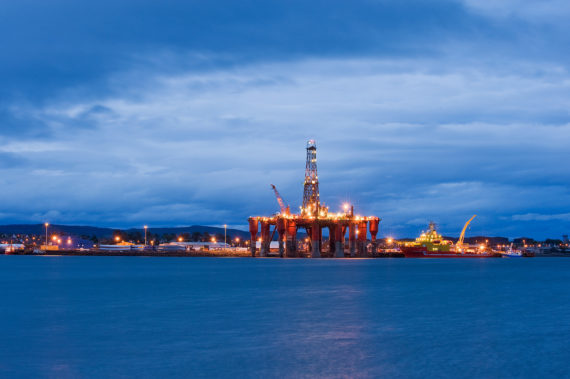
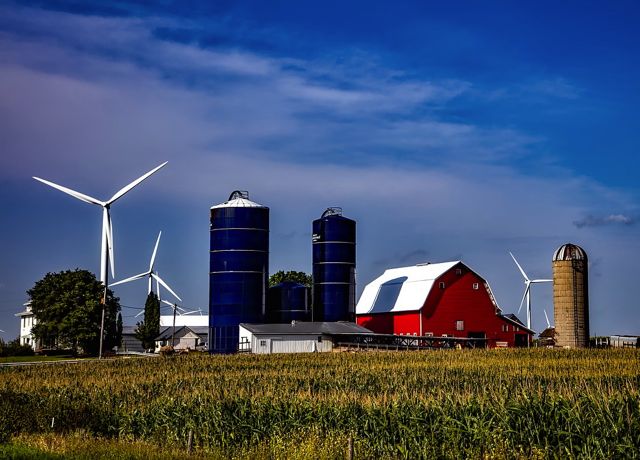

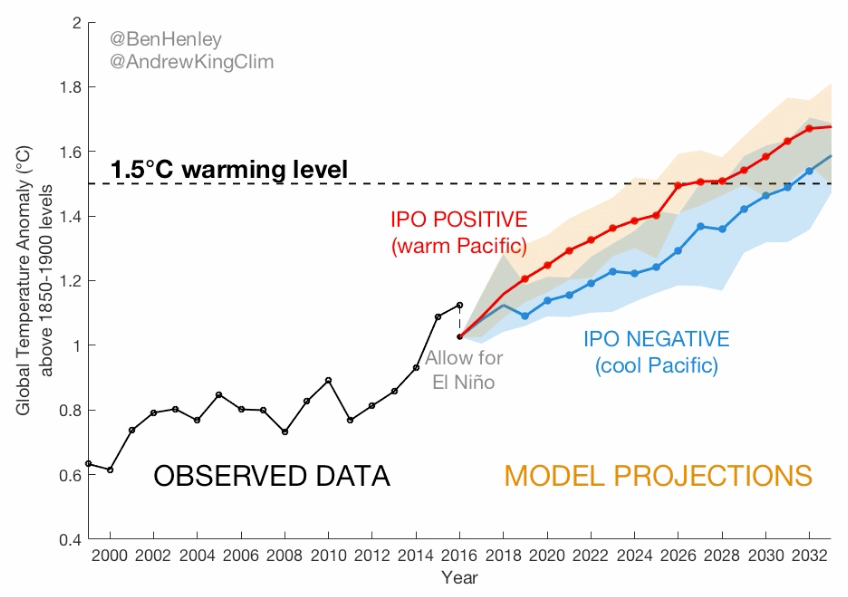

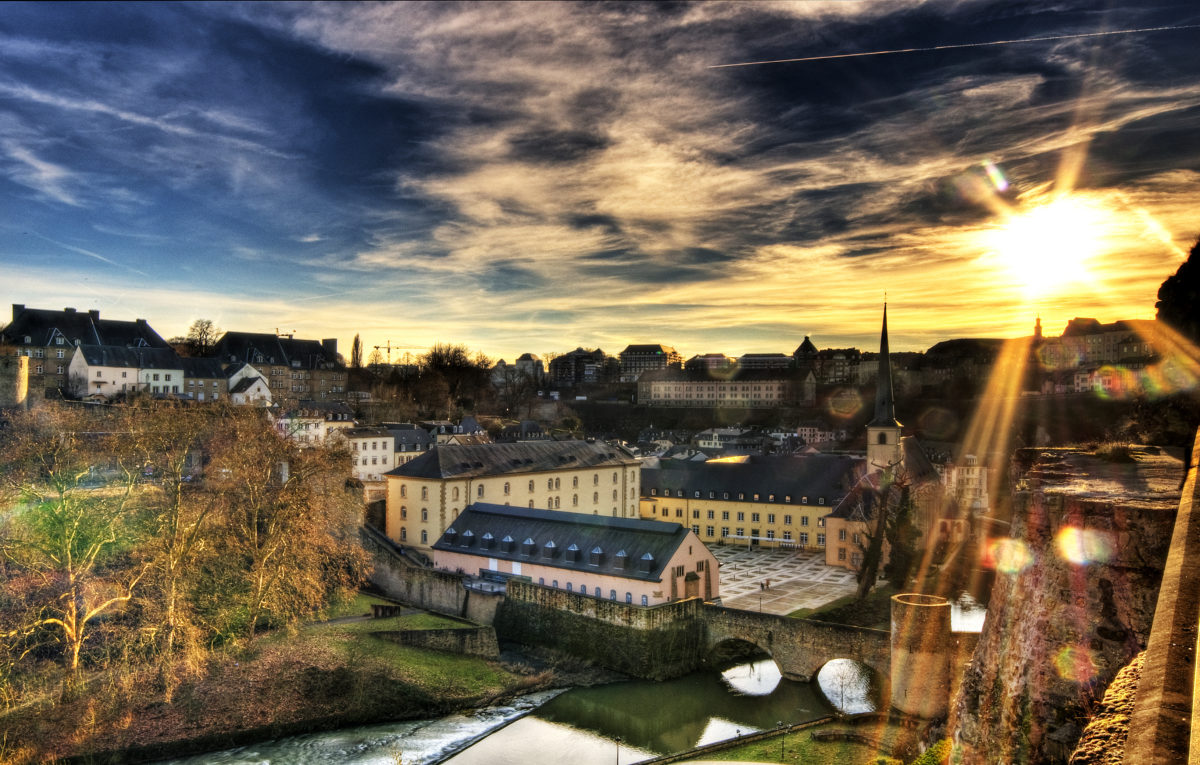



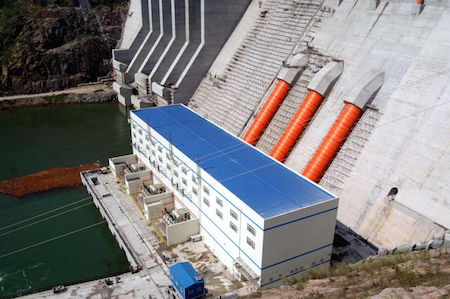





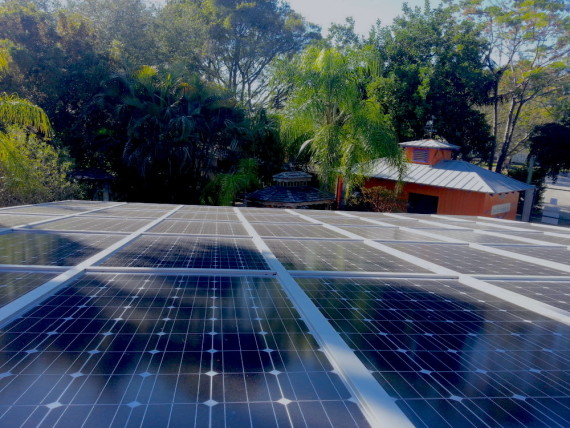


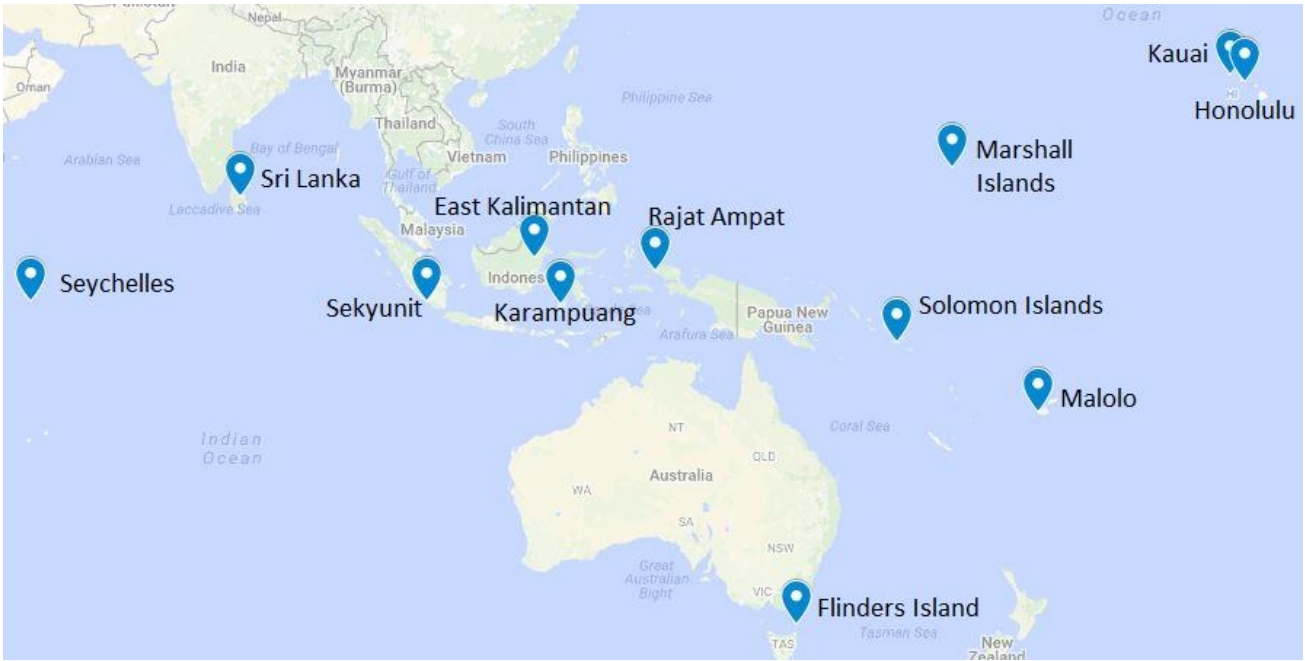


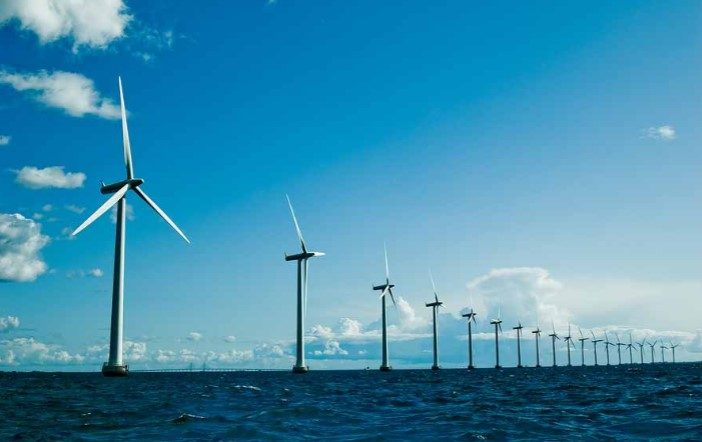



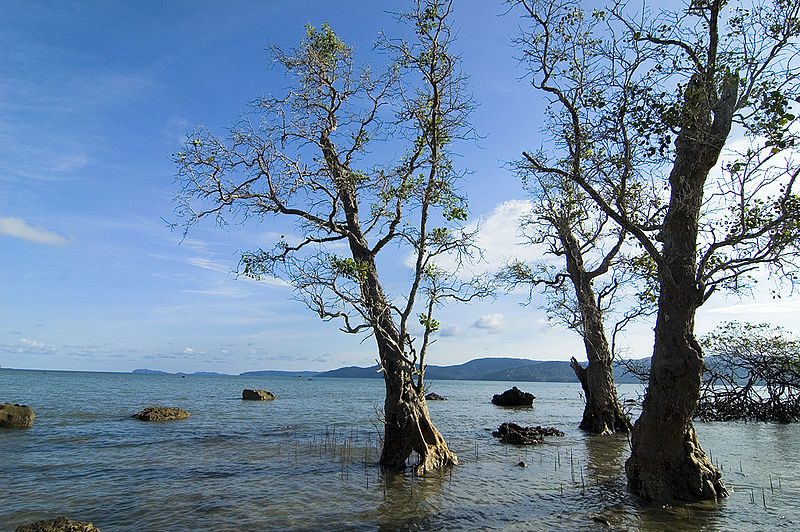


 geoharvey