Archive for the 'technology' Category
September 30, 2015
World:
¶ The UK’s South West is self-sufficient and even able to export electricity on sunny summer days, the region’s renewable industry body has revealed. The potential of Solar power in Devon and Cornwall is highlighted as new official figures showed that more than a quarter of the UK’s electricity came from renewables this spring. [Western Morning News]
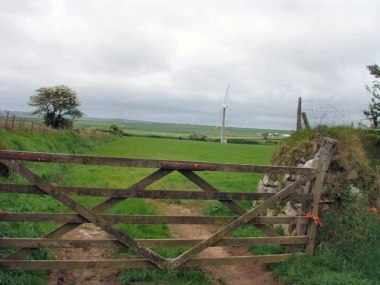
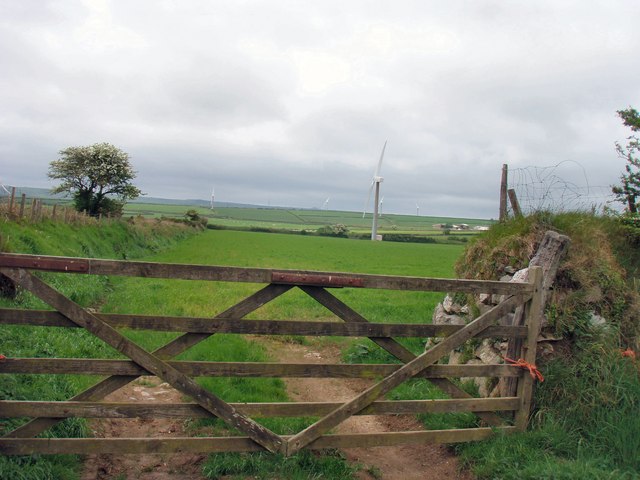
Cold Northcott wind farm in Cornwall. Photo by Jon Coupland. CC BY-SA 2.0
¶ Speaking in a radio interview on Tuesday morning, Australia’s Energy Minister confirmed that the Liberal Party, under the new leadership of Malcolm Turnbull, its new leader and subsequently Australia’s new Prime Minister, will be supporting the renewable energy sector and opening up support for emerging technologies. [CleanTechnica]
¶ Like the US, China has been slow to adopt fuel cell electric vehicles, but it looks like things are stepping up in a big way. The cities of Foshan and Yunfu are jumping into the lead with a $17 million order for 300 fuel cell electric buses, just announced by the Canadian company Ballard Power Systems through its Chinese licensee. [CleanTechnica]
¶ Western Power, the state-owned company that operates the grid in the south-west corner of Western Australia, may take some communities completely off grid so that it can save money on costly network upgrades and extensions. They are considering up to ten stand-alone systems, using solar, batteries, and back-up diesel. [One Step Off The Grid]

Margaret River, Western Australia, is one of the communities that may go off-grid. Photo by Rob & Jules. CC BY 2.0.
¶ BHP Billiton, the world’s largest mining company, did an analysis of climate change, and issued the findings in a report. The company says it believes climate change is real and that action will be taken. In fact, the introduction calls for an agreement to restrict global warming to 2 degrees warmer than pre-industrial levels. [Business Insider Australia]
¶ Despite getting 55% of its energy from coal-fired plants, the Alberta premier says the province will drop coal. She said the government is looking for a strategy to phase out the use of coal as quickly as possible, switching to renewables and efficiency without imposing unnecessary price shocks or unnecessarily stranding capital. [MINING.com]
¶ Rosatom initially pledged to have the first of the four reactors in the southern Turkish town of Akkuyu ready by 2019 but regulatory hurdles and Russia’s financial woes have slowed the $20 billion project’s progress. In March, there was talk that it would be delayed until at 2022, at earliest. Now, more delay is expected. [Today’s Zaman]
US:
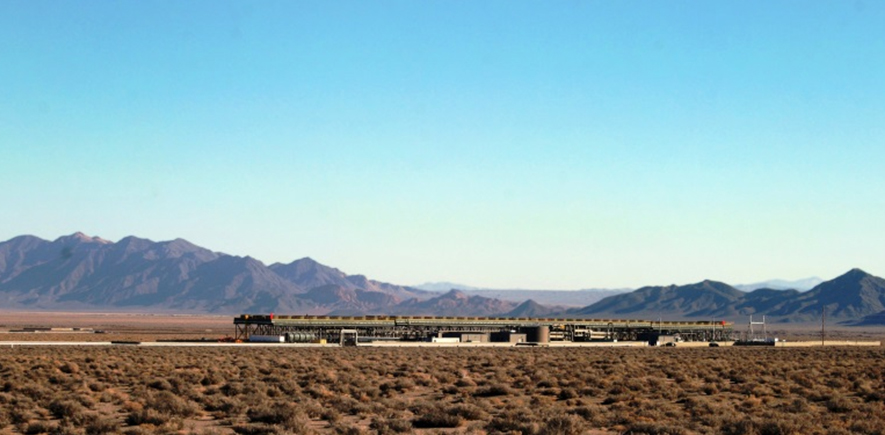
¶ A newly expanded Nevada plant is providing 16.2 MW of renewable energy, enough for 22,500 Los Angeles households, reducing greenhouse gas emissions equivalent to taking 14,600 cars off the road, officials announced Tuesday. The plant, built as an expansion of an existing facility and completed months ahead of schedule. [MyNewsLA.com]

Don Campbell I geothermal plant in Nevada. Photo courtesy of the Nevada Department of Energy
¶ International credit rating agency Moody’s Investors Service expects battery storage to be economical within 3 to 5 years in the US. The biggest losers will be coal-powered generators and peaking gas plants. Moody’s says battery storage costs have fallen 50% in recent years, and their rapid fall is likely to continue in the next few. [CleanTechnica]
¶ The US House passed the RAPID Act, prohibiting federal agencies from following draft guidance from the White House Council on Environmental Quality for “consideration of greenhouse gas emissions and the effects of climate change” in environmental reviews. Citibank puts the worldwide cost of the emissions at $44 trillion annually. [CleanTechnica]
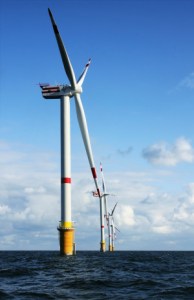
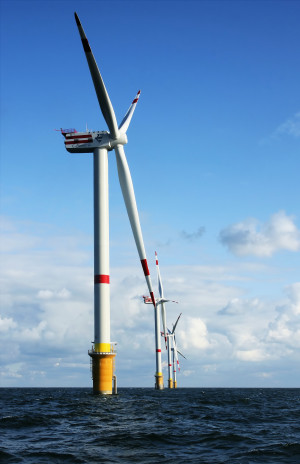
The Deep Water Wind project will create five turbines off the coast of Block Island. Photo by Hans Hilewaert.
¶ Three miles off the coast of Block Island, Deep Water Wind is overseeing construction of the first offshore wind farm in the United States and is expecting the controversial turbines to begin producing electricity by fall 2016. The project will consist of five turbines connected to the mainland by an underwater cable. [The Brown Daily Herald]
¶ Solar energy pricing is at an all-time low, according to a report from Lawrence Berkeley National Laboratory. Driven by lower installed costs, improved project performance, and a race to build projects ahead of a reduction in a key federal incentive, utility-scale solar PV power sales agreements are averaging just 5¢/kWh. [solarserver.com]
¶ North Carolina has surpassed 1 GW of installed solar capacity, the fourth US state to do so, according to the North Carolina Sustainable Energy Association. The state reached 1.04 GW of installed capacity as of September 24. California, Arizona, and New Jersey had already reached the 1-GW milestone. [CleanTechnica]
Posted in biomass, geothermal, hydro, nuclear power, renewable power, solar, technology, wind | Leave a Comment »
Tags: nuclear, nuclear power, photovoltaic, renewable power, solar power, wind power
August 14, 2014
Opinion:
¶ “‘Experts’ Have Been Misleading People About Renewable Energy” one of the striking patterns of behaviour in the energy industry over the last decade has been the ability of the “established” energy experts to underestimate growth of renewable energy and to overplay fossil fuels. [CleanTechnica]
Science and Technology:
¶ Morgan Stanley’s report on Solar Power and Energy Storage contains a fascinating comment about the potential ramifications of Tesla’s focus on developing large numbers of electric batteries, indicating that the batteries could be a grid defection tipping point in the US and Europe. [CleanTechnica]
World:
¶ A Western Australian government review has revealed the full catastrophe of the state’s electricity market, highlighting the extraordinary waste and misdirected subsidies that are costing it billions of dollars, much of this spent on fossil fuel plants that have never been used. [RenewEconomy]
¶ RWE, Germany’s second-biggest utility by market value, posted a 62% drop in profit on Thursday and announced plans to shut down more power stations. The utility blamed the expansion of renewable energy in Germany. [Financial Times]
¶ The UK solar power industry accused the government of undermining the development of renewable technologies, after it emerged that a total of £205 million a year will be available for major forms of renewable energy, including wind, solar farms, and biomass power plants. [The Northern Echo]
¶ A British Columbian First Nation Tribal Council signed a partnership agreement this week with the independent power firm Innergex Renewable Energy Inc. with respect to six separate run-of-river power projects, worth up to $720 million, on streams within their territory. [Vancouver Sun]
¶ New Zealand gentailer Contact Energy unveiled its most advanced geothermal power station at the “world-class” Wairākei geothermal resource. The 159 MW Te Mihi station boasts two 83 MW steam turbines. [Business Spectator]
US:
¶ If the controversial northern leg of the Keystone XL pipeline is approved and built, the resulting amount of carbon emitted into earth’s atmosphere could be up to four times greater than the US State Department estimated, a new scientific paper shows. [Resilience]
¶ A grass-roots group based in Portsmouth, New Hampshire is working to “responsibly retire” the Schiller Station power plant in Newington and is increasing pressure on state legislators to force divestiture of the plant. The coal-burning plant is owned by Public Service of New Hampshire. [Seacoastonline.com]
¶ Ford Motor Company is teaming with DTE Energy to build Michigan’s largest solar array at Ford World Headquarters. The project will provide employees with 360 covered parking spaces and 30 charging stations for plug-in electric vehicles. [Stockhouse]
¶ Oklahoma Gas and Electric was ultimately unsuccessful when it took the US EPA to court over the regional haze, mercury, and air toxics rules. Now, the time to start complying with the regulations has come, which the utility says will mean higher electricity bills for customers. [KGOU]
¶ Hoosier Energy has entered into a 15-year power purchase agreement with EDP Renewables North America that will add 25 MW of wind energy from an Illinois wind farm beginning in December of 2014. [Inside Indiana Business]
¶ Former President Jimmy Carter is back, this time proposing a carbon tax to fight global warming and calling out skeptics. Carter said that such a tax was “the only reasonable approach” to fighting global warming. [Daily Caller]
¶ The US DOE issued the final Environmental Impact Statement for the Champlain Hudson Power Express transmission line, clearing it for final permitting. It is expected to bring New York up to 1,000 MW of renewable power, reducing dependency on the Indian Point nuclear plant. [POWER magazine]
Posted in biomass, hydro, nuclear power, renewable power, solar, technology, wind | Leave a Comment »
Tags: hydro power, nuclear, nuclear power, photovoltaic, renewable power, solar power, wind power
June 24, 2014
Science and Technology:
¶ One in five people around the world, approximately 1.3 billion people, lack access to electricity. The Sierra Club is released a new report — “Clean Energy Services For All (CES4All)” — showing that off-grid clean energy is the right tool for the energy access job. [Energy Collective]
World:
¶ East Anglia One Offshore Wind, a 50-50 joint venture between ScottishPower Renewables and Vattenfall, has received consent from the UK Department for Energy & Climate Change. With 1,200 MW capacity, the project will become one of the world’s largest wind sites. [Power Online]
¶ The Australian federal government’s case to scrap or weaken the Renewable Energy Target has been dealt a blow, with modelling it commissioned for the review showing consumers will be better off if the target is kept. [The Canberra Times]
¶ Strong hydro generation and the opening of the largest wind farm in the country lifted renewable energy’s share of Australia’s power generation to 14.76 per cent in the 2013 calendar year, up from 13.14 per cent in 2012. [Business Spectator]
¶ Huge solar farms are set to transform former UK coal mine sites into green energy powerhouses providing low carbon electricity for around 10,000 homes. Anesco is set to install up to 30 MW of solar energy capacity at three sites in Nottinghamshire. [Business Green]
¶ A study from the International Institute for Applied Systems Analysis says Concentrating Solar Power could supply sizable amounts of electric demand. Mediterranean region systems could provide 70% – 80% of demand at no extra cost compared to gas-fired power plants. [Counsel & Heal]
US:
¶ American University, George Washington University and GWU Hospital, all in Washington DC, will buy 52 MW of solar PV power — enough electricity to light up 8,200 homes — from Duke Energy Renewables at a fixed rate over the next two decades. [Washington Post]
¶ Vermont’s clean energy industry is projected to grow 12% during the next 12 months. The Department of Public Service released its “2014 Clean Energy Industry Report,” forecasting approximately 1,800 new jobs in the industry at wages far higher than average. [Rutland Herald]
¶ The Connecticut House gave final passage to a bill to enable the town of Canton to refurbish two dams, one first built for a grist mill in the late 1700s, the other in 1837 to power machinery for making axes. The “renewed” should power more than 1,500 local homes. [CT Post]
¶ Massachusetts’ new food waste ban, which was a decade in the making, puts the commonwealth among leaders in the United States in addressing an indulgence that is unique to our modern existence: throwing away large quantities of food. [Boston Globe]
¶ Renewables have supplied 47.83% of new electrical generation in the U.S. since the start of 2012. The share of clean energy is rising, with non-fossil fuel generation accounting for 54% of new capacity from January to the end of May, according to FERC. [pv magazine]
¶ First Wind celebrated the end of construction of the Warren Solar project and announced that commercial operations have begun. The 14 MW AC Worcester County-based project joins First Wind’s 3 MW AC Millbury, Massachusetts solar power project in commercial operations. [PennEnergy]
¶ At long last, America’s first offshore wind project, Cape Wind, has secured its permits, leases and is finalizing financing. Once turbines are erected, miles off-shore, it will begin producing most of the electricity for Cape Cod, Martha’s Vineyard and Nantucket. [The Hill]
Posted in hydro, renewable power, solar, technology, wind | Leave a Comment »
Tags: photovoltaic, renewable power, solar power, wind power
February 14, 2013
Science and Technology:
¶ The Most Influential Climate Science Paper Today Remains Unknown to Most People. Nevertheless, it is transforming the climate change debate, prompting the financial world to rethink the value of the world’s fossil fuel reserves and giving environmental activists a moral argument for action. [Inside Climate News]
World:
¶ The World Wide Fund for Nature (formerly World Wildlife Fund) has a report detailing how Europe could cut its carbon emissions by 50% from 1990 levels by 2030, putting it on track to be based 100% on renewable energy by 2050. [Electric Light & Power]
¶ The German environment and economy ministers have agreed on measures to curb rises in energy prices before the national election in September. [Reuters]
¶ The Japanese Nuclear Regulation Authority will inspect a building at Fukushima Daiichi to determine whether the tsunami or the earthquake caused reactor meltdowns. A year ago, TEPCO lied about conditions in the building, apparently to prevent an inspection at that time. [Asahi Shimbun]
¶ The estimated cost of decommissioning the UK’s Sellafield nuclear facility is now £67.5 Billion over the next 30 years. [Spend Matters UK/Europe]
¶ Parts of a wall and roof collapsed at the Chernobyl nuclear plant because of heavy snow. The collapse took place in a protective building outside the sarcophagus for the reactor that exploded, and not in an area where nuclear materials were contained. [Kyiv Post]
US:
¶ One thing was notably left out of the state of the union address. The president talked about climate change, and mentioned solar, wind, and natural gas, but did not mention nuclear power at all. [World Nuclear News]
¶ PacifiCorp and the California ISO will work together to create an Energy Imbalance Market in which large geographic areas will engage in energy sharing to reduce the effects of intermittent power generation and produce a balanced overall grid. [Greentech Media]
Posted in nuclear power, renewable power, solar, technology, wind | Leave a Comment »
Tags: nuclear, nuclear power, photovoltaic, renewable power, solar power, wind power
February 11, 2013
Science and Technology:
¶ A low-carbon hybrid energy system is being investigated in China. It would have carbon dioxide emissions captured and reacted with hydrogen to produce more fuel or other carbon-based products. Power to drive the reaction would come from wind, solar, or nuclear. [AZoCleantech]
World:
¶ Greenpeace New Zealand says the country could produce 100% of its electricity from renewable sources by 2025, and be fully reliant on renewables for all its energy 2050. This would save $7 billion a year by 2035, and create 27,000 jobs. [The Dominion Post]
¶ The Australian Green Party is setting a goal of having the country 100% renewable by 2029. [August Margaret River Mail]
¶ The French nuclear industry is already in deep trouble over construction delays and cost overruns, and the chances of building any new reactors in the UK are fading fast. [Climate Central]
¶ The Japanese Nuclear Regulation Authority plans to digitize about 900,000 pages of documents related to the Fukushima Disaster, so they can be made available to the public online. This will take about two years. [The Daily Yomiuri]
US:
¶ Windpower is growing in Texas. The new Texas windpower project will be completed this year, producing 18.456 MW. This is causing problems for nuclear and coal facilities, and has prevented new nuclear plants from being built. [CleanTechnica]
Posted in nuclear power, renewable power, solar, technology, wind | Leave a Comment »
Tags: nuclear, nuclear power, photovoltaic, renewable power, solar power, wind power
February 9, 2013
Week-old news I almost missed:
¶ J. Wayne Leonard, who just retired as the CEO of Entergy, will continue working to fight against global warming. He has long been passionate on the subject. [WTAQ]
Science and Technology:
¶ An investigation into how carbon dioxide dissolves in water led to looking at how sea Urchins use carbon dioxide to make their hard covering. This led to a discovery that nickel particles catalyze carbon dioxide and sea-borne calcium ions into chalk. And this may help with global warming. [Vancouver Desi]
World:
¶ Renewable energy stimulates economic growth while reducing poverty and relieving hours of hard labor for women, according to Asian Development Bank country director Kenichi Yokoyama at the Energy for All Investor Forum Nepal. [Himalayan Times]
¶ The German government will launch a subsidy program for private solar power storage. [Electric Light & Power]
¶ The government of Scotland is cutting support for big biomass plants unless they operate combining heat and power. [Utility Week]
¶ The UK’s Treasury has opened the door for a bid from EDF Energy for a state-backed guarantee as it comes under increasing pressure to revive the flagging UK new nuclear industry. [Construction News]
US:
¶ The director of the DOE’s National Renewable Energy Laboratory says the US could double energy productivity by 2030, creating a million new jobs, while saving the average household $1,000 a year and reducing carbon-dioxide emissions by one-third. [Phys.Org]
¶ Despite promises, subsidies and tax breaks for fossil fuels are rising. [Business Insider]
¶ Today’s snow storm has shut down the Pilgrim nuclear plant. The plant lost offsite power, and shut down on backup power. [Boston Herald]
¶ The head of the NRC says the agency’s office of investigations is probing the “completeness and accuracy” of information Southern California Edison has given the agency about equipment at its troubled San Onofre nuclear plant, as requested by Senator Boxer and Representative Markey. [Los Angeles Times]
¶ Peter Shumlin, governor of Vermont, is opposed to a proposed three year moratorium on wind generation. He said, “Climate change is our single greatest challenge, and I don’t think banning renewables is wise or prudent when we’re losing the battle on climate change.” [Brattleboro Reformer]
Posted in nuclear power, renewable power, solar, technology, wind | Leave a Comment »
Tags: nuclear, nuclear power, photovoltaic, renewable power, solar power, wind power
February 4, 2013
Science and Technology:
¶ The South Australian EPA released a report finding that infrasound – very low frequency sound (between 1-20 hertz) – is not noticeably greater at households near wind farms than other locations. This counters claims that wind turbines cause illnesses due to infrasound. [Business Spectator]
World:
¶ News comes from Latin America, as Mexico, Chile, and Costa Rica are moving ahead with renewable and environmental changes. [Natural Resources Defense Council]
¶ The boom in shale gas in the US has led to a decline in demand, to a decrease in the price of coal, and then to an increase in the use of coal in Europe as more US coal gets shipped there. [CNN]
¶ Manuel Blanco, the new director of the Australian Solar Thermal Research Initiative says the cost of generating electricity by solar thermal can be halved by 2020. This would put it on track to achieve grid parity. Solar thermal has the advantage of storing power for use after dark. [Cowra Guardian]
¶ In the UK, the cost of nuclear clean-up at Sellafield has already reached £67.5 billion, with no end in sight. The National Audit Office says rundown buildings posed “intolerable risks to people and the environment”. There is no place to store waste in sight, since Cumbria’ rejection. [BBC News]
¶ Centrica, a utility expected to be a 20% owner of the UK’s Hinkley Point nuclear plant, is pulling out of the project. The company will write off the £200 million investment it has made so far in the plant. [Energy Business Review]
US:
¶ A roundup of the past few days news on the Vermont wind moratorium initiative includes the following:
♦ Bill McKibben came out against the moratorium, but supporters had a rally. [Vermont Public Radio]
♦ Activists are pressing for a moratorium, but it looks unlikely. [Vermont Public Radio]
♦ Bernie Sanders is opposed to the moratorium. [Barre Montpelier Times Argus]
¶ Forecasts from the DOE’s Energy Information Administration for coal production in Central Appalachia show major declines in production will continue in the region, as coal-fired electrical generating continues its decline. [CoalGuru.com]
Posted in nuclear power, renewable power, solar, technology, wind | Leave a Comment »
Tags: nuclear, nuclear power, nuclear waste, photovoltaic, renewable power, solar power, wind power
February 2, 2013
Science and Technology:
¶ Soot is a major contributor to global warming that has had underestimated consequences. It results from bad combustion, and it can be controlled. [Earthjustice]
World:
¶ A senior official at Japan’s Nuclear Regulation Authority was fired for leaking a draft report on seismic activity at Tsuruga nuclear plant to the plant’s owner. [Asahi Shimbun]
¶ After the Cumbrian County Councils vote not to allow a nuclear dump in their county, there is talk of Copeland, the borough that voted in favor of hosting the dump, ignoring the county’s misgivings and having the dump site there. [BBC News]
US:
¶ A decline in US carbon emissions is underway, according to a new report from Bloomberg New Energy Finance and The Business Council for Sustainable Energy. [Renew Grid]
¶ The view that climate change is a problem, caused by emissions from human activity, is becoming prevalent, even among people who are usually skeptical of science. [Examiner.com]
¶ Steven Chu, Secretary of Energy, is resigning his post. [Boston Globe]
¶ The NRC is accusing Exelon of being deliberately deceptive for several years about on the condition of its decommissioning funds. [Crain’s Chicago Business]
Posted in nuclear power, renewable power, technology | 2 Comments »
Tags: nuclear, nuclear power, photovoltaic, renewable power, solar power, wind power
January 28, 2013
Science and Technology:
¶ A small start-up company in California claims to have produced a design for solar PVs that makes the cost of electricity from solar less than those of coal and natural gas. [Triple Pundit]
World:
¶ The UK-Ireland agreement that Irish wind farms would provide power to the UK is seen to have exposed anti-renewable rhetoric in Scotland as a politically motivated scare tactic by those opposed to Scottish independence. [SNP]
¶ Windpower is now China’s third most important source of energy, surpassing nuclear. [EcoSeed]
¶ The referendum on nuclear power in Bulgaria had a majority voting in favor of nuclear power, but it failed anyway because voter turnout was too low to be legally binding. [Deutsche Welle]
¶ There are reports of a huge explosion at the Iranian enriching facility that has been such a matter of world concern of late. The government of Iran denies the reports. [Bahrain News Agency]
US:
¶ One byproduct of fracking in Pennsylvania is highly radioactive water. [Timesonline.com]
¶ J. Wayne Leonard is stepping down from his job at Entergy this week. [Rutland Herald]
Posted in nuclear power, renewable power, solar, technology, wind | Leave a Comment »
Tags: nuclear, nuclear power, Nuclear Regulatory Commission, photovoltaic, renewable power, solar power, wind power
January 24, 2013
Science, Technology, and Economy:
¶ Nobel laureate Dr. John Byrne challenged nuclear power as a source of sustainable energy. [TwoCircles.net]
World:
¶ Asked about the future of farming in the UK, 42% of farmers and landowners expressed concerns, but 95 per cent believe that renewable energy will play a vital role in the future of farming in the UK. [SourceWire]
¶ A new proposal would have giant wind turbines in central Ireland providing power to the UK. [BBC News]
¶ The European parliament is criticizing Bulgaria, Lithuania, and Slovakia for failing to provide properly for decommissioning nuclear power plants, thereby putting European citizens at risk. [Balkans.com Business News]
¶ The two reactors at the Ohi nuclear power plant in Japan are facing shutdown for maintenance and safety checks. They are the only operating reactors in Japan, and it is not known when, or even whether, they will restart. [The Japan Daily Press]
US:
¶ Duke Energy has installed the largest battery storage system in North America at a windpower complex in Texas. [Power Engineering Magazine]
¶ A freak snowstorm in South-western Pennsylvania was produced by the Beaver Valley nuclear plant. [Washington Post]
¶ Two coal-burning generating plants are going offline in Nova Scotia. [CBC.ca]
… And five more coal-burning generating plants belonging to MidAmerican Energy are going offline or converting to other fuel sources in Iowa by 2016. [Power Engineering Magazine]
¶ Green Mountain Power, National Life Group, and Green Lantern Capital partnered to put up four new solar projects in Vermont. Tracking mounts were provided by AllEarth Renewables. [Solar Industry]
Posted in nuclear power, renewable power, solar, technology, wind | Leave a Comment »
Tags: coal power, nuclear, nuclear power, photovoltaic, renewable power, solar power, wind power
January 2, 2013
Science:
¶ A single, massive electromagnetic pulse, which could come from a solar storm, a high-altitude nuclear bomb, or a “pulse gun,” could take out all electronic devices in a broad area. The area could be as big as the continental US, and the effects could last for years. [Market Daily News]
Japan:
¶ Japan has no place to store the nuclear waste it has created on the long term. It also has no way to use it, though it intends to process it. It could be used to make nuclear bombs. [Chem.Info]
¶ Despite the current government’s desire to reestablish nuclear power, there is a good deal of opposition against the reestablishment of a “nuclear village.” [Deutsche Welle]
World:
¶ A writer doing research in the New Zealand Defense Department archives discovered documents saying that the governments of that country and the US developed technology for using explosives to create tsunamis with 33 foot waves. [Telegraph.co.uk] (Though the article does not make the point, this would make any coastal nuclear facility vulnerable.)
US:
¶ A Shell oil rig loaded with 150,000 gallons of diesel has run aground on the coast of Alaska. Stormy weather is making access very difficult. There is a potential for environmental damage, but none has appeared yet. [Juneau Empire]
¶ Court fights over Vermont Yankee are happening in both the federal appeals court in New York and the Vermont Supreme Court this month. [Rutland Herald]
¶ The fiscal cliff deal struck in Washington is providing a one year tax credit extension to renewable energy. [Innovation Trail]
Posted in nuclear power, renewable power, technology | Leave a Comment »
Tags: nuclear, nuclear power, nuclear waste, renewable power
December 28, 2012
Technology:
¶ The cost trend for solar PVs appears to be a 7% decline per year. If this holds true, power from PVs will cost about half of that from coal by 2030. We can expect electricity from coal and solar to be at parity in 8-10 years [from the beginning of 2011]. [MINING.com]
Japan:
¶ The new Japanese government will review its options on energy policy, basing its decision on technology, and possibly abandoning the earlier decision to phase nuclear power out. [Bloomberg]
¶ The NRA says it will not be possible to meet a deadline of deciding whether to restart reactors within three years. Nevertheless, Japan’s new government says it hopes to stick to a three-year deadline for the decisions. [AsiaOne]
World:
¶ The UK government says it is on track to meet its targets for renewable energy for 2020, despite recent setbacks. [Electric.co.uk]
¶ UK environmentalists are calling for nuclear energy projects to be abandoned in favour of “cheaper, safer and more efficient” renewable technologies. [Coastal Scene]
¶ A Finnish company has asked for government permits to construct a final repository for spent nuclear fuel, planned to be the first site in the world to start burying capsulated nuclear waste. [Climate Spectator]
¶ Ontario’s Independent Electricity System Operator has chosen three suppliers of regulation service, a grid-balancing function traditionally provided by generators. The service compensates for variability of renewable resources. [Solar Industry]
US:
¶ Two Michigan wind farms, with a combined capacity of 210 MW, have opened. The state’s utilities are pushing hard to meet a 10% renewable requirement for 2015 that was set by law four years ago. [Power Engineering Magazine]
Posted in nuclear power, renewable power, solar, technology, wind | Leave a Comment »
Tags: nuclear, nuclear power, nuclear waste, photovoltaic, renewable power, solar power, wind power
December 11, 2012
Technology:
¶ A study by the University of Delaware and Delaware Technical Community College suggest a well-designed combination of renewable technologies would nearly always exceed electricity demand at costs comparable to today’s electricity expenses. [UPI.com]
Japan:
¶ The head of TEPCO has admitted that hiring practices for cleanup workers at Fukushima Daiichi were questionable. He attributed the problem to high worker turnover and the fact that the company was desperately trying to recruit workers willing to take jobs with high risks of radiation exposure. [Windsor Star]
¶ Japan Atomic Power Company has asked the Nuclear Regulation Authority for clarification of the conclusion of a panel of experts that the Tsuruga nuclear power plant sits on an active earthquake fault line, saying the conclusion was lacks scientific basis. [MarketWatch]
… The market reaction was worry that the Nuclear Regulation Authority would find other reactors similarly vulnerable, leading to many plants closing. Utility stock prices fell sharply. [Businessweek]
World:
¶ China is set to double its solar capacity by 2015. [Sin Chew Jit Poh]
US:
¶ ISO New England says Vermont Yankee is no longer needed to maintain power reliability in New England because local electric companies have bolstered the region’s transmission infrastructure. This frees Entergy from having to participate in forward-capacity auctions. [Reuters]
¶ The Vermont Public Service Department is asking the Vermont Supreme Court to deny the complaint brought by the New England Coalition seeking to close VY. [vermontbiz.com]
Posted in nuclear power, renewable power, solar, technology | Leave a Comment »
Tags: Fukushima, nuclear, nuclear power, photovoltaic, renewable power, solar power
December 7, 2012
Technology:
¶ GE says a new blade design could reduce blade costs by 25 to 40 per cent, making wind energy as economical as fossil fuels without government subsidies. The design incorporates fabrics developed by GE and the University of Virginia. [DesignBuild Source]
Japan:
¶ The Japanese government could restart idle reactors next summer. A law requires all reactors to pass safety tests by July. [Japan Daily Press]
¶ A strong earthquake of magnitude 7.3 hit northeastern Japan. There was no indication of damage to the nuclear power plants. [Wall Street Journal]
World:
¶ Australian BHP Billiton, the world’s largest mining company, admits that climate change is real, and is retrofitting at least one old coal facility at a seaport to withstand worse weather in the future. [Energy Collective]
¶ Investment in the Scottish renewable energy industry exceeded £900 million during the first half of 2012. The figure for the entire year of 2011 was £750 million. [ic Dumfries.co.uk]
¶ EON SE cut its earnings forecasts as an excess of electricity from wind turbines and solar PV’s makes its gas-fired generating plants unprofitable. [Businessweek]
US:
¶ California’s Little Hoover Commission, which has the task of seeing to it that the state is run efficiently, is warning that state agencies need to be reorganized to meet the needs of the rapid increase in renewable power. [Clean Energy Authority]
¶ Next semester, members of Harvard University’s highest governing body will meet with students who advocate for the University to divest its more than $30 billion endowment from fossil fuels. [Harvard Crimson]
Posted in nuclear power, renewable power, solar, technology, wind | Leave a Comment »
Tags: electric power costs, nuclear, nuclear power, photovoltaic, renewable power, solar power, wind power
December 5, 2012
Technology:
¶ A research team at the University of Colorado is receiving $9.2 million from the US DOE to genetically modify E. coli so it makes gasoline. [Phys.Org]
Japan:
¶ A team of researchers say they have developed a way to remove cesium from water inexpensively, potentially making decontamination of soil and water of cesium from the Fukushima Disaster much easier. [Asahi Shimbun]
¶ Nearly half the cleanup workers at Fukushima were hired illegally. [The Japan Daily Press]
World:
¶ The UK is providing funding for climate projects in other parts of the world. [E&T magazine]
¶ Rich countries are being accused of using a double standard at Doha, subsidizing fossil fuels at home and pushing climate change on the rest of the world. [India Today]
US:
¶ Nearly half the new generation capacity added in 2012 is from renewable resources. [Electric Light & Power]
¶ The US government is opening two new offshore wind sites on the Atlantic coast. One is off the coasts of Massachusetts and Rhode Island; the other is off the coast of Virginia. [Energy Efficiency News]
¶ The New England Coalition has asked the Vermont Supreme Court to order Vermont Yankee to shut down. [WCAX] (There is more coverage at the Reformer, but it will require a subscription after December 12. [Brattleboro Reformer])
¶ According to the NRC, Seabrook is safe to run even though concrete in its buildings is degrading. [Reuters]
Posted in nuclear power, renewable power, technology, wind | Leave a Comment »
Tags: Fukushima, nuclear, nuclear power, Nuclear Regulatory Commission, renewable power, wind power
December 4, 2012
Japan:
¶ The campaigns leading to the general election in Japan are starting up, and energy policy is a central issue. [The Japan Daily Press]
¶ TEPCO and the Japanese government will attempt to remove all fuel assemblies from the spent-fuel pool of Fukushima Daiichi Unit 4 by the end of 2014. [The Japan Times]
¶ Twenty months after the Fukushima Disaster began, 80% of the homes in the surrounding prefectures are still not decontaminated. [RTT News]
World:
¶ French utility EDF has raised the cost of the construction of European Pressurized Reactor (EPR) by more than €2 billion, the latest in a series of overruns. Originally expected to go online in 2012 at a cost of €3.3, it is now expected to start up in 2016 at a cost of €8.5 (over $11 billion). [Chicago Tribune]
¶ The cost overruns of the EPR being built in France, along with similar overruns in Finland, are raising concerns about plans to build a similar reactor in the UK. [Financial Times]
¶ German energy policy gives the people “skin in the game.” This is why the Germany can convert to renewable energy faster than other countries. [Bloomberg]
¶ Germany and Norway have entered into an agreement to build a submarine cable between the two countries for the purpose of transmitting electricity from renewable sources. [Stockhouse]
¶ The Chinese government will pay overdue subsidies to renewable-power developers, after a two-year delay. [Businessweek]
¶ One of the hot topics in the conference in Doha will be phasing out subsidies for fossil fuels. [BDlive]
US:
¶ The two NRC whistleblowers, who earlier made public problems with plants downstream from dams in past months, are accusing the NRC of being slow to act on matters of safety and excessively secretive about potential dangers. [Huffington Post]
¶ The Army and Marines are developing portable solar systems, with some feeling of competition involved. [CleanTechnica]
¶ Piedmont Chemical has gone into the business of renewable 100 percent bio-based polyester polyols, “functionally equal and cost-competitive with petroleum-derived polyols.” Polyols are building-blocks in the production of urethane foams, coatings, adhesives and sealants. [Plastics News]
Posted in nuclear power, renewable power, solar, technology | Leave a Comment »
Tags: Fukushima, nuclear, nuclear power, Nuclear Regulatory Commission, renewable power
December 1, 2012
Technology:
¶ Scientists at the DOE’s National Renewable Energy Laboratory have learned things about relationships between biomass cell wall structure and enzyme digestibility that could lead to optimizing sugar yields and lowering the costs of making biofuels. [Ethanol Producer Magazine]
Japan:
¶ New tapes released by TEPCO, from the days after the beginning of the Fukushima Disaster, show how information was lost as corporate managers went into denial. [New York Times]
… Meanwhile, radioactive water was rising in buildings to the point it would flow to the sea and nothing was being done. [Asahi Shimbun]
¶ Many cleanup workers at Fukushima Daiichi have received doses of radiation well above acceptable limits of safety. [Asahi Shimbun]
World:
¶ In the UK, political disagreements and shifting government positions have hindered investment in renewable energy. [Power Engineering International]
US:
¶ The American Automobile Association is calling for the government to stop the sale of the E-15 blend of ethanol and gasoline, saying it can damage car engines. [Radio Iowa]
¶ The US Senate has passed a bill allowing the military to buy biofuels and renewable power, even if it costs more than conventional fuel. [PennEnergy]
Vermont:
¶ The Vermont Public Service Board told Entergy it will take the company’s failures to fulfill promises and provide truthful information into account when it makes a final decision on granting a Certificate of Public Good for Vermont Yankee. [Reuters]
¶ Vermont Yankee is losing its contract to use the Vernon Dam as a backup power source, as the owners of the dam have refused to renew it. Entergy wants to install a backup generator. [vtdigger.org]
¶ The trial of six elderly women for trespassing at Vermont Yankee provided some interesting moments. [Consortium News]
Posted in nuclear power, renewable power, solar, technology | Leave a Comment »
Tags: Fukushima, nuclear, nuclear power, Nuclear Regulatory Commission, renewable power
November 27, 2012
Opinion:
¶ The Myth of Fossil Fuel Abundance Hurts the Fight against Climate Change. [OilPrice.com]
Technology:
¶ Researchers at Iowa State University are working on a new way to make biofuels from switchgrass or algae. [Iowa State Daily]
Japan:
¶ A United Nations rights investigator says the Japanese government has overly optimistic views of radiation risks and has not done enough to protect the health of residents and workers after Fukushima Disaster. [CBC.ca]
¶ A TEPCO official says the root causes of the Fukushima Disaster rose from a lack of humility in anticipating the effects of natural disasters and fear that sharing internal concerns about risks would “make people worry about the safety.” [Science AAAS]
¶ Prime Minister Yoshihiko Noda, head of the ruling Democratic Party of Japan, issued its pre-election pledges Tuesday, promising to abandon nuclear power gradually. [Global Times]
… Hosoda, chairman of the Liberal Democratic Party’s general council, says the Japanese need to restart their nuclear reactors. The process of restarting reactors, if it happens, would most likely be slow. [Businessweek]
¶ People displaced by the Fukushima Disaster are losing hope that they will ever be able to return to their homes. [New York Times]
World:
¶ Last year, Germany’s CO2 emissions fell by 2.4%, according the Federal Environment Agency. The decrease was largely due to an increased push towards renewable energy after nearly half of the nuclear plants were closed. [The Guardian]
¶ Tim Flannery, Chief Commissioner of the Australian Climate Commission, says Australia installed more solar panels last year than any other country, but is still under-utilizing its renewable energy potential. [Energy Tribune]
¶ Indian and Chinese companies entered into agreements on trade in clean energy, infrastructure, electric power, steel and other projects, worth billions of dollars as the two countries . [Hong Kong Standard]
US:
¶ Florida regulators approved passing $143 million in costs on to customers in 2013 for the proposed Levy nuclear plant and upgrades to the idle Crystal River plant. The projected cost of Levy is $24 billion. [First Coast News]
Posted in nuclear power, renewable power, solar, technology | Leave a Comment »
Tags: Fukushima, nuclear, nuclear power, Nuclear Regulatory Commission, photovoltaic, renewable power, solar power
November 23, 2012
Quote for today:
“Last year every British household had £17 added to their annual energy bill to help build renewable energy infrastructure … which is now delivering 10% of Britain’s total electricity needs.
“By comparison every household also had £120 added to their energy bill simply due to the rising cost of gas on the global energy markets.
“Unlike the renewable support, that extra £120 didn’t build any extra electricity generation, it just covered the cost of buying ever more expensive fossil fuels.”
Dale Vince, founder of Ecotricity, a UK green energy company [Big Green Smile]
Japan:
¶ Toshiba says the robot it unveiled this week can withstand high radiation in nuclear disasters, and they say it can climb stairs. Reports did not say whether it could do anything to clean up the mess. [Columbus Dispatch]
World:
¶ The International Energy Agency says South Korea needs to rebuild public trust in nuclear power by boosting transparency and improving regulation, after safety scares have closed reactors and threaten to trigger blackouts over winter. [ABC Online]
¶ Frost & Sullivan, specialists in market research and analysis, released a report saying world-wide venture capital funding for renewable energy would triple by 2020. [pv magazine]
¶ A new Indian market in clean energy certificates has crashed as state distribution utilities have failed to honour their purchase obligations. [Power Engineering]
¶ China Daily says the Chinese government is moving to transform the way energy is developed, especially the use of renewable resources. [China Daily]
… OilPrice.com says we should not believe they hype; the Chinese renewable sector is in disarray. [OilPrice.com]
¶ The first commercial full-scale anaerobic digester that pumps renewable gas directly into the local distribution network has been officially opened by the Prince of Wales. [specifinder.com]
¶ The World Bank, which called for urgent action to stop catastrophic global warming, has financed $12 billion worth of fossil fuel projects over the last six years. Desertec says the Earth would be a lot better of if the money went to concentrated solar in the desert. [SmartPlanet.com]
¶ Last April Donald Trump told a Scottish parliamentary committee wind generators were ugly, noisy, and dangerous, adding that they would drive tourists away from Scotland and his golf course. Now, the Scottish Parliament committee has released its report, which states, “No witness provided the Committee with robust, empirical evidence that tourism is negatively affected by the development of renewable projects.” [Click Green]
US:
¶ The old steam generator from San Onofre arrived safely in Utah. It took 15 days to travel the 852 mile distance. [Deseret News]
Posted in nuclear power, renewable power, solar, technology, wind | Leave a Comment »
Tags: Fukushima, nuclear, nuclear power, Nuclear Regulatory Commission, photovoltaic, renewable power, solar power, wind power
November 13, 2012
Opinion:
¶ Three myths about clean energy: (1) It wastes taxpayer money, (2) It is a failing market, (3) EPA regulations are killing the coal industry. [Forbes]
Technology:
¶ Researchers at Utah State University have found a biological catalyst that can turn carbon dioxide into methane. [Phys.Org]
¶ Researchers in Israel have found a way to use iron oxide (rust) and sunshine to split water molecules into hydrogen and oxygen. [TG Daily]
Japan:
¶ Continuing high levels of radioactivity in some fish caught off the coast of Fukushima has prompted an investigation to learn why they are not declining in all, as expected. [Asahi Shimbun]
¶ A senior vice minister of industry, said he was “begging” the country’s Nuclear Regulation Authority (NRA) to give utilities permission to restart nuclear reactors, giving some the impression that undue pressure was being applied. [The Japan Daily Press]
World:
¶ The President of Mongolia expects the country to produce 20% to 25% of its electricity from renewable resources by 2020. He says Mongolia the potential to meet its entire domestic energy demand with renewable power. [Businessweek]
¶ Environmental groups worry that biofuel plants will burn wood faster than it can be grown, increasing the amount of carbon in the atmosphere. [BBC News]
¶ According to the International Energy Agency, worldwide fossil fuel subsidies rose 30% between 2010 and 2011, to a level about six times that for renewable. [MarketWatch]
¶ Indian coal supplies are in a crisis. There are 33 power plants with only three days of supply left. [Hindu Business Line]
US:
¶ Opposition to building a dump for high-level radioactive waste is as intense in Nevada as ever. [Elko Daily Free Press]
¶ The Union of Concerned Scientists issued a study that found coal generating plants producing 59,000 MW of power have become too costly to continue running. This is in addition to 40,000 already scheduled to close or be converted. [Yahoo! News]
¶ A report from the DOE’s National Renewable Energy Laboratory says that returns on US solar and geothermal energy projects are above 10%, but financing is still difficult to get. [Hydrogen Fuel News]
¶ The US International Trade Commission has unanimously upheld a decision to introduce tariffs against Chinese solar imports that have depressed the US solar manufacturing business for several years. [Renewable Energy Magazine]
Posted in nuclear power, renewable power, solar, technology | 2 Comments »
Tags: Fukushima, nuclear, nuclear power, Nuclear Regulatory Commission, photovoltaic, renewable power, solar power
November 8, 2012
Opinion:
¶ Nuclear Power and Superstorms Don’t Mix. [Time]
Technology:
¶ ABB, a Swiss engineering company, has designed a new high voltage DC circuit breaker, solving one part of the problem of long distance electricity transmission. [Power Engineering International]
¶ Japanese researchers are proposing solar PV systems that double as sails for ships. [The Japan Daily Press]
¶ An old process that turned sugar into acetone for making gunpowder has been revisited for making fuels, with some success. [Economic Times]
Japan:
¶ Geothermal power may have an important place in the energy future of Japan. [The Green Optimistic]
¶ Seven Japanese companies have combined forces to open the largest solar and wind power project in the country to date. The PV capacity is 50 MW and the wind capacity is 6 MW. [PV-Tech]
World:
¶ The UK’s National Audit Office, says an “intolerable risk” is being posed by hazardous waste stored in run-down buildings at Sellafield nuclear plant. It says there is no long-term plan for waste, and costs of plant-decommissioning has also spiraled out of control. [BBC]
¶ Norwegian energy firm Statkraft will expand its Lower Roessaaga hydro power plant’s capacity by 90 MW. Hydro power already accounts for 95% of the electricity produced in the country. [Reuters Africa]
¶ Spain is signing into the Desertec Sahara Solar Project. [Businessweek]
US:
¶ The Obama victory is likely to extend renewable energy tax credits. [Businessweek]
¶ The NRC will consider a request by Friends of the Earth to keep San Onofre shut down until its licence is formally amended and current safety concerns have been addressed. [KCET]
¶ A new hybrid generating system, based on sun and wind, will be first built in California. [Hydrogen Fuel News]
¶ A study by Clean Power Research shows that solar power in New Jersey and Pennsylvania delivers value to the electric grid that exceeds its cost by a large margin, making it a bargain for energy consumers. [Melodika.net]
¶ Energy efficiency and increasing use of other power sources has cut US dependence on coal for electricity from 50 percent to 34 percent in just five years. Carbon emissions and acid rain have been reduced, air quality and human health have improved, and the cost of electricity has gone down. [Bangor Daily News]
Posted in nuclear power, renewable power, solar, technology, wind | Leave a Comment »
Tags: Fukushima, nuclear, nuclear power, Nuclear Regulatory Commission, photovoltaic, renewable power, solar power, wind power
November 7, 2012
Technology:
¶ Researchers from the University of Michigan have developed a new, more efficient system for extracting oil from algae. [University of Michigan News]
Japan:
¶ Fukushima residents are not happy about procedures used reporting results of thyroid screening for their children. [The Japan Daily Press]
¶ The costs of cleanup and compensation for the Fukushima Disaster may be $125 billion. [Economic Times]
… TEPCO is seeking more financial aid from the government of Japan. [BBC News]
¶ The Nuclear Regulation Authority has found more errors in the projections it recently announced about the spread of radiation during a potential nuclear crisis. [The Japan Daily Press]
World:
¶ The government of Australia is releasing a policy paper in which it rules out nuclear power. [Ninemsn]
¶ A report from Moody’s says the growth of renewable power in Europe has had a profound negative effect on thermal-based utilities there. Almost 100 gigawatts of renewable power have been installed in the last five years, and the pace of installation is increasing. [Financial Times]
¶ TransCanada Corp. has announced that the Gros-Morne wind farm, the final phase of the 590 MW Cartier Wind Energy project, has been completed. All of the power produced will be sold to Hydro-Quebec. [North American Windpower]
US:
¶ A steam generator from San Onofre is being hauled through California on its way to Utah, giving media a chance to comment and get photos of a vehicle nearly 400 feet long and pulled by up to five tractors. [Press-Enterprise]
¶ The EPA has issued a permit for five years of continued operation for the last coal-fired generating plant in Connecticut. [Waterbury Republican American]
Posted in nuclear power, renewable power, solar, technology, wind | Leave a Comment »
Tags: Fukushima, nuclear, nuclear power, Nuclear Regulatory Commission, photovoltaic, renewable power, solar power, wind power
November 5, 2012
Technology:
An assistant professor at Purdue University has invented a power inverter that is much less expensive and lighter, enabling less expensive renewable power. [Power Engineering Magazine]
Japan:
¶ Three Japanese firms are planning a submarine pipeline to bring natural gas from Russia to Japan. The pipeline will be 870 miles long, beginning on Sakhalin Island and ending near Tokyo. [The Japan Daily Press]
World:
¶ Stephan Kohler, who heads the German agency overseeing the country’s electricity grid, said that the current strong expansion of wind, solar and other renewable power sources will easily top the official target of 35% by 2022, and will hit nearly 50% by 2025. [Las Vegas Sun]
¶ South Korea shut down two nuclear reactors after discovering that they had parts with forged quality certificates. The plant operator found that 7,682 items had forged certificates. [CNN]
¶ The Group of 20 (G20) key global released a new manual on practices dealing with natural disasters. The Fukushima Disaster is an example of why disaster preparations must go beyond traditional practices. [Global Times]
¶ Smaller-scale renewable energy projects in Scotland are estimated to be generating £200m worth of power per year. Scotland now has about 280 independent, commercial-scale projects with a total capacity of 750 MW. [Click Green]
US:
¶ Hurricane Sandy has put global warming back into focus as a political issue. [CTV News]
¶ The Minnesota Public Utilities Commission ordered Xcel Energy to submit a study on financial viability of operating the state’s largest coal-burning power plant with added pollution control or to explore renewable alternatives. [Minnesota Daily]
Posted in nuclear power, renewable power, solar, technology | Leave a Comment »
Tags: Fukushima, nuclear, nuclear power, Nuclear Regulatory Commission, photovoltaic, renewable power, solar power
November 3, 2012
Technology:
¶ Cool Planet Energy Systems hopes to sell biomass-based gasoline for about $1.50 per gallon by having small, distributed production facilities use local fuel sources. Potential fuels include waste wood, agricultural waste, etc. Investors include Google, GE, and BP. [greenbiz.com]
¶ A company in Western Australia has developed a system for “smoothing” the power supply from solar farms by use of an integrated cell battery management system. [Science Network Western Australia]
Japan:
¶ Experts for the Nuclear Regulation Authority disagree over whether a fault directly beneath the Ohi nuclear plant could open up in a future earthquake. More study is being done. Two reactors at Ohi are currently the only ones in Japan generating power. [Asahi Shimbun]
¶ A former US Deputy Defense Secretary says the US has a need to see that Japan maintains its nuclear capability. [The Japan Times]
¶ The Japanese government had decided not to seek approval from the Diet for appointments to the country’s new Nuclear Regulation Authority during the current session. [The Daily Yomiuri]
World:
¶ The German exit from nuclear power and move toward renewable energy sources is reportedly already providing measurable economic and environmental benefits. One top expert says it is probably a game-changer for the nuclear industry worldwide. [Newsroom America]
¶ The German government’s decision to cut solar feed-in tariffs did not prevent unimpeded growth in the solar market in September. Germany will probably set a new record for installations this year. [Seeking Alpha]
US:
¶ According to a report from Pike Research, North America will add more than 400,000 megawatts of renewable capacity from 2012 through 2015, making it the leading region in the world for new renewable energy. [AZoCleantech]
¶ It looks more and more like Calvert Cliffs 3 will not be built. The Atomic Safety and Licensing Board is terminating review of the reactor application, because UniStar failed to meet its 60-day deadline to find a U.S. partner. [So Md News]
¶ The U.S. Nuclear Regulatory Commission is asking owners of the Dresden nuclear plant, in Illinois, to explain how operators would handle a catastrophic flood at the plant. Relative to maximum flood waters, the plant is nearly 11 feet lower than current standards would allow. [Chicago Tribune]
¶ Employment in the US solar industry has grown 13.2% in the past year. [CleanTechnica]
¶ The third of four old steam generators replaced at San Onofre is leaving for the scrap heap on a special, 400-foot-long vehicle. It weighs 350 tons, and will be on the road for three weeks in its trip from California to Utah. [Business Wire]
Posted in nuclear power, renewable power, solar, technology | Leave a Comment »
Tags: Fukushima, nuclear, nuclear power, Nuclear Regulatory Commission, nuclear waste, photovoltaic, renewable power, solar power
October 29, 2012
Technology:
¶ The new solar cells designed by NREL scientists are 30% more efficient than older ones. (This is more information on a technology reported earlier.) [AZoNano.com]
World:
¶ The director of the Philippine Department of Energy cites renewable power sources as contributing to energy security. [Philippine Information Agency]
¶ The Indian wind energy saw debt funding totaling of $437.3 million (Rs 2348.30 crore) during the third quarter. [Economic Times]
US:
¶ Nuclear plants on the East Coast of the US are watching and waiting as Hurricane Sandy approaches land. [New York Times]
¶ Local solar companies hire local graduates. [El Paso Inc.]
¶ The Sustainable Energy Research Facility at Frostburg State University, which is opening today, is off-grid. It is heated and powered by renewable sources including solar, wind, hydrogen fuel cells. [ABC2 News]
¶ The US is cutting carbon emissions by moving from coal to natural gas and renewable sources. The problem is that the coal not used in the US is being burned anyway, because it is being exported to be used elsewhere. [MSN News UK]
Posted in nuclear power, renewable power, solar, technology, wind | Leave a Comment »
Tags: Fukushima, nuclear, nuclear power, Nuclear Regulatory Commission, photovoltaic, renewable power, solar power, wind power
October 14, 2012
VERMONT:
¶ A HUGE solar project is starting up in Vermont. The 200-megawatt project will use 800,000 panels. Training for the first 500 employees will begin this winter. Other, similar projects are planned to follow. [Green Energy Times]
Technology:
¶ A new, anti-reflective surface developed at the US National Renewable Energy Laboratory increases the efficiency of solar cells dramatically. The surface uses nanostructures to achieve 18.2% efficiency. [CleanTechnica]
Back to the Future:
¶ Sailing merchant ships are appearing once again, some traditional, and some of more modern design. [CNN]
Japan:
¶ A group of farmers in Fukushima Province are growing rice with 3% of the limit for radiation, from contaminated fields. To do this, they are using techniques learned from the Chernobyl disaster or developed on their own. [The Japan Times]
¶ Nobel Prize-winning writer Kenzaburo Oe was among the leaders of a rally in Tokyo to protest the resumption of construction of a new nuclear power plant in Aomori Prefecture. [Asahi Shimbun]
World:
¶ Mexican President Calderon inaugurated the first utility-scale solar power plant in Latin America, in the northwestern state of Baja California. [Hispanically Speaking News]
¶ An 80% drop in the price of solar cells over the past five years is helping Pakistan overcome its energy crisis. [The Express Tribune]
US:
¶ Environmental groups are questioning the economics of a nuclear reactor power uprate for Prairie Island. The question has implications for other uprates. [Equities.com]
¶ Complicated laws, resistance from power companies, poor tax incentives, and an emphasis on nuclear energy have kept solar power from achieving success in sunny South Carolina. [equities.com]
Posted in nuclear power, renewable power, solar, technology | Leave a Comment »
Tags: Fukushima, nuclear, nuclear power, Nuclear Regulatory Commission, nuclear waste, photovoltaic, renewable power, solar power
September 21, 2012
Technology:
An innovative system from Honeywell, for Wilmington, Delaware waste treatment facilities, will use methane from a landfill and a waste treatment plant to provide 90% of the plant’s power. The waste heat will be captured to dry the treated waste, reducing its weight by 75%. [Biomass Magazine]
Japan:
¶ At the same time some news reports appear saying Japan will abandon nuclear power, others say they will not abandon it. Prime Minister Noda comment on this by saying, “Japan will seek a no-nuclear society in the 2030s and will realise it.” [Bangkok Post]
World:
¶ In Mongolia, 70% of herders now have electricity from portable solar systems. [M. A. D.]
¶ Uncertainty over energy policy seems to be fueling interest in Scottish independence. In a speech at the FT Global Energy Leaders Summit, Scotland’s First Minister Alex Salmond claimed Scottish independence and the country’s strong support for renewable power would benefit both Scotland and the UK. [Carbon Brief]
US:
¶ Two US nuclear plants had shutdowns.
… Nine Mile Point had a shutdown for reasons that are under investigation. [Oswego Daily News]
… Three Mile Island had an unexpected, and rather noisy, shutdown, when a cooling pump failed. [CNN]
¶ At least 211 steel plates for the new Vogtle reactors failed inspection. [Equites.com]
¶ Starting up Fort Calhoun will cost $134 million. The utility says it wants to heat it up in December, as a preliminary step, but the NRC says a lot has to be done before the plant can run again. [Omaha World-Herald]
Posted in nuclear power, renewable power, solar, technology | Leave a Comment »
Tags: Fukushima, nuclear, nuclear power, Nuclear Regulatory Commission, nuclear waste, photovoltaic, renewable power, solar power
September 20, 2012
Technology:
¶ A researcher at the Flinders University of South Australia has developed a cheaper and faster way of making large-scale plastic solar cells. [Phys.Org]
¶ Update on the technology piece of September 19 on battery development at Murdoch University: I got an email from Manickam Minakshi Sundaram, one of the inventors behind the battery, saying they hoped to see it on the market by mid 2014. They are looking for financial partners.
Japan:
¶ The Japanese government seems to be waffling on whether to phase out nuclear power. [The Daily Yomiuri]
¶ The new Japanese Nuclear Regulatory Commission is seen by some experts as a continuation of the same old, flawed thing. [The Japan Times]
¶ Arnie Gundersen says the Fukushima Disaster could have been worse yet. [Center for Research on Globalization]
¶ Komatsu, the world’s second-largest construction equipment maker, has a goal of saving several hundred million dollars a year by cutting its electricity usage in half by March 2015. It will do this by various kinds of efficiency, including replacing forty buildings. [Business Week]
World:
¶ A rise in the uranium market, predicted consistently over the past year, may take longer than forecasts have said. [StarPhoenix]
¶ Alternative energy analysts predict that UK renewable sources will be equal to thermal by 2025, given continued government support. [SolarNovus.com]
… The government of the UK is considering cutting support for renewable energy sharply. [PV-Tech]
US:
¶ The Clean Energy Development Fund Board has approved an additional $1.25 million to support the installation renewable generation systems for Vermont home owners, communities, and businesses. [Vermont Biz]
¶ The Los Angeles Board of Water and Power Commissioners approved the final environmental document required to expand a transmission line for additional renewable energy resources to be transmitted from the Tehachapi Mountains and Mojave Desert areas to Los Angeles. [Power Engineering]
¶ Some environmentalists are arguing against renewable projects that displace or kill animals. [Bloomberg] (I cannot refrain from commenting. How should we prioritize this? Is it more important to save a few thousand animals, or is it more important to save a few thousand species?)
Posted in nuclear power, renewable power, solar, technology | Leave a Comment »
Tags: Fukushima, nuclear, nuclear power, Nuclear Regulatory Commission, nuclear waste, photovoltaic, renewable power, solar power
August 30, 2012
Technology:
A program at Drexel University is increasing the efficiency of dye-sensitized photovoltaics. [Product Design & Development]
Japan:
¶ Algae can remove cesium and strontium from water, so algae will be used as part of cleanup efforts, with mechanical harvesting. [Zacks.com]
¶ Japan has a trial operation starting for its first offshore floating wind farm off the coast of Goto Islands, Nagasake Prefecture. The wind farm installed a trial 100 kilowatt turbine equipped with an 11-meter rotor diameter on a 60-meter tower. [Marinelink]
US:
¶ Renewable power generation is growing in the US. New installations are more than double those of coal, and catching up with natural gas. In the last four years, US renewable electric production capacity has grown by 79%. Solar has increased 285%, and wind 172%. [Power Engineering]
¶ In parts of drought-struck Midwest, some farmers are getting an income by harvesting the wind. [Huffington Post]
¶ In California, geothermal power is having trouble competing with solar. [Forbes]
¶ The tidal power project in Eastport, Maine, is progressing. It is receiving $10 million from the DOE. [Electric Power & Light]
¶ The Connecticut River Watershed Council says Vermont Yankee is discharging too much hot water into the Connecticut River. [Commons]
¶ An employee of GE Hitachi has filed a whistleblower lawsuit, claiming he was placed on probation for refusing to make a change in an alarm plan because he believed it would be a violation of NRC regulations. [StarNewsOnline.com]
Posted in nuclear power, renewable power, solar, technology, wind | Leave a Comment »
Tags: Fukushima, nuclear, nuclear power, Nuclear Regulatory Commission, nuclear waste, photovoltaic, renewable power, solar power, wind power
August 29, 2012
Technology:
¶ Big companies are putting big investments into development of power storage technology. [RenewableEnergyWorld.com]
Japan:
¶ The government has acknowledged that most Japanese people favor doing away with all nuclear reactors. [The Japan Times]
¶ Aomori Prefecture is no longer allowed to ship Pacific cod after two cases in which fish with exceptionally high readings of radioactive cesium were found. [Asahi Shimbun]
World:
¶ E.ON and RWE, the two largest electricity utilities in Germany, have both said they will not build any more fossil fuel generation plants. The plants are simply not needed, despite phasing out nuclear power. New fossil fuel plants already being constructed are being fitted out for a baseload/peaking combination. [CleanTechnica]
¶ German renewable development has slowed in some respects, as the country has to deal with the changes caused by a huge increase in renewable power, high feed-in tariffs, and an old grid. [Power Engineering Magazine]
¶ Indian grid-tied solar power has risen from 2.5 megawatts in 2011 to 1040 megawatts in 2012. [Invest in India]
¶ The Indian government estimates the potential for that country’s small hydro power capacity is 19,750 megawatts. [Invest in India]
US:
¶ Exelon is dropping plans to build a nuclear plant in Texas. The price of natural gas is low, and nuclear power will be unable to compete in the marketplace for the foreseeable future. [Chicago Tribune]
¶ Public lands are being made available for solar farms. [Solar Novus Today]
¶ A new facility in Tulare, California, will produce jet fuel from algae fertilized with gas emissions from a waste treatment plant. They expect to make about half a million gallons per year initially, and hope to expand to six times that eventually. [Biofuels Digest]
Posted in nuclear power, renewable power, solar, technology, wind | Leave a Comment »
Tags: Fukushima, Germany, hydro power, nuclear, nuclear power, nuclear waste, photovoltaic, renewable power, solar power
August 28, 2012
Technology:
¶ Cargo ship designers are turning to wind to power ships. (Ships powered by wind – what will they think of next?) [Bend Bulletin]
¶ Scientists at MIT have bioengineered bacteria to produce fuel from fructose. They intend to get the bacteria to make it from carbon dioxide. (The article does not address the question of what happens when the bacteria get away from the lab and start making fuel in the soil.) [Gizmag]
Japan:
¶ Responding to a Reuters poll, 19% of big businesses said the country should abandon nuclear power altogether, 40% said nuclear should provide 15% of the power, and about a quarter said they want to have nuclear provide 25%. [Japan Today]
¶ A poll on the upcoming election showed that for 47% of voters, nuclear power is a top concern. [Asahi Shimbun]
World:
¶ The IAEA is saying that despite safety improvements since the Fukushima Disaster, improving safety is an urgent concern. [Huffington Post]
¶ Improved solar power is not being used in Israel, because of government bureaucracy. [Washington Post]
US:
¶ Sapphire Energy has made its first harvest of 81 tons of algae biomass. They aim to produce a million gallons of fuel per year on a 300 acre farm. [EcoSeed]
¶ The New York Independent System Operator’s 2012 report, it says closing Indian Point could cause blackouts and increase power costs. NYISO, which oversees the state’s power grid, issues its report every other year, and drew the same conclusions in the 2010 edition. [The Journal News|LoHud.com]
¶ Millstone’s Unit 2 is back in operation, as water temperatures have gone down. [TheDay.com]
¶ One of the reactors at San Onofre is being defueled. This is considered a sign that the reactor will not be brought back into service. [North County Times]
¶ Four thousand members of the National Guard are being called out to help with equipment around the massive sinkhole in Louisiana, as Hurricane Issac approaches. [Examiner.com]
Posted in nuclear power, renewable power, solar, technology, wind | Leave a Comment »
Tags: biomass, distributed power, Fukushima, nuclear, nuclear power, Nuclear Regulatory Commission, photovoltaic, renewable power, solar power, wind power
August 18, 2012
Technology:
¶ IBM has a new thin-film PV technology that can be printed or cast, is made of such common elements as copper, zinc, and tin, and has a 11.1% solar-to-electric power conversion efficiency, setting a new record. [eWeek]
Japan:
¶ National policy minister Motohisa Furukawa said that none of the reactors at Fukushima Daiichi and Fukushima Daini should ever be restarted. [The Japan Times]
¶ A number of large solar projects are planned for the Chubu Region of Japan. [The Japan Times]
World:
¶ The International Atomic Energy Agency said it has made “significant progress” in a number of key areas of its 12 point Action Plan on Nuclear Safety, which was begun after the Fukushima Disaster. [World Nuclear News]
¶ China increased its wind-generated capacity by over 50 gigawatts in the last year. The increase in capacity has averaged 87% each year for the last six years. [RenewableEnergyWorld.com]
US:
¶ Commissioner Liz Miller of the Vermont Department of Public Service is asking the NRC to look into a series of problems at Vermont Yankee. [Boston.com]
¶ Three environmental groups, Beyond Nuclear, Seacoast Anti-Pollution League and the New Hampshire Chapter of the Sierra Club filed suit against the NRC over relicensing at Seabrook. [Seacoastonline.com]
¶ New legislation would enable $50 billion in bonds to be raised for green energy. [SustainableBusiness.com]
¶ New York Governor Cuomo signed legislation promoting solar energy in his state. [PennEnergy]
Posted in nuclear power, renewable power, solar, technology, wind | Leave a Comment »
Tags: Fukushima, nuclear, nuclear power, Nuclear Regulatory Commission, nuclear waste, photovoltaic, renewable power, solar power, Vermont Yankee, wind power


 geoharvey