Archive for the 'solar' Category
August 7, 2018
Opinion:
¶ “Electric power sector reduces emissions with shift from coal” • While the President of the US has repeatedly signaled an interest in propping up the coal industry, the market has spoken to the contrary. Coal is being displaced by natural gas and renewable energy resources, this has led to a reduction in air pollutant from electricity generation. [Energy News Network]
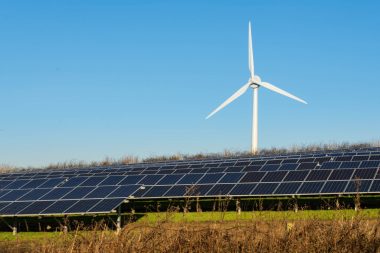
Solar panels and a wind turbine
Science and Technology:
¶ “‘Hothouse Earth’ risks even if CO2 emissions slashed” • We could soon cross a threshold leading to boiling hot temperatures and towering seas in the centuries to come, researchers believe. Even if countries succeed in meeting their CO2 targets, we could still set off irreversible changes. Their study shows this could happen if global warming is only 2° C. [BBC]
¶ “Climate change driven by humans made heat wave ‘twice as likely'” • Climate change caused by human activities made the current European heat wave more than twice as likely to occur, say scientists. Their preliminary report found that the “signal of climate change is unambiguous,” in this summer’s heat. The heat wave in the Arctic is unprecedented. [BBC]

Reservoir in the UK (Getty Image)
World:
¶ “Pope urges action on clean energy” • Pope Francis has said climate change is a challenge of “epochal proportions” and that the world must convert to clean fuel. “Civilisation requires energy, but energy use must not destroy civilisation,” he said. He was speaking to a group of oil company executives at the end of a two-day conference in the Vatican. [BBC]
¶ “China Installs 24.3 Gigawatts In First Half Of 2018” • China’s National Energy Administration announced last week that the country installed a total of 24.3 GW worth of new solar capacity throughout the first half of the year, made up of only 12.6 GW worth of utility-scale solar but an impressive 12.24 GW worth of distributed solar. [CleanTechnica]

Solar array over water
¶ “Senvion signs 205 MW wind energy project in Chile” • Senvion signed a conditional contract with GPG and Grupo Ibereólica Renovables to supply 89 wind turbines with a total wind power capacity of 204.7 MW for the Cabo Leones II wind farm in the Atacama region in Chile. It is Senvion’s largest project in the country. Installation will start in 2020. [REVE]
¶ “Scots bed down at Riffgrund 2” • Attollo Offshore, a Scottish outfit, deployed an accommodation vessel at Orsted’s 450-MW Borkum Riffgrund 2 offshore wind farm in the German North Sea. The vessel will provide accommodation and construction support for connecting and commissioning the project’s high voltage substation, Attollo said. [reNews]

Jack-up vessel (Image: Attollo Offshore)
¶ “Enel signs deal to build €1.2 billion wind farms in South Africa” • Enel has reached financial close on a fleet of new South African wind farms. The wind farms will provide South Africa with 700 MW of renewable energy capacity. Enel put up €230 million of its own money and secured €950 million in financing in a deal with Absa and Nedbank. [Climate Action Programme]
¶ “Germany Bulldozes Old Villages For Coal Despite Lower Emissions Goals” • Germany enjoys a reputation as a pioneer of clean energy. But centuries-old villages across the country are being bulldozed to make way to mine brown coal. Protestors are trying to save the 800-year-old village of Pödelwitz, with its medieval timber-framed buildings. [NPR]

Bulldozing medieval villages for this (Martin Meissner | AP)
US:
¶ “GTM Research Predicts More Battery Storage, Lower Prices For Residential Solar” • A study from GTM Research predicts that in five years, 90% of residential solar systems will include battery storage. In its most recent industry analysis, it goes on to predict the cost of residential solar will continue to drop from $2.95 per watt to $2.00 per watt by 2023. [CleanTechnica]
¶ “California wildfire declared ‘largest in state’s history'” • The Mendocino Complex Fire has grown to become the largest active wildfire in the history of California, officials said. The fires have spread rapidly in recent days to burn 283,800 acres. Governor Jerry Brown has spoken of devastating wildfires fuelled by climate change as “the new normal.” [BBC]

California firefighters (Reuters image)
¶ “Kona Brewing Company Signs PPA for Solar-Plus-Battery Storage” • Kona Brewing Co signed a 20-year power purchase agreement with EnSync, Inc and a subsidiary to build a solar-plus-battery system for a new brewery being built in Kailua-Kona, Hawaii. The system is expected to meet a quarter of the brewery’s electricity needs. [Energy Manager Today]
¶ “How Wyoming Wind Farms Help Idaho Replace Coal” • Idaho is in a bit of a pickle when it comes to energy security, but a new development hints at a way out. State regulators approved a $2 billion, 1,150-MW group of four new wind farms that can take Idaho out of its wind energy doldrums and help stabilize weaknesses in its electricity plan. [CleanTechnica]
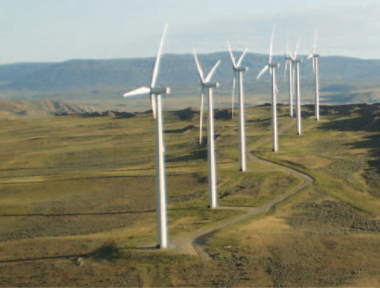
Wind farm
¶ “Maui Electric Establishes Local Partnerships to Stabilize Grid” • Maui Electric Company, along with commercial and industrial customers, filled the current capacity of its expanded Fast Demand Response program this month. The program is set up to help businesses save on their electric bills and maintain grid stability with renewable resources. [Maui Now]
¶ “SC electric rates to drop Tuesday after judge denies SCE&G bid to block 15-percent cut” • A federal judge allowed a temporary rate cut opposed by utility SCE&G to take effect in South Carolina. The legal issue started when SCE&G abandoned construction of two new nuclear reactors after collecting ratepayer money to build the reactors. [The State]
geoharvey is free and without ads.
 geoharvey is not tax-deductible.
Posted in nuclear power, renewable power, solar, wind | Leave a Comment »
Tags: nuclear, nuclear power, renewable power, solar power, wind power
August 6, 2018
Opinion:
¶ “What should be India’s priority: Energy security or ‘America first’?” • Speculation is rife that oil imports from Iran could slow down from August when some US sanctions against Tehran take effect. However, for now, there is reason to cheer for those who want to see India stand its ground and refuse to buckle under the US pressure. [Modern Diplomacy]

Oil pump jacks
¶ “Sub-zero power prices: traditional power plants battle a problem South Africans will envy” • Wind and solar farms are sprouting up in more areas, pushing power prices to zero or even below more often in more places. That is adding to headaches for generators from NRG Energy in California to RWE in Germany and Origin Energy in Australia. [Business Day]
Science and Technology:
¶ “Fusion start-ups hope to revolutionize energy in the coming decades” • A group of start-up companies hopes to capitalize on nuclear fusion to turn abundant fuels into carbon-neutral energy. They want to commercialize fusion by the 2030s to sell energy and address climate change. [Chemical & Engineering News] (Half of the fuel is tritium, a synthetic isotope. GHH)

General Fusion’s main reactor (General Fusion image)
World:
¶ “LGUs going green, rejecting coal projects” • More Philippine local government units (LGUs) are likely to turn their backs on coal with environmental and climate-justice advocates predicting a shift toward renewable energy and sustainable development. Over P1 trillion ($19 billion) of coal plants in the pipeline could become stranded assets. [Business Mirror]
¶ “Siemens Gamesa, Van Oord awarded €500 million Dutch wind farm contract” • Spanish wind turbine maker Siemens Gamesa was awarded a €500 million contract in the Netherlands, in partnership with Dutch marine contractor Van Oord. The 380-MW wind farm is to be built on Ijselmeer lake. It is expected to power around 30,000 households. [Energy Digital]
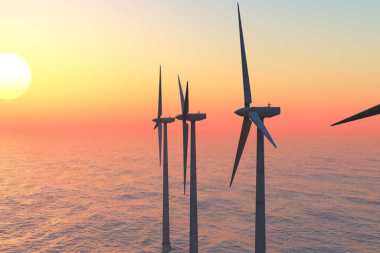
Offshore wind at sunset
¶ “World’s first thermal battery plant to be unveiled in Andhra Pradesh today” • The world’s first-ever facility to create thermal batteries is being inaugurated in Andhra Pradesh, ANI reported. The thermal batteries will be manufactured by Bharat Energy Storage Technology Private Limited. They are expected to reduce dependence on fossil fuels. [The Indian Express]
¶ “World now has 1 TW of wind and solar capacity, 2 TW expected in 2023” • The global wind and solar power capacity has reached 1 TW at the end of June and is expected to double in five years, Bloomberg New Energy Finance said. The 1,013 GW of currently installed capacity is almost equally divided between wind and solar. [Renewables Now]

Wind and solar together (Photo: Gerry Machen)
¶ “Clean power surges recast energy mix” • State Grid, China’s main power supplier that runs the majority of the nation’s electricity distribution networks, saw its new-energy power generation reach 187.1 billion kWh during the first five months of this year, a year-on-year increase of 41%. This comes as China is reducing greenhouse gas emissions. [China.org.cn]
Australia:
¶ “Australia’s Turnbull: ‘Now we are the land of droughts'” • Prime Minister Malcolm Turnbull warned that Australia has become a “land of drought.” It is still winter, but 99% of New South Wales, which is Australia’s most populous state and provides around a quarter of the country’s agricultural output, is currently going through a drought. [BBC]

New South Wales (Reuters)
¶ “Energy stalemate deepens as governments dig in over climate action” • The Australian government says the National Energy Guarantee (NEG) will cut both costs and emissions. Critics say it will drive up power prices, stymie investment in renewables, and do little for the climate. The energy ministers must be unanimous to adopt it. [The Sydney Morning Herald]
¶ “Global wind energy giants blast weak emissions target in national plan” • Two of the world’s biggest wind turbine makers, GE and Goldwind, have weighed in against the NEG. They are calling for a more ambitious target because it may leave the electricity sector contributing only a tiny portion of Australia’s Paris climate goal. [The Sydney Morning Herald]
¶ “Most Australians want more renewables to help lower power prices – poll” • Over 70% of Australians want the government to set a high renewable energy target to put downward pressure on power prices, a ReachTel poll said. The poll was released as environmentalists are pressuring state governments to reject the NEG. [The Guardian]
US:
¶ “Facebook data center in Oregon to be supported by renewable energy” • A Facebook data center in Oregon is to be supported by 100% solar power under a new partnership with Pacific Power. The collaboration will see 437 MW of new solar power developments, including two projects in the Prineville area, Pacific Power said in a statement. [Parker City News]
¶ “Facebook likes clean energy as corporate purchasing sets record” • Still trying to recover from the Cambridge Analytica scandal, Facebook is the world’s biggest corporate buyer of renewable energy for 2018. BNEF figures show the company has already secured 1.1 GW of green power this year, leading record corporate purchases. [pv magazine International]
¶ “Renewable Jobs Goal in Doubt as Solar Jobs Decline” • Rhode Island’s green-energy industry is slowing down. Jobs grew 3.6% in 2017, after an increase of 11% in 2016 and 40% in 2015. The 561-job increase casts doubt on Gov Gina Raimondo’s goal of achieving 20,000 “clean-tech” jobs by 2020. As of the end of 2017, the sector had 15,866 jobs. [ecoRI news]
geoharvey is free and without ads.
geoharvey is not tax-deductible.
Posted in nuclear power, renewable power, solar, wind | Leave a Comment »
Tags: nuclear, nuclear power, renewable power, solar power, wind power
August 5, 2018
Opinion:
¶ “Our climate plans are in pieces as killer summer shreds records” • Deadly fires have scorched swaths of the Northern Hemisphere this summer, from California to Arctic Sweden and down to Greece on the sunny Mediterranean. Drought in Europe has turned verdant land barren, while people in Japan and Korea are dying from record-breaking heat. [CNN]

California wildfire
¶ “A high-stakes debate looms on wildfire costs” • A raging debate is emerging over who should pay for the damage of California wildfires. PG&E and other utilities say it is unfair to make them pay for damage caused by power equipment, unless they were negligent. Under the present rules, utilities are on the hook regardless of fault. [Santa Rosa Press Democrat]
World:
¶ “How Investment in Renewable Energy Can Reduce Poverty in Zambia” • In the past, 98% of Zambia’s electricity came from hydro plants, but with a continuing drought, energy industry experts advise hydroelectric-reliant countries like Zambia to invest in alternative energy. The Zambian government has responded to the crisis with a number of initiatives. [Borgen Project]

Rooftop solar system in Zambia
¶ “India’s Renewable Investments Near $20 Billion” • For the first time in history, investing in India’s renewable energy sector surpassed that of traditional fossil fuel-based power production. India achieved this feat in 2017, according to the recent numbers released in the International Energy Agency’s World Energy Investment 2018 report. [OilPrice.com]
¶ “Conservative MPs who called for onshore wind ban out of step with constituents, poll reveals” • Three years ago, 79 Conservative MPs signed an open letter in which they called for a block on new onshore developments in England. New polling for 10:10 Climate Action suggests that nearly 75% of their constituents disagree with them. [The Independent]
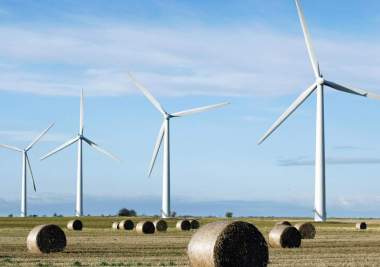
Wind farm (Adrian Dennis | AFP | Getty Images)
¶ “New efforts at Edmonton Heritage Festival aim to make it more eco-friendly” • Thousands of people are expected to pass through Edmonton’s Heritage Festival this weekend and organizers are stepping up efforts to reduce the event’s carbon footprint. A large solar array with 42 modules was set up to power the newcomers tent at the festival. [Globalnews.ca]
¶ “Hot weather forces 4 French nuclear reactors to shut down” • Four French nuclear reactors in three power plants near the Rhine and the Rhone Rivers have had to be temporarily shut down. EDF said this was done to avoid overheating the rivers. Nuclear power plants use water from the rivers to cool their reactors, but this heats the rivers. [WTNH.com]
US:
¶ “11 GW of Texas solar would complement existing wind power” • A study by UT-Austin finds that 11 GW of solar power would be the optimal capacity to complement existing wind generation in meeting electricity demand of Texas throughout the year. While the results reflect a carbon price scenario, they may still provide near-term guidance. [pv magazine USA]
¶ “Alliant Energy will eliminate coal from energy mix by 2050” • Alliant Energy says it will eliminate coal from its energy mix by 2050. The company also has a goal to cut carbon emissions by 80%. While the Paris Accord calls for reducing carbon 32% below 2005 levels by 2030, Alliant Energy’s plans enable a 40% reduction by that time. [REVE]

Power lines
¶ “AG Sides with Power-Plant Opponents in Water Case” • Rhode Island’s attorney general is supporting a court case that challenges the proposed Burrillville power plant. He filed an amicus brief, or letter of support, saying the town of Johnston is not allowed to sell water it buys from Providence to the proposed Clear River Energy Center. [ecoRI news]
¶ “Solar powering major portion of Ogden Rescue Mission” • In Utah, officials at the Ogden Rescue Mission say a PV system there will free up money to help Ogden’s homeless better. Work has been completed on a 131-panel rooftop solar array at the mission. Officials say it will help the organization save more than $6,000 a year on energy costs. [Standard-Examiner]

Ogden Rescue Mission PVs (Matt Herp | Standard-Examiner)
¶ “New solar farm to locate in Edgecombe” • Invenergy, which is based in Chicago, will be constructing a $100-million-plus solar farm in North Carolina. Reportedly, development and permitting are ongoing for the 600-acres Edgecombe Solar Farm. It is expected to bring $2.5 million in new tax revenue to Edgecombe County. [Rocky Mount Telegram]
¶ “Developer Franklin L. Haney reportedly offered $10 million to Trump attorney to help secure federal loan for Bellefonte” • The president’s former personal attorney, Michael Cohen, was offered $10 million to secure $5 billion in federal loan guarantees for development of a former TVA nuclear plant, The Wall Street Journal reported. [Chattanooga Times Free Press]
geoharvey is free and without ads.
geoharvey is not tax-deductible.
Posted in nuclear power, renewable power, solar, wind | Leave a Comment »
Tags: nuclear, nuclear power, renewable power, solar power, wind power
August 4, 2018
World:
¶ “Europe heat wave: Side effects felt by zoo animals, sprout farmers and more” • Europe could break an all-time temperature record in the next few days. And parts of southern Spain and Portugal are forecast to go above 47° C (116.6° F), surpassing national records. Here are photos of some of the things the heat wave has caused in Europe. [BBC]

Kebnekaise glacier, no longer the highest point in Sweden (AFP)
¶ “Germany’s power system weathers heat wave despite fossil plant curbs” • As Germany is in an extended heat wave and drought, with temperatures rising up to 40° C, some of its coal and nuclear power stations struggle to keep operations running because of cooling problems. But wind and solar power are meeting demand. [Clean Energy Wire]
¶ “Lloyds Banking Group Moves To Cease Financing New Coal-Fired Power” • Lloyds Banking Group announced new policies to solidify its support for the transition to a low-carbon economy by ceasing new funding for coal-fired power stations or thermal coal mines. This is a continuation of climate policies Lloyds already has in place. [CleanTechnica]

Lloyds Bank
¶ “Corporate Giants Are Buying so Much Clean Power This Year They Already Broke 2017’s Record” • Non-utility companies and agencies, acting to curb climate change have agreed to buy 7.2 GW of clean energy worldwide so far this year, already shattering the record of 5.4 GW for all of 2017, according to a report from Bloomberg NEF. [Bloomberg]
¶ “IFC-GAIA Partnership To Boost Africa’s Renewable Energy Development” • According to reports, the International Finance Corporation announced its partnership with Gaia Energy. The new platform will begin with a pipeline of 22 projects in nine countries in Africa and is expected to generate more than 3 GW of clean energy. [Technology Magazine]
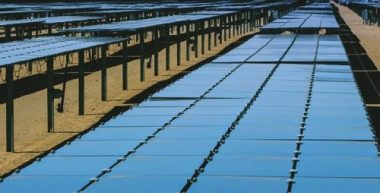
Solar array
¶ “Subsidy-Free Solar Plant Inaugurated in Portugal” • A WElink Energy’s solar plant in Portugal has been inaugurated. The plant’s construction began in July 2017, and it has been in operation since last June. It is the first solar plant on the Iberian Peninsula, and one of the largest in Europe, to be developed without any public subsidies. [Renewable Energy Magazine]
¶ “Enel and Carnegie Clean Energy to Collaborate on Wave Energy Generator Development” • Australian developer Carnegie Clean Energy Limited and Enel Green Power signed an agreement for developing CCE’s CETO 6 wave energy generator. They will work together to identify and develop opportunities for the CETO 6 system. [Renewable Energy Magazine]

Wave energy system
¶ “UK power market transition: Big Six under pressure” • The UK’s Big Six energy firms’ market share of domestic customers is dwindling and fell to a record low in 2017, as smaller rivals lured customers away with cheaper deals. The six largest electricity suppliers’ market share dropped to 78% at the end of 2017 from 85% a year earlier. [Power Technology]
¶ “Drought-hit Queensland community welcomes ground-breaking renewable energy park” • A hybrid wind, solar, and battery storage facility, the first of its kind in Australia, is being built in Queensland. The Kennedy Energy Park will combine 12 wind turbines, 55,000 solar panels and 4 MWh of battery storage, to deliver an average of 50 MW. [ABC News]
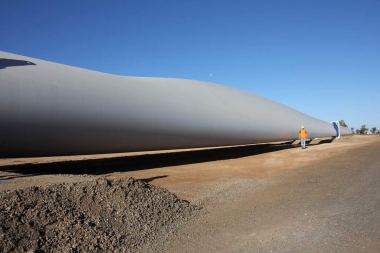
Wind turbine blade (Nathalie Fernbach | ABC North Queensland)
US:
¶ “New York deals setback to $900M power plant in Joe Percoco corruption case” • New York’s environmental regulators dealt a setback to a controversial $900 million power plant set to open within weeks. The Department of Environmental Conservation denied a key air-quality permit renewal application for the gas-powered plant. [The Journal News | LoHud.com]
¶ “California’s EV Growth Benefits Outweigh Energy System Costs, Report Says” • Next 10, a nonprofit, nonpartisan think tank, took a close look at how California’s grid might be challenged or helped by the rise of EVs. It found that with rapid EV growth, the energy system will require upgrades, but the costs are likely to be lower than the benefits. [Energy Manager Today]

Charging station (Jimmy Baikovicius | Flickr Creative Commons)
¶ “Cactus Flats Wind Facility in Texas is Operational” • Southern Power announced that the 148-MW Cactus Flats Wind Facility in Concho County, Texas is operational. The electric energy and associated renewable energy credits are being sold under two separate power purchase agreements with General Mills and General Motors. [PR Newswire]
¶ “Northam announces Coastal Virginia offshore wind energy demonstration project” • Virginia Governor Ralph Northam announced that Dominion Energy is filing for State Corporation Commission approval to build an offshore wind demonstration project. Dominion Energy is partnering with Ørsted on the two-turbine project. [REVE]

Offshore windpower
¶ “Coal piles up at power plant as cheap natural gas wrecks Eastern Kentucky’s economy” • Kentucky Power’s Mitchell plant could not generate electricity as cheaply as facilities fueled by natural gas, so the regional grid manager has ordered power from it less often. It has a long-term contract to buy coal, which it wants to sell. [Lexington Herald Leader]
¶ “Construction in full swing at 221-MW wind project of Pattern Dev” • Pattern Development said today that construction on the 221-MW Grady Wind project in Curry County, New Mexico is getting fully underway. Grady Wind is expected to generate enough electricity to provide for the annual needs of almost 90,000 New Mexico homes. [Renewables Now]
geoharvey is free and without ads.
geoharvey is not tax-deductible.
Posted in nuclear power, renewable power, solar, wind | Leave a Comment »
Tags: nuclear, nuclear power, renewable power, solar power, wind power
August 3, 2018
Opinion:
¶ “Reconciling energy and Indigenous rights” • In 2007, Canada was one of four countries to vote against the UN Declaration on the Rights of Indigenous Peoples. It signed in 2010, but has made little progress on the issue. Because it prioritizes oil sands, mining, fracking, and pipelines over indigenous rights, all its people suffer consequences. [Pique Newsmagazine]

Canadian pipeline (Shutterstock image)
¶ “More Signs That Renewable Energy Is Winning” • As the US administration rolls back environmental regulations, many observers have predicted that the trend to clean power would nevertheless continue. They were right. States are supporting clean power, corporate buyers are moving to wind and solar, and political bias is beginning to wilt. [CleanTechnica]
World:
¶ “More than 5,500 British churches to convert to renewable energy” • Over 5,500 British churches have decided to convert to renewable energy to fight climate change, as the greatest challenge of the time. They are not only Church of England congregations, but also many of the UK’s Catholic, Baptist, Methodist, Quaker, and Salvation Army. [Renewable Energy Magazine]

Salisbury Cathedral (Courtesy of Andrew Dunn)
¶ “Brett Martin sources power from 6.42-MWp Lightsource BP solar farm” • Specialist plastic products provider Brett Martin, based in Northern Ireland, said it is sourcing its power from a 6.42-MW solar system funded and developed by Lightsource BP. The installation is hard-wired directly into Brett Martin’s facility located nearby. [Renewables Now]
¶ “Westinghouse purchase pulls it out of bankruptcy” • Toronto-based Brookfield Asset Management finalised its acquisition of nuclear contractor Westinghouse Electric Company from Toshiba. The move marks a financial revival from Chapter 11 bankruptcy protection for Westinghouse, as a restructured company. [Power Technology]

Westinghouse sign in New York (Credit: Richard Huppertz)
¶ “Canada Envisions Small Nuclear Reactors Producing Power And Hydrogen In Remote Towns” • The federally owned Canadian Nuclear Laboratories hopes to prove the viability of small modular reactors by 2026 and use them not only to produce power, but to produce hydrogen that can decarbonize Canada’s transportation sector. [Forbes]
US:
¶ “Trump Administration Unveils Its Plan to Relax Car Pollution Rules” • The Trump administration put forth its long-awaited proposal to freeze antipollution and fuel-efficiency standards for cars, significantly weakening one of President Barack Obama’s signature policies to combat global warming. The change is a challenge to states’ rights. [New York Times]

Sacramento (Rich Pedroncelli | AP)
¶ “These States Are Going to War Over Trump Eliminating Car Emissions Rules” • After the proposal to cut Obama-era fuel economy standards, twenty state attorneys general vowed to act. A joint statement says, “The Administration’s proposal to weaken these rules will cause the American people to breathe dirtier air and pay higher prices at the pump.” [Mother Jones]
¶ “Invenergy dishes out Texas dose” • Novartis is to supply 100 MW of electricity from its Santa Rita East wind farm in Texas to pharmaceutical company Novartis under a 12-year virtual power purchase agreement. The agreement will see the power delivered to Electric Reliability Council of Texas and help reduce Novartis’s greenhouse gas emissions. [reNews]

Wind farm (Invenergy image)
¶ “CleanChoice Offers New Wind Program In New York, Illinois” • CleanChoice Energy, a renewable energy company that offers clean electricity to customers across the country, has launched a new plan that allows residents and businesses of New York and Illinois to purchase 100% of their energy from in-state wind projects. [North American Windpower]
¶ “PUC Signs Off On Molokai Renewable Energy Project” • The Hawaii Public Utilities Commission cleared the way for a large-scare renewable energy project on Molokai. It approved a power purchase agreement for the island’s first grid-scale solar and battery energy storage project, a move that should reduce customer power rates. [Honolulu Civil Beat]

Molokai (Cory Lum | Civil Beat)
¶ “Tesla Energy – Rapid Growth In Solar Roof & Energy Storage Demand Outstripping Supply” • Tesla’s shareholder letter and conference call spoke to the status of Tesla energy products. As utilities, energy companies, commercial entities, and homeowners quickly realize the benefits of battery storage, the picture will look increasingly brighter. [CleanTechnica]
¶ “Alternative Energy Program Could Help State’s Utilities Meet Renewable Goals 10 Years Early” • A report from researchers at UCLA’s Luskin Center for Innovation studied how community choice aggregation impacts California’s power grid. It found that at the current rate of adoption, community choice could serve a majority of consumers within a decade. [KPBS]
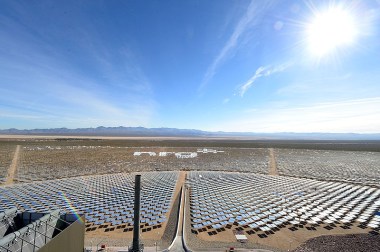
Ivanpah solar station (Credit: Associated Press)
¶ “New wind farm in Randolph County will help power Facebook data center in Ohio” • A wind farm in eastern Indiana is expected to be used by Facebook for power at its Midwest data center. More than 50 turbines are to be built and installed in Randolph County by alternative energy company EDP Renewables North America. [Palladium-Item]
¶ “Judge keeps rate cuts for failed South Carolina nuclear project in limbo” • A federal judge refused to end a lawsuit by South Carolina Electric Gas that seeks to stop a temporary rate cut for customers who continue to pay for the utility’s abandoned nuclear reactor project. The 15% rate cut was set to begin appearing on SCE&G bills. [Charleston Post Courier]
geoharvey is free and without ads.
geoharvey is not tax-deductible.
Posted in nuclear power, renewable power, solar, wind | Leave a Comment »
Tags: nuclear, nuclear power, renewable power, solar power, wind power
August 2, 2018
Opinion:
¶ “NY Times Magazine Devotes Entire Issue To One Devastating Story On Climate Change” • This Sunday’s NY Times Magazine is entirely devoted to a single devastating story by Nathaniel Rich called “Losing Earth: The Decade We Almost Stopped Climate Change.” Now available online, it is another profoundly upsetting reminder of what is going wrong. [Gothamist]

California wildfire (John G Mabanglo | EPA-EFE | Shutterstock)
Science and Technology:
¶ “Climate change-driven droughts are getting hotter, study finds” • Dry months are getting hotter in large parts of the US. In a study, researchers report that temperatures during droughts have been rising faster than in average climates in recent decades, and they point to concurrent changes in atmospheric water vapor as a driver of the surge. [Science Daily]
¶ “Grim report card for planet ranks 2017 one of hottest years in recorded history” • Last year was one of the hottest in recorded history, according to a new study released by the American Meteorological Society. The State of the Climate in 2017 report is compelling evidence that our planet is warming faster than at any point in modern history. [CNN]
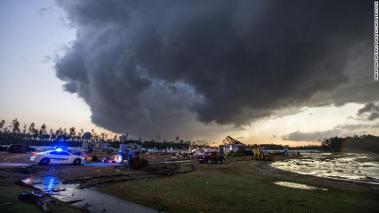
Violent winter storm
World:
¶ “Italy’s Enel expects to exceed 2020 renewable addition target” • Italy’s largest power company Enel said it expects to beat its own renewable addition targets by 2020, as it pivots its generating model away from coal and grows its renewable footprint. Enel’s CEO said 90% of its 7.8-GW target of new additions for 2020 is already secured. [S&P Global Platts]
¶ “First English AD plant certified under ADCS performance scheme” • Bore Hill Farm Biodigester is the first English anaerobic digestion plant to receive a new certification recognising good operational, environmental, and health and safety performance. The plant processes food waste to create fertiliser, heat, and electricity. [Renewable Energy Magazine]

AD plant (Anaerobic Digestion & Bioresources Association image)
¶ “NRA OKs plan to bury radioactive waste from nuke plant decommissioning for 100,000 years” • Japan’s Nuclear Regulation Authority plans to require that highly radioactive waste from nuclear reactor decommissioning be buried underground at least 70 meters deep for about 100,000 years until the waste becomes no longer hazardous. [The Mainichi]
¶ “India just pushed its booming solar industry into chaos” • The Indian government notified a 25% safeguard duty on imported solar panels for two years. The duty is meant to protect domestic manufacturers. It is now bound to hike solar power tariffs in India since around 90% of panels the sector uses are made in China and Malaysia. [Quartz]
Indian Solar array
US:
¶ “Renewable energy provides more electricity than nuclear power in over half of US states” • Analysis by the SUN DAY Campaign of state-by-state data in the EIA’s “Electric Power Monthly” report reveals that renewable sources now provide more electric power than nuclear reactors in over half the states and more electricity than coal in a third. [Solar Power World]
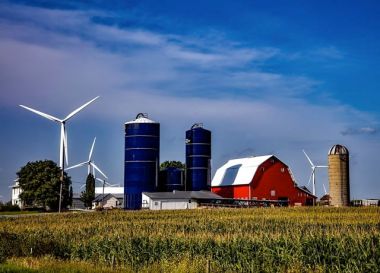
¶ “Plum deal for US food giant” • Lincoln Clean Energy is to sell electricity to US food company JM Smucker from the 230-MW Plum Creek wind farm in Nebraska. Under the terms of the long-term power purchase agreement, JM Smucker will buy 60 MW from the project starting in 2020. The deal will provide for about 50% of the company’s power. [reNews]
Wind power on a farm (Pixabay image)
¶ “Trump’s Pro-Science Pick To Lead White House Science Office” • After a long delay, President Trump announced his nomination for the top White House science advisor, meteorologist Kelvin Droegemeier. Droegemeier is an expert in extreme weather events and has served on the faculty at the University of Oklahoma in Norman for 33 years. [Forbes]
¶ “Supreme Court Says Kids Can Sue Trump Over Climate Change” • The Supreme Court rejected a Trump administration effort to stop a climate change lawsuit filed by 21 youth plaintiffs, who argue that the US government violated their constitutional rights by allowing fossil fuel production to continue, despite knowing its effects on the planet. [HuffPost]

Youth plaintiffs (Robin Loznak | Our Childrens Trust)
¶ “DC Circuit tosses challenge to ISO-NE renewable energy market rules” • The DC Circuit Court of Appeals upheld ISO-New England market rules that enhance renewable energy, rebuking a challenge from natural gas generators. The ruling is a win for state policies that seek to influence the generation mix in wholesale power markets. [Utility DIve]
¶ “How can the US reach the cutting edge of offshore wind R&D? DOE seeks input” • The DOE is seeking input on how to put the nation at the cutting edge of wind power development, according to two Requests for Information published in the Federal Register. This comes despite the president’s apparent aversion to wind energy development. [Utility Dive]

Offshore wind turbines
¶ “Offshore wind prices look competitive” • Vineyard Wind, the developer of the first major offshore wind farm is promising to deliver wholesale power to Massachusetts at prices that are far below what Cape Wind was offering nearly a decade ago and not much more expensive than hydro-electricity just procured from Canada. [CommonWealth magazine]
¶ “Entergy to sell Pilgrim, Palisades to JV decommissioning company” • Entergy’s Pilgrim nuclear reactor in Massachusetts and Palisades nuclear reactor in Michigan will be bought and decommissioned decades sooner than previously planned by a joint venture of Holtec International and SNC-Lavalin, a joint statement said. [S&P Global Platts]
geoharvey is free and without ads.
geoharvey is not tax-deductible.
Posted in nuclear power, renewable power, solar, wind | Leave a Comment »
Tags: nuclear, nuclear power, renewable power, solar power, wind power
August 1, 2018
Opinion:
¶ “Clearly, the climate crisis is upon us” • This summer’s sizzling temperatures, savage droughts, raging wildfires, floods and acute water shortages – from Japan to the Arctic Circle, California to Greece – are surely evidence beyond any reasonable doubt that the climate crisis is upon us now. This is the new normal – until it gets worse. [CNN]

Fighting a wildfire
¶ “Rising seas could knock out the internet – and sooner than scientists thought” • From severe coastal flooding to unusually destructive hurricanes, climate change-related sea level rise is being blamed for some big environmental ills. Now comes a new worry: Rising seas could flood the underground cables that carry the internet. [NBCNews.com]
Science and Technology:
¶ “Demand For Biodegradable Plastics Expected To Surge” • Biodegradable plastics is a double-digit growth industry coming into its own from increased regulations and bans against plastic bags and other single-use plastic items. Concerns about plastic waste in the environment are contributing to worldwide demand for biodegradable plastics. [CleanTechnica]

Biodegradable plastic tableware
¶ “Cobalt-Free Battery Technology Under Development By Conamix” • The world could face cobalt shortages in several years, according to Bloomberg. Also, there are numerous ethical issues with cobalt. But cobalt is in the lithium batteries, and has been important. Conamix, a New York startup, is developing cobalt-free batteries. [CleanTechnica]
World:
¶ “UK Clean Electricity Surpassed 50% In 2017 As Renewables Soar” • The latest figures published by the UK Government show that renewable and clean energy sources continue to skyrocket, hitting 29.3% and 50.1% respectively, and led by another strong year for wind energy generation. Clean energy is defined as renewables plus nuclear. [CleanTechnica]

Offshore windpower
¶ “Africa To Add 30 GW Of Wind By 2027” • A report published by Market Analyst Sohaib Malik from MAKE Consulting focusing on the African wind energy sector forecasts capacity additions worth 30 GW between 2018 and 2027, led by South Africa, Egypt, and Morocco, which will account for more than two-thirds of the new capacity. [CleanTechnica]
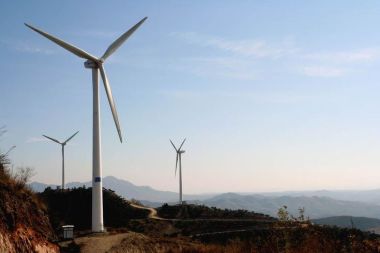
¶ “China Set To Exceed 210 Gigawatt Wind Power Target By 2020” • China’s recently-announced switch from a Feed-in Tariff scheme to a competitive auction mechanism is expected to help the country surpass its national cumulative wind power target of 210 GW by 2020 and install more than 20 GW per year on average over the next 10 years. [CleanTechnica]
Wind farm in China
¶ “Record-Breaking Solar and Wind Farms Are Emerging from the Sands of Egypt” • The Egyptian government wants to get 42% of its energy sector powered by renewables by 2025. One project is by a local startup. Once it’s completed, the Benban Solar Park will be the largest solar plant in the world, according to the Los Angeles Times. [Inverse]
¶ “Island crofters lay CfD marker” • Crofters on Stornoway are planning to bid four community-owned island wind farms, ranging from 5 MW to 40 MW, into the UK’s upcoming Contracts for Difference auction. Four townships in the Outer Hebrides will seek capacity under the remote island wind element of the CfD round due before next May. [reNews]

Croft in the Hebrides (Credit: Mi9)
¶ “ESB full modelling shows wind and solar at standstill from 2022 with NEG” • The modelling to be released to support Australia’s National Energy Guarantee will show that the Energy Security Board assumes that the construction of wind and solar projects will come to a complete standstill from 2022 due to the low emissions reduction target. [RenewEconomy]
US:
¶ “Massachusetts passes compromise clean energy bill” • A compromise clean energy bill was passed by Massachusetts lawmakers, though it is less ambitious than the bill the state Senate passed in June. The legislation, which is now going to the governor’s desk, “falls far short” of the Senate’s version, the Sierra Club said. [Renewables Now]
¶ “California, Hawaii Lead Surge In Residential Battery Storage In Q1” • A report from Greentech Media and the Energy Storage Association finds residential battery storage in the US surged in Q1 of 2018. In total, 36 MWh of behind the meter residential storage were installed, equal to the amount installed in the previous three quarters combined. [CleanTechnica]
¶ “Large Solar-Plus-Storage Projects Planned Near Las Vegas” • Two planned solar projects in Nevada would be the first in that state to include battery storage, part of an increasing trend. The proposed Gemini Solar Project is for 690 MW of PV capacity and up to 200 MW of storage. Yellow Pine Solar Project is to have capacities totalling 500 MW. [Power magazine]

Solar array in Nevada (Photo: USAF, Airman 1st
Class Nadine Y. Barclay, Wikimedia Commons)
¶ “Judge rebuffs utility, won’t throw out all clean-energy-drive petitions” • Arizonans cannot be blocked from voting on a renewable energy proposal solely because organizers might have violated state election law, a judge ruled. But the state’s largest electric company may still try to block the Clean Energy for a Healthy Arizona initiative. [Arizona Daily Star]
¶ “Nuclear Operators Scramble To Make Reactors Flexible Enough For New Energy Economy” • Nuclear operators are trying to figure out how to deal with the inflexible nature of nuclear reactors, which are optimized to run at maximum capacity. Some are considering using excess power to desalinate brackish water or to make hydrogen. [Forbes]
geoharvey is free and without ads.
geoharvey is not tax-deductible.
Posted in nuclear power, renewable power, solar, wind | Leave a Comment »
Tags: nuclear, nuclear power, renewable power, solar power, wind power
July 31, 2018
Opinion:
¶ “Nuclear power is ‘ridiculously expensive’ compared to solar, says longtime nuclear advocate” • A longtime nuclear industry advocate and former head of the International Energy Agency now says nuclear is too expensive compared to solar. Meanwhile, Bloomberg has repeatedly shown existing US nuclear power plants are “bleeding cash.” [ThinkProgress]

Cooling towers at a nuclear plant (Sean Gallup | Getty Images)
¶ “Australia renewables boom rolls on, but NEG shadow looms” • The scale of Australia’s large-scale renewable energy construction boom can be seen in a jaw-dropping chart, unveiled at the Australian Clean Energy Summit. The chief of the Clean Energy Council said, “Wind and solar is now the lowest-cost generation it is possible to build.” [RenewEconomy]
World:
¶ “The Future Of Electric Aviation Is Developing In Scandinavia” • Norway has just conducted its first successful electric flight under a coordinated initiative to electrify its domestic aviation by 2040. Supported by the government, the project is handled by the state-owned airport operator Avinor, Scandinavian Airlines, Widerøe Airlines, and others. [CleanTechnica]

Oslo Airport
¶ “Repsol, Enagás join forces to produce hydrogen from solar energy” • Two months after announcing its intention to turn to renewables, Spanish oil giant Repsol named of its first technology partner. It will team up with Enagás, a Spanish energy company and European transmission system operator, to produce renewable hydrogen. [pv magazine International]
¶ “Toyota Rolls Out Version 2.0 Of Its Hydrogen Fuel Cell Truck, Dubbed The ‘Beta Truck'” • Toyota unveiled version 2.0 of its hydrogen fuel cell electric Class 8 truck at a seminar at the Center for Automotive Research. The Beta truck will be able to travel more than 300 miles per fill up, an increase from the 200 mile range of the Alpha truck. [CleanTechnica]

Toyota hydrogen fuel cell truck
¶ “Renewables covered 31% of French electricity consumption in Q2” • Renewable energy sources covered 31% of French electricity consumption in second quarter, its highest level since the 1960s, electricity grid operator RTE said. RTE, a unit of state utility EDF, said there had been a sharp increase in French hydropower generation. [ETEnergyworld.com]
Hydropower
¶ “Energy Absolute to seize battery storage market” • A Thai-based renewable energy technology company, Energy Absolute, plans to invest $3 billion in a battery factory, hedging on Southeast Asia’s uptake of electric vehicles and smart grids. As a small first phase, a plant with a production capacity of 1 GWh, is slated to open in Q3 of 2019. [ESI Africa]

Batteries (Stock image)
¶ “EDF curbs nuclear output by 2.5 GW amid cooling issues” • EDF has curtailed the production at four French nuclear reactors by about 2.5 GW due to cooling issues amid an ongoing hot spell, transparency data showed. Daily peak power demand is likely to remain below 55 GW on working days this week, after exceeding 57 GW last week. [Montel]
¶ “Allow nuclear waste disposal under national parks, say MPs” • Highly radioactive nuclear waste could be permanently buried under national parks and areas of outstanding natural beauty. The chairman of a parliamentary committee backing the plan took the view that safety matters should “prevail over environmental concerns in this case.” [The Guardian]

Lake District national park in Cumbria
(Photo: Jonathan Allison | Getty Images)
US:
¶ “Ohio Residents Exercise Community Choice to Bill Themselves for Public Solar” • Residents of Athens, Ohio, passed a carbon fee ballot initiative to add 0.2¢/kWh to rates for Community Choice Aggregation members. The first-of-its-kind carbon fee would support installing PVs on public buildings and provide resources for public investment. [CleanTechnica]
¶ “Solar panel glut is muting effect of Trump tariffs on imports: SunPower” • A steep global decline in the price of solar modules is nearly offsetting the effect of the Trump administration’s 30% tariff on imported panels, the chief executive of SunPower said. The module price has dropped 12% since China reduced internal incentives. [ETEnergyWorld.com]
Solar array
¶ “Fort Collins staff crafting goal for 100% renewable electricity by 2030” • Platte River Power Authority, the electric utility for Fort Collins, Colorado, plans to end use of coal-generated electricity. It projects its delivered electricity will be about 32% renewable in 2018 and about 50% renewable by 2021, after new wind and solar facilities come online. [The Coloradoan]
¶ “Panasonic To Increase Gigafactory Cell Production More Than 30% By End Of 2018” • Panasonic is ramping up its 2170 battery cell production “more than 30%” at the Gigafactory by the end of 2018, Japanese publication Nikkan reported. Panasonic will add battery cell production lines in response to increased demand for Tesla’s Model 3. [CleanTechnica]

Tesla Gigafactory
¶ “GHG worsens just as climate commission releases report” • The Vermont Climate Action report sets forth goals for reducing greenhouse gas emissions and dealing with the effects of climate change. It also contains discouraging news about the rise of GHG emissions in Vermont, which will make achieving ambitious goals challenging. [Vermont Biz]
¶ “sonnen Demonstrates The Power Of Solar + Storage Microgrids In Puerto Rico” • sonnen was one of the early movers to help solve the problems caused by Hurricane Maria in Puerto Rico. It committed to bring 15 microgrid systems to the island. Now the 11th system is finished, with 9 kW of PVs and 24-kWh of batteries in the region of Lares. [CleanTechnica]
geoharvey is free and without ads.
geoharvey is not tax-deductible.
Posted in nuclear power, renewable power, solar, wind | Leave a Comment »
Tags: nuclear, nuclear power, renewable power, solar power, wind power
July 30, 2018
Opinion:
¶ “Alaska Is Offering Entrepreneurs a Huge Renewable Energy Opportunity” • It seems ironic that Alaska, known in the lower 48 for its oil pipeline, would now be promoting alternative energy. But oil prices are down, and the state is in a recession. For one renewable energy entrepreneur, “It’s a great place to prove your concept and get some traction.” [Entrepreneur]

Alaska (Stephan Zirwes | Getty Images)
Science and Technology:
¶ “The EV Safety Advantage” • Electric cars are now known for being quick. They are known for being clean. They are known for being quiet and smooth to drive. However, one of their biggest benefits is something seldom discussed or even acknowledged. Major independent government agencies rate EVs as the safest cars to drive. [CleanTechnica]
World:
¶ “Ørsted’s wind power pivot: the story so far” • In 2017, Ørsted abandoned the oil and gas market, refocusing on becoming a prime player in the burgeoning global wind turbine market. How is it doing? Ørsted’s interim report for the first quarter of 2018 indicated that the period’s operating profits grew 68%, year-on-year. [Power Technology]

Ørsted wind farm off Yorkshire (Courtesy of Ørsted)
¶ “At 62.8 GW, India using just 7% of renewable energy potential” • Economic Times reported that India is using just 7% of the energy it could potentially generate using wind, solar, biomass, and small hydro resources. But capacity is building up and with it the share of renewables in India’s energy mix. It is up from 5.6% in 2015-16 to 8.0% in 2017-18. [SteelGuru]
¶ “China Electric Car Sales Up 77% In June” • EV sales in China were up 77% in July, compared to the same month last year. This is a smaller increase than earlier months this year, which were in triple digits, because China has cut subsidies to vehicles with ranges of less than 150 km. Growth of sales of EVs with longer range is expected to continue. [CleanTechnica]

BAIC EX360
¶ “Six charts show mixed progress for UK renewables” • The latest data from the Department for Business, Energy and Industrial Strategy, shows that coal supplied just 5% of UK energy in 2017, down from 20% only five years earlier. British onshore and offshore wind power rose by 34% last year, compared to 2016, though solar grew only 11%. [Carbon Brief]
¶ “Lekela reaches financial close on Senegal’s first utility-scale wind farm” • Renewable power company Lekela said it has reached financial close on its Taiba N’Diaye wind power project in the West African nation of Senegal. It will be the country’s first wind farm. Its capacity will be almost 160 MW and it will be fully operational in less than two years. [ETEnergyworld.com]

Wind turbines (Christian Hartmann | Reuters)
¶ “CEFC helps deliver 1,100 MW renewables in 2017/18 – says “considerably more work to do”” • A year of record investment by the Australian government’s Clean Energy Finance Corporation has helped deliver ten large-scale solar projects and four wind farms in the past 12 months, a report shows. Their total capacity is 1,100 MW. [RenewEconomy]
¶ “Tender launched for 68-MW wind farm in Russia’s Leningrad region” • Russian Association of Wind Power Industry members are invited to take part in a tender for the design and construction of a 68.4-MW wind project in Leningrad Oblast. WWES Sviritsa launched the competitive selection in an open request for prices without a prequalification process. [Renewables Now]
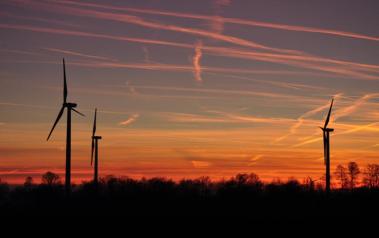
Wind farm (Maret Hosemann, Creative Commons 2.0 Generic)
¶ “Renewables beat fossil fuels, and are getting cheaper” • A study by Bernstein documents the persistent drop in the levelized cost of electricity from renewable generation with projections of future cost potentials. It argues that the cost of wind and solar power is likely to be well below the cost of fossil fuel generation nearly everywhere. [RenewEconomy]
US:
¶ “Latest climate change projections ominous for Iowa” • In 1991, climate scientists believed that climate change in the Midwest would lead to a warmer, wetter climate, including warmer winters and more rain in spring and early summer. They were right. New climate projections for Iowa may make you sweat – and build a dam around your home! [The Gazette]
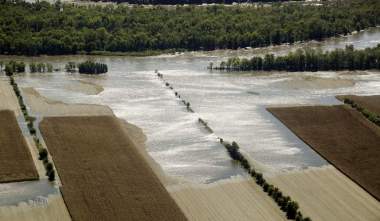
Flooding in Iowa in 2016 (Jim Slosiarek | The Gazette)
¶ “Critics Challenge ‘Fundamental Flaws’ in Energy Department LNG Export Study Draft” • The DOE missed the mark in its draft Liquefied Natural Gas study, ignoring economic costs associated with climate change and the growth of the renewable energy industry, according to public comments filed with the DOE by dozens of environmental groups. [DeSmog]
¶ “The US Is Still The Global Natural Gas King” • Data from the 2018 BP Statistical Review of World Energy show that last year the US maintained its lead as the global natural gas powerhouse. In 2017, the US produced an average of 71.1 billion cubic feet per day of natural gas. That is a 1.0% increase from 2016 production, and about 20% of the world total. [Forbes]

Natural gas delivery in Japan (Tomohiro Ohsumi | Bloomberg)
¶ “California set to spend $3 billion increasing efficiency of Hoover Dam” • The Los Angeles Department of Water and Power has expressed aims to build a pump station and pipeline at the Hoover Dam in order to boost the capacity of the 80-year-old facility with wind and solar energy. The dam operates at about 20% of its potential capacity. [Energy Digital]
¶ “NRC Officials Talk Oyster Creek Decommissioning At Public Hearing” • The NRC held a public hearing for residents of Lacey Township and surrounding municipalities of New Jersey on the shutdown of the nearby Oyster Creek Generating Station. Spent fuel storage and plant decommissioning were among the topics of discussion. [Jersey Shore Online]
geoharvey is free and without ads.
geoharvey is not tax-deductible.
Posted in nuclear power, renewable power, solar, wind | Leave a Comment »
Tags: nuclear, nuclear power, renewable power, solar power, wind power
July 29, 2018
Opinion:
¶ “Hottest Four Years Ever? 2015. 2016. 2017. 2018?” • “The impacts of climate change are no longer subtle,” the director of the Earth System Science Center at Penn State University told CNN. “We are seeing them play out in real time in the form of unprecedented heat waves, floods, droughts and wildfires. And we’ve seen them all this summer.” [Common Dreams]

Carr Fire near Redding, California (Noah Berger | AP)
¶ “Is Japan Finally Turning Away From Coal?” • The country’s dependence on fossil fuels has been growing since the March 2011 Great East Japan Earthquake and consequential Fukushima Daiichi nuclear disaster. However, to their credit, financial institutions in Japan are beginning to catch on to the risks inherent to a national coal addiction. [The Diplomat]
¶ “Benefits of Personal Energy Independence” • The concept of energy independence entered the US national consciousness in the early 1970’s, when a series of embargoes and price hikes at the hands of Arab nations made the unstable nature of reliance on foreign oil obvious. President Nixon promised us we would be energy independent in 10 years. [Mother Earth News]

Solar tracking system
World:
¶ “France, Portugal, Spain agree to build undersea power line” • After a meeting in Lisbon, leaders from the three countries announced a deal to finance construction of a power line nearly 300 kilometres long in the Bay of Biscay linking south-west France to northern Spain. The aim is to integrate electricity links between the Iberian Peninsula and Europe. [RFI]
¶ “Europe May Thrive On Renewable Energy Despite Unpredictable Weather” • Scientists modelled the impact of renewable energy on the electricity sector out to the year 2030 based on 30 years of weather data. The work suggests Europe can comfortably get at least 35% of its electric power from wind and solar energy, regardless of weather. [Irish Tech News]
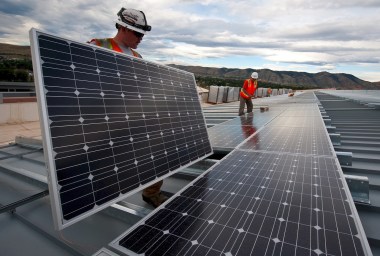
Installing a solar array (skeeze | Pixabay)
¶ “Big boost for Yogi’s UP” • Indian Prime Minister Narendra Modi launched projects involving an investment of ₹60,000 crore ($9.02 billion). The projects materialised after the Uttar Pradesh Investors Summit, which led to investment for renewable energy, infrastructure, power, Information Technology, electronics, and tourism, an official release said. [Financial Express]
¶ “D and G windfarm to power Nestlé” • Nestlé, the world’s largest food and drink company, opened a new wind farm in Dumfries and Galloway, with which it hopes to supply around half of the electricity demands of its operations in the UK and Ireland. The farm’s nine turbines will now produce around 125 GWh of power per annum. [The Scottish Farmer]

Minsca Wind farm in Dumfries and Galloway (Walter Baxter,
Minsca Wind Farm | CC BY-SA 2.0, Wikimedia Commons)
¶ “Uganda becomes the first African country to de-risk small and medium scale renewables” • Uganda is the first African country to sign an agreement with the Regional Liquidity Support Facility. Under the program, RLSF will offer protection to new small and mid-sized renewable energy projects, up to 50 MW, in Sub-Sahara Africa. [IT News Africa]
US:
¶ “Why Maine towns and cities are investing in solar projects” • Moving away from fossil fuel-driven energy feels like the right thing to do, to many residents of Maine communities. But it also is good for a town’s bottom line. Solar projects on rooftops, in closed landfills, and in other places have taken off in many of the state’s municipalities. [Bangor Daily News]

Lincolnville municipal array (Josh Gerritsen | Town of Lincolnville)
¶ “EPA reverses Pruitt-era rule on diesel emissions” • The EPA will now enforce an Obama-era rule that limits diesel truck emissions, reversing one of the final decisions of the Pruitt era. In a memo, acting administrator Wheeler listed problems with Pruitt’s replacement rule, but did not say whether a different replacement was to come. [CNN]
¶ “Tiny Power: Hybrid Microgrid Aids Rural Puerto Rico, Alaskan Arctic” • A hybrid microgrid kit in a shipping container offers a reliable, renewable power source in areas suffering through emergencies. When devastating weather events like Hurricane Maria leave regions without power, the kit can bring important services online. [Efficient Gov]
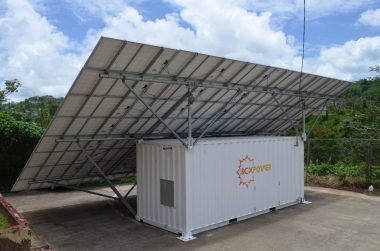
BoxPower system (Facebook image)
¶ “The precious metal sparking a new gold rush” • Cobalt mining has not happened at any sort of scale in the US for decades, but a handful of mining companies are staking claims at sites in Idaho, Montana, and Alaska. Interest in cobalt is growing because it is a key component in the lithium-ion batteries that power electronic devices and electric cars. [BBC]
¶ “Massive solar panels to power apartments at Pepperell Mill in Biddeford” • Work on Maine’s largest solar energy project will begin this fall. US Senator Angus King, Pepperell Mill Campus CEO Doug Sanford, and Revision Energy Co-Founder Phil Coupe were on hand to announce a solar project. It will power Pepperell Mill’s apartments. [Biddeford Journal Tribune]
geoharvey is free and without ads.
geoharvey is not tax-deductible.
Posted in nuclear power, renewable power, solar, wind | Leave a Comment »
Tags: nuclear, nuclear power, renewable power, solar power, wind power
July 28, 2018
Opinion:
¶ “House Republicans Deeply Confused about Why Puerto Rico Might Benefit from Wind and Solar Power” • Republicans on the Natural Resources Committee seemed befuddled as officials from the DOE, led by none other than Rick Perry, repeatedly insisted that renewable energy is an economical way to repower Puerto Rico after Hurricane Maria. [The Intercept]
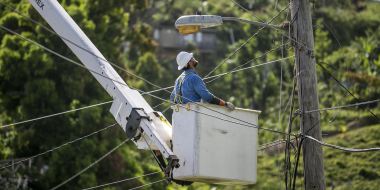
Power line work (Getty Images)
¶ “How Russian Attacks On Democracy & The USA Relate To Cleantech” • Russia’s economy is heavily centered around oil & gas, with 30% of the country’s GDP and 50% of the state budget coming from that sector. Overall, the Russian economy is not very strong, and oil oligarchs have many reasons to launder this money into Western societies. [CleanTechnica]
Science and Technology:
¶ “2018 is on pace to be the 4th-hottest year on record” • Data from the National Oceanic and Atmospheric Administration shows that 2018 is on pace to be the fourth hottest year on record. Only three other years have been hotter: 2015, 2016 and 2017. Experts say that the obvious trend of rising temperatures is a clear indicator of global warming. [CNN]

2018 temperatures (Please click on the image to enlarge it)
World:
¶ “SunExchange And Powerhive Partner To Bring Solar Power To 175,000 Kenyans” • Sun Exchange, a micro-leasing marketplace for solar systems, and Powerhive, a provider of rural mini-grid systems, partnered to provide solar power to 175,000 Kenyans. They expect to raise $23 million dollars locally to install 150 solar power projects in Kenya. [CleanTechnica]
¶ “Stolen! Thieves Exit Warehouse With Cobalt Worth Almost $10 Million” • About 112 tonnes of cobalt was stolen from a secure area in a warehouse in Rotterdam. Cobalt is a key component of lithium-ion batteries, and the battery industry uses more than 40% of the world’s cobalt supply. This has pushed price of cobalt up to about $82,500 per tonne. [CleanTechnica]
¶ “Doug Ford’s energy shake-up could wind up costing Ontario” • Promising to reduce electricity bills, the new Ontario government is cancelling 758 renewable energy projects as part of an industry shakeup. The company heading up the White Pines wind project has signalled its intention to seek $100 million in damages, and it is not alone. [Macleans.ca]
¶ “New York PE Firm to Develop Morocco Win Farm” • A New York private equity company, Brookstone Partners, says it is raising cash to develop the first phase of a 900-MW wind farm in a remote part of Morocco, between the Sahara Desert and Atlantic Ocean. It thinks the project has value for a cryptocurrency and data center. [Bloomberg Businessweek Middle East]

Wind farm
¶ “Hot Weather Spells Trouble For Nuclear Power Plants” • In Europe, nuclear power plants have been forced to cut back electricity production because of warmer-than-usual seawater. Plants in Finland, Sweden, and Germany have been affected by a heat wave that has broken records in Scandinavia and the British Isles. [New Hampshire Public Radio]
US:
¶ “US Wind Capacity Surpasses 90 GW As Record Construction Levels Continue” • The US wind energy industry currently has a record amount of wind capacity under construction. It just came out of a second quarter which installed 626 MW of new capacity, pushing the country’s cumulative wind energy capacity total over the 90 GW mark. [CleanTechnica]

Santa Rita wind farm in Texas
¶ “Puget Sound Energy looks elsewhere for power as pollution-test failure idles most of Montana coal plant” • A failure to meet air-pollution standards has largely shut down two of the four units of a Montana coal plant that generates power for Puget Sound Energy. But PSE still has plenty of alternative sources for the electricity it needs. [The Seattle Times]
¶ “Network Of Tesla Powerwall Batteries Saves Green Mountain Power $500,000 During Heat Wave” • Green Mountain Power is using a virtual power plant including 2,000 Tesla Powerwall batteries in homes across Vermont to beat the heat. That system saved GMP $500,000 in just one week this month as temperatures soared into the 90s. [CleanTechnica]
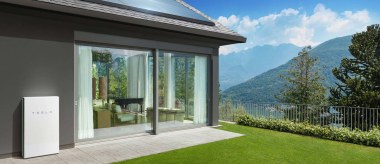
Tesla Powerwall at a home
¶ “AEP Kills Wind Catcher Plan After Texas Rejects Biggest US Wind Farm” • American Electric Power Co is canceling its $4.5 billion Wind Catcher power plant after Texas rejected what would have been the largest-ever US wind farm. Texas regulators rejected the 2-GW project saying it did not offer enough in benefits for ratepayers. [Bloomberg]
¶ “US Wind Installations To Surge Before PTC Phase-Out In 2021” • The US wind energy industry is expected to install more than 30 GW of new capacity over the next three years as developers look to take advantage of the wind energy Production Tax Credit that will begin phasing out in 2021. The PTC will drop 20% each year after 2020. [CleanTechnica]
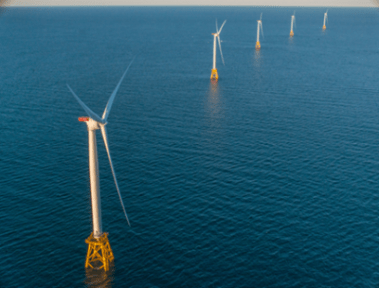
Block Island wind farm
¶ “As Economics Improve, Solar Shines in Rural America” • Under the Solar Utility Network Deployment Acceleration program run by the National Rural Electric Cooperative Association with a cost share arrangement from the DOE, rural electric co-ops are on track to own or buy 1 GW of solar power generation capacity by 2019. [IEEE Spectrum]
¶ “Owner of Iowa’s lone nuclear plant plans to shutter it by 2020” • NextEra Energy, owner of the Duane Arnold Energy Center, says it will retire the nuclear plant in late 2020, five years early. Alliant Energy, the plant’s largest customer, has agreed to pay NextEra $110 million to shorten its agreement so it can switch to wind power to save money. [DesMoinesRegister.com]
geoharvey is free and without ads.
geoharvey is not tax-deductible.
Posted in nuclear power, renewable power, solar, wind | Leave a Comment »
Tags: nuclear, nuclear power, renewable power, solar power, wind power
July 27, 2018
World:
¶ “Wind and solar power could provide more than third of Europe’s energy by 2030” • By trading energy between countries with different weather, Europe could make the most of wind and solar power, a study of future of weather and energy in Europe indicated. Europe could use renewables for over two-thirds of its electricity by 2030. [Imperial College London]
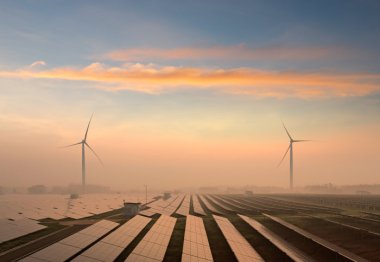
Solar and wind power
¶ “Utility of Munich successfully drills first well of ambitious geothermal heating project” • A report by TiefeGeothermie said the city utility of Munich, Stadtwerke München, announced that drilling of its first well for the new planned combined heat and power plant South in Munich has been successful. Drilling took about three months. [ThinkGeoEnergy]
¶ “Finns fire 50 MW start gun” • A long-term corporate power purchase agreement has been signed for power generated by a 50-MW wind farm in Finland, and CPC Finland started construction. The wind farm will feature 12 Vestas 4.2-MW turbines, and the company said the wind farm is being built without any need for subsidies. [reNews]

Wind farm (Pixabay image)
¶ “Punjab approves renewable projects of Rs 100 crore” • The Punjab government approved renewable energy projects worth ₹100 crore ($15 million), its energy minister said. The approvals cover nine small hydro projects totalling 5.55 MW capacity, one bio-CNG project involving, and a bio-Coal Plant, all to be set up by private players. [ETEnergyworld.com]
Australia:
¶ “Renewables power ahead in Australia” • Analysis by Green Energy Markets shows the National Electricity Market is on track to get 33% renewable electricity by 2020, with some states doing much better. But the report claims solar jobs will be lost unless the National Energy Guarantee’s 26% emissions reduction target is lifted. [pv magazine International]

Solar power (Image: First Solar)
¶ “Renewable crude oil made using sewage? It’s happening in Australia” • The Australian Renewable Energy Agency has given A$4 million ($2.96) in funding to a project looking to turn sewage into renewable crude oil, which will eventually provide fuel to power cars and jets. What you flush down the loo could be made into jet fuel. [Compelo]
¶ “State sitting in clean power top spot” • Projections by the Green Energy Markets’ June Renewable Energy Index show that Tasmania will be producing 99.6% of the power it consumes with renewables in less than two years. If the projects in Tasmania’s pipeline are all built, it will produce over 120% of the power it needs and become an exporter. [The Advocate]

Tasmania (Advocate file photo)
¶ “Victoria’s biggest solar farm reaches financial close, to power steel works” • The Numurkah solar farm has reached financial close and will begin construction next week. At 100 MW (AC), it will be the largest solar facility in Victoria, at least for a while. The $198 million facility will help power the Laverton step works in the state. [RenewEconomy]
US:
¶ “OPPD partner’s wind power project will continue utility’s renewable energy growth” • Once a new private wind power project in Nebraska comes online in late 2019, Omaha Public Power District’s renewable portion of its energy mix would make up 40%, a spokeswoman confirmed. The figure was less than 20% as in 2016. [Omaha World-Herald]

Grande Prairie Wind Project (Megan Farmer | The World-Herald)
¶ “Georgia Power seeks more than 100 MW of solar RFPs” • Georgia Power is continuing to grow renewable energy in Georgia through the Renewable Energy Development Initiative, originally approved by the Georgia Public Service Commission in 2016. The company is now accepting bids for over 100 MW of new distributed solar power. [Solar Power World]
¶ “Top Interior officials ordered parks to end science policy, emails show” • Policy enacted in the final weeks of the Obama administration elevated the role of science for decision-making and emphasized that parks should take precautionary steps to protect natural and historic treasures. Newly released emails show how that policy was rescinded. [PRI]

Grand Canyon (Credit: Stephanie Keith | Reuters)
¶ “Report Knocks Rhode Island for Dirty Renewables” • A national study by the environmental advocacy group Food & Water Watch draws attention to Rhode Island’s use of highly polluting wood and other questionable “clean energy” sources that the state considers renewable. The recent report grades 29 states and Washington, DC. [ecoRI news]
¶ “Tesla, Others Help Puerto Ricans Go Solar” • The US territory is turning to renewable energy sources to keep the lights on during tropical storms. Ten months after Hurricane Maria, a heavy rain or wind is enough to cause power loss in many areas. But homes and businesses are beginning to switch to solar PVs for energy. [U.S. News & World Report]
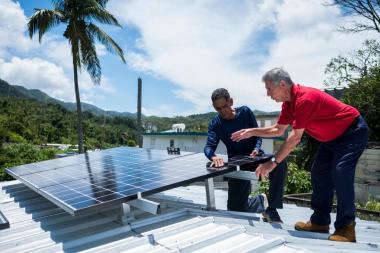
Solar installation in Puerto Rico (Dennis M Rivera Pichardo | AP)
¶ “Revised Settlement Over Shutdown Costs for former Edison Nuclear Plant Approved” • A revised settlement over shutdown costs for the San Onofre nuclear power plant was approved by the California Public Utilities Commission. It pushes more of the $5.5 billion tab onto shareholders of majority parent Edison International. [Los Angeles Business Journal]
¶ “Uranium leaked at South Carolina nuclear fuel plant but regulators think water supply isn’t threatened” • Some uranium leaked through a hole in the floor of a nuclear fuel plant in South Carolina. State health officials say they do not think it threatens water supplies.The plant makes fuel rods for commercial nuclear reactors. [The Japan Times]
geoharvey is free and without ads.
geoharvey is not tax-deductible.
Posted in nuclear power, renewable power, solar, wind | Leave a Comment »
Tags: nuclear, nuclear power, renewable power, solar power, wind power
July 26, 2018
Opinion:
¶ “Deaths Rise As Earth Swelters – Could Global Warming Be Responsible?” • It has been brutally hot this July all over the world. The temperature touched 106°F, the highest temperature ever recorded in Japan, and 44 people have already died in heat wave. Heat all over the world has led to wildfires. Even the ocean is warming alarmingly. [CleanTechnica]

California wildfire
¶ “Beijing Bids to Extend its Global Clean Energy Lead” • China has firmly established itself as the world’s dominant manufacturer of clean energy technologies. It has been the largest producer of solar PVs for over a decade. Economically and strategically, China is well set to benefit from the global shift toward clean energy technologies. [The Jamestown Foundation]
¶ “Government’s last-minute approval of fracking an example of its profoundly dated thinking” • The move flies in the face of the National Infrastructure Commission’s recommendation that ministers seize the “golden opportunity” presented by renewable sources to provide 50% of the UK’s requirements by 2030 without adding to bills. [The Independent]
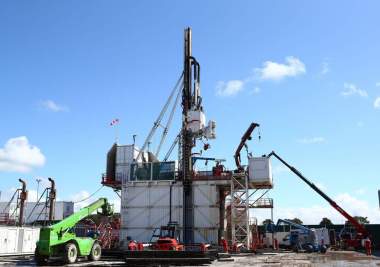
Drilling for shale gas (PA)
Science and Technology:
¶ The rate at which our planet is warming has been found to be a critical factor in explaining declines of bird and mammal species, according to new research by University College London and Zoological Society of London. The study, published in Global Change Biology, examined 987 populations of 481 species across the globe. [Infosurhoy]
¶ Tropical species loss has become dire. A study in the journal Nature warned that a global biodiversity collapse is imminent unless we take urgent and significant action. An international team of researchers warns that failure to act quickly and decisively will greatly increase the risk of an irreversible species loss in the most diverse areas on Earth. [Earth.com]

In the tropics (Alexander Lees | Manchester Metropolitan University)
World:
¶ The Queensland government warns it may block the Turnbull government’s signature energy plan, saying that it will not sign any deal that undermines the state’s ambitious renewable energy target. Backing for the National Energy Guarantee hinges on how Queensland’s target of making 50% of its electricity renewable by 2030 is affected. [The Sydney Morning Herald]
¶ Thirty-one new solar power plants with a total of over 1,000 MW of capacity will be installed in Portugal by 2021, according to an article in Dinheiro Vivo. The total value of the projects has been stated to be about 800 million euros. The Portuguese Energy Secretary of State said the installations would triple the country’s solar capacity. [CleanTechnica]
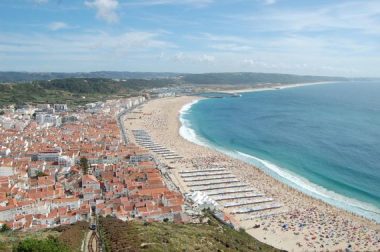
Portugal
¶ Yorkshire Water is demolishing an old sewage sludge incinerator to make way for a £40-million state-of-the-art facility energy and recycling centre converting human waste into electricity. The new ‘poo-power’ technology, formally called anaerobic digestion, will also reduce nitric oxide emissions from the site and help improve air quality. [Huddersfield Examiner]
¶ The cost of EDF’s new Flamanville nuclear reactor has swelled to over three times the original budget after more issues came to light in the construction process. EDF said target construction costs had risen by €400 million to €10.9 billion ($12.7 billion). Already seven years behind schedule, the project will be delayed by yet another year. [The New Economy]

Flamanville nuclear power plant
US:
¶ Federal enforcement of corporate wrongdoing declined badly during Donald Trump’s first year in office, analysis from Public Citizen, a government watchdog, shows. A prime example is the EPA, where the report said penalties during Trump’s first year dropped 94%, from $23 billion in Obama’s last year to $1.4 billion in Trump’s first year. [Wisconsin Gazette]
¶ The Bureau of Land Management will no longer require oil and gas companies, land developers, and other companies to pay into government funds set up to offset damage they do to natural resources and wildlife habitats when operating on public lands. Payments for off-site “compensatory mitigation” will now be voluntary. [ThinkProgress]

Colorado (Helen H. Richardson | The Denver Post via Getty Images)
¶ Dominion Energy Virginia has filed plans with state regulator to bolster the US state’s grid and add up to 3 GW of new wind and solar power by 2022. The plans have been filed with the State Corporation Commission for approval under the state’s Grid Transformation and Security Act, which became effective in Virginia earlier this month. [reNews]
¶ MidAmerican Energy’s 2-GW Wind XI project continues to roll out across Iowa with new announcements confirming another 341 MW of capacity in the Arbor Hill and Ivester wind farms. Last May, MidAmerican Energy announced that it intends to be the first investor-owned electric utility in the US to meet 100% of its demand with renewable power. [CleanTechnica]
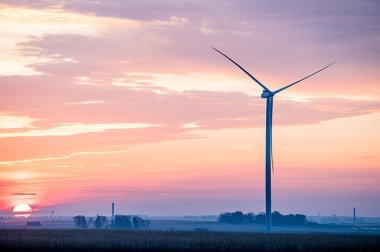
Beaver Creek wind farm
¶ Configuring Puerto Rico’s electric system into 10 mini-grids could bring the island much-needed resiliency at a competitive price, a white paper issued by Siemens said. Under the definition put forward by Siemens, mini-grids are like microgrids but larger. One mini-grid, for example, could encompass San Juan, which requires about 513 MW. [Microgrid Knowledge]
¶ Nuclear power has little future in the US, according to a recent paper. It says that the country is unlikely to see many new reactors in coming decades, unless there are major policy changes. That means the only two nuclear reactors currently under construction in the country, which are in Georgia, could be the last ones built in the US for years. [WABE 90.1 FM]
geoharvey is free and without ads.
geoharvey is not tax-deductible.
Posted in nuclear power, renewable power, solar, wind | Leave a Comment »
Tags: nuclear, nuclear power, renewable power, solar power, wind power
July 25, 2018
Opinion:
¶ “The $3 Billion Plan to Turn Hoover Dam Into a Giant Battery” • Hoover Dam was one of the great engineering feats of the 20th century. As a project, it has been likened to the pyramids. Now it is the focus of a 21st-century challenge, to turn the dam into a vast reservoir of excess electricity, fed by the solar farms and wind turbines. [New York Times]
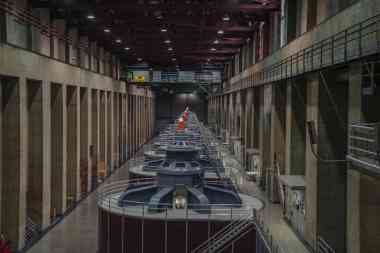
Hoover Dam’s turbines
¶ “Mapped: The US nuclear power plants ‘at risk’ of shutting down” • Nuclear power plants generate half of the US’s low-carbon electricity. However, record low gas prices associated with the US fracking boom have made many existing nuclear plants uncompetitive. Over half of the US nuclear plants are scheduled to close in the next decade. [Carbon Brief]
Science and Technology:
¶ Wildfires have been sweeping through coastal towns east of the Greek capital, Athens. Fires are also raging in Sweden, as far north as the Arctic Circle, and have caused huge damage in countries including Portugal, the UK and the US in recent months. Up to 90% are started by humans, but they are intensified by land use and climate change. [BBC]

One of 80 drought-driven fires in Sweden (Getty Images)
World:
¶ Researchers from the King Abdullah University of Science and Technology, in collaboration with the University of Notre Dame, found that wind energy has “considerable potential” in Saudi Arabia, a country much better known for its reliance on oil. A recent Saudi auction produced prices of bids for wind power of $21.30/MWh to $33.86/MWh. [CleanTechnica]
¶ Global adjustment charges, which the government of Ontario set up about 10 years ago, have led to higher electricity fees. NRStor and IHI Energy Storage signed contracts for eight behind-the-meter energy storage projects designed to help with those high costs. The contracts are for 42 MWh of lithium-ion batteries, due online in 2019. [Utility Week]

Toronto
¶ Japanese ICT company Fujitsu has announced it has joined RE100, the international initiative led by The Climate Group in partnership with the Carbon Disclosure Project which encourages businesses to commit to sourcing 100% of the electricity they use from renewable sources. Fujitsu is Japan’s first Gold Member of RE100. [Renewable Energy Magazine]
¶ South Australia’s energy minister says the state is on track to have 75% of its electricity from renewables by 2025. Because of the low costs of renewables, it is meeting a target that the current government does not support. Prime minister Malcolm Turnbull once described the Labor renewable energy policy as “ideology and idiocy in equal measure.” [The Guardian]

Bungala solar power plant (Photo: The Guardian)
¶ The state of Victoria is likely to meet its 40% renewable energy goal five years early, in 2020 rather than the targeted 2025, according to the latest analysis from Green Energy Markets. The latest Renewable Index Report from GEM says Australia got 20.2% of its electricity from renewable energy sources in the month of June. [RenewEconomy]
¶ Chinese solar manufacturer LONGi Solar announced that it has signed a $600 million supply agreement with an unnamed major US power plant developer for its high-efficiency monocrystalline modules. Mark Osborne, Senior News Editor at PV-Tech, believes that this is the largest module supply contract LONGi has signed with a US developer. [CleanTechnica]

LONGi Solar modules
US:
¶ Cuba has over five times as much cobalt as the US, but current US foreign policy stance restricts business dealings with Cuba. Panasonic, which supplies all of Tesla’s batteries, has concerns that cobalt delivered to the company from Canada may have been mined in Cuba, so it felt constrained to suspend business with its source there. [CleanTechnica]
¶ About 6.5% of the total national renewable energy potential is on tribal land, a DOE source says. Historically this was not developed because of lack of access to capital. The Energy Policy Act of 2005 made loan guarantees available on tribal lands, but the program was not funded until the US Congress passed the Fiscal Year 2017 Omnibus Spending Bill. [CleanTechnica]

Landscape with reflections
¶ Environment Massachusetts is pushing for the state to get 100% of its energy from renewable sources. The organization joined with those heading local renewable energy projects to release its agenda, or roadmap, to do so. As it announced its efforts, it highlighted achievements that had already been made in regions of the state. [iBerkshires.com]
¶ EDP Renewables North America is to sell electricity from the 125-MW Timber Road 4 wind farm in Ohio to an unnamed “commercial and industrial entity” under two 15-year power purchase agreements. Supply will start when Timber Road 4 comes online next year, EDPR said. It has now contracted 2.2 GW of wind energy PPAs in the US. [reNews]

EDPR wind farm (EDPR image)
¶ Renewable energy projects are on the rise in New Hampshire as communities look to save money and reduce the risks of climate change. Recently, Claremont had a ribbon-cutting ceremony to show of a new solar array. Its 432 panels will help power the city’s highest energy user, the wastewater treatment plant, with the cleanest power possible. [WMUR Manchester]
¶ The Vermont Public Utility Commission issued an order providing guidelines for alternative regulation proposals it says are necessary in order to continue advancing the state’s energy goals. The order said proposals must advance the state’s energy goals, be open and transparent, enable innovation, and benefit the consumer. [Utility Dive]
geoharvey is free and without ads.
geoharvey is not tax-deductible.
Posted in nuclear power, renewable power, solar, wind | Leave a Comment »
Tags: nuclear, nuclear power, renewable power, solar power, wind power
July 24, 2018
Opinion:
¶ “Inside Alaska’s battles over land, sea and life” • There is a gold and oil rush underway in Alaska. It began when Donald Trump set out to deregulate the environment. It has brought dismay to fishermen and wildlife guides, conservationists and native tribes who believe that Alaska’s true wealth lies in its wilderness and biodiversity. [CNN]
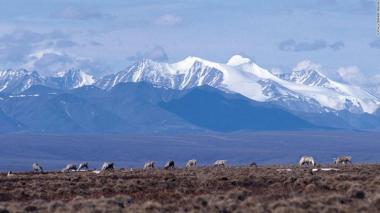
Arctic National Wildlife Refuge
¶ “NRDC: Breakthrough Republican Climate Plan Still Falls Short” • Rep Carlos Curbelo of Florida introduced a carbon tax, one of the first credible proposals by a congressional Republican to address climate change. But the plan will not cut carbon pollution enough to safeguard the climate, and so it is just a conversation starter. [Natural Resources Defense Council]
¶ “Electricity plan would all but hit emissions goal before it starts” • The Turnbull government’s National Energy Guarantee, the centerpiece of its climate change and electricity policy, would help cut an average Australian household’s power bills by A$50 (US $37) in its first year. But it does little to cut carbon emissions over the decade to 2030. [The Sydney Morning Herald]
Science and Technology:
¶ A group of researchers has developed an open-source computing tool that calculates the environmental impact of residential buildings, including the CO2 emissions in each phase of a building project. A building’s carbon footprint will be obtained digitally, from its conception, through every stage of the construction process. [CleanTechnica]
¶ Students at the Technical University of Eindhoven in The Netherlands created Noah, one of the most innovative electric cars since the original Tesla Roadster. Its frame is made of rigid material created from flax and sugar. It is called “the most circular car in the world,” since most of it can be recycled or repurposed at the end of its useful life. [CleanTechnica]

Noah’s frame and suspension
World:
¶ In its latest report, the Global Off-Grid Lighting Association, working with Altai Consulting, has highlighted the impact and the benefits of off-grid solar home systems in improving the quality of life for African households. The report sheds light on how PV systems can help governments of developing nations create ample employment opportunities. [Mercom India]
¶ TEPCO Holdings will pursue renewable energy projects worth tens of billions of dollars in a sharp turn away from nuclear power and an effort that will require finding partners abroad, the power company’s president told Nikkei. TEPCO is aiming to develop renewable energy installations in Japan and overseas that produce 6 GW to 7 GW of power. [Nikkei Asian Review]
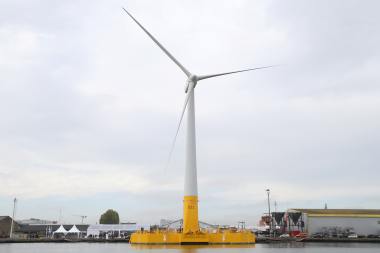
Floating wind turbine (© Reuters)
¶ BYD and Changan Automobile have spun up a joint venture to manufacture and sell electric vehicle batteries. The enterprise is based in the sprawling metropolis of Chongqing, China. It is focused on spooling up a battery production facility with a total production capacity of 10 GWh, which is being split into two nearly equal phases. [CleanTechnica]
¶ The UK Government’s plan to introduce new auctions to secure renewable energy sources could mean that the UK’s offshore wind capacity may nearly double over the next decade, according to RenewableUK. They called the recent announcement a ringing endorsement by Government of the UK’s world-leading offshore wind industry. [Maritime Journal]
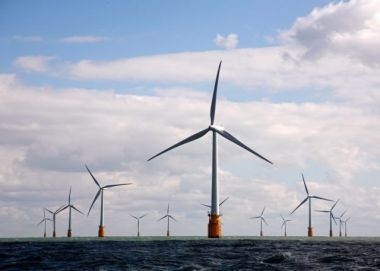
Offshore wind farm (Vattenfall image)
¶ Philippine communities are pushing back against new “clean coal” plants. Packaged as “clean and environment-friendly,” the two new 670-MW coal-burning power plants will be built close to an intact rain forest in a northern region of the country. Locals resisting the $1.5 billion project say it will destroy the environment and ruin livelihoods. [eco-business.com]
¶ The southern Indian state of Karnataka is now a renewable energy leader. It has surpassed Tamil Nadu to become the country’s biggest renewable power producer with an installed capacity of 12.3 GW. In comparison, the state’s coal power capacity is around 9.8 GW. The move to renewable power was based on its low cost compared to coal. [Quartz]

Renewable power (Fred Lancelot | Reuters)
US:
¶ The Trump administration will seek to revoke California’s authority to regulate automobile greenhouse gas emissions in a proposed revision of Obama-era standards, according to three people familiar with the plan. The proposal, expected to be released this week, sets up a high-stakes battle over the state’s ability to regulate air pollution. [CleanTechnica]
¶ The Washington Geological Survey is planning to drill two test wells at two geothermal sites at Mount Baker and Mount St. Helen in the State of Washington to explore the possibility of further geothermal development. Local news in the State of Washington report that there will be some test drilling done near Mount Baker at Baker Lake. [ThinkGeoEnergy]
Mount Baker (photo: ensteele | Flickr, creative commons)
¶ Since Vermont’s Green Mountain Power was certified as a benefit corporation (B Corp) in 2014, it has found financial success while maintaining social and environmental sustainability: a triple bottom line. Despite engaging in conventionally “poor” business practices, its net income is still growing, and even outpacing peers in the utility industry. [CleanTechnica]
¶ Canadian renewable power producer BluEarth Renewables LP said it has completed the purchase of a 795-MW wind project portfolio in Wyoming. This acquisition adds to BluEarth’s existing development portfolio, which includes more than 400 MW of projects in advanced development stages and a pipeline of early-stage opportunities. [Renewables Now]
geoharvey is free and without ads.
geoharvey is not tax-deductible.
Posted in nuclear power, renewable power, solar, wind | Leave a Comment »
Tags: nuclear, nuclear power, renewable power, solar power, wind power
July 23, 2018
Opinion:
¶ “10+ Million Fires, 19,000 Deaths, And 70,000 Injuries From Internal Combustion Vehicles” • Over 10 million highway vehicle fires caused about 19,000 deaths and over 70,000 injuries in the US from 1980–2015, the National Fire Protection Association says. But some mainstream news outlets ignore those fires and seem to report the rare Tesla fires obsessively. [CleanTechnica]

YouTube screen shot
¶ “Reverse power flow: How solar + batteries shift power from utilities to consumers” • For 100 years, the US electric grid has been controlled by electric utilities, public regulators, and grid operators. But the economics of coal and nuclear power plants, relying on operating at high capacities around the clock, are being undermined by PVs and batteries. [Red, Green, and Blue]
¶ “Skyscrapers Full of Lettuce Promise an Eco-Friendly Alternative to Outdoor Farming. There’s Just One Problem.” • “Vertical farming can allow former cropland to go back to nature and reverse the plundering of the earth,” a New Yorker article said. But vertical farming also uses a lot of energy, and we need to take care where it comes form. [Mother Jones]

Vertical farming (Image: Jun Cen)
World:
¶ Almost half of all major businesses in Australia are switching to clean, affordable and reliable renewable energy in a bid to take control of soaring power bills and tackle intensifying climate change. But for small to medium-size businesses, making a switch is not so straightforward, so local government has an important role to play. [Queensland Country Life]
¶ Sanjeev Gupta, the British billionaire who rescued the Whyalla steelworks from administration and is spending more than $2 billion on clean energy and green steel developments in regional South Australia says most Australians are yet to grasp that solar power is now a cheaper option than new coal-fired electricity. He intends to prove it. [The Guardian]
Sanjeev Gupta (Photo: Bloomberg via Getty Images)
¶ The Philippine Department of Energy is working on establishing renewable energy zones to maximize the country’s renewable resources, a ranking official said. The department released a draft of a circular, “Establishment and Development of Competitive Renewable Energy Zones (CREZ) in the Country,” to get comments from stakeholders. [The Manila Times]
¶ The British government said it will provide up to £557 million ($732 million) of funding for the next clean electricity auctions for less-established renewables. The next so-called contracts for difference allocation round for renewable energy technologies such as offshore wind will open by May 2019, the government said. [ETEnergyworld.com]
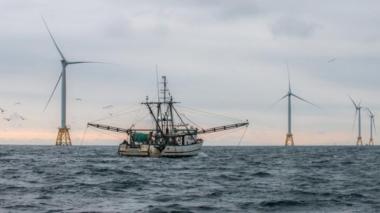
Fishing in an offshore wind farm
¶ In Malaysia, up to seven Independent Power Producer agreements could be cancelled as part of a 10-year plan to be unveiled soon. Four have already been voided without any cost incurred, the energy minister said, and another four are under review. She said Malaysia needs a long-term goal of producing cheaper and cleaner energy. [The New Paper]
¶ Global coal prices have been on a steady rise and hit a six-year high early this month, putting pressure on the power generation industry in Malaysia. Coal plays a large role in Malaysia’s energy scheme, as it provides 53% of peninsular the country’s power. All of Malaysia’s coal is imported, with costs are entirely dependent on the global market. [The Star Online]
Coal barge (Reuters image)
¶ Wealthy governments have been accused of promoting fossil fuels in Africa at the expense of clean energy. Analysis showed 60% of public aid for energy projects was spent on fossil fuels, compared with just 18% on renewables. Oil Change International estimated aid to Africa’s energy sector was $59.5 billion (£45.3bn) between 2014 and 2016. [The Guardian]
US:
¶ At the end of 2017, the numbers of Arkansas PV systems and accounts that net meter were almost double what they were a year before and more than 40 times the what they were in 2007, according to the Arkansas Public Service Commission. And while the state’s PV capacity is not large at 9 MW, it is continuing to grow. [Northwest Arkansas Democrat-Gazette]

Arkansas installation (Charlie Kaijo | NWA Democrat-Gazette)
¶ The Daily Hampshire Gazette reports that CVE North America Inc wants to install 17,280 solar modules across two 10-acre parcels in Westhampton, Massachusetts. Together, they would produce nearly 5 MW of power. Local utility Eversource has entered into an agreement with CVE for the power, according to the special permit application. [The State]
¶ The New England Hydropower Company says it wants to place a small scale hydropower plant in Hugh Moore Park along the Delaware and Lehigh Historic Canal Corridor in Pennsylvania. It recently presented its plans to Northampton County Council, which voted to match a state grant for this project, in any amount up to $1.5 million. [WFMZ Allentown]

Delaware and Lehigh Canal
¶ Following in the steps of growing number of municipalities, New Brunswick, New Jersey, now proposes to buy electricity in bulk to get a low rate for all households, and to seek a supplier that will employ environmentally-friendly renewable energy sources. The city is moving forward on a plan to bring in more renewable energy resources. [TAPinto.net]
¶ The Winnebago Tribe of Nebraska already boasts 400 kW of installed solar panels, more than nearly any other Midwestern American Indian tribe. It doesn’t plan to stop there. The American Indian tribe expects to learn later this summer whether it will receive a federal grant to pay half the cost of an additional 300 kW. [Lincoln Journal Star]
geoharvey is free and without ads.
geoharvey is not tax-deductible.
Posted in nuclear power, renewable power, solar, wind | Leave a Comment »
Tags: nuclear, nuclear power, renewable power, solar power, wind power
July 22, 2018
Opinion:
¶ “Can Atlanta Run Entirely On Renewable Energy by 2035?” • Atlanta is working to put flesh on a framework to run entirely on renewable power by 2035. That covers both municipal operations, including Atlanta’s Hartsfield-Jackson International Airport, and all the lights, appliances, and air conditioners in town. Here is a plan for how to do it. [Sierra Magazine]
Atlanta (Sierra Club photo)
¶ “With EPA rule change, worries linger for those near coal ash ponds” • As one of his first major acts at the EPA, Andrew Wheeler, the acting administrator, signed and finalized new standards overseeing coal ash. Critics of the new coal ash rules say they are a gift to industry and a continued burden for those communities near coal ash sites. [CNN]
¶ “Oil industry plans to keep workers safe – by firing them and having robots do their jobs” • The oil and gas industry is finally acknowledging how dangerous conditions can be for its workers, after years of touting their safety record. This sudden honesty comes with a new safety solution, which is to fire the workers and replace them with robots. [NationofChange]

Deepwater Horizon (Credit: US Coast Guard, public domain)
¶ “3 Natural Gas & Climate Myths” • Many people see natural gas as a part of the answer for climate change. But arguments in support of natural gas are based on outdated or incorrect information – sometimes tending toward wishful thinking. So we are setting the record straight on three common myths about natural gas and our climate. [CleanTechnica]
Science and Technology:
¶ As CO2 rises in the atmosphere, which leads to the planet warming, the balance between photosynthesis and respiration can shift in individual plants. In a new study published this week in Proceedings of the National Academy of Sciences, researchers have found that in warmer conditions plants change how they use carbon – using more for growth. [Phys.Org]

Plant and ladybug (CC0 Public Domain)
¶ A new combination of materials developed by Stanford researchers may lead to a rechargeable battery able to store the large amounts of power. The technology is a flow battery with the negative side consisting of a combination of potassium and sodium that is liquid at room temperature. It is a promising step toward a high density battery. [pvbuzz media]
World:
¶ PowerLink, the high-voltage system operator in Queensland, signed an agreement with Pacific Hydro for a project of up to 500 MW, the first part of the Haughton solar farm. But PowerLink says it has far more than that in its pipeline, with more than 150 enquiries or applications for nearly 30,000 MW, almost all from renewable sources. [CleanTechnica]

Solar farm (Pixabay | Creative Commons)
¶ The Billion Tree Tsunami project in Pakistan has been a success. About 730 million trees were regrown using various forestry measures for regeneration, and three hundred million seedlings were planted using about 40 different species in the province of Khyber Pakhtunkhwa. The enormous project was only started several years ago. [CleanTechnica]
¶ Modelling released by respected energy analysts Reputex shows that a National Energy Guarantee with the emission targets of the Australian government will not lead to any new renewable energy infrastructure and thus no reduction in carbon pollution. It also finds that a higher emissions target will lead to lower electricity bills for us all. [The Sydney Morning Herald]

Coddrington wind farm in Victoria (Photo: Jessica Shapiro)
¶ A South African brewery may be the first in Africa to go carbon-neutral as businesses adjust to climate change and consumers are more careful about what they buy. In a village near Cape Town, Darling Brewery decreased its carbon footprint with efficiency, then took it to zero by buying carbon credits at a reforestation project in Zimbabwe. [ETEnergyworld.com]
¶ Collie shire council, in the heart of the last remaining coal mining and coal generation district in West Australia, discussed seeking quotes for rooftop solar. One provider said solar would deliver electricity cost savings of $446,106 over 10 years. The council voted against installing rooftop PVs because “we should be burning more coal.” [RenewEconomy]

Coal-burning power station
¶ Masako Sakata, an award-winning Japanese documentary film director, took the long route to answer a gnawing question: how is it that Japan is still wedded to atomic power while Germany decided to phase out its nuclear plants by 2022 in the wake of the Fukushima nuclear disaster? Her latest film “Morgen” set for release this fall in Tokyo. [The Mainichi]
US:
¶ In May of last year, the 120,000 PV solar panels at the Kayenta Solar Plant, the first utility-scale solar plant on the Navajo Nation, went operational. Now, the Navajo Tribal Utility Authority that owns the Kayenta plant is pushing ahead with two more solar projects on the reservation, with a combined capacity of 100,000 to 150,000 MW. [Arizona Daily Sun]

Kayenta Solar Facility (NTUA photo)
¶ Honolulu-based Toyota dealer and distributor Servco Pacific unveiled a hydrogen station by having it blessed in a traditional manner using Hawaiian Ti leaves and water from sacred waterfalls. Servco hopes that the availability of hydrogen to power passenger cars will spur sales of fuel cell vehicles on Oahu and eventually other Hawaiian Islands. [Forbes]
¶ More than 10% of America’s coal miners with 25 or more years of experience have black lung disease, the highest rate recorded in roughly two decades, according to a government study that showed cases concentrated heavily in central Appalachia. The study was by researchers from the government’s National Institute of Occupational Safety and Health. [Reuters]
geoharvey is free and without ads.
geoharvey is not tax-deductible.
Posted in nuclear power, renewable power, solar, wind | 1 Comment »
Tags: nuclear, nuclear power, renewable power, solar power, wind power
July 21, 2018
Opinion:
¶ “Energy Costs Are a Higher Burden on the Rural Poor” • Low-income families in rural areas pay greater portions of what they earn to energy costs than other families. Lower disposable income has a crippling effect on local economies. Often, the burden on households and communities could be mitigated with energy-efficiency. [U.S. News & World Report]
Rural America (UIG via Getty Images)
¶ “To Improve Energy Security Of Military Bases, Use Less Civilian Power – Not More” • The Trump Administration is reportedly considering a bailout of civilian coal and nuclear power plants to make the electricity supply to military bases more reliable. But a more effective approach would be competitive procurement. [American Action Forum]
¶ “What does the end of feed in tariffs in the UK mean for small-scale renewables?” • The UK’s feed in tariff scheme for small-scale renewables will officially close on 31 March 2019, according to the Department of Business, Energy, and Industrial Strategy. The closure was announced in 2015, but its real implications are still unknown. [Power Technology]
UK rooftop solar systems (Photo: Christine Westerback)
¶ “Republican Candidate Calls 18-Year-Old Climate Activist ‘Naive’. Her Response Is Perfect” • A Pennsylvania gubernatorial candidate called an 18-year-old naive when she questioned him on climate science. He believes that the Earth is warming because it is moving closer to the sun every year and because a larger population gives off more body heat. [ScienceAlert]
Science and Technology:
¶ Researchers made an enormous leap recently by moving one step closer to stable fusion nuclear energy. They discovered a way to stabilize plasma in fusion reactors to prevent temperatures and densities from oscillating. The process they discovered runs in simulations. If it runs in fusion reactors as expected, it may help bring them to reality. [Interesting Engineering]

Plasma fusion reactor
World:
¶ The UK’s drive to get more electric vehicles on the road took a step forward with the passing of new legislation, Automated and Electric Vehicles Act, which gives the government the power to force petrol stations and motorway services to install EV chargers to ensure charging infrastructure keeps pace with changing market demands. [Power Engineering International]
¶ Lewis Wind partners EDF and Wood are exploring the potential for installation of next-generation hardware at the consented Stornoway wind farm in the Outer Hebrides, Scotland. The joint venture has filed early-stage planning documents with Edinburgh government officials for 24 turbines of up to 187 metres and nine of up to 155 metres. [reNews]

EDF wind farm on the Scottish mainland (reNews image)
¶ Total global energy investment fell by 2% in 2017, totalling $1.8 billion according to the International Energy Agency’s World Energy Investment 2018 report. It showed that $750 billion was spent on the electricity sector, compared to only $715 billion on oil & gas supply, while investment in renewables and energy efficiency fell by 3%. [CleanTechnica]
¶ The largest solar power plant ever proposed in the UK will be reviewed by the secretary of state within the next six months. Cleve Hill solar farm will be sited on 1,000 acres on the north coast of Kent and, if built, provide up to 350 MW of generating capacity. The plant will include battery storage so energy can be supplied when it is needed most. [Yahoo News UK]
Sunset at a solar plant
US:
¶ US bird conservation group the National Audubon Society gave conditional backing to Fred Olsen Renewables and LEEDCo’s 21-MW Icebreaker offshore wind farm on Lake Erie. The organisation said at a public hearing held by the Ohio Power Siting Board that it supports the project, provided threats are minimised to birds and other wildlife. [reNews]
¶ The parent company of Arizona’s largest electric utility filed suit in a bid to block voters from deciding if they want to impose new renewable energy mandates on power companies. Attorneys hired by Arizonans for Affordable Energy, funded by Pinnacle West Capital Corp, claim a series of legal flaws with the petitions to put the issue on the ballot. [The Daily Courier]
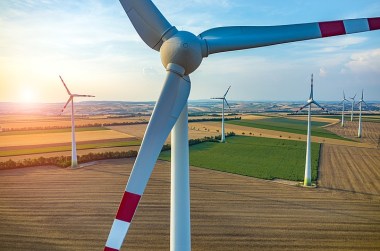
Wind farm
¶ The largest solar system in New York City was installed this week in Staten Island, according to the New York State Energy Research and Development Authority. The 3.1-MW solar array will provide energy for Fordham University and Fordham Preparatory School in the Bronx. The project will generate nearly four million kWh of electricity each year. [Daily Energy Insider]
¶ SCP and Coldwell Solar hosted a ribbon-cutting ceremony at one of the two solar power plants newly built in Petaluma, the first of their kind for Sonoma and Mendocino counties’ nonprofit electricity provider. The 2 MW they generate together can power up to 600 SCP customers using their 100% renewable EverGreen electric power service. [Petaluma Argus Courier]
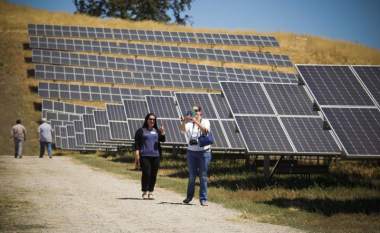
Ribbon cutting attendees (Crissy Pascual | Argus Courier staff)
¶ A new independent assessment by The Brattle Group of US President Donald Trump’s plan to bail out the country’s coal and nuclear plants has concluded that the cost of such a bailout could balloon to $70 billion over two years. Coal use is falling with low natural gas prices, and natural gas use is falling with increased reliance on renewable energy. [CleanTechnica]
¶ A federal appeals court in San Francisco rejected the Trump administration’s request to block the trial of a lawsuit by 21 young people who accuse the government of endangering their futures, and the planet, by failing to act against global warming. The administration is asking the US Supreme Court to intervene in this case and another that is similar. [WRAL.com]
geoharvey is free and without ads.
geoharvey is not tax-deductible.
Posted in nuclear power, renewable power, solar, wind | Leave a Comment »
Tags: nuclear, nuclear power, renewable power, solar power, wind power
July 20, 2018
Opinion:
¶ “Rosatom as a Tactic in Russia’s Foreign Policy” • Russia has continued to supply record amounts of coal, oil, and gas to global markets, but it has also identified nuclear power generation as a new energy export option. Russian leadership has embarked on active nuclear power diplomacy globally, with Rosatom as its centerpiece. [International Policy Digest]

Rosatom icebreaker (Rosatom image)
¶ “Life after coal: the South Australian city leading the way” • In 2016, the region around Port Augusta was on the brink, hit by the closure and near collapse of coal and steel plants. Now it is on the cusp of a wave of construction that investors and community leaders say should place the region at the vanguard of green innovation. [The Guardian]
¶ “New York Utilities: We Believe Blockchain Is ‘Transformative’” • Avangrid, Con Edison, National Grid, the Indigo Advisory Group, and the New York Power Authority describe the many attractive use cases for blockchain technology. What they say is that the new technology could potentially be transformative for the energy industry. [Greentech Media]

Blockchain in New York (Shutterstock image)
Science and Technology:
¶ Adding to evidence attributing observed atmospheric changes to manmade influences, climate scientists used decades of satellite data to identify a human “fingerprint” on the troposphere, the lowest region of the atmosphere. In this space, say the authors, human-caused warming has significantly affected the seasonal cycle of the temperature. [EurekAlert]
World:
¶ Albania’s state-run power utility KESH says it is planning to build the country’s first floating solar PV plant on the northern Drin River cascade, where it generates about two-thirds of the country’s domestic electricity from three hydropower plants built in the 1970s and 1980s. The floating system will have a capacity of 12.9 MW. [Tirana Times]

Floating solar array (Photo: Tirana Times)
¶ A recent report says that in 2017 India invested more money in its renewable energy sector than fossil fuels. The findings were revealed in the International Energy Agency’s World Energy Investment 2018 report. India spent almost $20 billion on clean energy and more than doubled its spending on solar PV projects compared to 2016. [Energy Digital]
¶ German wind industry groups have urged policymakers to raise Germany’s 2030 offshore target to 20 GW from 15 GW currently and introduce a 30-GW goal for 2035. The groups, which include AGOW, BWE, the Offshore Wind Foundation, VDMA Power Systems, and WAB, called for an end to what they call an “energy policy standstill.” [reNews]
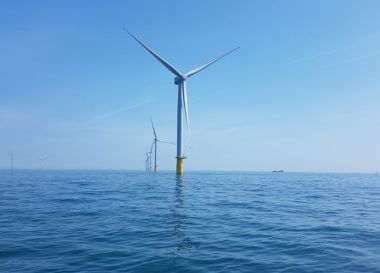
Offshore wind power (reNews image)
¶ Germany’s hard coal imports may fall for the third year in a row this year and by 12% from 2017 levels, importers group VDKi forecast, citing competition from renewable energy. The group forecasts imports of 45 million tonnes in 2018. Total imports of 51.2 million tonnes in 2017 were already down 10.2% from a year earlier. [Reuters]
¶ The first electricity from a £2.6 billion wind farm in the Moray Firth has been exported to the National Grid from one of the first installed of the its 84 turbines. It was erected by specialist ship Pacific Orca. Once completed, the Beatrice Offshore Windfarm Ltd project will be capable of providing enough electricity for up to 450,000 homes. [BBC News]
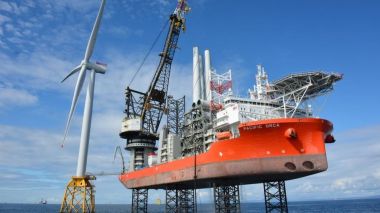
Pacific Orca at work (Beatrice Offshore Windfarm image)
US:
¶ Massachusetts is nationally recognized as a leading state in renewable energy, but the Environment Massachusetts Research & Policy Center said the Commonwealth could be doing more. The Boston-based advocacy group released a report, “Renewables on the Rise 2018,” and discussed it at press conference at City Hall in Springfield. [Reminder Publications]
¶ A US judge dismissed a lawsuit by New York City seeking to hold major oil companies liable for climate change caused by carbon emissions from burning fossil fuels. In dismissing the city’s claims, US District Judge John Keenan in Manhattan said climate change must be addressed through federal regulation and foreign policy. [Reuters]
¶ Advancing its clean energy goals, Madison Gas and Electric filed a rate case settlement agreement that seeks to lower electric rates and increase natural gas rates in 2019 and 2020 with the Public Service Commission of Wisconsin. The proposal would decrease overall electric rates by 1.94% in 2019, with no change proposed for 2020. [North American Windpower]
¶ According to a new report, North Carolina ranks third for solar energy growth and second in the nation for installed PV capacity. This is largely thanks to policies encouraging investment into solar infrastructure in the state’s rural communities, which have helped the state consistently rank top ten in the nation over the last decade. [Chapelboro.com]
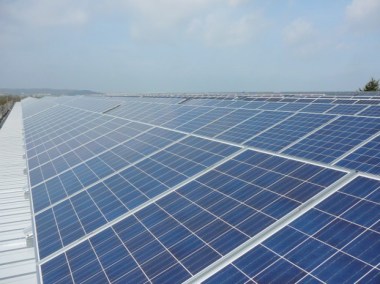
Solar array
¶ A report from the EPA’s Office of the Inspector General strongly criticizes the local, state and federal government’s response to the Flint water crisis in 2015 and 2016. The EPA issued an emergency order seven months after it had the “authority and sufficient information” to do so, according to a press release issued by the OIG. [CNN]
¶ EDF Renewables North America said it has struck a long-term power purchase agreement for its 70-MW Desert Harvest II solar project in California. Desert Harvest II is expected to go online in 2020, generating enough power to meet the annual demand of 35,000 homes. The project comes with a 35-MW, 4-hour energy storage system. [Renewables Now]
geoharvey is free and without ads.
geoharvey is not tax-deductible.
Posted in nuclear power, renewable power, solar, wind | Leave a Comment »
Tags: nuclear, nuclear power, renewable power, solar power, wind power
July 19, 2018
Opinion:
¶ “Rooftop solar could save utilities $100 to $120 per installed kilowatt” • Researchers from Carnegie Mellon and the National Renewable Energy Laboratory calculated that reduced demand in California because of solar panels installed between 2013 and 2015 saved utilities up to $730 million on purchases of electricity. There is a downside, however. [Ars Technica]
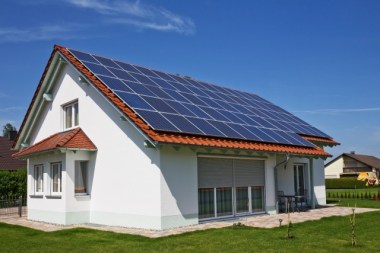
Rooftop solar system
¶ “Is coal making a comeback? No, it’s just ‘dead cat bounce’” • At first glance, the latest figures make for uncomfortable reading. Overall energy demand is up. Coal consumption is also up, for the first time in four years. And, perhaps most shockingly of all, greenhouse gas carbon emissions are rising again. Does it mean we are in reverse? [Irish Times]
World:
¶ The President of Peru Martin Vizcarra Cornejo officially opened Enel Green Power’s 132-MW Wayra 1 wind farm in the Ica region of the country. Wayra 1 consists of 42 3-MW turbines and will generate 600 GWh of electricity a year. The $165 million project is backed by a 20-year energy supply contract with Peru’s Ministry of Energy and Mines. [reNews]

Wayra 1 (Enel Green Power)
¶ China General Nuclear Power Corp has taken a 75% interest in the 650-MW Markbygden Ett wind farm in Sweden, Reuters reports, citing China’s state news agency Xinhua as the story’s source. No details on the value of the deal was given in the news report. The first of 179 GE 3.6-137 turbines was installed at the project earlier this week. [reNews]
¶ Statkraft, a Norwegian company, is planning to ramp up wind and solar power developments as part of an updated strategy in response to technological developments. The company said in its results for the first half of 2018 that optimisation of hydropower is also part of the new strategy, as are new business opportunities in renewables and decarbonisation. [reNews]
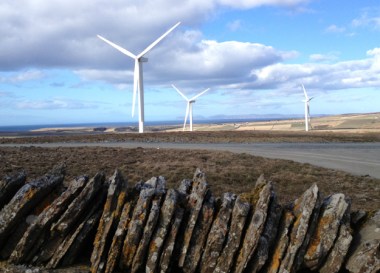
Wind farm (Photo: Statkraft)
¶ Carbon Brief reports the UK’s greenhouse gas emissions are already 38% below 1990 levels and are now equal to emissions not seen in that country since Queen Victoria sat on the throne. It says the decrease is attributable to a sharp drop in the amount of coal used in the UK to generate electricity, along with an increase in renewables. [Red, Green, and Blue]
¶ Victoria’s second large-scale solar PV farm, the 19-MW Swan Hill project in Victoria’s north-west, has been officially opened. The A$36 million ($26.44 million) project, which is owned and funded by Impact Investment Group’s second Solar Asset Fund, is expected to provide enough electricity for about 6,050 Australian homes. [RenewEconomy]
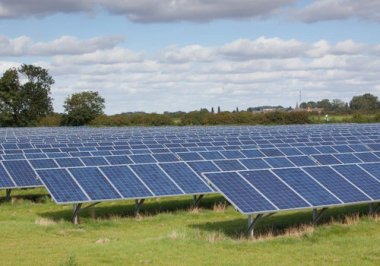
Solar farm
US:
¶ As one of his first major acts as acting director of the EPA, Andrew Wheeler signed and finalized new standards overseeing coal ash, the leftover waste created by power plants that burn coal. The new rules are a revision of 2015 regulations that were put into place by the Obama administration after two significant industrial coal ash spills. [CNN]
¶ A report and interactive map from Environment America takes stock of US clean energy progress to date. Renewables are taking off in nearly every state. Today, the US produces nearly six times as much renewable electricity from the sun and the wind as it did in 2008, and nine states now get more than 20% of their electricity from renewables. [Greentech Media]

Renewable energy (Photo: Shutterstock.com)
¶ Denver’s Mayor, now seeking a third term, pledged that the city will source 100% of its electricity from renewable sources by 2030. In doing so, Denver became the 73rd city in the US to commit to a 100% renewable electricity target. Nine other Colorado cities have made a 100% renewable electricity commitment, but Denver is the largest. [CleanTechnica]
¶ Arizona Public Service spent nearly $11 million to combat a renewable energy ballot proposal, a liberal watchdog group’s report says. The measure sets a goal of 50% renewable energy by 2030. APS shelled out $6.4 million in three months to prevent it from reaching the ballot. Local reports say it even paid petition collectors to stop signing up voters. [Utility Dive]

Solar array at sunrise
¶ Facebook will finance construction of six large solar projects to offset power use at its campus in Prineville, Oregon. The company says they will generate enough clean electricity to run all of the data centers there. The solar projects will generate 437 MW of power, an enormous amount of electricity needed to run the site’s power-hungry computers. [OregonLive.com]
¶ The Massachusetts House and Senate have passed different energy bills on the percentage of renewable energy in the Renewable Portfolio Standard. The Senate wants increases of 3% a year, but the House wants a lower rate. The Senate version could make the Commonwealth a leader in renewable power, attracting businesses in that field. [Public News Service]
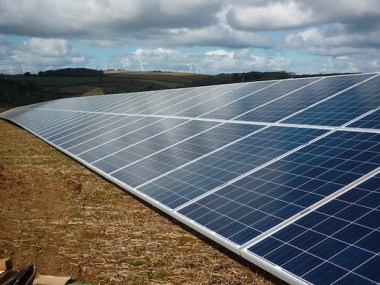
Renewable energy in Massachusetts (Pixabay image)
¶ FuelCell Energy, Inc announced that it will add over 100 highly skilled manufacturing jobs at its Torrington, Connecticut facility to support a 120% increase in the rate of production. FuelCell Energy is expanding annual production rate from the current 25 MW to 55 MW. The jobs will be added over a period of about 12 months. [GlobeNewswire]
¶ The Trump administration began an investigation into whether uranium imports threaten national security, a move that may lead to tariffs on the nuclear power plant fuel. US uranium miners supply less than 5% of domestic consumption for the metal and say it’s increasingly difficult to compete with state-subsidized companies abroad. [Yahoo Finance]
geoharvey is free and without ads.
geoharvey is not tax-deductible.
Posted in nuclear power, renewable power, solar, wind | Leave a Comment »
Tags: nuclear, nuclear power, renewable power, solar power, wind power
July 18, 2018
Opinion:
¶ “Investment in renewable energy drops as fossil fuel use rises” • Global investment in renewable energy is on the decline, the International Energy Agency said. Governments are failing to keep Paris Climate Accord promises. Investment fell by 7% to $318 billion last year, but fossil fuels’ share of energy investment rose for the first time since 2014. [Engadget]

Coal-burning power plant (Getty Images)
¶ “White nuclear elephants move onto the endangered list” • The UK has long been a welcoming habitat for a number of white elephants. Normally, these rare and massive beasts roam freely, grazing on political expediency. However, now and again their existence is threatened by outbreaks of political honesty and economic necessity. [The Ecologist]
¶ “Climate Change Scenarios: An Updated Summary Of Climate Change, Seal Level Rise, & Carbon Bubble Predictions” • If we do not change, we’re headed down a dark path. The Global Carbon Budget 2017 says that in order to avoid 2°C of warming, “global CO2 emissions need to decline rapidly and cross zero emissions after 2050.” [CleanTechnica]
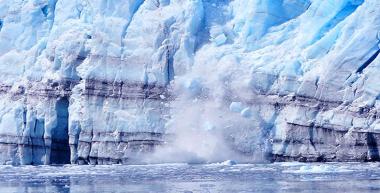
Melting Arctic ice
World:
¶ Google is putting its considerable resources behind a new partnership with the UN, national governments, and NGOs that will chart changes in the Earth’s various ecosystems in real time. Google will use “massive parallel cloud computing technology” to make it possible to monitor changes in the Earth’s ecosystem in real time. [CleanTechnica]
¶ Indian renewables developer Azure Power has over 3 GW in its project portfolio, after securing the rights to develop a 300-MW PV scheme in a recent auction by Solar Energy Corporation of India. The latest project is part of the Interstate Transmission System scheme and so can be developed anywhere in India, the company said. [reNews]
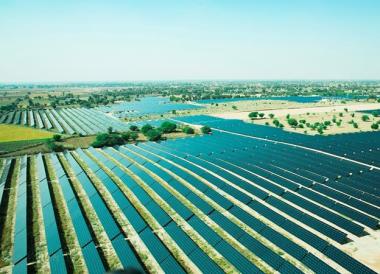
Azure Power solar array (Azure Power image)
¶ Global energy investment fell for the third consecutive year in 2017, according to the International Energy Agency. Investment in nuclear power declined by nearly 45% last year to $17 billion. Although spending on new nuclear reactors reached the lowest level in five years, investment on upgrades of existing units increased. [World Nuclear News]
¶ Over the next year and a half, the Pacific island nation of Palau will shift to 100% renewable energy, at no cost to the government, in what is likely to be the fastest national transition to renewable energy ever to occur. In a new program, the partners behind the work in Palau plan to now help other small island nations do the same thing. [Fast Company]
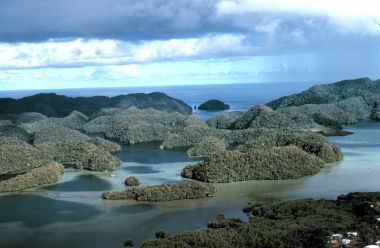
A few of Palau’s many islands (Dr James P McVey | NOAA)
Australia:
¶ New figures from the Australian PV Institute show that Australia impressively installed 1.3 GW of solar PV in 2017, a record for the country. But it may be just a prelude to 2018, which looks to be set to eclipse all previous years. The figures say 1.9 GW of solar currently under construction in Australia and a further 35 GW at various stages of development. [CleanTechnica]
¶ Queensland will have 2164 MW of renewable energy ready by mid-2019, equivalent to 21% of its total energy production, its Energy Minister said. The Clean Energy Council said that level of renewable energy would power more than 800,000 Queensland homes. Queensland’s largest coal-burning power plant will close in about 10 years. [Brisbane Times]

Gladstone Power Station, Queensland (Photo: Glenn Hunt)
¶ In February, Tesla and the government of South Australia announced a plan to create the largest virtual power plant in the world, 50,000 home systems with a total system output of 250 MW and 625 MWh of storage. So far, installations have been completed on 100 homes, and the results are everything Tesla expected them to be. [CleanTechnica]
US:
¶ The developer of the first offshore wind farm in the US is ramping up work on projects to supply energy to several states. Deepwater Wind’s CEO said they are beginning new phases of development for three wind farms. One is for Rhode Island and Connecticut, another for Long Island, New York, and a third for Maryland’s Eastern Shore. [Fairfield Citizen]
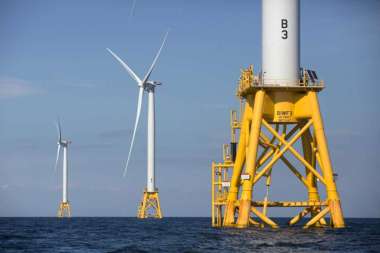
Block Island wind farm (Photo: Michael Dwyer | AP)
¶ The Molson Coors Brewing Company published its annual sustainability report, which detailed the company’s progress towards its sustainability targets and announced that it has committed to a science-based greenhouse gas emissions target intended to reduce greenhouse gas emissions to keep global temperature increase below 2°C. [CleanTechnica]
¶ With soybean prices falling to their lowest levels in years, farming the sun instead of the land is becoming an increasingly attractive, and sometimes more profitable, use of property for some landowners. One Illinois farmer finally found the type of development she feels is right for forty acres of her land south of Belleville, Illinois. [Belleville News-Democrat]

Solar development (Innovative Power Systems)
¶ US home energy storage systems installations hit a record high in the first quarter of 2018. 36 MWh of grid-connected home energy storage systems were installed during this period. US energy storage market growth was 26% from Q4 2017 to Q1 2018. Nearly three quarters of the Q1 installations were in California and Hawaii. [CleanTechnica]
¶ A proposal for a high-voltage power line carrying wind energy across the Midwest received new life as the Missouri Supreme Court ruled that the state regulators had wrongly rejected it. The $2.3 billion project would carry power harnessed from western Kansas to Illinois and an electric grid in Indiana that serves the eastern US. [Arkansas Online]
geoharvey is free and without ads.
geoharvey is not tax-deductible.
Posted in nuclear power, renewable power, solar, wind | Leave a Comment »
Tags: nuclear, nuclear power, renewable power, solar power, wind power
July 17, 2018
Opinion:
¶ “As subsidies wane, market forces drive the growth of renewables” • For twenty years, Germany had a subsidy scheme for renewables. As that was replaced by an auction system, the market has proceeded along a bumpy road. Now, the declining costs of wind and solar power are increasingly competing on their own merits. [GreenBiz]
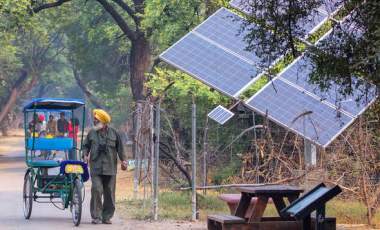
Path in an Indian national park (Don Mammoser | Shutterstock)
¶ “An Open Letter To California Energy Commissioners On The Rooftop Solar Mandate” • The conventional wisdom in electricity generation is that scale matters. But this outdated notion rests on the assumption that electricity generators compete only in the wholesale market. California’s nearly 1 million solar roofs debunk this myth. [CleanTechnica]
Science and Technology:
¶ A thought experiment published by London-based climate charity 10:10 Climate Action raises the question of whether the many lost rivers of London, now running through tunnels, could again become the lifeblood of one of the world’s great cities by using heat pumps to provide low cost, low carbon heating and cooling. [CleanTechnica]

London
World:
¶ Renewable energy developer KP Energy announced it has signed an agreement with GE India to set up a 300-MW wind power project at Kutch in Gujarat. The project would use 120 wind turbine generators of 2.5-MW capacity each and is likely to be connected to the power grid and commissioned in September of next year. [ETEnergyworld.com]
¶ JA Solar, by some accounts the world’s third-largest solar PV module supplier, announced securing loans in connection with a 1.5-MW PV cell manufacturing plant it is building in Vietnam. The plant will further the company’s ability to ship products from countries other than China, which has been the target of trade barriers for several years, [CleanTechnica]

Solar cell manufacture
¶ China and the EU reaffirmed their commitments to the Paris climate pact and called other signatories to do the same, saying action against global warming is increasingly important. After President Donald Trump’s decision to withdraw the US from the agreement, China and the EU have emerged as world leaders on climate change. [ETEnergyworld.com]
¶ Seeking a competitive edge in the world’s renewable energy auctions, manufacturers of both onshore and offshore wind turbines are having to increase the pace of innovation. This is driving “unprecedented growth” of the next-generation of onshore and offshore wind turbine sizes, according to research from MAKE Consulting. [CleanTechnica]

GE Renewable Energy’s 12 MW Haliade-X offshore wind turbine
¶ The Danish Energy Agency developed a sophisticated modelling tool to calculate the levelized costs of energy. It provides costs of €30/MWh for electricity from onshore wind and €40/MWh for solar power. The cost of electric power from Danish offshore wind projects is €46/MWh, and this makes offshore windpower cheaper than nuclear power. [Business Insider Nordic]
¶ A UK rail freight company said all its sites and offices will be powered by 100% renewable electricity. DB Cargo UK signed a three-year agreement with SSE Business Energy to supply its sites with green power. This is estimated to help reduce 5,000 tonnes of carbon emissions a year and equivalent to powering almost 4,000 homes. [Energy Live News]

UK rail transit (Image: DB Cargo UK)
¶ The global power sector is witnessing a gradual transition from conventional thermal power generating sources toward clean energy technologies. The renewables share was 8.6% in the global energy mix in 2010 and is expected to increase to 22.5% in 2020 as per a recent thematic research report Renewable Energy by GlobalData. [Power Technology]
¶ Despite the spin the government put on the Australian Energy Market Operator’s Integrated System Plan, its supporting data shows that the National Energy Market could be almost 85% renewable by 2040, with only 7.25 GW of coal power left in the country by then. Coal’s current 40% share of capacity could drop to just 6%. [RenewEconomy]
¶ Ontario’s Energy Minister is refusing to say how much it will cost taxpayers to cancel 758 renewable energy contracts in an effort to save $790 million, as opposition parties accuse him of leaving Ontarians in the dark. “It’s still money out the door. The people deserve to know that,” said a Green Party Leader. “It’s very disturbing.” [Toronto Star]
US:
¶ The Missouri Public Service Commission is supporting a 600-MW wind project filed by The Empire District Electric Company. It found that the company had presented credible and persuasive evidence that the Customer Savings Plan, if implemented as designed, would generate customer savings of about $295 million over 30 years. [Windpower Engineering]
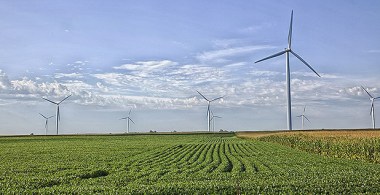
Midwest wind farm
¶ A study released by the Smart Electric Power Alliance says Massachusetts needs to upgrade its infrastructure to take the next steps in clean energy. While the state is a leader in clean energy and the reduction of greenhouse gases, it is behind some other states in upgrading infrastructure and optimizing distributed energy resources. [Daily Energy Insider]
¶ A garbage-to-energy plant in Elk River, Minnesota, could be going out of business, a victim of falling prices for electricity. Officials of the Elk River Resource Recovery Project announced it would shut the plant down in March 2019, if it could not find a buyer. The project removes recyclable metals from garbage and burns it to generate power. [TwinCities.com]
geoharvey is free and without ads.
geoharvey is not tax-deductible.
Posted in nuclear power, renewable power, solar, wind | Leave a Comment »
Tags: nuclear, nuclear power, renewable power, solar power, wind power
July 16, 2018
Opinion:
¶ “Babcock Ranch In Florida Is To Sustainable Living What Tesla Is To Sustainable Transportation” • Tucked into a corner of Southwest Florida about a half-hour from Fort Myers, Babcock Ranch is what developer Syd Kitson calls the most sustainable new community in America. It was designed from the start as a green development. [CleanTechnica]

Babcock Ranch
¶ “Why Nuclear Energy Is Critical For Russia” • The order book of Russia’s state-owned Rosatom has steadily grown to $300 billion dollars in recent years. Currently, 34 reactors in 12 countries are under construction worldwide, while several other states have shown interest. That is 60% of all nuclear power plants planned or under construction. [OilPrice.com]
Science and Technology:
¶ We have seen news about a cruise ship, Energy Observer, which as caught the world’s attention as it sails around the world on a six-year voyage. It is going on this long trip powered entirely by solar, hydrogen, wind and water energy, without fossil fuels. One article has already appeared here on June 23, but now we have more. [Interesting Engineering]
World:
¶ For the first time ever, more than 80% of the power generated in the Indian state of Karnataka was green. According to the energy department, of the total 6,763 MW power generated at 7 pm, only 1,300 MW was from conventional sources. Non-conventional sources contributed 3,319 MW, of which wind energy accounted for 2,964 MW. [Deccan Herald]
¶ China is set to make more inroads into European infrastructure, as a state-owned company tries to gain full control of Portugal’s power grid. The EU Commission lacks the proper legal framework to “protect” EU common interests, and it could be a wake-up call to speed up the procedure to establish an investments screening mechanism. [EURACTIV]
Transmission lines
¶ A Franco-German declaration signed in Paris on 21 July could see the countries collaborate in the realization of offshore wind and other renewable energy initiatives. The declaration noted that France and Germany believe co-ordination in the field of EU energy policy should be complemented by concrete projects and measures. [Offshore Wind Journal]
¶ South Korea saw the trading value of power generated from renewable energy come to 2.05 trillion won ($1.82 billion) last year, up 20.1% from the previous year, according to the data from the Korea Power Exchange. Electricity coming from the so-called by-product gas accounted for 47% of renewable energy-based power generation. [The Korea Bizwire]
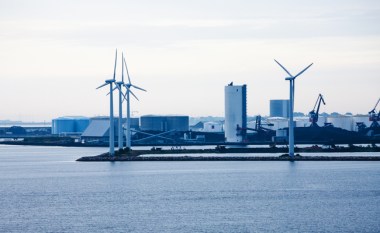
Wind turbines (Image: Korea Bizwire)
¶ A governmental framework to bring clean power to rural communities through micro hydro plants is being developed in the Dominican Republic. It is part of an effort to develop planning and technical advice schemes so that no community in the country is left without electricity, in line with national strategy goals. [Renewables Now]
¶ A YouGov poll found that a majority of the UK public think the Government should reverse its current policy on banning onshore wind from the energy mix. Of people surveyed, 66% said they felt that they would support a change in government policy to allow the building of onshore wind farms in areas where they have local backing. [Energy Voice]

Welsh wind farm
Australia:
¶ Australian renewable energy company Renew Estate says it has been granted planning approval to build the 300-MW Rodds Bay Solar Farm in Queensland. If it goes ahead at that scale, Rodds Bay will be one of the largest solar farms in Australia, and would provide enough renewable energy to power about 88,000 homes. [RenewEconomy]
¶ The Renewable Energy Index reveals that solar and wind farms contracted or being built in Australia, combined with steady rooftop solar investment, will contribute 33.3% of power to the National Energy Market by 2020. This almost doubles the 2015 rate when renewables contributed just 17.3% of annual electricity consumption. [PACE Today]
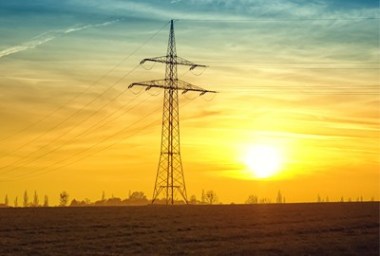
Transmission lines at twilight
¶ The prospects for Tesla’s proposed 250-MW virtual power plant in South Australia look significantly brighter after the success of its first trial and an enthusiastic response from the South Australia government. So far, some 100 Housing SA homes have received their 5-kW of rooftop solar PVs and the 13.5k-Wh Tesla Powerwall batteries. [RenewEconomy]
US:
¶ Tucson Electric Power Co claims a proposed state policy requiring utilities to generate 80% of their power from renewable sources by 2050 is doable but would raise costs by more than $800 million through 2030. Much of the higher costs would consist of an additional $673 million in investments in energy-storage systems. [Arizona Daily Star]

Solar power (Courtesy of Tucson Electric Power Co)
¶ According to the Illinois Department of Commerce & Economic Opportunity, the Future Energy Jobs Act, signed into law in 2017, was designed to help guide Illinois toward new clean economy by growing renewable energy resources and energy efficiency programs. Residents of Bloomington-Normal are achieving goals with it. [WJBC News]
¶ While the US is deeply divided on many issues, climate change stands out as one where there is remarkable consensus, according to a Stanford research study that was conducted with ABC News and Resources for the Future, a research organization based in Washington, DC. Of those polled, 74% believe the world is warming. [Stanford University News]
geoharvey is free and without ads.
geoharvey is not tax-deductible.
Posted in nuclear power, renewable power, solar, wind | Leave a Comment »
Tags: nuclear, nuclear power, renewable power, solar power, wind power
July 15, 2018
Opinion:
¶ “Forest policy looms over Oregon’s climate change debate” • As lawmakers gear up to make another attempt to pass a climate change bill in 2019, new data suggests that the forest sector is not only a factor in Oregon’s carbon picture, it is THE factor and one of national and even international importance for reducing greenhouse gas emissions. [OregonLive.com]

Forest fire
¶ “India will weather Iran-fuelled oil price instability” • Energy prices in India have been going up for geopolitical reasons, especially the uncertainty over the supply of Iranian crude. The current turmoil stems from the Trump administration’s plan to impose sanctions on Iran, but India has secured oil sources from other parts of the world. [The Sunday Guardian]
¶ “Europe keeps setting clean-energy records” • This week, two of the biggest economies in Europe set new records for clean energy. And the pace of change is only expected to accelerate, as prices for renewable energy continue to decline rapidly. Now, the EU is tightening its emissions-trading scheme, which is raising the price of carbon. [Quartz]
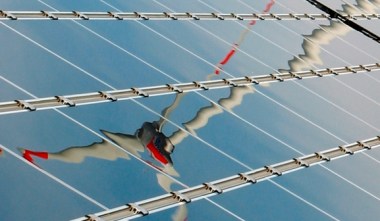
Wind turbine’s reflection in solar panels
¶ “How Renewable Energy Is Making Our Military Bases More Resilient” • To make its domestic military bases more energy resilient, and more secure in the event of a natural disaster or manmade event, the Pentagon wants to move toward energy sources that do not rely on fuel or traditional supply chain methods that supply fuel. [MarketWatch]
Science and Technology:
¶ In a hurricane-proof lab in the Florida Keys, scientists coddle tiny pieces of coral from the moment they are spawned until they are hearty enough to be separated into specimens equipped to survive in the wild. Global warming is rapidly bringing the natural wonder to the brink of extermination, and the scientists hope for “assisted evolution.” [WatertownDailyTimes.com]

Coral nursery (Carolyn Cole | Los Angeles Times | TNS)
¶ Chemical reactor company INERATEC, a spinoff of Karlsruhe Institute of Technology, and the Spanish company Gas Natural Fenosa built a plant in Spain that produces synthetic natural gas from CO2 and renewable hydrogen. The hydrogen is produced by electrolysis using renewable power, and the CO2 comes from sewage sludge. [Green Car Congress]
¶ In a study published in the journal Nature Plants, a multinational team of scientists discussed how they sequenced genomes for tiny ferns Azolla filiculoides and Salvinia cucullata. The research has implications in fields ranging from agriculture to climate science. It turns out that the ferns may be important tools to fight global warming. [The Inquisitr]

Azolla
World:
¶ In an innovative effort to fight electricity crisis in forward areas, Gujarat Frontier of the Border Security Force will use solar energy for its out-posts in remote border areas where no electrification has been possible to date. Gujarat Frontier will soon set up a 5-MW PV plant and also separately electrify 20 border outposts by solar energy. [ETEnergyworld.com]
¶ Most electric mobility news is centered around EVs with wheels, and now also electric aircraft, but the electric maritime world is not left behind entirely. Monaco is putting on the Solar Boat Energy Challenge. The purpose is to encourage technological innovation and help the maritime industries to become more sustainable. [CleanTechnica]

Electric boat racing
¶ Uzbekistan said it reached an agreement with Russia to build a nuclear power plant, a development it says will help it economize on gas and coal. Opponents of the scheme, however, say the power station could pose a danger to the environment. And the vast costs attached to the project raise questions about how the funding is to be secured. [OilPrice.com]
¶ New Vietnamese policies encourage both local and international firms to invest in renewable energy there, according to authorities. The Prime Minister approved 15 wind projects in Ninh Thuan province, with investments on twelve of them coming to $1.2 billion. About 25 solar power projects were also added, bringing more investment. [en.vietnamplus.vn]
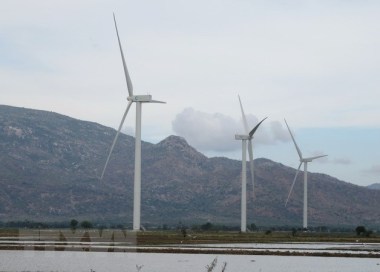
Dam Nai wind project in Ninh Thuan (Image: VNA)
US:
¶ ExxonMobil announced it will leave the American Legislative Exchange Council, a corporate lobby group bankrolled by the Koch brothers and known for its attempts to block climate action. Campaigners cautiously welcomed the decision, though they said Exxon had to do more to prove it was committed to addressing climate change. [NationofChange]
¶ Foley Power Solutions, a division of Foley Equipment, Wichita, Kansas, has completed the installation of a solar microgrid on the roof of the company’s Kansas City, Missouri, facility. The 172-kW solar microgrid will create energy at a cost savings of $23,000 in its first year with a planned savings of $1.25 million over the next 25 years. [Rental Pulse]
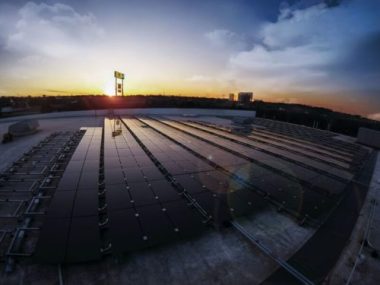
Foley Equipment solar facility
¶ Christine Todd Whitman was head of the EPA under President George W Bush back in 2001–2003. Working intimately with (and regulating) the energy industries, she witnessed efforts from the oil industry to undermine clean energy solutions. Recently, she appeared on CNBC to discuss the misguided “misinformation” efforts of Big Oil. [CleanTechnica]
¶ In September, the nonprofit Just Transition Fund will hold its first meeting focused specifically on the transition away from coal in the Midwest, with a particular focus on organized labor. The group will also expand its focus on Illinois, where the EcoJustice Collaborative has been working on transition plans with mining communities for years. [Rapid City Journal]
geoharvey is free and without ads.
geoharvey is not tax-deductible.
Posted in nuclear power, renewable power, solar, wind | Leave a Comment »
Tags: nuclear, nuclear power, renewable power, solar power, wind power
July 14, 2018
Opinion:
¶ “Clean energy is catching up to natural gas” • The natural gas “bridge” to sustainability may be shorter than expected. Around 2015, just five years into gas’s rise to power, complications for the bridge narrative began to appear. Wind and solar costs fell so far, so fast that gas is increasingly unable to compete with them, and then batteries came along. [Vox]

Dead end for the bridge (Shutterstock image)
¶ “Lawmaker inaction leaves SC home solar industry endangered” • South Carolina has a cap on net metering of 2%. It is especially disappointing that state lawmakers could not take even modest steps to help electric ratepayers by raising it. Instead, the year was dominated by discussion over the failed construction of two nuclear reactors. [Charleston Post Courier]
Science and Technology:
¶ High temperature records have been set across much of the world this week as an unusually prolonged heat wave intensifies concerns about climate change. The World Meteorological Organization said the rising temperatures were at odds with a global cyclical climate phenomena known as La Niña, which is usually associated with cooling. [The Guardian]

Dried up river in England (Photo: Matt Cardy | Getty Images)
World:
¶ Ontario’s new Progressive Conservative government said it is cancelling 758 renewable energy contracts, making good on a campaign promise. The energy minister said the move is an effort to save ratepayers in the province $790 million. Industry officials dispute the figure and say the move will just mean job losses for small business. [CBC.ca]
¶ Apple will partner with 10 initial Chinese suppliers to invest $300 million over the next four years, as part of the company’s commitment to address climate change and increase the use of renewable energy in its supply chain. The fund will invest in and help to develop clean energy projects worth more than 1 GW of renewable energy in China. [CleanTechnica]

Solar PVs in Sichuan province
¶ Corvus Energy, based in Vancouver, is expanding its battery manufacturing capability in Canada and at a new factory in Norway. The company leads in providing electric propulsion for ships and ferries. Its CEO said, “There is an electric revolution going on in the maritime sector, and we want to deliver the best solutions in the industry.” [CleanTechnica]
¶ Saudi renewables developer Acwa Power signed an agreement with South Africa’s Central Energy Fund to co-invest in a 100-MW concentrated solar power project in North Cape province. The Redstone project is expected to dispatch around 480,000 MWh per year, enough to power 210,000 homes during peak demand times, Acwa Power said. [The National]
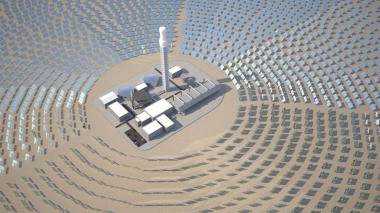
Concentrated solar power project in Tunisia (Courtesy TuNur)
¶ A Navigant Research report looks at the global market for corporate procurement of renewable energy from utility-scale, offsite renewable energy projects through 2027. For the Asia Pacific region, they are forecast to reach 9.2 GW and $7.9 billion annually by 2027. In North America, they are expected to reach 2.7 GW and $3.1 billion. [Windpower Engineering]
US:
¶ Bus manufacturer Alexander Dennis Inc, Proterra, and Southern California’s Foothill Transit announced the first electric double-deck bus order for a public transit agency in North America. Proterra will provide the electric batteries and powertrain for ADI’s next-generation double-deck Enviro500 platform for the North American market. [CleanTechnica]

Enviro500 bus
¶ Climate activists are lashing out at leaders of the Massachusetts House of Representatives, saying a clean energy bill they just passed does not go far enough in support of clean energy. Mass Power Forward, a coalition of 150 groups, said the “paltry increase” represents an “utter abdication of progressive leadership on renewable energy.” [MassLive.com]
¶ Montana’s sparsely populated upper Musselshell River Valley looks almost empty from the top of Gordon Butte. But if the plans of renewable-power developers pan out, the butte and the valley will be sites of a large wind farm, or two, and a $1 billion hydro project that serves as a “battery” storage to complement intermittent wind power. [KTVH]

Musselshell River Valley (USDA photo)
¶ Atop the new 290,000-square-foot Ikea store in Oak Creek, Wisconsin, are 4,716 solar panels, part of Ikea’s worldwide effort at conservation. Those panels collect sunlight to generate electricity, providing the store with 20% to 50% of the power it consumes. At least for now, Ikea has the largest rooftop solar power project in Wisconsin. [Milwaukee Journal Sentinel]
¶ As the global transition from fossil fuels and nuclear power to renewable energy progresses, even those states that have shown less ambition to date are beginning to make bold moves. The Pennsylvania Department of Environmental Protection published a draft report that plans to provide 10% of the state’s electricity with solar power. [pv magazine International]
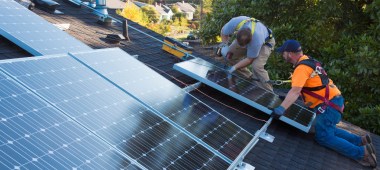
Solar installers (Office of New York Governor Andrew Cuomo)
¶ New York’s utility leadership ordered the first procurements toward a goal of 2,400 MW of offshore wind power generation by 2030, the governor’s office announced. The New York Energy Research & Development Authority will procure about 800 MW of offshore wind through a solicitation in the fourth quarter this year. [Power Engineering Magazine]
¶ In the last week of June, broad areas of the the US were hit by a powerful heat wave stretching across the country, breaking 227 US records in its first week alone. A new and distressing report from Media Matters reveals that most major broadcast TV networks are completely ignoring the link between unprecedented heat waves and climate change. [ScienceAlert]
geoharvey is free and without ads.
geoharvey is not tax-deductible.
Posted in nuclear power, renewable power, solar, wind | 1 Comment »
Tags: nuclear, nuclear power, renewable power, solar power, wind power
July 13, 2018
Science and Technology:
¶ Australia boasts a renewable energy potential of 25,000 GW, one of the highest in the world and about four times the installed electricity production capacity of the entire planet. A chemist at Monash University says that energy can be captured and stored for later use by making ammonia, which can be used as a carbon-free fuel. [Science Magazine]
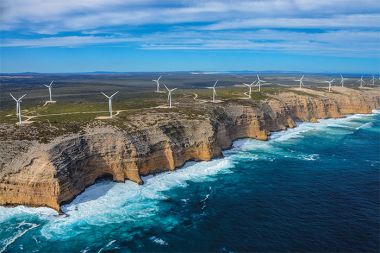
Australian energy (Coast Protection Board, South Australia)
¶ Researchers at Norway’s Department of Energy Technology in Kjeller say they have perfected a way to substitute silicon for the graphite commonly used in the anodes of lithium-ion batteries. The discovery will lead to batteries that can power an electric car for 600 miles or more, the researchers claim. Pure silicon has ten times the capacity of graphite. [CleanTechnica]
¶ Recent research conducted by Theodore Endreny, Dr David Nowak of the USDA Forest Service, and Scott Maco from the Davey Institute generated some insights about the value of urban trees. In addition to the shade and beauty they provide to cityscapes, they also provide value, which can be measured in economic terms. [CleanTechnica]

Heckscher Playground in Central Park
World:
¶ A combination of good meteorological conditions in the first half of 2018 has led Spain to cover 45.8% of the electricity demand on its grid from renewable energy sources. Wind energy systems were the peninsula’s primary source of electricity, covering 22.6% of its electricity demand, followed by hydro power, with a 16.9% share. [pv magazine International]
¶ In 2016, the UK ran for a total of 210 hours without using coal to generate electricity. In 2017, the figure rose to 624 hours. For 2018, the figure is already above 1,000 hours, and the switch to renewable power is accelerating, as two of the UK’s eight coal-burning plants are to close this year. Over the past four weeks, PVs provided 7.4% of the UK’s electricity. [The Guardian]

Smoke from coal (Photo: John Giles | PA)
¶ A little over a year since President Donald Trump announced that the US would withdraw from the 2015 Paris Climate Change Agreement, the Vatican hosted a conference to commemorate the third anniversary of Laudato Si, Pope Francis’ environmental encyclical. He encouraged citizens to take matters into their own hands. [Crux: Covering all things Catholic]
¶ The Guardian reports that the Irish fossil fuel divestment bill has now passed the lower house of parliament, and it is expected to pass the upper house rapidly. That means it could be law before the end of the year, and the government will be obligated by law to sell all investments in coal, oil, gas, and peat as soon as it is practicable to do so. [Treehugger]
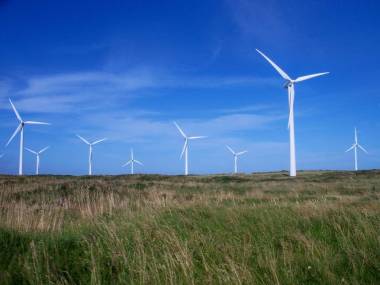
Wind farm (Harrygep, CC BY-SA 2.0)
¶ The UK has mapped plans for a “broad energy cooperation” with the EU after Brexit. London has suggested a series of options for electricity trading in a white paper it published, including leaving the Internal Energy Market. But the white paper also proposes continued participation in the internal market, under a new set of common rules. [reNews]
¶ Tata Power Renewable Energy Ltd won a contract to develop 250 MW of solar projects in the Indian state of Karnataka.The projects will be set up at the Pavagada Solar Park and will supply energy to the state distribution companies under a 25-year power purchase agreement. Tata Power won the bid at a ₹2.85/kWh (4.2¢/kWh) tariff rate. [pv magazine India]

Tata Power Solar project (Image: Tata Power Solar)
¶ A crowdfunding campaign has been set up to support EDF’s 5-MW Aramon solar PV project in France. The campaign, on digital investment platform WiSeed, aims to raise €200,000 for the solar farm’s construction. Aramon, in the Gard region of southern France, was awarded to EDF in March 2017 by CRE, the French regulator. [reNews]
¶ India can add about 3 million new jobs by 2030, provided 40% of the country’s electricity is generated through renewables, according to a report by IndiaSpend. The report quotes a study from the International Labour Organisation, an arm of the UN, which examines the implications of climate change mitigation for employment. [EnergyInfraPost]
Indian wind farm
¶ Three shareholders filed a temporary injunction request with the Tokyo District Court to stop TEPCO from providing funding to restart the Tokai No 2 nuclear plant. They claim that any financial support violates provisions in the Companies Law that call for careful management decisions that do not clash with the interests of shareholders. [Asahi Shimbun]
US:
¶ 8minutenergy, the largest independent solar power developer in the US, announced that it successfully energized Phases 1 and 2 of the 328-MW Mount Signal 3 Solar Farm in the city of Calexico in California’s Imperial Valley. American solar PV manufacturer First Solar provided 2.8 million Series 4 thin-film solar panels for the mammoth project. [CleanTechnica]

Mount Signal 3 Solar Farm
¶ A Tesla spokesperson officially confirmed to CleanTechnica that the company had sold and delivered 200,000 EVs in the US. The phaseout period of the federal EV tax credit is set into motion when a manufacturer sells its 200,000th EV in this country. The amount of the tax credit will be cut 50% on January 1, 2019, with two further to follow. [CleanTechnica]
¶ ElectraTherm commissioned its first Power+ waste heat to power unit in California. Low-temperature organic Rankine cycle heat recovery systems are able to generate power from waste heat ranging from 170-252°F. Captured heat is then used to produce a high pressure vapor that drives a generator to produce emission-free power. [CleanTechnica]
geoharvey is free and without ads.
geoharvey is not tax-deductible.
Posted in nuclear power, renewable power, solar, wind | Leave a Comment »
Tags: nuclear, nuclear power, renewable power, solar power, wind power
July 12, 2018
Opinion:
¶ “World’s only carbon-negative country Bhutan is giving us renewable energy goals” • Bhutan’s Prime Minister had the goal of making his country carbon neutral to make sure Bhutan does not contribute to the releasing carbon dioxide into the atmosphere. Now he has added a new policy of maintaining a minimum of 60% forest coverage. [India Today]

Paro Taktsang, Bhutan
¶ “Germany Is Nobody’s ‘Captive,’ Mr Trump” • At the NATO summit, Trump said Germany was “totally controlled” by Russia. “Germany is a captive of Russia because they got rid of their coal plants, they got rid of their nuclear plants. They’re getting so much of the oil and gas from Russia. I think it’s something NATO has to look at.” [Bloomberg]
¶ “Top Renewable Energy Financiers Reveal Pathway To $1 Trillion In US Investment” • A new financial sector survey shows confidence that renewable energy projects in the US will continue to be more attractive than other investments. Cumulative private investment in US renewable energy could reach up to $1 trillion between 2018 and 2030. [Forbes]
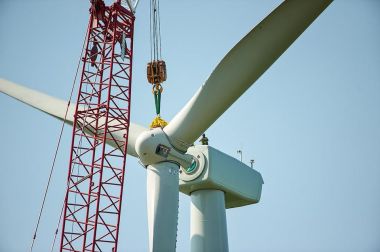
Wind park in Michigan (Consumers Energy via Flickr)
World:
¶ Independent solar power producer based Azure Power has announced that it won a 160-MW solar power project in Uttar Pradesh. It will sign a 25-year power purchase agreement with Uttar Pradesh Power Corporation Limited at a tariff of ₹3.55/kWh (5.2¢/kWh), around 45% higher than the lowest tariff bid for a solar project in India. [ETEnergyworld.com]
¶ Delhi-based private power transmission firm Sterlite Power has announced that it bagged six new electricity line projects worth $1 billion in a recently concluded auction in Brazil. The projects include setting up 23 sub-stations; 2,000 circuit Kilometer of transmission lines and 5,500 Mega Volt Ampere of transformation capacity, the company said. [ETEnergyworld.com]

Aerial view of a transmission tower and lines
(A Google image search says this is a hardwood floor.)
¶ The Australian Competition and Consumer Commission recommended the government give financial certainty to new power plants, guaranteeing energy will be bought at a cheap price if it can’t be sold. Prime Minister Malcolm Turnbull said the finance proposal had merit, but he ruled out directly funding specific types of power generation. [SBS]
¶ Siemens Gamesa Renewable Energy is to supply 109 turbines to two wind farms in South Africa. They are the 140-MW Kangnas wind farm in the Northern Cape, and the 110-MW Perdekraal East wind farm in the Western Cape. When they are done Siemens Gamesa will have installed over 850 MW of wind capacity in the country. [Power Engineering International]
UK:
¶ UK renewable energy developer British Solar Renewables has announced that it had completed construction of the 49.99-MW Stocking Pelham battery storage project in England, the largest such facility in the UK. It is made up of seven of SMA’s E-houses, 27 inverters, 12 kilometers of cable, and 150,000 lithium-ion battery cells. [CleanTechnica]
¶ UK tidal power company Tidal Lagoon Power struck back at the UK Department for Business, Energy and Industrial Strategy and its recent decision not to support the 320-MW Swansea Tidal Lagoon project in Wales. TLP said the department’s statement on tidal lagoons as a whole was “designed to mislead” and was “a manifest distortion of the truth.” [CleanTechnica]
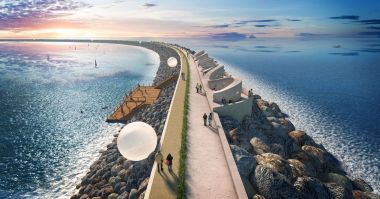
Swansea Tidal Lagoon power plant
¶ The General Synod of the Church of England voted almost unanimously in favor of divesting from companies that fail to align themselves with the Paris Climate Agreement. The Church will “assess companies’ progress by 2023” to evaluate performance on climate goals and divest from oil and gas companies deemed to be failing. [CleanTechnica]
US:
¶ California greenhouse gas emissions fell below 1990 levels, meeting an early target years ahead of schedule and putting the state well on its way toward reaching long-term goals to fight climate change, officials said. The California Air Resources Board announced pollution levels were down 13% since their 2004 peak, while the economy grew 26%. [The Japan Times]

San Gabriel Mountains and Los Angeles (AP photo)
¶ Napa County might generate as well as take green energy from the power grid if proposed solar farms in rural Coombsville east of the city of Napa and near American Canyon become realities. Renewable Properties has applied to Napa County to build two rural arrays. Each of the solar systems would have a capacity of about three MW. [Napa Valley Register]
¶ BYD has delivered five electric buses to Martha’s Vineyard Transit Authority. The new buses will give residents and visitors alike the opportunity to ride in fully electric buses that generate zero emissions and make far less noise than those with internal combustion engines. And each bus will save the transit authority tens of thousands of dollars per year. [CleanTechnica]

VTA electric bus in a Fourth of July parade
¶ Westar Energy is creating a new opportunity for businesses to access wind-generated power. The utility company announced it has received approval from the Kansas Corporation Commission for a renewable energy program that will allow companies to purchase wind energy from a wind farm to be developed near Manhattan, Kansas. [Wichita Business Journal]
¶ A federal appeals court backed Florida Power & Light and Duke Energy Florida in a class-action lawsuit that sought to recover $2 billion in money paid by utility customers under a controversial 2006 nuclear-power law. The law, allowing utilities to collect money for nuclear projects that might never be built, was argued to be unconstitutional. [Citrus County Chronicle]
geoharvey is free and without ads.
geoharvey is not tax-deductible.
Posted in nuclear power, renewable power, solar, wind | Leave a Comment »
Tags: nuclear, nuclear power, renewable power, solar power, wind power
July 11, 2018
Opinion:
¶ “ACCC wants federal rooftop solar subsidy abolished by 2021” • The Australian Competition and Consumer Commission, in a report on how electricity consumers have been ripped off by networks, generators, and retailers, targeted the technology with the least impact, and probably biggest benefit – rooftop solar – to have its subsidies abolished. [RenewEconomy]
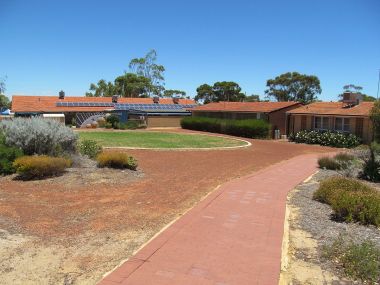
Rooftop solar system on a School in Western Australia
(Photo: Orderinchaos, Wikimedia Commons)
¶ “Kavanaugh Could Usher In Even More Business-Friendly Era on Supreme Court” • Brett Kavanaugh could add a powerful new voice on the Supreme Court. His record on the US appeals court reveals views closely aligned with conservatives who seek to rein in agencies on issues from climate change to net neutrality and financial oversight. [BloombergQuint]
World:
¶ The Volkswagen Group signed the initial letters of intent with the FAW Group and the Connected Vehicles Research Institute during a visit of Chinese Premier Li Keqiang to Berlin. VW plans to invest €15 billion for new ventures in the lucrative country through 2022 for both local investments and new research and development efforts. [CleanTechnica]

Volkswagen ID
¶ With a string of new investments and acquisitions in the past year, Shell has quietly stepped up the pace of its transition from an oil and gas company into an energy company. “We are further along than people realize,” says Mark Gainsborough, Executive Vice-President of Shell New Energies, in an exclusive interview with Energy Post. [CleanTechnica]
¶ Investment in clean technologies is closely tracking last year and has already hit $138.2 billion, analysis by Bloomberg New Energy Finance shows. This is just 1% lower than for the first half of 2017, though the direction of investment is changing. Both windpower and smart technologies (including batteries) have seen increased investment. [Climate Action Programme]

Wind farm
¶ German prime minister Angela Merkel and Chinese Prime Minister Li Keqiang signed an agreement that will bring a CATL battery factory to the German city of Erfurt. CATL is China’s largest battery manufacturer. BMW has already signed up to buy over $1.7 billion worth of CATL batteries for electric cars it builds for the European market. [CleanTechnica]
¶ Scottish developer Sustainable Marine Energy’s Plat-I floating tidal device has departed the UK and is on its way to Canada for deployment off Nova Scotia. The trimaran platform left Liverpool on a container ship. SME is to deploy the device in the Grand Passage in the Bay of Fundy for a project at the Fundy Ocean Research Centre for Energy. [reNews]

Container ship Atlantic Sky carrying the floating
tidal device (UK Maritime and Coastguard Agency)
¶ The Indian state of Maharashtra has banned plastic packaging along with such other plastic items as drinking straws and cutlery. The goal is for all of India to do the same by 2022. Maharashtra’s ban is more far-reaching than those of other places. Even colorful plastic garlands that often adorn Hindu temples will no longer be legal. [WBHM]
¶ Irish renewables company DP Energy has been given the green light to expand a hybrid renewable energy park in South Australia to a total of 1.1 GW of wind, solar and storage. The company announced that it had won state government approval for the proposed second stage of its Port Augusta Renewable Energy Park in June. [RenewEconomy]

DP Energy hybrid power station
¶ According to data released by the German Association of Energy and Water Industries, wind, solar, hydropower, and biogas met 36.3% of Germany’s electricity needs between January and June 2018, while coal provided just 35.1%. This is the first time coal has fallen behind renewable power over such a long period of time in Germany. [EURACTIV]
US:
¶ The city council of Concord, New Hampshire, voted to establish a goal of transitioning the city to 100% renewable energy, the Sierra Club announced. The vote was unanimous. The resolution adopts a goal of using 100% renewable energy for electricity by 2030 and for all sectors including heat and transportation by 2050. [North American Windpower]
Wind turbine
¶ BYD and Generate Capital announced a new electric bus leasing program. The new program is seeded with an initial $200 million investment that is geared towards lowering the barrier to adoption for electric vehicles for public and private-sector buses. The move allows customers to shift some upfront costs to a monthly expense. [CleanTechnica]
¶ Duke Energy introduced a solar rebate program for North Carolina and announced a request for proposals for adding 680 MW of renewable energy capacity in both North and South Carolina. The competitive selection is targeting new solar or other renewable energy facilities. Each project has to have a capacity of between 1 MW and 80 MW. [Renewables Now]

Worker at a Duke Energy solar park (Photo: Duke ENergy)
¶ As of April 2018, more than 99% of the hydro and fossil-fueled (petroleum, natural gas, and coal) power capacity in Puerto Rico was operating, an update from the DOE’s Energy Information Administration said. About a hundred power plants were still not operating as of April, but they are expected to return to service by the end of 2018. [Daily Energy Insider]
¶ EVs could drive a 38% rise in US electricity demand, according to the DOE’s National Renewable Energy Laboratory. The NREL study indicates that rising electricity demand could lead to sustained absolute growth of 80,000 GWh per year over the next thirty years. This could add a growth of 1.6% per year over that period for utility companies. [Utility Dive]
geoharvey is free and without ads.
geoharvey is not tax-deductible.
Posted in nuclear power, renewable power, solar, wind | Leave a Comment »
Tags: nuclear, nuclear power, renewable power, solar power, wind power
July 10, 2018
Opinion:
¶ “China and EU can lead on climate action” • When Donald Trump announced that the US would withdraw from the Paris Climate Agreement, he surrendered its influence. The upcoming EU-China summit in Beijing will be yet another moment when the world leaders can emphasise the successes in decarbonizing their respective economies. [Climate Home]
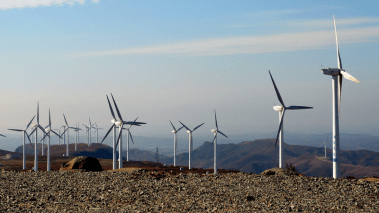
Mulan wind farm, China (Photo: Creative Commons)
¶ “New utility settlement highlights how Ohio utilities are leaving FirstEnergy behind on clean energy” • Dayton Power & Light and environmental groups have reached a settlement that limits cost increases while promoting efficiency, electric vehicles, and clean energy. But FirstEnergy is doubling down on clunky old power plants. [Environmental Defense Fund]
Science and Technology:
¶ Since records began in the early 1900s, hurricanes have only reached a maximum strength of category five during six seasons: 1932, 1933, 1961, 2005, 2007, and 2017. But some scientists now warn that as the Earth gets warmer as a result of climate change, hurricanes will produce more wind and rain, and we may see some of Category Six. [Express.co.uk]

Hurricane
World:
¶ The UK’s first independent infrastructure review poured cold water on plans to invest billions of pounds in a string of new nuclear power stations. It was in favor of cheaper wind and solar power. The National Infrastructure Commission warned ministers against deals for more than one follow-up to the Hinkley Point C project before 2025. [Telegraph.co.uk]
¶ The world’s largest vertical farm is to be built in Dubai. It is a joint venture between agri-tech firm Crop One Holdings and Emirates Flight Catering, which supplies 225,000 meals daily from its base at Dubai International Airport. Construction of the 130,000-square foot farm will begin in November. It will provide 6,000 pounds of produce daily. [CNN]

Vertical farm
¶ The 750-MW Rewa solar power project, one of the world’s largest single-site solar power plants, has started operations. Located in the central Indian state of Madhya Pradesh, it is the first solar project in the country to supply power to an inter-state open access customer. It will supply electricity to the Delhi Metro Rail Corporation. [pv magazine India]
¶ Morocco is moving towards achieving its renewable energy production goals. It inaugurated the 120-MW Khalladi wind farm in the city of Tangier. Built at a cost of $170 million, the farm was developed by ACWA Power, a firm headquartered in Riyadh. The launch of the wind farm could fast track Morocco’s ambitions for energy independence. [Forbes Middle East]
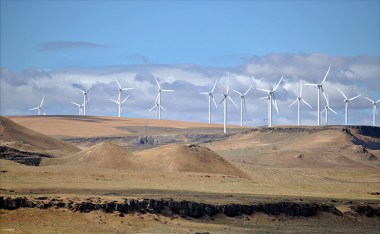
Wind farm (ShutterStock image)
¶ Renewable energy provided a record 28.1% of the UK’s electricity in the second quarter of 2018, according to a report by EnAppSys. The figure was boosted by high winds and a sunny start to the summer. Wind farms provided the largest share, at 9,500 GWh. The next share came from solar, at 5,200 GWh, with the help of a June heat wave. [reNews]
¶ With Japan saying for the first time that renewable energy will be a “major” source of its electricity supply, international windpower companies are gearing up to get into the potentially lucrative market. Such foreign players have mostly stayed away thus far, deterred by high installation costs and red tape, but they are now rethinking the situation. [Nikkei Asian Review]
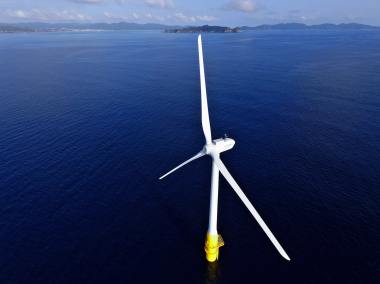
Offshore wind turbine operated by Toda (Courtesy of Toda)
US:
¶ Wind turbines standing on 22,000 acres of North Carolina farmland do not interfere with a Navy radar system in Virginia, according to a study by researchers at MIT. But the Virginian-Pilot of Norfolk reports that the study also said a developer should not expand the 104-tower Amazon Wind Farm to 150 turbines as originally planned. [WHSV]
¶ On his last day in office, former EPA Administrator Scott Pruitt managed to cement a massive loophole for some of the dirtiest, most polluting trucks on the road, allowing manufacturers to build even more them. Pruitt’s last policy decision benefits a small number of truck manufacturers, including one that hosted a campaign event for Donald Trump. [Vox]

Not a “green” machine (Image: Fitzgerald Glider Kits)
¶ NET Power completed a demonstration plant outside Houston for a technology that it claims will capture 100% of the carbon dioxide produced as it burns natural gas to generate electricity. It uses carbon dioxide as part of its process. It says the excess CO2 can be sold for industrial uses, the most important of which is for oil recovery. [CleanTechnica]
¶ All residential buildings in Keene, New Hampshire, could get their electricity from solar installations by 2030, a group of Keene State College environmental studies students found. They said all residential heating and transportation in the city could be solar powered by 2045. The local Ready for 100 campaign helped them to study the question. [The Keene Sentinel]
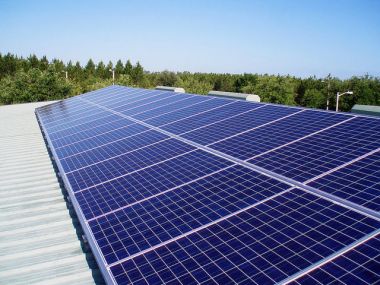
Rooftop solar system (Flickr image)
¶ Dwindling populations of bees, butterflies, and hummingbirds could be the winners in the push to add more solar power to New York’s energy grid. A three-year project will identify the ecological and economic benefits of adding so-called pollinator friendly wildflowers and habitat on solar farms in Central New York and the Hudson Valley. [The Journal News]
¶ A growing number of Massachusetts and New Hampshire communities are raising concerns about the evacuation plans for Seabrook Nuclear Power Station, especially during summer months when roadways are clogged by visitors. NextEra Energy, Seabrook’s owner, has applied for a 20-year license extension to operate until 2050. [Wicked Local]
geoharvey is free and without ads.
geoharvey is not tax-deductible.
Posted in nuclear power, renewable power, solar, wind | Leave a Comment »
Tags: nuclear, nuclear power, renewable power, solar power, wind power
July 9, 2018
Opinion:
¶ “The World’s ‘New Oil’ – Batteries” • Could batteries become the world’s new oil? According to Bloomberg, “the rise of electric vehicles and renewable-energy sources may mean that some crude may stay in the ground. BP last year said battery-powered vehicles could flatten projected oil-demand growth from cars in the next 20 years.” [CleanTechnica]

Tesla’s Model S (Image: Tesla)
World:
¶ The Garissa Solar Plant will bring down the cost of electricity in Kenya to 5.4¢/kWh. The plant consists of about 210,210 PV panels of 260 watts each, sitting on 85 hectares, and will be able to generate power capable of lighting around 625,000 homes. Originally, it was to be completed in December, but the date has been revised to September. [Daily Nation]
¶ Pakistan overcame a crippling power crisis, and over 95% of its population have access to electricity, the Spectator Index reported, citing World Bank Data. Earlier this year, a report from the International Renewable Energy Agency said that Pakistan needs to fully exploit indigenous renewable energy resources to improve energy security. [Daily Pakistan]

Electric transmission lines
¶ Sinosteel Corp, a Chinese company, signed a memorandum of understanding with Denikon, based in Italy, to jointly build a solar park in Iran with a capacity of up to 1,000 MW, the Islamic Republic News Agency reports. The agreement envisages the construction of a solar park, 20,000 residential PV systems, and a PV manufacturing facility. [Renewables Now]
¶ The solar industry has developed rapidly in recent years, with global capacity increasing from just 1.5 GW in 2005 to 98 GW in 2017. GTM Research’s recent report, Top 15 Global Utility Solar PV Developers, details the world’s largest solar PV developers. Together, they account for 20% of installed utility-scale solar capacity worldwide. [Power Technology]
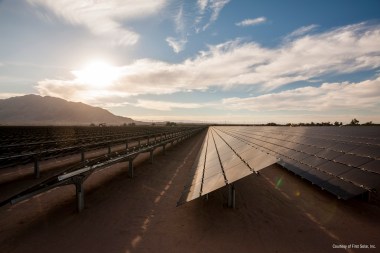
Solar array (First Solar image)
¶ China’s State Council released the full text of a three-year action plan to curb air pollution by 2020. Air pollution in China is now affecting 37% of China’s population, and measures taken so far are falling short of government goals and public expectations. The new plan offers tougher limits and proposes a quicker shift to cleaner energy. [The Maritime Executive]
Australia:
¶ The Australian Renewable Energy Agency and the Victoria government are leading a new program to establish standards for household and commercial battery storage to make it easier for residential and business customers to compare different storage options. Over 2 million Australian homes and businesses that already have rooftop solar. [RenewEconomy]
Battery
¶ Australian rooftop solar panel installations soared by almost half in the first six months of 2018 as businesses eclipse residential take-up for the first time. In the January-June half, rooftop PV installations reached 701.9 MW, up 48.1% from the same time a year earlier, according to Green Energy Markets, a consultancy. [The Sydney Morning Herald]
¶ The Australian Capital Territory has declared any coal deal to placate conservative Liberals and Nationals would be “entirely unhelpful” to a successful resolution of the national energy guarantee in early August. The territory’s climate change minister, Shane Rattenbury, has warned the commonwealth a side deal on coal could kill the NEG. [The Guardian]
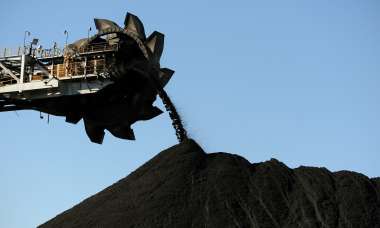
Coal (Greg Wood | AFP | Getty Images)
US:
¶ Western states are running into critical water issues because of climate change. Desalination plants can address the issue, but they are expensive and use a lot of power. So the US DOE is putting $21 million toward fourteen projects aimed at developing technology to cut the cost of using solar energy to power thermal desalination. [CleanTechnica]
¶ A US judge ordered Chinese wind turbine maker Sinovel Wind Group to pay a $1.5 million fine after the company was convicted of stealing key technology from the Massachusetts-based AMSC. The US Justice Department said Sinovel has already paid AMSC, formerly known as American Superconductor Corp, $32.5 million. [The Epoch Times]
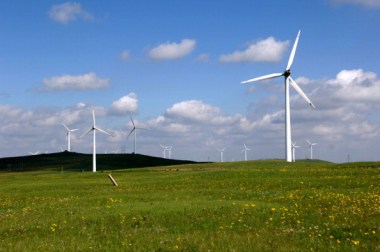
Wind turbines in China (STR | AFP | Getty Images)
¶ City officials in St Paul, Minnesota, have set a goal to get the city’s carbon footprint to net zero by 2050. “The high-level goal is we want city buildings operating as carbon neutral by 2030, and all buildings by 2050,” said Russ Stark, a former president of the St Paul City Council who is now the city’s chief resilience officer. [TwinCities.com-Pioneer Press]
¶ Researchers at University of California at San Diego, Harvard, and Carnegie Mellon published a paper in Proceedings of the National Academy of Sciences showing the nuclear industry is on the verge of collapse just when we need to limit carbon emissions. Some advocacy groups would rather focus on supporting renewable sources. [South China Morning Post]
geoharvey is free and without ads.
geoharvey is not tax-deductible.
Posted in nuclear power, renewable power, solar, wind | Leave a Comment »
Tags: nuclear, nuclear power, renewable power, solar power, wind power
July 8, 2018
Opinion:
¶ “For Effective Natural Disaster Recovery, Long-Term & Holistic Solutions Are Needed” • As areas of the world are ravaged by extreme events, many fueled by climate change, it is important that reconstruction policies take into account the human factors of well-being and contentment. Acting to help people should not impair their lives. [CleanTechnica]

Port Arthur, Texas, after Hurricane Harvey
¶ “Clean energy has big economic impact on Colorado” • In two decades, I’ve seen wind energy costs plummet, municipalities cut power bills by building energy-efficient schools, and the solar market explode from a few renegades to a technology favored by America’s most profitable corporations. But the most dramatic shift I’ve seen? Jobs. [Pueblo Chieftain]
¶ “The roiled solar power market shows how Trump’s tariffs can disrupt an industry” • A 30% US tariff on imported solar panels should have caused prices here to jump. But when tariffs are unleashed, as businesses are learning, things don’t always go as expected. In the US, prices have not changed, but worldwide solar prices declined 35%. [Los Angeles Times]
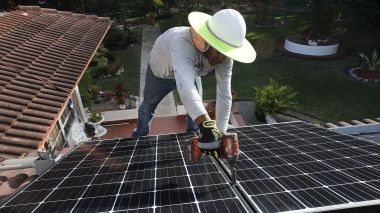
Installing a solar system (Joe Raedle | Getty Images)
World:
¶ The UK has already decided to ban the sale of new cars and vans with internal combustion engines by 2040 but some are calling for that ban to happen sooner to improve air quality near many roads and highways. The CEO of Royal Dutch Shell, told The Guardian he supports the calls to move up the effective date of the ban. [CleanTechnica]
¶ China had 53% of the global new solar capacity in 2017, up from 45% in 2016. But its new solar policy reduces the amount of solar to be installed in China. Most forecasters project a downturn in PV production, but IHS Markit predicts that the global solar market will increase by around 11% to 105 GW in 2018 in spite of Chinese policy. [CleanTechnica]

Floating solar array
¶ The benchmark seaborne thermal coal prices have jumped to $120.10 per tonne, its highest level since November 2012, thanks to tight supply in key Asian export regions. Measured from lows hit end-2015, the cost of coal used in power generation has gained 140%. China has continued to buy coal, despite actions to discourage its use. [OilPrice.com]
¶ Madagascar has announced plans to develop more solar power projects in a bid to reduce the cost of electricity. Its government will implement the Madagascar Electricity Sector Operations and Governance Improvement Project, which has been approved by the World Bank for a $40 million credit from the International Development Association. [Energy Digital]

Madagascar (Getty Images)
¶ Total’s main business today may be oil and gas, but it is making aggressive moves to become a leader in renewable energy also. CEO Patrick Pouyanne said Total was ready to build 10,000 MW of solar power plants in France, enough to power 1.64 million homes, over the next 10 years. The government of France has set goals for solar power. [Motley Fool]
US:
¶ In New Jersey, 25,000 homes – worth nearly $10 billion – will be at risk of chronic flooding by 2035. Those properties could flood 26 times or more annually, according to a recent study by the Union of Concerned Scientists, making New Jersey the state that will be hit the hardest in the contiguous US in terms of value of property at risk by 2035. [NJ.com]

Flooding in Sea Bright
¶ Incoming EPA chief Andrew Wheeler said in a new interview that he believes humans have played a role in climate change, but the EPA will likely not change much under his leadership. He said that he will continue to pursue alternatives to the Clean Power Plan, which he has criticized for going “outside the four corners of the Clean Air Act.” [The Hill]
¶ Duke Energy Carolinas plans to sell five small hydro power plants to Northbrook Energy at a $40 million loss and says the sale is in the best interest of customers. The companies asked the North Carolina Utilities Commission to approve the sale and also asked for a declaratory ruling to qualify the small plants as new renewable energy facilities. [WSOC Charlotte]

Hydro dam
¶ Arizona regulator Andy Tobin filed a set of proposed rules that would implement his Arizona Energy Modernization Plan to put utilities on a course to supply 80% renewable or nuclear power by 2050. Tobin’s proposal would require utilities to roll out 3 GW of energy storage by 2030 and to grow the use of energy efficiency and electric vehicles. [Utility Dive]
¶ The Bonneville Power Administration, which produces power in the Northwest, could save money and help fish by walking away from costly future upgrades to the four lower Snake River dams, according to some environmentalists. Cheap renewable electricity from solar and wind farms has made it uneconomical to operate the dams. [Lewiston Morning Tribune]
geoharvey is free and without ads.
geoharvey is not tax-deductible.
Posted in nuclear power, renewable power, solar, wind | Leave a Comment »
Tags: nuclear, nuclear power, renewable power, solar power, wind power
July 7, 2018
Opinion:
¶ “3 Ways Cities Can Protect Low-Income Residents From Climate Change” • Climate impacts often fall disproportionately and unfairly on society’s most vulnerable, but cities are uniquely well-positioned to do something about these inequities by taking innovative climate action. And local leaders are ready right now to take climate action. [CleanTechnica]

Protecting low-income citizens
¶ “This Is The 16-Year-Old Leading The Next Climate March” • At 16 years old, Climate Reality Leader Jamie Margolin is one of 13 plaintiffs suing Washington State for failing to take adequate steps to fight climate change. On July 21, she will lead a mass youth climate march in Washington, DC, led by her organization, Zero Hour. [CleanTechnica]
World:
¶ Swiss Re is one of the world’s leading providers of reinsurance, insurance, and other forms of insurance-based risk transfer. It announced it will not provide reinsurance to businesses with more than 30% exposure to thermal coal across all business lines. It is just the latest company to tighten the screws on the future of thermal coal. [CleanTechnica]
¶ Six Uttar Pradesh cities alone can generate 11.4 GW of solar energy using 11% of their built-up area, a report by the Centre for Environment and Energy Development said. The report said that installing solar rooftops in Lucknow, Kanpur, Allahabad, Meerut, Agra, and Gorakhpur can also generate 3 lakh (300,000) jobs in the Indian state. [ETEnergyworld.com]
¶ Poland, Europe’s second-biggest consumer of coal, is cautiously embracing renewables to improve energy supply security and meet its EU targets. The country’s upper house of parliament approved removing clean power investment roadblocks within a law that is aimed to put Poland on track to 15% renewables by 2020. [Greentech Media]

Warsaw (Shutterstock image)
¶ A coalition of seven Dutch political parties, with 113 out of 150 seats in parliament, unveiled a climate policy proposal that is breathtaking in its ambition. If it becomes law, it will codify the most stringent targets for greenhouse gas reductions of any country in the world, requiring the country to reduce carbon emissions by 95% by 2050. [Vox]
¶ Time is running out for the world’s forests, warns a report by the UN agriculture agency. It urges fostering an all-inclusive approach to benefit both trees and those who rely on them. Halting deforestation, managing sustainably, restoring degraded forests, and adding tree cover all need action to avoid damaging consequences. [UN News]
US:
¶ The Trump administration drafted a new proposal to regulate carbon dioxide emissions from power plants, but it is far less stringent than the climate plan formalized in 2015 by the Obama administration. The new proposal accepts, for now, the idea that CO2 is a pollutant, but it is likely to spur only small tweaks to the nation’s energy system. [The New York Times]
¶ The US government announced plans to boost the nation’s offshore wind industry by streamlining, permitting, and offering leases in coastal waters. The plans form part of the “America First” initiative that aims to increase local energy production and employment, Reuters reported. The news sparked interest in European energy firms. [Energy Digital]
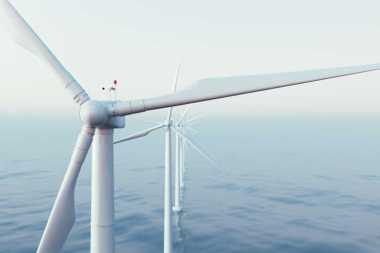
Offshore wind farm (Getty Images)
¶ In addition to its wind farms, Texas has seen a sharp increase in the number of new solar arrays. The largest of those projects so far is a 150-MW solar farm on 1,600 acres in Upton County. That array may soon be overtaken by a 250-MW solar project in West Texas, as Canadian company Innergex has acquired the rights to develop it. [Climate Action Programme]
¶ The American Geophysical Union is a nonprofit professional scientific organization whose members come from different fields of Earth and space sciences. They could see that systems in its ageing Washington, DC headquarters needed major repair. They also saw this as an opportunity to design an entirely new “green” workplace. [CleanTechnica]

AGU headquarters with a new solar array
¶ An EIA study examines the role of high-voltage direct current lines in integrating renewables resources into the electric grid. The review shows that there are limited applications in the current electric transmission network, but properly configured HVDC lines could help mitigate some of the operational issues of renewable generation. [Solar Power World]
¶ Last year had the lowest share of total US energy consumption by fossil fuels in more than 100 years, but they still have an 80% market share. The Energy Information Administration found petroleum, natural gas, and coal use have been decreasing for the last three years. Coal especially has taken hits, the others are both down. [Daily Energy Insider]

Old technology and new (©Shutterstock)
¶ “We want microgrids everywhere,” Puerto Rico Gov Ricardo Rosselló said in a recent discussion of his Energy 2.0 plan. The remark, part of his “New Vision for Puerto Rico” speech at the Aspen Ideas Festival, signaled a push to modernize the island’s electric grid with microgrids, renewable energy, and energy storage. [Microgrid Knowledge]
¶ The Millstone nuclear plant is renewing threats to close its reactors after state regulators proposed delaying the company from bidding on clean energy contracts. A draft request for proposals by the Department of Energy and Environmental Protection would delay Millstone’s ability to bid for zero carbon electric contracts for five years. [CT Post]
geoharvey is free and without ads.
geoharvey is not tax-deductible.
Posted in nuclear power, renewable power, solar, wind | Leave a Comment »
Tags: nuclear, nuclear power, renewable power, solar power, wind power


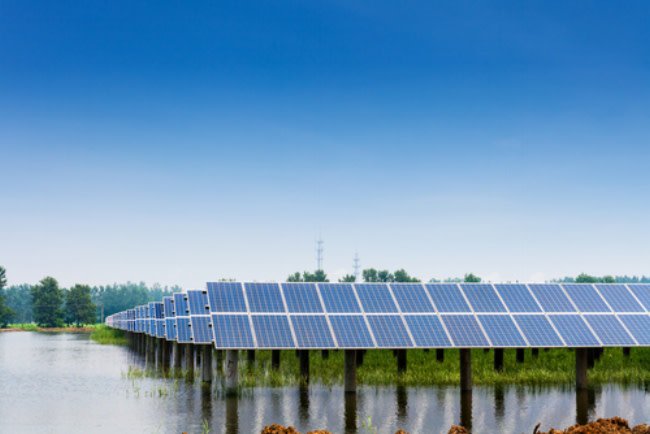


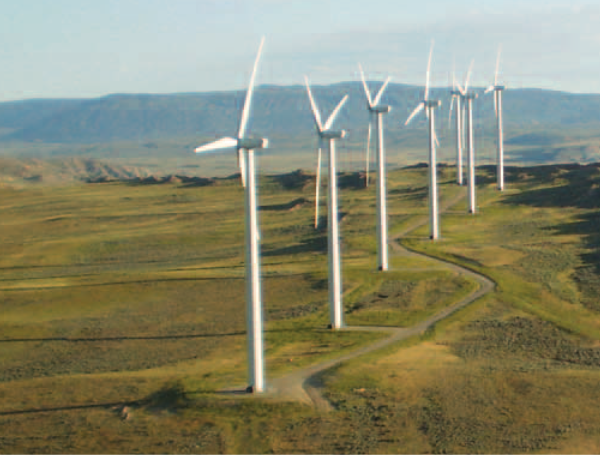


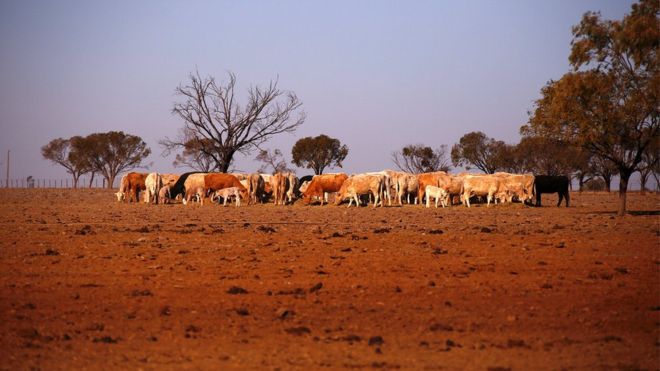
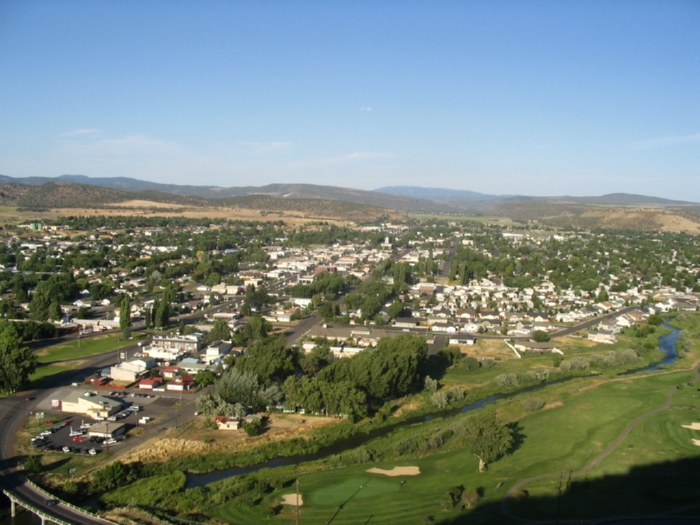

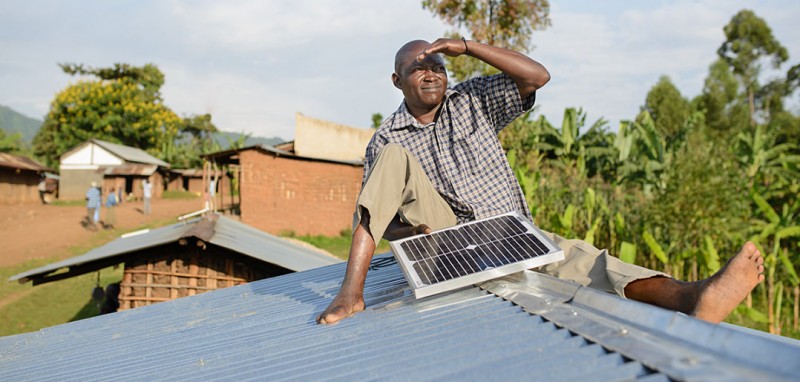




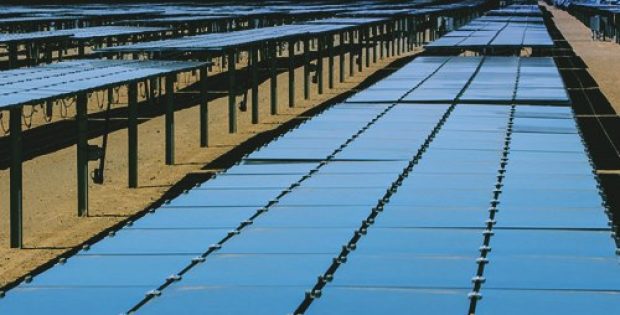

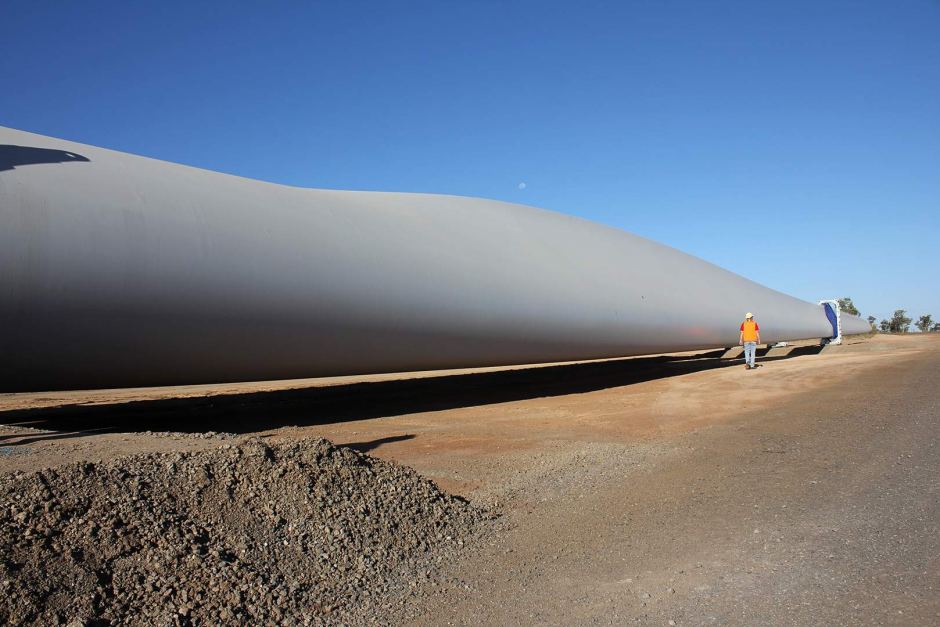
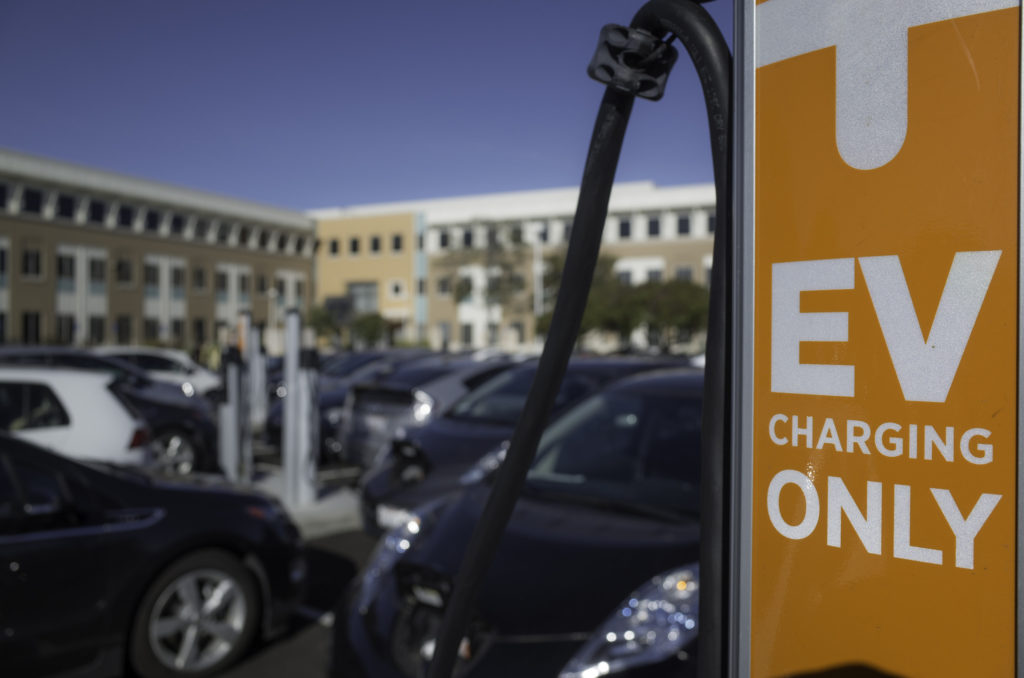
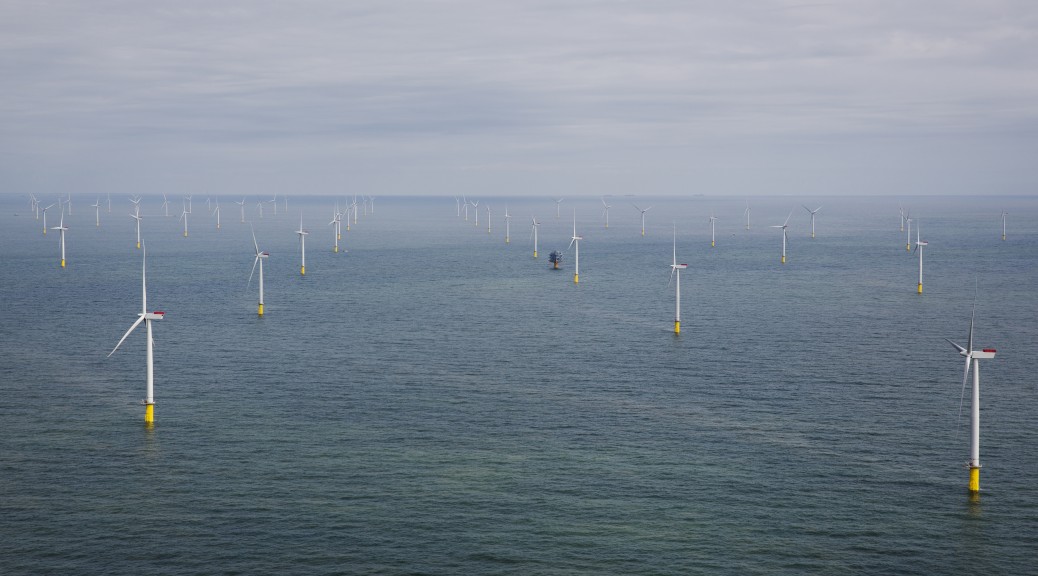
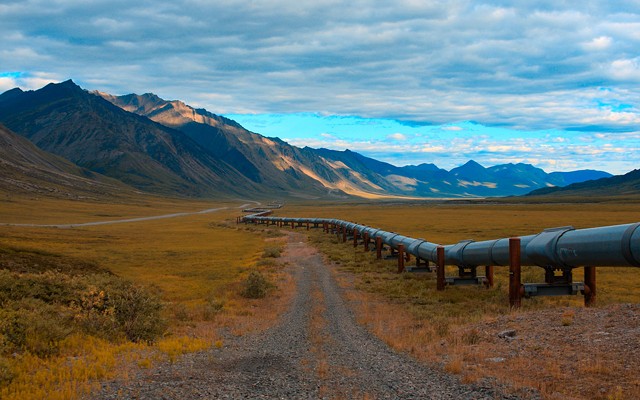




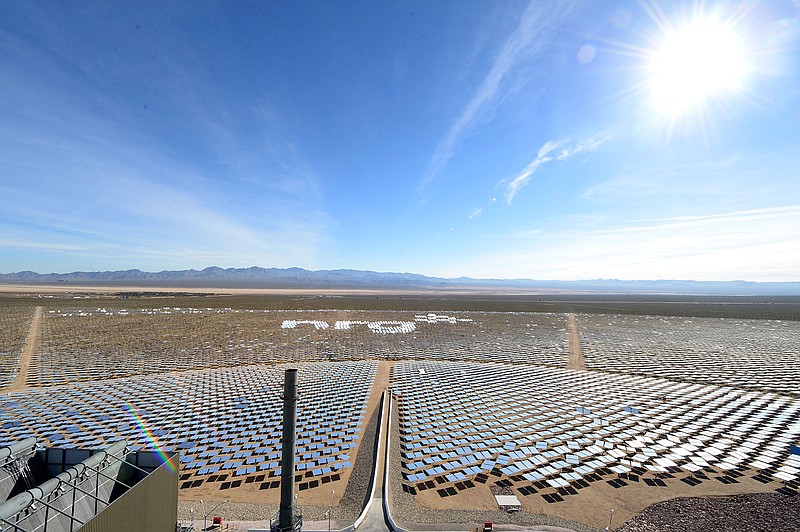

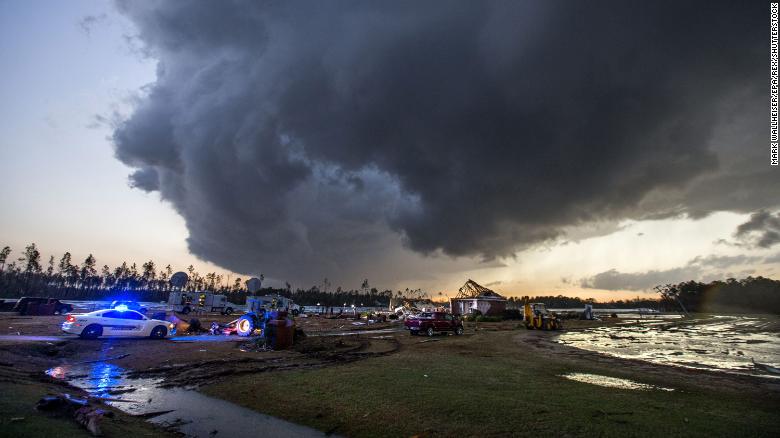

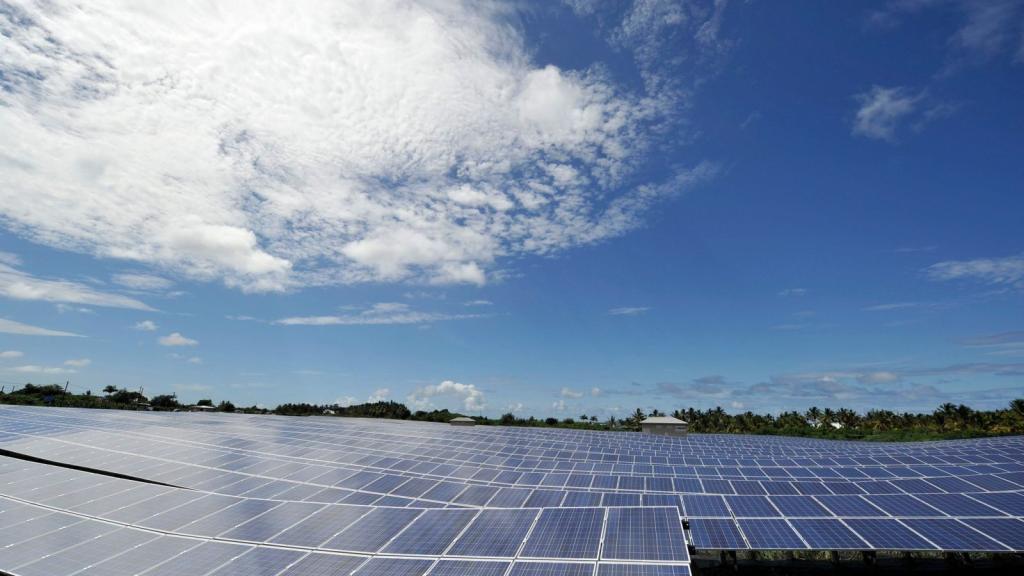


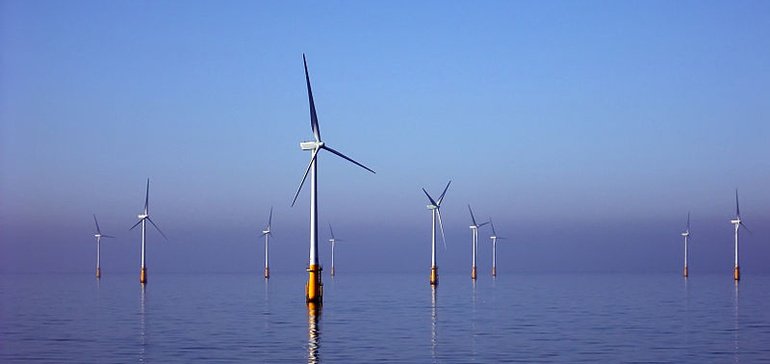


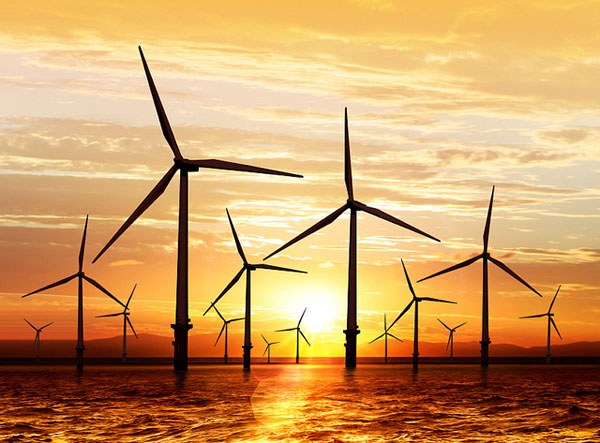

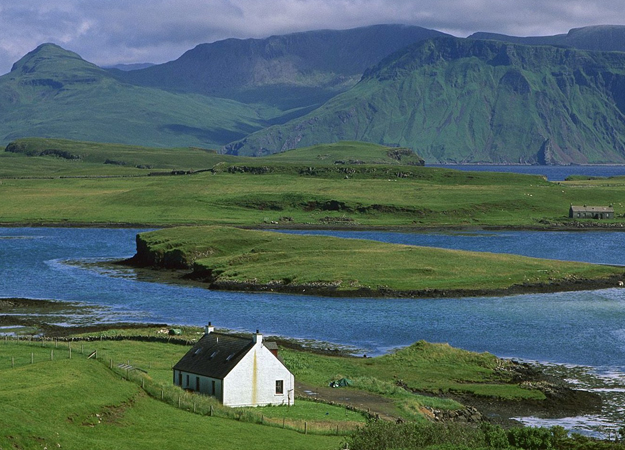
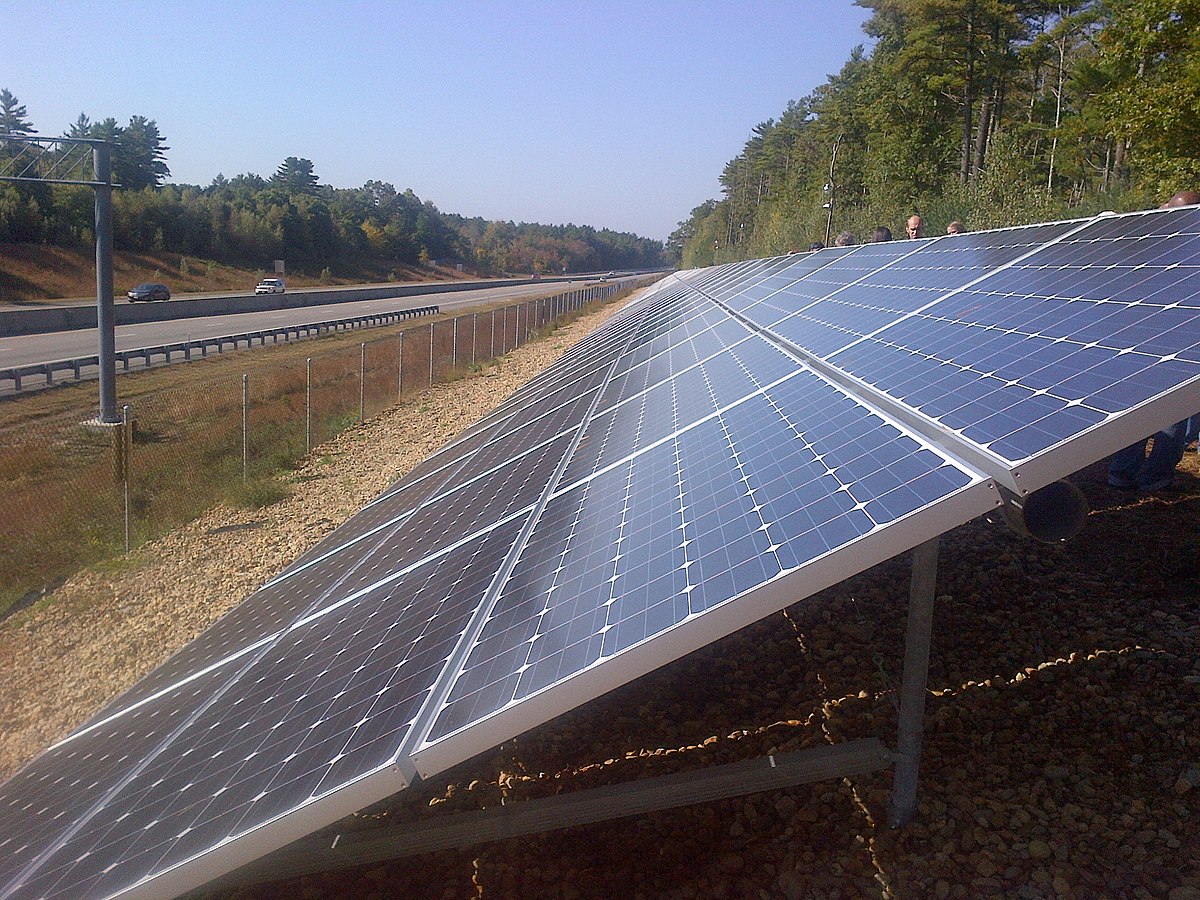
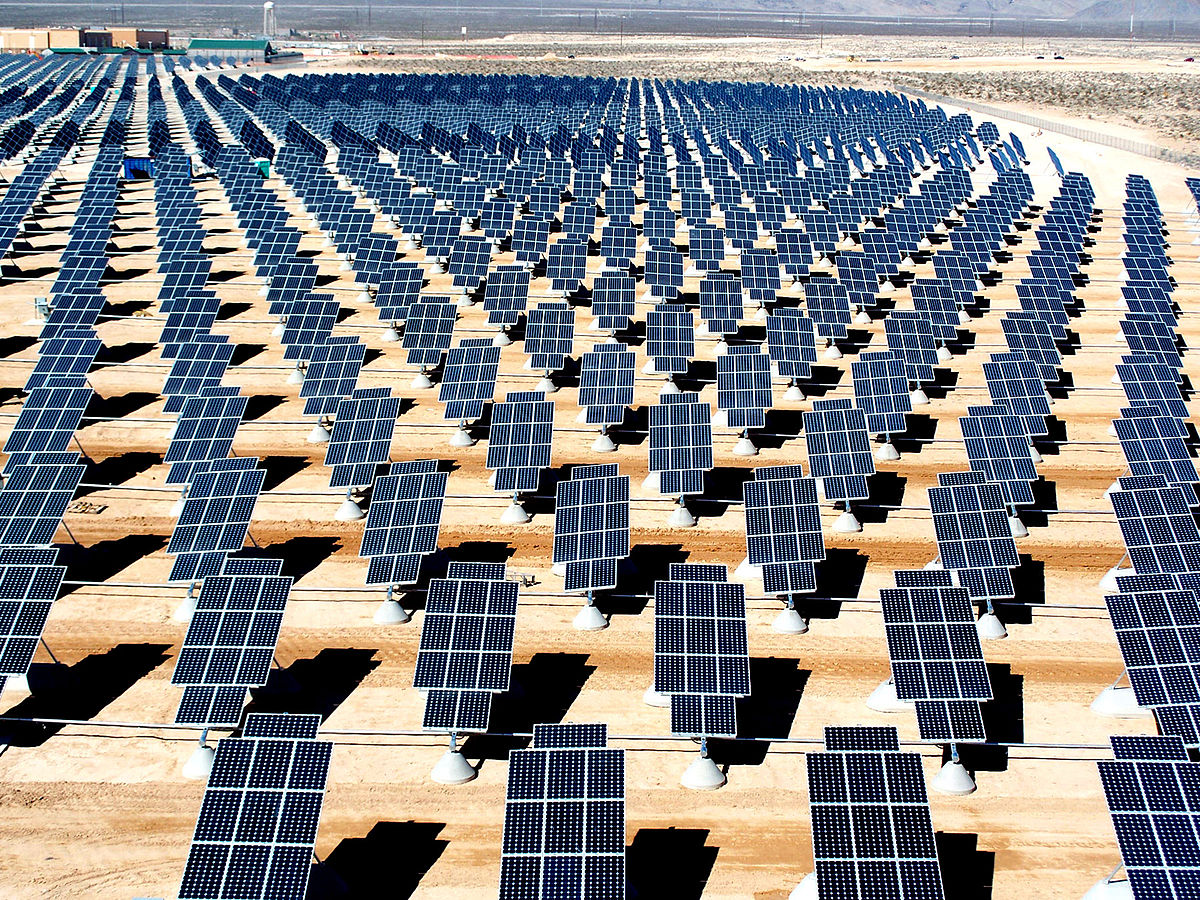
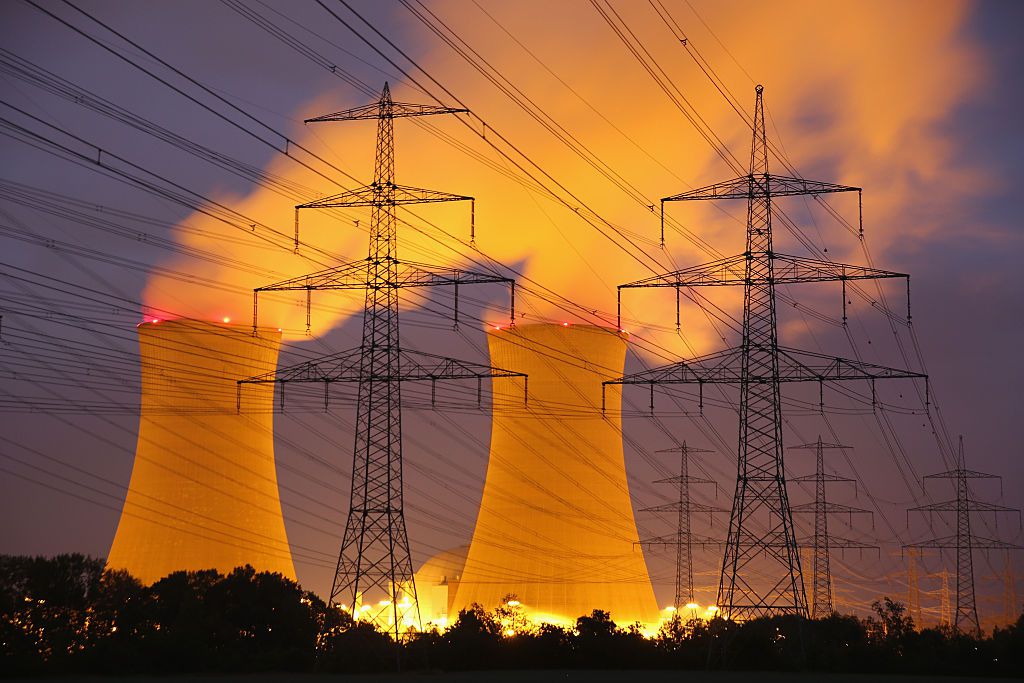


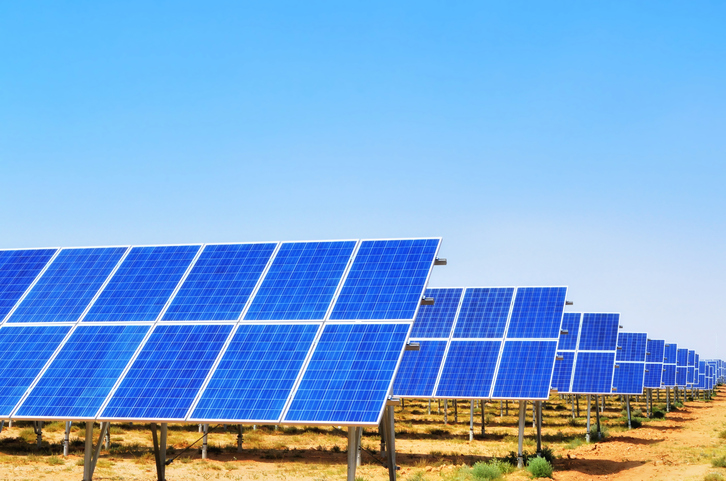
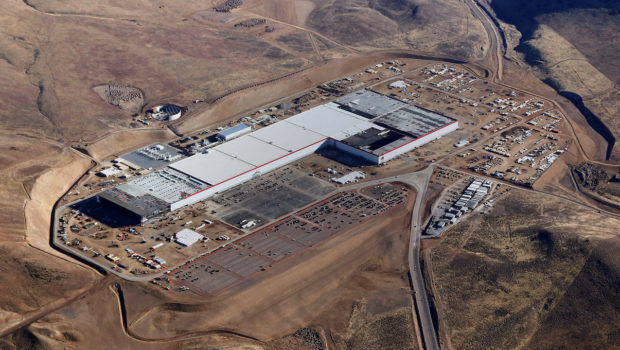

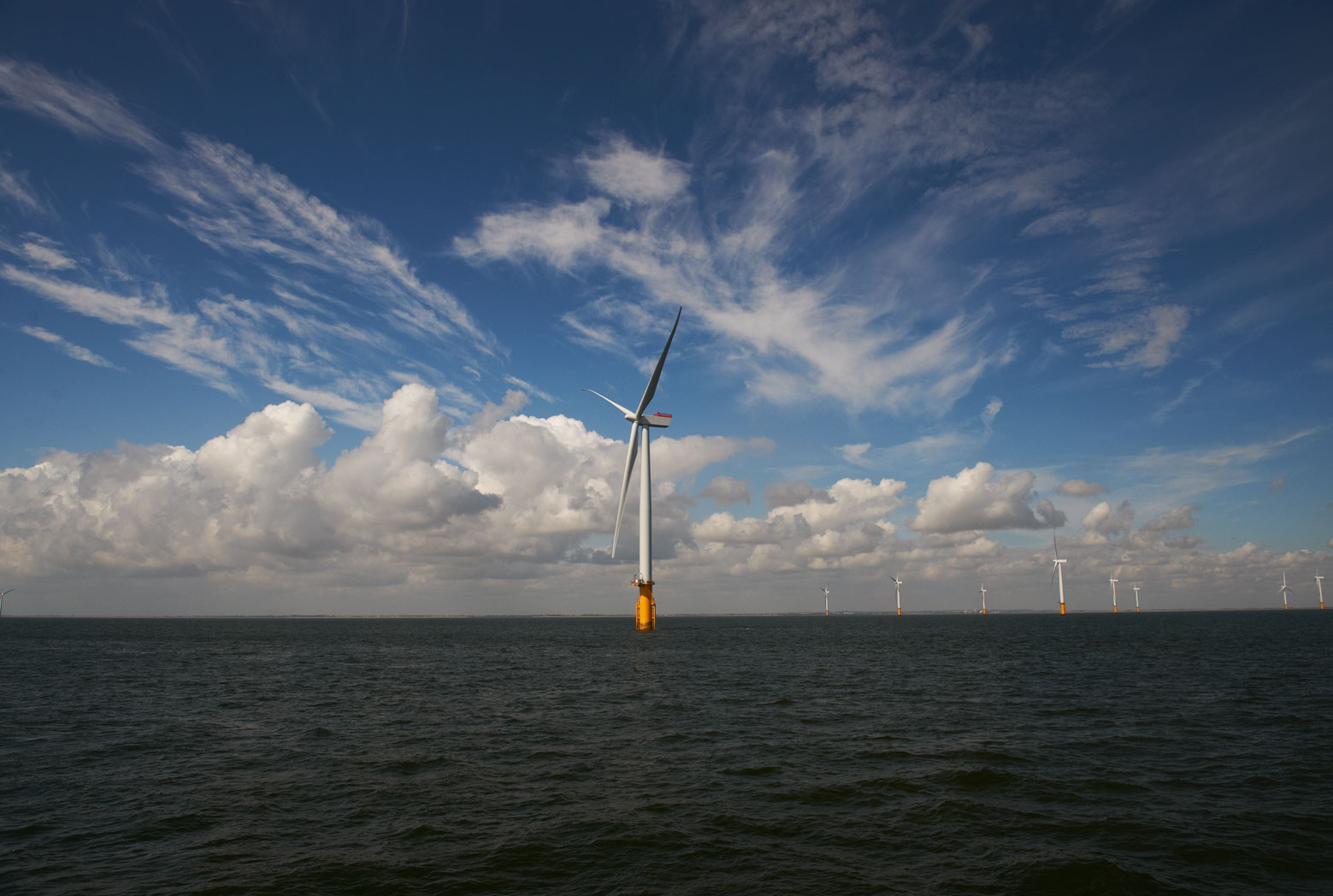


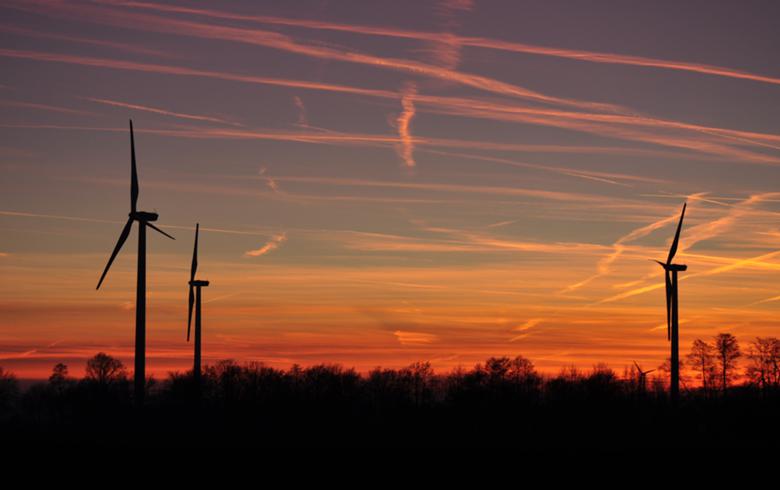
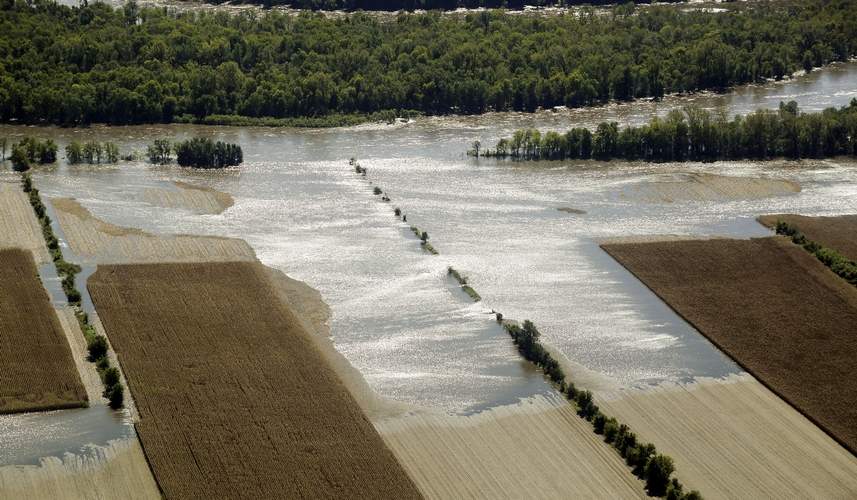
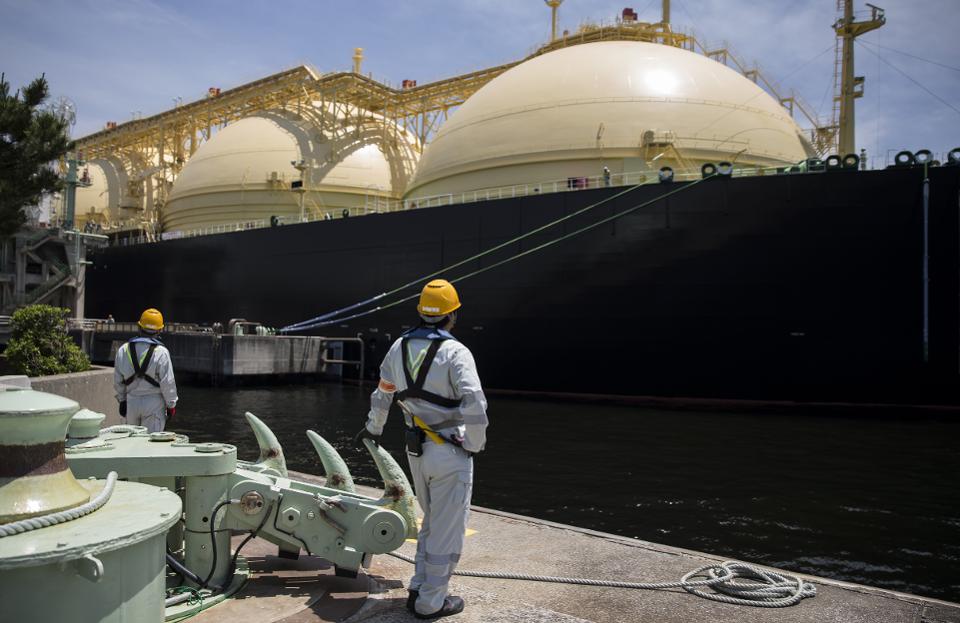


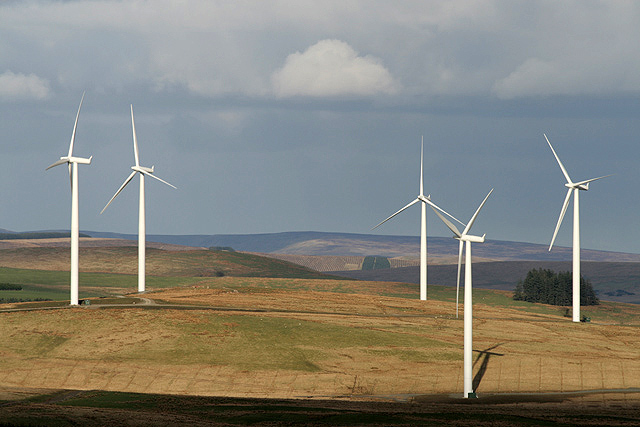
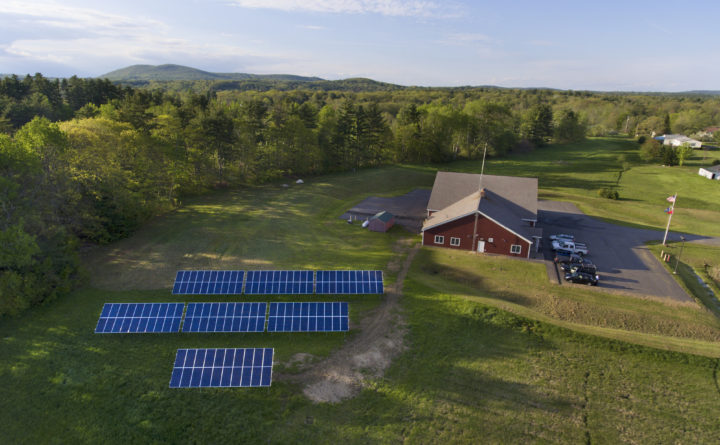

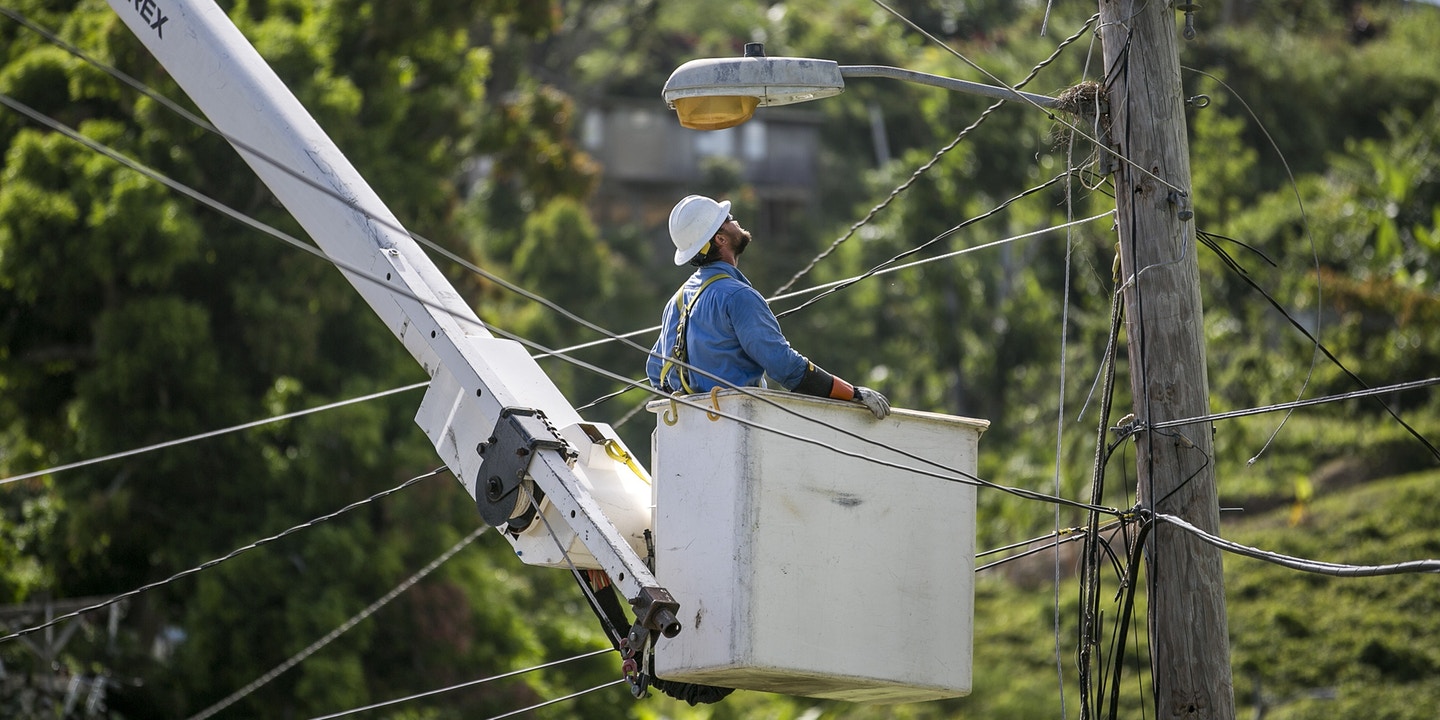
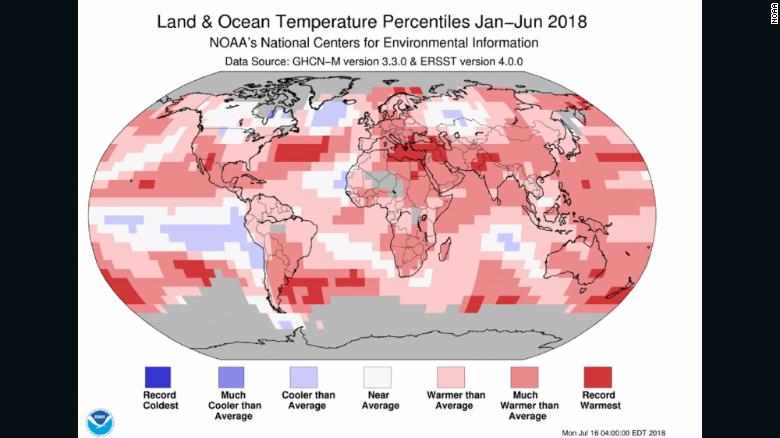

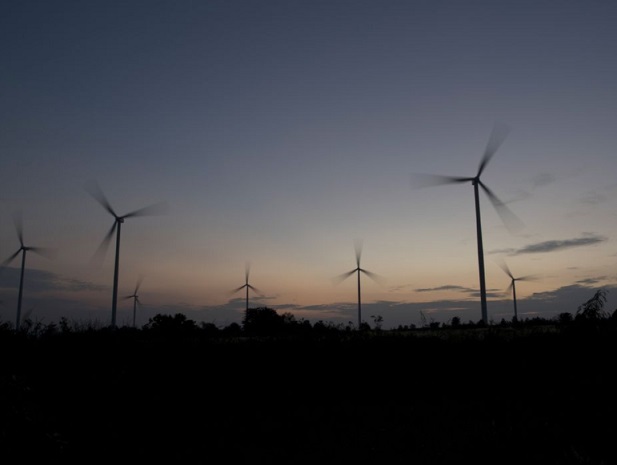
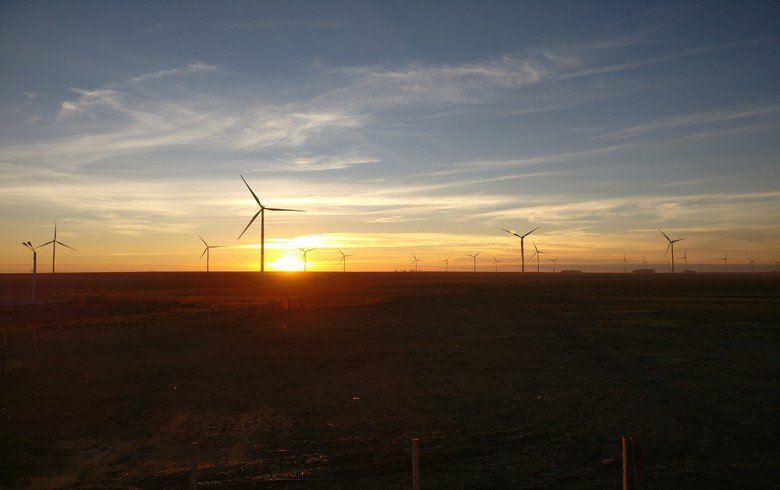

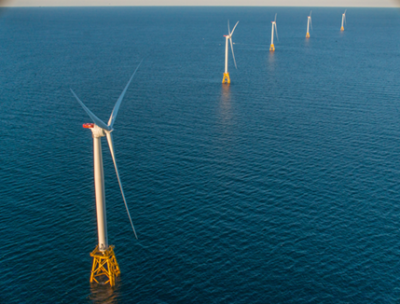
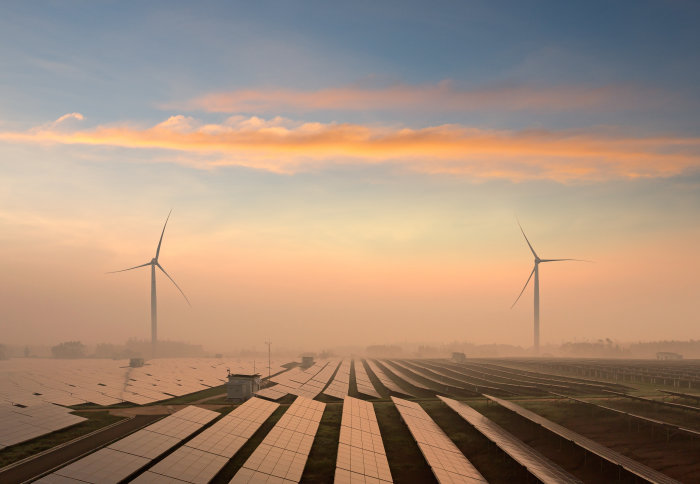
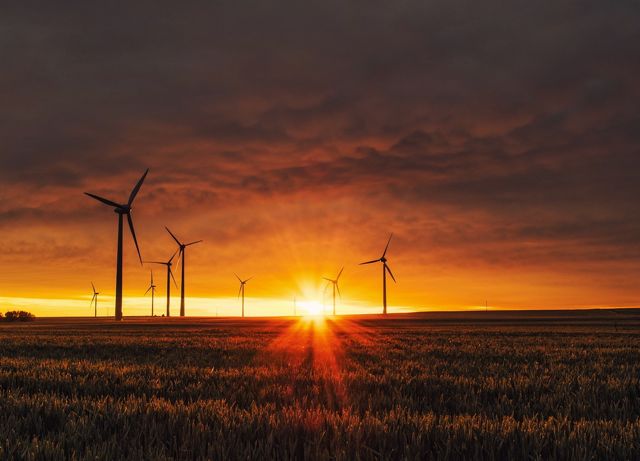





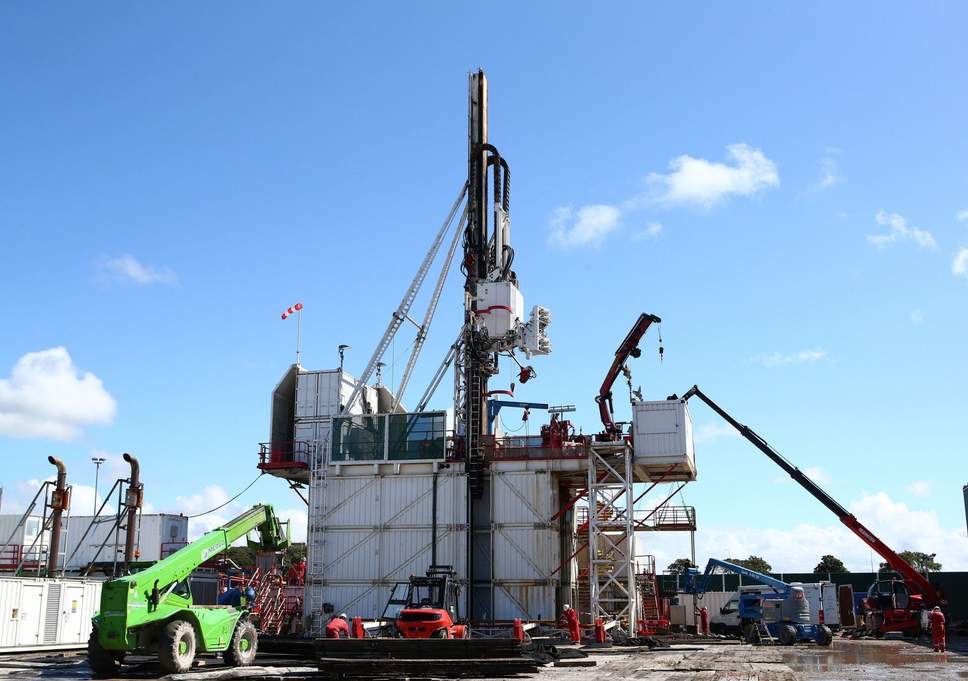



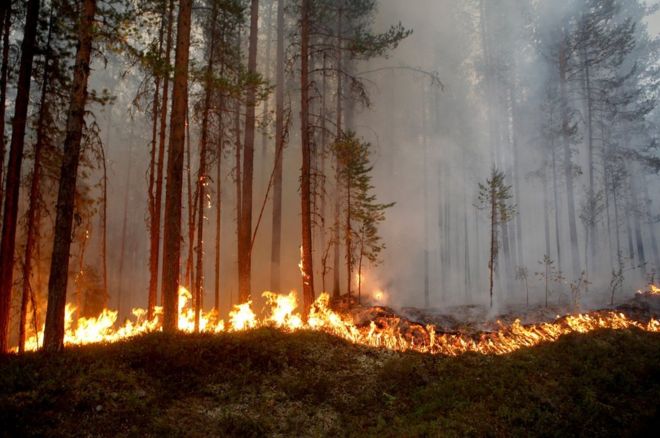

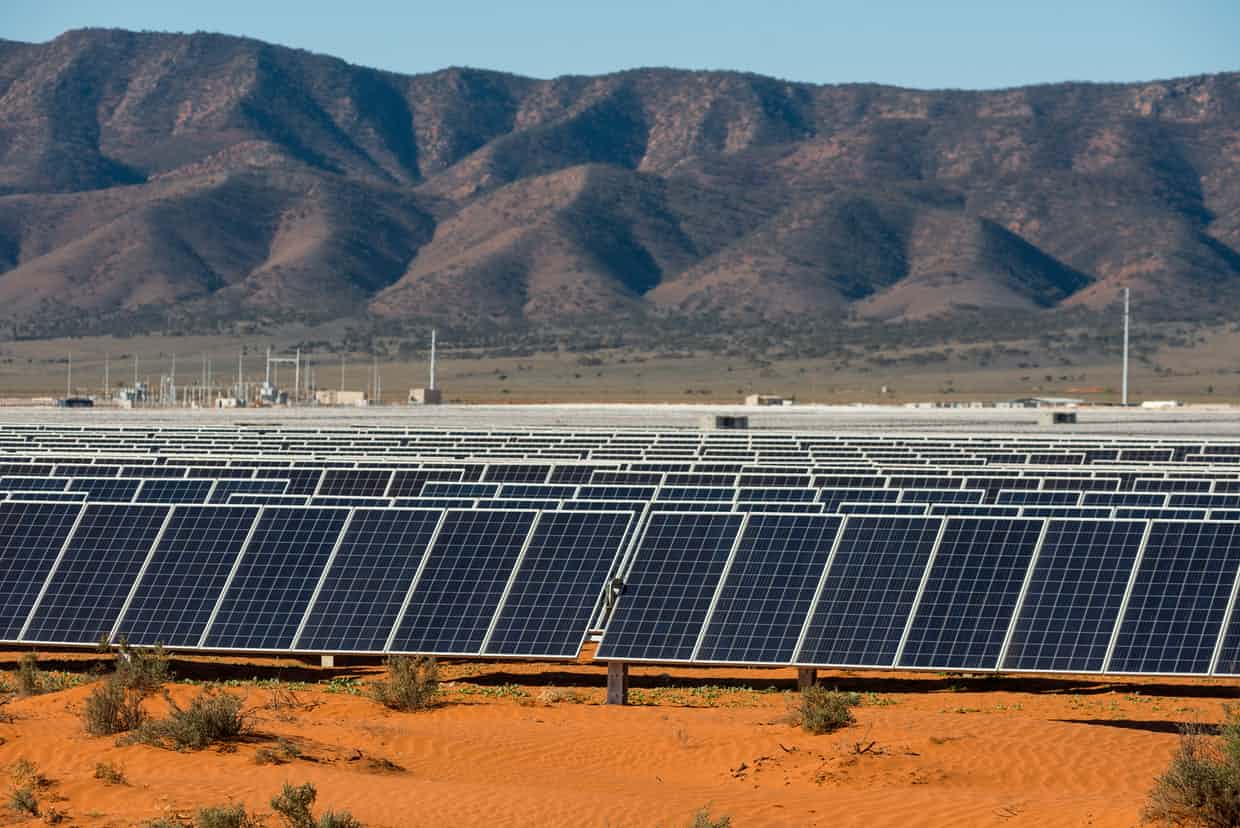
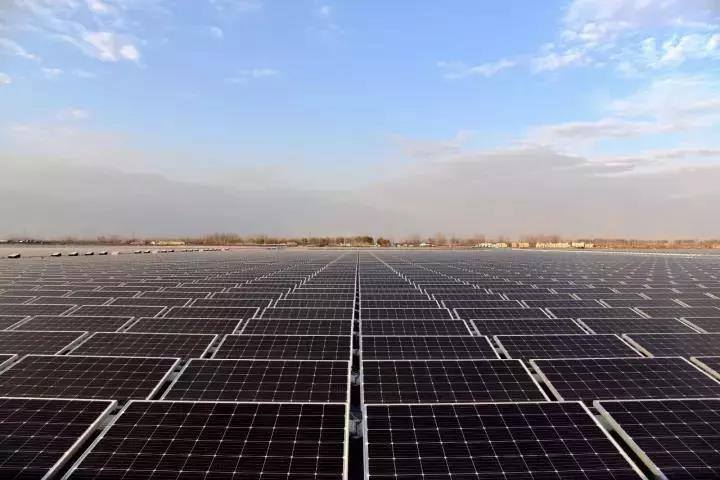

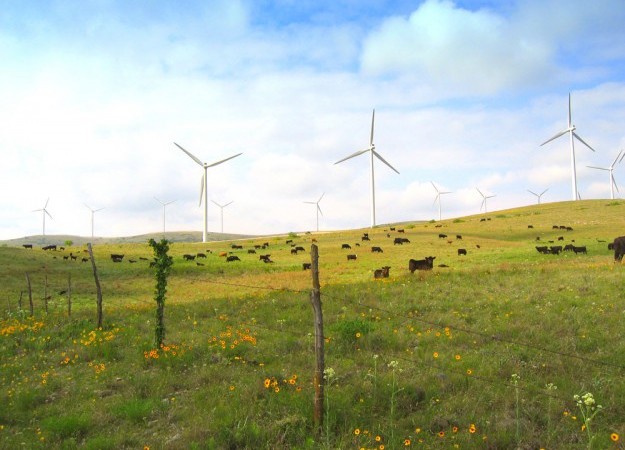
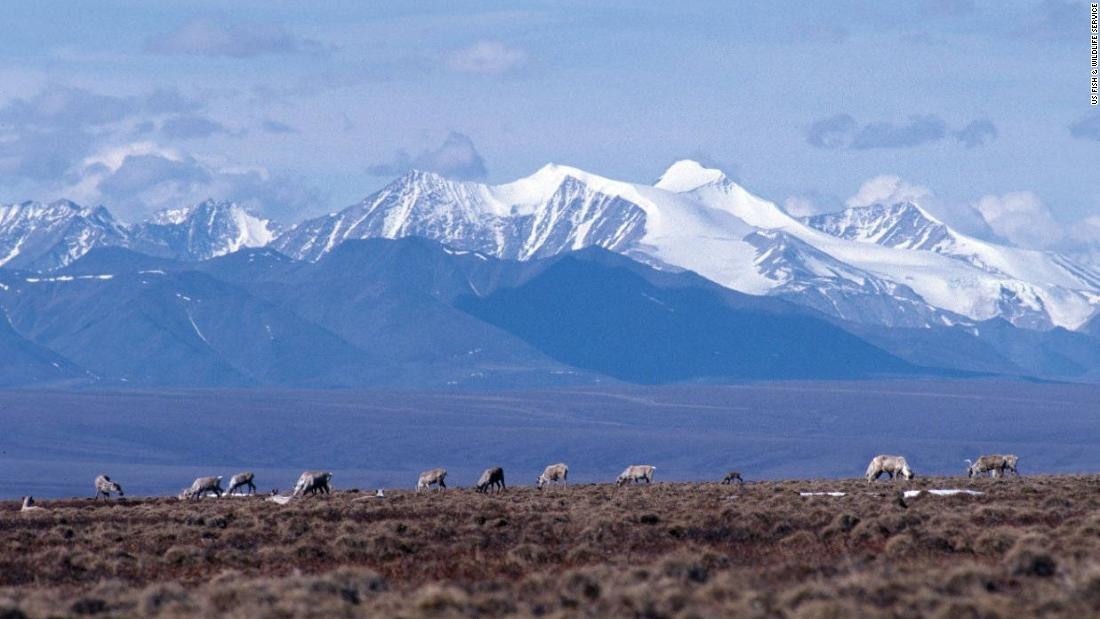


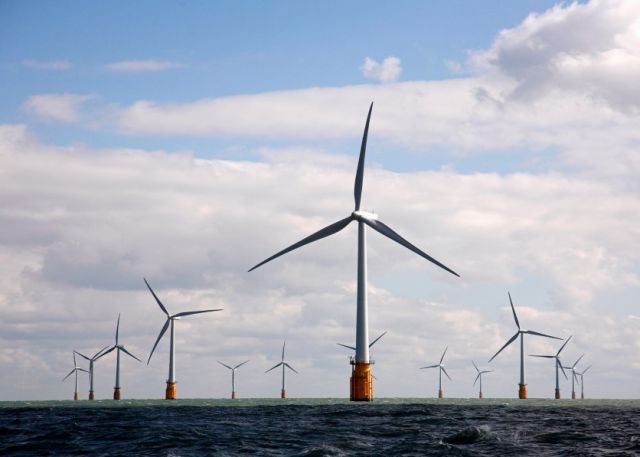








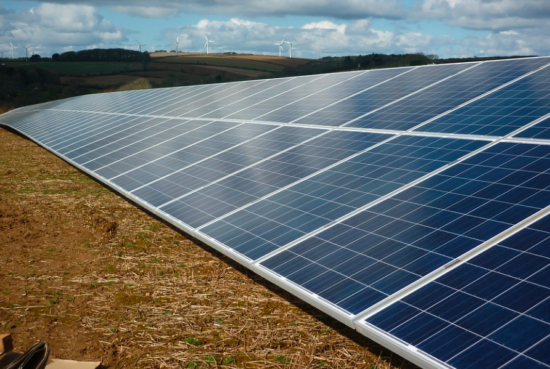


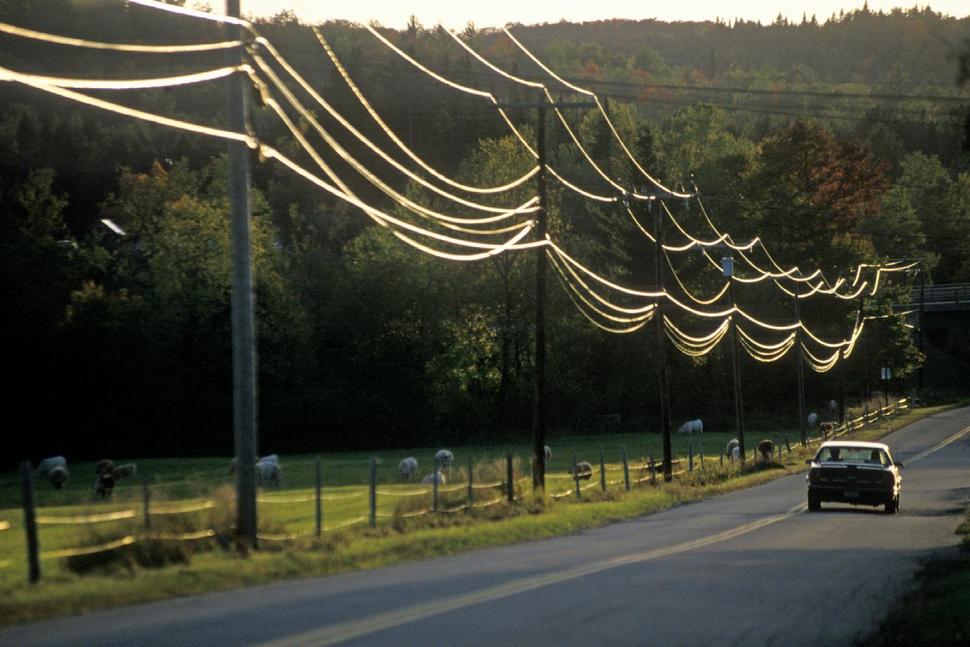

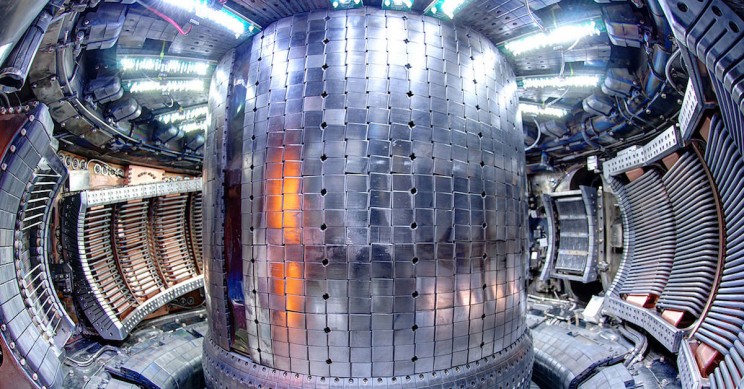


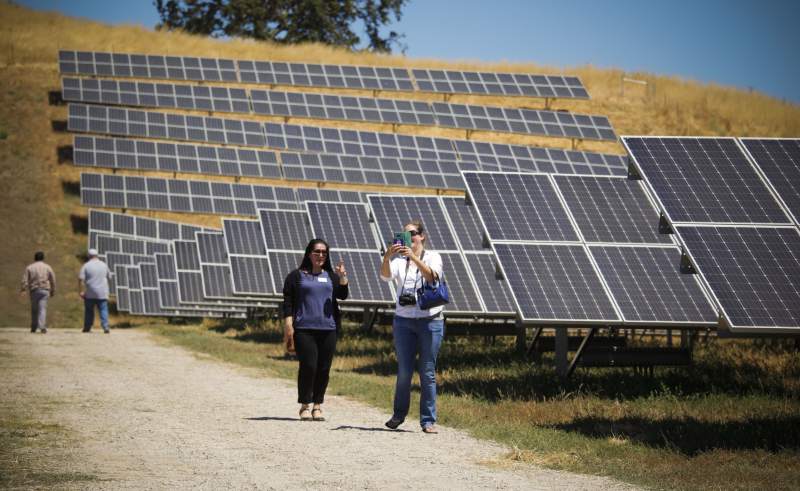



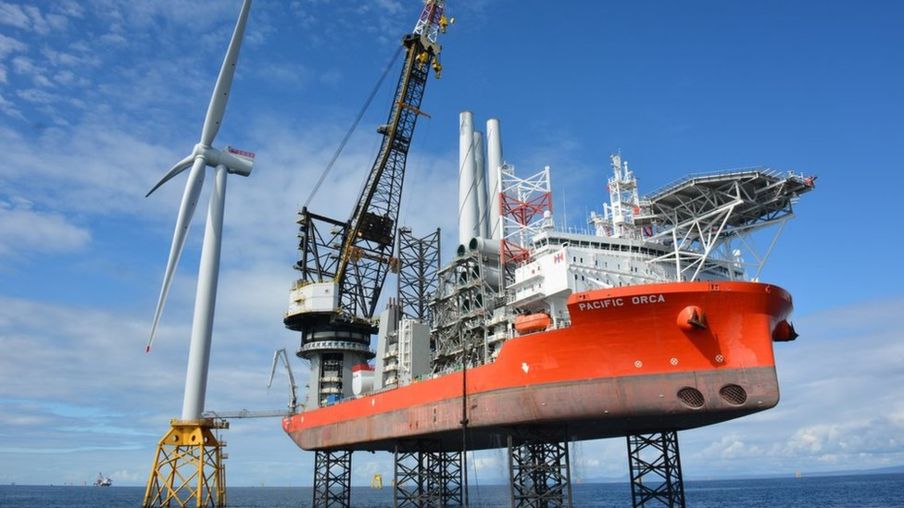


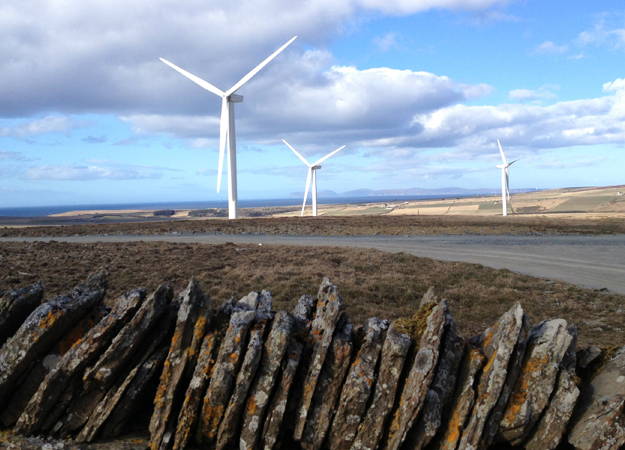


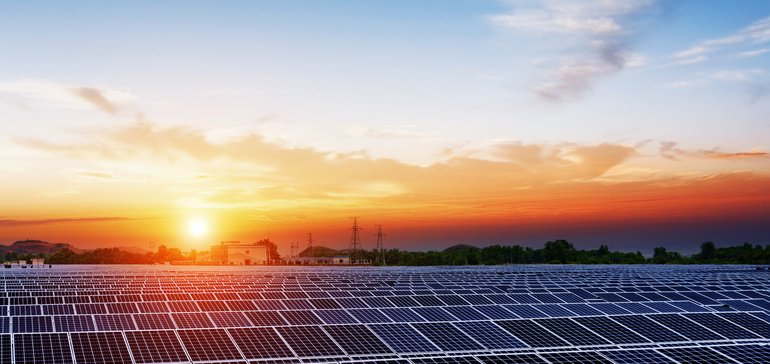



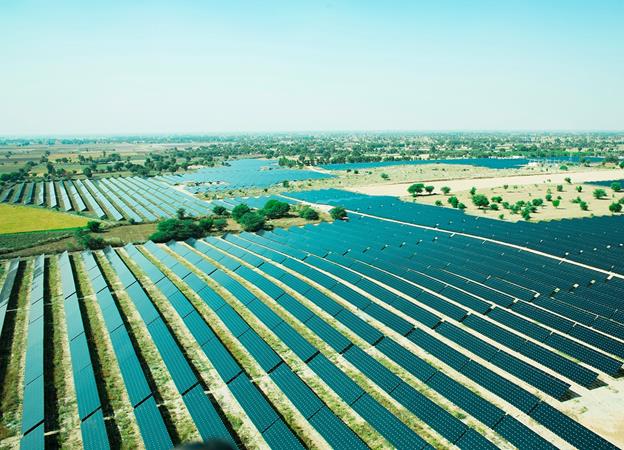


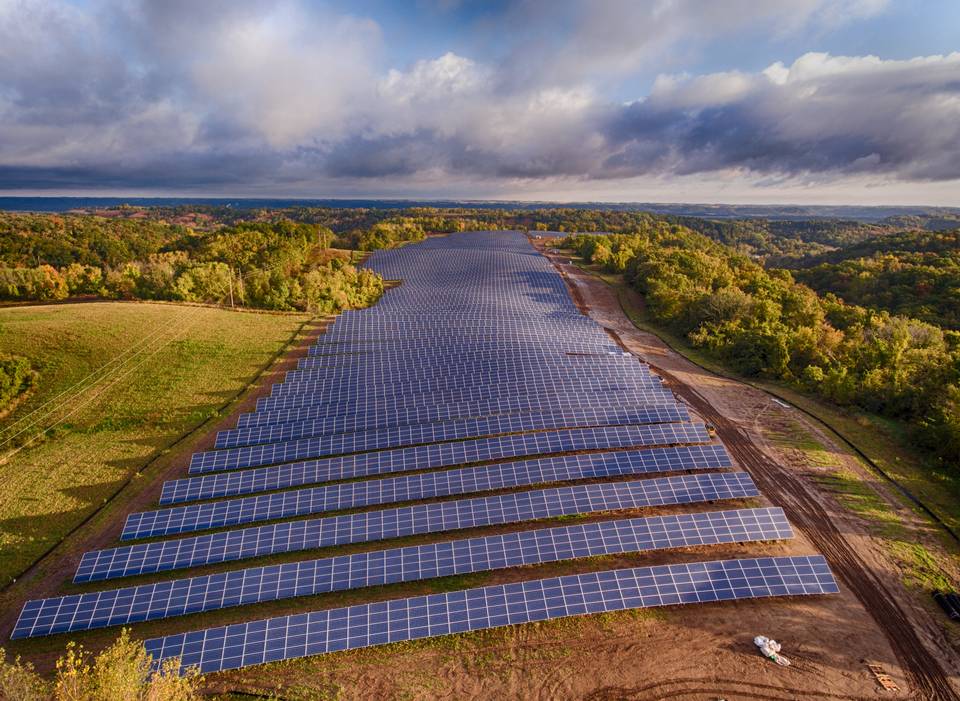
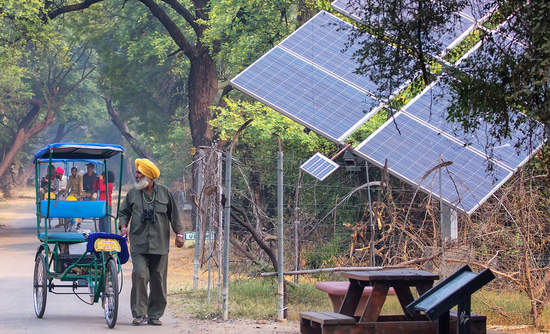


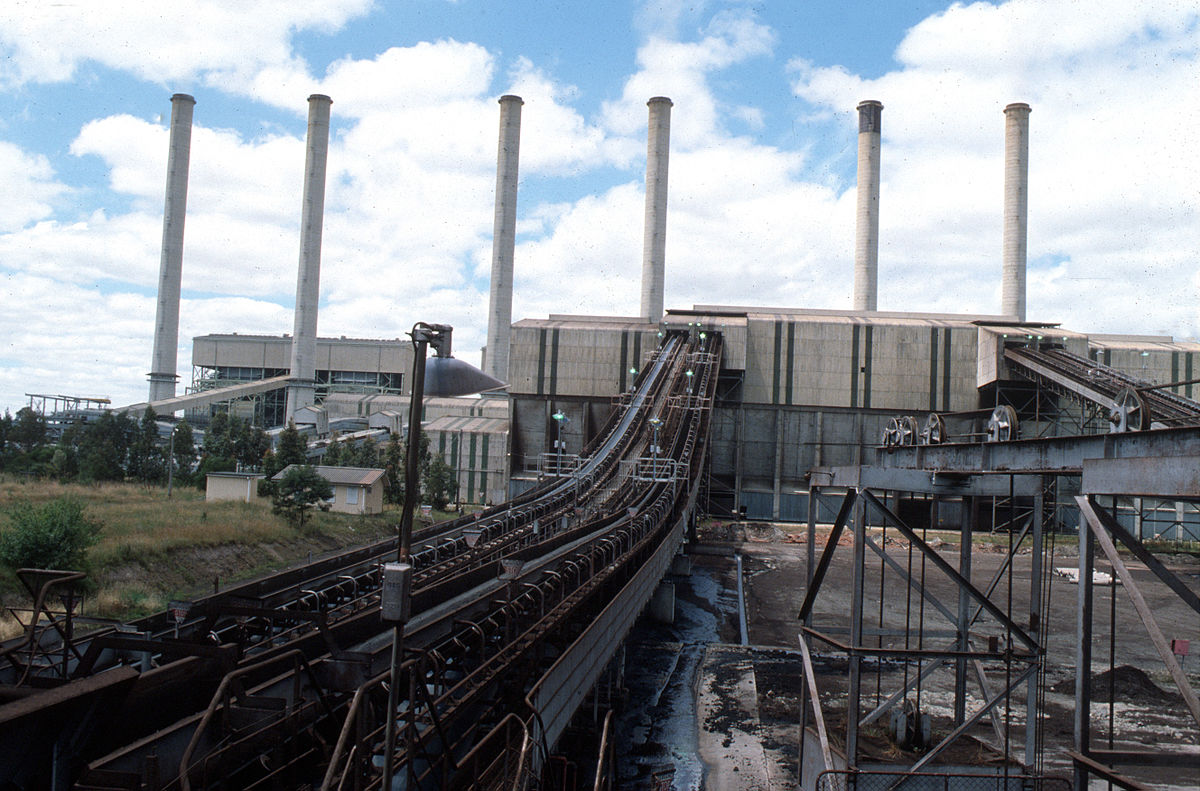


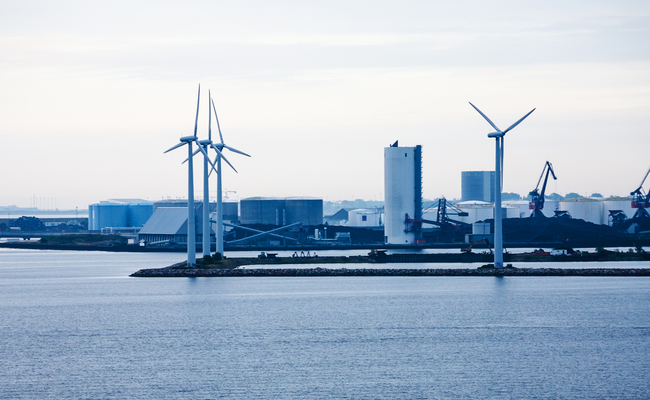




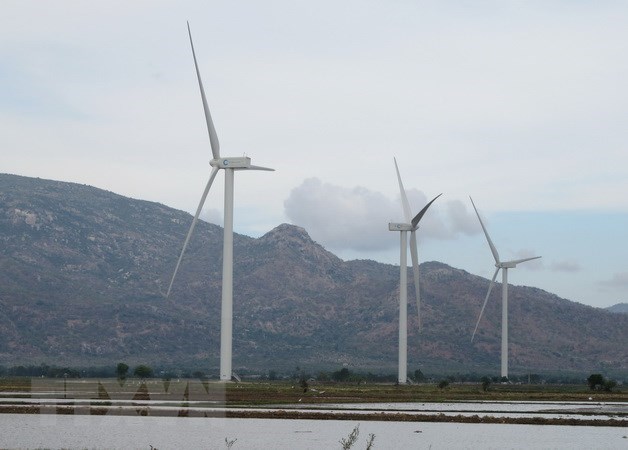
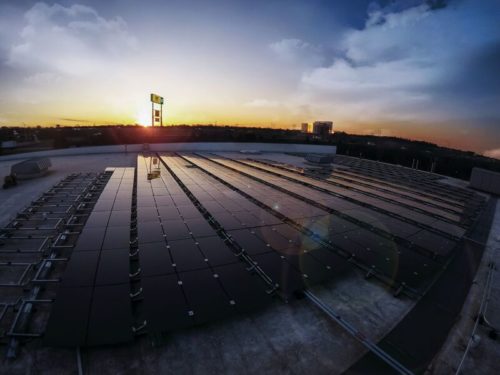

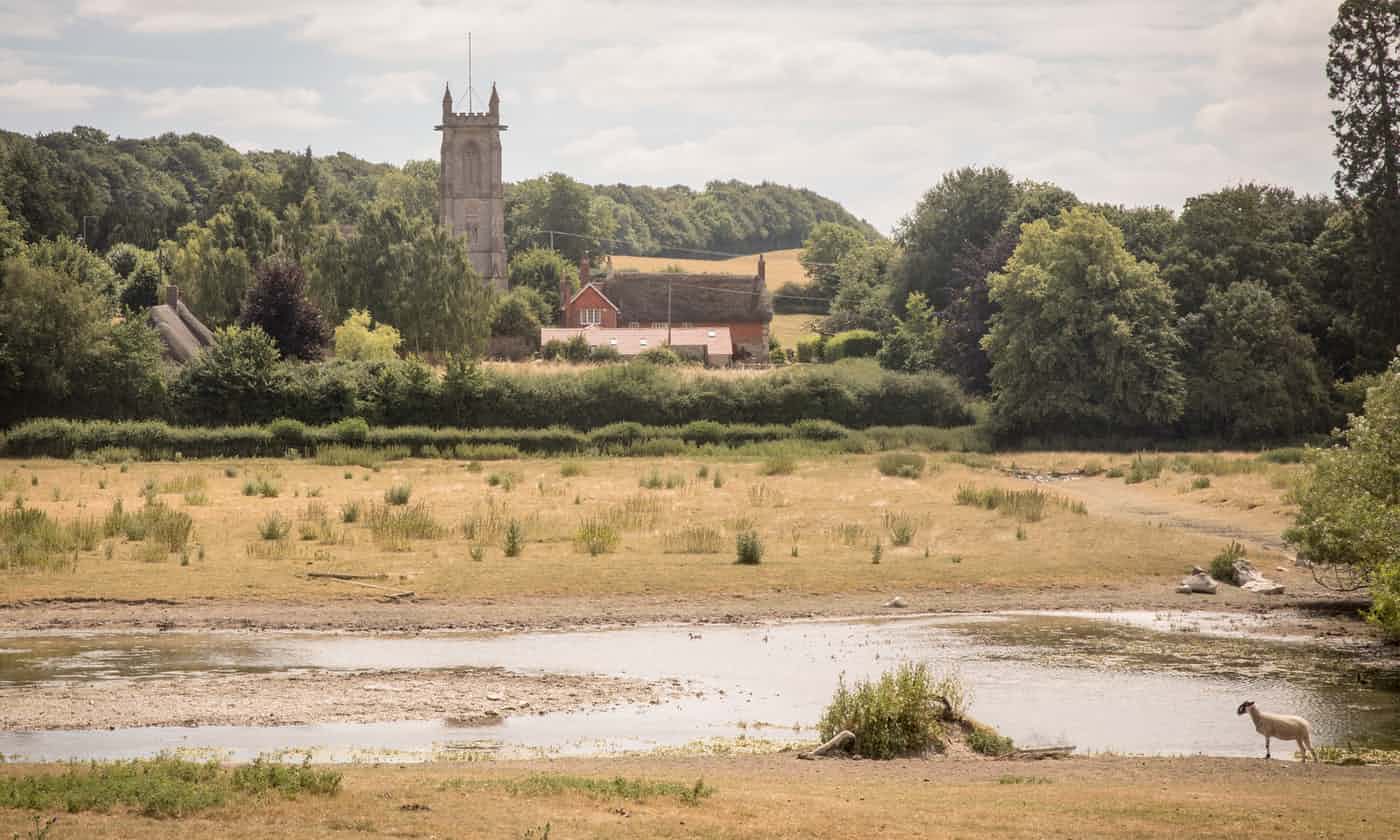
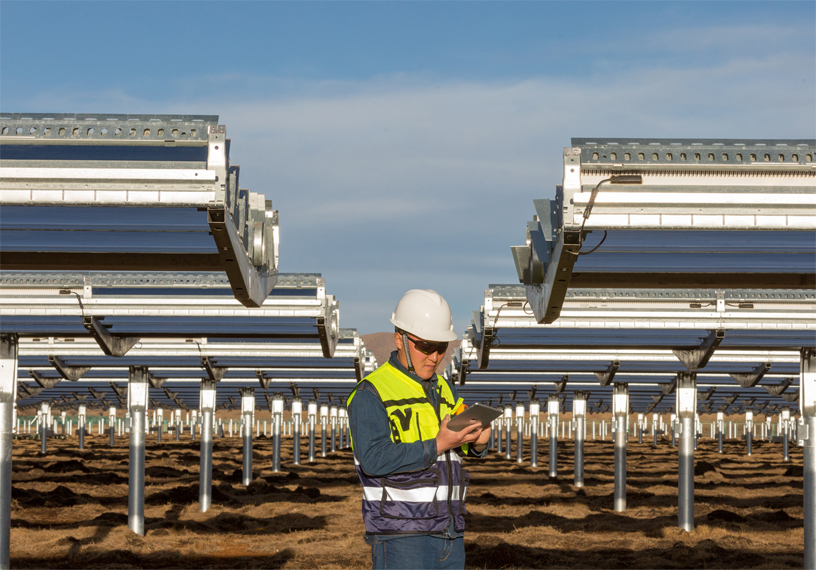





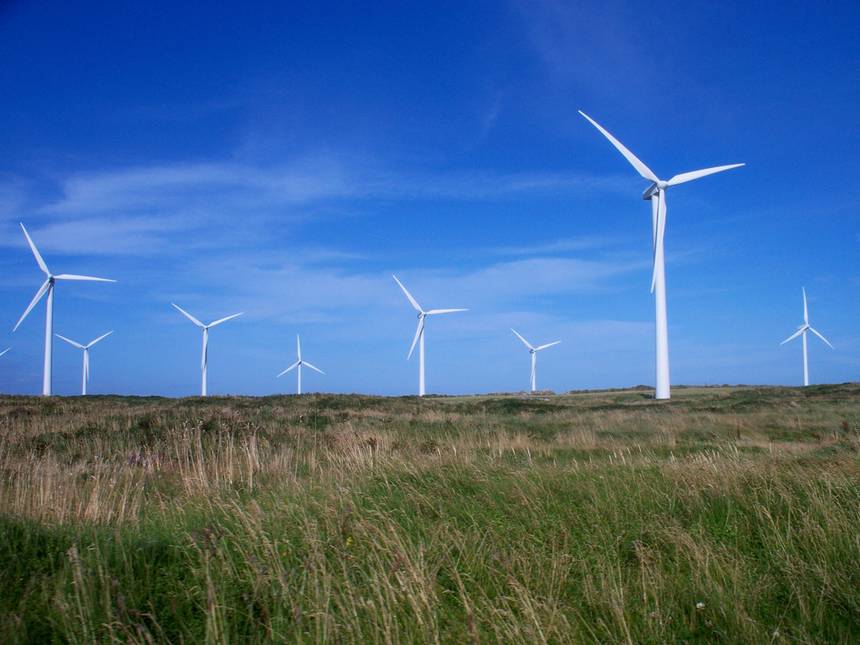
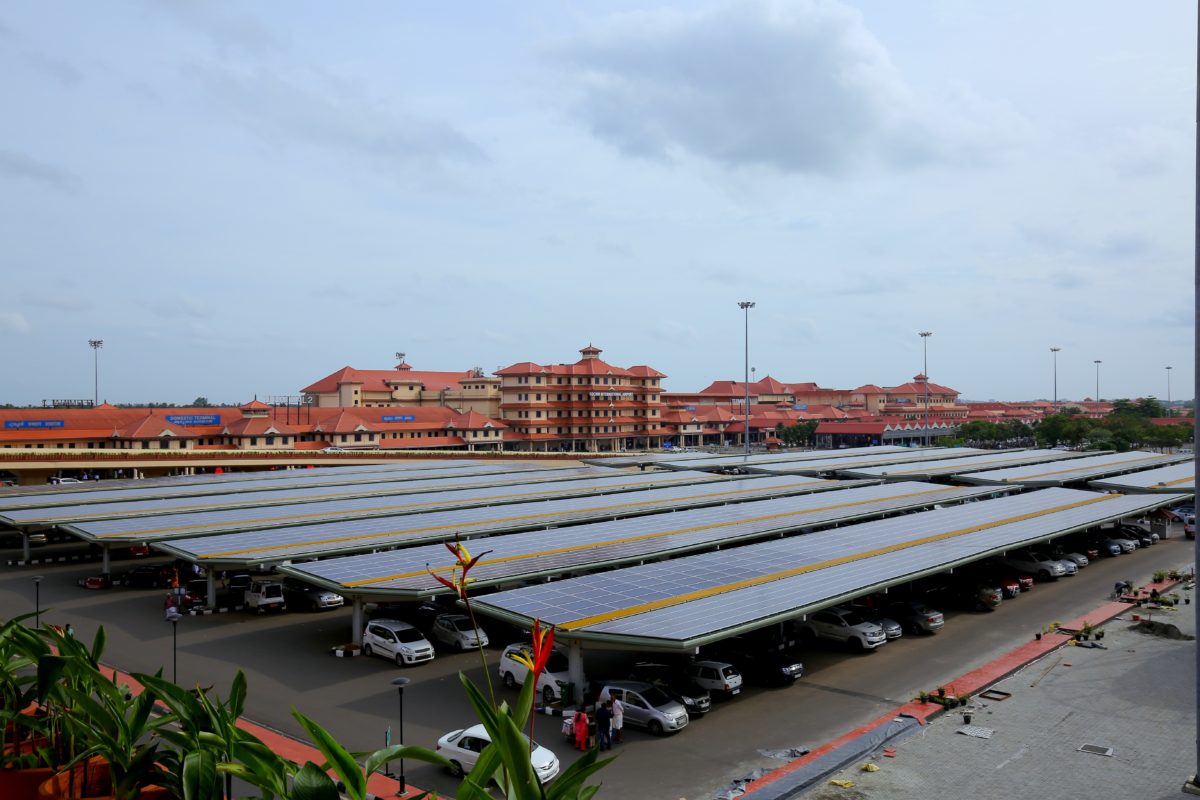

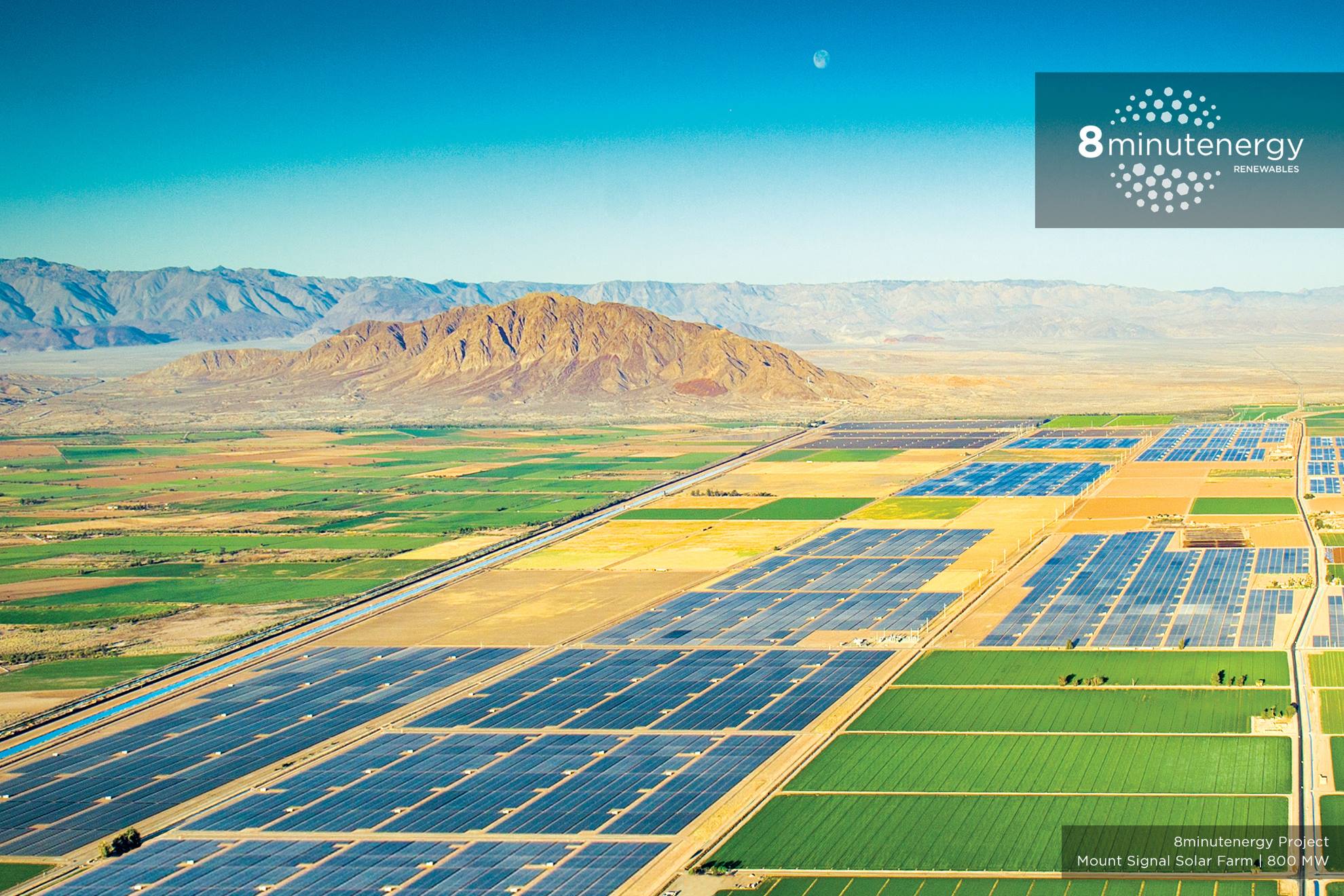

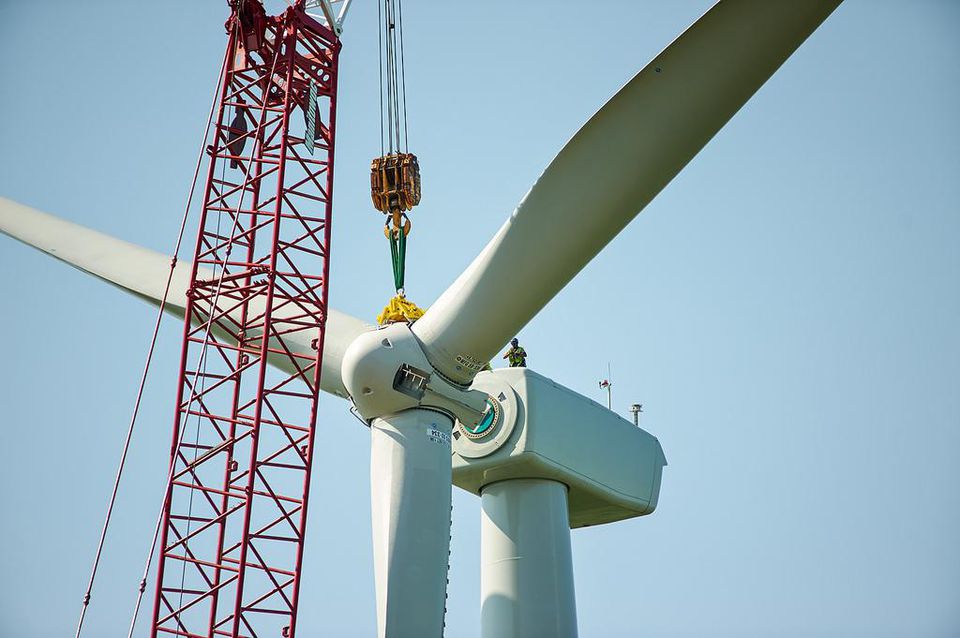





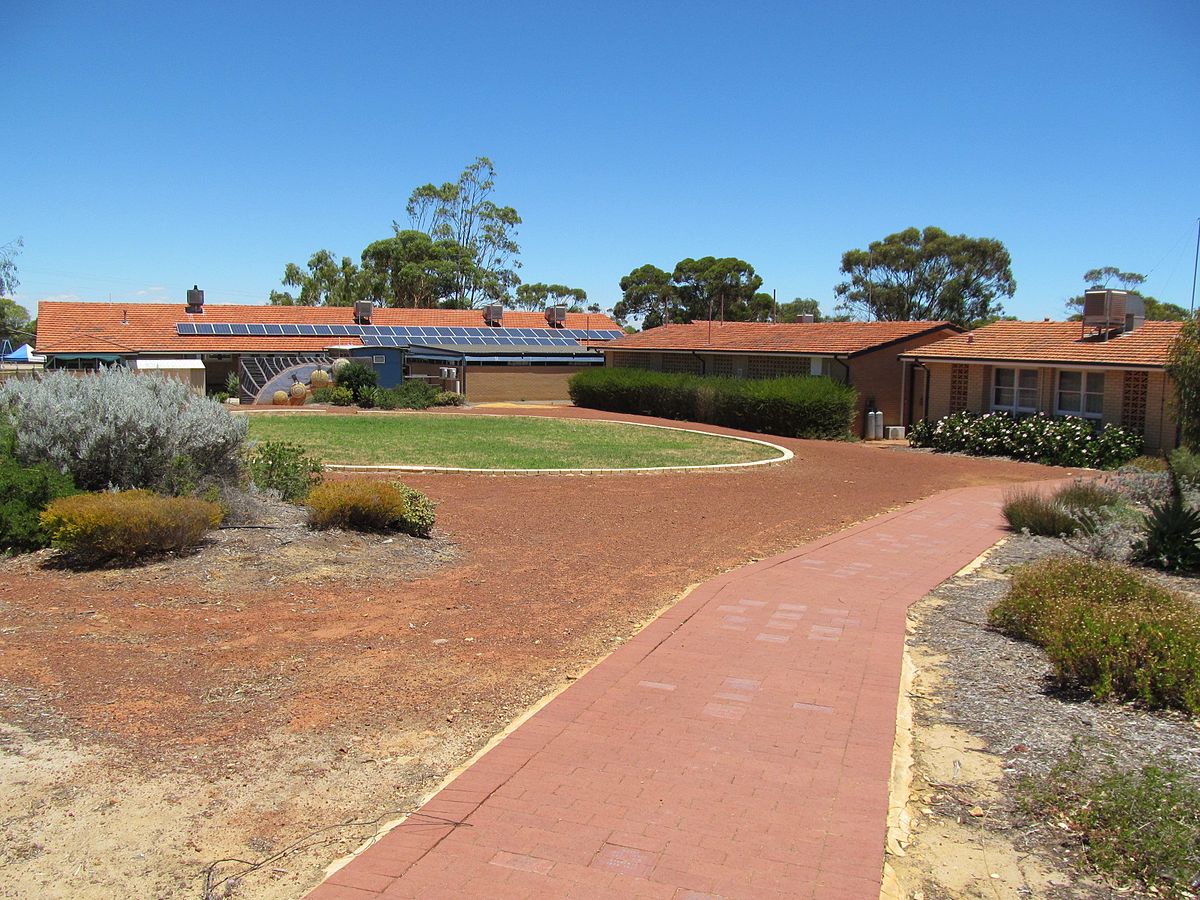

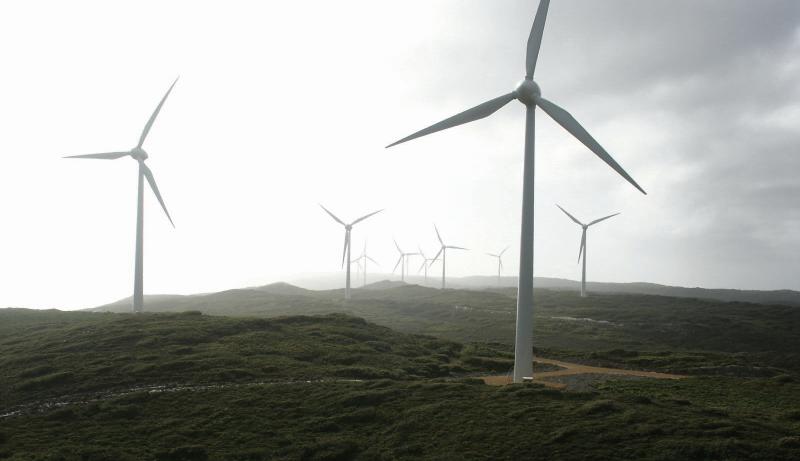


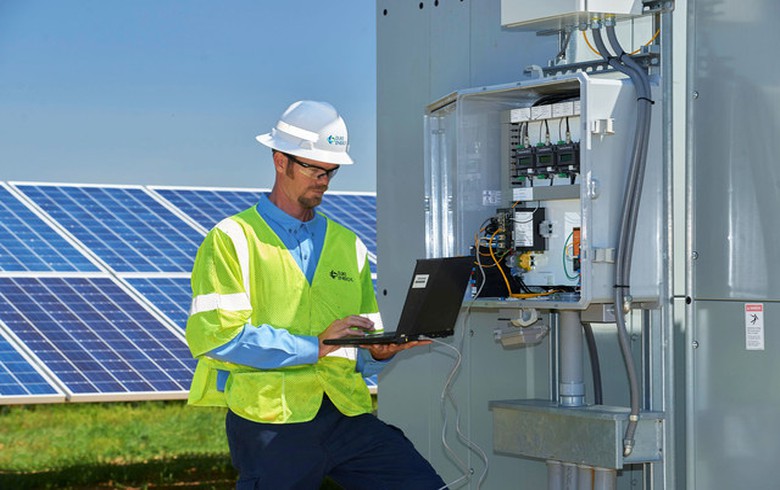


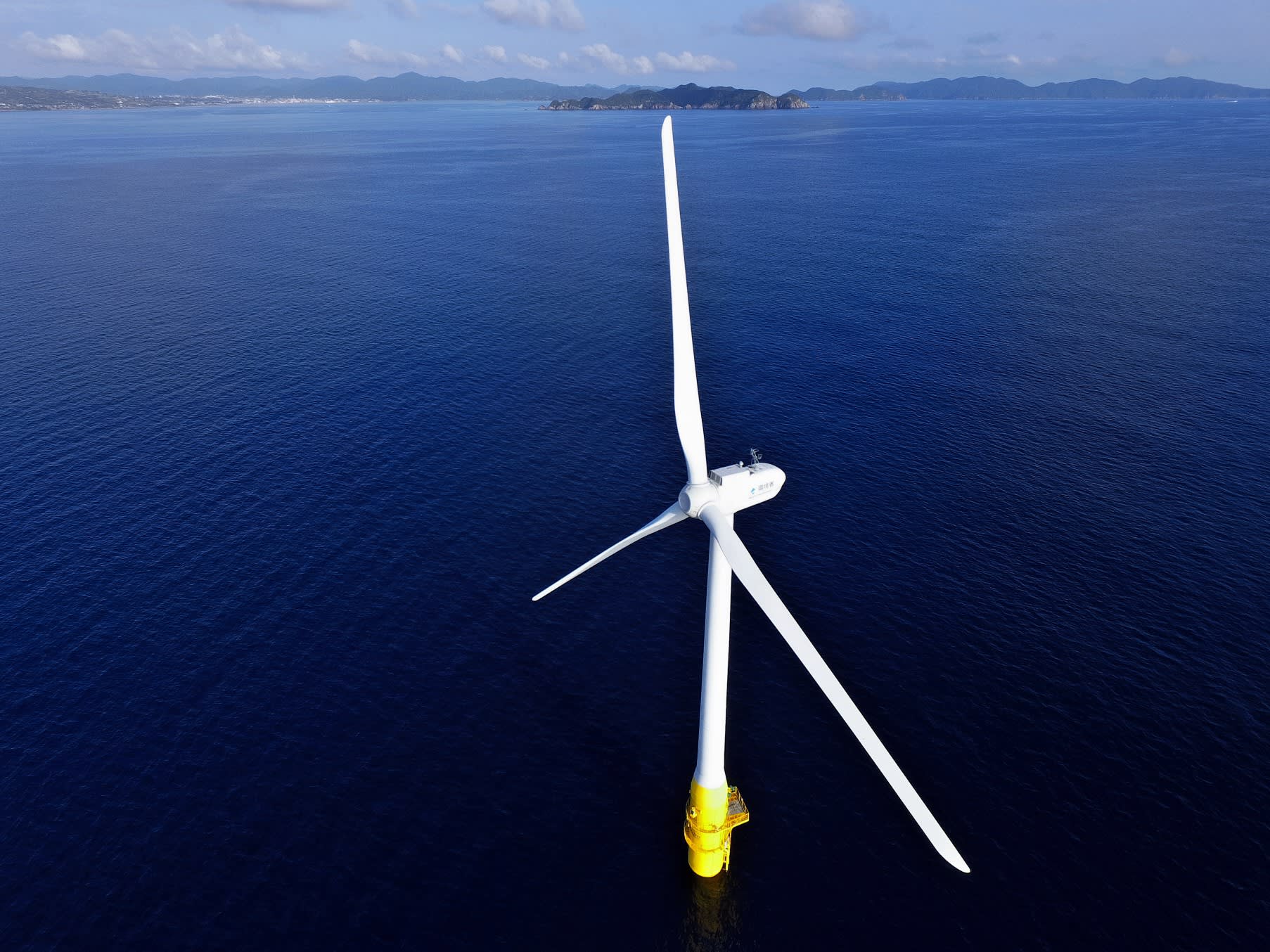




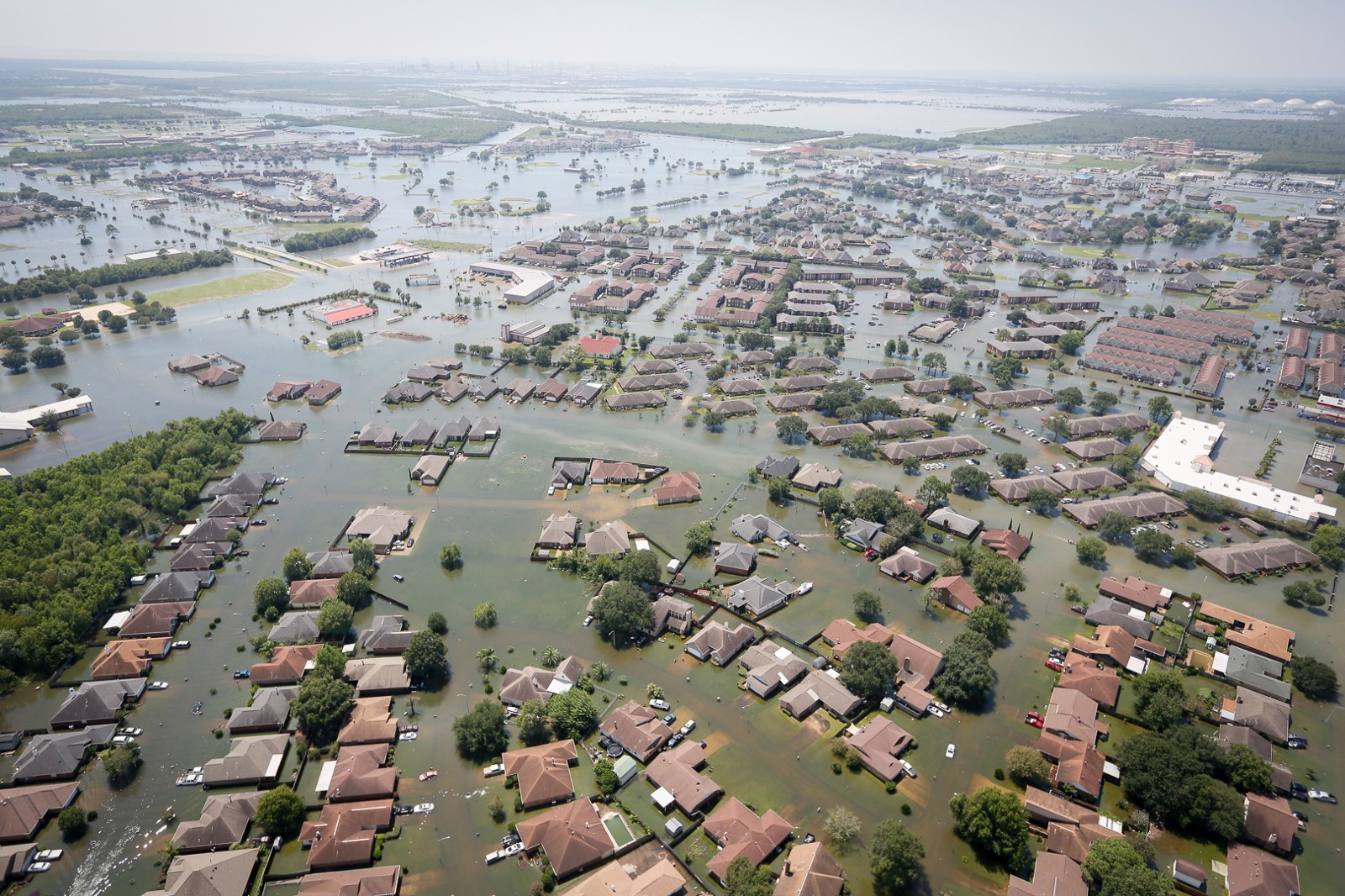


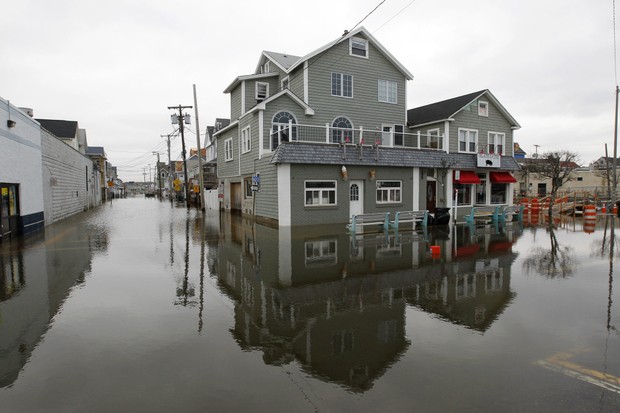
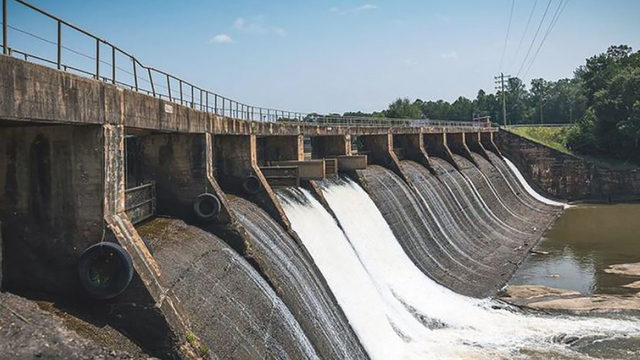

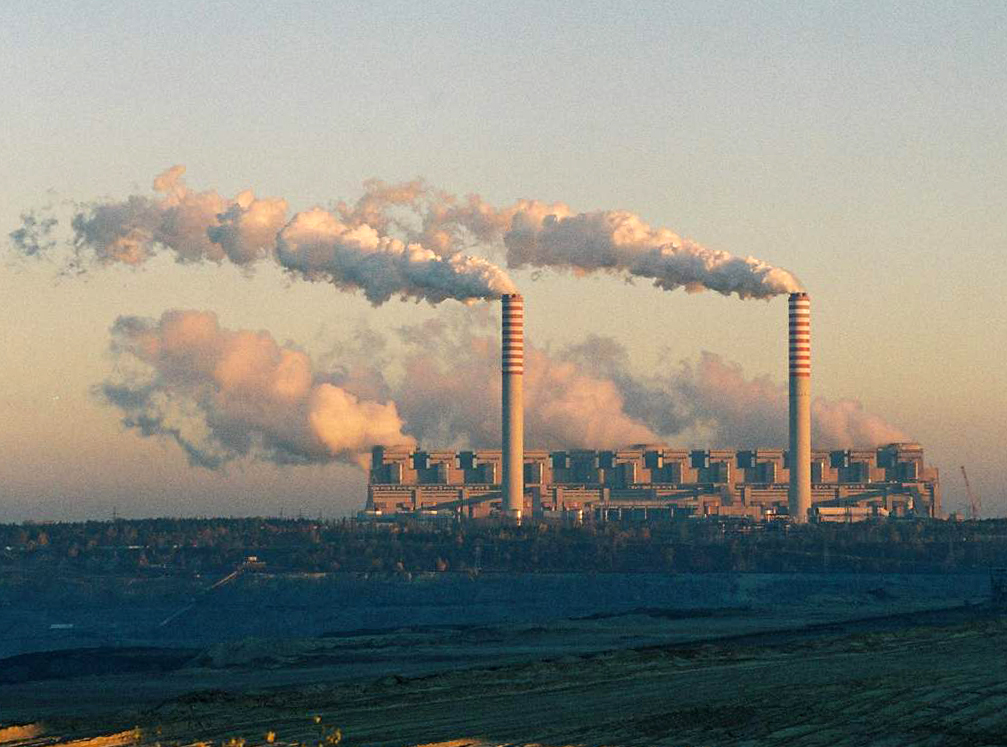




 geoharvey