Archive for the 'solar' Category
May 10, 2015
World:
¶ The first renewable energy scheme in Scotland to draw heat from the sea could be installed in Shetland. The archipelago’s capital of Lerwick already has the largest district heating system in Scotland, heated by burning trash. But there is not enough trash, so they are considering an ocean source heat pump. [Herald Scotland]
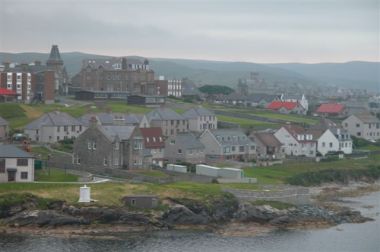
Lerwick, Shetland. Photo by Eric. Wikimedia Commons.
¶ A South Derbyshire village could see 40,000 solar panels installed as more information is revealed on plans for two new farms. The village of Overseal could be home to two solar farms to be installed by Inazin Power, which recently held a consultation meeting with residents to gather information on the sites. [Burton Mail]
¶ To encourage consumption of clean and renewable energy in the national capital, Delhi’s AAP government is planning to promote the usage of energy from such sources and will urge citizens to install “net meters” at their residence places and business enterprises. The drive is operating at several levels. [The Asian Age]
US:
¶ According to the US Geological Survey, the Dallas area has suffered almost 40 small earthquakes (magnitude 2.0 or higher) since the beginning of this year, the latest a magnitude-2.7 quake near Farmers Branch on Saturday. There was only one in the 58 years before 2008. The difference is probably due to fracking. [CNN]
¶ Solar energy companies are expanding in New Hampshire, even though the state budget threatens to wipe out a fund many say is vital to the industry. Renewable energy advocates are decrying a move by the New Hampshire House to pull $50 million its renewable energy fund to patch a hole in its budget plan. [Concord Monitor]
¶ A transformer failure and fire at Indian Point Energy nuclear power plant in Buchanan, New York sent smoke into the air and prompted the plant operator to shut down the impacted unit on Saturday evening. Indian Point Energy said that there were no injures and that there was no threat to public safety. [Huffington Post]
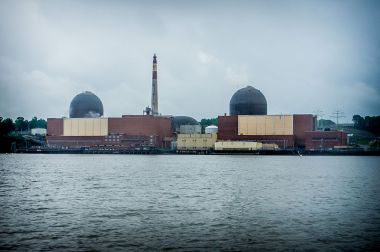
Indian Point nuclear plant. Photo by Peretz Partensky from San Francisco, USA. Wikimedia Commons.
¶ Liberty Utilities, which delivers electricity to 49,000 customers in California in the Tahoe-Truckee area, is removing coal from its power portfolio. Liberty wants to buy two solar plants with a combined capacity of 65 MW or to get power from other renewable sources. They expect to save $200 million a year. [Mountain Town News]
¶ Marin Clean Energy officials are highlighting the joint power authority’s efforts to stimulate the creation of local renewable energy projects and local jobs as the authority celebrates its fifth year and the opening of its new San Rafael, California, headquarters. The company provides community choice aggregation. [Marin Independent Journal]
¶ US-based renewable energy development company SunEdison has signed combined transactions for 757 MW of operating projects. These include wind and hydropower projects in Brazil; wind and solar projects in India; wind and solar project in South Africa; and the Solarpack solar project in Uruguay. [Greentech Lead]
¶ North Carolina governor Patrick McCrory signed a one-year extension of the state’s renewable energy investment tax credit last week, a move in that will foster more solar development within the state, which is now 4th in the nation for installed solar capacity. The law will now expire on January 1, 2017. [South Carolina SC]
Posted in nuclear power, renewable power, solar, wind | Leave a Comment »
Tags: nuclear, nuclear power, photovoltaic, renewable power, solar power, wind power
May 9, 2015
Opinion:
¶ “The EPA’s Clean Power Plan: Setting the Record Straight on the Benefits and Costs” – We need to correct disinformation about the Clean Power Plan. It’s not hard to find fodder: there’s plenty of misleading stuff out there, and some of it has gotten way more airtime than it should have. [The Equation: Blog of the Union of Concerned Scientists]
Science and Technology:
¶ Recently, with Tesla’s announcement, energy storage has been in the news. Contrary to a common misconception, very high levels of wind energy can be reliably integrated without energy storage. Energy storage is typically more expensive than grid operating reforms, which can provide the same flexibility services. [Energy Collective]
¶ A “massive” global expansion of solar power, possibly enough to supply about a third or more of the world’s electricity, may be necessary by 2050 to reduce the impacts of fossil fuels on the climate, according to a report published by MIT. But that means increasing solar from today’s 20 GW to 400 GW in the US. [Kitsap Sun]
World:
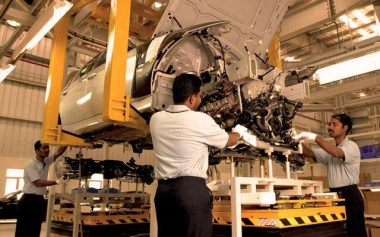
BMW factory in Chennai
¶ German luxury carmaker BMW plans to establish a solar power project at its factory in Chennai, India, by 2016. The project would help the Munich-based auto major meet 20% of the electricity needs of the factory. At present the factory has a rooftop solar farm that provides for 6% of the factory’s electricity. [Greentech Lead]
¶ Having surprisingly secured a majority government in yesterday’s UK general election, the Conservative Party, shorn of the left-leaning influence of previous coalition partners the Liberal Democrats, could be set to spring a few other surprises on the country’s solar landscape. The solar industry is nervous. [pv magazine]
¶ UK Prime Minister Cameron’s 2014 commitment to go ‘all out for shale gas’ may have been controversial, but now he has secured power this could be huge news for the oil and gas industry in the UK. Estimates suggest up to £6 billion of shale gas annually could be produced in Lancashire for the next three decades. [OilVoice]
¶ Vestas has won a deal to supply 149 MW of hardware at phases 1 and 2 of the Tres Mesas wind farm in the north-eastern state of Tamaulipas, in Mexico. The contract with special purchase vehicles Eólica Tres Mesas and Eólica Tres Mesas 2 covers 45 of the Danish manufacturer’s V117 3.3-MW machines. [reNews]
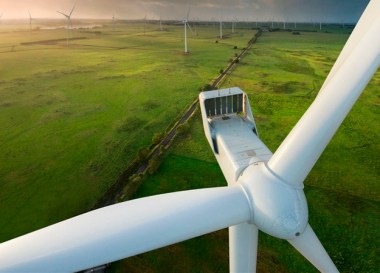
Vestas V117 3.3-MW turbines.
US:
¶ Cargill and Pacific Gas & Electric will be installing a 1-MWh Tesla battery system at a California beef processing facility. This battery system will be recharged on a daily basis via the PG&E electricity grid during off-peak hours, in order to lower operating costs, by buying all electricity at off-peak rates. [CleanTechnica]
¶ The U.S. Navy is planning to lease about 192 acres of land in Guam to the local electric company for construction of a system of photovoltaic solar panels in eight locations to generate about 40 MW of power. The Navy released an environmental impact study on the project and is seeking public comment. [Stars and Stripes]
¶ Senator Ron Wyden of Oregon introduced legislation to update America’s aging power grid and provide more reliable, low-cost, renewable energy. The Smart Grid Act of 2015 establishes a DOE program to move cities, electric utilities, and local businesses seeking to invest in innovative smart grid technologies. [myCentralOregon.com]
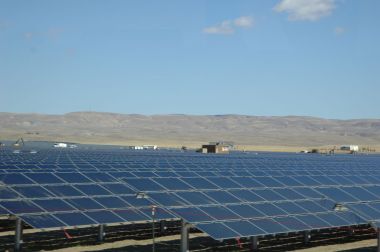
Solar Panels at Topaz Solar 7. Photo by Sarah Swenty/USFWS. Wikimedia Commons
¶ A new study in Nature Climate Change says that utility-scale solar plants taking up massive amounts of open space in the countryside actually aren’t necessary: We can get more than enough solar power by building in cities instead. The study focuses on California because it is pursuing renewable goals. [Co.Exist]
¶ Democratic Massachusetts Senators Elizabeth Warren and Ed Markey are fighting with the biomass industry over the role plant-based energy plays in the EPA climate change plan. The senators worry about the environmental benefits of using biomass, which reduces forest growth needed to reduce carbon levels. [The Hill]
¶ California will have enough power to meet air conditioning demand this summer despite continued low hydropower supplies due to the drought. The California Independent System Operator says the grid will benefit from new generation, mostly solar, stable imports and moderate peak demand growth. [Reuters]
Posted in nuclear power, renewable power, solar, wind | Leave a Comment »
Tags: nuclear, nuclear power, photovoltaic, renewable power, solar power, wind power
May 8, 2015
Science and Technology:
¶ For the first time, the global average concentration of CO2 has surpassed 400 ppm for an entire month. NOAA’s lead greenhouse gas scientist pointed out that humans burning fossil fuels have caused global carbon dioxide levels to rise more than 120 ppm since pre-industrial times, with half of that since 1980.” [CleanTechnica]
¶ Grid operators have overcome the technical barriers to integrating 30% solar PV or 40% wind on their systems. Now only the economics stand in the way, because the value of renewables to utilities can decline as their penetrations increase. But, new research shows that barrier could be ready to crumble as well. [Utility Dive]
World:
¶ Unconventional drilling (ie, fracking) creates a huge amount of waste, some of which is being sprayed onto farmer’s fields. The most economical disposal method is to dump the waste on agricultural land. This includes the grasslands, where animals graze, and crop lands. The waste also is spread into water. [CleanTechnica]

Fracking waste being spread on Albertan fields near a natural gas facility fracking at Rosebud, Alberta
¶ Germany’s anticipated installation figures for offshore wind this year are 2071 MW, nearly four times the country’s 529 MW installed during 2014, according to GlobalData, a global research and consulting firm. The report details the global quarterly intake for wind turbines, both onshore and offshore. [CleanTechnica]
¶ The Chinese system of power generation is turning green far more quickly than any other system of comparable size on the planet. Fossil fuel use has begun to decline, and though nuclear power growing, its growth is very slow compared to renewable power. Solar alone added more than nuclear last year. [Project Syndicate]
¶ The Australian government and Labor are agreeing on revisions to the Renewable Energy Target that would cut the large-scale RET down to 33,000 GWh in 2020 from 41,000 GWh. The small-scale RET, which supports rooftop solar PV and also solar and heat-pump water heaters, would be left untouched. [Business Spectator]
… However, the deal to end the lengthy stand-off over Australia’s renewable energy target hit a dramatic late hitch after Labor accused the Coalition of trying to include the burning of wood waste as a renewable energy source. The government introduced the idea as a last-minute amendment. [The Guardian]
¶ SheerWind Inc, a developer of wind-power systems based in Chaska, Minnesota, has signed a licensing agreement that will allow its technology to be marketed in Denmark. The agreement is with E-Venturi, and the first pilot project is expected to be built in Denmark before the end of the year. [AltEnergyMag]
¶ Italy’s biggest utility will invest 27% more in renewable energy in the years ahead even as a slump in oil prices makes it more difficult for solar and wind power to compete with fossil fuels on price. Enel Green Power SpA plans to increase annual capital spending to €2.1 billion through 2017, up from €1.66 in 2014. [Bloomberg]
¶ The French nuclear power dynamo has started to stall. New plants meant to showcase the industry’s most advanced technology are years behind schedule and billions of euros over budget. Worse, recently discovered problems at one site have raised new doubts about when, or even if, they will be completed. [New York Times]
US:
¶ Bank of America, one of the largest banks in the United States, has decided to slash its financing for coal mining projects, as it now considers the sector as a “highly risky” one to invest on. The bank’s Corporate Social Responsibility executive said the decision has been made an ongoing policy on the sector. [MINING.com]

Bank of America considers the coal sector too risky.
¶ The hoopla around Tesla’s battery continues apace, with Tesla founder and chairman Elon Musk saying that demand for the stationary energy storage is “just nutty,” and the Powerwall home system is already sold out through mid-2016. Tesla has already received about 38,000 sales reservations. [RenewEconomy]
¶ A group of solar energy advocates interrupted Duke Energy CEO Lynn Good’s opening remarks at the company’s annual meeting. Hulking security guards escorted them out, but the protest continued from stockholders. Duke’s CEO pointed out that the company had closed coal-burning plants and is taking up solar. [WFAE]
¶ In Colorado, UnitedWind, a Brooklyn-based company expanding to the West, partners with national banks to provide financing for everyday people who want to harvest the wind. The company works with homeowners, farms, and businesses. If you want your own wind turbine, you can lease it and get the profit. [CBS Local]
Posted in nuclear power, renewable power, solar, wind | Leave a Comment »
Tags: nuclear, nuclear power, photovoltaic, renewable power, solar power, wind power
May 7, 2015
Opinion:
¶ “Tesla Powerwall Price vs Battery Storage Competitor Prices (Residential & Utility-Scale)” – Tesla Powerwall competes on price, while offering numerous benefits (it’s much smaller per kWh, requires much less maintenance, is much prettier, can be hung on the wall, can discharge deeper, and more.) [CleanTechnica]
¶ “Oil Prices Are Rising Again, But Will They Keep Going Up?” – Oil prices hit a new high for the year Wednesday, closing at just under $61 a barrel. They’ve been rallying for a month, but nobody’s predicting $4-per-gallon gasoline anytime soon. Some analysts say weak demand will send oil prices down again. [North Country Public Radio]
World:
¶ A recent report shows that renewable energy adoption is growing in the world’s emerging economies nearly twice as fast as in industrialized nations. Not only can renewable energy technologies now compete with fossil fuels on cost, they are often more reliable, safer, and at times cheaper than grid power. [CleanTechnica]
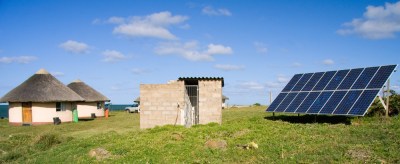
Off-grid village power plant.
¶ India’s installed renewable capacity jumped by 12.9% during the 12 months to 31 March 2015, latest data released by the Ministry of New and Renewable Energy shows. India added 4,089 MW renewable energy capacity in financial year 2014-15, which is 8.5% more than the targeted figure of 3,770 MW. [CleanTechnica]
¶ Christiana Figueres, executive secretary of the UN Framework Convention on Climate Change, said countries were ahead of schedule in negotiating a global agreement on curbing greenhouse gases that can be adopted at a Paris summit in December. Technology has changed things since a similar effort failed in 2009. [Chippewa Herald]
¶ US-based SunEdison has won an 86-MW DC solar PV project in the fourth bid round of South Africa’s renewable energy independent power producer procurement program. The company will operate and maintain the facility, which will generate enough energy for about 45,000 households in South Africa. [CleanTechnology News]
¶ Red tape is hobbling France’s quest to cut greenhouse gas emissions by 30% in 2030 compared to 1990 levels. Even more galling, Europe’s biggest agricultural producer had 185 on-farm methane plants at the end of last year, compared to about 7,700 in Germany. Complicated French approval systems can take years. [Bloomberg]
¶ Despite warnings from climate experts, global banks collectively financed $144 billion for coal mining and coal power companies in 2014, compared to $145 billion in 2013, according to the annual coal finance report card released today by Rainforest Action Network, BankTrack and the Sierra Club. [Business Green]
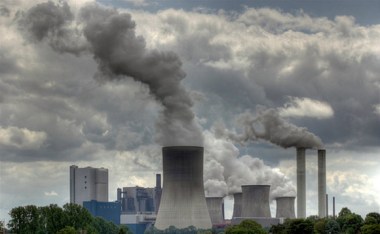
Some banks are investing in coal.
US:
¶ UPS has been experimenting with renewable power for its trucks. Their latest initiative is to power a fleet of 400 trucks with renewable natural gas. It’s basically biomethane derived from renewable sources, such as decomposing organic waste in landfills, wastewater treatment plants, and agricultural sources. [Treehugger]
¶ Nebraska, the nation’s only completely public power state, has decided the public should not subsidize wind power. A bill to provide $75 million in production tax credits for renewable energy, was successfully filibustered by two senators, who suggested the state consider nuclear power instead. [McCook Daily Gazette]
¶ Exelon is amping up its threat to close three nuclear power plants unless it gets government help. The company says it’s not a bailout and instead argues it’s trying to level the playing field. Illinois already gives some incentives for renewable sources and nuclear proponents say nuclear power deserves that. [Peoria Public Radio]
¶ Hawaii looks set to be the first US state to put a firm use-by date on carbon intensive energy generation. The new compromise bill sets targets of 30% renewables in 2020, 70% by 2030 and 100% renewables by 2045. It has passed in the legislature, and is now just awaiting Governor David Ige’s signature. [Energy Matters]
¶ Former Hewlett Packard CEO Carly Fiorina on Monday blamed environmentalists for what she called a “man-made” drought in California, which has led to the state’s first water restrictions. She said they were to blame because no new reservoirs have been constructed despite population increases. [Huffington Post]
Posted in nuclear power, renewable power, solar, wind | 1 Comment »
Tags: nuclear, nuclear power, photovoltaic, renewable power, solar power, wind power
May 6, 2015
Opinion:
¶ “Why Tesla Batteries Are Cheap Enough To Prevent New Power Plants” Last year, analysts for Oncor Electric Delivery Company calculated the break-even point for utility-scale storage batteries at $350 per kWh. Tesla’s Powerpack, the big sister of the Powerwall home battery, will come at a cost of $250/kWh. [Forbes]
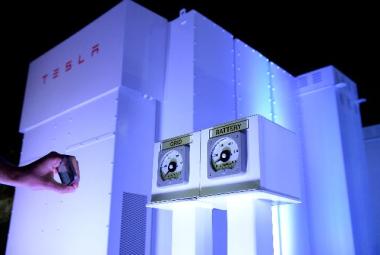
Tesla utility-scale batteries.
¶ “Tesla Powerwall: What you need to know” As more solar energy is adopted, a dedicated battery to store the energy makes a lot of sense. Tesla’s Powerwall battery promises to be able to take homes and businesses off the grid. Here’s a sanity check on how realistic it is, and what it means for the energy market. [TechRepublic]
¶ “Oil Prices Are Rebounding Now, But A Permanent Plunge May Be Coming” Oil and gas will likely be with us for centuries to come as the stuff that makes products from plastics to petroleum jelly. But better batteries could lead to the end of oil and gas for much of its current uses—transportation and power. [Forbes]
World:
¶ The UK’s largest operator and owner of solar PV assets, Lightsource Renewable Energy, has announced that it is offering up to £40,000 per MW for introduced sites. The developer is hoping to uncover new solar farm sites with suitable grid connections and a strong possibility of quick planning permission. [Solar Power Portal]
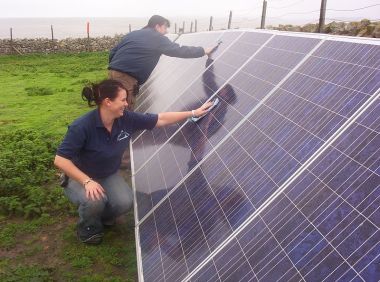
Flat Holm solar array, Cardiff, Wales. Photo by Cardiff Council Flat Holm Project. Wikimedia Commons.
¶ Chinese firm Shenergy Co Ltd said Monday it will create a $20.9 million joint venture with a Shanghai-based company, looking to add 70 MW of wind power capacity in the city. To that end, the company’s renewables arm Shanghai Shenneng New Energy Investment Co Ltd will own 60% of the company. [SeeNews Renewables]
¶ The Indian state of Uttar Pradesh has signed agreements with the Solar Energy Corporation of India for four solar PV power projects with a total capacity of 600 MW. The projects will be set up under the Indian government’s push to add 20 GW of solar capacity through ultra mega solar power projects. [CleanTechnica]
¶ Solar power in Japan is close to becoming profitable, says the country’s leading renewables watchdog, the Japan Renewable Energy Foundation. Since 2011, when the country’s 43 nuclear reactors were idled; Japan has added 25 GW of renewable power, of which solar energy accounts for 80%. [pv magazine]
US:
¶ Gulf Power received unanimous approval from the Florida Public Service Commission of an agreement that will make the utility a leading purchaser of wind generation among Florida utilities. The agreement is the first of its kind in the state. The project, called Kingfisher Wind, will be built in central Oklahoma. [NorthEscambia.com]
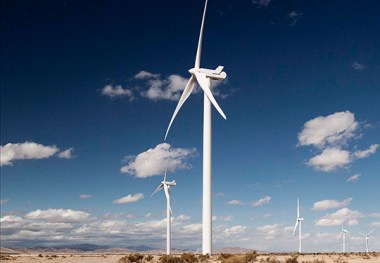
Wind farm in Oklahoma.
¶ The second-ever comprehensive Clean Jobs Illinois Report found that there are 104,449 clean energy jobs in the land of Lincoln. Jobs counted were those connected with electric or alternative transportation fuels, greenhouse gas management, energy efficiency, wind power, geothermal, or solar power. [CleanTechnica]
¶ Rapid growth in small solar is changing production and use patterns, leading to calls to change net metering policies. Two Arizona co-ops have petitioned the Arizona Corporation Commission to reduce premium rates co-ops pay small-scale solar providers for power to reflect wholesale power costs. [Electric Co-op Today]
¶ Pattern Energy announced this week the closing of financing on the 150 MW Amazon Wind Farm (Fowler Ridge) project, to be located in Benton County, Indiana. The project has entered into a 13-year power purchase agreement with Amazon to provide energy for local Amazon Web Services data centers. [CleanTechnica]
¶ Kearsarge Energy, based in Watertown, Massachusetts, has completed the largest Massachusetts operating SREC II Solar PV Project. The 4.9 MW DC ground-mounted Kearsarge Southwick is the company’s 13th solar project, and increases its Massachusetts track record to 37 MW of completed Solar Facilities. [Digital Journal]
Posted in nuclear power, renewable power, solar, wind | Leave a Comment »
Tags: nuclear, nuclear power, photovoltaic, renewable power, solar power, wind power
May 5, 2015
World:
¶ US firm First Solar Inc has installed the first PV panels at AGL Energy Ltd’s 53-MW Broken Hill solar park in New South Wales, Australia. Upon completion in late 2015, the 650,000 solar panels at the site are expected to generate enough electricity to power some 17,000 local households. [SeeNews Renewables]
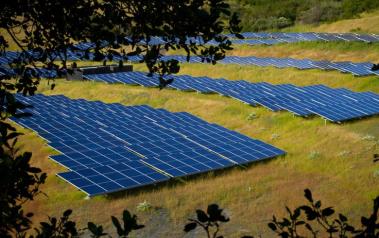
Australian Solar Farm. Author: Michael Mees meesphotography.com License: Creative Commons, Attribution 2.0 Generic
¶ Yesterday pv magazine reported that both inverter specialist Fronius and residential solar provider Sunrun have announced collaborations with the Tesla Powerwall, and today comes news that more leading solar firms have confirmed partnerships to bundle the battery with their own service or product. [pv magazine]
¶ Egypt’s Ministry of Electricity and Renewable Energy has signed seven binding Memoranda of Understanding worth $500 million under the government’s Feed-in-Tariff program. There were five agreements signed for solar projects totaling 220 MW and two wind projects totaling 100 MW. [Utilities-ME.com]
¶ Net metering has begun in Delhi, with six locations already operating in the city. Four sites are residential, one is a commercial building in south Delhi, and one is a school in the east. As of now they have received 50 applications and around 500 queries for net-metering, but the city has a potential for 2 GW. [CleanTechnica]
¶ Power companies are bracing for a hit in the UK no matter who wins the general election on May 7. The election will merely determine the biggest losers. Shares and bonds of utility companies have fallen at the prospect of a new administration undoing energy rules that have taken years to put together. [Bloomberg]
¶ Turbine maker Nordex SE has received an order from Northern Irish utility Energia Renewables. Per the contract, Nordex will supply and install 38 of its N90/2500 turbines at an extension of the Meenadreen wind farm, located in Donegal, Ireland. Nordex will begin installing the turbines in March 2016. [North American Windpower]
¶ Dissatisfied with government-orchestrated compensation, the number of local residents and others affected by the Fukushima nuclear crisis who have sued TEPCO is expected to soon top 10,000 plaintiffs. A total of 9,992 people, including evacuees, have joined 25 lawsuits filed with 20 district courts. [Asahi Shimbun]
US:
¶ Mississippi Power is partnering with Origis Energy to develop a 52-MW solar project on 196 hectares in the state. If approved by the Mississippi Public Service Commission, the projects could be in service near the end of 2016. Mississippi Power just finished two installations with a total of 53 MW. [PV-Tech]
¶ Washington-based Solar Electric Power Association has released a report on the US solar power industry and utility rankings for 2014. The report says the US added 5.3 GW (182,000 new systems) of PV capacity last year, taking the total installed solar capacity nationwide to 16.3 GW (675,500 locations). [Greentech Lead]
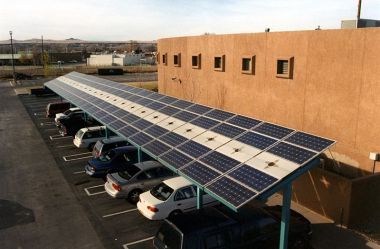
Solar carport at the Indian Pueblo Cultural Center in Albuquerque, New Mexico. Photo from energy.gov.
¶ Solar energy is fast becoming a “least cost” option for US utilities. Declining technology costs, policy support and retail rate levels are cited as contributing factors. Issues, including rate restructuring and grid integration, need to be addressed; meanwhile community solar programs are getting strong interest. [pv magazine]
¶ In a bid to put New Jersey back into a leadership role in clean energy, a Senate committee yesterday approved a bill that would require 80% of the state’s electricity to come from renewable sources such as solar and wind by 2050. Even proponents say approval is unlikely under the Governor Christie. [NJ Spotlight]
¶ Kansas would no longer require utilities to get a portion of their electricity from renewable resources, but the state also would not impose a new tax on the power under a proposal announced by the governor. It embodies an agreement between the wind energy industry and critics of the green energy mandate. [Greenfield Daily Reporter]
¶ A new study, published in the journal Nature Climate Change today, says that the Environmental Protection Agency’s Clean Power Plan will save over 3500 lives every year. The study by researchers at Harvard, Syracuse and Boston Universities and Resources for the Future finds a strategy to meet the plan. [News Every day]
¶ In 2015, a record 9.1 GW of solar and 8.9 GW of wind will be installed in the US, forecasts Bloomberg New Energy Finance. Wind has 13.6 GW under construction in 100 projects, says American Wind Energy Association. In Iowa, two projects by MidAmerican Energy costing $1.5 billion will add 922 MW. [SustainableBusiness.com]
¶ With all the attention being paid to Panasonic and its partnership with Tesla in the GigaFactory under construction in Nevada, people sometimes forget that there are other battery companies in the world. But Toshiba grid storage batteries will be used at a new energy storage installation near Hamilton, Ohio. [CleanTechnica]
Posted in nuclear power, renewable power, solar, wind | Leave a Comment »
Tags: nuclear, nuclear power, photovoltaic, renewable power, solar power, wind power
May 4, 2015
Science and Technology:
¶ E. coli exists in a wide variety of strains, some of which are beginning to pop up in renewable fuel and “green” chemical applications. One of these is involved in a new artificial photosynthesis study from UC Berkeley and Lawrence Berkeley National Laboratory. The basic concept is to mimic natural photosynthesis. [CleanTechnica]
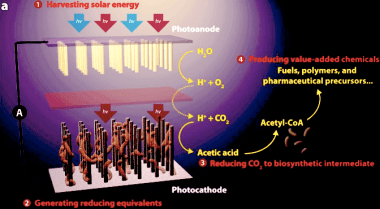
How the artificial leaf works.
World:
¶ According to analysis by the conservation charity of WeatherEnergy data, for Scottish homes with PV panels, there was enough sunshine last month to meet 113% of the power needs of an average home in Edinburgh. In Aberdeen, Glasgow and Inverness the percentage was 111%, 106%, 104%, respectively. [SeeNews Renewables]
¶ A report from the French government’s environment and energy agency body that showed shifting to 100% renewable energy by 2050 is feasible. The report found it would cost little more than the existing 75% nuclear power supply. But the case for 100% renewables is not being discussed by the government. [Green Left Weekly]
¶ Research from commercial law firm EMW shows that 20,655 green energy patents were filed globally in 2014, for solar power, wind energy, biofuels and waste-generated energy – down from 35,590 in 2012. EMW said this sharp decline has been mainly caused by oversupply in the solar panel market. [The Guardian]
¶ The government of Bangladesh is considering amending its policy on renewable energy to increase use of solar and wind power by allowing private businesses to own large power plants. Large solar and wind power plants can be set up only on government lands under existing regulations. That may soon change. [Financial Express Bangladesh]
¶ Brown coal’s share of the main Australian electricity grid has surged to its highest level since September 2012, increasing the sector’s greenhouse gas emissions. The data came as climate change ministers from around the country met to discuss how state governments might co-operate on emissions. [Sydney Morning Herald]
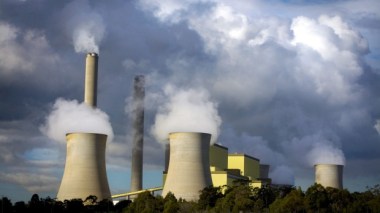
Australian coal plant.
¶ The Australian federal government could agree to a higher renewable energy target before the end of the week as it finds itself isolated on the issue and sees a need to bring uncertainty to an end. Cabinet is likely to discuss the matter now that the Labor leader agreed to accept a 2020 target of 30,000 GWh. [The Australian Financial Review]
¶ The International Atomic Energy Agency delayed a report about meltdowns at the Fukushima Daiichi nuclear power plant to give Japanese officials another chance to explain radiation leaking into the Pacific Ocean. The IAEA’s report on plans to decommission the stricken reactors will be published in “mid-May.” [Bloomberg]
US:
¶ In Northern California, there lies a relic from the heyday of US nuclear power, shut down in 1976. The remaining cost to decommission the plant will be about $441 million, according to its owner, PG&E Corp. Nuclear operators are supposed to lay up enough money to cover the costs, but most haven’t. [The Japan Times]

Humbolt Bay Power Plant. Photo from the US Department of Energy.
¶ NextEra Energy Resources has been awarded a bid to develop solar power array projects in New Mexico. The two projects include a 50-MW solar array on 640 acres in Doña Ana County, and a second array, expected to be the largest in the state, will generate 150 MW, on 2,770 acres in Otero County. [Las Cruces Sun-News]
¶ A number of billionaires are committed to carbon-free energy. Warren Buffett invested $15 billion in solar and wind energy by early 2014. Ted Turner is working with coal-heavy Southern Company to acquire solar and wind plants. Philip Anschutz is working on a 3,000-MW wind farm in Wyoming. [Independent Online]
Posted in nuclear power, renewable power, solar, wind | Leave a Comment »
Tags: nuclear, nuclear power, photovoltaic, renewable power, solar power, wind power
May 3, 2015
Opinion:
¶ “Is Solar Power About To Crush Big Oil, Big Coal And End Global Warming?” – Something amazing has happened in the energy market. The cost of solar power has fallen to the point where, in a growing number of places, it’s cheaper than the electricity that utilities deliver from their coal-fired power plants. [Investing.com]
¶ “Fracking Could Be More Dangerous Than We Realize” – British Columbia has no regulatory requirement for groundwater monitoring at hydraulic fracturing sites unless specified by a permit. And earthquakes are caused by fluid injection during hydraulic fracturing in proximity to pre-existing faults. [CleanTechnica]
Science and Technology:
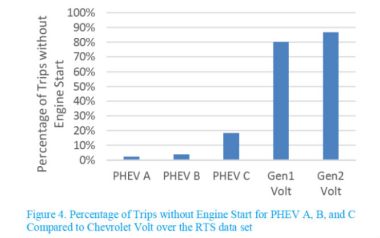
¶ The Chevy Volt is in a class of its own compared to other plug-in hybrid electric vehicles (PHEVs). The Volt emits significantly less smog-forming pollution than other PHEVs, according to a GM study presented to the Society of Automotive Engineers. The Volt has far fewer engine starts than other PHEVs. [CleanTechnica]
¶ A new type of wind turbine from a startup company, Vortex Bladeless, relies on an aerodynamic phenomenon called vorticity, in which wind flowing around a structure creates a pattern of small vortices or whirlwinds called a Kármán vortex street. No problema as long as they are relatively small. [CleanTechnica]
World:
¶ Following a call Friday by General Electric, a coalition of peak industry, manufacturing, and business groups, have joined in to demand an end to the stand-off on the renewable energy target, which began over a year ago when the government reviewed the target and tried to have it drastically scaled back. [The Australian Financial Review]
¶ Indian Prime Minister Narendra Modi pushed for expediting projects in the areas of irrigation, affordable housing, at a high-level meeting on infrastructure with focus on rural development, power, coal, renewable energy and petroleum and natural gas. He reviewed the status of stalled infrastructure projects. [Press Trust of India]
¶ As the cost of electricity from South Africa’s utility, Eskom, rises and frustration with load-shedding increases, companies are forking out millions to generate their own power – and even cemeteries are turning to renewable energy. Private cemeteries run by property group Calgro M3 convert to solar power. [Times LIVE]
¶ A minor leakage of radioactive water has been detected at Fukushima Daiichi. A total of 40 millilitres of water was discovered, according to TEPCO. The company stated that it placed bags of sand around the tank to prevent water from contaminating other areas. [RT] (40 millilitres is less than 3 tablespoons. So they are putting down sandbags?)

Slogan sign “nuclear (power generation), a bright and future (source of) energy” in Futaba town, Fukushima pref. Photo by Hohoho, Wikimedia Commons.
US:
¶ New York’s Office of Parks, Recreation and Historic Preservation recently flipped the switch on a 50-kW solar PV system at Fort Niagara State Park. The solar energy system is expected to save $9,100 annually and bring a clean, modern source of energy to the park, enhancing energy efficiency efforts. [Buffalo News]
¶ SolarCity Corporation announced on May 1 to offer Tesla Motors Inc’s newly released solar energy storage home battery unit, Powerwall. The company will be offering Tesla Powerwall, 10 kWh model, for $5000 under a nine-year lease plan, or the customers can buy the battery pack for $7,140 flat. [Business Finance News]
Posted in nuclear power, renewable power, solar, wind | 1 Comment »
Tags: nuclear, nuclear power, photovoltaic, renewable power, solar power, wind power
May 2, 2015
Tesla:
¶ “Tesla’s Home Battery Offering In Context — Pricing Much Lower Than Expected” I think one of the lessons of the day is to trust Elon Musk. When he said approximately a month ago that Tesla would be announcing a “major new product line” on April 30, he wasn’t using the term “major” in a light way. [CleanTechnica]
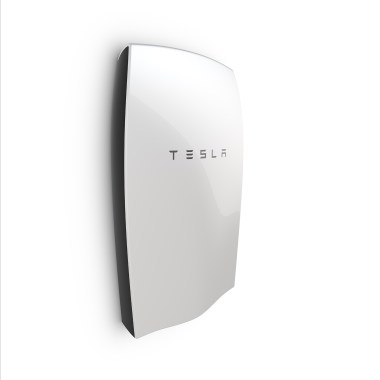
Tesla Home Storage Powerwall
¶ Green Mountain Power is the first utility in the country to partner with Tesla to offer Tesla’s new home battery to customers. It says a radical change to the grid will begin in Rutland City. The batteries will become available in October, and GMP plans to offer incentives as well as in-bill financing to buyers. [Rutland Herald]
¶ “7 Things You Need to Know About Tesla’s New Home Battery” The internet has been a flurry of speculation for weeks. But now, after the big unveiling late last night, the time for speculation is over. Quell your curiosity, and spend 10 minutes learning everything you need to know about Tesla’s new battery. [Triple Pundit]
¶ Almost three hours before Tesla’s big announcement, inside a Northwestern University classroom near Chicago, famed nuclear critic Arnie Gundersen had the inside scoop: Elon Musk would announce an industrial-scale battery that would cost about 2¢ per kWh, putting the final nail in the coffin of nuclear power. [Forbes]
World:
¶ A £70 million tidal project that was shelved last year could now be revived after a global leader in the industry bought up the scheme. The 10-MW Skerries Tidal Stream Array, which was to be Wales’s first commercial tidal energy farm, would see seven massive tidal generators located in up to 130 ft of water. [WalesOnline]
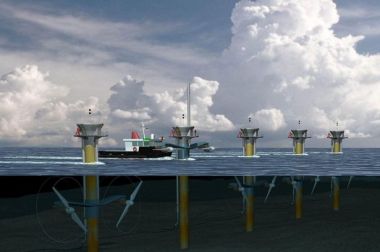
Artist’s impression of turbines developed by Marine Current Turbines of Bristol
¶ Since 2005, Venezuela’s socialist government has sent $70 billion of subsidized oil to Nicaragua and other Caribbean area nations, according to Barclays Investment Bank. This secured political allies, countering US influence. Now, the US is encouraging a regional shift toward renewables and independence from oil. [Wall Street Journal]
¶ Germany’s DanTysk offshore wind power plant has officially been inaugurated. The installation features 80 Siemens wind turbines with a total capacity of 288 MW. The wind power plant can generate up to 1.3 billion kWh per year, enough to match the annual consumption of about 400,000 German households. [Renewable Energy Focus]
US:
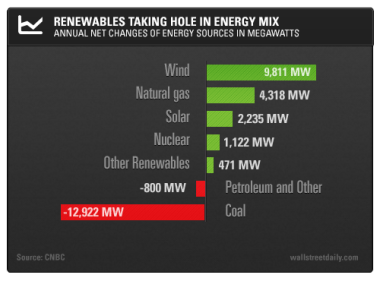
¶ According to the Energy Information Administration, in 2015, electricity-generating companies will add 20 GW of capacity to the grid. Of that amount, about 68% will come from renewable energy sources. And this good news is just the tip of the iceberg when it comes to renewable energy around the world. [Investing.com]
¶ President Barack Obama has signed bipartisan legislation to bolster energy efficiency measures in commercial buildings and homes. One component of the Energy Efficiency Improvement Act promotes energy efficiency for renters through a branch of the Energy Star program, which is called “Tenant Star.” [State Journal]
¶ Caterpillar and First Solar, Inc today announced a strategic alliance to develop an integrated PV solar solution for microgrid applications. Under the agreement, First Solar will design and manufacture a pre-engineered turnkey package for use in remote microgrid applications, such as small communities and mine sites. [3BL Media]
¶ US Representative Scott Perry continued his efforts this week to remove government barriers to the development of hydropower in the US by sponsoring an amendment to HR 2028, the Energy-Water Appropriations bill for Fiscal Year 2016 that would restore funding for this vital energy resource. [RealEstateRama]
¶ Xcel Energy is seeking state regulators’ approval to develop and own the proposed 200-MW Courtenay wind farm near Jamestown, North Dakota. The 100-turbine Courtenay project is expected to create about 200 construction jobs and provide about $850,000 in annual tax revenue to local governments. [Energy Business Review]
Posted in nuclear power, renewable power, solar, wind | Leave a Comment »
Tags: nuclear, nuclear power, photovoltaic, renewable power, solar power, wind power
May 1, 2015
Opinion:
¶ “FirstEnergy Wages All-Out War on Clean Energy” – While some in the utility industry are adapting to account for low-cost renewable power and climate change, others are fighting it. In Ohio, FirstEnergy gained regulatory approval to abandon its energy efficiency programs. But their situation has not benefitted. [Environmental Defense Fund]
Science and Technology:
¶ André Borschberg, co-founder and pilot of Solar Impulse 2, has rejoined the SI2 team in Nanjing, China, and is preparing for the biggest flight for the solar-powered airplane to date. The flight across the Pacific is projected to last 120 hours, 5 days, and 5 nights in a very small cockpit the size of a closet. [CleanTechnica]

Solar Impulse 2
¶ Infratech Industries, Inc opened a solar plant at a wastewater treatment facility in South Australia, and it could potentially change the way we harvest solar energy. According to the company’s director, the panels are 57% more efficient than land-based systems because they’re kept cool by the water. [Grist]
World:
¶ ScottishPower Renewables has officially opened the newly repowered Coal Clough windfarm. The company has invested £22.5 million to replace 24 wind turbines installed in 1992, with eight modern turbines, increasing the total generating capacity of the windfarm from 9.6 MW to 16 MW. [Renewable Energy Focus]
¶ Divisions are emerging in the Australian Coalition government as MPs fret over job losses caused by the ongoing uncertainty over the renewable energy target. Industry leaders have called on the government to accept a suggestion by Victorian Liberal MP Dan Tehan to adopt a new target of 33,000 GWh. [The Australian Financial Review]
¶ The Total Environment Centre says data shows energy use on the North Coast of New South Wales is declining about three times as fast as the overall national energy market, despite a 5% population increase over the same period. High power costs are driving people to efficiency and rooftop solar systems. [Northern Star]
¶ TEPCO started freezing soil at the Fukushima Daiichi nuclear plant in trial operations for an underground wall aimed at preventing groundwater from flowing into the damaged reactors and becoming radioactive. The work was conducted at 18 points around the No. 1 through No. 4 reactor buildings. [Asahi Shimbun]
¶ A new report from the banking and financial services company, HSBC, has warned of increasing risk of “stranded assets” in the fossil fuel industry. It raises questions that are going to need to be addressed in the coming years, if not sooner, as nations gear up for the United Nations Climate Change Conference. [CleanTechnica]
¶ The world’s nuclear reactors are showing their age. Almost 200 of the 434 nuclear reactors in operation worldwide are due to be retired by 2040, at a cost of more than $100 billion, according to the International Energy Agency. All but one of the existing plants in the UK are due to be shut down within a decade. [The Engineer]

Obsolete nuclear power plant.
US:
¶ Tesla unveiled a suite of energy products, including a wall-mounted battery for use in consumers’ homes. The Powerwall is a lithium-ion battery designed to be mounted on a wall, and connected to the local power grid. It will be sold to installers for $3,500 for 10 kWh, and $3,000 for 7 kWh, starting in late Summer. [CNN]
¶ Republic Services, Inc announced today a new landfill gas-to-energy project located at Sunshine Canyon Landfill near Los Angeles. The 20-MW renewable energy project is capable of generating enough electricity to power nearly 25,000 area homes, fueled by methane from decomposition of waste. [Your Renewable News]
¶ The 400-MW Grande Prairie wind farm in Holt County, Nebraska will be powered by 200 V110-2.0 MW machines made by Vestas. Delivery is to start in the second quarter of 2016 and the project is expected to be completed by the end of the same year. The contract includes a five-year service agreement. [SeeNews Renewables]
¶ New Jersey legislators are preparing to take another crack at dramatically ramping up how much of the state’s electricity comes from renewable energy, such as solar and wind power. A bill before the Senate Environment and Energy Committee would require 80% of the electricity to come from renewable sources. [NJ Spotlight]
¶ DTE Energy has the green light to build the Fermi 3 nuclear power plant. The NRC approved a license to construct and operate a new nuclear power plant at the same site as Fermi 2. The company says a final decision on whether to build would be based on factors such as customer demands and carbon regulations. [Monroe Evening News]
Posted in nuclear power, renewable power, solar, wind | Leave a Comment »
Tags: nuclear, nuclear power, photovoltaic, renewable power, solar power, wind power
April 30, 2015
Opinion:
¶ “Renewable Energy Boosted By Shift From Green Idealism To ‘Hard Economics'” Investment bank HSBC says renewable energy is becoming mainstream with a shift away from the badly managed schemes of “green idealism” to “hard economics”, where renewable’s costs will win out over fossil fuels. [CleanTechnica]
World:
¶ Last week, representatives from China’s national Energy Research Institute, the State Grid Energy Research Institute, and others released a new study envisioning a nation powered by 57% renewables in 2030, growing to 86% renewables by 2050, all at the same time as China’s economy grows sevenfold. [CleanTechnica]

View from the Great Wall: Smog coming out off Beijing to the mountains. Photo by Daag. Wikimedia Commons.
¶ Orix Corp will start construction of a 54.6-MW solar park in Niigata City in June, the Japanese energy company said. The park in Yotsugoya will have over 205,900 PV modules, making it the largest mega-solar power plant in Niigata Prefecture, according to the company. Completion is planned for June 2018. [SeeNews Renewables]
¶ The UK installed utility-scale solar totalling more than 1.6 GW in the first quarter following the Cameron Government’s decision last year to prematurely end the renewable subsidy scheme, market analysts IHS has found. The country added 110 projects, bringing its cumulative utility-scale solar capacity to 3.8 GW. [The Daily Telegraph]
¶ WWF-Australia has launched a program to engage corporate giants such as Westpac, Nestle Oceania and IKEA in contributing to a zero carbon economy by mid-century, powered by 100% renewable energy. The Australian launch of the “Road to Paris and Science Based Targets” will be in Sydney on Friday. [The Fifth Estate]
¶ A project has been launched in Ghana, to provide affordable, pay-as-you-go solar power to 100,000 off-grid homes in the next two years. The project forms part of the government’s effort to bring reliable and renewable power to, especially, rural areas. It would focus on the cocoa-growing regions. [Ghana Broadcasting Corporation]
¶ Hurt by fallen power prices, Vattenfall will cut 1,000 jobs and shut its two oldest nuclear reactors earlier than planned, the Swedish state-owned utility said on Tuesday. Vattenfall said it would shut the 881-MW Ringhals-1 and 865 MW Ringhals-2 nuclear. Previously the plan was to close them in around 2025.[Business Recorder]
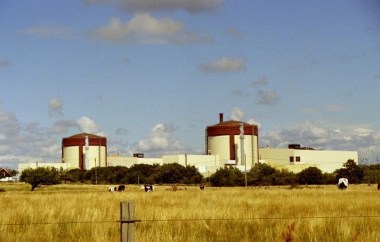
Ringhals nuclear power plant. Photo by Tubaist on sv.wikipedia. Wikimedia Commons.
US:
¶ Analysis from the Energy Department’s National Renewable Energy Laboratory finds that by making shared solar programs available to households and businesses that currently cannot host on-site PV systems shared solar could represent 32% to 49% of the distributed photovoltaic market in 2020. [CleanTechnica]
¶ California Governor Jerry Brown launched an ambitious new effort to limit climate change Wednesday, calling for the state to cut its planet-warming greenhouse gas emissions 40% below 1990 levels by 2030, the toughest carbon goal adopted by any North American government for that time frame. [USA TODAY]
¶ Another large user of power is going to boycott the direct use of coal at the facilities it controls. But this time, it’s not a government or a do-good nonprofit institution. No, it is the largest manufacturer of vehicles, a profit-seeking behemoth that symbolizes the nation’s industrial strength: General Motors. [Slate Magazine]
¶ In refusing to write her own plan, Oklahoma Governor Fallin becomes the first governor to take Senator McConnell’s “just say no” pledge. Doing so, she has passed up the opportunity to tailor a plan to the state’s needs, and is the first governor to turn over implementation to the federal government. [Natural Resources Defense Council]
¶ The nation’s largest solar energy contractor for residential and commercial customers will be opening shop in New Hampshire. SolarCity has been looking for space in Manchester and is close to leasing a 15,000-square-foot location where it will employ 70 to 100 people in the business of rooftop solar. [RenewablesBiz]
¶ Austin-based Pioneer Green Energy signed a contract with the US General Services Administration to sell 75 MW of solar energy from the Great Bay Solar project under development in Somerset County, MD. The power purchase agreement was awarded as the result of a competitive process in 2014. [PennEnergy]
¶ Vestas has received a firm and unconditional order from Sempra US Gas & Power for 39 V110-2.0 MW turbines for the Black Oak Getty wind farm in Stearns County, Minnesota. The 78-MW wind farm will generate enough renewable energy to power about 30,000 Minnesota homes. [Renewable Energy Magazine]
Posted in nuclear power, renewable power, solar, wind | Leave a Comment »
Tags: nuclear, nuclear power, photovoltaic, renewable power, solar power, wind power
April 29, 2015
Science and Technology:
¶ GE has launched a new wind collector optimization service to help developers better plan the layout of wind farms, providing potential savings of more than 20%. The service, which uses grid intelligence, provides an in-depth look at possible collector cable configurations and the benefits and drawbacks of each. [reNews]
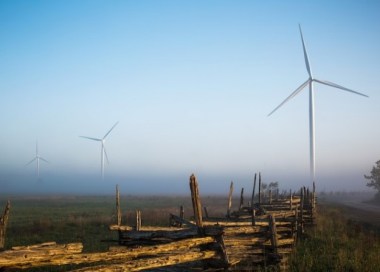
Wind farm rising above smog.
¶ A tractor able to run on two renewable fuels, hydrogen and ammonia, was demonstrated in Iowa by its developers, who cited sustainability and zero carbon emissions. The tractor has a 150-hp engine and operates at full power for up to 4 hours, or up to 50 acres. [The Gazette: Eastern Iowa Breaking News and Headlines]
World:
¶ The world’s largest internal combustion engine power plant is being inaugurated near Amman, Jordan. The plant is powered by 38 Wärtsilä 50DF multi-fuel engines with a combined capacity of 573 MW. The engines can run on various grades fuel oil or natural gas. It is currently running on heavy oil. [Stockhouse]
¶ The cabinet of the Indian state of Madhya Pradesh gave the green light to the world’s biggest solar power project. The project will have a capacity of 750 MW. The government also decided to set up a joint venture company for the project. The World Bank will provide loan for the project, a government spokesman said. [Times of India]
¶ Businesses and residents living in the Outer Hebrides will be able to seek advice on installing wind turbines, solar panels, heat pumps and other clean technologies, when a new renewable energy hub opens this week. The hub is designed to help off-grid communities reduce their energy bills. [Business Green]
¶ Grid-scale battery storage solutions have arrived in Europe, despite a lingering controversy. No longer a distant dream, projects in Germany are already feeding energy into the grid, while in the United Kingdom and Italy, commercial projects are close to coming online. The technology, however, is not fully tested. [Environment & Energy Publishing]
¶ In the UK, as awareness of fracking has risen from 42% of people in July 2012 to 72%, the percentage who support fracking has continued downward, falling from 29% last year to 24% this. In contrast, the percentage saying they oppose or strongly oppose fracking rose year-on-year from 22% to 26%. [Business Green]
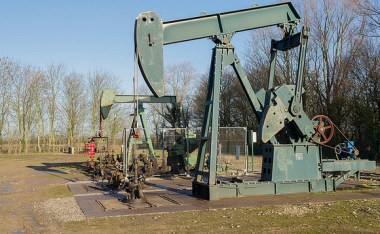
Nodding Donkeys
¶ Japan is expecting renewable energy sources to generate more of its power than nuclear facilities by 2030. A draft report by the Japan Ministry of Economy, Trade and Industry says nearly 24% of the country’s power will be green in 15 years, while nuclear power will account for around 22%. [Power Technology]
US:
¶ A poll conducted by Wilson Perkins Allen Opinion Research and commissioned by The Alliance for Solar Choice found that 74% of Nevadans would be less likely to re-elect a politician who failed to raise the solar cap in Nevada. This includes 69% of Republican likely voters and 80% of Democratic likely voters. [Your Renewable News]
¶ GM’s Fort Wayne Assembly Plant in Fort Wayne, Indiana, ranks No. 5 among the US EPA’s top 30 generators of on-site green power. The plant is the home of the Chevrolet Silverado and GMC Sierra. It is 43% powered by methane captured from decomposing trash in a nearby landfill. [Renewable Energy from Waste]
¶ Hawaii lawmakers compromised for a bill that would set 2045 as the date to reach a goal of using renewable energy sources for 100% of the state’s electric power generation. House and Senate bills had different target dates for 100% renewable power. The state got 18% of its power from renewables in 2013. [Honolulu Star-Advertiser]
¶ Stanford University announced a massive upgrade to its energy system that makes it a world leader among universities, while saving $420 million on energy costs over the next 35 years. One component is an extremely efficient combined heat and power system. The other is two solar PV projects totalling 73 MW. [SustainableBusiness.com]
¶ Spot on-peak power at Southern California’s SP15 hub dropped 49% from a year ago to average $25.04 per MWh this month through Monday, heading for the lowest average for April in prices going back to 2009. The reason is that solar power is being trapped in the area due to ongoing line work. [Bloomberg]
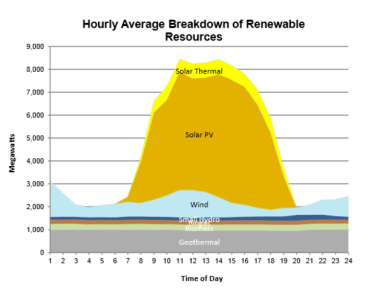
Solar, wind and other renewable output was 111,749 MWh on April 27, 2015, or 18% of the day’s generation. Source: California Independent System Operator
¶ Black & Veatch, the Kansas City area’s largest engineering firm, has installed a microgrid based on renewable and natural-gas-fired power for its world headquarters in Overland Park, Kansas. The grid has geothermal and solar PV energy sources, two gas-fired microturbines, and a lithium-ion battery system. [Kansas City Star]
Not Energy, but Of Interest:
¶ The GMO food industry suffered a defeat when a federal court ruled that Vermont’s genetically engineered food labeling law, Act 120, was constitutional. The decision came from Christina Reiss, Chief Judge of the US District Court for the District of Vermont, and was celebrated by consumer advocates. [Green Energy Times]
Posted in nuclear power, renewable power, solar, wind | 1 Comment »
Tags: nuclear, nuclear power, photovoltaic, renewable power, solar power, wind power
April 28, 2015
Science and Technology:
¶ A new record for train speed was recently set in Japan by the company Central Japan Railway… Twice in the same week, actually. Breaking a twelve year old record, the train made it to a speed of 590 km/h (366.6 milers per hour). A couple of days later, the train managed to hit 603 km/h (374.7 miles per hour). [CleanTechnica]

Maglev train in Japan
¶ Utility distribution microgrids are emerging as a new platform that can accommodate innovative technology while also opening up alternative business models for utilities as the energy industry transforms. In short, microgrids optimize and aggregate diverse resources and allow for two-way exchanges. [Intelligent Utility]
World:
¶ US denial propagandists, funded by conventional energy companies and a foundation controlled by a conservative petrochemical billionaire, will try to persuade the Vatican that global warming does not exist. It is a counter-event for a summit on climate change being held by the Pontifical Academy of Sciences. [CleanTechnica]
¶ Chairman of the Carbon Trust and former chairman of Shell UK James Smith called on oil and gas companies to “change profoundly over the next couple of decades … if costly climate damage is to be avoided.” He said companies based on fossil fuels need to begin “tackling climate change” sooner, rather than later. [CleanTechnica]
¶ According to the Japanese industry ministry, nuclear power is the most cost-effective method of generating electricity, even when factoring in increased safety fees, accident compensation and other related expenses following the Fukushima Disaster. They base this on the assumption that plants have become safer. [Asahi Shimbun] (No need to comment.)
¶ Reliance Power Ltd exited a proposed $5.7 billion power and coal mine project in the eastern Indian state of Jharkhand after failing to secure land. Reliance Power failed to get land for six years after winning a tariff bid for the 3,960-megawatt project. The company will instead focus on renewable energy, it said. [Bloomberg]
¶ British financial services company HSBC, in a research report, The Rise of Renewables, says renewable energy is becoming mainstream, as the world shifts from “green idealism” to “hard economics.” Now, on the merits of costs, green technology will win out over fossil fuels, whose assets will be stranded. [RenewEconomy]
¶ An Australian energy scientist says if extreme weather events become more frequent, homes and communities may need to investigate back-up power supplies. Last week, at the height a storm, more than 200,000 homes across the Hunter Region lost power. Around 10,000 homes still have no electricity. [ABC Online]
¶ In a first for South Africa, Calgro M3 is soon to launch a subsidiary that will operate completely off the national electricity grid, by generating its own renewable energy to run all aspects of the business, including that subsidiary’s administration office. The issue is a reliable supply of electric power. [www.sagoodnews.co.za]
US:
¶ Capitol Reef National Park, located in south-central Utah, has been called a hidden treasure, featuring cliffs, domes and bridges in the Waterpocket Fold. But according to the National Parks Service, the view of the park could be better, so it is pressing for a crackdown on emissions at two coal-fired power plants. [Utah Public Radio]
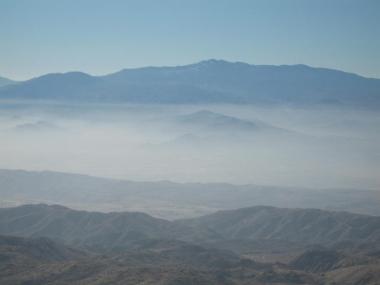
The Environmental Protection Agency is aiming for natural visibility conditions by 2064. Photo from the National Parks Service
¶ An advanced flow battery system has been established at Randolph-Macon College in Ashland, Virginia. The system is from ViZn Energy Systems, based in Kalispell, Montana. The microgrid-scale system uses non-acid Zinc/Iron chemistry. ViZn batteries are made as 80-kW/160-kWh and 1-MW/3-MWh. [CleanTechnica]
¶ AES Energy Storage unveiled a portion of its deployment roadmap, which includes the addition of battery-based storage resources across the US, South America, and Europe. Projects in construction or late stage development are expected to deliver 260 MW of interconnected battery-based energy storage. [AltEnergyMag]
¶ The US DOE announced its 2014 Hydropower Market Report, the first ever report of its type on hydropower in the US. The report says most hydropower projects built over the past decade have added electric generating equipment to dams that were previously not powered. There is 77 GW of available resources. [HydroWorld]
¶ The US has taken another big step in the transition beyond coal to clean energy as the nation’s first offshore wind project broke ground. It is being installed off Block Island, 12 miles off the coast of Rhode Island. This project will provide 30 MW, enough for the island’s residents, cutting their electric bills 40%. [Huffington Post]
Posted in nuclear power, renewable power, solar, wind | Leave a Comment »
Tags: nuclear, nuclear power, photovoltaic, renewable power, solar power, wind power
April 27, 2015
World:
¶ Denmark, a country of just 6 million people, built its first offshore wind farm in 1991. Now wind makes up to 40% of the electricity, and Danes are designing and building systems in Europe, Asia and North America. The Danes have dreamed of a fossil fuel-free future since the 1970s, and the dream is coming true. [Deutsche Welle]
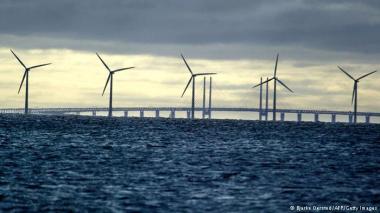
Danish wind farm
¶ Shell successfully lobbied to undermine European renewable energy targets ahead of a key agreement on emissions cuts reached in October last year. The European commission president had said the deal was very good news, but it seems that a key part of the agreement was proposed by a Shell lobbyist in 2011. [The Guardian]
¶ Siemens has handed over the North Sea grid connection SylWin1 to German-Dutch transmission grid operator TenneT and it is now in commercial operation. The cable is more than 200 kilometres long and supplies up to 864 MW of green electricity, enough to power more than a million German households. [Renewable Energy Magazine]
¶ Solar power may become profitable in Japan as early as this quarter, according to the Japan Renewable Energy Foundation, freeing it from the need for subsidies and making it the last of the G7 economies where solar technology has become economically viable. Japan is one of the four largest solar manufacturers. [The Rakyat Post]
¶ In Malaysia, the proposed Baleh hydroelectric dam, proposed by Sarawak Energy Bhd, will have an installed capacity of 1,285 MW. When commissioned, the 188 meter high concrete face rockfill dam is expected to generate 8,076 GWh of electricity per year on average. The proposed completion date is 2024. [The Star Online]
¶ Ghost hydropower plants that will never be built could cause a collapse in the industry in Scotland. Even though the plants do not exist they are still counted as producing energy by the UK’s Department of Climate Change which then cuts the subsidy for schemes planned for the future, making them unviable. [The National]
¶ Saturn Power Inc, an independent solar power producer, announced that it has completed construction of the 10 MW David Brown Solar Park Project near Ingleside, Ontario. The project went into commercial operation on March 16, and is expected to produce 16.8 GWh annually, enough to power 1800 households. [pv magazine]
¶ A2Sea A/S has been awarded a contract by Dong Energy A/S to install the turbines at the Danish state-owned utility’s 258-MW Burbo Bank Extension offshore wind farm in the UK, the companies said Friday. The Danish offshore wind installation company will erect 32 MHI Vestas 8-MW turbines at the site. [SeeNews Renewables]
¶ Kyushu Electric, the Japanese utility that last year temporarily suspended new grid applications for large-scale solar, will install a huge battery project aimed at integrating a higher capacity for renewable power. The battery, to be installed in Fukuoka Prefecture, will have capacities of 50 MW and 300 MWh. [PV-Tech]
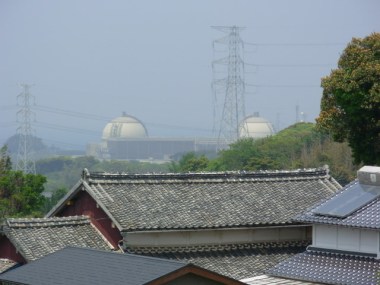
Kyushu’s Genkai nuclear power plant. Photo by KEI. Wikimedia Commons.
US:
¶ Maryland-based Fitzgerald Auto Malls is the first dealership group to become an EPA Green Power Partner Member of the EPA Green Power Leadership Club. Its power is 100% from renewable energy sources, it has the first LEED Gold certified dealership east of the Mississippi, and it recycles 81% of its solid waste. [Recycling News]
¶ The Vermont town of Norwich is now the first community in the state whose municipal buildings all get their electricity from the sun, sending excess to the grid. A local solar manufacturer, Solaflect, arranged the financing with help of solar tax credits and the guarantee the town would continue to buy the power. [Rutland Herald]
¶ As the Obama administration moves to finalize its climate rule for power plants, the nuclear industry is pushing for major changes. Part of the plan says states can credit 6% of their nuclear output toward emissions reductions. The industry says the 6% figure is arbitrary and a disincentive for nuclear power. [The Hill]
Posted in nuclear power, renewable power, solar, wind | 1 Comment »
Tags: nuclear, nuclear power, photovoltaic, renewable power, solar power, wind power
April 26, 2015
Opinion:
¶ “Clean Power Plan Won’t Kill The Grid, Even If The Wall Street Journal Says It Will” – Those who take the Wall Street Journal for gospel miss a lot of what’s going on with US energy, says Denise Robbins of Media Matters for America. They probably won’t get it if they use that source and ignore all others. [CleanTechnica]
World:
¶ Clean energy has overtaken fossil fuels in terms of annual electricity generation capacity additions, with more renewable energy capacity now being added globally than coal + natural gas + oil combined. And, perhaps more importantly than that simple proclamation, there’s now no going back. [CleanTechnica]
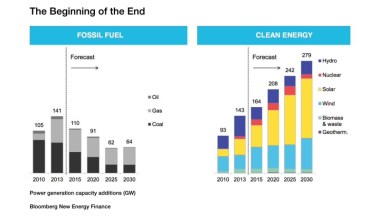
Graphs comparing additions of fossil fuels with those of renewables.
¶ The Dutch city of Amsterdam is planning for the transition from diesel buses to electric ones to be complete by 2025, reportedly. The plan is that the first 40 electric buses will be delivered in roughly 2 years time, with all diesel buses being slowly phased out, until none is left in 2025, at the latest. [CleanTechnica]
¶ Masdar, Abu Dhabi’s renewable energy company, and the Masdar Institute of Science and Technology, have announced plans to launch the Masdar Solar Hub to expedite the development of solar technologies. The new hub will be focusing on research and demonstration of cutting-edge solar technologies. [ArabianBusiness.com]
¶ The President and CEO of ACWA Power, said the company will invest $12 billion in current and new renewable energy projects in several countries. He added that the Saudi Group is competing for three wind power tenders totaling 850 MW in Morocco’s wind power expansion plan, the largest in the world. [Morocco World News]
US:
¶ Tesla is clearly aiming to sell its new battery systems to a wide range of large commercial markets. This can be seen in the fact that Walmart has already installed Tesla’s batteries at 11 California locations, as part of a pilot program with SolarCity. Elon Musk says Tesla will make an announcement this week. [CleanTechnica]
¶ According to an independent environmental monitoring firm, there were 695 “avian detections” and another 8 injured birds found over the first four seasons operation of the Ivanpah solar power tower project from October of 2013 (during the initial pre-production commissioning) and October of 2014. [CleanTechnica]
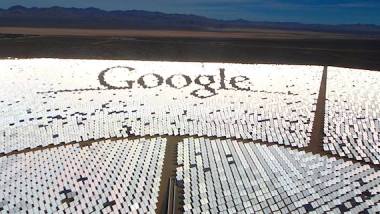
Ivanpah is partly funded by Google
¶ Texas’ state incentives may soon be cut off if the Texas House of Representatives approves a bill eliminating the incentives that helped get the Texas wind industry going. Many wind industry experts said it isn’t a smart move. They said the future of wind development in Texas may be hindered. [LubbockOnline.com]
¶ A solar garden building boom is sweeping the Denver area, with nine gardens already built and 10 more under development. An 800-kW array next to Green Valley Ranch Middle School in Denver is set to go into operation. In Boulder, a $1.5 million, 500-kW installation being built next one that opened in 2013. [The Denver Post]
¶ A parade of energy executives, analysts, academics and government officials from several countries delivered speeches and participated in panels as part a Houston energy conference. Most worried over low prices and making a profit, and speculated on what it could all mean for economies and consumers. [Valley News]
¶ One topic seemed to dominate the Michigan Energy Innovation Business Council’s annual meeting that took place this week: renewable energy. The consensus is, renewable energy maybe good for the environment, but it’s also very good for the economy, and that’s why, business people are so interested. [Detroit Free Press]
¶ Under a new plan put forth by Maine’s Governor LePage, which is scheduled for a hearing Wednesday at 1 pm before the Legislature’s Energy, Utilities and Technology Committee, voters would no longer have a say on the creation of nuclear power plants with generating capacities of 500 MW or less. [Press Herald]
Posted in nuclear power, renewable power, solar, wind | Leave a Comment »
Tags: nuclear, nuclear power, photovoltaic, renewable power, solar power, wind power
April 25, 2015
Opinion:
¶ “N.E. Governors Fixated on More Natural Gas” – New England’s governors agreed at a recent energy summit to work collaboratively on energy issues facing the region, principally by supporting the development of more natural-gas pipelines. The purpose of development is to keep the price of gas low. [ecoRI news]

Gas pipeline under construction. Photo by Monster4711. Wikimedia Commons
Science and Technology:
¶ Dutch researchers at Wageningen University patented a process of collecting electricity from plants in 2007. The patents now belong to a Dutch company called Plant-e, which is developing ways to commercialize the invention. They say a square meter of garden can produce about 28 kWh per year. [Huffington Post]
¶ Researchers at the UK’s University of Bath and the US’ Yale University produced a new water-splitting catalyst that has excellent endurance and is highly efficient at performing the crucial oxidation half reaction. Their molecular iridium catalyst adheres to an electrode surface and has minimal degradation. [tce today]
World:
¶ Energy giant NTPC signed a power purchase agreement with distribution companies in the Indian state of Andhra Pradesh for 250 MW of solar power. The solar plant being developed under the first phase of the 1,000 MW ultra mega solar power project planned by the public sector major in the state. [The Hans India]
¶ (This blog is not usually concerned about the workings of corporations unless it has something directly bearing on energy, but GDF Suez is important enough that some may be confused if not informed of this change.) French power utility GDF Suez said on Friday it was changing its name to “Engie.” [Wall Street Journal]
¶ Three hundred delegates from 20 countries that produce uranium came together at a meeting in Quebec on Earth Day and called for “a worldwide ban on uranium exploration, mining, milling and processing, as well as the reprocessing of nuclear waste, and the irresponsible management of radioactive waste.” [Truthdig]
¶ Energy storage company Princeton Power Systems made moves to expand its efforts in the Caribbean and developing island nations, leveraging its base of operating projects in Jamaica, Haiti, the Bahamas and Bermuda, with an eye toward building collaborations in Cuba. A focus of the efforts is on microgrids. [PennEnergy]
¶ In India, with encouraging national and Odisha state policies, Odisha Hydro Power Corporation has proposed experimenting with canal top solar power plants. Chief engineers of irrigation projects have been asked to provide lists of suitable canals on which solar panels could be installed over water surfaces. [The Hindu]

A solar PV installation over an irrigation canal
¶ The world’s largest coal consumer could be dramatically transformed in its energy profile in the coming decades, a report says. China could get 85% of its electricity from renewable resources by 2050, according to the China 2050 High Renewable Energy Penetration Scenario and Roadmap Study. [ThinkProgress]
¶ Yasuo Yamamoto, an unemployed 40-year-old, faces obstruction charges after turning himself in to local police in Fukui prefecture. Operations at Abe’s Tokyo office were disrupted on April 22 when the drone, which carried a small container marked with a radioactive danger sign, was discovered. [Bloomberg]
US:
¶ Tucson Electric Power is seeking bids for the design and construction of a utility-scale energy storage system that would be operational by the end of 2016. The company, which has 414,000 customers, is seeking a project partner to build and own a 10-MW storage facility under a 10-year agreement. [Yahoo Finance UK]
¶ Alliant Energy Corp is proposing construction of a $750 million combined-cycle, natural gas-fueled power plant of about 650-MW near Beloit, Wisconsin. It will be powered, in part, by solar energy. The company expects to begin construction in the summer of 2016 and complete the facility in early 2019. [Milwaukee Business Journal]
¶ In Farmington, Illinois, the Farmington Central Schools are moving closer to the completion of the project with 2,520 300-watt solar panels installed on their roofs. When the project is completed, it will be the largest solar array in a public school in the US, according to Farmington Superintendent Dr John Asplund. [Canton Daily Ledger]
¶ The Bear River Band of the Rohnerville Rancheria is installing a California Tribal renewable energy microgrid system this summer in Loleta, California. The Bear River Band’s new microgrid combines wind energy, solar energy, and energy storage. The microgrid will provide 30 kW of electric power. [PennEnergy]
Posted in nuclear power, renewable power, solar, wind | Leave a Comment »
Tags: nuclear, nuclear power, photovoltaic, renewable power, solar power, wind power
April 24, 2015
Science and Technology:
¶ Graphene is a quirky material to manufacture in bulk, putting a crimp in the dream of super-long-range but affordable EVs for everybody. However, a research team at Lawrence Livermore National Laboratory is on to a solution that involves 3-D printing and a graphene aerogel, aka “liquid smoke.” [CleanTechnica]
World:
¶ Plans for a 25-MW floating offshore wind farm off the coast of Portugal have been given the green light by the European Commission. Aid approval was given for Portugal to provide feed in tariff payments to the 25-MW Windfloat project. The EC said subsidies would not distort competition in the single market. [Business Green]
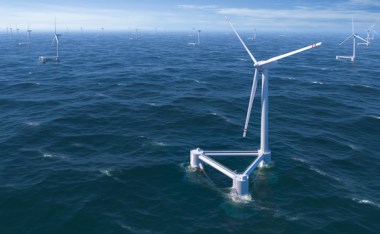
Principle Power WindFloat offshore windfarm
¶ China’s National Energy Administration revealed that the country had installed 5.04 GW of new solar capacity in the first quarter of 2015, well above analysts’ expectations. One analyst takes suggests the possibility of an “upside surprise” to the government’s installation target for 2015 of 17.8 GW. [CleanTechnica]
¶ The enormity of the “carbon risks” faced by fossil fuel companies, and the lack of adequate preparation for them, has again been highlighted this week. Carbon Tracker Initiative and Energy Transition Advisors have published a blueprint for testing companies’ resilience to the changes climate change will bring. [CleanTechnica]
¶ Japan is considering lowering its emissions of greenhouse gasses by at least 25% by 2030, in line with global agreements to tackle climate change reached last year. This is up from an earlier suggestion of 20%, but the amount is still less than the targets of other major developed countries, including the US. [Cihan News Agency]
¶ The share of renewables in Japan’s power mix is expected to rise from 10% in 2014 to 19% in 2025, thanks to the country’s efforts in smart grid development and the reduced project approval time, a new report by GlobalData says. Japan’s Ministry of Energy initiated a $21-million microgrid program. [SeeNews Renewables]
¶ Wind energy is taking a bigger and bigger share of the Danish economy, as the country exports everything from wind turbines to electricity. Denmark is also a showroom for the market. In the first quarter of this year, the wind produced 44% of the country’s electricity, up from 39% in the same period last year. [The Indypendent]
¶ Germany’s cost of producing solar energy has shrunk to about a third of the price households pay. Most bids to build large ground-mounted solar plants in the first solar auction in Germany came in at €0.09/kWh ($0.097/kWh) to €0.10/kWh. German retail consumers are paying on average €0.298/kWh. [Bloomberg]
¶ Japan’s government has proposed making nuclear energy account for between 20% and 22% of the country’s electricity mix by 2030, with renewable energy to account for slightly more. The proposal on nuclear energy is likely to be unpopular among a public that has been consistently opposed to atomic energy. [Reuters]
US:
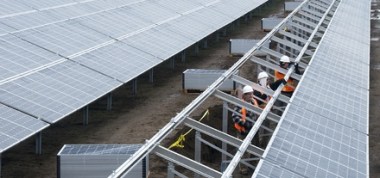
Solar panels being installed
¶ Solar advocates pressed the Vermont Senate Finance Committee last week to alter the state’s net metering laws in order to allow larger projects to take advantage of better power pricing. Vermont limits the size of net-metered projects to 500 kW to encourage development of small installations. [Utility Dive]
¶ Federal Energy Regulatory Commission’s latest Energy Infrastructure update reveals that wind, solar, geothermal and hydropower together provided over 75.43% of the 1,229 MW of new generating capacity placed into service during the first quarter of 2015. The balance, 302 MW, was natural gas. [RenewEconomy]
¶ Mississippi Power is reportedly working with Strata Solar to develop a 50-MW site on 450 acres at the Hattiesburg-Forrest County Industrial Park. The US Navy and Hannah Solar are also working with the company to build a 23-acre, 3 to 4-MW farm at the Naval Construction Battalion Center in Gulfport. [Fairfield Citizen]
¶ New England’s governors, including Vermont Governor Peter Shumlin, agreed to a mix of regional and state actions to cut high energy costs. Five of the region’s six governors said they will work across the region while each state pursues individual projects. The governor of New Hampshire did not attend. [Rutland Herald]
Posted in nuclear power, renewable power, solar, wind | Leave a Comment »
Tags: nuclear, nuclear power, photovoltaic, renewable power, solar power, wind power
April 23, 2015
Opinion:
¶ “The Value of Building-Scale Microgrids & Small Wind” Our energy landscape is changing, and there is no doubt of that. A lot of unpredictable factors will yet hit the playing field. One likely possibility that a lot of people in the industry are predicting, is that microgrids will play a much larger part than they do now. [CleanTechnica]
World:
¶ In northeastern Guangdong, about 10,000 residents of Heyuan (population 2.9 million) protested the development of a new coal power plant. Some of the expressions made by the protesters either verbally or on signs were, “Give me back my blue sky. Go away power plant. Stop feeding people with smog”. [CleanTechnica]

Heyuan, Guangdong, China
¶ A consensus of 65 scholars from every province found that Canada’s huge renewable potential could enable it to reach 100% low-carbon electricity by 2035. They issued a report on how the country can decarbonize its electric grid to slow climate change. They unanimously endorsed carbon pricing as a key. [CleanTechnica]
¶ Kyocera Corporation has completed and connected its two floating PV plants in Hyogo prefecture, Japan. One plant has a 1.7-MW capacity, and the other has 1.2 MW. The 255-watt modules will operate at high efficiency because of the cooling effect of the water, boosting the system’s overall production. [RenewablesBiz]
¶ Spain is reportedly planning to auction 500 MW of wind power and 200 MW of biomass power. Europa Press cited Spain’s energy ministry as saying the auction will be the first move since the country approved energy reform. The new capacity will support the ministry’s plans for electricity and gas sectors. [Energy Business Review]
¶ Japan’s nuclear regulator poured cold water on the schedule for the first restart of a reactor under new safety rules introduced since the 2011 Fukushima disaster, a day after a court cleared the way for the resumption of operations. A Nuclear Regulatory Authority Commissioner said it was too optimistic. [Reuters Africa]
US:
¶ SolarCity now has access to a fund that will allow financing more than $1 billion in new commercial-scale solar energy systems (including battery storage systems). The fund is expected to be used for systems at many businesses, schools, and government organizations throughout the country. [CleanTechnica]
¶ The Regional Greenhouse Gas Initiative carbon market, which covers nine Northeast US states, raised a cool $1.398 billion dollars in 22 auctions between September 2008 and December 2013. While it made $1.016 billion in green investments, it also generate more than $2.9 billion in lifetime energy savings. [CleanTechnica]
¶ Dynapower Company has expanded the micro-grid system at its company headquarters in South Burlington, Vermont, by adding 375 kW/250 kWh of lithium-titanate batteries by Microvast Power Solutions. The micro-grid system has 100 kW each of PV and of wind power, and 750 kW of other battery storage. [Vermont Biz]
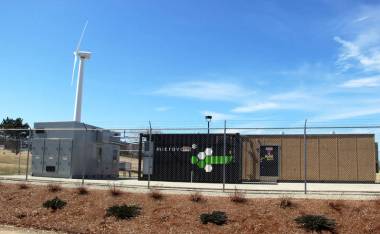
Equipment in Dynapower’s micro-grid in South Burlington, Vermont
¶ The North American renewables arm of E.ON and GE Energy Financial Services officially opened the 211.2-MW Grandview wind park in Texas. GE’s finance unit invests $1 billion annually in renewables globally. It has committed over $9 billion in more than 14 GW of wind projects worldwide since 2004. [SeeNews Renewables]
¶ The Rocky Mountain Institute says the US needs to invest $2 trillion in transmission infrastructure and upgrades by 2030. The cost and its impact can be reduced greatly by turning to largely unused efficiencies, including new smart technology, smaller homes, denser populations and more efficient appliances. [Bloomberg]
¶ North Carolina’s House Public Utilities Committee narrowly defeated an effort to freeze the percentage of retail sales that utilities must create using sources like solar, wind and animal waste and through efficiency efforts at the current 6%. A 2007 law requires 10% of power come from renewables by 2020. [Macon Telegraph]
¶ An expanded tax credit for wind-energy farms won initial approval from Nebraska lawmakers despite arguments that the state shouldn’t invest in the industry. Of all states, Nebraska has one of the greatest potentials to produce windpower, but its policies put it at 26th in installed wind capacity. [Kearney Hub]
¶ California households that use the least electricity would start paying more for it, under a proposal put before state utility regulators intended to bring the prices charged for electricity more in line with its actual costs. California had frozen rates for low-use customers during its 2000-2001 energy crisis. [Bakersfield Now]
¶ SunEdison announced that is has signed an agreement to develop and install a 2.6 MW solar power plant for the town of Winchendon, Massachusetts, on a previously unusable 12 acre town-owned landfill site. The landfill site will be converted under Massachusetts’ Solar Renewable Energy Certificates program. [IT Business Net]
Posted in nuclear power, renewable power, solar, wind | Leave a Comment »
Tags: nuclear, nuclear power, photovoltaic, renewable power, solar power, wind power
April 22, 2015
Science and Technology:
¶ Audi has been a pioneer of diesel vehicle technology for decades. Now they have announced having successfully produced their first batch of an eco-friendly diesel fuel. It is a synthetic version, made from carbon dioxide and water, using Audi’s latest technology in sustainability. Ambient CO2 can be collected for use. [eGMCarTech]
World:
¶ Korea has created a PV-covered bike lane connecting Sejong and Daejeon. It offers a clean transit option that utilizes unused median space in an existing highway, while providing renewable solar electricity. The PV-covered bike lanes runs approximately 20 miles (32 kilometers) between the two cities. [CleanTechnica]
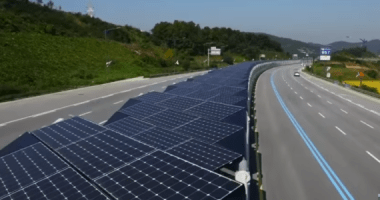
Korean solar PV-covered bike lane.
¶ Big oil is losing its grip on the auto industry; and, perhaps more interestingly, the recent drop in oil prices is at least partly the result of demand destruction rather than simply being a supply issue, according to analysts at Bloomberg New Energy Finance. The future of transportation is set to look very different. [CleanTechnica]
¶ A drone carrying small traces of a radioactive material was found on the roof of Japanese Prime Minister Abe’s office Wednesday morning, police said. The drone was equipped with a small camera and a plastic bottle containing small traces of a radioactive material, according to Japanese media, citing police. [CNN]
¶ While North Korea is notorious for a lack of electricity, many North Koreans are taking power into their hands by installing cheap household solar panels to charge mobile phones and light up their homes. Apartment blocks are increasingly adorned with the panels, hung from balconies and windows. [Thomson Reuters Foundation]
Solar panels face the sun from balconies of an apartment building in Mangyongdae District, Pyongyang, Aug. 27, 2014. REUTERS/Staff
¶ Germany got 170 bids surpassing in volume the targeted 150 MW of solar power generation capacity in the country’s pilot green energy auction, according to the Federal Network Agency. Projects are ground-mounted and must exceed 10 MW. Under the tender’s rules, bids cannot exceed €0.1129 ($0.12) per kWh. [SeeNews Renewables]
¶ GE is collaborating with Toyo Engineering Corporation and Kuni Umi Asset Management Co on the 231-MW Setouchi Kirei Solar Power Plant in Okayama Prefecture, Japan. GE’s Power Conversion business will provide 94 units of 1-MW Brilliance solar inverters and its SunIQ platform for the facility. [PV-Tech]
¶ A court in Japan rejected a bid to block the restart of two nuclear reactors operated by Kyushu Electric Power Co, easing the way for the resumption of nuclear power in Japan for the first time in more than a year and a half. The ruling affects reactors at Kyushu’s Sendai nuclear-power station in Satsumasendai. [Bloomberg]
US:
¶ An Energy Department report says severe weather is the leading cause of power disruptions, costing the nation’s economy $18 billion to $33 billion a year, and climate change will only make it worse. The report recommends investments in the electric grid to protect it from the severe storms and other threats. [Tribune-Review]
¶ Iowa, already a leading producer of corn ethanol and biodiesel, may be about to plunge into the production of renewable fuels from animal manure, municipal waste and other organic byproducts of farming and manufacturing, because of a change in the Renewable Fuels Standard enhancing the value of biogas. [Midwest Energy News]

Photo by Lynn Betts, USDA Natural Resources Conservation Service.
¶ The USDA Secretary Tuesday announced funding for six rural electric infrastructure projects, including three in North Carolina, that will use solar energy to generate electricity for rural communities. The investments come to $72 million. Projects include biomass and wind as well as solar. [Hoosier Ag Today]
¶ The North Carolina General Assembly sent a bill that would create a “soft landing” for ending the state’s 35% tax credit for renewable-energy projects to Governor Pat McCrory. The bill comes as proposals to extend the credits for five years seem to be garnering strength for passage in both chambers. [Charlotte Business Journal]
¶ Three organizations, Sempra Energy’s Southern California Gas Co, the US DOE’s National Renewable Energy Laboratory, and the industry-backed National Fuel Cell Research Center, are combining forces to produce a series of projects demonstrating converting renewable power into methane fuel. [Natural Gas Intelligence]
¶ Rifle, Colorado, a city with a population of 9172, has 3 MW of municipally owned solar capacity. That is 325 watts per person. By comparison, Honolulu leads major American cities in solar power generated per person, at 265 watts. Rifle’s city government produces as much power as it uses. [Glenwood Springs Post Independent]
¶ EDF Renewable Energy and its partner BlackRock Infrastructure have inaugurated the 200-MW Hereford wind farm in Texas. The project is spread across 15,000 acres of land in Deaf Smith County. It has 54 of General Electric’s 1.85-MW turbines and 50 of V100 2.0-MW turbines from Vestas. [Power Technology]
Posted in nuclear power, renewable power, solar, wind | Leave a Comment »
Tags: nuclear, nuclear power, photovoltaic, renewable power, solar power, wind power
April 21, 2015
Science and Technology:
¶ The price of crystalline silicon modules has fallen from $4 per watt in 2007 to $0.50 per watt in 2014 following new, low-cost production processes. 1366 Technologies, a company based in Massachusetts, claims that its new method of silicon wafer production can reduce costs further, by as much as 20%. [The Week UK]
Silicon ingot at Intel Museum. Photo by Oleg Alexandrov. Wikimedia Commons.
World:
¶ The first solar-powered charging station in Greece ensures 100% green energy for electric cars. It was recently launched by the Piraeus University of Applied Sciences. The charging station is a first step for electric vehicle owners to freedom from reliance on power from the main electricity grid. [Kathimerini]
¶ Pay-as-you go solar systems will be installed in 100,000 off-grid households in rural Ghana under a program unveiled today. The initiative, led by UK company Azuri Technologies with local firm Oasis African Resources and the Ghanaian government, will be launched at an event in the Ghanaian capital today. [PV-Tech]
¶ South African power utility Eskom says its first large-scale renewable energy plant, the 100-MW Sere Wind Farm with 46 turbines, is fully operational and putting electricity into the grid. It will produce enough electricity to power 124,000 homes, but far more is needed provide sufficient power for the country. [Reuters Africa]
¶ Spanish wind turbine maker Gamesa will supply turbines, build, and operate the 220-MW Gulf of El Zayt wind farm in Egypt for three years under a contract. The wind park is planned to be commissioned in the second half of 2017. Its financing is from the Japan International Cooperation Agency. [SeeNews Renewables]
¶ Hilton Worldwide announced a new program to reduce the environmental impacts of events held at over 90 hotels in Asia Pacific. They will calculate the carbon emissions of events at no cost to the customers, then buy the equivalent carbon credits to finance environmentally-friendly projects across Asia Pacific. [TravelDailyNews Asia-Pacific]
¶ After overhauling Indonesia’s fuel subsidy program, the country’s government is now striving to explore new and renewable energy resources. Indonesia is currently heavily dependent on fossil fuels, particularly oil and coal, despite having abundant resources for renewable energy, primarily geothermal and solar. [Jakarta Post]
¶ A WWF report produced in collaboration with the Australian National University argues Australia could source 100% of its power from renewables by 2050, without incurring massive adjustment costs or depressing economic growth, if there were clear and stable national policy settings for renewables. [The Guardian]
¶ Further doubt has been cast over the future of three nuclear reactors under development in the UK, after the discovery of a potentially catastrophic mistake in the construction of an identical power plant in France. The anomalies have prompted a second investigation into the quality of steel in the pressure vessel. [CleanTechnica]
US:
¶ Carbon emissions from the US energy sector increased in 2014 for the second year in a row, despite a big boost in renewable energy capacity, the Energy Information Administration reported on Monday. Energy-related carbon emissions increased 0.7% in 2014, while the 2014 GDP grew at a rate of 2.4%. [ThinkProgress]

A flock of Geese fly past the smokestacks at the Jeffrey Energy Center coal power plant as the sun sets near Emmett, Kansas.
¶ Three utilities in New Jersey are seeking to buy Solar Renewable Energy Certificates from about 80 MW of new projects and are ready to sign 10-year purchase agreements. A SREC is awarded for 1 MWh of generation from a solar park certified by the New Jersey Board of Public Utilities Office of Clean Energy. [SeeNews Renewables]
¶ Apple’s new Environmental Responsibility Report doesn’t mince words. It states clearly the debate about whether climate change exists is over: “We don’t want to debate climate change. We want to stop it.” Apple is a big advocate of renewable energy and is willing to put its money where its mouth is. [The Green Optimistic]
¶ New England governors will meet in Hartford Thursday with an agenda of developing a regional strategy to increase natural gas supplies, reduce electricity costs and solve other energy challenges. Before the meeting, there will be a Northeast Regional Energy Forum from 8:15 to 10 AM, open to the public. [theday.com]
¶ In the Pacific Northwest, the US Forest Service is set to open more than 80,000 acres for potential geothermal power development. Companies would then be able to apply for permits to build power plants that would harness the heat beneath the surface to spin turbines and generate electricity. [KASU]
¶ The Electric Reliability Council of Texas (ERCOT) said windpower set a wind penetration record of nearly 41% when wind output was 10,308 MW while total load was just 25,400 MW in the early morning of 29 March. Such high wind penetrations sometimes press real-time power prices to zero or below. [Argus Media]
Posted in nuclear power, renewable power, solar, wind | Leave a Comment »
Tags: nuclear, nuclear power, photovoltaic, renewable power, solar power, wind power
April 20, 2015
Science and Technology:
¶ Larger off-shore oil and gas platforms use large amounts of energy. Those in the North Sea can typically consume power at a rate of 50 to 100 MW across a large range of processes, including oil separation, gas compression, wastewater treatment, gas lifting, and the ultimate export of oil and gas to shore. [Financial Times]

North Sea offshore rig. Photo by Hannes Grobe. Wikimedia Commons.
World:
¶ Toshiba Corp on Monday said it has started operations at a demonstration facility using renewable energy and hydrogen in the city of Kawasaki, Japan. Solar power is used in the electrolysis of water to produce hydrogen, which is then stored and used in fuel cells to generate electricity and hot water. [SeeNews Renewables]
¶ BWE Partnership is aiming to start construction of Scotland’s first large-scale solar PV project by year-end. The 9.5-MW New Mains of Guynd plant will be sited on 50 acres of farmland in Carmyllie, Arbroath. BWE Partnership has a grid connection agreement with Scottish Hydro Electric Power Distribution. [reNews]
¶ The UK’s Labour party is launching its Green Plan today, which sets out details on the environment and climate change policies it will bring in if it takes power in the May polls. It intends to set a legally binding target to decarbonize the UK’s electricity supply by 2030 and pledged a million new green jobs by 2025. [reNews]

Palace of Westminster. Photo by Tony Moorey. Wikimedia Commons.
¶ When AGL Energy announced it was moving away from coal over the next three decades, it suggested the government help in the process. The Australian Industry Minister ruled out federal government funding closure of dirty coal-fired power stations, saying it would cost $3 billion for one station alone. [The Australian Financial Review]
¶ SunPower announced it has begun construction on the 86-MW Prieska solar power plant in South Africa’s Northern Cape province. Expected to be fully operational in 2016, the project will be the third solar power plant constructed by SunPower under the South Africa government’s renewable energy program. [Your Renewable News]
¶ TEPCO deployed a second remote-controlled robot last week after its first broke down. The robot detected lower radiation levels and temperature than expected, an indicator that cooling systems were working effectively, according to a TEPCO statement. Decommissioning is expected to cost $50 billion. [CNN International]
US:

Photo by Rob Hooft. Wikimedia Commons.
¶ The Detroit Zoo is headed for greener pastures with its plan for the first biodigester at a US zoo. The $1.1 million project will convert 400-500 tons of manure and other organic waste annually. The biodigester will save the zoo $70,000-$80,000 in energy costs and $30,000-$40,000 in waste disposal fees. [Crain’s Detroit Business]
¶ Georgia Power said on Friday it has commenced building the first of three 30-MW solar parks at US Army bases in its home state. It has started work on a solar PV facility at Fort Benning. The other two projects are to be located at Fort Gordon and Fort Stewart. All are scheduled for completion by the end of 2016. [SeeNews Renewables]
¶ SunEdison has signed an agreement with Macalester College in Saint Paul, Minnesota in the USA to offset all college’s electricity use with solar energy. Not only will the college add to its already long history of environmental and energy efficiency efforts through the arrangement, the power bill savings will be huge. [Energy Matters]
Posted in nuclear power, renewable power, solar, wind | Leave a Comment »
Tags: nuclear, nuclear power, photovoltaic, renewable power, solar power, wind power
April 19, 2015
Opinion:
¶ “ExxonMobil’s Dangerous Business Strategy” – Total, ENI, Statoil, and Shell are advocating for a carbon price (such as a tax or permit system) to hasten the transition to low-carbon energy and are beginning to prepare internally for it. However, ExxonMobil’s business model continues to deny reality. [Mareeg Media]
Science and Technology:
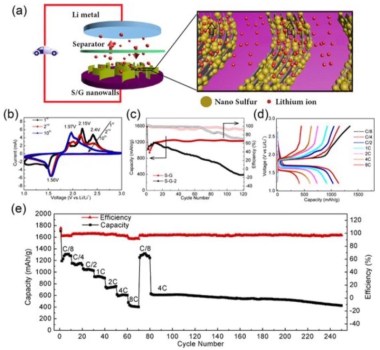
Lithium sulfur battery (click image to enlarge)
¶ New cathode materials for lithium-sulfur batteries constructed out of vertically aligned sulfur-graphene nanowalls on electrically conductive substrates have been developed by researchers in China. They allow for the fast diffusion of lithium ions and electrons, delivering high-capacity and rate performance. [CleanTechnica]
World:
¶ Many large companies in the UK could save as much as £2.6 billion (~$3.9 billion) via reduced fuel costs by switching the country’s 1.8 million small or medium vans to be electric-powered instead of conventional diesel- or gas-powered, according to recent research from the “Go Ultra Low” campaign. [CleanTechnica]
¶ After the triple meltdown at the Fukushima Daiichi nuclear power plant in March 2011, the head of a family Sake brewery founded in 1790 thought Fukushima’s recovery would be long and his business was doomed. Then he decided one way the prefecture could be revived was through renewable energy sources. [Asahi Shimbun]
¶ Pakistan-China Economic Corridor is about to begin in earnest with a visit by China’s premier to Pakistan. During the next 7 years energy projects worth $35-37 billion are scheduled to be completed, many of them based on renewable sources such as solar power and wind, to end Pakistan’s crippling energy crisis. [The Nation]
¶ South Korea will expand economic cooperation with Colombia in the clean and renewable energy sector by launching pilot projects for electric vehicles and energy self-sufficient villages in the South American country, under a memorandum of understanding signed in the Columbian capital, Bogotá, on Friday. [The Korea Herald]
![Photo: Hazelwood Power Station has an estimated social cost of more than $900 million a year. Photo: Justin McManus ¶ The Hazelwood brown coal power plant is one of the largest greenhouse gas emitters in the Australian state of Victoria. Two Harvard fellows have attempted to find the cost of unseen impacts of the plant's emissions, based on work by the US National Academy of Science. They estimate it at about $900 million a year. [The Age]](https://geoharvey.com/wp-content/uploads/2015/04/4-19-hazelwood-plant.jpg?w=380&h=214)
Photo: Hazelwood Power Station has an estimated social cost of more than $900 million a year. Photo: Justin McManus
¶ The Hazelwood brown coal power plant is one of the largest greenhouse gas emitters in the Australian state of Victoria. Two Harvard fellows have attempted to find the cost of unseen impacts of the plant’s emissions, based on work by the US National Academy of Science. They estimate it at about $900 million a year. [
The Age]
¶ The decommissioning crew at the defunct Fukushima Daiichi power plant is losing 174 members who have reached the legal limit for radiation exposure. The 174 had topped the limit of 100 millisieverts in five years spelled out under the Industrial Safety and Health Act. The plant has 14,000 registered workers. [The Japan Times]
US:
¶ Poseidon Water will open a desalination plant costing $1 billion in Carlsbad, California, this November. The plant will require 35 MW of electricity, of which a tiny fraction will come from solar panels on the roof. The rest will come from the grid, and 70% of the power in San Diego County comes from nonrenewable sources. [OCRegister]
¶ In 2013, computer simulations by the Hawaii Electric Company showed the grid could not handle more distributed solar power, and they put a moratorium on new rooftop solar connections. Then Lyndon Rive, CEO of SolarCity, got HECO to run actual tests, and based on the results, the moratorium was ended. [Reading Eagle]
Posted in nuclear power, renewable power, solar, wind | Leave a Comment »
Tags: nuclear, nuclear power, photovoltaic, renewable power, solar power, wind power
April 18, 2015
World:
Wind Lift I, a special crane ship for installing offshore wind turbines. Photo by kaʁstn, Wikimedia Commons.
¶ The European Commission announced approval for Germany to invest nearly €30 billion in the development of 20 offshore wind farms. Germany notified the EU of its plans to invest in 17 wind farms set to be located in the North Sea, and another 3 in the Baltic Sea, amounting in total to 7 GW of new capacity. [CleanTechnica]
¶ As many as eight financial institutions in India are to raise funds for expansion of renewable energy capacity through green bonds. India is looking to increase its renewable energy capacity from 35 GW at present to 175 GW by 2022. The country intends to increase its solar energy capacity alone by another 97 GW. [Greentech Lead]
¶ In a report from Climate Policy Initiative and the Indian School of Business, CPI found that, in absence of any subsidies, wind power is already cheaper than the total cost of power from a new built imported coal plant, at 9¢/kWh for electricity from wind power and 11¢/kWh for electricity from imported coal. [Business Standard]
¶ New Brunswick Power says part of its goal to generate 40% of its in-province sales from renewable sources by 2020 will be locally owned, small-scale green energy. The plan involves co-operatives and First Nations communities having wind farms, solar panels, small hydro projects, biomass or biogas facilities. [CBC.ca]
¶ Innergex Renewable Energy and the Saik’uz First Nation announced signing an agreement to develop a prospective wind energy project at Nulki Hills near Vanderhoof, British Columbia. A 50-50 partnership will develop the proposed Nulki Hills wind project to produce up to 210 MW of clean renewable power. [Stockhouse]
¶ OpenHydro Technology Canada is receiving $6.35 million from the Canadian federal government for the Bay of Fundy tidal stream project. The project, which is situated in the Bay of Fundy, has an array of turbines that will simulate the cost and performance of a commercial tidal farm in harsh conditions. [Daily Business Buzz – Nova Scotia]
¶ The Australian government found $4 million for the climate contrarian Bjørn Lomborg to establish his “consensus centre” at an Australian university, even as it struggled to impose deep spending cuts on the higher education sector. The center will be at the University of Western Australia’s business school. [The Guardian]
¶ Australian utility company AGL called on regional and local government to “set both binding and aspirational medium and long-term emission reduction targets”, while outlining its own commitments to carbon reduction. AGL says it has “a key role to play in gradually reducing greenhouse gas emissions …” [PV-Tech]
¶ ET Solar has executed an agreement to build a 70-MWp solar power project in the Philippines, along with local partner Gate Solar Philippines Corp, a renewable energy developer. Construction is expected to begin in the last quarter of this year and the commercial operation is expected to be achieved in March 2016. [PennEnergy]

Research vessel Celtic Explorer
¶ Work has been completed on a 4-km subsea cable connecting the Galway Bay Ocean Energy Test Site to the shore in the west of Ireland. Research vessel Celtic Explorer handled the work. The line will supply power to the test site and facilitate data transfer for researchers who work on tidal and wave test devices. [reNews]
US:
¶ Solar energy is booming in the United States and the industry wants everyone to know it. But winning an extension of a key solar tax break won’t be easy. The industry’s lobbying arm, the Solar Energy Industries Association, is working overtime to keep the investment tax credit on the books past 2016. [Milwaukee Journal Sentinel]
¶ Nebraska Public Power District, the state’s largest utility, announced plans to replace a coal-fired power plant unit with one that runs on hydrogen, cutting its carbon emissions by over 1 million tons per year, even as the state battles proposed new federal rules on coal plants. It will generate 125 MW with the unit. [Reuters Africa]
¶ Electricity producers in several states are asking for hundreds of millions of dollars in financial support to keep costly nuclear power plants in business—a move that is likely to boost customers’ power bills. The nuclear reactors in question include some located in New York, Ohio, and Illinois. [Wall Street Journal]
¶ US wind power saved 68 billion gallons of water in the US in 2014, according to a report by the AWEA. This is an increasingly valuable benefit in droughts. In California, wind energy saved 2.5 billion gallons of freshwater in 2014, while Texas led the nation with savings of 13 billion gallons of water. [Renewable Energy Magazine]
Posted in nuclear power, renewable power, solar, wind | Leave a Comment »
Tags: nuclear, nuclear power, photovoltaic, renewable power, solar power, wind power
April 17, 2015
Opinion:
¶ “Nuclear power needs government subsidies, but struggles to make the case for them” The big problem with nuclear power is the price tag. When comparing the full costs of generating electricity from new plants spinning up in 2019, nuclear power is expensive at $96.10 per megawatt-hour, and alternatives are cheaper. [Houston Chronicle]
¶ “How other cities can match Georgetown’s low-cost switch to 100% wind & sun” – The Institute for Local Self-Reliance points out that any municipality with two key advantages can have 100% renewable energy at a surprisingly low cost. Georgetown, Texas, went to 100% renewable resources to save money. [RenewEconomy]
Science and Technology:
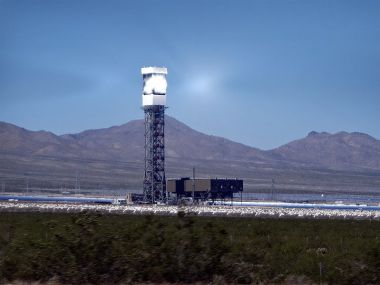
Tower at Ivanpah. Photo by Craig Dietrich. Wikimedia Commons.
¶ As it turns out, the solution to a serious problem discovered last year at Ivanpah, the first solar power tower in the US, actually has turned out to be “one weird trick.” A mishap in January produced the Eureka moment for safe solar power tower development. Now there are no more dead birds at all. [CleanTechnica]
¶ A new lithium-sulfur battery that demonstrates cycle performance that’s comparable to that offered by currently available commercial lithium-ion batteries and possesses roughly twice the energy density has been developed by an international team of researchers from South Korea and Italy. [CleanTechnica]
World:
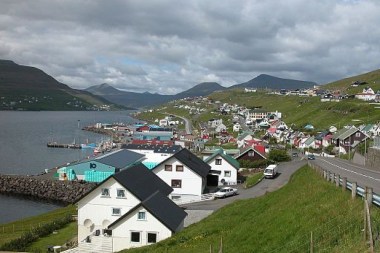
Runavík, Faroe Islands. Photo by Erik Christensen. Wikimedia Commons.
¶ The remote Faroe Islands in northern Europe are to benefit from a major energy storage system. The power generator and distributor for the Faroes commissioned the project, which will see 2.3 MW of lithium-ion batteries used to maximise the potential of a new 12-MW wind farm installation. [PV-Tech Storage]
¶ One of Australia’s largest power generators, AGL Energy, has adopted a new policy. AGL will not finance or build new coal-fired power stations, and it will not extend the operating life of any existing coal-fired power stations beyond 2050. The announcement came at the opening of AGL’s 102-MW Nyngan Solar Plant. [The Australian Financial Review]
¶ The Energy Minister of South Africa will expand the country’s renewable energy sector by adding another 6,300 MW of wind and solar power to the government program that buys green power from the private sector. This is in addition to the 5,243 MW of renewables that have already been bought. [Independent Online]
¶ Solar developer SunPower Corporation confirmed yesterday it is partnering with Apple on two Chinese solar farms boasting 40 MW of new capacity, which will be built in ABA Tibetan and Qiang Autonomous Prefectures in Sichuan Province. The projects will be owned by a joint venture between the developers. [Business Green]
¶ BP shareholders voted overwhelmingly to publish regular updates on how its strategies were affecting climate change, making it one of the first global oil companies to disclose such details. The plan was proposed by a group of investors the annual general meeting and got support of 98% of investors. [News24]
¶ The operator of a Japanese nuclear plant whose restart was blocked this week by a court injunction said Friday it would appeal the ruling. Kansai Electric Power has submitted “a motion of complaint to Fukui district court” over Tuesday’s injunction banning the re-firing of reactors at the Takahama nuclear plant. [NDTV]
US:
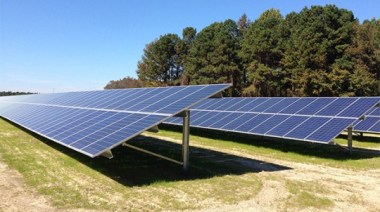
Solar array in Florida
¶ The Florida Public Service Commission on Thursday approved a plan that would lead to Gulf Power Company buying electricity from major new solar facilities on Northwest Florida military bases. Solar farms on one Air Force base and two Navy bases would supply a total of 120 MW of power to the grid. [NorthEscambia.com]
¶ In a poll of US parents, 81% said they want to live in a solar-powered home. The majority (67%) also wants solar to be the world’s primary energy source when their children grow up. And 95% believe it’s their responsibility to teach their children about alternative energy for a better environment for the future. [CleanTechnica]
¶ Siemens has selected US-based Molycorp to supply rare earth materials for its direct drive wind turbine generators over the next 10 years. Siemens said key factors in choosing Molycorp included global diversification, reliability, and “environmental and process innovations Molycorp has built into its Mountain Pass facility”. [reNews]
Posted in nuclear power, renewable power, solar, wind | Leave a Comment »
Tags: nuclear, nuclear power, photovoltaic, renewable power, solar power, wind power
April 16, 2015
World:
The Burgar Hill wind farm has been in operation for 13 years and faces the windiest conditions in the UK
¶ A wind turbine in Orkney has become the first in the UK to generate more than 100,000,000 kWh of electricity. It sits on the island’s exposed Burgar Hill, the windiest location for a wind farm in Europe. It was erected as a prototype in 2002, and produces enough power, on average, to supply 1,400 homes. [Scotsman]
¶ A coalition of 900 Dutch citizens has taken the Netherlands’ government to court for its inaction on cutting greenhouse gas emissions and addressing climate change. This represents (arguably) the first time a national government has been taken to court over existing human rights with regard to climate change. [CleanTechnica]
¶ In its proposal to the United Nations climate conference in Paris this year, Brazil will propose ambitious new targets to reduce destruction of the Amazon rainforest, boost reforestation and increase solar, hydro and wind energy. To do so, it will need foreign capital and technology, the Environment minister said. [Bloomberg]
¶ United Nations Secretary-General Ban Ki-moon called on business leaders to expand investment in low-carbon growth and opportunities to advance sustainable energy for all and tackle climate change, in a statement to The Future of Energy Summit 2015, organized by Bloomberg New Energy Finance. [Big News Network.com]
¶ Three wind farms were announced by BC Hydro for the Okanagan region of British Columbia. They will add 45 MW of capacity to the BC Hydro system, enough to power about 14,000 homes. One farm will be near the northeastern BC community of Taylor, one near West Kelowna, and one at Summerland. [The Province]
¶ The Rockefeller Foundation has made a commitment to invest $75 million in India to power 1,000 villages in the country. The project will be focusing on providing electricity through the ‘smart power’ grid to villages located across Uttar Pradesh and Bihar, according to the foundation’s president. [Moneycontrol.com]
US:
Wind farm. Author: Samir Luther. License: Creative Commons, Attribution-ShareAlike 2.0 Generic
¶ The US wind industry generated $12 billion in private investment in 2014 and added 23,000 jobs, the American Wind Energy Association says in a new report. There are nearly 20,000 workers in wind manufacturing and 53,000 jobs in project development, construction, operations, and other industry areas. [SeeNews Renewables]
¶ California might just have broken another solar record, with 6,000 MW of solar power flowing into the state’s grid over about four hours on Wednesday. That’s according to a graph generated by computers at the California Independent System Operator, which manages most of the state’s power grid. [KCET]
¶ America’s power generation fleet has changed so much since the 1950s, and especially over the last decade, that the amount of carbon we emit per MWh of electricity produced has dropped to its lowest point in recorded history. In fact, 2015 could be the cleanest ever for our power industry. [Environmental Defense Fund]
¶ The DOE will provide $7 million in funding for the research and development of innovative technologies for low-impact hydropower systems. The funding will help advance hydropower drivetrains and structural foundations that will minimize environmental impacts and reduce the lifetime costs of hydropower. [PennEnergy]
¶ Greenpeace USA just released “Carbon Capture Scam (CCS): How a False Climate Solution Bolsters Big Oil,” a report explaining why support for carbon capture and sequestration must stop. The CO2 from burning coal ultimately still gets into the atmosphere after an expensive, long, inefficient detour. [Huffington Post]
¶ Arkansas County’s Grand Prairie will soon become home to an 81-MW PV facility, according to Entergy Arkansas. It will be the largest solar power plant in the state. The project will cover nearly 500 acres and will be capable of generating enough clean energy to power about 13,000 homes. [PennEnergy]
¶ The Dow Chemical Company announced new sustainability goals, to be accomplished by 2025, which include creating products that offset three times more carbon dioxide than they emit throughout their life cycle and delivering $1 billion in cost savings or new cash flow by valuing nature in business decisions. [Environmental Leader]
¶ The Federal Energy Regulatory Commission rejected a rate schedule proposed for the Ginna nuclear power plant, which supporters say is needed for reliability in western New York. The FERC ordered hearing and settlement proceedings. New York’s Public Service Commission is also reviewing the matter. [RTO Insider]
¶ Three bills introduced in the US Senate are “aimed at improving the safety and security of decommissioning reactors and the storage of spent nuclear fuel.” The bills’ sponsors include Senators Edward Markey of Massachusetts and Barbara Boxer of California, both Democrats, and IBernie Sanders of Vermont. [Platts]
Posted in nuclear power, renewable power, solar, wind | Leave a Comment »
Tags: nuclear, nuclear power, photovoltaic, renewable power, solar power, wind power
April 15, 2015
World:
¶ Analysis presented at the Bloomberg New Energy Finance annual summit says the world is now adding capacity for renewable power faster than for coal, natural gas, and oil combined. This has been going on since 2013, when 143 GW of renewable capacity were added, compared with 141 GW for fossil fuels. [Bloomberg]
… Renewables, mainly including hydropower, solar and wind, reached 28% of the total electric power supply in Germany in 2014, 19% in the UK, 22% in China, 76% in Brazil and 13% in the US, as investments in renewables increased more than 15% globally last year, BNEF Chairman Michael Liebreich said Tuesday. [Climate Central]
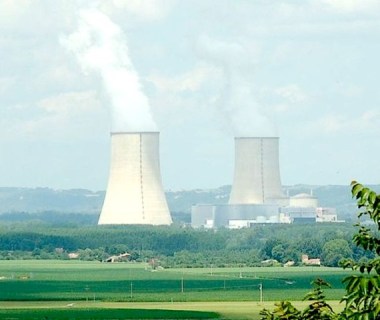
French nuclear power plant.
¶ A recently released report says France could be powered by 100% renewable energy by 2050 (note that this is for electricity, not all energy). If the report is accurate, it is a huge wakeup call about the potential of renewable energy there. France currently gets most of its electricity from nuclear power. [CleanTechnica]
¶ Acciona Windpower won a deal to supply turbines at a 129-MW wind project in Mexico. The contract with an unnamed client covers 43 of the Spanish manufacturer’s AW125/3000 machines. The model is optimised for medium-speed wind sites and the company said the turbines will be mounted on steel towers. [reNews]
¶ Samoa’s Electric Power Company is on track to meet the government’s aim of being 100% reliant on renewable energy by 2017. The company signed agreements for a second wind farm of 25 MW and a number of small hydro-electric dams. Peak energy demand in Samoa is about 20 MW. [Radio New Zealand]
¶ China’s strategic shift toward alternative fuels in order to cut its reliance on foreign oil is creating huge opportunities, notably in natural gas vehicles and in the conversion of coal to ethanol, according to Lux Research. China intends to reduce foreign oil imports from the current 50% of domestic demand. [Power Engineering International]
¶ The power and water utility serving the iconic city of Dubai will invest $3 billion to boost the generation capacity of the country’s largest solar power plant from 1 GW to 3 GW. The initial installed capacity target for the solar park was 1 GW by 2019. The new plan is for an installed capacity to 3 GW by 2030. [CleanTechnica]
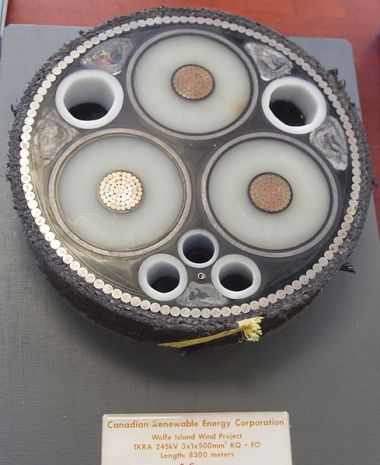
Cross section of a submarine cable. Photo by Z22. Wikimedia Commons.
¶ Italy has linked to Malta via a new electricity interconnector inaugurated last week. The new 120 kilometer-long subsea line has a cable rated at 250 MVA, and onshore cables and terminals both at Pembroke in Malta and at Marina di Ragusa in Sicily, and can transmit up to 200 MW in either direction. [pv magazine]
¶ Plans to build Poland’s first nuclear power plant will be delayed by at least another two years, after the decision late last year by state-run utility PGE to take on site research itself and cancel a consultancy contract. The project, expected to cost between $10 billion and $15 billion, has been delayed before. [Daily Times]
US:
¶ The Gallup pollsters have reported two surveys on energy and the environment in the past week. What they have to say about American attitudes may surprise some people. Americans believe the government is not doing enough to protect the environment, and is overly emphasizes energy production. [CleanTechnica]
¶ The US witnessed an 82% surge in wind energy project financing following the release of guidance last year that clarified the qualifying criteria for the wind energy Production Tax Credit, according to a new report.Wind energy project finance shot up to $7.1 billion, an 82% increase on the $3.9 billion the first half. [The Engineer]
¶ Legislation strengthening Illinois’s renewable electricity and energy efficiency standards would drive billions in new clean energy investments and save consumers $12 billion by 2030, reducing the typical household electricity bill by 23%, or $22 per month, in 2030, according to new analysis. [Union of Concerned Scientists]
¶ The Texas Senate approved legislation to close the book on two programs that fueled the state’s surge in wind energy production. Environmentalists and renewable energy industry groups were angered, but Texas has surpassed its renewable energy goal and nearly completed upgrades of power lines. [Fort Worth Star Telegram]
Posted in nuclear power, renewable power, solar, wind | Leave a Comment »
Tags: nuclear, nuclear power, photovoltaic, renewable power, solar power, wind power
April 14, 2015
World:
¶ Wind is now the cheapest way to bring new electricity generation to the grid in many countries, including the US. Solar PV costs are rapidly dropping and solar is expected to join wind over the next few years. Low-cost utility-scale solar already beats out all other sources of electricity in some bidding processes. [CleanTechnica]
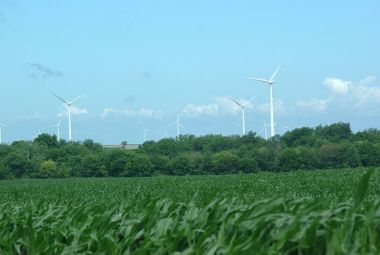
Indiana wind farm. Photo by Patrick Finnegan from Lafayette, IN, USA. Wikimedia Commons.
¶ In 2014, the World Health Organization measured air quality levels in 1,600 cities around the world, and the Indian capital city of New Delhi was found to have the highest concentration of particulate matter smaller than 2.5 micrometers. It was ten times as bad as New York’s level and three times Beijing’s. [CNN]
¶ Martifer, a Portugal-based PV producer and developer has revealed that it successfully connected five solar farms ahead of the UK’s March 31 renewable obligation deadline. The five solar farms represent 57.8 MW of new solar capacity connected to the grid and range in size from 7.7 MW to 18.7 MW. [Solar Power Portal]
¶ Italy’s Enel Green Power has won power supply contracts with South African utility Eskom for 425 MW of wind projects. The projects will be constructed in the Eastern Cape and Northern Cape provinces. The 142-MW Oyster Bay and 141-MW Nxuba projects will be finished in 2017 and 142-MW Karusa in 2018. [reNews]
¶ Wind power output in Estonia on Sunday reached 3,797 MWh. According to recently released data by the EU’s statistics office, Estonia is one of three member states that have surpassed their renewable energy target for 2020. The country reached a 25.6% renewables share in 2013; the goal for 2020 is 25%. [SeeNews Renewables]
¶ Construction has begun for the Þeistareykir Geothermal Power Station in the North East of Iceland. Initially, the station will be built to supply 45 MW of electrical power. Further expansion of the station is under consideration, and the geothermal station is licensed for eventual production of 100 MW. [Power Online]
¶ Australia’s large-scale renewable energy industry has entered an investment freeze, with just one project securing finance in the past six months amid political uncertainty, according to Bloomberg New Energy Finance. The lone venture in the first three months of 2015 was worth just $6.6 million. [Sydney Morning Herald]
¶ The long-term costs of renewables have declined so rapidly that they rival oil-fueled generation even after the cost of crude fell more than 50%, according to the CEO of Masdar, which develops clean energy plants in the United Arab Emirates. Assessments by Citigroup and Goldman Sachs are in agreement. [Bloomberg]
¶ A serious flaw was found in the steel reactor vessel of a nuclear plant under construction in France, raising questions about its design. The reactor vessel has too much carbon in some steel, weakening it. It weighs 410 tonnes and cannot be removed, and it is hard to see how it could be repaired or modified. [The Ecologist]
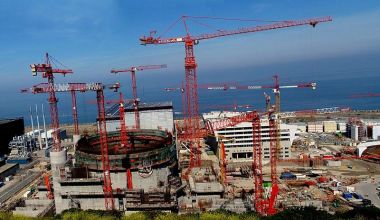
The Flamanville nuclear plant in Normandy was already years late and billions of budget – before news emerged that its steel reactor vessel contains serious metallurgical faults. Photo by schoella. Wikimedia Commons
¶ A court in Japan has dealt a blow to plans to relaunch nuclear power generation four years after the Fukushima meltdowns by halting the restart of two reactors over safety concerns. Area residents had argued that nuclear officials had underestimated the plant’s vulnerability to powerful earthquakes. [The Guardian]
… Japan’s government spokesman said on Tuesday it would continue to restart nuclear reactors that meet an independent regulator’s standards after a court issued an injunction to prevent the restart of two reactors in western Japan. He said there was “no change” to its position to restart idled plants. [The Straits Times]
US:
¶ While many hail the California Solar Incentive as an overwhelming success, a new study finds that using the same amount of money in a carefully optimized program to provide systems to low-income households at little or no cost would have done more to stimulate the adoption of rooftop solar systems. [CleanTechnica]
¶ Al Gore is blasting Big Power for “using the atmosphere as their sewage infrastructure” and trying to shut down competition. The industry is waging a “war on solar,” he told investors Monday at the Bloomberg New Energy Finance conference in New York City. Some in the Tea Party agree with him. [Bloomberg]
¶ A few years back, large-scale wind projects dominated the renewable energy discussion in Vermont, producing vocal opposition. The focus has turned to solar, as all of Vermont’s new electrical capacity last year came from solar energy. Nevertheless, there are those who expect construction of more wind farms. [PennEnergy]
¶ Maryland lawmakers took a key step to increase statewide access to clean energy by passing two bills, HB 1087 and SB 398, that allow for the creation of community solar projects. If signed by Governor Larry Hogan, Maryland will join 10 other states that allow some form of community solar. [eNews Park Forest]
Posted in nuclear power, renewable power, solar, wind | Leave a Comment »
Tags: nuclear, nuclear power, photovoltaic, renewable power, solar power, wind power
April 13, 2015
Science and Technology:
¶ National Public Health Week in the United States runs from April 6-12. To kick off the week, an open letter was delivered to President Obama signed by 1,000 doctors, nurses, researchers and other health professionals. It pointed out the many, catastrophic, public health risks associated with climate change. [National Monitor]

Rooftop solar panels and wind farm. Photo by GLSystem, Wikimedia Commons.
¶ Wind power grew quickly in 2014, but solar had itself a very good year as well. And there are signs that solar could be in for even more rapid growth. Going forward, solar could have several advantages over wind, and those advantages are likely to have progressively greater importance with passing time. [EarthTechling]
World:
¶ The economic viability of some 53% of 39 of the power plants planned for construction in Europe’s largest economy by 2025 has been called into question, according to the German energy industry association BDEW. It said investors are nervous over low profitability for coal- and gas-fired power stations. [Economic Times]
¶ The Australian Renewable Energy Agency announced up to $20 million for a new research and development round dedicated to industry-partnered projects that seek to develop and commercialize renewable energy technologies. The new funding round was opened at an event held at RMIT University in Melbourne. [solarserver.com]
¶ The United Arab Emirates will soon add 100 MW of solar PV power capacity. The Federal Electricity and Water Authority plans to set up solar PV projects across the Northern Emirates. The power plants will be part of UAE’s Vision 2021, which plans to get 24% of its energy from ‘clean’ energy sources. [CleanTechnica]
¶ The Golden Age of gas in Australia, which some thought would usher in the transition from high polluting fossil fuels to clean renewables, ended before it really even started. Data from the Australian Energy Market Operator highlights how quickly energy markets can change and how quickly they are changing. [RenewEconomy]
¶ The world’s largest network of municipalities adopted an action plan aimed at taking prompt measures against climate change. The Seoul Action Plan was released by a congress held in Seoul to gather more global support at the International Council for Local Environmental Initiatives World Congress. [eco-business.com]
¶ An Australian report on global renewable energy trends says globally, renewable energy is now cost-comparative or cheaper than fossil fuels for generating electricity, and the cost of wind and solar in particular is projected to continue to fall steeply. But it warns Australia is increasingly falling behind. [Climate Control News]
German transmission lines. Photo by Calson2. Wikimedia Commons.
¶ Gunter Scheibner, in charge of keeping flows stable over 6,200 miles of transmission lines in eastern Germany, must keep power from solar and wind in harmony whether it’s sunny or overcast, windy or still. He is proving that renewable energy from the sun and wind can be just as reliable as fossil fuels. [Bloomberg]
¶ TEPCO has given up on retrieving the shape-shifting robot it sent into the damaged primary containment vessel of reactor 1 of the crippled Fukushima Daiichi power station. The robot, which was surveying damage, was expected to survive 10 hours in the high radiation environment but died in less than 3 hours. [The Japan Times]
US:
¶ Southern California Gas Company has joined with the DOE’s National Renewable Energy Laboratory and the National Fuel Cell Research Center in projects to create and test a carbon-free, power-to-gas system for the first time ever in the US. The technology stores power from electricity chemically in gas. [Your Oil and Gas News]
¶ With a proposed award from the California Energy Commission, Robert Bosch LLC plans to demonstrate its renewable-based microgrid platform. The DC building grid will consist of rooftop solar PV arrays connected to energy-efficient DC lighting, ventilation, and energy storage systems on a 380-volt DC bus. [CleanTechnica]
¶ Marin Clean Energy has become the default electricity provider for rural areas at the request of Napa County, California, allowing customers to receive 50% to 100% of their electricity from renewable sources, as opposed to 22% with the former provider. Only 8.5% of customers opted not to use Marin Clean Energy. [Napa Valley Register]
Posted in nuclear power, renewable power, solar, wind | Leave a Comment »
Tags: nuclear, nuclear power, photovoltaic, renewable power, solar power, wind power
April 12, 2015
Opinion:
¶ “Coal Is Dead: It is Time to Accept It” – For years, coal supporters have been saying that a turnaround is just around the corner. China’s demand is about to pick up, clean coal has arrived, or domestic environmental regulations will be struck down and we’ll fire up coal plants once more! Let’s face it: Coal is dead. [The Current]
The General James M. Gavin plant on the Ohio River. Note the clouds of Sulfuric Acid coming from the vertical column stacks (the emissions from the Cooling Towers are just water vapor). Photo by Analogue Kid, from Wikimedia Commons.
¶ “McConnell’s quest won’t rescue Appalachia” – Although Senator McConnell claims to be fighting to preserve coal miners’ jobs, bucking the White House won’t help the people who live in Appalachian coal country. Market forces, not federal policy, are killing the industry, and no policy can change that. [Heraldindependent]
¶ “Want to fight drought? Build wind turbines” – One use of water that gets overlooked is energy. Reducing dependence on fossil fuels doesn’t just reduce climate change (thereby preventing future droughts). It also helps mitigate the massive amounts of water used in conventional power plants. [Mother Nature Network]
Science and Technology:
¶ The public health burden associated with the coal industry and coal-fired power plants had some light shed on it by a study in The New England Journal of Medicine. It found that long-term improvements in air quality were strongly associated with better respiratory function among growing children. [CleanTechnica]
¶ According to Science Magazine, researchers constructed a new glass window that tints by harvesting energy from weather conditions, such as wind and precipitation. The external layer harvests static energy from the rain, creating an electric current. The second layer gathers energy from the wind. [The Weather Network]
World:
¶ Eight commercial projects varying in size between 1.8 MW and 19 MW have been granted planning permission in Scotland. Over 100 MW of large-scale solar projects in the planning stages or awaiting construction. The country currently has 153 MW of solar capacity in 31,000 installations, nearly all on rooftops. [Herald Scotland]

Offshore wind farm.
¶ Despite the public perception of offshore wind energy being highly expensive, electricity generated via this technology is already cheaper in Europe than that generated by gas-fired power plants or proposed nuclear projects such as the Hinkley Point C project, according to a new analysis of publicly available data. [CleanTechnica]
¶ Jordan has pre-qualified 15 local and international companies to build a $150 million solar-run power plant. The 65-75 MW plant will be located in the southern Governorate of Aqaba. The government expects 1,800 MW of renewable energy projects to connected to the national power grid by the end of 2018. [Jordan Times]
¶ Global clean energy investment in the first quarter of this year fell to its lowest quarterly level for two years, as large deals slowed in China, Europe and Brazil. Investment in renewable energy such as wind and solar power and biomass fell to $50.5 billion for the first quarter compared with $59.3 billion last year. [The Daily Star]
US:
¶ Most of the electricity generated in Colorado still comes from burning coal, but even the state’s two largest coal burners are adding far more renewable energy. The Tri-State Generation and Transmission Association and Platte River Power Authority lately announced plans for new renewable energy. [The Denver Post]
¶ Senator Harry Reid is turning his attention away from political strategy for the Democratic Party, and told a clean energy group he wants to spend his remaining time in Congress making green energy options a top priority. Reid made his comments during a luncheon speech in Las Vegas. [Guardian Liberty Voice]
Posted in nuclear power, renewable power, solar, wind | Leave a Comment »
Tags: nuclear, nuclear power, photovoltaic, renewable power, solar power, wind power
April 11, 2015
Science and Technology:
¶ CyboEnergy, based in Rancho Cordova, California, patented a solar power mini-Inverter that it says has the key merits of both central inverters and microinverters. The inverter design has multiple input channels, solving partial shading problems and making rooftop solar safer to install and operate. [WebWire]
¶ A study in Nature Climate Change shows that electric vehicle batteries have been getting cheaper much faster than expected. From 2007 to 2011, average battery costs for battery-powered electric vehicles fell by about 14% a year. The cost of batteries is about what the International Energy Agency predicted for 2020. [UK Progressive Magazine]
World:
Solar farm in India
¶ Renewables 2014, the global status report on renewable energy by the Renewable Energy Policy Network for the 21st Century, says that the “evolution of renewable energy over the past decade has surpassed all expectations.” It makes clear that India has become a significant player in the emerging sector. [The Hindu]
¶ US President Barack Obama met with Costa Rican President Luis Guillermo Solís Friday at the Summit of the Americas. The two leaders briefly discussed climate change and renewable energy, among other topics. Solís noted that Costa Rica has produced all of its electricity this year through renewable power. [The Tico Times]
¶ A robot designed to withstand high levels of radiation was sent to inspect a reactor’ containment vessel at the Fukushima Daiichi nuclear power plant. It stopped responding three hours into the operation. TEPCO hoped to take a look inside the vessel containing one of the three reactors that had meltdown. [Sputnik International]
US:

The 2010 BP Disaster. US Coast Guard Photo
¶ The Obama administration is planning to impose a major new regulation on offshore oil and gas drilling to try to prevent the kind of explosions that caused the catastrophic BP oil spill in the Gulf of Mexico, administration officials said Friday. The announcement will be made on the anniversary of the event. [New York Times]
¶ A report, “The Economics of Load Defection,” examines the economics for commercial and residential customers in five US markets. It shows that grid-connected solar-storage systems are already more cost-effective than grid-supplied electricity in places with high electric costs, and increasingly so in others. [Energy Collective]
¶ Indiana added 59 MW of solar electric capacity in 2014, bringing its total to 112 MW. That is enough clean energy to power more than 12,000 homes, and is nearly as much as the entire country had installed by 2004. It was the second straight year in which over 50 MW of solar capacity was installed in the state. [RealEstateRama]
¶ There is a magical place in California called the Geysers, a natural wonder spanning 45 square miles of geothermal hot springs fed by the Earth’s molten core. Harnessed as a power plant, the site is the world’s largest geothermal electricity production facility, providing energy for parts of the North Bay area. [SFGate]
¶ The electricity and natural gas savings from efficiency surpassed the 2010-2012 energy-savings goals of the California Public Utilities Commission and the state’s four large investor-owned utilities themselves. The programs paid for themselves and put more than $750 million back into consumers’ pockets. [Natural Resources Defense Council]
¶ With the lesson of Hurricane Sandy in mind, New York aims to get ahead on adapting to climate change by modernizing and integrating renewables into its power grid and making its infrastructure better able to withstand extreme weather. Its smart grid research is likely to influence the rest of the country. [Tribune-Review]
Posted in nuclear power, renewable power, solar, wind | 1 Comment »
Tags: nuclear, nuclear power, photovoltaic, renewable power, solar power, wind power
April 10, 2015
Opinion:
¶ “Washington blackout highlighted aging electrical grid” A severed power line in Maryland cut power to much of the nation’s capital on Tuesday. The outage illustrates problems with the country’s aging grid just weeks ahead of DOE recommendations for modernizing electricity infrastructure. [GlobalPost]
World:

Offshore wind. Photo by Arnold Price, from Wikimedia Commons.
¶ The North Seas Grid should be one of the building blocks of the Energy Union, companies and campaigners have told EU energy ministers. Momentum builds behind the project connecting offshore wind farms in Ireland, Scotland, the UK, France, Belgium, Netherlands, Germany, Denmark, Sweden and Norway. [EurActiv]
¶ Officials in Canada and the US are considering cap-and-trade programs for the Midcontinent ISO, Southwest Power Pool, and Province of Ontario, with linkages to existing regional cap-and-trade systems potentially creating a true North American carbon market, covering half the continent’s population. [CleanTechnica]
¶ New solar panels across France pushed solar output to new highs of more than 4,000 MW. That surge in a nation more dependent than any other on nuclear power illustrates the fundamental change taking hold across Europe’s energy industry. It also signals more pain to come for traditional utilities in the region. [Bloomberg]
¶ The amount of solar generation capacity in the Netherlands could increase by over 1 GW this year and reach 16 GW by 2030, according to market analysts. Around 1.9 GW of solar capacity is installed in the country. Predictions cannot include off-grid installations accurately because that capacity is unknown. [ICIS]
¶ An area in southern England could hold more oil than the North Sea. Oil and Gas Investments, an exploration firm that has been drilling in the region, says it could hold as much as 100 billion barrels, or 158 million barrels per square mile. The North Sea produced about 45 billion barrels over the last 40 years. [AOL Money UK]
¶ In the UK, National Grid’s summer outlook estimated that its peak demand this summer will be 37.5 GW, approximately 900 MW lower than the figure for last year. This drop has been attributed to a marked increase in solar PV generation capacity within the UK, which has nearly doubled in the last year. [Solar Power Portal]
US:

California solar farm.
¶ California already generates 5% of its electricity from the sun. California Independent System Operator, the state’s operator for the vast majority of the state’s power grid, released a strategic vision designed to guide the state to its goal of generating 50% of the state’s power needs from renewables by 2030. [CleanTechnica]
¶ The California Public Utilities Commission is ordering Pacific Gas & Electric Co to pay a record $1.6 billion penalty for unsafe operation of its gas transmission system, including the pipeline rupture that killed eight people in 2010. Most of the penalty amounts to forced spending on improving pipeline safety. [CNN]
¶ The US is seen to deploy a record 18 GW of new renewable energy capacity this year, while also retiring 23 GW of coal-fired power plants, according to research firm Bloomberg New Energy Finance. The US will add an estimated 9.1 GW of solar parks and 8.9 GW of fresh wind capacity in 2015. [SeeNews Renewables]
¶ Analysts at Bloomberg New Energy Finance have forecast that 2015 will be a watershed year for the US’ decarbonization efforts, predicting that the country will reach a two-decade low in power sector emissions nationally this year. They say the US efforts to transform the nation’s power sector are bearing fruit. [RenewEconomy]
¶ Austin Energy, the municipally owned utility providing power to roughly 1 million people in the Texas capital, will add 600 MW of solar to its generation portfolio by as soon as 2017. Austin Energy said it would consider acquiring the solar power from independent solar firms, or it could own the solar capacity. [Scientific American]
Posted in nuclear power, renewable power, solar, wind | Leave a Comment »
Tags: nuclear, nuclear power, photovoltaic, renewable power, solar power, wind power
April 9, 2015
Science and Technology:
¶ A team of Stanford researchers has developed an aluminum ion battery that offers many significant advantages over the traditional lithium-ion batteries currently used in most electronic devices and today’s electric and hybrid cars. It is lower cost, has longer life, is not a fire hazard, and has environmental benefits. [Planetsave]
World:
Solar power for Uzbekistan.
¶ An Uzbek company plans to develop power plants producing solar energy in the country by 2017. Uzbekistan’s joint-stock electro-technical company, Uzeltechsanoat plans to organize the production of PV power plants with a capacity of up to 500 KW. The project may attract direct foreign investments. [AzerNews]
¶ Japan may set a target of reducing greenhouse gas emissions by at least 20% by 2030 from 2005 levels, as part of efforts to strike a new global deal to combat climate change later this year. The International Energy Agency estimates that Japan can reduce its carbon dioxide emissions by 24%. [The Japan Times]
¶ A company based in the world’s largest oil exporting nation, Saudi Arabia, has become the new owner of Australia’s second-largest solar plant, the under-construction 72-MW Moree PV project, after buying Spanish solar developer Fotowatio Renewable Ventures and its 3.8-GW global development pipeline. [RenewEconomy]
¶ TEPCO may evaporate or store underground tritium-laced water from the Fukushima Daiichi nuclear plant as an alternative to releasing it into the ocean. The removal of hundreds of thousands of tons of water containing tritium is one of many issues facing TEPCO as it tries to clean up the wrecked plant. [The Japan Times]
US:
¶ SunEdison, the world’s largest renewable energy development company, announced the groundbreaking for the 22.6 MW DC Seven Sisters solar project in Southern Utah. The Seven Sisters are seven separate solar power plants, four of which are located in Beaver County and three in Iron County, Utah. [Your Renewable News]
¶ The Obama administration’s plan to lower greenhouse gas emissions from power plants will also lower electric bills for customers, particularly low- and fixed-income households, as well as provide health benefits to those residents, according to a new study from the Natural Resources Defense Council. [NJ Spotlight]
¶ In the second annual survey conducted by national polling firm Zogby Analytics, 74% of Americans polled favored continuing federal tax incentives that support the growth of the solar and wind industries, including 82% of Democrats, two thirds of Republicans (67%), and 72% of Independents. [AltEnergyMag]
Wind farm. Photo by Samir Luther, Creative Commons.
¶ Commercial and industrial, governmental and educational institutions signed over 23% of wind power purchase agreements last year, for more than 1,770 MW of power. US non-utility groups are increasingly buying wind power as a hedge against rising fuel costs and reduce their environmental impact. [SeeNews Renewables]
¶ Washington Governor Jay Inslee proclaimed the cities of Bellevue, Edmonds, Kirkland, Mercer Island, and Seattle, Washington, “Northwest Solar Communities” on Wednesday, acknowledging their various initiatives that have increased residential solar installations by nearly 200% since 2013. [My Edmonds News]
¶ Billionaire Michael Bloomberg says he’s donating an additional $30 million to a Sierra Club initiative working to reduce the nation’s use of coal. The Sierra Club has a goal of replacing half the nation’s coal plants with renewable energy by 2017. Bloomberg had donated $50 million to the program in 2011. [Business Spectator]
¶ Michigan State University president Lou Anna K. Simon announced Wednesday that the school intends to stop burning coal by the end of 2016. A majority of coal buying and burning would end in 2015, largely by transitioning more to natural gas. Currently, the university uses coal for about a quarter of its fuel. [Great Lakes Echo]
¶ Led by solid growth in both the residential and commercial markets, Colorado ranked 13th in the nation in installed solar power capacity last year. According to the US Solar Market Insight 2014 Year in Review, Colorado added 67 MW of solar capacity, bringing its total to 398 MW, enough for over 76,000 homes. [PennEnergy]
¶ Ohio regulators have denied a price stabilization rider Duke Energy said was necessary to ensure a pair of aging coal facilities remain in operation and ensure the state’s electricity supply remains stable. The order closely mirrors a decision in February to reject a similar proposal by American Electric Power. [Utility Dive]
Posted in nuclear power, renewable power, solar, wind | Leave a Comment »
Tags: nuclear, nuclear power, photovoltaic, renewable power, solar power, wind power
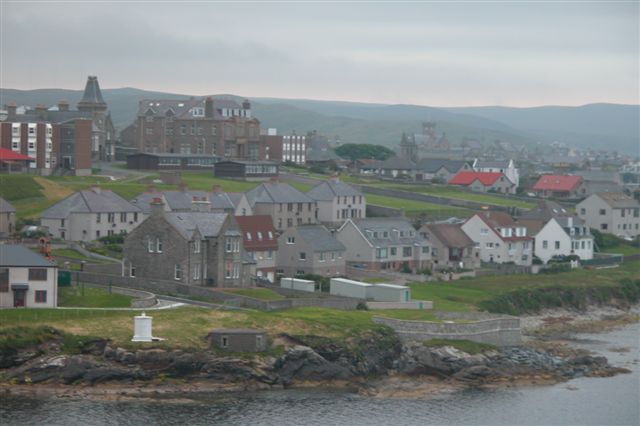
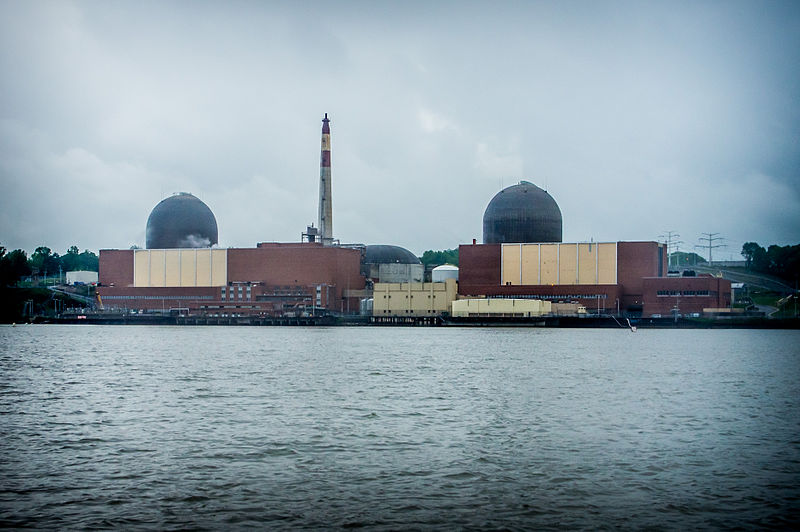
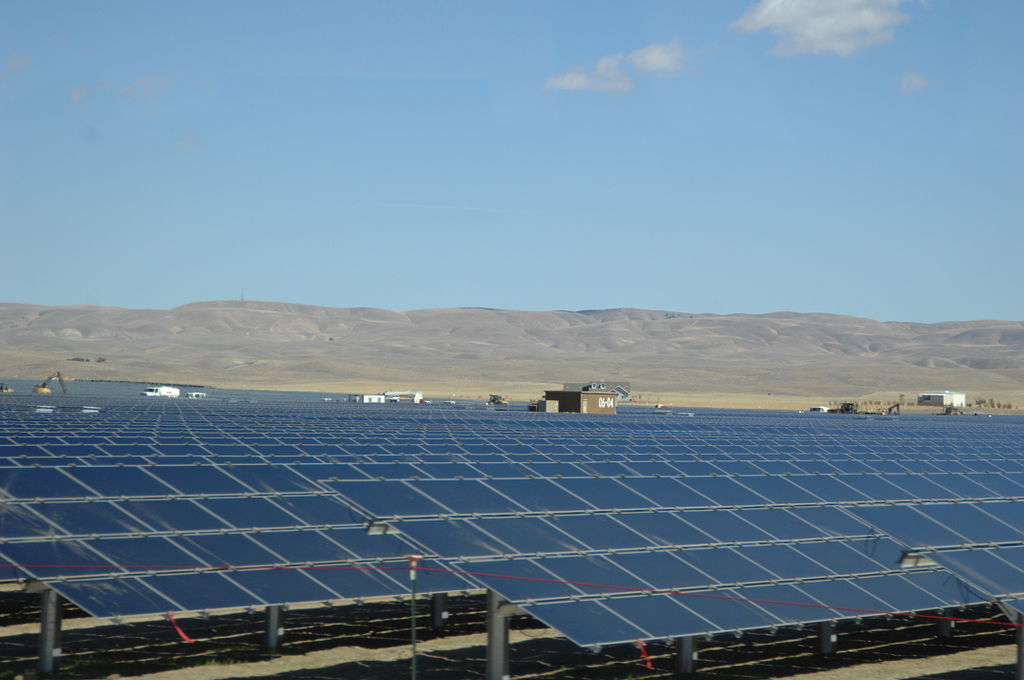
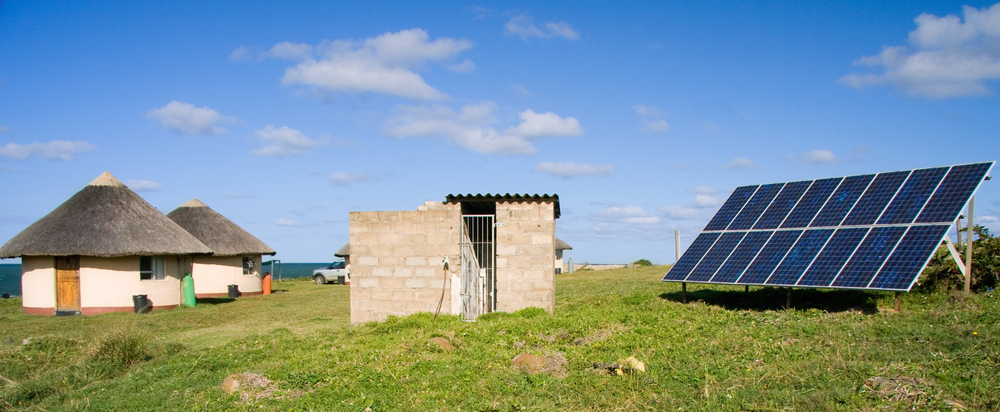
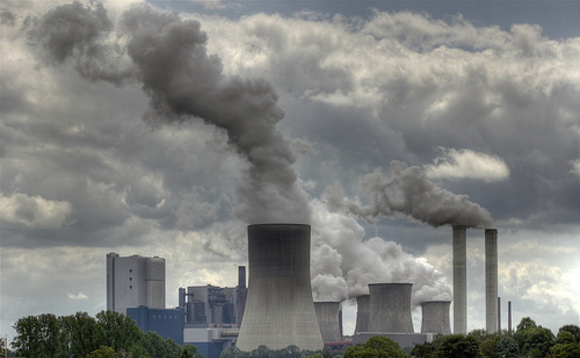

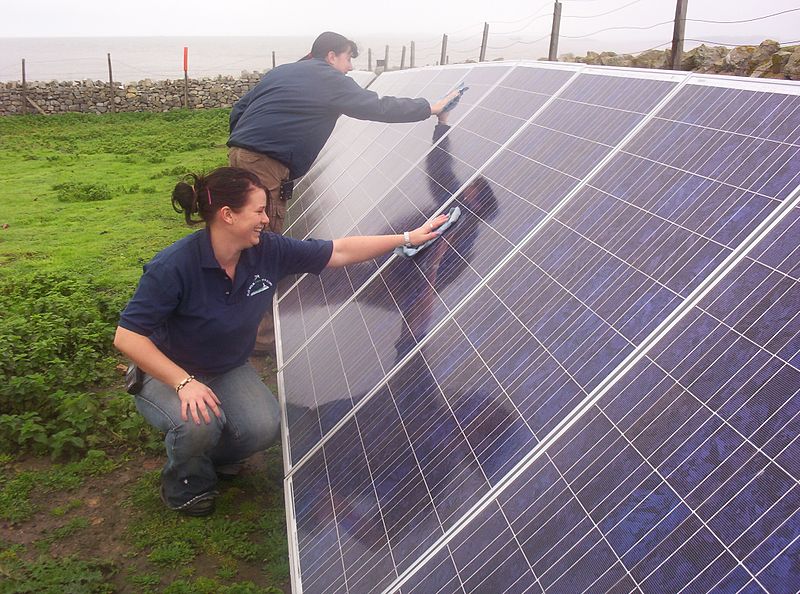
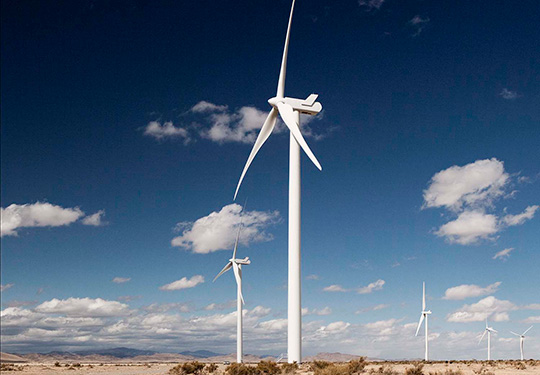
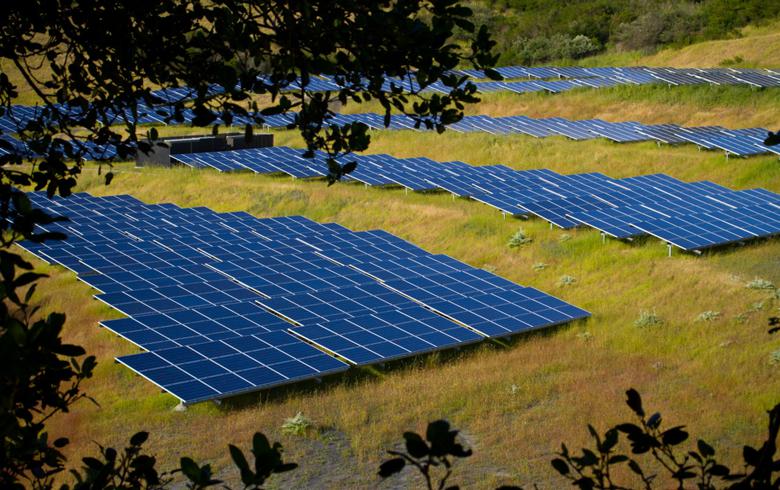
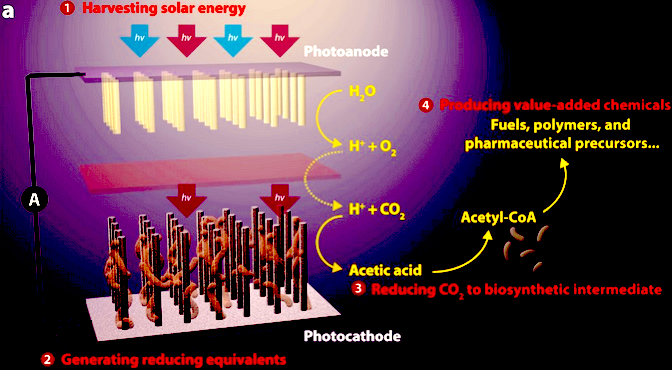
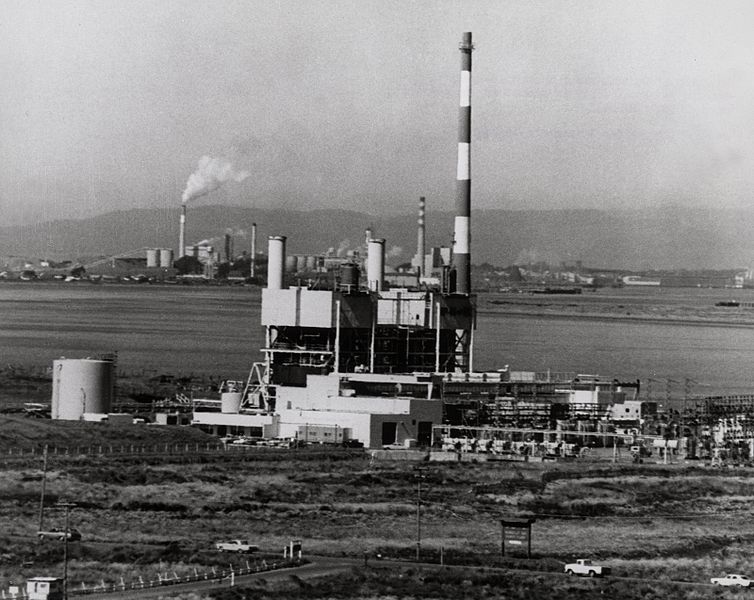
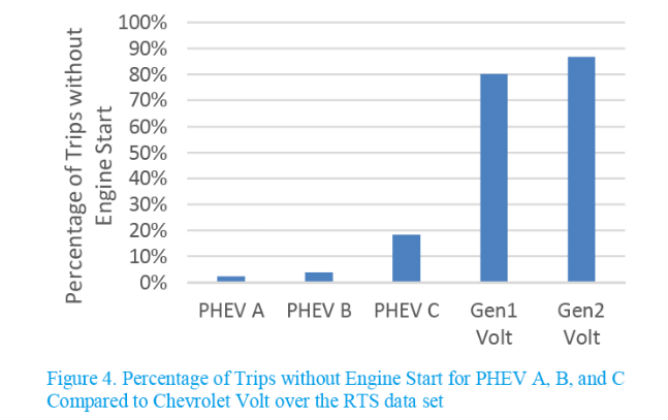

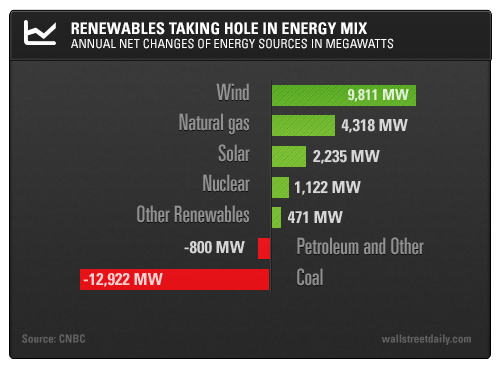

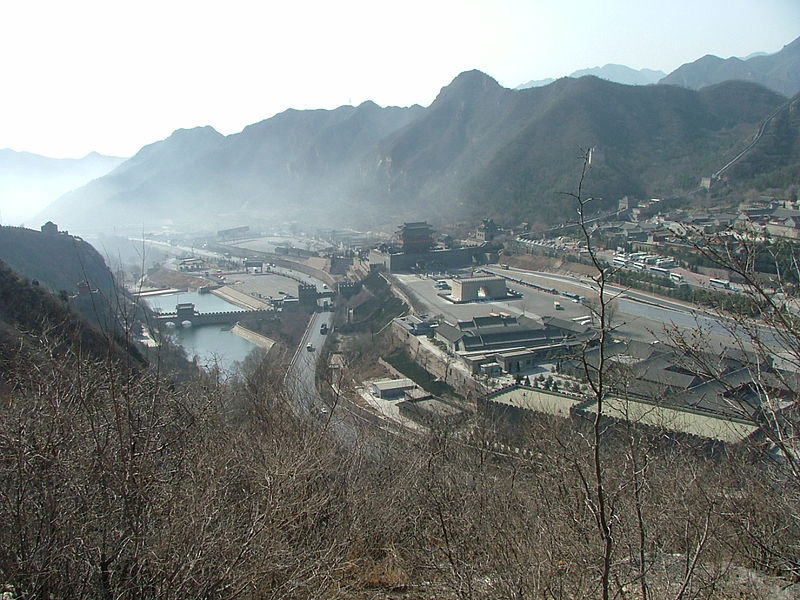

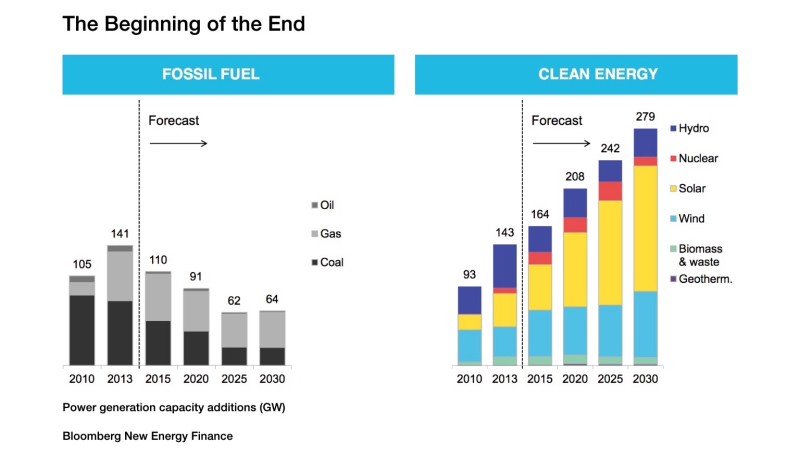
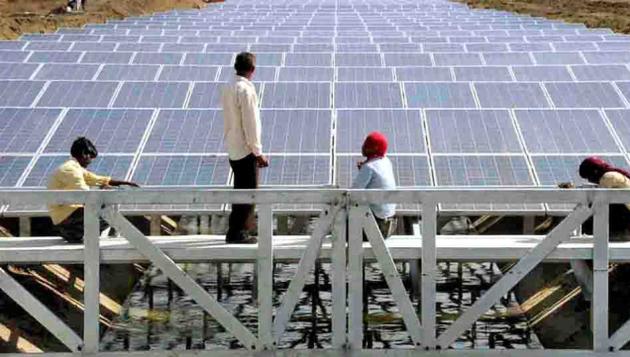


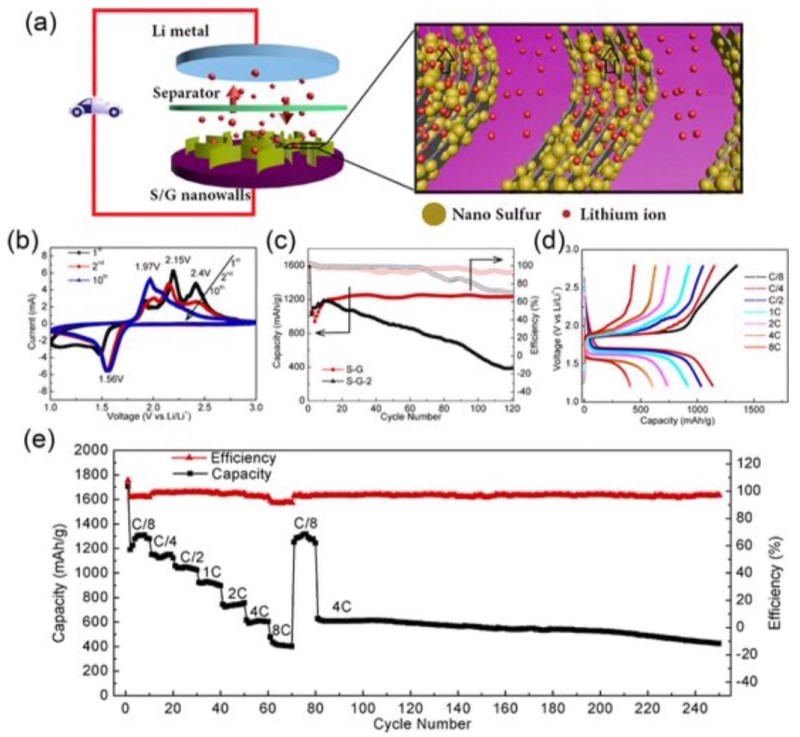


 geoharvey