Archive for the 'solar' Category
April 13, 2017
Opinion:
¶ “How a small tribe in Nevada shut down coal and built a solar farm” • President Donald Trump brags about bringing back coal jobs, but tends to gloss over the fuel’s negative health effects for workers and those who live nearby. The Moapa Band of Paiutes in Nevada know all about those harmful health effects. And they did something about it. [Inhabitat]

Solar project of the Moapa Band Of Paiutes
¶ “President Trump, it’s time we left coal behind” • In the wake of President Trump’s latest executive orders to undo Obama’s efforts on climate and energy, it has become clear that climate science denial isn’t the only blind spot of this administration. It also suffers from what Australian commentator Waleed Aly calls “commercial denialism.” [The Guardian]
¶ “Understanding Trump’s Energy Plan: Three things to know” • By way of an executive order, US President Donald Trump recently signed off on reviving the coal industry and taking the first steps toward his America First Energy Plan. Here are three things to know about a power plan that critics call a “colossal mistake.” [The Weather Network]

Wind turbines
Science and Technology:
¶ Manure-to-biogas, capturing methane gas from decomposing manure and using it as renewable fuel, is old news. But now, Pacific Northwest National Laboratory has figured out a new high-tech twist that takes it up to the next level, converting it into an energy-rich substance that can be used as the basis for biofuels and specialty chemicals. [CleanTechnica]
¶ There will be a large increase in the number of large, high-intensity forest fires that occur in the coming years and decades, according to a study from the South Dakota State University. The findings are the result of an analysis of around 23,000 fires that occurred worldwide between 2002 and 2013, including 478 “large, high-intensity” fires. [CleanTechnica]

Wildfire (John McColgan, US DA)
World:
¶ Transgrid, the owner and operator of the main transmission line in New South Wales, reports that is has received “enquiries” about more than 6,000 MW of large scale solar so far in 2017. The figure is more than a six fold increase over 2016. It shows a huge interest in solar as it matches wind on costs and beats new gas by a big margin. [CleanTechnica]
¶ India is shedding its reputation as an outlier in the fight against climate change. At the same time, President Trump is pledging support for the US coal industry and threatening to withdraw from the 2015 Paris agreement, which requires signatories to take steps to cut the greenhouse gas emissions driving climate change. [Los Angeles Times]
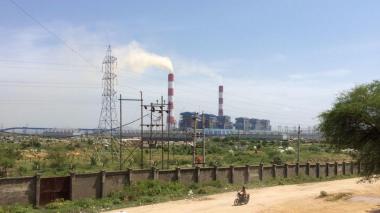
Indian coal-fired power plant partly financed by the US
Export-Import Bank (Shashank Bengali | Los Angeles Times)
¶ The UK government could deliver 1 GW of new onshore wind capacity at no additional cost to consumers over and above the long-term wholesale price of power, according to a new report for Scottish Renewables. The report said delivery is dependent on mature renewables being able to bid in auctions for long-term contracts. [reNews]
¶ With a solar plant winning a contract to sell to the grid at the country’s lowest price ever, India’s power minister hailed a new clean energy record. A French company, Solairedirect, will to sell electricity from a 250-MW plant in Kadapah, Andhra Pradesh at ₹3.15/kWh (roughly 5¢) to India’s state power company, National Thermal Power Corporation. [Climate Home]

Kids in Dharnai village (Greenpeace image)
¶ No matter who is elected as South Korea’s new leader next month, it is clear that coal and nuclear power generation will likely be scaled back, with most of the candidates laying out plans to address public concerns over pollution and safety. The two leading candidates both plan to lower South Korea’s reliance on coal and nuclear power. [Asahi Shimbun]
US:
¶ New York State’s Department of Environmental Conservation rejected National Fuel Gas’ proposed Northern Access pipeline, a pipeline that would have moved gas from the Marcellus shale to markets in Western New York, the Midwest and Canada. The denial of a water quality certification drew a stern response from National Fuel. [Utility Dive]

Pipeline
¶ The Sierra Club, Earthjustice, and the Union for Concerned Scientists plan to file a motion jointly to intervene in a lawsuit filed by fossil fuel groups that asks the EPA to delay or reconsider a rule that places more regulations on chemical plants. The chemical plant regulations were a direct response to a fertilizer plant explosion in West Texas in 2013. [CNN]
¶ Lake Erie is the smallest of the Great Lakes by volume, yet it has the highest number of people living along its shores of all the Great Lakes. It provides drinking water for 12 million people. Trump’s latest EPA budget proposal would eliminate funding for programs that monitor water quality of the it, the other Great Lakes, and Chesapeake Bay. [CleanTechnica]

Lake Erie Algal Bloom (Credit: Great Lakes Now)
¶ The Northern Pass transmission project takes a critical step forward today, March 13, when a hearing begins on the $1.6 billion plan by Eversource to bring power from Canada to markets mostly in southern New England. New Hampshire’s Site Evaluation Committee will determine whether it can be built. The hearing could last for months. [CleanTechnica]
¶ Maryland is the first US state to pass legislation that will provide tax credits to consumers and businesses that invest in energy storage systems. Senate Bill 758 will offer a 30% tax credit on the costs of installing an energy storage system. Installations done in 2018 through 2022 will net up to a $5,000 tax credit for a residential property. [Triple Pundit]
geoharvey is free and without ads.
 geoharvey is not tax-deductible.
Posted in nuclear power, renewable power, solar, wind | 1 Comment »
Tags: nuclear, nuclear power, renewable power, solar power, wind power
April 12, 2017
Opinion:
¶ “States And Cities Are Fighting Climate Change, With Or Without Nations” • The Under2 Coalition counts more than 150 local and regional governments as members, including huge cities like Beijing and small, rural, developing counties like Laikipia, Kenya. It is just one of several such organizations fighting climate change. [Capital Public Radio News]

Emissions (United Nations Photo | Flickr)
¶ “Power prices are at record highs – but there’s a pleasant solution to fix that” • Tony Abbott promised that Australia would become a low cost energy superpower, so the carbon price was abolished and the renewable energy target was cut. Now, wholesale electricity prices have doubled, and prices for solar and wind power keep dropping. [The Guardian]
Science and Technology:
¶ February 2017 was the second warmest February in 137 years of modern record-keeping, according to a monthly analysis of global temperatures by scientists at NASA’s Goddard Institute for Space Studies in New York. Last month was 1.1° C warmer than the mean February temperature from 1951-1980. Only February 2016 was warmer. [CleanTechnica]
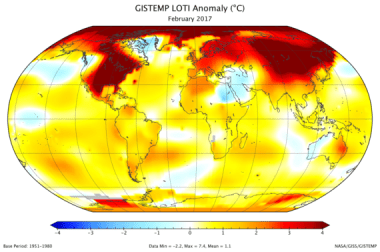
February 2017 land-ocean temperature index
World:
¶ Hartek Power, based in the Indian city of Chandigarh, said its solar grid EPC (engineering, procurement and construction) orders increased to 1,025 MW in 2016-17, compared to 123 MW in the previous fiscal year. Among the orders, the company won 30 substation projects of up to 220 KV spread in 10 Indian states, the company said. [ETEnergyworld.com]
¶ The world’s biggest solar and battery storage plant could begin construction this year, after the project was formally launched in Adelaide. The plant will include 330 MW of solar PV and a 100-MW/400-MWh battery storage system. Lyon Group, developer of the $1 billion project, said the plant should be operational this year. [CleanTechnica]

Lyon Group’s solar plus storage
¶ In February 2017, India’s solar power capacity generated a total of 1,355 billion kWh of electricity, according to the Central Electricity Authority of India. It is the first time that monthly solar power generation exceeded the 1 billion kWh mark. The new figure represents an 80% increase from February of 2016. [Climate Action Programme]
¶ China’s wind and solar sectors could attract as much as ¥5.4 trillion ($782 billion) in investment between 2016 and 2030 as the country tries to meet its renewable energy targets, according to a report published by Greenpeace. China has pledged to increase non-fossil fuel energy to at least 20% of its total by the end of the next decade. [EnergyInfraPost]

Solar and wind power in China
¶ The Japanese Prime Minister ordered ministers to formulate a strategy to transform Japan into an emissions-free “hydrogen society,” and called for more efforts on renewable energy. The Environment Minister separately said his ministry will begin drawing up a long-term strategy for increasing renewable energy use. [Japan Today]
¶ Toshiba Corp, whose US nuclear unit Westinghouse Electric Co filed for bankruptcy protection, raised doubts about its ability to survive as a company. In an unaudited financial report, Toshiba projected a $9.2 billion loss for the fiscal year that ended in March of 2017, largely because of the troubles at Westinghouse. [Albany Times Union]

Construction at the Vogtle Nuclear Plant, 2011
(Charles C Watson Jr, Wikimedia Commons)
US:
¶ The Salt Lake City Council and Mayor jointly published a plan to tackle climate change and carbon pollution after both made a promise last year on sustainability. The city promises 100% renewable energy sources for electricity by 2032 and an 80% reduction in energy and transportation-related greenhouse gas emissions by 2040. [KUTV 2News]
¶ This winter and spring, the large and growing amount of solar generation has sometimes driven power prices on the California Independent System Operator’s exchange to very low prices, and even negative prices. But California’s consumers continue to pay average retail electricity prices that are among the highest in the nation. [CleanTechnica]

Please click on the image to enlarge it.
¶ University of Maryland Center for Environmental Science has signed an agreement with Standard Solar, Inc to install solar field on approximately 10 acres of its Horn Point Laboratory campus in Cambridge, Maryland. The system will have a capacity of 2 MW and generate approximately 3.5 MWh of electricity each year. [Solar Novus Today]
¶ Americans used more renewable energy in 2016 compared to the previous year, according to the most recent energy flow charts released by Lawrence Livermore National Laboratory. Overall, energy consumption in the US was nearly flat. Americans used 0.1 quads (quadrillion BTU), more in 2016 than in 2015. [Patch.com]

Wind turbine (image via Pixabay)
¶ Last month coal got a break in Kansas, where the state Supreme Court ruled against Earthjustice and the Sierra Club, granting a permit to the Sunflower Electric Power Corporation to build an expansion to its coal-fired power plant in Holcomb. Interestingly, Sunflower did not celebrate. Instead, it said it would continue to assess the project. [ThinkProgress]
¶ Nevada’s monopoly utility NV Energy exceeded the state’s energy mandate for 2016. It is the seventh year in a row that it has done so. The utility achieved a 26.6% renewable energy credit level in northern Nevada, and 22.2% in southern Nevada. The state’s mandate for 2016 is that utilities get 20% of their power from renewable sources. [PV-Tech]
geoharvey is free and without ads.
geoharvey is not tax-deductible.
Posted in nuclear power, renewable power, solar, wind | 2 Comments »
Tags: nuclear, nuclear power, renewable power, solar power, wind power
April 11, 2017
Science and Technology:
¶ E.ON is collaborating with Dutch company Ampyx Power to develop the latter’s airborne wind energy system. The agreement aims to further development of the system towards commercial deployment. Ampyx is moving toward building and operating a demonstration site for the airborne wind energy concept in County Mayo in Ireland. [reNews]

Ampyx Power system (image: Ampyx Power)
World:
¶ The BBC has seen evidence that top executives at Shell knew money paid to the Nigerian government for a vast oil field would be passed to a convicted money-launderer and had reason to believe the money would be used to pay political bribes. The deal happened while Shell was operating under a probation order for separate Nigerian corruption. [BBC]
¶ Electricity generated at Barrow’s Walney Wind Farm will help to power one of the UK’s biggest building materials companies. Its owner, Dong Energy, has signed a deal with Leeds-based firm Weinerberger to supply it with “clean” electricity. This will come from the company’s eight UK offshore windfarms, including Walney. [NW Evening Mail]

Walney Wind Farm (Photo: Janet Ellen Smith)
¶ Auto manufacturers should be held to a minimum electric vehicle sales quota, the head of Germany’s Federal Environment Agency, Maria Krautzenberger, recently argued in an interview with the German paper Die Zeit. Without such an EV quota, the country won’t achieve its climate agreement targets, according to Krautzenberger. [CleanTechnica]
¶ ERM Power and Nexif Australia have signed two long-term, large-scale generation certificate agreements to support the construction of a new 212-MW wind farm in South Australia, 15 km from Port Augusta. Work on the 220-MW Bungala Solar Project is also expected to begin shortly. It is 10 kM north of Port Augusta. [ABC Online]
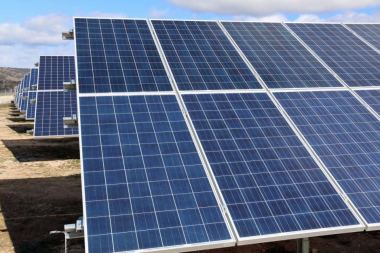
Solar panels in the Australian Capital Territory
US:
¶ Tesla has inched ahead of General Motors to become the most valuable car company in the United States. The electric-car maker hit a market value of $50.84 billion on Monday, edging past GM, with its market value of $50.79 billion. It’s another milestone for Tesla, which passed Ford, valued at about $45 billion, last week. [CNN]
¶ In Florida, speaking before a field hearing of the Senate Commerce, Science and Transportation Committee, one expert after another warned about the dangers that rising sea levels pose to Florida’s coast. They were and gave a clear signal: Much of Florida’s coastline could one day be underwater, including Trump’s Mar-a-Lago resort. [CNN]

Florida coast (Screenshot from CNN video)
¶ Native American and Environmental Groups filed suit in Federal District Court challenging the Presidential Permit President Trump issued allowing construction and operation of the Keystone XL Pipeline. “We have asked Federal Courts to order him to comply with our nation’s environmental laws,” the attorney filing the suit said. [CleanTechnica]
¶ A report, commissioned by the Clean Water Fund found there are several oil and gas wastewater wells that could be injecting into drinking water supplies in Oklahoma. In addition, there are private wells whose supply could be overlapping with wastewater disposal wells that were permitted by the Oklahoma Corporation Commission. [ThinkProgress]

Jars of brine on display at the state Capitol in
Oklahoma City (Credit: AP Photo | Sue Ogrocki)
¶ Elon Musk tweeted at the end of last week that SolarCity will begin accepting orders for its new SolarRoof product in April. The SolarRoof is not a conventional rooftop solar system. It is the roof. Glass tiles with solar cells embedded in them replace conventional roofing materials like asphalt shingles, terra-cotta tiles, or slate. [CleanTechnica]
¶ The only US sector where emissions of carbon dioxide increased last year was in the transportation sector, the US Energy Information Administration reported. CO2 emissions from the transportation sector increased 1.9% from 2015 levels. The EIA reported overall energy-related CO2 emissions last year were down 1.7% from 2015 levels. [UPI.com]

Transportation (Photo: AJ Sisco | UPI | License Photo)
¶ The viability of 100% renewable energy is a raging debate in energy circles, but for political leaders in the Oregon region, the answer is clear: Portland and Multnomah County need to be at all-renewable electricity by 2035 and all-renewable everything else by 2050. That’s community-wide, not just for city and county operations. [Portland Business Journal]
¶ The Maine Organic Farmers and Gardeners Association commissioned a new solar array at the Common Ground Education Center in the town of Unity, where more than 300 panels are spread out over five barn roofs. The 102-kW array, with other renewable resources, will provide all electricity and offset fossil fuel consumption. [Press Herald]

Barns with solar panels (Staff photo by David Leaming)
¶ The Vermont Public Service Board has approved the sale of 13 TransCanada-owned hydropower facilities on the Connecticut and Deerfield rivers to a Canadian company, ArcLight Capital Partners. The amount of the purchase is not immediately available, but TransCanada had previously estimated its value at more than $1 billion. [HydroWorld]
¶ Vermont State Representative Sarah Copeland Hanzas unveiled a plan to phase out the Vermont sales tax and replace it with a carbon tax, helping the state reach its energy goals while supporting local retail business. She will introduce legislation to remove the sales tax as part of a revenue-neutral scheme that would bring in the carbon tax. [Valley News]
¶ The Ohio Senate has taken up a bill to bail out two struggling nuclear power plants, Perry and Davis-Besse. Senate Bill 128 would generate some $300 million in annual revenue for FirstEnergy, which is based in Akron. That windfall would come through rate hikes forced onto electricity customers across Northeast Ohio. [Cleveland Scene Weekly]
geoharvey is free and without ads.
geoharvey is not tax-deductible.
Posted in nuclear power, renewable power, solar, wind | 1 Comment »
Tags: nuclear, nuclear power, renewable power, solar power, wind power
April 10, 2017
Opinion:
¶ “10 to 20-MW wind turbines offshore are the future of the industry” • The next generation of renewable energy may be 10 to 20-MW wind turbine generators, direct-drive designs that have been freed from the depth constraints of bottom-mounted offshore wind farms thanks to conventional floating foundation substructures. [Windpower Engineering]
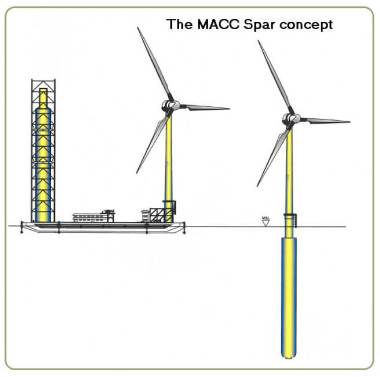
A design for offshore wind power
¶ “Corporates hold the keys: Climate leadership under Trump” • In comments to SustainAbility, the Director of Ceres Corporate Program said, “You might think that the shift in the US political landscape is creating an opportunity for companies to back off from their climate goals and related strategies, but there’s no evidence that’s happening.” [eco-business.com]
Science and Technology:
¶ Unprecedented coral bleaching in consecutive years has damaged two-thirds of Australia’s Great Barrier Reef. It now affects a stretch of reef 1,500 km (900 miles) long. The bleaching, loss of algae, is caused by rising water temperatures resulting from two natural warm currents and is exacerbated by man-made climate change. [BBC]

Coral bleaching (ARC Centre of Excellence for Coral Reef Studies)
World:
¶ Green energy production in South Australia has reached record levels, with the state poised to meet its 50% renewable energy target almost eight years ahead of schedule. Latest figures obtained from sources including the Australian Energy Market Operator indicate SA has derived 53% of its electricity in the past 12 months from sun and wind. [The Advertiser]
¶ The number of Scottish jobs provided directly and indirectly in the low carbon and renewables sector rose to 58,500 in 2015, up from 43,500 in the year before. According to figures from the Office of National Statistics the low carbon and renewables sector generated £10.5 billion. Now, the Government is cutting the sector’s incentives. [CommonSpace]
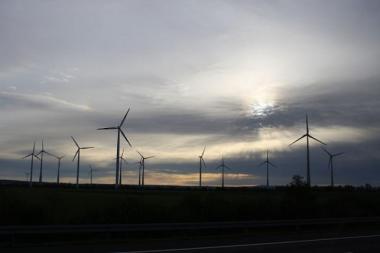
Onshore wind farm
¶ UK government agency CDC Group is to invest up to $100 million to support projects in India’s renewable energy sector. The development institution is to establish an independent energy company in the country as part of joint efforts focused on green finance. The move was announced after a dialogue on economic and financial issues. [reNews]
¶ UK grid operator National Grid is warning of surplus of electricity this summer as slumping power demand collides with surging renewables generation. This weekend’s hot weather produced a surge in clean power generation that broke records across the country, as wind and solar power produced at the best ever rates. [www.businessgreen.com]

Sheep grazing among solar panels
¶ A new poll has revealed the scale of the disconnect between the Turnbull government and the Australian public on the subject of renewable energy, revealing that a majority of people, including Coalition voters, think not enough is being done to wean the nation from fossil fuels, switch to renewables, and combat climate change. [RenewEconomy]
¶ Sembcorp said its renewable energy business in India bagged a 250-MW wind power project in Tamil Nadu. Sembcorp Green Infra got a letter of award for the project after the country’s first national wind power tender conducted by Solar Energy Corp of India. Output will be sold under a power purchase agreement to Power Trading Corp. [India.com]
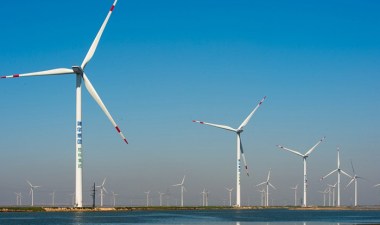
Sembcorp windpower
¶ National Front leader Marine Le Pen would look for ways to pull Electricite de France SA out of its £18 billion ($22.3 billion) Hinkley Point nuclear contract in the UK if she’s elected France’s president, one of her aides said. The National Front is against a project that diverts the utility’s resources when it needs to support nuclear plants at home. [Bloomberg]
US:
¶ A request by the state of Massachusetts for a supply of clean, renewable electricity boosts a handful of proposals to cross Vermont, New Hampshire, and Maine with transmission lines to help energy-hungry Massachusetts, Rhode Island and Connecticut make use of the renewable energy available in Canada. [New Jersey Herald]
¶ Most Americans believe climate change is real. Addressing the Congress, Senator Sheldon Whitehouse of Rhode Island pointed out that 70% of people hold that global warming is real and already happening. This is despite the Trump administration’s view that climate change is not convincing and its budget cuts on science agencies. [Tech Times]
¶ Fresh off victories in Illinois and New York, the nuclear power industry is now lobbying lawmakers in Connecticut, New Jersey, Ohio and Pennsylvania. Efforts are bubbling up into proposals, even as court battles in Illinois and New York crank up over the billions of dollars that ratepayers would pay to keep nuclear plants open. [Sharonherald]
geoharvey is free and without ads.
geoharvey is not tax-deductible.
Posted in nuclear power, renewable power, solar, wind | Leave a Comment »
Tags: nuclear, nuclear power, renewable power, solar power, wind power
April 9, 2017
Opinion:
¶ “The new sun kings: How China came to dominate solar power” • For much of the past century, the ups and downs of the American economy spelled the difference between jobs or poverty for people in the rest of the world. Now China’s policy shifts can have the same kind of impact. And China has half the solar market. [The Kathmandu Post]

Installing solar panels in Wuhan (New York Times photo)
Science and Technology:
¶ A recent survey reveals the increasing mode of temperature in the eastern part of the Arctic Ocean. The cold water beneath the ice is not as salty as the somewhat warmer water below it, so it is lighter and floats on it to shield the ice. Now, that inversion is being reversed, and the Arctic Ocean is becoming more like the Atlantic. [Science Times]
World:
¶ With a wind farm, solar park, biogas plant, and Germany’s largest battery system, the village of Feldheim is independent of the utility grid, getting all its electricity and heat – a significant factor in an area with sub-zero winter temperatures – from a local grid paid for by residents, the municipality, EU subsidies and loans. [The Hindu]
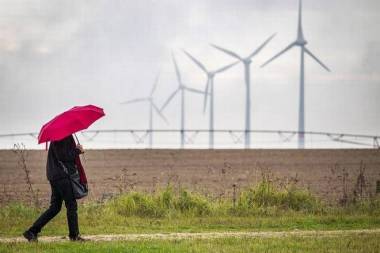
Wind turbines at Feldheim (Photo: Odd Andersen)
¶ The share of renewable energy in the Philippine power mix already reached as high 31.4% on combination of emerging and conventional technologies, according to the Energy Secretary. Hydropower has a 16.7% share, followed by geothermal with a 8.8% share, solar with a 3.1% share, wind power at 2.0%, and biomass at 0.8%. [Manila Bulletin]
¶ The Gulf Cooperation Council states, which have huge proven crude oil reserves, are now on a journey to develop renewable energy sources to better serve the planet. Since the COP21 conference held in Paris in 2015, the nations have been rolling out strategies to fight climate change and reduce their carbon footprint. [AMEinfo]

MASDAR buildings with solar panels on the roofs
¶ The French government issued a decree on the Fessenheim nuclear plant, fulfilling a campaign pledge by President Francois Hollande to shut it down. It said the plant will cease operations when a new reactor being built at Flamanville enters service in 2019. But construction of the new reactor has its own serious problems. [Luxemburger Wort]
US:
¶ When Kansas Governor Sam Brownback and the Legislature changed the state’s renewable energy standard from a mandate to a goal two years ago, some feared it could put the brakes on alternative energy development in Kansas. But that hasn’t happened. Kansas wind power generation grew 18 percent in 2016. [Wichita Eagle]
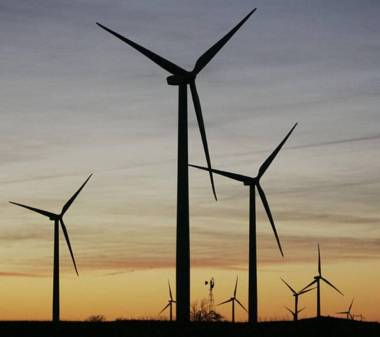
Wind turbines in Kansas
¶ At the Vermont Energy Investment Corporation’s Burlington headquarters, numerous stakeholders met to review the key findings of the Vermont Solar Pathways study and participate in a roundtable discussion about implications for utility planning, economic development, land use, and sustainable energy goals in the state. [vtdigger.org]
¶ Tesla inaugurated a solar farm with a capacity of 13 MW on the Hawaiian island of Kauai. It has 54,000 panels connected to 272 Tesla Powerpack lithium-ion batteries for a storage capacity of 52 MWh. The new farm can store surplus energy harvested during sunny days, to supply electricity island at any time, including when it rains. [The Quebec Times]
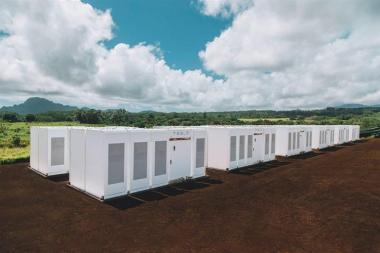
Tesla batteries on Kauai
¶ PacifiCorp, a division of Berkshire Hathaway Energy, issued a three-year, $3.5 billion plan for its renewable energy system from Wyoming to California. The six-state plan will add 900 MW of capacity by upgrading wind turbines, build a 140-mile-long power line in Wyoming and add 1,100 MW of new wind projects. [Omaha World-Herald]
¶ NRG, a leading independent power producer whose fleet once depended heavily on coal, has made big bets on low-carbon energy technologies and publicized its embrace of sustainability as essential to its future. It has aggressive carbon emissions goals. Now it has a member of its board of directors who says climate change is a myth. [Longview News-Journal]
geoharvey is free and without ads.
geoharvey is not tax-deductible.
Posted in nuclear power, renewable power, solar, wind | 2 Comments »
Tags: nuclear, nuclear power, renewable power, solar power, wind power
April 8, 2017
Opinion:
¶ “US Coal Companies Think Trump Plan To Pull Out Of Paris Accord Is A Dumb Idea” • Donald Trump said he would pull the US out of the Paris climate accords, but US coal companies are begging the administration to rethink that position. They want a seat at the table as world leaders debate how to implement the agreement. [CleanTechnica]

Coal worker in China
Science and Technology:
¶ Three startup companies, Carbon Engineering, Climeworks, and Global Thermostat, are touting carbon removal technology that can remove carbon dioxide from the atmosphere. What they need now is a way to make that technology carbon removal technology commercially viable, but first, they need practical business models. [CleanTechnica]
World:
¶ After months of public consultation, the City of Sydney has fast-tracked the adoption of an action plan that will help it get to net zero emissions by 2050, tackle waste and water usage, and scale up renewable energy use. The plan is to run the city entirely on renewable energy and gas from renewable sources, such as biogas. [eco-business.com]

City of Sydney Lord Mayor Clover Moore with the City’s
sustainability director Chris Derksema (Image: City of Sydney)
¶ E.ON has begun installing a 10-MW lithium-ion battery at a biomass combined heat and power plant at Blackburn Meadows near Sheffield, South Yorkshire. The new energy storage project will help keep power supplies stable and balance the range of power generation sources feeding into the UK’s national grid. [Decentralized Energy]
¶ To promote renewable energy, the West Bengal Renewable Energy Development Agency has undertaken a project to install solar water heater systems in 89 buildings across the state. The solar water heating systems would be installed at various hostels, schools, government buildings, and even in homes of destitute people. [Millennium Post]

Solar hot water system in India
¶ EDF’s board of directors voted against the imminent closure of the Fessenheim nuclear power as demanded by the current government. President Francois Hollande pledged in the 2012 election to limit nuclear’s share of French generation at 50% by 2025 and to close Fessenheim by the end of his term in May, 2017. [World Nuclear News]
¶ The boss of Australia’s fifth-largest electricity distributor hinted that residential solar-plus-storage could help prevent blackouts like the one in South Australia last September. The CEO of SA Power Networks predicted that 50% of his company’s customers would have home battery storage by 2035, and 30% would have electric vehicles. [Greentech Media]
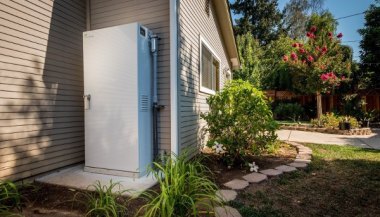
Sunverge home battery system
US:
¶ The Senate, dominated by Republicans, is engaging in the rather dramatic maneuver of having a field hearing on climate change right in President Trump’s own backyard. West Palm Beach has agreed to host a hearing on climate change for the US Senate Committee on Commerce, Science, and Transportation this coming Monday. [CleanTechnica]
¶ The coast of Florida is flooding worse and more often as time goes by, and the change is happening more and more quickly. Just down the coast from Donald Trump’s weekend retreat, the residents and businesses of southern Florida are experiencing regular episodes of water in the streets and flooding in basement parking lots. [BBC]
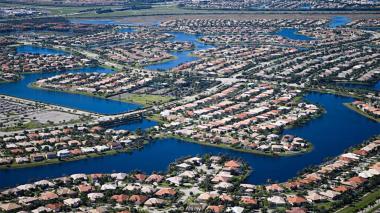
Canals in a Fort Lauderdale neighborhood (Credit: Alamy)
¶ A partnership between Minnesota Power and the Minnesota National Guard has produced a solar array at Camp Ripley in Morrison County. It boosts clean energy production for Minnesota Power customers and provides energy security for Camp Ripley. The $25 million, 10-MW solar farm covers more than 60 acres. [Brainerd Dispatch]
¶ Ohio regulators need more information about the 20.7-MW Icebreaker offshore wind project in Lake Erie before going ahead with a permit application. The state Power Siting Board said the proponent must submit information to the Ohio Department of Natural Resources for project impacts on birds, bats, fisheries and other aquatic resources. [reNews]

Icebreaker offshore wind test installation (Leedco image)
¶ More than 900 government buildings in Chicago will shift their electricity use to “100 percent renewable energy” by 2025 under an ambitious mayoral plan that contrasts sharply with President Donald Trump’s retreat on environmental issues. All together, they consume 8% of all the electricity used in Chicago, nearly 1.8 billion kWh. [Chicago Sun-Times]
¶ In the desolate quiet of West Texas, miles from any post office or gas station, sits an ocean of glass and silicon pointed skyward. The new solar plant, a half-hour’s drive east of Fort Stockton, is Austin’s latest salvo in its years-long push to combat climate change by transitioning from fossil fuels to renewable energy generation. [MyStatesman.com]

1,000 acres of solar panels at the East Pecos Solar Facility
¶ A proposal to subsidize two FirstEnergy Corp nuclear plants is shaping up to be the latest divisive Ohio policy battle. A drawn out fight to subsidize coal plants is over but the Statehouse is still squabbling over attempts to cut renewable energy standards. Here’s a roundup of what stakeholders are saying about Senate Bill 128. [Columbus Business First]
¶ Federal officials are considering approving a plan to truck about 200,000 gallons of low-level radioactive waste water from the closed Vermont Yankee nuclear power plant to Idaho. The NRC said an environmental assessment found no significant impact in storing the radioactive waste about 40 miles south of Boise. [Bonner County Daily Bee]
geoharvey is free and without ads.
geoharvey is not tax-deductible.
Posted in nuclear power, renewable power, solar, wind | 2 Comments »
Tags: nuclear, nuclear power, renewable power, solar power, wind power
April 7, 2017
Opinion:
¶ “Stunning drops in solar and wind costs turn global power market upside down” • For years, opponents of renewable power, like President Donald Trump, have argued it isn’t affordable. But unsubsidized renewables have become the cheapest source of new power by far, a report from the UN and Bloomberg New Energy Finance says. [Think Progress]
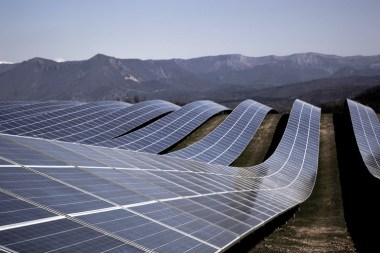
Solar farm in Chile (Credit: ACERA)
World:
¶ Netherlands-based power provider Eneco and Japanese multinational company Mitsubishi Corporation are planning to install a 48-MW lithium-ion storage system in the German state of Schleswig-Holstein. The 50-MWh battery would be the largest of its kind in Europe, the two companies said. It would store power from wind farms. [pv magazine]
¶ The world added record levels of renewable energy capacity in 2016, according to the UN, but the bill was almost a quarter lower than the previous year, because of the falling cost of renewables. Investment in renewables capacity was roughly double that in fossil fuels. The cost of offshore wind power has fallen about a third since 2012. [BBC]

Offshore wind power (Getty Images)
¶ In a surprise announcement at a press conference this week in Brussels, the European electricity sector has come out and committed to ensuring there are no new coal plants built after 2020. Member of the industry association Eurelectric have made a commitment to invest in no more coal-fired power plants after 2020. [CleanTechnica]
¶ Azuri Technologies’ entry level solar system provides eight hours of lighting each day for off-grid African customers. They pay a one-off installation fee, then use scratch cards or mobile phone payments to top up on a weekly or monthly basis. The program gives them power for phones and regular access to the media and the internet. [malaysiandigest.com]

Solar power in Africa (Credit: Azuri Technologies)
¶ The Alberta government says that its $5-million program to encourage municipalities to use solar energy is a success, with 18 participating communities receiving nearly $2 million in rebates so far. Since the program began last year, 28 projects have been given the go ahead to install solar panels on public buildings, fire halls and community centers. [Yahoo News]
¶ Wello’s Penguin wave energy device has generated electricity for the UK national grid during tests off the coast of Scotland. The Finnish developer’s machine was connected to the grid at the European Marine Energy Test Centre off Orkney as part of EU Horizon 2020-backed Clean Energy from Ocean Waves project. [reNews]
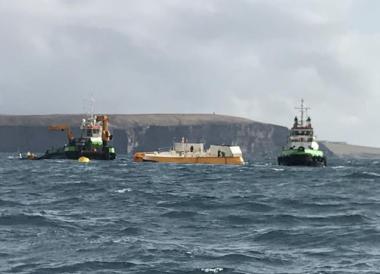
Penguin wave energy converter under tow
¶ The Dominican State Electricity Corporation announced that three PV projects with a combined capacity of 133 MW could be built in 2018. The three plants, along with five wind power projects, will be developed under the renewable energy plan to add 361 MW of renewable energy capacity in the Dominican Republic. [pv magazine]
US:
¶ Tucson Electric Power announced it is moving to develop a more responsive and sustainable resource portfolio. TEP plans to expand its solar and wind generation, with a goal set to provide at least 30% of its power from renewable resources by 2030, twice the amount required by 2025 under Arizona’s Renewable Energy Standard. [PV-Tech]

Solar panels in Arizona (Image: TEP)
¶ Environmentalists are calling on Massachusetts to help keep the air clean by reducing emissions from fossil fuels like coal and gasoline. They want the governor to follow through on his promise to double the reduction rate for power plant emissions from 2.5% to 5% per year. Pollution went down 4.8% in 2016, but smog is still a problem. [wwlp.com]
¶ UniEnergy Technologies has installed a new large flow battery on the grid in Washington state. The 2-MW/8-MWh battery system is smaller than recent projects in Southern California and Hawaii, but it is the largest capacity containerized flow battery system in the world. It is housed in 20 connected shipping containers. [Ars Technica UK]

Installing flow battery containers (Snohomish PUD)
¶ The Kentucky Coal Mining Museum in Benham, Kentucky, owned by Southeast Kentucky Community and Technical College, is modernizing with a new form of cheaper energy. The museum, which memorializes Kentucky’s history in coal mining, is switching to solar power to save at least $8,000 to $10,000 per year. [CNN]
¶ James City County, Virginia, is one step closer to harnessing the power of sun with the approval of proposed 20-MW solar farm in Norge. The Planning Commission voted 5-2 in favor of the proposal from SunPower Devco, LLC. SunPower claims the proposed facility will generate enough electricity annually for 4,000 homes. [Williamsburg Yorktown Daily]

SunPower solar panels (Courtesy SunPower)
¶ Schneider Electric unveiled an advanced microgrid at its Boston One Campus, its North American headquarters in Andover, Massachusetts. The microgrid was built by Schneider Electric and REC Solar, a unit of Duke Energy Renewables. It was funded through the Microgrid as a Service business model. [Electric Light & Power]
¶ The Vogtle nuclear power plant project has had major setbacks, and they are getting worse. On Monday, project team members announced that the estimated completion dates of December 2019 and September 2020 cannot feasibly be met. Then, on Wednesday, Westinghouse, the construction contractor on the project, filed for bankruptcy. [Breaking Energy]
geoharvey is free and without ads.
geoharvey is not tax-deductible.
Posted in nuclear power, renewable power, solar, wind | 2 Comments »
Tags: nuclear, nuclear power, renewable power, solar power, wind power
April 6, 2017
Opinion:
¶ “Trump’s Dirty Energy Policies Face Backlash in States Across the Country” • On December 9, as the Obama administration rushed to preserve what it could of its climate legacy before Donald Trump’s inauguration, Illinois Governor Bruce Rauner, a Republican, signed a bipartisan energy reform package. Illinois is not alone. [Truth-Out]

The Fisk Generating Plant in Chicago, now closed
(Photo: Seth Anderson / Flickr)
¶ “TEP can help Navajo and Hopi by buying their renewable energy” • I am a Diné (Navajo) woman who came to Tucson to study microbiology at the University of Arizona. Even though it’s 400 miles away, Tucson Electric Power gets some of its electricity the Navajo Generating Station. It could support Navajo solar and wind instead. [Arizona Daily Star]
Science and Technology:
¶ While lithium-ion batteries sold by Tesla and others are perhaps the most widely known storage technology, several other energy storage options are either already on the market, or are fast making their way there. Salt, silicon, and graphite are also hoping to claim a slice of what, by all indications, will be a very large pie. [The Guardian]
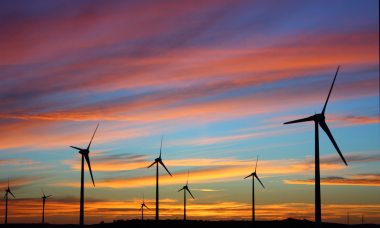
Power for batteries (Photo: Tim Phillips Photos | Getty Images)
World:
¶ European emissions from coal fell by an impressive 11% in 2016, according to analysis of new figures published by the European Commission this week. Almost half of the fall in coal emissions during 2016 came due to plant closures in the UK, which itself saw a massive 58% year-on-year fall in coal emissions. [CleanTechnica]
¶ GTM Research’s new Global Solar Demand Monitor: Q1 2017 report projects a global total of 85 GW of new solar capacity installed in 2017. The concentration of global solar demand has contracted to the point where the world’s top four markets – China, the US, India, and Japan – are expected to account for 73% of a global total. [CleanTechnica]

Global PV Demand (Please click on the image to enlarge it.)
¶ Indian Railways could draw up to 25% of its electric power needs from renewables and achieve the target of 5 GW of solar by 2025, according to a study released by the Council on Energy, Environment and Water. An investment of $3.6 billion would be needed by Indian Railways to meet the 5-GW target. [Daily News & Analysis]
¶ UK telecoms operator BT has announced signing a power agreement with a Scottish wind farm. The power purchase agreement is worth £185 million ($230.79 million) over 15 years. In a statement earlier this week, BT said that 13 wind turbines in the north of Scotland were providing the business with 100 GWh hours of electricity annually. [CNBC]
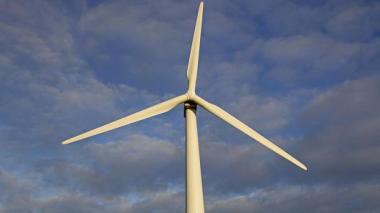
Wind turbine (Phil McLean | Corbis Documentary | Getty Images)
¶ German battery developer Dynavolt has inaugurated its new mass production lithium battery facility in the Southern Chinese province of Fujian. The company has invested €400 million in the factory, which will have a yearly production of 6 GWh and could be used to build 200,000 electric vehicles per year. [Renewable Energy Magazine]
¶ Spanish power provider Iberdrola has begun construction of a 100-MW solar facility in the Mexican state of Sonora. The announcement was made by the local government, which said that State Governor Claudia Pavlovich met with representatives of the company this week to discuss details of the $135 million project. [pv magazine]

Pirâmide do Sol (Wikimedia Commons)
¶ French Energy Minister Segolene Royal warned EDF’s board against trying to prevent the closure of France’s oldest nuclear plant, as a long-running conflict between the state-controlled utility and the government comes to a head. EDF scheduled a board meeting to decide the fate of the 1,800-MW Fessenheim plant. [Reuters UK]
¶ The world’s first airport to be solely powered by solar energy is set to increase its capacity from 15.5 MW to 21.5 MW to power its new international terminal. The 46,000 solar panels already in place have provided more electricity than was required by the airport, and the excess electricity has been sold to the grid. [Climate Action Programme]

Cochin International Airport
US:
¶ US State Attorneys have filed a lawsuit against the Trump Administration for illegally blocking energy efficiency standards that the claimants believe not only cut costs but cut pollution levels as well. They are “common sense standards” and would, over time, save consumers and businesses approximately $24 billion.” [CleanTechnica]
¶ Florida Power & Light is making up for lost time, and now expects to have 2.1 GW of new solar capacity installed on its system within the next seven years. In addition to the utility’s renewables announcement, FPL said it has also reached a deal to close down a coal-fired plant in the state. FPL currently operates 335 MW of solar energy. [Utility Dive]

Solar dawn
¶ State officials are allowing two Native American tribes to get involved in the proposed sale of Vermont Yankee. The Vermont Public Service board has ruled that both the Elnu Abenaki and Abenaki Nation of Missisquoi can act as “intervenors” in the state’s review of the plant’s purchase by NorthStar Group Services. [Commons]
¶ Southern Power, a subsidiary of Southern Co, has announced commercial operation of the 120-MW East Pecos Solar Facility in Pecos County, Texas. Construction of the approximately 1,000-acre project began in February 2016. The facility consists of approximately 1.2 million solar panels manufactured by First Solar. [Solar Industry]
geoharvey is free and without ads.
geoharvey is not tax-deductible.
Posted in nuclear power, renewable power, solar, wind | 2 Comments »
Tags: nuclear, nuclear power, renewable power, solar power, wind power
April 5, 2017
Opinion:
¶ “Donald Trump’s climate fantasies” • In less than 100 days, we have learned that Trump is a man living in a fantasy world. He issues decrees, barks orders, sends out midnight Tweets, but to no avail. The facts – real facts, not “alternative” ones – keep intervening. There is physics; there is law; and there are voters, who increasingly disapprove. [MENAFN.COM]

Deepwater Horizon oil spill
World:
¶ Solar PV is the favorite energy generation technology among the UK’s Conservative voters, a new study by right-leaning think tank Bright Blue has found. The report said Tory voters wanted the government to do more to encourage renewable energy deployment. Bright Blue surveyed nearly 2,000 Tory voters for the report. [Solar Power Portal]
¶ Following two years of trials of the world’s first electric car ferry, operators are making the transition from diesel to comply with new government requirements for all new ferry licensees to deliver low-emission alternatives. Ferry company Fjord1 ordered three fully electric ferries that are scheduled to enter active service in January 2018. [BBC]

Ferry on a fjord (Getty Images)
¶ Enel has commenced the construction of a 238-MW Don Jose capacity solar power plant in Mexico, with an investment of $220 million. The solar PV plant is in the State of Guanajuato. Enel is working with its Mexican subsidiary Enel Green Power México. The Don José solar facility is expected to be operational in 2018. [Energy Business Review]
¶ Anesco has grown its portfolio to over 100 sites in England alone after adding 28 new solar farms before the Renewable Obligation closed. The company’s 101 installations have total capacity of 481 MW, marking a significant milestone for the company as the UK ground-mount solar industry moves into a subsidy-free landscape. [Solar Power Portal]
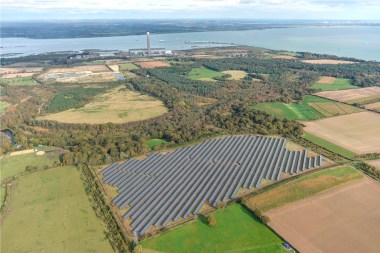
Anesco solar farm
US:
¶ Reuters surveyed 32 utilities with operations in the 26 states that sued former President Barack Obama’s administration to block its Clean Power Plan. Most of them have no plans to alter their multi-billion dollar, years-long shift away from coal, suggesting demand for the fuel will keep falling despite Trump’s efforts. [Thomson Reuters Foundation]
¶ A sweeping piece of legislation that aims to improve forecasts for everything from Category 5 hurricanes to El Nino has passed both houses of Congress. The Weather Research and Forecasting Innovation Act of 2017, HR 353, will become the first major weather legislation enacted since the early 1990s if signed by the president. [Washington Post]

Hurricane Andrew in 1992 (NASA)
¶ President Trump’s recent executive order to thwart the EPA’s climate-change plan will ultimately cut short thousands of American lives, according to the department chairman at the Harvard TH Chan School of Public Health, who coauthored some of the most influential studies on air pollution. The plan would have reduced soot and smog. [CNN]
¶ The US Energy Information Agency just issued a report stating that coal production in 2016 fell to its lowest level since 1978. It cites several factors that are responsible for the decline, but it comes down to basic economics. There are other sources of energy, including natural gas, wind, and solar power, that are cheaper than coal. [CleanTechnica]
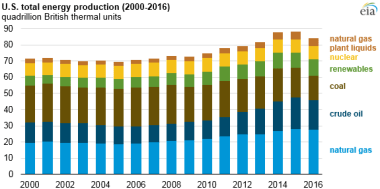
Please click on the image to enlarge it,
¶ The CEO of FedEx is also heavily involved with SAFE (Securing America’s Energy Future), a group whose primary mission is to reduce America’s dependence on foreign oil. As such, he is urging the Trump administration not to roll back the fuel economy standards set in place by the EPA of the Obama administration. [CleanTechnica]
¶ Wind energy is going big in Texas. In the town of Sweetwater, home to four of the state’s largest wind farms, the tax base has grown from $400 million to $3 billion since 2000. Republican ranchers may not care that much about CO2 emissions, but they likely will appreciate the 14.7 billion gallons of water saved. [GreenBiz]

Texas landscape (Shutterstock | Dallas Events Inc)
¶ Facebook announced that it will construct a data center in Papillion, Nebraska. The 970,000 square foot campus will generate 1,000 construction jobs and 100 positions within the center once it is online. A wind farm will be built to power the data center, making it powered through 100% renewable wind-generated electricity. [Silicon Prairie News]
¶ PacifiCorp, which now generates nearly 60% of its electricity from coal, is planning to make a big new commitment to wind power. The six-state utility released a long-range power plan that foresees building 1,100 MW of new wind power capacity while also retrofitting an additional 900 MW, all by the end of 2020. [Portland Business Journal]

Vestas turbines at PacifiCorp’s Marengo Wind Farm
¶ A report from the Environment America Research and Policy Center, shows that San Diego was at the top of US cities for installed solar in 2016, followed by Los Angeles, Honolulu, San Jose, Phoenix, and Indianapolis. Among the top 20 cities for solar installed per capita were Burlington, VT, New Orleans, and Newark. [Environment America]
¶ The Trump administration is so alarmed that Chinese investors may try to buy Westinghouse Electric Co’s nuclear business that it is trying to find an American or allied buyer for the company, two people familiar with the matter said. The issue is set to come up during President Donald Trump’s first meeting with Chinese President Xi Jinping. [Bloomberg]
geoharvey is free and without ads.
geoharvey is not tax-deductible.
Posted in nuclear power, renewable power, solar | Leave a Comment »
Tags: nuclear, nuclear power, renewable power, solar power, wind power
April 4, 2017
Science and Technology:
¶ A UK-based team of researchers has created a graphene-based sieve capable of removing salt from seawater, possibly with only minimal energy input. The development could aid the millions of people without ready access to clean drinking water. The graphene oxide sieve will now be tested against desalination membranes. [BBC]
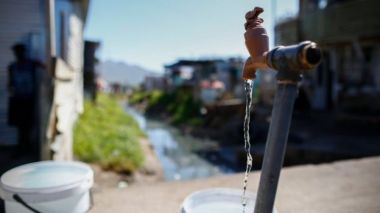
A need for clean water (EPA photo)
World:
¶ A surge in the use of wind and solar energy helped Europe to cut its fossil fuel consumption and greenhouse gas emissions by about 10% in 2015, an authoritative new report found. Energy use from renewables rose to 16.7% of Europe’s total, up from 15% in 2013, and accounted for 77% of the continent’s new power capacity. [The Guardian]
¶ Vattenfall signed a new grid storage agreement with BMW for the purchase of new lithium-ion batteries to store electricity generated by the company’s wind turbine facilities. The batteries will be the same 33-kWh batteries used by BMW to power its i3 electric sedans. The contract calls for the delivery of 1,000 batteries a year. [CleanTechnica]
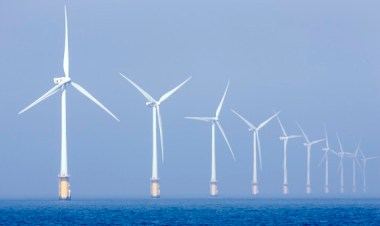
Egmond aan Zee wind farm (Vattenfall photo)
¶ Gamesa and Siemens Wind Power have completed their merger. The transaction creates a giant new player with a presence in more than 90 countries, an industrial footprint in key wind markets, and an installed capacity of 75 GW. The company has an order backlog of €21 billion (£17.91 billion, $22.38 billion). [Energy Live News]
¶ Scottish wind turbines sent more than 1.2 million MWh of electricity to the National Grid in March, according to new analysis of data. In a news release, WWF Scotland said that turbines produced enough electricity to meet the electrical needs of 136% of Scottish households, an increase of 81% compared to March 2016. [CNBC]

Scottish wind turbines (Stephen Wilkes | Iconica | Getty Images)
¶ Germany has committed to reducing greenhouse gas emissions 40% by 2020, and to halving emissions from energy production by 2030. Experts say the only way to reach these targets is moving from fossil fuels to renewable energies. But the mining company RWE is planning the expansion of some of Europe’s biggest coal mines. [Deutsche Welle]
¶ Vikram Solar, an Indian solar manufacturer and developer, commissioned two 65-MW solar PV plants in Rajasthan for the National Thermal Power Corporation.Vikram Solar now has an installed solar portfolio in India of 275 MW. NTPC has a corporate goal of 1 GW of renewable capacity installed by the end of 2017. [pv magazine]

Bhadla Solar Park
¶ The bankruptcy of Westinghouse Electric Co may be a blow to Toshiba Corp’s international nuclear ambitions, but the Japanese conglomerate still has a profitable business at home. Toshiba has many businesses, from memory chips to railroads. It maintains nuclear reactors, and it gets income from the Fukushima clean-up. [Japan Today]
US:
¶ Iron Mountain Data Centers has announced that it has signed an agreement to power its data centers using renewable energy from a new wind farm in Ringer Hill, Pennsylvania. The 15-year wind power purchasing agreement will see the data storage and IT management company use 25 MW of the wind farm’s capacity. [The Stack]
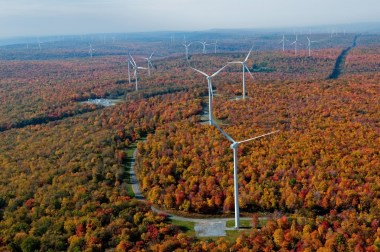
The Allegheny Front wind farm
¶ At the urging of the Sierra Club, the EPA’s scientific integrity official is reviewing Trump-appointed EPA Administrator Scott Pruitt’s comments to see if they violate the agency’s scientific integrity policy. The policy requires that all agency employees, including Pruitt, “communicate with honesty, integrity, and transparency.” [Mashable]
¶ The Wild Horse Wind Facility east of Ellensburg, Washington, can generate enough electricity each year to power 70,000 homes. It also generates plenty of curiosity as one of the few wind farms in the nation that lets people get close to the 220-foot turbines. Reportedly, visitors enjoy views of the turbines and like the sounds they make. [KING5.com]
¶ Details behind Volkswagen’s dieselgate-funded Electrify America initiative have finally been revealed, as the global auto manufacturer continues to settle with governments around the world with settlements topping $22 billion. The initiative will go beyond installing electric vehicle chargers and promoting electric vehicles. [CleanTechnica]
¶ Tesla’s market value has overtaken that of Ford after shares in the electric car maker added more than 7%. At the close of trading Tesla had a market value of $49 billion (£38 billion), compared with Ford’s value of $46 billion. Tesla’s shares rose after the company announced record vehicle deliveries in the first three months of the year. [BBC]
¶ 7-Eleven has agreed to power 425 of its Texas stores with nothing but wind energy for 96 months. The arrangement reached with Dallas-based TXU Energy, a residential and commercial energy provider, begins June 1, 2018, and is expected to reduce 7-Eleven’s carbon footprint by 6.7%. Texas has over 10,000 wind turbines. [CSPDailyNews.com]
¶ The US EPA withdrew a proposed framework to help states comply with the Clean Power Plan, days after President Donald Trump told the agency to reconsider the rule. The framework would have offered states a “model rule” they could use to set up emissions trading programs to meet their Clean Power Plan targets. [Argus Media]
geoharvey is free and without ads.
geoharvey is not tax-deductible.
Posted in nuclear power, renewable power, solar, wind | Leave a Comment »
Tags: nuclear, nuclear power, renewable power, solar power, wind power
April 3, 2017
Opinion:
¶ The Tenth Anniversary of Massachusetts v. EPA • On April 2, 2007, The Supreme Court forcefully rejected the Bush EPA’s “laundry list of reasons” not to address climate pollution. The high Court held that protection of human health and the environment from air pollution must be rooted in science, not expediency or politics. [Environmental Defense Fund]
World:
¶ The Scottish First Minister Nicola Sturgeon will deliver a snub to Donald Trump over his stance on the environment today, signing a climate change pact with one of the US President’s bitter rivals. She will pose with California Governor Jerry Brown in a show of unity against the ditching of Obama-era policies tackling global warming. [The Scottish Sun]
¶ In Uttar Pradesh, India’s most populous state, only 37% of households are electrified, compared with 67% nationwide. Help has come from private mini-grids from companies like OMC Power, which has 67 mini-grids of 10 to 500 kW in the state. A base home package from OMC Power costs ₹110 ($1.70) per month. [Reuters]

Solar power for a mini-grid
(Thomson Reuters Foundation / Rina Chandran / Files)
¶ India added a record 5,400 MW of wind power in 2016-17, exceeding its 4,000-MW target. Of about 50,018 MW of installed renewable power across the country, over 55% is wind power. India is the biggest greenhouse gas emitter after the US and China. About 16% of the 315,426 MW of installed capacity of is renewable. [Livemint]
¶ Infigen Energy announced it is proceeding with construction of the 113.2-MW Bodangora wind farm near Wellington, New South Wales. It will have 33 GE 3.43-MW turbines and will be built by a consortium including General Electric and civil-engineering construction company Civil & Allied Technical Construction. [Renewable Energy Magazine]

Australian wind turbines
¶ Major European energy utilities are putting $14 billion of their earnings at risk by relying too heavily on fossil fuels, a CDP study found. Research by the non-profit organisation shows 14 major European utilities are set to exceed carbon targets by 1.3 billion tonnes of CO2, which is equivalent to Japan’s entire annual emissions. [www.businessgreen.com]
¶ Just over 1 billion people, or approximately one in seven, still have no access to electricity, a figure that has barely improved in two years, while the number cooking with health-harming fuels rose slightly to just over 3 billion, according to a tracking report from the World Bank and the International Energy Agency. [ETEnergyworld.com]
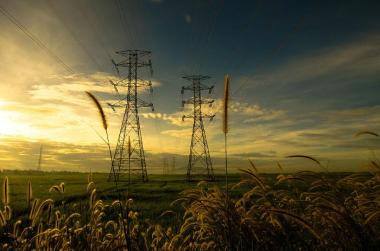
Transmission lines
¶ Australian Senator Nick Xenophon expects the deal he struck on tax cuts should guarantee that construction begins on the first large-scale solar thermal plant in the country before the next election. He is getting the Coalition government to deliver on its pre-election promise of facilitating solar thermal construction. [RenewEconomy]
¶ The German Ambassador to Saudi Arabia has invited the Saudis to join Germany as it shifts to green energy from oil and uranium. He said the Kingdom is “blessed abundantly with sun and wind,” and commended the Saudi government for taking bold steps to introduce renewables to the local energy portfolio. [Al-Bawaba]

Blessed abundantly with sun and wind (AFP)
US:
¶ The Natural Resources Defense Council has released a new analysis that shows that the federal tax credit extensions for wind and solar will add over 220,000 jobs and nearly $23 billion to the US economy in 2017. But the executive action to begin rolling back the Clean Power Plan is a clear threat to this progress. [Natural Resources Defense Council]
¶ In a record quarter, Tesla delivered just over 25,000 cars in the first three months of the year. That was a 70% rise on the same period of 2016. It is also a rebound for the company after production problems resulted in a 9% fall in deliveries in the fourth quarter. The Model 3 is due to go on sale in the US this year priced at $35,000. [BBC News]
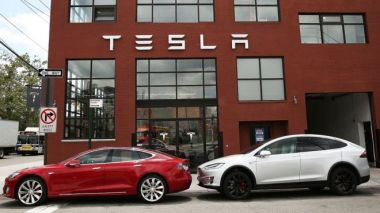
Tesla cars at a Tesla office (Getty Images)
¶ While President Trump’s executive order rolling back the Obama administration’s efforts to combat climate change are upsetting, many officials of regional transmission organizations shrug their shoulders and vow to continue on without the federal government as market forces and state policies continue decarbonizing their generation mixes. [RTO Insider]
¶ In Wyoming’s Rock Springs Sweetwater County Airport, and nearly half the electricity needed to run the new hangar and terminal will come from the sun. The airport’s solar facility was given a $94,000 grant from Rocky Mountain Power’s Blue Sky customers, who support renewable energy projects in Wyoming. [Casper Star-Tribune Online]
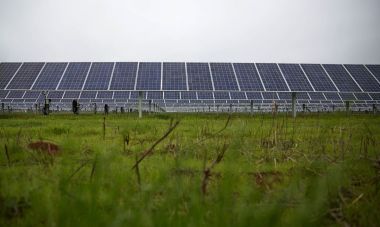
Solar panels on Jimmy Carter’s land in Georgia (AP)
¶ Energy efficiency and renewable energy company, Ameresco has opened a second municipal solar power generation facility in Pittsfield, Massachusetts. The City contracted Ameresco to design and build the 2.91-MW facility on city land back in 2015. It is expected to generate more than 3 million kWh in its first year. [SmartCitiesWorld]
¶ Oblivious to the storm of fury it would arouse in Nevada, which has no commercial nuclear reactors of its own, President Trump has proposed spending $120 million to restart licensing Yucca Mountain to store spent nuclear fuel. He is restarting one of the most intractable political, legal and technical issues in modern US history. [The Recorder]
geoharvey is free and without ads.
geoharvey is not tax-deductible.
Posted in nuclear power, renewable power, solar, wind | Leave a Comment »
Tags: nuclear, nuclear power, renewable power, solar power, wind power
April 2, 2017
Opinion:
¶ Trump is on the losing side of history on coal, climate change • Trump’s executive order does not fundamentally change the economics of power production. The natural gas boom, fueled by fracking, is a huge factor. But renewable power has surged. There for every job in US coal mines, there are almost 10 in renewable-energy. [Corpus Christi Caller-Times]

250-ton coal truck (Photo: Matthew Brown, AP)
¶ Why business is greener than Trump • Since Trump’s election, nearly 900 companies and investors have signed an open letter, “Business Backs Low Carbon,” calling on the administration not to withdraw the US from the Paris agreement. These companies believe that failure to build a low-carbon economy would hurt America’s prosperity. [Gulf Times]
Science and Technology:
¶ A team of researchers from Kaneko, a company operating in Japan, has recently announced breaking the efficiency record of solar panels, which now stands at 26.6%. Other approaches have been able to reach even higher efficiency percentages, but they are not yet viable for consumer-friendly applications, as this one is. [Futurism]

Japanese solar power system (Image: Pixabay)
World:
¶ A report released on Wednesday by Clean Energy Canada reveals great news for the environment and supporters of clean renewable energy. The Transition Takes Hold, the latest report in Clean Energy Canada’s annual Tracking the Energy Revolution series, says renewable energy has been the preferred choice for new power since 2011. [KelownaNow]
¶ Utilities in the European Union may have to offer more flexible prices from 2020 to encourage consumers to use electricity more when supplies are abundant and cheap, under newly proposed rules, a top EU official said. At present, most European utilities sell at fixed prices, regardless of wholesale market price swings. [Jakarta Globe]
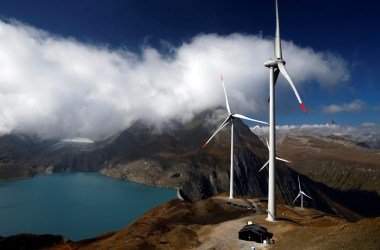
Wind and water power (Reuters Photo / Denis Balibouse)
¶ Morocco’s King Mohammed VI launched the final stage of Noor Ouarzazate, the world’s largest solar plant. The power station, scheduled to start operating in the first quarter of 2018, will be built as part of a partnership involving the Moroccan Agency for Sustainable Energy and a consortium of private operators. [ETEnergyworld.com]
¶ Sydney-based Genex Power will transform the abandoned Kidston Gold Mine in Northern Queensland into a clean energy powerhouse combining solar and storage. The site will host a 50 MW solar project (KSP1), a 250 MW pumped-storage hydro project (KPSHP), and another 270 MW solar project (KSP2). [Energy and Mines]

Kidston gold mine (Photo: Marc McCormack, via Genex Power)
¶ A package of contracts on the construction of Egypt’s first nuclear power plant with Russia’s involvement could be signed in May, a member of the Egyptian parliament’s Energy Committee said. Egypt is afraid of the depletion of traditional energy sources, and considers it necessary to switch to nuclear power. [Sputnik International]
¶ In Australia, Labor will abandon the renewable energy target after 2020 because an emissions intensity scheme will be sufficient to reach the goal of 50% renewable energy by 2030. The shadow assistant treasurer firmed the opposition’s plan to reach the goal while possibly ruling out extending the existing renewable energy target. [The Guardian]

Australian renewable energy (Tim Phillips Photos / Getty Images)
US:
¶ National Grid is keeping quiet about a March 29 natural-gas leak in Providence, Rhode Island. But critics of the major expansion of natural-gas infrastructure taking place across the region are speaking up. There are other projects nearby, parts of joint natural-gas expansion by Spectra Energy, National Grid and Eversource Energy. [ecoRI news]
¶ Mortenson Construction, based in Minneapolis, is perhaps best known for sports complexes. Less flashy, but keenly important to Mortenson’s bottom line, however, is work in renewable energy, particularly wind and solar power projects. Mortenson began in 1995, erecting a single turbine, and now it is a national leader. [Minneapolis Star Tribune]
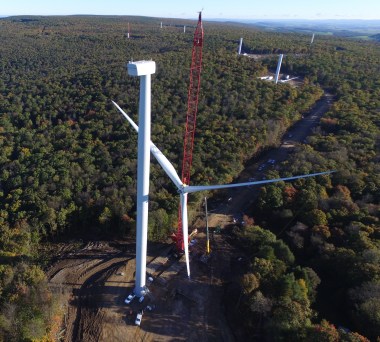
Mortenson erecting a wind turbine (Mortenson image)
¶ The US Energy Information Administration has published data revealing that the country’s 2016 energy production dropped over year-over-year. This is the first such drop since 2009. Most of the decline was in coal, whose output fell 18% compared to 2015. Output from other energy sources also dipped, but solar and wind power grew. [Engadget]
¶ Annette Rose grew up in Stigler, Oklahoma, as a coal lover. Her father was a member of United Mine Workers of America and operated the third largest dragline crane in the United States at one time. But he died with black lung disease. Now, she teaches renewable energy, focusing on utility-grade wind power and concentrated solar power. [Muncie Star Press]
geoharvey is free and without ads.
geoharvey is not tax-deductible.
Posted in nuclear power, renewable power, solar, wind | 2 Comments »
Tags: nuclear, nuclear power, renewable power, solar power, wind power
April 1, 2017
Opinion:
¶ While Trump promotes coal, other countries are turning to cheap sun power • Last year when the Chilean government invited utility companies to bid on public contracts. The auction was dominated by solar producer offering to supply electricity at about half the cost of coal-fired plants. It wasn’t because of a government subsidy. [Prince George Citizen]
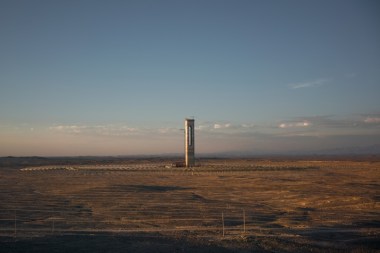
Concentrating solar power in Chile
(Tamara Merino for The Washington Post)
¶ Toshiba debacle highlights huge risks in nuclear power business • The high-profile bankruptcy of Toshiba’s US nuclear subsidiary is graphic evidence of the gargantuan risk involved in the business. Westinghouse filed for bankruptcy under the weight of huge cost overruns at four nuclear reactors it has been building in the US. [Asahi Shimbun]
World:
¶ The top court in India has gone ahead and banned the sale of vehicles running on Euro III standards (and older) in a bid to reduce the country’s growing air pollution problems. The ban becomes effective as of April 1. According to one expert, there are around ₹120 billion ($1.85 billion) worth of unsold Euro III stock in the country. [CleanTechnica]

Diesel cars in Delhi (Image via Scott Dexter, some rights reserved)
¶ Siemens Wind Power received an order for a new onshore wind project in the southwest of France. The new wind power plant, owned by Futuren, will be installed near the towns of Courant and Nachamps in the region of Nouvelle-Aquitaine. It will consist of seven units of the Siemens direct-drive onshore wind turbine SWT-3.2-113. [PennEnergy]
¶ Poland has large untapped potential for geothermal energy. The country estimates that up to 30% of its heating demand could be covered by geothermal heating. Currently, there are 56 documented thermal water deposits, including 17 thermal water reservoirs. Only 25% of that potential is currently being tapped from 27 locations. [ThinkGeoEnergy]

Pieniny Mountains, Poland (flickr / Ministry
of Foreign Affairs Poland, creative commons)
¶ The Indian Power Ministry has achieved the milestone of electrifying 13,000 unelectrified villages against a target of providing electricity to 18,452 such settlements as envisaged by Prime Minister Narendra Modi. In 2015, Modi announced in his independence day speech that all villages would be electrified by 1 May, 2018. [Hindustan Times]
US:
¶ At the recent Maui Energy Conference, officials from Hawaiian Electric Company detailed a plan that would make Molokai the first island in Hawaii to completely kick the fossil fuel habit. The 2,000 power customers on Molokai are currently drawing on the 12-MW oil-fueled Palaau Power Plant, as well as 2.36 MW of solar power. [Hawaiipublicradio]
¶ This week, a who’s who of leading brands all publicly committed to staying the course on fighting climate change. Mars, Anheuser-Busch, Nestlé, General Mills, Apple, Amazon, Google, Microsoft, General Electric, the Gap, and Walmart all weighed in following the announcement of Trump’s executive order to roll back the Clean Power Plan. [Forbes]
¶ Enel Green Power North America has brought online the second half of its 400-MW Cimarron Bend wind farm, in Kansas. Cimarron Bend can generate around 1.8 TWh per year, enough to meet the annual needs of over 149,000 households and avoid around 1.3 million metric tons of CO2 emissions each year. [North American Windpower]

Cimarron Bend wind farm
¶ The EPA has issued more details of a plan for laying off 25% of its employees and scrapping more than 50 programs. The lost programs include pesticide safety, water runoff control, and environmental cooperation with Mexico and Canada under NAFTA. The agency is considering a rollback in fuel efficiency standards. [Santa Fe New Mexican]
¶ The Intertubes are buzzing with news of an internal General Electric blog post that circulated earlier this week under the authorship of CEO Jeffrey Immelt. In response to the Trump Administration’s rollback of the Clean Power Plan, Immelt comes out swinging with a pledge that GE will soldier on to address climate change. [CleanTechnica]
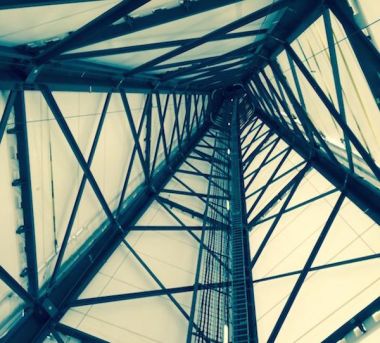
GE “space frame” wind turbine tower (Image: Tina Casey)
¶ Navajo Nation leaders plan to ask the federal government for subsidies to keep the coal-fired Navajo Generating Station in northern Arizona open. The plant’s owners voted to close it in 2019 because it is not profitable, which would lead to closure of the coal mine supplying it. Hundreds of jobs for Navajo and Hopi workers would be lost. [Gillette News Record]
¶ A repeat attempt by state lawmakers to soften Ohio’s renewable energy requirements cleared the Republican-controlled House. The latest bill would soften mandates for utility companies to get a percentage of their power from clean sources by set dates. It also would eliminate penalties they face for non-compliance. [Electric Light & Power]
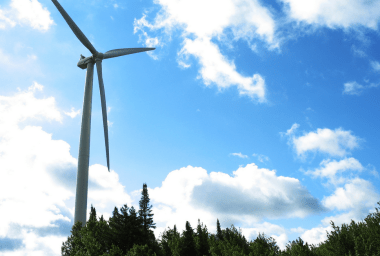
Wind turbine in Ohio
¶ A report from PJM Interconnection, a transmission operator serving 65 million people in the eastern United States, confirms that its system can remain reliable with the addition of more natural gas and variable renewable energy sources. The report also says that increased reliance on any one energy source brings resilience risks. [CleanTechnica]
¶ Moody’s Investors Service on Friday joined a chorus of investment and energy analysts who say President Trump’s decision this week to renounce the Clean Power Plan will have little short-term effect on the beleaguered coal industry. Moody’s said Trump’s decision will have little immediate effect to increase the use of coal to produce electricity. [Philly.com]
geoharvey is free and without ads.
geoharvey is not tax-deductible.
Posted in nuclear power, renewable power, solar, wind | 1 Comment »
Tags: nuclear, nuclear power, renewable power, solar power, wind power
March 31, 2017
Opinion:
¶ “Why Oil Is Not the Future” • While the oil market has stabilized a bit in recent months, there are many good reasons to believe that the industry is on the decline for good. In fact, petroleum consumption in the past couple of years is much lower than it was in the 90s, despite the fact that the economy grew close to 50% in this time. [Care2.com]

Train carrying coal in Wyoming
¶ “Why Donald Trump Can’t Save the Coal Industry” • President Donald Trump set off a panic among environmentalists and celebrations in coal country in an executive order he proclaimed would lead to a “new era in American energy.” The terror and revelry are both based on projections for a future that will never arrive. [Newsweek]
World:
¶ Installed renewable energy capacity around the world grew by 161 GW in 2016 bringing the global total to more than 2 TW, according to data from the International Renewable Energy Agency. Renewable energy now accounts for 8.7% of total energy capacity. Of the 161 GW installed last year, 71 GW was solar, and 51 GW was wind. [reNews]

Wind turbines (Image: sxc)
¶ It looks like the honeymoon with the world’s most notorious “carbon bomb” is winding down. ConocoPhillips has announced that it will join a growing list of major oil companies that are selling off Canadian tar sands oil assets. It looks like the company might not see much of a future in Canadian tar sands oil … or does it? [CleanTechnica]
¶ Italian power provider Enel announced that construction work has begun on the largest PV plant on the American continent. It is the 754-MW Villanueva project, which is in the Mexican state of Coahuila. The company is investing €650 million in the project, and it is scheduled for completion in the second half of 2018. [pv magazine]

Mayan temple
¶ A new solar farm to be built in Australia this year will consist of 3.4 million solar panels and 1.1 million batteries which will be able to produce 330 MW (1 MW can power up to 1,000 homes) and store up to 100 MW. According to Lyon Group, its developer, this immense battery storage will make the farm the biggest of its kind in the world. [TNW]
¶ The 332-MW Nordsee 1 wind farm in the German North Sea has exported its first power to the mainland. The first Senvion 6.2M-126 turbine exported electricity to the German grid, developer Innogy said. So far, MPI Offshore jack-up vessel MPI Enterprise has installed seven machines. The wind farm is due to be complete by early October. [reNews]

Nordsee 1 (Image: Nordsee One GmbH)
¶ Vattenfall has confirmed plans for a 16-turbine extension to the 36.9-MW Clashindarroch wind farm in northeastern Scotland. The Swedish company aims to add 54 MW of capacity to the existing 18-turbine facility in Aberdeenshire. The proposed wind farm would be one of Vattenfall’s most competitive in the UK, it said. [reNews]
US:
¶ In an attempt to put the kibosh on the suits brought by New York and Massachusetts, Exxon filed its own suit seeking to have the cases transferred to a court in Texas, where it expected to receive a more sympathetic hearing. But that court ruled that Exxon’s complaints should be transferred to the Southern District of New York. [CleanTechnica]

Oil rig
¶ Researchers from the US DOE’s National Renewable Energy Laboratory have published what is in some ways the most cost detailed breakdowns for residential solar PV equipped with energy storage. The report also serves to quantify the previously unknown or uncertain soft costs for combined solar PV and energy storage. [CleanTechnica]
¶ Just after its merger with Solar City to build a factory that will be used for the production of Tesla battery cells, now as a part of the infrastructural plan, Tesla is in plans to build world’s largest solar panel rooftop on the roof of Nevada’s Gigafactory. The construction of this green energy facility will be completed by 2018. [The Legman News]
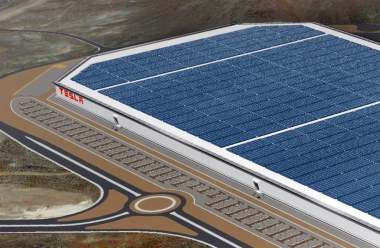
Gigafactory
¶ Donald Trump’s Supreme Court nominee could help decide the fate of his moves to undo climate-related US regulations, but legal experts said Neil Gorsuch’s judicial record makes it hard to predict whether as a justice he would back a sweeping rollback. Gorsuch’s views on issues related to climate change are unclear. [AOL]
¶ A new Iowa Policy Project report claims that Iowa’s electricity prices, which are appreciably lower than the national average, can be attributed to the state’s growing wind industry. The project’s lead environmental scientist said the data shows the cost gap between Iowa and other states is increasing. [The Gazette: Eastern Iowa Breaking News and Headlines]
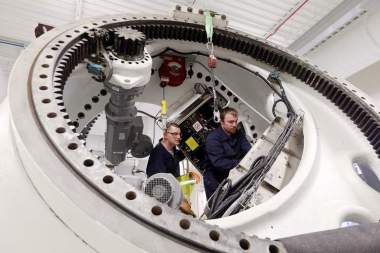
Wind turbine technician students (Liz Martin / The Gazette)
¶ Donald Trump may have signed an order intended to save coal industry jobs by rolling back environmental protections, but officials with Oklahoma’s largest electric utilities say it likely won’t have a big impact on their future electricity generation plans. A spokesman for Public Service Company of Oklahoma says coal is not economically viable. [KOSU]
¶ States that value nuclear power’s low carbon emissions have begun throwing lifelines to struggling nuclear plants in the form of subsidies. Nevertheless, opponents contend that these schemes illegally interfere with power markets. Litigation is underway and some believe the arguments will reach the Supreme Court. [Forbes]
geoharvey is free and without ads.
geoharvey is not tax-deductible.
Posted in nuclear power, renewable power, solar, wind | 2 Comments »
Tags: nuclear, nuclear power, renewable power, solar power, wind power
March 30, 2017
Opinion:
¶ A Path To Prosperity That We Can All Embrace • Now, as President Trump charges through his first 100 days, there is a risky theme being pushed that a prosperous America comes with a choice between environmental protection and economic growth. This concept is not only false, but dangerous and short-sighted. [Forbes]

Shadow of a Montana wind turbine (Andrew Harrer / Bloomberg)
¶ Undoing the Clean Power Plan Will Be a Legal Nightmare • When it comes to the Clean Power Plan, Trump’s words are “legally not all that relevant,” according to a senior attorney at the National Resources Defense Council. That’s because the EPA is legally required to regulate greenhouse gases as pollutants under the Clean Air Act. [New Republic]
¶ Trump’s Pro-Coal Orders Are Doomed to Fail • Between the cuts to the EPA budget, the executive order, and the Administration’s sweeping deregulatory agenda, it appears that the White House is trying to revive fossil fuels. But while the Administration could do a lot of damage to our health and businesses, its policies are doomed to fail. [Time]
Strip mining on Native American burial grounds by
Peabody Coal in 1972 (EPA photo, Wikimedia Commons)
Science and Technology:
¶ Climate change is stirring life in the Arctic Ocean as thinning sea ice lets in more sunlight, allowing microscopic algae to bloom there, scientists said. The micro-algae may now be able to grow under the ice across almost 30% of the Arctic Ocean at the peak of the brief summer in July, up from about 5% thirty years ago. [The News International]
¶ The rapid growth of solar arrays and wind farms is a win for the environment, but storing energy from them efficiently for the grid remains a challenge. EU scientists are turning to a cheap and plentiful natural resource for the answer: air, using surplus electricity to compress air, which is then stored in a cavern or abandoned mine. [New Atlas]
Old mine (Credit: svedoliver / Depositphotos)
World:
¶ While China has become a world leader in the fight against global warming, its severe winter air pollution has worsened. This is likely as a result of changing atmospheric circulation, resulting from decreasing Arctic ice and increasing snowfall caused by climate change, according to a new study published in the journal Science Advances. [CleanTechnica]
¶ Vestas has secured three contracts to supply turbines to wind farms in China. One deal is to deliver 22 V110 2-MW machines power optimised to 2.2 MW for an unnamed customer for a 48-MW project in Shandon province. The turbines will have hub heights of 137 meters and the order also includes a two-year service contract. [reNews]
Vestas V110 wind turbine (Vestas image)
¶ Vattenfall plans to invest around $1.94 billion in wind power during 2017 to 2018. The Swedish state-owned utility said wind power will account for 60% of an investment program displaying a strategic shift from fossil fuels to renewable energy. Most of the rest of the funds will go on solar power and distribution. [Power Engineering International]
¶ In 2008, the Scottish island of Eigg became the world’s first community to launch an off-grid electric system powered by wind, water, and solar. Today, Eigg continues to set an example of how societies could meet their energy needs without grid access. Getting electricity without a grid is a challenge that affects nearly one-fifth of the world’s population. [BBC]

Cleadale church, Eigg (Credit: Alamy)
US:
¶ Vermont State regulators have approved a massive Windsor County solar array that will be four times the size of any such project built in Vermont so far. The Coolidge Solar project, to be built in Ludlow and Cavendish, will have a capacity of 20 MW. The largest existing array in Vermont is just under 5 MW, state officials said. [Valley News]
¶ Energy companies could pay the US government higher royalties for oil, gas and other resources extracted from public land, under a review Interior Secretary Ryan Zinke authorized. The two-year review is designed to determine whether Americans are getting a fair return for those natural resources, he said in an interview. [Chicago Tribune]

Drilling on public lands (Ed Andrieski / AP)
¶ As Trump was signing the order to roll back environmental protections, American Electric Power Company, based in Columbus, Ohio, focused foremost not on the boost for the coal industry but its “important transition to support a cleaner energy economy.” AEP was once one of the largest coal plant operators in the country. [Columbus Business First]
¶ A private Nebraska-based energy firm is proposing to build a wind farm with 70 to 150 wind turbines in Nodaway County, Missouri. The facility would have a capacity of 200 to 300 MW, and would be built at a cost of $200 million to $300 million. Construction would start in 2019 and be completed in 2020. [News-Press Now]
Wind and corn (File photo)
¶ Colorado will push ahead on development of more affordable renewable energy despite President Donald Trump’s order eliminating many restrictions on fossil fuels production, Governor John Hickenlooper said. He said, Colorado has already met its carbon pollution goals under the EPA’s Clean Power Plan. [Hastings Tribune]
¶ Southwest Michigan residents can tell state officials how they feel about the proposed closure of Palisades Nuclear Power Plant when the Michigan Public Services Commission hosts several public meetings in May. The meetings will be presided over by an administrative law judge. There will be a court reporter to record the proceedings. [Herald Palladium]
geoharvey is free and without ads.
geoharvey is not tax-deductible.
Posted in nuclear power, renewable power, solar, wind | 1 Comment »
Tags: nuclear, nuclear power, renewable power, solar power, wind power
March 29, 2017
Opinion:
¶ “The 150-Year-Old Energy Giant Ready To Disrupt The World (#CleanTechnica Original)” • Engie has been acquiring top startups in the various arenas it considers to be the biggest playing fields of the future. In energy, there are 5 “tsunamis” or 5 disruptive trends they see occurring all at approximately the same time. [CleanTechnica]
Thierry Lepercq, Engie’s Executive Vice President
of Research, Technology and Innovation
World:
¶ A summer of record high temperatures, heat waves, and unplanned electricity outages appears to have bolstered the Australian rooftop solar market in 2017. Installations at end of February are up nearly 50% on the same time last year. Growth in rooftop solar installs has not been limited to South Australia, but in all of the major states. [CleanTechnica]
¶ A new $3.9 million project led by a company in South Canterbury, New Zealand, aims to have 95% of the Cook Islands running on renewable energy by the end of year. Infratec general manager Luke van Zeller said the project was the latest in a series of upgrades to overhaul the country’s dated power grids which relied on expensive fossil fuels. [Timaru Herald]

Solar farm at Rarotonga Airport (Supplied)
¶ Just three of Japan’s 42 usable reactors are running at present, according to the Japan Atomic Industrial Forum. That number is to rise after the Osaka high court backed a restart of reactors 3 and 4 at the Takahama power plant north of Kyoto. In doing so, it overturned the first ruling ordering an operating nuclear reactor to shut down. [The Guardian]
¶ Australia’s wind farms could soon become “core providers” of crucial grid stability services, assuming a role now dominated by fossil fuel generators. Australian Energy Market Operator principal Jenny Riesz said the growing need for frequency control and ancillary services presents an emerging opportunity for wind power. [CleanTechnica]

Wind turbines
¶ The UK’s nuclear regulator has granted its first consent for the Hinkley Point C nuclear power plant’s construction. The French utility’s £18 billion project will be the first nuclear plant to be built in Britain in a generation. The consent covers the placement of the structural concrete for the first nuclear safety-related structure at the site. [Energy Live News]
US:
¶ President Donald Trump has signed an executive order rolling back Obama-era rules aimed at curbing climate change. He said this would put an end to the “war on coal” and “job-killing regulations.” The Energy Independence Executive Order suspends more than half a dozen measures enacted by his predecessor, and boosts fossil fuels. [BBC News]

Donald Trump, possibly lobbying for a new job (AFP)
¶ Anheuser-Busch InBev, the world’s biggest beer maker, plans to get all of its electricity from renewable sources by 2025, shifting 6 TWh of electricity away from fossil-fuel plants. The company’s announcement comes the same day President Donald Trump signed an executive order undoing the Clean Power Plan. [Salt Lake Tribune]
¶ A coalition of 23 US states and local governments has vowed to challenge in court President Trump’s latest Executive Order reversing a raft of President Obama’s climate change regulations. The coalition includes states such as California, Massachusetts and Virginia, as well as cities including Chicago, Philadelphia and Boulder, Colorado. [RTE.ie]

Stop
¶ Just last week, the California Air Resources Board voted to protect the environment even if the federal government refuses to. Now the governors of California and New York released a joint statement condemning the federal government’s move to harm the health of Americans and kill jobs by reversing Clean Power Plan. [Electrek]
¶ President Donald Trump’s efforts to roll back clean power standards will probably have a minimal effect on Minnesota, since the combination of state policy with changing energy economics, has already been leading utilities away from coal. Trump can sign orders, but it is too late. They are already on a clean-power path. [Minneapolis Star Tribune]
¶ Frustrated by bloated power bills and frequent shutoffs, citizens of Pueblo, Colorado, have lobbied the city council to abandon natural gas and switch to more affordable renewable energy. Based on cost of electricity from utility-scale wind farms in the region, ratepayers could save money by switching to clean energy. [CleanTechnica]
¶ Westinghouse, Toshiba’s US nuclear unit, has filed for US bankruptcy protection. The US firm has struggled with hefty losses that have thrown its Japanese parent into a crisis, putting the conglomerate’s future at risk.Westinghouse has suffered huge cost overruns at two US projects in Georgia and South Carolina. [BBC News]

Westinghouse plant in Waynesboro (Reuters)
¶ The US wind industry already supports more than 100,000 jobs, but Navigant Consulting believes that number will increase to 248,000 total jobs by 2020, helping to deliver 35,000 MW of new wind power capacity through 2020. Navigant said the state of Iowa could support more than 17,000 wind-related jobs by 2020. [CleanTechnica]
¶ Utility company National Grid says it wants to build a new transmission line that would bring 1,200 MW of renewable power from Canada into New England. The major new project would take a different route than the controversial Northern Pass proposal put forward by Eversource. Most of it would be in New Hampshire. [New Hampshire Public Radio]
geoharvey is free and without ads.
geoharvey is not tax-deductible.
Posted in nuclear power, renewable power, solar, wind | 1 Comment »
Tags: nuclear, nuclear power, renewable power, solar power, wind power
March 28, 2017
Opinion:
¶ “A future after oil and gas? Norway’s fossil-free energy start-ups” • Norway already produces a lot of renewable energy. About 97% of electricity generated in the country comes from renewable sources, mainly hydropower, according to Innovation Norway. But petrochemicals are still king, as half of Norway’s exports relate to oil and gas. [The Guardian]

Offshore platform near the Stavanger, Norway
(Nerijus Adomaitis / File Photo: Reuters Staff / Reuters)
¶ “Trump’s Anti-Climate Crusade Can Still Be Stopped” • This is not just another Trumpwellian sideshow. The President is sounding the retreat from the promise of cleaner, smarter ways to power our future. Trump’s retreat, though, is not a done deal. Congress controls the budget and should fully fund responsible climate protections. [TIME]
Science and Technology:
¶ A team of climate scientists found a connection between many extreme weather events and the impact climate change has on the jet stream. The researchers’ interests included the 2003 European heat wave, the 2010 Pakistan flood and Russian heat wave, the 2011 Texas and Oklahoma heat wave and drought, and the 2015 California wildfires. [Telegiz News]

Jet streams
World:
¶ The former head of former head of GDF Suez Australia (now Engie) says solar PV and battery storage are already cheaper than gas-fired generation. He cited an estimate given to Reach Solar, which he now heads, in late December 2016 for solar PV and energy storage at A$110/MWh to $130/MWh (US$83.64/MWh to $98.85/MWh). [CleanTechnica]
¶ The 402-MW Veja Mate wind farm in the German North Sea has reached a half-way mark for turbine installations two-and-a-half months ahead of schedule, with 34 of the project’s 67 Siemens 6-MW turbines fully commissioned and producing power. The project is will produce over 1.6 TWh of electricity per year. [reNews]

Veja Mate wind farm (Veja Mate image)
¶ The UAE forecasts that savings from switching half its power needs to clean energy by mid-century will outstrip costs. The UAE plans to invest $150 billion in renewable power to 2050, weaning the country from subsidized natural gas power in stages, its Minister of Energy said. Clean energy sources will help it save $192 billion. [MENAFN.COM]
¶ Although the Amazon region is home to dozens of big hydroelectric dams, their energy is sent thousands of miles south to power the homes and factories in the big cities, or to feed electricity-intensive industries, many of them foreign-owned aluminium smelters. Local power is usually from diesel generators. But that is changing. [Climate Home]
Homes in the state of Amazonas (Pic: Flickr/Monica Posada)
¶ The Australian Energy Market Operator has issued a final report on the blackout that cut power to 850,000 customers in South Australia on September 28. It said two tornadoes were the likely cause of five electrical faults that led to the grid failure. Problems that caused wind farms to shut down have been identified and corrected. [NEWS.com.au]
¶ In Africa, while hydropower and fossil fuel power plants are favored approaches in some quarters, a new assessment by the Department of Energy’s Lawrence Berkeley National Laboratory has found that wind and solar can be competitive options both economically and environmentally, and they can significantly contribute to rising demand. [Eurasia Review]
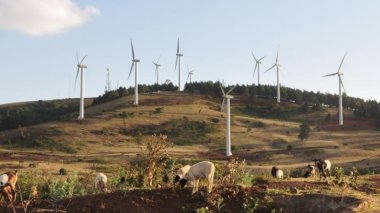
Ngong Hills Wind Farm in Nairobi, Kenya
(Credit: Grace Wu / Berkeley Lab)
US:
¶ China’s GCL New Energy is developing eight new solar projects in Wilson County, North Carolina. Six of the sites have a maximum power output at peak performance of 10 MW while two have an output of around 5 MW. Three of the facilities are expected to be producing power by the end of this month, and will sell electricity at fixed rates. [PV-Tech]
¶ In California, renewably sourced electricity has been setting production records since February 24. On March 23, renewables broke 56% of total demand. According to the daily report, solar peaked around 11:16 am. Three minutes later, the solar plus wind peaked at 49.2% of demand, and nine minutes later, total renewables peaked at 56.7%. [Electrec]
¶ According to American media watchdog Media Matters, the level of climate change coverage on evening newscasts and Sunday shows across broadcast networks in 2016 decreased significantly, dropping by 66% compared to 2015 levels, amounting to a total of only 50 minutes of coverage for the whole year. [CleanTechnica]
¶ As part of court settlements with the California Air Resources Board and the EPA, Volkswagen will build around 400 electric vehicle fast-charging stations in the US, according to reports. The $2 billion settlement will see the majority of stations installed in metro areas with high expected demand for electric vehicles. [CleanTechnica]
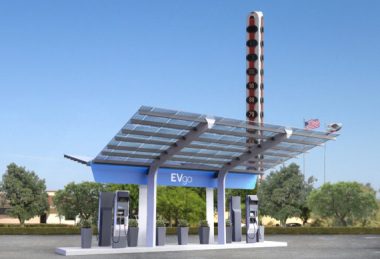
EVgo Superfast Charging Station
¶ What is expected to be Illinois’ largest rooftop solar array is under construction in Joliet, but it isn’t the initiative of a utility or solar company. Instead, the system will be paid for and owned by Swedish retailer Ikea as the company boosts its renewable energy portfolio. Its almost 9,000 panels will have a capacity of 2.91 MW. [Midwest Energy News]
¶ For the small towns that are home to 61 US nuclear plants, each one has been like the golden goose supplying high-paying jobs and money for roads, police and libraries. But those same places and their residents are bracing for what may come next. Due to the soaring costs of running aging reactors, at least a dozen reactors may close. [Electric Light & Power]
geoharvey is free and without ads.
geoharvey is not tax-deductible.
Posted in nuclear power, renewable power, solar, wind | 2 Comments »
Tags: nuclear, nuclear power, renewable power, solar power, wind power
March 27, 2017
Opinion:
¶ “A conservative still pushing for a carbon tax” • If five years ago Bob Inglis’ optimism about building a coalition of conservatives to enact a carbon tax seemed far-fetched, today it’s a study in faith. He lost his South Carolina Congressional seat to a Tea Party candidate in 2010, but has been reborn as a conservative climate activist. [Pittsburgh Post-Gazette]

With rising seas, sunny day flooding in Hollywood, Florida (AP)
¶ “What Rural Alaska Can Teach the World about Renewable Energy” • Many remote Alaskan communities have integrated renewables into their diesel-based power grids very successfully. In remote Alaskan villages, the cost of electricity was usually based on the cost of transporting diesel fuel, until renewable power became available. [Scientific American]
Science and Technology:
¶ In bacterial fuel cells, microbes convert chemical energy into electrical energy. They emit little to no CO2 doing this, but the cells created so far have not been efficient. Researchers at Binghamton University are testing systems based on using two types of bacteria in combination, and have had a power cell generate power for 13 days. [ZME Science]

Bacteria (Credit: NAIAD)
World:
¶ Major oil producers are considering extending their recent output cuts a fresh bid to boost prices. OPEC countries and several other oil nations started to reduce production at the start of 2017. The move initially pushed up the oil price, but it has dropped in the last few weeks on fears the limits would not be enough to deal with an oil glut. [BBC News]
¶ The Australian government’s official position on fossil fuel subsidies is that it doesn’t pay any. But in Western Australia, Horizon Power, the state-owned utility, guarantees customers will pay no more than the 26¢/kWh charged in Perth. Now, Horizon Power is working on reducing those subsidies with renewable microgrids. [RenewEconomy]

A 110-kW solar farm in Western Australia (Horizon Power)
¶ Canadian province Alberta is all set to start its Renewable Electricity Program and expects to attract at least $7.88 billion of investment by 2030, while creating more than 7000 jobs in the region. As part of the program, the Alberta Electric System Operator is readying to begin the first of a series of competitions to generate green energy. [CleanTechnology News]
¶ The regional director for Asia Pacific of the International Water Association, speaking at the Water Philippines Expo in Pasay City, pushed for the Philippine government to establish and implement policies that will provide renewable energy to make it available to the majority, pointing out that solar power has become affordable. [Power Philippines]

Solar array in the Philippines
¶ According local media, construction of six nuclear reactors in the Indian state of Andhra Pradesh may not be launched as planned. This is partly due to reports that Westinghouse, the nuclear unit of the Japanese Toshiba Corporation, is planning to file for bankruptcy in the US soon on the grounds of the amassed financial losses. [Sputnik International]
¶ The government of Vietnam’s Yen Bai province has requested assistance from South Korea for a proposed 500-MW solar PV project planned for Thac Ba Lake. The effort is intended to increase clean energy output and strengthen ties between Vietnam and South Korea. South Korean renewable energy developer Solkiss is already on board. [pv magazine]
The man-made Thac Ba Lake
US:
¶ President Donald Trump will sign an executive order this week scrapping Obama cuts in power plant emissions, according to Trump’s environmental chief. EPA director Scott Pruitt told ABC Television’s “This Week” broadcast that Trump believes the US needs what he calls a “pro-growth and pro-environment approach.” [Voice of America]
¶ Solar power use in Alaska has grown quickly amid falling prices for PV panels and reduced doubts by Alaskans about solar energy in the land of sun-starved winters. New businesses have launched to take advantage of the trend. Now that it’s March and days are growing longer, people are clamoring for project estimates. [Alaska Dispatch News]

Solar installation in Anchorage. (Stephen Trimble)
¶ Despite being ranked third in the nation for rooftop-solar potential by the Solar Energy Industries Association, Florida has not had many installations. Nevertheless, the Sunshine State’s solar prospects are beginning to brighten. In 2016, the SEIA reported, Florida recorded 404 solar installations, up from 43 recorded in 2015. [The Northwest Florida Daily News]
¶ The Greater Richmond Solar Co-op, a group-purchasing program that vets and solicits bids from installers who drop their usual prices in exchange for a steady stream of customers. The group says the purchasing program can shave up to 20%. Recently passed legislation in Virginia can help them put their power onto the grid. [Richmond.com]
geoharvey is free and without ads.
geoharvey is not tax-deductible.
Posted in nuclear power, renewable power, solar, wind | 1 Comment »
Tags: nuclear, nuclear power, renewable power, solar power, wind power
March 26, 2017
Opinion:
¶ “World reaching turning point on carbon emissions as coal fades” • Humanity seems to be reaching a turning point in its emissions of greenhouse gases. Last year was the third in a row that global emissions of carbon dioxide trended sideways, ending what had been a long, unbroken climb interrupted only by the 2008 financial crisis. [Nikkei Asian Review]
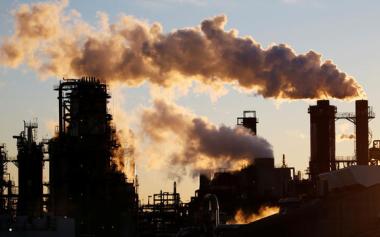
Carbon dioxide emissions (© Reuters)
¶ “Guangzhou, New York, & Vancouver Are Making Climate Solutions A Reality” • While a lot of media coverage around the crisis is doom and gloom, cities around the world are coming up with powerful solutions on the local level. Here’s how a Canadian city, an American city, and a Chinese city are taking on climate action. [CleanTechnica]
Science and Technology:
¶ The German Aerospace Center just powered up a massive “artificial sun.” Using an array of 149 gigantic spotlights, it produces “synlight,” which can heat things up to 5,432°F. The effort is part of research to use sunlight to make hydrogen to use for fuel. With an artificial sun, the research can continue on rainy days. [Smithsonian]

Artificial sun (DLR image)
World:
¶ Enthused by drop in renewable energy tariff, India’s Power Minister said India’s 60% to 65% of installed power generation capacity will be green energy. Earlier this month, Goyal had predicted that India’s solar power generation capacity will cross 20,000 MW in the next 15 months, from the current 10,000 MW. [Hindustan Times]
¶ The four wind turbines that have become emblematic of the City of Summerside, Prince Edward Island, are getting some company. The city is looking to generate another 16 MW of electricity locally to feed current and future demands of its municipally-owned power utility. Council passed a motion approving a request for proposals. [The Guardian]

Summerside wind turbines (©Google Maps image)
¶ Britain’s nuclear ambitions were thrown into doubt last night amid fears that a change of control at Moorside could set the project back by years. The plant was to be built by NuGen, a firm 60% owned by Toshiba, which would also supply the three reactors through its subsidiary Westinghouse. But Westinghouse is in trouble. [This is Money]
¶ By 2025, Sri Lanka hopes to boost its solar power output to 1,000 MW to meet fast-growing power needs. Solar power could meet 32% of Sri Lanka’s roughly 10,500 GW annual power demand, but so far nearly none of that potential has been developed, according to the energy sector development plan for 2015-2025. [The Sunday Times Sri Lanka]

Solar power used to irrigate papaya (File photo)
US:
¶ Construction of the second largest commercial solar array in the state of New York is expected to begin next month, as developer Invenergy prepares to break ground at the former Tallgrass golf course in Shoreham. The 24.9-MW array is being developed under a 20-year contract with the Long Island Power Authority. [Newsday]
¶ After President Trump granted a permit for TransCanada Corp’s Keystone XL pipeline, the National Audubon Society issued a statement saying that the Keystone XL pipeline puts America’s birds and people in danger, and would further destabilize our changing climate. The pipeline will only make the future more uncertain. [Sierra Sun Times]

Sandhill Crane
(Photo: Sheldon Goldstein / Audubon Photography Awards)
¶ Mitsubishi Hitachi Power Systems and Carnegie Mellon University announced a new index to measure carbon dioxide emissions from the US electrical power generation sector. The Carnegie Mellon Power Sector Carbon Index will track the environmental performance of US power producers, comparing current and historical data. [Concord Register]
¶ After years of assembling some very complex pieces, officials close to the project to build a renewable energy biomass cogeneration facility adjacent to Albany’s Procter & Gamble say things are progressing as planned and that the $200 million plant should begin producing energy and steam for its customers in the next few months. [The Albany Herald]
geoharvey is free and without ads.
geoharvey is not tax-deductible.
Posted in nuclear power, renewable power, solar, wind | 1 Comment »
Tags: nuclear, nuclear power, renewable power, solar power, wind power
March 25, 2017
Opinion:
¶ “Keystone XL is no done deal” • On paper, the TransCanada Corporation has obtained the Trump administration’s blessings to add hundreds of miles of pipeline through the Midwest. It is a permission twice denied by President Barack Obama two years ago, but it’s premature to assume the project will actually get built. [Baltimore Sun]
Science and Technology:
¶ Following 2016’s record high global average temperatures, and 2017’s already quite strange weather, we are now in “truly uncharted territory,” according to a new report from the World Meteorological Organization. In particular, the record-low levels of sea ice extent in the Arctic and Antarctic is considered “alarming.” [CleanTechnica]
¶ Ahead of this year’s Earth Hour, researchers have proposed a new “carbon law” to enable the international community to nearly eliminate fossil-fuel emissions by 2050. In order to meet the COP21 goal, the team recommends directing international efforts toward cutting global carbon emissions in half each decade. [Courthouse News Service]
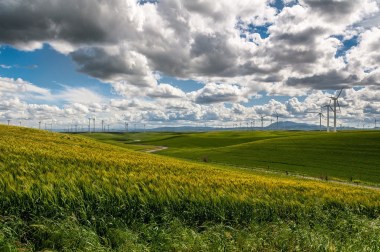
Renewable power to limit emissions
World:
¶ Beijing and the entire surrounding province of Hebei will be planting trees and creating new greenbelts, according to reports. The idea is apparently to leverage existing rivers, wetlands, mountains, and open spaces, to create a “green necklace” that will help to reduce smog problems, the Hebei government has revealed. [CleanTechnica]
¶ The small Dutch energy company Vandebron, which allows consumers to buy their renewable energy directly from local producers on an online marketplace, has offered the utility Nuon €1 million for its coal-fired power plant in Amsterdam. After the purchase, the energy startup wants to shut the plant down and turn it into a theme park. [CleanTechnica]

Impression of coal power plant Hemweg 8 as a theme park
¶ Six years after the natural disaster and the nuclear meltdowns in Fukushima prefecture, the governor commissioned a biomass-based power plant. The power plant was produced by UK-based Entrade. It is located at a small health resort and uses biomass to provide a hotel and a spa resort with electricity and heat. [Bioenergy Insight Magazine]
¶ A £10.8 million project, co-financed by the European Regional Development Fund, is laying the foundation for a smart energy system across the Isles of Scilly off the coast of Cornwall. The Smart Islands project will link rooftop solar panels, solar gardens, batteries, domestic heat pumps, and electric vehicles in the archipelago. [TechSPARK]

View on the Isles of Scilly
¶ Afghanistan’s High Economic Council has approved a plan to deploy 100 MW of renewable energy generation capacity across the country. A local TV channel reports that the plan includes 65 MW of solar, 14 MW from wind power projects, 13.5 MW from biomass and 7.5 MW from hydropower plants, for a total of 30 projects. [pv magazine]
¶ A new “super inquiry” has been launched in the UK by MPs aiming to force action on the country’s growing air pollution problems, reports say. In an unprecedented action, four different Commons committees will question a variety of ministers and air quality experts, to better understand the situation and the available remedies. [CleanTechnica]
¶ Three European transmission system operators have signed a trilateral agreement this week that intends to develop a large renewable European electricity system in the North Sea. It is expected that the North Sea Wind Power Hub could supply as many as 70 to 100 million people in Europe with renewable energy by 2050. [CleanTechnica]
US:
¶ President Donald Trump has announced that he is granting approval to the controversial Keystone XL Pipeline. Trump said the 1,900-mile pipeline, which will cross much of the Great Plains in a path from Alberta to the Gulf of Mexico, will be “the first of many infrastructure projects” he believes will stimulate jobs. [National Geographic]

Pipes near Cushing, Oklahoma (Photo: Larry W Smith, EPA)
¶ Maryland has increased its renewable generation portfolio target to 25% of all generation by 2020. The old target was 20% by 2022. Maryland’s new standard includes solar, wind, biomass, geothermal, fuel cells, ocean, small hydro, and certain waste technologies, which will ramp up to 2.5% of sales by 2020. [Power Engineering Magazine]
¶ Commissioners of the Port of Oakland, on San Francisco Bay, voted to approve an $8.9 million deal to purchase solar power for the next 20 years. Under the deal, the port will buy about 11,000 MWh of solar-generated electricity at $39/MWh from a solar farm in Lancaster, California, according to port officials. [CBS San Francisco Bay Area]

Port of Oakland (CBS image)
¶ Myron Ebell, the longtime climate-science denier who led President Donald Trump’s pre-inauguration EPA transition team, says Secretary of State Rex Tillerson is among the “swamp creatures” that have infiltrated the president’s administration. Tillerson has supported keeping the US in the Paris climate agreement. [Huffington Post]
¶ Calling warnings of the Davis-Besse nuclear power plant’s premature closure “real” and the need for a bailout “urgent,” FirstEnergy Corp’s top nuclear official left little doubt that the largest employer in Ottawa County, Ohio, is in trouble. He said the utility’s other nuclear plants, Perry and Beaver Valley are also in danger of closing. [Toledo Blade]
geoharvey is free and without ads.
geoharvey is not tax-deductible.
Posted in nuclear power, renewable power, solar, wind | 1 Comment »
Tags: nuclear, nuclear power, renewable power, solar power, wind power
March 24, 2017
World:
¶ According to 2017 Key Trends in Hydropower, published this week by the International Hydropower Association, a total of 31.5 GW of hydropower capacity was commissioned worldwide in 2016, including 6.4 GW of pumped storage, nearly twice the amount installed in 2015. Hydropower capacity is now 1,246 GW. [CleanTechnica]

Please click on the image to enlarge it
¶ One of the largest solar panel manufacturers in India has doubled its production capacity to 400 MW. The company may be looking to expand its capacity with an eye on the rapidly expanding Indian solar power market. The company has also increased its solar cell production capacity from 180 MW to 300 MW. [CleanTechnica]
¶ Global PV manufacturer Hanwha Q Cells said it has been awarded a tender to construct a 1-GW solar power plant in Turkey, in partnership with Kalyon. The Karapinar YEKA project will be the largest solar plant in the region. It will have 1,000 MW AC of capacity, enough to power over 600,000 households. [Renewable Energy Magazine]

Solar array
¶ E.ON will be one of the first companies to stabilize the German electricity grid with wind power. This is made possible by the integration of a wind farm in Brandenburg into E.ON’s Virtual Power Plant. The wind farm is made part of a virtual power plant having 3,800 MW generation output from various sources. [Windtech International]
¶ Ireland’s wind energy generation is expected to increase significantly from today, following the opening of the largest wind farm in Ireland at Meenadreen in County Donegal. With a capacity of 95 MW, the wind farm has been developed over the past 26 months by energy firm Energia at a total cost of €145 million. [Siliconrepublic.com]
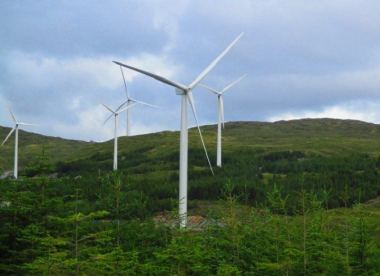
Windfarm in Meenadreen (Image: Thomas McNulty)
¶ Dublin Airport has secured planning permission to build a small solar farm that will help power a large reservoir that delivers 500 million liters of water to the airport every year. The DAA, which operates Dublin and Cork airports, said that the solar arrays will provide as much as 50% of the reservoir’s power needs. [Irish Independent]
¶ China’s top power groups are lobbying the local government in the western province of Ningxia to force their main supplier of thermal coal to cut prices, which have been rising. With a glut of both renewable and coal-fired power capacity, electricity prices have dropped, forcing utilities to sell their power at a discount. [Jakarta Globe]

Workers in Chinese coal plant
¶ Toshiba’s main lenders are asking it to submit a bankruptcy filing for Westinghouse Electric Co, its US nuclear unit, by the end of this month, the Nikkei business daily reported. Toshiba has a multibillion dollar problem stemming from the ill-fated purchase of a US nuclear power plant construction company by Westinghouse in 2015. [The Straits Times]
US:
¶ More than 600 acres of solar panels, with a total capacity of 60 MW, have been successfully installed and connected on land in North Carolina, thanks to a power purchase agreement with MIT and two other Boston-based organizations. The agreement was signed last August, and now they are delivering their power into the nation’s grid. [MIT News]

Solar farm in North Carolina (Image: Joe Higgins)
¶ While some states are beefing up efforts to promote efficiency and green power, the programs may fall away in places. Efforts to cut use of energy through efficiency are coming under attack in Washington and in at least two states, Ohio and Kentucky. People favoring efficiency say it benefits consumers by reducing utility bills. [Crain’s Cleveland Business]
¶ The declining cost of wind generation has many utilities looking to add it into their portfolios, a trend that could accelerate the demise of aging coal plants. According to new analysis from Moody’s Investor Services, some 56 GW of Midwest coal-fired generation is at risk, as wind energy comes online with lower costs. [Utility Dive]

Rainbows will not keep coal alive. (Credit: Flickr user Mike Baird)
¶ Black & Veatch is partnering with the Buffalo Niagara Medical Campus to design and assess the financial and energy efficiency impacts of a microgrid in Buffalo, NY. The microgrid will provide resilient, clean energy for the 120-acre campus, long-term cost-savings and potential monetization opportunities for member institutions. [3BL Media]
¶ Developers have flipped the switch on solar power projects in Carver County, Minnesota. SunShare LLC of Denver, Colorado, started transmitting electricity in late December from the solar array it developed on about 30 acres leased from Bongards Creameries, midway between Cologne and the township of Norwood Young America. [SW News Media]

Installing solar panels
(Image: Enel Green Power of North America, Inc)
¶ Claiming that wind energy is unreliable and costly and that the region does not need any new power, a US senator is urging the Tennessee Valley Authority to avoid buying power from a proposed transmission project that would bring wind power from the Oklahoma Panhandle area to the Mid-south and Southeast. [North American Windpower]
¶ A proposed national budget from the Trump Administration seeks to greenlight the nuclear waste repository at Yucca Mountain, Nevada. The move, if approved by Congress, would overturn the policy of the Obama Administration, which froze the Yucca Mountain project in 2009 over concerns that it was unfit to store nuclear waste. [Bellona]
geoharvey is free and without ads.
geoharvey is not tax-deductible.
Posted in nuclear power, renewable power, solar, wind | 2 Comments »
Tags: nuclear, nuclear power, renewable power, solar power, wind power
March 23, 2017
World:
¶ Toshiba and Ormat Technologies have commissioned the first 110-MW unit of the $1.17 billion Sarulla geothermal power plant located in North Sumatra, Indonesia. The 320.8-MW power plant uses technologies from Toshiba and Ormat to provide a high efficiency and 100% reinjection of the used geothermal fluid. [Energy Business Review]
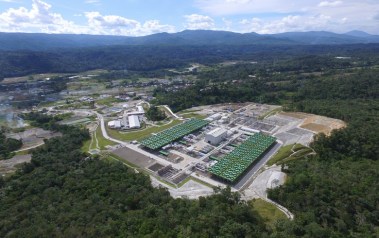
Sarulla geothermal plant (Toshiba image)
¶ South African utility, Eskom, is expected to end its alleged opposition towards procurement of renewable energy. The energy minister said its impasse with renewable energy generators has ended. This could mean that the utility will fulfill its promise to buy the electricity generated from projects already auctioned. [CleanTechnica]
¶ Iran’s renewable energy generation capacity will reach 700 MW to 850 MW in the current Iranian calendar year (which began on March 21), the deputy energy minister announced. He said that wind and solar farms will account for about 90% of that capacity, Mehr news agency reported. Capacity in February was 340 MW. [Tehran Times]
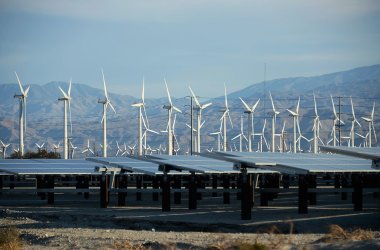
Renewable energy in Iran
¶ The world’s largest steel manufacturer, ArcelorMittal, has sought approval for setting up one of the largest solar power projects developed by a single company in India. Media reports quoting the company’s annual report say ArcelorMittal has sought approvals from the state government of Karnataka to set up a 600 MW solar project. [CleanTechnica]
¶ Dounreay Tri Ltd signed planning consent from the Scottish government for the installation of a floating wind farm 9 km off the northern coast of Scotland. The prototype facility will be constructed in the Highlands at Global Energy Group’s Nigg facility. The twin-turbine project will be capable of generating 10 MW. [North American Windpower]

Floating offshore wind turbines
¶ According to media reports, Algeria’s Ministry of Energy will soon launch a tender for 4,020 MW of solar PV capacity. The tender is expected to be floated by early next year in three parts of about 1,350 MW capacity each. The tender is part of the Algerian government’s renewable energy policy announced in 2015. [CleanTechnica]
US:
¶ Minnesota regulators have approved Otter Tail Power’s plan to double wind power resources and close a coal-fired plant. The utility’s 2016 Integrated Resource Plan had a proposal to add 200 MW of wind capacity, but the Public Utilities Commission bumped it up to 400 MW. The plan also includes a new 30 MW solar plant by 2020. [reNews]
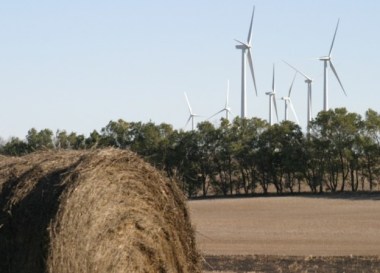
Wind turbines in Minnesota (Image: Otter Tail Power)
¶ Residents and businesses in the Big Apple have collectively installed a whisker more than 101 MW of solar power capacity. According to Con Edison, which has over 40 kW of solar panels on its rooftop, more than 9,700 projects have been completed to date. Combined, these installations are enough to power more than 15,000 homes. [Energy Matters]
¶ Fifty Massachusetts lawmakers put their support behind a bill that would transition the state’s energy system to renewable sources. All of the state’s electricity would be required to come from clean energy initiatives like solar and wind by 2035. Energy for heating and transportation would all be renewably sourced by 2050. [pvbuzz media]

Boston
¶ Xcel Energy announced it has proposed the development of 11 new wind facilities in seven states, which would add 3,380 MW in new wind generation. The proposals would boost the utility’s wind portfolio by 50% and increase wind’s share of Xcel’s total generation to 35%. The proposals would come online through 2021. [Power Engineering Magazine]
¶ New transmission capacity in Western US could reduce total power generation costs by billions of dollars by reducing wind power curtailment, a study by the National Renewable Energy Laboratory said. Utilities in the Mid-South and Southeast are importing wind energy on old lines, and congestion can cause curtailments. [Windpower Engineering]
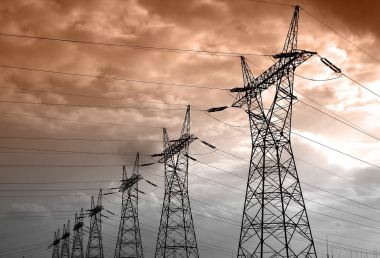
Transmission lines
¶ Madison, Wisconsin and Abita Springs, Louisiana are moving to 100% renewable energy following city council votes. Madison and Abita Springs are the first cities in Wisconsin and Louisiana to make this commitment. They join 23 other cities across the United States, from large ones like San Diego to small ones like Greensburg, Kansas. [EcoWatch]
¶ New York lawmakers are continuing to push for more details about the state’s decision to make utility consumers pay up to $7.6 billion over several years to subsidize aging upstate nuclear plants. Democrats in the state Assembly are calling on state utility regulators to publicly release the financial review that they used to justify the decision. [PennEnergy]
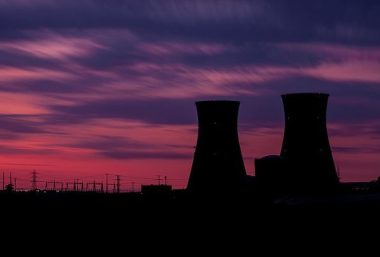
Nuclear plant at sunset
¶ Exxon officials have been ordered by a New York judge to explain how the company overlooked a shadow email account used by its former CEO Rex Tillerson while the company was under subpoena by the New York attorney general’s office. Tillerson had used an alias email account under the name “Wayne Tracker.” [InsideClimate News]
¶ The Nuclear Power Modernization Act would help simplify the federal permitting process for new reactor designs at the NRC, the federal government’s nuclear reactor watchdog. It also would make the commission’s budget more transparent, especially on the fees it charges power plant operators. It has bi-partisan support. [Washington Examiner]
geoharvey is free and without ads.
geoharvey is not tax-deductible.
Posted in nuclear power, renewable power, solar, wind | Leave a Comment »
Tags: nuclear, nuclear power, renewable power, solar power, wind power
March 22, 2017
Science and Technology:
¶ Start-up Wright Electric intends to offer an electric-powered commercial flight from London to Paris in 10 years. Its plane would carry 150 people on journeys of less than 300 miles. By removing the need for jet fuel, the price of travel could drop dramatically. British low-cost airline Easyjet has expressed its interest in the technology. [BBC News]

Wright One (Wright Electric image)
World:
¶ A study says 2016 saw a “dramatic” decline in the number of coal-fired power stations in pre-construction, with a 48% fall in planned coal units, with a 62% drop in construction starts. The report, from several green campaign groups, says changing policies and economic conditions in China and India were behind the decline. [BBC News]
¶ A £300 million taxi manufacturing plant that created 1,000 new jobs is to be officially opened in Coventry. The London Taxi Company’s Ansty Park site is the home of its new electric taxi, the TX5. The first electric taxis will go on sale in London in the final quarter of the year, before being sold around the world early in 2018. [BBC News]
New London Taxi Company plant (London Taxi Company image)
¶ New research makes a projection that mining exploration for industrially important minerals is not keeping track with future demand and recycling on its own could not possibly meet the expected future demand. Because of this, the authors argue that some sort of global resource governance is needed for the mining industries. [CleanTechnica]
¶ Increased renewable capacity since the Fukushima nuclear disaster will see Japanese thermal power generation decline to 40% below 2015 levels by 2030, a report from the Institute for Energy Economics and Financial Analysis said. It says many of the 45 coal-fired power stations currently in the pipeline will not get built. [EnergyInfraPost]

Japanese thermal plant
¶ GreenWish Partners, a renewable energy developer dedicated to African renewables, will invest $280 million to build 200 MW of solar PV plants in Nigeria. GreenWish has already signed a long-term PPA with the Nigerian Bulk Electricity Trading company to sell power produced from the plants into the national grid. [PV-Tech]
¶ The Philippines had 903 MW of installed solar PV capacity under its Renewable Energy Law at the end of 2016, according to Department of Energy figures. Most of this was grid-tied, with 3.2 MW in the self-consumption category. The figures do not include 55 renewable energy-based projects installed under different laws. [PV-Tech]

Philippine solar system (Credit: Conergy)
¶ Early action in transitioning to a low-carbon energy sector is critical not only for keeping global warming to under 2° C, but also for minimizing the risks of additional stranded fossil fuel assets, which could be as much as an additional $10 trillion in assets by 2050. The report envisions coal use dropping by 65% and oil use by 50%. [CleanTechnica]
¶ Plans for a second solar farm for County Kildare have been given the thumbs up by the Council. Renewable Energy Systems Ltd will be putting up temporary (27 year) ground-mounted solar panels on a 29 acre site near Milltown. The solar farm is one of a number of large solar installations going up in Ireland. [Leinster Leader]
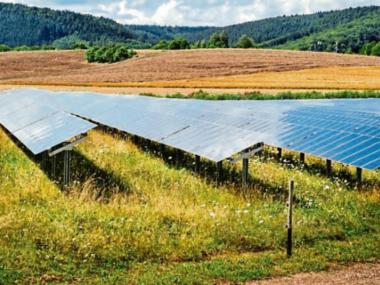
Solar farm in Ireland (file photo)
US:
¶ AES subsidiary Dayton Power & Light confirmed that it will close two of its coal-fired plants by 2018 because they have become uneconomical. The Ohio utility announced its intent to close the two plants in January. DP&L will shift its power mix toward more renewable energy. Its announcement makes the move official. [POWER magazine]
¶ Allete Clean Energy recently announced its plan to build, own and operate a 100-MW wind farm north of Glen Ullin, North Dakota. It will provide power to Xcel Energy under a power purchase agreement. The Clean Energy One project has been under development since 2011. Construction is expected be completed in 2019. [Daily Energy Insider]

Wind farm in the Midwest (Shutterstock image)
¶ Salka LLC announced the execution of a purchase and sale agreement for the Summit Wind Project, an in-development wind farm in the east San Francisco Bay Area. The project will re-power a former Altamont Pass wind farm, replacing its 569 wind turbines with 27 modern turbines. The project is 45 miles from San Francisco. [Windpower Engineering]
¶ In Marion, New York, Marion Central School District and Monolith Solar commissioned a 253-kW solar array to power the district’s high school and bus garage. The system, adjacent to the Marion Jr-Sr High School, is projected to satisfy nearly 80% of the district’s usage, saving almost $13,000 in energy costs in just the first year. [Wayne Post]
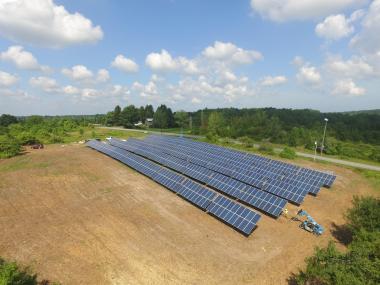
Marion solar array (photo provided)
¶ Xcel Energy projects it can save Texas-New Mexico customers $2.8 billion over a 30-year period by displacing higher-cost energy with an additional 1,230 MW of wind energy. That is enough electricity to power more than 440,000 typical homes. Most of the new power would be generated at two facilities in New Mexico and Texas. [KCBD-TV]
¶ Legislation that would help the owner of the Millstone Nuclear Power Station in Waterford compete in a state renewable energy procurement program easily passed the Connecticut legislature’s Energy and Technology Committee. The vote allows the bill to be heard by the full state House of Representatives and Senate. [New Haven Register]
geoharvey is free and without ads.
geoharvey is not tax-deductible.
Posted in nuclear power, renewable power, solar, wind | Leave a Comment »
Tags: nuclear, nuclear power, renewable power, solar power, wind power
March 21, 2017
Opinion:
¶ “No place for new coal in Australia’s decarbonised pathway” With evidence mounting that energy efficiency and renewable sources can help decarbonize Australia’s energy system, it is obvious that coal’s role as the backbone of our electricity system is over, according to Amandine Denis-Ryan of ClimateWorks. [eco-business.com]
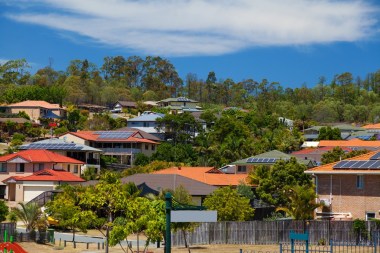
Rooftop PV in an Australian suburb (Image: Shutterstock)
¶ “California Waiver Trumps EPA Dirty Fuel Rule” • It’s starting to look like our democracy is better defended against strong-man autocracy than I feared. The constitution, the fourth estate, the rule of law, have all taken massive hits, but are even eking out surprising wins after literally “unpresidented” assaults from the Oval Office. [CleanTechnica]
Science and Technology:
¶ The world’s oceans are a giant heat sink, and they work to modulate the world’s air temperatures to a large degree. With that in mind, the findings of a new study from the National Center for Atmospheric Research are somewhat unsettling. The world’s oceans may be storing as much as 13% more heat than was previously estimated. [CleanTechnica]

Measuring the warming ocean (Australian Commonwealth
Scientific and Industrial Research Organization)
¶ Chemists from the University of Glasgow report in a new paper in Science on a new form of hydrogen production that is 30 times faster than the current state-of-the-art method. The process also solves common problems associated with generating electricity from renewable sources such as solar, wind or wave energy. [Laboratory Equipment]
¶ Carbon emissions from electric generation could be eliminated by 2060, according to a report by the International Renewable Energy Agency. That emissions cut is necessary to prevent global temperatures from rising by more than 2° C above pre-industrial levels, generally considered the threshold for irreversible climate change. [Green Car Reports]

PVs at a VW plant in Tennessee
World:
¶ In England, 12,000 workers in the solar industry were laid off last year and installations slowed by 85%, largely because the government had cut incentives to industry and private individuals. Now, some schools in England and Wales with rooftop solar systems are facing an 800% increase in taxes, beginning next month. [CleanTechnica]
¶ St1 Nordic Oy is teaming up with two wind power companies in a new joint venture, Grenselandet AS, to develop the two wind projects, Davvi and Borealis, in northernmost Norway. With a total capacity of 900 MW, the two planned wind farms would generate 3,600 GWh annually, St1 says in a press-release. [The Independent Barents Observer]

Wind turbines in Nordland county (Photo: Thomas Nilsen)
¶ Following the example of Japan, which has already begun constructing numerous floating solar arrays to meet it’s renewable energy goals, UK’s Thames Water has now announced plans to do the same. They are already building what will be the largest floating solar array in Europe, and they plan to install it on a reservoir in London. [Jetson Green]
¶ Queensland’s small-scale solar power systems recently passed a major milestone. Latest data from Australia’s Clean Energy Regulator shows Queenslanders have collectively installed more than 500,000 solar PV systems, crossing the halfway mark of a goal of 1 million solar rooftops across the state by 2020. [Energy Matters]
¶ A top Chinese official’s recent disclosure about how a nuclear disaster was averted after an earthquake nine years ago is a worrisome insight into Beijing’s readiness to be upfront about its nuclear industry. He said that along with an initial loss of electric power, the reactor’s coolant pool was damaged, but quick action averted disaster. [Asahi Shimbun]
US:
¶ With the integration of its 60-MW Peak View Wind Project into the grid, Black Hills Energy is bringing renewable energy to its more than 94,000 customers in southern Colorado. The 34-turbine wind farm is located near the small city of Walsenburg. The Peak View Wind Project was completed in October. [North American Windpower]

Peak View wind turbines
¶ Google’s “Project Sunroof” tool revealed a vast untapped potential for rooftop solar installations in the US. Since 2015, the project has analysed around 60 million buildings across the US concluding that 79% are technically viable for generating solar power. Percentages range from 60% in cloudier northern states to 90% in sunnier. [Climate Action Programme]
¶ Even under the most trying circumstances, the Electric Reliability Council of Texas (ERCOT), the grid operator for most of Texas, says it will be able to maintain reliability. Part of that is due to substantial wind energy buildout: Recharge News reports ERCOT’s wind capacity could exceed 28 GW within three years. [Utility Dive]

ERCOT wind turbines
¶ A report from S&P Global Ratings has noted weakening conditions in ERCOT. Following demand changes and continued price volatility, ERCOT has continued to face new challenges, resulting in credit downgrades and forecast revisions. Texas has too much power pushing prices down, going to negative levels in some cases. [Windpower Engineering]
¶ Dominion Resources Inc said it plans to build and operate 81 MW of solar power plants in South Carolina’s Jasper County. A 71.4-MW plant near Ridgeland would sell its electricity to South Carolina Electric & Gas and its renewable energy credits to the local unit of Solvay SA. A 10-MW facility will go up near Ridgeland. [Renewables Now]
geoharvey is free and without ads.
geoharvey is not tax-deductible.
Posted in nuclear power, renewable power, solar, wind | Leave a Comment »
Tags: nuclear, nuclear power, renewable power, solar power, wind power
March 20, 2017
Science and Technology:
¶ Atmospheric carbon dioxide levels (as measured by NOAA at the Mauna Loa Baseline Atmospheric Observatory) rose at a rate of three parts per million for the second straight year in 2016, according to NOAA data. That brought atmospheric carbon dioxide levels (the average for 2016) up to 405.1 parts per million. [CleanTechnica]
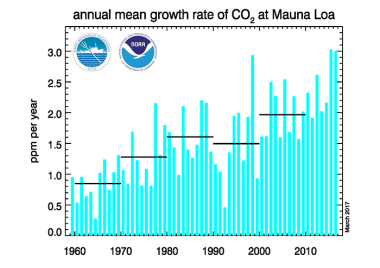
Please click on the image to enlarge it.
World:
¶ A joint venture of Qatar Electricity and Water Company and Qatar Petroleum is to build the largest solar power project in the country. According to media reports, construction of a 200-MW solar power project will begin next June, and it is expected to be fully operational by 2020. The project can be expanded to a capacity of 500 MW. [CleanTechnica]
¶ The Vietnam Energy Association issued a report showing a huge potential from biomass and waste in Vietnam, according to Vietnam.net. This could amount to up to 1 billion kWh in 2020 and 6 billion kWh in 2050 from waste, with a total amount from biomass and waste of up to 9 billion kWh in 2020 and 80 kWh in 2050. [Renewable Energy Magazine]

Vietnam
¶ The second phase of the Mohammad Bin Rashid Al Maktoum Solar Park has been opened. It has a capacity of 200 MW, enough to supply annual power needs for 50,000 homes. The solar park is one of the major projects of the Dubai Electricity and Water Authority, and is the world’s largest single-site solar park. [gulfnews.com]
¶ Beijing has closed the Huaneng Beijing Thermal Power Plant, its last big coal-fired power station, which had dominated the skyline of the city’s outskirts for 18 years. Beijing is the first coal-free city for electricity and heating in China. Environmental groups hope China will maintain momentum on its clean energy targets. [Stuff.co.nz]
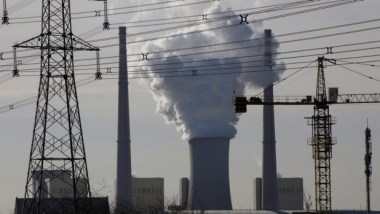
Coal plant near Beijing (Photo: Jason Lee)
¶ A report commissioned by the German government says that stopping global warming won’t just keep the planet habitable. It would also boost the global economy by $19 trillion, as the investment in renewable power and energy efficiency to keeping warming below 2° C (3.6° F) will increase the global economy around 0.8% by 2050. [Bloomberg]
¶ Carnegie Clean Energy has plans to build large-scale solar and battery storage plants around Australia. The company is starting with a 10-MW solar farm in Northam, Western Australia. The project is a joint venture between Carnegie’s subsidiary, Energy Made Clean, and the Australian property group Lendlease. [RenewEconomy]

Australian solar array
¶ Japan’s atomic power establishment is in shock following the court ruling that found the state and the operator of the Fukushima nuclear plant liable for failing to take preventive measures against the tsunami that crippled the facility. The ruling has implications for a Japanese nuclear power industry trying to restart reactors. [Asia Times]
US:
¶ With the Trump administration rolling back federal programs on climate change, leaders of labor six unions sent a letter to the governor of New York asking him to incorporate principles of the Climate and Community Protection Act in the 2017-2018 state budget. They want the state to have 100% renewable electric sources by 2050. [Public News Service]

Renewable power (Kenueone/pixabay.com)
¶ The signs are that renewable energy has all green lights ahead, despite the current White House’s emphasis on the expansion of traditional fossil fuels. Governors from 20 states and much of corporate America are going all-in to support sustainable fuels. Their reasoning is grounded in economics. And rural America is benefiting. [Forbes]
¶ The River Bend solar farm, the largest in Alabama history, is now online and contributing about 75 MW of clean renewable energy to the electrical grid maintained by the Tennessee Valley Authority. There are about 300,000 solar panels in the 640 acre site. The TVA service area includes 9 million customers in seven southern states. [CleanTechnica]

River Bend solar farm (TVA photo)
¶ California’s power-grid operators are dealing with a glut of daytime electricity produced by household, government, business, and industrial solar installations. This makes electricity prices on state’s real-time marketplace plummet, so some power plants shut down until demand catches up with supply later in the day. [Daily Democrat]
¶ The latest shining example of South Sioux City’s increasing effort to reduce its carbon footprint is a 21-acre solar park south of the city with more than 1,200 solar panels. The yet-to-be-named solar park has a capacity of 2.3 MW, enough to meet 5% of the northeast Nebraska town’s total electrical needs. Operation began in January. [Sioux City Journal]
geoharvey is free and without ads.
geoharvey is not tax-deductible.
Posted in nuclear power, renewable power, solar, wind | 1 Comment »
Tags: nuclear, nuclear power, renewable power, solar power, wind power
March 19, 2017
Opinion:
¶ “The old, dirty, creaky US electric grid would cost $5 trillion to replace. Where should infrastructure spending go?” • By the author’s analysis, the current (depreciated) value of the US electric grid, comprising power plants, wires, transformers and poles, is roughly $1.5 to $2 trillion. To replace it would cost almost $5 trillion. [Salon]

Power lines (indigoskies / flickr, CC BY-NC-ND)
¶ “Can NYC Reach Its Renewable Energy Storage Goals?” Sustainable CUNY published a roadmap for New York City to reach its energy storage targets, using resilient solar technology. Unlike normal grid-tied solar power, resilient solar can function when the electric grid is down, such as during the period after Hurricane Sandy. [Yahoo Finance]
¶ “Coal isn’t dead, but job prospects dim” • The battered US coal industry is showing flickering signs of life. Yet the prognosis for Big Coal remains dim. With the president’s pledge to bring coal back, the stocks of coal companies have enjoyed a “Trump bump.” But the obstacles on the other side of the ledger remain daunting. [GoErie.com]
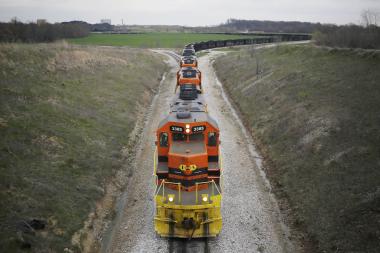
Coal train in Indiana (Luke Sharrett / Bloomberg)
¶ “Snowy Hydro 2.0: a breakthrough, a distraction or both?” Depending on who you listen to, Malcolm Turnbull’s proposed $2 billion expansion of the Snowy Hydro Scheme is a bold piece of nation-building by an Australian Prime Minister who had found his mojo, or a cynically timed thought-bubble that is years away at best. [Bega District News]
Science and Technology:
¶ The global temperature for the months of December, January and February soared to 1.6° above average this winter, according to National Oceanic and Atmospheric Administration data. Still, this winter was nowhere close to the 2015-16 winter record, when the planet sweltered to a tremendous 2° above average. [Inland Empire News]
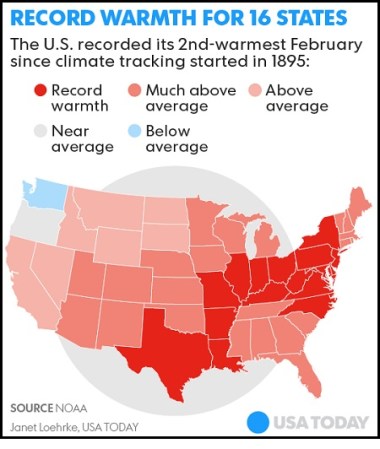
¶ From the moment a powerful blizzard hit the northeastern United States, the questions about climate change’s impact have been asked. According to leading scientists, we bear some responsibility for the storm, which covered much of the inland areas with up to two feet of snow. And Donald Trump definitely is not helping matters. [Salon]
¶ Universiti Malaysia Terengganu is in the process of developing innovation in producing energy using ocean wave as a new source of electrical power. The project known as “Hydraulic Wave Energy Converter System” involves three masters’ students of the Marine Engineering Study Center together with their lecturer as head. [Astro Awani]
World:
¶ A report, Wind Turbines Market Update 2016, provides detailed information of the global Wind Turbines Market. It says the global wind turbines market is set to experience a degree of turbulence over the next few years, rising steadily from $76.54 billion in 2015 to $81.14 billion in 2019, and dipping to $71.21 billion in 2020. [WhaTech]
¶ Plans to install turbines on platforms that float in the sea are gathering pace. Scotland granted planning permission for 92 MW in two separate projects in the past two weeks. Gaelectric Holdings Plc and Ideol SAS, a French floating wind company, agreed to develop floating wind projects in Irish waters, starting with a 30-MW array. [Bloomberg]
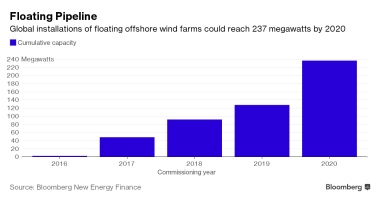
Please click on the image to enlarge it.
¶ Steel Authority of India Ltd, India’s largest public sector steel maker, will set up a processing plant for generating power from municipal solid waste generated in Bhilai township, company officials said. The processing plant would use current solid waste technology to generate power from 400 tonnes of municipal solid waste per day. [Daily Pioneer]
US:
¶ Local wind-energy proponents breathed a measured sigh of relief this week after the Department of the Interior completed an offshore wind-power auction, and a Trump administration official offered support for wind as part of the country’s overall energy “toolbox.” The budget cuts for environmental programs are severe, however. [Newsday]

Block Island wind farm (AllislandAerial.com / Kevin P. Coughlin)
¶ The president’s proposed budget would eliminate funds for the Energy Star program, the Clean Power Plan, regional programs to clean up the Great Lakes, Puget Sound and Chesapeake Bay, four NASA Earth science missions, the Global Climate Change Initiative, and the UN Green Climate Fund, along with funding reductions. [Arizona Daily Sun]
¶ Donald Trump promised to bring back coal jobs, but even the country’s third-largest coal producer appears to be hedging its bets on a comeback. Kentucky is on the cusp of acting to open the door to nuclear power. The Republican-controlled state legislature is close to lifting its decades-long moratorium on nuclear energy. [Tribune-Review]
geoharvey is free and without ads.
geoharvey is not tax-deductible.
Posted in nuclear power, renewable power, solar, wind | 1 Comment »
Tags: nuclear, nuclear power, renewable power, solar power, wind power
March 18, 2017
Opinion:
¶ “Trump’s budget sabotages America’s best chance to add millions of high-wage jobs” • President Trump’s budget slashes investment in clean energy , the world’s biggest new source of sustainable high-wage jobs. Meanwhile, China’s five-year energy budget invests $360 billion in renewable generation by 2020, creating 13 million jobs. [ThinkProgress]

Please click on the image to enlarge it.
Science and Technology:
¶ Wind and solar can provide power at or below the cost of traditional sources in a growing number of countries, according to a new report from the International Energy Agency. This makes renewables more appealing for countries seeking to meet growing electricity demand while decarbonizing their energy systems. [Energy Live News]
¶ The biofuel industry has had its ups and downs, so the latest news from NASA should warm a few hearts. The US aerospace agency has just released the results of a new study demonstrating that biofuels used in jet engines shave a good 50 to 75% off particle emissions. The biofuel in question was derived from the camelina plant. [CleanTechnica]

Camelina (Image via USDA)
World:
¶ The fight to tackle climate change in the UK continues apace, but recent good news shows that household energy bills have actually decreased alongside efforts which have successfully reduced the country’s emissions, according to a new study from the Committee on Climate Change, the country’s climate advisory body. [CleanTechnica]
¶ The Scottish government approved Hexicon’s plan for the two-turbine, 12-MW Dounreay Tri floating wind farm demonstrator off the Caithness coast, about 6 km from Dounreay. It is the third floating wind farm approved in the country, following the Kincardine and Hywind Scotland projects. Its construction will create about 100 jobs. [reNews]
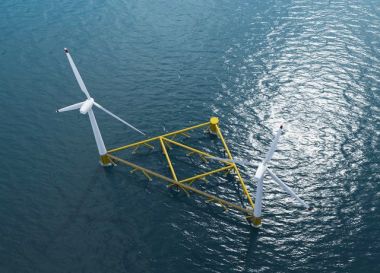
Floating wind farm for Dounreay (Hexicon image)
¶ Global carbon dioxide emissions from the energy sector held stable for the third straight year in 2016 despite continuing growth of the global economy, the International Energy Agency said. The factors include growing renewable power generation, switches from coal to natural gas, and improvements in energy efficiency. [Prothom Alo]
¶ A coal-mine that powered German industry for almost half a century will get a new lease on life when it’s turned into a giant battery that stores excess solar and wind energy. North-Rhine Westphalia is set to turn its Prosper-Haniel hard coal mine into a 200 MW pumped-storage reservoir, enough to power more than 400,000 homes. [Bloomberg]
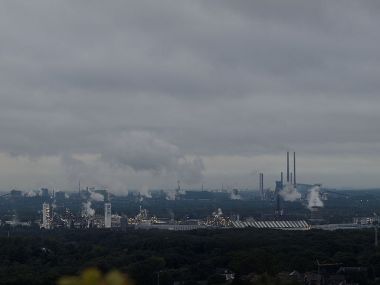
View from a slag heap near the Prosper-Haniel mine
(Photo: Arnoldius, Wikimedia Commons)
¶ Solar Philippines has kicked off the construction of its 150-MW solar farm with battery storage, its largest solar power project to-date. The whole solar farm will start operating as a merchant plant in the third quarter of the year, providing the energy requirements for the province of Tarlac, in six months time, a top official said. [Philippine Star]
¶ Italian energy giant Enel plans to add 6.7 GW of renewable capacity over the next three years, adding to the 36 GW the company has worldwide. Enel said it plans to pursue a business model that will “allow the group to capitalize on its renewable pipeline more quickly, decrease the overall risk profile and crystallise value creation earlier.” [reNews]

Coulonges wind farm (Credit: Enel)
US:
¶ President Donald Trump promised in his election campaign to put American coal miners back to work. Now, he has proposed eliminating funding for economic development programs supporting laid-off coal miners and others in Appalachia, stirring fears in a region that supported him of another letdown, just as the coal industry collapses. [Reuters]
¶ Elected officials and tribal leaders helped power up a solar array that was the first utility-scale power production plant approved by the Interior Department on Indian land. The 250 MW generated at the Moapa Southern Paiute Solar Project, north of Las Vegas, will go to Los Angeles. It could power 111,000 homes. [Marshalltown Times Republican]

Solar power in Nevada (AP Photo / John Locher, file)
¶ Ikea continues to grow its US renewable energy portfolio, with a goal of being energy independent by 2020. The retailer has completed installation of its fifth biogas-powered fuel cell system in California, at its East Palo Alto location in the San Francisco Bay area. Ikea is on track to generate 1.5 MW in total of energy via fuel cells. [Biomass Magazine]
¶ Republican Senator James Inhofe is alarmed at what he accurately called the “unprecedented” wildfires which have burned more than 2 million acres in the grasslands of Oklahoma, Kansas, and the Texas panhandle. He and other climate change deniers remain eerily silent on the context: drought worsened by climate change. [Mother Jones]

Firefighters near Protection, Kansas
(Bo Rader / The Wichita Eagle via AP)
¶ SDG&E is partnering with Sumitomo Electric, based in Japan, to develop a 2-MW energy storage pilot project in California. The four-year scheme will see SDG&E research integrating Sumitomo’s vanadium redox flow battery system with renewable resources, testing voltage frequency, power outage support and shifting energy demand. [reNews]
¶ Nearly 70% of the electricity Pacific Gas and Electric Co (PG&E) delivered to customers in 2016 came from greenhouse-gas-free resources, the company announced. PG&E says it delivered an average of 32.8% of its electricity from renewable resources. Most of the rest came from the Diablo Canyon nuclear plant. [North American Windpower]
geoharvey is free and without ads.
geoharvey is not tax-deductible.
Posted in nuclear power, renewable power, solar, wind | 1 Comment »
Tags: nuclear, nuclear power, renewable power, solar power, wind power
March 17, 2017
Science and Technology:
¶ About 10 years ago, researchers noticed a close correspondence between the fluctuations in CO2 levels and in temperature over the last million years. When Earth is at its coldest, the amount of CO2 in the atmosphere is also at its lowest. Now, a study of deep-sea corals reveals why atmospheric carbon was reduced during colder time periods, providing new insights into climate change. [Science Daily]
World:
¶ France’s anti-fraud and consumer protection agency, DGCCRF, has released a new report that alleges that Renault has been (may have been?) falsifying vehicle emissions test data for the last 25 years. The report, very notably, claims that all of the company’s top executives, including CEO Carlos Ghosn, have most likely known of this. [CleanTechnica]
¶ Italy reached its 17.5% carbon emission target by the end of 2015, Eurostat said. Italy is one of 11 member states that have already reached their EU carbon emission targets, with Bulgaria, Croatia, the Czech Republic, Denmark, Estonia, Lithuania, Hungary, Romania, Finland, and Sweden also achieving the feat. [The Local Italy]
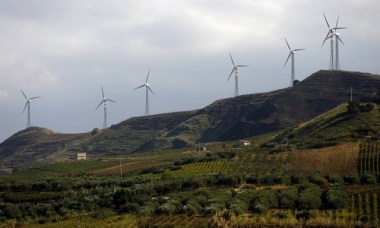
Wind turbines in Sicily, near Palermo
(Photo: Marcello Paternostro / AFP)
¶ New figures from the European Commission show that the share of renewable energy in the European Union’s energy consumption has continued to grow, nearing its target of 20% by 2020, reaching 16.7% in 2015. The figures come from a new data article published by Eurostat, the statistical office of the EU. [CleanTechnica]
¶ The world’s longest undersea power cable, 450 km long, from Kvilldal, Norway, to Blyth, in Northumberland, will take years to build, but when it is completed, the UK could import 1,400 MW of electricity, enough to power more than 750,000 homes. It will also allow Britain to export surplus wind energy back to Norway. [The Guardian]
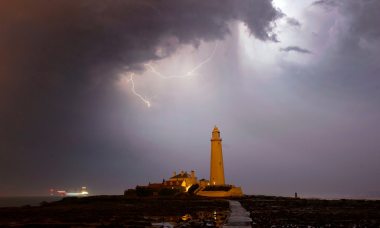
Coast near Blyth (Photo: Owen Humphreys/PA)
¶ A court in Japan ruled that negligence by the state contributed to the Fukushima nuclear disaster in March 2011 and awarded significant damages to evacuees. The official claims were that the size and destructive power of the earthquake and tsunami were impossible to foresee, but the court said the nuclear meltdown could have been prevented. [The Guardian]
US:
¶ President Donald Trump released a $1.1 trillion budget outline that makes good on a series of campaign promises, including cutting EPA by about one-third. Asked about the cuts to climate change-related programs, Office of Management and Budget Director Mick Mulvaney said those programs are “a waste of your money.” [CNN]
¶ Under the president’s 2018 budget blueprint, the program that put recovery money into local hands after Hurricanes Sandy, Katrina, Rita and Wilma would be zeroed-out, raising questions about how readily the cash would be available when the next disaster strikes and what oversight would be in place to ensure it is not misused. [CNN]
¶ EDF Renewable Energy has commissioned a new business unit focused on Distributed Electricity and Storage that will focus on distributed solar and storage projects up to 30 MW. As one of the largest renewable energy companies in North America, the team has vast expertise in wind, solar, bioenergy, and storage projects. [CleanTechnica]
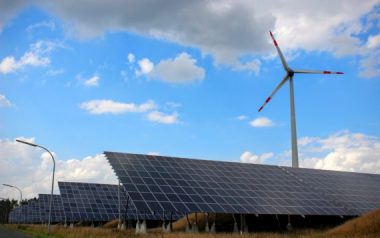
Wind and solar (Credit: Kyle Field | CleanTechnica)
¶ Thirty cities are responding to the dangerous Trump policies that ignore the potentials of climate change by announcing interest in a $10 billion electric vehicle purchase. Bringing joint bargaining power to the table, they have been in talks with automakers to jointly purchase approximately 114,000 electric vehicles. [CleanTechnica]
¶ Florida Power & Light Company has selected Blattner Energy and Black & Veatch to build eight solar projects with a combined capacity of 596 MW. Blattner Energy will build four 74.5-MW plants scheduled for completion by the end of this year. Four plants of the same size will be completed by Black & Veatch by 1 March 2018. [reNews]

Solar in Florida (Image: Florida Power & Light Company)
¶ The Public Service Company of New Mexico is considering shutting down the remaining coal-burning units at its San Juan Generating Station near Farmington in 2022, a move that was applauded by renewable energy advocates. The utility said early analysis shows a shutdown could provide long-term benefits to customers. [Santa Fe New Mexican]
¶ Avangrid Renewables has won the 1.5-GW Kitty Hawk, North Carolina, offshore wind lease auction with a bid of $9,066,650. The Bureau of Ocean Energy Management has raised more than $58 million in six competitive lease sales so far, including a record-breaking $42.5 million paid by Statoil for the 1-GW New York lease area. [reNews]
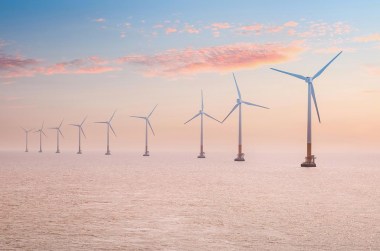
Offshore wind (Credit: Sif)
¶ Pacific Gas & Electric Co expects to lose about 7.3% of its electric load this year, and possibly 21% by 2020, to community choice aggregators, according to Moody’s Investors Service. The same shift may also eventually account for 40% of the total load at San Diego Gas & Electric Co. and Southern California Edison. [BloombergQuint]
¶ Xcel Energy Inc will build its largest Upper Midwest wind project ever in eastern South Dakota, the latest phase of a huge new wind power investment in Minnesota and the Dakotas. The Minneapolis-based utility unveiled details of three wind new projects, one each in Minnesota, South Dakota and western North Dakota. [Minneapolis Star Tribune]
geoharvey is free and without ads.
geoharvey is not tax-deductible.
Posted in nuclear power, renewable power, solar, wind | 1 Comment »
Tags: nuclear, nuclear power, renewable power, solar power, wind power
March 16, 2017
Opinion:
¶ “Clean Energy Is Seeing Monumental Job Growth” • Multiple news outlets reported that the budget President Donald Trump plans to submit to Congress will gut or even eliminate two principal DOE research efforts fueling a renewable energy revolution in the United States. That would be an enormous mistake. [US News & World Report]

Wind energy – an economic driver (Getty Images)
¶ “Now there are air-pollution deniers, too” • There are very few people who believe air pollution – specifically “fine particulate” pollution, or PM2.5 – doesn’t cause death. But those who do are getting louder and gaining influence in conservative political circles and inside President Donald Trump’s administration. [Grist]
¶ “Turnbull drives stake through heart of fossil fuel industry” Prime minister Malcolm Turnbull has announced his desire to spend $2 billion on a 2-GW pumped hydro scheme in the Snowy Mountains, in a move that will potentially drive a stake through the heart of the fossil fuel generation industry in Australia.[RenewEconomy]
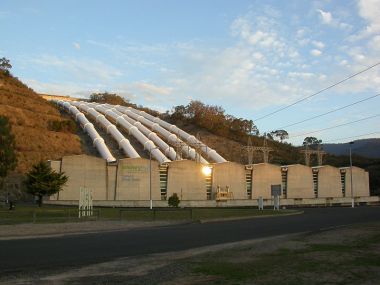
Generating station in the Snowy River Scheme
(Cmh at English Wikipedia, Wikimedia Commons)
World:
¶ Britain’s low carbon energy revolution is actually saving money for households, according to a report from the Committee on Climate Change, with households saving £11 a month. The analysis shows that subsidies to wind and solar are adding £9 a month to the average bill, but that rules promoting energy efficiency save £20 a month. [BBC]
¶ An 18th century watermill in North Yorkshire has generated 1,000,000 kilowatt-hours of green power through a combination of traditional and new technology. Howsham Mill, which is run by the charitable Renewable Heritage Trust, has been generating hydroelectric energy, and exporting it to the National Grid, since the mid-2000s. [Gazette & Herald]

Howsham Mill (Picture: David Harrison)
¶ The South Australian Government has opened a two-week Expression of Interest period to attract companies interested in building Australia’s largest grid-scale battery. The project will seek to have bidders provide a battery that must have a capacity of approximately 100 MW and be operational in time for next summer. [iTWire]
¶ The Australian Federal Government could fund a $2 billion expansion of the Snowy Mountains hydro scheme alone, if the New South Wales and Victorian state governments did not want to invest. The Turnbull Government is planning to increase the 4,000 MW output by 50%, by building a 27 km tunnel and power stations. [ABC Online]
Snowy River (David Claughton, ABC Rural)
¶ Northern Ireland Electricity, which owns the country’s power transmission network, said 299 MW of renewable energy capacity was connected to the national grid in 2016, bringing the total to over 1 GW. Having reached that goal, renewables now generate over 25% of the electric power consumed in Northern Ireland. [Climate Action Programme]
¶ A multi-million pound EU funded project is set to provide the UK’s Isles of Scilly with a new smart energy system, using software to manage supply and demand through renewables, energy storage,and electric vehicles. Hitachi Europe will use the Smart Energy Islands project as a test-bed for developing smart grid technology. [Energy Storage News]
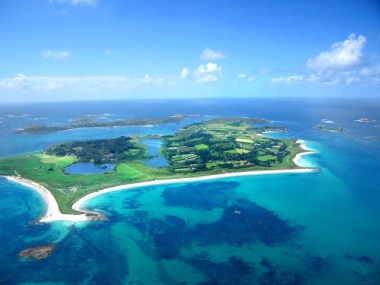
Isles of Scilly
¶ Energy company AGL just made a giant leap forward in the future of how energy is gathered and shared. It built the world’s largest residential virtual power plant in Adelaide, and now it has switched it on. The scheme connects multiple homes, generating power and storing it in onsite batteries, then sharing it on a network. [Business Insider Australia]
US:
¶ US President Donald Trump may have called climate change a hoax, but the GOP is not necessarily united on this issue. Though climate science programs have been a top administration target, 17 Republicans in the US House of Representatives expressed their commitment to “conservative environmental stewardship.” [Triple Pundit]

A solar installation at a Navy base in Hawaii
¶ According to a report from Bloomberg, reporting on sources familiar with the administration’s plan, President Donald Trump is intending to drastically reduce the role climate change plays in decision making across a range of government branches, and is designed to roll back the Obama-era fight on climate change. [CleanTechnica]
¶ The battery technology and manufacturing firm Aquion Energy, well known for its Aqueous Hybrid Ion energy storage and battery systems, has filed a voluntary petition under Chapter 11 of the United States Bankruptcy Code in the United States Bankruptcy Court of the District of Delaware, according to recent reports. [CleanTechnica]
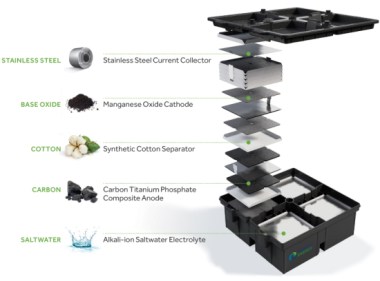
Aquion battery
¶ Environmental advocates and members of a nearby Indian tribe are hailing the closure of a coal-fired NV Energy power plant, the Reid Gardner Generating Station. The plant was near Moapa, Nevada, 40 miles north of Las Vegas. Its closure leaves just one coal-fired generating station in Nevada, which is due to shut down by 2025. [Argus Press]
¶ The Trump administration’s budget proposal would cut spending at the DOE overall by $1.7 billion, or 5.6% from current levels, to $28 billion. But the money is redistributed. The National Nuclear Security Administration budget would grow 11.3% while the rest of the Energy Department’s programs would be cut by 17.9%. [Washington Post]
geoharvey is free and without ads.
geoharvey is not tax-deductible.
Posted in nuclear power, renewable power, solar, wind | 1 Comment »
Tags: nuclear, nuclear power, renewable power, solar power, wind power
March 15, 2017
Opinion:
¶ “Trump’s Business Council Is a Who’s Who of Renewable Energy Investors and Climate Champions” • If Donald Trump asked the executives sitting on his business advisory council for energy policy advice, what kind of answer would he get? Judging by what their own actions, they’d probably tell him to emphasize the clean stuff. [Greentech Media]

Council
¶ “Rolling Back The Clean Power Plan Is A Losing Proposition For America” • Why put the brakes on a good thing? In the last decade, America’s economy has grown, while its carbon emissions have dropped. The shift is good for people’s health, business and national security. But the Trump administration is expected roll it all back. [Huffington Post]
Science and Technology:
¶ A new technology could reduce the fuel consumption of shipping tankers by around 10%. Norsepower’s fuel efficient “rotor sails,” which use a spinning cylinder to harness wind power and help propel a ship, are to be trialed on a vessel owned by Maersk Tankers. The ship will be fitted with the sails in 2018 for trial in 2019. [Energy Live News]

Rotor sail technology on a ship (Image: Norsepower)
World:
¶ Eon, Germany’s second largest energy company, unveiled a loss of €16 billion ($17 billion) in 2016, hit by a massive charge to the tune of €11 billion on its new subsidiary Uniper. Uniper combines Eon’s former coal and gas power plants, which were spun off in 2015 to separate them from the company’s healthier units. [Deutsche Welle]
¶ Toshiba president Satoshi Tsunakawa has said the company may sell its majority stake in US nuclear unit Westinghouse. The struggling electronics firm bought Westinghouse in 2006, but it has suffered huge cost over-runs. Toshiba has also been given permission to delay reporting its earnings for a second time, this time until 11 April. [BBC News]
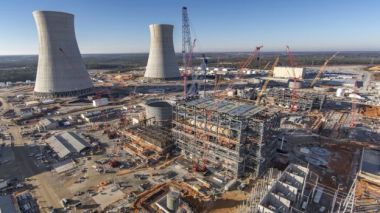
Westinghouse’s Vogtle nuclear power station
under construction in Georgia (Westinghouse photo)
¶ After Stuttgart’s decision to begin selectively banning diesel cars from the city during times of high air pollution, diesel car sales in the region appear to have fallen notably. Presumably, public discussion on possible of future bans has put a damper on diesel cars. The diesel models’ share of the total German auto market is at 43.4%. [CleanTechnica]
¶ The swift-flowing Yorkshire rivers and streams could help to keep lights shining for generations. One Yorkshire hydroelectric power plant is providing electricity for hundreds of homes. As part of the scheme, a fish-pass has been built that should allow for the return of salmon stocks for the first time since the First World War. [Yorkshire Post]

Barn Energy’s hydro plant at Thrybergh Weir on the River Don
¶ South African utility Eskom is planning to meet with trade unions this week to discuss the planned phasing out of five coal power stations in Mpumalanga. Unions are up in arms claiming that they were not consulted over the move. Eskom’s Khulu Phasiwe says it is necessary to accommodate independent renewable power producers. [Eyewitness News]
¶ Mergers and acquisitions in the renewables sector picked up in 2016 across the Middle East and Africa region after a long period of slow activity, a report by professional services organisation EY said. Greenfield activities continue to dominate power and utility transactions in the region, attracting $8.7 billion of investment last year. [Utilities-ME.com]

Wind power in the Middle East
US:
¶ In unpublished written testimony to the Armed Services Committee, Secretary of Defense James Mattis called climate change a security threat for which United States military leaders need to prepare, ProPublica reports. He wrote, “Climate change is impacting stability in areas of the world where our troops are operating today.” [Pacific Standard]
¶ New York’s oldest university, Columbia University, announced that its Trustees voted to recommend divesting from companies that derive 35% or more of their revenue from thermal coal production. The Trustees vote followed a recommendation from the Advisory Committee on Socially Responsible Investing. [CleanTechnica]
¶ Under the Obama Administration, Los Angeles Air Force Base, home of the Space and Missile Systems Center, was an early adopter of renewables, electric vehicles, vehicle-to-grid systems and other low carbon technology. Apparently the Air Force has no intention of slowing down now that a fossil fuel fan is in the White House. [CleanTechnica]
¶ Connecticut legislators unveiled a bill that would put the Millstone Nuclear Plant on equal footing with renewable energy resources. The bill would allow Millstone to bid into the state procurement process now reserved for renewable energy resources such as large-scale hydropower, solar, wind, and trash-to-energy facilities. [RTO Insider]

Millstone Nuclear Power Plant (NRC image)
¶ Ralls Corp, an affiliate of China-based SANY Group Co Ltd, has formed a partnership with Star Wind LLC, a subsidiary of Indiana-based Star Energy Holdings LLC, to develop, own and operate 1 GW of wind projects in North America. The wind projects are expected to have long-term power purchase agreements. [North American Windpower]
¶ The New York Assembly suggested in its one-house budget a moratorium on the bailout program for three failing nuclear power plants until officials from the Public Service Commission testify before senators and Assembly members about how and why ratepayers would be funding the bailout with their electric bills. [Washington Times]
geoharvey is free and without ads.
geoharvey is not tax-deductible.
Posted in nuclear power, renewable power, solar, wind | Leave a Comment »
Tags: nuclear, nuclear power, renewable power, solar power, wind power
March 14, 2017
Opinion:
¶ “Can California Go 100 Percent Green?” • California’s Senate leader wants the state to shift to 100% renewable electricity by 2045, pushing it to lead the country in grabbing that green power goal. The nation’s most populous state switching to fully renewable electricity sounds idealistic. But several experts said it can be done. [Scientific American]
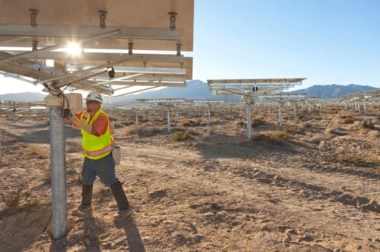
Installing a heliostat at the Ivanpah CSP plant
(Credit: California Energy Commission)
¶ “The SA Deal Is A Missed Opportunity For Cheaper, Cleaner And More Reliable Energy” • The South Australian Government announced an energy plan that would wed South Australians to struggling through huge electricity bills that won’t come down with an over-reliance on gas-fired generation ruled by the world market. [Huffington Post Australia]
Science and Technology:
¶ As the world’s soils continue warming over the coming decades and centuries, they could release much higher levels of CO2 than was previously thought, according to new research from the US Department of Energy’s Lawrence Berkeley National Laboratory. There is about three times as much CO2 in the soil as in the atmosphere. [CleanTechnica]
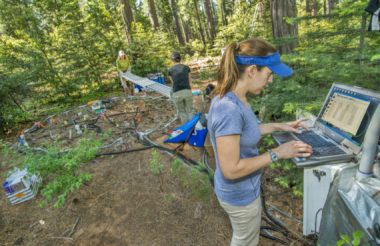
Soil research (Image by Berkeley Lab)
¶ A project headed up by the University of Manchester is investigating the role that advanced technologies, such as robotics and artificial intelligence, could have on reducing the costs for operation and maintenance of offshore wind farms. The value of the service could be £2 billion ($2.4 billion) annually by 2025 in the UK alone. [CleanTechnica]
World:
¶ In Chile’s last power auction, SolarReserve bid a world-record low price at just 6.3¢/kWh for dispatchable 24-hour solar. The bid is for Concentrated Solar Power, a form of solar using heat from the sun that can be stored thermally. It was made in an open auction for both fossil energy and renewables, without any subsidy. [CleanTechnica]

Storage for solar
¶ The race to develop battery storage as a solution to the key problem of reliability appears to be on for Australian state governments. Victorian premier Daniel Andrews just announced an extra $20 million to roll out energy storage in the state. The government wants to boost energy storage capacity up to 100 MW. [Business Insider Australia]
¶ Short and medium term projections indicate that the development of wind power is likely to take an increasingly important position in Mexico’s energy landscape, particularly in light of growing uncertainty in future natural gas imports from the United States. Gas had a 54% stake in the country’s electricity production in 2015. [Global Risk Insights]

Mexican wind farm
¶ South Australia will build Australia’s largest battery to store renewable energy along with a new 250-MW gas-fired power plant. South Australia’s premier announced the government’s plan to build, own and operate the plant. He said it was part of a plan to spend $550 million to take control of the state energy market. [Yahoo7 News]
¶ Irish wave developer Sea Power is to retrieve its 1:5 scale device after winter testing at the Galway Bay Marine and Renewable Energy Test Site. The company said it has successfully concluded winter survivability testing of its prototype Seapower Platform device. The attenuator wave energy converter was deployed last October. [reNews]

Sea Power wave device (Sea Power image)
¶ Shares in Japanese conglomerate Toshiba have fallen more than 7% as the firm asked to postpone reporting its earnings for a second time. Last month, the firm announced a ¥712.5 billion ($6.3 billion) write-down due to some US nuclear assets being worth far less than estimated. Some analysts warn the company’s future is at risk. [BBC News]
¶ PPC SA, the largest power generation company in Greece, announced that geothermal energy will be a crucial element in its plans for renewable energy project deployment. Through its renewable energy subsidiary Public Power Company Renewables SA, the company is increasingly active with renewable energy sources. [ThinkGeoEnergy]
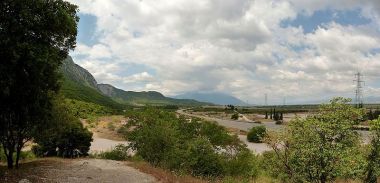
Thermopylae derives its name from its hot sulphur springs.
(Ronny Siegel, Wikimedia Commons)
US:
¶ Electric vehicle manufacturer BYD, in partnership with Daylight Transport, the California Air Resources Board and the San Bernardino Council of Governments, has brought the largest deployment of all-electric heavy-duty trucks ever in the US to Southern California. The project will deliver 27 battery-electric trucks. [CleanTechnica]
¶ The US Department of the Interior’s Bureau of Ocean Energy Management says it has received unsolicited lease requests from two companies looking to develop wind projects offshore New York and Massachusetts. The requests, which are for areas on the Outer Continental Shelf, are not in response to a formal call for interest. [North American Windpower]
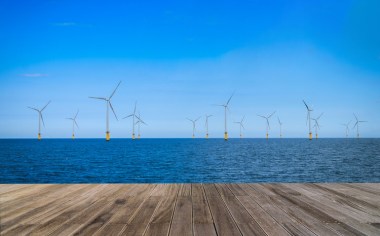
Offshore windpower (iStock image)
¶ A proposal to ramp up renewable energy requirements at New Mexico’s investor owned utilities and cooperatives through 2040 was voted down by a Senate committee. The Senate Corporation Committee voted 5-3 against a plan to gradually increase the share of electricity generated from renewable sources to 80%. [Electric Light & Power]
¶ An arbitration panel awarded California utilities $125 million in a lawsuit claiming that Mitsubishi Heavy Industries supplied faulty steam generators that helped lead to the closure of the San Onofre nuclear plant. It is a hollow victory that was a tiny fraction of the $7.6 billion sought by Southern California Edison and its partners. [LancasterOnline]
geoharvey is free and without ads.
geoharvey is not tax-deductible.
Posted in nuclear power, renewable power, solar, wind | Leave a Comment »
Tags: nuclear, nuclear power, renewable power, solar power, wind power
March 13, 2017
Opinion:
¶ “How we can turn railroads into a climate solution” • Railroads could drive the growth of clean energy. That is the aim of a new proposal to electrify railroads, run them on renewable energy, and use rail corridors as electricity superhighways to carry power from remote solar and wind installations to population centers. [Grist]
¶ “Bringing Fresh Air to Biogas” • Swapping the predominant use of fossil fuels with bioenergy has benefits that extend far beyond meeting climate treaty obligations. Projects can be used to promote local economies and help create new job opportunities, as well as saving money and promoting social responsibility. [INSEAD Knowledge]
World:
¶ The South Australian Premier Jay Weatherill will reveal a New energy policy tomorrow at 11 am. The announcement comes on the back of conversations with Tesla Founder Elon Musk about how the company could assist the state (and the country) in storing energy made from their high volume of renewable energy generation. [techAU]
¶ On Sunday afternoon, a private conversation between Australian Prime Minister Malcolm Turnbull and Tesla boss Elon Musk caught Australia’s attention. The two spoke on the phone for almost an hour about energy from renewable resources and battery storage. Musk had offered to stop South Australia’s electricity outages. [BBC News]
¶ In 2014, SolaRoad started its pilot project in the town of Krommenie near Amsterdam by replacing a stretch of 70 meters of a tarmac bike path with solar modules it developed. The project was quickly found to outperform expectations, and now it is expanding, both locally in Amsterdam, and as it is being copied in California. [CleanTechnica]
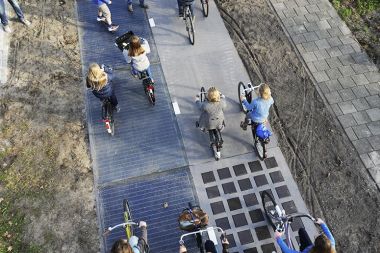
SolaRoad bike path in Amsterdam
¶ Barcelona will begin banning cars older than 20 years in 2019, and Munich was ordered by Bavaria’s highest administrative court that the state and city to develop “clean air” plans that will include diesel car bans when necessary, by the end of 2017. Bans are regarded as an option of last resort, but car companies are not acting. [CleanTechnica]
¶ The Algerian government is set to launch a tender for the construction of large-scale PV projects totaling 4 GW. The tender will be held in three 1,350 MW phases and will select projects with an average capacity of 100 MW, starting in April of this year. Algeria aims to get 27% of its electricity from renewable sources by 2030. [pv magazine]

Hautes Plaines region, where development will happen
¶ The African Development Bank board of directors have approved a senior concessional loan of $25 million for Mali’s first utility-scale solar PV power plant. According to the multilateral bank, the Segou Solar PV Project is one of the first in sub-Saharan Africa that will consist of the design, construction and operations of a 33-MW power plant. [ESI Africa]
¶ Carnegie Clean Energy says it’s in talks with South Australia to build a battery solution for the state’s electric grid. Carnegie says its subsidiary, Energy Made Clean, is the largest provider of utility scale battery storage solutions in Australia. Elon Musk’s promise to fix the state’s blackout problem in 100 days has stirred action. [Business Insider Australia]

Storm damage caused outages in South Australia.
(Bradley Kanaris / Getty Images)
¶ The Clean Energy Finance Corporation has signed off on Australia’s largest single large-scale solar financing deal to date, tipping another $70 million into a total of 165 MW of big solar capacity in Queensland and Victoria and heralding a new level of investor confidence in the nation’s large-scale renewable energy market. [RenewEconomy]
¶ The change of government in Western Australia over the weekend has been welcomed by one of the state’s most successful renewable energy companies, in a political shift that perhaps heralds a new era clean energy investment in the state. Carnegie Clean Energy expects the Albany Wave Energy Project to benefit from the election. [RenewEconomy]

Wave energy
¶ The Tunisian government said it is expected to invest about $1 billion dollars to produce 1,000 MW of power from renewable energy in 2017. Wind power will produce 350 MW, 650 MW will be provided by PVs, according to sources at the Tunisian Ministry of Energy and Mines. The private sector plans to invest $600 million. [News Ghana]
US:
¶ Electrical power used by SamTrans and Caltrain in San Mateo County, California, will soon come from 100% renewable sources. The boards of directors for the transportation agencies voted recently to switch from PG&E power to 100% renewable electrical energy through a joint powers authority, Peninsula Clean Energy. [The Almanac Online]
¶ Egged on by the auto industry, President Trump is expected to start unraveling strong mileage and emissions rules that protect US energy security, consumers, the environment and even automakers’ healthy profits. Current standards would phase in a new fleet of vehicles that would average more than 50 mpg in 2025. [CNN]
¶ Generation mPower, an early leader in the development of small modular reactors, has decided to terminate the Bechtel and BWXT partnership and put the design material that was developed onto a corporate shelf. This illustrates nuclear energy’s development hurdles, which it shares with other fields of technology development. [Forbes]
geoharvey is free and without ads.
geoharvey is not tax-deductible.
Posted in nuclear power, renewable power, solar, wind | 1 Comment »
Tags: nuclear, nuclear power, renewable power, solar power, wind power
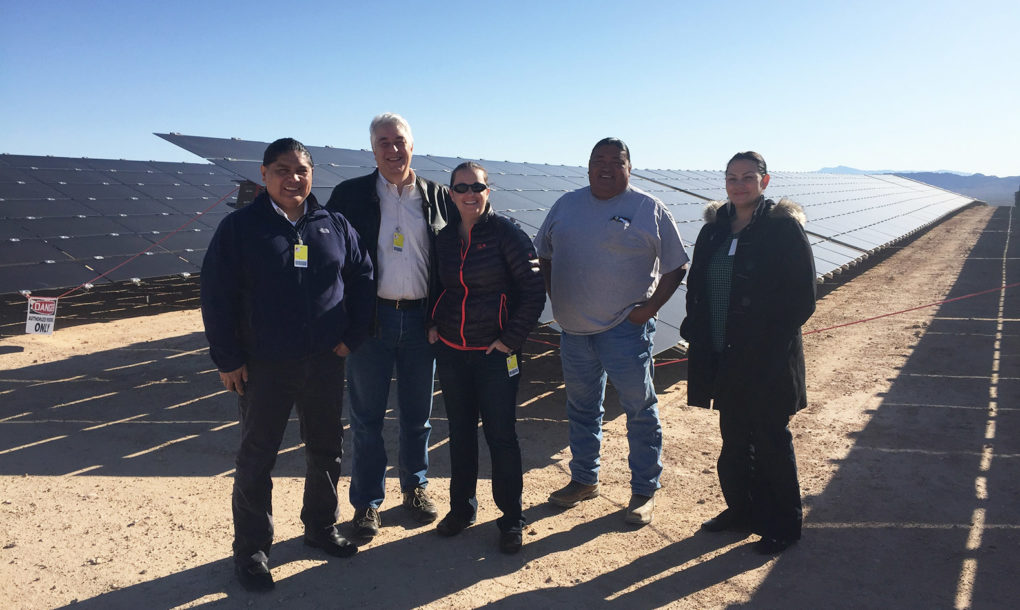


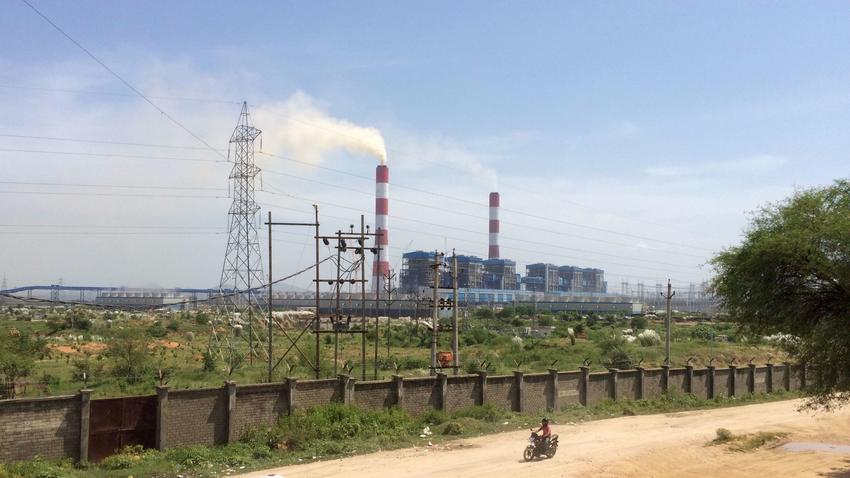
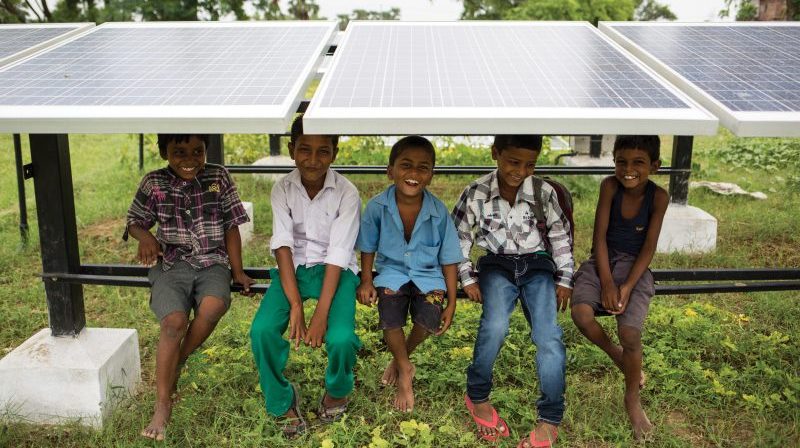

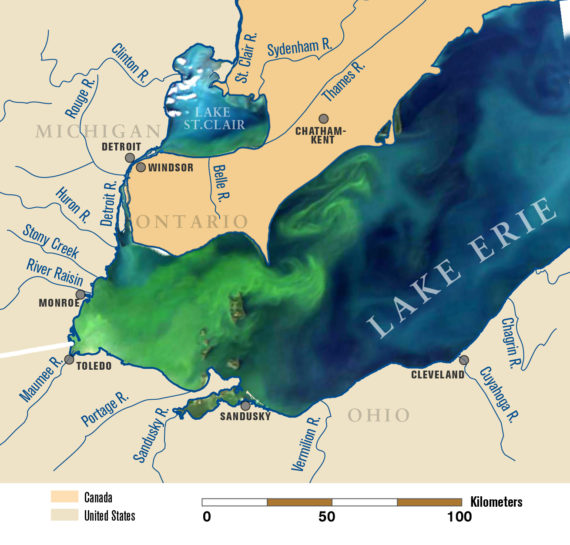
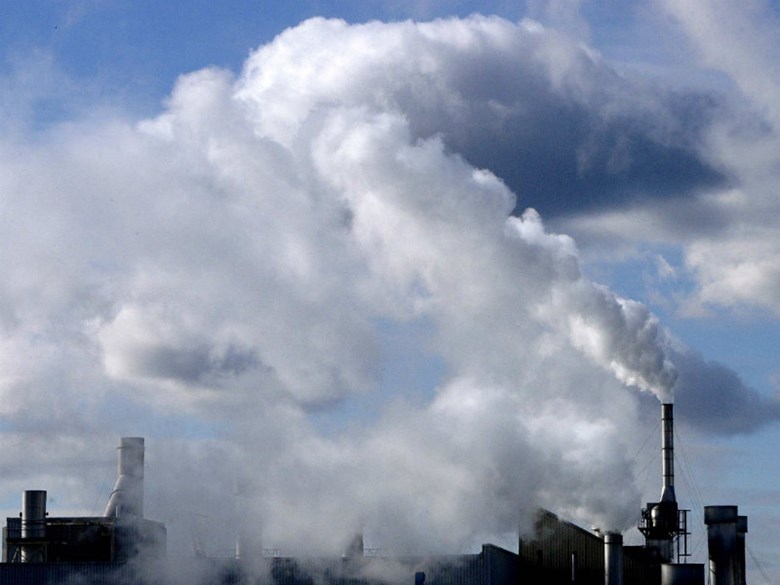
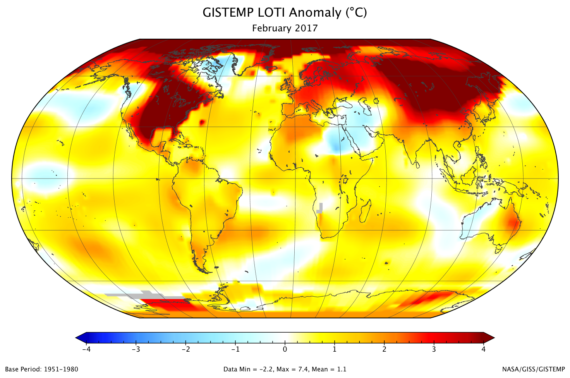


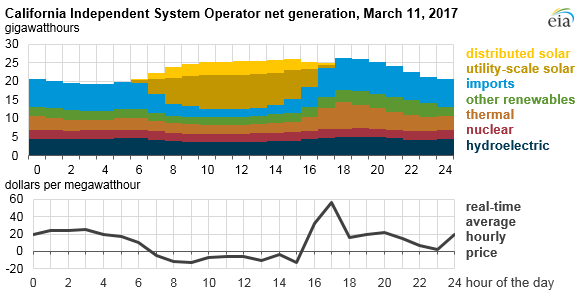
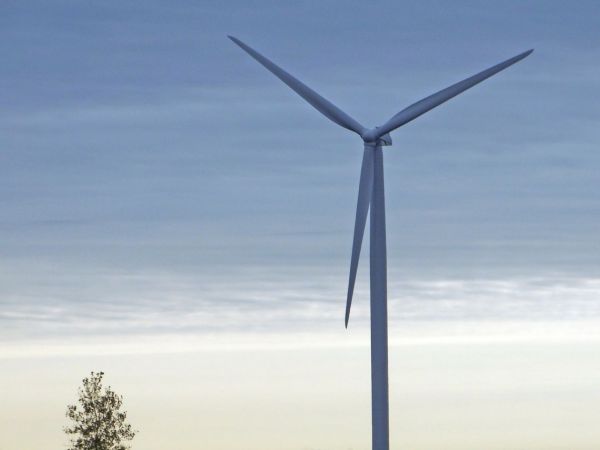
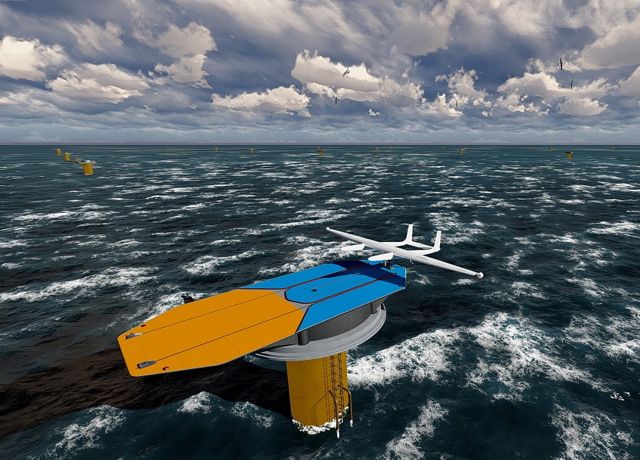

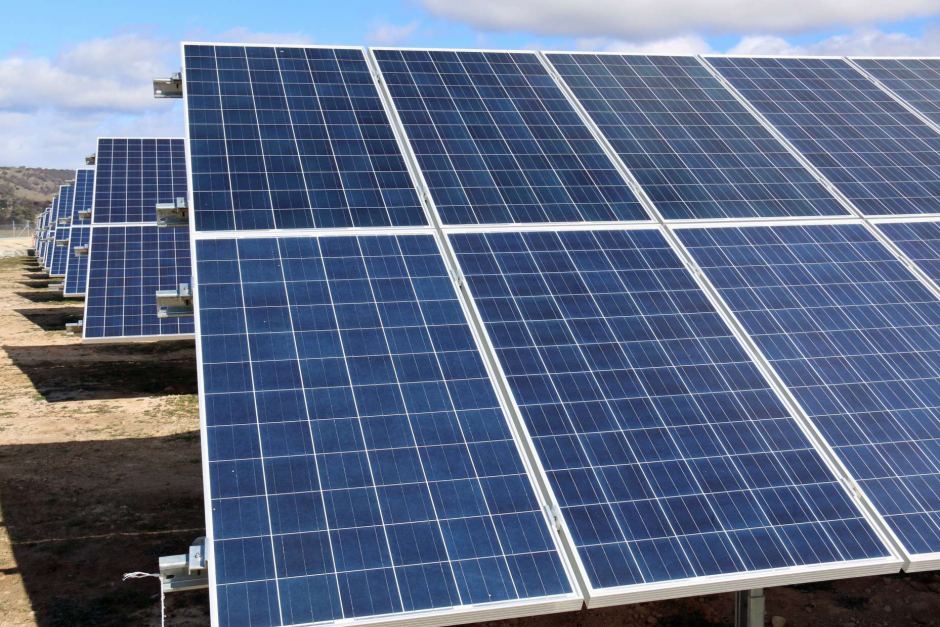

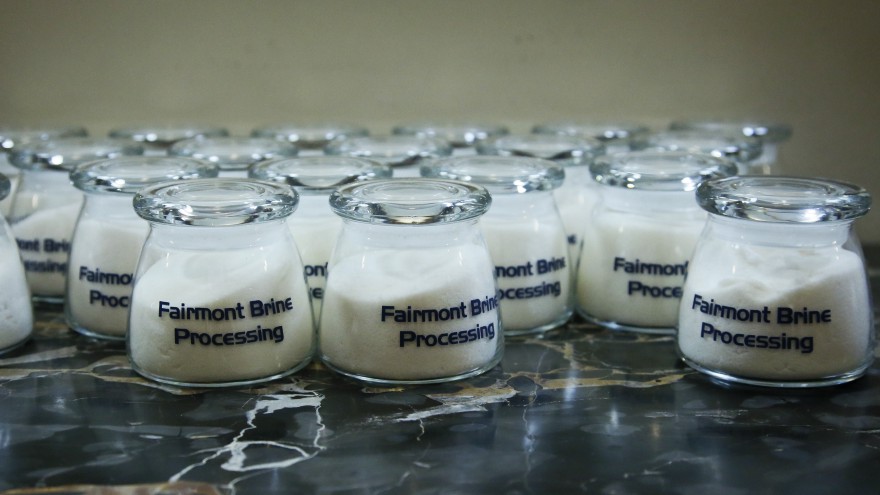
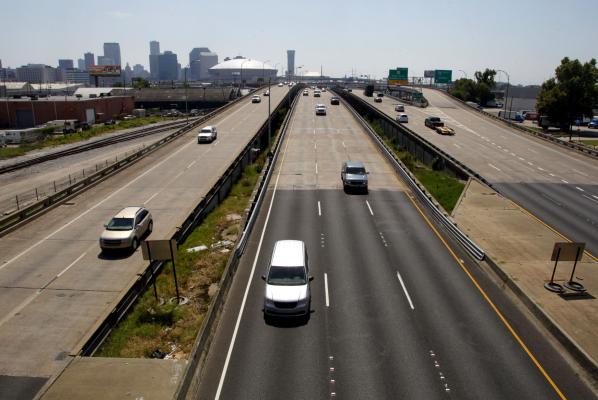


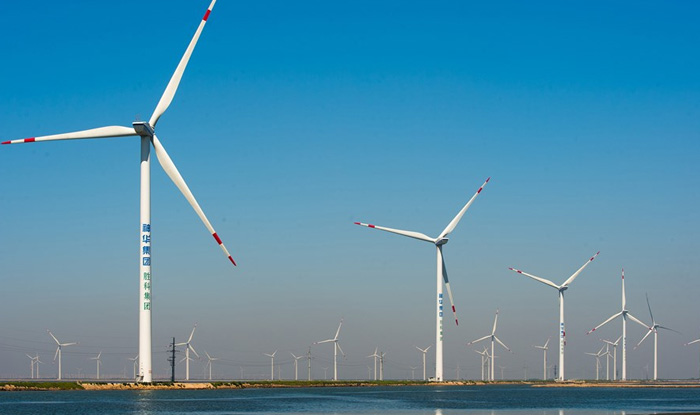
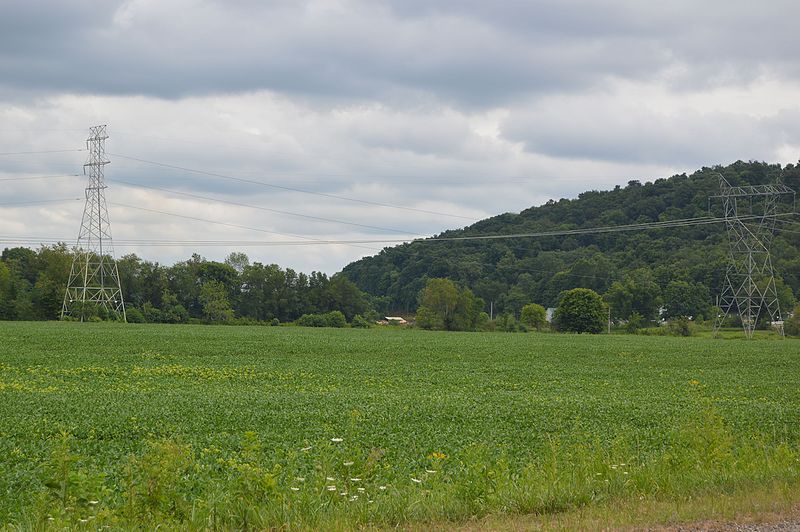
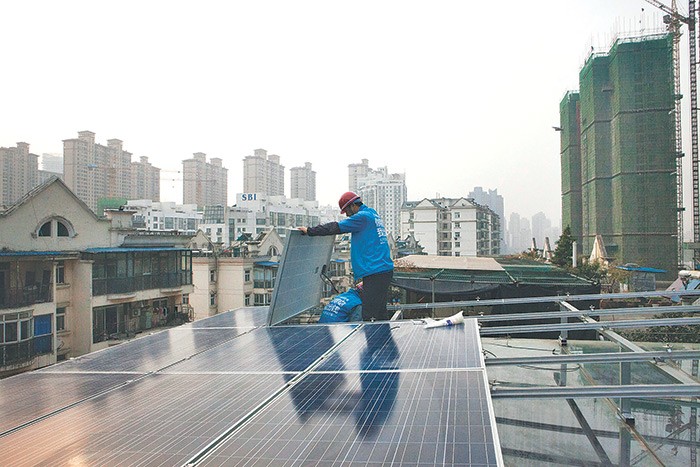

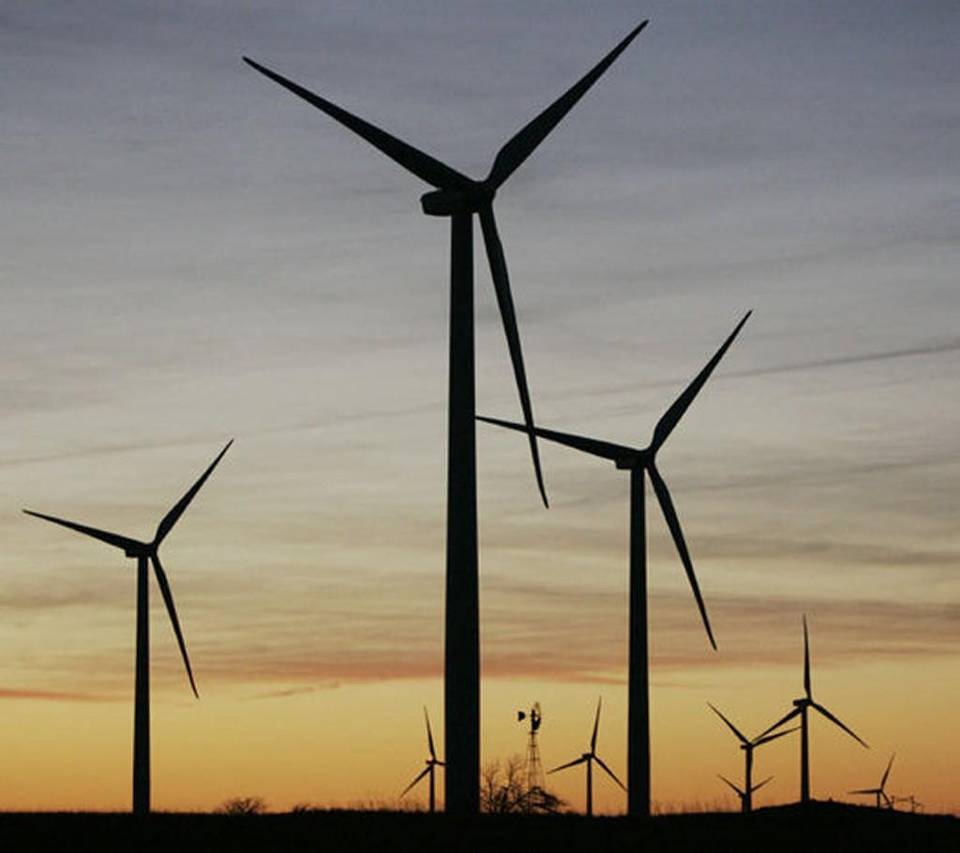
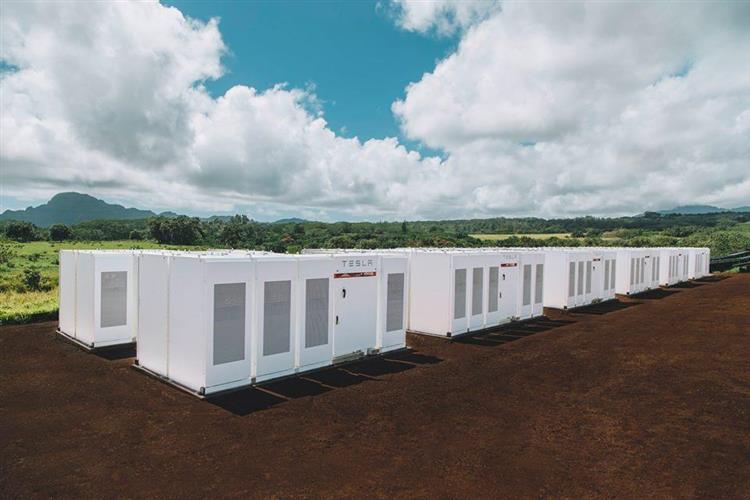
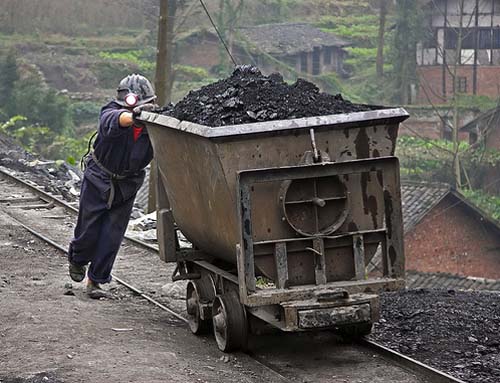
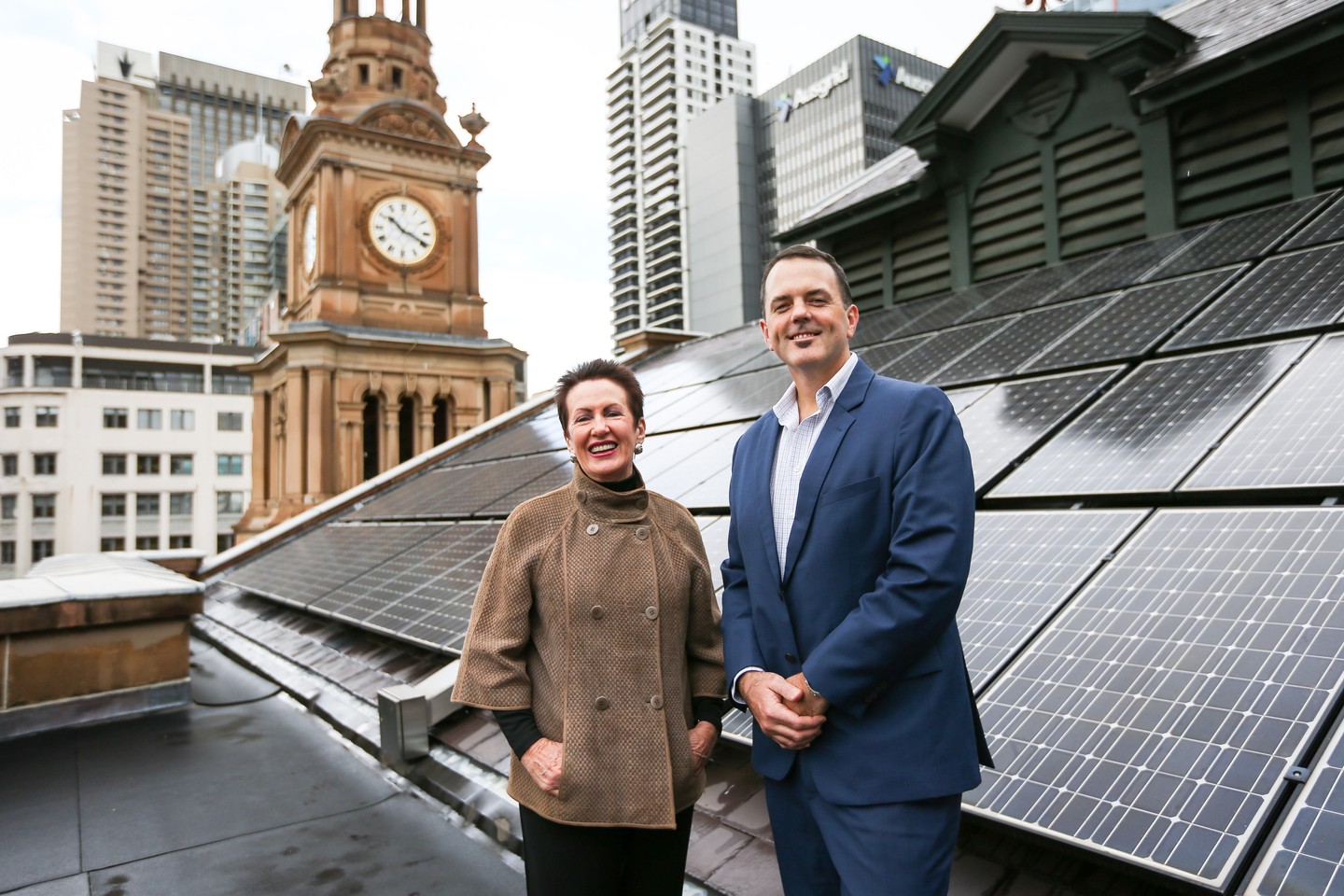
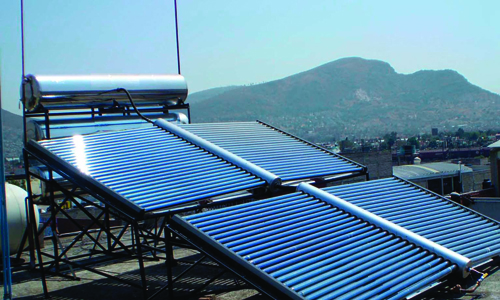
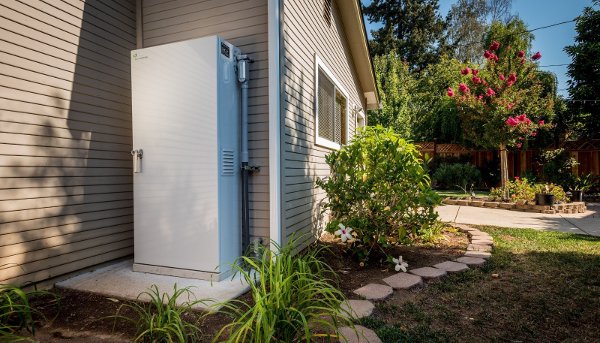
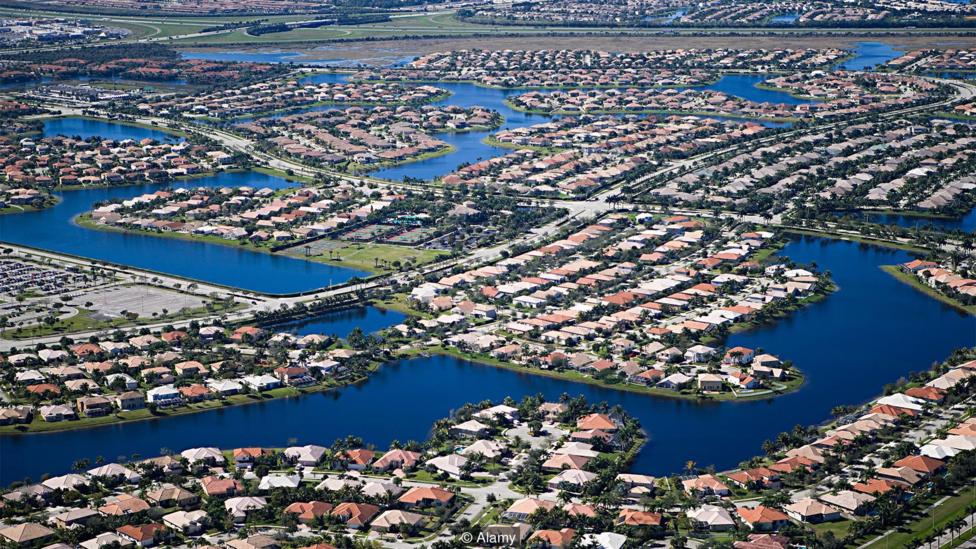


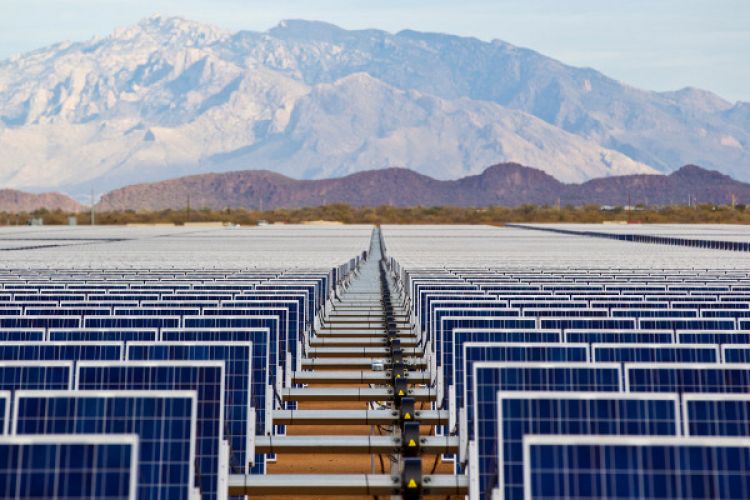
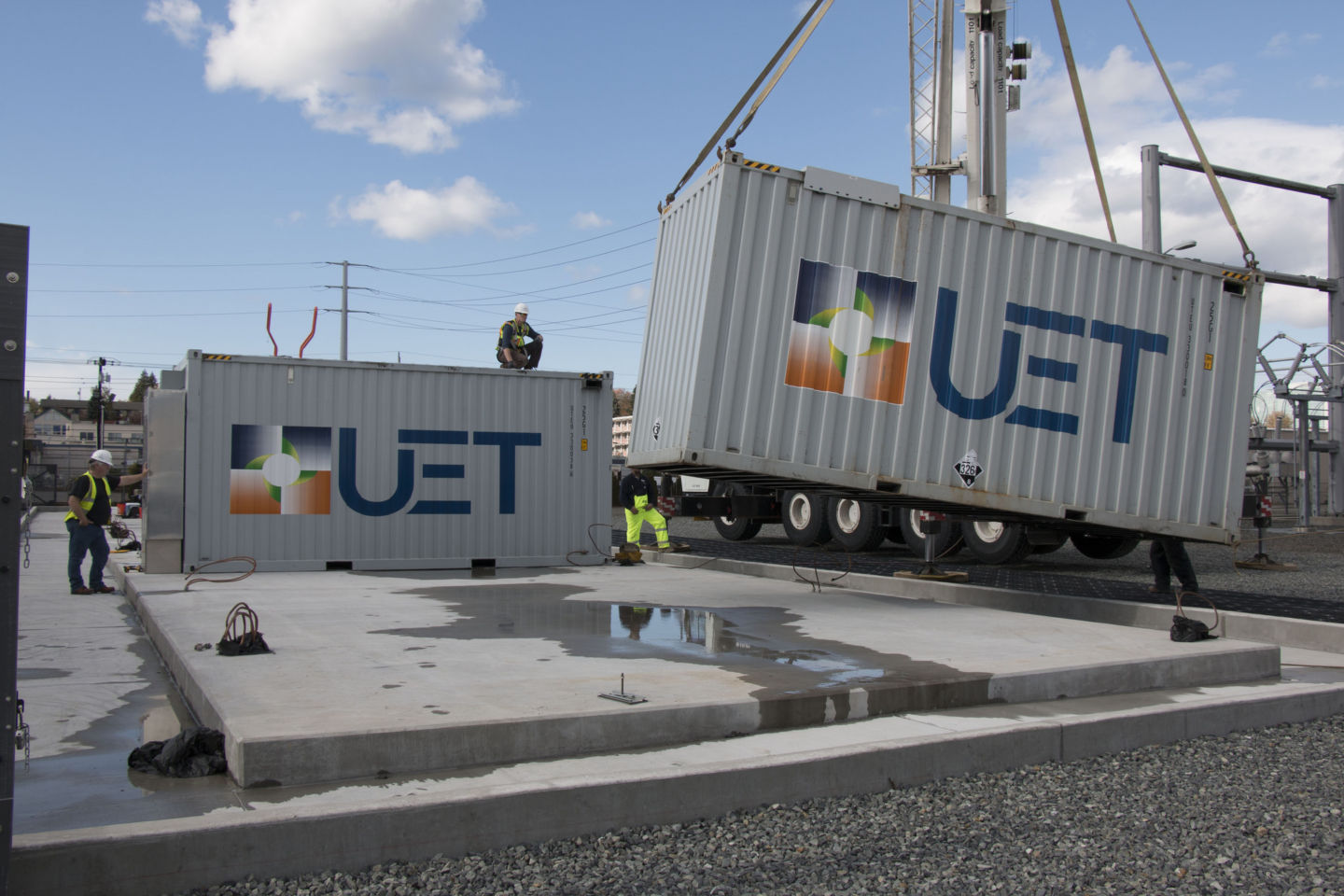


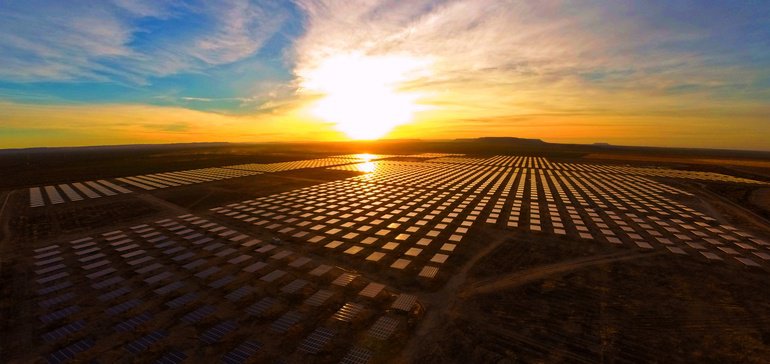

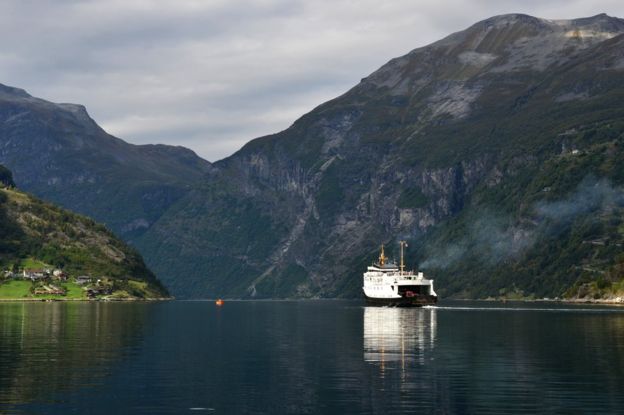


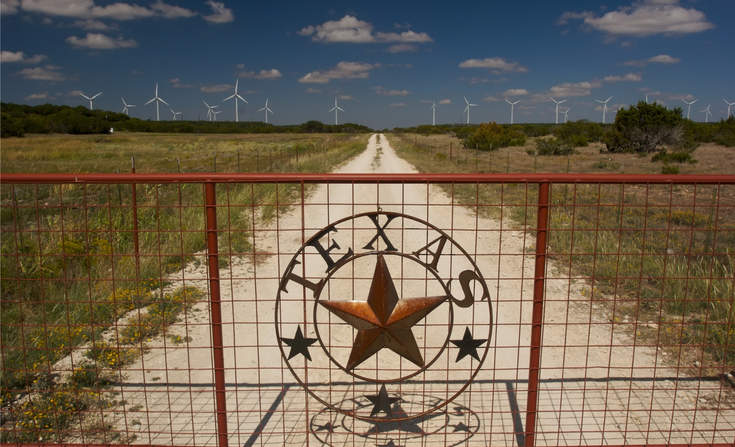


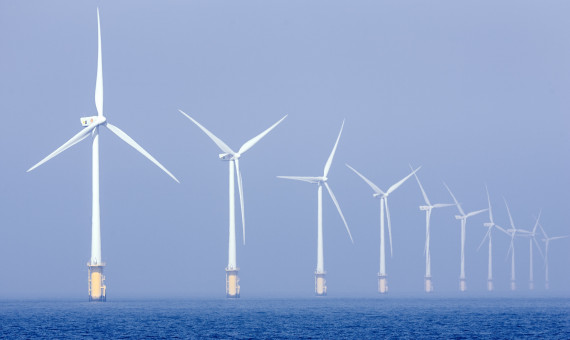

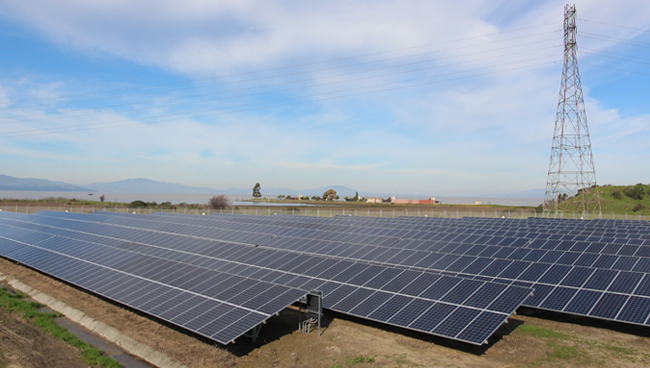


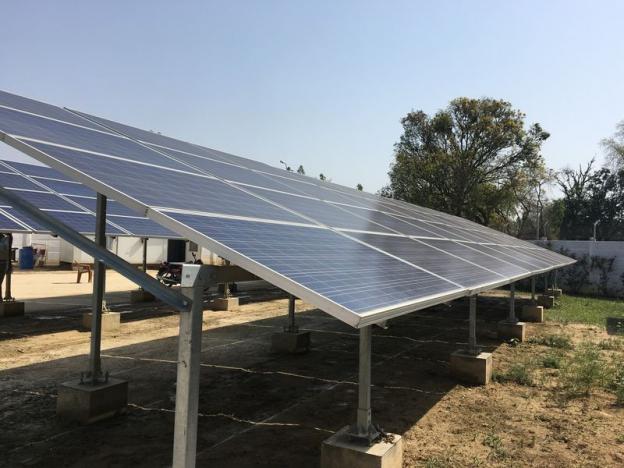


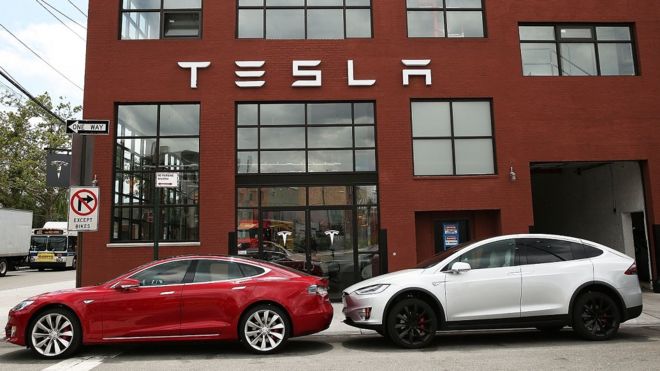

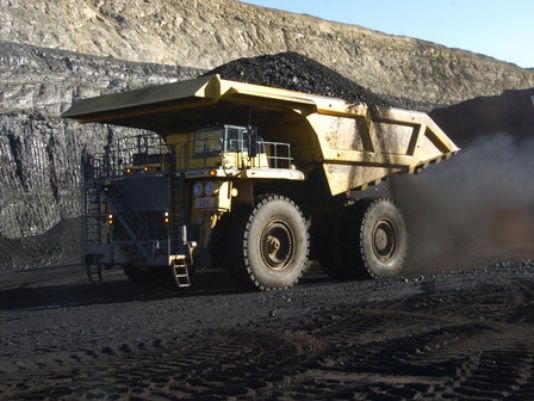


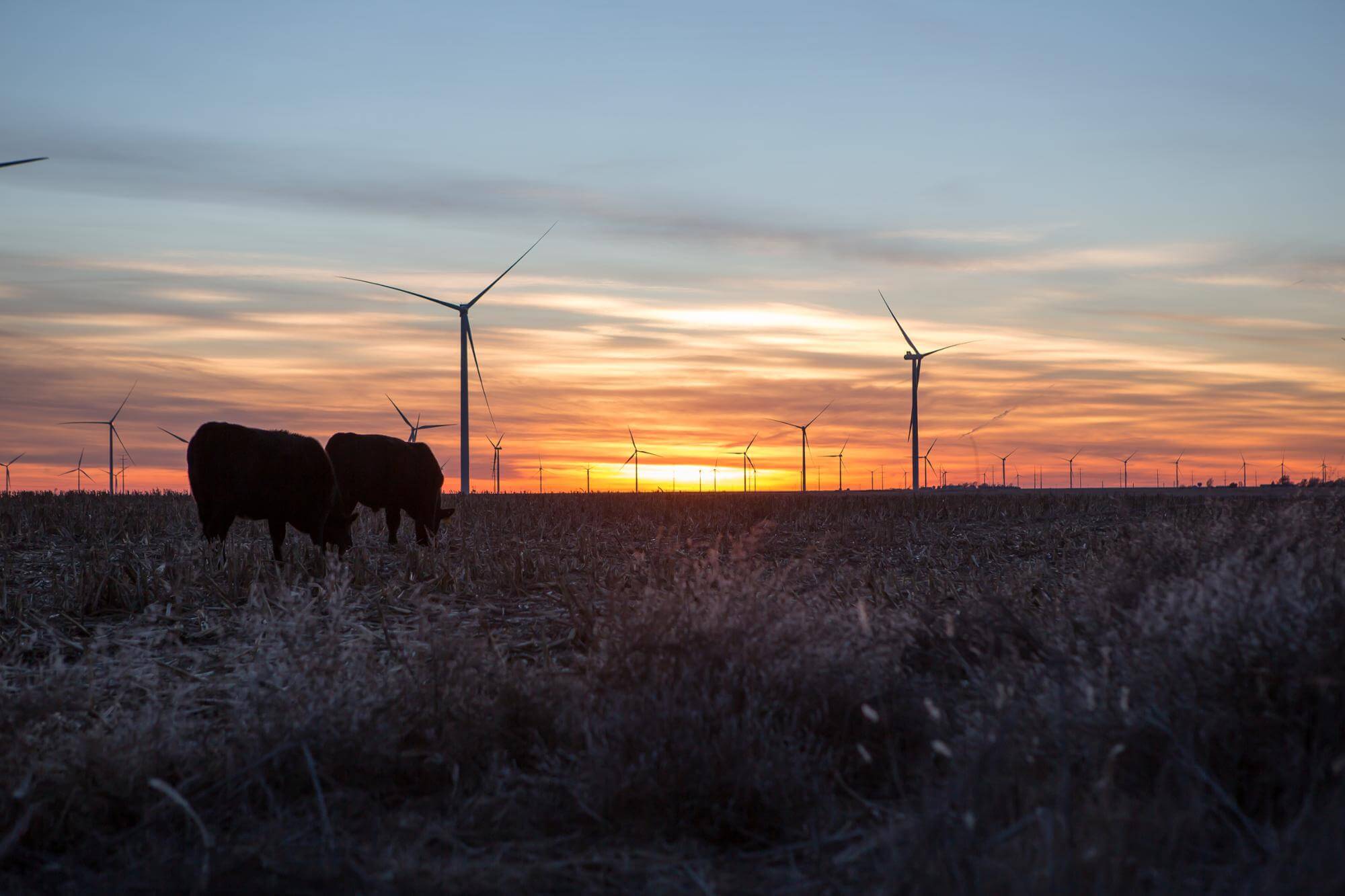





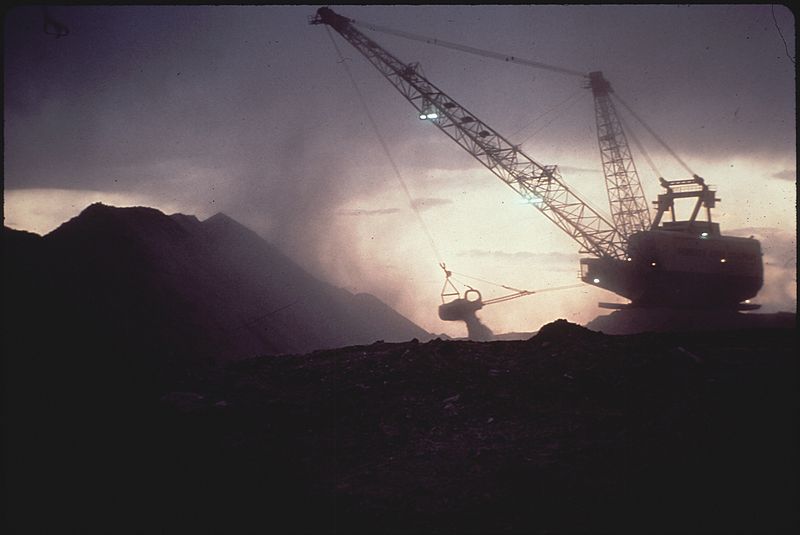



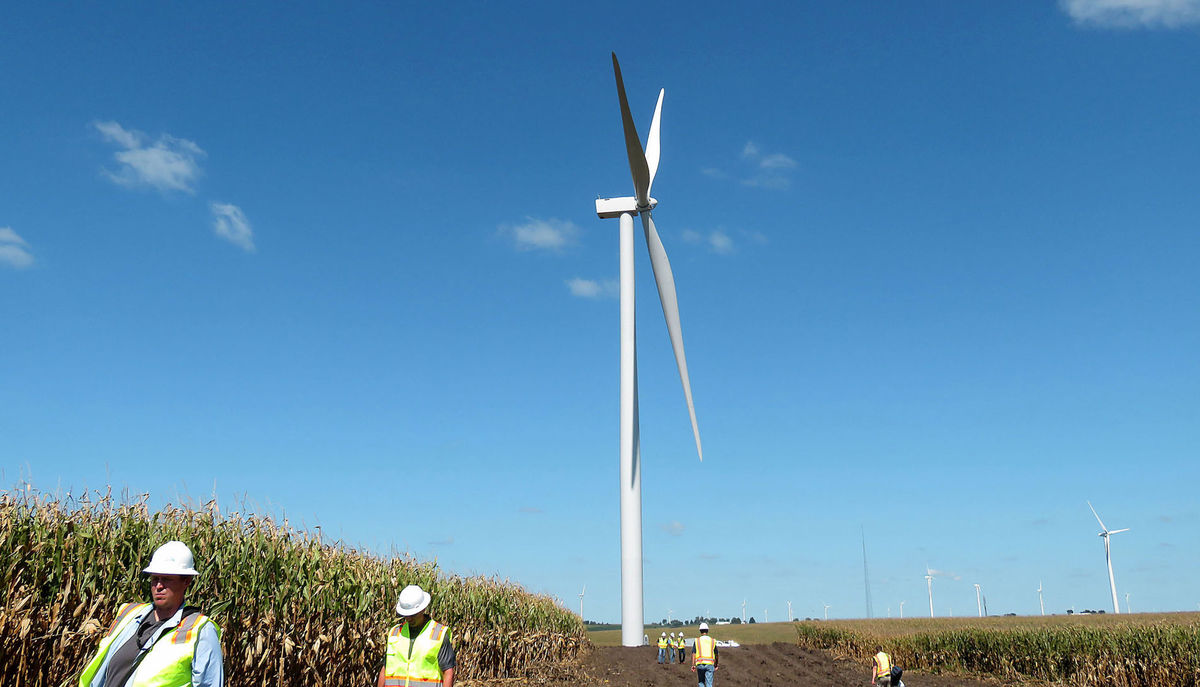
















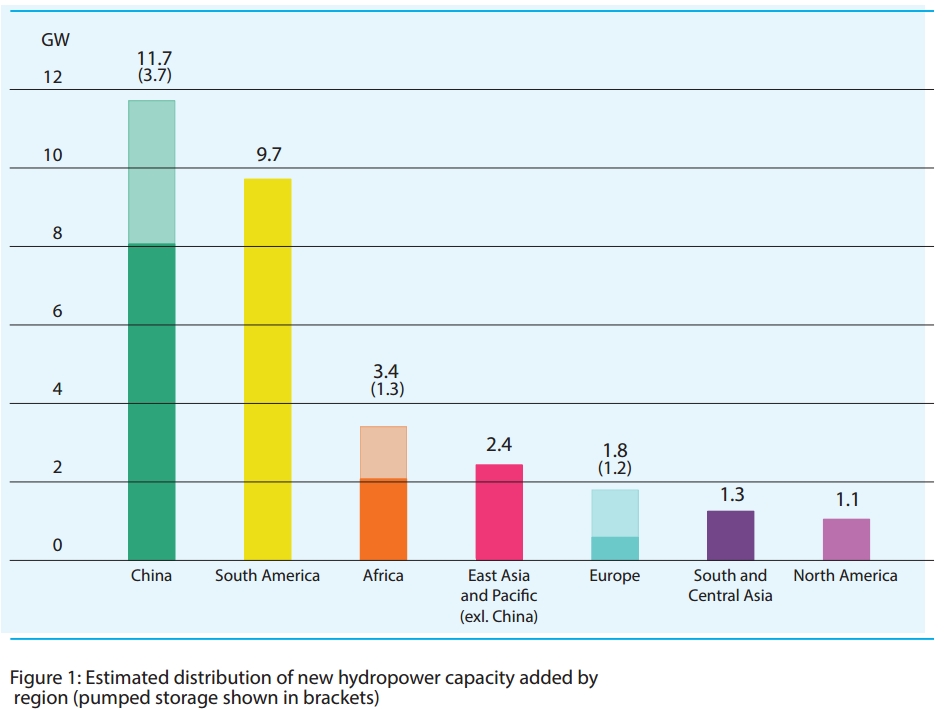


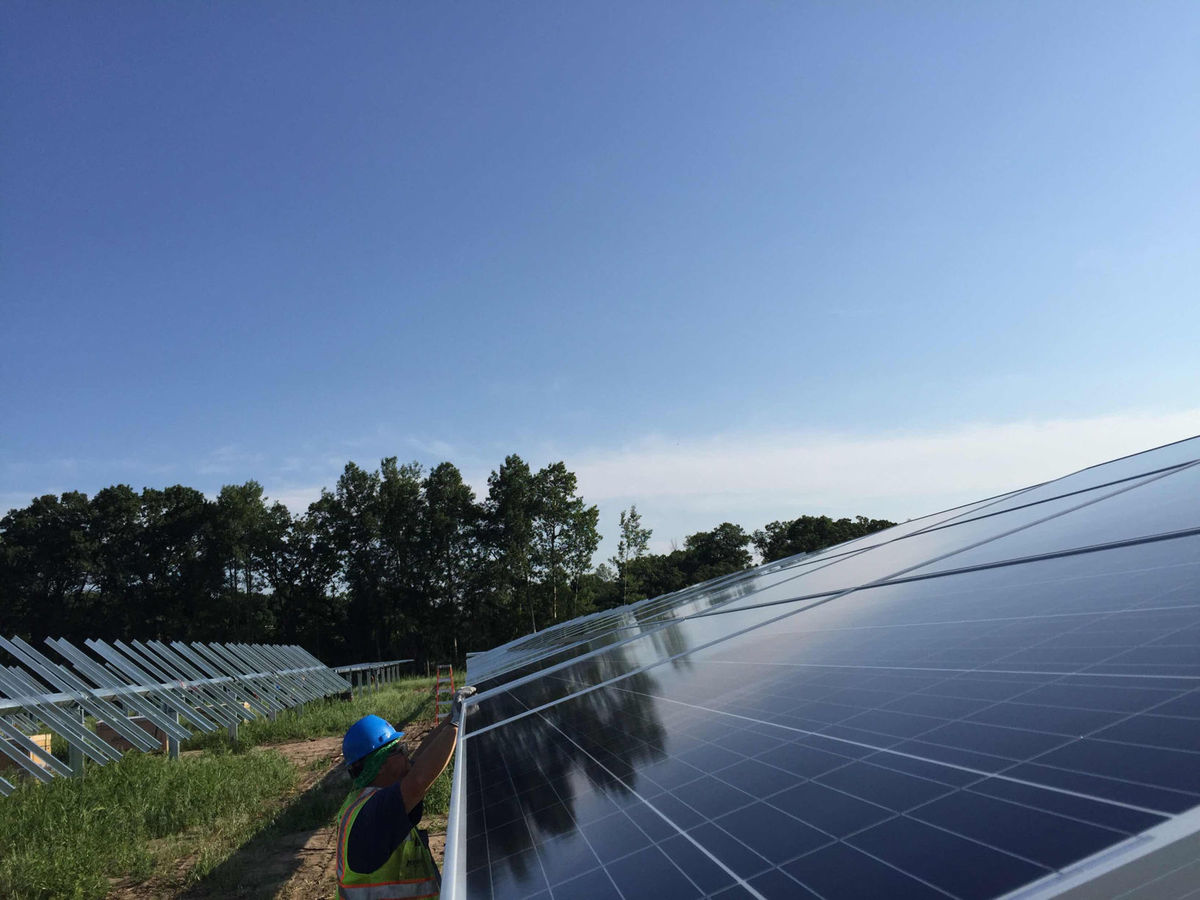
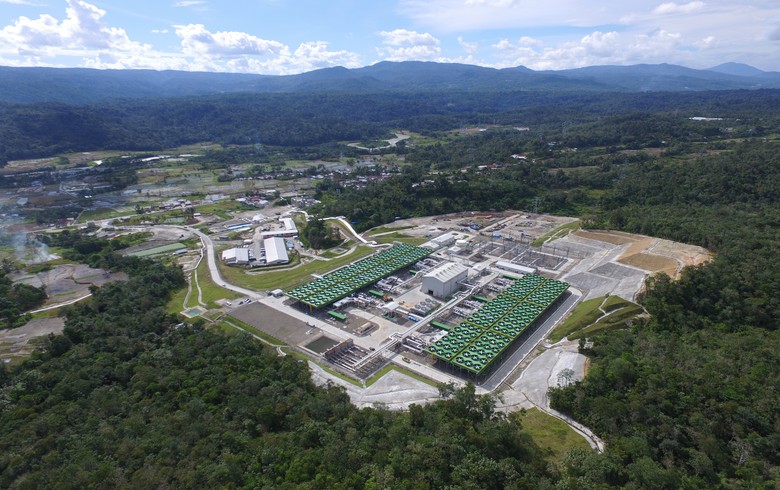


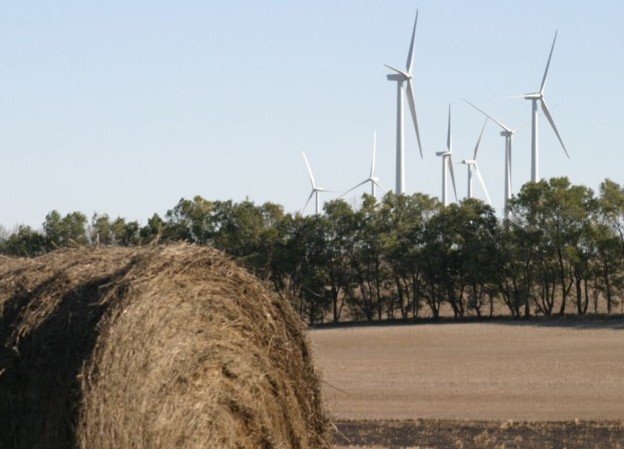


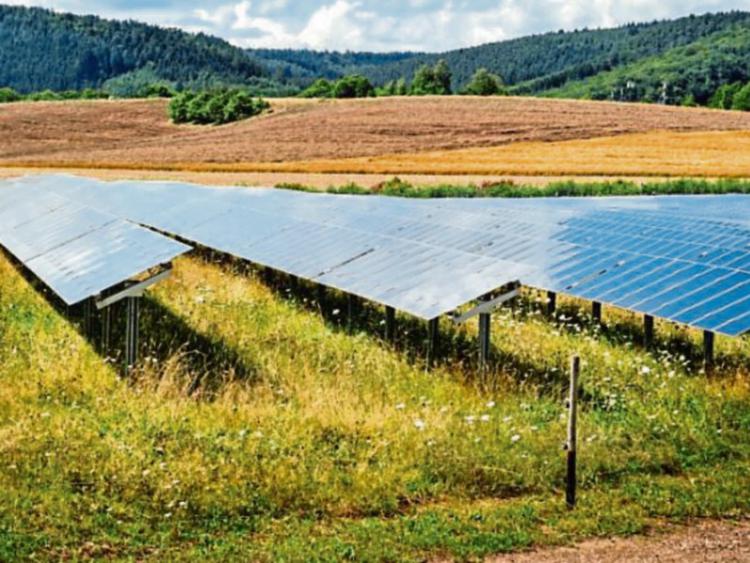


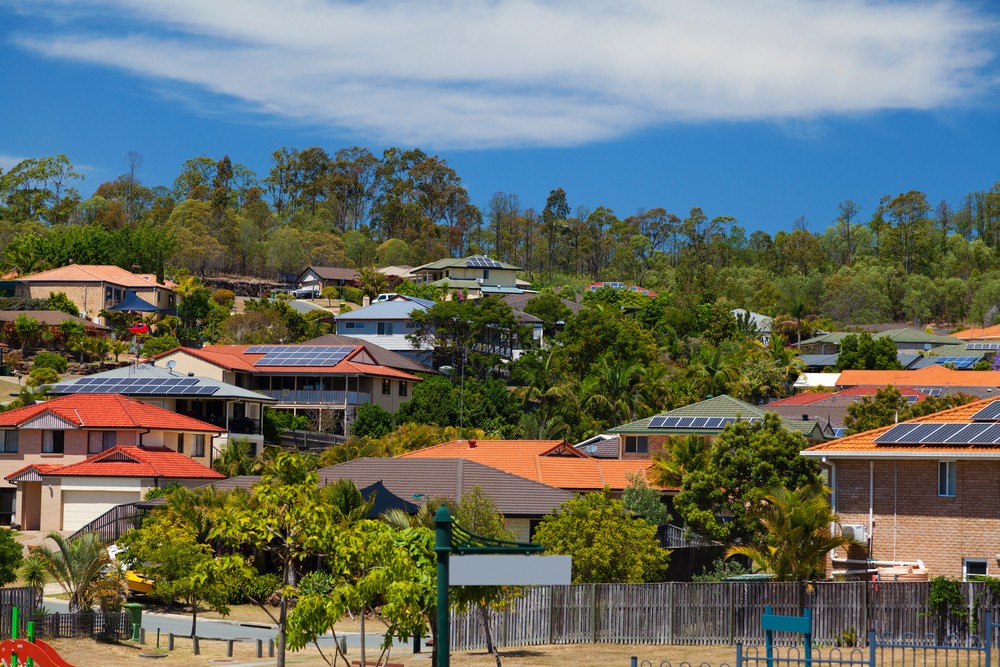


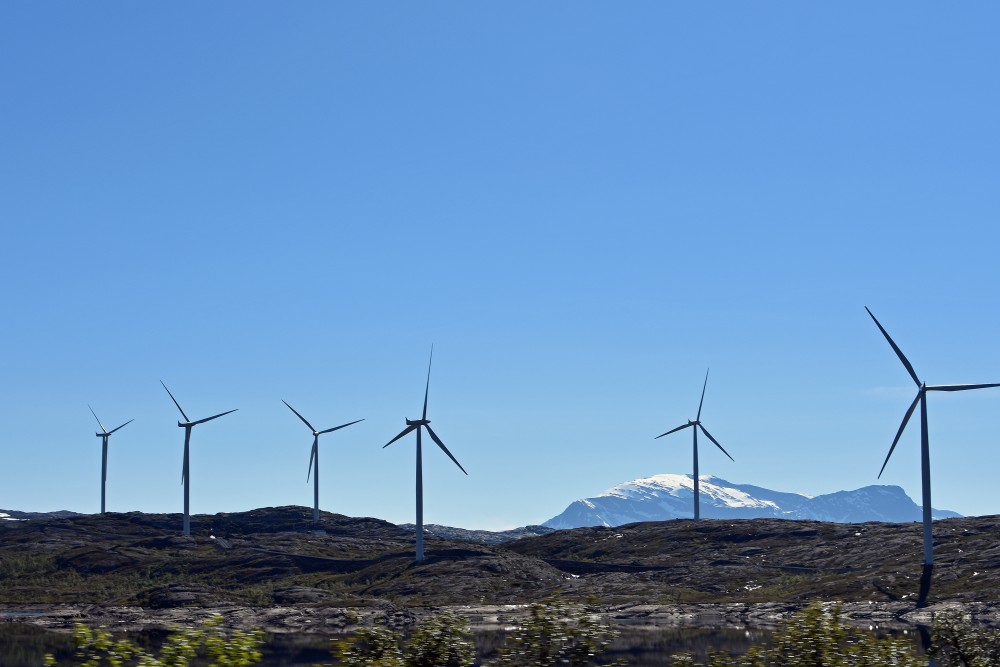

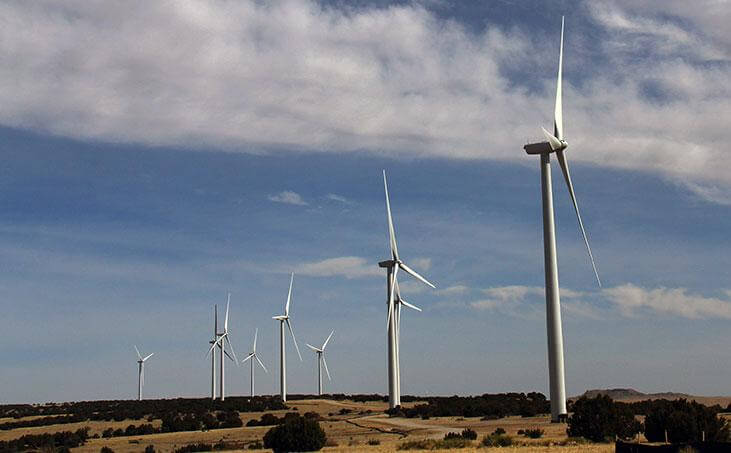

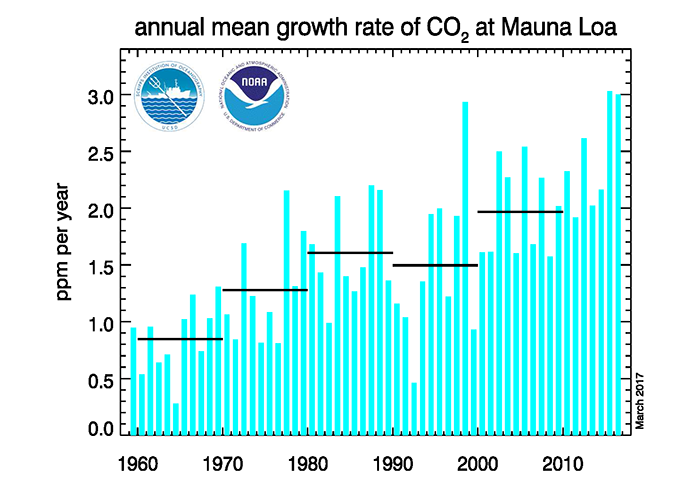


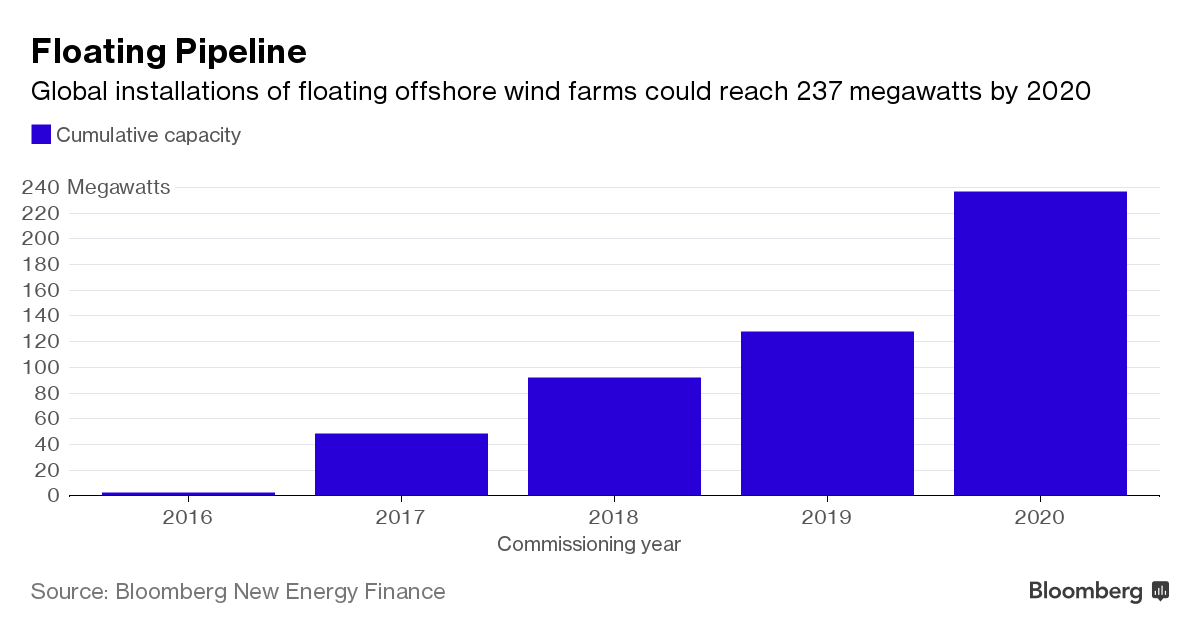
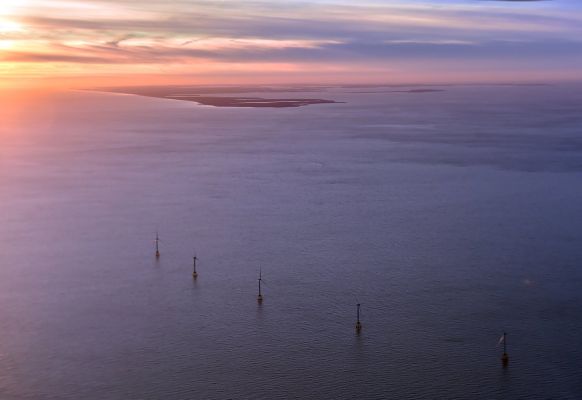
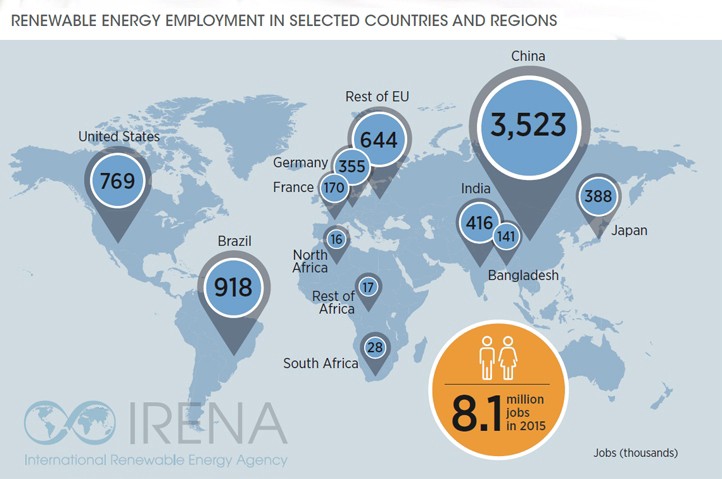

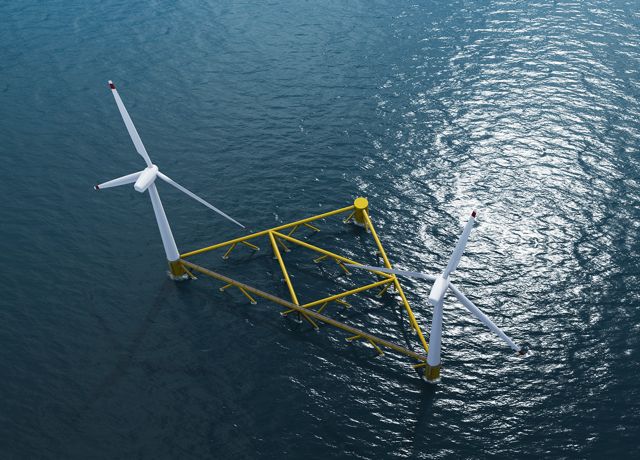

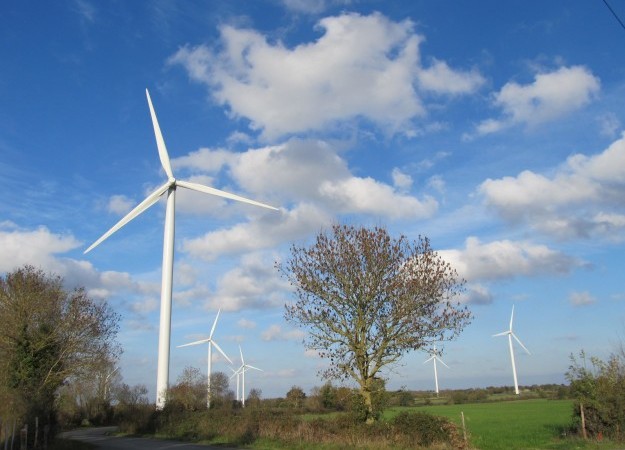
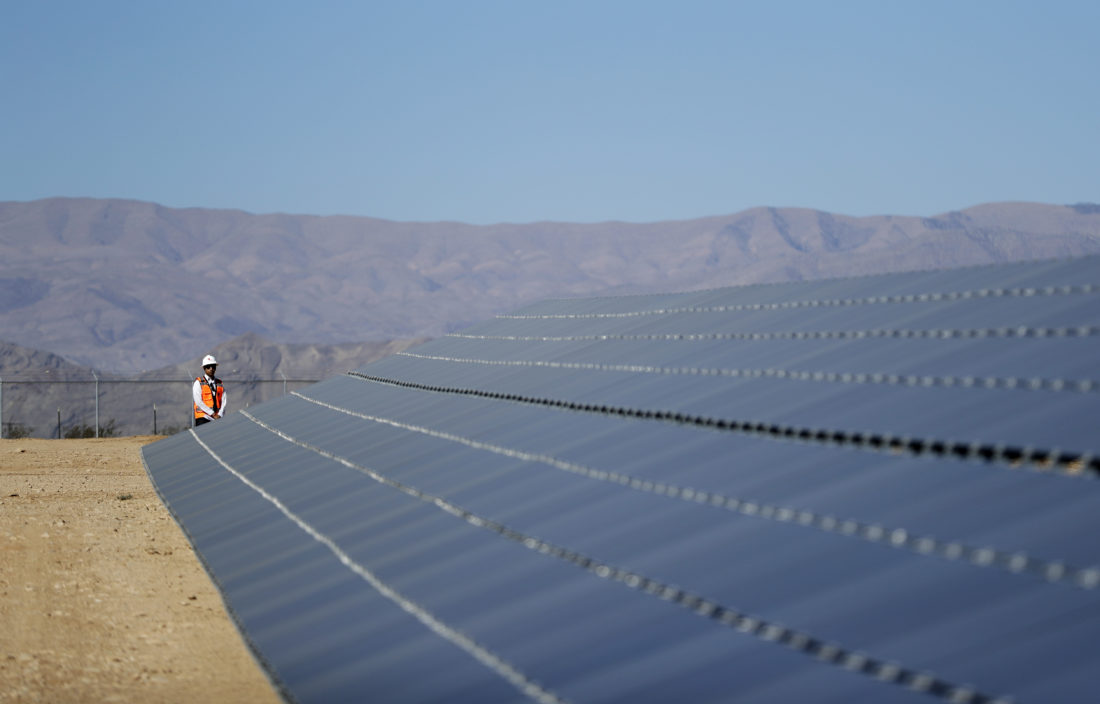


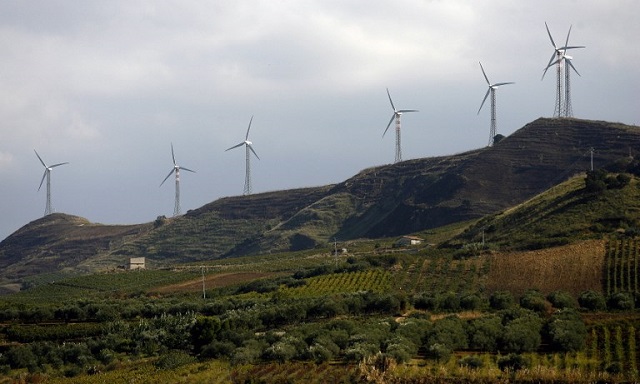

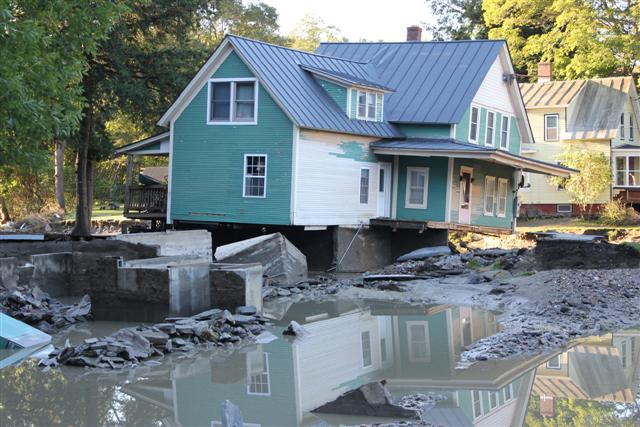
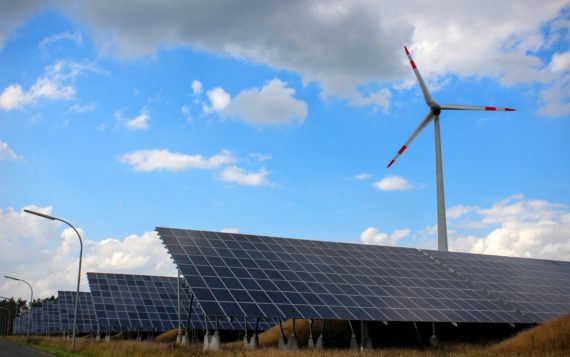


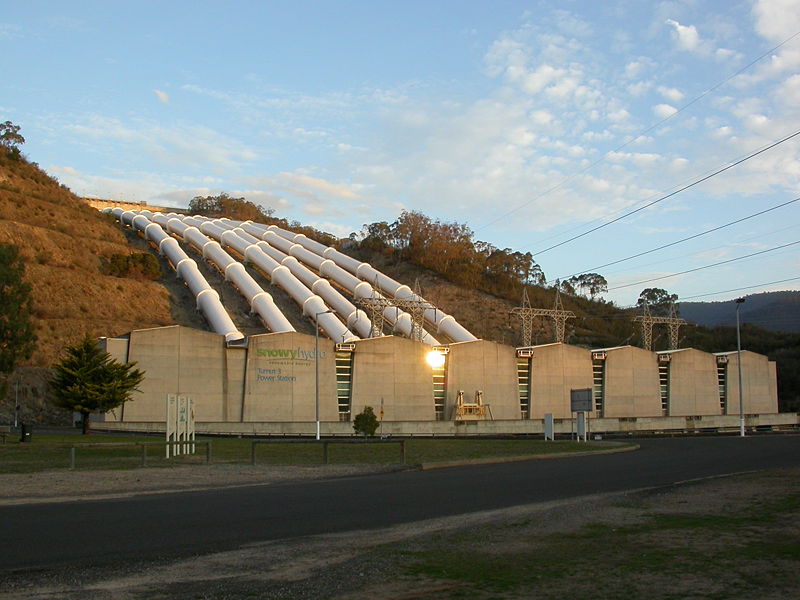









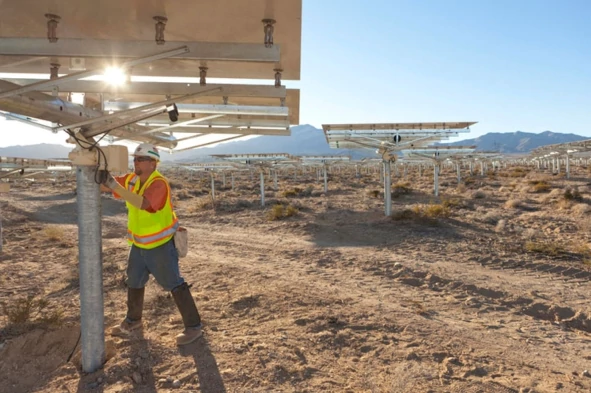
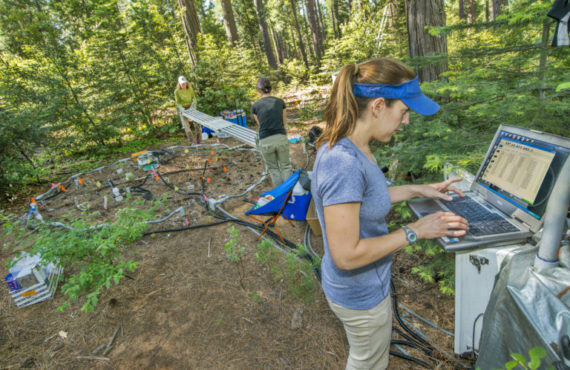


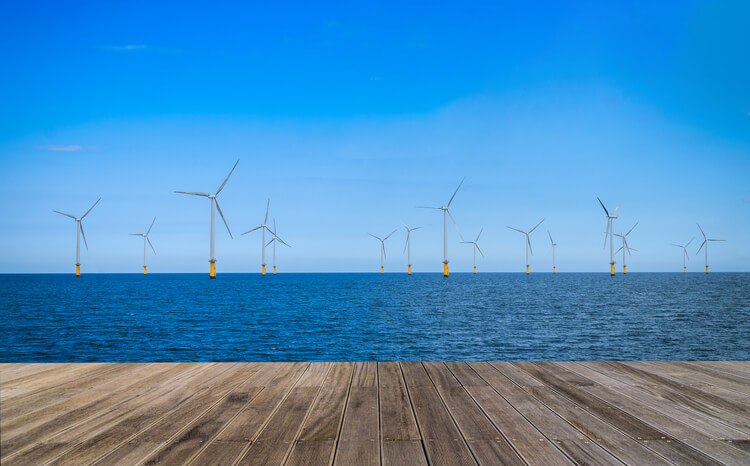

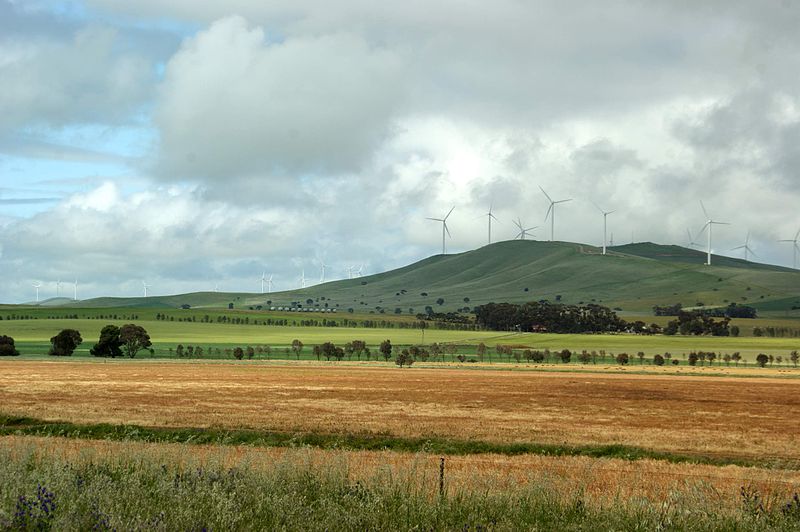


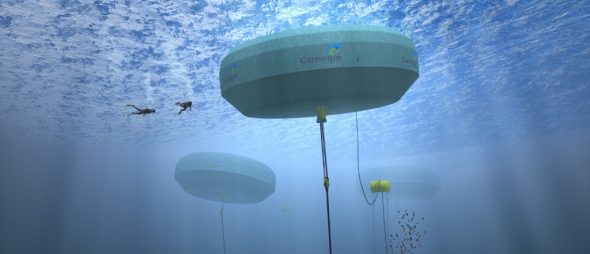

 geoharvey