Archive for the 'geothermal' Category

September 30 Energy News

September 30, 2015

World:

¶ The UK’s South West is self-sufficient and even able to export electricity on sunny summer days, the region’s renewable industry body has revealed. The potential of Solar power in Devon and Cornwall is highlighted as new official figures showed that more than a quarter of the UK’s electricity came from renewables this spring. [Western Morning News]
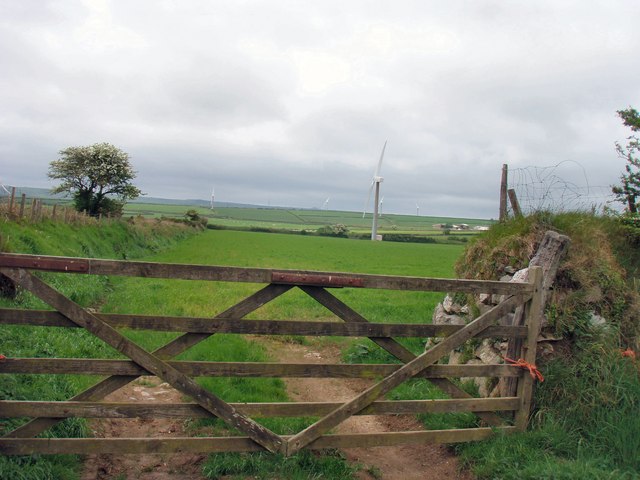
Cold Northcott wind farm in Cornwall. Photo by Jon Coupland. CC BY-SA 2.0

Cold Northcott wind farm in Cornwall. Photo by Jon Coupland. CC BY-SA 2.0

¶ Speaking in a radio interview on Tuesday morning, Australia’s Energy Minister confirmed that the Liberal Party, under the new leadership of Malcolm Turnbull, its new leader and subsequently Australia’s new Prime Minister, will be supporting the renewable energy sector and opening up support for emerging technologies. [CleanTechnica]

¶ Like the US, China has been slow to adopt fuel cell electric vehicles, but it looks like things are stepping up in a big way. The cities of Foshan and Yunfu are jumping into the lead with a $17 million order for 300 fuel cell electric buses, just announced by the Canadian company Ballard Power Systems through its Chinese licensee. [CleanTechnica]

¶ Western Power, the state-owned company that operates the grid in the south-west corner of Western Australia, may take some communities completely off grid so that it can save money on costly network upgrades and extensions. They are considering up to ten stand-alone systems, using solar, batteries, and back-up diesel. [One Step Off The Grid]

Margaret River, Western Australia. Photo by Rob & Jules. CC BY 2.0.

Margaret River, Western Australia, is one of the communities that may go off-grid. Photo by Rob & Jules. CC BY 2.0.

¶ BHP Billiton, the world’s largest mining company, did an analysis of climate change, and issued the findings in a report. The company says it believes climate change is real and that action will be taken. In fact, the introduction calls for an agreement to restrict global warming to 2 degrees warmer than pre-industrial levels. [Business Insider Australia]

¶ Despite getting 55% of its energy from coal-fired plants, the Alberta premier says the province will drop coal. She said the government is looking for a strategy to phase out the use of coal as quickly as possible, switching to renewables and efficiency without imposing unnecessary price shocks or unnecessarily stranding capital. [MINING.com]

¶ Rosatom initially pledged to have the first of the four reactors in the southern Turkish town of Akkuyu ready by 2019 but regulatory hurdles and Russia’s financial woes have slowed the $20 billion project’s progress. In March, there was talk that it would be delayed until at 2022, at earliest. Now, more delay is expected. [Today’s Zaman]

US:

¶ A newly expanded Nevada plant is providing 16.2 MW of renewable energy, enough for 22,500 Los Angeles households, reducing greenhouse gas emissions equivalent to taking 14,600 cars off the road, officials announced Tuesday. The plant, built as an expansion of an existing facility and completed months ahead of schedule. [MyNewsLA.com]
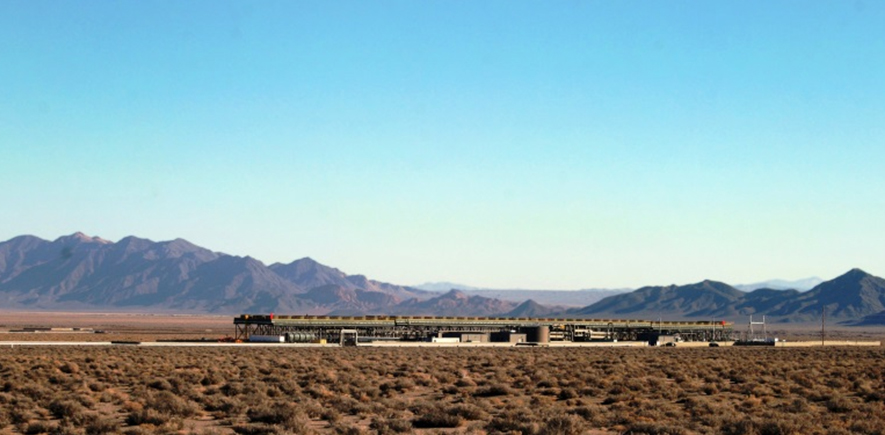
Don Campbell I geothermal plant in Nevada. Photo courtesy of the Nevada Department of Energy

Don Campbell I geothermal plant in Nevada. Photo courtesy of the Nevada Department of Energy

¶ International credit rating agency Moody’s Investors Service expects battery storage to be economical within 3 to 5 years in the US. The biggest losers will be coal-powered generators and peaking gas plants. Moody’s says battery storage costs have fallen 50% in recent years, and their rapid fall is likely to continue in the next few. [CleanTechnica]

¶ The US House passed the RAPID Act, prohibiting federal agencies from following draft guidance from the White House Council on Environmental Quality for “consideration of greenhouse gas emissions and the effects of climate change” in environmental reviews. Citibank puts the worldwide cost of the emissions at $44 trillion annually. [CleanTechnica]
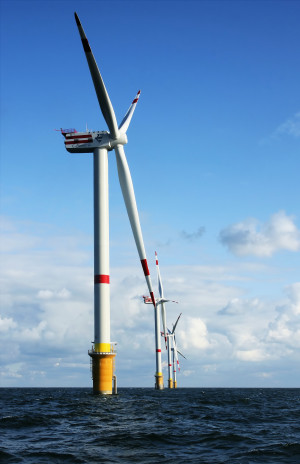
The Deep Water Wind project will create five turbines off the coast of Block Island. Photo courtesy of Hans Hilewaert

The Deep Water Wind project will create five turbines off the coast of Block Island. Photo by Hans Hilewaert. 

¶ Three miles off the coast of Block Island, Deep Water Wind is overseeing construction of the first offshore wind farm in the United States and is expecting the controversial turbines to begin producing electricity by fall 2016. The project will consist of five turbines connected to the mainland by an underwater cable. [The Brown Daily Herald]

¶ Solar energy pricing is at an all-time low, according to a report from Lawrence Berkeley National Laboratory. Driven by lower installed costs, improved project performance, and a race to build projects ahead of a reduction in a key federal incentive, utility-scale solar PV power sales agreements are averaging just 5¢/kWh. [solarserver.com]

¶ North Carolina has surpassed 1 GW of installed solar capacity, the fourth US state to do so, according to the North Carolina Sustainable Energy Association. The state reached 1.04 GW of installed capacity as of September 24. California, Arizona, and New Jersey had already reached the 1-GW milestone. [CleanTechnica]


November 17 Energy News

November 17, 2013

World:

¶   The new hydropower systems recently installed on the River Thames are now generating enough power for Windsor Castle, and more according to the director. They are producing 200 kW, and sometimes running some electricity onto the grid. [Royal Central]

¶   Ontario will achieve its goal to eliminate coal-fired generation before the end of 2014. Over the next year, the Thunder Bay Generating Station will stop burning coal and be converted to use advanced biomass as fuel for electricity generation. [4-traders]

¶   Power station Drax said full year earnings will be “materially ahead” of market forecasts following a better than expected performance from its first biomass unit in Yorkshire. [Yorkshire Post]

¶   Tokyo Electric Power Co. is looking to shed 1,000 jobs through a voluntary redundancy program to boost efficiency and improve earnings, sources revealed Saturday. [The Japan Times]

¶   A 20-year program to convert highly enriched uranium from dismantled Russian nuclear weapons into fuel for U.S. power plants has ended, with the final shipment loaded onto a vessel in St. Petersburg’s port. [Las Vegas Sun]

US:

¶   Lawmakers on Maine’s Legislature’s Energy, Utilities and Technology Committee are working on bills to be held over from 2013. They include bills on renewable energy, wind power, and the state’s renewable energy standard. [Lewiston Sun Journal]

¶   Maine’s Meadowmere Resort is adding solar PV to generate electricity. The solar field will feature over 70 panels and generate 18 kW for roughly 20,000-25,000 kWh annually. This will supply power to 36 of its 144 total rooms, with a 3-4-year payback. [Foster’s Daily Democrat]

¶   The Arizona Corporation Commission is meeting to decide whether to allow the state’s largest utility to charge more to customers with rooftop solar panels. The solar industry believes the proposal would decimate the industry. [Las Vegas Sun]

¶   A total of 42 landfill renewable energy projects have received approval through a Massachusetts program that started two years ago, according to Ed Coletta, spokesman for the state’s Department of Environmental Protection. [Boston Globe]

¶   Golden West Power Partners LLC of Moline, Illinois, is planing for a $400 million wind farm having 147 turbines with 425-foot towers on nearly 25,000 acres about 34 miles northeast of Colorado Springs, Colorado. [Pueblo Chieftain]

¶   All the stuff folks in Gresham, Fairview, and Wood Village, Oregon put down their toilets and other drains is being harnessed to slash energy costs for sewer system customers. Eight years ago it cost $40,000 per month; soon it will be $0. [Portland Tribune]

¶   The nation’s largest facility for turning food scraps into biogas is about to go online in north San Jose, California. Food waste from restaurants and commercial businesses, will be processed in 16 massive digestion chambers, each holding 350 tons of waste. [Contra Costa Times]

¶   Exelon CEO Christopher Crane has acknowledged that the Quad Cities and Clinton nuclear plants are in financial trouble. He says both plants could stay open if they can get long-term contracts at prices above current market rates. [Crain’s Chicago Business]

345

October 24 Energy News

October 24, 2013

Opinion:

¶   “The dark forces lined up against renewables in Australia” The Australian renewables industry is under no illusion about the extent of the forces lined up against it following the election of a highly conservative Coalition government in Canberra. [RenewEconomy]

¶   “Divest From Fossil Fuel Stocks Before ‘Carbon Bubble’ Bursts” Al Gore has warned that individuals, investment funds, and institutions should divest from fossil fuel companies before the great “carbon bubble” bursts in world financial markets. [The9Billion]

World:

¶   The UK’s Treasury announced on Monday that it would be looking at renewable energy as part of a series of infrastructure development projects worth £33 billion. Pre-qualified biomass, wind, and waste-to-energy projects are already on the list. [Blue & Green Tomorrow]

¶   The Danish island of Samsø went from being fossil fuel dependent to operating 100% on renewables in eight years. Power producers include farmers and co-ops of residents. They export enough electricity from wind to compensate for their fuel for vehicles. [RenewEconomy]

¶   UK Prime Minister Cameron’s pledge to roll back some green levies has already run into staunch opposition within the coalition. Deputy Prime Minister Clegg may not support cuts to environmental schemes that create green jobs, and reduce fuel bills. [Business Green]

¶   Radiation level of water from a drainage channel at the crippled Fukushima Daiichi nuclear plant in Japan has more than doubled, the plant’s operator, the TEPCO said Thursday. It is at 140,000 becquerels per liter of beta radiation at a tank that leaked. [CRIENGLISH.com]

US:

¶   Western Massachusetts Electric Company has commenced construction on a new solar plant in Springfield, Massachusetts, on the site of a former landfill facility. The 3.9 MW PV plant will produce enough power for 600 local homes. [pv magazine]

¶   Chicago-based New Generation Power has been awarded a Multiple Award Task Order Contract by the US Army to develop geothermal and solar power generation projects for Department of Defense installations. [IT Business Net]

¶   NJR Clean Energy Ventures, a subsidiary of New Jersey Resources, has announced acquisition of its first onshore wind project. The Two Dot wind farm will be located in Montana and have a total capacity of 9.72 megawatts. [Your Industry News]

¶   Businesses that use renewable natural gas, or RNG, created from food and yard waste can reduce greenhouse gas emissions as much as 90% by switching away from diesel, according to a guide produced by Energy Vision and funded by the US DOE. [Environmental Leader]

¶   Duke Energy plans to increase how much it relies on renewable energy only modestly, from 1% next year to just 2% in 2028. The utility is concentrating on natural gas. [WFAE]

¶   The US Army aims to replace old generators with hydrogen fuel cells. Army scientists have been working to cut down on the fuel consumption of forward operating bases in order to lower the costs associated with such bases. [Hydrogen Fuel News]

¶   The Vermont State Nuclear Advisory Panel, which advises state government on nuclear issues, passed a resolution saying the Vermont Yankee plant should be dismantled promptly after it shuts down next year. [Vermont Public Radio]

September 30 Energy News

September 30, 2013

World:

¶   NRG Energy of Princeton, New Jersey,  Digicel of Kingston, Jamaica announced a partnership to acquire, construct and operate renewable energy and solar photovoltaic (PV) projects under development in the Caribbean region. [solarserver.com]

¶   A new 55 MW Western Australian based wind farm project has been officially opened and is now fully operational. The $200 million Mumbida Wind Farm project is being heralded as one of the most advanced wind farms in Australia. [RenewEconomy]

¶   Former Japanese Prime Minister Junichiro Koizumi says he believes the country should immediately stop relying on nuclear power before it is too late. He also says the responsibility of pulling the plug lies squarely on the shoulders of current Japan Prime Minister Shinzo Abe. [The Japan Daily Press]

US:

¶   A new study from the DOE’s National Renewable Energy Laboratory found that obtaining 25% of electricity in the Western US from renewable energy will reduce carbon dioxide pollution by up to 34% and save $7 billion annually in fossil fuel costs. [CleanTechnica]

¶   Tax credits for the production of wind power and other renewable energy sources face expiration at year’s end amid few signs Congress will decide to continue them. Neither of the tax-writing committees in the House and Senate has marked up a legislative package to extend the provisions yet. [Businessweek]

¶   Solar Grid Storage has a unique approach to storing solar power: leasing a storage system, similar to a Power Purchase Agreement where the installer provides the equipment at no cost to the customer and the customer pays for the electricity that the system generates. [ENGINEERING.com]

¶   US-Icelandic geothermal development company, Reykjavik Geothermal, has agreed to build a 1000 MW geothermal plant in Ethiopia to help the East African nation harness its energy potential. The geothermal plant will be one of the world’s largest geothermal power plants. [Ventures Africa]

¶   The Indian Point nuclear plant is now the first in the country operating with an expired license from the Nuclear Regulatory Commission, after the license for one of its two reactors expired yesterday. Under NRC regulations, the reactor can still operate until a decision is made on renewing the license. [News 12 Westchester]