Science and Technology:
¶ “Steering Electricity: How Grid Control Devices Can Unlock Transmission Capacity” • Getting better performance from the transmission system is important. Grid enhancing technologies fit that bill. They are tools that allow operators to move more energy through existing transmission networks without any need to build entirely new ones. [CleanTechnica]
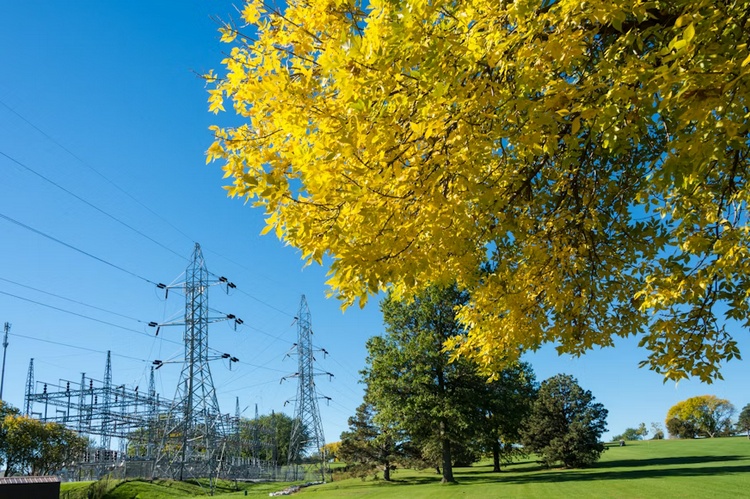
Power lines (American Public Power Association, Unsplash)
World:
¶ “Polish Firms Design 900-MW Baltic East” • A consortium of three companies will carry out preliminary design and Front End Engineering and Design work for the 900-MW Baltic East offshore wind farm being developed by ORLEN Neptun. The companies will prepare technical documentation, define FEED parameters and obtain building permits. [reNews]
¶ “Oil Prices Soar Above $100 A Barrel As Iran Conflict Impacts Supplies” • Oil prices increased to $114 (around €98) per barrel for the first time since 2022 as the Iran war got more intense, threatening production and shipping in the Middle East. The price of Brent crude went past $114 on the Chicago Mercantile Exchange, up 23%. [Euronews]

Refinery in British Columbia (Anthony Maw, Unsplash)
¶ “BYD’s 1.5-MW ‘Flash’ Charging Wasn’t A Gimmick, And The Battery Chemistry Behind It Could Change The Industry” • A vehicle compatible with BYD’s new flash technology can go from a 10% state of charge to 70% in just five minutes. That alone is staggering. But the truly disruptive metric is that it can reach 97% in just nine minutes. [CleanTechnica]
¶ “Why China Can Withstand Oil’s Surge Past $100 More Easily Than Other Countries” • As oil prices climbed past $100 a barrel after the beginning of the Iran war, OCBC analysts said China may be “less sensitive to a prolonged closure of the Strait of Hormuz than many of its Asian peers.” China has diversified its energy sources, largely by adding renewables. [CNBC]
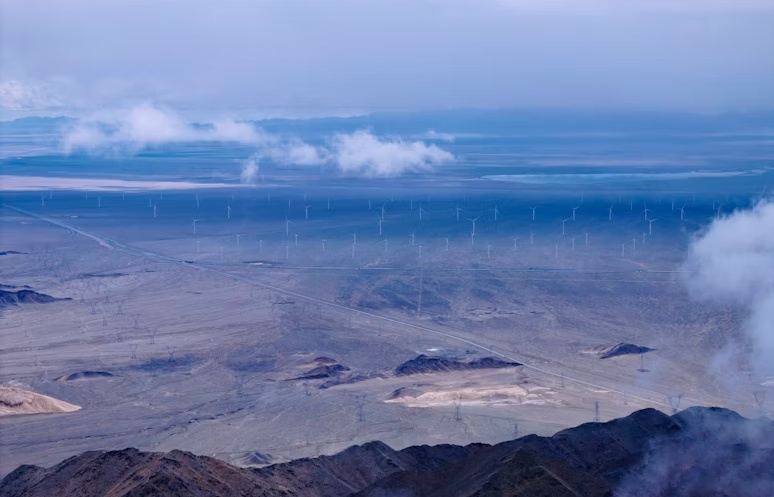
Wind farm in China (Ilya Hou, Unsplash, cropped)
¶ “Kmart Hits 100% Renewable Electricity Target” • Kmart Group announced that the company has achieved its 100% renewable electricity target. This means all electricity for Australia, in 448 stores, 10 distribution centers, and 12 national and international offices, is covered by onsite renewables or offsite agreements from renewable sources. [Retail World Magazine]
¶ “Cuba Gambles On Green Energy To End Crippling Blackouts” • Cuba has long been suffering through an energy crisis, with residents facing regular blackouts, which has been exacerbated by the recent US intervention in Venezuela and the halt of its critical energy exports to Cuba. Now, the island is assessing a possible future in renewables. [reNews]

Havana (Hyunwon Jang, Unsplash)
¶ “How China Plans To Tackle Its Massive Solar Panel Waste Problem” • Despite a pivot away from clean energy in some places, renewables are now too cheap to fail, and installations are expected to more than double by 2030. China has a large share of the solar manufacturing market, but its solar boom has led to a major waste problem. [OilPrice.com]
¶ “New Turbines Harness The Power Of The St Lawrence In A Canadian First” • Two next-generation turbines powered by river currents will be put into the St Lawrence Seaway off Montreal this fall, marking the first installation of the novel renewable energy technology in Canada. US technology outfit ORPC is the developer. [Canada’s National Observer]

ORPC Rivgen® power system (Emcroz123, CC BY-SA 4.0)
¶ “Officials Spark Backlash With Controversial Nuclear Power Plans: ‘Irresponsible’ ” • In Saskatchewan, experts are wary of a government initiative pushing nuclear power. Electric utility SaskPower and the Saskatchewan government are looking into building a nuclear reactor in the area, raising concerns among environmental experts. [The Cool Down]
US:
¶ “Bird Populations Are Shrinking Ever Faster In The Face Of Climate Change And Agriculture” • Billions fewer birds fly in North American skies than decades ago and their population is shrinking ever faster, a study published in Science found. The decline is mostly due to a combination of intensive agriculture and warming temperatures. [Euronews]

Geese (Gary Bendig, Unsplash)
¶ “Jobs Report Shows US Unexpectedly Lost Jobs In February” • The US lost 92,000 jobs in February, according to the report from the US Bureau of Labor Statistics. The new jobs report arrived as markets roil and gasoline prices surge in response to the war with Iran. The Middle East conflict cast fresh uncertainty over the economic outlook. [ABC News]
¶ “A Better Way To Compare Gas And Electric Prices” • The EPA says one gallon of gasoline has 33.7 kWh of raw chemical energy. Gasoline engines are 20% efficient, but electric motors are 80% efficient. If we divide 33.7 kWh by four, we get a fair equivalent of a gallon of gas: 8.4 kWh. A gallon of should be compared for cost with 8.4 kWh of electricity. [CleanTechnica]

What is the cost of a road trip? (Karl Fredrickson, Unsplash)
¶ “Solar And Storage Could Reshape Rural Electricity Markets” • From a business perspective rural electrification always seemed like a terrible idea. The electric utility has to spend prodigiously on poles and wires for a tiny customer base. Renewables produce electricity at lower cost, are faster to deploy, and don’t need a big transmission system. [OilPrice.com]
¶ “Nuclear Experts Undercut White House Claims About Reactor At Heart Of Its Case For War” • The Trump administration said Iran’s Tehran Research Reactor was a justification for its military strikes, though it gave no evidence that the reactor was used to develop nuclear weapons. Several nuclear scientists said it would be hard to use the reactor to make a bomb. [MS NOW]
Have an emphatically sedate day.
geoharvey is free and without ads.
 geoharvey is not tax-deductible.
(, CC-BY-SA 3.0) km² CO₂ NH₃ CH₄ ₹ NOₓ ‽ ♦♦♦♦♦
.
.
.
.
.
.
.
 geoharvey
Leave a comment