World:
¶ “ATP Introduces New Extreme Heat Rule To Protect Players During Men’s Tennis Matches” • The ATP Tour will add a rule to address extreme heat during men’s professional tennis matches. It will allow 10-minute breaks during best-of-three-sets singles matches starting next season. The women’s circuit adopted a similar rule over thirty years ago. [Euronews]

Tennis (Andrew Heald, Unsplash)
¶ “EU Carmakers To Comply With 90% Emissions Reduction By 2035” • The EU executive revoked the 2035 ban on the sale of new cars and vans powered by diesel or petrol after pressure from some EU countries and the automotive industry. The remaining 10% of emissions will need to be compensated for by using such mechanisms as low-carbon steel. [Euronews]
¶ “As Reefs Vanish, Assisted Coral Fertilization Offers Hope In The Dominican Republic” • In an underwater nursery just off the Dominican Republic coast, “coral babies” are growing on metal structures that look like large spiders. It’s a technique gaining momentum in the Caribbean to counter the drastic loss of corals due to climate change. [ABC News]

Coral (David Clode, Unsplash)
¶ “Playing For Time Won’t Make European Carmakers Great Again” • Reversing the EU’s 2035 phase-out of combustion engine sales sends a confusing signal, T&E said. Carmakers could continue selling cars with engines, the European Commission proposed, despite the EU’s aim to have the last polluting cars off its roads by 2050. [CleanTechnica]
¶ “New Nissan LEAF Now In Production In UK” • We have news that production of the new Nissan LEAF in the UK has begun in Sunderland, and the third-gen LEAF is being released in the UK. With 282,704 units of the LEAF produced in Sunderland to date, this updated version should easily push that total past 300,000. But why not 500,000? [CleanTechnica]

Nissan LEAF (Nissan image)
¶ “Renewables Remain Lowest-Cost Option Says CSIRO Report” • The CSIRO (Commonwealth Scientific and Industrial Research Organisation) draft GenCost report for 2025-2026 shows that solar and onshore wind power backed by storage and either gas or hydrogen is the least-cost new-build electricity generation technology mix. [pv magazine Australia]
¶ “Vestas Wins 828-MW Brazil Deal” • Casa dos Ventos and Vestas have agreed an 828-MW order for the Dom Inocêncio wind complex in the south-central region of Piauí. The project will have 184 turbines, each of 4.5-MW capacity. The companies added that construction is expected to begin in 2026 with final commissioning scheduled for 2028. [reNews]
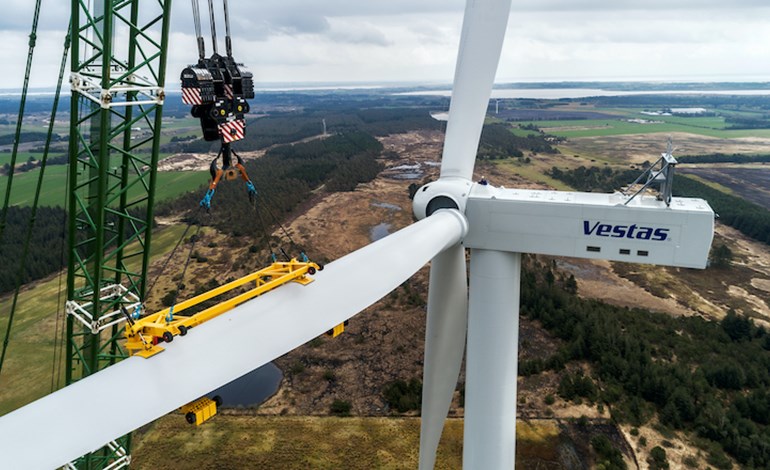
Vestas turbine construction (Vestas image)
¶ “2025 Solar, Battery, And EV Round Up” • Australia’s clean energy story in 2025 had a clear theme: Households are leading the charge. Rooftop solar remained strong, batteries proliferated, and electrification extended beyond the switchboard. That mix matters because every new panel, battery, EV, and heat pump chips away at fossil fuel demand. [Energy Matters]
¶ “SP Energy Networks Trials Wind Grid Restart” • SP Energy Networks has begun trials to assess whether offshore wind can be used to restart the UK electricity grid following a national power outage. SP Energy Networks stated the trials will model different grid restoration methods using offshore wind in a specialist laboratory environment. [reNews]

Offshore windpower (SP Energy image)
¶ “India Introduces New Bill To Overhaul Its Nuclear Energy Sector” • The Sustainable Harnessing and Advancement of Nuclear Energy for Transforming India Bill, 2025 seeks to replace the Atomic Energy Act, 1962 and the Civil Liability for Nuclear Damage Act, 2010 with a single, comprehensive law aligned with India’s energy requirements. [Asian Power]
US:
¶ “Texas Sues Utility Company To Recover Damages From Historic Wildfire” • Texas has sued the utility company whose downed power lines sparked the largest wildfire in state history, which caused more than $1 billion in damage. The state accuses Southwestern Public Service Company of negligence in its upkeep of aging utility poles. [ABC News]

Wildfire in Texas (Staff Sgt. Eric Harris, US DOD, public domain)
¶ “Electric Utility Cost Crisis Brewing In South Carolina” • An executive order by Donald Trump could block state guardrails around AI and the infrastructure needed to run AI data centers, including popular state-level initiatives, called large load tariffs, that help ensure tech companies have invested to meet the costs of growing electricity demand. [CleanTechnica]
¶ “Major Environmental Organizations Sue Trump Regime Over Hold On Billions For EV Charging” • The Sierra Club, Climate Solutions, NRDC, and Earthjustice filed suit challenging the Trump administration’s hold on $2.5 billion in federal funding through the Charging and Fueling Infrastructure Discretionary Grant Program. [CleanTechnica]
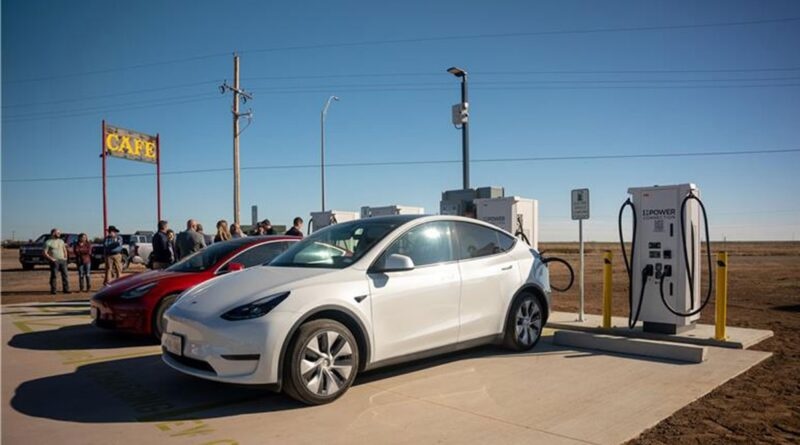
EV charging (Joint Office of Energy and Transportation image)
¶ “Trump’s Cut to Fuel Economy Regulations Will Cost People Money” • Regulations put in place to make vehicles more fuel efficient and save people money are important for making vehicles more fuel efficient and saving people money. When you eliminate those regulations, people are going to end up paying more. Who would have thought it? [CleanTechnica]
¶ “Arizona’s Mesquite Solar Hub Expands To Power 150,000 Homes” • From above, theMesquite Solar Complex in Arlington, Arizona resembles an enormous geometric tapestry. On the ground, it represents something more significant: the steady evolution of solar power from a niche technology to a central part of America’s generating fleet. [OilPrice.com]
Have an overwhelmingly splendid day.

 geoharvey