
World:
¶ “Electrifying Short-Sea Routes and Hybridizing Blue-Water Shipping” • By the 2040s, the technology landscape for maritime electrification will have significantly evolved. Battery energy densities, charging infrastructures, and renewable generation capabilities will have improved dramatically, making previously ambitious scenarios commonplace. [CleanTechnica]

Ship (Chris Pagan, Unsplash, cropped)
¶ “Government Encourages Solar PV Adoption” • The Malaysian government is opening opportunities for all parties, especially local authorities, to adopt solar PV systems as part of efforts to transition towards clean energy. By installing solar PV systems, these entities can save on electricity, generate renewable energy, and reduce carbon emissions. [The Edge Malaysia]
¶ “Meridian Opens $186 Million Battery Farm To Boost Energy Resilience In Northland” • Meridian Energy’s new $186 million battery farm is a big step towards strengthening energy resilience in New Zealand’s Northland and supporting the region’s shift to renewable energy. So electric power can be quickly reinstated after a blackout. [NZ Herald]

Meridian energy storage system (Meridian Energy image)
¶ “NSW Pitches First “Urban” Renewable Zone Based Around Rooftop PV, Batteries And EVs” • The NSW Labor government flagged the creation of the state’s first “urban” renewable energy zone, pitching the use of rooftop solar PV, home batteries and EVs in a major switch from the usual pitch of large scale wind, solar, and transmission lines. [RenewEconomy]
¶ “Liberia Unveils $105 Million Renewable Energy Investment Plan” • Liberia has launched a US$105 million Renewable Energy Investment Plan Framework & Roadmap, aiming to boost access to energy, reduce emissions, and achieve major strides toward its 2030 climate goals. The Liberia Electricity Corporation’s service currently has unreliable supply. [MSN]

Monrovia, Liberia (blk24ga, CC-BY-SA 3.0)
¶ “Scientists Develop Powerful New Battery From Radioactive Waste” • Scientists at Japan’s Atomic Energy Agency developed a novel rechargeable flow battery that uses depleted uranium as its active material, according to a recent article in IEEE Spectrum. JAEA’s prototype demonstrates a promising ability to provide stable energy output. [The Cool Down]
US:
¶ “Empire Wind Project Restarts, Gas Pipleline Does Not” • New York Governor Kathy Hochul has convinced the White House to lift a stop-work order on the Empire Wind offshore wind project. Empire Wind still plans to generate electricity in 2027. But the Constitution Pipeline proposal some observers tie to it may still encounter obstacles. [CleanTechnica]
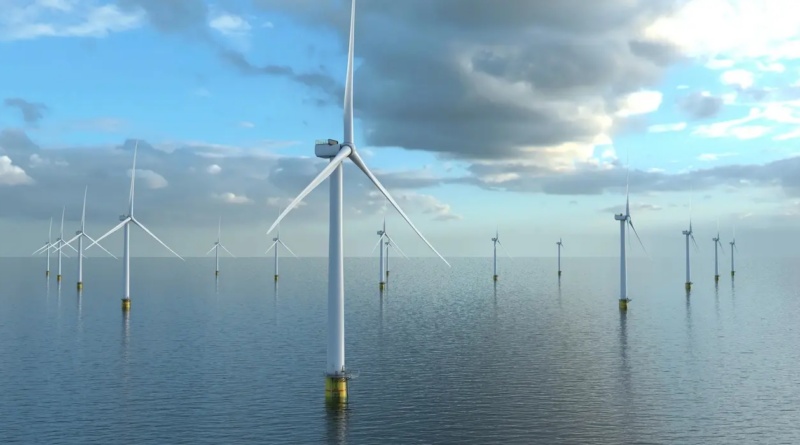
Empire Wind offshore project (Courtesy of Equinor)
¶ “NOAA Federal Funding Cuts Send Shockwaves” • NOAA plays a crucial role in forecasting and data analysis. Its reach extends from agriculture to tourism to navigating floods, hurricanes, fires, and other climate-fueled disasters. Its life-saving alerts and environmental monitoring help maintain safety. Administration budget cutters say we don’t need it. [CleanTechnica]
¶ “Gas-Killing Geothermal Energy Bonanza Discovered Under Nevada” • President Donald Trump has embraced geothermal energy as part of his “American Energy Dominance” scheme, perhaps assuming that geothermal resources are a bit limited in scope, posing little or no threat to his pals in the fossil energy industry. Guess again. [CleanTechnica]
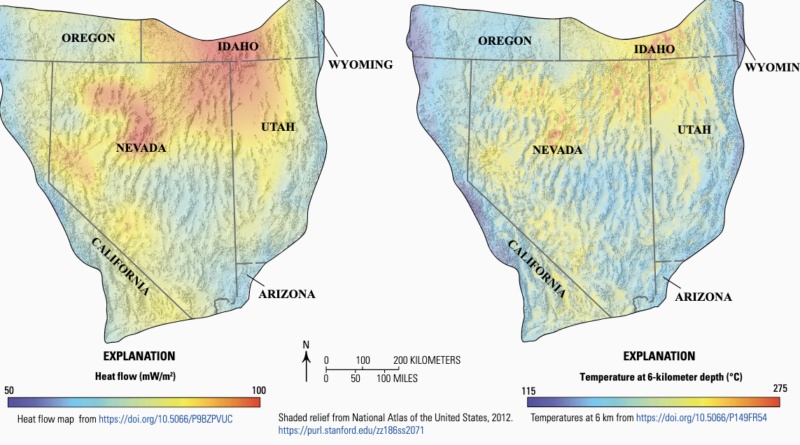
Please click on the image to enlarge it. (Courtesy of USGS)
¶ “Cybersecurity Concerns Bar GPA From Obtaining Batteries From US Adversaries” • The Guam Power Authority General Manager John Benavente said the GPA is looking to get energy storage system services so it can use stored solar energy during peak demands times at night. But concerns about cybersecurity are an issue. [The Guam Daily Post]
¶ “Meta Invests In 650 MW Of Solar Power To Support Growth Of AI” • Meta, the company behind Facebook and Instagram, made a move to buy clean energy, as they signed a deal for 650 MW of solar power from AES Corporation. This energy will help power Meta’s data centers in Texas and Kansas, which are using AI increasingly. [Microgrid Media]
Have a powerfully sufficient day.
 geoharvey
Leave a comment