Opinion:
¶ “Is Restarting Three Mile Island Really A Good Idea?” • From an emissions perspective, nuclear’s resurgence is a good thing: consuming nuclear fuel doesn’t create greenhouse gas emissions. But does a focus on nuclear power really make sense? Solar and wind power plants, with battery storage, are safe and cheaper to build and operate. [Fast Company]
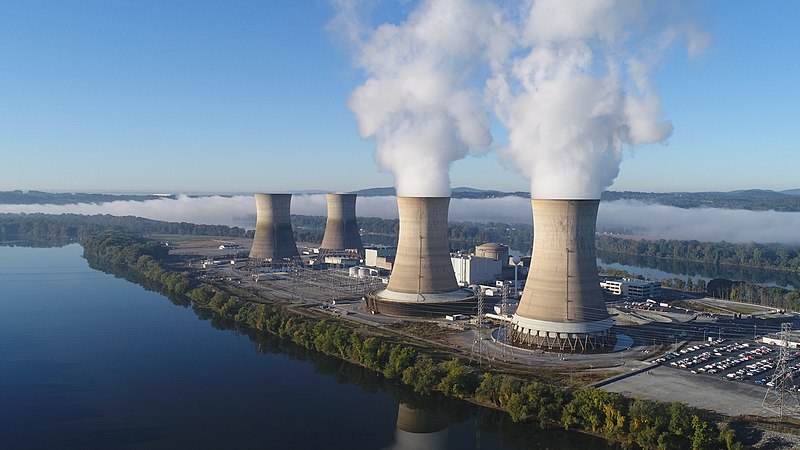
Three Mile Island (Constellation Energy, CC-BY-SA 4.0)
¶ “On Army Bases, Nuclear Energy Can’t Add Resilience, Just Costs And Risks” • Sometimes, the US government offers a huge subsidy to an industry on grounds that make no sense to anyone with even basic knowledge of the subject. The Army’s Advanced Nuclear Power for Installations program to install small reactors on military bases is an example. [Breaking Defense]
Science and Technology:
¶ “Fused Molecules Are Building Blocks For Safer Lithium-Ion Batteries” • By fusing together a pair of contorted molecular structures, Cornell researchers created a porous crystal that can uptake lithium-ion electrolytes and transport them smoothly via one-dimensional nanochannels. The design could lead to safer solid-state lithium-ion batteries. [CleanTechnica]

Representational graphic (Adam Malin, ORNL, US DOE)
World:
¶ “Ukraine Strikes Russian Oil Hub As Zelenskyy Says War Is In ‘A Very Important Phase'” • Ukraine’s military said it has struck a major oil terminal in Crimea that provides fuel for Russia’s war effort as Ukrainian President Volodymyr Zelenskyy said the war has entered a key phase. Both sides are facing the issue of how to sustain their costly war of attrition. [ABC News]
¶ “Toyota Puts Nearly $1 Billion Into Electric Aviation Startup” • Toyota, still the largest automaker in the world, has announced that it is going to “invest an additional $500 million to support the certification and commercial production of Joby’s electric air taxi, with the aim of realizing the two companies’ shared vision of air mobility.” [CleanTechnica]

Hydrogen fuel cell eVOTL (Joby Aviation)
¶ “Better Energy Signs First Finnish PPA” • Better Energy signed its first power purchase agreement in Finland, to build a solar park near Hanko. Faerch will offtake enough renewable energy to cover around 70% of its annual electricity use in the country. The solar park is expected to be connected to the grid in 2026 and generate 38 GWh annually. [reNews]
¶ “Global Floating Wind Pipeline Hits 266 GW” • The global floating offshore wind project pipeline grew by 9% over the last 12 months to 266 GW, according to a RenewableUK report. A year ago, the pipeline stood at 244 GW, and it expanded by 22 GW in the past year. The number of projects increased globally during that time from 285 to 316. [reNews]
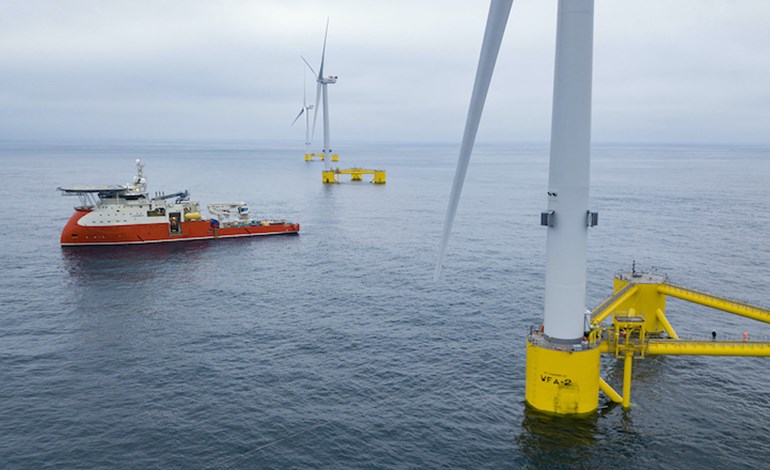
Work on a floating windfarm (Principle Power image)
¶ “Valorem Secures €200 Million Investment” • Valorem, a French renewables developer, received a firm offer to raise €200 million from a consortium of AIP Management and IDIA. The pair join existing investors via its France Investissement Energie Environnement 2 fund. Valorem has grown its holdings fivefold in eight years. [reNews]
US:
¶ “Salmon Swim Freely In The Klamath River For First Time In A Century After Dams Removed” • For the first time in over a century, just days after the largest dam removal project in US history was completed, salmon are swimming freely along the Klamath River and its tributaries. The river is a major watershed near the California-Oregon border. [ABC News]

Upper Klamath River (BLM, public domain)
¶ “Home Insurers Argue For A 42% Average Rate Hike In North Carolina” • With many western North Carolina residents still lacking power and running water from Hurricane Helene, a hearing began on the insurance industry’s request to raise homeowner premium rates by more than 42% on average, with variations depending on location. [ABC News]
¶ “100 Electric Trash Trucks, 150 Electric Buses, 30 Electric Graders: Commercial Electric Vehicles Report” • Commercial vehicle owners and fleet operators are continuing their move to EVs for one simple reason: They cost less to own and operate than conventional trucks and buses. The proof comes from Republic Services. [CleanTechnica]
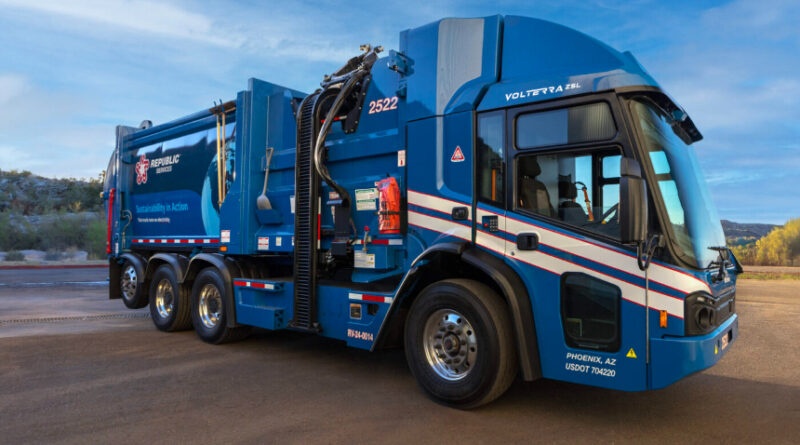
Electric collection truck (Oshkosh Corperation image)
¶ “Alaska Utilities Turn To Renewables As Costs Escalate For Fossil Fuel Electricity Generation” • Last year, Renewable IPP began operating Alaska’s largest solar project, which is built on 45 acres of a fire-scarred patch of land near the Matanuska-Susitna Valley city of Houston. In June, the panels provide power up to nineteen hours per day. [Inside Climate News]
¶ “Readout of US Energy Secretary Granholm And Deputy Secretary Turk’s Conversation with Electricity Sector Leaders About Hurricane Helene Response” • US Energy Secretary Jennifer M Granholm and Deputy Secretary David M Turk joined electricity sector leaders to discuss the response and recovery effort to Hurricane Helene. [CleanTechnica]

Hurricane Helene (AOML, NOAA)
¶ “Wisconsin Utilities Plan Nearly $2 Billion In Renewable Energy Projects” • Three major Wisconsin utilities plan to spend almost $2 billion on five renewable energy projects as part of efforts to cut carbon emissions and shift to clean energy. Plans include 500 MW of solar, about 180 MW of wind and 100 MW of battery storage. [ironmountaindailynews.com]
¶ “Gila River Indian Community Turns On Power For First Ever Solar-Over-Canal Project” • The Gila River Indian Community celebrated a historic milestone in its work on water conservation and renewable energy by bringing the first-ever solar-over-canal project in the country online. The project spans over 2,700 linear feet of the Casa Blanca Canal. [Arizona Mirror]
Have a sufficiently exquisite day.

 geoharvey