
Science and Technology:
¶ “Grid-Scale Storage Batteries Use Many Different Chemistries” • Batteries for grid-scale energy storage don’t need to meet the same criteria as EVs for size and weight. These are relatively unimportant, as are energy density and fast discharge rates. That means they can use all sorts of chemistries that are not suitable for automotive purposes. [CleanTechnica]

Zinc bromine flow batteries (Courtesy of Redflow)
¶ “Giving Batteries A Longer Life With The Advanced Photon Source” • Scientists at the Argonne National Laboratory are partnering with other US laboratories and academic institutions to study what is called self-discharge. This is a series of chemical reactions in the battery that causes performance loss over time, shortening the battery’s lifespan. [CleanTechnica]
World:
¶ “Parts Of The Sahara Desert Are Turning Green Amid Heavy Rainfall” • One of the driest regions on Earth is shifting green, as heavy rainfall causes vegetation to grow in the typically barren landscape. Satellite images released by NASA show pockets of plant life popping up all over the Sahara Desert after a cyclone drenched it. [ABC News]

Sahara (Wolfgang Hasselmann, Unsplash)
¶ “European Union Is Ditching Fossil Gas Fast, Replacing It with Solar And Wind ” • One of the notable challenges the EU faces is the continued Russia war of Ukraine. Having previously relied on an enormous amount of natural gas from Russia, the EU has had to find ways to replace it. Part of that has been to build up renewable sources. [CleanTechnica]
¶ “Cargo Ship Crosses Atlantic Ocean Using Mostly Wind Power” • The trouble with fast, modern container ships is that they use fossil fuels and emit a great deal of air pollution that is harmful to the planet and human health. So it was both captivating and exciting to see that a modern rather large cargo sailing vessel, the Anemos, was recently launched. [CleanTechnica]

Anemos (Courtesy of TOWT, Ports America)
¶ “Floating Solar Project Withstands Super Typhoon Capricorn” • One of the fiercest typhoons to hit the area of Guangdong, China, since 1949 was Super Typhoon Capricorn this month. In this wild weather, torrential winds, and giant waves, what is the durability of floating solar panels? If you expected to see broken panels, think again. [CleanTechnica]
¶ “Hamburg 2024: ‘Offshore Wind Hits 76 GW'” • Ahead of WindEnergy Hamburg 2024, Clarksons Research has released a range of data points profiling the offshore wind sector. Today, 76 GW of offshore wind capacity is active globally, involving around 13,800 turbines and 327 wind farms. This is a 13% year-on-year increase. [reNews]
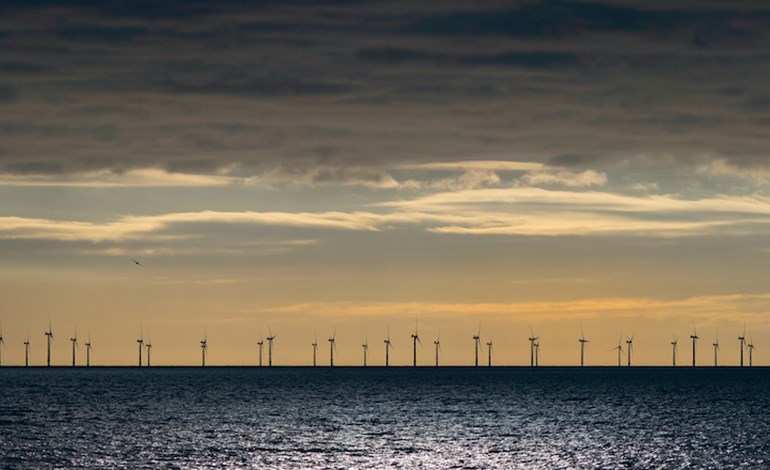
Offshore wind farm (Zoltan Tasi, Unsplash)
¶ “Record Renewables Growth Fuels Cost Competitiveness, IRENA Report Shows” • Over three-quarters of renewable energy capacity added last year was cheaper than fossil fuels, a report by the International Renewable Energy Agency shows. Last year’s UN climate meeting set a goal of tripling renewable energy capacity worldwide by 2030. [MSN]
¶ “Australia On Track To Add 7 GW Of New Wind And Solar This Year, As Investment Bounces Back” • Australia is on track to add over 7 GW of renewable energy generating capacity in 2024, new data revealed, off the back of a large uptick in large-scale wind and solar investment and unstoppable momentum in the rooftop PV market. [RenewEconomy]
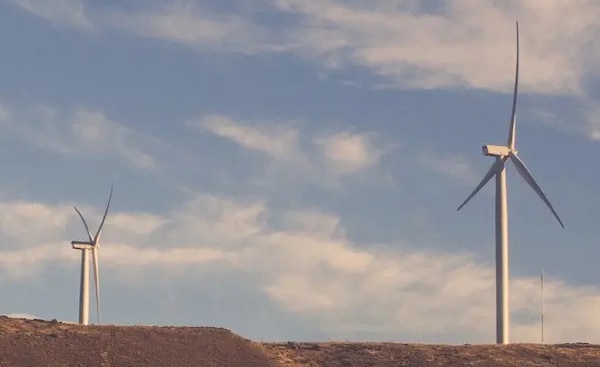
Wind turbines (Westwind Energy)
¶ “Kyiv Warns Of Imminent Russian Strikes On Nuclear Sites, Calls For Global Action” • Ukraine’s Foreign Minister, citing intelligence sources, warned that Russia is planning strikes on Ukrainian nuclear facilities ahead of the coming winter. He called on the UN and Ukraine’s allies to establish permanent monitoring missions at the plants. [Kyiv Post]
US:
¶ “Tugboat Powered By Ammonia Sails, Showing How To Cut Emissions From Shipping” • On a tributary of the Hudson River, a tugboat powered by ammonia eased away from its dock and sailed for the first time to show how the maritime industry can reduce planet-warming carbon dioxide emissions. The ammonia is used to power a fuel cell. [ABC News]
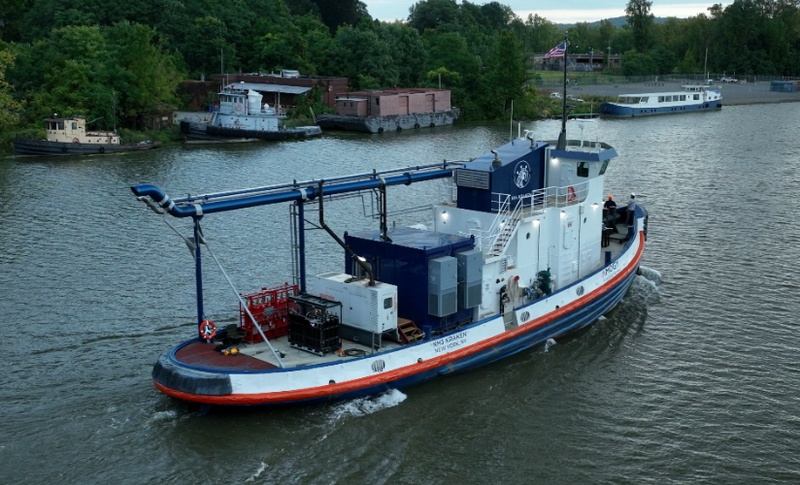
Amogy tugboat (Amogy image)
¶ “Two Kinds Of Ocean Energy Inch Forward Off The Oregon Coast” • The way electricity is traditionally made is a major cause of climate change, so clean alternatives are key to addressing it. The coastal waters of Oregon are shaping up to be key for advances in two forms of renewable energy: wave power and wind turbines that float. [ABC News]
¶ “California Sues ExxonMobil For Alleged Deception Around Plastic Recycling, In First-Of-Its-Kind Lawsuit” • California Attorney General Rob Bonta filed a lawsuit against ExxonMobil alleging the company carried out a “decades-long campaign of deception” in which the oil and gas giant misled the public on the merits of plastic recycling. [CNN]
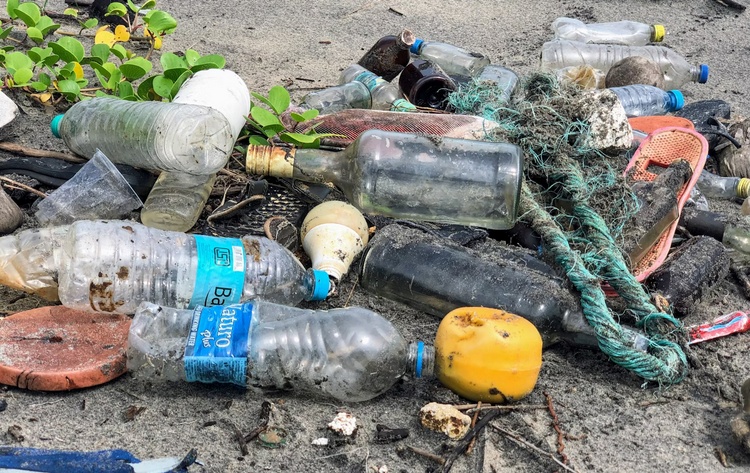
Plastics (John Cameron, Unsplash, cropped)
¶ “Helene Forecast To Rapidly Intensify And Hit Florida As A Major Hurricane” • An area of thunderstorms in the Caribbean is expected to develop and rapidly intensify over the exceptionally warm Gulf of Mexico before hitting the US Gulf Coast this week as a major hurricane. Now Potential Tropical Cyclone Nine, it is expected to become Hurricane Helene. [CNN]
¶ “Study Identifies Five Key Gaps In The Hydropower Supply Chain And Ways To Address Them” • Solar panels and wind turbines get a lot of attention when we talk about renewable energy. But hydropower has generated a lot of clean energy for over a century. Nearly 27% of all US renewable energy comes from hydroelectric operations. [CleanTechnica]
Have an overwhelmingly gorgeous day,
 geoharvey
Leave a comment