
Science and Technology:
¶ “Carbon-Capture Batteries Developed To Store Renewable Energy, Help Climate” • Researchers at the US DOE’s Oak Ridge National Laboratory are developing battery technologies to fight climate change in two ways: by expanding the use of renewable energy and capturing airborne carbon dioxide. The batteries can hold ten hours worth of electricity. [CleanTechnica]
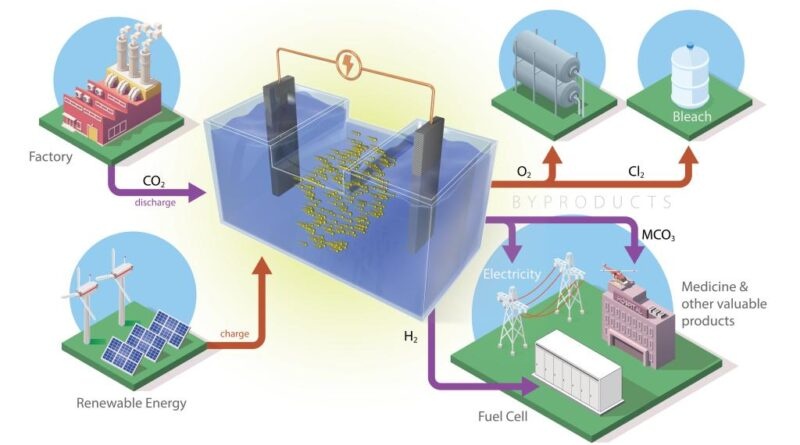
Please click on the image to enlarge it. (Andy Sproles, ORNL)
¶ “Two New Blade Technologies From Edinburgh University Researchers Aim For Renewable Energy Efficiency” • Edinburgh University scientists developed two technologies to enhance the potential of tidal energy. They enable the passive morph of the blade, each aimed at increasing energy yield and reducing capital and operational costs. [Offshore Energy]
World:
¶ “Volkswagen ID.7 Receives Historic Top Score In ADAC Vehicle Test” • The flagship model from the all-electric Volkswagen ID. family is now also top scorer in the prestigious ADAC vehicle test. The Volkswagen ID.7 has become the first ever vehicle to achieve an average score of 1.5 and thus an overall rating of ‘very good’ in the independent test. [CleanTechnica]
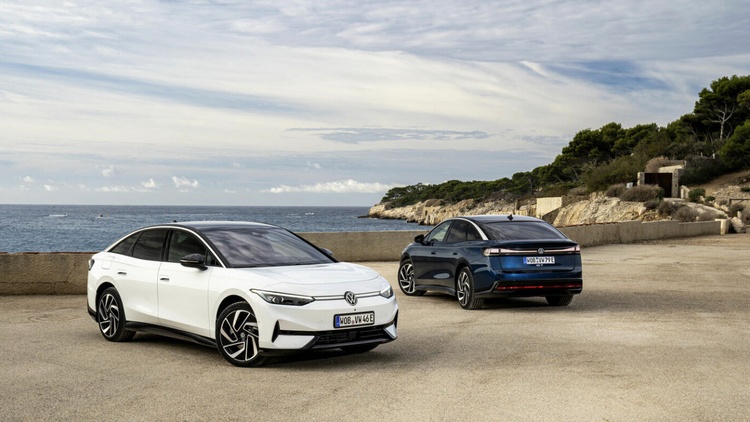
Volkswagen ID.7 (Image supplied)
¶ “Volkswagen Pulls Back On Electric Car Plans” • Volkswagen’s leadership has been reshuffled. The Volkswagen brand is now headed by Thomas Schäfer, who told the press that the brand is pulling back on its electric car initiative to focus more on plug-in hybrids. He said customers “want plug-in hybrids now, including in China and the US.” [CleanTechnica]
¶ “Over 4 Million Plugin Vehicles Sold Globally in 2024” • Global EV sales reached 1.1 million units in April 2024, according to EV research-house, Rho Motion, bringing year-to-date sales to 4.3 million, 22% greater than the same period in 2023. Battery EVs represent 64% of units sold so far in 2024. The remaining 36% are plug-in hybrids. [CleanTechnica]

BYD Seagull production, courtesy of BYD
¶ “Why Climate Migration In Brazil Has Become A Global Crisis” • Persistent rains and destructive flooding in the Brazilian state of Rio Grande do Sul left 150 people dead, 2.1 million affected, 620,000 residents displaced and 807 people injured, according to civil defense officials. The floods are the most severe climate catastrophe to impact the region. [ABC News]
¶ “Nuclear Option Costs ‘Six Times More’ Than Renewables, Study Finds” • Building nuclear reactors would cost six times more than wind and solar power firmed up with batteries, an independent report released by the Clean Energy Council shows. The industry body’s chief executive said taxpayers need to know the costs of nuclear power. [RenewEconomy]
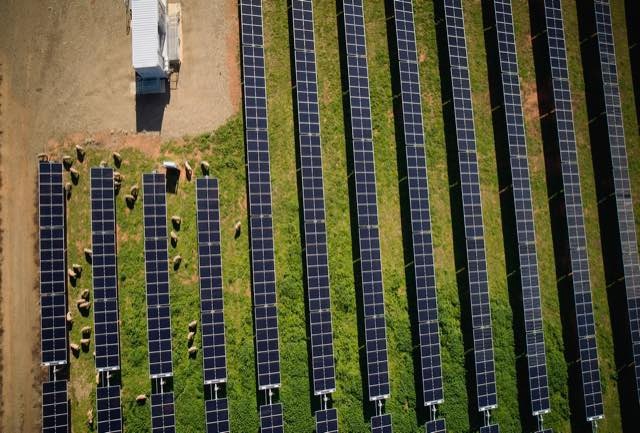
Solar farm with sheep (NextTracker image)
¶ “Cuba Relies On Renewable Energy Sources” • For sixty years, Cuba has suffered from a lack of fuel because of an embargo by the US government. Cuba is planning to develop over 2 GW of renewables, relying on developing renewable energy sources, such as wind, PVs, and biogas, to address the electricity shortages caused by the lack of fuel. [Cuba Si]
¶ “GEE Unveils Scottish Hydro Plans” • Glen Earrach Energy has announced plans to develop what it says will be the UK’s most efficient pumped storage hydro project. The 2-GW project at Balmacaan Estate, Scotland will represent an investment of more than £2 billion and create at least 600 on site construction jobs in Scotland over a six-year period. [reNews]

Hydro Dam (SXC image)
¶ “Japan Starts Sixth Discharge Of Fukushima Wastewater” • Japan started the sixth round of the release of wastewater from the Fukushima Daiichi Nuclear Power Plant into the Pacific Ocean. About 7,800 tonnes of nuclear-contaminated wastewater is being discharged from about a kilometer off the coast between now and June 4. [CGTN]
US:
¶ “Resilience at the Edge: City of Eastport Considers Harnessing Tidal Power for Island Microgrid” • Eastport, Maine, on an island at the easternmost point in the continental US, is connected to the mainland by a single causeway. It faces powerful Atlantic Ocean winds and is susceptible to power outages. It could get a microgrid powered by tides. [CleanTechnica]
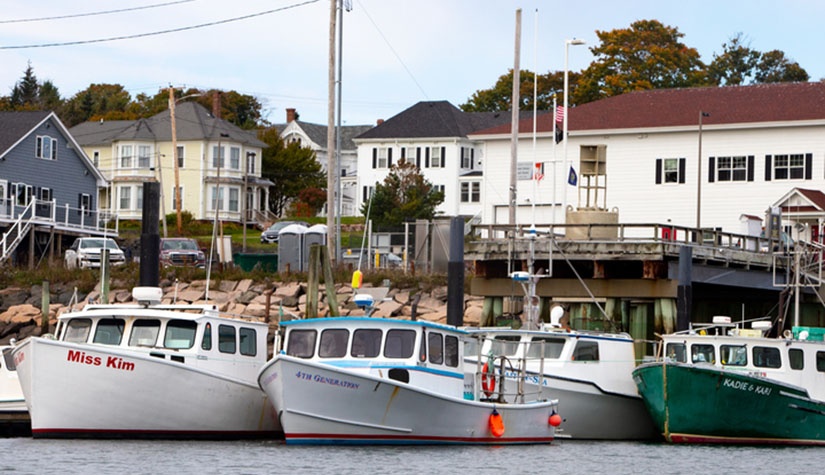
Eastport (Jack Sullivan, Island Institute, NREL)
¶ “Big Banks Take Part In A Climate Scenario Exercise – The Results Are Unsettling” • The US Federal Reserve just released the results of a pilot climate scenario analysis exercise they conducted in 2023 to learn about big banks and their climate risk-management practices and challenges. The results of the analysis were unsettling. [CleanTechnica]
¶ “US Lawmakers Sound Alarm Over Threat To Rooftop Solar In Puerto Rico” • Over twenty members of the US Congressional Democratic Caucus urged safeguarding affordable access to rooftop solar power in Puerto Rico by protecting net metering, which the lawmakers called essential to the island’s clean energy goals and economic growth. [Common Dreams]

Rooftop solar installation (Barrio Eléctrico image)
¶ “New Endangered Listing For Rare Lizard Could Slow Oil And Gas Drilling In New Mexico And West Texas” • Federal wildlife officials declared a lizard in the Permian Basin of southeastern New Mexico and West Texas an endangered species, citing future energy development, sand mining, and climate change as the biggest threats to its survival. [ABC News]
¶ “New Jersey’s Three Nuclear Power Plants Seek To Extend Licenses For Another Twenty Years” • New Jersey is pushing hard to become a leader in offshore wind. But three power plants run by PSEG Nuclear LLC provide nearly half of the electricity for New Jersey, and a licensing extension is claimed to be a hedge against insufficient wind projects. [MSN]
Have a reasonably sane day.
 geoharvey
Leave a comment