
World:
¶ “Nuclear Energy ‘Now An Obstacle To Delivering Net Zero’ – Greenpeace” • Nuclear energy provides about 25% of the world’s low-carbon electricity. However, Greenpeace director of policy Doug Parr said, “Nuclear power can’t bridge the gap between anything and anything. It is too slow. It is too expensive. It is a massive distraction.” [Energy Monitor]

Sign at Chernobyl Exclusion Zone (Kilian Karger, Unsplash)
¶ “MEPs Sign Off On Climate Targets For Heavy-Duty Vehicles” • The European Parliament approved a law requiring almost all new trucks sold in 2040 to be zero-emission vehicles. Transport & Environment said the law will help European manufacturers compete with foreign electric truckmakers and greatly reduce the annual CO₂ emissions. [CleanTechnica]
¶ “The Misguided Fight Against The 2025 Cars Target” • In 2019, as the first meaningful emissions targets for the car industry were about to enter force, Brussels was flooded with bleak predictions about the astronomical fines automakers would have to pay. That turned out not to be true. Now, a new set of predictions is telling us what will go wrong. [CleanTechnica]
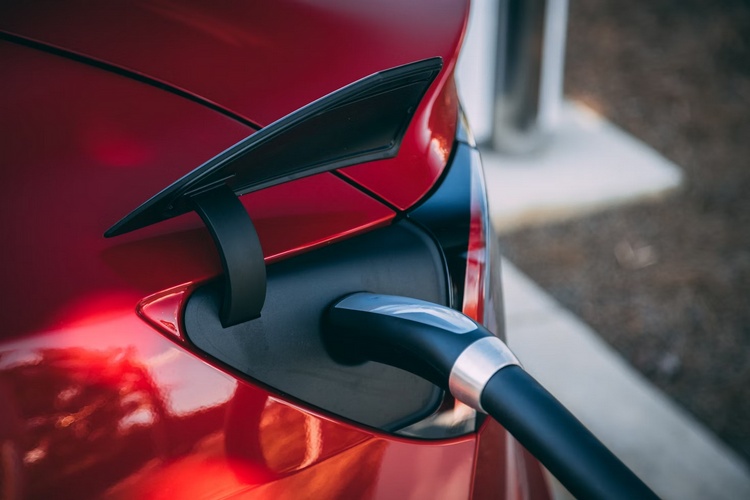
Charging an electric car (Vlad Tchompalov, Unsplash)
¶ “Australia Announces New Subsidy Policy For Renewable Energy Manufacturing” • Australian Prime Minister Anthony Albanese announced an initiative modeled on the US Inflation Reduction Act to seize the opportunities of the global renewable energy transition and to capitalize further on Australia’s notable clean energy resources. [pv magazine International]
¶ “Coalition Nuclear Plan Would Force Consumers To Wait 20 Years Longer And Have 30% Higher Electricity Bills” • Australia’s Coalition is making unproven assertions that ‘zero emissions’ electricity can be provided more cheaply and reliably by nuclear than renewable energy. Here, we examine the weighted average levelized costs of energy. [RenewEconomy]

Cooling towers (Frettie, CC-BY-SA 3.0)
¶ “Proposed $4 Billion Pumped Hydro Project Could Power A Third Of Sydney’s Households By 2031” • Sydney’s main source of drinking water could also supply enough renewable energy to power almost a third of the city’s households by 2031, if a 1-MW pumped hydro project using a former coal washery proceeds as planned. [The Guardian]
¶ “Captive Power Generation Surge As More Firms Shift” • Major firms in Kenya are turning to captive solar power. Captive power generation offers organizations the ability to produce their own electricity on-site, particularly beneficial for power-intensive industries such as aluminium smelters and chemical plants that require a reliable energy supply. [People Daily]

Solar installation (Biel Morro, Unsplash)
US:
¶ “Climate Change Threatens Loon Population, New Study Shows” • Famous for their nocturnal calls, loons are aquatic birds often described as icons of the Northwoods. But research shows climate change impairs their ability to feed their young. Climate-induced decreases in water clarity could be a cause for the loon population declines. [ABC News]
¶ “NREL Unveils Groundbreaking Generative Machine Learning Model To Simulate Future Energy-Climate Impacts” • Energy system planners and operators need detailed data projected into the future to see how climate change will impact wind and solar generation and electricity demand. Scientists at NREL built a tool to help with that. [CleanTechnica]
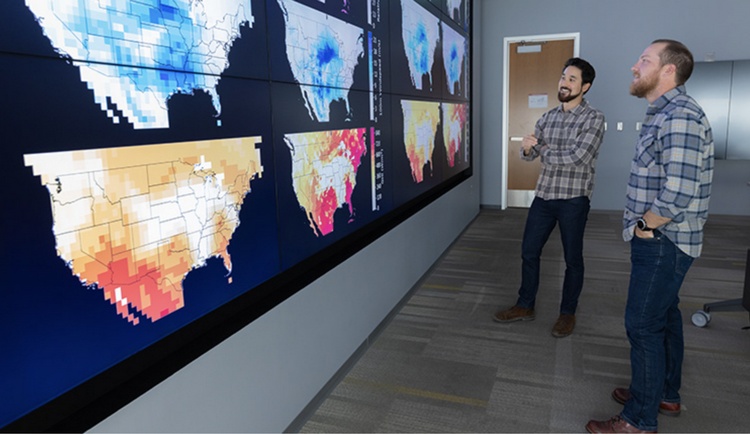
Sup3rCC tool (Photo by Joe DelNero, NREL)
¶ “First-Ever National Drinking Water Standard to Protect 100 Million People from PFAS Pollution” • On April 10, the Biden-Harris Administration issued the first legally enforceable national drinking water standard to protect communities from exposure to harmful per- and poly-fluoroalkyl substances (PFAS), also known as ‘forever chemicals.’ [CleanTechnica]
¶ “Virginia Governor Signs Legislation Establishing Community Solar” • Governor Glenn Youngkin signed legislation that creates a community solar program in Virginia enabling up to 200 MW of shared power projects between the two major utilities that serve the state. Virginia targets 30% renewable energy by 2030, and 100% by 2050. [pv magazine USA]

Sheep grazing at solar farm (Dominion Energy)
¶ “Replacing Wires Could Double How Much Electricity The US Grid Can Handle” • Everyone seems to agree the US electrical grid will need modernizing as the demand for electric power increases. There are new technologies available that may allow the existing grid to carry more electricity without all those messy policy hurdles to jump over. [CleanTechnica]
¶ “Avangrid Broke Ground On Its First Solar Farm In California” • Avangrid is one of the largest clean energy operators in the US, with 8.7 GW of installed renewables capacity in the country. Now, it is building its first solar farm in California, the 57-MW Camino Solar Project in Kern County. The company already has six wind farms in the state. [Electrek]

Solar system (Tom Brewster, BLM California, cropped)
¶ “Solar And Wind Power Is Surging In The Mountain West, But There’s Plenty Of Room To Grow, Study Finds” • Nationwide, wind turbines and solar panels generated more than 600,000 GWh of electricity in 2023, which is enough to power more than 61 million average American homes, according to research group Climate Central. [KSUT Public Radio]
¶ “Solar To Displace Natural Gas In Daytime And In Summer On The Texas Grid” • With more solar energy on the ERCOT grid, the EIA expects less natural gas use when solar energy displaces it in the middle of the day. The EIA also expects less use of natural gas in the summer when electricity demand is highest. Power demand is driven by heat in Texas. [Electrek]
Have a thoroughly grand day.
 geoharvey
Leave a comment