
Science and Technology:
¶ “Hawk Supercomputer Improves Solar Cell Efficiency” • A team at the University of Paderborn has been using high-performance computers to study how solar cells convert light to electricity, to increase efficiency. The team used the Hawk supercomputer to see how designing certain strategic impurities in solar cells could improve performance. [CleanTechnica]
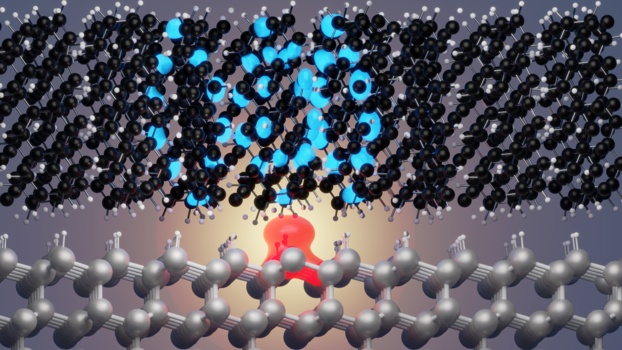
Visualization of solar cell (Marvin Krenz, University of Paderborn)
World:
¶ “EVs At 19.3% Share In Germany – Tesla Model Y Leads” • In February, plugin EVs had a 19.3% share of the German auto market after sudden incentive changes in late December. Battery EVs were down some 15% from last year, while plugin hybrids were up some 22%. Overall auto sales are still down some 13% from pre-2020 seasonal norms. [CleanTechnica]
¶ “Fish To Frolic Among Floating Offshore Wind Turbines” • The rise of the offshore wind industry has sparked a new movement to piggyback other maritime activities onto offshore wind farms. In the latest development, a unique two-headed floating wind turbines has been tapped to host a commercial fish farm off the coast of Sweden. [CleanTechnica]

Hexicon offshore wind farm (Hexicon image)
¶ “BP Reaffirms 50 GW By 2030 Target” • In its 2023 Annual Report, BP reaffirmed its goal of bringing 50 GW of renewable energy capacity to Final Investment Decision by 2030. It also aims to reach 20 GW in FID by 2025. In 2023, the company had 6200 MW of renewable energy capacity brought to FID, up 400 MW from 2022. [reNews]
¶ “Latin American EV Market Heats Up as Chinese Automakers Enter with Newer, Cheaper, Better Options” • A bloodbath on the way for Latin America. The omens are now clear, as the Chinese market slows down and the Chinese EV industry reaps the fruit of early investments, massive economies of scale, and near total control over battery supply chains. [CleanTechnica]
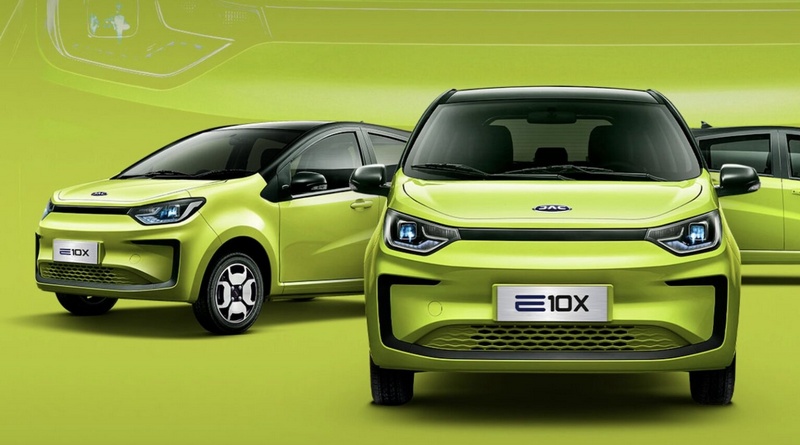
JAC E10X
¶ “China’s Nuclear Plants Released Tritium Above Fukushima Level In 2022” • Chinese nuclear plants released wastewater containing tritium in 2022 at levels up to nine times higher than the amount expected to be found in the planned yearly discharge from Japan’s crippled Fukushima Daiichi complex, a public document showed. [nippon.com]
¶ “Equinor Starts Up 500-MW Brazilian Solar Farm” • Equinor has started operations at its 531-MW Mendubim solar plant in Brazil. Mendubim will annually produce 1.2 TWh of power with around 60% of that sold on a 20-year power purchase agreement with Alunorte, one of the world’s leading suppliers of alumina for the aluminium industry. [reNews]

Solar array (Scatec image)
¶ “A Small Drone Flies Into A Damaged Fukushima Nuclear Reactor For The First Time To Study Melted Fuel” • A small drone has flown inside one of the damaged reactors at Japan’s Fukushima Daiichi nuclear power plant in hopes it can examine some of the debris of fuel had melted in areas where earlier robots failed to reach. [ABC News]
US:
¶ “Winter Is Over, And It Was The Warmest On Record. Here’s What The US Missed Out On This Season” • This winter was the warmest on record for the Lower 48, according to NOAA, and the records go back to the late 1800s. The singularly mild winter left vast areas of the country without typical amounts of snow and ice, fueling a worsening drought. [CNN]

Bare trees (Dulcey Lima, Unsplash)
¶ “Biden–Harris Administration Announces $425 Million to Decarbonize And Produce Clean Energy Products in Former Coal Communities” • The US DOE announced $425 million in funding to reduce emissions and advance making clean energy products for the US energy supply chain as part of the Investing in America agenda. [CleanTechnica]
¶ “Rivian Surprises With Three New Models And New Battery Technology” • On March 7, 2024, Rivian introduced the R2, a five passenger SUV that is smaller than the R1S. That model has been expected for some time. What wasn’t expected was an even smaller R3 and a performance version of that car Rivian is calling the R3X. [CleanTechnica]

Rivian R3 home charging
¶ “Washington State’s Emissions Allowance Program’s First Auctions” • With the end its first full year of tradable emission allowance auctions, Washington state is looking into joining an integrated regional greenhouse gas reduction program with California and Québec. The program aims help the state move toward a low-carbon economy. [CleanTechnica]
¶ “Virginia Could Make Almost $5 Billion From This 3.5-GW Offshore Wind Farm” • The 180-turbine Kitty Hawk Wind is an offshore wind project proposed in federal waters over 36 miles from Virginia Beach. It could deliver 3.5 GW of electricity and around $5 billion in economic impact for Virginia. The usual types of opposition seek to prevent that. [Electrek]

Offshore wind farm (Avangrid image)
¶ “MIT Offers New Course That Could Massively Benefit Clean Energy Projects” • There’s a team of trained mediators ready to enter contentious clean energy conversations in communities around the US. They are students in a Massachusetts Institute of Technology class training to resolve conflicts that slow progress on renewable energy projects. [The Cool Down]
¶ “Hydropower Investment Opportunities Remain That Can Be Developed” • Hydropower has a reputation of being tapped out. Far from being so, hydropower, including pumped storage, still has enormous potential for growth, particularly for projects of small and medium size – those that produce up to 30 MW of power. [Department of Energy]
Have a completely accommodating day.
 geoharvey
Leave a comment