Science and Technology:
¶ “Two New Approaches To Wind-Powered Ships” • Cargill chartered the The Pyxis Ocean to carry a cargo of grain from China to Brazil. The ship was recently retrofitted with wing sails at a shipyard in Shanghai. Also, Odfjell says it is partnering with bound4blue, a pioneering developer of wind-assisted propulsion technology. [CleanTechnica]

Odjfell tanker (Image courtesy of Odjfell)
¶ “Got Climate Change? Methane-Eating Bacteria To The Rescue!” • Researchers at California University Long Beach have studied this subject and determined there are certain bacteria that thrive in methane-rich environments. They eat methane, or CH₄, and turn it into biomass and carbon dioxide, CO₂. And CO₂ is much better than CH₄. [CleanTechnica]
¶ “BYU Professors Use Special Bacteria To Turn Waste Into Renewable Energy” • Anaerobic digesters convert cow manure into biogas fuel, but they are limited to a modest efficiency of 30% to 40%. Now, research led by a team of BYU professors is making the process faster and more efficient by pretreating the waste with special bacteria. [BYU News]

Cows (Andy Kelly, Unsplash)
Fukushima Waste Water Release:
¶ “Japan Begins Releasing Treated Radioactive Water From The Fukushima Nuclear Plant Into The Sea” • The operator of the tsunami-wrecked Fukushima Daiichi nuclear power says it has begun releasing treated radioactive water into the Pacific Ocean. The controversial wastewater dumping project is expected to last for decades. [NBC Chicago]
¶ “China Bans Seafood From Japan After Tokyo Begins Releasing Treated Radioactive Water” • China announced it was banning all seafood from Japan in response to Tokyo’s decision to start the release of treated radioactive wastewater from the Fukushima nuclear power plant, dramatically escalating an already tense feud between the two neighbors. [CNN]

Seafood (Max Mota, Unsplash)
¶ “What Are The Concerns Over Waste Water Release?” • Since the Fukushima disaster, TEPCO has been pumping in water to cool the nuclear reactors’ fuel rods. Every day the plant produces contaminated water, which is stored in massive tanks. Releasing treated waste water into the ocean is a routine for nuclear plants, but this is on a far bigger scale. [BBC]
World:
¶ “Parts Of The Tropical Rainforests Could Get Too Hot For Photosynthesis, Study Suggests” • Some leaves in tropical forests from South America to South East Asia are getting so hot they may no longer be able to photosynthesize, with big potential consequences for the world’s forests, a study says. Photosynthesis can fail at around 46.7°C (116°F). [CNN]

Tropical forest (Martin Zangerl, Unsplash, cropped)
¶ “Ecuador Rejects Oil Drilling In National Park” • Ecuador’s voters resoundingly supported referendums to block oil drilling in a biodiverse rainforest and gold mining in the Chocó Andino on Sunday. With more than 90% of ballots counted, 58% of Ecuadorians voted to ban new oil drilling in Yasuní national park in the Amazon rainforest. [CleanTechnica]
¶ “Construction Has Started At Africa’s First Dedicated Gigawatt-Hour Battery Factory In Cape Town” • Over the past ten years, South Africa has imported over $10 billion worth of solar panels, inverters, and battery materials. A quarter of that was imported in the first half of 2023. A battery plant is being built in South Africa to help meet demand. [CleanTechnica]
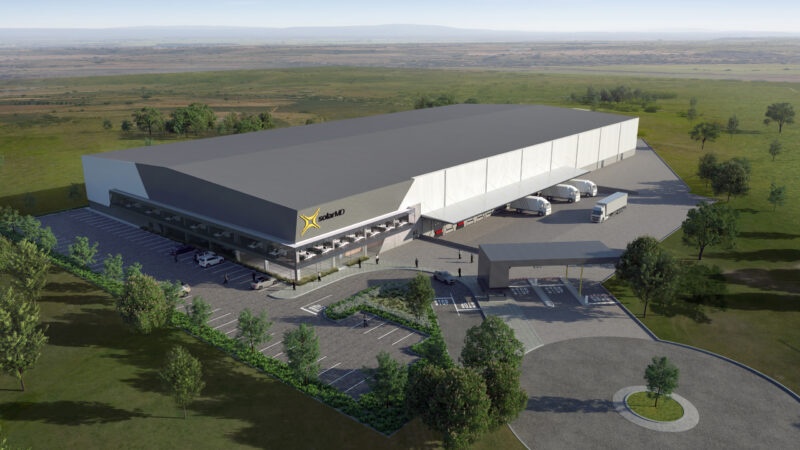
Solar MD site in Cape Town (Courtesy of Solar MD)
¶ “Renewable Energy Manufacturing In Southeast Asia Can Generate $90 Billion To $100 Billion In Revenue By 2030” • The Southeast Asian region could lose up to 30% of its gross domestic product by 2050 due to increases in heat and extreme weather events. Bolstering the region’s renewable energy manufacturing capacity could improve its outlook. [PR Newswire]
¶ “Slow Expansion Of Wind Power In Southern Germany Is ‘Depressing’ – Scholz” • German Chancellor Olaf Scholz has called the sluggish rollout of wind power in the south of the country “depressing” and warned that the three southern states – Hesse, Baden-Wurttemberg, and Bavaria – must act quickly to increase installations. [Clean Energy Wire]

Bavaria (Markus Spiske, Unsplash)
¶ “‘Takes Longer’ And ‘Costs More’: Treasurer Snubs Nuclear Energy As A Viable Option” • Australian Treasurer Jim Chalmers has snubbed nuclear power as a viable option, saying it “takes longer” and “costs more.” Mr Chalmers claimed Australia is better suited for renewables and has more options in clean energy. He said renewable energy is cheapest. [Sky News Australia]
US:
¶ “Battery-Electric Fishing Vessel Marks A Sea Change For Small Commercial Fishers” • This fall, a 46-foot commercial fishing boat will cruise into Sitka, Alaska, and cut its diesel engine. An electric motor will whir to life, marking a sea change for Sitka’s small-boat commercial fishing industry: a transition to energy-efficient commercial fishing. [CleanTechnica]

Fishing boat to have hybrid system (Eric Jordan via NREL)
¶ “Extreme Heat Makes Electricity More Expensive, More Polluting, And Less Reliable” • Extreme heat has hit hard lately from coast to coast this year. The direct health impact of heat stress is bad enough, and dangerous. But extreme heat also hits our electricity system in ways that make it more expensive, more polluting, and less reliable. [CleanTechnica]
¶ “Avangrid Announces Its First Solar Project In California” • Avangrid has confirmed a decision to build its first solar project in California. The 44-MW Camino Solar project will be built by Cupertino Electric in Kern County, next to Avangrid’s 189-MW Manzana Wind farm. Avangrid already operates over 500 MW of wind power in California. [reNews]
Have an impressively peaceful day.

 geoharvey