
Opinion:
¶ “Why Don’t More Headlines Warn Us About Energy Profit Windfalls?” • The news that 722 of the world’s top corporations made combined windfall profits of $1 trillion per year in 2021 and 2022 did not stir much outcry. We’ve become accustomed to a paradigm in which the Survival of the Richest, to use Douglas Rushkoff’s new book title, is all. [CleanTechnica]

Gas station in Iceland (Khamkéo Vilaysing, Unsplash, cropped)
¶ “Despite Breakthroughs, Usable Nuclear Fusion Is Still Decades Away” • The US DOE reported a major scientific breakthrough in nuclear fusion science in December 2022. For the first time, more energy was released from a fusion reaction than was used to ignite it. This achievement may indeed be historic, but fusion energy is still a long way off. [Inverse]
Science and Technology:
¶ “Daffodils Eaten By Livestock Could Address Climate Change” • Methane is considered the second most common greenhouse gas after carbon dioxide, and it is released by cows and sheep whenever they burp. A report on the BBC said that a chemical which can be extracted from daffodils could reduce methane production by a third. [Nature World News]

Daffodils (Mike Cassidy, Unsplash)
World:
¶ “South Korean Shoppers Hoard Salt And Seafood Ahead Of Japan’s Release Of Treated Radioactive Water ” • For the past month, Korea has struggled with severe sea salt shortages as shoppers snap it up in bulk, reflecting heightened public anxiety ahead of the planned release of treated radioactive water from Fukushima, Japan. [CNN]
¶ “Crunch Talks Due On Deep-Sea Mining Controversy” • At global talks in Jamaica, deep-sea mining will be one of the hot topics. Scientists fear a possible “goldrush” for precious metals on the ocean floor could have devastating effects on marine life. But supporters argue that these minerals are needed if the world is to meet the demand for green technologies. [BBC]

Nautilus (Shaun Low, Unsplash)
¶ “The Rush For Nickel: ‘They Are Destroying Our Future’” • An integral part of global life, nickel is used in stainless steel, mobile phones and EV batteries. As the world shifts to greener vehicles and needs more rechargeable batteries, the International Energy Agency predicts that demand for nickel will grow by at least 65% by 2030. But mining it can have toxic effects. [BBC]
¶ “Australian State Encourages Miners To Move Away From Fossil Fuels” • Queensland’s Labour government is trying to find a balance on mining. The Labour Party receives the majority of support from the union movement. One of the most powerful unions is involved in the mining industry and is concerned about the loss of any jobs in that sector. [CleanTechnica]
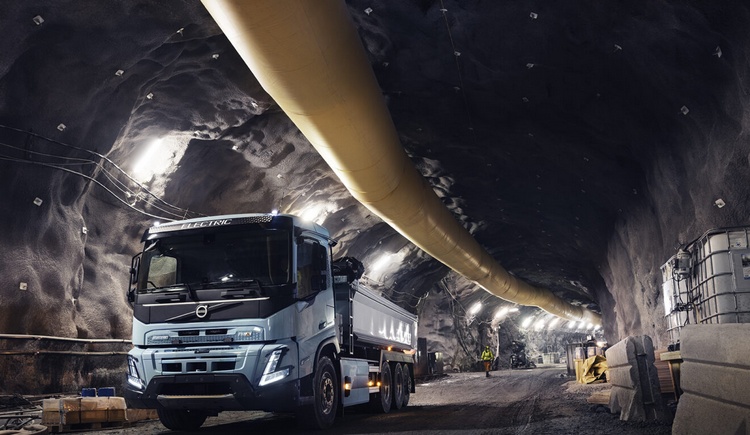
Truck in a mine (Courtesy of Volvo Trucks)
¶ “Global Economy Loses Trillions Of Dollars In Years Following El Niño” • As El Niño returns, Dartmouth College researchers report in Science that its financial toll can persist for several years after the event itself and cost trillions in lost income worldwide. The study projects losses that far exceed those estimated by previous research. [CleanTechnica]
¶ “FFI Moves Ahead With Green Aviation Fuel Plan” • Green energy developer Fortescue Future Industries announced plans to progress the further investigation into the development of a green hydrogen manufacturing facility at Marsden Point, in New Zealand, to produce 60 million liters per year of synthetic fuel for sustainable aviation. [Mining Weekly]

Flying over mountains (Elizabeth Camp, Unsplash)
¶ “Danish Investor Raising €12 Billion Fund For Renewable Energy” • Copenhagen Infrastructure Partners reached its first close of €5.6 billion ($6.1 billion) of capital commitments received setting it on track to reach its target fund size of €12 billion which would make it the world’s largest greenfield renewable energy fund. [Splash 247]
¶ “Top Russian Official Threatens Strikes On Ukrainian And European Nuclear Facilities” • Dmitry Medvedev, the deputy chairman of Russia’s Security Council, said that Russia should attack Ukrainian nuclear power plants and nuclear facilities in Eastern Europe if an alleged Ukrainian attack on a Russian nuclear plant is confirmed. [Yahoo News]

Nuclear plant cooling towers (Lukáš Lehotský, Unsplash)
¶ “Russia Warns NATO Summit To Discuss Zaporizhzhia Nuclear Plant” • Russia’s Foreign Ministry warned that those attending the upcoming NATO summit in Lithuania should discuss the Zaporizhzhia nuclear plant, given that “the vast majority of the alliance members will be in the direct impact zone” if a disaster occurs at the facility. [WGMD]
US:
¶ “Extreme Heat Costs North Carolina Workers And Employers – New Report” • The report, Excessive Heat in North Carolina, found a link between extreme heat exposure in four major industries and avoidable costs to employers, including increased worker compensation for missed wages. The report was commissioned by NRDC. [CleanTechnica]

Farm workers (Immo Wegmann, Unsplash)
¶ “Tips And Tricks To Keep Energy Bills Down” • WalletHub says the average monthly electricity cost in South Dakota is around $150. Adding renewable energy sources such as wind or solar, could reduce that monthly bill. In March, Black Hills Energy started looking to bring more renewable energy sources to the Black Hills Area. [KEVN]
¶ “The Largest Wind Farm In The Country Could Be Built In Idaho – But Not Without Controversy” • Idaho is now home to a new controversy. A wind farm, possibly the largest in the country, has been proposed on publicly owned land facing the Minidoka National Historic Site. That site is where Japanese were interned during World War II. [Deseret News]
Have an enjoyably wholesome day.
 geoharvey
Leave a comment