
Opinion:
¶ “Higher power bills? How a SCANA bankruptcy could affect ratepayers, South Carolinians” • A SCANA bankruptcy resulting from the failure of the VC Summer nuclear plant’s expansion, could take years to resolve, drive up rates, destroy the value of investments, and cost hundreds of millions of dollars in legal fees alone. [The State]

SCANA nuclear expansion project (Sammy Fretwell | The State)
Science and Technology:
¶ Untangling the causes of mass mortality events is difficult. In some cases, there is a clear connection to climate change. In other cases, there might be no connection, or a masked connection might exist. Nevertheless, climate change will cause the events to become more common, and scientists worry that they may lead to extinctions. [The Guardian]
¶ The commercial proliferation of organic polymer solar cells has been halted by expensive raw materials, longevity issues, and lower efficiency compared to inorganic solar cells. However, their light weight, transparency, flexibility and roll-to-roll production capability suggest they may find potential niche market opportunities. [pv magazine India]
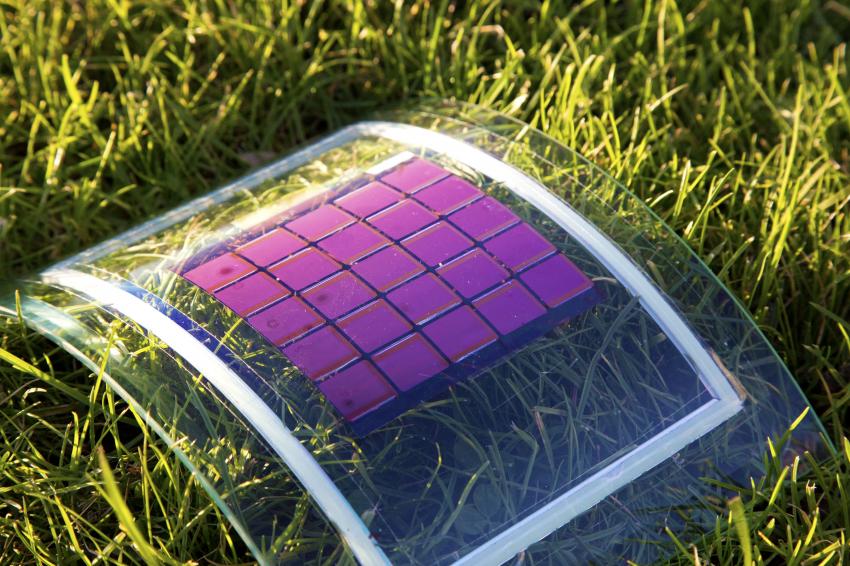
Organic solar cells (Image: Phys.org)
¶ The Amazon rainforest is undoubtedly a significant part of the Earth. Its health is directly linked to the health of the planet as well, as it holds huge amounts of carbon. Sadly, it has been adulterated by deforestation and the effects of climate change, and some scientists wonder if there is still a chance to save our biggest tropical rainforest. [Tech Times]
¶ University of Colorado researchers found that drier summers and a decline in average snowpack over the past four decades have hindered the establishment of spruce and fir trees in subalpine regions of the Front Range. The study, published by the journal Ecology, suggests that climate warming is taking its toll on forest health. [Boulder Daily Camera]
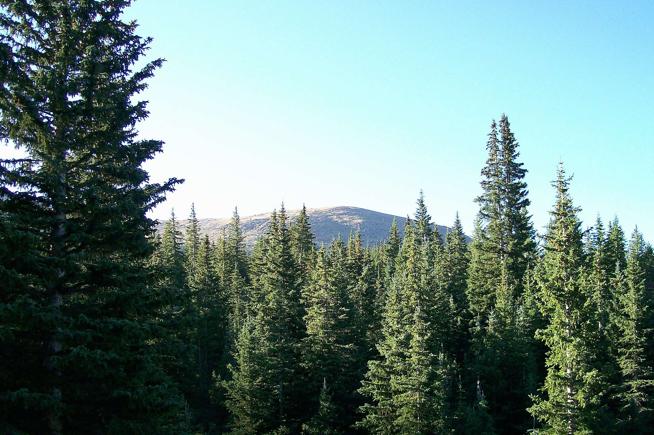
Colorado forest (Courtesy of the University of Colorado)
World:
¶ An exec at DHL (Deutsche Post) is quoted as saying that the payback period on the Tesla Semi, the period of time that it takes to pay off the difference in initial costs as compared to a conventional diesel semi truck, would be under 1.5 years. So after only 1.5 years, the company is already experiencing net savings … while using cleaner trucks. [CleanTechnica]
¶ The Argentine people can now generate their own energy through clean and unconventional sources, incorporating surpluses into the public grid, thanks to a new law. This is an important novelty in a country embarked on a slow and difficult process, with a still uncertain end, to replace fossil fuels with cleaner power generation. [Inter Press Service]
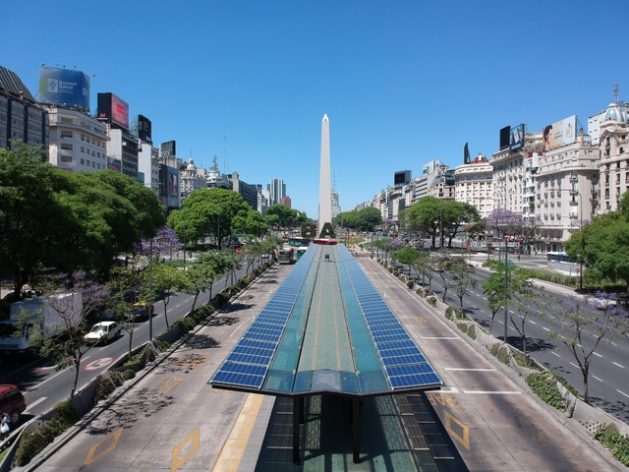
Bus stop in Buenos Aires (Courtesy of Sustentator)
¶ The Philippine province of Guimaras has been bent on leading the country away from burning coal. On February 24, during the visit of Greenpeace flagship Rainbow Warrior, Guimaras Governor Samuel Gumarin and the municipal mayors of the island made a brave declaration: Guimaras is the first coal-free province in Visayas. [Rappler]
¶ The Benban Solar Park near Aswan, Egypt, aims to reach 1.6 GW to 2.0 GW of solar power capacity by the middle of 2019. The projects will receive no incentives, however, it will be given a 25 year contract to sell its electricity at 7.8¢/kWh to the state-owned Egyptian Electricity Transmission Company, with the cost pegged to the US dollar. [Electrek]

Solar array in Egypt
¶ This year the University of Newcastle will switch on what may be one of the largest projects of rooftop solar PV installations at any Australian university. The 2.0-MW system will see more than 6000 panels installed across about 25 buildings at the Callaghan campus with additional panels being installed at the Ourimbah campus. [Newcastle Herald]
US:
¶ Yuri Horwitz, co-founder and CEO of Sol Systems, says he and his company expect solar power to be the dominant form of new electricity generation by 2022. A report dated February 15, 2018 lists three reasons why we might believe solar will be ascendant in the US market over the next 4 years in spite of new tariffs on imported solar products. [CleanTechnica]
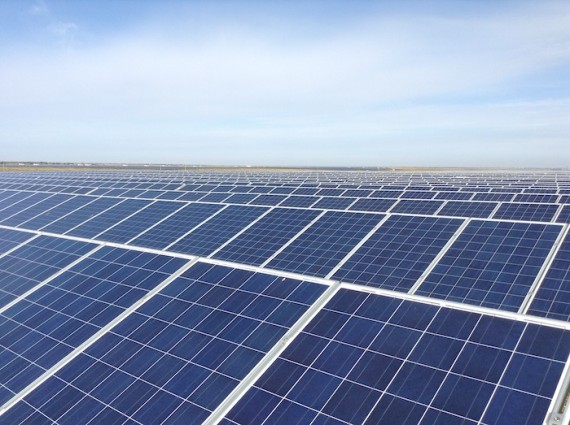
Solar farm
¶ Electric power is expensive in Hawaii, and with high humidity and temperatures, classrooms need air conditioning. Together, sets of solar panels and 300 Tesla Powerwall batteries will provide 1,000 Hawaiian classrooms with affordable AC, so students can focus on lessons, instead of dreaming about class trips to Alaska. [Digital Trends]
¶ Virginia lawmakers are set to vote on a major overhaul of how the state regulates Dominion Energy. The legislation makes it easier to get approval for renewable energy projects and grid upgrades. It also gives Dominion new ways to account for various costs, and this could ultimately cost customers an average of $120 per year. [The Charlottesville Newsplex]
 geoharvey
Leave a comment