Opinion:
¶ “Want to know why Trump will struggle to save the coal industry? Look at Michigan.” • All year, Donald Trump has been promising to rescue the US coal industry by repealing various Obama-era pollution rules and ending the “war on coal.” And all year, analysts have pointed out that he probably cannot deliver on that promise. [Vox]

Monroe Power Plant in Michegan (Port of Monroe)
¶ “Trump’s Election Is No Death Knell For Climate Progress”
The US can meet the climate action commitments made in Paris last year, even if Mr Trump decides to withdraw. It is the US cities, communities, and businesses who are ultimately getting on with the massive job of reducing greenhouse gas emissions. [Huffington Post Australia]
Science and Technology:
¶ If it feels like it hasn’t rained in months in the South, you’re right. The region is experiencing an extreme drought. But just a few months earlier, we were talking about record-breaking floods in the South. These shocking extremes are happening more often, and it is all part of an unfortunate new normal in a world with climate change. [CNN]

Drought in the Southeast
¶ Coral across Australia’s Great Barrier Reef suffered its most devastating die-off on record, a new report says. In just nine months, bleaching caused by warmer water has killed around 67% of the coral in a previously pristine part of the reef. While there were major coral bleaching events in 1998 and 2002, this year’s is more devastating. [CNN]
World:
¶ Portugal’s Council of Ministers have approved the 25-MW Windfloat Atlantic floating offshore wind project which will be sited off the country’s northern coast. The project, in waters near Viana do Castelo, is scheduled to be built in late 2018 or 2019. The project will feature technology developed by Principle Power. [reNews]

Floating wind turbines (Principle Power image)
¶ India’s latest electricity sector report provides some clear insights on the electricity sector transformation. Thermal power plant utilization rates are collapsing to below 50%, the growth rate in new builds has halved, and renewable power generation is up 26% year-on-year. India’s renewables goal is 16 GW in 2016. [RenewEconomy]
¶ Chile’s government announced a new auction for almost 7,945 hectares (19,770 acres) of state-owned land for wind projects. The land is located in the area of Taltal in the region of Antofagasta and could host up to 400 MW of wind capacity. Proposals will be for development of wind farms of at least 100 MW. [SeeNews Renewables]

Wind farm in Chile (Author: Diego Correa)
¶ Saskatchewan and the Canadian federal government are working on an agreement on coal. If finalized, it “will provide Saskatchewan more flexibility in transitioning to additional renewable energy, including evaluating future opportunities for carbon capture and storage to trap carbon dioxide and store it.” [Saskatoon StarPhoenix]
¶ The global market for boilers, turbines, and generators is set to decline thanks to the growing focus on renewable energy sources and awareness about the environmental issues, according a study by GlobalData. The market is expected to decrease from $318 billion for the full period of 2010-2015, to $241 billion for 2016-2020. [Greentech Lead]
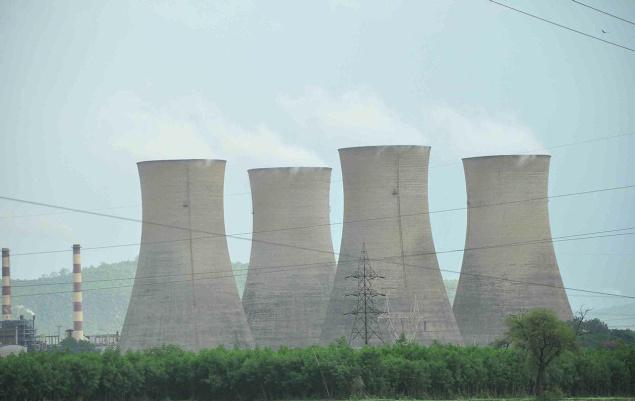
Cooling towers at a conventional thermal power plant
¶ Europe will be able to meet higher-than-normal electricity demand this winter even if nuclear safety checks tighten France’s power supply further, the European power grid lobby said. France faces its lowest level of nuclear power availability in 10 years because several reactors have been take offline for safety checks. [Reuters UK]
¶ Global solar installations are expected to jump 48% year-on-year to 76 GW in 2016 and then decline by 8% to 70 GW next year, sector consultancy Mercom Capital Group LLC said. This year’s growth can be attributed to “an unprecedented level of activity in China” before incentives were reduced at the end of June. [SeeNews Renewables]

Global Solar Demand Forecast (Mercom Capital Group, LLC)
US:
¶ The National Academy of Sciences released a study, which said New Orleans could see nearly 14.5 inches of sea level rise by 2040, and 6.5 feet by 2100. Scientists believe that metro areas outside of New Orleans’ protective levee system may have to be relocated because of rising sea levels within the next two decades. [WWLTV.com]
¶ The Interior Department’s Climate Science Centers, managed by USGS, are helping the National Park Service identify the impacts of climate change on parks. This will help answer a critical question: Which resources need human intervention to ensure their continued existence while the climate changes? [United States Geological Survey]

The construction of James Fort
(Artist: Sidney E. King, Permission by National Park Service)
¶ Ohio lawmakers are continuing their race to a showdown with Governor John Kasich over renewable energy. They want to delay state rules requiring renewable energy until he after he leaves office. But lawmakers appear to have put off until early next year the even bigger question of protecting old coal and nuclear power plants. [cleveland.com]
¶ Pacific Gas & Electric agreed to pay $85 million to neighboring cities and a school district affected by the closure of the Diablo Canyon nuclear power plant, the California utility announced. When the Central Coast plant shuts down in 2025, it will deprive the area of property taxes and potentially affect local businesses negatively. [Modesto Bee]

 geoharvey