Opinion:
¶ “Diablo Canyon closure shows California’s power grid is changing
fast” • Pacific Gas and Electric Co’s surprise decision to shut down Diablo Canyon, the last nuclear plant in California, came after the company studied the future and realized that the massive facility would be an awkward fit. [San Francisco Chronicle]

Diablo Canyon nuclear plant. Photo: Michael Macor, The Chronicle
¶ “In Illinois, the nuclear age comes creaking to a halt” • Exelon is a $34.5 billion company that earned $2.2 billion last year. For two straight years, it has tried to convince Illinois lawmakers to cover its losses. Exelon wants a taxpayer supported handout of an estimated $170 million for each of the next six years. [STLtoday.com]
Science and Technology:
¶ An ecology professor at the University of Alaska Anchorage is leading a long-term project to examine seabirds, what they eat and how that reflects ocean conditions in a rapidly warming climate. Increasingly, their diets include large quantities of plastic particles that float in the waters of the Bering Sea. [Alaska Dispatch News]

US Fish and Wildlife Service vessel, R/V Tiglax, stops at Attu Island,
most western of the Aleutians. (Bob Hallinen / Alaska Dispatch News)
¶ The continent of Antarctica has been home to Adélie penguins since millions of years ago, but climate change may soon force the penguin species to leave the place. A new study has suggested that about one-third current Adélie colonies will disappear by 2060 if Antarctic ice continues to shrink. [Northern California News]
World:
¶ Working out how to use some of New Zealand’s vast stores of renewable energy to fuel the transport sector may be the country’s next big challenge. Renewable energy now contributes about 82% of New Zealand’s electricity, but the picture is not quite so rosy when you look at the country’s total energy use. [Stuff.co.nz]
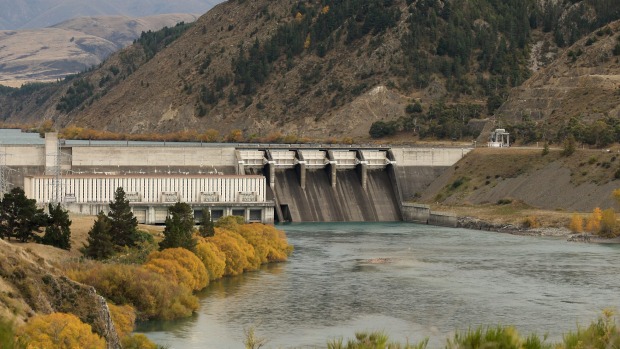
Much of New Zealand’s electricity comes from hydro stations. John Bisset.
¶ Sweden approved the sale of Vattenfall AB’s German lignite plants and mines to Czech power producer Energeticky a Prumyslovy Holding AS and its financial partner PPF Investments Ltd. Vattenfall, a state-controlled Swedish utility is seeking to divest its dirtiest power units, and wants to focus on renewables. [Bloomberg]
US:
¶ Nevada’s Renewable Portfolio Standards call for 25% of its electricity demand to come from renewable energy by 2025. This target has already been achieved. A conservative think-tank has published a study on its website saying the standards kill jobs and reduce growth. Energy experts disagree. [Las Vegas Review-Journal]

Solar panels being installed at a home in northwest Las Vegas.
Jeff Scheid / Las Vegas Review-Journal
¶ The Kit Carson Electric Cooperative agreed to pay $37 million to get out of a wholesale power contract with Tri-State Generation and Transmission, which it blames for holding back renewable energy development. Under the contract, the co-op could generate only 5% of its own power from solar sources. [Santa Fe New Mexican]
¶ The utility industry is clamoring more loudly in an election year for energy reforms that Congress and the administration have failed to deliver on, and one independent agency is being eyed to fix it all. The Federal Energy Regulatory Commission, the nation’s energy market watchdog, is that agency. [Washington Examiner]
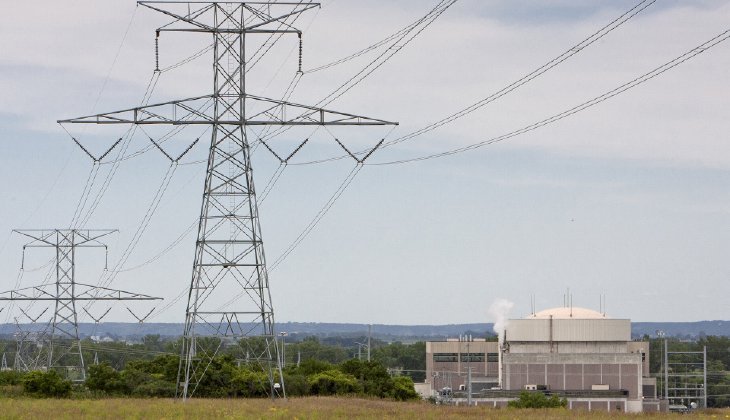
The nuclear industry said it is lobbying FERC. (AP Photo/Nati Harnik)
¶ A Cape Cod Research institution has once again received some lofty recognition from an international organization. For the third year in a row, the International Center for Climate Governance has ranked the Woods Hole Research Center as the world’s number one climate change think tank. [CapeCod.com News]
¶ The old Knickerbocker Landfill in East Whiteland, Pennsylvania, might go from an old waste ground to a renewable source of power, if a local electrical contractor’s development plans come to pass. Keares Electric has plans to build a solar farm on the landfill to provide clean energy to the area. [Daily Local News]

 geoharvey