Science and Technology:
¶ Fuveme is a coastal village in Ghana, one of a number of villages that are vanishing because of coastal erosion. What was once a thriving fishing community is now best reachable by boat because of rising sea levels due to climate change. Waves have washed away whole parts of the village. [BBC]

Fuveme is just a slither of land now.
World:
¶ South Africa will connect 7,000 MW of renewable power to its grid by the middle of this year, when the first 47 projects become fully operational, the energy minister said. Africa’s most industrialised country has turned to solar and wind power to plug electricity shortages. [Yahoo News]
¶ The UK Energy Bill, which provides for the closure of the Renewables Obligation support regime for new onshore wind in Great Britain, concluded its passage through Parliament. Industry body RenewableUK called for tapping into onshore wind as the cheapest power option. [SeeNews Renewables]

Wind farm in UK. Author: JAK SIE MASZ.
License: Creative Commons, Attribution-ShareAlike 2.0 Generic.
¶ Japan’s government is in the process of building a new fleet of coal-fired power stations that could prove worthless in a few decades as a result of overcapacity and falling energy costs, potentially stranding ¥6,223 billion ($56 billion) of assets, according to a new study. [Business Green]
¶ China’s largest coal company, Shenhua Energy, has signed an agreement with SolarReserve to build the largest amount of completely dispatchable solar electricity in the world: 1 GW of concentrating solar power (CSP). Shenhua will be responsible for the power block side. [CleanTechnica]

The power block of a CSP plant is much the same as any other thermal plant, whether geothermal, nuclear, coal, or natural gas.
¶ Tasmania has returned to 100% renewable electricity, at least temporarily, as significant rainfalls replenished dam levels and the state was able to operate without gas-fired or diesel generation for the first time since the Basslink cable was cut, preventing power imports from Victoria. [RenewEconomy]
¶ Northland Power Inc said it has installed 50 turbines at the 600-MW Gemini offshore wind farm and reported results for the first quarter of 2016. Of these, 27 are already producing power, bringing pre-completion revenues. Completion is expected in the middle of next year. [SeeNews Renewables]
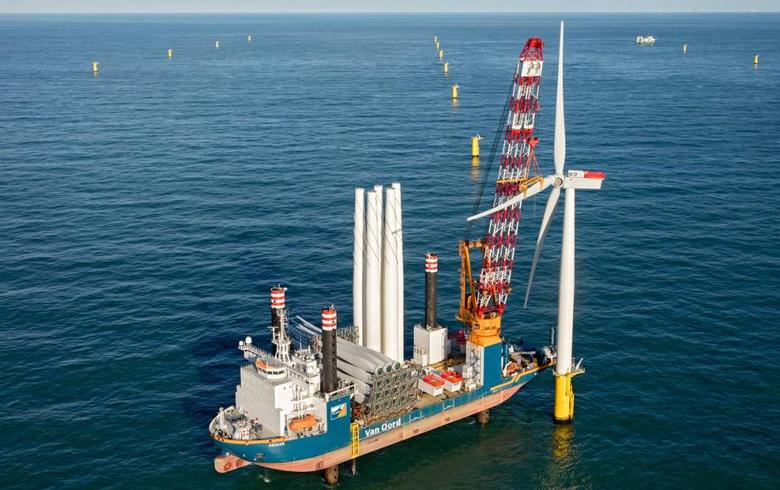
Installation of the first Gemini wind turbine.
Credit: Northland Power Inc. License: All Rights Reserved.
¶ Outdoor air pollution has grown 8% globally in the past five years, with billions of people around the world now exposed to dangerous air, according to new data from more than 3,000 cities compiled by the World Health Organisation. The problem extends worldwide. [The Guardian]
US:
¶ Thousands of oil and gas industry wastewater spills in North Dakota have caused “widespread” contamination from radioactive materials, heavy metals and corrosive salts, putting the health of people and wildlife at risk, researchers from Duke University said in a peer-reviewed study. [DeSmogBlog]

North Dakota, Williston – Bakken – Oil and Gas – Missouri River. Photo Credit: EcoFlight.
¶ The coal industry has been counting on exports to fill the gap in its declining sales, but it looks like the US Army Corps of Engineers has put the damper on that, at least for now. USACE suspended the permitting process for a proposed new coal export terminal in Washington State. [CleanTechnica]
¶ New Jersey’s largest electric utility wants to dramatically step up the number of ratepayer-supported solar projects it installs on landfills and brownfields. Public Service Electric & Gas Co asked state regulators to allow it to spend $275 million to install 100 MW of solar panels. [Philly.com]
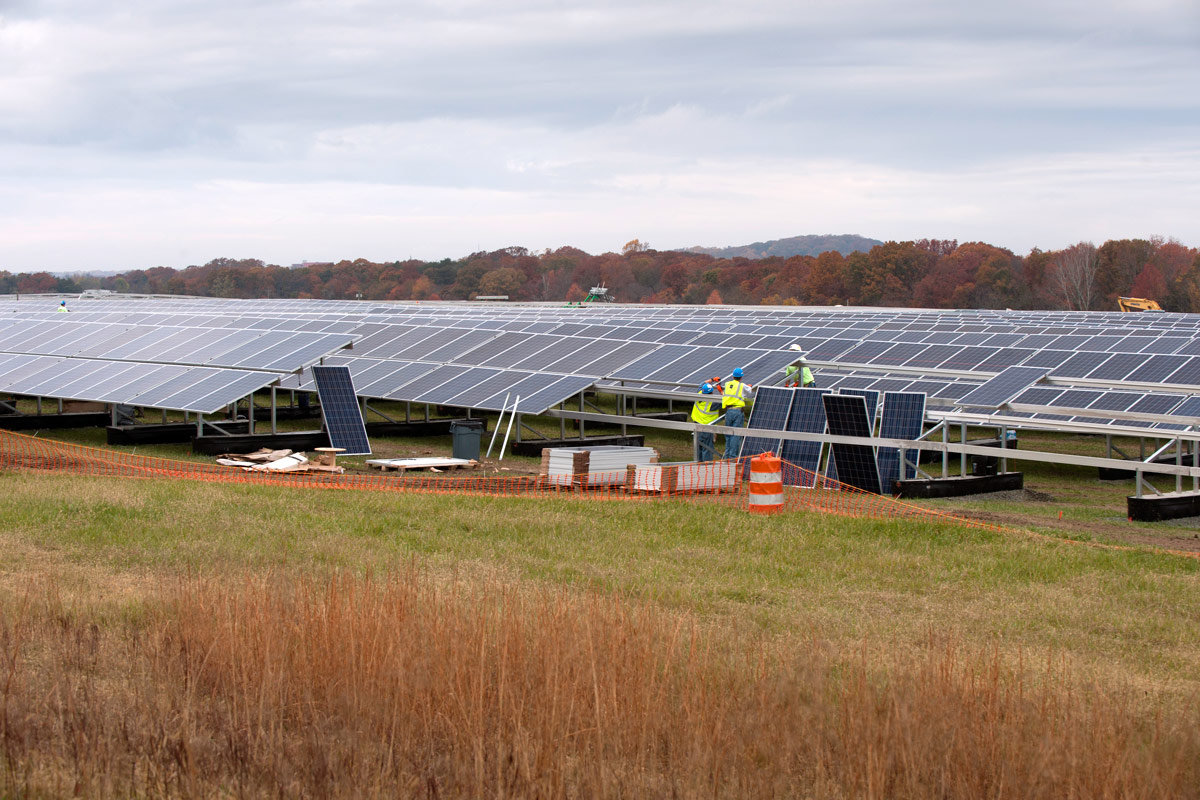
Electricians with Riggs Distler install solar panels for PSE&G.
Tracie Van Auken.
¶ Nothing is changing the corporate climate more than climate change. And what state is putting the topic on the front burner? New York, which is motivated by a progressive governor and memories of a 2012 superstorm, and his program, Reforming Energy Vision (REV). [Environmental Leader]
¶ The Fort Calhoun Nuclear Station survived a fire, a flood and the close scrutiny of federal regulators. But it may be no match for the market. Omaha Public Power District executives are making recommendations to the board, one of which is to close the plant, as it is too costly to run. [KETV Omaha]
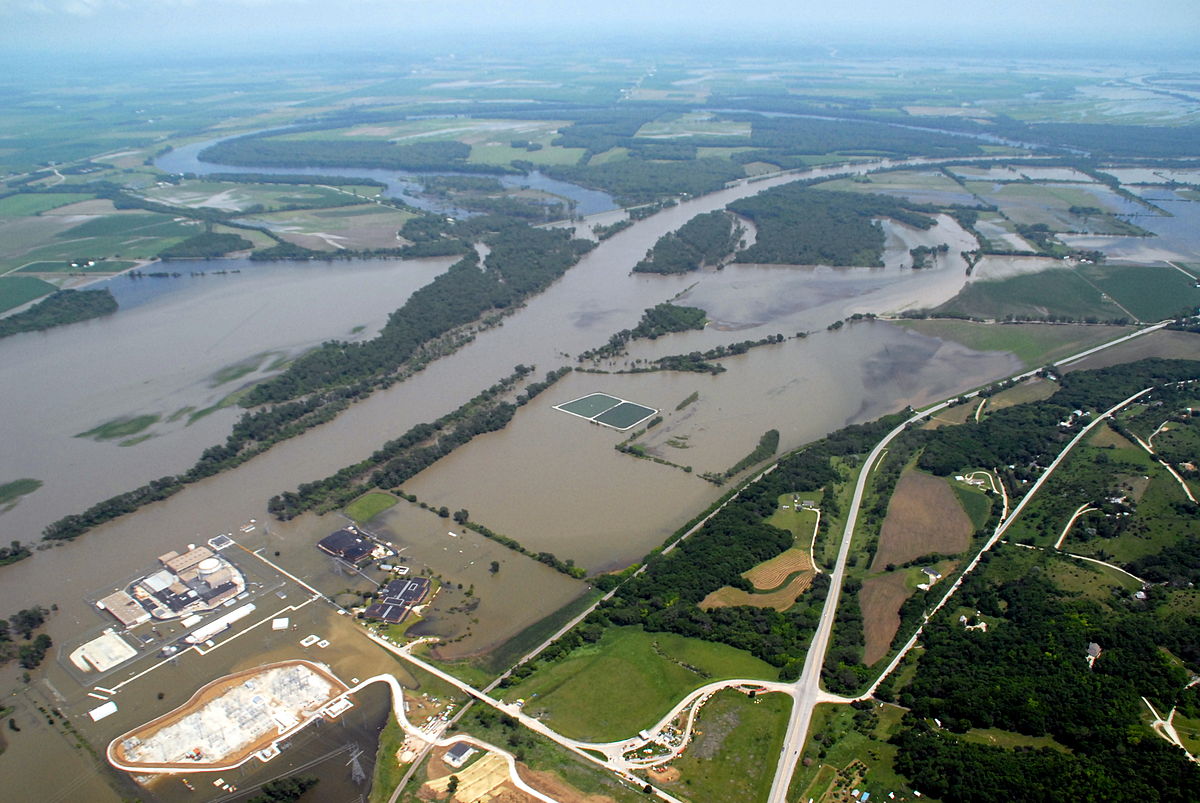
The Fort Calhoun plant flooded in 2011. Army Corps of
Engineers photo. Public domain. Wikimedia Commons.
¶ Foes of a third nuclear reactor at Dominion Virginia Power’s North Anna Power Station, near Mineral, Virginia, have taken their case to the shareholders of parent company Dominion Resources, which is holding its annual shareholders meeting in Columbia, South Carolina. [Bacon’s Rebellion]
¶ This summer, if all goes according to plan, the second reactor at Watts Bar Nuclear Power Plant, in Spring City, Tennessee, will begin supplying power to the US electrical grid. Construction on the reactor has proceeded with repeated delays since the project began. That was 43 years ago. [Quartz]

 geoharvey