
Opinion:
¶ ‘There’s no more land’ • A football field sized amount of land, on average, falls into the Gulf each hour. Isle de Jean Charles, Louisiana, was once about the size of Manhattan. Now, it’s about a third of Central Park. The coastal island has lost 98% of its land since 1955. [CNN]
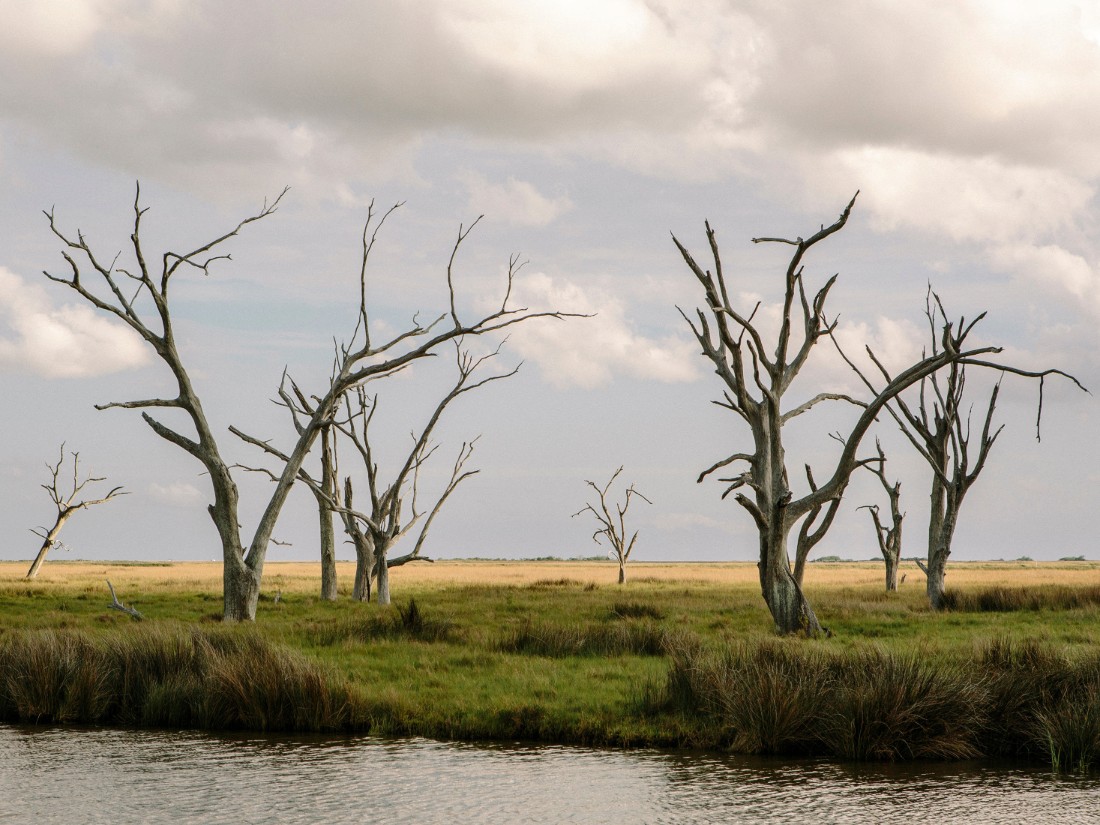
Ghost trees have fallen victim to salt water intrusion. Photo by William Widmer / Redux for CNN
¶ Counting food miles can trim emissions • It is important for consumers to remember the food they choose will have an impact on the environment. Food consumption makes up 41% of a person’s eco-footprint. It can be reduced by well-informed eco-friendly decisions. [Central Western Daily]
¶ Can ‘pay as you glow’ solve Malawi’s power crisis? • In Nigeria, according to the Afrobarometer survey, 96% of the population are connected to the electrical grid, but only 18% can expect the service to work most of the time. Further south in the continent the picture is often worse. [BBC]
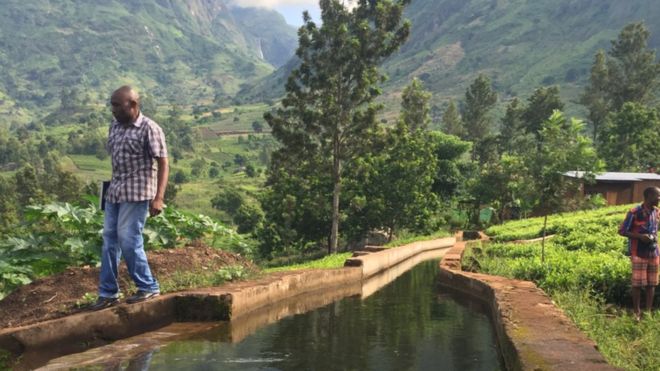
This canal feeds a small-scale hydro scheme in the village of Bondo, Malawi that powers 250 homes.
World:
¶ Data released by the International Renewable Energy Agency shows global renewable energy generation capacity increased by 152 GW in 2015, up 8.3%. The agency says global renewable energy capacity reached 1,985 GW. The figure includes hydro greater than 10 MW in size. [CleanTechnica]
¶ Prince Harry teamed up with a Bristol-based renewables company to help rebuild and provide power to a school in Nepal, which had been destroyed in an earthquake. Teams from Bristol-based Your Group and Bath Science Park joined Team Rubicon on the mission. [South West Business]

Prince Harry working in Nepal
¶ French energy minister Ségolène Royal said postponing the Hinkley Point C nuclear power project is still a possibility. She said the project must not be allowed to drain funds away from planned investments in renewable energy to bring France towards its 40% green power target. [The Ecologist]
¶ An announcement by CECEP Wind Power Corporation and Goldwind that White Rock Wind Farm in New South Wales is proceeding is a cause for optimism, the Clean Energy Council says. It is evidence of returning stability in Australia’s renewable energy industry. [Renewable Energy Magazine]

White Rock wind farm construction encourages optimism in Australian wind sector says CEC
US:
¶ The Army will help the Air Force reach its goals for renewable energy. The two signed an agreement that will enable the Air Force to accelerate toward its goal of 25% clean energy by 2025 by tapping into the Army’s experience with private sector financing for onsite solar installations. [CleanTechnica]
¶ Analysis by Vote Solar and the US Solar Energy Industries Association shows that inaction on net metering caps and the Solar Renewable Energy Credit program in Massachusetts has halted construction on more than 500 separate solar projects valued at a total of $617 million. [CleanTechnica]
¶ This month, San Diego will release the first outline on how it will switch entirely to clean electricity by 2035. Backers include Republican Mayor Kevin Faulconer, who said the aim is “ambitious” but “achievable.” Others say it’s impossible to accomplish by 2035. [Environment & Energy Publishing]
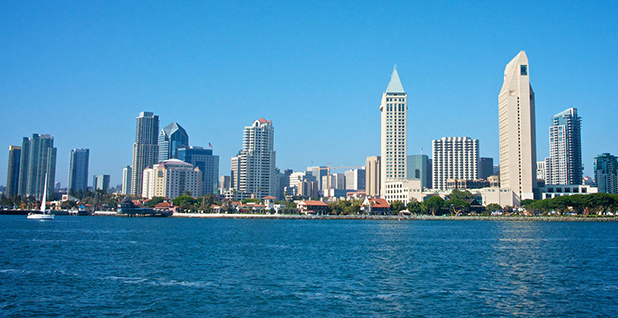
Can San Diego go green by 2035? The jury is still out. Photo courtesy of the General Services Administration.
¶ It could cost New York state over $3.6 billion through 2030 to reach ambitious clean energy goals Governor Andrew Cuomo backs, but reductions in greenhouse gases would create benefits worth more than $8 billion, according to a Public Service Commission study. [Albany Times Union]
¶ Enel Green Power North America and Tradewind Energy of Lenexa announced the $613 million Cimarron Bend project, to be built in Kansas. At 400 MW, it will be the largest wind farm Enel has built, and it will be the second largest wind farm in Kansas. [Lawrence Journal World]
¶ Texas’ lead in cheap wind power, near historically low natural gas prices, mild weather, and slow growth in electricity demand, can work to the detriment of power companies. The combination weighed down wholesale power prices, spells trouble for Texas’ coal and nuclear plants. [Houston Chronicle]
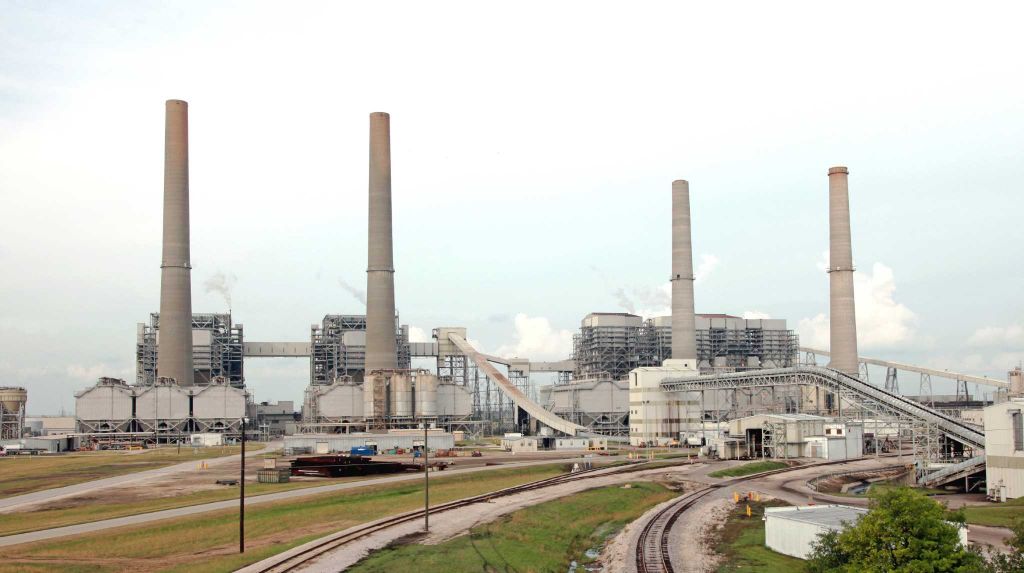
Carbon dioxide from the WA Parish power plant will be captured and used to enhance production in oil fields. (NRG Energy photo)
¶ The North Carolina Pork Council asked the state’s Court of Appeals to reverse a ruling that biogas created from swine waste in Missouri and Oklahoma can count as North Carolina-based renewable energy credits. The ruling leaves NC less able to deal with its own waste. [Charlotte Business Journal]
¶ Work has started in earnest on six solar farms in Malheur County, Oregon, which are expected to generate a combined 50 MW. The project contractor is Swinerton Renewable Energy, based in San Diego, which already has four of the sites in various early stages of construction. [Ontario Argus Observer]
 geoharvey
April 9, 2016 at 9:14 am
Reblogged this on A Green Road Daily News.