
Science and Technology:
¶ A Sandia-led team, with support of the US DOE, has developed a way to make a magnetic material that could lead to lighter and smaller, cheaper and better-performing high-frequency transformers, helping adoption of more flexible energy storage systems and renewable energy. [Nanowerk]

Sandia National Laboratories researcher Todd Monson.
¶ Researchers from two Scottish universities are taking part in a project to boost the development of “meshed” offshore grids to link windfarms with the mainland. Aberdeen and Strathclyde are part of a four-year European initiative investigating high-voltage direct current technology. [The National]
¶ A research team from the Shenzhen Institutes of Advanced Technology of the Chinese Academy of Sciences has developed a novel, environmentally friendly low-cost battery that overcomes many of the problems of lithium-ion batteries. It has both lower weight and lower fabrication costs. [AZoCleantech]
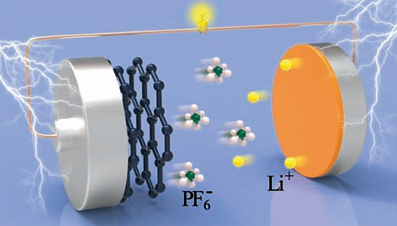
Schematic structure of the AGDIB
(Image by Professor TANG Yongbin)
World:
¶ In a bit of an unexpected move, the biggest heavy machinery manufacturing firm in China, the SANY group, announced that it will invest around $7.7 billion in various solar PV projects in the country over the next 5 years. A pilot project of 3.82 MW had already been tested. [CleanTechnica]
¶ Authorities in the Indian state of West Bengal were forced to suspend generation at the 2,300-MW plant because the canal carrying cooling water to it went dry. The township it was in lost water, residents had to be given bottled water to drink, and the whole area had electricity shortages. [BBC]

The canal connecting the Ganges to the power station dried up.
¶ In refugee camps and at military camps, the power supply is often a huge cost item. Three students from the University of Applied Sciences in Amsterdam have been looking into a potential solution: the use of end-of-life batteries from electric cars as a source of renewable energy. [Recycling News]
¶ A pipe stretching nearly 1.2 miles into the ground could deliver heating from the earth to the new Aberdeen Exhibition and Conference Centre and nearby homes, a report has found. A feasibility study revealed that a deep geothermal well would cost around £2.3 million to build. [Press and Journal]
¶ China is aiming to triple its solar PV generation capacity by 2020, bringing it up to 143 GW, its National Energy Administration says. The plan is to add between 15 GW and 20 GW of PV capacity a year, investing about $368 billion in types of grid infrastructure at the same time. [CleanTechnica]

Image by Aapo Haapanen (some rights reserved)
US:
¶ Power generators are resisting Massachusetts Governor Charlie Baker’s plan to tap Canadian hydropower to meet the state’s energy needs. His plan, which hinges on lawmakers’ approval, calls on the utilities to import 1,200 MW to 2,400 MW of hydro-electricity. [Gloucester Daily Times]
¶ North Dakota is one of the top states in the Midwest for jobs in the clean-energy field, according to the Clean Jobs Midwest survey. It shows North Dakota has the highest percentage of clean-energy jobs, per capita, out of 12 Midwestern states, at just under 12,000. [Public News Service]
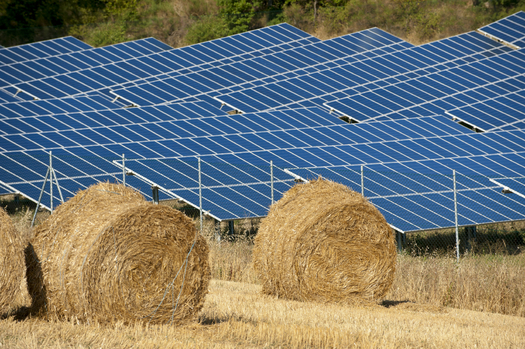
New numbers show North Dakota has the highest percentage of clean-energy jobs per capita in the Midwest. (iStockphoto)
¶ The advocacy group, Industrial Energy Consumers of America, sent a letter to ranking members of two US Senate Committees, urging them to extend the combined heat and power business energy investment tax credit, which is set to expire at year-end 2016. [Energy Manager Today]
¶ In early 2015 engineers on a brand-new submarine found that a pipe joint near the innermost chamber of its nuclear-powered engine showed signs of tampering. Defective parts, probably costing $10,000 or less, have kept the $2.7 billion Minnesota in an overhaul for two years. [NavyTimes.com]
 geoharvey
March 29, 2016 at 3:26 pm
Reblogged this on nuclear-news.