
Science and Technology:
¶ Does shrinking ice in the Arctic lead to worse snow storms along the East Coast? It’s very possible says leading Arctic researcher Judah Cohen. In Washington, Baltimore, Philadelphia, New York City, and Boston, at least five of the top 10 snow storms on record have occurred since 1990. [Washington Post]
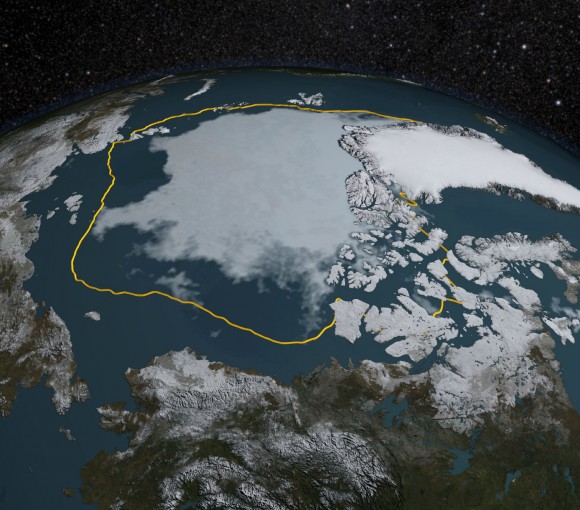
September Arctic sea extent compared to 1981-2000 average portrayed by yellow line (NASA)
¶ The ice cover across the Arctic hit a new low throughout January. The Colorado-based National Snow and Ice Data Center tracked the lowest ice extent ever for January. The record-low ice extent was driven by unusually high air temperatures over the Arctic Ocean – more than 6° C (10.8° F) above average. [Nunatsiaq News]
World:
¶ The Ugandan company Kiira Motors recently showed off what it claims to be the first solar-powered bus in Africa – the Kayoola prototype solar-electric bus – in the capital city of Kampala, according to recent reports. The company is currently looking for backers in order to mass manufacture the prototype. [CleanTechnica]

Electric bus. Image Credit: Kiira Motors
¶ India is eyeing Australia’s clout in Liquefied Natural Gas, renewable energy expertise, and clean coal technology to grow its economy. The third India-Australia Energy Security Dialogue seeks to build a stronger relationship as well as strengthen the institutional framework between the two countries. [PrameyaNews7]
¶ Tasmanian Resources Minister Paul Harriss is pushing investment in biomass energy generation, as low hydro dam levels combine with the Bass Strait power cable cut to put pressure on state industries. He said burning forestry and agricultural waste for electricity should be a central renewable energy strategy. [ABC Online]
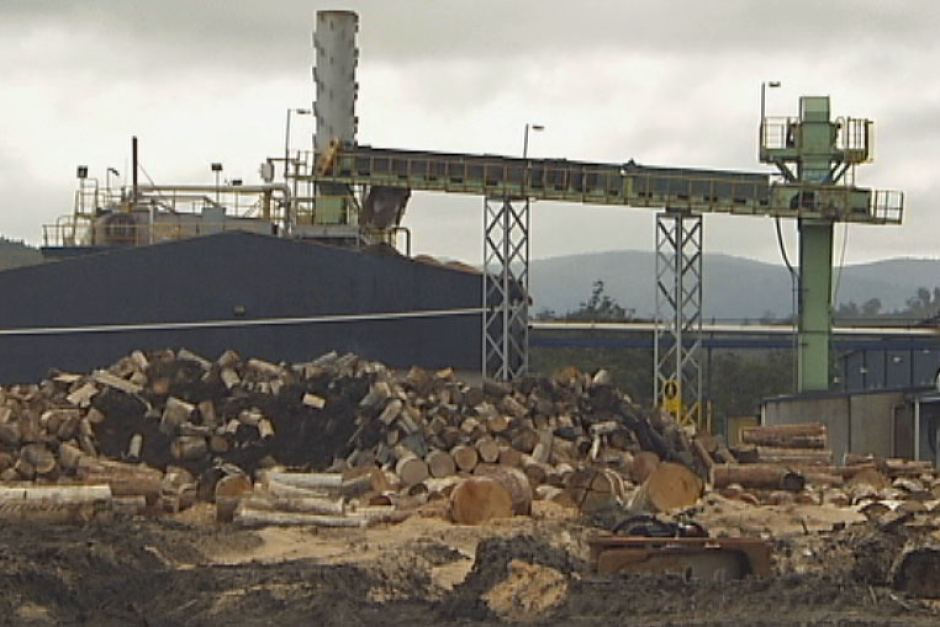
The Southwood sawmill in the Huon Valley was designed more than a decade ago to include a biomass plant. ABC
¶ The Indian government has transformed the country’s coal situation over a short time span, and not a single thermal power plant is now facing shortage of the fuel, according to Union minister Piyush Goyal. He said this while addressing the annual convention of Indore Management Association. [Times of India]
¶ Croatia is unlikely to go ahead with plans to build a new coal-fired thermal plant in the northern Adriatic. The environment minister said, “We need a new energy strategy in line with the European Union plans on boosting renewable energy and reduction of carbon dioxide emissions. Such plants don’t fit in.” [Reuters]
¶ Cuba’s electricity supply is still highly dependent on oil imports from neighboring Venezuela. But, like most Caribbean nations, Cuba has immense potential for energy generation from renewable alternatives, including solar energy, which can be utilized to meet domestic and small business needs. [Havana Times]
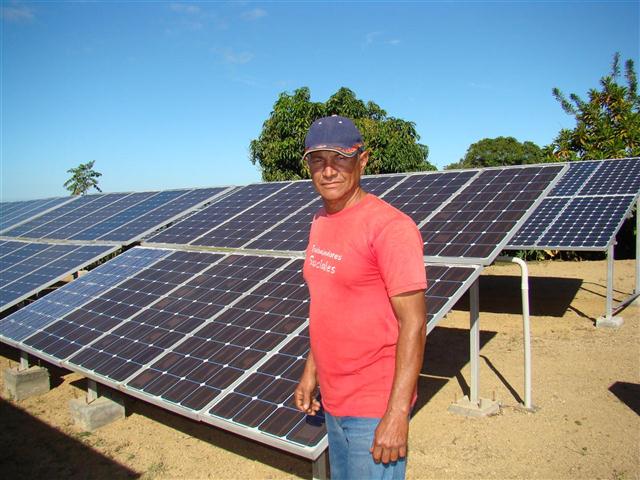
Solar system in Cuba. Photo: CIES
¶ Laos will soon have the region’s biggest and most advanced wind farm. It will be located on 8,000 rai (3,163 acres, 1,280 hectares) and supplying 600 MW of non-subsidised electricity. Valued at about Bt54 billion ($1.5 billion), it will use the latest wind turbine technology from General Electric and Vestas. [The Nation]
¶ In line with India’s Solar Energy Policy unveiled in 2012, the State government has now included buildings housing industries, government and quasi-government offices, including urban local bodies, in the list of institutions where an auxiliary solar-assisted water heating system must be installed. [The Hindu]
US:
¶ The US now has nearly 503 million barrels of commercial crude oil stockpiled, the Energy Information Administration said on Wednesday. It’s the highest level of supply for this time of the year in at least 80 years. Certain key storage locations are now “bumping up against storage and logistical constraints.” [CNN]
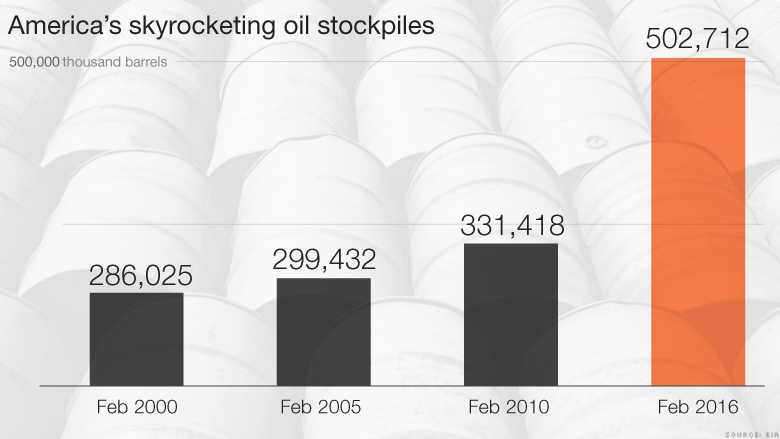
US Oil Inventories. Source EIA
¶ President Barack Obama said he will ask the Republican-led Congress to double spending on research and development into clean energy by 2020. But the request is unlikely to be fulfilled. GOP lawmakers scoff at the science behind climate change and dismiss Obama’s pleas to be dealt with the issue urgently. [The Denver Post]
¶ Radioactive material has leaked into the groundwater below the Indian Point nuclear plant north of New York City, prompting a state investigation and condemnation from governor Andrew Cuomo. Cuomo ordered an investigation into “alarming levels of radioactivity” found at three monitoring wells. [The Guardian]
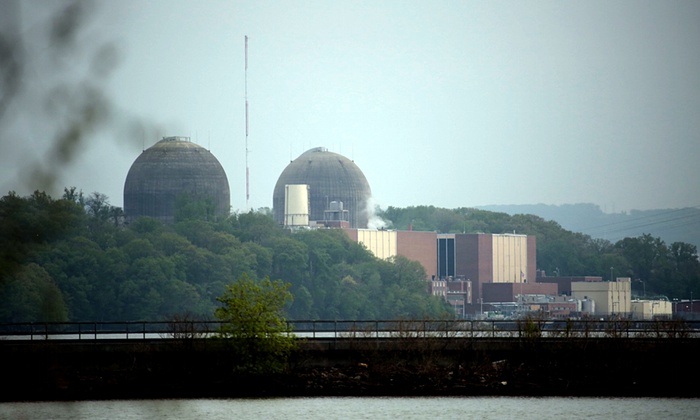
The Indian Point energy center in Buchanan, New York. Photograph: Ricky Flores/AP
¶ With an expansion of solar incentives in Massachusetts bottled up in committee and a battle over a comprehensive new state energy policy looming, the Environmental League of Massachusetts Action Fund plans to launch a $25,000 ad campaign targeting the influence of the utilities in shaping the energy debate. [Lowell Sun]
¶ Illinois state regulators allow Peabody Energy to pledge it has adequate assets to pay for the estimated $92 million needed to reclaim three southern Illinois mines when they close. The Environmental Law and Policy Center says that arrangement puts Illinois taxpayers at risk should Peabody go bankrupt. [Peoria Public Radio]
 geoharvey
Leave a comment