Opinion:
¶ Energy bills, the Big Six and the scandal of people dying of cold in their own homes • The UK’s Big Six energy suppliers’ fuel costs have tumbled, but they have not cut prices. Instead of looking into this, the Government has turned its fire on renewable power. And every 7 winter minutes, an older person dies from the cold. [The Independent]
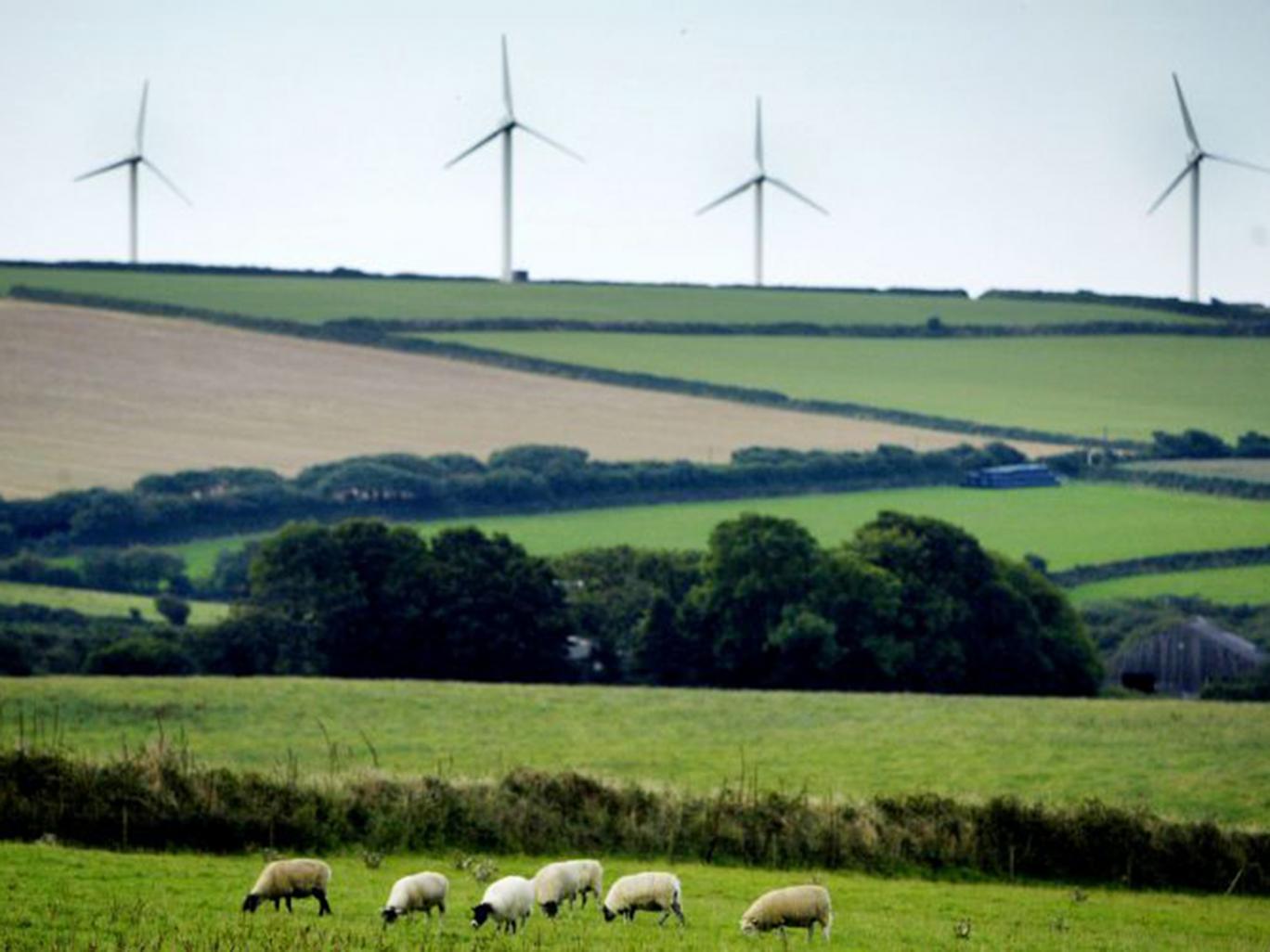
Shutting down onshore wind farms by removing subsidies
will save a typical householder £0.30 a year. Getty
World:
¶ According to a report published by the International Renewable Energy Agency, Renewable Energy Benefits: Measuring the Economics, increasing the global share of renewable energy to 36% by 2030 would increase global gross domestic product by up to 1.1%. This means about $1.3 trillion. [CleanTechnica]
¶ Korea Electric Power Corp said it will design and build a digitized power substation in Bhutan. Under the $25.6-million contract, KEPCO will replace outdated 220-kV outdoor substations in the southern city of Phuntsholing by 2018. The replacements will be automated and have surveillance features. [The Korea Herald]

KEPCO headquarters in Naju, South Jeolla Province (Yonhap)
¶ Morocco aims to generate 52% of its electricity from renewable sources, including 2 GW each from solar, wind, and hydroelectric power, by 2030. Currently Morocco is the Middle East’s largest energy importer. It imports more than 97% of its total energy supply, according to information from the World Bank. [Zawya]
¶ The government of the Indian state of Madhya Pradesh has signed a pact with IFC, member of the World Bank Group, to set up the world’s largest solar energy plant with a capacity of 750 MW, at an estimated cost of ₹4,500 crore ($668 million). It will be the largest single-site solar power project in the world. [News Today]
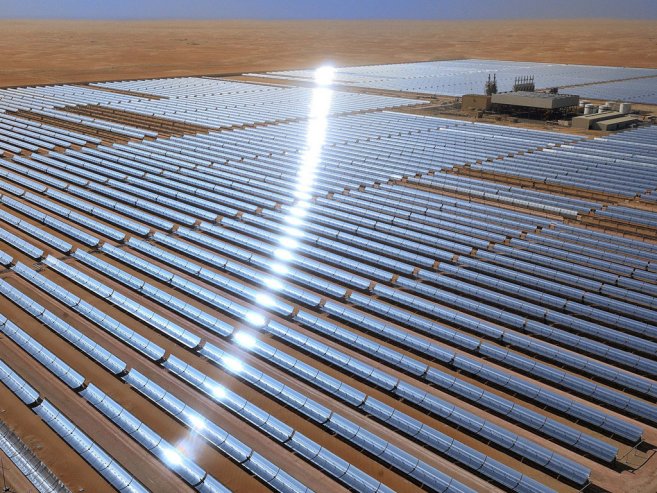
Solar power plant
¶ Jordan plans to have 500 MW of wind and solar power capacity by the end of this yea, according to the Minister of Energy and Mineral Resources. Of the planned 1,000 MW of projects being developed in the kingdom, 170 MW are already operational and the rest is expected to come online by 2018. [Bloomberg]
¶ The UK government is expected to see a standoff with the House of Lords over David Cameron’s reversal on green energy subsidies. There could be tensions between the government and the upper chamber as the energy secretary presses ahead with a scheme to end subsidies for new onshore windfarms. [The Guardian]
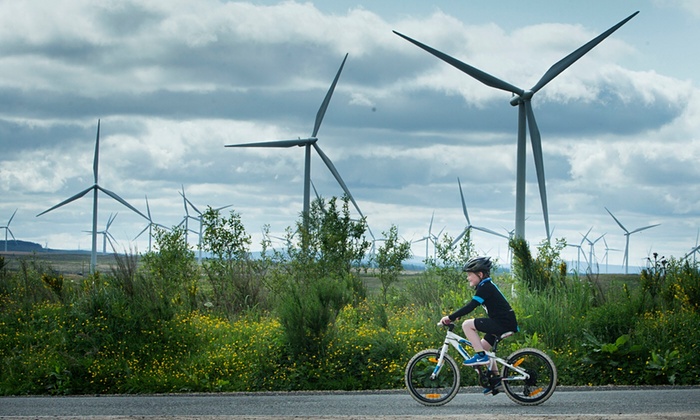
A child cycles past an onshore windfarm. Photograph: Danny Lawson/PA
¶ Japan’s energy policy is facing major obstacles this year, as problems surrounding an experimental reactor threaten to foil long-laid plans to recycle nuclear fuel. The fast-breeder reactor development project has hit major stumbling blocks that put the entire project at risk of shutting down. [The Japan Times]
US:
¶ In 2009, Navy Secretary Ray Mabus announced that the Navy and Marine Corps would get half of their power from non-fossil fuel sources by 2020, and that the Navy would deploy an entire carrier strike group with biofuels replacing fossil fuels by 2016. Now, the “Great Green Fleet” is ready to deploy. [The San Diego Union-Tribune]

Ships from the John C. Stennis Carrier Strike Group are underway
in the western Pacific Ocean. Petty Officer 3rd Class Walter W
¶ The economic benefits of state renewable portfolio standards greatly outweigh the costs, according to a report from Lawrence Berkeley National Laboratory and the National Renewable Energy Laboratory. Renewable portfolio standards are important drivers of renewable energy growth in the US. [CleanTechnica]
¶ The city of Grand Junction, Colorado, is making huge strides to reinvent their wastewater industry, and the result is like finding a diamond in the sludge. Grand Junction’s human waste is processed into biomethane, or renewable natural gas. The gas is then used to fuel the city’s fleet of about 40 vehicles. [The Guardian]

 geoharvey