COP21:
¶ Laurent Fabius, COP21 president, released version 1 of a draft text on COP21 agenda item 4 (b), the Durban Platform for Enhanced Action (decision 1/CP.17), at 3:00 PM GMT. Fabius said of the current situation, “We’ve made progress but still a lot of work remains to be done. Nothing is agreed until everything is agreed.” [CleanTechnica]

COP21 Facilitators – Meeting go on around the clock.
¶ In the last meeting of December 9, the Comité de Paris of COP21 reconvened to register the reactions of conference parties to the draft agreement. The meeting closed at 11:28 pm. Sub-groups started meeting at midnight. One overnight consultation covers treaty sections on loss and damage, mechanisms, forest, and preamble, but there are others. [CleanTechnica]
¶ The United States has joined with the EU and a range of other countries at COP21 in an effort to secure a final agreement. The so called “high ambition coalition” now comprises well over 100 countries from the rich and developing world. In addition to the US, Norway, Mexico and Colombia have offered their support to the alliance. [BBC]
¶ Dubai is adopting a plan, Clean Energy Strategy 2050, which includes a number of renewable energy targets. One is that all rooftops in the city will have solar PVs by 2030. Another is a goal of solar generating 75% of the city’s energy by 2050. On the way to achieving this goal is the requirement that 25% is generated by solar by 2030. [CleanTechnica]
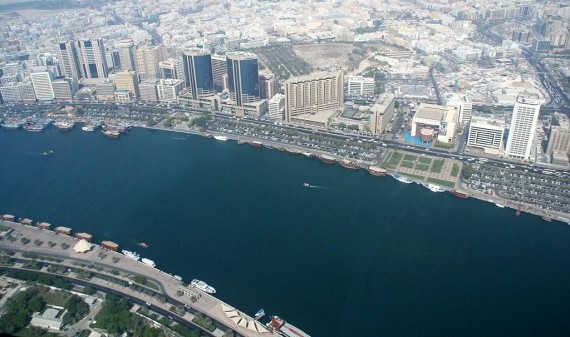
Image Credit: Imre Solt, Wiki Commons
¶ The launching of renewable energy initiatives became a bright spot at Paris Climate Conference amid the continuing struggle of negotiators to forge a universal and ambitious climate deal by Friday. United Nations Secretary-General Ban Ki-moon spearheaded these efforts to urge various stakeholders to scale up, speed up and collaborate. [ABS CBN News]
World:
¶ Hamburg’s new city core responded to the challenge of rising ocean levels with a relatively inexpensive solution; HafenCity is designed to be flood proof. HafenCity is the rebirth of a city center, containing an intricate network of offices, public spaces, commercial spaces, around 2,000 inhabitants. It is built to an environmental Gold standard. [CleanTechnica]

Photo provided by Hamburg Marketing
¶ A unit of Chinese firm Sinohydro Corp Ltd erected the last turbine at its 80-MW intertidal wind demonstration project near the coastline of Jiangxi province’s Rudong county. The facility uses 32 turbines of 2.5-MW each, manufactured by Siemens. Of these, 12 will be installed near the coast, while 20 will be located on the shore. [SeeNews Renewables]
¶ Renewables are beating fossil fuels on cost in island nations from the Pacific to the Caribbean, where they depend on oil from distant sources. For many of them, obtaining and paying for fuel is a costly struggle that they must manage along with the threat of rising sea levels and more violent storms predicted because of global warming. [Bloomberg]
¶ The majority of the world’s microgrid projects are now remote microgrids, according to a new report from Navigant Research. “Microgrid Deployment Tracker 4Q15” offers data and analysis on the various microgrid projects around the world currently (both remote and grid-tied ones), regardless of development stage (active, planned, proposed, etc). [CleanTechnica]
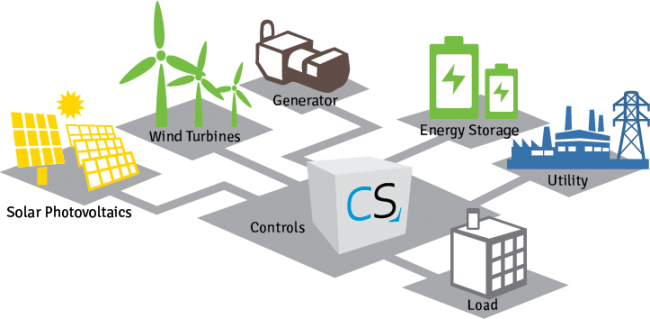
Image by CleanSpark
US:
¶ Vermont’s main utility is going to be providing Tesla Powerwall home battery systems to customers who want them. If the utility’s customer agrees to allow the utility to use electricity stored in a Powerwall at home, the customer will also get paid for its use. One of the three ways a customer can pay for the Powerwall is $0 down. [CleanTechnica]
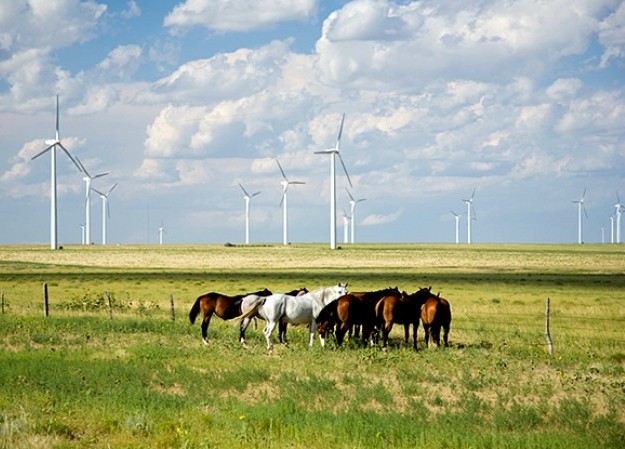
¶ Xcel Energy has taken formal control of the Border and Pleasant Valley wind farms in the US, adding 350 MW to its operational portfolio. The projects boost the utility’s wind capacity by 20%. A 150-MW wind farm is in North Dakota and was transferred to Xcel on 3 December. A 200-MW farm in Minnesota was handed over in November. [reNews]
An Xcel project in Colorado (Xcel)
¶ The Supreme Court may shortly decide an obscure case entitled Federal Energy Regulatory Commission v. Electric Power Supply Association (FERC v EPSA). The issue before the court is whether FERC can compel regional power markets to pay consumers who reduce their electricity usage at critical peak periods. And if so, at what price? [OilPrice.com]
¶ American Electric Power, one of the largest utilities, made waves when it confirmed it has dropped membership from the American Legislative Exchange Council, a prominent climate denial front group. AEP was the chair of ALEC’s environmental task force, which produces all of ALEC’s anti-environmental model bills. [Natural Resources Defense Council ]
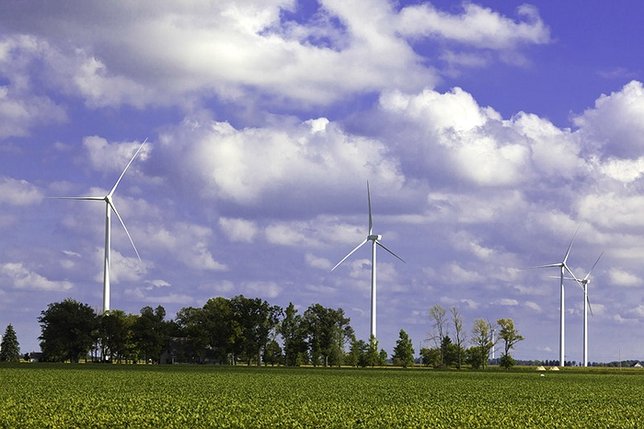
¶ Wind power has grown exponentially in New York over the last dozen years, and now supplies enough energy to power over 360,000 homes, a report from Environment New York Research & Policy Center says. Last year alone, wind turbines produced enough energy to reduce carbon pollution equal to 400,000 cars. And growth continues. [LongIsland.com]
Wind turbines producing enough energy can help reduce carbon pollution. Photo by: Wind Energy Foundation on Facebook.
¶ DOE officials and an energy cooperative with members in eight states are negotiating a plan that could lead to the construction of small commercial nuclear reactors at an eastern Idaho federal nuclear site. Officials with Utah Associated Municipal Power Systems said they prefer an 890-square-mile site containing the Idaho National Laboratory. [The Columbian]

 geoharvey