COP21:
¶ Can we avoid climate apocalypse? • Nearly every country in the world has agreed that an increase of 2° C in global average temperature since the Industrial Revolution, is too much. World leaders will meet in Paris starting on November 30 at the COP21 meeting of the UN Framework Convention on Climate Change. [CNN]

A view of Durban, South Africa, if temperatures rise as much as 4° C, according to Climate Central.
¶ COP21: Beginner’s guide to the UN Paris climate summit • World governments have already committed to curbing human activities such as burning fossil fuels that release the gases that interfere with the climate. The difficulty comes when you try to get 195 countries to agree on how to deal with the issue of climate change. [BBC]
Science and Technology:
¶ New onshore wind turbines are coming to market. Senvion’s 3.4M140 is a 3.4-MW example with 140 meter rotor blades. The turbine should be able to generate 12.2 GWh of electricity annually in locations with wind velocities of 6.5 meters per second at hub height, making capacity factor around 41%. [www.renewablesinternational.net]
World:
¶ The Wachau, a picture-postcard river valley in Austria, makes a lot of wine. Soon it could be producing its own electricity too, and in a way that will not spoil the stunning views. People in the valley have found a way to contribute to the fight against global warming by using what is called “river current power.” [CTV News]
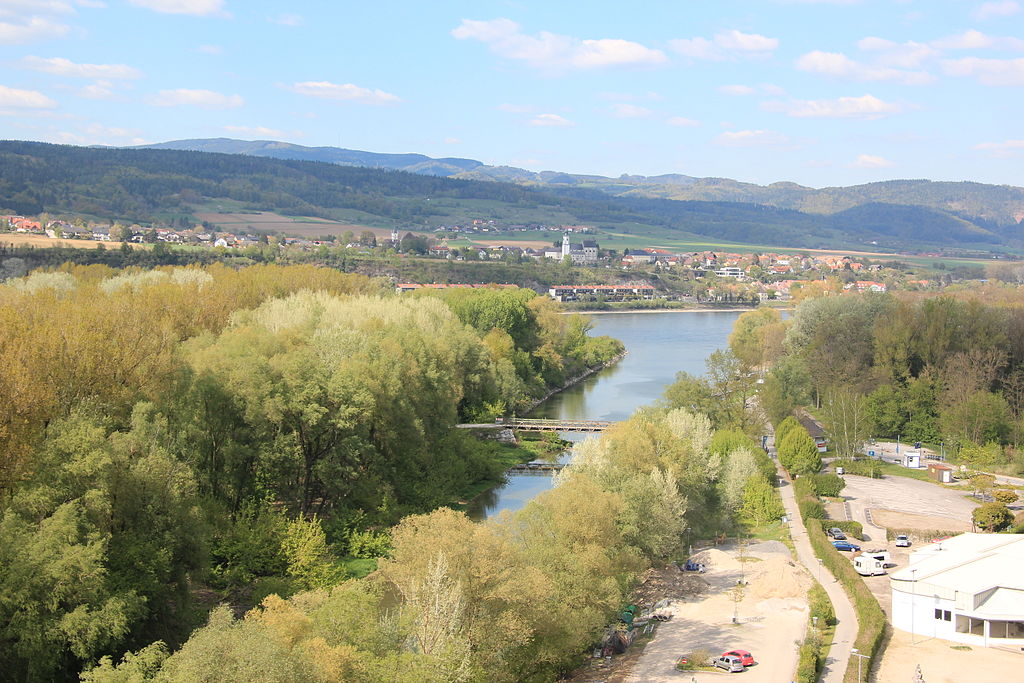
The Wachau Valley. Photo by Karl Gruber. CC BY-SA 3.0. Wikimedia Commons.
¶ In 2010, a farmer in St. David’s, Newfoundland, installed an anaerobic digester that turns the waste from his 1,200 cows into electricity. His farm uses only 24% of the power, and the excess is enough to keep the lights on in 400 homes all year long. He wants to sell the power, but red tape has been holding him up for years. [CBC.ca]
¶ Australian Environment Minister Greg Hunt said new low-emissions coal power plants were unlikely to be built in Australia, despite experts saying they could help coal remain the dominant global fuel. He expects renewable energy, such as wind and solar, would take up the slack as old coal plant close. [The Australian Financial Review]
¶ Israel hopes to highlight its green technology expertise, with an emphasis on solar energy, as a major solution to global warming at the COP21 talks in Paris on November 30, according to a member of the delegation. Israeli innovation is being highlighted for its potential to help countries achieve climate goals. [The Times of Israel]
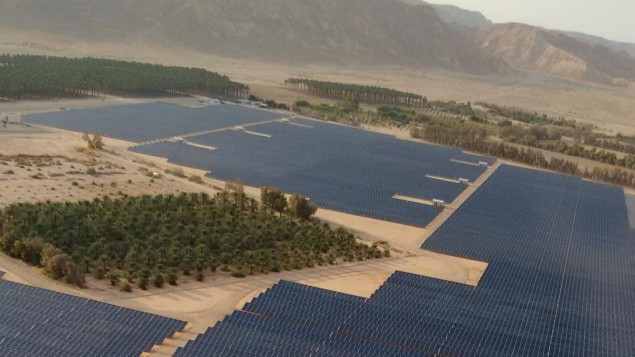
An aerial view of the 40 megawatt solar field recently built at Kibbutz Ketura, which provides the one third of the daytime electricity for the city of Eilat. (courtesy Gigawatt Global)
¶ When forest fires roared through Siberia this summer, so vast that the smoke blocked vast Lake Baikal from satellite view, Russian officials blamed the blazes on arsonists and disorganized fire crews. There may be another culprit: global warming, but Russia has little interest in reducing greenhouse gases. [The Journal]
US:
¶ Arizona could meet the requirements of the Clean Power Plan with large-scale solar and wind projects already under review in the state, according to a recent analysis released by Arizona State University’s Energy Policy Innovation Council and the Sonoran Institute, a sustainability group based in Tucson. [azcentral.com]
¶ The California birthplace of a machine that could bring clean power to the developing world and knock a tiny dent in global warming looks like a junkyard. But the Power Pallet, which generates electricity from corn cobs, wood chips, coconut shells and other kinds of cheap, dense biomass is “carbon negative.” [San Francisco Chronicle]
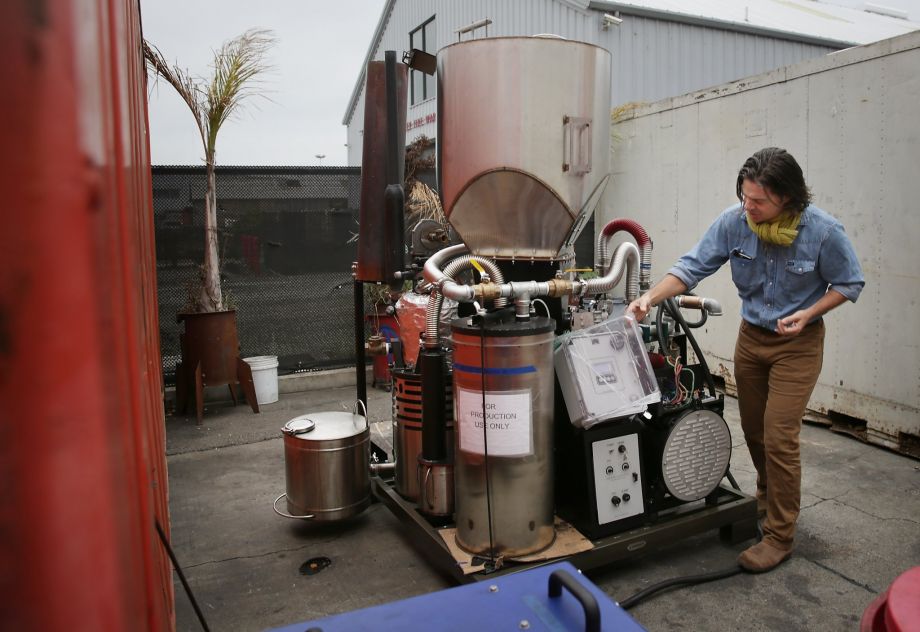
Tom Price, director of strategic initiatives, looks over a PP20 Power Pallet while giving a tour at All Power Labs. Photo: Lea Suzuki, The Chronicle
¶ A new solar plant being built near Florence, Arizona, will reduce carbon emissions equal to removing almost 20,000 vehicles from the road each year, company officials say. The Sandstone Solar ranch, currently under construction, will use 182,000 Jinko Solar photovoltaic modules, mounted on trackers. [TriValley Central]
¶ Research has found that an earthquake fault near California’s Diablo Canyon nuclear power plant is linked to another fault farther north, potentially making it capable of stronger shaking. A US Geological Survey scientist says it is not yet known what the implications are for the possibility of earthquake. [KSBY San Luis Obispo News]

 geoharvey