World:
¶ Most people know global oil prices have crashed this year. This was caused by a massive supply glut created by ferocious production from OPEC and near-record US output. The oversupply problem is so bad that oil tankers waiting to be offloaded are piling up off the US Gulf Coast because there’s nowhere to put the crude. [CNN]

Tanker loading oil. US Navy photo by Photographer’s Mate 2nd Class Andrew M. Meyers. Public Domain. Wikimedia Commons.
¶ UK-based project developer Lightsource has announced its expansion into the rapidly growing solar power market of India, as it has signed an agreement to invest $3 billion to develop 3 GW solar power capacity in the country. The agreement was signed during Indian Prime Minister Modi’s visit to the United Kingdom. [CleanTechnica]
¶ Wind turbine blade manufacturer LM Wind Power is setting up a blade factory in Vadodara in the Indian state of Gujarat in response to increased domestic demand, the Danish company said. The plant is scheduled to start operations in March 2016 and will supply blades to wind projects in the northern part of India and beyond. [SeeNews Renewables]
¶ An 8.5-MW solar power plant in Rwanda is designed so that, from a bird’s-eye view, it resembles the shape of the African continent. The $23.7 million (£15.6 million) solar field went from contract signing to construction to connection in just a year, defying sceptics of Africa’s ability to realise projects fast. [The Guardian]
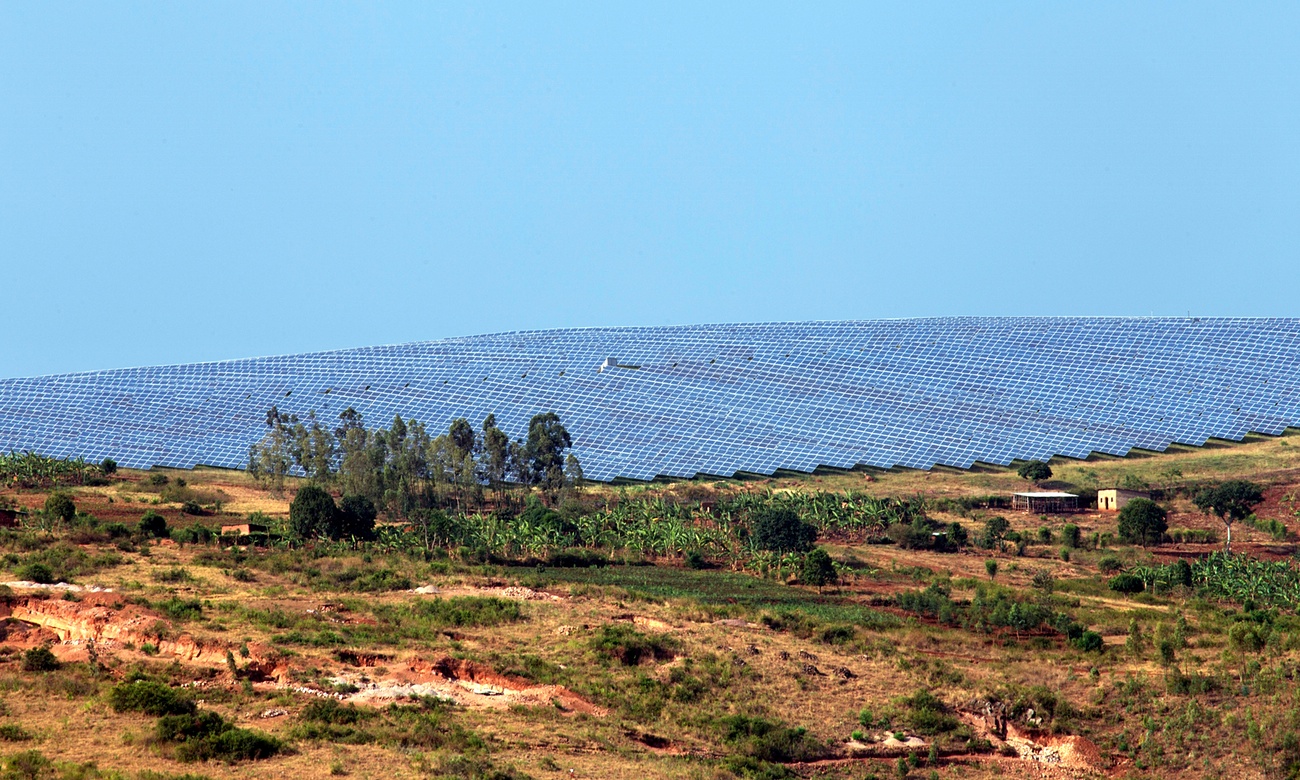
The 8.5-MW solar power plant in Rwanda’s famed green hills. Photograph: Cyril Ndegeya / AFP for the Guardian
¶ Battery costs are falling to the point that they are becoming increasingly viable as an option for uses such as supporting the stability of power grids. New electricity storage installed on to the grid to support renewables is likely to grow more than 60-fold from 196 MW of capacity now to 12,700 MW in 2025, according to Navigant. [Irish Times]
¶ For the first time ever, over half of all new annual investment into clean energy power generating projects globally went toward projects in emerging markets, rather than toward wealthier countries. Emerging market investments in renewables hit a record annual high of $126 billion in 2014, up $35.5 billion from 2013 levels. [Jakarta Post]
¶ Alberta will speed up the phase out of coal-fired power and move to more renewable energy by 2030, according to its newly released climate change strategy. The plan suggests that two-thirds of coal-generated electricity will be replaced by renewables, mainly wind power, with natural gas generation for load reliability. [Calgary Herald]

A wind farm near Fort MacLeod, Alberta. Leah Hennel / Calgary Hearald Archives
¶ Just a few weeks after the UK’s Prime Minister announced a deal with the Chinese to build the Hinkley Point nuclear plant, Baroness Jones, a Green party London Assembly member, asked London’s mayor, Boris Johnson, whether he supported it despite the cost. In reply, he said, “It’s a disgrace.” [The London Economic]
US:
¶ In Climate Science, two of the three Democratic presidential candidates are ‘A’ students, while most of the Republican contenders are flunking, according to a panel of scientists who reviewed candidates’ comments. The climate and biological scientists did the rating at the request of The Associated Press. [Watertown Public Opinion]
¶ In the face of growing safety problems, cheap natural gas and the rising use of renewable energy sources, aging nuclear power plants are closing down across the US, raising questions about the future viability of nuclear energy production. Pilgrim and Fitzpatrick are both old and expensive to run, but they typify nuclear problems. [Jefferson Public Radio]
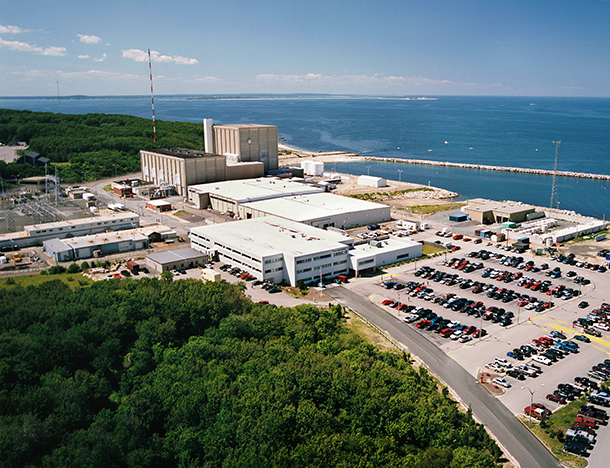
The Entergy Corporation will close Pilgrim Nuclear Generating Station, on Cape Cod Bay, within four years. Entergy Nuclear / Flickr
¶ Danish wind turbine blade maker LM Wind Power is increasing the number of employees at a North Dakota plant by 100 to almost 700 in coming months. The company wants to be competitive in the labor market and lifted its starting wage for production employees. The plant has been retooling for longer blades. [SeeNews Renewables]

 geoharvey