Noteworthy:

Mealworms munch on Styrofoam, a hopeful sign that solutions to plastics pollution exist. (Photo: Yu Yang)
¶ Mealworms can subsist on a diet of Styrofoam and other polystyrene, according to two companion studies co-authored by Wei-Min Wu, a senior research engineer in the Department of Civil and Environmental Engineering at Stanford. Microorganisms in the worms’ guts biodegrade the plastic in the process. [Stanford University News]
Opinion:
¶ Hinkley point: UK energy policy is now hunkering in a nuclear bunker • The UK government’s official admission that new nuclear power stations will be subsidised blows a hole in already bewildering energy plans, which once said nothing should be subsidized but now back the failed and expensive over the cheap and successful. [The Guardian]
Science and Technology:
¶ One of the world’s leading experts on permafrost told BBC News the recent rate of warming of permafrost is “unbelievable,” about one-tenth of a degree C per year in northern Alaska since the mid 2000s. He says the current permafrost evidence has convinced him that global warming is real and not just a product of natural variation. [BBC]
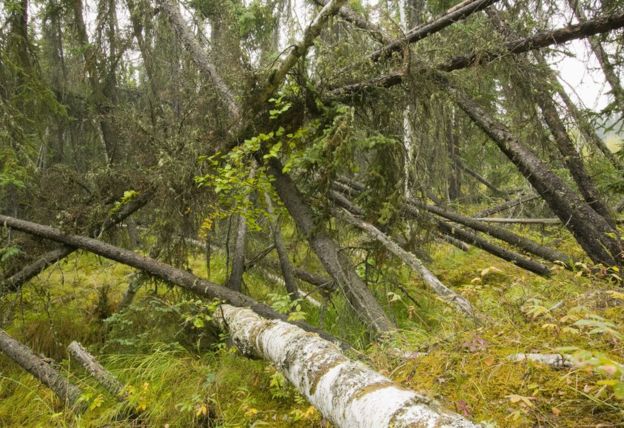
This “drunken forest” of collapsed black spruce is also a sign of the melting permafrost. Science Photo Library
World:
¶ Apple announced plans to build solar energy projects with a capacity of 200 MW in the northern, eastern and southern regions of China, while iPhone supplier Hon Hai Precision, also know as Foxconn, said it will add solar power plants with a capacity of 400 MW, supplying the Zhengzhou factory in Henan province, by 2018. [Mobile World Live]
¶ It was announced that a strategic investment agreement has been signed for the planned Hinkley Point C nuclear power plant in the UK. The Renewable Energy Association said it is struggling to see the larger joined-up vision of a national energy strategy. The strike price for nuclear power is about double that of solar. [SeeNews Renewables]
¶ By the end of 2012, at the peak of the recent mining boom, the Australian coal industry had announced plans to triple or even quadruple black coal production on 2010 levels by 2030. Less than three years after such announcements were made, however, a number of the relevant projects have become financially unviable. [The Conversation AU]
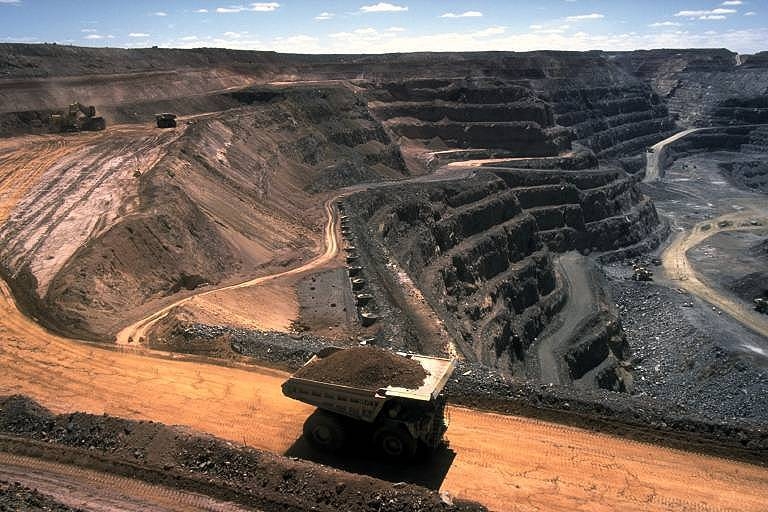
Australian strip mine. Photo by Stephen Codrington. CC BY-SA 2.5. Wikimedia Commons.
¶ Globally, coal mining companies are on the edge of the financial abyss. More planned coal plants are being cancelled than built, as renewable energy is attracting more investment than coal, a WWF report says. In 2014, 59% of net additions to global power capacity were from renewable energy, nearly 80% in Europe. [Blue & Green Tomorrow]
¶ Green energy provider Ecotricity has announced plans to build three new ‘hybrid’ renewable energy parks, combining wind and solar power generation in the same project. Hybrid renewable energy parks combine wind and solar power generation using the same grid connection to maximise efficiency and reduce initial costs. [edie.net]
¶ Mexico is planning to quadruple its wind-power capacity as part of its president’s efforts to transform its energy industry. The country expects to have about 10 GW of turbines in operation within three years spread across almost every region, up from 2.5 GW in 2014. The government plans for 20 GW of clean energy by 2030. [Bloomberg]
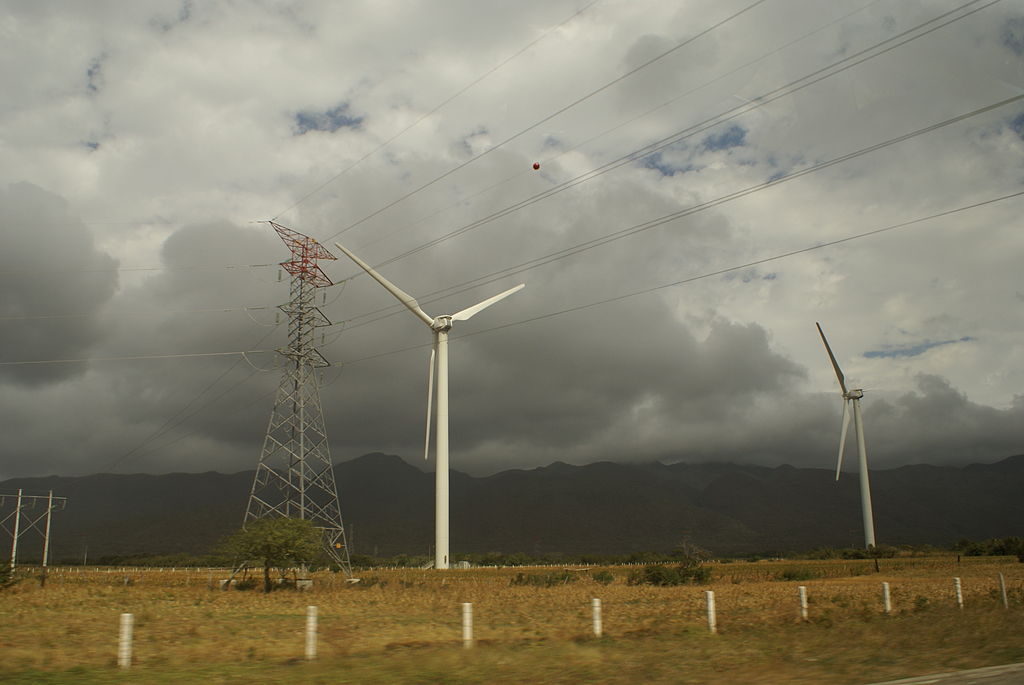
Mexican wind turbines. Photo by Laloixx. CC BY-SA 3.0. Wikimedia Commons
¶ Origin Energy, Australia’s biggest electricity retailer, says it will embrace new products such as rooftop solar, batteries for storage and smart meters. It is making a major pitch to shareholders and consumers that it is shifting its focus from fossil fuels to disruptive new technologies, and it intends to be a leader in Australian solar power. [RenewEconomy]
¶ The No 2 reactor at Kyushu Electric Power Co’s Sendai nuclear power plant here in the southwestern city of Satsumasendai started generating and transmitting electricity on Wednesday. Kyushu Electric will raise the reactor’s output to 30% of capacity later on Wednesday and to full capacity in about 10 days, if no trouble emerges. [The Japan News]
US:
¶ GTM Research identifies community solar as the next largest solar growth market in the United States. Over the next two years, community solar in the US is poised to see its market share increase sevenfold, and by 2020 GTM Research expects US community solar to be a half-gigawatt annual market. [Green Building Elements]
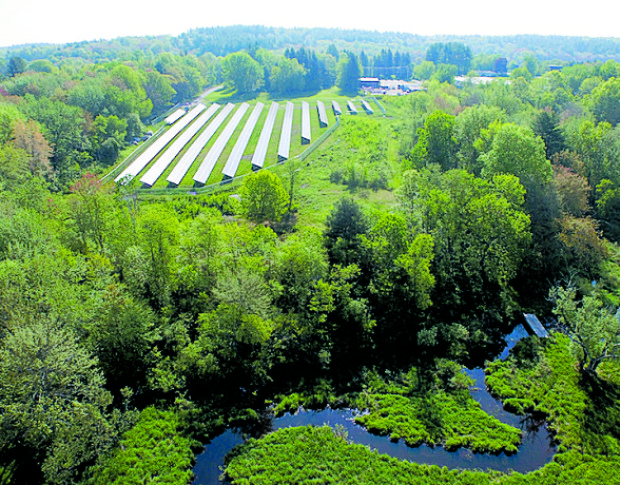
The 550 kW Harvard Community Solar Garden is the first shareholder-owned solar garden in Massachusetts. Photo courtesy of Steven Strong, president of Solar Design Associates.
¶ Once the 3,088 panels of the solar array are turned on, the former sewage lagoon in Peterborough, New Hampshire, will be transformed into a golden, sunlit field. The 944-kW solar array will be the largest in New Hampshire. The town will celebrate the event by holding a ribbon-cutting ceremony in November. [Monadnock Ledger Transcript]
¶ Currently, about 200 Arctic Alaskan communities use diesel fuel as their primary source of electricity and heat. The costs to transport diesel to the Far North are significant, and these rural villages pay more for power than people do anywhere else in the US. One community, however, has turned to wind power, and it’s working. [Grist]
¶ New studies, using state-of-the-art seismic mapping technology, show that fault lines threatening the Diablo Canyon nuclear power plant are more complex and interconnected than Diablo’s designers could have known. This complexity implies that the seismic predictions used to justify the plant’s location were wrong. [Santa Barbara Independent]

 geoharvey