Opinion:
¶ Hinkley: a truly major national scandal – Although it was originally claimed that Hinkley Point C would cost only £10 billion and be “cooking Christmas dinners by 2017”, its completion date is now likely to be well after 2023, and its cost has spiralled so fast it will be way over the current figure of £24.5 billion. [Telegraph.co.uk]
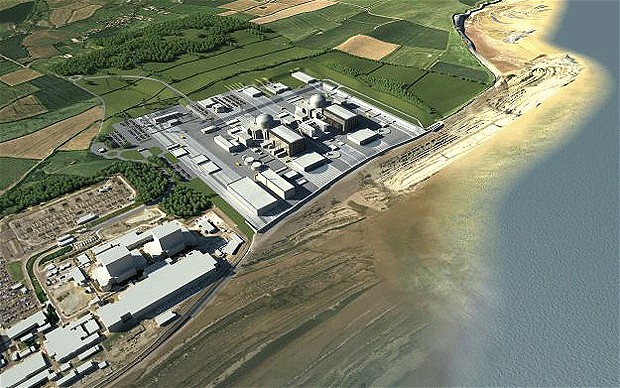
Illustration of Hinkley Point: The new reactors at Hinkley would be the first of eight new nuclear power stations to be built in the UK. Image: EDF Energy
World:
¶ China pledged a ¥20 billion ($3 billion) fund to help developing countries combat climate change. The China South-South Climate Cooperation Fund will also enhance their access to the Green Climate Fund, according to a China-US joint presidential statement on climate change signed during President Xi Jinping’s state visit to the US. [WantChinaTimes]
¶ A study prepared by DIW Econ, a German institute for economic research, found that, as a whole, countries that belong to the Organization for Economic Cooperation and Development have already decoupled their economic growth from emissions. This means economies can grow without increasing greenhouse gas emissions. [The Guardian]
¶ Lekela Power believes Ghana’s power deficit will be substantially bridged when it completes a $300 million utility scale wind-farm power project that is the biggest not only in Ghana but West Africa, the CEO confirmed. The project could provide up to 5% of the country’s electricity and is expected to generate a capacity of 225 MW. [GhanaWeb]
¶ Fountain Technologies Limited, a local subsidiary of the multinational investments firm FEP Holdings Ltd based in Kenya, has announced plans to invest up to $70 million in Ghana’s telecoms and renewable energy sectors. The company brings its experience and competence to complement government’s quest for renewable power. [GhanaWeb]
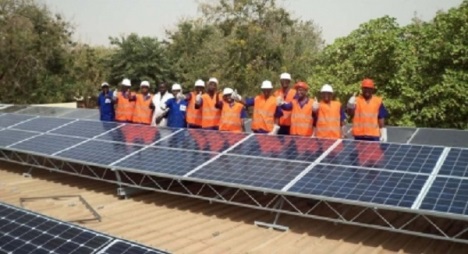
Fountain Technologies Limited
¶ Non-profit organisation Climate Group today said the use of clean energy like solar power by 1.3 billion people without electricity across the world could save them $ 27 billion. They currently spend an estimated $30 billion per year buying kerosene for lighting. Lighting bills from solar micro-grids are known to be over 90% cheaper. [Economic Times]
¶ German companies will invest 350 million euros in Khuzestan province to set up wind, solar and thermal power plants in Arvand and Mahshahr free zones, according to the Managing director of Khuzestan Regional Electricity Company. A 47-MW wind power plant will be set up in the first phase of the project, with solar to follow. [Zawya]
¶ The World Bank extended a loan of $20 million to Nepal for the Power Sector Reform and Sustainable Hydropower Development Project. The first component of the project will support preparations of the Upper Arun Hydroelectric Project and the Ikhuwa Khola Hydroelectric Project. It will also support transmission line projects. [Himalayan Times]
US:
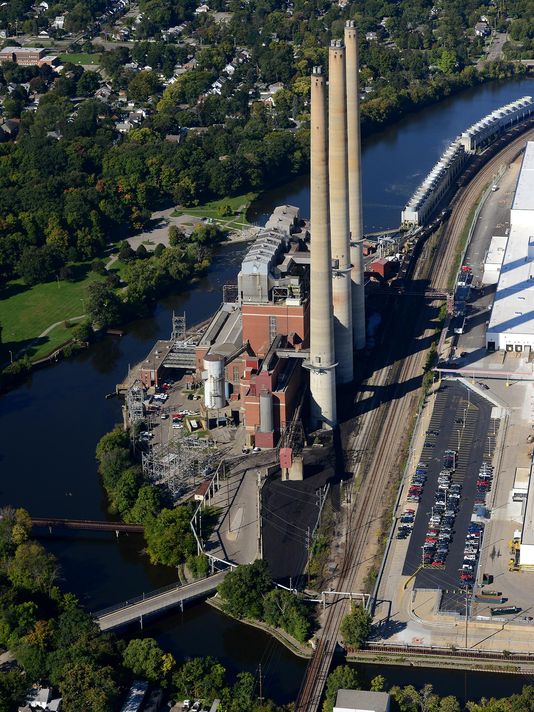
The BWL Eckert plant. Photo: Dave Wasinger/Lansing State Journal
¶ The Lansing Board of Water and Light is seeking community input on how to replace the Eckert Power Station, set to be retired in 2020. Dating to the 1950s, the coal-fired power plant generates about one third of the power within the BWL’s service territory, and “is at the end of its operational life,” according to a press release. [Lansing State Journal]
¶ A team of researchers from Harvard University have developed an even cleaner solution for storing energy. The group of scientists and engineers showed an updated flow battery that can safely store electrical energy by dissolving plentiful, inexpensive elements like carbon and oxygen in water. It is nontoxic and non-flammable. [UPI.com]

 geoharvey