Science and Technology:
¶ Toyota now collects more than 90% of the nickel-metal hydride batteries used in its hybrid cars, and is aiming for 100% collected. But what happens to the batteries after they’re collected? Some are recycled, but from an environmental perspective, it’s even better if they are reused. They have a second life in Yellowstone Park. [The Guardian]

Reused Toyota Camry Hybrid battery packs store solar energy in a distributed energy system now online at the Lamar Buffalo Ranch field campus in the Yellowstone National Park. Photograph: Toyota
¶ A new line of solar modules from JA Solar eliminates the need for racking, allowing for direct mounting on rooftops, cutting installation time. The modules are made up of 60 “cell laminates” per unit, surrounded by a heavy-duty aluminum frame strong enough for them to be mounted directly to the roof, without any additional racking. [CleanTechnica]
World:
¶ India’s National Thermal Power Corporation had invited bids last May for ten separate 50-MW solar PV projects to be developed in phases in the Ghani Solar Park, Kurnool District of Andhra Pradesh. Bids were submitted last week, and the call has been oversubscribed by 10 times, with a total of 30 developers in the foray. [CleanTechnica]
¶ Utility-scale grid connected battery storage may reach 12 GW by 2024, while annual revenues could grow to $8.44 billion, according to a report from Frost & Sullivan. The US will be a leader, followed by China, Japan and Germany. Despite an overall positive outlook, there are significant market challenges to overcome. [pv magazine]
¶ The mayor of London, reminded cabinet ministers that 10,000 local jobs were dependent on this renewable power technology which had, in his view, “many, many attractions”. The warning from the high-profile Conservative came as the chief executive of Shell predicted solar would become the “backbone” of our energy system. [The Guardian]
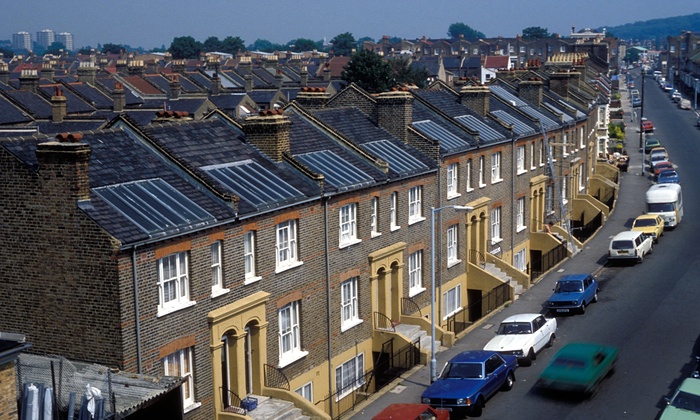
Solar panels on residential houses in East Dulwich, Southwark, South London. Photograph: Alamy
¶ Australia will be one of the first countries to get Tesla’s vaunted Powerwall battery storage system. Several companies are scrambling to sign up Australian households with solar rooftops. Tesla said that its 7-kWh home energy storage units, predicted to arrive in Australia in 2016, would be available by the end of the year. [The Guardian]
¶ With Canada’s federal government out for the count, it was the provinces who spearheaded the addition of a total 3.63 GW in renewable power generation in 2014 and a rate of investment in green energy that was 88% higher than in 2013, pushing Canada to sixth place ranking for renewables development, Clean Energy Canada says. [National Observer]
¶ The UK’s Green Investment Bank has stepped up efforts to boost the offshore wind power sector, joining forces with the Offshore Renewable Energy Catapult in an attempt to tackle faltering investor confidence in the market. The organizations will act in a three-year partnership to address technical and financial issues. [Business Green]
US:
¶ The Department of Transportation in Washington wrapped up a bid proposal for up to 800 electric buses in 12 different categories. BYD buses has been awarded the contract in 10 of those categories. The contract may be the biggest in US history. It includes buses from 30 to 60 feet in length for highway and intra-city applications. [CleanTechnica]

Electric bus. BYD photo.
¶ New solar energy funding has been announced along with a new DOE energy efficiency roadmap that aims to double energy efficiency in the US by 2030 through standards for utilities, vehicles, and consumer goods. Solar energy is already cost competitive in 14 US states. This may make it competitive in the rest of them. [CleanTechnica]
¶ Two extensive studies reveal that major US business identities have knowingly undermined the health, safety, and survival of real humans and other living things in regards to climate. One examines ExxonMobil’s actions, and the other implicates almost half the world’s 100 largest companies in obstructing climate change legislation. [CleanTechnica]
¶ Officials at the Pilgrim Nuclear Power Station are considering whether they can afford the multimillion-dollar safety improvements and other reforms required by federal officials. If not, they say, they might close the plant. The NRC downgraded the plant’s safety rating this month, listing Pilgrim as among the least safe in the country. [The Boston Globe]
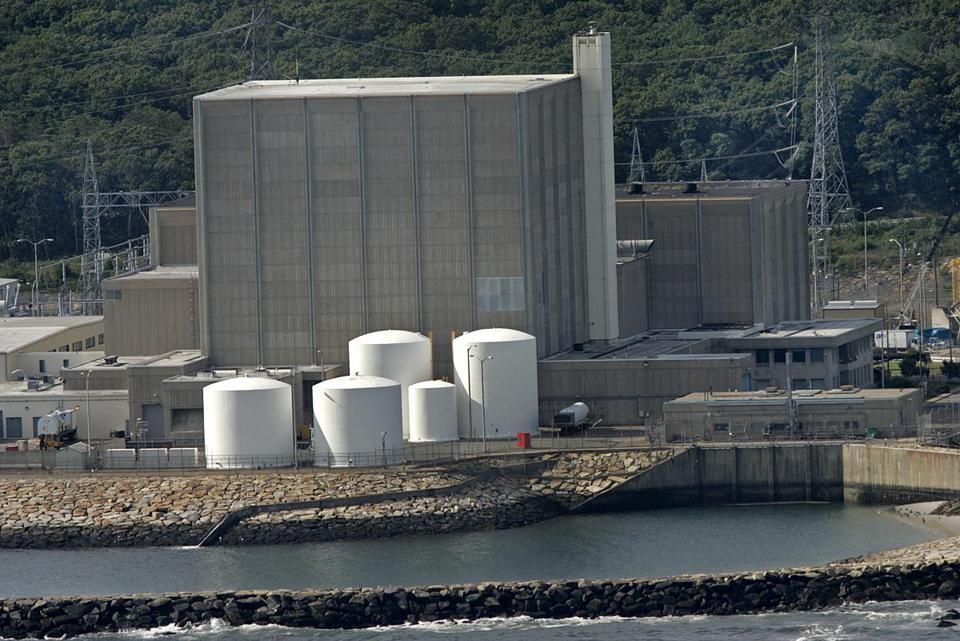
The Pilgrim nuclear power plant in Plymouth, Massachusetts. David L. Ryan / Globe Staff / File
¶ Sulphur Springs Valley Electric Cooperative and SunPower announced signing a 20-year power purchase agreement. SunPower will build a 20-MW solar PV plant in Cochise County, Arizona. Expected to be operational by the end of 2016, the plant should provide enough electricity for 4,500 homes, on an annual basis. [Your Renewable News]
¶ The mayor of Burlington, Vermont, and the president of the University of Vermont announced a partnership between the city and UVM develop 1 MW of solar energy projects on UVM campus properties. A request for proposals encourages a wide variety of projects, including roof-top installations and solar canopies over parking areas. [vtdigger.org]
¶ SunEdison announced it is supplying lithium-ion batteries for nine prototype homes in California that will be fully powered by renewable energy. The zero-net energy home project is part of a larger state-wide plan to have all new construction homes run 100% off renewables, such as photovoltaic roof panels, by 2020. [Computerworld]

 geoharvey