Opinion:
¶ “Far-reaching climate bills warrant approval” Forgive us if we are jaded about oil industry claims that California as we know it will collapse if the Legislature passes bills aimed at further curbing emissions of greenhouse gas. Time and again, the state and the industry have survived efforts to address the all-too-real prospect of global warming. [Sacramento Bee]

Traffic jams are a major source of greenhouse gas pollution, and a key target for new environmental goals. Shawn Hubler The Sacramento Bee.
¶ “It’s Time For Corporate America To Stand Up To Republican Climate Deniers” Like a cornered wild animal, the fossil fuel industry and its supporters are recognizing the tide of history is beginning to turn against them, and they are going to act with increasing viciousness, supported by lobbying dollars, to protect their wealth and status. [Huffington Post]
Science and Technology:
¶ Researchers at the University of South Australia developed a low-cost energy storage solution that uses salt to store excess electricity. Their system uses salt as a phase-change material for smaller-scale, rapid-discharge batteries for residential and commercial use. It has a cost of up to 10 times cheaper than batteries. [CleanTechnica]
¶ What does it take to build a 2-MW wind turbine? This time-lapse video of the construction of a wind turbine at the Bald Hills Wind Farm in Victoria, Australia gives a glimpse into the process, and makes it look almost simple (though it is clearly no small undertaking). It shows a 2.05-MW turbine being erected. [CleanTechnica]
World:
¶ Thousands of UK householders are installing solar-powered smart meters. The devices track when rooftop solar panels produce excess energy and divert it to water heaters. Calculations produced for Telegraph Money suggest that an average family of four would save £243 per year, earning back the original outlay in less than two years. [Telegraph.co.uk]
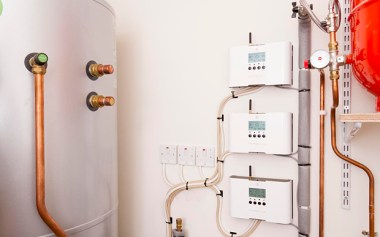
The ‘Immersun’ device works by automatically redirecting solar energy to your water heater, effectively storing power to use later
¶ Despite mounting evidence that new coal generation regularly fails to deliver energy access, especially in rural areas, Amu Power is proposing a 1,000 MW coal plant in Kenya. A report from Oxfam and the Overseas Development Institute recently shows that off-grid and mini-grid technologies are better at delivering power. [Huffington Post]
¶ Studies link production from Alberta’s tar sands to devastating impacts on both the environment and aboriginal communities. Oil companies have reportedly taken $14 billion in resources from the Lubicon Cree’s traditional territory, with royalties going to the Alberta government. The community is fighting back with a solar project. [Inhabitat]
¶ At first glance, it seemed the UK’s fledgling anaerobic digestion industry has been protected from the government’s sweeping reforms to the popular feed-in tariff incentive scheme. But the AD industry body yesterday warned the proposed changes could have “disastrous” effects on deployment of the biogas technology. [Business Green]
¶ Kyushu Electric Power Co said on August 28 that it intends to resume full-scale commercial operations at the Sendai nuclear power plant’s No 1 reactor on September 10. The utility said the reactor, which has an output of 890 megawatts, will run at full capacity on August 31 on a trial basis ahead of a final inspection. [Asahi Shimbun]
US:
¶ Just as Sacramento policy makers focus on a number of bills to help California make real and measurable progress towards relying on renewable resources, UCS released analysis examining how to transform California’s electricity grid to one that relies more heavily on renewable energy. [The Equation: Blog of the Union of Concerned Scientists]
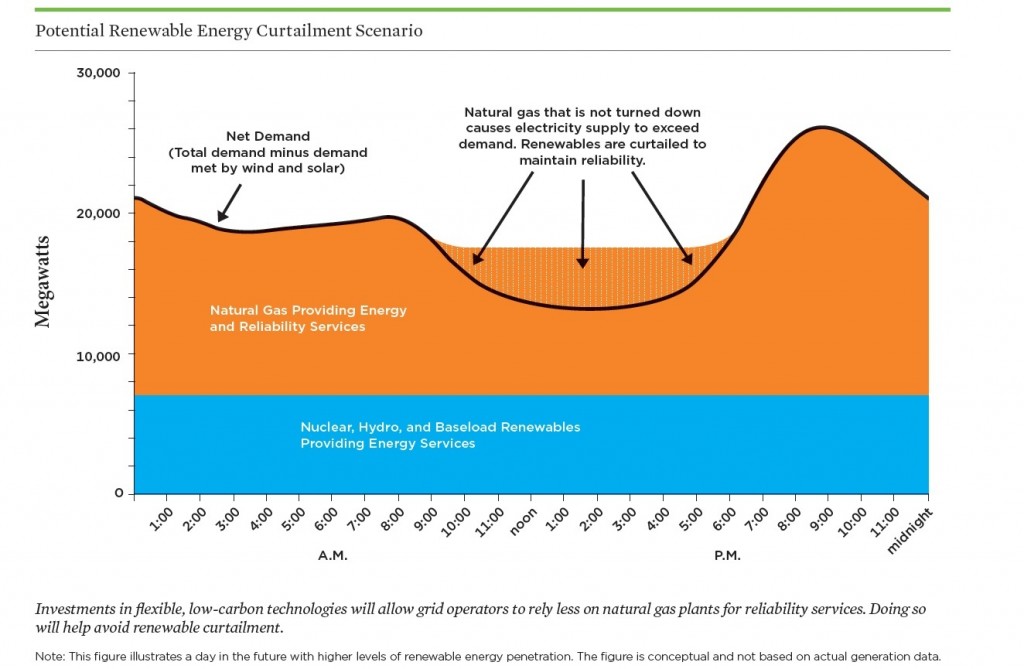
Please click on the image to enlarge it. Source: UCS.
¶ FFP New Hydro announced that it had closed a senior loan facility, allowing continuing development of its portfolio of 21 advanced stage hydropower projects on existing US dams in Pennsylvania, West Virginia, Indiana, Mississippi, and Ohio. The projects will cumulatively reach 200 MW of new generation capacity. [CleanTechnica]
¶ At Young Brothers Ltd’s Port of Honolulu facility, Sandia National Laboratories is leading the Maritime Hydrogen Fuel Cell project to test a hydrogen-fuel-cell-powered generator as an alternative to conventional diesel generators. The hydrogen fuel cell is expected to be more energy efficient than diesel for the facility. [The Maritime Executive]
¶ A 27-year low in carbon dioxide emissions earlier this year shows the US may be heading toward meeting its emissions goals. US power plants emitted less carbon dioxide – 128 million metric tons – in April than at any point in since April 1988, according to new US Energy Information Administration data. [Kitsap Sun]
¶ Ohio state officials have dismissed a challenge to Windlab’s proposed 60-MW Greenwich wind farm project in Huron County. The Ohio Power Siting Board ruled this week against a motion filed by neighboring interests. Landlord group Omega Corp last year filed a motion to intervene in the board’s approval of the project. [reNews]

 geoharvey