
World:
¶ The number of Scots companies, communities, farms and landowners making their own electricity has risen by more than 50% in the last year, generating more than £271 million worth of energy, new research has found. The number generating their own power has risen from 509 in 2013 to 775. [Aberdeen Press and Journal]
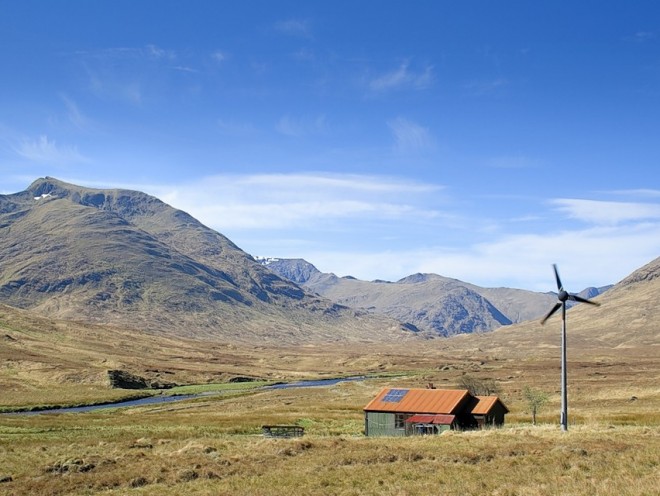
Remote station in Scotland.
¶ Solar lights are being used more often in Africa, where off-grid areas have poor access to safe and reliable nighttime lighting. Supporting this trend, The VELUX Group and Little Sun are partnering with NGO Plan International to distribute a new solar lamp, the Natural Light solar lamp, in three African countries. [CleanTechnica]
¶ A new report commissioned by the Energy Supply Association of Australia has confirmed that, not only is “off-grid” distributed energy supply a viable option for some regional and remote customers, it is also an option that could lead to significant cost savings and other benefits for network operators. [CleanTechnica]
¶ The Galapagos islands are known for those lumbering, giant tortoises and as the inspiration for Darwin’s theory of evolution. Now they boast another distinction: an airport, built during the Second World War, is believed to be the only one in the world working 100% on wind and solar energy. [New Straits Times Online]
¶ Significant numbers of Australians can install rooftop solar and battery storage cheaper than buying grid electricity, so uptake of solar likely to be “unstoppable,” according to Bloomberg New Energy Finance. The forecast is for 33 GWh of battery storage and 37 GW of solar PVs in Australia by 2040. [CleanTechnica]
¶ African countries, driven by the need to power base stations for mobile phone operators in the face of serious power shortages, are increasingly turning to renewable energy. Power shortages are increasing in many areas of Africa, and many are using renewables to run IT equipment. [Network World]
¶ An expert panel with the Japan’s nuclear watchdog remains unswerving in its assessment that fault lines running under the Shika nuclear power plant in Ishikawa Prefecture may well be active. The position, stated in a July 17 draft report, throws the prospect of restarting the facility’s reactors into doubt. [Asahi Shimbun]
US:
¶ Since the 1970s, tops of over 500 mountains have been removed and more than 2,000 miles of headwater streams destroyed by mountaintop removal coal mining. Now, the US Interior Department has issued proposed water protection rules that would effectively end the common practice. [CleanTechnica]
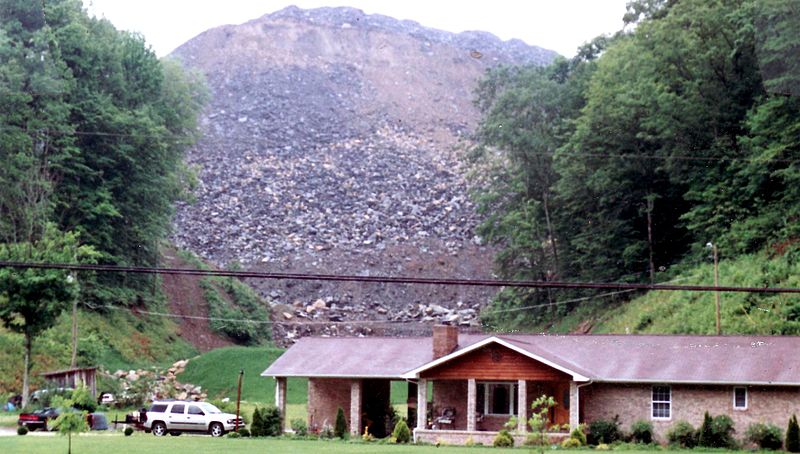
Mountaintop removal coal mining filled the valley behind this home. Photo by Flashdark. Released to the Public Domain. Wikimedia Commons.
¶ The Sierra Club says that an Iowa utility has agreed to phase out seven coal plants in a settlement with the US Justice Department and EPA, the state, and the environmental group. The settlement requires Alliant to phase out coal use or install pollution controls at all eight of its coal-fired power plants. [Sentinel Republic]
¶ This week the Sierra Club is celebrating a new milestone: The 200th U.S. coal plant retirement announcement since 2010. This is a huge deal, because in 2010 there were 535 coal plants in the country, so this is almost 40% of the fleet that is going away, with the oldest and dirtiest plants going first. [Treehugger]
¶ A tax incentive that benefits wind power and other renewable energy would be revived and extended through next year under a draft tax package released by the Senate Finance Committee. The 2.3¢ per kWh production tax credit has been targeted for several years by conservatives. [Washington Examiner]
¶ Duke Energy Corp is breaking ground on a solar farm on the East Coast’s largest Marine Corps base as the military moves away from oil. Duke Energy is starting construction at Camp Lejeune on a 13-MW solar array on 100 acres. The Navy plans to get 50% of its energy from renewables by 2020. [Jacksonville Daily News]
 geoharvey
Leave a comment