Science and Technology:
¶ A race is on to harness the tides and waves for electrical power, with more than 100 different devices being tested by companies hoping to make a commercial breakthrough. The UK, Ireland, France, Spain, Portugal, Denmark, the Netherlands and Norway, are all developing technologies to harvest the tide. [eco-business.com]
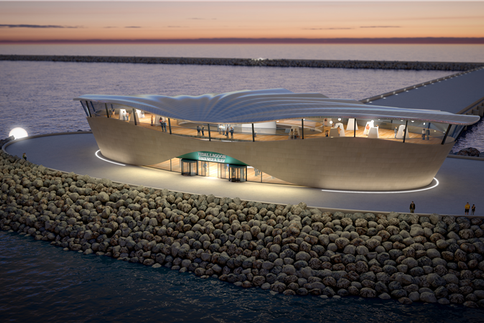
A tidal power plant being developed in Swansea Bay, south Wales in the UK. Image: Tidal Lagoon Swansea
World:
¶ Scotland renewables are important , but more are coming. By the middle of 2014, they were already greater than nuclear, the country’s second resource. Capacity was 7,112 MW by the end of the 3rd quarter. Wind alone has 8,161 MW of capacity in various stages of construction and another 3,765 MW in planning. [CleanTechnica]
¶ Nigeria’s first ever wind project, the 10-MW Katsina windfarm, is a couple of fractions of work from being completed and commissioned, the Permanent Secretary in the Ministry of Power, Godknows Igali has said. It is about 98% complete, 5 turbines have been tested, and 37 are undergoing tests now. [THISDAY Live]
¶ Taiwan has increased its target for overall renewable energy capacity from more than 10,000 MW to 13,000 MW by 2030. Taiwan is working to promote renewable energy and improve energy efficiency to cope with the challenges of climate change and meet growing electricity demand. [Focus Taiwan News Channel]
¶ Apple has announced plans to run its entire business in China through renewable energy, and to make its entire supply chain environmentally friendly. In a statement released yesterday, CEO Tim Cook said greening manufacturing operations would take years, but would be worth the effort. [Electronics News]
¶ In the wake of the recent UK general election, Prime Minister David Cameron has named new ministers to his administration. Among the new appointees is Amber Rudd, new Secretary of State for Energy and Climate Change. UK renewable energy industry observers reacted positively to her appointment. [Renewable Energy Focus]
US:
¶ NextEra Energy Resources, LLC announced that a wholly-owned subsidiary has started construction on two distributed generation solar PV systems in Oneida County, New York. The systems, located on two parcels in Whitestown, New York, will have the capacity to produce 5.2 MW DC of solar power. [Power Online]
¶ Iowa’s 5,688 MW of installed wind capacity uses only 1% of the state’s wind resources, according to a new report, Iowa’s Wind Potential for Addressing 111(d) Goals. The resources are more than adequate to meet the state’s Clean Power Plan requirements cost-effectively and help neighboring states too. [Utility Dive]
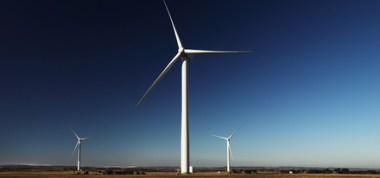
Iowa wind farm
¶ The Block Island Wind Farm is set to break ground in July off the coast of Rhode Island, and with it, the future of offshore wind in the US seems very real. It would be the first US offshore wind farm, and if it is successful, it could prove that wind power generated by turbines off the coast is a viable enterprise. [Climate Central]
¶ Former Arkansas Governor Mike Huckabee, the latest Republican to jump into the 2016 presidential race, took to Texas’ oil capital Monday to flesh out his plan for making the United States less dependent on foreign sources of energy. His eight-point plan includes developing wind and solar power and exporting oil. [Texas Tribune]
¶ A 44-year-old requirement that North Carolina study potential environmental impacts before launching building projects may be weakened. The House passed a bill limiting the environmental study requirement to only projects costing more than $10 million. Other environmental protections are also threatened. [Asheville Citizen-Times]
¶ Representatives of 13 Western states and utilities will gather this week in Denver to grapple with the EPA’s proposal to cut greenhouse gas emissions from coal-fired power plants. The meetings are part of a series of closed-door sessions convened by a former Colorado Governor after the EPA proposal was made. [High Country News]
¶ The newest nuclear reactor at Watts Bar remains a work-in-progress for the Tennessee Valley Authority. Now, 36 years after it was begun, it is one of the longest building projects in US history. In a bizarre turn, what could soon become the newest US nuclear plant is a piece of 1970s-era technology. [Tulsa World]

 geoharvey