
World:
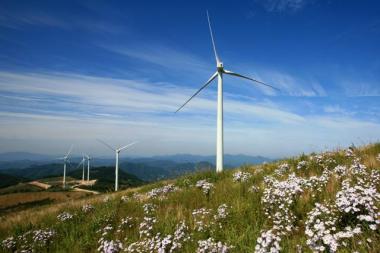
Industry projections show that onshore wind will supply over 10 per cent of the UK’s total electricity annually by 2020
¶ Onshore wind can become the most cost-effective electricity source by 2020, according to the a taskforce set up by Renewable UK. Their new report claims that onshore wind can deliver the cheapest electricity of all power sources by 2020, driving down fuel bills across households throughout the UK. [E&T magazine]
¶ According to Red Electrica de Espana, the Spanish peninsula got 69% percent of its electricity generation in March from technologies that produce zero carbon emissions. Nuclear as a whole provided 23.8% of the country’s electricity in March, while 47% came solely from renewable sources. [ThinkProgress]
¶ With the development process of the first gigafactory apparently going quite smoothly, Tesla Motors seems already busy courting Japanese battery suppliers with regard to a potential second gigafactory. This possible second gigafactory would be located outside of North America in the near future. [CleanTechnica]
¶ Kazakhstan-based power producer JSC Samruk-Energo intends to build a 50-MW solar farm near Kapshagay city, with potential for a later expansion to 100 MW, according to a report. Several wind farm projects of around 50 MW each are also planned for the Shelek corridor and Yereimentau city. [SeeNews Renewables]
¶ Canadian Solar Inc announced that it energized four projects totaling 40.2 MWp in the United Kingdom. The projects have combined capacity of 40.2 MWp. Two more solar projects are expected to be connected in the second quarter of 2015. The six projects will produce about 50,183 MWh per year. [RenewablesBiz]
¶ There is a growing possibility that Japan will rely on nuclear energy for more than 20% of its total power output in 2030, compared with about 30% before the Fukushima Disaster, according to sources. All of the nation’s nuclear power plants have remained offline since the Fukushima Disaster. [The Japan Times]
US:
¶ SolarCity continues to beat its own electricity generation milestones at mind-blowing rates. SolarCity just surpassed the 5 GWh/day benchmark. This was just two weeks after reaching 4 GWh/day of electricity generation. And that is an increase of 40% from last year, when it reached 3 GWh/day in April 2014. [CleanTechnica]
¶ In recent years, 180 institutions, including philanthropies, religious organizations, pension funds, and local governments have pledged to sell over $50 billion in assets tied to fossil fuel companies and to invest in cleaner alternatives. Hundreds of wealthy individual investors have pledged another $1 billion. [CounterPunch]

SunGen Sharon Solar Farm in Sharon, Vermont. Photo by SayCheeeeeese, Wikimedia Commons.
¶ Showing strong growth in all market sectors, Vermont more than doubled its amount of installed solar capacity in 2014, according to the US Solar Market Insight 2014 Year in Review. Vermont was one of only four states nationwide to have 100% of its new electrical capacity come from solar energy. [AltEnergyMag]
¶ A variety of factors relating to technology, policies, and financing may allow New York to reduce offshore wind energy costs by 50% by 2022. Offshore wind energy cost reductions will enable New York to act independently or collaborate with other states to advance utility-scale renewable generation development. [Breaking Energy]
¶ If Schweitzer Engineering Laboratories’ manufacturing plant in Pullman, Washington, loses power during an outage, the company can turn to huge batteries on its campus for electricity. The batteries could supply enough power to run most of the factory’s operations for about three hours. [The Spokesman Review]
¶ A new report by the US Energy Information Administration finds in New England electric rates went up an average of 9% last year. Vermont’s Green Mountain Power, however, reduced rates by 2.46%. GMP has kept rates low for customers through a mix of things, including innovative products and services. [vtdigger.org]
¶ Fossil fuel funded efforts are underway to undermine or end renewable portfolio standards across the United States. In 2014, as in past years, these efforts largely failed, and only Ohio enacted legislation to roll back its long-term clean energy targets. But 2015 may turn out to be different. [Energy Collective]
¶ Duke Energy plans to install as much as 500 MW of solar power in Florida by 2024, which would more than triple the capacity of the state. Duke’s Florida utility plans to start building the first site this year and complete 35 megawatts of solar power by 2018. Florida currently has 234 MW solar capacity. [Bloomberg]
 geoharvey
Leave a comment