
Opinion:
¶ “If we act on climate change now, the economic prize will be immense” • Climate negotiators are meeting in Bonn. Beyond the intricacies of the climate negotiations, here is one key thing to remember: about $1 trillion is already being invested in climate solutions, ranging from renewables and energy efficiency to public transport. [The Guardian]

Installing panels (Photo: Mike Kemp | Corbis via Getty Images)
COP23:
¶ China, through statements made in official speeches, active participation in the Bonn talks, and various side events the country organized to exchange ideas and practices, has reasserted itself a responsible player in global battle against climate change at COP23 to the United Nations Framework Convention on Climate Change. [ecns]
¶ Delegates to COP23 say they are pleased that the rulebook for the Paris climate agreement is finally coming together. But these technical discussions took place against the backdrop of a larger battle about coal, oil and gas. This means that next year, at the conference in Katowice, Poland, there will be a major showdown on the future of fossil fuels. [BBC News]

Coat of arms of Katowice
Science and Technology:
¶ Fisker filed patent applications on a solid state battery design. The automotive company says that its battery would deliver up to 2.5 times more energy density than current lithium-ion batteries, and cost ⅓ as much to manufacture. It could have a range of more than 500 miles per charge, and recharging would take less than one minute. [CleanTechnica]
World:
¶ The government of Croatia is drafting a strategy to reduce energy imports, which supply 40% of its power. Croatia could develop 3,200 MW of solar power by 2030, the International Renewable Energy Agency says, but it needs a supportive legal framework. Croatia has 4,500 MW of capacity, mostly from coal and hydroelectricity. [ETEnergyworld.com]
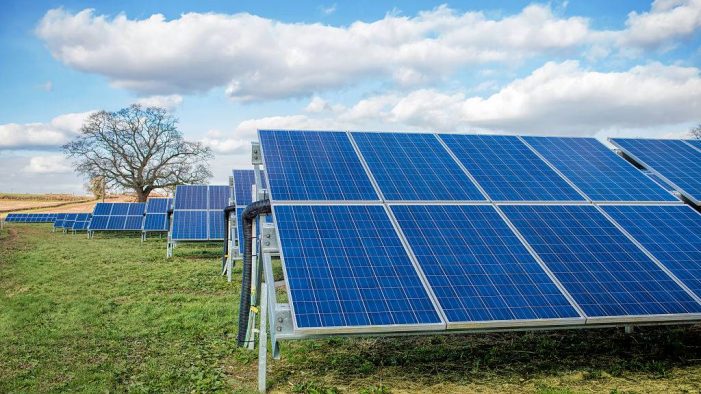
Solar power plant
¶ Investors are now better able to gauge the climate risks likely to impact their investments thanks to a new risk management tool developed by Deutsche Asset Management and Four Twenty Seven and published for COP23, which maps more than a million physical corporate locations alongside climate models to assess their climate risk. [CleanTechnica]
¶ Credit Union Place, in Summerside, Prince Edward Island, is now partially powered by the sun. The municipal civic center has 1,404 new solar panels and lithium-ion storage battery backup. The system is expected to cut CUP’s $380,000 annual electricity bill by about $100,000. It is the first phase of a three-phase project. [The Guardian]

Credit Union Place (Photo: Higher Design Inc)
¶ Siemens is to release 2% of its global workforce, mainly in Germany, as its power and gas division continues to suffer from the onslaught of clean energy expansion. “The market is burning to the ground,” Siemens board member Janina Kugel, who is in charge of group human resources, told journalists in a call. [Power Engineering International]
¶ Norway’s government has been told its state-run fund should drop its investments in oil and gas stocks, worth £28 billion ($37 billion). Norges Bank, the fund’s manager, said the step would make the country “less vulnerable to a permanent drop in oil and gas prices.” Its advice was not based on a price forecast or the sector’s sustainability. [BBC News]
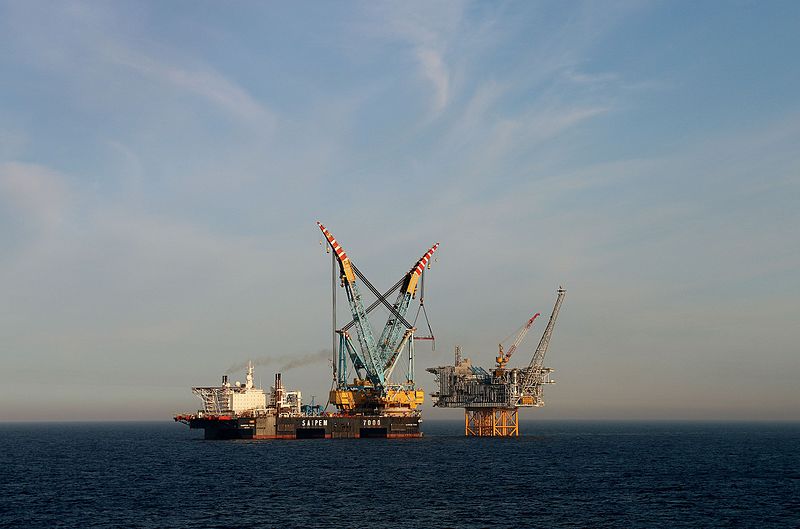
Offshore oil rig (Photo: Norsk olje og gass, Wikimedia Commons)
US:
¶ Virginia would regulate carbon emissions from power plants and become the first Southern state to do so, with a carbon cap-and-trade program under a proposal that won preliminary approval from state regulators. It is the most recent state taking steps to address climate change as the federal administration rolls back its climate actions. [WSET]
¶ Walmart says that it intends to be among the first companies to pilot Tesla’s new all-electric Semi heavy-duty truck. The retail company will pilot the Tesla Semi across both US and Canada, it told CNBC. Walmart currently operates approximately 6,000 of its own trucks to transfer stock from distribution centers to its stores. [TechCrunch]

Tesla Truck
¶ A major New England transmission line planned by Eversource Energy and Hydro-Quebec has won a Presidential Permit from the US DOE. The federal permit marks a significant milestone for the $1.6 billion, 192-mile Northern Pass, first proposed in 2010. The line would carry electricity from Canada to the New England power grid. [MassLive.com]
¶ By as early as mid-December, construction crews will invade a 420-acre field in Millington, Tennessee, and proceed to fill it with 580,000 sun-tracking PV panels, creating by far the largest solar-energy project in the state. As impressive as the 53-MW project might seem, Tennessee will still be trailing other states in solar power. [The Commercial Appeal]
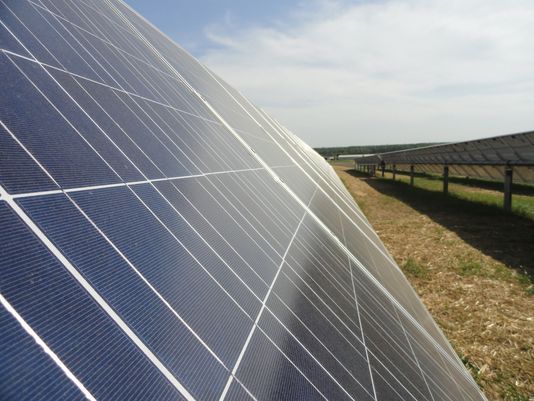
Solar system in Tennessee
¶ By the year 2020, Xcel Energy’s power grid will use 35% renewable sources, and less than a quarter of energy will come from coal, the utility’s CEO told Minnesota Public Radio News. It will have slashed carbon emissions by nearly half, and customers won’t see much of a change in their bills, unless it is a lower bill. [Minnesota Public Radio News]
¶ According to Boston Business Journal, a lawsuit filed in federal court in Boston alleges that GE’s decisions dating back to the 1960s led to the failure of the Fukushima Daiichi Nuclear Power Plant, causing an estimated $250 billion in damage. The suit was filed against GE on behalf of people affected by the Fukushima nuclear disaster in 2011. [Boston magazine]
How can you help the people of Puerto Rico? One way
is to donate at [Sunnyside Solar’s crowdfunding website].
 geoharvey
November 18, 2017 at 8:55 am
Reblogged this on AGR Daily 60 Second News Bites.
November 19, 2017 at 2:33 pm
Reblogged this on nuclear-news.